
Blood Collection Market Size and Share
Market Overview
| Study Period | 2020 - 2031 |
|---|---|
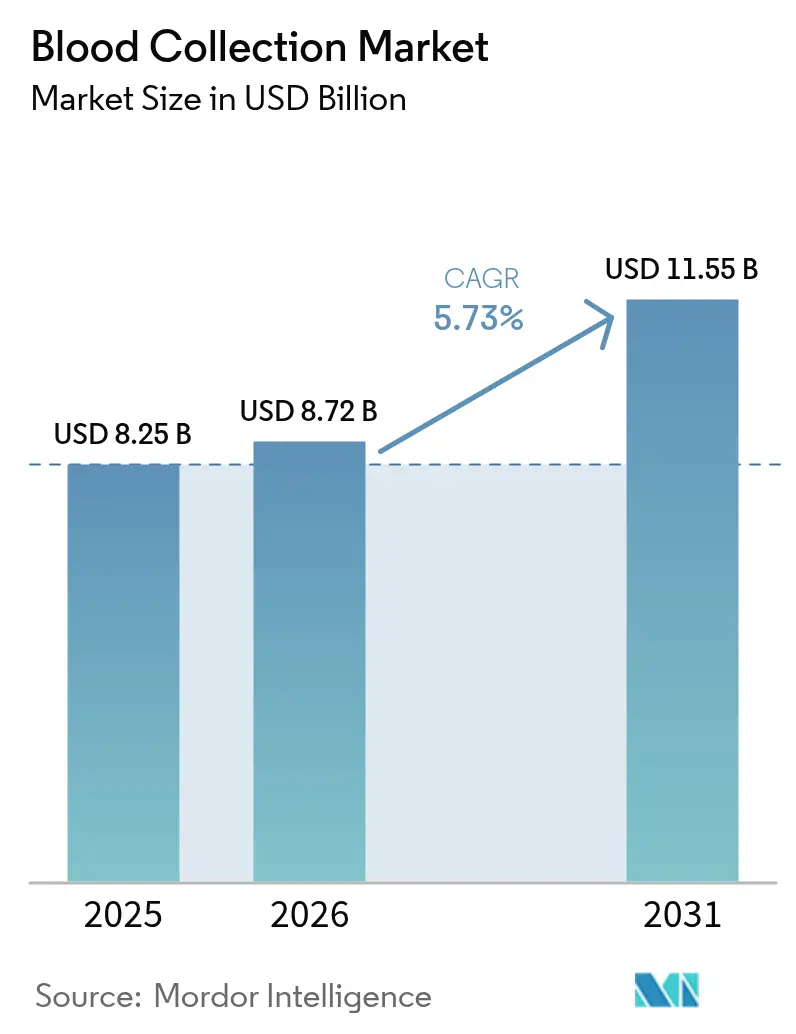
| Market Size (2026) | USD 8.72 Billion |
| Market Size (2031) | USD 11.55 Billion |
| Growth Rate (2026 - 2031) | 5.73 % |
| Fastest Growing Market | Asia Pacific |
| Largest Market | North America |
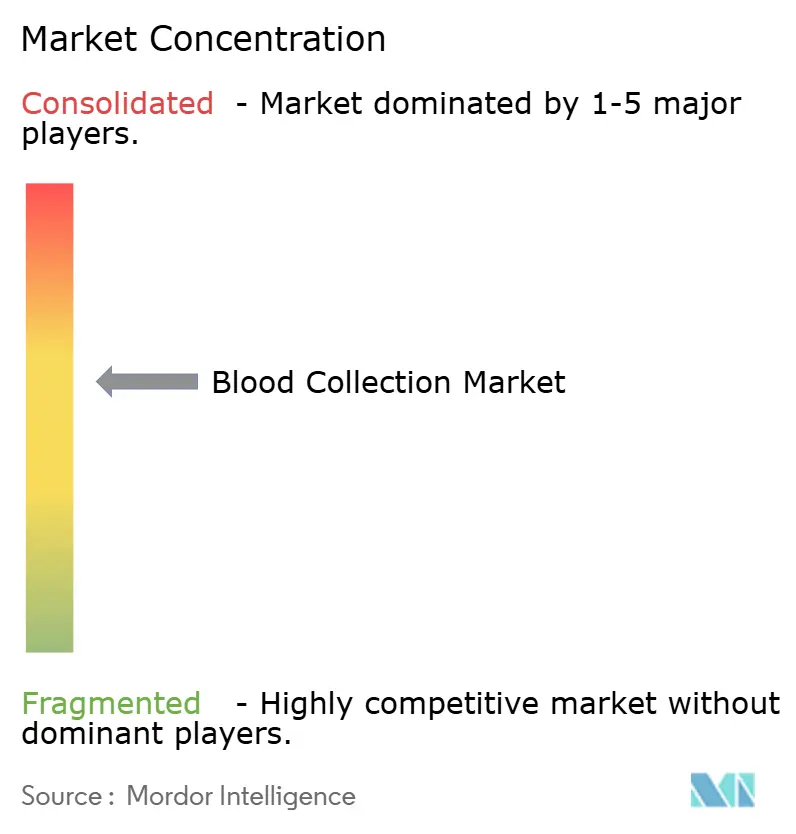
| Market Concentration | Medium |
Major Players *Disclaimer: Major Players sorted in no particular order Image © Mordor Intelligence. Reuse requires attribution under CC BY 4.0. | |
Blood Collection Market Analysis by Mordor Intelligence
The blood collection market size was valued at USD 8.25 billion in 2025 and estimated to grow from USD 8.72 billion in 2026 to reach USD 11.55 billion by 2031, at a CAGR of 5.73% during the forecast period (2026-2031). Growth is anchored in the mounting prevalence of chronic diseases, the surge in surgical procedures, and the widening of diagnostic capacity. Regulatory pressure to reduce needlestick injuries is accelerating the shift to safety-engineered products, while labor shortages are driving laboratories toward automation that ensures sampling precision. Mature economies are investing in robotic phlebotomy and needle-free platforms, whereas emerging regions focus on scaling basic collection infrastructure. Competitive intensity is heightening as incumbents defend their share through product refreshes and alliances with technology start-ups.
Key Report Takeaways
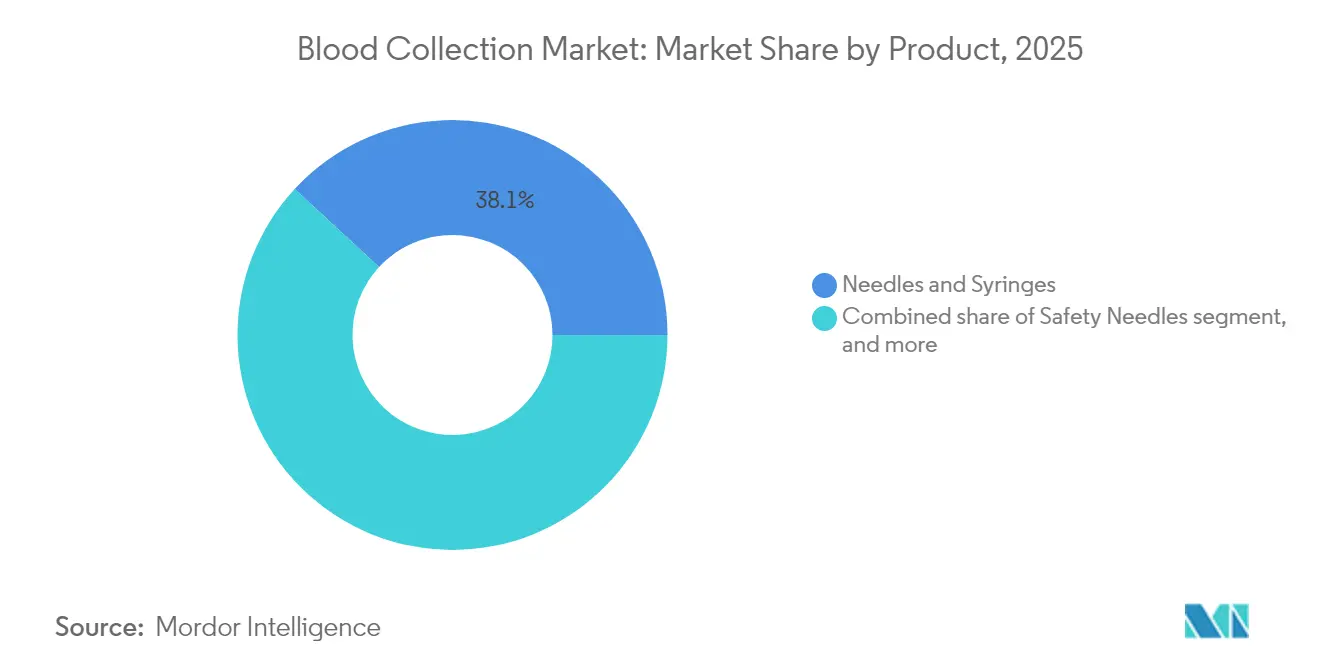
- By product, needles and syringes led with a 38.12% revenue share in 2025; tubes are anticipated to register the fastest growth of 7.29% CAGR through 2031.
- By collection method, manual collection held a 55.05% share of the blood collection market size in 2025, while automated systems are projected to advance at an 8.43% CAGR between 2026 and 2031.
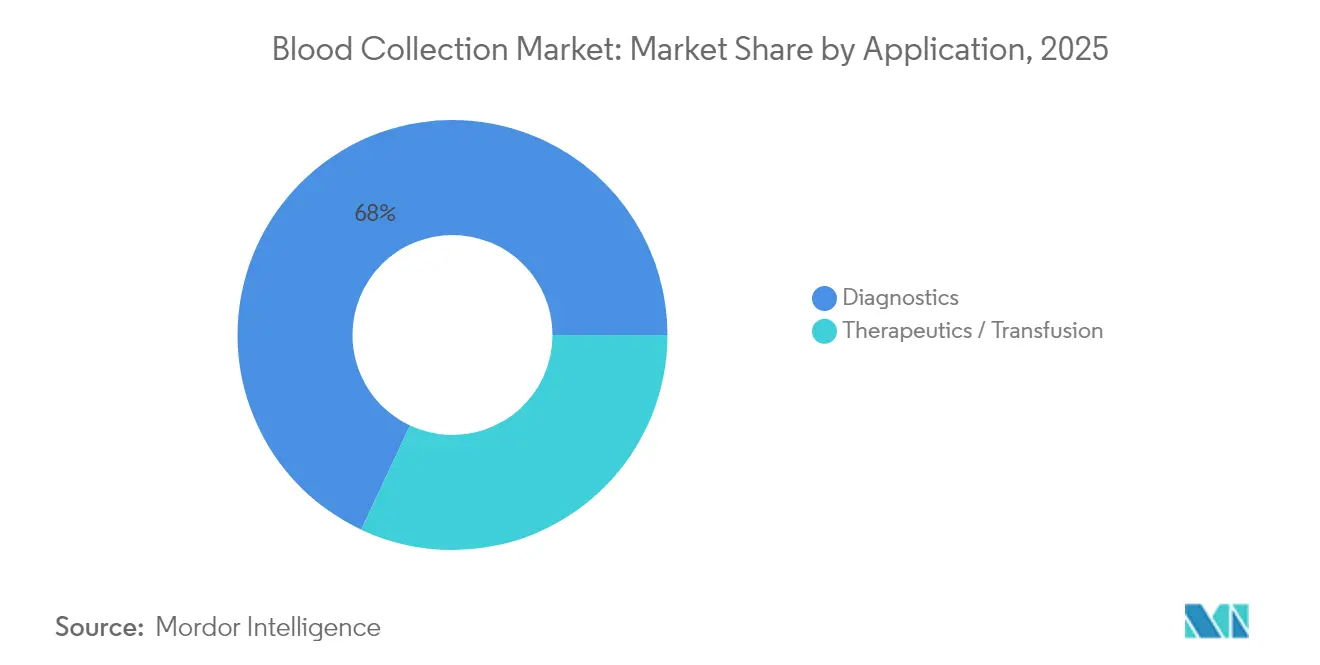
- By application, diagnostics accounted for a 68.02% share of the blood collection market size in 2025, and therapeutic/transfusion uses are forecast to grow at a 7.08% CAGR through 2031.
- By end user, hospitals and diagnostic centers captured 53.78% of the blood collection market share in 2025; point-of-care and home-care settings are set to expand at an 8.21% CAGR to 2031.
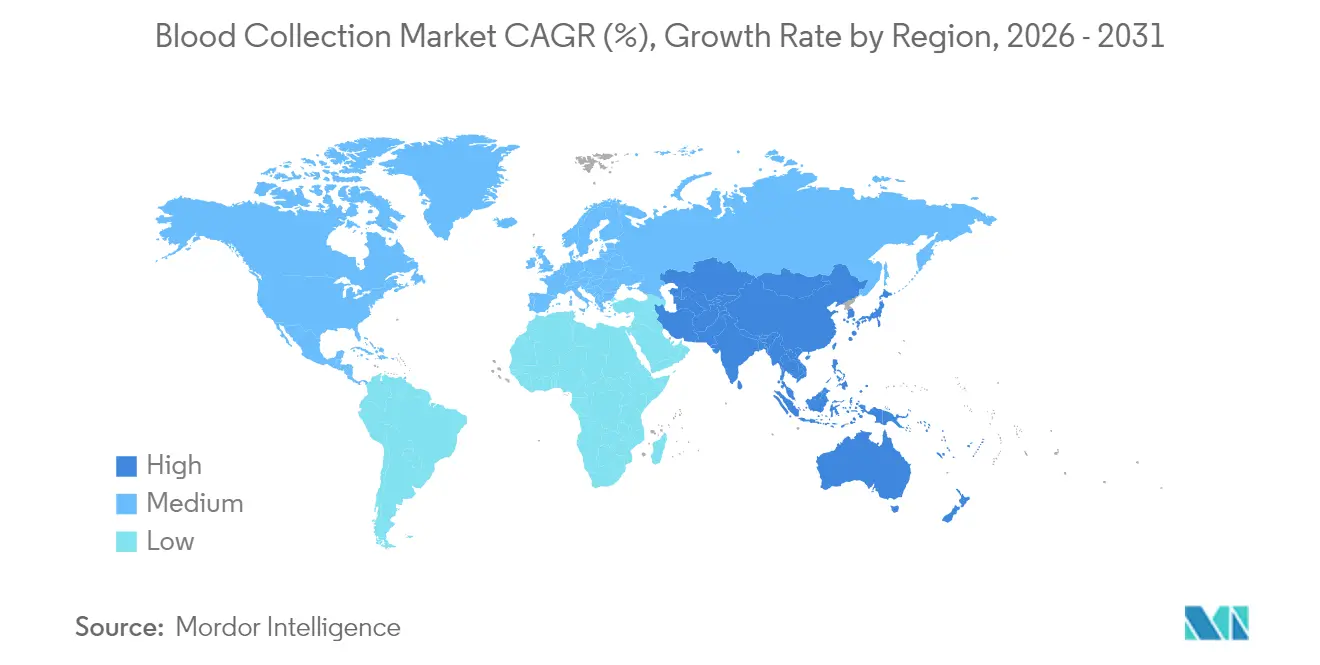
- By geography, North America accounted for 42.10% of 2025 revenue, whereas the Asia-Pacific region is poised for the highest 6.19% CAGR through 2031.
Note: Market size and forecast figures in this report are generated using Mordor Intelligence’s proprietary estimation framework, updated with the latest available data and insights as of 2026.
Market Trends and Insights
Drivers Impact Analysis of Blood Collection Market*
| Driver | % Impact on CAGR Forecast | Geographic Relevance | Impact Timeline |
|---|---|---|---|
| Growing prevalence of chronic diseases | +1.2% | North America, Europe, expanding globally | Long term (≥ 4 years) |
| Rising incidence of trauma and accidents | +0.8% | Higher impact in emerging markets | Medium term (2-4 years) |
| Increasing volume of surgical procedures | +1.1% | North America and Asia-Pacific | Medium term (2-4 years) |
| Expansion of diagnostic and POC infrastructure | +1.3% | Asia-Pacific core, spill-over to MEA | Long term (≥ 4 years) |
| Technological advances in collection devices | +0.9% | North America & EU, expanding to Asia-Pacific | Medium term (2-4 years) |
| Government initiatives for blood safety | +0.7% | US and EU leadership | Long term (≥ 4 years) |
| Source: Mordor Intelligence | |||
Growing Prevalence of Chronic Diseases
Chronic disorders now affect 76.4% of US adults, and incidence among younger cohorts is climbing, pushing routine venous and capillary testing demand upward. Healthcare providers are scaling automated analyzers and decentralized sampling kits to manage rising specimen volumes without proportionally increasing headcount. Value-based care contracts tie reimbursement to timely monitoring, prompting hospitals to embed point-of-care (POC) coagulation and HbA1c panels inside primary-care clinics. Device makers respond by miniaturizing tubes pre-filled with optimized anticoagulants that preserve biomarkers for extended transport windows. These shifts collectively reinforce sustained revenue visibility for the blood collection market.
Rising Incidence of Trauma and Accidents
Urbanization correlates with higher trauma presentations that require immediate type-and-screen and coagulation work-ups. Level-I trauma centers are outfitting emergency bays with cartridge-based POC analyzers fed by 2 mL arterial draws, delivering results inside 3 minutes. The strategy reduces door-to-intervention time and improves survival metrics, nudging regional hospitals to replicate the model. Suppliers have introduced vacuum-assisted winged infusion sets with integrated flash-visibility to shorten first-stick time and minimize redraws under chaotic conditions. Emerging-market facilities are leapfrogging to these safety-optimized kits as donor agencies underwrite procurement.
Increasing Volume of Surgical Procedures
Elective and cancer-related surgeries rebounded in 2024, driving a 7% rise in blood sample throughput at leading academic medical centers. Higher median BMI among surgical candidates raises the probability of complex draws, fostering adoption of ultrasound-guided collection carts that locate deep veins swiftly. Minimally invasive techniques demand tighter peri-operative hemoglobin tracking, so operating suites now integrate inline sampling lines that funnel micro-volumes directly to blood gas analyzers. Collectively, these practices lift per-patient draw frequency, bolstering the blood collection market.
Expansion of Diagnostic and Point-of-Care Testing Infrastructure
Seventy-seven percent of hospitals ran POC blood-gas panels in 2024, reflecting a pivotal shift toward near-patient analytics. Pharmacy chains follow suit, piloting capillary-based lipid and COVID-19 antibody screens that need just six drops of blood using BD MiniDraw devices. Remote communities exploit mobile vans outfitted with battery-powered centrifuges, closing diagnostic gaps without building full labs. This democratization of testing scales demand for lightweight collection kits compatible with rugged environments, fuelling the blood collection market over the forecast horizon.
Restraints Impact Analysis of Blood Collection Market*
| Restraints Impact Analysis | (~) % Impact on CAGR Forecast | Geographic Relevance | Impact Timeline |
|---|---|---|---|
| Risk of blood-borne infections | −0.6% | Higher impact where safety infrastructure is weak | Medium term (2-4 years) |
| Needlestick injuries and liability | −0.8% | North America & Europe | Short term (≤ 2 years) |
| Alternative non-invasive diagnostics | −0.4% | North America & EU, spreading to Asia-Pacific | Long term (≥ 4 years) |
| Shortage of skilled phlebotomists | −0.7% | Acute in rural and developing regions | Medium term (2-4 years) |
| Source: Mordor Intelligence | |||
Risk of Blood-Borne Infections and Contamination
In 2025 the FDA issued updated hepatitis-B screening guidance that tightens performance criteria for donor testing platforms, raising compliance costs for collection centers. Facilities adopt double-sterility barriers and prefabricated closed-loop collection systems to mitigate contamination, but these safeguards elevate per-unit expense. Laboratories in infrastructure-poor regions struggle to fund such upgrades, deferring purchases and dampening near-term demand. Continuous surveillance for emerging pathogens maintains the pressure to upgrade devices, yet reimbursement schemes seldom offset added overhead, tempering the blood collection market’s expansion rate.
Needlestick Injuries and Associated Liability Costs
Hospital staff still sustain an estimated 385,000 needlestick incidents annually despite widespread safety devices, with 27.3% occurring even when protective features exist. Legal settlements and post-exposure prophylaxis inflate total cost per incident, steering procurement toward premium retractable or shielded needles. Asia-Pacific hospitals face unique challenges as insulin pen needles account for 20% of syringe injuries, prompting bulk conversion to safety-engineered pen sets. Although these transitions spur unit revenue growth, resistance from budget-constrained facilities can slow overall market uptake.
*Our forecasts treat driver/restraint impacts as directional, not additive. The impact forecasts reflect baseline growth, mix effects, and variable interactions.
Blood Collection Market Segment Analysis
By Product:
Tubes Drive Specialized Testing GrowthNeedles and syringes accounted for 38.12% of 2025 revenue, underscoring their widespread use for venous access across various care settings. Tubes, however, constitute the fastest-advancing niche, set to log a 7.29% CAGR through 2031 as clinicians demand additive-coded vacutainers tailored for genetics, proteomics, and oncology panels. This trajectory highlights how assay sophistication reconfigures consumable mix within the blood collection market.
Demand for safety needles rises steadily thanks to OSHA standards, yet premium pricing moderates adoption speed in low-margin outpatient labs. Capillary lancets are gaining favor in retail clinics, where fingertip sampling is sufficient for metabolic and infectious disease screens. BD MiniDraw exemplifies capillary innovation, matching venous-draw accuracy with six-drop volumes, broadening consumer access. Blood bags maintain stable hospital demand for transfusion services, although synthetic substitutes and optimized inventory systems are curbing volume growth. Emerging robotic and needle-free products, currently a small slice, could capture an outsized share post-2030 as clinical validation accumulates.



By Collection Method:
Automation Gains Despite Manual DominanceManual draws retained a 55.05% share in 2025, reflecting the entrenched nature of these skills and their minimal capital requirements, especially in community hospitals and mobile drives. Yet the automated cohort will expand at an 8.43% CAGR, propelled by phlebotomist shortages projected at 19,600 US openings per year. Institutions trial autonomous robots like Vitestro’s system, achieving 95% first-stick success and standardizing specimen quality.
High-volume outpatient labs justify robotics through throughput and reduced redraw costs, whereas critical-access hospitals still rely on manual versatility for challenging anatomies. AI-guided ultrasound probes integrate seamlessly into carts, reducing the average collection time to 90 seconds and minimizing patient discomfort. Capital expenditure remains a barrier; nonetheless, leasing models and productivity incentives are narrowing the affordability gap, sustaining the blood collection market’s automation pivot.
By Application:
Diagnostics Dominate While Therapeutics AccelerateDiagnostics captured 68.02% of 2025 turnover as chronic disease monitoring and preventive screens became routine in primary care. The inclusion of molecular assays in standard check-ups increases the per-test yield, reinforcing the centrality of diagnostics to the blood collection market size.
Therapeutic and transfusion-oriented draws are expected to increase at a faster 7.08% CAGR through 2031, driven by cell-therapy manufacturing and clinical trials for laboratory-grown red blood cells. Specialized apheresis kits and leukoreduction filters support this vertical, with RESTORE-trial milestones expected to stimulate additional demand. Laboratories expand specimen banking for personalized oncology, driving uptake of cryo-preservation tubes and RNA-stabilizing media. While regenerative medicine remains nascent, each incremental trial inflates the value of high-integrity collection products.
By End User:
Point-of-Care Settings Surge AheadHospitals and reference labs owned 53.78% of sales in 2025, leveraging integrated workflows and group purchasing power. Their centralized models facilitate the rapid adoption of next-generation safety consumables and automation, keeping them at the forefront of customers within the blood collection devices industry.
Point-of-care and home-care venues, however, will post an 8.21% CAGR, energized by consumer demand for convenience and telemedicine adoption. Pharmacy chains embed MiniDraw bays staffed by general nurses, enabling after-work lipid-panel checks with no venipuncture training. Mobile nursing fleets carry capillary kits to rural homes, closing equity gaps and expanding the total addressable market for blood collection. Blood banks maintain their strategic relevance for transfusion support, but optimization software now curbs wastage, tempering the volume growth. Research institutes and pharmaceutical sponsors contribute to a niche demand for protocol-specific kits that preserve novel biomarkers.
Geography Analysis
North America Blood Collection Market
North America preserved 42.10% of 2025 revenue, buoyed by stringent OSHA compliance and high per-capita test utilization. Hospitals invest in robotic phlebotomy pilots and transition to fully closed systems to meet tightening donor-screening guidelines that favor high-throughput, error-proof devices. Growth remains moderate given the region’s installed base, yet replacement cycles and tech refreshes underpin predictable recurring sales.
Europe Blood Collection Market
Europe follows closely, guided by the 2024 EU Regulation on substances of human origin, which harmonizes safety standards across member states and encourages cross-border sharing of blood products. National health systems allocate modernization funds to vacuum-assisted safety tubes and barcode traceability, underpinning steady expansion. Pilot deployments of AI-enabled vein-finders in Germany and the Netherlands illustrate how clinical performance benchmarks catalyze procurement decisions, supporting revenue uplift across Western Europe.
APAC, MEA and South America Blood Collection Market
Asia-Pacific is set to deliver the fastest 6.19% CAGR to 2031, drawing on healthcare infrastructure upgrades and policy initiatives like Australia’s Plasma Pathway that add 95,000 donations annually. China’s hospital expansion plans integrate fully automated sample-processing lines, magnifying demand for compatible closed-system consumables. India’s telehealth surge spurs rural adoption of capillary-based lipid and glucose testing, stretching distribution networks and providing fresh volume streams for the blood collection market. Though Middle East & Africa and South America trail in spending power, targeted investments in tertiary centers and trauma facilities signal rising opportunities, especially for safety-engineered needles that satisfy WHO injury-prevention guidelines.

Regulatory Landscape
Blood collection devices are governed by medical-device controls alongside blood and biologics requirements, which tend to steer manufacturers toward safety-engineered, traceable, and contamination-resistant designs. In the United States, FDA device classification covers capillary blood collection tubes under 21 CFR 864.6150 as Class I (general controls) and exempts them from premarket notification (as of April 2026). FDA guidance for blood collection, processing, and storage systems was refreshed via an October 2024 draft, with updated recommendations issued in June 2026, reinforcing expectations for system-level performance, labeling, and process controls.
In Europe, the EU MDR/IVDR transition continues to shape conformity assessment pathways, with Medical Device Coordination Group (MDCG) guidance updates across 2024-2025. This includes March 2025 updates to IVD classification guidance and January 2025 templates supporting IVDR preliminary assessments. Standards add another compliance anchor for suppliers active across regions, with ISO 23908:2024 (published December 2024) specifying sharps injury protection requirements relevant to blood collection, and ongoing standardization work in advanced consumables such as apheresis blood bag systems (ISO/DIS 3826-4) progressing through 2026, including the close of DIS voting on May 5, 2026.
Competitive Landscape
The marketplace exhibits moderate fragmentation. Becton Dickinson, Terumo, and Cardinal Health each leverage global manufacturing scale and end-to-end portfolios spanning syringes, tubes, and safety accessories, enabling bundled contracting with large hospital networks. Continuous product refresh—such as BD’s pre-analytical micro-collection tubes tailored for mass spectrometry—safeguards share.
Disruptive entrants concentrate on patient-centric solutions. Vitestro’s CE-marked robot reduces procedure variability and targets outpatient draw stations where phlebotomist availability is tight. Tasso and Drawbridge Health market painless upper-arm microneedle kits that integrate with mail-in molecular test panels, unlocking a direct-to-consumer revenue lane. Partnerships are proliferating: BD infused capital into Babson Diagnostics to commercialize fingertip MiniDraw services within retail chains, accelerating omnichannel reach.
Intellectual-property filings climb as competitors explore nanocoated needles that reduce insertion force and terahertz spectroscopy for real-time hemoglobin quantification. Incumbents hedge disruption risk by co-developing platforms with start-ups or acquiring specialized IP. Regulatory know-how and distribution strength remain decisive, but the line between collection device and diagnostic interface continues to blur, compelling firms to broaden competencies well beyond legacy consumables.
Blood Collection Industry Leaders
Cardinal Health
Becton Dickinson and Company
Haemonetics Corporation
Medline Industries LP
Greiner Bio-One International GmbH
- *Disclaimer: Major Players sorted in no particular order
Blood Collection Market Companies Covered in this Report
- Beckton Dickinson
- Terumo
- Cardinal Health
- Greiner Bio One International
- Fresenius
- Haemonetics
- Mckesson
- Medline Industries
- Nipro
- Sarstedt
- Thermo Fisher Scientific
- Abbott Laboratories
- Danaher
- ICU Medical
- QIAGEN
- Grifols
- Quest Diagnostics
- Velano Vascular
- Greiner Group AG
- Sol-Millennium Medical Group

Market Opportunities and Future Outlook
Clinical validation and regulatory clearances are widening the addressable market for automated and decentralized collection workflows, especially where staffing constraints and pre-analytical error reduction are procurement priorities. In April 2026, Vitestro published multicenter ADOPT trial results in Clinical Chemistry, reporting a 94.5% first-stick success rate for its Aletta autonomous robotic phlebotomy device. That evidence supports broader hospital and outpatient lab evaluation of robotics as a repeatable, standardized front-end to diagnostics. At the same time, FDA device pathways continue to support commercial scaling of capillary platforms, and in April 2026 BD received FDA 510(k) clearance (K252378) for the BD MiniDraw Capillary Blood Collection System, strengthening a retail and point-of-care operating model built around small-volume collection to extend testing access beyond traditional phlebotomy stations.
A second opportunity track is reworking the pre-analytical supply chain for ambient shipping and stabilization to enable remote and decentralized sampling. In April 2026, Covaris launched truCOLLECT, an FDA Class I-listed capillary blood collection device that integrates on-device stabilization and ambient shipping for DNA extraction, creating whitespace for kit vendors and diagnostics partners to bundle collection, stabilization chemistry, and logistics into a single workflow. Product registries also point to continued innovation in needle-free blood draw, including January 2026 updates to FDA GUDID listings for Venocare's Navi needle-free blood collection device designed to integrate with peripheral IV catheters, aligning with hospital goals to reduce needlestick risk and streamline repeat draws from existing access.
Recent Industry Developments in Blood Collection Market
- April 2026: Vitestro published multicenter ADOPT clinical trial results in Clinical Chemistry for its Aletta autonomous robotic phlebotomy device, reporting a 94.5% first-stick success rate. The publication strengthens clinical credibility for robotic phlebotomy in high-volume settings where staffing constraints and redraw reduction drive purchasing decisions.
- March 2025: BD released clinical study results indicating that the BD MiniDraw Capillary Blood Collection System delivered equivalent testing accuracy to higher-volume venous draws. The data supports expansion of capillary collection models in point-of-care and retail settings by enabling trained healthcare workers without formal phlebotomy experience to collect diagnostically usable samples.
- August 2024: Vitestro obtained a CE mark for its robotic blood-drawing system, allowing commercial sales across Europe. The clearance broadened the set of adopters that can trial and procure automation-based collection solutions under EU medical device rules, increasing competitive pressure on manual-only workflows.


Blood Collection Market Report Scope and Research Methodology
Market Definition and Coverage
This market includes revenue from products used to collect blood samples for diagnostic testing and therapeutic use across common collection settings such as hospitals, diagnostic centers, and blood banks. The scope follows the blood draw workflow, from the point of collection through safe containment for transport and use.
Scope exclusions: We exclude downstream lab testing instruments, reagents, and broader IV infusion consumables that are not primarily used for collecting blood.
Segments Covered in This Report
- By Product
- Needles & Syringes
- Safety Needles
- Tubes (Vacutainer, EDTA, Serum, Gel, Etc.)
- Lancets & Capillary Devices
- Blood Bags (Collection & Transfer)
- Other Products
- By Collection Method
- Manual
- Automated
- By Application
- Diagnostics
- Therapeutics / Transfusion
- By End User
- Hospitals & Diagnostic Centers
- Blood Banks
- Point-Of-Care & Home-Care Settings
- Other End Users
- Geography
- North America
- United States
- Canada
- Mexico
- Europe
- Germany
- United Kingdom
- France
- Italy
- Spain
- Rest of Europe
- Asia-Pacific
- China
- Japan
- India
- Australia
- South Korea
- Rest of Asia-Pacific
- Middle East & Africa
- GCC
- South Africa
- Rest of Middle East & Africa
- South America
- Brazil
- Argentina
- Rest of South America
- North America
Data Sources, Market Sizing, and Validation
Desk Research
Desk research is used to set the market boundaries and to anchor demand signals that explain why collection volumes change year to year. We refer to public health statistics and surveillance updates from the World Health Organization, the US Centers for Disease Control and Prevention, and OECD health data, which help us interpret testing intensity and care delivery patterns. We also review blood donation and transfusion related publications from blood services and associations, plus peer-reviewed articles on phlebotomy practices and safety adoption.
On the supply side, we review manufacturer annual reports, product catalogs, regulatory and safety communications, and credible media coverage to map what is sold and how product mix is shifting. Where available, paid subscriptions that include company financials and news help confirm revenue direction and corporate actions, and patent databases are used to check innovation focus in needles, safety devices, and collection systems. These examples are not exhaustive, and additional public references were used during data collection, validation, and clarification.
Primary Interviews and Surveys
Primary inputs were gathered through expert interviews and structured surveys with a mix of manufacturers, distributors, procurement leaders, lab and hospital stakeholders, and blood bank operators. These discussions were used to confirm adoption of safety blood collection practices, typical product mix by setting, and realistic price movement, and then we cross-checked how those points differed across APAC, EMEA, and the Americas.
Distribution of primary research fieldwork respondents
| Company type | Respondent position | Region |
|---|---|---|
| Top tier: 37% | CXOs: 20% | APAC: 49% |
| Mid tier: 41% | Functional/Unit leaders: 27% | EMEA: 33% |
| Smaller Players: 22% | Managers: 53% | Americas: 18% |
Market-Sizing & Forecasting
Market sizing starts with a top-down build where healthcare activity signals are used to reconstruct the demand pool for blood draws, which is then translated into consumable demand by typical use per procedure and mix by setting. In practice, volumes are informed by indicators such as diagnostic testing intensity, outpatient and inpatient throughput, blood donation and transfusion activity, and the shift toward safety engineered collection devices. Because product categories behave differently, pricing is treated separately for items like tubes, needles and syringes, lancets, and blood bags, and then blended back using realistic mix shares.
After the demand pool is formed, we check it using selective bottom-up approximations such as sampled supplier and channel inputs, average selling price ranges by product, and sanity checks on per-facility consumption. When country-level information is incomplete, we use proxy variables such as hospital bed stock, lab network expansion, and per capita healthcare use, and we re-test the assumptions using interview feedback before finalizing totals.
For forecasting, we typically use multivariate regression with scenario analysis around key drivers, since volumes and pricing do not move in a straight line each year. Variables such as chronic disease diagnosis trends, aging population share, laboratory automation uptake affecting tube demand, and safety regulation enforcement are applied to shape the year-by-year path, and the final outlook is aligned with what practitioners consider achievable within procurement cycles.
Data Validation & Update Cycle
Validation is done through triangulation across demand signals, supply signals, and expert feedback, so no single data stream drives the final number. Analysts run variance checks by region, product family, and end-use setting, then review outliers to determine whether they reflect price spikes, temporary shortages, or one-time policy changes.
Before sign-off, the model and assumptions go through a multi-step internal review, and follow-up outreach is triggered when interview feedback conflicts with desk-based indicators. Reports are refreshed annually, with interim updates when material events occur, such as major regulatory changes or sharp raw material price shifts that can impact average selling prices. Right before delivery, we perform a final scan to ensure the market view reflects the latest available public releases.
Mordor Intelligence's Blood Collection Market Size Compared With Other Published Estimates
Published market values for blood collection can differ substantially, even when the topic appears the same, because the boundary of what counts as collection is not consistent across studies. Differences also come from how each study treats pricing, the anchor year used for comparison, and how far growth is carried into the forecast window.
By tracking procedure-linked demand signals and refreshing mix and pricing assumptions annually, Mordor Intelligence keeps the estimate focused on true blood collection consumables used in venous and capillary draws, rather than allowing adjacent lab testing or broader medical disposables to inflate totals. Some studies rely on a single product-led build, which can miss shifts such as safety device adoption, changes in diagnostic center share, and region-specific procurement behavior that affects realized prices.
Benchmark comparison
| Source | Market Size | Gaps in Research Methodology |
|---|---|---|
| Mordor Intelligence | USD 8.72 B (2026) | |
| Global Consultancy A | USD 5.02 B (2025) | Uses a narrower counted revenue pool in the stated base year, which can happen when only selected device categories or limited end-use channels are included and when pricing is anchored to a tighter set of SKUs. |
| Industry Publisher B | USD 9.63 B (2025) | Reports a higher value in the same year, which is often explained by broader inclusions across tube types and collection accessories, plus different currency timing and less separation between collection and nearby lab workflow items. |
The spread in the table is mainly explained by scope edges and how the demand pool is translated into revenue, rather than disagreement that blood draws are growing. When the model is tied to draw volumes, product mix by setting, and realistic price ranges, the output stays traceable to clear steps, and the assumptions are easier to validate and update.


Key Questions Answered in the Report
What is the current value of the blood collection market?
The sector generated USD 8.72 billion in 2026 and is set to reach USD 11.55 billion by 2031.
Which product segment is growing the quickest?
Tubes are advancing at a 7.29% CAGR thanks to specialized diagnostic protocols that require additive-specific vacutainers.
Why are automated blood collection systems gaining traction?
Labor shortages and the need for standardized, high-throughput sampling drive an 8.43% CAGR for automated platforms through 2031.
Which region is forecast to expand the fastest?
Asia-Pacific will grow at a 6.19% CAGR, propelled by healthcare infrastructure upgrades and chronic disease management programs.
How are safety regulations influencing device adoption?
OSHA-aligned mandates and updated FDA donor guidelines are accelerating replacement of conventional needles with safety-engineered and closed-loop devices.
Page last updated on:





