
Biomaterial Wound Dressing Market Size and Share
Market Overview
| Study Period | 2022 - 2031 |
|---|---|
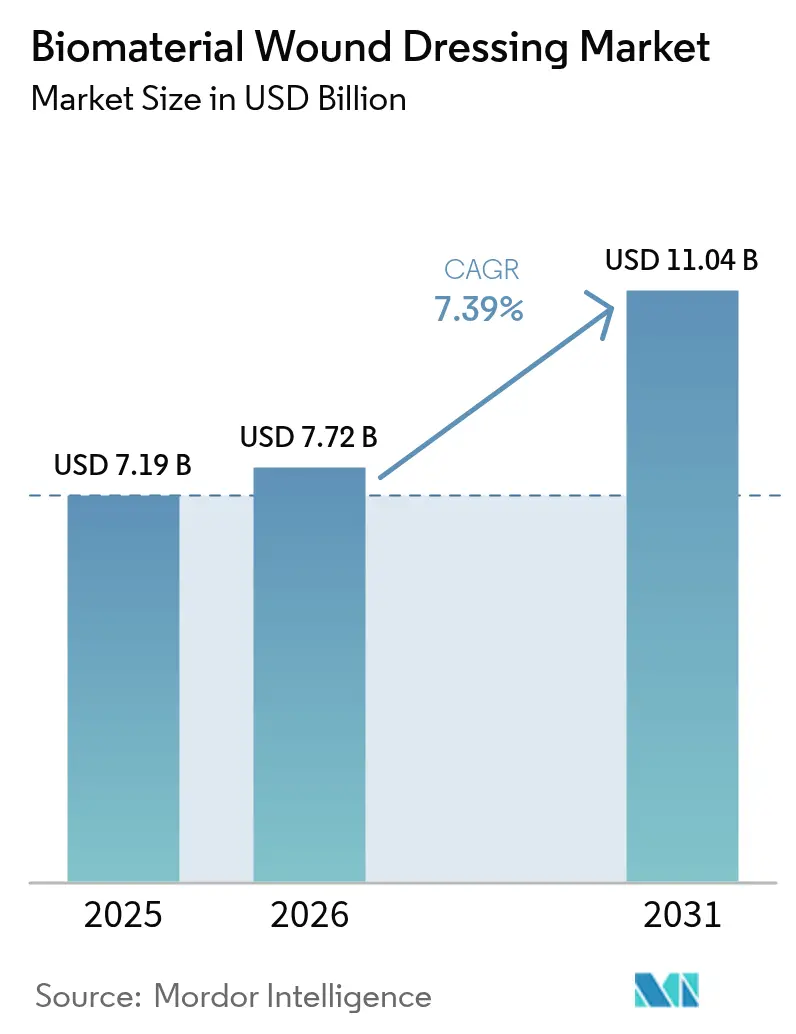
| Market Size (2026) | USD 7.72 Billion |
| Market Size (2031) | USD 11.04 Billion |
| Growth Rate (2026 - 2031) | 7.39 % |
| Fastest Growing Market | Asia Pacific |
| Largest Market | North America |
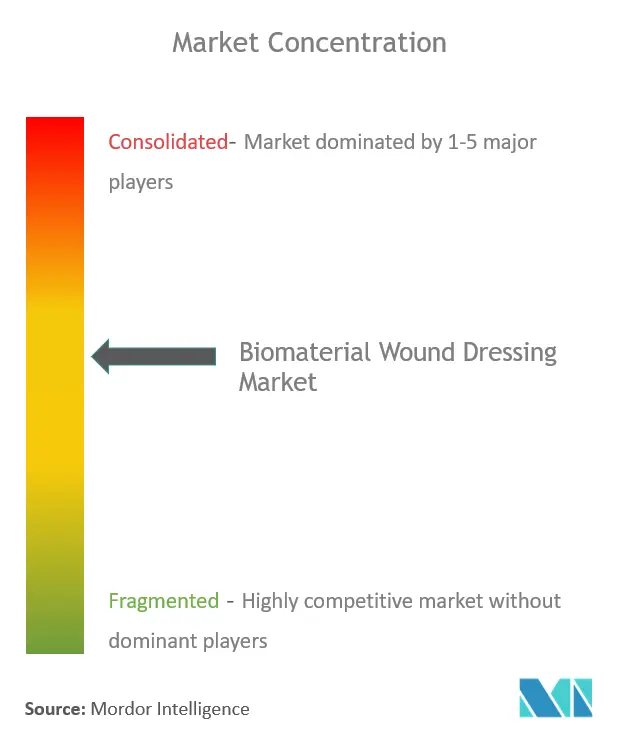
| Market Concentration | Medium |
Major Players *Disclaimer: Major Players sorted in no particular order Image © Mordor Intelligence. Reuse requires attribution under CC BY 4.0. | |
Biomaterial Wound Dressing Market Analysis by Mordor Intelligence
The biomaterial wound dressing market size is expected to grow from USD 7.19 billion in 2025 to USD 7.72 billion in 2026 and is forecast to reach USD 11.04 billion by 2031 at 7.39% CAGR over 2026-2031. Rising incidence of chronic wounds, rules that now demand clinical‐grade evidence for product claims, and hospital-to-home care shifts are reinforcing steady adoption of advanced biomaterial dressings. Military validation of chitosan hemostatic pads, mounting payer support for bioactive products, and new electro-spun nanofiber scaffolds are widening the remedy toolkit while keeping pricing networks resilient. Simultaneously, vertical integration across alginate supply chains and investments in in-house biocompatibility testing are emerging as key risk-mitigation strategies. Overall, the biomaterial wound dressing market is moving into a phase where platform-based dressings that combine moisture control, infection prevention, and real-time monitoring are favored for their ability to shorten healing cycles and curb total treatment costs.
Key Report Takeaways
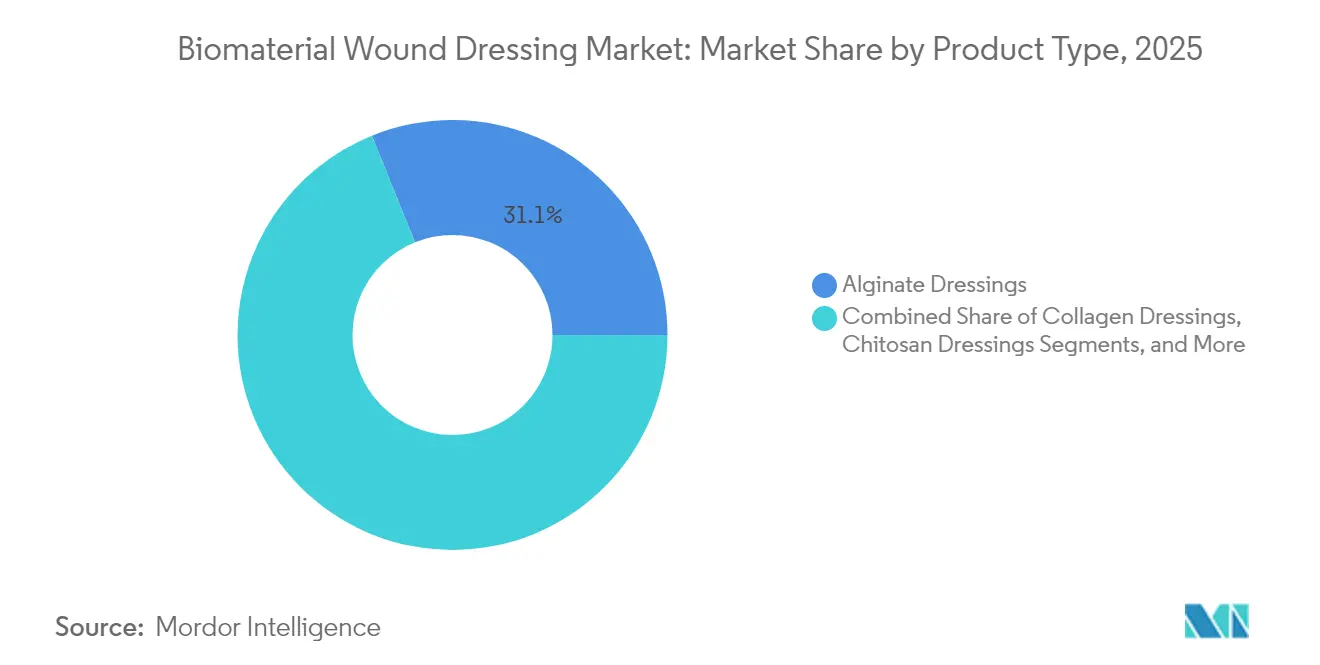
- By product type, alginate dressings led with 31.12% revenue share in 2025, while chitosan dressings are projected to expand at a 7.70% CAGR through 2031.
- By material source, natural biomaterials held 54.88% of the biomaterial wound dressing market share in 2025, whereas composite biomaterials record the highest projected 7.93% CAGR to 2031.
- By mechanism, moisture-retentive dressings commanded 42.96% share of the biomaterial wound dressing market size in 2025, and bioactive/intelligent dressings are slated to grow at an 8.03% CAGR.
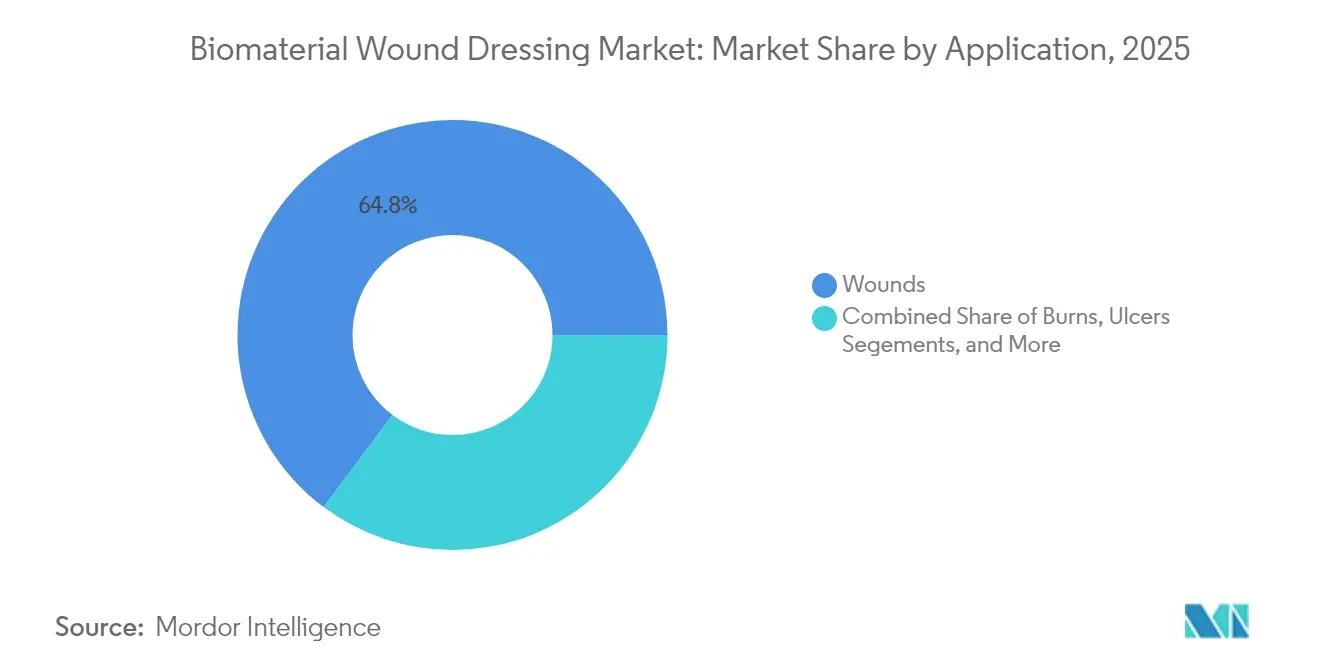
- By application, general wound care accounted for 64.77% share in 2025, while traumatic injury care is advancing at an 8.14% CAGR through 2031.
- By end-user, hospitals held 60.69% share in 2025; home healthcare is the fastest-growing channel at an 7.84% CAGR.
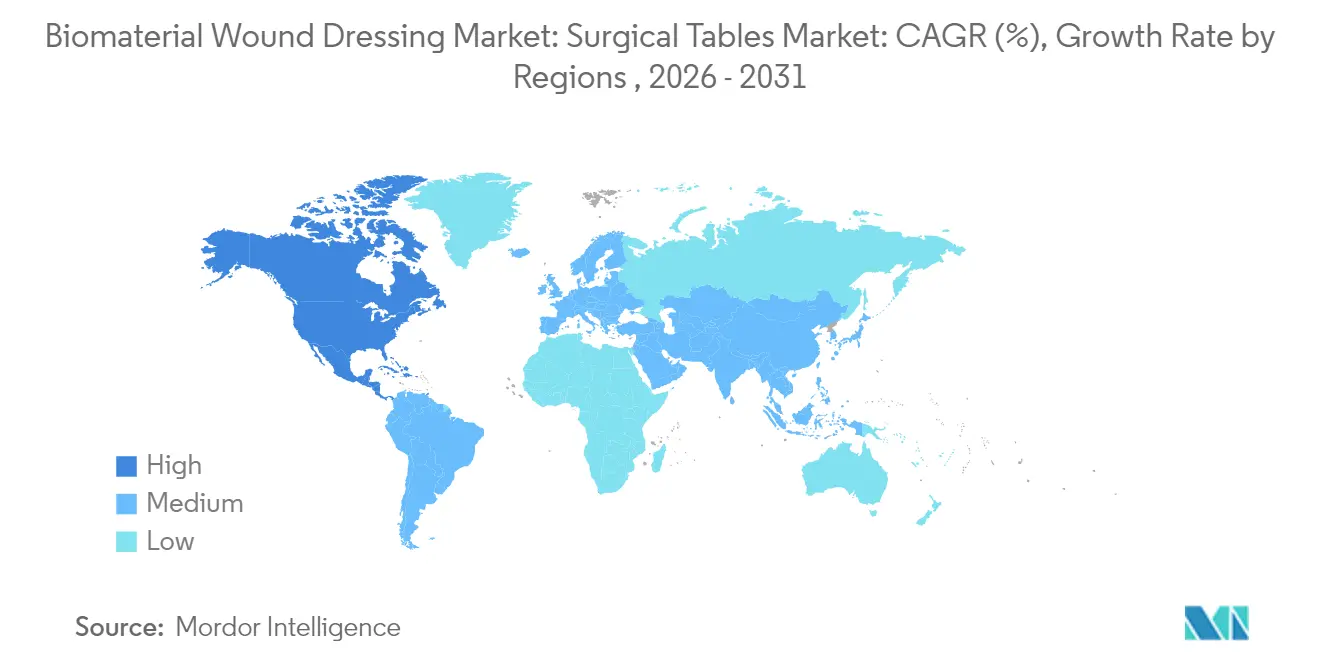
- By geography, North America captured 45.02% of the biomaterial wound dressing market in 2025, yet Asia-Pacific shows the quickest 8.58% CAGR outlook.
Note: Market size and forecast figures in this report are generated using Mordor Intelligence’s proprietary estimation framework, updated with the latest available data and insights as of 2026.
Market Trends and Insights
Drivers Impact Analysis of Biomaterial Wound Dressing Market*
| Driver | (~) % Impact on CAGR Forecast | Geographic Relevance | Impact Timeline |
|---|---|---|---|
| Regulatory push for evidence-based advanced dressings | +1.2% | Global, early adoption in North America & EU | Medium term (2-4 years) |
| Rising diabetic & geriatric chronic-wound pool | +1.8% | Major impact in North America, Europe, Asia-Pacific | Long term (≥ 4 years) |
| Surge in outpatient surgery & home-based care | +1.1% | North America & EU core, expanding to Asia-Pacific | Short term (≤ 2 years) |
| Reimbursement expansion for bioactive dressings | +0.9% | North America & EU, selective Asia-Pacific markets | Medium term (2-4 years) |
| Breakthroughs in electro-spun nanofiber scaffolds | +0.8% | Global, led by North America & Europe R&D hubs | Long term (≥ 4 years) |
| Military adoption of chitosan hemostatic pads | +0.4% | Global, defense procurement cycles | Short term (≤ 2 years) |
| Source: Mordor Intelligence | |||
Regulatory push for evidence-based advanced dressings
Regulators are shifting from material-class exemptions to performance-based benchmarks. The FDA’s proposal to reclassify antimicrobial dressings into Class II and III status will compel companies to submit more clinical data, filtering out commodity products that lack safety validation. European rule makers are layering environmental metrics over traditional risk assessments, spurring design teams to favor biodegradable polymers that meet both safety and sustainability tests. Device sponsors with in-house ISO 10993 labs now enjoy shorter approval cycles because third-party queuing delays no longer erode their speed-to-market advantage.
Rising diabetic & geriatric chronic-wound pool
Global diabetes prevalence is expected to reach 643 million adults by 2030, and roughly one-third will face diabetic foot ulcers at some point in their lives. Clinical trials demonstrate that collagen dressings deliver 54.5% mean wound-area reduction in chronic ulcers compared with 38.8% for conventional gauze, tightening payer focus on solutions that cut infection rates and readmissions. As population aging intensifies immune compromise and slows re-epithelialization, demand for bioactive scaffolds that curb inflammation and stimulate angiogenesis will remain durable.
Surge in outpatient surgery & home-based care
Ambulatory surgical centers now perform complex procedures once limited to inpatient beds, transferring post-op wound care burden to patients and family caregivers. An all-in-one negative-pressure dressing launched in 2024 trims application time by 61% and maintains integrity for seven days, aligning with staffing shortages in home care settings [1]. Telehealth-enabled bandages equipped with color-change sensors alert remote clinicians when exudate saturation warrants a change, reducing home nurse visits and widening payer enthusiasm for value-based reimbursement.
Reimbursement expansion for bioactive dressings
UnitedHealthcare and other large payers now reimburse skin substitutes such as EpiFix after four weeks of failed standard care, signaling a gradual broadening of coverage criteria. The temporary halt of Local Coverage Determinations (LCDs) on skin substitutes in 2025 prevents uncertainty-driven stocking cuts by hospitals, keeping the biomaterial wound dressing market buffered during policy realignment. As cost-effectiveness dossiers accumulate, formularies are expected to approve additional products that document fewer clinic visits and faster closure times.
Breakthroughs in electro-spun nanofiber scaffolds
Clinicians in multi-center trials reported that 46.6% of chronic-wound patients treated with a nanofiber spray reached full epithelialization without rehospitalization, versus none in control cohorts. Nanofiber-coated cotton integrating lawsone compounds eradicated multidrug-resistant bacteria and accelerated closure in animal models, underscoring the technology’s dual antimicrobial and regenerative merit. Multi-nozzle electro-spinning rigs now balance throughput and fiber uniformity, easing prior bottlenecks that impeded commercial scaling.
Military adoption of chitosan hemostatic pads
Defense health agencies are procuring chitosan dressings to stop arterial bleeding within the “golden five minutes,” validating their use under extreme conditions. Traumagel earned FDA approval in 2025 and is being positioned for civilian trauma rooms and ambulances [2]. A Department of Defense contract worth USD 75 million for advanced wound therapy systems further demonstrates defense sector commitment and de-risks revenue for scaled suppliers.
Restraints Impact Analysis of Biomaterial Wound Dressing Market*
| Restraint | (~) % Impact on CAGR Forecast | Geographic Relevance | Impact Timeline |
|---|---|---|---|
| Fragmented raw alginate supply chain | -0.7% | Global, concentrated impact on seaweed-dependent regions | Medium term (2-4 years) |
| Stringent biocompatibility validation timelines | -0.5% | Global, particularly affecting new market entrants | Long term (≥ 4 years) |
| Recycling-disposal concerns for silver-laden dressings | -0.4% | EU & North America core, expanding to APAC | Medium term (2-4 years) |
| Price sensitivity in low- & middle-income settings | -0.6% | APAC, MEA, Latin America, with spillover to cost-conscious segments globally | Long term (≥ 4 years |
| Source: Mordor Intelligence | |||
Fragmented raw alginate supply chain
Most alginate comes from brown seaweed harvested in a narrow seasonal window, exposing dressings makers to raw-material price swings and stock-out risks. Studies show cultivated kelp can match wild-harvest quality when enzyme-based extraction replaces chemical methods, but adoption is still nascent [3]. With alginate demanded by over 600 product categories, vertical integration—either by acquiring seaweed farms or securing offtake contracts—is emerging as a hedge against supply shocks.
Stringent biocompatibility validation timelines
A full ISO 10993 battery can consume 18 months and several million dollars when novel polymers or nanomaterials are involved. Small developers often face financing gaps while waiting for cytotoxicity, sensitization, and chronic-toxicity readouts, allowing incumbents with GLP-certified labs to secure first-mover status. Although risk-based shortcuts exist for well-characterized materials, hybrid composites still trigger exhaustive endpoint panels, elongating time-to-market.
*Our forecasts treat driver/restraint impacts as directional, not additive. The impact forecasts reflect baseline growth, mix effects, and variable interactions.
Biomaterial Wound Dressing Market Segment Analysis
By Product Type:
Alginate leadership faces chitosan momentumAlginate dressings captured 31.12% of the biomaterial wound dressing market in 2025 because their gel-forming fibers lock in exudate while maintaining a micro-moist healing climate. Yet the same year saw chitosan pads deliver the fastest 7.70% CAGR trajectory, bolstered by battlefield proof and strong antimicrobial credentials. Collagen dressings continue to win chronic-wound protocols owing to their extracellular-matrix mimicry, whereas composite dressings add super-absorbent layers or antimicrobial nanoparticles to broaden indications.
Over the forecast horizon, alginate incumbents are moving into proprietary blends that combine alginate’s absorptivity with chitosan’s clot-triggering chains, counteracting share erosion. Skin-substitute sheets command premium pricing thanks to tissue-engineering complexity, and spider-silk prototypes with tensile strength rivaling steel are now in pre-clinical programs. Collectively, the biomaterial wound dressing market will likely see a migration toward multi-mechanism sheets that consolidate absorption, hemostasis, and antibacterial effects within a single change interval.

By Material Source:
Natural dominance meets composite ingenuityNatural polymers account for 54.88% of the biomaterial wound dressing market size because clinicians trust their biocompatibility and biodegradability, and governments favor sustainable supply chains. Composite materials, however, lead projected growth at 7.93% CAGR as they unite natural chains like chitosan with electro-spun synthetics that add tensile strength and programmable release kinetics. Pure synthetic options are still viewed warily when microplastic residues are flagged by environmental health agencies, but fully bio-based synthetics are progressing through pilot lines.
In practice, the next wave of composite sheets may integrate plant-derived cellulose nanocrystals with bio-resorbable polyesters to balance mechanical endurance and eco-friendly disposal. Device sponsors that master solvent-free manufacturing will likely benefit from easing regulatory audits and lower carbon disclosures, attributes that payers increasingly embed into procurement scorecards. As such, composite material vendors will gain bargaining power across a biomaterial wound dressing market eager for greener, tougher, and data-rich dressings.
By Mode of Mechanism:
Moisture control reigns as intelligence risesMoisture-retentive dressings held 42.96% share of the biomaterial wound dressing market size in 2025 because fluid balance remains the cornerstone of epithelial cell migration. Nonetheless, bioactive and intelligent dressings hold the top growth slot with an 8.03% CAGR, propelled by smart sensors that flag pH spikes or bacterial load before visual symptoms arise. Hemostatic pads, historically used in field trauma, are entering dialysis centers where anticoagulant patients need fast closure at access sites.
The ecosystem is also seeing electroactive sheets that emit micro-currents to accelerate angiogenesis, pushing efficacy beyond passive moisture management. Early trials record 99.75% closure against 94% for conventional moist therapy, hinting at step-change outcomes. As hospitals ease into remote monitoring, intelligent bandages that transmit data to clinician dashboards can justify higher unit prices by trimming unplanned outpatient visits.
By Application:
Chronic wounds anchor volume; trauma care outpacesWounds represented 64.77% of 2025 revenue, underpinning the biomaterial wound dressing market with steady patient inflows from pressure ulcers, venous leg ulcers, and post-operative incisions. Yet traumatic injuries—spanning battlefield, road accidents, and industrial mishaps—register the briskest 8.14% CAGR through 2031 as military field kits become civilian EMS staples. Burns remain a high-margin niche where filmic dressings infused with growth factors reduce graft frequency and inpatient days.
Looking forward, trauma centers may embrace chitosan-based foams that halt spurting hemorrhage inside 300 seconds, while diabetic clinics deploy collagen matrices that down-regulate chronic inflammation markers. Each sub-segment will continue to demand tailored absorption rates, conformability profiles, and exchange intervals, driving portfolio diversification across the biomaterial wound dressing market.
By End-User:
Hospitals anchor scale; home care acceleratesHospitals retained 60.69% share in 2025 because complex wounds still rely on surgical debridement, negative-pressure rigs, and multi-disciplinary oversight found primarily in acute facilities. Nevertheless, home healthcare logs the fastest 7.84% CAGR as insurers champion lower-cost settings and self-care friendly dressings. Specialty outpatient wound clinics and long-term care facilities form the “other” cluster that demands extended-wear sheets with intuitive change indicators.
Telemedicine is easing remote oversight; smart bandages now transmit exudate volume trends and detect odor-causing anaerobes, leading to fewer clinic trips. Manufacturers are thus embedding peel-and-place applicators, color cues, and step-by-step QR code tutorials to cut training minutes. The biomaterial wound dressing market will therefore pivot toward patient-centric form factors that don’t sacrifice clinical rigor.
Geography Analysis
North America Biomaterial Wound Dressing Market
North America holds 45.02% of the biomaterial wound dressing market owing to robust reimbursement pathways, dense trauma centers, and early adoption of sensor-embedded sheets. FDA clarity on Class II and III filings sustains a predictable pipeline, encouraging venture capital for start-ups that target unmet diabetic foot ulcer needs. Academic-industry collaborations further shorten ideation-to-trial cycles, making the region a crucible for next-generation scaffolds.
Europe Biomaterial Wound Dressing Market
Europe represents a mature but environmentally mindful region where Medical Device Regulation (MDR) compliance now intertwines product safety with life-cycle sustainability. Suppliers with biodegradable substrates and take-back recycling programs are earning procurement points from national health services. Sweden’s appetite for advanced dressings illustrates payer readiness to reimburse premium composites when clinical dossiers show reduced nursing hours.
APAC Biomaterial Wound Dressing Market
Asia-Pacific posts the highest 8.58% CAGR as urbanization and lifestyle diseases swell chronic-wound caseloads. China is forming extramural wound-care networks that coordinate outpatient clinics, telehealth, and standardized protocols—expanding the addressable base for intelligent dressings. Japan’s clear but intricate device nomenclature under PMDA slows entry for smaller firms yet rewards those that complete the pathway with strong physician trust. India’s regulatory flux keeps domestic output subdued, but rising imports meet only a fraction of its vast need, opening doors for cost-effective natural polymer solutions.
Regulatory Landscape
Biomaterial wound dressings are regulated primarily as medical devices, with classification and evidence expectations varying by intended use, such as moisture management versus antimicrobial or bioactive claims. In the United States, the FDA places many wound dressing types under 21 CFR Part 878 (Surgical Devices), and sponsors commonly use 510(k) pathways when predicates exist. Products carrying antimicrobial, hemostatic, or tissue-regenerative performance claims face a higher evidentiary burden, which has supported the move toward evidence-based advanced dressings.
Across jurisdictions, biocompatibility and risk management requirements act as a practical gate for both incumbents and new entrants. FDA recognition and use of ISO 10993-1:2018 shape biological evaluation planning, and ISO 10993 test batteries can lengthen development timelines for novel polymers, composites, or nanomaterial-enabled dressings. In Europe, the EU Medical Device Regulation (MDR) places greater emphasis on clinical evaluation and post-market surveillance than prior directives, influencing launch sequencing and reinforcing the need for strong technical documentation before scaling distribution.
Value Chain Analysis
The value chain starts with biomaterial selection and formulation R&D (alginate, collagen, chitosan, and composites), then moves through prototyping, preclinical evaluation, and clinical studies tied to the intended claims, including antimicrobial, hemostatic, or bioactive functions. Biocompatibility planning and execution anchored to ISO 10993-1, along with device classification requirements in major jurisdictions, affect both time-to-market and cost structure. This has led some manufacturers to expand in-house testing capacity to reduce third-party lab bottlenecks.
Manufacturing focuses on converting biomaterials into sheets, foams, gels, or composite constructs, with Quality Management System alignment and validated sterilization and packaging workflows. Upstream, supply reliability for seaweed-derived alginate and other natural inputs remains a constraint, which supports vertical integration and long-term supply agreements. Downstream distribution covers hospital procurement, outpatient wound clinics, and a fast-growing home healthcare channel, where ease of application and extended-wear performance are increasingly relevant as care settings shift.
Competitive Landscape
The biomaterial wound dressing market is moderately fragmented: legacy device multinationals command flagship alginate and collagen lines, while focused innovators disrupt with nanofiber sprays and AI-enabled smart sheets. Platform strategies dominate; firms are bundling moisture-control films, antimicrobial nanoparticles, and biosensor arrays into single SKUs that are coded under unified HCPCS reimbursement lines.
Vertical integration trends continue as alginate shortages prompt buyers to secure kelp farms or ink decade-long supply contracts, buffering them against commodity shocks. Concurrently, companies with ISO 10993 suites in-house shorten product iteration loops and amass broader portfolios without incurring third-party lab delays. Technology alliances—such as polymer chemists pairing with semiconductor sensor teams—are accelerating the intelligence layer atop traditional dressings.
Emerging white space lies in personalized wound-care algorithms: platforms that ingest patient comorbidities, wound geometry, and exudate composition to recommend dressing type, change cadence, and adjunct therapy. FDA’s 2024 clearance of Symvess, an acellular tissue engineered vessel, underlines regulatory willingness to approve novel biomaterial constructs beyond planar sheets, setting precedence for three-dimensional scaffolds in complex trauma scenarios.
Biomaterial Wound Dressing Industry Leaders
-
ConvaTec Group PLC
-
Smith & Nephew PLC
-
Mölnlycke Health Care AB
-
B. Braun Melsungen AG
-
3M
- *Disclaimer: Major Players sorted in no particular order
Biomaterial Wound Dressing Market Companies Covered in this Report
- 3M
- Smiths Group
- Convatec
- Molnlycke Health Care
- Johnson & Johnson
- Medtronic
- B. Braun
- Hollister
- Coloplast
- Organogenesis
- Integra LifeSciences
- MiMedx Group
- Hartmann Group
- Cardinal Health
- Lohmann & Rauscher
- Urgo Medical
- KCI / Acelity (3M)
- Avita Medical
- Axio Biosolutions
- Winner Medical
Market Opportunities and Future Outlook
Opportunity is clustering around higher-evidence dressings that combine moisture control with antimicrobial or bioactive functions, while fitting hospital-to-home workflows. The launch and clearance pattern also suggests active portfolio refresh cycles. In March 2026, Smith+Nephew introduced ALLEVYN COMPLETE CARE Foam Dressing in the United States, and in May 2026 it expanded its advanced wound care ecosystem with the RENASYS EDGE negative pressure wound therapy system, reinforcing demand for integrated solutions that streamline dressing selection, application, and change intervals.
Skin substitutes and next-generation biomaterial constructs remain another focus area where clinical-grade evidence and reimbursement alignment shape adoption. Convatec secured regulatory approvals/clearances across the United Kingdom, Europe, Australia, and the United States in 2025 for innovations including Aquacel ConvaFiber, and received UK and European approval for ConvaMatrix, supporting broader 2026 commercialization. This creates differentiation space for competitors around clinical outcomes, sustainability profiles, and supply assurance. As device makers expand manufacturing footprints and local partnerships, geographic whitespace becomes more actionable in Asia-Pacific and within home healthcare pathways where patient-friendly form factors and remote monitoring compatibility can broaden utilization without relying on incremental staffing.
Recent Industry Developments in Biomaterial Wound Dressing Market
- June 2026: Mölnlycke Health Care AB announced EUR 40 million investment in manufacturing sites in Mikkeli, Finland, and Oldham, UK to increase capacity and supply chain resilience. The investment expands production capacity for biomaterial wound dressings. Strengthens European production footprint and resilience for its wound-care portfolio.
- May 2026: Mölnlycke Health Care AB announced a joint venture with Zhende Medical in China to integrate wound care portfolios and commercial capabilities. The joint venture advances China market consolidation for biomaterial dressings. Enhances regional market access and portfolio integration in Asia-Pacific footprint.
- May 2026: Smith+Nephew PLC launched ALLEVYN COMPLETE CARE Dressing and RENASYS EDGE System at EWMA Conference. The launch expands the range of integrated wound-care products. Strengthens Smith+Nephew’s advanced wound-care leadership and product ecosystem.
Biomaterial Wound Dressing Market Report Scope and Research Methodology
Market Definition and Coverage
This market covers the revenues generated from biomaterial-based wound dressings used to manage acute and chronic wounds, where the primary value comes from the biomaterial matrix (natural or bio-engineered) that supports healing and moisture balance.
Scope exclusions: We exclude topical antiseptic liquids, traditional cotton or gauze dressings, negative-pressure wound therapy kits, and standalone biologic injectables.
Segments Covered in This Report
- By Product Type
- Hydrocolloids
- Alginate Dressings
- Collagen Dressings
- Chitosan Dressings
- Skin Substitutes
- Composite / Combination Dressings
- Other Products
- By Material Source
- Natural Biomaterials
- Synthetic Biomaterials
- Composite Biomaterials
- By Mode of Mechanism
- Moisture-Retentive
- Antimicrobial
- Haemostatic
- Bioactive / Intelligent
- By Application
- Wounds
- Burns
- Ulcers
- Surgical Incisions
- Traumatic Injuries
- Other Applications
- By End-User
- Hospitals
- Home Healthcare
- Others
- By Geography
- North America
- United States
- Canada
- Mexico
- Europe
- Germany
- United Kingdom
- France
- Italy
- Spain
- Rest of Europe
- Asia-Pacific
- China
- Japan
- India
- Australia
- South Korea
- Rest of Asia-Pacific
- Middle East & Africa
- GCC
- South Africa
- Rest of Middle East & Africa
- South America
- Brazil
- Argentina
- Rest of South America
- North America
Data Sources, Market Sizing, and Validation
Desk Research
Desk work started with mapping the care pathway and where biomaterial dressings are actually used and reimbursed, and then tying that to a measurable demand pool. We referenced public health and utilization signals, such as chronic wound prevalence and diabetes burden from sources such as the CDC and WHO, and macro spend and system indicators from sources such as the World Bank and OECD.
To keep assumptions realistic, we also used policy and regulatory context for wound products, such as FDA device and product classification pages, along with peer-reviewed clinical literature on dressing performance and indications. For price and supply-side anchoring, we reviewed company filings and investor presentations, plus reputable association and hospital procurement releases where available. Select paid subscriptions were used for company financials and news screening, and for limited patent lookups to understand material innovation intensity. These desk sources are not exhaustive, and many other public documents were also used for data collection, validation, and clarification.
Primary Interviews and Surveys
Primary work focused on checking what portion of wound dressing demand truly shifts into biomaterial formats, and how that changes by care setting and geography. We spoke with a mix of manufacturers, distributors, clinicians, and procurement stakeholders to validate adoption drivers, typical purchasing packs, and pricing progression, and then used these inputs to refine desk assumptions where gaps were found.
Distribution of primary research fieldwork respondents
| Company type | Respondent position | Region |
|---|---|---|
| Top tier: 25% | CXOs: 12% | APAC: 46% |
| Mid tier: 58% | Functional/Unit leaders: 40% | EMEA: 30% |
| Smaller Players: 17% | Managers: 48% | Americas: 24% |
Market-Sizing & Forecasting
The core sizing uses a top-down build where wound incidence and chronic wound prevalence are converted into a treated cohort, which is then translated into dressing consumption through usage frequency and typical changes per week. Those volumes are priced using a blended ASP that reflects mix shifts between alginate, collagen, chitosan-based, hyaluronic-acid based, and composite formats, followed by adjustments for channel mix between hospitals, outpatient sites, and home care.
To keep the total grounded, we corroborated results with selective bottom-up checks, mainly by rolling up a sample of supplier revenues, reviewing product portfolio splits, and using channel checks on high-volume indications. Where company disclosures were incomplete, gaps were handled through conservative share ranges that were re-tested with interview feedback, before final totals were locked. For forecasting, scenario analysis was applied, where adoption lift, reimbursement tightness, and chronic wound load were the key levers, and the final outlook was chosen based on the consensus pattern seen across primary inputs.
Data Validation & Update Cycle
Outputs were cross-checked against independent signals, including chronic disease trends, procedure volumes linked to wound creation, and visible price and mix movement in advanced dressings. Any large variance by region or care setting was flagged, reviewed by another analyst, and then resolved through re-checking assumptions and re-contacting sources when the gap was material.
The report is refreshed on an annual cycle, and interim updates are completed when major events change pricing, reimbursement, or adoption behavior. Before delivery, a final pass is performed to ensure recent policy changes and major product movements are reflected in the latest market view.
Mordor Intelligence's Biomaterial Wound Dressing Market Size Compared Against Other Published Estimates
Published numbers for biomaterial wound dressings can vary because the included product set is not consistent, and pricing points can be taken from different steps in the value chain. Differences also come from how fast adoption is assumed to expand in home care versus hospitals, and whether the count is tied to chronic wounds only or also includes broader acute wound use.
The main gap comes from whether bioactive and composite matrices are counted only when sold as a sterile dressing unit, which is how Mordor Intelligence treats the scope using ex-works revenue and a treated-cohort based demand build, while some sources blend in adjacent wound care products or use list prices without mix adjustment.
Benchmark comparison
| Source | Market Size | Gaps in Research Methodology |
|---|---|---|
| Mordor Intelligence | USD 7.72 B (2026) | |
| Trade Journal B | USD 5.80 B (2023) | Uses an earlier base year and typically narrows scope to a smaller set of biomaterial formats, and it can undercount composite dressings used in chronic wound protocols. |
| Industry Association C | USD 6.18 B (2024) | Often applies a flat global ASP with limited channel-mix adjustment, which can miss the higher-priced hospital mix and the faster uptake in select reimbursed indications. |
The spread in the table is mainly explained by scope cutoffs and how pricing is standardized across regions and care settings. By keeping volumes tied to treated patients and then layering realistic mix and channel pricing, the final number stays traceable to clear inputs and repeatable steps, which helps decision-makers compare scenarios without hidden assumptions.
Key Questions Answered in the Report
What is the current Biomaterial Wound Dressing Market size?
The biomaterial wound dressing market size stands at USD 7.72 billion in 2026 and is tracking toward USD 11.04 billion by 2031 at a 7.39% CAGR.
Who are the key players in Biomaterial Wound Dressing Market?
ConvaTec Group PLC, Smith & Nephew PLC, Mölnlycke Health Care AB, B. Braun Melsungen AG and 3M are the major companies operating in the Biomaterial Wound Dressing Market.
Which is the fastest growing region in Biomaterial Wound Dressing Market?
Asia-Pacific is forecast to expand at an 8.58% CAGR through 2031, driven by rising chronic diseases and broadening healthcare access.
Which region has the biggest share in Biomaterial Wound Dressing Market?
In 2025, the North America accounts for the largest market share in Biomaterial Wound Dressing Market.
Why are composite biomaterials gaining attention?
Composite dressings merge natural polymers with engineered scaffolds, delivering the biocompatibility clinicians demand plus greater mechanical strength and controlled drug release.