
Market Overview
| Study Period | 2020 - 2031 |
|---|---|
| Forecast Data Period | 2026 - 2031 |
| Base Year Market Size (2025) | USD 3.36 Billion |
| Market Size (2026) | USD 3.78 Billion |
| Market Size (2031) | USD 6.83 Billion |
| Growth Rate (2026 - 2031) | 12.55 % |
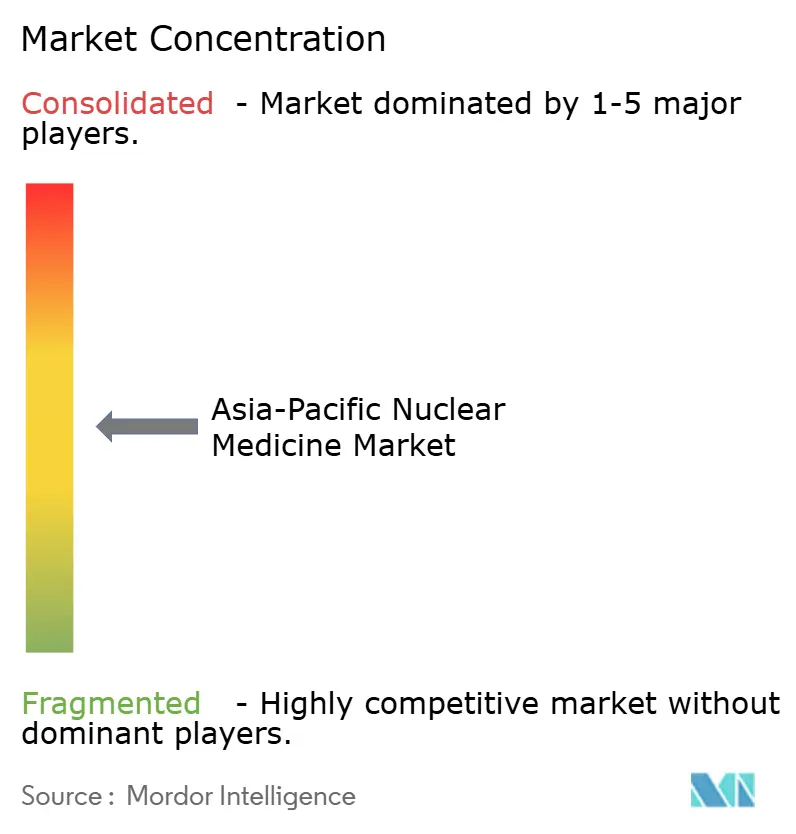
| Market Concentration | Medium |
Major Players *Disclaimer: Major Players sorted in no particular order Image © Mordor Intelligence. Reuse requires attribution under CC BY 4.0. | |
Asia-Pacific Nuclear Medicine Market Analysis by Mordor Intelligence
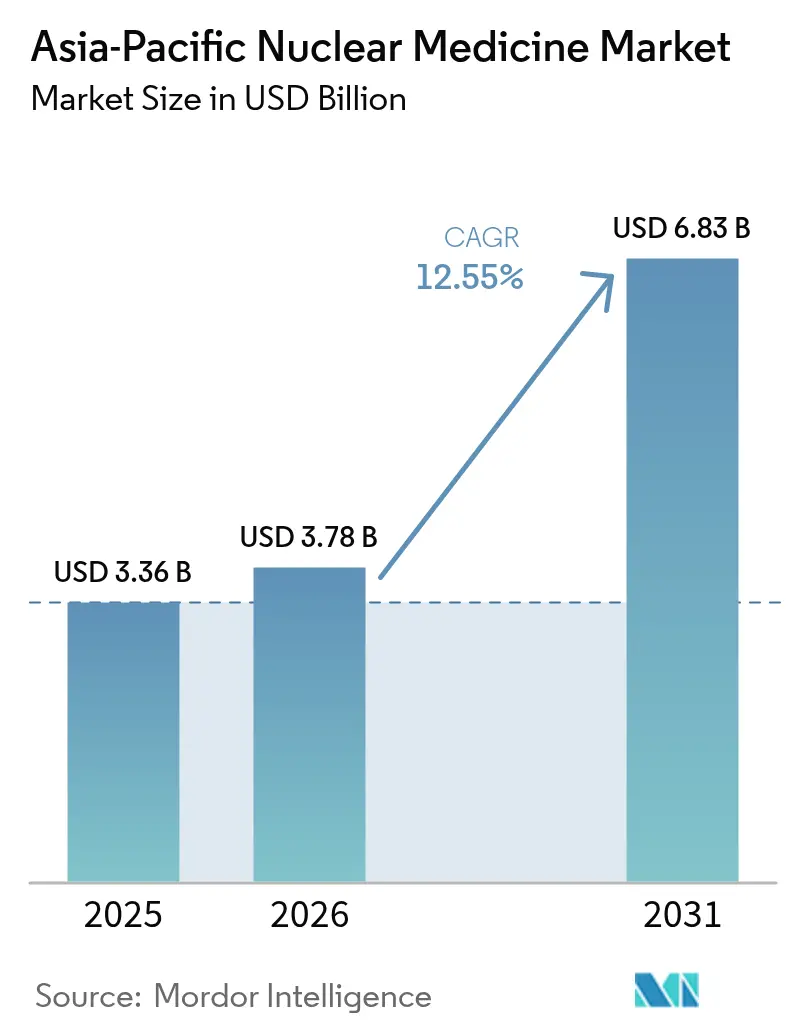
The Asia-Pacific nuclear medicine market size was valued at USD 3.36 billion in 2025 and estimated to grow from USD 3.78 billion in 2026 to reach USD 6.83 billion by 2031, at a CAGR of 12.55% during the forecast period (2026-2031). Growth reflects the region’s decisive shift toward precision oncology and theranostics, backed by expanding hybrid imaging fleets, widening radiopharmaceutical pipelines, and steady public-sector investment in isotope production. China’s 1,000-plus nuclear medicine departments, India’s expanding network of 300 centers of excellence, and Australia’s early adoption of PSMA-targeted agents anchor this expansion. Clinical workloads are rising most sharply in oncology and cardiology, while supply-chain partnerships are easing access to short-lived isotopes. Continued regulatory harmonization is expected to lower approval timelines, enabling a broader roll-out of radioligand therapy programs across emerging economies.
Key Report Takeaways
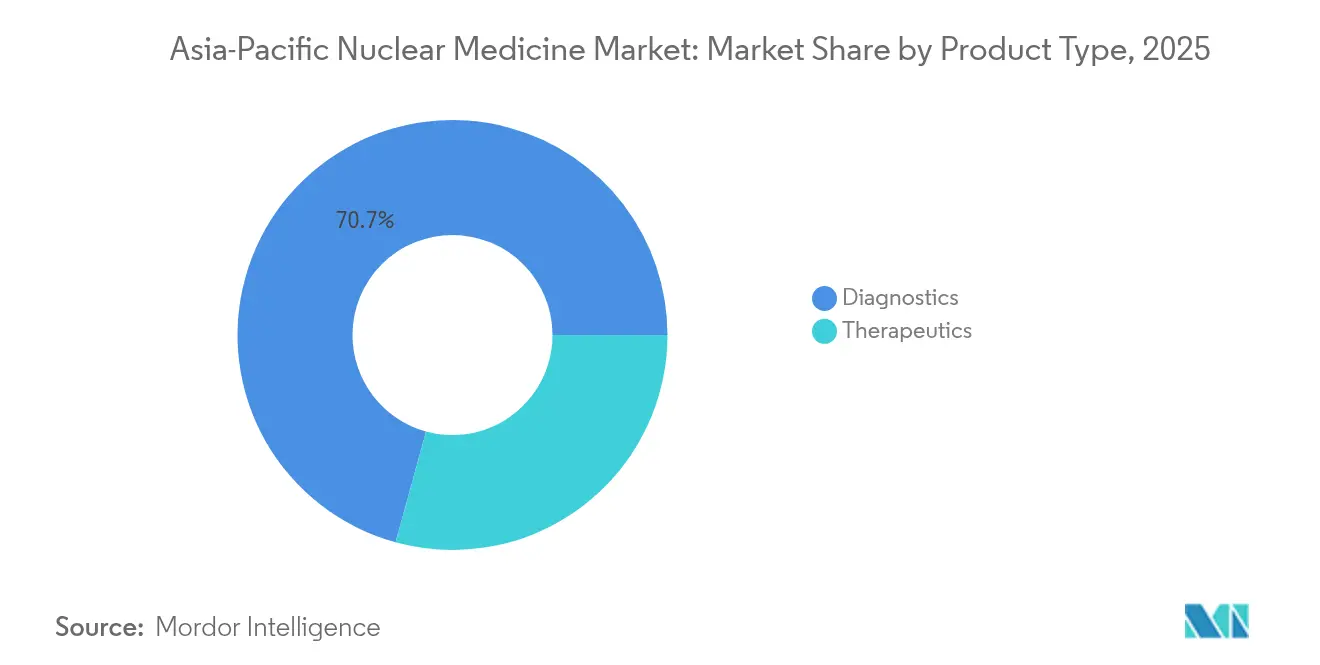
- By product type, diagnostics led with 70.74% of the Asia-Pacific nuclear medicine market share in 2025; therapeutics is projected to grow at a 17.02% CAGR through 2031.
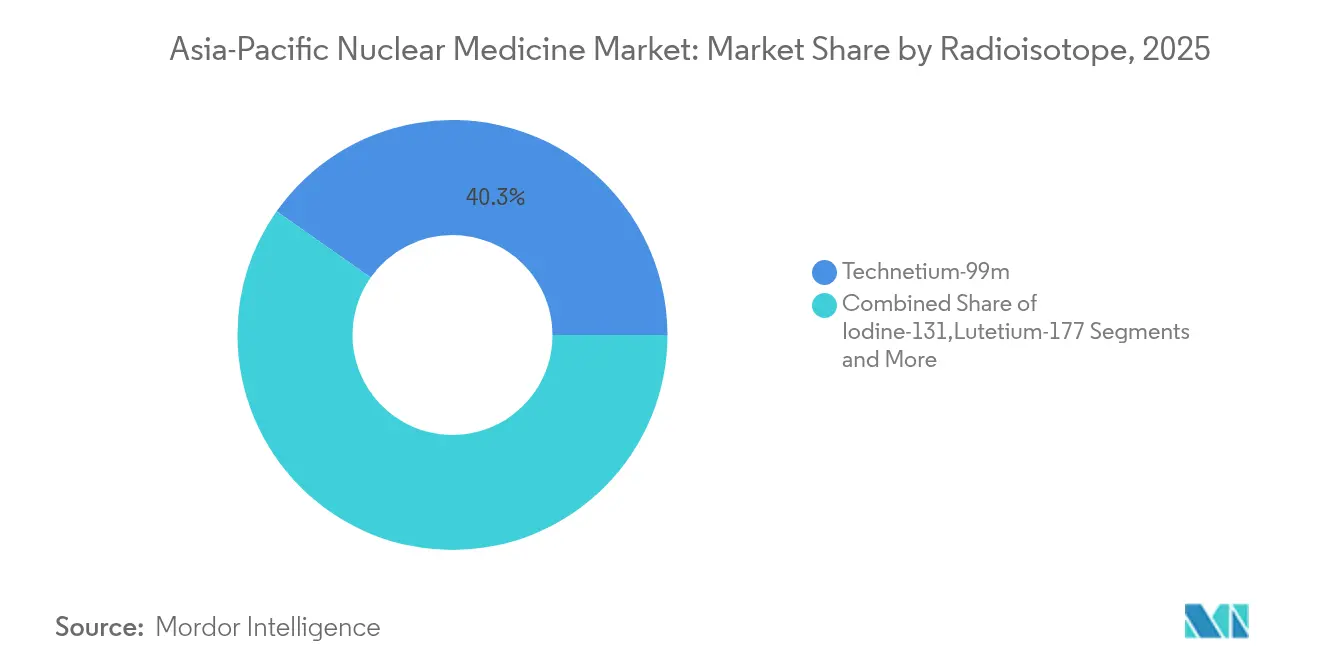
- By radioisotope, technetium-99m accounted for 40.25% of the Asia-Pacific nuclear medicine market size in 2025, while lutetium-177 is forecast to expand at a 11.95% CAGR to 2031.
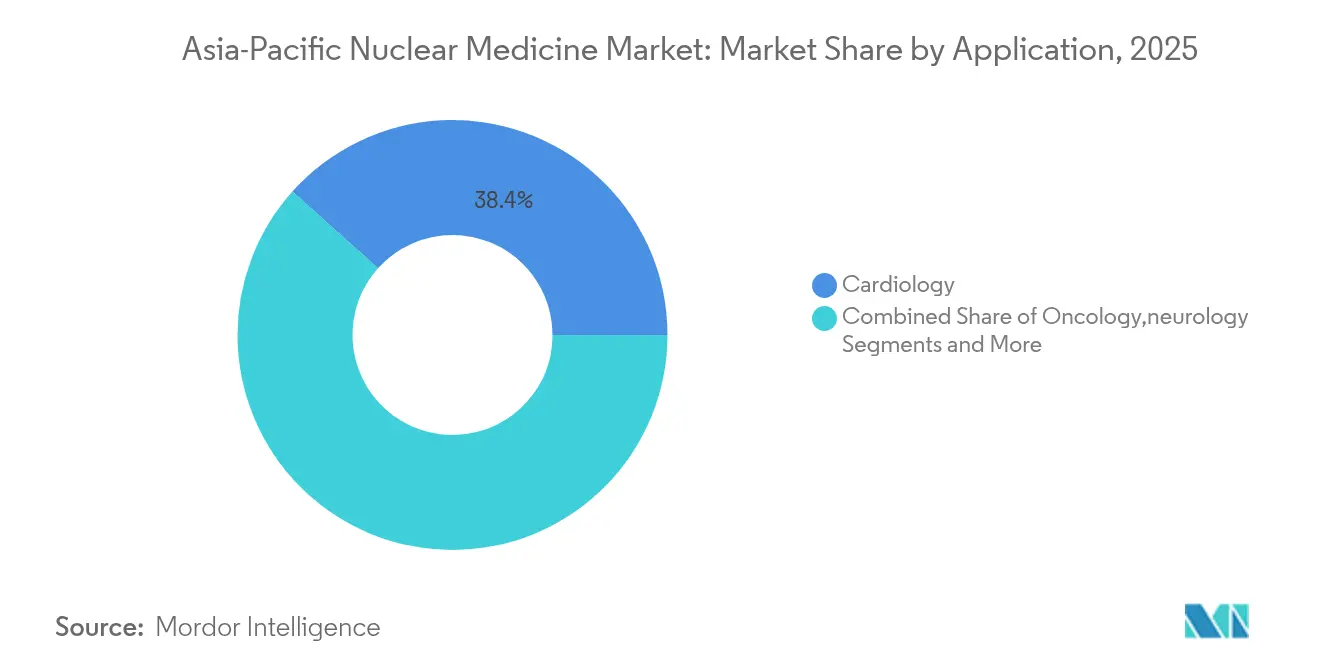
- By application, cardiology represented 38.37% of the Asia-Pacific nuclear medicine market share in 2025 and oncology applications are advancing at a 14.39% CAGR through 2031.
- By end user, hospitals held 56.74% share of the Asia-Pacific nuclear medicine market size in 2025; specialized radiopharmacies are growing at a 14.45% CAGR between 2026-2031.
- By geography, China commanded 29.12% of the Asia-Pacific nuclear medicine market in 2025, whereas India is expanding at a 13.75% CAGR over the same period.
Note: Market size and forecast figures in this report are generated using Mordor Intelligence’s proprietary estimation framework, updated with the latest available data and insights as of 2026.
Market Trends and Insights
Drivers Impact Analysis of Asia-Pacific Nuclear Medicine Market*
| Driver | (~) % Impact on CAGR Forecast | Geographic Relevance | Impact Timeline |
|---|---|---|---|
| Rising Burden Of Cancer & Cardiovascular Diseases | +3.2% | Global, highest in East Asia and Southeast Asia | Long term (≥ 4 years) |
| Rising Adoption of Hybrid Imaging Technologies | +2.8% | China, Japan, Australia, South Korea | Medium term (2-4 years) |
| Government Initiatives and Healthcare Infrastructure Development | +2.1% | India, China, Philippines, Thailand | Long term (≥ 4 years) |
| Expansion of Molecular Imaging Applications and Personalized Medicines | +1.9% | Japan, Australia, Singapore, South Korea | Medium term (2-4 years) |
| Rising Awareness and Demand for Theranostics | +1.7% | Global, early adoption in developed APAC markets | Short term (≤ 2 years) |
| Initiatives taken by Market Players and Launch of Products | +1.0% | Global, concentrated in major markets | Short term (≤ 2 years) |
| Source: Mordor Intelligence | |||
Rising Burden of Cancer and Cardiovascular Diseases
Asia accounts for 49.2% of global cancer cases and 56.1% of cancer deaths, with lung malignancies topping incidence tables in large populations such as China and Indonesia. The region also records pronounced cardiovascular disease prevalence, as East Asia reports 1,014.06 heart-failure patients per 100,000 population versus 389.97 per 100,000 in South Asia.[1] These epidemiological patterns create sustained demand for both SPECT and PET procedures in oncology and cardiology. Ageing demographics in Japan and South Korea are intensifying oncologic caseloads that require early detection through nuclear imaging. High smoking rates—54.4% among Indonesian men and 41.5% among Chinese men—suggest a continued pipeline of pulmonary cancers that will rely on molecular imaging for staging and therapy monitoring. Consequently, the Asia-Pacific nuclear medicine market is positioned as a critical component of regional disease-management strategies.
Rising Adoption of Hybrid Imaging Technologies
Total-body PET/CT scanners installed at institutions such as Sun Yat-sen University Cancer Center have completed 30,000 examinations in three years, cutting radiation exposure and acquisition times.[2]Upright CT platforms launched at Keio University Hospital improve diagnostic confidence for musculoskeletal and respiratory assessments in elderly patients. SPECT systems are transitioning to semiconductor detectors that deliver higher spatial resolution and shorter scan windows. Artificial-intelligence algorithms embedded in these hybrid modalities enable automated lesion detection and quantitative analytics, which reduce reporting time and support remote reading in underserved locations. As procurement programs in China, Japan, and Australia emphasize whole-body scanners, the Asia-Pacific nuclear medicine market gains a technology refresh cycle that boosts procedure volumes and diagnostic accuracy.
Government Initiatives and Healthcare Infrastructure Development
India’s Bhabha Atomic Research Centre is expanding domestic isotope production while eLORA online portals accelerate facility licensing. China’s Mid- and Long-Term Development Plan (2021-2035) targets production capacity sufficient to treat 10 million patients annually by 2035. The Philippines opened a Nuclear Medicine Research and Innovation Center aimed at lowering PET scan costs and serving as a regional training hub.[3] South Korea allocated KRW 300 billion to a small-modular-reactor complex in Gyeongju, paving the way for domestic actinium-225 production. These policy actions enlarge cyclotron fleets, improve workforce depth, and align reimbursement schedules, collectively lifting the Asia-Pacific nuclear medicine market over the long term.
Expansion of Molecular Imaging Applications and Personalized Medicines
Sixty percent of nuclear medicine procedures in Asia-Pacific are predicted to involve theranostic protocols within the next decade. Japan approved lutetium oxodotreotide in four year back, and clinical optimization now allows sharper image quality through refined collimator settings. Korean trials mapping FDG and PSMA uptake profiles enhance therapy selection for metastatic prostate cancer. Novel tracers such as 18F-FAPI-04 achieve higher standardized-uptake values for peritoneal metastasis compared to FDG, influencing chemotherapy planning in Chinese centers. These advances widen the clinical reach of radiopharmaceuticals beyond traditional oncology domains into fibrosis, inflammation, and infectious disease, further reinforcing the Asia-Pacific nuclear medicine market.
Restraints Impact Analysis of Asia-Pacific Nuclear Medicine Market*
| Restraint | (~) % Impact on CAGR Forecast | Geographic Relevance | Impact Timeline |
|---|---|---|---|
| High CAPEX For Cyclotrons & Imaging Equipment | -2.3% | Emerging markets: India, Philippines, Thailand, Indonesia | Long term (≥ 4 years) |
| Complex Multi-Agency Isotope Transport Regulations | -1.8% | Global, particularly cross-border shipments in APAC | Medium term (2-4 years) |
| Short Half-Life Isotope Supply Chain Risk | -1.5% | Regional, affecting remote areas and smaller markets | Short term (≤ 2 years) |
| Shortage Of Certified Nuclear-Medicine Pharmacists Outside Tier-1 Cities | -1.2% | India, China, Southeast Asia secondary markets | Medium term (2-4 years) |
| Source: Mordor Intelligence | |||
High CAPEX for Cyclotrons and Imaging Equipment
Emerging economies face budget constraints when acquiring PET/CT scanners that can cost USD 2-5 million, plus annual service contracts approaching USD 200,000. The Philippines, for example, operates only three cyclotrons, all in Manila, which inflates travel expenses for provincial patients. In India, stringent quality-assurance standards for PET systems escalate procurement timelines and compliance costs. Capital needs extend to radiation-shielded hot cells, Good Manufacturing Practice suites, and certified staff, pushing payback periods beyond five years in many public hospitals. Limited reimbursement policies often shift financial burden to patients, potentially delaying adoption of next-generation theranostics. As a result, the Asia-Pacific nuclear medicine market must rely on public-private partnerships and concessional financing to overcome infrastructure barriers.
Complex Multi-Agency Isotope Transport Regulations
Radiopharmaceuticals must satisfy pharmaceutical, nuclear-safety, and customs requirements, each managed by separate agencies in most Asia-Pacific nations. Documentation varies by country, causing routing delays that shorten the usable life of products such as fluorine-18. Alpha emitters face additional scrutiny because of higher radiotoxicity, requiring specialized packaging and escorts across international borders. Each regulatory checkpoint adds indirect costs that can raise final dose prices by up to 30% in small markets. Although the International Atomic Energy Agency promotes standard templates, adoption is uneven, leaving smaller suppliers at a disadvantage. This fragmentation dampens the growth potential of the Asia-Pacific nuclear medicine market until harmonized frameworks become operational.
*Our forecasts treat driver/restraint impacts as directional, not additive. The impact forecasts reflect baseline growth, mix effects, and variable interactions.
Asia-Pacific Nuclear Medicine Market Segment Analysis
By Product Type:
Diagnostics Retain the Volume Advantage While Therapeutics AccelerateDiagnostics accounted for 70.74% of the Asia-Pacific nuclear medicine market in 2025, driven by well-established SPECT and PET applications in myocardial perfusion, tumor staging, and brain imaging. Multi-head gamma cameras now achieve higher count sensitivity, which shortens scan times and improves patient throughput. Cardiac stress protocols benefit from new solid-state detectors that lower radiation dose without compromising image quality. Hospitals across China and Japan have standardized PET/CT for oncology work-ups, creating consistent demand for technetium-99m and fluorine-18 doses. Procedure volumes are supported by public insurance schemes that reimburse both tracer and scanner time, stabilizing revenue for service providers.
Therapeutics, though smaller today, is rising at a 17.02% CAGR. Lutetium-177 dotatate gained approvals for neuroendocrine tumors and is rapidly expanding into prostate cancer therapy through Pluvicto roll-outs. Alpha emitters such as actinium-225 promise higher linear-energy transfer, enhancing cell kill in micro-metastatic disease. South Korea’s plan to initiate domestic actinium-225 production by mid-2025 will shorten supply lines and lower dose costs. Clinical guidelines are evolving to include radioligand therapy earlier in treatment algorithms, especially for prostate and thyroid malignancies. Continuous data generation from regional registries strengthens payor confidence and accelerates reimbursement, expanding the Asia-Pacific nuclear medicine industry footprint in therapeutics.

By Radioisotope:
Technetium-99m Dominates, Lutetium-177 Leads GrowthTechnetium-99m retained 40.25% share of the Asia-Pacific nuclear medicine market size in 2025. Its 6-hour half-life and favorable photon energy underpin its ubiquity in bone, renal, and myocardial imaging. Nevertheless, reliance on ageing reactors for molybdenum-99 production exposes the region to periodic shortages, prompting countries such as Australia and Japan to evaluate accelerator-based supply solutions. Digital logistics platforms in China now track generator shipments in real time, mitigating stock-out risk for remote clinics.
Lutetium-177, posting a 11.95% CAGR, anchors the therapeutic pipeline through versatile beta-emission profiles that are suitable for both imaging and therapy. SHINE-Primo Biotech agreements extend non-carrier-added lutetium-177 access to Taiwan, Japan, and Singapore, which collectively support more than 25 clinical trials. The isotope’s 6.7-day half-life facilitates regional shipping without excessive decay loss, addressing a key distribution challenge for shorter-lived agents. Fluorine-18 continues to expand in oncology imaging, while gallium-68-based tracers gain traction in infection and inflammation mapping. Early research on terbium-161 and thorium-228 signals an impending diversification of therapeutic isotopes, broadening revenue streams for the Asia-Pacific nuclear medicine market.
By Application:
Cardiology Commands Volume, Oncology Drives ExpansionCardiology represented 38.37% of the Asia-Pacific nuclear medicine market in 2025 as heart-failure prevalence and ischemic-heart-disease screening programs sustain high SPECT activity. Stress-rest imaging protocols now average 12 minutes per phase using high-efficiency cameras, improving patient comfort. Hybrid PET/CT perfusion is gaining acceptance for multivessel coronary disease assessment, particularly in Japan and Australia. Hospitals are integrating AI-based motion-correction software that reduces artifacts, raising diagnostic confidence in obese or arrhythmic patients.
Oncology is the fastest-growing clinical area, expanding at 14.39% CAGR as Asia’s cancer burden surges. PSMA-PET has become standard for biochemical-recurrence work-ups in prostate cancer, tipping surgical decision-making toward targeted approaches. Total-body PET produces dynamic whole-body pharmacokinetic maps that optimize radionuclide dosimetry, a capability being exploited in Chinese phase III trials of lutetium-177 therapies. Novel FAPI agents identify desmoplastic reaction in pancreatic and colorectal tumors, opening windows for anti-fibroblast strategies. As imaging transitions from simple lesion detection to treatment response assessment, the Asia-Pacific nuclear medicine market embeds itself deeper in oncology care pathways.
By End User:
Hospitals Dominate, Radiopharmacies Gain MomentumHospitals captured 56.74% of the Asia-Pacific nuclear medicine market share in 2025. Academic medical centers in Beijing, Seoul, and Melbourne combine nuclear medicine, surgery, and medical oncology teams under one roof, fostering multidisciplinary decision-making. These institutions are also the primary sites for clinical trials, attracting industry partnerships and technology donations. Many teaching hospitals run in-house cyclotrons that supply both patient care and research needs, ensuring tracer availability even during global shortages.
Specialized radiopharmacies are growing at 14.45% CAGR as theranostic procedures require just-in-time synthesis and rigorous GMP documentation. Contract-manufacturing organizations in Singapore and Sydney are scaling isotope distribution to satellite clinics that lack on-site production. Business models often bundle tracer supply, quality-control analytics, and regulatory support, reducing administrative overhead for smaller hospitals. In India and Indonesia, new radiopharmacies are being co-located with private diagnostic imaging chains, broadening patient access while diversifying revenue for investors. Academic institutes and specialty clinics play crucial roles in early technology adoption yet face staffing shortages that limit geographic reach.
Geography Analysis
China Nuclear Medicine Market
China accounted for 29.12% of the Asia-Pacific nuclear medicine market in 2025, supported by more than 1 million PET/CT scans a year and 12,000 trained professionals across 1,000 departments. The National Medical Products Administration has cleared over 40 radiopharmaceuticals, streamlining clinical adoption and shortening time-to-market for local manufacturers. Integrated AI platforms that link imaging, pathology, and genomic data are being piloted at top cancer centers, positioning China for leadership in precision oncology.
India Nuclear Medicine Market
India is advancing at a 13.75% CAGR, fueled by 300 centers of excellence, government support for cyclotron installation, and private-sector collaborations that accelerate tracer distribution. Quality-control frameworks enforced by the Atomic Energy Regulatory Board are enhancing patient safety, while public-insurance expansions widen procedure reimbursement. These catalysts solidify India as a key growth engine for the Asia-Pacific nuclear medicine market.
APAC Nuclear Medicine Market
Australia and South Korea serve as innovation hubs. Australia’s Therapeutic Goods Administration leads regional approvals of advanced radioligand therapies, and domestic GMP sites now manufacture both FDG and lutetium-177 doses for domestic and export markets. South Korea’s Yonsei Cancer Center treated over 200 prostate-cancer patients with heavy-ion therapy in its first operational year, and actinium-225 production is slated for mid-2025. Emerging economies such as the Philippines and Thailand are expanding isotope supply chains through new cyclotrons outside capital cities, lowering patient travel costs and improving procedure uptake.
Regulatory Landscape
Across Asia-Pacific, nuclear medicine sits at the intersection of pharmaceutical regulation, radiation safety, and, in some markets, combination-product frameworks. This creates multi-agency approval and licensing pathways that can affect time-to-site activation and cross-border isotope flows. Japan’s Pharmaceuticals and Medical Devices Agency (PMDA) runs radiopharmaceutical-specific review services, and during pre-consultation for marketing authorization it asks sponsors to confirm whether revisions to the Minimum Requirements for Radiopharmaceuticals are needed. That step is especially relevant for innovative tracers and short half-life products, where specifications are defined by radioactivity at the time of use.
Facility licensing and operational compliance continue to be shaped by national radiation regulators and safety codes. India’s Atomic Energy Regulatory Board (AERB) uses the eLORA web-based system for regulatory consent and licensing of nuclear medicine facilities, while Malaysia regulates drug-device combination products through NPRA/MDA using Primary Mode of Action (PMOA), determining whether the dossier primarily follows the drug or device route. In Southeast Asia, the Philippines requires nuclear medicine institutions to hold radioactive material licenses through the Philippine Nuclear Research Institute (PNRI), and Singapore maintains radiation protection requirements under its Radiation Protection framework. Together, these requirements reinforce the need for harmonized documentation covering transport, storage, and patient-use controls for radiopharmaceuticals.
Value Chain Analysis
The Asia-Pacific nuclear medicine value chain starts with isotope production (reactor and cyclotron), followed by target processing and radiolabeling under GMP, quality control, and batch release. It then moves to time-critical cold-chain distribution to hospitals, diagnostic imaging centers, and specialized radiopharmacies, where dose preparation and administration complete the workflow. Technetium-99m supply depends on molybdenum-99 generator logistics, while PET tracers such as fluorine-18 rely on local cyclotron networks and rapid last-mile dispatch. Therapeutics add tighter requirements for GMP suites, validated hot cells, and documentation aligned with both pharmaceutical and radiation-safety standards.
Key friction points in the region include import dependence for several therapeutic isotopes, fragmented cross-border transport requirements, and uneven availability of GMP-capable manufacturing and radiopharmacy networks outside tier-1 cities. This increases decay-related losses and scheduling risk for short half-life products. To address these constraints, suppliers and local partners are expanding downstream capabilities and distribution coverage, illustrated by SHINE Technologies establishing an exclusive distribution agreement with C-Ray Therapeutics for non-carrier-added lutetium-177 in mainland China. The partnership leverages C-Ray’s Chengdu facility for integrated services. Government and state-linked localization programs, alongside hospital-based cyclotron investments and contract radiopharmacy models, are also being used to reduce reliance on long-haul shipments and to improve reliability for theranostics workflows.
Competitive Landscape
The Asia-Pacific nuclear medicine market is consolidating as multinational device and isotope suppliers seek local manufacturing control. GE Healthcare’s USD 183 million acquisition of Nihon Medi-Physics grants full access to a 28.2 billion-JPY radiopharmaceutical portfolio and expands tracer supply to more than 500 Japanese hospitals. Siemens Healthineers and Philips are embedding artificial-intelligence analytics into hybrid scanners that automate lesion contouring, while Canon Medical Systems markets upright CT units for senior care facilities.
White-space opportunities revolve around alpha-emitting therapies and underserved geographies. Thor Medical’s thorium-228 supply agreement with AdvanCell underpins a pipeline of targeted alpha treatments for hematologic and solid tumors. Clarity Pharmaceuticals is advancing copper-based theranostics with extended half-lives that simplify logistics for remote clinics. SHINE Technologies scales lutetium-177 output through a new partnership that covers Taiwan, Japan, South Korea, and Singapore, ensuring consistent isotope flow for clinical trials and commercial programs.
Competitive differentiation now centers on integrated service offerings. Vendors bundle cyclotron leasing, tracer supply, AI-enabled imaging software, and clinical-training modules to secure multi-year contracts with hospital networks. Intellectual-property filings for new ligands and chelators are rising, with more than 60 Asia-Pacific applications recorded in 2024 alone. As domestic manufacturers ramp capacity, price competition is expected to intensify, benefiting payors and widening access across the Asia-Pacific nuclear medicine industry.
Asia-Pacific Nuclear Medicine Industry Leaders
-
GE Healthcare
-
Seimens Healthineers
-
Curium Pharma
-
Telix Pharmaceuticals
-
China Isotope & Radiation Corp. (CIRC)
- *Disclaimer: Major Players sorted in no particular order
Asia-Pacific Nuclear Medicine Market Companies Covered in this Report
- GE Healthcare
- Siemens Healthineers
- Koninklijke Philips
- Canon
- Curium Pharma
- Telix Pharmaceuticals
- Bracco Imaging S.p.A.
- Nordion
- NTP Radioisotopes SOC Ltd.
- China Isotope & Radiation Corp. (CIRC)
- Advanced Accelerator Applications (Novartis)
- Jubilant Radiopharma
- AdvanCell (Australia)
- Shenzhen Mindray Bio-Medical
- Institute of Nuclear Energy Research (Taiwan)
- Jiangsu Huayi Technology
- Zhejiang Jiutai New Drug
- Cyclopharma Laboratories
Market Opportunities and Future Outlook
Near-term opportunity is concentrated in expanding in-country manufacturing and ASEAN-centered development ecosystems that shorten lead times for short-lived tracers and reduce dependence on cross-border logistics. Indonesia provides a concrete signal of capacity build-out: BAPETEN conducted an operational license verification for PT Kardia Farma Solusindo’s new radioisotope and radiopharmaceutical production facility in East Jakarta. The verification covered readiness areas such as bunker shielding and hot cell production systems. This kind of regulator-supervised commissioning supports new local supply nodes for PET tracers and selected therapeutic isotopes, particularly in markets where limited cyclotron density has constrained provincial access.
A second opportunity involves building clinical trial and translation infrastructure for theranostics across Southeast Asia. Partnerships can help bridge academic demand and commercial-grade manufacturing. Cyclotek’s strategic collaboration with the National University of Singapore (NUS) Clinical Imaging Research Centre (CIRC) is one example of aligning radiopharmaceutical development, trial capability, and supply-chain readiness for ASEAN. It creates a pathway for faster multicenter studies and improved regional tracer adoption. At the same time, tightening workforce and licensing requirements create whitespace for bundled service models that cover training, QA, and compliance support, helping hospitals and radiopharmacies maintain license-to-operate standards. This is reflected in Malaysia’s directive that Radiation Protection Officers (Medical) at licensed premises complete mandatory training by January 1, 2028 to maintain operating licenses.
Recent Industry Developments in Asia-Pacific Nuclear Medicine Market
- March 2026: SHINE Technologies and C-Ray Therapeutics established a strategic partnership for exclusive distribution of non-carrier-added lutetium-177 in mainland China. The arrangement leverages C-Ray’s Chengdu facility to strengthen downstream radiopharmaceutical services and supports more reliable access to Lu-177 for theranostics programs in a high-volume market.
- November 2025: Curium announced a recapitalization by CapVest Partners through a new continuation vehicle, valuing the company at approximately USD 7 billion. The transaction provides additional capital and ownership runway for Curium’s global radiopharmaceutical platform, with implications for investment in manufacturing capacity and supply reliability that influence key Asia-Pacific customer markets.
- March 2024: Telix Pharmaceuticals entered a definitive agreement to acquire ARTMS, Inc., including its cyclotron-based isotope production platform. The acquisition strengthens Telix’s vertical integration in isotope supply and production technology, supporting greater control over inputs used in PET imaging and theranostic development across the region.
Asia-Pacific Nuclear Medicine Market Report Scope and Research Methodology
Market Definition and Coverage
For this market, nuclear medicine is measured as the revenue generated from diagnostic and therapeutic radiopharmaceuticals that are supplied for clinical imaging and targeted treatment across Asia Pacific, counted when sold for routine patient care.
Scope exclusions: We exclude nuclear imaging equipment, reactor or cyclotron capital spending, and stable isotopes mainly used for research.
Segments Covered in This Report
- By Product
- Diagnostics
- SPECT
- PET
- Therapeutics
- Alpha Emitters
- Beta Emitters
- Brachytherapy Isotopes
- Diagnostics
- By Radioisotope
- Technetium-99m
- Iodine-131
- Fluorine-18
- Lutetium-177
- Others
- By Application
- Oncology
- Cardiology
- Neurology
- Endocrinology
- Other Applications
- By End User
- Hospitals
- Diagnostic Imaging Centers
- Academic & Research Institutes
- Specialty Clinics
- Geography
- China
- Japan
- India
- Australia
- South Korea
- Rest of Asia-Pacific
Data Sources, Market Sizing, and Validation
Desk Research
Desk work began by mapping the clinical and supply context that drives radiopharmaceutical demand, and then aligning that with country level coverage in Asia Pacific. We relied on public sources such as IAEA publications, WHO health system indicators, national nuclear regulators and radiation safety bodies, and customs or trade statistics where available to understand import reliance versus local production.
Next, supporting inputs were taken from peer reviewed clinical journals and guideline documents (for example around PET and SPECT utilization and oncology pathways), along with hospital network updates, company annual reports, and investor presentations that describe capacity additions and product availability. A paid subscription set for company financials and news, plus an import or export shipment level database when relevant, was used to sanity check timelines and directional movement in supply. These desk research sources are illustrative, and many other public references were also used for data collection, validation, and clarification.
Primary Interviews and Surveys
Primary work was used to pressure test utilization, pricing, and availability assumptions that cannot be fully read from public sources, especially around isotope mix and the split between diagnostics and therapeutics. We spoke with radiology and nuclear medicine department leaders, radiopharmacy and logistics stakeholders, and distributors across major markets such as China, Japan, India, Australia, South Korea, and selected smaller Asia Pacific countries to confirm demand signals and constraints.
Distribution of primary research fieldwork respondents
| Company type | Respondent position |
|---|---|
| Top tier: 34% | CXOs: 20% |
| Mid tier: 46% | Functional/Unit leaders: 26% |
| Smaller Players: 20% | Managers: 54% |
Market-Sizing & Forecasting
Sizing was built using a top down approach where procedure demand and treated cohorts are reconstructed by country, and then translated into radiopharmaceutical consumption and spend using realistic dose, wastage, and channel assumptions. When the demand pool was established, the final value was checked with selective bottom-up approximations like sampled ASP by isotope and application, distributor channel checks, and supplier revenue splits, which are then used to adjust totals where a gap was visible.
Key inputs used in the model included PET and SPECT procedure volumes, oncology incidence and referral patterns for eligible therapies, isotope availability and supply continuity (including constraints for short half life products), average selling price progression by isotope class, and the pace of radiopharmacy and cyclotron additions that expand reachable demand. Where direct country data was thin, we used proxy indicators from similar health system profiles and then re-tested the implied utilization and pricing with primary respondents before locking assumptions.
Forecasts were developed using scenario analysis supported by simple time series smoothing on the strongest leading indicators, and then aligned to expert views on adoption timing for newer therapeutic radiopharmaceuticals. This kept the forecast explainable in a client discussion, because each step ties back to visible clinical activity and supply capacity rather than hidden assumptions.
Data Validation & Update Cycle
Outputs were validated through triangulation across demand signals, supply side capacity narratives, and price checkpoints, and then reviewed for internal consistency across countries and years. If a country showed an unusual spike, the drivers were re-checked against procedure trends, regulatory or reimbursement shifts, and known supply disruptions, followed by a re-contact with relevant interviewees when the variance stayed high.
Before sign-off, the model and assumptions go through multi step analyst review so that unit logic and currency treatment are consistent across the region. Reports are refreshed annually, with interim updates triggered by material events such as new isotope production capacity, major reimbursement changes, or meaningful therapy launches. Right before delivery, a final pass is completed to reflect any recent developments that could move near term market sizing.
Mordor Intelligence's Asia Pacific Nuclear Medicine Market Sizing Compared With Other Published Estimates
Published market values for Asia Pacific nuclear medicine can look different across sources, even when they use similar country lists, because the underlying product scope and the counting point in the value chain are not always the same. Differences also show up when some estimates lean more on supply announcements, while others lean more on procedure demand and utilization.
The biggest gap drivers in this market usually come from whether imaging equipment is bundled into the total, whether radioisotope production and stable isotopes are included, and how therapeutic uptake is timed versus diagnostics. Another common splitter is price logic, where some sources apply a single regional ASP trend, while others adjust by isotope mix and the higher pricing of newer targeted therapies, followed by currency conversion timing that can move the USD total in volatile periods.
Benchmark comparison
| Source | Market Size | Gaps in Research Methodology |
|---|---|---|
| Mordor Intelligence | USD 3.36 B (2025) | |
| Trade Journal A | USD 2.11 B (2024) | Often tracks radiopharmaceuticals only and anchors the value to reported production and shipments, which can undercount hospital compounded doses and misses the step up from newer therapeutic products. |
| Industry Association B | USD 4.12 B (2020) | Uses an older base year and may fold in adjacent lines like stable isotopes and parts of the imaging ecosystem, so the total is not fully comparable to patient care radiopharmaceutical revenue. |
The spread in the table mainly comes from what gets counted and when, with equipment and upstream production choices being the most frequent cause. By keeping the value tied to clinical radiopharmaceutical sales to care sites and validating procedure and isotope mix assumptions with regional interviews, the estimate stays more repeatable year to year, which is the approach applied by Mordor Intelligence.
Key Questions Answered in the Report
What is the current size of the Asia-Pacific nuclear medicine market?
The Asia-Pacific nuclear medicine market stands at USD 3.78 billion in 2026.
How fast is the Asia-Pacific nuclear medicine market expected to grow?
The market is forecast to expand to USD 6.83 billion by 2031, registering a 12.55% CAGR.
Which country leads the Asia-Pacific nuclear medicine market?
China holds 29.12% of regional revenue, supported by more than 1,000 nuclear-medicine departments and 1 million PET/CT scans each year.
Which radioisotope is growing the fastest in Asia-Pacific?
Lutetium-177 is the fastest-rising isotope, advancing at a 11.95% CAGR through 2031 due to expanding radioligand therapy approvals.
What segment is expanding quickest within the Asia-Pacific nuclear medicine market?
Therapeutics is growing the fastest, posting a 17.02% CAGR as radioligand therapies gain reimbursement and clinical-guideline support.