
Voice Prosthesis Devices Market Size and Share
Market Overview
| Study Period | 2020 - 2031 |
|---|---|
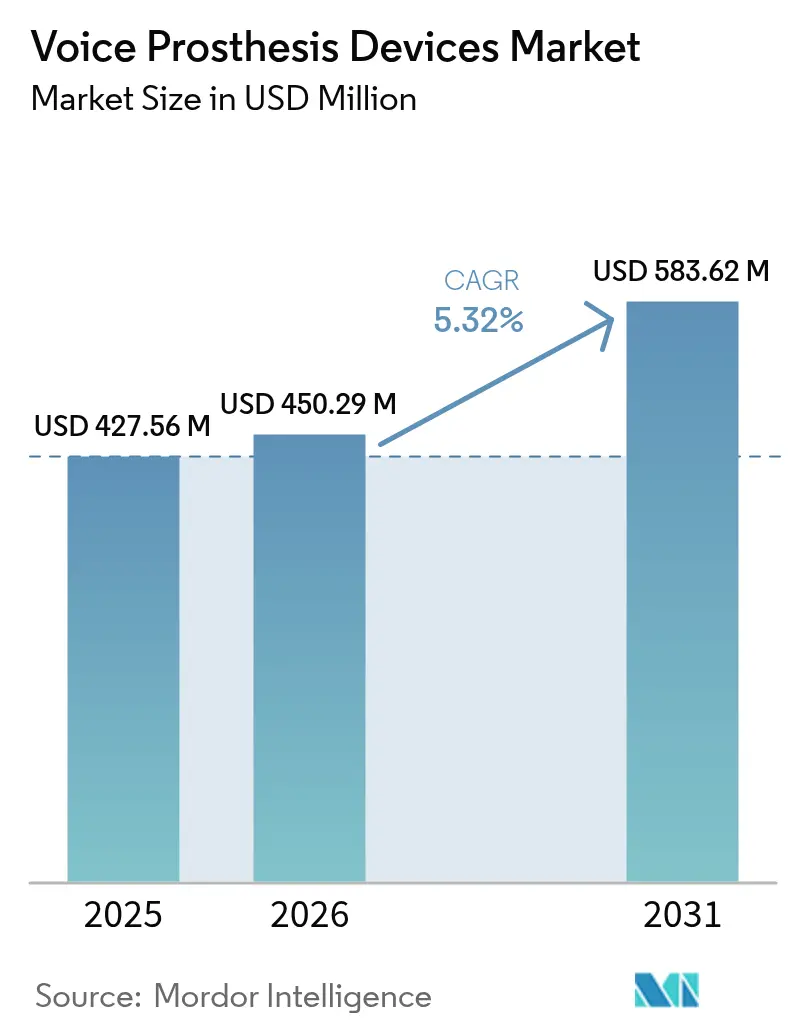
| Market Size (2026) | USD 450.29 Million |
| Market Size (2031) | USD 583.62 Million |
| Growth Rate (2026 - 2031) | 5.32 % |
| Fastest Growing Market | Asia-Pacific |
| Largest Market | North America |
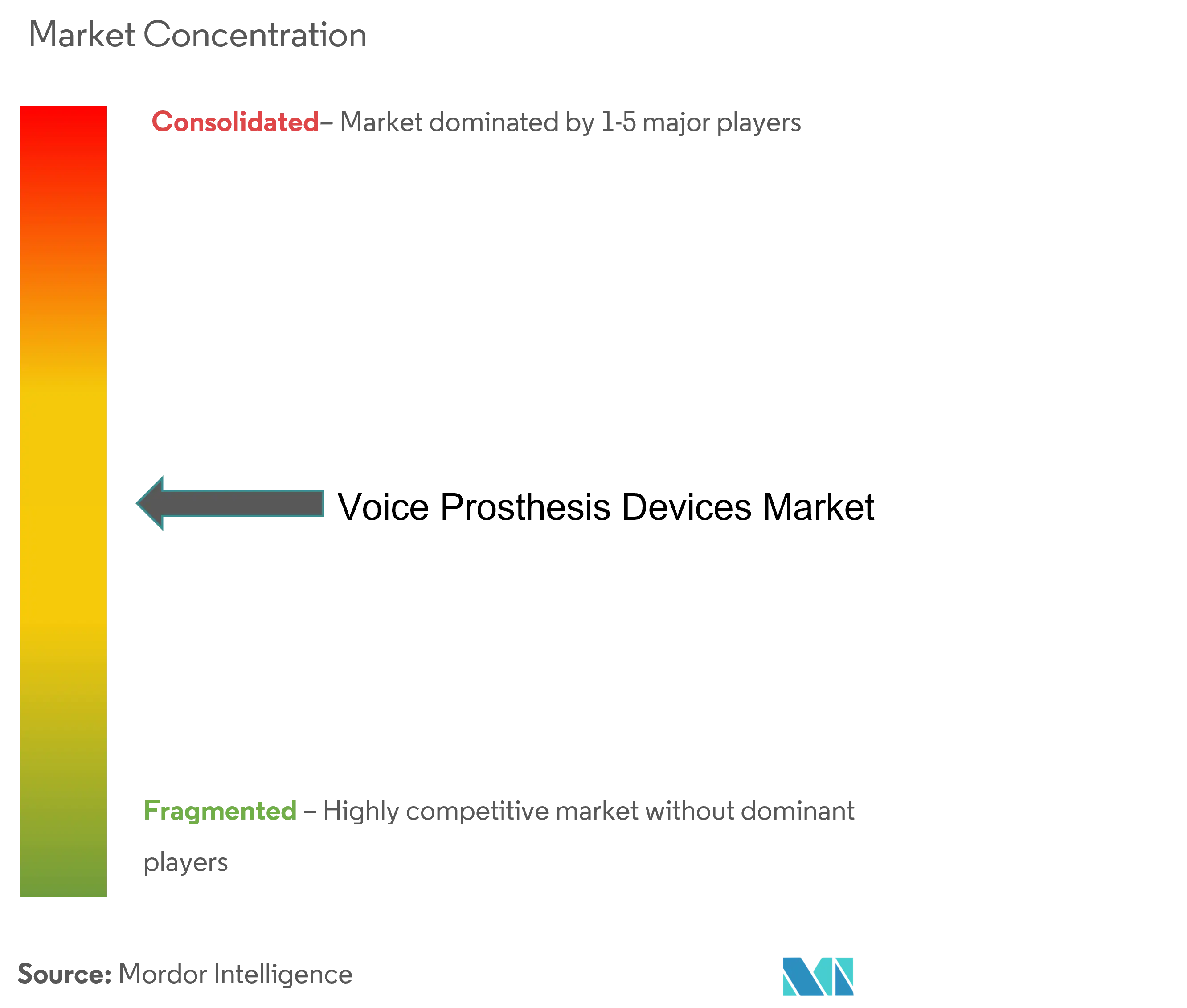
| Market Concentration | Medium |
Major Players *Disclaimer: Major Players sorted in no particular order Image © Mordor Intelligence. Reuse requires attribution under CC BY 4.0. | |
Voice Prosthesis Devices Market Analysis by Mordor Intelligence
The voice prosthesis devices market size was valued at USD 427.56 million in 2025 and estimated to grow from USD 450.29 million in 2026 to reach USD 583.62 million by 2031, at a CAGR of 5.32% during the forecast period (2026-2031). Steady progress in biofilm-resistant valve materials, broader reimbursement in high-income regions and a rising pool of laryngectomy survivors sustain this trajectory for the voice prosthesis devices market. North America keeps the largest revenue base, yet Asia-Pacific posts the quickest gains as domestic manufacturers introduce lower-priced products adapted to regional budgets. Regulatory convergence—most notably the 2026 alignment of the FDA’s quality-system rule with ISO 13485—raises compliance costs but shortens multi-region registration cycles, enabling quicker launches. In parallel, the migration of ENT procedures to outpatient settings multiplies yearly replacement volumes while intensifying price sensitivity.
Key Report Takeaways
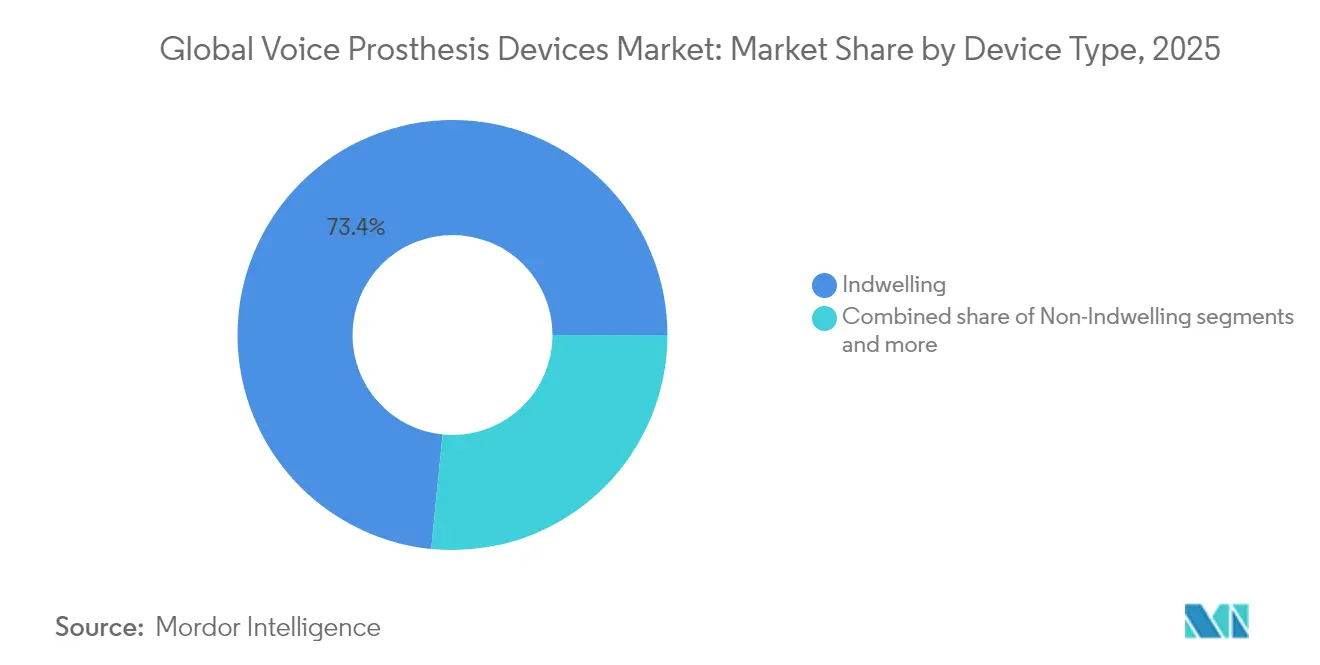
- By device type, indwelling systems captured 73.42% of voice prosthesis devices market share in 2025; non-indwelling systems record the fastest 5.87% CAGR through 2031.
- By valve type, Provox Series led with 61.88% revenue share in 2025, while Blom-Singer Dual Valve systems advance at a 6.22% CAGR to 2031.
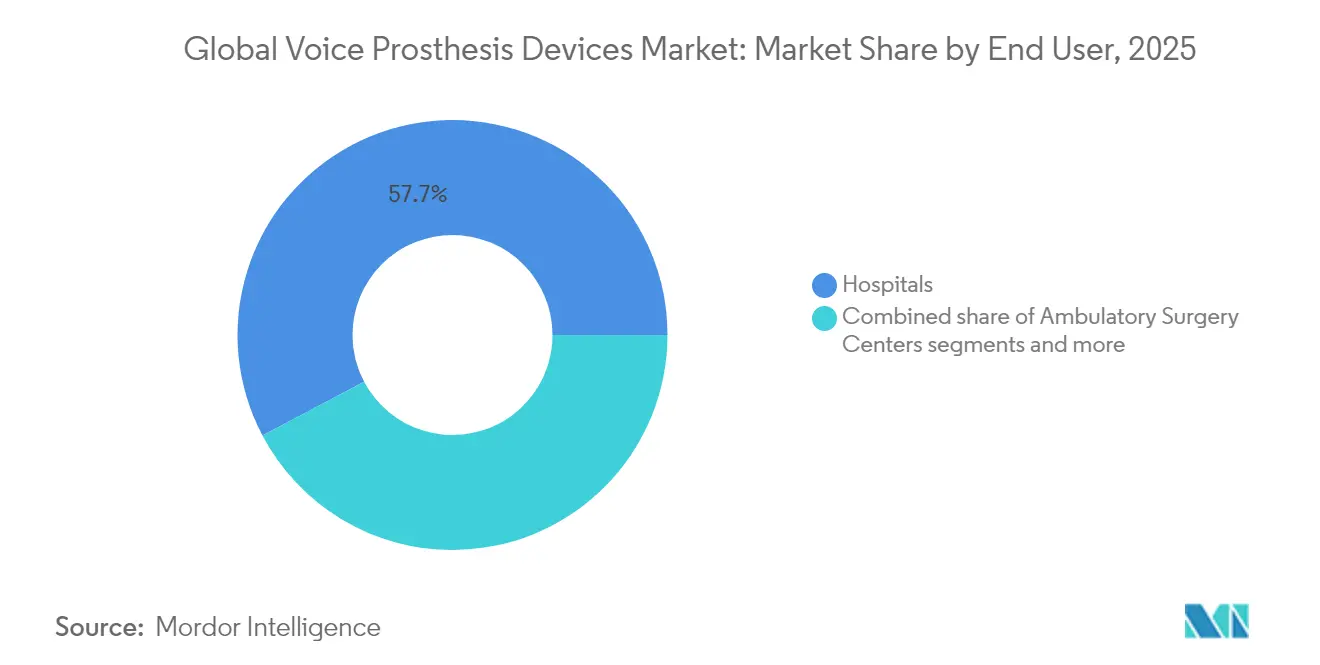
- By end user, hospitals commanded 57.74% of the voice prosthesis devices market size in 2025, whereas specialty clinics are expanding at a 6.58% CAGR through 2031.
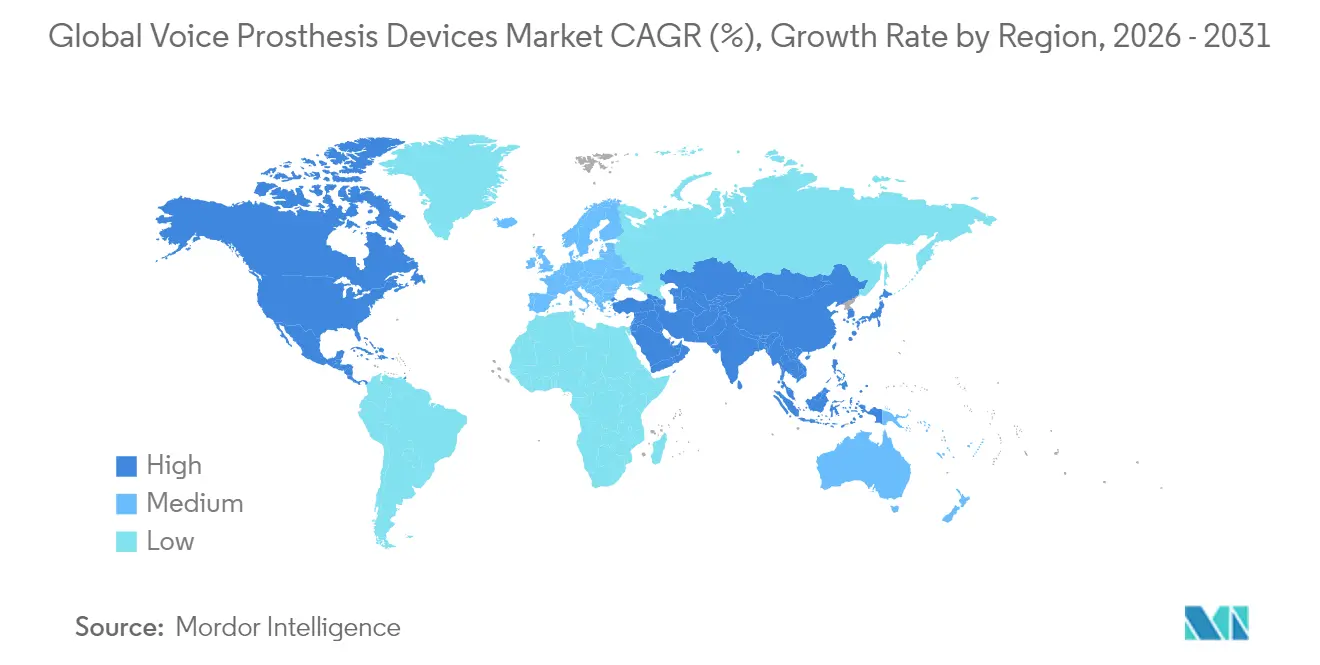
- By geography, North America held 41.01% revenue in 2025; Asia-Pacific is projected to widen at a 7.05% CAGR to 2031.
Note: Market size and forecast figures in this report are generated using Mordor Intelligence’s proprietary estimation framework, updated with the latest available data and insights as of 2026.
Global Voice Prosthesis Devices Market Trends and Insights
Drivers Impact Analysis*
| Driver | (~) % Impact on CAGR Forecast | Geographic Relevance | Impact Timeline |
|---|---|---|---|
| Rising incidence of laryngeal cancer and total laryngectomies | +1.2% | Global, with highest impact in North America and Europe | Medium term (2-4 years) |
| Technological advances extending prosthesis lifetime | +0.9% | Global, led by developed markets | Long term (≥ 4 years) |
| Expanding reimbursement coverage in high-income countries | +0.8% | North America, Europe, select APAC markets | Medium term (2-4 years) |
| Growing ENT-focused surgical volumes in outpatient settings | +0.7% | North America, Europe, urban APAC centers | Short term (≤ 2 years) |
| Adoption of low-cost indigenous prostheses in price-sensitive Asia | +0.6% | Asia-Pacific, emerging markets | Medium term (2-4 years) |
| Additive-manufactured custom valves improving fit & comfort | +0.4% | Developed markets with advanced manufacturing | Long term (≥ 4 years) |
| Source: Mordor Intelligence | |||
Rising Incidence of Laryngeal Cancer and Total Laryngectomies
Population-based data show 104 991 U.S. cases between 2000-2020, a figure expected to escalate as the population ages. Europe and Asia present similar upward trends, and forecasts point to a 50% rise in hypopharyngeal cancer by 2040. Because 70-75% of laryngectomy survivors become candidates for a prosthetic voice, incidence trends convert directly into demand, reinforcing the growth curve of the voice prosthesis devices market.
Technological Advances Extending Prosthesis Lifetime
Next-generation silicone blends, hydrophobic coatings and magnet-assisted closures double functional life from six to twelve months in early studies. Custom 3-D-printed flanges reduce fit-related leakage, while antimicrobial surfaces slow fungal colonisation. These improvements lower replacement frequency and total cost of ownership, encouraging clinicians in developed regions to recommend indwelling models more readily and sustaining revenue momentum across the voice prosthesis devices market.
Expanding Reimbursement Coverage in High-Income Countries
U.S. payers such as Aetna classify indwelling voice valves as durable medical equipment and reimburse replacements twice yearly when medically justified. Germany’s 2025 OPS code update adds endoscopic replacement codes, improving billing clarity. When coverage removes financial barriers, patients adhere to the optimal replacement cycle, which heightens recurring demand and underpins the voice prosthesis devices market.
Outpatient ENT Surgery Growth
Ambulatory centres served 3.3 million Medicare fee-for-service beneficiaries in 2022, with USD 6.1 billion in spending.. ENT teams increasingly use modified retrograde insertion techniques that allow same-day discharge. Lower facility costs appeal to payers, while convenience attracts patients, pushing more replacements—and thus market revenue—into high-throughput outpatient channels of the voice prosthesis devices market.
Restraints Impact Analysis*
| Restraint | (~) % Impact on CAGR Forecast | Geographic Relevance | Impact Timeline |
|---|---|---|---|
| High replacement costs and limited insurance in emerging markets | -0.8% | Asia-Pacific, Latin America, Africa | Medium term (2-4 years) |
| Device-related complications (leakage, biofilm, aspiration) | -0.6% | Global, with higher impact in resource-limited settings | Short term (≤ 2 years) |
| Stringent sterilization/supply-chain regulations raising COGS | -0.4% | Global, particularly affecting smaller manufacturers | Long term (≥ 4 years) |
| Shortage of trained TEP surgeons in low-resource regions | -0.5% | Emerging markets, rural areas globally | Long term (≥ 4 years) |
| Source: Mordor Intelligence | |||
High Replacement Cost and Limited Insurance in Emerging Markets
In price-sensitive countries, a single indwelling valve can equal a worker’s monthly wage. India’s Aum Voice Prosthesis retails at one-third the price of imports yet still meets resistance when insurance is absent. High out-of-pocket burdens discourage timely replacements, clipping 0.8 percentage points from the expected CAGR for the voice prosthesis devices market.
Device-Related Complications (Leakage, Biofilm, Aspiration)
Australian surveys note complication rates above 60%, primarily due to leakage and aspiration. Each failure triggers urgent clinician visits, inflates cost and deters late adopters. Manufacturers are investing in antimicrobial additives and tapered-edge flanges, but persistent complication fear keeps some patients on electro-larynx alternatives, exerting downward pressure on uptake in the voice prosthesis devices market.
*Our forecasts treat driver/restraint impacts as directional, not additive. The impact forecasts reflect baseline growth, mix effects, and variable interactions.
Segment Analysis
By Device Type: Indwelling Valve Dominance Maintains Revenue Base
Indwelling valves represented 73.42% of voice prosthesis devices market share in 2025. The voice prosthesis devices market size tied to this segment is forecast to grow at 4.98% CAGR as upgraded materials push dwell time to a year in controlled cohorts. Indwelling systems demand professional replacement, fitting seamlessly into hospital and specialty-clinic workflows. Non-indwelling devices—posting a 5.87% CAGR—appeal to self-managing patients who value autonomy, especially in markets with robust tele-rehabilitation. Electrolarynx units and emerging 3-D-printed valves fill clinical gaps for anatomies unsuited to standard flanges, but their collective share remains below 5%.
Surgeon-reported primary-puncture success rates hover at 76.2%, climbing to 81.8% for secondary puncture though with higher complications. U.S. insurers reimburse indwelling replacements at three- to six-month intervals, sustaining predictable order cycles. In resource-constrained regions, innovators market budget valves under USD 100, broadening access and buffering volume volatility. These trends collectively ensure indwelling leadership while fostering niche growth vectors, keeping the voice prosthesis devices market diversified yet stable.



By Valve Type: Provox Series Holds Technological Edge
Provox Series captured 61.88% revenue in 2025, reinforcing the line’s centrality to the voice prosthesis devices market. Upgrades such as Provox Vega reduce speaking effort by 20% and decrease leakage events, making them the default choice in high-volume oncology centres. Blom-Singer Dual Valves grow at 6.22% CAGR, leveraged by special-order lengths and oversized flanges that solve complex leakage cases. ActiValve magnetic options carve a niche among younger, active patients who seek hands-free voicing. Groningen, Aum and regional specialty designs compete on price and locally favoured insertion methods.
Material science drives differentiation: Atos embeds silver oxide, InHealth experiments with tungsten shafts, and European start-ups pilot graphene-reinforced stems. Developers also test Bluetooth-enabled leak sensors that signal smartphones when replacement is due, features already under review by German sickness funds. As these innovations mature, replacement intervals may lengthen, yet higher ASPs preserve revenue, sustaining healthy margins in the voice prosthesis devices market.
By End User: Specialty Clinics Accelerate Procedure Volumes
Hospitals retained 57.74% of the voice prosthesis devices market size in 2025, primarily through initial laryngectomies and primary punctures. Specialty clinics follow close behind, growing 6.58% CAGR as outpatient ENT programs expand. Clinics bundle speech therapy with valve replacement, offering convenience that locks in patient loyalty. Ambulatory surgery centres thrive in the United States, applying modified retrograde techniques that cut facility fees by 35%. Homecare remains embryonic; however tele-coaching and mail-order accessories are emerging support services that encourage adherence.
Value-based bundles are under pilot by Blue Cross plans, paying a fixed amount per six-month care episode inclusive of valve, professional time and rehabilitation. Clinics able to control cost within that envelope stand to gain share, an incentive aligning with payer interest and fuelling clinical throughput in the voice prosthesis devices market.
Geography Analysis
North America’s advanced reimbursement environment underpins predictable demand. Medicare’s durable equipment rules authorise two indwelling replacements yearly when leakage or degradation is documented . The United States houses 13 dedicated laryngectomy centres that publish outcome data influential worldwide. Canada’s provincially funded system provides comparable access, and Caribbean patients travel to Florida centres, incrementally enlarging the served population.
Asia-Pacific’s acceleration stems from policy and production. India’s Health Scheme, China’s fast-track approvals and Japan’s super-aged society all expand candidate numbers. Domestic manufacturing cuts landed cost by 40-60%, translating into higher annual replacement adherence. Early detection programs under Healthy China 2030 are set to lift operable tumour counts, further replenishing the user pool for the voice prosthesis devices market.
Europe’s universal systems guarantee access yet negotiate aggressively on price. Germany’s diagnosis-related group refinements add points for endoscopic replacements, improving hospital economics. France’s assurance maladie reimburses devices at retail price, but austerity keeps physicians mindful of cost. The NHS includes valves on its High Cost Tariff Excluded list, sustaining volume while capping reimbursement. Logistics disruptions tied to Brexit have eased, and stock buffers now shield UK patients from shortage risk.

Regulatory Landscape
In the United States, laryngeal/voice prostheses (Taub design) are regulated as Class II medical devices under 21 CFR 874.3730, with many standard configurations exempt from 510(k) premarket notification when the limitations in 21 CFR 874.9 are met. Even with this pathway, manufacturers still carry quality-system and special-controls obligations for design, labeling, and performance, which raises the bar for postmarket surveillance and change control for iterative valve-material and biofilm-resistance updates.
Internationally, performance benchmarking increasingly references ISO 21917:2021, which specifies test methods and requirements for parameters such as leakage, opening pressure, and airflow resistance, supporting cross-market comparability of valve performance claims. In Europe, compliance is governed by Regulation (EU) 2017/745 (MDR), which increases the documentation and conformity-assessment burden for technical and clinical evidence versus prior directives, especially for indwelling tracheoesophageal speech valves (GMDN term code 42533) supplied into hospital and specialty-clinic channels.
Value Chain Analysis
The value chain starts with specialized inputs, primarily medical-grade silicone and precision components used in valve assemblies, followed by high-specification manufacturing, testing, and sterilization/packaging steps aligned to medical-device quality requirements. Established manufacturers such as Atos Medical (Coloplast A/S) and InHealth Technologies (Freudenberg Medical) anchor this upstream-to-midstream segment, and their scale supports iterative material upgrades, portfolio breadth across indwelling and non-indwelling options, and standardized performance verification.
Downstream, distribution typically flows through direct-to-hospital and specialty ENT clinic supply, supported by national procurement and medical supply distributors. Continuity of supply is critical because these devices drive routine replacement visits and rehabilitation adherence. Clinical service delivery is also central to pull-through, with ENT surgeons and speech-language pathology teams handling implantation, sizing, and follow-up management, so training, clinic throughput, and reimbursement workflows shape device uptake and recurring order cycles across regions.
Competitive Landscape
Atos Medical, InHealth Technologies and Coloplast collectively control slightly above 60% of revenue, indicating moderate consolidation. Atos leverages Provox’s clinical heritage, bundles cleaning kits and funds multicentre studies on valve longevity. InHealth differentiates with on-demand custom lengths and variable resistance flanges.
Emerging players focus on niche innovations. Altavo raised EUR 5 million to develop AI-driven “silent speech” software intended to complement mechanical valves[2]Source: Centers for Medicare & Medicaid Services, “Medicare Payment Policy Report,” medpac.gov . APrevent Medical’s injectable VOIS implant aims at glottic insufficiency, yet the firm shares polymer research with valve manufacturers, foreshadowing hybrid solutions. Supply-chain vigilance intensified after FDA spotlighted silicone-component shortages, prompting firms to dual-source moulding in Mexico and Eastern Europe.
Intellectual-property strategies shape pricing. Atos holds patents on dual-valve mechanics until 2032. InHealth’s designs avoid patent conflict by focusing on variable occlusion pressures. European SMEs are poised to exploit expiring legacy patents in 2026, signalling impending price pressure in value segments of the voice prosthesis devices market.
Voice Prosthesis Devices Industry Leaders
Andreas Fahl Medizintechnik-Vertrieb GmbH
InHealth Technologies
ICU Medical Inc.
Coloplast A/S (Atos Medical AB)
Orbisana Healthcare GmbH
- *Disclaimer: Major Players sorted in no particular order

Market Opportunities and Future Outlook
A key opportunity is improving real-world prosthesis longevity and reducing biofilm-driven leakage without relying only on more frequent replacement. A June 2026 pilot study in Clinical Otolaryngology reported that daily probiotic supplementation (VSL#3) reduced microbial colonisation on tracheoesophageal voice prostheses and improved patient-reported functionality, supporting packaging devices with evidence-backed hygiene, coating, and adjunct care protocols that lower complication-driven visits.
The market need is also expanding beyond post-laryngectomy rehabilitation toward non-surgical and ICU-associated voice loss. In March 2026, Laronix launched an investigational study at Greater Baltimore Medical Center (GBMC) evaluating its MIRA Voice artificial larynx device for patients with voice loss following ICU intubation and tracheostomy, highlighting demand for alternatives that do not require tracheoesophageal puncture. On the technology front, May 2026 publication of WIPO patent WO2026107548 (artificial voice generation with a controllable air pump and replaceable membrane cartridge) reflects active development of hybrid and active systems that compete with, complement, or extend classic silicone valve prostheses, while still operating within the FDA Class II framework for laryngeal prostheses under 21 CFR 874.3730.
Recent Industry Developments
- March 2026: Laronix launched an investigational voice restoration study at Greater Baltimore Medical Center (GBMC) to evaluate the MIRA Voice artificial larynx device for patients who lost their voice after ICU intubation and tracheostomy. The work expands clinical attention beyond post-laryngectomy pathways, increasing competitive pressure from non-surgical voice restoration systems that can sit alongside or substitute for tracheoesophageal prostheses in selected patient groups.
- February 2026: Coloplast A/S reported completion of its acquisition of Uromedica and outlined associated integration activities in its 2025/26 interim reporting. While not specific to a single valve line, the development is relevant for the voice prosthesis competitive set because Atos Medical sits within Coloplast, and corporate integration and capital allocation decisions can affect R&D prioritization, manufacturing footprint, and channel investment across chronic-care device portfolios.
- February 2024: Altavo secured EUR 5 million Series A funding to develop AI-based “silent speech” technology intended to complement mechanical voice restoration solutions. The financing supported a differentiated innovation track focused on software-enabled communication, which expands the range of potential future substitutes and complements to traditional prosthetic voice valves.


Research Methodology Framework and Report Scope
Market Definition and Coverage
This market covers revenue earned from voice prosthesis devices used to restore speech after laryngectomy, including standard indwelling and non-dwelling prostheses sold through hospitals, clinics, and similar care settings across major regions.
Scope exclusions: We exclude surgical procedures, follow-up speech therapy services, and general laryngectomy consumables that are not voice prosthesis devices.
Segmentation Overview
- Device Type
- Indwelling Tracheoesophageal Voice Prosthesis
- Non-Indwelling Tracheoesophageal Voice Prosthesis
- Electrolarynx / Artificial Larynx Devices
- Custom 3-D Printed Voice Valves
- Valve Types
- Provox Series Valves
- Blom-Singer Series Valves
- ActiValve Magnetic Valves
- Groningen Valve
- Aum Voice Prosthesis
- Specialty Custom Valves (Kapitex, Hood etc.)
- End User
- Hospitals
- Specialty ENT Clinics
- Ambulatory Surgery Centers
- Homecare & Direct-to-Patient Channels
- Geography
- North America
- United States
- Canada
- Mexico
- Europe
- Germany
- United Kingdom
- France
- Italy
- Spain
- Rest of Europe
- Asia-Pacific
- China
- India
- Japan
- South Korea
- Australia
- Rest of Asia-Pacific
- South America
- Brazil
- Argentina
- Rest of South America
- Middle East and Africa
- GCC
- South Africa
- Rest of Middle East and Africa
- North America
Data Sources, Market Sizing, and Validation
Desk Research
Desk research was used to build the base demand picture and the clinical context before any modeling choices were locked. We reviewed epidemiology and treatment pathway literature on head and neck cancers, and we checked laryngectomy prevalence signals from sources such as the US CDC and the WHO cancer statistics program.
To connect clinical need with market value, we also relied on public procurement and pricing signals where available, plus regulatory and standards context from sources such as the US FDA device database and ISO documentation on quality systems. Trade and reimbursement context was cross-checked using sources such as national health payer publications, customs statistics releases, and peer-reviewed ENT journals that report device longevity and replacement patterns. Company filings, investor presentations, and reputable press were then used to confirm product mix changes and distribution approaches, and paid subscriptions for company financials, patent databases, and shipment-level import and export data were used selectively to fill gaps. The sources listed here are not exhaustive, and we used additional public references for data collection, validation, and clarification.
Primary Interviews and Surveys
Primary work focused on practical inputs that are usually not visible in public sources, such as typical replacement frequency, the share of secondary versus primary placements, and region-level access constraints that tie back to reimbursement. We spoke with a mix of clinical users, procurement stakeholders, and channel-side experts across APAC, EMEA, and the Americas, so adoption assumptions were checked against how patients are actually fitted and refitted over time.
Distribution of primary research fieldwork respondents
| Company type | Respondent position | Region |
|---|---|---|
| Top tier: 28% | CXOs: 18% | APAC: 49% |
| Mid tier: 51% | Functional/Unit leaders: 31% | EMEA: 30% |
| Smaller Players: 21% | Managers: 51% | Americas: 21% |
Market-Sizing & Forecasting
Sizing was built from a top-down demand pool, where laryngectomy incidence and survivorship were translated into a treated population eligible for voice restoration, and then adjusted for the share choosing tracheoesophageal puncture and receiving a prosthesis. To keep the value layer realistic, we applied region-specific replacement rates (driven by valve life and biofilm-related performance changes), typical channel pricing ranges, and care setting mix that shifts between hospitals and specialty clinics.
After the total was formed, we sanity-checked it with selective bottom-up approximations, using sampled ASP times implied unit volumes from distributor feedback, tender pricing references, and visible product line footprints in key countries. Where inputs were incomplete, we reconciled gaps using conservative assumptions rather than assuming full coverage. In countries where inputs were thin, proxies were used from similar reimbursement environments and then corrected through expert feedback, so extreme outliers did not distort the global total.
For forecasting, we ran scenario analysis around a central case, since adoption is sensitive to reimbursement changes and to how quickly newer valve designs extend replacement cycles. Key forward drivers included head and neck cancer case loads, the penetration of voice rehabilitation pathways, prosthesis longevity trends, clinician preference shifts between indwelling and non-dwelling devices, and inflation-adjusted ASP movement by region. The scenarios were pressure-tested in interviews, so the final growth path stayed consistent with what clinics and procurement teams expect over the next few years.
Data Validation & Update Cycle
Validation was handled in several passes so the final figures remained traceable to real-world signals. We compared the model output against independent checks, such as implied procedure volumes, country-level reimbursement coverage changes, and whether the implied replacement cadence matched what clinicians report in routine care.
Large variances triggered re-checks of inputs like pricing bands, penetration assumptions, and currency conversion timing. We then reviewed the logic by another analyst before sign-off. The report is refreshed annually, and interim updates are made when material events occur, such as policy changes that affect access or a notable shift in replacement-cycle expectations. Before delivery, a final review pass is completed so clients receive the latest updated view.
Mordor Intelligence's Voice Prosthesis Devices Market Sizing Compared With Other Published Estimates
Published market sizes for voice prosthesis devices can differ widely even when they cover the same general product group, because the underlying patient pool, replacement timing, and pricing assumptions are not aligned. Differences also arise when some estimates use an earlier base year or apply a broader device scope without clearly stating it.
The main gap comes from how often devices are assumed to be replaced and whether the sizing includes only dedicated voice prosthesis devices or folds in adjacent voice rehabilitation equipment. In Mordor Intelligence, this is handled by tying replacements to clinician-reported valve life ranges and counting revenue only where an actual device sale occurs within the defined scope.
Benchmark comparison
| Source | Market Size | Gaps in Research Methodology |
|---|---|---|
| Mordor Intelligence | USD 450.29 M (2026) | |
| Regional Consultancy A | USD 356.86 M (2024) | Uses an earlier base year and likely undercounts value by applying a narrower replacement-cycle assumption, which can compress annual unit demand in mature reimbursement markets. |
| Industry Research Publisher B | USD 190.99 M (2024) | Appears to apply a tighter definition and lower pricing base, and it may not fully normalize cross-region ASP differences and channel markups, which can pull the total down. |
The spread in published values is mostly explained by replacement-cycle math, scope choices around adjacent rehabilitation devices, and how pricing is normalized across regions. By keeping the inputs linked to observable patient flow and realistic purchase behavior, the estimate stays easier to repeat and to update when new clinical or reimbursement signals emerge.


Key Questions Answered in the Report
Q1 What is the 2026 value of the voice prosthesis devices market?
A1 The voice prosthesis devices market size is USD 450.29 million in 2026.
Q2 What CAGR is expected for the market through 2031?
A2 The market is projected to grow at a 5.32% CAGR from 2026 to 2031.
Q3 Which device category leads the market?
A3 Indwelling valves hold 73.42% market share and remain the primary revenue driver.
Q4 Which region is growing fastest?
A4 Asia-Pacific is forecast to expand at a 7.05% CAGR owing to improving insurance and local manufacturing.
Page last updated on:





