
Smart Prosthetics Market Size and Share
| Study Period | 2019 - 2030 |
| Forecast Data Period | 2025 - 2030 |
| Historical Data Period | 2019 - 2023 |
| CAGR | 10.50% |
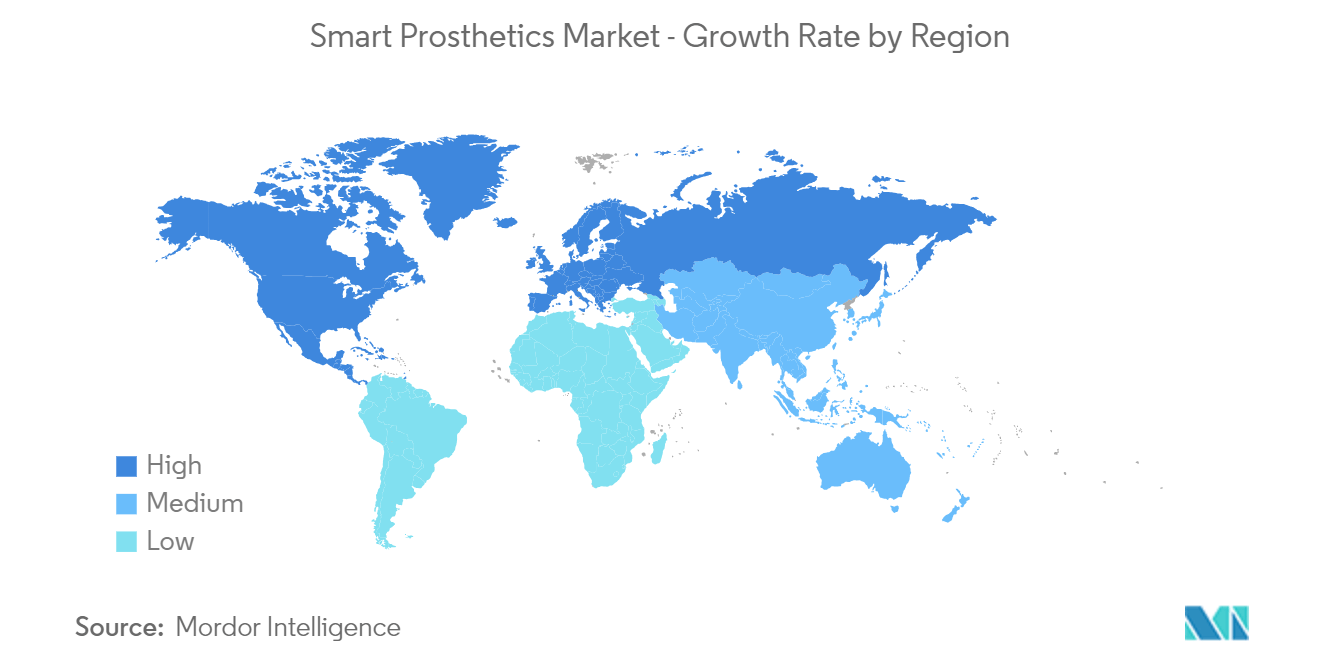
| Fastest Growing Market | Asia Pacific |
| Largest Market | North America |
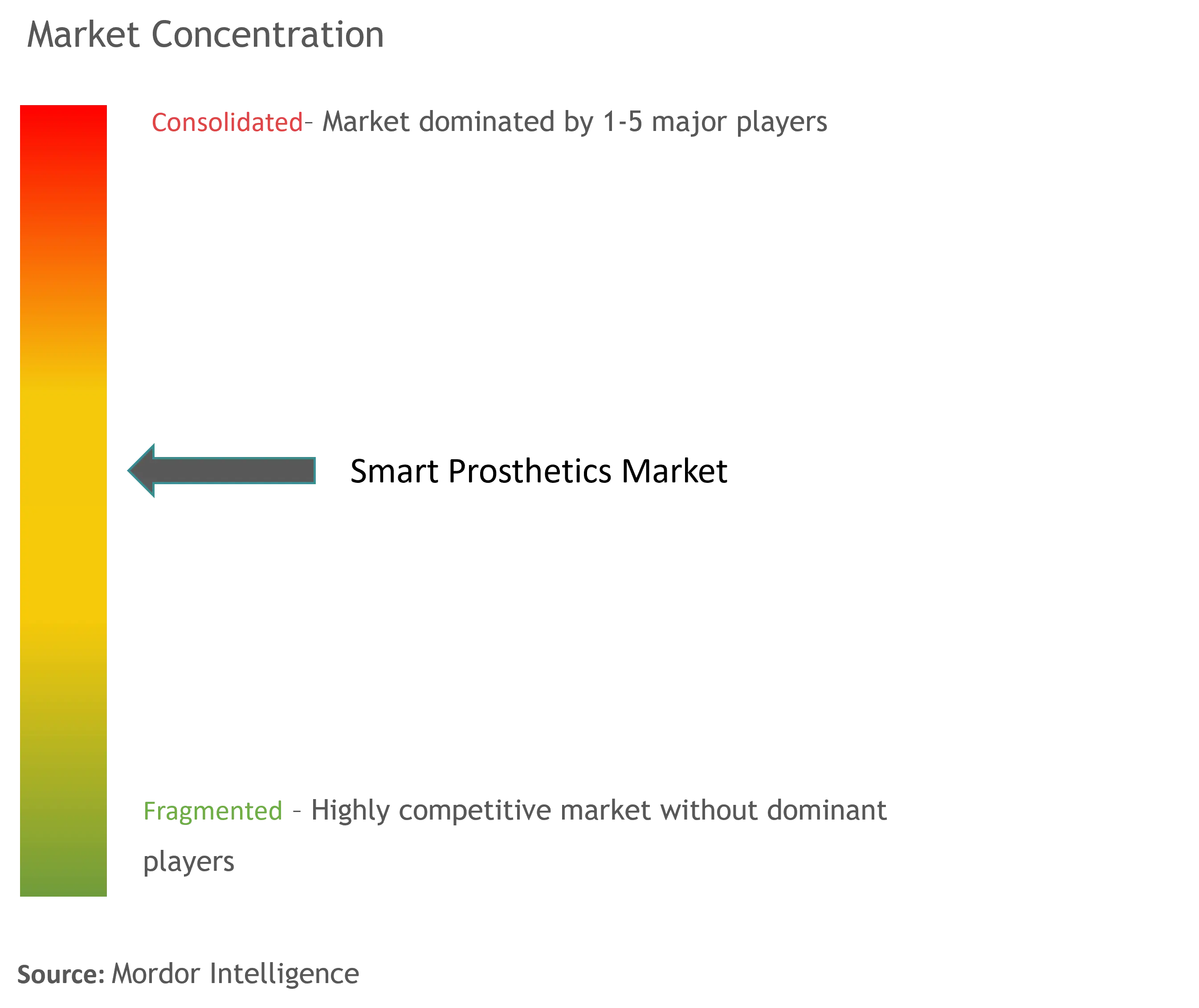
| Market Concentration | Medium |
Major Players *Disclaimer: Major Players sorted in no particular order |
Smart Prosthetics Market Analysis by Mordor Intelligence
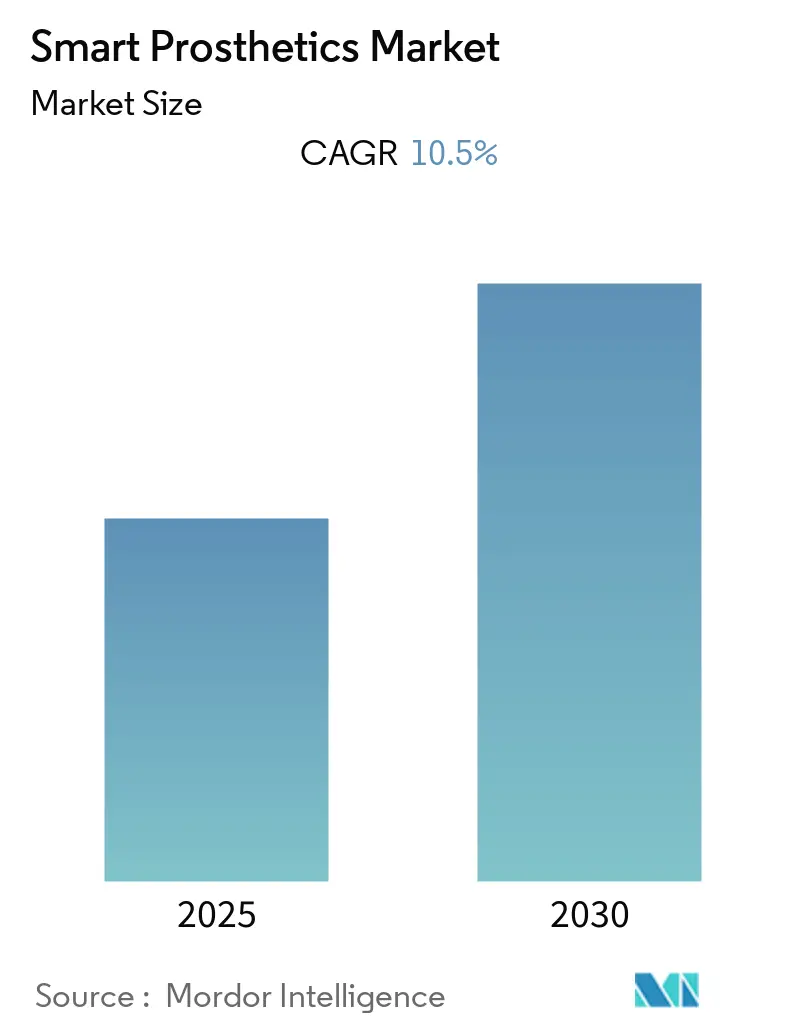
The Smart Prosthetics Market is expected to register a CAGR of 10.5% during the forecast period.
Factors such as the growing number of sports injuries and road accidents, increasing burden of critical limb ischemia, osteosarcoma, diabetes-related amputations, and rising geriatric population, as well as increasing technological advancements in smart prosthetics, are expected to boost the market’s growth.
The prevalence of diabetic foot ulcers is expected to be the major reason for amputation among the population, which fuels the demand for lower limb prosthetics in the market. For instance, according to data published by the International Diabetes Federation in 2022, about 643 million people globally are expected to suffer from diabetes in 2030, and this number is projected to reach 784 million by 2045. As the number of diabetic cases increases, the chance of complications related to limbs undergoing amputation rises, thereby boosting market growth over the forecast period.
Additionally, the emerging technological advancements in prosthetics, such as the use of artificial intelligence, biosensor technology, and robotic prosthetics, are increasing, which is also expected to fuel market growth during the forecast period. For instance, according to an article published in Wevolver in January 2023, the development of prosthetics provides complete sensory feedback, where data is collected from sensors mounted on the prosthesis, encoded into signals, and then delivered to the brain via electrical stimulation. Such developments are anticipated to fuel the demand for smart prosthetics during the forecast period.
Furthermore, the rising adoption of key strategic activities by the market players, such as collaborations, partnerships, and fundraising, is expected to increase the availability of advanced prosthetic devices in the market. For instance, in April 2022, Ability Matters Group acquired ProActive Prosthetics Ltd to bring the company access to the Ability Matters Group's cutting-edge technologies and support the continued development of its services. In April 2022, Adapttech, a Birmingham biomedical company, received a EUR 2.25 million (USD 2.65 million) investment from MEIF Proof of Concept and Early-Stage Fund to boost its global expansion of smart devices for fitting lower limb prosthetics.
Moreover, the increasing number of product launches by market players is expected to fuel the availability of advanced prosthetics products in the market. For instance, in April 2022, Adapptech launched a new smart prosthetic limb technology, the Insight system. The Insight range of products includes INSIGHT Sense, an affordable, portable, and standalone real-time analysis pressure measurement system targeted at smaller prosthetics and orthoticsclinics to reduce hardware costs and help them provide house calls to remote patients, making it faster and easier to fit lower-limb prostheses and improve patient outcomes.
Therefore, owing to factors such as the increasing number of road accidents, the rising burden of orthopedic disorders and bone cancer, and growing company activities, the market studied is anticipated to grow during the forecast period. However, the lack of developed healthcare infrastructure in developing and under-developed countries, as well as the high cost of smart prosthetics, are likely to hinder the growth of the smart prosthetics market during the forecast period.
Global Smart Prosthetics Market Trends and Insights
Prosthetic Hand Segment Expects to Register a Significant Growth Over the Forecast Period
- The prosthetic hand segment is anticipated to witness significant growth during the forecast period owing to factors such as the increasing number of sports-related and accident injuries and the increasing number of product launches by researchers and companies.
- The emerging technological advancements, as well as the use of artificial intelligence in the development of prosthetic hands, are expected to fuel the segment's growth during the forecast period. For instance, an article published in Medicine in June 2022 highlighted a study conducted by researchers in South Korea.
- The study involved providing body-powered 3D-printed finger prostheses and comprehensive prosthetic training to two individuals with partial hand amputations. The results demonstrated improved functionality and overall satisfaction with the 3D-printed finger prostheses among the participants. These advancements in prosthetics not only enhance the quality of life for individuals but also generate increased demand for such products, consequently driving market growth during the forecast period.
- Additionally, in May 2022, scientists at the University of Minnesota developed real-life mind-controllable robotic prosthetics and portable neuro prosthetic hands using artificial intelligence (AI) and machine learning (ML). The peripheral nerve in the patient's arm is connected to a nerve implant in the robotic hand that allows patients to control robotic body parts using their thoughts. Hence, such developments are anticipated to fuel the adoption of artificial intelligence-based prosthetic hands among users, which is expected to contribute to market growth.
- Furthermore, government and company initiatives to distribute prosthetic hands are anticipated to increase the availability of the product in India. For instance, in January 2023, Vispala, an Indian technology company, donated a consignment of 350 3D-printed prosthetic hands, developed by TU Delft, for Ukrainians injured in the war.
- Moreover, in April 2022, Rotary District 3150 organized one of the biggest prosthetic hands-free distribution functions at Malla Reddy University in Dulapally, Hyderabad. It was organized in association with Ellen Meadows Prosthetic Hand Foundation, United States. It is a registered non-profit organization in the United States that has created a manufacturing facility to produce and distribute several hundred prototype LN-4 hands (the LN-4 brand of hand was created by the Ellen Meadows Prosthetic Hand Foundation).
- Considering the growing research initiatives by universities and rising government initiatives, the prosthetics hand segment is expected to register substantial growth.


North America is Expected to Hold Significant Market Share During the Forecast Period
- North America is expected to register a significant CAGR over the forecast period owing to factors such as the growing number of sports injuries and road accidents, the growing burden of orthopedic diseases, and the increasing prevalence of diabetes-related amputations among the population. In addition, the growing geriatric population, high healthcare expenditures, and the presence of key players in the region are also expected to boost market growth during the forecast period.
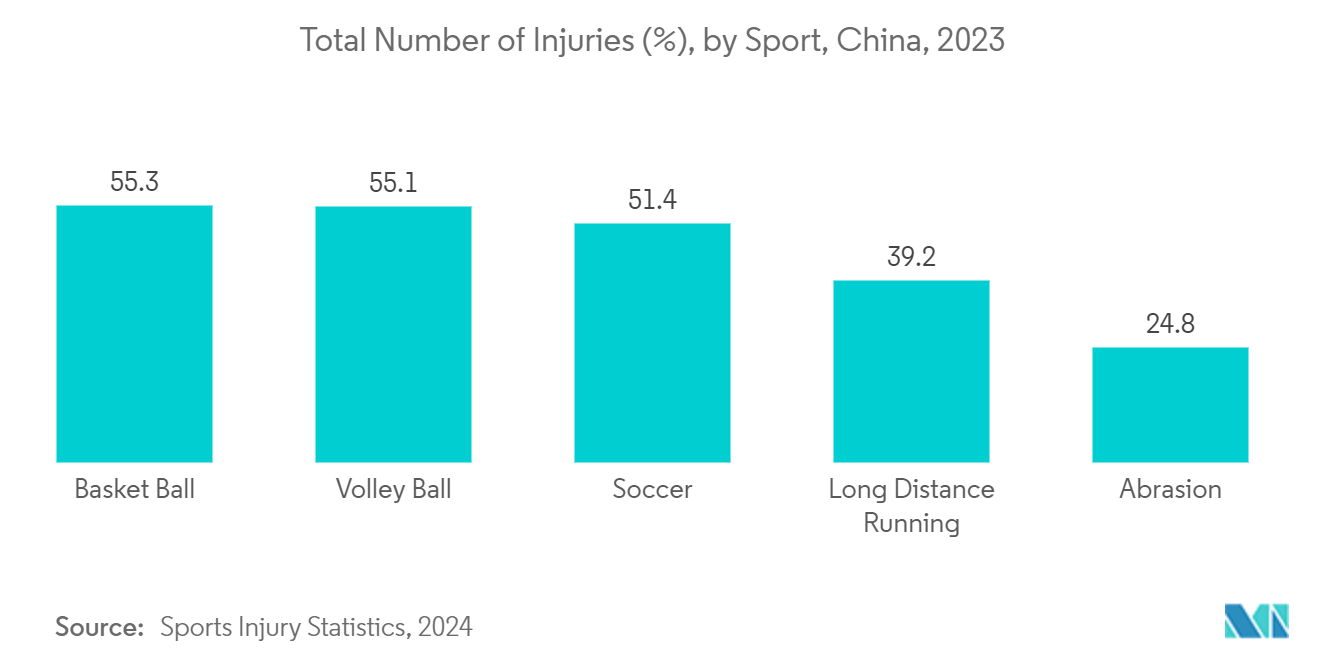
- The incidence of sport-related injuries, such as ligament sprains, muscle sprains, tennis elbow, and supraspinatus tendinitis, is increasing among the population. For instance, according to an article published in Translational Pediatrics in February 2022, it was observed that about 8.6 million athletes suffer from sports-related injuries each year in the United States. Thus, the high number of sports injuries increases the risk of elbow dislocation or fractures, which, in turn, is expected to fuel the demand for smart prosthetics that can anticipate and respond to the actions of users, providing a very natural walking gait, improving the overall balance and walking power.
- Additionally, rising government initiatives to develop advanced prosthetic products across the region are expected to propel the growth of the market. For instance, in February 2022, the FY22 Defense Appropriations Act provided funding for the Orthotics and Prosthetics Outcomes Research Program (OPORP), which supports research that evaluates prostheses using patient-centric outcomes relevant to service members and military beneficiaries, veterans, and other individuals with limb loss and/or limb impairment.
- Furthermore, the increasing focus of companies on developing innovative prosthetics is also anticipated to fuel the availability of technologically advanced prosthetics in the market, thereby propelling market growth. For instance, in December 2022, NYU Langone Hospitals completed its first set of surgeries using US FDA-approved implantable prosthetics for people with limb loss, and it is now available in greater New York City. The procedure is known as osseointegration, which is done to improve the quality of life for people with limb loss by enhancing the connection between limb and prosthesis.
- Moreover, in July 2022, Esper Bionics launched a new prosthetic hand, an artificial intelligence (AI)--powered hand, which is a combination of wearable robotics and a stunning design. The robotic hand has a self-learning technology that enables users to carry out their everyday tasks independently.
- Therefore, owing to factors such as the increasing burden of sports-related injuries and diabetes among the population and the increasing number of product launches, the market studied is anticipated to grow during the forecast period.

Competitive Landscape
The market for smart prosthetics is moderately consolidated owing to the presence of small and large players in the market. The companies are adopting key strategic initiatives such as collaborations, acquisitions, partnerships, and new product launches to retain their market position. Some of the key players in the market are Ottobock, Ossur (Touch Bionics Inc.), Esko Bionics, Blatchford Limited, and Esper Bionics.
Smart Prosthetics Industry Leaders
Blatchford Limited
Ottobock
Ossur (Touch Bionics Inc.)
Esko Bionics
Esper Bionics
- *Disclaimer: Major Players sorted in no particular order

Recent Industry Developments
- September 2023: ISRO developed an intelligent artificial limb that benefits above-knee amputees by allowing them to walk with a comfortable gait. The artificial limb has a 1.6 kg MPK that enables an amputee to walk about 100 m in the corridor with minimum support. These "microprocessor-controlled knees" (MPKs) give the amputee more capabilities than passive limbs that do not use microprocessors.
- February 2022: Össur launched its new POWER KNEE, the first actively powered microprocessor prosthetic knee for people with above-knee amputation or limb difference. The POWER KNEE is groundbreaking bionic technology, a motor-powered 'smart' prosthesis that uses advanced algorithms to detect human movement patterns and learns and adjusts to its wearer's speed and cadence in real time.


Global Smart Prosthetics Market Report Scope
As per the scope of the report, a prosthetic is an artificial body part, such as an arm or foot, that replaces a missing part. Smart prosthetics are devices that can read a user's intention from the newly rewired nerves and the muscles they activate.
The smart prosthetics market is segmented by product, end-user, and geography. By product, the market is segmented into lower-body prosthetics and upper-body prosthetics. By end user, the market is bifurcated into prosthetic clinics, hospitals, rehabilitation centers, and other end users. By geography, the market is divided into North America, Europe, Asia-Pacific, Middle East and Africa, and South America. The report offers the value (USD) for the above segments.
| Lower Body Prosthetics | Prosthetic Knee |
| Prosthetic Ankle | |
| Other Lower Body Prosthetics | |
| Upper Body Prosthetics | Prosthetic Arm |
| Prosthetic Hand | |
| Other Upper Body Prosthetics |
| Prosthetic Clinics |
| Hospitals |
| Rehabilitation Center |
| Other End Users |
| North America | United States |
| Canada | |
| Mexico | |
| Europe | Germany |
| United Kingdom | |
| France | |
| Italy | |
| Spain | |
| Rest of Europe | |
| Asia-Pacific | China |
| Japan | |
| India | |
| Australia | |
| South Korea | |
| Rest of Asia-Pacific | |
| Middle East and Africa | GCC |
| South Africa | |
| Rest of Middle East and Africa | |
| South America | Brazil |
| Argentina | |
| Rest of South America |
| By Product | Lower Body Prosthetics | Prosthetic Knee |
| Prosthetic Ankle | ||
| Other Lower Body Prosthetics | ||
| Upper Body Prosthetics | Prosthetic Arm | |
| Prosthetic Hand | ||
| Other Upper Body Prosthetics | ||
| By End User | Prosthetic Clinics | |
| Hospitals | ||
| Rehabilitation Center | ||
| Other End Users | ||
| By Geography | North America | United States |
| Canada | ||
| Mexico | ||
| Europe | Germany | |
| United Kingdom | ||
| France | ||
| Italy | ||
| Spain | ||
| Rest of Europe | ||
| Asia-Pacific | China | |
| Japan | ||
| India | ||
| Australia | ||
| South Korea | ||
| Rest of Asia-Pacific | ||
| Middle East and Africa | GCC | |
| South Africa | ||
| Rest of Middle East and Africa | ||
| South America | Brazil | |
| Argentina | ||
| Rest of South America | ||


Key Questions Answered in the Report
What is the current Smart Prosthetics Market size?
The Smart Prosthetics Market is projected to register a CAGR of 10.5% during the forecast period (2025-2030)
Who are the key players in Smart Prosthetics Market?
Blatchford Limited, Ottobock, Ossur (Touch Bionics Inc.), Esko Bionics and Esper Bionics are the major companies operating in the Smart Prosthetics Market.
Which is the fastest growing region in Smart Prosthetics Market?
Asia Pacific is estimated to grow at the highest CAGR over the forecast period (2025-2030).
Which region has the biggest share in Smart Prosthetics Market?
In 2025, the North America accounts for the largest market share in Smart Prosthetics Market.
What years does this Smart Prosthetics Market cover?
The report covers the Smart Prosthetics Market historical market size for years: 2019, 2020, 2021, 2022, 2023 and 2024. The report also forecasts the Smart Prosthetics Market size for years: 2025, 2026, 2027, 2028, 2029 and 2030.
Page last updated on:
Smart Prosthetics Market Report
Statistics for the 2025 Smart Prosthetics market share, size and revenue growth rate, created by Mordor Intelligence™ Industry Reports. Smart Prosthetics analysis includes a market forecast outlook for 2025 to 2030 and historical overview. Get a sample of this industry analysis as a free report PDF download.


 Your data is secure and never sold or shared.


