
Veterinary Endoscopy Market Size and Share
Market Overview
| Study Period | 2020 - 2031 |
|---|---|
| Market Size (2026) | USD 332.95 Million |
| Market Size (2031) | USD 475.1 Million |
| Growth Rate (2026 - 2031) | 7.35 % |
| Fastest Growing Market | Asia-Pacific |
| Largest Market | North America |
| Market Concentration | Medium |
Major Players *Disclaimer: Major Players sorted in no particular order Image © Mordor Intelligence. Reuse requires attribution under CC BY 4.0. | |
Veterinary Endoscopy Market Analysis by Mordor Intelligence
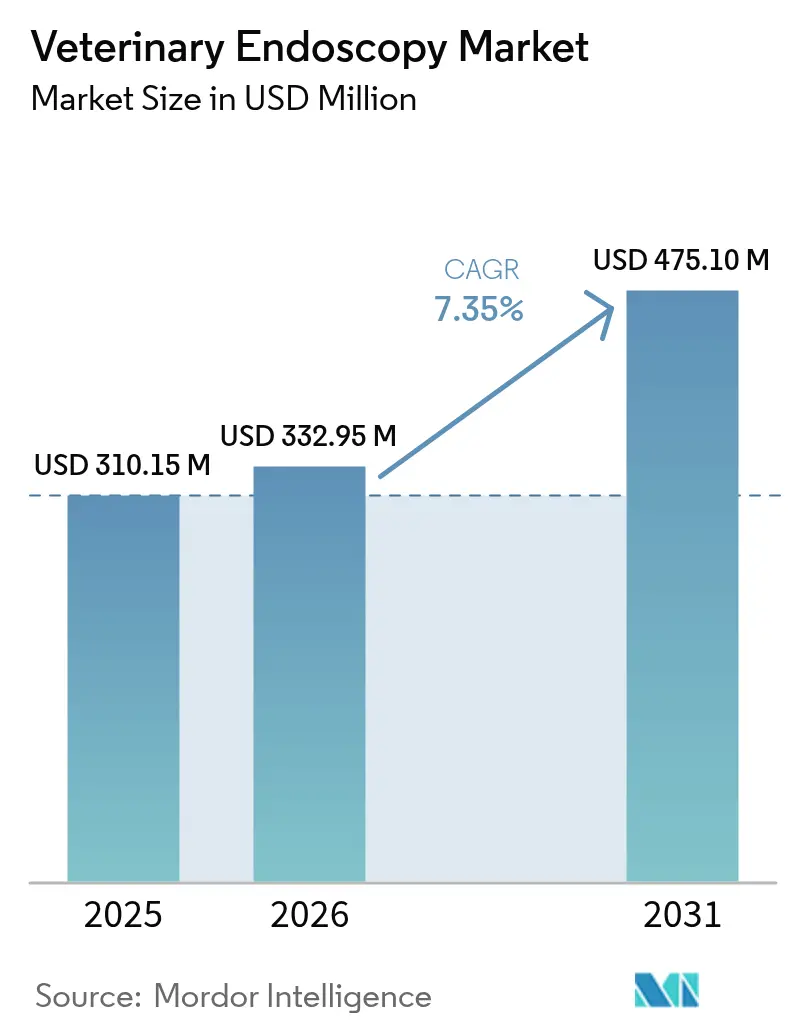
The global veterinary endoscopy market size in 2026 is estimated at USD 332.95 million, growing from 2025 value of USD 310.15 million with 2031 projections showing USD 475.1 million, growing at 7.35% CAGR over 2026-2031. Rising demand for minimally invasive diagnostics, continued miniaturization of equipment, and expanding corporate hospital networks are underpinning this steady expansion of the veterinary endoscopy market. Flexible video systems remain the technology of choice for most companion-animal and equine procedures, yet capsule devices are carving out rapid adoption niches as smaller practices seek anesthesia-free options. Regionally, North America benefits from deep specialty referral networks and high insurance penetration, while Asia-Pacific’s escalating pet ownership and disposable income are propelling the fastest regional CAGR. Competitive momentum is intensifying as diversified human-device majors and veterinary-focused specialists vie for share, but a shortage of skilled endoscopists still constrains the full potential of the veterinary endoscopy market.
Key Report Takeaways
- By product type, flexible video endoscopes commanded 45.30% revenue in 2025; capsule systems are projected to grow at an 11.2% CAGR through 2031.
- By procedure, diagnostics held 63.40% of the veterinary endoscopy market share in 2025, while therapeutic interventions are forecast to expand at a 10.1% CAGR to 2031.
- By application, gastrointestinal procedures captured 56.30% of the veterinary endoscopy market size in 2025 and orthopedic/arthroscopy is advancing at a 11.6% CAGR through 2031.
- By animal type, companion species accounted for 68.20% of 2025 revenue; bovine sub-segments lead livestock growth at a 9.3% CAGR between 2026-2031.
- By end user, hospitals and referral clinics contributed 60.40% of global revenue in 2025; ambulatory centers represent the fastest-growing channel with a 9.8% CAGR to 2031.
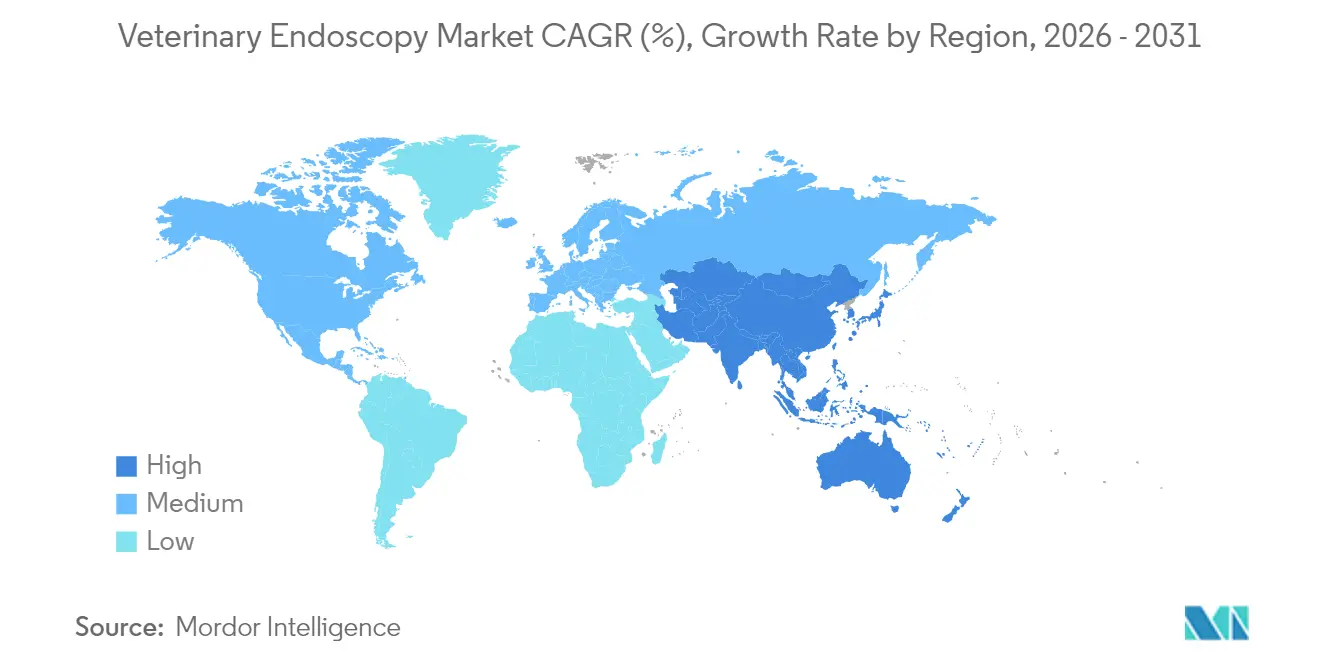
- By geography, North America led with a 37.60% share of 2025 global revenue, while Asia-Pacific is projected to post a 9.1% CAGR through 2031.
Note: Market size and forecast figures in this report are generated using Mordor Intelligence’s proprietary estimation framework, updated with the latest available data and insights as of 2026.
Market Trends and Insights
Drivers Impact Analysis of Veterinary Endoscopy Market*
| Driver | (~) % Impact on CAGR Forecast | Geographic Relevance | Impact Timeline |
|---|---|---|---|
| Increasing GI & respiratory disease burden | +2.1% | Global, higher in North America & Europe | Medium term (2-4 years) |
| Rising pet ownership & humanization | +1.8% | North America, Europe, urban Asia-Pacific | Long term (≥ 4 years) |
| Technology miniaturization & HD imaging | +1.5% | Global, early adoption in North America & Europe | Medium term (2-4 years) |
| Tele-endoscopy & cloud image platforms | +1.2% | North America, Europe, urban Asia-Pacific | Short term (≤ 2 years) |
| Veterinary hospital consolidation | +1.0% | North America & Europe | Medium term (2-4 years) |
| Source: Mordor Intelligence | |||


Rising Gastrointestinal and Respiratory Disorders
Growing incidence of chronic enteropathies, inflammatory bowel disease, and lower airway disease is prompting veterinarians to adopt endoscopy as first-line diagnostics. Practices report measurably higher diagnostic yields versus radiography; one study recorded a 37% uptick in definitive GI diagnoses when endoscopy was deployed. Prolonged companion-animal lifespans also expose more animals to age-related GI pathologies, further swelling procedure volumes. Large-animal practitioners increasingly use upper airway endoscopy for racehorses and bronchoscopy for dairy herds, broadening demand beyond companion clinics. Together, these clinical trends are raising throughput and justifying equipment investment across the veterinary endoscopy market.
Pet Humanization and Premium Care Spend
Households without children are channeling discretionary income toward advanced companion-animal healthcare, reinforcing willingness to pay for endoscopic diagnostics and minimally invasive therapy. Morgan Stanley projects annual household pet outlays to hit USD 1,733 by 2030, with veterinary services the fastest-expanding line item[1]Morgan Stanley, “Pet Care Industry Outlook for 2030,” morganstanley.com. High-definition video and capsule modalities align well with owner preferences for gentle, low-scarring interventions. The converging influence of insured procedures and third-party financing platforms is also reducing upfront cost sensitivity, allowing specialty centers to market comprehensive endoscopic packages. Consequently, pet humanization continues to boost procedure frequency and revenue across the veterinary endoscopy market.
Technological Miniaturization Expanding Accessibility
Rapid reductions in scope diameter—now sub-3 mm for certain flexible units—permit safe navigation inside small mammals, birds, and reptiles. AnX Robotica’s NaviCam XS capsule is 44% smaller than prior iterations, offering smoother transit through narrow GI tracts. HD optical chips paired with LED light sources deliver mucosal detail once reserved for human systems, helping practitioners flag premalignant lesions. Small-form devices lower anesthesia requirements and fit modest clinic footprints, bringing the veterinary endoscopy market to previously underserved rural or exotic-focused practices.
Tele-Endoscopy and Cloud-Based Image Management
High-bandwidth networks now stream live procedure video to board-certified specialists for on-the-fly consults. Integrated PACS solutions archive cases to cloud repositories, allowing asynchronous review and AI-assisted pattern recognition. Early adopters report trimmed diagnosis times and enhanced training pathways for novice clinicians. The incremental revenue potential and educational value of tele-mentoring are accelerating uptake, especially in regions where local expertise is scarce.
Restraints Impact Analysis of Veterinary Endoscopy Market*
| Restraint | (~) % Impact on CAGR Forecast | Geographic Relevance | Impact Timeline |
|---|---|---|---|
| High capital & lifecycle costs | -1.7% | Global, heavier in emerging markets | Long term (≥ 4 years) |
| Shortage of skilled endoscopists | -1.4% | Global, acute in Asia-Pacific & MEA | Medium term (2-4 years) |
| Sterilization and infection-control challenges | -0.9% | Global | Short term (≤ 2 years) |
| Source: Mordor Intelligence | |||
High Equipment Costs Limiting Adoption
Entry-level HD systems can exceed USD 45,000, a hurdle for small or rural clinics battling declining foot traffic and thinning margins[2]American Veterinary Medical Association, “Less Foot Traffic at Veterinary Practices Spells Declining Revenue,” avma.org. Service contracts, scope repair, and specialty cleaning units add to lifecycle outlays, lengthening payback periods. Emerging-market practices face even steeper import duties and limited financing, stalling penetration of the veterinary endoscopy market. Vendors offering pay-per-use or leasing models are attempting to ease adoption, yet overall budget constraints remain a strong drag on market growth.
Veterinary Endoscopist Shortage
Advanced endoscopic techniques demand proficiency beyond standard curricula, and global training pipelines lag demand. Relief veterinarians now represent 9.1% of the U.S. workforce, complicating the formation of steady endoscopy teams. Emerging markets suffer compounded scarcity, forcing referral bottlenecks and long wait times. Teaching hospitals are expanding residency slots, but the lag in graduating qualified specialists continues to cap procedure volumes across the veterinary endoscopy market.
*Our forecasts treat driver/restraint impacts as directional, not additive. The impact forecasts reflect baseline growth, mix effects, and variable interactions.
Veterinary Endoscopy Market Segment Analysis
By Product Type:
Flexible Dominance with Capsule UpsurgeFlexible video systems delivered 45.30% of 2025 revenue, underscoring their versatility in GI, respiratory, and urogenital work. HD chip-on-tip optics provide crisp imagery, while variable stiffness insertion tubes improve maneuverability. Correspondingly, the segment captured the largest slice of the veterinary endoscopy market share. Capsule modules, although accounting for lower absolute revenue, post an 11.2% CAGR as clinics embrace anesthesia-free imaging for cats, small dogs, and exotics. The veterinary endoscopy market size for capsule devices is on track to more than double by 2030. Rigid scopes retain popularity in arthroscopy owing to durable optics and tactile control, and robot-assisted units, though nascent, attract premium equine centers exploring remote joystick manipulation.
Complementary visualization consoles and integrated AI analytics represent the second-largest revenue pool, driven by system upgrades rather than new room builds. Accessory sales—biopsy forceps, snares, retrieval baskets—generate high-margin recurring income for OEMs. The segment benefits as therapeutic procedure counts climb, knitting consumable pull-through to each intervention.



By Procedure:
Diagnostics Prevail, Therapies AccelerateDiagnostic work comprised 63.40% of global cases in 2025, supported by superior mucosal assessment over radiography. High tissue-sampling accuracy reduces exploratory surgeries and informs targeted pharmacologic regimens, reinforcing demand. Still, therapeutic endoscopy is the momentum engine, projected to log a 10.1% CAGR through 2031 as scope channels widen and accessory toolkits diversify. Stricture dilations, polyp resections, and foreign-body retrievals now performable in a single anesthetic window drive client acceptance. Combined diagnostic-therapeutic workflows compress visit counts, appealing to busy pet owners and reducing stress on animals. Manufacturers responding with torque-stable overtubes and laser-compatible working channels stand to capture the fastest-growing pocket of the veterinary endoscopy market.
By Application:
GI Stronghold, Orthopedic BreakoutGastrointestinal indications represent 56.30% of 2025 procedures, cementing the segment’s authority within the veterinary endoscopy market size. Chronic vomiting, weight loss, and dysphagia continue to channel referrals for esophagoscopy and colonoscopy. Meanwhile, orthopedic arthroscopy is expanding faster than any other niche, propelled by skeletal disease management in canine athletes and equine performance horses. A 11.6% projected CAGR mirrors improvements in 2.4 mm arthroscopes and portal access kits that protect neurovascular structures. ENT and respiratory uses maintain respectable volume due to recurrent laryngeal neuropathy diagnostics in horses and chronic rhinitis in brachycephalic dogs. Urogenital, ophthalmic, and neurologic subspecialties remain smaller but rise steadily as device miniaturization keeps lowering anatomical barriers.
By Animal Type:
Companion Primacy, Livestock Catch-UpCompanion animals yielded 68.20% of 2025 turnover, with canines the single largest sub-segment given breed-specific GI disorders and larger body size that eases scope navigation. Feline volumes are stabilizing as 5 mm scopes and CO₂ insufflation mitigate airway and abdominal constraints. Within livestock, bovine applications headline at a 9.3% CAGR on the back of high-value breeding cows and dairy productivity optimization. Equine work, straddling companion and production, commands premium procedure pricing for airway endoscopy and joint inspection. Poultry and small ruminant procedures remain niche but gain research traction.

By End User:
Hospital Leadership, Ambulatory SurgeHospitals and referral centers captured 60.40% of 2025 sales, leveraging concentrated caseloads to fund multi-tower endoscopy suites. Consolidators equip flagship hubs, then funnel satellite clinic referrals, locking in utilization. Yet ambulatory and specialty centers sprout rapidly, projected to outpace hospital growth rates at 9.8% CAGR. Focused procedure capacity and lower overhead support competitive pricing, drawing elective arthroscopies and capsule studies away from general hospitals. Academic institutes hold a substantial stake as technique incubators, helped by industry donations and grant funding for novel device validation.
Geography Analysis
North America Veterinary Endoscopy Market
North America contributed 37.60% of 2025 global revenue, cementing regional supremacy for the veterinary endoscopy market. High pet insurance uptake and the world’s densest population of diplomate-level specialists sustain premium procedure demand. U.S. referral hospitals spearhead adoption of capsule and 4K imaging, while Canadian clinics lean on university affiliations for complex case overflow. Mexico’s urban corridors exhibit double-digit growth as middle-income households pivot toward Western pet-care norms.
Europe Veterinary Endoscopy Market
Europe ranks second by value, buttressed by stringent welfare regulations and long-established referral networks. Germany’s engineering pedigree supports local OEM production, driving early adoption of robotic articulating scopes. The United Kingdom combines strong pet-ownership culture with robust specialty certification, fostering high per-capita procedure volumes. Mediterranean countries lag Northern peers but close gaps swiftly as specialty hospitals proliferate.
APAC Veterinary Endoscopy Market
Asia-Pacific is the locomotive of global growth, slated for a 9.1% CAGR through 2031. China’s expanding middle class elevates pet medical spend, stimulating multi-site hospital chains that can amortize endoscope investments. Japan showcases advanced technique maturity, while India’s growth stems from a low base but benefits from rising urban pet populations and Western educational collaborations. Australia and South Korea sustain high-quality benchmarks, but intra-regional disparity persists as rural sectors remain underserved.
MEA and South America Veterinary Endoscopy Market
South America and the Middle East & Africa represent smaller shares yet register healthy growth as veterinary colleges upgrade curricula and corporates enter metropolitan markets. Equipment donation programs and tele-endoscopy partnerships mitigate specialist shortages, further unlocking latent demand.

Competitive Landscape
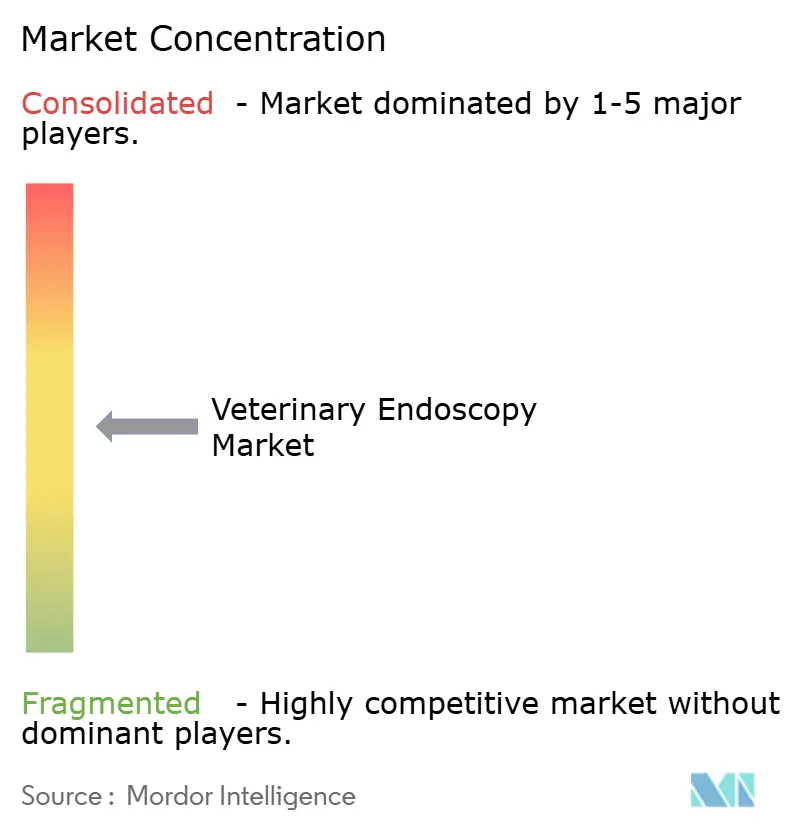
The veterinary endoscopy market features moderate fragmentation, with top suppliers controlling significant global revenue, leaving ample headroom for niche innovators. Karl Storz leverages deep optics heritage and a broad veterinary catalog to preserve lead share. Olympus repurposes human-clinical 190-series technology into animal-specific bundles, emphasizing image quality and waterproof durability. Medtronic targets high-acuity centers with slimline colonoscopes incorporating hemostasis accessories. Biovision and Dr. Fritz differentiate through veterinary-purpose designs, lighter handpieces, and exotic-species adapters.
Strategic priorities tilt toward turnkey solution sales covering consoles, scopes, disposables, training, and service contracts. OEMs forge alliances with teaching hospitals to beta-test AI diagnostic modules and capsule propulsion systems. Corporate consolidators, now the largest buyers, pressure vendors for multi-year fleet agreements at volume pricing. White-space entrants focus on pocket-scope kits for wildlife and zoo use cases, and on cloud platforms enabling remote proctoring. Overall, rivalry intensifies on image clarity, channel diameter, and ownership economics rather than pure hardware differentiation.
Veterinary Endoscopy Industry Leaders
Eickemeyer Veterinary Equipment
Olympus Corporation
Steris PLC
Dr. Fritz Endoscopy GmbH
Biovision Veterinary Endoscopy LLC
- *Disclaimer: Major Players sorted in no particular order
Veterinary Endoscopy Market Companies Covered in this Report
- Biovision Veterinary Endoscopy
- Karl Storz
- Olympus
- Medtronic
- STERIS
- Dr. Fritz Endoscopy
- Eickemeyer Veterinary Equipment
- Zhuhai Seesheen Medical Technology
- Fujifilm Holdings Corp.
- SonoScape Medical Corp.
- Cook Group
- Endoscopy Support Services Inc.
- VetOvation
- Arthrex Vet Systems
- Jorgensen Laboratories
- Hill-Rom Holdings (Welch Allyn Vet)
- iM3 Veterinary
- B. Braun
- TianSong Medical Instrument
- Medit Inc.

Market Opportunities and Future Outlook
White space is opening in advanced minimally invasive procedures beyond core gastrointestinal diagnostics, especially in orthopedic and spinal interventions where scope and instrument miniaturization helps teams access areas that previously required open surgery. April 2026 clinical reporting of a lateral full-endoscopic lumbosacral foraminotomy approach in dogs points to endoscopy working into complex decompression and foraminotomy workflows, which raises the bar for smaller-diameter scopes, rigid endoscopy towers for ortho use cases, and dedicated accessory sets.
A second opportunity area is the shift toward integrated digital endoscopy ecosystems, combining HD or 4K visualization, added imaging modes such as narrow-band imaging, and workflow tools for image archiving and remote collaboration. The report scope already highlights tele-endoscopy and cloud image platforms, which address part of the skilled-endoscopist shortage by supporting live mentoring and specialist overreads across referral networks. This creates openings for vendors that bundle scopes, visualization systems, and service contracts alongside training content and remote-proctoring capability. With entry-level HD systems often exceeding USD 45,000, adoption economics remain a gating factor, so leasing, pay-per-use, and multi-site fleet agreements with consolidated hospital chains and ambulatory specialty centers can widen penetration while keeping reprocessing compliance in place.
Recent Industry Developments in Veterinary Endoscopy Market
- May 2026: STERIS announced plans to build a new sterility assurance manufacturing plant in Mentor, Ohio, with an investment of about USD 60 million over two years and a target of operational readiness by late 2027. Expanded sterility assurance capacity supports instrument reprocessing and infection-control workflows that are central to endoscopy utilization across multi-site veterinary hospitals and specialty centers.
- May 2025: AnX Robotica released NaviCam XS and NaviCam XST capsules along with ESView 3.0, introducing a capsule that is 44% smaller than existing models to improve transit through narrow veterinary GI tracts. The release strengthens anesthesia-free imaging value and expands capsule suitability for smaller companion animals and exotic species.
- February 2025: Eickemeyer Canada commenced a distribution partnership with Millpledge Veterinary to streamline availability of veterinary surgical consumables and related products across Canada. Broader regional access to procedure consumables and bundled supply relationships can reduce downtime and simplify procurement for clinics scaling therapeutic endoscopy volumes.


Veterinary Endoscopy Market Report Scope and Research Methodology
Market Definition and Coverage
This market is defined as the revenue generated from veterinary endoscopy systems used to visualize and access internal organs in animals for diagnostic and interventional procedures across routine and specialty care settings.
Scope exclusions: We exclude non-endoscopic veterinary imaging modalities and general surgical tools that are not designed to perform endoscopic visualization or access.
Segments Covered in This Report
- By Product Type
- Endoscopes
- Capsule
- Flexible Video
- Rigid
- Robot-assisted
- Visualization & Imaging Systems
- Accessories & Consumables
- Endoscopes
- By Procedure
- Diagnostic
- Therapeutic / Interventional
- By Application
- Gastrointestinal
- Respiratory & ENT
- Urogenital
- Orthopedic / Arthroscopy
- Others
- By Animal Type
- Companion Animals
- Canine
- Feline
- Equine
- Livestock
- Bovine
- Porcine
- Poultry
- Ovine/Caprine
- Companion Animals
- By End User
- Veterinary Hospitals & Referral Clinics
- Ambulatory & Specialty Centers
- Academic & Research Institutes
- Geography
- North America
- United States
- Canada
- Mexico
- Europe
- Germany
- United Kingdom
- France
- Italy
- Spain
- Rest of Europe
- Asia-Pacific
- China
- Japan
- India
- South Korea
- Australia
- Rest of Asia-Pacific
- Middle East and Africa
- GCC
- South Africa
- Rest of Middle East and Africa
- South America
- Brazil
- Argentina
- Rest of South America
- North America
Data Sources, Market Sizing, and Validation
Desk Research
Desk research starts with building a clean fact base for animal health spending and procedure adoption, before any modeling assumptions are locked. Public sources such as USDA (livestock inventories), Eurostat (animal and agriculture statistics), the World Organisation for Animal Health (WOAH) publications, and peer reviewed veterinary journals help us understand procedure use, disease patterns, and care settings.
We also review product recall notices, regulatory and safety communications, and patent filings to track technology change, for example shifts toward flexible video systems or capsule use cases. Company filings, investor presentations, and reputable press coverage are used to map sales exposure by geography and channel, which we then translate into assumptions on price bands and replacement cycles. Paid subscriptions are used selectively for company financials and patent databases, and where needed, shipment-level trade data is used to sanity-check device movement across key import markets. These desk research sources are illustrative only, and many other public documents and data points were also used for collection, cross-checking, and clarification.
Primary Interviews and Surveys
Primary work is used to pressure test the sizing model with people who see day to day demand, pricing, and replacement decisions. We speak with veterinary hospitals and specialty centers, academic institutes, distributors, and technical professionals, covering APAC, EMEA, and the Americas so regional differences in procedure mix and purchasing cycles are captured.
Distribution of primary research fieldwork respondents
| Company type | Respondent position | Region |
|---|---|---|
| Top tier: 31% | CXOs: 14% | APAC: 42% |
| Mid tier: 51% | Functional/Unit leaders: 36% | EMEA: 31% |
| Smaller Players: 18% | Managers: 50% | Americas: 27% |
Market-Sizing & Forecasting
Sizing is built using a top-down approach where the addressable demand pool is reconstructed from veterinary procedure activity and the availability of endoscopy capability by care setting, and then converted into revenue using typical system and accessory pricing. Because procedure counts are not always reported consistently, the model leans on practical drivers such as companion versus livestock patient mix, growth in minimally invasive procedures, installed base replacement timing, and the share of facilities equipped with flexible and rigid systems.
To keep the totals realistic, the outputs are corroborated through selective bottom-up approximations, such as supplier revenue exposure checks, distributor channel checks, and sampled average selling price ranges multiplied by implied unit demand. Inputs that commonly move the market in this space include equipment utilization rates in hospitals, procedure mix shifts (gastrointestinal and respiratory are common), capital budget trends in veterinary networks, and technology upgrades from fiber optic to video systems. For forecasting, we use scenario analysis supported by expert feedback, where variables like pet care spending, clinic expansion, and replacement cycles are stepped up or down and then reconciled back to observed market behavior. Where bottom-up detail is missing in smaller countries, gaps are handled through proxy indicators and then adjusted using interview-based calibration so the totals do not drift away from realistic adoption levels.
Data Validation & Update Cycle
Validation is done by checking the model against independent signals, and then rechecking any large variances before sign-off. Analysts compare country and regional outputs with related indicators, such as veterinary equipment spending direction, trade movements for relevant device categories, and the pace of clinic and hospital expansion.
If a value looks out of line, assumptions are revisited, and follow-up calls are triggered to confirm whether the change is real or driven by the model. The work is reviewed in multiple steps across the analyst team so input choices, conversions, and currency handling are consistent. Reports are refreshed annually, and interim updates are made when material events occur that can move demand, pricing, or availability. Before delivery, a fresh pass is completed so clients receive the latest updated view rather than an older snapshot.
Mordor Intelligence's Veterinary Endoscopy Market Estimate Compared With Other Published Estimates
Published market values for veterinary endoscopy do not always match because each publisher draws the market boundary differently and also chooses different year anchors. Differences also show up when one model assumes faster equipment upgrades or higher procedure penetration than what clinics can practically absorb.
The benchmark table shows a noticeable spread mainly because some estimates lean on a 2024 base year and blend in broader endoscopy related revenues, while in Mordor Intelligence's model the count is tied to veterinary endoscopy device categories, such as flexible, rigid, capsule, and robot-assisted systems, and the sizing year is set at 2026, which shifts the starting point and the growth path.
Benchmark comparison
| Source | Market Size | Gaps in Research Methodology |
|---|---|---|
| Mordor Intelligence | USD 332.95 M (2026) | |
| Global Consultancy A | USD 275.00 M (2024) | Uses an earlier base year and a different category split, which can pull in adjacent revenues and relies on broader assumptions for procedure penetration and pricing progression. |
| Industry Publisher B | USD 205.10 M (2024) | Anchors the market at 2024 and applies a longer-range forecast window, which often smooths near-term upgrades and can understate current adoption in higher utilization hospital settings. |
Reading the table together, most of the gap can be traced back to year selection, what is counted inside the device scope, and how pricing and adoption are stepped forward. By keeping assumptions tied to observable demand signals like facility capability, replacement cycles, and realistic procedure uptake, the estimate stays easier to replicate and explain during planning discussions.


Key Questions Answered in the Report
How large is the global veterinary endoscopy market in 2026?
It stands at USD 332.95 million, with projections of USD 475.1 million by 2031.
What CAGR is forecast for veterinary endoscopy through 2031?
The market is expected to grow at a 7.35% CAGR over 2026-2031.
Which product dominates current sales?
Flexible video endoscopes lead with 45.30% of 2025 revenue.
Which region shows the fastest growth?
Asia-Pacific is projected to record a 9.1% CAGR between 2026 and 2031.
Why are therapeutic endoscopy procedures growing quickly?
Expanded toolkits now allow minimally invasive retrievals, resections, and dilations, lifting therapeutic volumes at a 10.1% CAGR.
What is the biggest barrier for small clinics adopting endoscopy?
High upfront equipment costs and ongoing maintenance obligations remain the primary hurdle.
Page last updated on:


 Your data is secure and never sold or shared.


