
UAE Biomedical Waste Management Market Size and Share
| Study Period | 2020 - 2030 |
| Forecast Data Period | 2025 - 2030 |
| Historical Data Period | 2020 - 2023 |
| Market Size (2025) | USD 67.90 Million |
| Market Size (2030) | USD 91.25 Million |
| CAGR (2025 - 2030) | 6.09% |
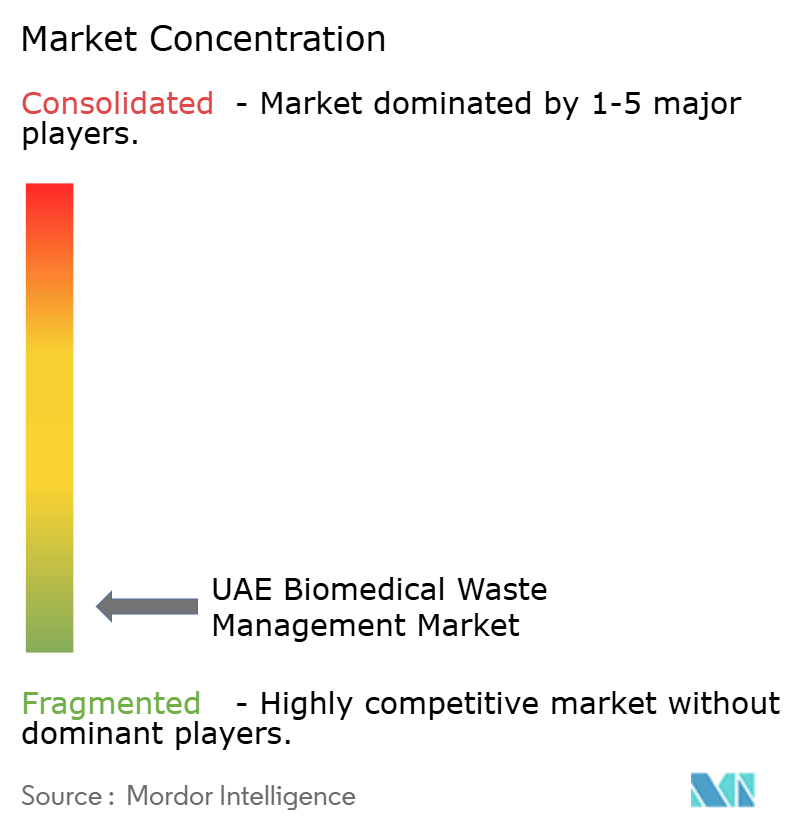
| Market Concentration | Low |
Major Players *Disclaimer: Major Players sorted in no particular order |
UAE Biomedical Waste Management Market Analysis by Mordor Intelligence
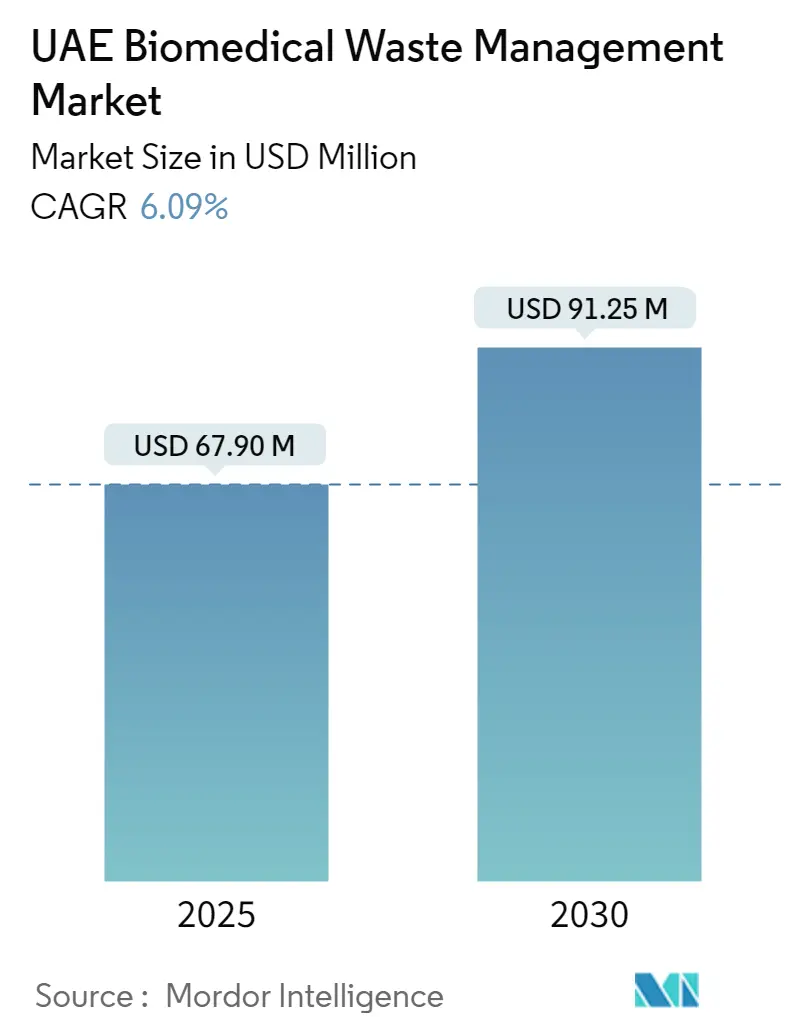
The UAE Biomedical Waste Management Market size is estimated at USD 67.90 million in 2025, and is expected to reach USD 91.25 million by 2030, at a CAGR of 6.09% during the forecast period (2025-2030).
- The UAE biomedical waste management market is mainly driven by rising urbanization and heightened demand for stringent healthcare standards.
- Healthcare waste management, often overlooked, plays a pivotal role in the journey toward sustainability. As the UAE sets its sights on achieving Net Zero by 2050, the urgency to address the escalating challenge of medical waste intensifies.
- The UAE aligns its medical waste management practices with international standards. These practices adhere to regulations governing hazardous materials, wastes, and medical waste management, all per United Nations (UN) directives. These standards encompass licensing procedures, permit requirements, and protocols for containerization, packing, collection, and off-site transport of hazardous materials. Additionally, they outline the treatment, storage, and disposal mandates for medical waste in the UAE. Documentation for handlers of toxic and hazardous waste includes medical waste manifests, record-keeping, and reporting protocols specific to the UAE. Consequently, the UAE is intensifying its efforts to manage and reduce the biomedical waste produced in the market.
- In a concerted effort towards sustainability, both government entities and private stakeholders are collaborating. A notable recent initiative is the commitment from Burjeel Holdings, a leading private healthcare group, to achieve carbon neutrality by 2040. Their strategy emphasizes medical waste management, targeting a 3% reduction in their 2023 medical waste output, which amounted to 1,575 tonnes.
- UAE's biomedical waste management market is poised for a surge of innovation, propelled by regulatory mandates, technological advancements, and a commitment to environmental sustainability. To address upcoming challenges and strengthen waste management resilience, the market urgently requires investments in infrastructure and capacity-building.
- In conclusion, UAE's biomedical waste management market is poised for substantial expansion, highlighting the vital importance of efficient waste management in protecting public health and promoting environmental sustainability.
UAE Biomedical Waste Management Market Trends and Insights
Recycling segment sees robust expansion in the market
As the volume of medical waste generated in the UAE continues to surge, its recycling and management have become paramount concerns. In 2023, the UAE produced about 25.2 tons of medical waste daily, underscoring the nation's robust healthcare activities. This statistic underscores the urgent demand for efficient waste management systems, especially with the healthcare sector's ongoing expansion. Notably, Abu Dhabi plays a pivotal role, contributing roughly 12 tons daily to the nation's medical waste total.
Medical waste is divided into two primary categories: hazardous and non-hazardous. According to the World Health Organization, around 85% of medical waste from healthcare settings is deemed non-hazardous. This non-hazardous category encompasses items like packaging waste, uncontaminated animal tissues, and waste stemming from administrative tasks. In contrast, the hazardous waste, mainly generated by hospitals and clinics, poses serious health threats and necessitates specialized handling and treatment.
The UAE is committed to advancing recycling methods through innovative waste separation and enhanced collection systems. While incineration is a prevalent method for treating hazardous waste, the UAE often recycles non-hazardous materials. This recycling process transforms waste into valuable resources, such as converting recyclables into raw materials for production, thereby fostering a circular economy.
To bolster effective waste management, especially for non-hazardous medical waste, the UAE government has rolled out a series of regulations and initiatives. Notably, Cabinet Resolution No (39) seeks to unify the waste management process nationwide, ensuring safe handling and encouraging recycling. These regulations are designed to elevate recycling rates while prioritizing public health and minimizing environmental repercussions. Consequently, the UAE government is actively working to reduce non-hazardous medical waste and bolster recycling initiatives nationwide.
Dubai Takes Strides in Managing Biomedical Waste Responsibly
In urban centers like Dubai, managing biomedical waste is crucial, given its potential impact on public health and the environment. Effective management systems are essential to mitigate risks associated with mishandled waste, such as the spread of infections and environmental damage.
Dubai, leading the charge in the United Arab Emirates, enforces strict regulations on biomedical waste management. The Dubai Health Authority (DHA) plays a pivotal role in setting guidelines and standards, ensuring the safe disposal of medical waste.
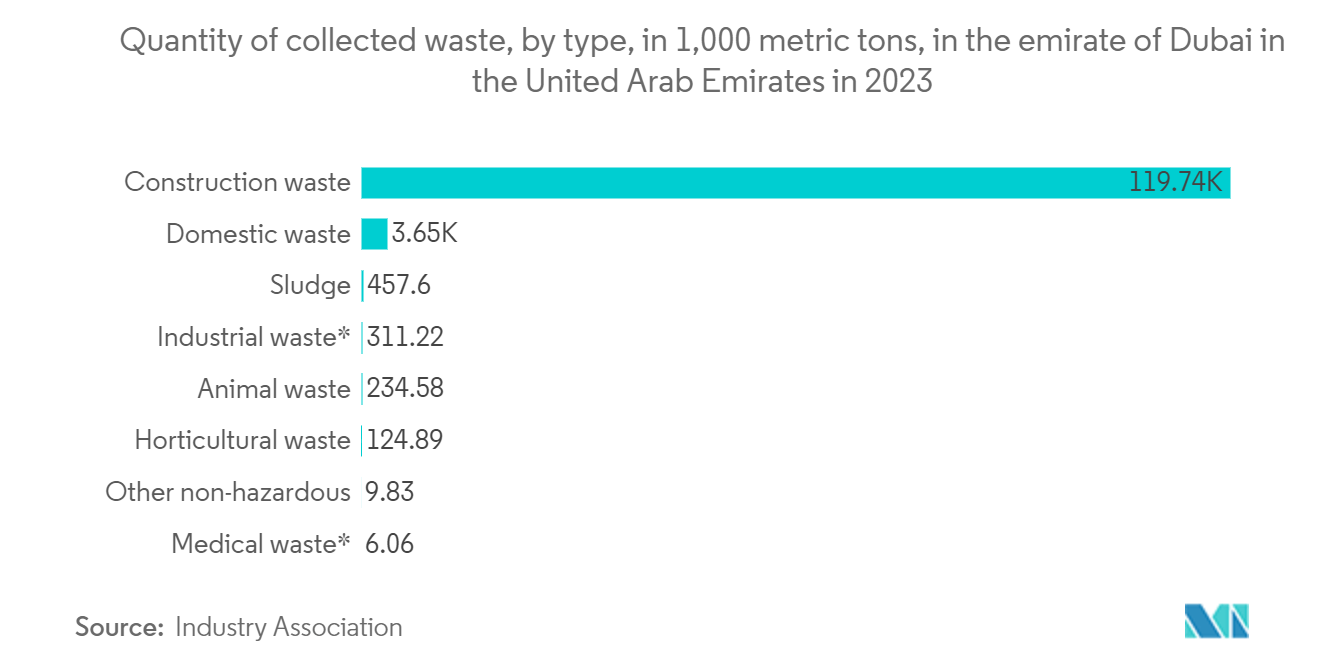
In 2023, Dubai Municipality handled 3,674 tons of medical waste from across the Emirate. This waste was treated at the medical incinerator in the Jebel Ali facility, covering the period from January 2023 to September 2023.
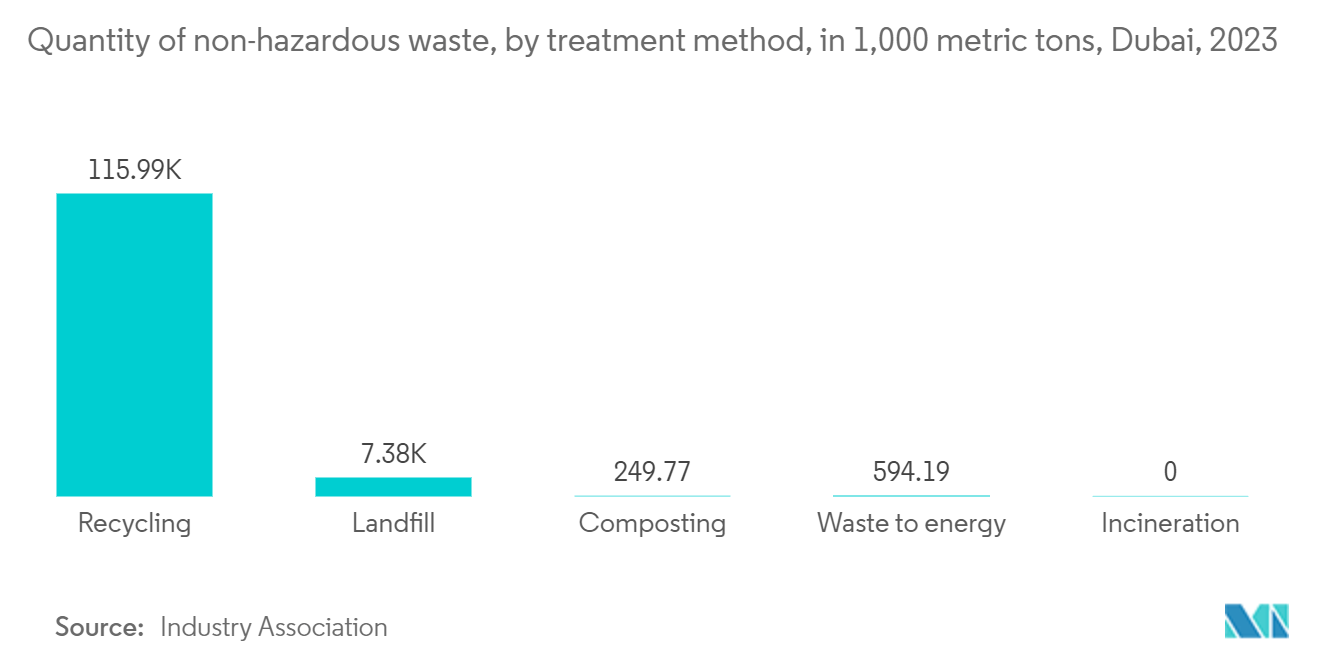
Dubai is rolling out ambitious initiatives to boost recycling rates and curb waste generation. With a commitment to sustainability, the city targets a 100% recycling rate by 2030. As of 2023, recycling stands as the primary method for managing non-hazardous waste, with Dubai overseeing approximately 116 million metric tons.
In December 2023, the Municipality launched a program to collect and recycle 3 million plastic packaging units. This amounts to about 60 tons of PET plastic, a material integral to implantable medical devices, diagnostic equipment housings, and drug delivery devices. Thus, Dubai is making significant strides in responsibly managing its biomedical waste.
Competitive Landscape
The UAE biomedical waste management market is fragmented in nature. The major players in the market include Averda, Tadweer, Dulsco, Imdaad, Beeah etc.
The key players have adopted the strategy of signing contracts and agreements for expanded regional reach and optimized operational costs. The market is highly competitive, with players competing and partnering to gain a substantial market share.
UAE Biomedical Waste Management Industry Leaders
-
Averda
-
Tadweer
-
Dulsco
-
Imdaad
-
Beeah
- *Disclaimer: Major Players sorted in no particular order
Recent Industry Developments
- November 2024: Imdaad, a UAE-based conglomerate specializing in integrated and sustainable facilities management services, announced its strategic expansion into Oman. This move comes through a joint venture with Oman Real Estate and Investment (Oris), a subsidiary of the Ominvest Group. This new partnership not only underscores Imdaad's commitment to regional growth but also solidifies its standing in the industry.
- July 2024: BEEAH Group, a leading sustainability firm from the UAE, is eyeing Egypt for expansion, contemplating an investment of AED 500 million (USD 136.13 million) in the nation's waste management sector. This collaboration aims to bolster initiatives in waste-to-energy, medical waste oversight, and agricultural waste handling.
UAE Biomedical Waste Management Market Report Scope
Bio-medical waste management focuses on the thorough elimination of hazardous and infectious waste produced in hospital environments. Waste treatment is crucial for eradicating pathogenic organisms through effective decontamination of the generated waste.
The UAE Bio-Medical Waste Management Market is Segmented by Type Waste (Hazardous and Non-Hazardous Waste), by Service Type (Collection, Transportation and Storage, Treatment and Disposal, Others), and by Key Cities (Dubai, Abu Dhabi, and Sharjah). The Report Offers UAE Bio-Medical Waste Management Market Sizes and Forecasts in Value (USD) for all the Above Segments.
| Hazardous |
| Non-Hazardous Waste |
| Collection, |
| Transportation and Storage |
| Treatment and Disposal |
| Others |
| Dubai |
| Abu Dhabi |
| Sharjah |
| By Type Waste | Hazardous |
| Non-Hazardous Waste | |
| By Service Type | Collection, |
| Transportation and Storage | |
| Treatment and Disposal | |
| Others | |
| By Key Cities | Dubai |
| Abu Dhabi | |
| Sharjah |
Key Questions Answered in the Report
How big is the UAE Biomedical Waste Management Market?
The UAE Biomedical Waste Management Market size is expected to reach USD 67.90 million in 2025 and grow at a CAGR of 6.09% to reach USD 91.25 million by 2030.
What is the current UAE Biomedical Waste Management Market size?
In 2025, the UAE Biomedical Waste Management Market size is expected to reach USD 67.90 million.
Who are the key players in UAE Biomedical Waste Management Market?
Averda, Tadweer, Dulsco, Imdaad and Beeah are the major companies operating in the UAE Biomedical Waste Management Market.
What years does this UAE Biomedical Waste Management Market cover, and what was the market size in 2024?
In 2024, the UAE Biomedical Waste Management Market size was estimated at USD 63.76 million. The report covers the UAE Biomedical Waste Management Market historical market size for years: 2020, 2021, 2022, 2023 and 2024. The report also forecasts the UAE Biomedical Waste Management Market size for years: 2025, 2026, 2027, 2028, 2029 and 2030.
UAE Biomedical Waste Management Market Report
Statistics for the 2025 UAE Biomedical Waste Management market share, size and revenue growth rate, created by Mordor Intelligence™ Industry Reports. UAE Biomedical Waste Management analysis includes a market forecast outlook for 2025 to 2030 and historical overview. Get a sample of this industry analysis as a free report PDF download.