
Asia Pacific Medical Waste Management Market Size and Share
| Study Period | 2020 - 2030 |
| Forecast Data Period | 2025 - 2030 |
| Historical Data Period | 2020 - 2023 |
| Market Size (2025) | USD 4.61 Billion |
| Market Size (2030) | USD 6.39 Billion |
| CAGR (2025 - 2030) | 6.75% |
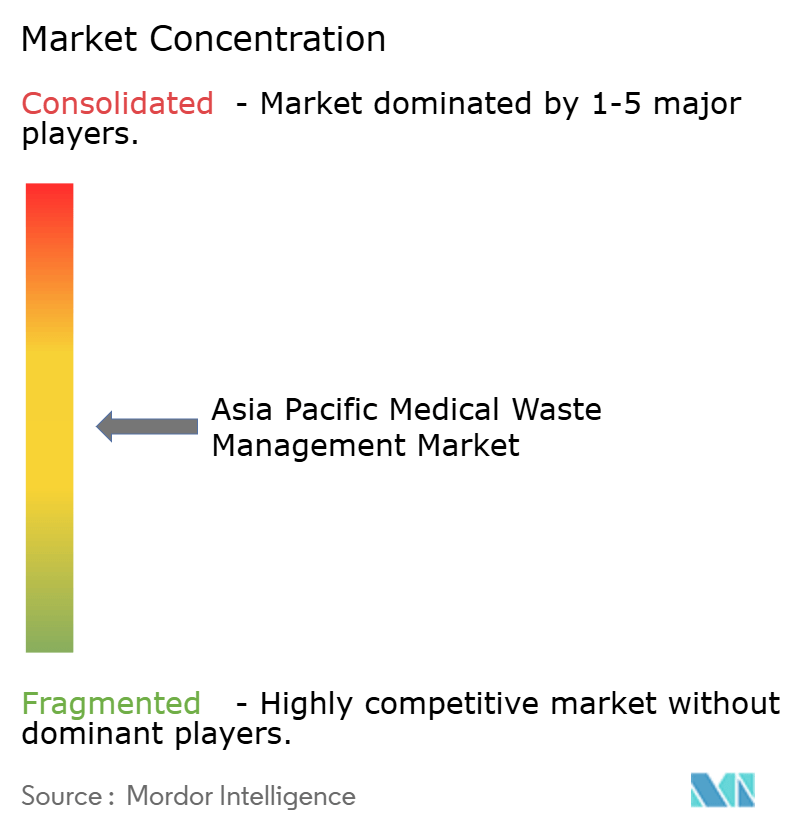
| Market Concentration | Medium |
Major Players *Disclaimer: Major Players sorted in no particular order |
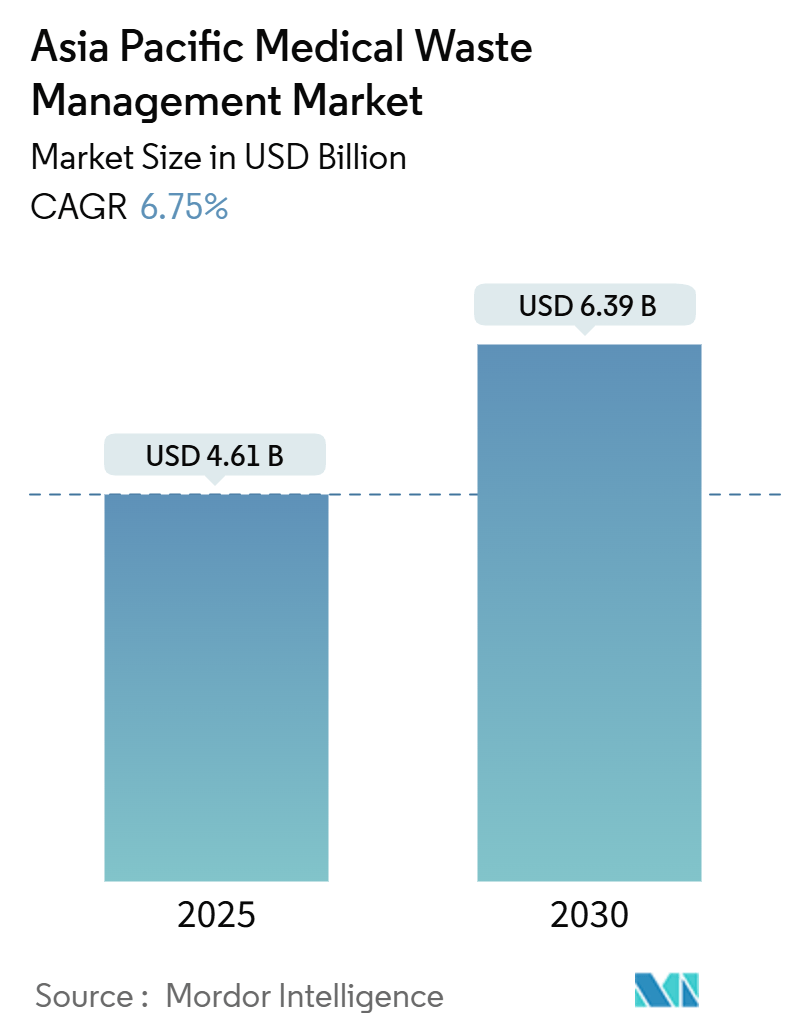
Asia Pacific Medical Waste Management Market Analysis by Mordor Intelligence
The Asia Pacific Medical Waste Management Market size is estimated at USD 4.61 billion in 2025, and is expected to reach USD 6.39 billion by 2030, at a CAGR of 6.75% during the forecast period (2025-2030).
Multiple factors influence the medical waste management market in Asia Pacific. These include a surge in awareness regarding the importance of medical waste disposal, an increased population in the region coupled with leveraged healthcare activities that increase medical waste generation, and a rise in initiatives taken by government authorities concerning medical waste management. All these factors are expected to drive the market's growth.
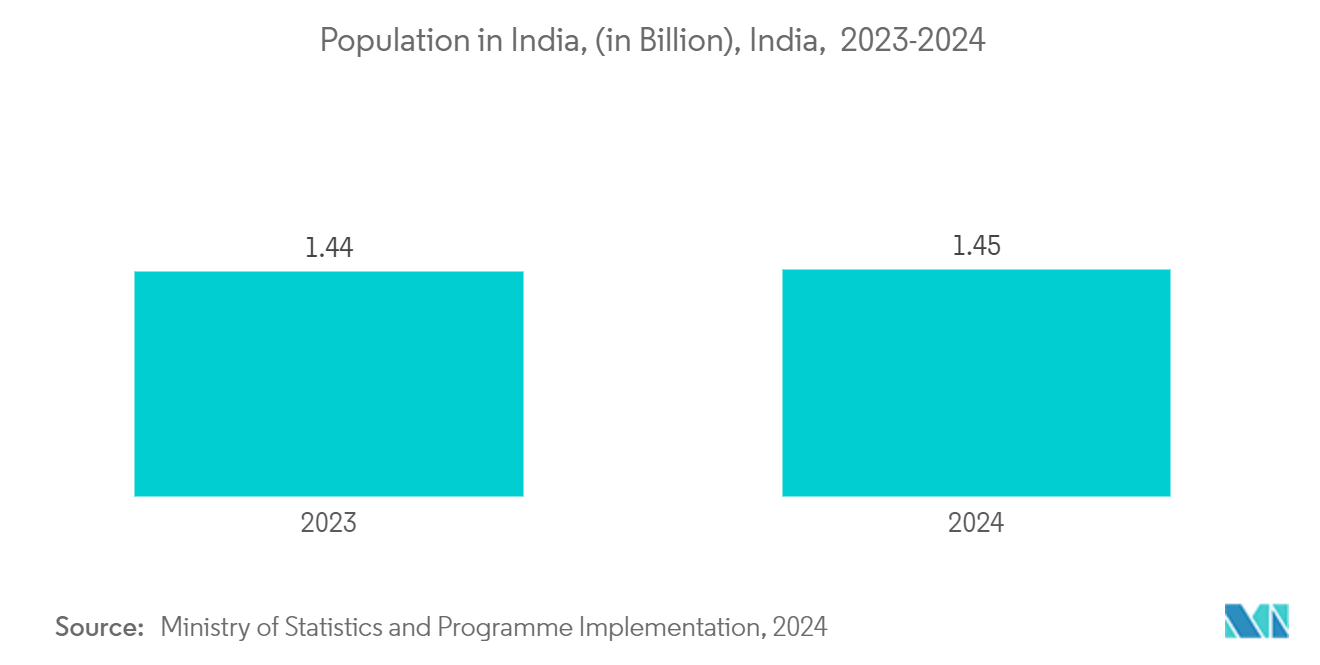
The increasing prevalence of the population in Asia Pacific demands healthcare solutions and services, which eventually increases the generation of medical waste in the region. Henceforth, it will likely boost the market's growth in Asia Pacific in the coming years. For instance, according to the World Population Prospects 2024 report from the United Nations Department of Economic and Social Affairs (DESA), India's population is set to reach 1.45 billion in 2024, with a projected peak of 1.69 billion in 2054. Furthermore, the aforementioned source states that China's population is estimated to be 1.419 billion in 2024. As chronic and infectious diseases rise, the region's burgeoning population and other countries intensify their demand for healthcare services, which is turn is expected to boost the growth of the market in the forecast period.
Furthermore, the rising contribution of the government authorities of several Asian Pacific countries, either standardizing medical waste disposals or raising awareness regarding the proper disposal of medical waste, propels the market's growth. For instance, in May 2023, Assam Health Infrastructure Development & Management Society’s Assam State Secondary Healthcare Initiative for Service Delivery Transformation (ASSIST) Project organized a workshop on managing Bio-Medical Waste at Hospitals in Guwahati. Similarly, in July 2023, the public works department proposed to the State Government to set up sewage and effluent treatment plants to address the need for biomedical waste management in 13 government hospitals in Chennai, India. The proposed budget was around INR 103.45 crores. Therefore, the rise in investments and government initiatives in managing medical waste in the region will likely boost the market growth.
Moreover, new technology launches to advance the treatment process of biomedical waste from hospitals is expected to further expand the market's growth. For instance, In November 2023, the National Institute for Interdisciplinary Science and Technology (NIIST) in Thiruvananthapuram unveiled a groundbreaking technology that transforms biomedical waste from hospitals into nutrient-rich soil manure. This release came after NIIST secured the green light from India's Central Pollution Control Board (CPCB). These technological advancements are anticipated to drive the market's growth in the forecast period.
Hence, owing to the above factors, such as the increasing population, surge in government initiatives, and technological advancements, the Asia Pacific medical waste management market is expected to grow in the forecast period. However, factors like high capital investments can limit the market's growth in the coming years.
Asia contributes to a system defined not by any single geography but by the interaction of many. The global medical waste management market data by Mordor Intelligence represents that combined structure.
Asia Pacific Medical Waste Management Market Trends and Insights
The Incineration Segment is Expected to Hold a Significant Market Share Over the Forecast Period
The incineration segment is predicted to contribute significantly to the market share because burning is the most common and preferred medical waste method. However, it is unsafe for the environment and further causes global warming. Factors such as the increased use of incinerator facilities due to increased medical waste management are likely to propel the growth of this segment in the coming years.
Incineration is quite effective in treating infectious and hazardous medical wastes. It helps to destroy pathogens in medical waste to prevent further disease transmission. Hence, the benefits offered will likely boost the segment's growth in the coming years. For instance, according to the article published by the United Nations Development Programme in September 2023, infectious waste is managed on-site through autoclave sterilization or incineration in China. It further highlighted that in China, 29% of facilities demonstrated strong performance, 5% showed moderate performance, and 16% were categorized as underperforming. According to the same source, all provincial hospitals take care of sharps waste through incineration, except where they bury it in Savannakhet, Sekong, and Attapeu. The incineration process has evolved with newer technologies, improving efficiency, emission control, and environmental impact. Hence, it is anticipated that the use of incinerators can rise in the region during the forecast period.
Additionally, the rise in hazardous medical waste, such as infectious materials, sharps, and toxic chemicals, can be considered a significant driver for the segment growth. This waste poses severe health and environmental risks, necessitating specialized handling and disposal solutions. For instance, as per an article published by Elsevier in January 2023, Manila in the Philippines and Jakarta in Indonesia generate 280 tons and 212 tons of hazardous medical waste daily. Incineration units are used to safely dispose off dangerous medical waste by burning it at high temperatures, reducing its volume, and neutralizing harmful components. Hence, the growing volume of hazardous medical waste is a critical factor propelling the segment growth, highlighting the need for advanced and compliant waste management practices to protect public health and the environment. This demand for effective disposal solutions is expected to increase the adoption of incineration technologies to ensure safe and efficient waste management.
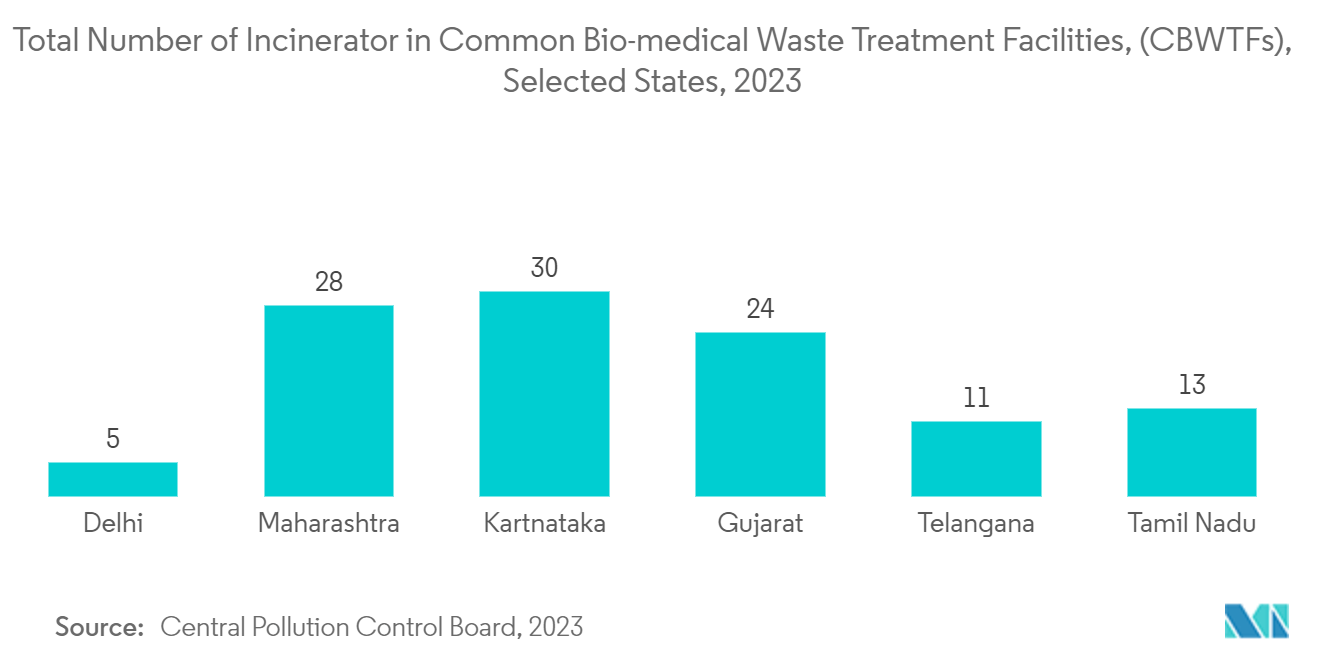
Moreover, incineration treatment is often utilized to burn biomedical waste. The availability and accessibility of such facilities in the country are likely to contribute to the growth of the segment. For instance, in June 2023, the biomedical waste from Kochi began to incinerate at the twin-chamber high-temperature facility of Kerala Enviro Infrastructure Limited (KEIL) at Ambalamedu. The availability of such facilities further expands the growth of the incineration segment in the market.
Therefore, factors such as adopting incineration to reduce the transmission risk of infections, the growing burden of biomedical waste is expected to drive the segment's growth over the forecast period.
India is Expected to Hold a Significant Market Share Over the Forecast Period
The country’s growing population and healthcare sector contribute to the increased medical waste generation, which favorably impacts the market's growth. The increased government initiatives driven by the gaps in biomedical waste disposal further boost the country's market growth.
The country's rising population requires increased healthcare services, which is likely to further contribute to the market's growth in the coming years. For instance, according to the India Mental Health Observatory, the government allocated INR 89,155 crores as the health budget for 2023-2024. This indicates that healthcare activities are demanding in the country. All this eventually increases the amount of medical waste generated in the country. Hence, this would further contribute to the market's growth in the coming years.
The increasing volume of biomedical waste in India is primarily driven by the expanding healthcare sector, the rising number of hospitals and clinics, and the growing use of disposable medical devices. These factors are likely to surge in waste generation and necessitate efficient waste management solutions to prevent environmental contamination and public health risks. For instance, in July 2024, the Union Ministry of Environment and Forests reported that India produces 405,702 kg of biomedical waste each day. However, only 291,983 kg is effectively disposed off, leaving approximately 28% untreated. This untreated waste often ends up in landfills or water bodies, creating substantial environmental challenges. Therefore, the requirement to focus on biomedical waste management in the country is expected to create significant opportunities for efficient waste-handling solutions.
Moreover, various statutory bodies in India, like the National Green Tribunal (NGT), have recognized gaps concerning biomedical waste disposal. These gaps further drive the government to take immense measures or initiatives to alleviate the situation of biomedical waste disposal in the country. For instance, in January 2023, the National Green Tribunal (NGT) noted huge gaps concerning compliance with the biomedical waste management rules released by the government of India. This further urged the Ministry of Environment, Forest and Climate Change (MoEFCC) to plan and execute strategies concerning biomedical waste management, which will further boost the market's growth over the forecast period.
Thus, the growing healthcare budget and rising strategies regarding biomedical waste management in the country is expected to boost the market's growth over the studied period.
The medical waste management market is analyzed by Mordor Intelligence across multiple other geographies, with in-depth regional assessments available for Europe.
Competitive Landscape
The Asia Pacific medical waste management market is semi-consolidated in nature. Medical waste management is one of the biggest challenges faced by healthcare providers every day. Other concerns like epidemiology, potential civil litigation, and state and local regulation often complicate it. The major market players in medical waste management focus on elaborating their portfolio of services and products in the waste management market. Some market players are REMONDIS SE & Co. KG, Veolia, Suez, Sattva Enviro, and Daniels Sharpsmart.
Asia Pacific Medical Waste Management Industry Leaders
-
Daniels Sharpsmart
-
REMONDIS SE & Co. KG
-
Sattva Enviro
-
Suez
-
Veolia
- *Disclaimer: Major Players sorted in no particular order
Recent Industry Developments
- September 2024: The Bengal government introduced a bar-coded tracking system across all government hospitals to enhance biomedical waste management and prevent unauthorized handling. This digital system monitored biomedical waste from its source to final disposal, ensuring greater accountability and control. The initiative was launched in response to allegations of biomedical waste smuggling.
- August 2023: The United Nations Development Programme Indonesia and the eGov Foundation of India signed a Memorandum of Understanding (MoU) to digitalize infectious medical waste management in Indonesia. This would further address the country's infectious medical waste management challenges.
Asia Pacific Medical Waste Management Market Report Scope
As per the scope of the report, medical waste contains infectious material, and it is the waste generated by healthcare facilities like physician’s offices, hospitals, dental practices, laboratories, medical research facilities, and veterinary clinics. Medical waste can contain bodily fluids like blood or other contaminants. Some examples are culture dishes, glassware, bandages, gloves, discarded sharps like needles or scalpels, swabs, and tissue.
The Asia Pacific medical waste management market is segmented by type of waste, treatment, service, treatment site, and country. By type of waste, the market is segmented into non-hazardous waste and hazardous waste. By treatment, the market is segmented into incineration, autoclaving, chemical treatment, and other treatments. The other treatment includes irradiative treatment, biological treatment, and among others. By service, the market is segmented into collection, transportation and storage, treatment and disposal, recycling, and other services. By treatment site, the market is segmented into offsite treatment and onsite treatment. By country, the market is segmented into China, Japan, India, South Korea, Australia, Indonesia and Rest of Asia Pacific. For each segment, the market sizing and forecasts have been done on the basis of value (in USD).
| Non-Hazardous Waste |
| Hazardous Waste |
| Incineration |
| Autoclaving |
| Chemical Treatment |
| Other Treatments |
| Collection, Transportation and Storage |
| Treatment and Disposal |
| Recycling |
| Other Services |
| Offsite Treatment |
| Onsite Treatment |
| China |
| Japan |
| India |
| South Korea |
| Australia |
| Indonesia |
| Rest of Asia Pacific |
| By Type of Waste | Non-Hazardous Waste |
| Hazardous Waste | |
| By Treatment | Incineration |
| Autoclaving | |
| Chemical Treatment | |
| Other Treatments | |
| By Service | Collection, Transportation and Storage |
| Treatment and Disposal | |
| Recycling | |
| Other Services | |
| By Treatment Site | Offsite Treatment |
| Onsite Treatment | |
| By Country | China |
| Japan | |
| India | |
| South Korea | |
| Australia | |
| Indonesia | |
| Rest of Asia Pacific |
Key Questions Answered in the Report
How big is the Asia Pacific Medical Waste Management Market?
The Asia Pacific Medical Waste Management Market size is expected to reach USD 4.61 billion in 2025 and grow at a CAGR of 6.75% to reach USD 6.39 billion by 2030.
What is the current Asia Pacific Medical Waste Management Market size?
In 2025, the Asia Pacific Medical Waste Management Market size is expected to reach USD 4.61 billion.
Who are the key players in Asia Pacific Medical Waste Management Market?
Daniels Sharpsmart, REMONDIS SE & Co. KG, Sattva Enviro, Suez and Veolia are the major companies operating in the Asia Pacific Medical Waste Management Market.
What years does this Asia Pacific Medical Waste Management Market cover, and what was the market size in 2024?
In 2024, the Asia Pacific Medical Waste Management Market size was estimated at USD 4.30 billion. The report covers the Asia Pacific Medical Waste Management Market historical market size for years: 2020, 2021, 2022, 2023 and 2024. The report also forecasts the Asia Pacific Medical Waste Management Market size for years: 2025, 2026, 2027, 2028, 2029 and 2030.
Asia Pacific Medical Waste Management Market Report
Statistics for the 2025 Asia Pacific Medical Waste Management market share, size and revenue growth rate, created by Mordor Intelligence™ Industry Reports. Asia Pacific Medical Waste Management analysis includes a market forecast outlook for 2025 to 2030 and historical overview. Get a sample of this industry analysis as a free report PDF download.