
Market Overview
| Study Period | 2021 - 2031 |
|---|---|
| Forecast Data Period | 2026 - 2031 |
| Base Year Market Size (2025) | USD 460.44 Million |
| Market Size (2026) | USD 485.37 Million |
| Market Size (2031) | USD 631.69 Million |
| Growth Rate (2026 - 2031) | 5.41 % |
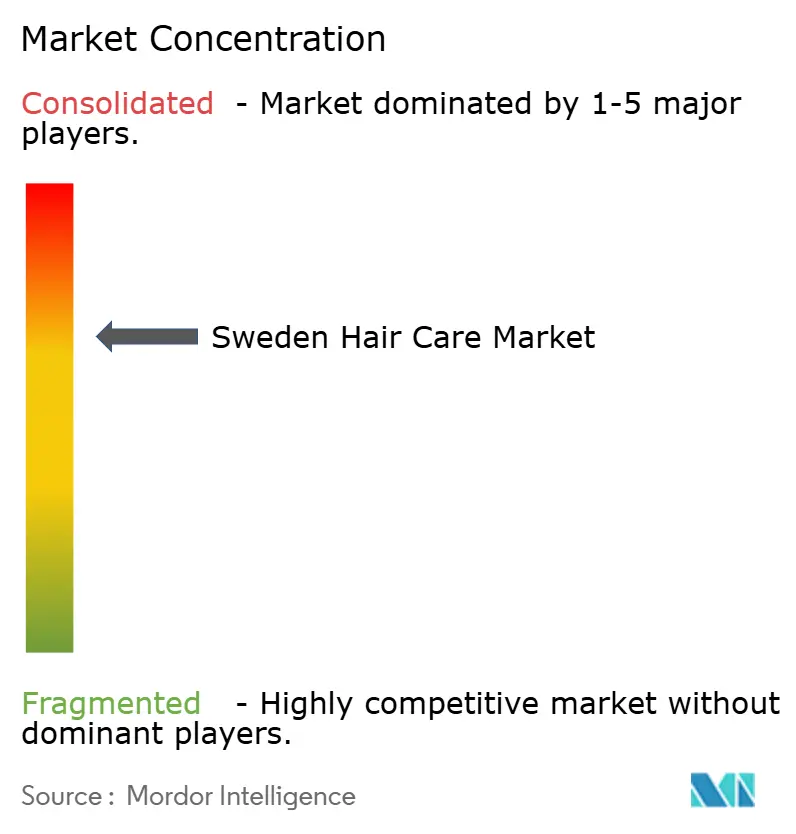
| Market Concentration | Medium |
Major Players *Disclaimer: Major Players sorted in no particular order Image © Mordor Intelligence. Reuse requires attribution under CC BY 4.0. | |
Sweden Hair Care Market Analysis by Mordor Intelligence
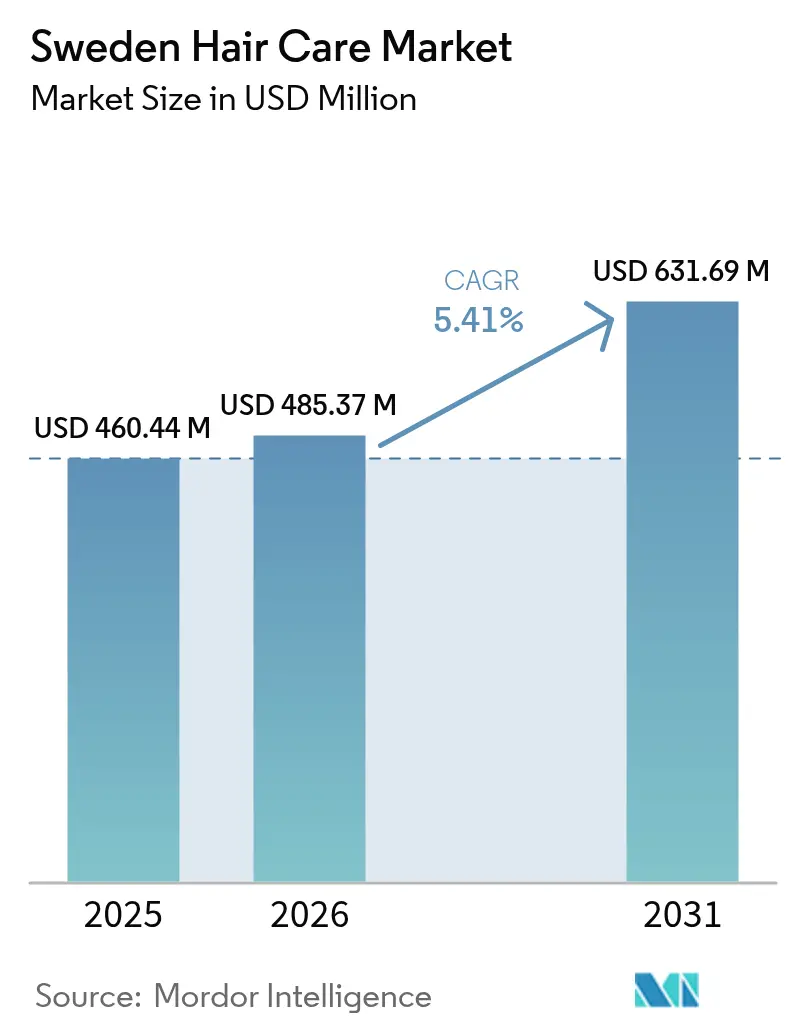
The Swedish hair care market size is expected to grow from USD 460.44 million in 2025 to USD 485.37 million in 2026 and is forecast to reach USD 631.69 million by 2031 at 5.41% CAGR over 2026-2031. This growth stems from increasing consumer awareness about hair health issues and personal grooming, coupled with rising demand for premium hair care products. Swedish consumers demonstrate a strong preference for natural, organic, and sustainable solutions, prompting manufacturers to develop eco-friendly formulations and packaging. The market encompasses a diverse product range, including shampoos, conditioners, hair oils, and styling products, with the professional hair care segment gaining significant traction. While major international brands maintain a strong presence, local Swedish brands focusing on natural ingredients and sustainability continue to gain market share. The market also experiences growing demand for specialized products addressing specific concerns such as hair loss, greying, dandruff, anti-hair fall, color protection, and scalp care solutions. With the increasing focus on sustainability, natural ingredients, and personalized solutions, the Swedish hair care market is well-positioned for sustained growth and innovation in the coming years.
Key Report Takeaways
- By product type, shampoo led with 22.21% of Sweden hair care market share in 2025, while hair styling products are projected to grow at a 6.03% CAGR through 2031.
- By category, mass products accounted for a 76.98% share of the Sweden hair care market size in 2025, whereas premium products are forecast to expand at a 6.28% CAGR to 2031.
- By ingredient type, conventional/synthetic lines held 72.95% of Sweden hair care market size in 2025; natural and organic alternatives are set to progress at a 6.61% CAGR in the outlook period.
- By distribution channel, supermarkets/hypermarkets captured 43.02% of Sweden hair care market share in 2025, but online retail stores are advancing at a 6.88% CAGR between 2026-2031.
Note: Market size and forecast figures in this report are generated using Mordor Intelligence’s proprietary estimation framework, updated with the latest available data and insights as of 2026.
Sweden Hair Care Market Trends and Insights
Drivers Impact Analysis*
| Driver | (~) % Impact on CAGR Forecast | Geographic Relevance | Impact Timeline |
|---|---|---|---|
| Surging Demand for Vegan/Animal-Free Formulations | +0.9% | Nationwide, strongest in Stockholm, Gothenburg, Malmö | Medium term (2-4 years) |
| Demand for Multi-Functional and Damage Control Products | +0.7% | Urban Sweden, especially high-income districts | Short term (≤ 2 years) |
| Technological Innovations in Product Formulations | +0.6% | Country-wide with early adoption by professional salons | Long term (≥ 4 years) |
| Influence of Social Media and Celebrity Endorsement | +0.5% | Highest among Gen Z and millennials across Sweden | Short term (≤ 2 years) |
| Growing Consumer Awareness About Sustainable and Eco-Friendly Products | +1.1% | Nationwide, with premium uptake in major cities | Medium term (2-4 years) |
| Increasing Male Grooming Segment with Dedicated Hair Care Products for Men | +0.8% | Urban centres and university towns | Medium term (2-4 years) |
| Source: Mordor Intelligence | |||
Surging Demand for Vegan/Animal-Free Formulations
Significant growth in vegan and animal-free hair care formulations is evident in the Swedish market, driven by increasing consumer awareness of animal welfare and environmental sustainability. Swedish consumers, particularly millennials and Gen Z, are actively seeking products that align with their ethical values and environmental consciousness. Major retailers, including ICA and Åhléns, have expanded their vegan hair care product offerings to meet this rising demand. Local brands like Maria Nila and BRUNS have gained market share by focusing exclusively on vegan formulations, while traditional hair care brands are reformulating their products and launching vegan product lines. The trend is further supported by strict European Union regulations on animal testing in cosmetics, which have encouraged manufacturers to develop plant-based alternatives. According to Animal Equality, 1 in 10 Swedes follow meat-free preferences in food and other products like beauty and cosmetics [1]Source: Animal Equality, “10% of the Swedish Population Is Now Meat-Free,” animalequality.org . This shift in consumer behavior has created substantial opportunities for plant-based alternatives throughout the country.
Demand for Multi-Functional and Damage Control Products
The Swedish hair care market reflects evolving consumer preferences toward sophisticated, multi-benefit products that address various hair concerns simultaneously. The harsh Nordic climate, combined with frequent use of heating tools and chemical treatments, has created significant demand for protective and reparative solutions. This trend has led to the incorporation of natural ingredients like argan oil, keratin, and vitamins, particularly evident in products such as INDY BEAUTY's Care And Protect Repair Shampoo, which uses vegan keratin to strengthen hair structure while preventing damage. The market is experiencing a "skinification" trend, where hair care formulations integrate traditional skincare ingredients, drawing inspiration from Swedish spa traditions and natural resources, as demonstrated by brands like L: A Bruket and Bjork and Berries. This approach particularly appeals to time-conscious consumers seeking products that offer multiple benefits, such as leave-in conditioners with heat protection and anti-frizz properties, while maintaining color vibrancy for those who regularly color their hair. As consumers continue to prioritize effectiveness and convenience, the demand for multi-functional hair care products in Sweden is expected to drive innovation and market growth.
Technological Innovations in Product Formulations
Technological advancements are fundamentally transforming the Swedish hair care market, with innovations extending beyond ingredient selection to encompass delivery systems and formulation techniques. Companies are developing innovative ingredients that address specific hair concerns, such as damage repair, color protection, and scalp health, while integrating natural and organic compounds with scientific formulations. Research and development efforts concentrate on creating specialized treatments using biotechnology and enhanced delivery systems for better product absorption. The market's evolution is further driven by Swedish consumers' increasing awareness of ingredient safety and effectiveness, prompting manufacturers to invest in advanced testing methods and clinical trials. AI-driven formulation technologies are enabling personalized hair care solutions tailored to individual hair types and concerns. These innovations operate within the framework of EU Regulation (EC) No 1223/2009, which sets stringent safety standards while providing guidelines for introducing novel ingredients and technologies in the market.
Influence of Social Media and Celebrity Endorsement
Social media platforms, particularly Instagram and TikTok, have transformed the Swedish hair care market by democratizing beauty expertise and reshaping how consumers discover, evaluate, and purchase products. The platforms serve as critical channels for product education and demonstration, with consumers actively seeking recommendations and hair care routines from beauty influencers through user-generated content and video tutorials. This digital transformation has compelled established brands to shift from traditional advertising to authentic content creation and community-building strategies. The trend is particularly pronounced among younger Swedish consumers who rely heavily on social media for their purchasing decisions. According to the World Bank, 96% of Sweden's population used the internet in 2023, highlighting the significant digital engagement of Swedish consumers [2]Source: World Bank, “Individuals Using the Internet (% of Population) – Sweden,” worldbank.org . This shift in consumer behavior continues to influence how hair care brands approach marketing and consumer engagement in the Swedish market.
Restraints Impact Analysis*
| Restraint | (~) % Impact on CAGR Forecast | Geographic Relevance | Impact Timeline |
|---|---|---|---|
| Adoption of Traditional At-Home Hair Care Solutions | -0.5% | Predominantly rural areas and northern counties | Long term (≥ 4 years) |
| Health Concerns Over Chemical Ingredients | -0.7% | Nationwide, most acute in major cities where label-reading culture is strong | Short term (≤ 2 years) |
| Strict Regulatory Requirements for Personal Care Products | -0.4% | Nationwide, driven by EU and Swedish Chemicals Agency oversight | Long term (≥ 4 years) |
| High Competition from Established International Brands | -0.6% | Country-wide, particularly in premium and professional segments | Medium term (2-4 years) |
| Source: Mordor Intelligence | |||
Adoption of Traditional At-Home Hair Care Solutions
The adoption of traditional at-home hair care practices in Sweden presents a complex market dynamic, where generational habits and economic factors influence consumer behavior. While many consumers, particularly in rural areas and older demographics, maintain loyalty to time-honored remedies using natural ingredients like apple cider vinegar, honey, and oils, there is also a growing preference for professional salon services. This market duality is further complicated by increasing consumer demand for natural and organic products, which creates resistance to conventional home-based products containing synthetic ingredients. The economic advantage of traditional solutions, especially during periods of heightened value consciousness, continues to impact commercial product adoption in the Swedish market. These traditional practices often reflect deeply rooted cultural values and family traditions that have been preserved across generations in Swedish households. The persistence of such practices indicates that manufacturers must carefully consider local preferences and cultural factors when developing products for the Swedish market.
Health Concerns Over Chemical Ingredients
Growing awareness of potential health implications associated with chemical ingredients is creating a significant shift in consumer preferences within the Swedish hair care market. The Medical Products Agency and the Swedish Chemicals Agency enforce strict regulations on cosmetic products, ensuring compliance with safety standards and monitoring adverse effects. This regulatory oversight has heightened consumer consciousness about ingredient safety, particularly regarding compounds like parabens, sulfates, and synthetic fragrances. The market response to these concerns is evident in the proliferation of products that explicitly exclude controversial ingredients. Brands like Jordklok have introduced shampoos free from SLS and synthetic preservatives, catering to the increasing demand for natural and organic formulations. This shift in consumer perception represents both a challenge for established brands with conventional formulations and an opportunity for those positioned to offer cleaner, more transparent ingredient profiles. Companies heavily reliant on synthetic formulations face ongoing pressure to adapt their product offerings to meet the growing preference for clean beauty solutions in the Swedish market.
*Our forecasts treat driver/restraint impacts as directional, not additive. The impact forecasts reflect baseline growth, mix effects, and variable interactions.
Segment Analysis
By Product Type: Shampoo Dominates Amid Rising Innovations
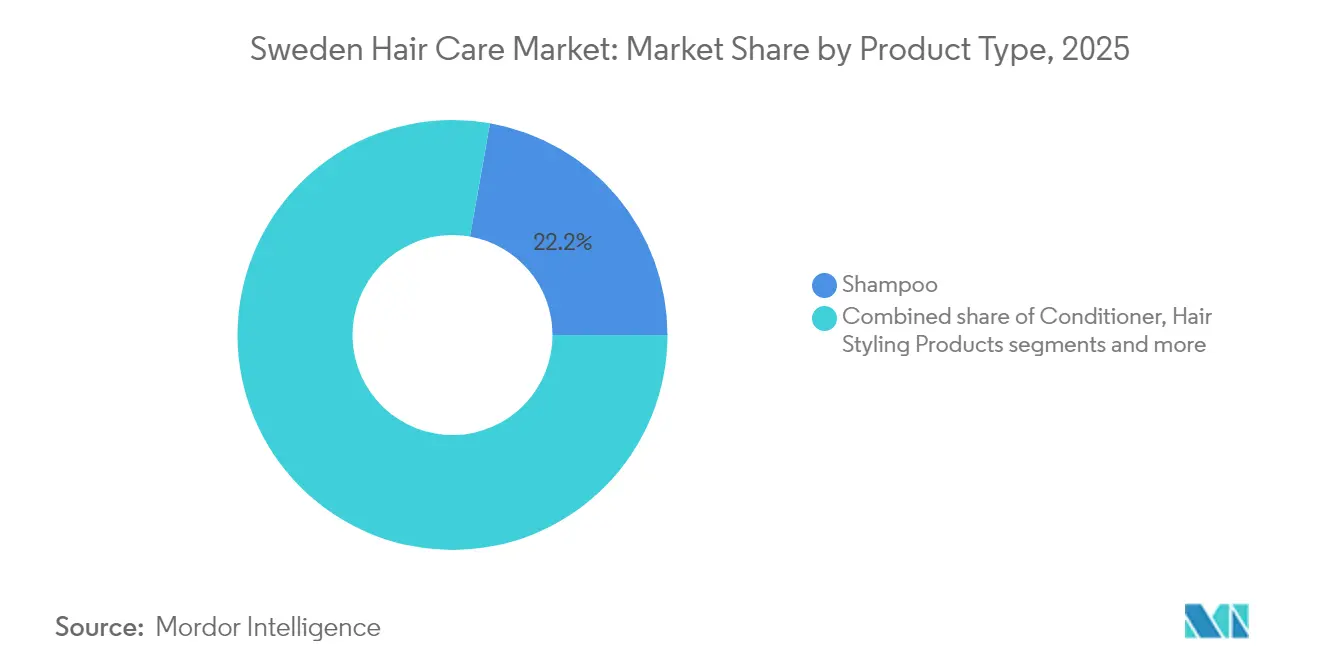
Shampoo maintains its leadership position in the Swedish hair care market with a dominant 22.21% market share in 2025. This prominence stems from shampoo's fundamental role in daily hair care routines, with Swedish consumers increasingly gravitating toward specialized formulations. The market has adapted to address rising stress-related hair concerns, with brands developing dermatologically tested solutions for specific issues such as dandruff and hair loss. The demand for natural and organic shampoo formulations continues to rise, reflecting Swedish consumers' growing environmental consciousness and preference for sustainable products. Additionally, the market has witnessed increased penetration of premium shampoo brands, particularly those offering targeted solutions for specific hair types and concerns.
Hair styling products are experiencing rapid market growth, projected at a 6.03% CAGR during 2026-2031. This growth is primarily driven by product innovations that merge styling capabilities with hair health benefits. Products like Bjork's Tamja Taming Oil exemplify this trend, offering dual benefits of heat protection and hair management while enhancing shine. The market expansion is further supported by the rising influence of social media and beauty influencers, who drive awareness about new styling techniques and products.



By Category: Mass Products Evolve Toward Premium Positioning
Mass products maintain a commanding 76.98% share of the Swedish hair care market in 2025, reflecting their continued dominance in meeting everyday consumer needs. The category's strength persists even as mass brands adopt premium positioning strategies to attract value-conscious consumers seeking quality. This dominance is particularly evident in essential hair care categories like shampoos and conditioners, where mass brands have successfully established trust and reliability.
Premium products are projected to grow at a faster rate of 6.28% CAGR during 2026-2031, driven by Swedish consumers' increasing willingness to invest in higher-quality hair care solutions. This trend toward premiumization is further supported by consumers' growing emphasis on product efficacy over traditional channel distinctions, creating opportunities for brands across both segments to compete based on performance benefits. The premium segment's growth is particularly strong in specialized treatment products and professional-grade formulations that address specific hair concerns.
By Ingredient Type: Natural and Organic Challenges Conventional Dominance
Conventional/synthetic formulations continue to dominate Sweden's hair care market, holding a substantial 72.95% share in 2025. The Swedish Chemicals Agency (Kemikalieinspektionen) maintains strict oversight of chemical ingredients used in hair care products, ensuring compliance with safety regulations and consumer protection standards. These synthetic formulations remain popular due to their proven effectiveness and established consumer trust. The extensive research and development behind these products, combined with their competitive pricing, contributes to their market dominance.
Natural/organic alternatives are experiencing rapid growth, with a projected CAGR of 6.61% during 2026-2031. This growth stems from increased consumer awareness regarding ingredient safety and environmental impact, prompting established brands to either reformulate their existing products or develop new natural alternatives to maintain their competitive position in the market. Swedish consumers increasingly prioritize products containing plant-based ingredients and sustainable packaging options. The trend is particularly strong among younger demographics, who demonstrate a willingness to pay premium prices for environmentally conscious hair care solutions.
By Distribution Channel: Digital Transformation Reshapes Retail Landscape
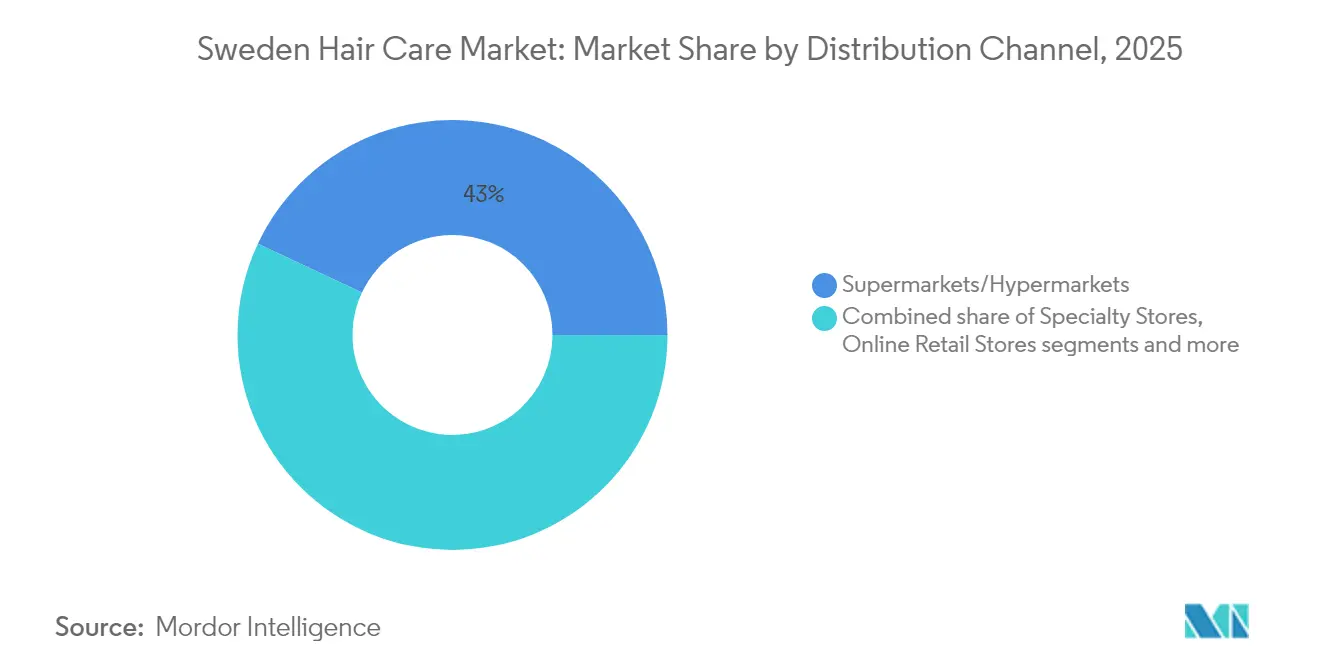
Supermarkets/Hypermarkets maintain a dominant position in hair care distribution, holding the largest market share of 43.02% in 2025. These traditional retail channels continue to benefit from their extensive physical presence, product variety, and established consumer trust. However, to remain competitive in the evolving retail landscape, these conventional retailers are enhancing their digital capabilities while leveraging their brick-and-mortar locations to create distinctive shopping experiences. The integration of in-store beauty consultants and product demonstrations has strengthened their market position, particularly in mass-market hair care segments. Additionally, these retailers' ability to offer competitive pricing through bulk purchasing and private-label products has helped maintain their market leadership.
Online retail stores are emerging as the fastest-growing distribution channel, with a projected CAGR of 6.88% during 2026-2031. This digital transformation is exemplified by e-commerce platforms like Lyko, Sweden's largest online retailer in hair care and beauty. Lyko's success stems from its omnichannel strategy, combining online convenience with physical store expertise, while its strong position in professional hair care products enables it to effectively serve the growing premium segment. The rise of mobile shopping applications and personalized product recommendations has further accelerated online sales growth in the hair care category.
Geography Analysis
Sweden's hair care market exhibits distinct characteristics between urban and rural regions. Metropolitan areas like Stockholm, Gothenburg, and Malmö show higher consumer preference for premium and natural/organic products. Urban consumers demonstrate greater willingness to experiment with new brands and formulations, making these areas primary testing grounds for product launches. The presence of professional hair salons and beauty centers in urban areas also drives the adoption of professional-grade products.
Rural and northern regions present a contrasting market landscape, with consumers showing stronger brand loyalty and preference for traditional products. Companies have adapted their strategies accordingly, with retailers like KICKS operating physical stores with personalized consultations in urban areas, while companies like Apotea AB focus on e-commerce solutions for rural consumers. The harsh winter conditions in northern regions influence purchasing patterns, increasing demand for intensive moisturizing and protective hair care products. With Sweden's population reaching 10.53 million in 2023, according to the World Bank, the market presents significant opportunities for hair care brands across all regions .
The digital transformation of Sweden's hair care market effectively bridges the urban-rural divide through e-commerce infrastructure. Online platforms provide competitive shipping options and improved access to specialized products across all regions, while mobile commerce and social media platforms influence consumer preferences nationwide. This digital approach enables companies to maintain consistent market reach while adapting their strategies to address specific regional preferences. The integration of digital solutions has enhanced product accessibility and information dissemination across both urban and rural demographics.
Regulatory Landscape
Hair care products sold in Sweden are governed by the EU Cosmetics Regulation (EC) No 1223/2009, implemented nationally through Sweden's cosmetics regulation (2013:413) and overseen through market control by Läkemedelsverket (the Swedish Medical Products Agency). Ingredient and chemical oversight is supported by Kemikalieinspektionen (the Swedish Chemicals Agency). Core compliance expectations include maintaining the Product Information File and Cosmetic Product Safety Report, meeting labeling rules (including Swedish-language requirements for end-user information), and completing EU notification via the Cosmetic Products Notification Portal (CPNP) before products are placed on the market.
In 2026, EU updates tightened ingredient compliance timelines relevant to hair colorants and related formulations. Regulation (EU) 2026/78 (effective 1 May 2026) updated prohibitions tied to CMR substance classifications, and Regulation (EU) 2026/909 (effective 18 May 2026) introduced new restrictions for specific hair dye substances (including HC Blue No 18, HC Red No 18, HC Yellow No 16, and Hydroxypropyl-p-phenylenediamine). Staged deadlines culminate in a ban on placing non-compliant products on the EU market from 1 January 2027 and a ban on making them available from 1 July 2028. Sweden also maintains a national restriction on rinse-off cosmetics containing plastic particles for cleaning, scrubbing, or polishing, aligning with the broader tightening direction on microplastics under EU chemicals policy.
Competitive Landscape
The Swedish hair care market exhibits a moderately concentrated market where global conglomerates like L'Oréal S.A., Unilever PLC, Henkel AG & Co KGaA, Procter & Gamble Company, and Oriflame Cosmetics Global SA compete alongside local players. While international companies leverage their extensive distribution networks and broad product portfolios, local firms such as Maria Nila AB and Björn Axén Holding AB have carved their niche by emphasizing Swedish heritage, sustainability, and specialized hair care solutions.
Sustainability and innovation drive market competition, with companies focusing on natural formulations and technological advancements. Maria Nila demonstrates this trend with its 100% vegan products and CO₂-compensated packaging, while recent innovations like epres's Healthy Hair Shampoo and Conditioner with Biodiffusion Technology in April 2024 showcase the market's focus on combining wellness with advanced hair care solutions. This emphasis on sustainable and innovative products reflects growing consumer demand for environmentally conscious and technologically advanced hair care solutions.
Companies are strengthening their market positions through digital channels and e-commerce platforms while adhering to regulatory requirements. The European Union's Regulation (EC) No 1223/2009 establishes safety standards and documentation requirements, creating entry barriers while ensuring consistent standards across manufacturers. This regulatory framework, combined with the increasing importance of direct consumer engagement through social media, shapes the competitive dynamics of the Swedish hair care market.
Sweden Hair Care Industry Leaders
L'Oréal S.A.
Unilever PLC
Henkel AG & Co KGaA
Procter & Gamble Company
Oriflame Cosmetics Global SA
- *Disclaimer: Major Players sorted in no particular order

Market Opportunities and Future Outlook
Specialized, science-backed solutions for scalp health and hair loss present a clear product-development and positioning opportunity in Sweden, where consumers show active interest in efficacy-oriented, premium offerings alongside clean-label cues. Recent product activity points to where brands are testing that thesis. In January 2026, REF Stockholm introduced AHA SCALP DETOX, an AHA-based scalp treatment positioned for concerns including dandruff, hair loss, and overall scalp health. In April 2026, Coegin Pharma launched the VEXIENNE premium platform around Follicopeptide-based products, including a gel serum and a scalp serum. Together, these launches reinforce a continued shift toward "skinification" of hair care, with claims and routines structured around targeted active technologies rather than only basic cleansing and conditioning.
Differentiated commercialization models also leave room for entrants, particularly those combining premium positioning with fast access to digitally influenced shoppers and specialty beauty retail. Sweden's omnichannel beauty setup, including large online-focused players and specialty chains, supports category building in scalp care, bond repair, and vegan or animal-free lines. At the same time, regulatory expectations are pushing brands toward stronger documentation discipline and ingredient transparency. Competitive intensity is also rising around proof-led actives, regimen-based bundles, and sustainability-linked packaging choices, alongside additional hair-care innovation announced for 2026, such as HeadBrands (FOUR REASONS) communicating a BASE series with patented DNCGComplex technology scheduled for retail release in August 2026.
Recent Industry Developments
- April 2026: Coegin Pharma launched the VEXIENNE premium brand platform built around Follicopeptide-based products, including Hair Active X gel serum and Hair Optimizer scalp serum. The launch points to a push for science-led scalp and hair-loss routines within premium hair care and increases competitive pressure on efficacy claims and product substantiation in Sweden.
- April 2025: REF Stockholm expanded its Illuminate Colour and Intense Hydrate ranges with launches including Instant Shine (with UV color defense positioning) and Intense Hydrate Styling Cream (with humidity protection and light hold). These additions reflect continued premiumization through benefit layering, combining protection and styling performance in salon-influenced assortments.
- November 2024: Maria Nila launched Purifying Cleanse Shampoo positioned as a deep-cleansing, exfoliating formula with a distinct fragrance profile. The launch strengthens the brand's portfolio depth in scalp and buildup-management routines, an area increasingly used to differentiate vegan and sustainability-forward hair care lines.


Research Methodology Framework and Report Scope
Market Definition and Coverage
This market covers retail sales value of hair care products purchased in Sweden for personal use. It includes everyday and treatment-focused items used to cleanse, condition, style, color, and care for scalp and hair across mass and premium price points.
Scope exclusions: It excludes salon services, salon-only professional treatments, and devices such as hair dryers and straighteners.
Segmentation Overview
- By Product Type
- Shampoo
- Conditioner
- Hair Colorants
- Hair Styling Products
- Other Product Types
- By Category
- Premium Products
- Mass Products
- By Ingredient Type
- Natural and Organic
- Conventional/Synthetic
- By Distribution Channel
- Specialty Stores
- Supermarkets/Hypermarkets
- Online Retail Stores
- Other Distribution Channels
Data Sources, Market Sizing, and Validation
Desk Research
Desk research was used to map Sweden-specific demand signals and to set realistic guardrails for the model before we speak to market participants. We relied on public sources such as Statistics Sweden for household and retail indicators, EU and Swedish Customs trade statistics for relevant product flows, and Swedish consumer safety and chemical compliance references that shape formulation choices.
To cross-check category direction, we also reviewed sources such as Eurostat price and consumption series, peer-reviewed cosmetics science literature (for trends like ingredient shifts), and association or retailer-published category notes where available. Company annual reports, investor presentations, and reputable Swedish business press were used to sanity-check brand presence and channel expansion. We also used a paid subscription focused on company financials and another focused on shipment-level import and export data selectively, to reduce blind spots in Sweden-specific trade. These desk sources are not exhaustive, and many other public references were also consulted for clarification and validation.
Primary Interviews and Surveys
Primary work centered on interviews and structured surveys with manufacturers, distributors, large retailers, and ingredient or packaging participants active in Sweden. We used these inputs to confirm what is actually selling in retail, how pricing is moving by pack size and channel, and where premium, natural and organic, and scalp-care claims are gaining or losing traction. When desk signals did not line up, we re-contacted selected participants to resolve the mismatch.
Distribution of primary research fieldwork respondents
| Company type | Respondent position |
|---|---|
| Top tier: 29% | CXOs: 21% |
| Mid tier: 49% | Functional/Unit leaders: 20% |
| Smaller Players: 22% | Managers: 59% |
Market-Sizing & Forecasting
Sizing starts with a top-down build where Sweden demand is reconstructed from category-level consumption signals, channel mix, and observed price bands, then translated into value by applying realistic average selling prices for each major product group. To keep the totals grounded, we corroborate the outcome with selective bottom-up approximations, such as sampled SKU price checks across key retailers and a supplier and distributor roll-up for a few high-visibility subcategories.
The model uses a set of practical inputs that are easy to defend on a client call, including category penetration for hair coloring and styling, premium versus mass share movement, online retail share shifts, the pace of natural and organic adoption, and price changes linked to inflation and packaging formats. Forecasting is run using scenario analysis supported by simple regression checks on household spending and retail price series, then refined using what interviewees expect for promotional intensity and new product launch cadence. When bottom-up signals are missing for niche items, gaps are handled by using adjacent-category ratios and then re-validating the implied share with channel experts.
Data Validation & Update Cycle
Validation is done through multiple checks so the final number is not driven by one source or one assumption. We compare outputs against independent signals like trade movement for relevant product groups, channel growth rates, and price-band changes. When there are sharp jumps, we investigate whether they match what practitioners describe in Sweden.
Before sign-off, the model and assumptions go through analyst reviews, and unusual variances trigger follow-up calls to confirm whether a change is real or only a timing effect. Reports are refreshed annually, with interim updates when material events occur, and a final pre-delivery review is completed so clients receive the most current view available.
Mordor Intelligence's Sweden Hair Care Market Market Size Compared Against Other Published Estimates
Published sizes for Sweden hair care can look far apart, even when they seem to describe the same topic. This usually happens because the counted items differ, the starting year is not the same, and price assumptions are applied with different update timing.
Salon services sit outside Mordor Intelligence's scope for this market, and that single inclusion choice can lift another publisher's total if they blend product sales with salon revenue. Gaps also come from how online pricing is handled versus shelf pricing, whether natural and organic lines are counted at premium price points by default, and whether currency conversion is done using an annual average or a point-in-time rate.
Benchmark comparison
| Source | Market Size | Gaps in Research Methodology |
|---|---|---|
| Mordor Intelligence | USD 460.44 M (2025) | |
| Global Consultancy A | USD 1.15 B (2024) | Uses an earlier reference year and appears to apply a broader value capture that can blend adjacent beauty retail and service-linked spend, which inflates the implied per-capita hair care outlay versus Sweden retail category norms. |
| Industry Data Publisher B | USD 612.43 M (2030) | Reports a different end year and CAGR window, and the number is often presented as a forward value without clearly stating how channel pricing, promotional depth, and premium mix are updated through the forecast. |
Reading the table together, most of the spread is explained by scope breadth and year alignment rather than a single modeling trick. With clear product-only coverage, transparent channel and price inputs, and repeated checks back to Sweden-specific demand signals, the estimate stays traceable to steps that another analyst can reproduce.


Key Questions Answered in the Report
What is the current value of the Sweden hair care market?
The market stands at USD 485.37 million in 2026 and is projected to reach USD 631.69 million by 2031.
Which product type holds the largest Sweden hair care market share?
Shampoos lead with 22.21% share, reflecting their role in daily routines.
How fast is the premium segment growing?
Premium products are forecast to expand at a 6.28% CAGR between 2026-2031, outpacing mass lines.
Which distribution channel is rising fastest?
Online retail stores exhibit a 6.88% CAGR, driven by wide assortments and subscription models.
Page last updated on:


 Your data is secure and never sold or shared.


