
Starter Cultures Market Size and Share
Market Overview
| Study Period | 2021 - 2031 |
|---|---|
| Market Size (2026) | USD 1.39 Billion |
| Market Size (2031) | USD 1.83 Billion |
| Growth Rate (2026 - 2031) | 5.60 % |
| Fastest Growing Market | Asia-Pacific |
| Largest Market | Europe |
| Market Concentration | Medium |
Major Players *Disclaimer: Major Players sorted in no particular order Image © Mordor Intelligence. Reuse requires attribution under CC BY 4.0. | |
Starter Cultures Market Analysis by Mordor Intelligence
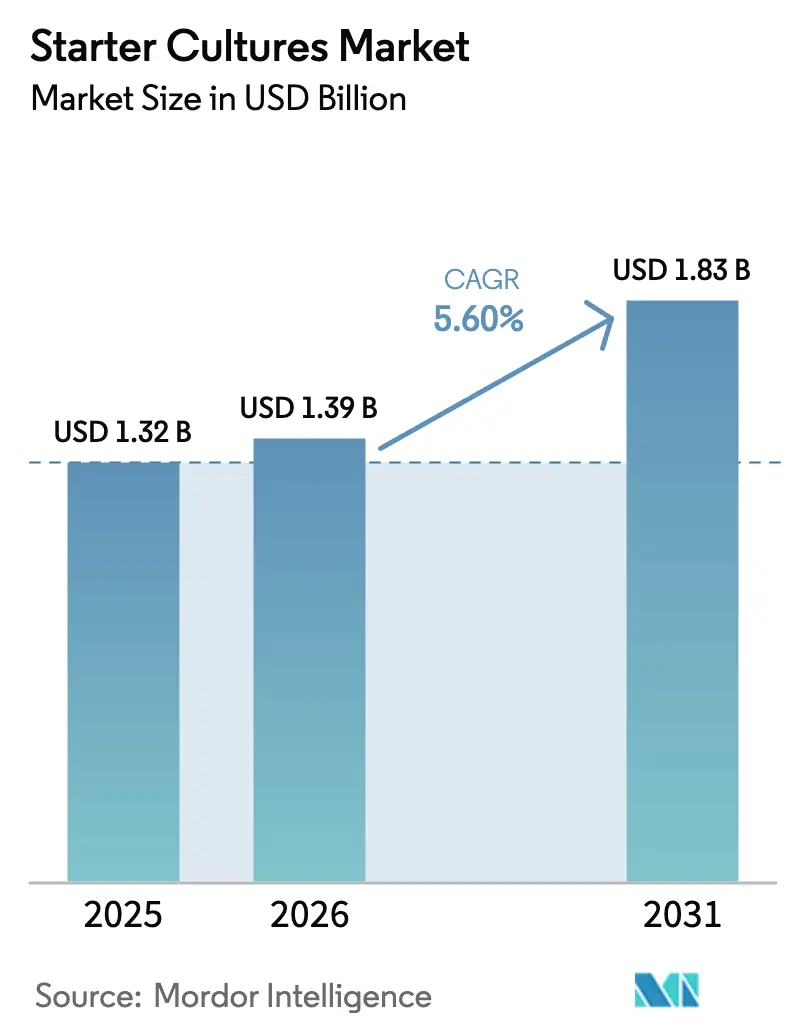
Starter cultures market size in 2026 is estimated at USD 1.39 billion, growing from 2025 value of USD 1.32 billion with 2031 projections showing USD 1.83 billion, growing at 5.6% CAGR over 2026-2031. The market growth reflects the transition from traditional fermentation methods to engineered microbial solutions that enhance food safety, sustainability, and health benefits. The increasing demand for clean-label products, developments in synthetic biology, and the growing use of bioprotective cultures instead of chemical preservatives drive market growth across dairy, bakery, plant-based, and meat segments. The dairy segment dominates the market due to the extensive use of starter cultures in yogurt, cheese, and fermented milk products. In the bakery sector, these cultures improve dough fermentation, texture, and shelf life. The plant-based segment is experiencing rapid growth as manufacturers develop new fermented alternatives to dairy products. While Europe remains the primary market, Asia-Pacific shows the highest growth potential due to increasing consumption of fermented foods and stricter food safety regulations. The rising awareness of probiotics and their health benefits in these regions further accelerates market expansion. Industry consolidation among food manufacturers has led suppliers to expand their culture portfolios, while new patents focus on improved preparation methods to reduce production time and costs. The market also benefits from ongoing research and development in strain selection and optimization, enabling manufacturers to create cultures with enhanced functionality and performance.
Key Report Takeaways
- By culture type, bacteria held 56.74% of the starter cultures market share in 2025; yeast is projected to advance at a 9.35% CAGR through 2031.
- By strain function, thermophilic cultures accounted for 40.12% of the starter cultures market size in 2025, whereas probiotic cultures are forecast to grow at an 8.6% CAGR through 2031.
- By form, freeze-dried formats led with 49.25% revenue share in 2025; liquid cultures are set to expand at a 9.45% CAGR through 2031.
- By application, dairy products captured a 55.62% share of the starter cultures market size in 2025, while plant-based fermented foods are projected to rise at an 11.1% CAGR through 2031.
- By geography, Europe dominated with a 35.21% share in 2025; Asia-Pacific is pacing ahead at an 8.55% CAGR through 2031.
Note: Market size and forecast figures in this report are generated using Mordor Intelligence’s proprietary estimation framework, updated with the latest available data and insights as of 2026.
Market Trends and Insights
Drivers Impact Analysis of Starter Cultures Market*
| Driver | (~) % Impact on CAGR Forecast | Geographic Relevance | Impact Timeline |
|---|---|---|---|
| Rising demand for clean-label fermented foods | +1.8% | Global, with early adoption in North America & Europe | Medium term (2-4 years) |
| Growth in dairy alternatives using starter cultures | +1.2% | North America, Europe, Asia-Pacific urban centers | Long term (≥ 4 years) |
| Expansion of artisanal cheese and craft bakery segments | +0.9% | North America, Europe, with emerging presence in Asia-Pacific | Medium term (2-4 years) |
| Adoption of bioprotective cultures as alternatives to chemical preservatives | +1.5% | Global, accelerated in Europe due to regulatory pressure | Short term (≤ 2 years) |
| Advances in synthetic biology for customized, high-yield strains | +0.7% | North America, Europe, select Asia-Pacific markets | Long term (≥ 4 years) |
| Consolidation among large-scale food and beverage manufacturers | +0.3% | Global, concentrated in developed markets | Medium term (2-4 years) |
| Source: Mordor Intelligence | |||
Rising demand for clean-label fermented foods
The clean-label trend has become an industry requirement, as lactic acid bacteria produce natural antimicrobial compounds like bacteriocins that extend product shelf life. This application is particularly effective in dairy products, where protective cultures inhibit pathogens such as Listeria monocytogenes while maintaining product taste and texture. The effectiveness of these cultures in dairy applications has expanded their adoption across other food categories, including meat products, beverages, and bakery items. The global food industry's shift to natural preservation methods has gained momentum through successful implementations across various product categories. Regulatory support for biopreservation, including the European Food Safety Authority's expanded Qualified Presumption of Safety list with new strains like Lacticaseibacillus huelsenbergensis, validates industry investments in natural preservation methods.[1] This innovation supports the industry's transition toward natural preservation solutions while meeting consumer demands for clean-label products.
Growth in dairy alternatives using starter cultures
Specialized starter cultures in plant-based dairy alternatives help replicate traditional dairy textures and flavors through controlled fermentation processes. The combination of lactic acid bacteria and yeasts in mixed-culture fermentation creates improved nutritional profiles and sensory characteristics compared to single-strain methods, as multiple organisms work synergistically to develop complex flavors and textures. Companies are implementing these technologies at a commercial scale to meet market demands. For instance, Perfect Day produces animal-free whey protein through precision fermentation, using programmed microflora to convert sugar into milk proteins identical to those in cow's milk.[2] The protein undergoes extensive filtration and purification processes to create a lactose-free dairy alternative suitable for consumer applications. Similarly, TurtleTree also employs precision fermentation with specialized microorganisms to produce lactoferrin, a significant milk protein component with important nutritional properties. This method reduces environmental impact and meets increasing consumer demand for sustainable dairy alternatives without relying on traditional animal agriculture practices.
Expansion of artisanal cheese and craft bakery segments
The artisanal food market growth increases the demand for specialized starter cultures that create distinct regional flavors and textures in traditional food products. This development aligns with consumer preferences for authentic, craft-produced foods that maintain cultural heritage and traditional manufacturing methods. Cheese consumption is increasing as consumers show readiness to pay higher prices for authentic, locally-produced varieties across global markets, especially in regions with established dairy traditions. Industry investments support market growth, as demonstrated by Valio's EUR 60 million investment in cheese production processes at its Lapinlahti plant, Finland, in May 2024. Artisanal producers increasingly use backslopping techniques, where portions of previous batches inoculate new productions. This method enables the development of specific microbial ecosystems that differentiate their products in premium markets and maintain traditional production methods. The practice preserves traditional fermentation techniques and ensures consistent product characteristics across production batches.
Adoption of bioprotective cultures as alternatives to chemical preservatives
Bioprotective cultures enable food manufacturers to extend product shelf life through natural preservation methods while maintaining clean-label requirements. These cultures contain beneficial microorganisms that improve food safety through biological processes. The application spans across dairy, beverages, and fermented foods sectors. Recent regulatory developments support the use of biopreservation, with the FDA granting GRAS status to Bacillus subtilis NRRL 68053 for food applications at concentrations up to 1 x 10^10 CFU per serving in April 2023.[3] The economic advantages include decreased chemical preservative usage and potential reductions in insurance and compliance costs. These cultures also meet growing consumer demand for natural ingredients and clean-label products. While maintaining culture viability during processing and storage remains a challenge, improvements in encapsulation technologies and freeze-drying methods have enhanced commercial applications across various food matrices. These advancements have improved stability and effectiveness under different environmental conditions, increasing the practical implementation of bioprotective cultures in commercial food production.
Restraints Impact Analysis of Starter Cultures Market*
| Restraint | (~) % Impact on CAGR Forecast | Geographic Relevance | Impact Timeline |
|---|---|---|---|
| High cost of cold-chain logistics | -0.8% | Global, particularly acute in developing regions | Short term (≤ 2 years) |
| Volatility in dairy supply chains affecting culture utilization | -0.7% | Global, with severe impact in Australia, North America | Short term (≤ 2 years) |
| Intellectual property constraints around proprietary strains | -0.4% | Global, concentrated in developed markets with strong IP enforcement | Medium term (2-4 years) |
| Regulatory restrictions on genetically modified microorganisms (GMMs) | -0.6% | Europe primary impact, spillover to other regions | Long term (≥ 4 years) |
| Source: Mordor Intelligence | |||
High cost of cold-chain logistics
Starter cultures require stable sub-zero temperatures for survival, as power disruptions or transportation delays can lead to cell death and product recalls. In regions with limited refrigeration infrastructure, distributors prefer freeze-dried formats that can withstand room temperature storage, despite their higher production costs. The cold-chain requirements for maintaining starter culture viability create substantial operational expenses throughout the supply chain. Temperature control failures result in culture deterioration and product recalls, negatively impacting manufacturer relationships. Infrastructure limitations particularly affect developing markets, where unreliable power supply and insufficient refrigeration networks restrict starter culture distribution. This challenge is more pronounced for liquid cultures requiring constant refrigeration compared to freeze-dried formats that can withstand ambient conditions. The rising energy costs for cold-chain maintenance have prompted facilities to implement LED lighting and ammonia-based refrigeration systems to reduce energy consumption while maintaining the required temperature conditions across the distribution network.
Regulatory restrictions on Genetically Modified Microorganisms (GMMs)
The European Union's regulatory framework requires comprehensive safety assessments for genetically modified microorganisms (GMMs), creating barriers for starter culture development. The European Union's risk assessment protocols require evaluation of GMM products across multiple parameters, including toxicity, allergenicity, nutritional impact, and environmental effects, before market approval. While food enzymes in Europe primarily originate from recombinant strains, consumer resistance to genetic modification limits the adoption of biotechnology methods. The contrasting approaches between the European Union's precautionary regulations and the US Generally Recognized as Safe (GRAS) system present compliance challenges for companies developing GMM-based starter cultures across markets. Patent protection on proprietary strains further restricts access to genetic modifications, as companies maintain intellectual property rights through licensing agreements that increase costs and create financial obstacles for smaller manufacturers.
*Our forecasts treat driver/restraint impacts as directional, not additive. The impact forecasts reflect baseline growth, mix effects, and variable interactions.
Starter Cultures Market Segment Analysis
By Culture Type:
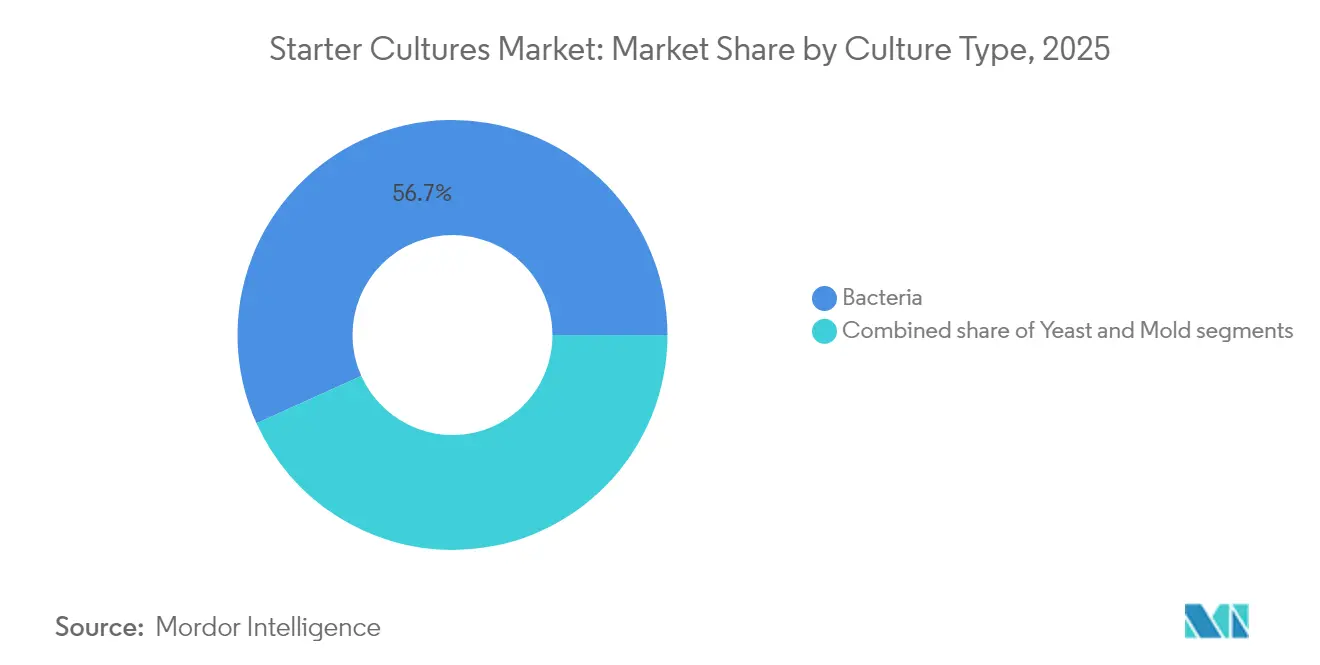
Bacteria Dominance Faces Yeast InnovationBacteria accounted for 56.74% of the starter cultures market share in 2025, with their primary applications in lactic acid production for dairy, bakery, and meat products. Yeast segments are experiencing growth at a 9.35% CAGR, driven by advancements in synthetic biology that enable enhanced aroma production and protein synthesis. Lacticaseibacillus and Streptococcus species maintain their essential role in acidification, texture development, and pathogen control. Yeast applications have expanded from traditional bread making to fermented beverages and dairy alternatives, where Saccharomyces provides consistent texture and mild sweetness. Mold cultures, particularly Aspergillus, remain important in Asian soy fermentation but represent smaller market volumes compared to bacterial and yeast segments.
The competitive landscape is evolving as manufacturers develop yeasts capable of producing dairy-equivalent proteins at an industrial scale, particularly for plant-based products. Bacterial strain development focuses on improving acidification rates and phage resistance to increase production efficiency. Mixed-culture starter solutions combining bacteria, yeast, and mold enable manufacturers to achieve complex flavor profiles while maintaining clean-label requirements.

By Strain Function:
Thermophilic Leadership Challenged by Probiotic GrowthThermophilic cultures account for 40.12% of the starter cultures market size in 2025, playing a vital role in yogurt and hard-cheese production processes operating at approximately 45°C. Mesophilic cultures facilitate the production of Cheddar and Gouda cheeses at lower temperatures, maintaining their distinct flavor profiles. The probiotic cultures segment is growing at an 8.6% CAGR, driven by clinical research demonstrating connections between gut microbiota, immune function, and metabolic health. Adjunct cultures enhance aged-cheese flavors, while protective cultures focus on extending product shelf life.
The market shows increasing demand for dual-function probiotics that deliver both processing advantages and health benefits. Manufacturers are incorporating Bifidobacterium and Lactobacillus strains into thermophilic blends to produce yogurt that meets texture requirements while providing digestive health benefits. Research initiatives in Brazil and South Korea focus on identifying native thermophilic strains with enhanced acidification and phage resistance properties to strengthen regional supply chains.
By Form:
Freeze-Dried Stability Versus Liquid ConvenienceFreeze-dried starters accounted for 49.25% of the market revenue share in 2025, due to their extended shelf life and stability during ambient temperature shipping. These starters remain effective for extended periods without specialized storage conditions, making them essential for international trade and regions with limited cold storage infrastructure. Liquid starter cultures are growing at a 9.45% CAGR, driven by their direct-vat-set convenience and minimal inoculation error risk. The liquid format enables precise dosing and immediate incorporation into production processes, improving manufacturing efficiency. Frozen cultures maintain a balanced position, offering high cell counts while requiring continuous cold chain storage.
Manufacturing decisions incorporate total cost of ownership, including energy consumption, product waste, and labor requirements. The selection of starter formats influences operational efficiency and production costs throughout the supply chain. Advances in encapsulation technology have enhanced freeze-dried probiotic viability, improving their stability and effectiveness during storage and application. Powdered starters with cyclodextrin show increased yeast survival rates, enhancing performance in fermentation processes. Environmental assessments indicate freeze-drying becomes more sustainable for storage periods beyond seven months, making it optimal for export markets. This sustainability benefit results from lower energy requirements for long-term storage compared to frozen or liquid formats.
By Application:
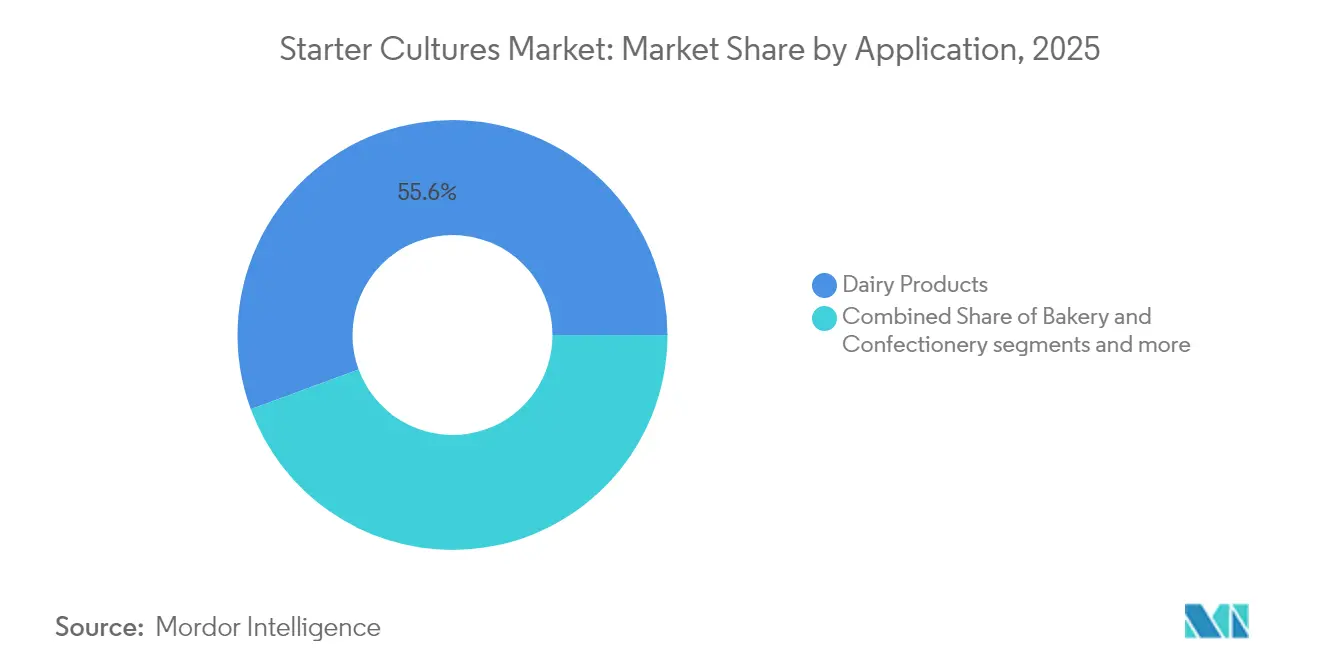
Dairy Dominance Meets Plant-Based DisruptionDairy products dominate the starter cultures market with a 55.62% revenue share in 2025. The manufacturing of cheese and yogurt requires acidifying and flavor-forming bacteria to achieve specific texture, pH levels, and food safety standards. These bacteria convert lactose into lactic acid, develop characteristic flavors, and maintain product consistency. The plant-based fermented foods segment exhibits a CAGR of 11.1% during the forecast period, supported by precision fermentation technology that produces dairy proteins and fat systems without animal inputs. The market expansion includes increased demand for sourdough bread, kombucha beverages, and fermented meat products, reflecting consumer preferences for functional and probiotic-rich foods.
Mixed cultures enhance the acceptance of plant-based products by resolving solubility issues and improving flavors in soy and pea-based alternatives. These cultures function together to decompose complex plant proteins and increase nutritional bioavailability. In dairy processing, heat-treated cultures minimize ripening and maturation times, allowing manufacturers to improve production efficiency while sustaining product quality. Starter cultures have become integral to both traditional dairy production and plant-based alternatives, with manufacturers focusing on research and development to create specialized culture combinations for diverse applications.
Geography Analysis
Europe Starter Cultures Market
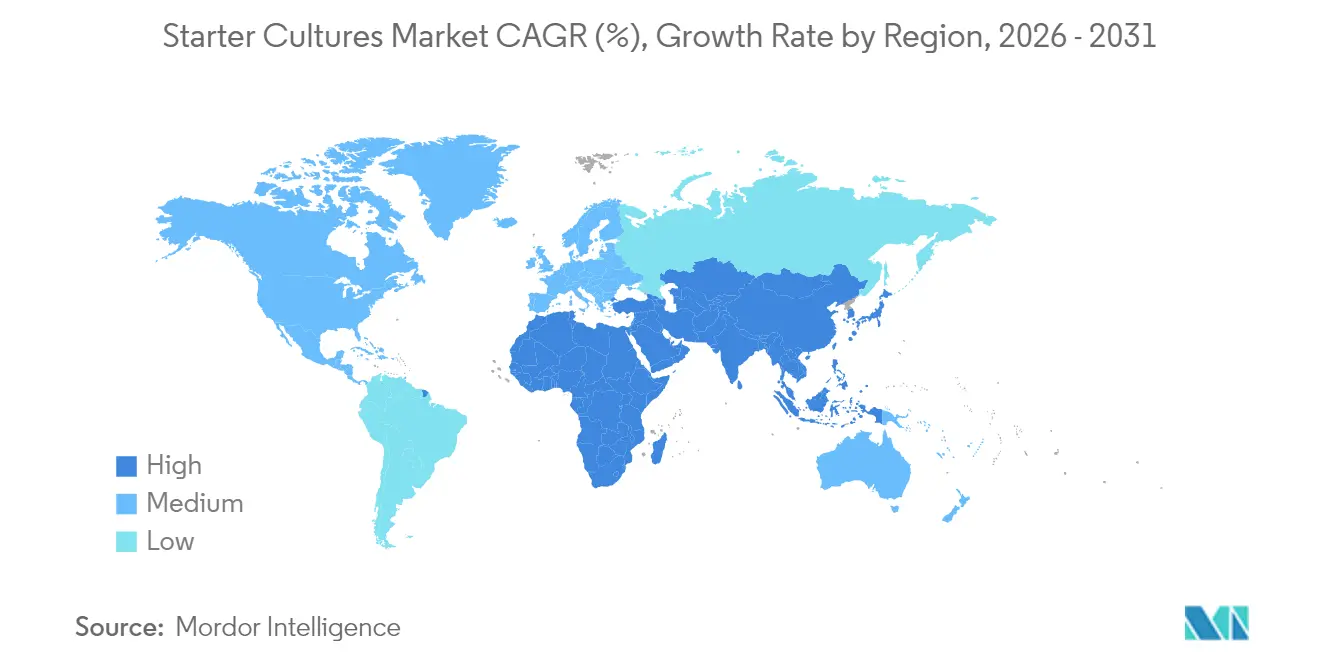
Europe generated 35.21% of starter cultures market revenue in 2025, supported by traditional cheese production, stringent hygiene standards, and established research and development networks. Protected Designation of Origin (PDO) cheeses require specific microbial consortia, ensuring consistent culture demand. The European Food Safety Authority's (EFSA) Qualified Presumption of Safety (QPS) list provides clear regulatory pathways, encouraging strain development and bioprotective applications.
APAC Starter Cultures Market
Asia-Pacific is growing at an 8.55% CAGR, driven by increasing urban consumption of yogurt, kimchi, and probiotic beverages. Government investment in precision fermentation research supports market expansion. In June 2024, the University of Illinois Urbana-Champaign received a USD 14.8 million five-year grant to establish the Centre for Precision Fermentation and Sustainability (PreFerS). Funded by Singapore's National Research Foundation (NRF), the center focuses on microbial cell engineering to develop safe and nutritious food products. The Illinois Advanced Research Center at Singapore (Illinois ARCS) will conduct research on food-grade microorganisms and scale up production from laboratory to pilot level.
North America Starter Cultures Market
North America maintains steady growth through developed cold-chain infrastructure and the FDA GRAS (Generally Recognized as Safe) system. The plant-based cheese industry creates additional demand for specialized starter cultures that replicate dairy properties. Mexico's expanding cheese exports increase the need for cultures meeting U.S. standards, while Canada's regulated dairy industry ensures stable starter culture demand.
Regulatory Landscape
Starter cultures are regulated as food ingredients, with their use anchored in general food-safety frameworks and additional scrutiny where specific strains fall under novel food or genetically modified microorganism (GMM) rules. In the European Union, the General Food Law (Regulation (EC) No 178/2002) places primary responsibility on food business operators to ensure safety, while the European Food Safety Authority (EFSA) supports microorganism safety assessment through its Qualified Presumption of Safety (QPS) approach, which is used as a risk-assessment tool for microorganisms intentionally added to food and feed.
In the United States, starter cultures are commonly handled through food additive or Generally Recognized as Safe (GRAS) pathways administered by the FDA. Many suppliers use a GRAS self-determination approach and, where applicable, a notification process. Differences in how GMMs are assessed between the EU precautionary framework and the US GRAS model shape commercialization strategies for engineered strains, and South Korea has also been developing strain-oriented safety evaluation systems for microbial starters used in traditional fermented foods.
Value Chain Analysis
The starter cultures value chain starts with strain discovery, strain-bank management, and application-driven R&D that builds know-how and intellectual property. Upstream propagation follows, using specialized growth media, including inputs such as skim milk powder, yeast extract, peptones, and cryoprotectants. Production then moves into controlled fermentation, followed by downstream processing steps like centrifugation and concentration, and finally preservation and stabilization through freeze-drying, deep-freezing, or other protective formats based on customer process needs and distribution constraints.
Packaging, storage, and distribution are closely tied to viability requirements and cold-chain performance, particularly for frozen concentrates that may need transport and storage at approximately -20 C to -45 C. Direct Vat Set (DVS) solutions are a key commercialization step for many suppliers, enabling inoculation at customer sites to improve process consistency and reduce handling errors. Technical services and quality controls, including phage-management support for dairy, are commonly bundled with cultures to protect performance through production and shelf life.
Competitive Landscape
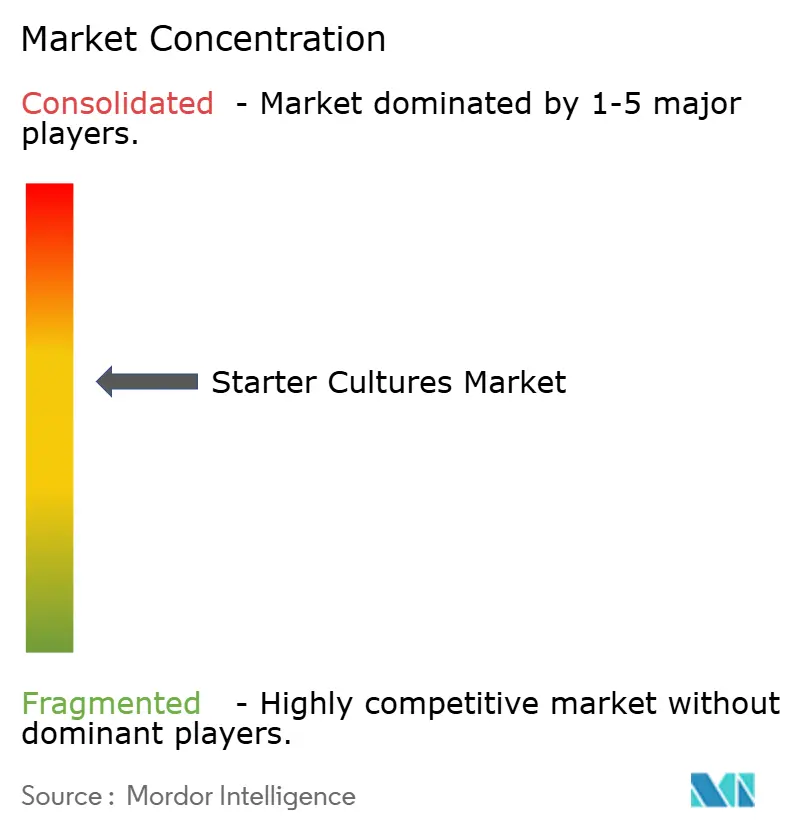
The starter cultures market exhibits moderate concentration. Key market participants include Novonesis A/S, DSM-Firmenich AG, Dohler Group, and Lallemand Inc. These companies prioritize mergers and acquisitions to enhance their product portfolios and meet diverse manufacturer requirements. For instance, in October 2024, Lesaffre acquired a 70% stake in Biorigin from Zilor, strengthening its position in savory ingredients. This acquisition established Lesaffre as the controlling shareholder in a joint venture focused on developing yeast-based ingredients for food and animal feed markets.
Regional companies like Angel Yeast and Valio maintain their market position by utilizing local microbial libraries and providing proximity services. Industry leaders are investing in pilot plants, strain-bank digitization, and AI-guided selection tools to reduce development time for customized cultures.
Growth opportunities exist in plant-based dairy, fermented snacks, and temperature-resistant strains that can withstand supply chain temperature variations. Companies differentiate themselves through technical services, phage monitoring programs, and automated dosing systems that reduce operational errors. Increased patent activity in starter preparation and encapsulation technologies indicates growing competition in research and development.
Starter Cultures Industry Leaders
-
Novonesis A/S
-
DSM-Firmenich AG
-
Dohler Group
-
Lallemand Inc.
-
Angel Yeast Co., Ltd.
- *Disclaimer: Major Players sorted in no particular order
Starter Cultures Market Companies Covered in this Report
- Novonesis A/S
- DSM-Firmenich AG
- Dohler Group
- Sacco System (Sacco S.r.l., Caglificio Clerici, CSL)
- Lallemand Inc.
- Angel Yeast Co., Ltd.
- Puratos Group
- International Flavors & Fragrances Inc.
- Lesaffre International
- Bioprox Ingredients SAS
- Dalton Biotechnologies
- Mediterranea Biotecnologie Srl
- Wyeast Laboratories, Inc.
- Proquiga Biotech
- Lactina Ltd.
- Novasol Ingredients Pvt. Ltd
- Alliance, Inc.
- Benny Impex Private Limited
- Punature Food Ingredients Co., Ltd.
- Tropilite Foods Pvt. Ltd.
Market Opportunities and Future Outlook
Clean-label preservation and performance reliability in industrial dairy and cheese production continue to support demand for protective and phage-robust culture systems, and visible supplier activity supports those areas. In 2026, dsm-firmenich launched Dairy Safe next generation cultures for cheese, reflecting ongoing innovation focused on robustness and consistent acidification, while EFSA QPS remains an enabling pathway for many food-relevant microorganisms in Europe. These signals point to opportunities for suppliers that can compress troubleshooting cycles through application labs and by replicating customer processes during strain selection and formulation.
Plant-based and precision-fermentation adjacent applications also create room for culture portfolio expansion beyond traditional dairy, particularly for players that can bridge pilot to commercial scale while securing dependable ingredient supply. Novonesis expanded customer-facing development capacity by opening a state-of-the-art application center in Copenhagen in 2025, and Angel Yeast commissioned a yeast protein production line at its Baiyang Biotechnology Park in Yichang in November 2025 with capacity exceeding 10,000 tons annually, which reflects active investment tied to fermentation-based ingredients. Collaboration-led R&D also supports premium niches such as infant and early-life nutrition, including work combining human milk oligosaccharides (HMOs) and probiotic strains in infant microbiome research between dsm-firmenich and Lallemand Health Solutions.
Recent Industry Developments in Starter Cultures Market
- July 2026: Novonesis, Signed a partnership with TurtleTree to scale, manufacture, and commercialize the lactoferrin ingredient LF+ for early-life nutrition and dietary supplement markets. The collaboration expands LF+ availability for infant nutrition and related health products, enabling broader market access and supply chain coordination. It accelerates scale-up of lactoferrin production and extends LF+ market reach across channels.
- July 2026: Novonesis - Signed a partnership agreement with TurtleTree to scale, manufacture, and commercialize the lactoferrin ingredient LF+ for early-life nutrition and dietary supplement markets. The partnership expands LF+ commercialization in early life nutrition and strengthens Novonesis' position in high-value ingredients. The arrangement enhances capabilities to deliver scalable production and reliable supply to global customers.
- June 2026: Novonesis, Announced a distribution agreement with Rovensa Next to commercialize select agricultural biosolutions in the United States starting with the 2027 growing season. The US footprint for biosolutions broadens market access for farmers adopting advanced microbial products. The deal strengthens the US distribution network and accelerates adoption of biosolutions across farming ecosystems.
Starter Cultures Market Report Scope and Research Methodology
Market Definition and Coverage
For this report, the starter cultures market covers the commercial sale of microbial culture preparations that are intentionally added to food and beverage to start and control fermentation, and it is measured as supplier revenues in USD across the covered geographies.
Scope exclusions: This sizing excludes on-site backslopping and non-commercial household cultures, and it also excludes enzymes, probiotics sold as supplements, and fermentation aids that are not sold as starter cultures.
Segments Covered in This Report
- By Culture Type
- Bacteria
- Yeast
- Mold
- By Strain Function
- Mesophilic Cultures
- Thermophilic Cultures
- Adjunct Cultures
- Probiotic Cultures
- By Form
- Freeze-Dried
- Liquid
- Frozen
- By Application
- Dairy Products
- Milk
- Cheese
- Yogurt and Kefir
- Other Dairy Products
- Bakery and Confectionery
- Beverages
- Plant-based Fermented Foods
- Meat and Seafood Fermentation
- Dairy Products
- By Geography
- North America
- United States
- Canada
- Mexico
- Rest of North America
- South America
- Brazil
- Argentina
- Rest of South America
- Europe
- Germany
- United Kingdom
- France
- Italy
- Spain
- Russia
- Rest of Europe
- Asia-Pacific
- China
- Japan
- India
- Australia
- Rest of Asia-Pacific
- Middle East and Africa
- South Africa
- Saudi Arabia
- UAE
- Rest of Middle East and Africa
- North America
Data Sources, Market Sizing, and Validation
Desk Research
Desk research is used to set the market boundary and to build an initial set of volume and price anchors that can be checked later in interviews. We mainly rely on public and official sources that track fermented food production trends and ingredient usage intensity, such as FAOSTAT, UN Comtrade, USDA, and the European Commission data portals, together with scientific publications indexed in PubMed that describe strain usage and processing requirements.
In parallel, we review company annual reports, investor presentations, and credible press releases to understand capacity expansions, product launches, and regional demand shifts. Where needed to close gaps, we also use paid subscriptions for company financials and intelligence, patent databases, and shipment-level import and export views to sanity-check trade flows of culture preparations. The sources listed above are illustrative only, and other public documents and datasets were also used for collection, validation, and clarification.
Primary Interviews and Surveys
Primary work is used to pressure test the desk model on what customers are actually buying, and how price and mix move by application and geography. We spoke with ingredient suppliers, distributors, dairy and bakery producers, and technical specialists across major consuming regions, so assumptions around adoption, replacement cycles, and pricing could be corrected where needed.
Distribution of primary research fieldwork respondents
| Company type | Respondent position | Region |
|---|---|---|
| Top tier: 37% | CXOs: 14% | APAC: 40% |
| Mid tier: 49% | Functional/Unit leaders: 26% | EMEA: 37% |
| Smaller Players: 14% | Managers: 60% | Americas: 23% |
Market-Sizing & Forecasting
Market sizing starts from a top-down demand reconstruction that links fermented food and beverage output to typical starter culture dosing and replacement patterns, and then converts that into value using observed price bands by form and use case. Since the same culture type can be sold as freeze-dried, liquid, or frozen formats, we keep the format mix explicit so totals do not get overstated when average prices are applied.
To keep the model grounded, we track a set of inputs closely, including fermented dairy production volumes, bakery and beverage fermentation trends, form factor mix shifts, typical inclusion rates by application, and regional import dependence for culture preparations. When the desk view leaves gaps, for example where trade codes are broad or where local supply is not visible, we use selective bottom-up approximations such as supplier revenue splits, channel checks, and sampled ASP times estimated volume. The totals are then adjusted within the bounds validated in interviews.
For forecasting, we apply multivariate regression with scenario checks, where growth is linked to indicators such as fermented product output, clean label demand signals, and processing standardization in industrial fermentation. The final forecast is reviewed with primary inputs so it reflects how technical adoption and pricing are expected to evolve, rather than extending a historical CAGR mechanically.
Data Validation & Update Cycle
Validation is done in layers so that no single dataset drives the outcome. We compare the model outputs against independent signals such as fermented food production trends, import and export movements, and disclosed revenue direction from key suppliers, then investigate variances before sign-off.
When unusual jumps show up in price, mix, or regional growth, we revisit assumptions and re-contact relevant experts to confirm what changed, including shortages, reformulation, or new application wins. The report is refreshed annually, and interim updates are done when material events occur. Before delivery, a final analyst review pass is completed so clients receive the latest updated view.
Mordor Intelligence's Starter Cultures Market Sizing Compared With Other Published Estimates
Published market sizes for starter cultures often differ because each publisher defines the market boundary in a different way and applies different price and volume logic. Differences also show up when base years vary, when currency conversions use different timing, or when one model assumes a faster shift toward higher priced formats.
By tracking form factor mix and application-level inclusion rates, Mordor Intelligence keeps the value build tied to observable fermentation output, then rechecks pricing bands in primary calls before the final total is locked. By contrast, some estimates appear to bundle adjacent microbial ingredients into the same bucket, or they rely heavily on a single historical growth curve without re-validating whether industrial dairy and beverage fermentation growth is the real demand driver in the base year.
Benchmark comparison
| Source | Market Size | Gaps in Research Methodology |
|---|---|---|
| Mordor Intelligence | USD 1.39 B (2026) | |
| Global Consultancy A | USD 1.37 B (2024) | Uses an earlier base year and appears to apply a broad global growth curve, with limited visibility on how form mix and application dosing were updated for the base period. |
| Industry Publisher B | USD 1.12 B (2022) | Starts from an older valuation year and may rely on forward CAGR without showing how regional fermentation output and price progression were reconciled to current mix. |
Across the three numbers, the spread is mainly explained by base-year choice and how tightly value is linked to real fermentation demand signals, not by a single dramatic assumption. With clear input variables and repeatable checks on mix and pricing, the estimate remains easier to trace and update when the market shifts.
Key Questions Answered in the Report
What is the current size of the starter cultures market?
The starter cultures market stands at USD 1.39 billion in 2026 and is forecast to reach USD 1.83 billion by 2031.
Which region is growing fastest?
Asia-Pacific is the fastest-growing region, posting an 8.55% CAGR through 2031 on rising demand for fermented foods and modernizing food-safety standards.
Which application segment leads revenue?
Dairy products lead, holding 55.62% of 2025 revenue, though plant-based fermented foods record the highest 11.1% CAGR.
Who are the leading companies?
Novonesis, DSM-Firmenich, and Lesaffre are among the market leaders, collectively accounting for approximately one-third of global revenue in 2024.