
Market Overview
| Study Period | 2021 - 2031 |
|---|---|
| Market Size (2026) | USD 36.06 Billion |
| Market Size (2031) | USD 53.42 Billion |
| Growth Rate (2026 - 2031) | 8.18 % |
| Fastest Growing Market | Asia Pacific |
| Largest Market | North America |
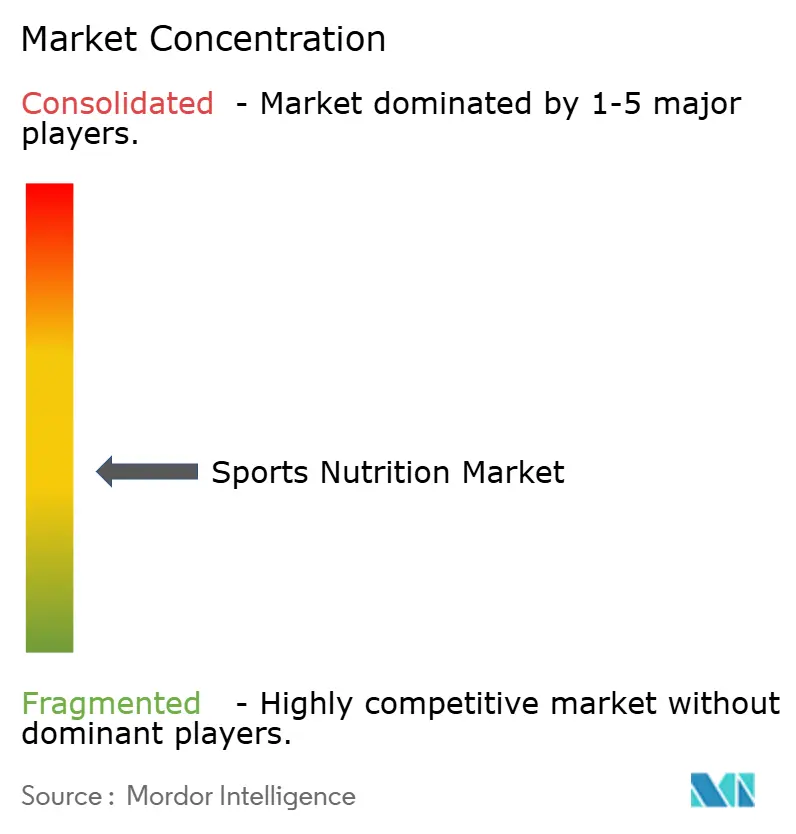
| Market Concentration | Medium |
Major Players
*Disclaimer: Major Players sorted in no particular order Image © Mordor Intelligence. Reuse requires attribution under CC BY 4.0. |
|
Sports Nutrition Market Analysis by Mordor Intelligence
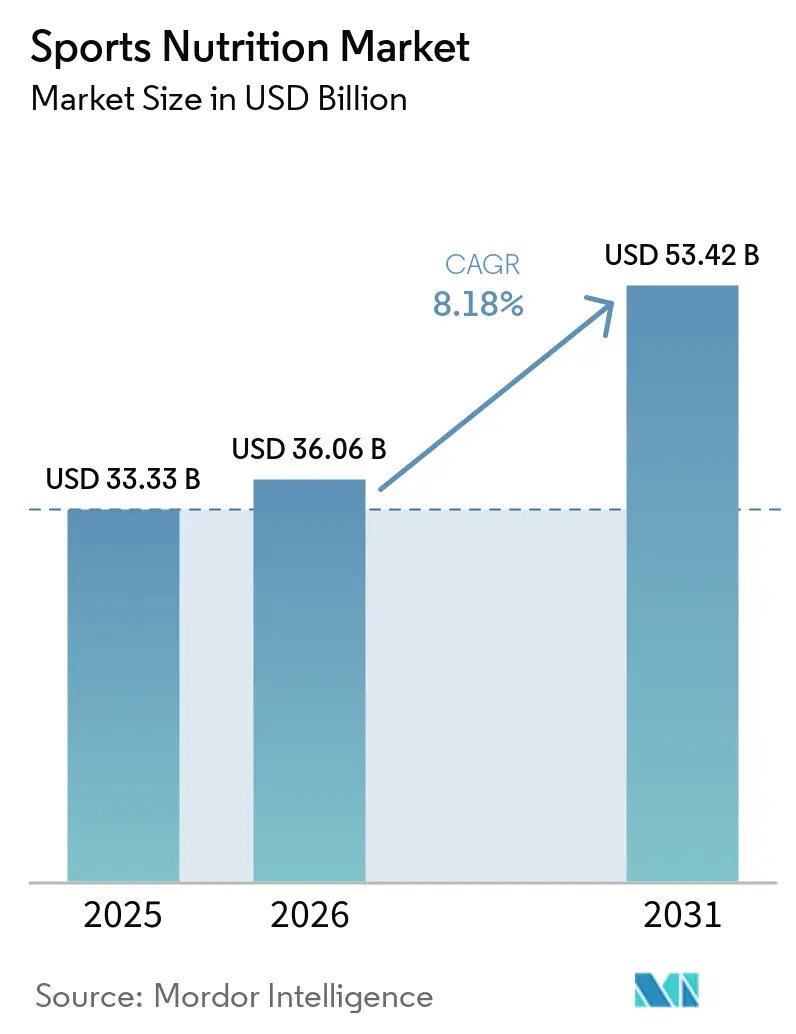
The sports nutrition market size is expected to grow from USD 33.33 billion in 2025 to USD 36.06 billion in 2026 and is forecast to reach USD 53.42 billion by 2031 at 8.18% CAGR over 2026-2031. The market has evolved beyond its traditional focus on elite athletes to serve a broader consumer base, including fitness enthusiasts and health-conscious individuals. This expansion is driven by increasing health awareness, rising gym memberships, and growing participation in sports activities. The sports nutrition market offers diverse products, including protein powders, energy drinks, and supplements, while the integration of fitness apps and wearable technology has enhanced consumer engagement in nutrition and fitness tracking. Manufacturers are responding to changing consumer preferences through product innovations, particularly in plant-based and clean-label offerings. The growth is further supported by expanding distribution networks and the rise of e-commerce platforms, making sports nutrition products more accessible to consumers across different age groups. As the market continues to evolve, the convergence of health consciousness, technological integration, and product innovation positions the sports nutrition industry for sustained growth and development.
Key Report Takeaways
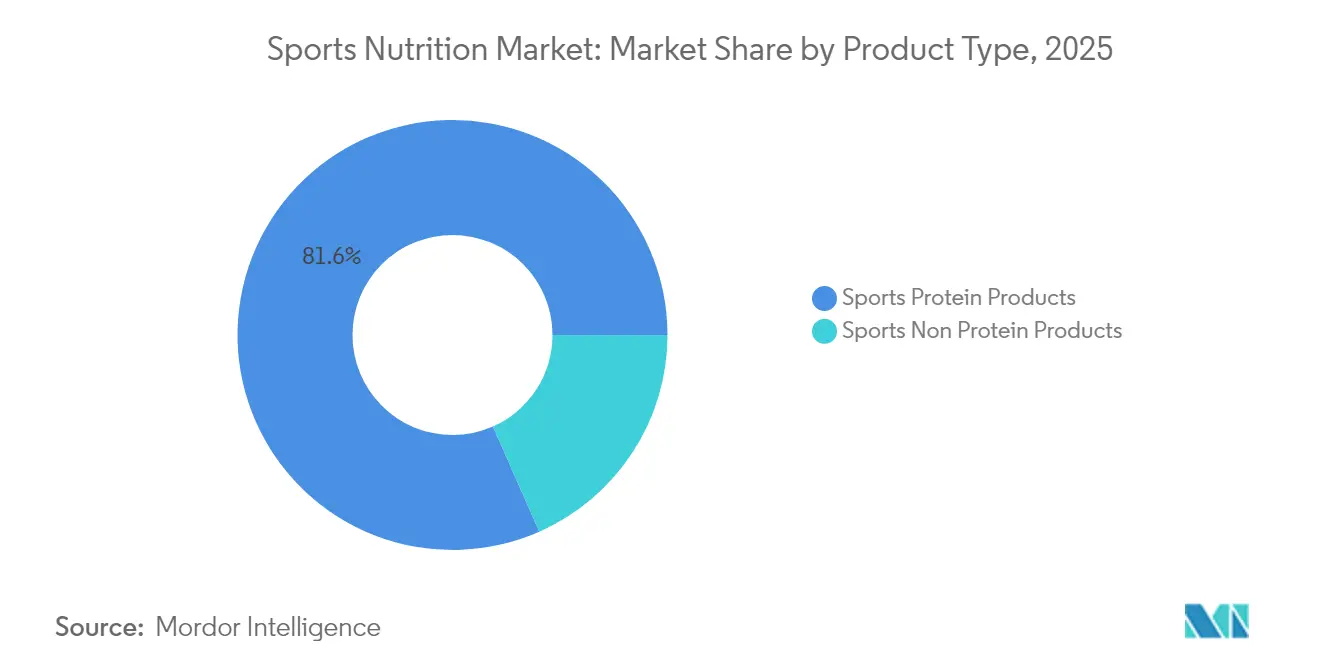
- By product type, protein powders retained the largest sports nutrition market share at 81.62% in 2025, while non-protein products are forecast to grow fastest at an 8.39% CAGR worldwide.
- By source, animal-based held the greatest market share of 62.88% in 2025, but plant-based sports nutrition products are poised for a 9.21% CAGR.
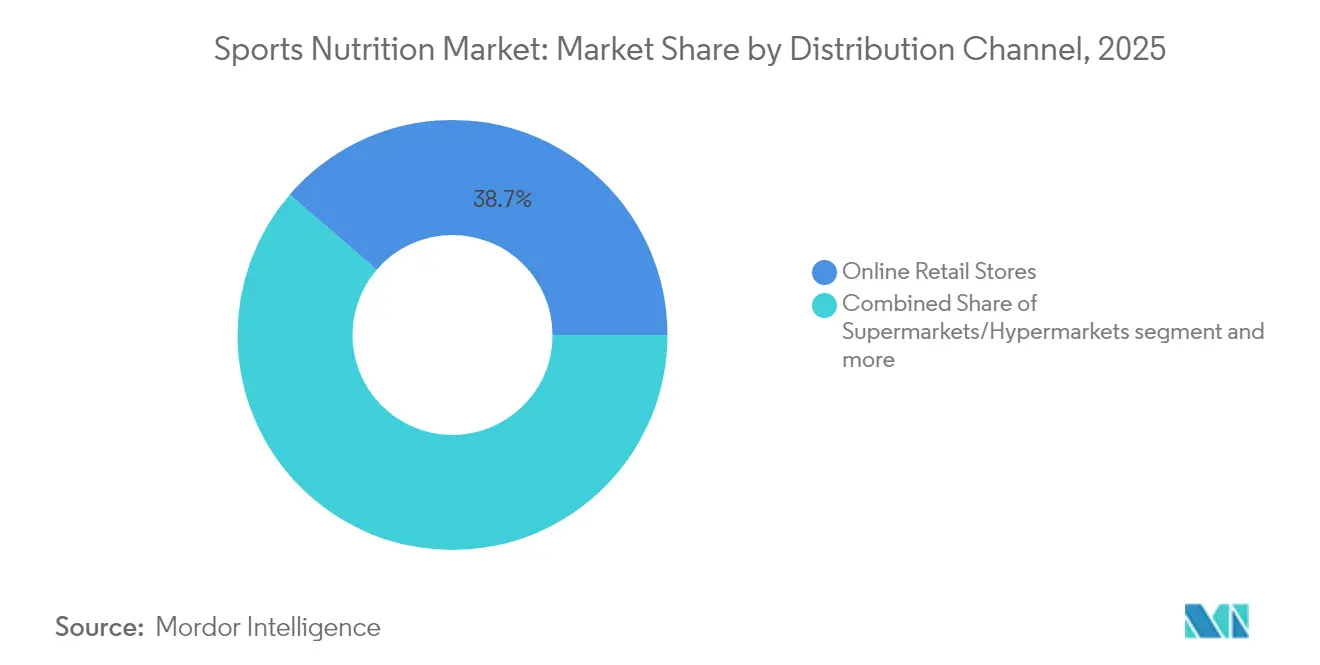
- By distribution channel, online retail stores achieved the top position with 38.68% sports nutrition market share in 2025 and is set to post the strongest 10.22% CAGR across all regions.
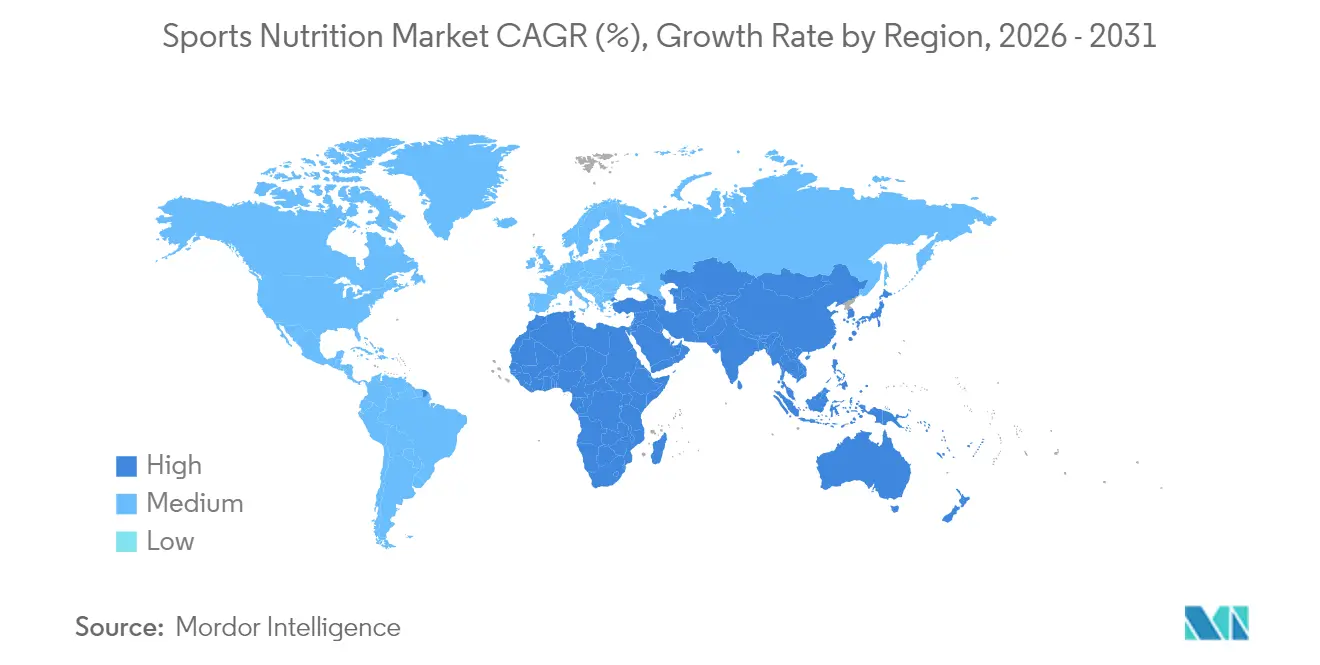
- By geography, North America maintained leadership with 60.55% of global revenue in 2025, whereas Asia-Pacific will be the fastest-growing region through 2031 at 9.56% CAGR.
Note: Market size and forecast figures in this report are generated using Mordor Intelligence’s proprietary estimation framework, updated with the latest available data and insights as of 2026.
Market Trends and Insights
Drivers Impact Analysis of Sports Nutrition Market*
| DRIVER | (~) % IMPACT ON CAGR FORECAST | GEOGRAPHIC RELEVANCE | IMPACT TIMELINE |
|---|---|---|---|
| Rising supplement usage among fitness enthusiasts and athletes | +2.1% | Global (North America and Europe lead) | Short term |
| Proliferation of specialized sports nutrition for combat sports and high intensity disciplines | +1.3% | North America, Europe, Japan, South Korea | Medium term |
| Government and institutional support for fitness and wellness program | +1.0% | Asia-Pacific, North America, Europe | Medium term |
| Personalized nutrition solutions drive sports nutrition market | +2.3% | North America, Europe, urban Asia-Pacific | Long term |
| Integration of technology for personalized nutrition recommendations | +1.9% | Developed markets | Medium term |
| Expansion of distribution channels including online retail platforms | +2.0% | Global with robust online ecosystems | Short term |
| Source: Mordor Intelligence | |||
Rising supplement usage among fitness enthusiasts and athletes
Fitness enthusiasts and athletes are increasingly prioritizing their health and performance, driving a surge in demand for sports supplements driving demand within the sports nutrition market, which extends beyond muscle recovery to enhanced endurance, energy, and overall wellness. The market has evolved significantly, particularly in the post-pandemic period, with products now tailored to specific activity patterns and recovery needs rather than targeting athletes as a uniform group. This transformation is supported by data from the Sports and Fitness Industry Association, which reported that 242 million Americans (78.8% of the population) participated in physical activities in 2023, representing a 2.2% increase from the previous year and marking ten consecutive years of growth with 5 million new participants in 2023[1]Source: Sports & Fitness Industry Association, “2024 Topline Participation Report,” sfia.org. The democratization of sports nutrition beyond elite athletes to everyday fitness enthusiasts, coupled with growing awareness through social media influencers and fitness experts, has prompted manufacturers to innovate and diversify their product lines. The proliferation of fitness centers and gyms, along with increased sports events and competitions, continues to fuel this market expansion.
Proliferation of specialized sports nutrition for combat sports and high intensity disciplines
Combat sports and high-intensity disciplines are witnessing increased demand for specialized sports nutrition products, driven by athletes seeking tailored solutions for performance enhancement, recovery acceleration, and peak physical maintenance. These activities require specific nutritional formulations that address unique physiological demands, particularly in weight management and muscle recovery. The market is evolving to provide advanced recovery formulations that target the distinct muscle damage patterns common in combat sports. The rise in professional and amateur combat sports competitions has created a sophisticated consumer base that understands the importance of sport-specific nutrition within the sports nutrition market. According to Sport England, participation in combat sports in England increased from 827,000 in 2021-2022 to 933,500 in 2023-2024[2]Source: Sport England, "Number of People Participating Combat Sports in England", sportengland.org. This growing athlete base, coupled with endorsements from prominent athletes and trainers, continues to strengthen the market for specialized nutrition products. The integration of scientific research in product development has further elevated the quality and effectiveness of combat sports nutrition solutions. Manufacturers are increasingly focusing on natural and clean-label ingredients to meet the growing demand for healthier nutrition options. The expansion of distribution channels, including specialized sports nutrition retailers and online platforms, has improved product accessibility for combat sports athletes.
Government and institutional support for fitness and wellness program
Government and institutional support for fitness and wellness initiatives significantly propels the sports nutrition market growth. As health awareness increases, governments worldwide are implementing fitness programs and investing in sports infrastructure, recognizing their role in public health and economic benefits. For instance, the UK government's "Get Active" strategy aims to increase participation by 2.5 million adults and 1 million children by 2030 through grassroots facility investments and improved access for underrepresented groups[3]Source: United Kingdom Department for Culture, Media and Sport, “Get Active: A Strategy for the Future of Sport and Physical Activity,” gov.uk. Additionally, institutions, from schools to corporations, are integrating wellness programs into their operations. These government and institutional endorsements not only elevate the profile of sports nutrition but also boost its credibility in the sports nutrition market, creating multiplier effects as new participants require appropriate nutrition for their chosen activities, directly contributing to market expansion. The growing emphasis on preventive healthcare and active lifestyles has enhanced product development in the sports nutrition industry. This has resulted in increased accessibility of sports nutrition products across various distribution channels.
Personalized nutrition solutions drive sports nutrition market
The personalized nutrition segment is transforming the sports nutrition landscape, driven by technological advancements that enable nutrition recommendations based on individual biomarkers and performance data. As athletes and fitness enthusiasts increasingly seek tailored solutions, the market responds with customized offerings tailored solutions within the sports nutrition market based on factors such as age, gender, activity level, and specific fitness goals. The personalization trend extends beyond product formulation to delivery mechanisms, with smart devices and AI-driven applications emerging as key enablers of customized nutrition protocols. This transformation is particularly significant in markets like India, where government-supported initiatives like mDiabetes intervention demonstrate the growing importance of personalized nutrition. According to the Indian Council of Medical Research – India Diabetes (ICMR INDIAB) study published in 2023, India has 10.1 crore diabetes patients, highlighting the need for targeted nutrition solutions that cater to specific health conditions among sports enthusiasts[4]Source: Press Information Bureau, "World Diabetes Day 2024", pib.gov.in. Companies like Herbalife and Nutrigenomics have responded by offering personalized sports nutrition solutions, while the growth of e-commerce platforms has improved accessibility to these customized products.
Restraints Impact Analysis of Sports Nutrition Market*
| RESTRAINT | (~) % IMPACT ON CAGR FORECAST | GEOGRAPHIC RELEVANCE | IMPACT TIMELINE |
|---|---|---|---|
| Adulteration and mislabeling issue undermining customer trust | –1.8% | Regions with weak enforcement | Short term |
| Stringent regulatory approvals | –1.2% | North America, Europe, Australia | Medium term |
| Lack of awareness about sports nutrition products in emerging countries | –1.0% | Latin America, Africa, rural Asia | Long term |
| Rising concerns regarding side effects | –1.4% | High-income markets | Medium term |
| Source: Mordor Intelligence | |||
Adulteration and mislabeling issue undermining customer trust
The issue of adulteration in the sports nutrition market poses significant challenges, particularly in products marketed for weight loss and energy enhancement. These products frequently contain unapproved pharmaceutical ingredients that pose health risks. As consumers become more discerning, incidents of product tampering and misleading labels continue to erode trust. Such breaches not only jeopardize brand reputations but also invite regulatory scrutiny. The challenge intensifies with the rise of e-commerce, as online platforms can sometimes obscure product origins. This growing concern has led to calls for stricter regulations and transparency in labeling, making authenticity and trustworthiness critical factors in the market. Manufacturers are now implementing advanced testing protocols and quality control measures to combat these issues. Additionally, sports nutrition industry stakeholders are collaborating with regulatory bodies to develop more stringent standards for product verification and certification.
Stringent regulatory approvals
Regulatory complexity across global markets creates significant challenges for the sports nutrition industry, particularly impacting smaller manufacturers. Stringent government oversight of health and wellness products leads to increased costs and delayed market entry. Amazon's mandate for annual third-party verification of dietary supplements adds another layer of quality control requirements, further affecting operational costs and market access. These regulatory hurdles, while ensuring consumer safety, can impede innovation and limit product development, especially for startups aiming to establish themselves in the market. Companies must navigate varying regulations across different countries, making global expansion particularly challenging for both established players and new entrants. The burden of compliance often requires substantial investment in legal expertise and quality assurance systems, straining resources that could otherwise be allocated to research and development. Additionally, the constantly evolving nature of these regulations requires companies to maintain vigilant monitoring and frequent updates to their compliance protocols.
*Our forecasts treat driver/restraint impacts as directional, not additive. The impact forecasts reflect baseline growth, mix effects, and variable interactions.
Sports Nutrition Market Segment Analysis
By Product Type:
Non-Protein Products Gain MomentumIn 2025, sports protein products dominate the market with an 81.62% share, underscoring their pivotal role in sports nutrition. This stronghold underscores their acceptance as a staple in fitness and athletic routines, driven by their proven efficacy in muscle recovery, performance enhancement, and overall fitness support. The widespread adoption of these products highlights their ability to cater to a broad spectrum of consumers, from professional athletes to casual fitness enthusiasts. Within the protein category, while whey and casein powders maintain their lead due to their high bioavailability and established benefits, plant-based alternatives are rapidly gaining traction. This growth is spurred by a heightened consumer focus on sustainability, ethical sourcing, and digestibility, making plant-based options particularly appealing to environmentally conscious and health-focused individuals. The surging demand for plant-based options underscores a broader consumer pivot towards eco-friendly and health-centric choices, reflecting a significant shift in market dynamics.
Yet, sports non-protein products are emerging as a significant growth driver, projected to expand at an 8.39% CAGR from 2026 to 2031, outpacing the broader market. This shift indicates a more discerning consumer base, seeking nutritional solutions that extend beyond just protein. The growth in this segment is fueled by increasing awareness of the role of specialized supplements in addressing specific fitness goals, such as energy optimization, endurance, and recovery.



By Source:
Plant-Based Alternatives Reshape MarketIn 2025, animal-based products hold a dominant 62.88% sports nutrition market share. However, plant-based alternatives are gaining momentum, with a projected CAGR of 9.21% from 2026 to 2031. This divergence in growth rates highlights a significant shift in consumer preferences, driven primarily by sustainability concerns and the appeal of health benefits. The plant-based sector has made significant advancements in taste and texture, successfully addressing previous adoption challenges. Furthermore, research underscores the benefits of plant-based diets, including enhanced blood flow, diminished oxidative stress, and quicker recovery for athletes, posing a challenge to the traditional supremacy of animal proteins. This shift is indicative of a broader trend where consumers are increasingly prioritizing products that align with environmental consciousness and personal health goals.
The dynamic between animal and plant-based offerings is changing; instead of simply replacing one with the other, many consumers are now integrating both, customizing their selections to align with specific nutritional goals and training phases. Industry trends echo this sentiment, showcasing a rise in products that combine both animal and plant proteins, striving to capture the advantages of each. This trend also highlights the potential for innovation in product development, as companies seek to cater to a more informed and health-conscious consumer base. As a result, the protein market is likely to witness a surge in offerings that balance taste, nutrition, and environmental impact, further driving the sector's growth.
By Distribution Channel:
E-Commerce Reshapes Retail LandscapeIn 2025, online retail stores dominate the distribution landscape, holding a commanding 38.68% share. Projections indicate a robust expansion at a 10.22% CAGR from 2026 to 2031. This surge in online dominance is primarily driven by shifting consumer habits, with the convenience of online shopping and easy access to product information taking precedence. The online arena proves especially beneficial for sports nutrition products, allowing consumers to thoroughly research ingredients, compare product formulations, and read user reviews before making a purchase. The ability to access a wide range of products, often at competitive prices, further enhances the appeal of online platforms. Additionally, the integration of advanced technologies, such as AI-driven recommendations and personalized shopping experiences, is fostering consumer loyalty and driving repeat purchases.
Yet, even with the rising prominence of online channels, supermarkets, hypermarkets, and pharmacy health stores remain crucial in the distribution chain. They cater to impulse buyers and those in need of immediate access, solidifying their market relevance. These physical stores also provide a tactile shopping experience, enabling consumers to physically inspect products, which remains a significant factor for certain customer segments.
Geography Analysis
North America Sports Nutrition Market
In 2025, North America commands a leading 60.55% market share, bolstered by heightened consumer awareness, a well-entrenched fitness culture, and a strong retail framework. The U.S. stands out as an innovation epicenter, often debuting major product launches before their global introduction. While protein powders reign supreme in North America, there's a notable uptick in the popularity of ready-to-eat protein products and ready-to-drink protein beverages, driven by convenience and evolving consumer preferences for on-the-go nutrition. Additionally, the region is under heightened regulatory scrutiny, with the FDA's proposed FY2024 budget spotlighting plans to modernize DSHEA for enhanced oversight and consumer safety. This regulatory modernization aims to address gaps in product labeling, ingredient transparency, and manufacturing standards, ensuring better protection for consumers.
APAC Sports Nutrition Market
Asia-Pacific is set to be the growth epicenter, boasting a projected CAGR of 9.56% from 2026-2031, outpacing the global average. This surge is attributed to a burgeoning health consciousness, a growing fitness infrastructure, and rising disposable incomes in pivotal markets like China, India, and Japan. The region's youth, increasingly health-conscious and buoyed by government fitness initiatives, are driving a surge in sports nutrition interest. For instance, China's "Healthy China 2030" initiative and India's "Fit India Movement" are fostering awareness and participation in fitness activities, further fueling demand for sports nutrition products. Yet, challenges loom with trade uncertainties and escalating tariffs, especially for the People's Republic of China, as noted in the Asian Development Outlook. Still, robust domestic demand, coupled with a tourism rebound and a preference for travel-friendly formats, is propelling the sports nutrition market. The recovery in international travel has also led to increased sales of compact, portable nutrition products, catering to the needs of travelers.
EMEA and LATAM Sports Nutrition Market
Europe, Latin America, the Middle East, and Africa each showcase unique growth trajectories and consumer inclinations. The region has adapted its regulatory landscape, streamlining new product approvals to foster market growth. Recent regional product debuts include Herbalife's plant-based protein powders in Brazil and Nestlé's collagen-enriched supplements in Argentina, underscoring a shift towards personalized and functional nutrition. In Europe, the demand for clean-label and organic products is also shaping product innovation, with manufacturers focusing on transparency and sustainability to meet consumer expectations. Meanwhile, the Middle East and Africa, though smaller, are on the rise, with firms like Optimum Nutrition amplifying their investments to bolster their foothold. The region's growing urbanization and increasing awareness of fitness and health trends are creating opportunities for market expansion, particularly in countries like the UAE and South Africa.

Regulatory Landscape
Regulation for sports nutrition products continues to tighten around ingredient identity, safety substantiation, and labeling compliance across key markets. In the United States, the FDA held a public meeting in March 2026 to discuss the scope of dietary supplement ingredients under the FD&C Act and how emerging technologies such as precision fermentation fit within current pathways. The focus was on whether an ingredient is a lawful dietary ingredient and how it is characterized, adding to scrutiny around product classification. On major e-commerce routes, Amazon's requirement for annual third-party verification of dietary supplements adds an operational compliance layer that can affect brand participation and SKU continuity.
In Europe, the EFSA issued new administrative guidance for nutrient source applications (January 2026). The European Commission also confirmed a Q3 2026 public consultation toward harmonized Maximum Permitted Levels for vitamins and minerals, aimed at addressing the current patchwork of national limits that complicates cross-border scaling. Canada signaled a compliance shift in April 2026, when sports electrolyte products moved from the Natural Health Product framework to the food regulatory framework. That transition moved companies from pre-market licensing toward post-market compliance under the Food and Drugs Act, with resulting implications for food-style labeling and Nutrition Facts requirements.
Value Chain Analysis
The sports nutrition value chain spans commodity and specialty inputs (dairy-derived proteins such as whey and casein, plant proteins, amino acids like BCAAs, and functional actives such as creatine), premix and formulation, and contract or in-house manufacturing for powders, RTD beverages, bars, and capsules. Quality and testing, including anti-doping and contaminant screening, sits alongside packaging and multi-channel distribution led by online retail, supported by supermarkets/hypermarkets and pharmacy/health stores. As brands manage adulteration and mislabeling risks and meet retailer and platform requirements, quality systems and verification have increasingly shifted toward baseline operating cost.
Supply continuity and cost control are becoming more strategic as whey availability faces structural pressure, pushing brands toward tighter procurement and more localized manufacturing. In June 2026, Applied Nutrition acquired Nutrablend Group for USD 16 million, gaining a 107,000 sq ft manufacturing facility in Buffalo, New York, which illustrates efforts to shorten lead times and reduce cross-border logistics dependence. Ownership and investment activity also supports regionalization and route-to-market buildout, including Alta Semper Capital taking a majority stake in Nature's Rule (January 2026) to strengthen a MENA manufacturing and R&D platform, and WS WeSports Group acquiring 65% of Finland's Elite Fitness (July 2026) to enter the Nordic sports nutrition market.
Competitive Landscape
The sports nutrition market maintains a moderate concentration level, where established players like Glanbia PLC, PepsiCo, Inc., and Nestlé S.A operate alongside emerging competitors. The market has evolved from a product-centric approach to a solution-oriented model, with companies developing offerings that address specific consumer needs rather than generic product categories. This evolution has led to increased product differentiation and market segmentation, particularly in specialized areas such as recovery supplements and pre-workout formulations. Companies are also investing in research and development to create innovative delivery formats and improve product efficacy.
Strategic acquisitions are shaping the competitive landscape, as demonstrated by Keurig Dr Pepper's acquisition of GHOST Lifestyle in January 2025. This trend reflects the increasing interest of traditional beverage companies in the sports nutrition market, as they seek to capitalize on growth opportunities and adapt to changing consumer preferences. The consolidation activities have resulted in enhanced distribution networks and expanded product portfolios for acquiring companies. These strategic moves have also facilitated technology transfer and knowledge sharing within the industry, leading to accelerated product development cycles.
The market presents opportunities in personalized nutrition, female athlete-focused formulations, and performance-enhancing products that address mental aspects. New market entrants are disrupting traditional business models through direct-to-consumer approaches and digital engagement strategies, while established companies continue to expand through strategic acquisitions, further transforming the market structure. The integration of artificial intelligence and data analytics has enabled companies to better understand consumer preferences and develop targeted products. Additionally, the rise of e-commerce platforms has created new distribution channels, allowing smaller players to compete effectively with established brands.
Sports Nutrition Industry Leaders
-
Abbott Laboratories Inc.
-
Herbalife Nutrition Ltd.
-
Nestlé S.A.
-
PepsiCo, Inc.
-
Glanbia plc
- *Disclaimer: Major Players sorted in no particular order
Sports Nutrition Market Companies Covered in this Report
- The Coca-Cola Company
- Nestle S.A.
- PepsiCo Inc.
- Glanbia PLC
- Abbott Laboratories
- Harbin Pharmaceutical Group (GNC Holdings)
- Post Holdings Inc.
- BellRing Brands, Inc
- The Simply Good Foods Company
- MusclePharm Corporation
- Herbalife Nutrition Ltd.
- The Hut Group
- Nutrabolt
- FitLife Brands, Inc.
- Labrada Nutrition
- BioTech USA Kft.
- Lovate Health Sciences International Inc.
- Nutra Holdings Inc.
- Enervit S.p.A
- Leprino Foods Company

Market Opportunities and Future Outlook
Manufacturing localization and capacity additions are creating space for faster innovation cycles, private label and contract manufacturing, and improved on-shelf availability in high-volume formats such as powders, RTDs, and bars. In June 2026, Applied Nutrition acquired Nutrablend Group's assets, including a 107,000-square-foot facility in Buffalo, New York, which positions additional in-region output for North America and supports quicker commercialization through closer manufacturing-distribution proximity. In India, Nutro Life Science announced plans in April 2026 for a robotic sports nutrition manufacturing facility in Ludhiana, targeted for operation by December 2026, signaling continued investment in automated, scalable production for a large and urbanizing consumer base.
Ingredient supply and functional specialization also create opportunity areas tied to observed investment and product mix shifts. In 2026, dairy ingredient suppliers expanded high-value whey protein capability, including FrieslandCampina Ingredients investing more than EUR 90 million across three Netherlands sites and DMK Group investing EUR 26 million for a 7,000-tonne WPC80 plant at Edewecht. These moves support formulations that rely on high protein density and improved texture in ready-to-consume formats. On the performance side, Alzchem Group's EUR 120 million commitment (December 2025) to build an automated creatine and precursor plant reinforces the strategic importance of creatine availability for the fast-growing non-protein segment, while brands can differentiate through transparent dosing, clean-label positioning, and digital personalization that connects training and recovery routines with nutrition guidance.
Recent Industry Developments in Sports Nutrition Market
- May 2026: Herbalife launched the Fuel Like Ronaldo campaign with Cristiano Ronaldo, positioning performance nutrition guidance and product usage for everyday routines beyond elite athletes. The initiative strengthens brand-led consumer education and supports conversion in mainstream channels where sports nutrition competes with broader wellness products.
- December 2025: Abbott launched Ensure Max Protein 42g and Ensure Max Protein 2-in-1 Muscle Support shakes, extending its muscle health positioning into high-protein, recovery-oriented formats. The rollout supports portfolio expansion toward active adults and consumers prioritizing strength and mobility, aligning with sports nutrition adjacency in retail and pharmacy channels.
- June 2024: Steadfast Nutrition launched new supplements in India, including Whey Protein, LIV Raw, and a vegetarian Multivitamin Mega Pack (180 tablets), adding breadth across protein and micronutrient support. The launches reflect continued SKU proliferation in emerging markets where product education and channel reach are key to category penetration.


Sports Nutrition Market Report Scope and Research Methodology
Market Definition and Coverage
The sports nutrition market is defined as the value of products consumed to support exercise performance, endurance, recovery, and muscle building, across sports protein products and sports non-protein products, sold through offline and online channels.
Scope exclusions: Regular packaged foods and beverages that are not positioned for sports performance or workout recovery are not counted.
Segments Covered in This Report
-
By Product Type
-
Sports Protein Products
-
Powder
- Whey and Casein Powder
- Plant based Protein Powder
- Other Sports Protein Powder
- Protein Ready to Drink
- Protein/Energy Bars
-
Powder
-
Sports Non Protein Products
- Energy Gels
- BCAA Powder
- Creatine Powder
- Other Sports Non Protein Products
-
Sports Protein Products
-
By Source
- Animal-based
- Plant-based
-
By Distribution Channel
- Supermarkets/Hypermarkets
- Pharmacy/Health Stores
- Online Retail Stores
- Other Distribution Channels
-
By Geography
-
North America
- United States
- Canada
- Mexico
- Rest of North America
-
Europe
- Germany
- France
- United Kingdom
- Spain
- Netherlands
- Italy
- Sweden
- Poland
- Belgium
- Rest of Europe
-
Asia-Pacific
- China
- India
- Japan
- Australia
- South Korea
- Indonesia
- Thailand
- Singapore
- Rest of Asia-Pacific
-
South America
- Brazil
- Argentina
- Chile
- Colombia
- Peru
- Rest of South America
-
Middle East and Africa
- United Arab Emirates
- South Africa
- Nigeria
- Saudi Arabia
- Egypt
- Morocco
- Turkey
- Rest of Middle East and Africa
-
North America
Data Sources, Market Sizing, and Validation
Desk Research
Desk research was used to set the base structure for the model and to build realistic demand and pricing assumptions before speaking to the market. We referenced public sources such as the USDA and other national food labeling rules, FDA dietary supplement guidance, Eurostat and national statistics offices for consumption and trade signals, UN Comtrade for category level import export direction, and peer reviewed nutrition journals for ingredient and dosage context.
On top of that, we also reviewed company filings, investor presentations, press releases, and retailer category pages to understand product formats and typical price ladders across powders, RTD, bars, gels, and creatine and amino acids. A paid company financials and intelligence subscription was used selectively to standardize revenues and to screen business mix where public disclosures were limited. These desk research sources are not exhaustive, and we also reviewed other public documents and data points for data collection, validation, and clarification.
Primary Interviews and Surveys
Primary work focused on checking what actually drives purchase and repeat use, and then converting those insights into clean assumptions for the model. Interviews included brand and ingredient side executives, channel and distribution professionals, and domain experts across APAC, EMEA, and the Americas, so gaps from desk research could be closed and pricing, mix, and growth expectations could be aligned to on-the-ground demand signals.
Distribution of primary research fieldwork respondents
| Company type | Respondent position | Region |
|---|---|---|
| Top tier: 25% | CXOs: 14% | APAC: 43% |
| Mid tier: 55% | Functional/Unit leaders: 33% | EMEA: 30% |
| Smaller Players: 20% | Managers: 53% | Americas: 27% |
Market-Sizing & Forecasting
Market sizing was built using a top-down and bottom-up logic, where the demand pool is reconstructed from fitness participation and sports activity levels and then converted into category spend across key formats. Once the demand base is set, it is split by product type and channel using observed mix patterns, followed by pricing normalization so that value totals stay consistent across regions.
Inputs tracked (illustrative) include gym and fitness participation trends, the shift toward RTD and convenient formats, online share expansion, typical pack sizes and servings, ingredient cost direction for proteins and creatine, and regional price bands visible in retail listings. Forecasts were developed using scenario analysis supported by primary expert views on adoption rates and price progression, and then adjusted where expected regulatory or labeling changes could affect claims and product mix.
To keep the totals realistic, we ran selective bottom-up checks by sampling brand revenues, validating average selling price ranges, and stress testing implied per-capita spend against known consumption behavior. Where company revenue disclosures were incomplete, gaps were handled through mix-based allocation using peer set benchmarks and channel checks, and then reviewed again for outliers before finalizing.
Data Validation & Update Cycle
Validation was done by triangulating outputs across independent signals such as regional demand indicators, observed price ladders, and the implied consumption intensity by active consumer groups. If a region or category showed an unusual jump, the assumptions were reopened and rechecked through follow-up questions and a second pass of desk inputs, before the numbers moved forward.
A multi-step internal review was also followed so calculation logic, unit conversions, and currency treatment were consistent across the full model. The report is refreshed annually, and interim updates are triggered when a material event changes pricing, channel access, or category definitions. Before delivery, a fresh review pass is completed so clients receive the latest updated view.
Mordor Intelligence's Sports Nutrition Market Sizing Compared With Other Published Estimates
Published sports nutrition market values often vary because studies do not always count the same product boundaries, and they also differ on what year is treated as the base and how pricing is carried forward. Some publishers lean more heavily on broad wellness food and beverage assumptions, while others focus mainly on supplement style products, which creates a wide spread even before growth rates are applied.
The main gap drivers we saw were whether sports drinks and meal replacements are included, how online pricing and discounting are treated, and whether regional totals are converted using an average annual rate or a point-in-time rate. Differences also come from refresh cadence, since ingredient cost swings can change protein and creatine pricing quickly, and older price points tend to inflate or understate current value.
Benchmark comparison
| Source | Market Size | Gaps in Research Methodology |
|---|---|---|
| Mordor Intelligence | USD 36.06 B (2026) | |
| Global Consultancy A | USD 60.56 B (2026) | Uses a wider definition that bundles sports food and sports drinks alongside supplements, which lifts the starting value versus a model centered on sports protein and sports non-protein products. |
| Industry Publisher B | USD 49.56 B (2024) | Anchors the estimate in an earlier base year and includes meal replacements and broad sports drink categories, and it is less clear how online discounting and currency timing are normalized across regions. |
The table shows that scope breadth and base-year selection explain most of the spread, and pricing handling explains much of the remaining difference. By separating sports protein formats from adjacent sports foods and treating pricing and currency conversion consistently across regions, the estimate stays more traceable to repeatable variables, which is the approach used by Mordor Intelligence.


Key Questions Answered in the Report
What is the current sports nutrition market size and its 2031 forecast?
The market stands at USD 36.06 billion in 2026 and is projected to hit USD 53.42 billion by 2031.
Which region holds the largest sports nutrition market share?
North America leads with 60.55% of global revenue.
Which product type is growing fastest in the sports nutrition industry?
Non-protein products such as creatine, BCAAs, and energy gels are forecast to grow at an 8.39% CAGR.
Why are plant-based proteins gaining sports nutrition market share?
Consumers perceive environmental and digestive benefits, driving a 9.21% CAGR for plant-based options.
How is e-commerce influencing sports nutrition market size growth?
Online retail offers detailed information and subscription models, supporting a 10.22% CAGR for digital channels.
Which factors restrain sports nutrition market growth in emerging economies?
Lower awareness, limited distribution infrastructure, and heterogeneous regulations slow adoption outside major urban centers.
Page last updated on:




