
Market Overview
| Study Period | 2021 - 2031 |
|---|---|
| Market Size (2026) | USD 14.06 Billion |
| Market Size (2031) | USD 19.19 Billion |
| Growth Rate (2026 - 2031) | 6.42 % |
| Fastest Growing Market | South America |
| Largest Market | Asia Pacific |
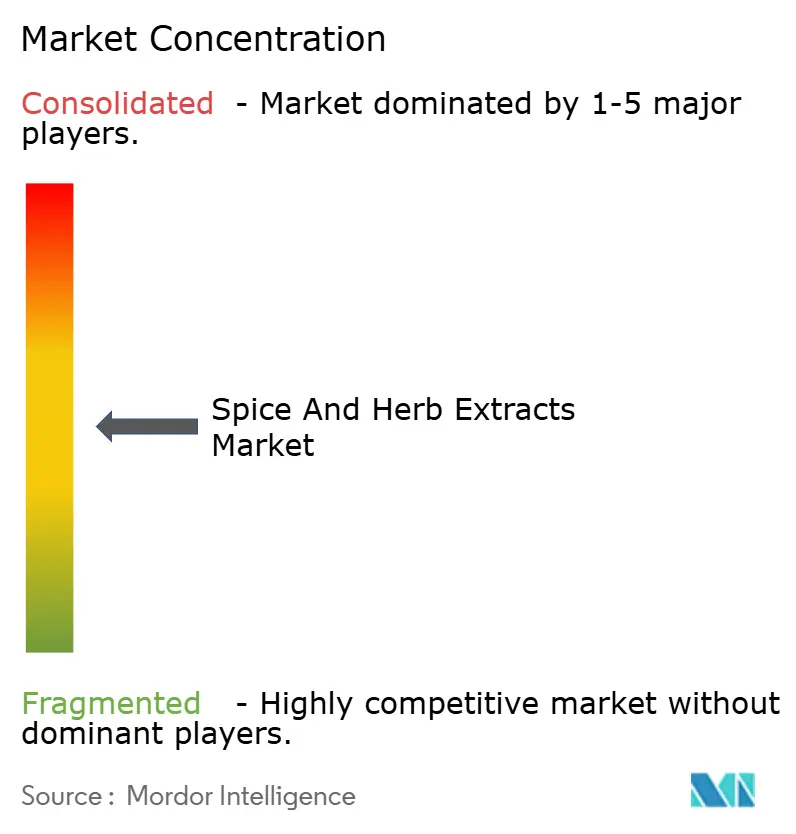
| Market Concentration | Medium |
Major Players *Disclaimer: Major Players sorted in no particular order Image © Mordor Intelligence. Reuse requires attribution under CC BY 4.0. | |
Spice And Herb Extracts Market Analysis by Mordor Intelligence
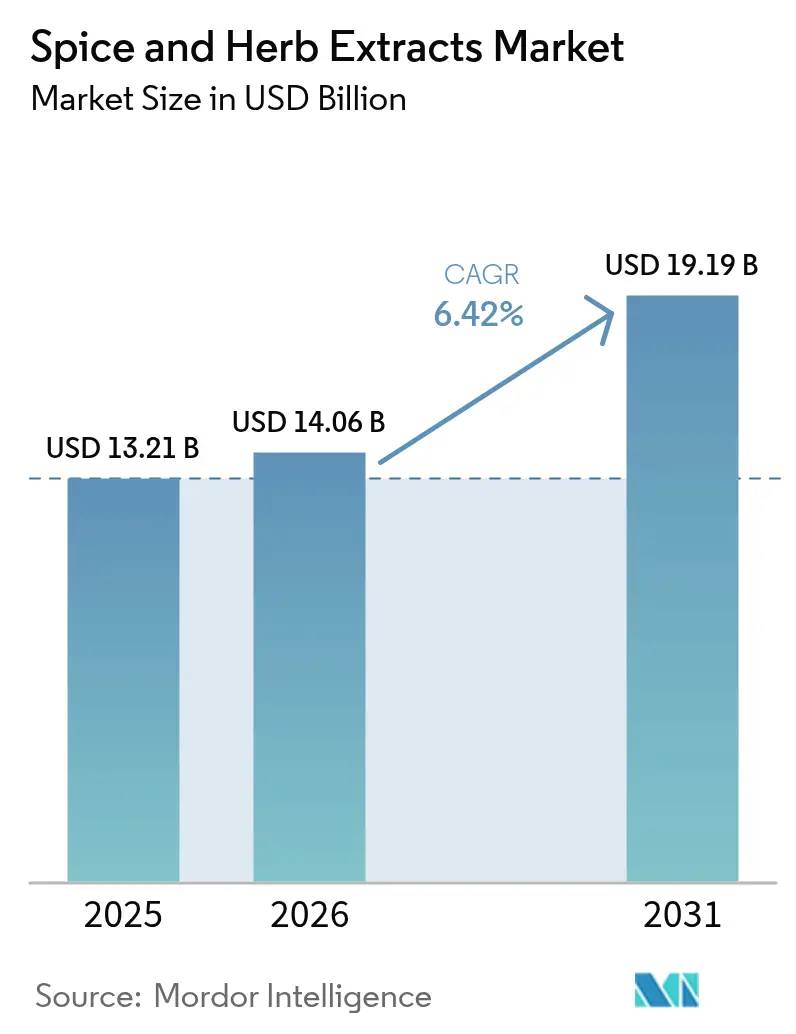
The spice and herb extracts market size in 2026 is estimated at USD 14.06 billion, growing from 2025 value of USD 13.21 billion with 2031 projections showing USD 19.19 billion, growing at 6.42% CAGR over 2026-2031. Brand owners are switching from synthetic flavors to botanical concentrates to satisfy retailer transparency rules, while piperine-rich pepper oleoresins and supercritical CO₂ turmeric extracts illustrate how functional benefits now carry equal weight with taste. Liquid oleoresins dominate form choices because their oil solubility and thermal stability simplify dosage in sauces, snacks, and ready meals. Asia-Pacific maintains a production and consumption edge, yet South America is closing the gap as Brazil and Argentina scale export-oriented acreage. Vertically integrated processors with captive farms, supercritical capacity, and blockchain traceability are best positioned to offset raw-material volatility and synthetic competition.
Key Report Takeaways
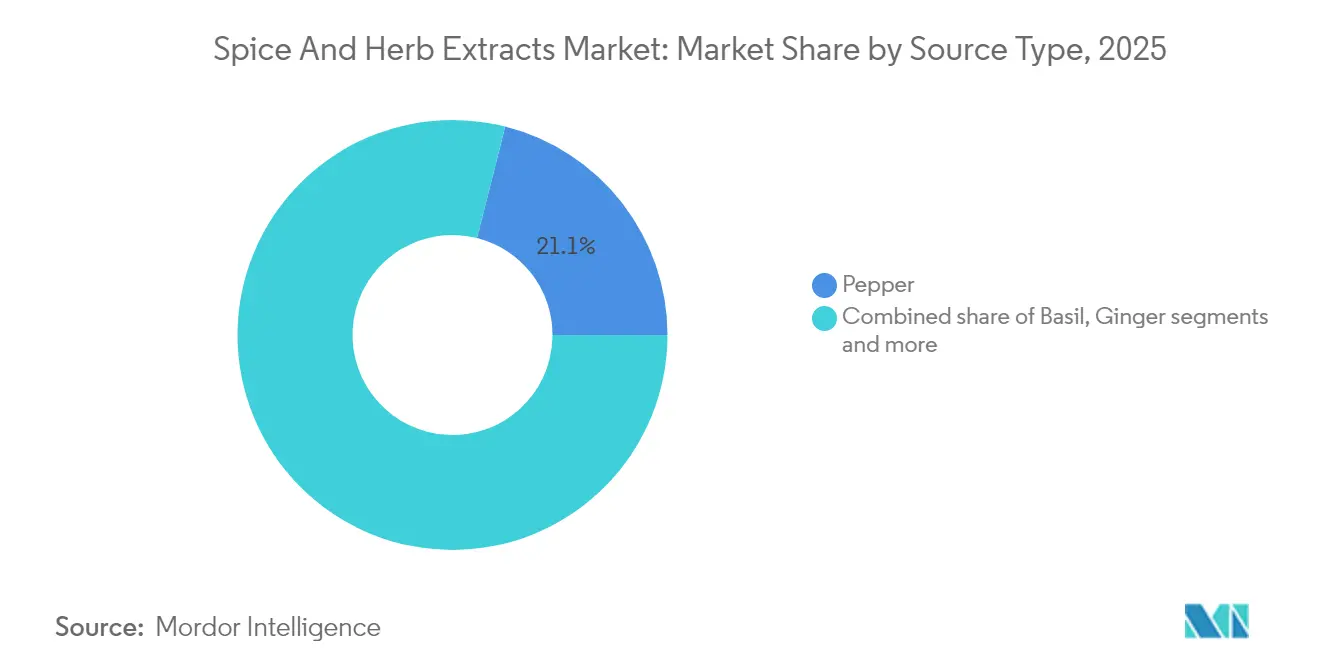
- By source type, pepper captured 21.06% of the spice and herb extracts market share in 2025, consolidating its lead across food and pharmaceutical formulations.
- By form, liquid oleoresins accounted for 40.22% of the spice and herb extracts market size in 2025 while micro-encapsulated formats are advancing at an 7.80% CAGR through 2031.
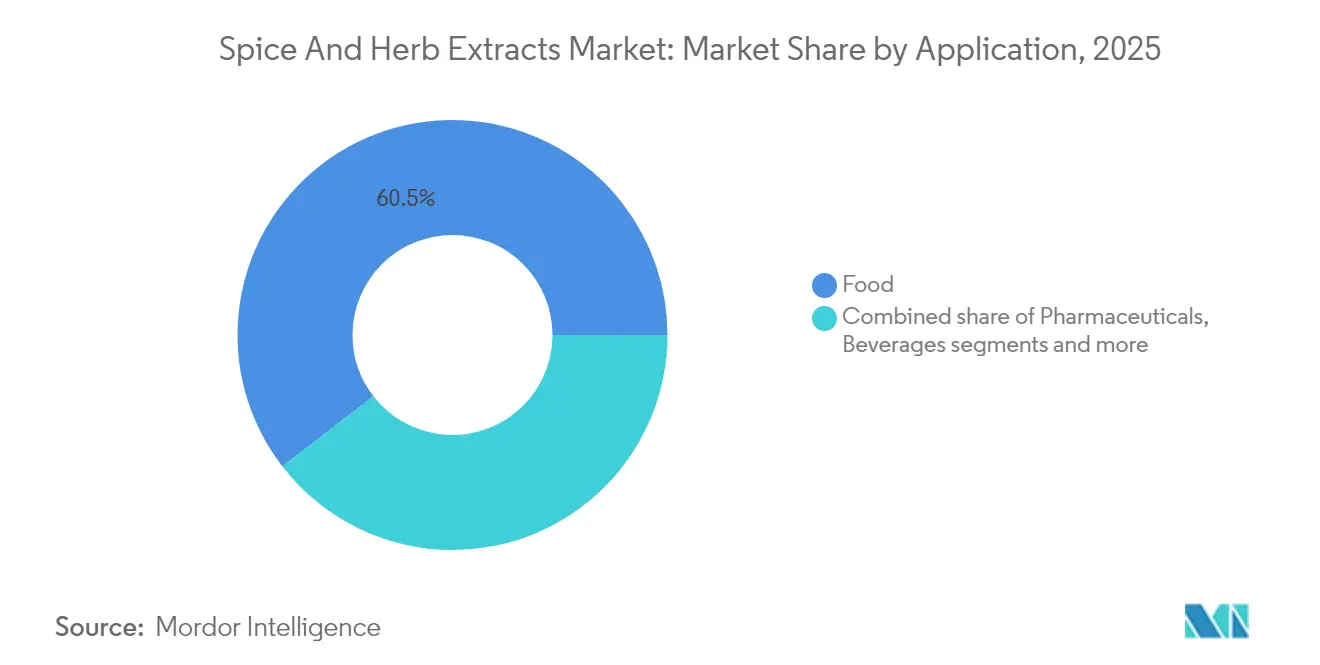
- By application, pharmaceuticals are expanding at an 8.30% CAGR to 2031, the fastest among end uses, even though food retained 60.48% revenue share in 2025.
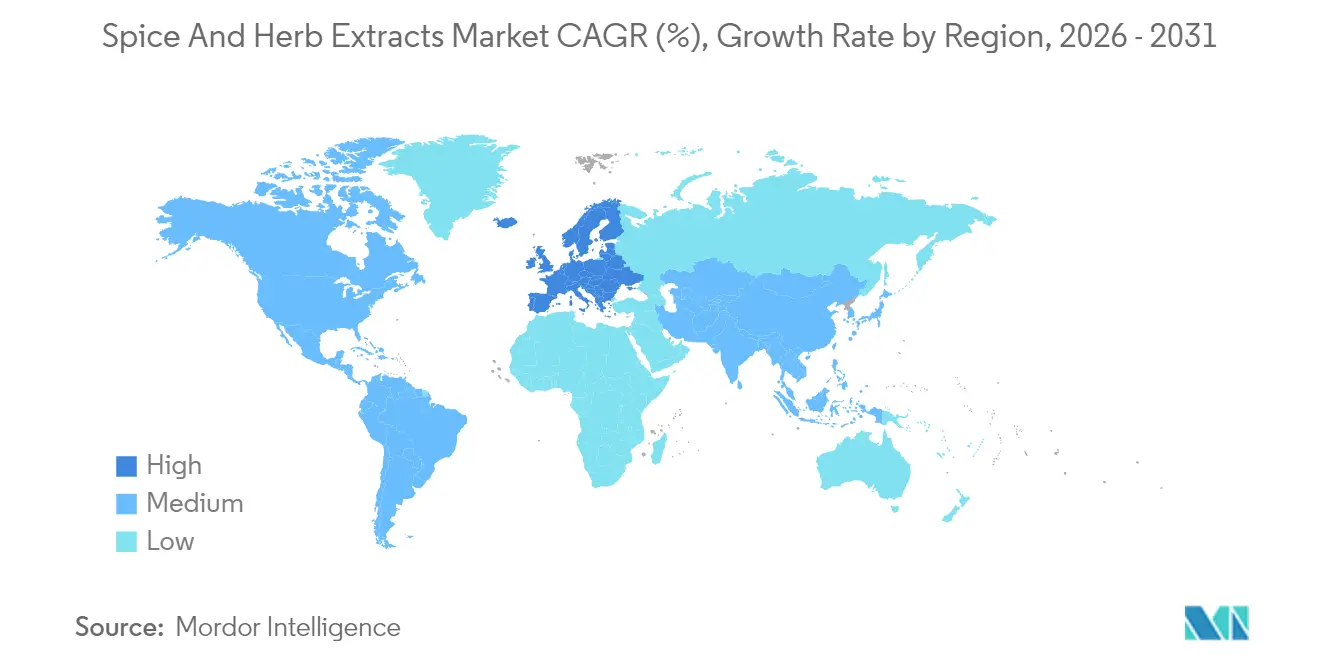
- By geography, Asia-Pacific held 35.85% of the spice and herb extracts market size in 2025, whereas South America is forecast to grow at a 7.73% CAGR through 2031.
Note: Market size and forecast figures in this report are generated using Mordor Intelligence’s proprietary estimation framework, updated with the latest available data and insights as of 2026.
Market Trends and Insights
Drivers Impact Analysis of Spice And Herb Extracts Market*
| Driver | (~) % Impact on CAGR Forecast | Geographic Relevance | Impact Timeline |
|---|---|---|---|
| Growing demand for natural and clean-label ingredients | +1.2% | Global, with North America and Europe leading regulatory adoption | Medium term (2-4 years) |
| Growth in health-conscious consumer preferences for antioxidant-rich extracts | +1.0% | North America, Europe, Asia-Pacific urban centers | Medium term (2-4 years) |
| Increasing adoption in pharmaceuticals and nutraceuticals for therapeutic benefits | +1.4% | Global, with Asia-Pacific and North America driving clinical applications | Long term (≥ 4 years) |
| Surge in global cuisines and ethnic food trends boosting spice usage | +0.9% | North America, Europe, Middle East | Short term (≤ 2 years) |
| Advancements in extraction technologies improving yield and purity | +1.1% | Global, concentrated in Europe and Asia-Pacific manufacturing hubs | Long term (≥ 4 years) |
| Supportive regulations favoring natural over synthetic additives | +0.9% | Europe, North America, with spillover to Asia-Pacific | Medium term (2-4 years) |
| Source: Mordor Intelligence | |||
Growing demand for natural and clean-label ingredients
Growing demand for natural and clean-label ingredients propels the spice and herb extracts market as food manufacturers replace synthetic flavors and preservatives with authentic botanical alternatives. According to recent industry surveys, 73% of European consumers are prioritizing products with fewer synthetic additives driving significant changes in European food formulation strategies and this shift aligns with the European Food Safety Authority's updated Novel Foods guidance, effective February 2025[1]. Consumers scrutinize labels for transparency, favoring extracts that deliver potent aroma, taste, and bioactives without artificial additives or chemical residues. Regulatory pressures on clean-label compliance accelerate adoption in processed foods, beverages, and snacks where spice oleoresins enhance shelf stability naturally. This shift enables premium positioning, as certified natural extracts command higher margins amid wellness trends emphasizing whole-food purity. Retail expansion of "natural" aisles and e-commerce boosts visibility for extract-infused products.
Growth in health-conscious consumer preferences for antioxidant-rich extracts
Growth in health-conscious consumer preferences for antioxidant-rich extracts accelerates the spice and herb extracts market as buyers seek functional ingredients delivering polyphenols, flavonoids, and curcuminoids from turmeric, ginger, and black pepper. Black pepper extract is gaining traction as a bioavailability enhancer; piperine increases curcumin absorption by up to 2,000%, making it a mandatory co-ingredient in premium turmeric supplements[2]. These bioactives combat oxidative stress, support immunity, and reduce inflammation, aligning with preventive wellness trends in supplements and fortified foods. Demand surges for standardized extracts with verified ORAC values, enabling precise dosing in nutraceuticals and RTD beverages. Wellness influencers and clinical studies amplify awareness, positioning spice extracts as natural alternatives to synthetic antioxidants. Food formulators incorporate them into clean-label snacks, sauces, and meal kits for health halo claims.
Increasing adoption in pharmaceuticals and nutraceuticals for therapeutic benefits
Increasing adoption in pharmaceuticals and nutraceuticals for therapeutic benefits propels the spice and herb extracts market as formulators integrate standardized extracts for anti-inflammatory, antimicrobial, and digestive applications. As consumers increasingly seek foods that promote specific health outcomes, manufacturers are turning to turmeric for its anti-inflammatory properties, ginger for digestive support, and oregano for its antimicrobial effects, according to CBI data [3]. Gingerols from ginger and capsaicin from chili drive demand in anti-nausea tablets and pain relief formulations, backed by clinical validations enhancing regulatory approvals. Nutraceutical brands leverage turmeric's curcumin for joint health and cognitive supplements, capitalizing on proven efficacy in meta-analyses. Pharmaceutical pipelines incorporate black cumin seed extracts for immune modulation amid rising chronic disease prevalence. This shift elevates extracts from flavorants to active ingredients, commanding premium B2B pricing with stringent purity specifications.
Surge in global cuisines and ethnic food trends boosting spice usage
Surge in global cuisines and ethnic food trends significantly boosts the spice and herb extracts market by increasing demand for authentic flavors and traditional ingredients. As consumers embrace diverse culinary experiences from Asian, Middle Eastern, Latin American, and African cuisines, the use of specialty extracts such as cumin, coriander, and cardamom rises. Restaurants, food manufacturers, and home cooks seek concentrated, standardized extracts to replicate authentic taste profiles consistently. This trend supports product innovation in ready-to-eat meals, snacks, and beverages enriched with ethnic spice blends. Growing multicultural populations in North America and Europe further expand market penetration through fusion cuisine popularity. Trade facilitation and improved supply chains enable easier access to exotic spices, accelerating adoption.
Restraints Impact Analysis of Spice And Herb Extracts Market*
| Restraint | (~) % Impact on CAGR Forecast | Geographic Relevance | Impact Timeline |
|---|---|---|---|
| High production costs due to raw material volatility | -0.8% | Global, acute in Asia-Pacific and South America production zones | Short term (≤ 2 years) |
| Limited supply of high-quality organic and sustainable spice sources | -0.6% | Global, concentrated in India, Vietnam, Indonesia | Medium term (2-4 years) |
| Price sensitivity in mass-market and emerging economy segments | -0.5% | Emerging markets in Asia-Pacific, Africa, Latin America | Short term (≤ 2 years) |
| Competition from cheaper synthetic flavor alternatives | -0.7% | Global, particularly in cost-sensitive food categories | Medium term (2-4 years) |
| Source: Mordor Intelligence | |||
High production costs due to raw material volatility
High production costs due to raw material volatility significantly restrain the spice and herb extracts market, as prices fluctuate from weather disruptions, climate change, and geopolitical tensions in key producing regions like India and Vietnam. Droughts, floods, and crop diseases reduce yields of critical spices such as black pepper and turmeric, creating supply shortages that inflate procurement expenses. Currency fluctuations and export restrictions further exacerbate cost unpredictability for global buyers dependent on imported botanicals. Labor-intensive harvesting and stringent post-harvest handling to preserve extract quality add to overheads, squeezing manufacturer margins. These volatilities hinder long-term pricing stability, deterring investment in capacity expansion and innovation. Smaller processors face acute challenges, often passing costs to consumers via premium pricing that limits market penetration.
Limited supply of high-quality organic and sustainable spice sources
Limited supply of high-quality organic and sustainable spice sources restrains the spice and herb extracts market, as demand for certified organic and ethically sourced botanicals outpaces available production capacities. Organic farming yields 20-30% lower than conventional methods due to prohibited synthetic inputs, constraining volumes of turmeric, ginger, and pepper extracts. Sustainable certifications like Rainforest Alliance or Fair Trade require extensive audits and traceability, limiting eligible suppliers in major regions like India and Indonesia. Climate vulnerabilities exacerbate shortages, with erratic monsoons and soil degradation reducing arable land for high-potency cultivars. This scarcity drives premium pricing, favoring large buyers while sidelining SMEs unable to secure allocations. Processing bottlenecks for organic extracts further delay fulfillment amid rising nutraceutical demand.
*Our forecasts treat driver/restraint impacts as directional, not additive. The impact forecasts reflect baseline growth, mix effects, and variable interactions.
Spice And Herb Extracts Market Segment Analysis
By Source Type:
Pepper Dominance Anchors Value ChainPepper commanded the largest share of source-type revenue in the spice and herb extracts market in 2025, accounting for 21.06% of the total. This dominance stems from pepper's exceptional versatility, making it indispensable across diverse applications in food preparation, pharmaceutical formulations, and cosmetic products. In the food sector, pepper serves as a staple seasoning, enhancing flavors in savory dishes, sauces, and ready-to-eat meals worldwide. Its pharmaceutical uses leverage piperine for bioavailability enhancement and anti-inflammatory properties in drug delivery systems. Cosmetics benefit from pepper extracts in skincare for antioxidant and antimicrobial effects, supporting anti-aging and acne treatments. This broad applicability across industries solidifies pepper's position as the leading source type, underpinned by consistent global demand and established supply chains.
Cumin, on the other hand, stands out as the fastest-growing source in the spice and herb extracts market, achieving a compound annual growth rate (CAGR) of 7.53% through 2031. This accelerated expansion is propelled by surging popularity in Middle Eastern and Latin American cuisines, where cumin imparts distinctive earthy flavors to traditional dishes and fusion recipes. Rising global interest in ethnic foods drives its integration into mainstream menus and packaged products. Cuminaldehyde, cumin's key bioactive compound, fuels growth through emerging applications in digestive health supplements, offering benefits like improved gut motility and reduced bloating. Health-conscious consumers increasingly seek cumin-based extracts for natural remedies targeting indigestion and metabolic support.

By Form:
Liquid Oleoresins Lead on Solubility and Shelf StabilityLiquid oleoresins dominated the form-based revenue in the spice and herb extracts market in 2025, capturing 40.22% of the total share. Their leadership is attributed to superior oil solubility, which ensures seamless integration into lipid-based food formulations, beverages, and processed products. Concentrated flavor profiles deliver potent aroma and taste intensity, allowing manufacturers to achieve desired sensory attributes with minimal usage volumes. Compared to essential oils, liquid oleoresins offer significantly extended shelf life, reducing spoilage risks and enhancing cost-efficiency in supply chains. This stability makes them ideal for industrial-scale applications, including sauces, seasonings, and confectionery. Their versatility across savory and sweet categories cements liquid oleoresins as the preferred form for consistent performance and scalability in global markets.
Micro-encapsulated extracts emerge as the fastest-growing form in the spice and herb extracts market, expanding at a compound annual growth rate (CAGR) of 7.80% through 2031. This surge is driven by escalating demand for controlled-release mechanisms that preserve volatile compounds until consumption, optimizing flavor delivery in end products. Heat-stable properties enable their use in high-temperature processing for beverages, dairy items, and baked goods without degradation. Encapsulation technology masks off-notes and bitterness, broadening appeal in clean-label formulations popular among health-focused consumers. Innovations in micro-encapsulation enhance bioavailability of bioactive components like antioxidants and anti-inflammatories from spices.
By Application:
Food Dominates, Pharmaceuticals AccelerateFood applications dominated the spice and herb extracts market in 2025, accounting for 60.48% of total revenue. This substantial share highlights the extensive use of these extracts across a wide range of food products including dairy, sauces, meat, snacks, and beverages. Their natural flavors, aromas, and health benefits make them indispensable ingredients in enhancing taste and preserving freshness. The versatility of spice and herb extracts allows food manufacturers to cater to diverse consumer preferences for clean-label and authentic products. Additionally, growing demand for ethnic and specialty foods further drives the adoption of these extracts in food formulations. The established presence in food applications solidifies this segment’s leadership in market revenue.
Pharmaceutical applications represent the fastest-growing segment in the spice and herb extracts market, expected to expand at a compound annual growth rate (CAGR) of 8.30% through 2031. This rapid growth is driven by increasing interest in natural and plant-based ingredients for health and wellness products. Spice and herb extracts are increasingly used for their bioactive compounds, which have therapeutic properties such as anti-inflammatory, antioxidant, and antimicrobial effects. Rising consumer preference for alternative medicines and dietary supplements strengthens demand in this segment. Moreover, advancements in extraction technology are improving the efficacy and standardization of these extracts for pharmaceutical use.
Geography Analysis
APAC Spice and Herb Extracts Market
Asia-Pacific commanded the largest share of the global spice and herb extracts market in 2025, capturing 35.85% of total market value. This dominance is firmly anchored by India's unparalleled position as the world's leading producer and exporter of spices, supplying a vast array of raw materials and extracts to international markets. The region's expansive agricultural base, favorable climates, and traditional expertise in spice cultivation underpin its market leadership. Proximity to major consumption hubs in Asia further enhances supply chain efficiency and cost competitiveness. Government initiatives promoting spice processing and value-added extraction technologies bolster production capacities. Overall, Asia-Pacific's entrenched role ensures its continued preeminence in driving global spice and herb extracts revenue.
South America Spice and Herb Extracts Market
South America emerges as the fastest-growing region in the spice and herb extracts market, projected to expand at a compound annual growth rate (CAGR) of 7.73% through 2031. This accelerated growth is propelled by Brazil's strategic expansion of black pepper and pink pepper cultivation, targeting high-demand export markets. Favorable agro-climatic conditions and investments in modern farming practices enhance yield and quality standards. Rising global interest in South American botanicals for exotic flavors and functional ingredients fuels export momentum. Infrastructure improvements in processing facilities support scalable extract production for food and pharmaceutical applications.
North America and Europe Spice and Herb Extracts Market
North America maintains a strong market presence through advanced processing capabilities and high demand for premium extracts in food and nutraceuticals, supported by robust import networks from Asia-Pacific. Europe exhibits steady growth driven by stringent food safety regulations and consumer preference for clean-label products, with key hubs in the Netherlands and Germany facilitating trade and innovation. These regions collectively contribute to market stability, with North America focusing on value-added applications and Europe emphasizing sustainability certifications.
Regulatory Landscape
Spice and herb extracts used in food formulations span flavoring, additive, and novel food regimes, so intended use and functional claims are central to compliance. In the United States, the FDA regulates ingredients through the food additive and GRAS framework (including relevant provisions under 21 CFR Parts 170 and 182, and related rules for natural flavoring substances), prompting suppliers to document safety, manufacturing controls, and labeling fit for specific applications.
In Europe, the distinction between a flavoring and an additive is especially consequential. Plant extracts added for a technological function (such as antioxidant or preservative performance) fall under EU food additive requirements, while flavoring uses align with the EU flavorings framework under Regulation (EC) No 1334/2008. Internationally, Codex Alimentarius is tightening reference standards that feed into trade specifications, including the 2024 adoption of CXS 358-2024 for spices derived from dried or dehydrated fruits and berries under work led by the Codex Committee on Spices and Culinary Herbs (CCSCH).
Value Chain Analysis
The value chain starts with cultivation and primary processing of spices and herbs (drying, cleaning, grading) in major origin regions, followed by aggregation through traders, cooperatives, and exporters that supply processors with consistent lots. Midstream players convert botanicals into extracts using solvent extraction, steam distillation, or supercritical CO2 systems. They then standardize (marker compounds, color, and volatile profile), validate safety (residual solvents, heavy metals, microbiology), and package for industrial use as liquid oleoresins, essential oils, powders, or micro-encapsulated formats.
Downstream, distribution flows through ingredient distributors and direct key-account supply into food, beverage, pharmaceutical, and personal care manufacturers, where performance and documentation drive repeat purchasing. Large participants such as McCormick & Company, Kerry Group, and Symrise use multi-region manufacturing footprints and supplier programs, including vertical integration, to reduce exposure to raw-material volatility. Symrise has disclosed operations spanning R&D, purchasing, production, and sales, while sourcing about 9,000 raw materials from more than 100 countries (2026 publication). Quality and specification alignment are reinforced by regional frameworks (for example, EU Regulation (EC) No 1334/2008) and compendia such as the Food Chemicals Codex, which shape acceptance criteria for purity and contaminants and can affect qualification timelines for new extracts.
Competitive Landscape
The spice and herb extracts market exhibits a moderate level of fragmentation, characterized by the presence of numerous small to mid-sized players alongside well-established global corporations. This structure reflects the highly specialized nature of extraction processes and the diverse range of raw materials sourced from various geographic locations. Companies often focus on niche segments such as specific spice types, organic or natural certifications, or customized formulations tailored to food, pharmaceutical, and cosmetic industries. The moderate fragmentation allows for healthy competition, fostering innovation and encouraging differentiation in product offerings.
Despite fragmentation, key players maintain influence through strong supply chain integration, technological advancements, and strategic partnerships. These companies invest in advanced extraction and encapsulation technologies to enhance product efficacy, shelf life, and application versatility. Leading firms leverage global sourcing networks and rigorous quality control measures to ensure consistency and compliance with international standards. Such efforts help build consumer trust and brand loyalty, particularly in markets where organic and clean-label products are prioritized. Furthermore, collaboration with farmers and cooperatives enables players to secure quality raw materials while supporting sustainable agricultural practices.
The moderate fragmentation also opens opportunities for new entrants and regional specialists to carve out market share by addressing local consumer preferences and specialized applications. Small players benefit from flexibility and agility, enabling faster response to emerging trends such as demand for functional extracts or natural preservatives. At the same time, regulatory complexity and the need for certification present barriers that protect established participants. Overall, the competitive landscape encourages continuous improvement and niche innovation, shaping a dynamic market environment conducive to growth-oriented businesses.
Spice And Herb Extracts Industry Leaders
-
Kerry Group plc
-
Olam International
-
McCormick & Company, Inc.
-
Döhler GmbH
-
Kalsec Inc.
- *Disclaimer: Major Players sorted in no particular order
Spice And Herb Extracts Market Companies Covered in this Report
- McCormick & Company, Inc.
- Kerry Group plc
- Döhler GmbH
- Olam International
- Kalsec Inc.
- Givaudan S.A.
- Symrise AG
- International Flavors & Fragrances (IFF)
- DSM Firmenich AG
- Sensient Technologies Inc.
- Archer Daniels Midland Company
- Takasago
- Robertet
- Naturex
- Synthite Industries
- Plant Lipids
- Universal Oleoresins
- Sabinsa
- Arjuna Natural
- Vidya Herbs
Market Opportunities and Future Outlook
Technology and format innovation are key opportunity areas as brand owners shift away from synthetic flavors and conventional solvent-based oleoresins toward cleaner-label botanical concentrates. Supercritical CO2 extraction is gaining adoption as a solvent-free route that supports natural positioning. Equipment availability in smaller-capacity systems (below 500-liter) also lowers the entry barrier for regional seasoning compounders and mid-sized extractors looking to add CO2 capability without building mega-scale plants.
Encapsulation and stabilization of bioactives also create room to differentiate, especially where heat stability, bitterness masking, controlled release, and shelf-life preservation matter in processed foods and functional beverages. Academic work in 2026 on spray-drying microencapsulation (using carriers such as gum arabic, whey protein isolate, and maltodextrin) highlights how processors can retain phenolics and antioxidant activity, supporting use cases where extracts are specified as functional ingredients rather than only flavoring agents. On market access, stricter traceability and contaminant expectations in Europe for organic and imported ingredients are accelerating investment in digital provenance tools, including blockchain-enabled traceability, that help suppliers pass customer audits and maintain eligibility for premium clean-label programs.
Recent Industry Developments in Spice And Herb Extracts Market
- June 2026: McCormick & Company highlighted the scaling of its Grown for Good responsible sourcing framework, including third-party verified standards and farmer program coverage across multiple origin countries. The expanded focus across more spices used in extracts strengthens traceability and supply continuity for key botanicals, supporting customers that require documented sustainability and origin controls.
- June 2025: DSM-Firmenich broke ground on a new production facility in Parma, Italy, to expand capabilities in concentrated powder flavors, culinary blends, and functional blends, with completion targeted for Q1 2027. The investment adds European manufacturing capacity relevant to botanical flavor systems and supports faster regional supply for food and beverage customers.
- November 2024: Jiaherb Inc. inaugurated a laboratory and R&D facility in China focused on botanical and herbal extracts, pairing extraction technologies with tighter quality control. The move increases formulation and standardization capability for functional ingredients, helping meet rising specification demands from food and nutraceutical buyers.
Spice And Herb Extracts Market Report Scope and Research Methodology
Market Definition and Coverage
For this methodology, the spice and herb extracts market is defined as the value of concentrated flavor and aroma ingredients derived from spices and herbs that are sold as extracts for use in food, beverages, and related applications.
Scope exclusions: Whole spices and whole herbs traded without extraction, and fresh culinary herbs sold as raw produce, are excluded from this market sizing.
Segments Covered in This Report
- By Source Type
- Celery
- Cumin
- Chili
- Coriander
- Cardamom
- Oregano
- Pepper
- Basil
- Ginger
- Thyme
- Cinnamon
- Other Source Types
- By Form
- Liquid Oleoresins
- Powder Extracts
- Essential Oils
- Micro-encapsulated Extracts
- By Application
- Food
- Dairy
- Dressings, Soups and Sauces
- Meat and Poultry
- Snacks and Convenience Food
- Other Applications
- Beverages
- Pharmaceuticals
- Personal Care and Cosmetics
- Other Applications
- Food
- By Region
- North America
- United States
- Canada
- Mexico
- Rest of North America
- Europe
- United Kingdom
- Germany
- France
- Spain
- Italy
- Netherlands
- Rest of Europe
- Asia-Pacific
- China
- Japan
- India
- Australia
- South Korea
- Indonesia
- Philippines
- Singapore
- Rest of Asia-Pacific
- South America
- Brazil
- Argentina
- Rest of South America
- Middle East and Africa
- Saudi Arabia
- United Arab Emirates
- South Africa
- Rest of Middle East and Africa
- North America
Data Sources, Market Sizing, and Validation
Desk Research
Desk research starts by building a practical supply and demand picture around spice and herb extract manufacturing and usage. We review public trade and production signals, such as UN Comtrade import and export series, FAOSTAT crop statistics, and customs and tariff references that help interpret spice families and processed forms.
We also use safety and labeling references and food ingredient standards, such as sources from Codex Alimentarius and the US FDA, along with technical context from peer reviewed food science journals and association websites linked to spices, seasonings, and flavors. Company annual reports, investor presentations, and reputable press releases are then used to understand capacity additions, portfolio focus, and route to market. In a few places, paid subscriptions that provide company financials, news and financials, and patent databases are used to cross-check timelines and product activity. The sources listed above are illustrative, and many other public references were also used for data collection, validation, and clarification.
Primary Interviews and Surveys
Primary work is used to pressure test the desk model, especially where extract forms and pricing vary by concentration, carrier, and end use. We speak with a mix of extract producers, ingredient distributors, food and beverage formulators, and procurement or quality roles, and then reconcile what is heard across APAC, EMEA, and the Americas so one region does not over influence the final assumptions.
Distribution of primary research fieldwork respondents
| Company type | Respondent position | Region |
|---|---|---|
| Top tier: 33% | CXOs: 13% | APAC: 45% |
| Mid tier: 52% | Functional/Unit leaders: 31% | EMEA: 37% |
| Smaller Players: 15% | Managers: 56% | Americas: 18% |
Market-Sizing & Forecasting
The core model uses top-down and bottom-up checks, so the market total stays tied to real world production and usage signals. On the top-down side, production and trade data is used to reconstruct the addressable pool for processed spice and herb inputs, which is then filtered into extract usage through penetration assumptions by application and region.
To keep the numbers realistic, we run bottom-up approximations using sampled price bands for common extract forms (such as oleoresins and other concentrated extracts) and estimated volume movement through key channels, and then adjust totals when the implied price per kilogram does not match what interviews indicate. Inputs that are tracked in the model include crop availability and seasonality for major spice origins, import and export movement for relevant processed categories, changes in food processing output and packaged food demand, typical extract concentration and yield expectations, and observed price movement linked to raw spice volatility. Forecasting is done using scenario analysis supported by selective regression style checks, where drivers like trade flows, raw material availability, and application level demand growth are moved together to avoid unrealistic spikes. Where bottom-up inputs are incomplete for smaller markets, gaps are handled through proportional allocation from validated regional ratios, followed by a final sense check on implied consumption per capita and end use intensity.
Data Validation & Update Cycle
Validation is done in layers, starting with internal consistency checks, and then moving to external signals that should align with the market direction. Our team compares the model output against independent indicators such as trade momentum, raw spice price trends, and major end use growth, and any variance is investigated before sign-off.
Anomalies, like a sudden jump in value without a matching volume or price explanation, trigger a re-check of assumptions and, when needed, a follow-up with interviewees to confirm whether the shift is real or timing related. The work is reviewed in multiple steps across analysts so calculation choices, unit conversions, and scope boundaries are consistently applied. Reports refresh annually, and interim updates are made when material events occur, such as major supply shocks or regulatory changes that affect labeling and usage. Before delivery, a final pass is completed so clients receive the latest updated view based on the most recent public data releases.
Mordor Intelligence's Spice and Herb Extracts Market Size Compared Against Other Published Estimates
Published market values for spice and herb extracts can vary a lot, even when the topic looks identical at first glance. The spread usually comes from timing choices, currency conversion practice, and how pricing is handled when raw spice costs move quickly.
In this study, the refresh cadence and currency timing are kept consistent year to year, and average selling prices are rechecked against interview inputs and trade linked price signals before the final table is locked, which is a key reason the 2026 value in Mordor Intelligence may not line up with sources that carry older exchange rates or apply a single flat price across extract forms.
Benchmark comparison
| Source | Market Size | Gaps in Research Methodology |
|---|---|---|
| Mordor Intelligence | USD 14.06 B (2026) | |
| Global Consultancy A | USD 17.75 B (2024) | Uses an earlier base year and a broader bucket that may include adjacent flavor ingredients, and the price build often reads as blended without clear concentration or form normalization. |
| Industry Publisher B | USD 12.76 B (2024) | The scope definition appears narrower in practice, and the value can be pushed down when price progression is not refreshed with raw spice volatility and when currency conversion is applied with a different timing window. |
The table shows that year selection and pricing treatment are the main drivers behind the differences, not necessarily a disagreement on demand direction. By keeping the scope focused on extracts, revalidating form level price logic, and aligning currency timing with the stated year, the final number stays traceable to a small set of repeatable inputs.
Key Questions Answered in the Report
What is the 2026 global value of the spice and herb extracts market and its projected growth rate?
The sector is valued at USD 14.06 billion in 2026 and is forecast to expand at a 6.42% CAGR through 2031.
Which end-use is recording the quickest revenue gains for spice and herb extracts?
Pharmaceuticals lead with an 8.30% CAGR to 2031, fueled by capsaicin patches, piperine adjuvants, and curcumin formulations.
Why do food processors favor liquid oleoresins over essential oils?
Oleoresins dissolve in fats, withstand high-heat cooking, and retain flavor longer, thereby streamlining dosage in sauces, snacks, and ready meals.
How does raw-material price volatility influence purchasing strategy?
Buyers increasingly lock in long-term contracts or invest in captive farms to shield margins from weather-driven pepper or turmeric price spikes.
Where are the strongest regional expansion opportunities for new entrants?
South America, led by Brazil and Argentina, is growing at 7.73% CAGR thanks to scalable pepper, oregano, and thyme supply chains.