
Market Overview
| Study Period | 2020 - 2031 |
|---|---|
| Forecast Data Period | 2026 - 2031 |
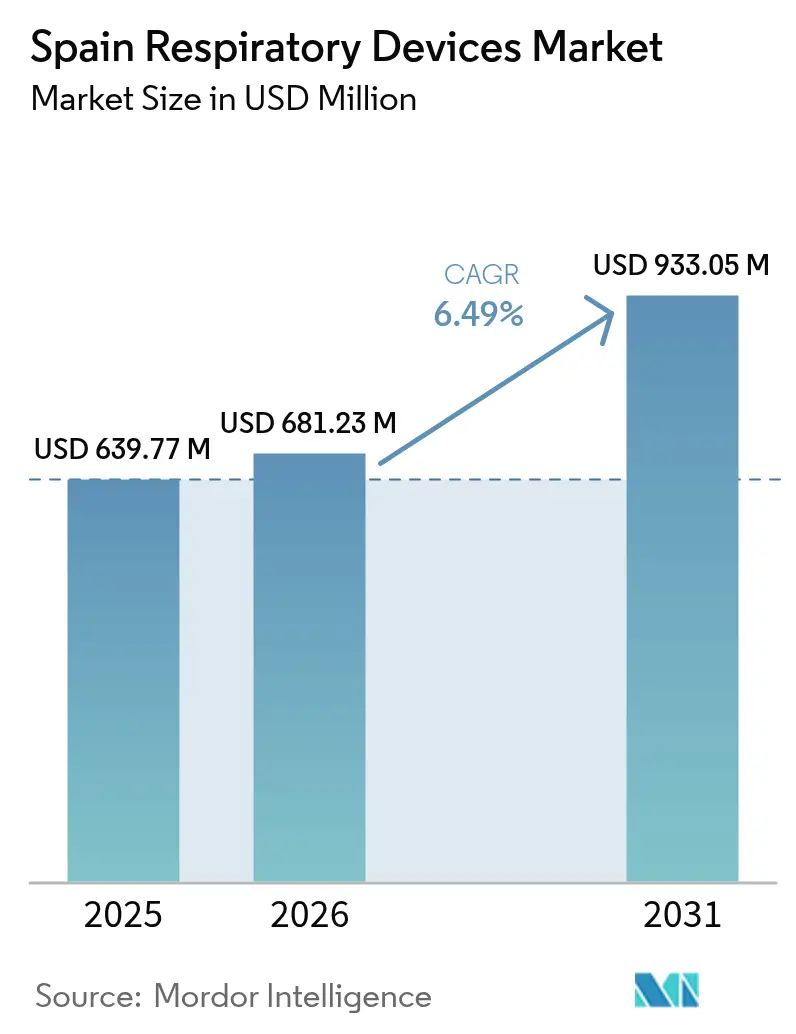
| Base Year Market Size (2025) | USD 639.77 Million |
| Market Size (2026) | USD 681.23 Million |
| Market Size (2031) | USD 933.05 Million |
| Growth Rate (2026 - 2031) | 6.49 % |
| Market Concentration | Medium |
Major Players *Disclaimer: Major Players sorted in no particular order Image © Mordor Intelligence. Reuse requires attribution under CC BY 4.0. | |
Spain Respiratory Devices Market Analysis by Mordor Intelligence
The Spain Respiratory Devices Market size was valued at USD 639.77 million in 2025 and estimated to grow from USD 681.23 million in 2026 to reach USD 933.05 million by 2031, at a CAGR of 6.49% during the forecast period (2026-2031). Robust public health coverage, the rapid expansion of home-based care, and continuous innovation in therapeutic equipment underpin this trajectory. Accelerated population ageing intensifies demand for ventilators and oxygen systems, while a growing burden of chronic obstructive pulmonary disease (COPD) and sleep apnea broadens the addressable patient pool. Government incentives that promote local manufacturing and digital health adoption further support revenue growth. At the same time, heightened regulatory costs, workforce shortages, and stricter environmental rules temper short-term momentum yet encourage scale advantages for established suppliers.
Key Report Takeaways
- By product type, therapeutic devices led with 56.14% revenue share in 2025; diagnostic and monitoring devices are forecast to expand at a 7.54% CAGR through 2031.
- By indication, COPD captured 41.25% of Spain respiratory devices market share in 2025, while sleep apnea is projected to grow at a 7.79% CAGR to 2031.
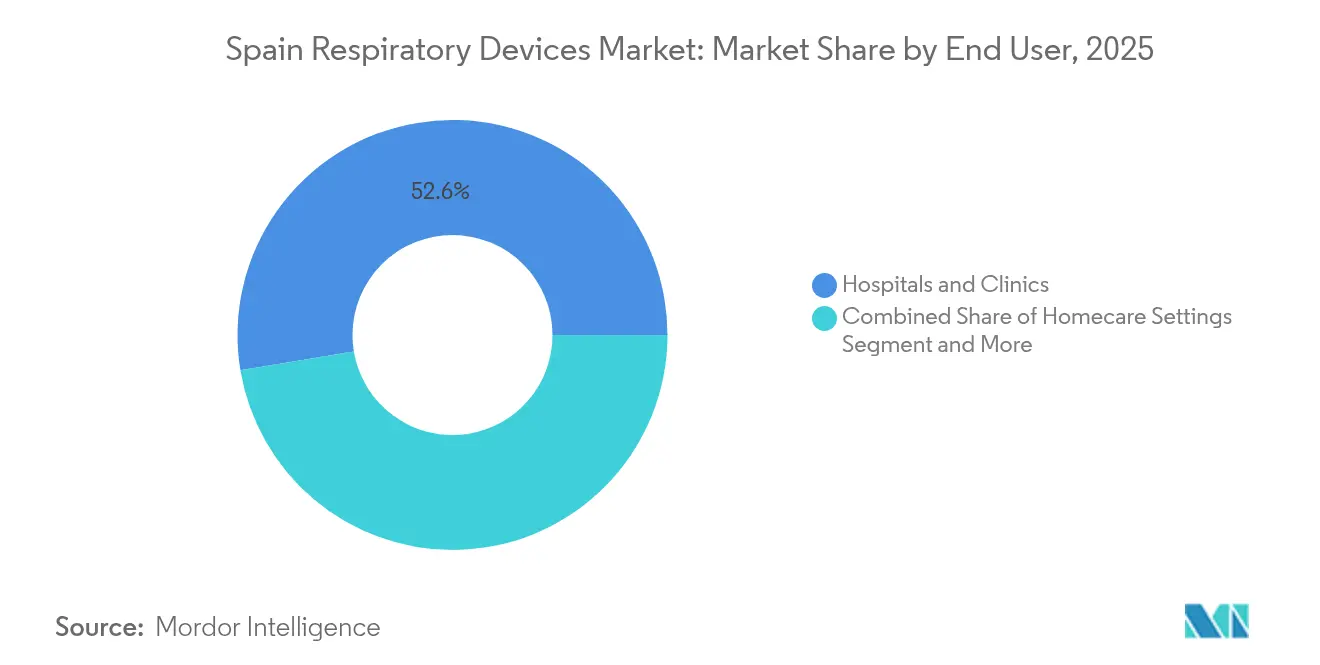
- By end user, hospitals and clinics accounted for 52.62% of the Spain respiratory devices market size in 2025; homecare settings are advancing at an 8.03% CAGR to 2031.
Note: Market size and forecast figures in this report are generated using Mordor Intelligence’s proprietary estimation framework, updated with the latest available data and insights as of 2026.
Spain Respiratory Devices Market Trends and Insights
Drivers Impact Analysis*
| Driver | (~) % Impact on CAGR Forecast | Geographic Relevance | Impact Timeline |
|---|---|---|---|
| Growing Prevalence of COPD, Asthma, TB & Sleep-Apnea | +1.8% | National, concentrated in urban centers | Long term (≥ 4 years) |
| Rapid Ageing of Spain's Population | +1.5% | National, pronounced in rural regions | Long term (≥ 4 years) |
| Expansion of Home-Based Respiratory Care & Tele-Monitoring | +1.2% | National, early adoption in Madrid, Barcelona | Medium term (2-4 years) |
| Surge In E-Cigarette–Related Lung Injuries | +0.8% | National, higher impact in metropolitan areas | Short term (≤ 2 years) |
| Post-COVID Government Incentives for Local Ventilator Output | +0.6% | Regional, focused on Andalusia, Catalonia | Medium term (2-4 years) |
| Adoption of AI-Enabled Predictive Maintenance for Ventilators | +0.4% | National, hospital-centric deployment | Medium term (2-4 years) |
| Source: Mordor Intelligence | |||
Growing Prevalence of COPD, Asthma, Tuberculosis, and Sleep Apnea
COPD affects 11.8% of Spanish adults and drove a 35.9% rise in hospital discharges for respiratory diseases, a pattern that strengthens long-term sales of ventilators, nebulizers, and spirometers. Sleep apnea remains widely underdiagnosed despite affecting nearly half of older adults at elevated dementia risk, creating fresh headroom for positive airway pressure devices and home sleep testing kits. Advances in tuberculosis PCR kits with 100% sensitivity expand demand for portable diagnostic systems in public health laboratories. Together, these epidemiological shifts lengthen device replacement cycles and enlarge the Spain respiratory devices market far beyond acute care settings.
Rapid Ageing of Spain’s Population
The cohort aged 90 years or older swelled 58.29% from 2013 to 2023, reaching 608,321 citizens. An ageing index of 142.35% highlights growing demand for non-invasive ventilation, oxygen concentrators, and airway clearance devices tailored to home use. With single-person households forecast to account for 33.5% of all households by 2039, manufacturers prioritise intuitive interfaces and remote monitoring features that let older adults remain independent. Hospitals already maintain dedicated non-invasive ventilation units in 83% of facilities, signalling sustained procurement for ageing-related disorders.[1] These demographic realities embed structural growth in the Spain respiratory devices market.
Expansion of Home-based Respiratory Care and Tele-monitoring
Universal Health Care legislation approved in 2024 extends device reimbursement to previously ineligible populations, unlocking fresh demand for home ventilation, oxygen therapy, and sleep solutions. Telerehabilitation pilots report high satisfaction among elderly COPD patients, citing enhanced communication and lower travel burden. The European Health Data Space regulation, effective 2027, will standardise data flows and thereby strengthen remote monitoring capabilities nationwide. Subscription-based software services surrounding connected devices create recurring revenue streams and reinforce vendor lock-in across the Spain respiratory devices market.
Surge in e-cigarette-related Lung Injuries
Clinical imaging uncovers significant pulmonary damage from vaping, driving acute need for high-resolution CT scanners, mechanical ventilators, and oxygen therapy systems in emergency departments. The government’s precautionary mask-wearing policy inside hospitals during respiratory illness peaks underscores heightened vigilance over airborne pathogens. The trend enlarges short-cycle sales to acute care units within the Spain respiratory devices market.
Restraints Impact Analysis*
| Restraint | (~) % Impact on CAGR Forecast | Geographic Relevance | Impact Timeline |
|---|---|---|---|
| High Upfront Cost of Advanced Devices | -1.2% | National, acute in public hospitals | Long term (≥ 4 years) |
| EU MDR Compliance Delaying Product Launches | -0.9% | National, affecting all manufacturers | Medium term (2-4 years) |
| Shortage of Respiratory Therapists | -0.7% | National, severe in rural areas | Long term (≥ 4 years) |
| Environmental Curbs on Single-Use Plastics In Disposables | -0.5% | EU-wide, implementation by 2026 | Medium term (2-4 years) |
| Source: Mordor Intelligence | |||
High Upfront Cost of Advanced Devices
Hospitals operate under strict budget ceilings even after recent public-health outlays, causing extended procurement cycles for premium ventilators and AI-enabled monitors. Regional authorities lean on cost-per-quality-adjusted-life-year thresholds that favour proven mid-range products. The Canary Islands’ decision to reduce its IGIC tax on medical devices to zero illustrates how targeted fiscal levers can mitigate affordability constraints. In the absence of nationwide VAT relief, price sensitivity will continue to cap immediate growth in the Spain respiratory devices market.
EU MDR Compliance Delaying Product Launches
Manufacturers must secure extensive clinical evidence and enhance post-market surveillance to satisfy the Medical Device Regulation, extending approval timelines and raising costs. Notified-body bottlenecks create scheduling delays, forcing smaller entities to reprioritise pipelines.[2] Although legacy devices can remain on the market until 2028, new entrants confront heavier administrative burdens, slowing innovation refresh rates across the Spain respiratory devices market.
*Our forecasts treat driver/restraint impacts as directional, not additive. The impact forecasts reflect baseline growth, mix effects, and variable interactions.
Segment Analysis
By Product Type: Therapeutic Devices Anchor Current Leadership
Therapeutic devices accounted for 56.14% of 2025 revenue, reflecting a clinical preference for continuous airway pressure systems, ventilators, and oxygen concentrators. Positive airway pressure innovations such as KPAP enhance comfort and adherence among sleep apnea patients, locking in recurring mask and tubing sales. Ventilator development programs funded under national recovery schemes lower price barriers, further widening penetration. Nebulizers remain critical for COPD management, while portable oxygen systems support growing homecare demand. The Spain respiratory devices market size for therapeutic equipment is projected to rise in tandem with ageing-linked comorbidities.
Diagnostic and monitoring devices hold a smaller base but record the fastest 7.54% CAGR. Connected spirometers, wearable capnographs, and home sleep tests gain popularity amid wider telehealth rollouts. Early diagnosis of respiratory disease lowers hospital admissions, strengthening policy support for screening tools. As a result, diagnostic platforms capture a rising share of the Spain respiratory devices market.


By Indication: COPD Remains Largest; Sleep Apnea Fastest
COPD represented 41.25% of 2025 revenue due to widespread prevalence and chronic management needs. Long-term oxygen therapy, high-frequency chest wall oscillation, and nebulised bronchodilators anchor demand. Spain respiratory devices market share for COPD solutions stays robust as smoking-related morbidity persists.
Sleep apnea is poised for the quickest 7.79% CAGR. Expanded diagnostic capacity using peripheral arterial tonometry and rising public awareness shorten treatment gaps. Positive airway pressure usage gains further momentum following evidence of cognitive benefits in at-risk seniors. Together, these dynamics elevate the Spain respiratory devices market size attached to sleep apnea care.
By End User: Hospitals Dominate Yet Homecare Surges
Hospitals and clinics held 52.62% revenue share in 2025, reflecting Spain’s centralised model and the presence of non-invasive ventilation units in 83% of facilities. Capital budgets prioritise ventilators, anaesthesia circuits, and monitoring platforms that support acute interventions. Homecare settings record the strongest 8.03% CAGR. Universal Health Care implementation extends coverage to migrants and underserved citizens, stimulating prescriptions for portable oxygen concentrators and sleep therapy devices. The Spain respiratory devices market size for domestic use expands as tele-monitoring lowers readmission rates and strengthens adherence.
Long-term care facilities and ambulatory surgical centres round out demand. The rise in minimally invasive procedures boosts single-day throughput and creates incremental needs for short-term ventilation and airway management kits. Simultaneously, long-term institutions equip wards with mobile suction and humidification units to cater to frail elders.
Geography Analysis
Regional disparities shape adoption trends within the unified health-service framework. Madrid and Barcelona lead digital-health usage owing to stronger fibre networks and specialist density. These provinces also pilot early home-ventilation reimbursement schemes, accelerating uptake of connected concentrators and smart inhalers. Andalusia positions itself as a manufacturing hub, evidenced by the locally engineered ResUHUrge ventilator and AI-assisted ECMO projects.
Catalonia showcased adaptability during COVID-19 by re-purposing veterinary ventilators, underscoring regional ingenuity in crisis response. The Canary Islands introduced zero IGIC tax on medical devices to promote affordability, a policy that could gain traction in other autonomous communities.
Rural provinces face sharper therapist shortages and heavier ageing burdens, encouraging uptake of user-friendly home units. Upcoming European Health Data Space rules will harmonise data exchange, smoothing nationwide deployment of tele-respiratory platforms. Overall, the Spain respiratory devices market maintains cohesive growth, yet suppliers benefit from tailoring go-to-market strategies to each region’s demographic and policy landscape.
Regulatory Landscape
Respiratory devices commercialized in Spain follow the EU Medical Device Regulation (EU MDR 2017/745) framework, with the Agencia Espanola de Medicamentos y Productos Sanitarios (AEMPS) acting as the national competent authority. National alignment is reinforced through Real Decreto 192/2023, which sets out Spain-specific obligations for placing products on the market, including conformity documentation, CE marking, and related market notification and post-market responsibilities that affect manufacturers and distributors of ventilators, oxygen therapy equipment, and sleep therapy systems.
For drug-device combination products, suppliers face dual scrutiny. The device component must meet EU MDR safety and performance requirements, while the medicinal component is assessed under pharmaceutical standards, which raises evidence and quality-system demands. In May 2026, Spain published Real Decreto 415/2026 (27 May 2026), establishing a new system for the evaluation of health technologies and separating processes for medicines and non-pharmacological health technologies, creating an anchor for procurement and reimbursement discussions for higher-value respiratory technologies used in hospitals and homecare pathways.
Competitive Landscape
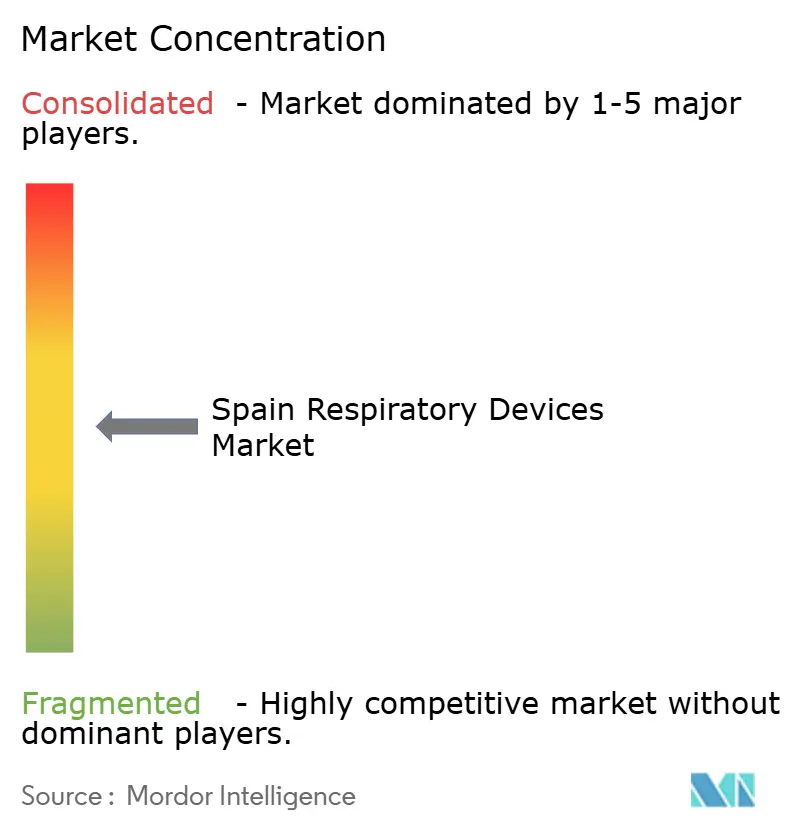
The Spain respiratory devices market remains moderately fragmented. ResMed is posting 10% year-on-year sales growth to USD 1.3 billion in its fiscal Q2 2025, a performance linked to expanding sleep-health portfolios. Philips has produced 95% of replacement units tied to its earlier recall, restoring brand credibility ahead of renewed competition in the sleep device niche. Fisher & Paykel Healthcare, Medtronic, and Hamilton Medical drive innovation in humidification, invasive ventilation, and high-flow nasal therapy.
Domestic innovators gain visibility through targeted grants. Corify Care develops advanced cardiac and respiratory monitoring solutions in Madrid, while Andalusian start-ups leverage regional R&D funding to add AI overlays to ECMO platforms. EU MDR compliance costs and documentation hurdles limit smaller peers, yet those possessing niche expertise in low-cost ventilation or disposable redesign carve out defensible positions.
Strategic moves include ResMed’s allocation of 6-7% revenue to R&D for machine-learning models that predict therapy effectiveness. Fisher & Paykel Healthcare invests in humidification systems optimised for post-operative care, targeting ambulatory centres. Philips pilots remote firmware updates that keep ventilator fleets cyber-secure, reinforcing its value proposition to public hospitals. These initiatives magnify digital ecosystems and foster aftermarket income, safeguarding market leadership.
Spain Respiratory Devices Industry Leaders
-
GE HealthCare
-
Koninklijke Philips N.V.
-
Fisher & Paykel Healthcare Ltd
-
Medtronic plc
-
ResMed
- *Disclaimer: Major Players sorted in no particular order
Market Opportunities and Future Outlook
Spain has room for connected, home-focused respiratory pathways that reduce in-person burden while supporting chronic care, particularly for COPD and sleep apnea management in homecare settings. One visible pull for scaled home respiratory services came in September 2025, when Air Liquide was awarded a five-year contract by the Community of Madrid to deliver home-care respiratory support for 70,000 patients, with telemonitoring and AI-driven predictive algorithms embedded in service delivery. Region-led tendering of this type tends to favor vendors that pair devices (oxygen therapy and ventilation) with software, adherence tools, and service logistics that can meet autonomous-community requirements.
A second opportunity is AI-enabled diagnostics and decision support for complex pulmonary disease. In March 2026, the Ministerio de Ciencia, Innovacion y Universidades transferred the SEPI-IA prototype to University Hospital of Bellvitge, supported by a EUR 5 million PERTE for Vanguard Health grant, to simulate evolution of interstitial lung diseases. Combined with the national Digital Health Strategy and forthcoming data standardization under the European Health Data Space (effective 2027), this supports demand for interoperable diagnostic and monitoring devices, including connected spirometry, home sleep testing, and hospital monitoring platforms, that can integrate into hospital networks and regional digital infrastructures while remaining compliant with AEMPS and EU MDR evidence requirements.
Recent Industry Developments
- March 2026: Philips and Vithas launched an energy sustainability project to power high-tech medical equipment operations across Vithas hospitals in Spain using renewable electricity, stated at 5 million kWh annually. The initiative links equipment lifecycle decisions with decarbonization targets, which can affect how providers assess vendors for installed-base upgrades and service contracts.
- September 2025: Air Liquide secured a five-year contract from the Community of Madrid to provide home-care respiratory support for about 70,000 patients, with telemonitoring and AI-based predictive algorithms highlighted in the service model. The award reinforces the shift toward device-plus-service offerings and raises requirements for logistics, connectivity, and outcomes reporting in regional tenders.
- January 2024: Spain reintroduced mandatory face masks in hospitals amid an increase in respiratory illnesses. The policy move reinforced infection-control priorities in clinical settings, supporting steady demand for respiratory monitoring and hospital-based respiratory care readiness during seasonal peaks.
Research Methodology Framework and Report Scope
Market Definition and Coverage
For this study, the Spain respiratory devices market is defined as the value of medical devices and related consumables used to diagnose, monitor, and treat breathing disorders in Spain, across hospital and home-care settings.
Scope exclusions: We exclude general air-quality products, non-medical consumer wellness gadgets, and pharmaceuticals.
Segmentation Overview
- By Product Type
- Diagnostic & Monitoring Devices
- Spirometers
- Sleep Test Devices
- Peak Flow Meters
- Other Diagnostic & Monitoring Devices
- Therapeutic Devices
- Positive Airway Pressure (PAP) Devices
- Humidifiers
- Nebulizers
- Ventilators
- Inhalers
- Oxygen Concentrators
- Other Therapeutic Devices
- Disposables
- Breathing Circuits
- Masks
- Filters
- Other Disposables
- Diagnostic & Monitoring Devices
- By Indication
- COPD
- Asthma
- Sleep Apnea
- Cystic Fibrosis
- Tuberculosis
- Other Respiratory Disorders
- By End User
- Hospitals and Clinics
- Homecare Settings
- Ambulatory Surgical Centers
- Long-term Care Facilities
Data Sources, Market Sizing, and Validation
Desk Research
Desk research started with mapping the demand base in Spain and the care pathways where respiratory equipment is prescribed and used. We relied on public health statistics and policy signals to anchor the disease burden and utilization trend, then checked how device usage tends to shift between hospital and home settings.
Typical sources included official health statistics and publications such as Spain Ministry of Health releases, OECD health data, Eurostat, WHO respiratory disease indicators, and EUDAMED and EU MDR guidance notes for device regulatory context. We also reviewed company annual reports, investor presentations, and reputable press coverage for product launches and distribution changes, and selectively used a paid company financials and intelligence subscription plus a patent database to sanity-check innovation and supplier activity. The sources listed here are illustrative only, and many other public documents and datasets were also used for data collection, validation, and clarification.
Primary Interviews and Surveys
Primary work focused on validating real-world adoption and pricing logic in Spain, especially across pulmonology clinics, sleep labs, hospital procurement teams, home-care providers, and distributors. Expert feedback was used to align device mix shifts (for example, PAP therapy versus oxygen therapy versus monitoring) with reimbursement behavior and patient follow-up patterns, which then helped close gaps left by public datasets.
Distribution of primary research fieldwork respondents
| Company type | Respondent position |
|---|---|
| Top tier: 35% | CXOs: 13% |
| Mid tier: 50% | Functional/Unit leaders: 27% |
| Smaller Players: 15% | Managers: 60% |
Market-Sizing & Forecasting
Sizing was built using a top-down approach where the treated and monitored patient pool in Spain is reconstructed through prevalence and diagnosis indicators, then translated into device demand using utilization rates by care setting. To keep the totals realistic, we corroborated the outputs with selective bottom-up approximations, such as sampled average selling price (ASP) times unit volumes for key device groups and channel checks with distributors and home-care providers.
Inputs that mattered most included COPD and sleep apnea diagnosis patterns, hospital respiratory admissions and ICU capacity signals, home oxygen therapy penetration, PAP device replacement cycles, and disposable consumption rates tied to active therapy users. Where public time series had breaks (for example, post-pandemic normalization), missing points were handled through conservative interpolation, then rechecked with interview feedback.
Forecasts were produced using scenario analysis supported by short trend models on core drivers, followed by expert alignment on how reimbursement, aging demographics, and home-care expansion could change device mix and ASP progression over the period.
Data Validation & Update Cycle
Model outputs were tested against independent signals, including import and distribution momentum described in public disclosures, utilization direction from health statistics, and the expected mix between hospital equipment and home-care therapies. Outliers were reviewed in multiple steps, with assumptions revisited when a number looked inconsistent with the underlying patient pool or observed ASP ranges.
Reports are refreshed annually, and interim updates are triggered when material events occur, such as regulatory changes, reimbursement adjustments, or sharp shifts in demand for ventilation or oxygen systems. Before delivery, an analyst does a fresh pass on key inputs and conversions so clients receive the latest updated view.
Mordor Intelligence's Spain Respiratory Devices Market Sizing Compared With Other Published Estimates
Published market values for Spain respiratory devices can look far apart because inclusion rules are not always consistent, and because the mix between durable equipment and high-velocity disposables is treated differently. Differences also show up when one estimate is anchored to diagnosed patients, while another leans more on shipment proxies or broad industry revenue pools.
In this study, the main gap driver is scope handling of consumables and the device mix, where some estimates fold in a wider set of respiratory care supplies, or count general hospital consumables beyond active respiratory therapies, which changes the total, a modeling choice applied by Mordor Intelligence.
Benchmark comparison
| Source | Market Size | Gaps in Research Methodology |
|---|---|---|
| Mordor Intelligence | USD 639.77 M (2025) | |
| Industry Publisher A | USD 430.00 M (2025) | Uses a narrower counted value pool that appears to underweight hospital-side equipment and parts of the disposable attach rate, which can pull down totals even when therapy volumes are rising. |
| Market Research Publisher B | USD 1.42 B (2024) | Likely applies a broader respiratory care definition and a different base-year conversion, which can inflate the figure if adjacent supplies or wider medical device revenues are included and then projected forward. |
The spread in the table mainly comes from what gets counted as respiratory-related revenue in Spain and how quickly disposables are scaled with active therapy users. By keeping the demand pool tied to treated and monitored patients, then checking totals with ASP and channel feedback, the resulting market size stays easier to trace and repeat year to year.
Key Questions Answered in the Report
What is the current value of the Spain respiratory devices market?
Spain respiratory devices market size is USD 681.23 million in 2026.
How fast will the market grow through 2031?
The market is forecast to post a 6.49% CAGR between 2026 and 2031.
Which product category leads revenue?
Therapeutic devices hold 56.14% of 2025 revenue owing to high adoption of ventilators and positive airway pressure systems.
Why is homecare the fastest-growing end-user segment?
Universal Health Care coverage, tele-monitoring advances, and an ageing population fuel an 8.03% CAGR for homecare demand.
What regulatory shifts most affect suppliers?
EU MDR compliance prolongs product launches and raises documentation costs, while EU packaging rules force redesign of single-use disposables.