
Market Overview
| Study Period | 2021 - 2032 |
|---|---|
| Forecast Data Period | 2027 - 2032 |
| Historical Data Period | 2021 - 2025 |
| Base Year Market Size (2026) | USD 1.22 Billion |
| Market Size (2027) | USD 1.30 Billion |
| Market Size (2032) | USD 1.82 Billion |
| Growth Rate (2027 - 2032) | 6.88 % |
Major Players *Disclaimer: Major Players sorted in no particular order Image © Mordor Intelligence. Reuse requires attribution under CC BY 4.0. | |
South Korea Patient Monitoring Market Analysis by Mordor Intelligence
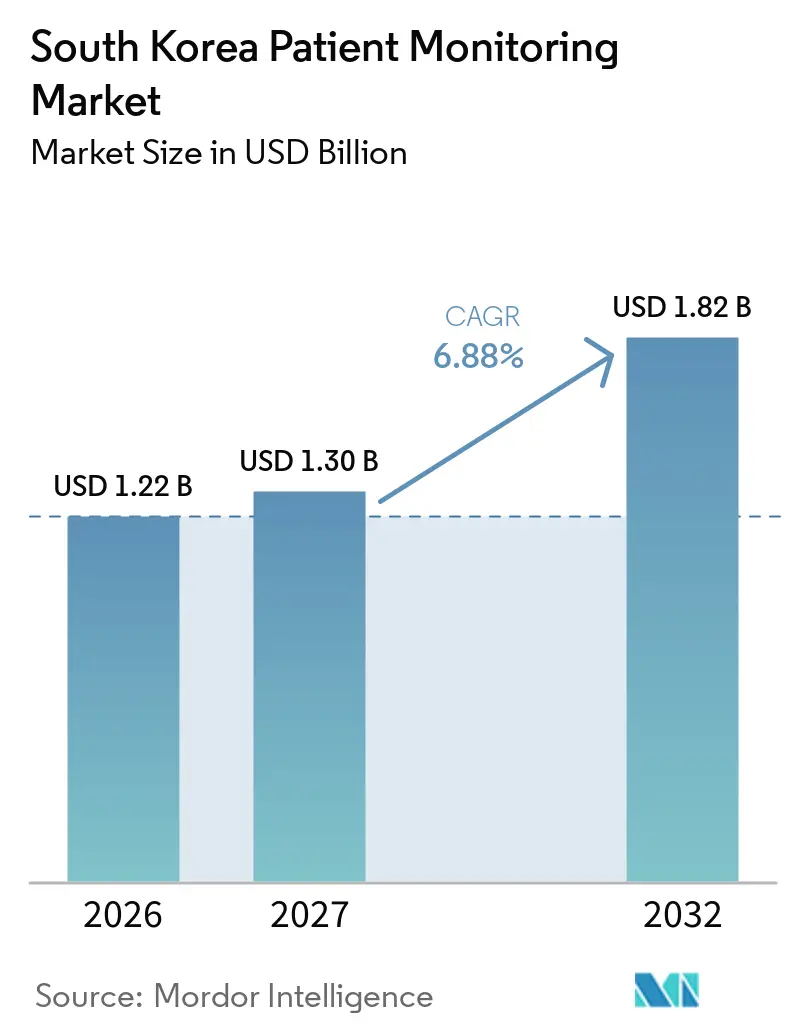
The South Korea Patient Monitoring Market size was valued at USD 1.22 billion in 2026 and is estimated to grow from USD 1.30 billion in 2027 to reach USD 1.82 billion by 2032, at a CAGR of 6.88% during the forecast period (2027-2032).
The COVID-19 pandemic had a substantial influence on the growth of the studied market. During this period, demand for wearable and patient monitoring devices rose, as these technologies enabled contactless interaction and allowed clinicians to remotely assess patients’ health conditions. Healthcare providers could use remote tracking of vital parameters, including skin and body temperature, respiratory rate, pulse rate, heart rate, and blood oxygen saturation, to support the early identification and diagnosis of COVID-19. These developments supported the growth of the studied market.
Market growth is primarily driven by the increasing prevalence of chronic diseases associated with lifestyle changes and the growing preference for home-based patient monitoring. The rising incidence of chronic conditions, such as cardiovascular diseases, cancer, diabetes, and neurodegenerative disorders, is likely to increase the need for patient monitoring systems, supporting market expansion. For example, the study titled “Health-economic burden of dementia in South Korea,” published in October 2021, reported that the clinically diagnosed prevalence of dementia among people aged 65 years and older rose from 5.9% to 7.3%. The study estimated that Korea had approximately 588,000 elderly individuals with dementia. As the elderly population expands, the dementia burden in Korea is expected to rise considerably, potentially increasing demand for patient monitoring devices, including blood pressure monitors and temperature monitoring devices. This trend is expected to support market growth in the country.
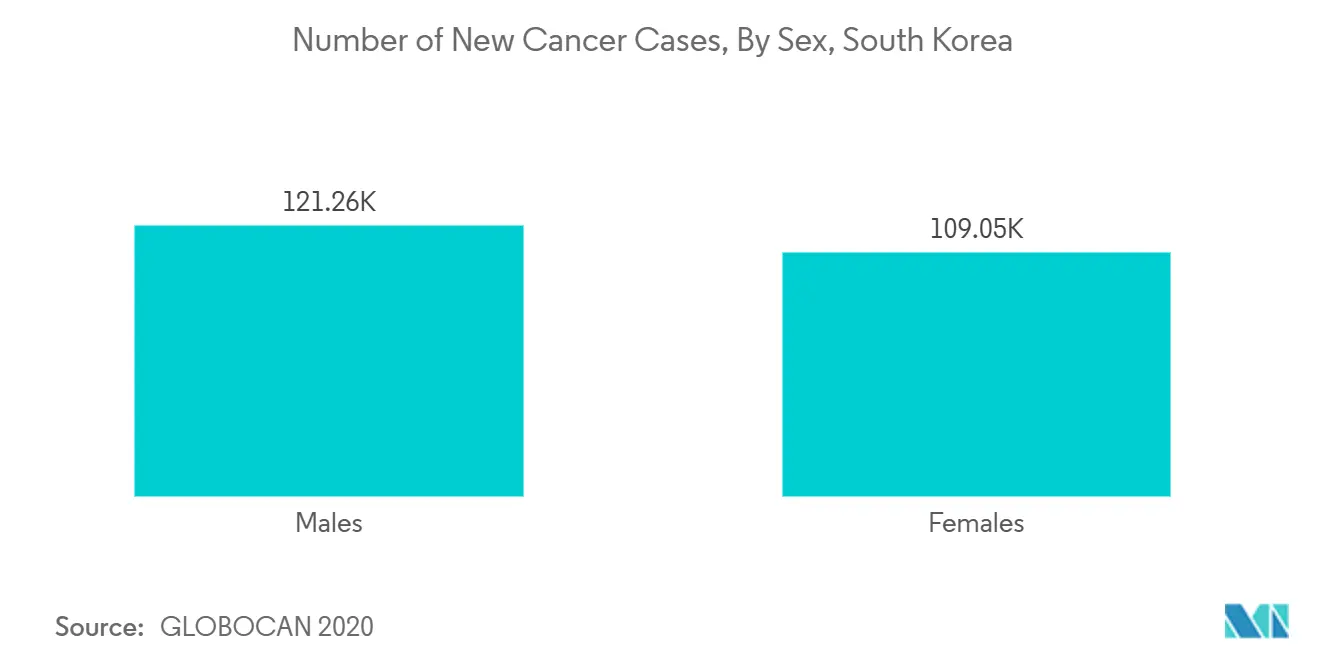
Further, GLOBOCAN reported approximately 230,317 new cancer cases in South Korea in 2020. These included 28,713 new stomach cancer cases, 28,651 prostate cancer cases, and 25,814 breast cancer cases. The increasing cancer burden is expected to encourage the use of regular monitoring devices among the population, thereby contributing to market growth.
The expanding geriatric population also supports the growth of the studied market. According to 2022 statistics from the United Nations Population Fund, people aged 15–64 years represented 71% of South Korea’s population in 2022, while those aged 65 years and above accounted for 17%. The elderly population faces a higher risk of chronic diseases and requires consistent monitoring and diagnosis. Therefore, the use of monitoring devices to assess health conditions regularly is expected to increase, driving the growth of the studied market.
Moreover, companies are increasingly focusing on the development of advanced patient monitoring solutions, which supports market growth. For instance, in April 2021, Dongwoon Anatech developed D-SaLife, a saliva-based glucose monitoring device. The device applies microcurrent control technology to measure glucose levels in saliva samples. However, the high cost of the technology is expected to restrain market growth during the forecast period.
Note: Market numbers in this report are based on Mordor Intelligence's proprietary estimation framework, which combines nine months of actuals with Q4 projections for base year 2026.
South Korea Patient Monitoring Market Trends and Insights
Remote Patient Monitoring Devices Segment Expects to Register a High CAGR in the South Korea Patient Monitoring Market Over the Forecast Period
The increasing prevalence of chronic conditions, coupled with the growth of the elderly population, is driving demand for remote patient monitoring devices. Diabetes-related elevated blood glucose levels can impair the nerves responsible for regulating the heart and blood vessels, thereby increasing the likelihood of cardiovascular disorders, including coronary artery disease and stroke, which may result in narrowed arteries. According to the International Diabetes Federation Diabetes Atlas, 10th edition (2021), released in 2022, South Korea had 3,511.8 thousand people living with diabetes in 2021. The source estimates that this population will increase to 3,934.2 thousand by 2030. Consequently, the projected rise in the number of individuals with diabetes is likely to boost demand for remote patient monitoring devices and encourage the uptake of wearable devices because of their user-friendly nature.
Furthermore, RPM supports the effective management of chronic conditions by tracking key health parameters, including glucose levels and blood pressure. It provides several advantages for end users and hospitals, such as reduced healthcare expenses, shorter hospital stays, and fewer physician visits. In turn, these benefits can lower the overall costs associated with chronic disease treatment.
Additionally, growing company initiatives and product introductions are anticipated to support market growth during the forecast period. For example, in November 2021, Sky Labs, a South Korean healthcare startup, introduced CART-I (Cardio Tracker) in the United Kingdom. This wearable, ring-shaped heart rhythm monitoring device is designed to identify atrial fibrillation (AF) and help prevent cardiovascular complications. Similarly, in June 2020, Samsung introduced its Health Monitoring Application in South Korea, offering blood pressure monitoring and ECG-tracking functionalities. Therefore, these factors are expected to contribute to the growth of the remote patient monitoring segment in Germany over the forecast period.
Competitive Landscape
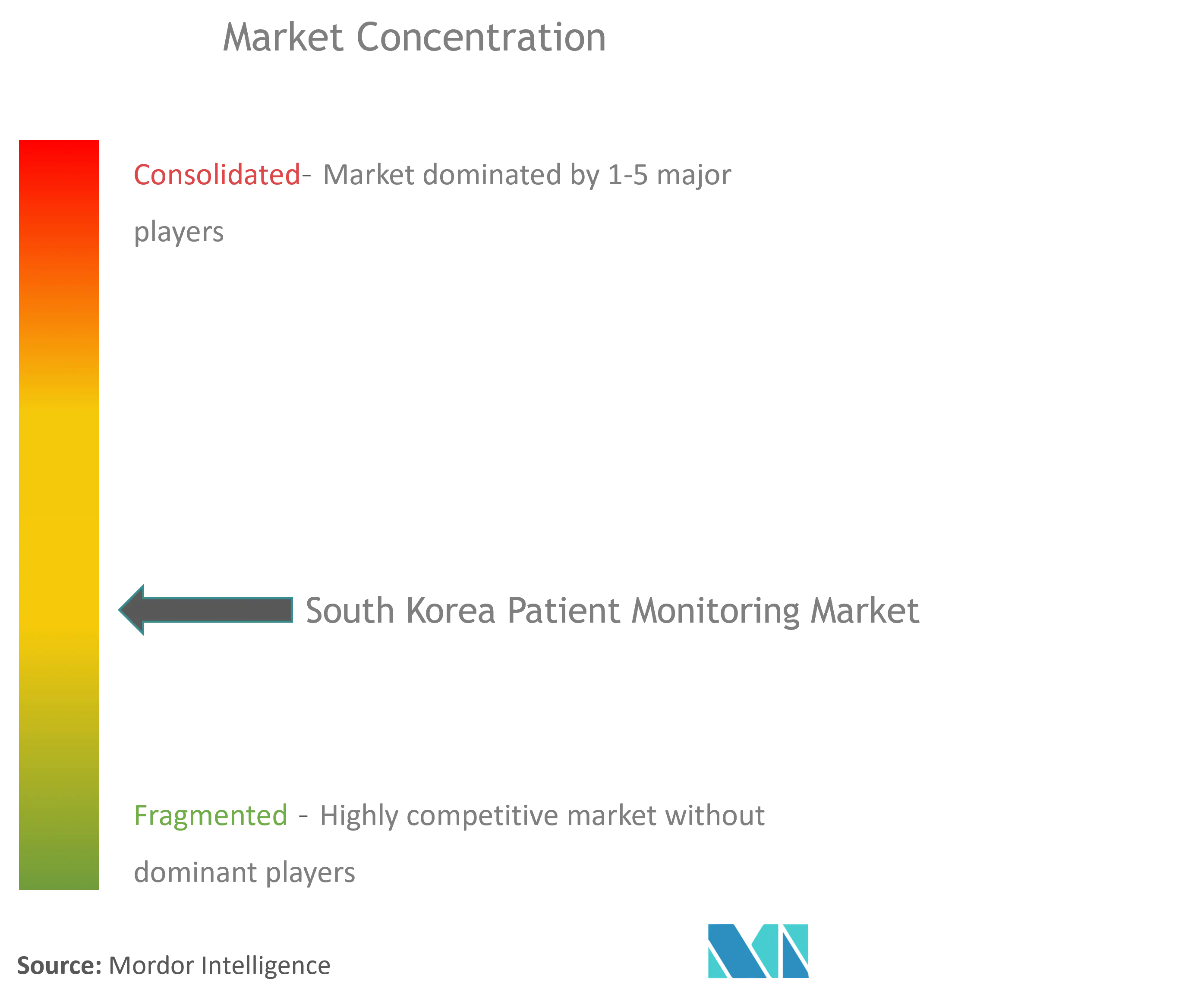
The South Korea patient monitoring market is fragmented with the presence of a large number of players. The companies are implementing certain strategic initiatives, such as mergers, new product launches, acquisitions, and partnerships that help in strengthening their market positions. Some of the market players in the market are General Electric Company (GE Healthcare), Nihon Kohden Corporation, Koninklijke Philips N.V., Dragerwerk AG & Co. KGaA, Abbott Laboratories, Medtronic Plc, Edwards Lifesciences Corporation, OMRON Corporation, and others.
South Korea Patient Monitoring Industry Leaders
-
Nihon Kohden Corporation
-
Abbott Laboratories
-
Dragerwerk AG & Co. KGaA
-
Koninklijke Philips N.V.
-
General Electric Company (GE Healthcare)
- *Disclaimer: Major Players sorted in no particular order
Recent Industry Developments
- August 2022: the South Korean Ministry of Food and Drug Safety granted clearance to VUNO, a medical artificial intelligence company, for its ECG device, Hativ Pro, a portable medical device that measures a user's heart rate and sends this data through a connected mobile phone app.
- August 2022: researchers at the Korea Advanced Institute of Science and Technology (KAIST) developed an electronic tattoo ink made of liquid metal and carbon nanotubes that functions as a bioelectrode. The tattoo is hooked up to an electrocardiogram (ECG) device or another biosensor, that can send a readout of a patient's heart rate and other vital signs such as glucose and lactate to a monitor.
South Korea Patient Monitoring Market Report Scope
As per the scope of this report, patient monitoring devices are monitoring devices that continuously monitor the patient's vital parameters, like blood pressure and heart rates, by using a medical monitor and collecting medical (and other) data from individuals. The South Korea Patient Monitoring Market is segmented by Type of Device (Hemodynamic Monitoring Devices, Neuromonitoring Devices, Cardiac Monitoring Devices, Multi-parameter Monitors, Respiratory Monitoring Devices, Remote Patient Monitoring Devices, and Other Types of Devices), Application (Cardiology, Neurology, Respiratory, Fetal and Neonatal, Weight Management and Fitness Monitoring, and Other Applications), End User (Home Healthcare, Hospitals and Clinics and Other End Users). The report offers the value (in USD million) for the above segments.
By Type of Device
| Hemodynamic Monitoring Devices |
| Neuromonitoring Devices |
| Cardiac Monitoring Devices |
| Multi-parameter Monitors |
| Respiratory Monitoring Devices |
| Remote Patient Monitoring Devices |
| Other Types of Devices |
By Application
| Cardiology |
| Neurology |
| Respiratory |
| Fetal and Neonatal |
| Weight Management and Fitness Monitoring |
| Other Applications |
By End Users
| Home Healthcare |
| Hospitals and Clinics |
| Other End Users |
| By Type of Device | Hemodynamic Monitoring Devices |
| Neuromonitoring Devices | |
| Cardiac Monitoring Devices | |
| Multi-parameter Monitors | |
| Respiratory Monitoring Devices | |
| Remote Patient Monitoring Devices | |
| Other Types of Devices | |
| By Application | Cardiology |
| Neurology | |
| Respiratory | |
| Fetal and Neonatal | |
| Weight Management and Fitness Monitoring | |
| Other Applications | |
| By End Users | Home Healthcare |
| Hospitals and Clinics | |
| Other End Users |
Key Questions Answered in the Report
How big is the South Korea Patient Monitoring Market?
The South Korea Patient Monitoring Market size is expected to reach USD 1.30 billion in 2027 and grow at a CAGR of 6.88% to reach USD 1.82 billion by 2032.
What is the current South Korea Patient Monitoring Market size?
In 2026, the South Korea Patient Monitoring Market size is expected to reach USD 1.22 billion.
Who are the key players in South Korea Patient Monitoring Market?
Nihon Kohden Corporation, Abbott Laboratories, Dragerwerk AG & Co. KGaA, Koninklijke Philips N.V. and General Electric Company (GE Healthcare) are the major companies operating in the South Korea Patient Monitoring Market.
What years does this South Korea Patient Monitoring Market cover, and what was the market size in 2025?
In 2025, the South Korea Patient Monitoring Market size was estimated at USD 1.14 billion. The report covers the South Korea Patient Monitoring Market historical market size for years: 2021, 2022, 2023, 2024, 2025, and 2026. The report also forecasts the South Korea Patient Monitoring Market size for years: 2027, 2028, 2029 2030, 2031, and 2032.