
South America Cat Food Market Size and Share
Market Overview
| Study Period | 2022 - 2032 |
|---|---|
| Forecast Data Period | 2027 - 2032 |
| Base Year Market Size (2026) | USD 3.65 Billion |
| Market Size (2027) | USD 3.96 Billion |
| Market Size (2032) | USD 5.99 Billion |
| Growth Rate (2027 - 2032) | 8.63 % |
| Market Concentration | Medium |
Major Players *Disclaimer: Major Players sorted in no particular order Image © Mordor Intelligence. Reuse requires attribution under CC BY 4.0. | |
South America Cat Food Market Analysis by Mordor Intelligence
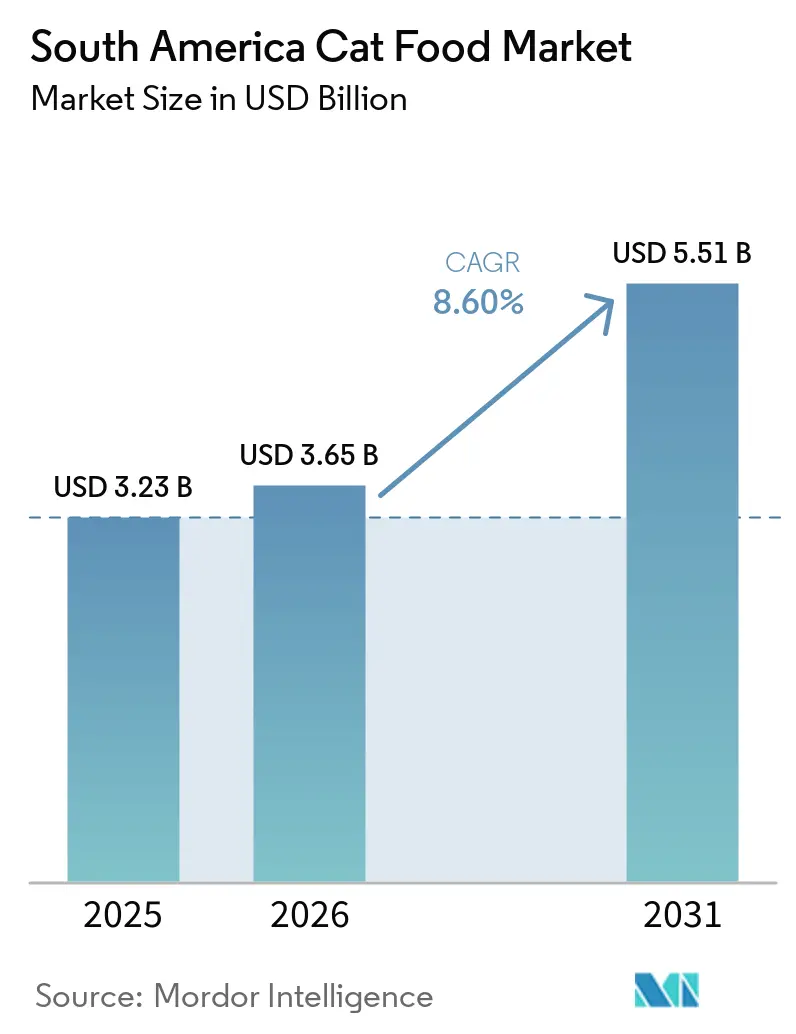
The South America cat food market size was valued at USD 3.65 billion in 2026 and is forecast to grow from USD 3.96 billion in 2027 to USD 5.99 billion by 2032, at a CAGR of 8.63% from 2027 to 2032. Rising urban cat ownership is supporting regular demand for prepared feline diets across the region. Premium wet food, functional nutrition, and veterinary diets are increasing the value generated per household that adopts commercial feeding. Digital commerce is expanding access to premium products beyond the largest metropolitan areas. Brazil remains the region's primary production center, while Argentina is projected to record the strongest growth rate. The market also faces constraints related to protein costs, currency fluctuations, taxation, and cold-chain infrastructure, which can slow adoption of imported and high-moisture products.
Key Report Takeaways
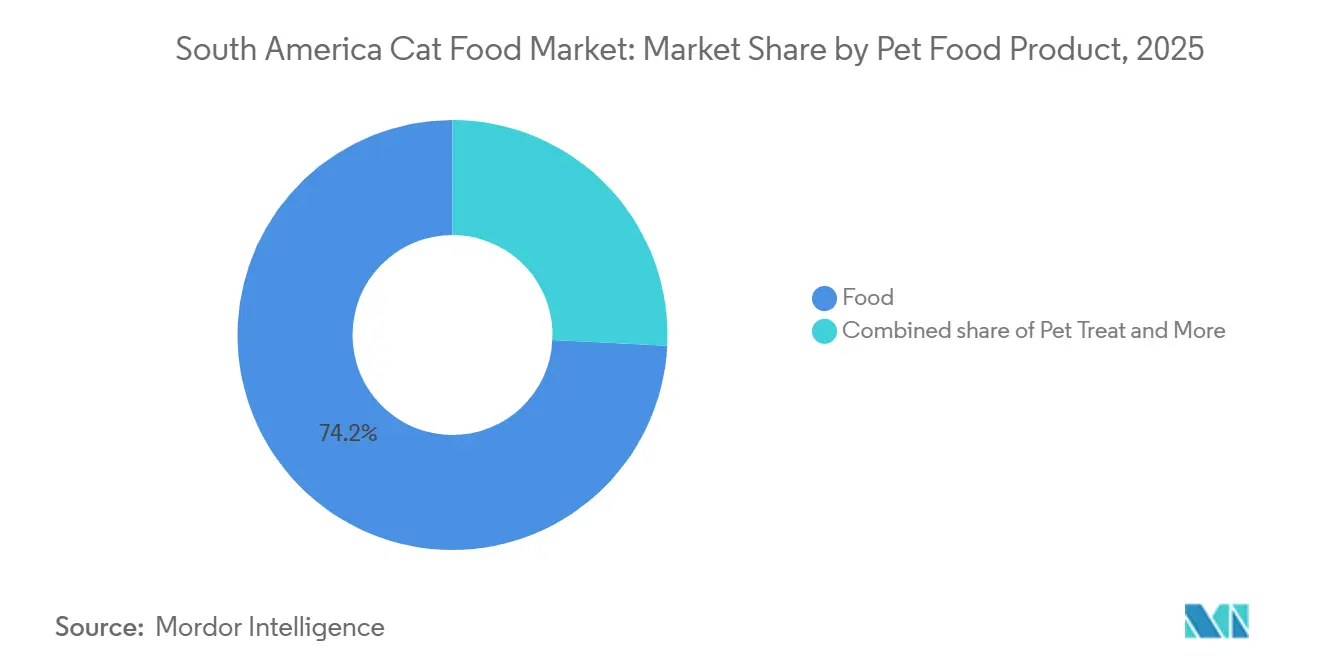
- By pet food product, Food accounted for 74.2% of the South America cat food market share in 2026, while Pet Treats are forecast to grow at a CAGR of 9.6% from 2027 to 2032.
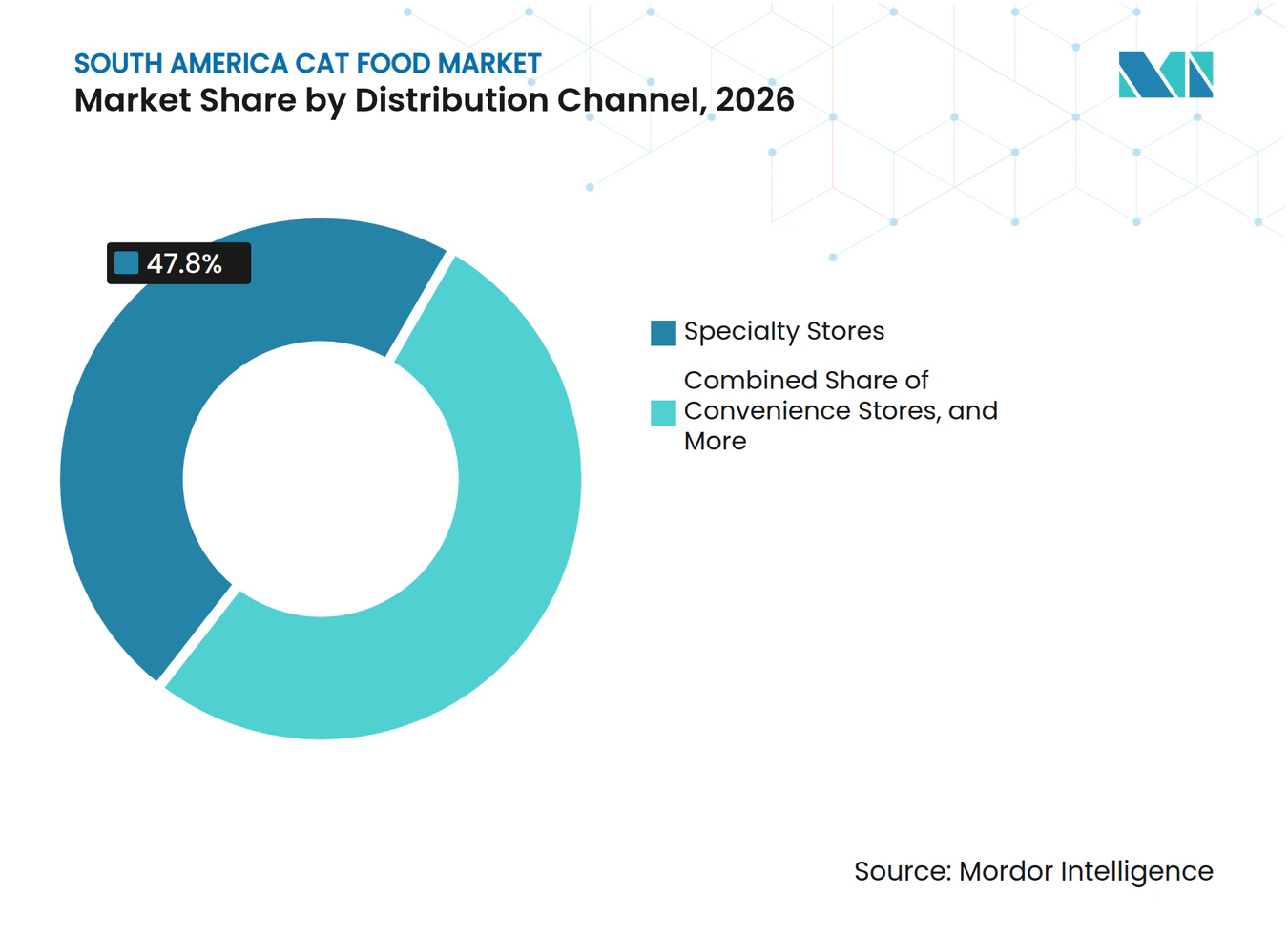
- By distribution channel, Specialty Stores accounted for 47.8% of the South America cat food market size in 2026, while the Online Channel is forecast to grow at a CAGR of 9.3% from 2027 to 2032.
- By geography, Brazil accounted for 60.0% of the market in 2026, while Argentina is forecast to grow at a CAGR of 11.2% from 2027 to 2032.
Note: Market numbers in this report are based on Mordor Intelligence's proprietary estimation framework, which combines nine months of actuals with Q4 projections for base year 2026.
Market Trends and Insights
Drivers Impact Analysis of South America Cat Food Market*
| Driver | (~) % Impact on CAGR Forecast | Geographic Relevance | Impact Timeline |
|---|---|---|---|
| Rising Cat Ownership in Urban Households | +2.0% | Brazil, Argentina, Chile, Colombia urban metros | Medium term (2-4 years) |
| Premiumization of Wet and Functional Cat Food | +1.8% | Brazil, Argentina, Chile | Medium term (2-4 years) |
| E-Commerce and Subscription Reordering | +1.5% | Argentina, Brazil, Chile, Colombia | Short term (≤ 2 years) |
| Expansion of Specialty Pet Retail and Veterinary Influence | +1.2% | Brazil and Argentina, especially São Paulo and Buenos Aires | Medium term (2-4 years) |
| Pet Food Manufacturing and Export Capacity in Brazil | +0.9% | Brazil and wider South America | Short term (≤ 2 years) |
| Underpenetrated Prepared-Food Adoption in Secondary Cities | +0.7% | Brazil, Argentina, Colombia, and Peru secondary cities | Long term (≥ 4 years) |
| Source: Mordor Intelligence | |||
Rising Cat Ownership in Urban Households
South America's urban population accounts for 82% of the regional total, supporting apartment living and a preference for cats in densely populated areas[1]. Cats are suited to smaller living spaces and are generally perceived as requiring less day-to-day maintenance than larger pets, making them a practical choice for households with limited space. The same urban shift encourages households to choose packaged nutrition that is easy to store, portion, and serve during busy workdays. The USDA FAS documented an 8% increase in cat ownership and a 7% increase in cat food purchases linked to apartment living across South America and the Caribbean. In Peru, the 2025 National Household Survey (Encuesta Nacional de Hogares, ENAHO) recorded cats in 33% of households, showing a sizable base of potential prepared-food buyers. The South America cat food market benefits when these households replace homemade feeding with diets designed for feline nutrition, supported by convenient retail access.
Premiumization of Wet and Functional Cat Food
Premiumization is reshaping the South America cat food market as consumers increasingly consider products beyond standard dry food. Cat owners are showing greater interest in wet food, high-protein diets, and formulas tailored to life stages and specific nutritional needs. Products targeting urinary tract health, digestive sensitivity, weight management, and renal support address specialized feeding requirements and can command higher prices than standard cat food. This shift creates opportunities for manufacturers to expand premium product portfolios and strengthen their presence in specialized retail channels. However, wet food production and distribution require appropriate processing capabilities, packaging, and logistics to maintain product quality across regional markets. As consumers place greater emphasis on product quality and targeted nutrition, premium wet and functional cat food is likely to support value growth in the South America cat food market.
E-Commerce and Subscription Reordering
E-commerce is expanding access to cat food products across South America, particularly in areas with limited access to specialty pet stores and veterinary-oriented product ranges. MercadoLibre reported 25% year-on-year growth in commerce users across the region in 2025, widening the potential customer base for online pet food sellers[2]. Online platforms offer a broad selection of products, including premium, veterinary, and life-stage formulas that may not be readily available through local retailers. Subscription services and repeat-ordering features simplify routine purchases of dry food, wet pouches, and specialized diets while supporting more predictable replenishment. For manufacturers and retailers, digital channels provide an additional route to reach consumers in secondary cities without relying entirely on physical store expansion. The continued development of online retail and convenient reordering options is likely to support cat food sales across South America.
Expansion of Specialty Pet Retail and Veterinary Influence
Specialty pet stores and veterinary clinics play an important role in guiding cat owners toward premium and health-oriented diets across South America. These outlets offer a variety of products, staff guidance, and specialized retail services that help consumers navigate different nutritional options. Veterinary diets often require additional guidance because they address specific nutritional needs related to urinary tract health, digestion, renal function, and weight management. In Brazil, veterinary clinics and animal hospitals accounted for 17.5% of the pet sector's total turnover, underscoring the commercial relevance of health-oriented pet services[3]. These channels provide manufacturers with opportunities to improve product visibility and reach cat owners seeking specialized nutritional solutions. As demand for premium and therapeutic diets develops, specialty retail networks and veterinary recommendations are likely to support sales of higher-value cat food products across the region.
Restraints Impact Analysis of South America Cat Food Market*
| Restraint | (~) % Impact on CAGR Forecast | Geographic Relevance | Impact Timeline |
|---|---|---|---|
| Raw-Material and Protein-Cost Volatility | -1.8% | South America-wide | Short term (≤ 2 years) |
| Import Duties, Taxes, and Currency Depreciation | -1.4% | Argentina and Brazil primarily, Chile and Colombia moderately | Medium term (2-4 years) |
| Cold-Chain and Last-Mile Gaps for Wet Food | -1.0% | Rest of South America and secondary cities in Brazil and Argentina | Long term (≥ 4 years) |
| Informal Retail and Trade-Down Risk | -0.7% | Brazil, Colombia, and Peru secondary markets | Long term (≥ 4 years) |
| Source: Mordor Intelligence | |||
Raw-Material and Protein-Cost Volatility
Meat proteins, fish meal, grains, vegetable oils, and other ingredients influence cat food manufacturing costs across South America. In Brazil, the price of a 60 kg sack of corn reached its highest nominal level since early 2022 in March 2025, according to Center for Advanced Studies in Applied Economics (CEPEA) data. Higher corn prices can increase ingredient costs for pet food manufacturers, while fluctuations in animal-protein prices can add further pressure to production margins. Manufacturers may respond by reformulating products, absorbing additional costs, or increasing retail prices, potentially affecting affordability and demand for premium and high-protein cat food. Persistent raw-material price volatility can therefore constrain profitability and premium cat food adoption in the South America cat food market.
Import Duties, Taxes, and Currency Depreciation
Import duties, regulatory fees, and currency depreciation increase the cost of imported ingredients and finished cat food products across South America, particularly for premium diets that rely on specialized proteins or imported inputs. Argentina’s Resolución SAGyP 135/2026 placed food import oversight under the National Service for Agri-Food Health and Quality (SENASA) and applies registration fees of 1.25% to 1.50% of FOB value per product and shipment. Currency depreciation can further increase the local cost of imported raw materials and finished products purchased in foreign currencies. These additional costs may require importers and manufacturers to raise selling prices or absorb lower margins, reducing the price competitiveness of imported brands. Consequently, import-related costs and exchange-rate fluctuations can constrain the affordability of premium cat food and slow market adoption across South America.
*Our forecasts treat driver/restraint impacts as directional, not additive. The impact forecasts reflect baseline growth, mix effects, and variable interactions.
South America Cat Food Market Segment Analysis
By Pet Food Product:
Food Leads the Market, While Pet Treats Record the Fastest GrowthFood accounted for 74.2% of the South America cat food market share in 2026, supported by the daily feeding requirement and the relative affordability of dry kibble. Dry food, especially kibble, remains the core volume format due to its convenience and wide availability. Wet food is gaining attention as suppliers develop local high-moisture production and consumers seek more varied feeding routines. A greater wet-food mix can increase revenue per kilogram even when overall food volumes remain stable. This makes portfolio balance important for suppliers serving both routine and premium feeding needs.
Pet treats are forecast to grow at a CAGR of 9.6% from 2027 to 2032, the fastest rate among product categories. Treats benefit from cat humanization and from household willingness to spend on products beyond core nutrition. Nutraceuticals and supplements support targeted needs through omega-3 fatty acids, probiotics, vitamins, minerals, proteins, peptides, milk bioactives, and related formulations. Veterinary diets address urinary, renal, digestive, diabetes, obesity, dermatological, and oral-care needs. The South America cat food market can build value through health-focused formats where purchase decisions increasingly reflect veterinary advice and defined feeding outcomes.



By Distribution Channel:
Specialty Stores Lead, While the Online Channel Records the Fastest GrowthSpecialty stores accounted for 47.8% of the South America cat food market size in 2026, supported by their ability to serve premium diets and more specialized product requirements. Trained staff, veterinary consultation services, and a broader premium range can differentiate these outlets from mass retailers. Supermarkets and hypermarkets remain important for mainstream and economy kibble, particularly where specialty stores are less dense. Convenience stores are mainly used for immediate replenishment, single-serve wet pouches, and small treat packs. These physical channels serve different needs, ranging from routine purchases to specialist advice.
The online channel is forecast to grow at a CAGR of 9.3% from 2027 to 2032. Digital platforms can make extended product ranges available to customers outside major specialty retail networks. MercadoLibre’s regional user growth supports a larger online audience for these products. Online ordering is particularly useful for recurring purchases and for households seeking veterinary or premium products unavailable locally. The South America cat food industry can use digital channels to bridge physical distribution gaps in cities where store coverage remains limited.

Geography Analysis
Brazil Cat Food Market
Brazil accounted for 60% of the South America cat food market share in 2026, reflecting its position as the region’s largest economy and a major pet food producer. Its production base supports domestic supply and exports to other South American countries. Installed pet food manufacturing capacity exceeded 9 million metric tons annually. Small and medium pet shops generated BRL 37.49 billion (USD 6.9 billion) in 2025, showing the depth of specialized retail in Brazil. In 2025, ANVISA began accepting supporting documentation from equivalent foreign authorities for food-related petitions, which can shorten the review path for novel functional ingredient applications.
Argentina Cat Food Market
Argentina is forecast to grow at a CAGR of 11.2% from 2027 to 2032, the fastest rate among countries in the South America cat food market. High pet ownership and developed digital purchasing behavior support demand for premium and online-oriented offerings. The concentration of specialty retail in greater Buenos Aires makes online platforms important for consumers in Rosario, Córdoba, and Mendoza. Argentina’s Decreto 697/2026 placed food safety control under SENASA. A single authority may simplify compliance over time for companies handling standard food and veterinary diet registrations.
Andean and Southern Cone Cat Food Market
The Rest of South America includes Chile, Colombia, Peru, Uruguay, and other markets where specialty retail and disposable income are expanding. Peru’s ENAHO 2025 survey found that cats were present in 33% of households, with urban consumers in Lima showing greater engagement with premium offerings. Chile is becoming more important as a destination for Brazilian-made cat food and as a developing specialty market. U.S. dog and cat food imports into Peru reached USD 48 million in 2024, up 11% from 2023. Peru does not apply Brazil's luxury-category import tariffs on prepared pet food, which can support imported prepared pet food availability in the Peruvian market.
Competitive Landscape
Market Concentration
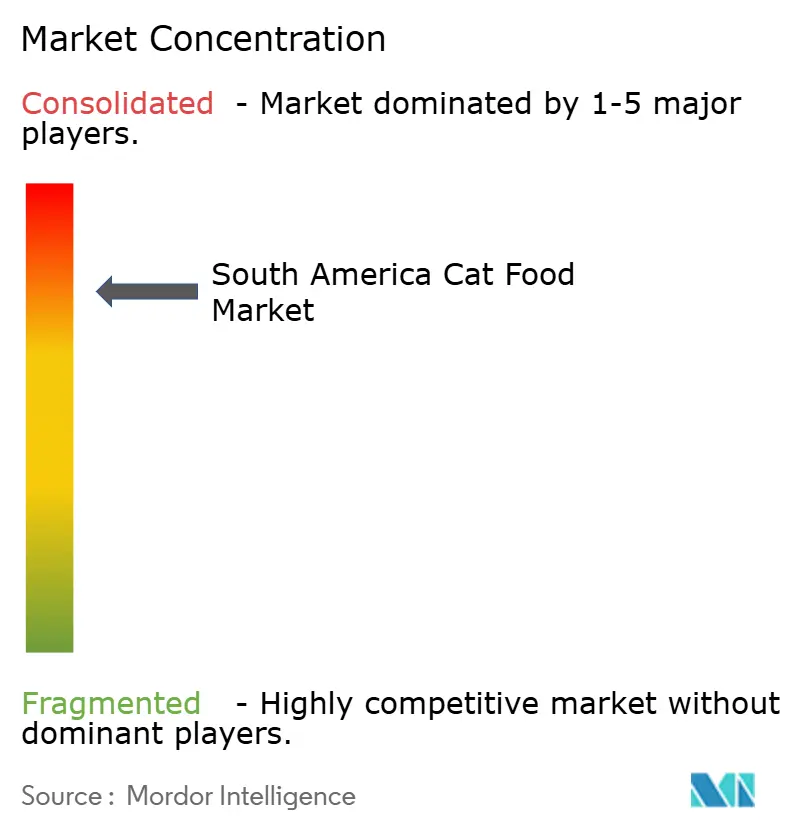
The South America cat food market is moderately fragmented in 2026, with competition among multinational manufacturers and regional producers. Key companies include Mars, Incorporated, Nestlé S.A., BRF S.A., PremieRpet Holding Ltda., and Colgate-Palmolive Company. Regional competitors include Vitalcan S.A., Alican S.A., Agroindustrias Baires S.A., Molino Chacabuco S.A., Grupo Pilar S.A., and Affinity Petcare S.A. These companies compete through local brands, pricing strategies, and distribution networks serving consumers across major cities and secondary markets. This competitive structure provides opportunities for manufacturers to differentiate their portfolios through therapeutic diets, wet food, and premium formulations.
Large suppliers are focusing on production capacity, premium portfolios, and digital distribution. Locally produced wet and functional diets can reduce exposure to import costs while addressing demand for higher-value formulas. In January 2025, Mars, Incorporated expanded distribution capacity in Minas Gerais to serve Brazil’s South, Southeast, and Midwest regions with wet-food sachets and treats. This logistics investment can improve availability for formats that require dependable stock replenishment. PremieRpet Holding Ltda. has expanded its cat-focused portfolio with wet food, functional lines, and life-stage offerings. Suppliers with veterinary relationships can also strengthen repeat demand for clinical and therapeutic formulas.
Opportunities are concentrated in affordable wet food, urinary and digestive diets for indoor cats, and online assortments beyond São Paulo and Buenos Aires. Domestic challengers can compete where they match local price expectations and distribution needs. Global suppliers have advantages in specialized formulations and broader premium portfolios. Regulatory changes may favor locally manufactured veterinary diets by making import registration more demanding. The South America cat food market is shaped by both multinational product development and regional companies that understand local channels. Competitive outcomes will depend on access to production, credible health claims, retail relationships, and appropriate price points.
South America Cat Food Industry Leaders
-
Mars, Incorporated
-
Nestlé S.A.
-
BRF S.A.
-
PremieRpet Holding Ltda.
-
Colgate-Palmolive Company
- *Disclaimer: Major Players sorted in no particular order
South America Cat Food Market Companies Covered in this Report
- Mars, Incorporated
- Nestlé S.A.
- BRF S.A.
- PremieRpet Holding Ltda.
- Colgate-Palmolive Company
- General Mills, Inc.
- Virbac S.A.
- Farmina Pet Foods Holding B.V.
- Affinity Petcare S.A. (Agrolimen S.A.)
- Nutrire Indústria de Alimentos Ltda.
- Vitalcan S.A.
- Alican S.A.
- Agroindustrias Baires S.A.
- Molino Chacabuco S.A.
- Grupo Pilar S.A.
Recent Industry Developments in South America Cat Food Market
- March 2026: Nestlé S.A. inaugurated a wet pet food factory in Vargeão, Santa Catarina, Brazil, following an investment of BRL 2.5 billion (USD 0.47 billion). The facility is projected to nearly double Purina’s wet pet food production capacity in Brazil and supply domestic and export markets. The company plans to expand shipments to additional South American markets following the start of exports to Chile.
- October 2025: Mars, Incorporated inaugurated a wet pet food plant in Ponta Grossa, Paraná, Brazil, following an investment of BRL 430 million (USD 78.5 million). The LEED Gold-certified facility has an initial annual production capacity of approximately 20,000 metric tons and supplies the Brazilian market and export destinations, including Chile, Colombia, Peru, and Ecuador.
- March 2025: PremieRpet launched its PremieR Nutrição Clínica Úmidos line at the CVDL veterinary congress in Brazil. The launch expanded its clinical nutrition portfolio with wet food products for cats and dogs.
South America Cat Food Market Report Scope
The South America cat food market encompasses the production, distribution, and sale of commercially prepared food products formulated to meet cats’ nutritional needs across different life stages and health conditions. It includes products for daily feeding, supplementary nutrition, treats, and specialized veterinary diets.
The South America cat food market report is segmented by pet food product (food, pet nutraceuticals/supplements, pet treats, and pet veterinary diets), by distribution channel (convenience stores, online channel, specialty stores, supermarkets/hypermarkets, and other channels), and by geography (Brazil, Argentina, and rest of South America). The market sizes and forecasts are provided in terms of value (USD) and volume (metric tons) for all the above segments.
Segmentation Overview
| Food | By Sub Product | Dry Pet Food | By Sub Dry Pet Food | Kibbles |
| Other Dry Pet Food | ||||
| Wet Pet Food | ||||
| Pet Nutraceuticals/Supplements | By Sub Product | Milk Bioactives | ||
| Omega-3 Fatty Acids | ||||
| Probiotics | ||||
| Proteins and Peptides | ||||
| Vitamins and Minerals | ||||
| Other Nutraceuticals | ||||
| Pet Treats | By Sub Product | Crunchy Treats | ||
| Dental Treats | ||||
| Freeze-Dried and Jerky Treats | ||||
| Soft and Chewy Treats | ||||
| Other Treats | ||||
| Pet Veterinary Diets | By Sub Product | Diabetes | ||
| Digestive Sensitivity | ||||
| Oral Care Diets | ||||
| Renal | ||||
| Urinary Tract Disease | ||||
| Obesity Diets | ||||
| Derma Diets | ||||
| Other Veterinary Diets |
| Convenience Stores |
| Online Channel |
| Specialty Stores |
| Supermarkets/Hypermarkets |
| Other Channels |
| Brazil |
| Argentina |
| Rest of South America |
| By Pet Food Product | Food | By Sub Product | Dry Pet Food | By Sub Dry Pet Food | Kibbles |
| Other Dry Pet Food | |||||
| Wet Pet Food | |||||
| Pet Nutraceuticals/Supplements | By Sub Product | Milk Bioactives | |||
| Omega-3 Fatty Acids | |||||
| Probiotics | |||||
| Proteins and Peptides | |||||
| Vitamins and Minerals | |||||
| Other Nutraceuticals | |||||
| Pet Treats | By Sub Product | Crunchy Treats | |||
| Dental Treats | |||||
| Freeze-Dried and Jerky Treats | |||||
| Soft and Chewy Treats | |||||
| Other Treats | |||||
| Pet Veterinary Diets | By Sub Product | Diabetes | |||
| Digestive Sensitivity | |||||
| Oral Care Diets | |||||
| Renal | |||||
| Urinary Tract Disease | |||||
| Obesity Diets | |||||
| Derma Diets | |||||
| Other Veterinary Diets | |||||
| By Distribution Channel | Convenience Stores | ||||
| Online Channel | |||||
| Specialty Stores | |||||
| Supermarkets/Hypermarkets | |||||
| Other Channels | |||||
| By Geography | Brazil | ||||
| Argentina | |||||
| Rest of South America | |||||
Market Definition
- FUNCTIONS - Pet foods are usually intended to provide complete and balanced nutrition to the pet but are primarily used as functional products. The scope includes the food and supplements consumed by pets including veterinary diets. Supplements/nutraceuticals that are directly supplied to pets are considered within the scope.
- RESELLERS - Companies engaged in reselling of pet food without value addition have been excluded from the market scope, in order to avoid double counting.
- END CONSUMERS - Pet owners are considered to be the end-consumers in the market studied.
- DISTRIBUTION CHANNELS - Supermarkets/hypermarkets, specialty stores, convenience stores, online channels and other channels are considered within the scope. The stores which are exclusively providing pet related basic and custom products are considered within the scope of specialty stores.
| Keyword | Definition |
|---|---|
| Pet Food | The scope of pet food includes the food that is eatable by pets including food, treats, veterinary diets, and nutraceuticals/supplements. |
| Food | Food is animal feed intended for consumption by pets. It is formulated to provide essential nutrients and meet the dietary needs of various types of pets, including dogs, cats, and other animals. These are generally segmented into dry and wet pet foods. |
| Dry Pet Food | Dry pet foods may be extruded/baked (kibbles) or flaked. They have a lower moisture content, typically around 12-20%. |
| Wet Pet Food | Wet pet food, also known as canned pet food or moist pet food, generally has a higher moisture content compared to dry pet food, often ranging from 70-80%. |
| Kibbles | Kibbles are dry, processed pet food in small, bite-sized pieces or pellets. They are specifically formulated to provide balanced nutrition for various domestic animals, such as dogs, cats, and other animals. |
| Treats | Pet Treats are special food items or rewards given to pets, to show affection, and encourage good behavior. They are especially used during training. Pet treats are made from various combinations of meat or meat-derived materials with other ingredients. |
| Dental Treats | Pet dental treats are specialized treats that are formulated to promote good oral hygiene in pets. |
| Crunchy Treats | It is a type of pet treat that has a firm and crispy texture which can be a good source of nutrition for pets. |
| Soft and chewy treats | Soft and Chewy pet treats are a type of pet food product that is formulated to be easy to chewy and digest. They are usually made from soft and pliable ingredients, such as meat, poultry, or vegetables, that have been blended and formed into bite-sized pieces or strips. |
| Freeze-dried & Jerky Treats | Freeze-dried and jerky treats are snacks given to pets, that are prepared through a special preservation process, without damaging the nutritional content, resulting in long-lasting, nutrient-rich treats. |
| Urinary Tract Disease Diets | These are commercial diets that are specifically formulated to promote urinary health and reduce the risk of urinary tract infections and other urinary problems. |
| Renal Diets | These are specialized pet foods formulated to support the health of pets with kidney disease or renal insufficiency. |
| Digestive Sensitivity Diets | Digestive-sensitive diets are specially formulated to meet the nutritional needs of pets with digestive issues such as food intolerances, allergies, and sensitivities. These diets are designed to be easily digestible and to reduce the symptoms of digestive problems in pets. |
| Oral Care Diets | Oral care diets for pets are specially formulated diets produced to promote oral health and hygiene in pets. |
| Grain-Free Pet Food | Pet food that does not contain common grains like wheat, corn, or soy. Grain-free diets are often preferred by pet owners seeking alternative options or if their pets have specific dietary sensitivities. |
| Premium Pet Food | High-quality pet food formulated with superior ingredients often offers additional nutritional benefits compared to standard pet food. |
| Natural Pet Food | Pet food made from natural ingredients, with minimal processing and without artificial preservatives. |
| Organic Pet Food | Pet food is produced using organic ingredients, free from synthetic pesticides, hormones, and genetically modified organisms (GMOs). |
| Extrusion | A manufacturing process used to produce dry pet food, where ingredients are cooked, mixed, and shaped under high pressure and temperature. |
| Other Pets | Other pets include birds, fish, rabbits, hamsters, ferrets, and reptiles. |
| Palatability | The taste, texture, and aroma of pet food influence its appeal and acceptance by pets. |
| Complete and Balanced Pet Food | Pet food that provides all essential nutrients in appropriate proportions to meet the nutritional needs of pets without additional supplementation. |
| Preservatives | These are the substances that are added to pet food to extend its shelf life and prevent spoilage. |
| Nutraceuticals | Food products that offer health benefits beyond basic nutrition, often contain bioactive compounds with potential therapeutic effects. |
| Probiotics | Live beneficial bacteria that promote a healthy balance of gut flora, supporting digestive health and immune function in pets. |
| Antioxidants | Compounds that help neutralize harmful free radicals in the body, promoting cellular health and supporting the immune system in pets. |
| Shelf-Life | The duration of which pet food remains safe and nutritionally viable for consumption after its production date. |
| Prescription diet | Specialized pet food formulated to address specific medical conditions under veterinary supervision. |
| Allergen | A substance that can cause allergic reactions in some pets, leading to food allergies or sensitivities. |
| Canned food | Wet pet food that is packed in cans and contains higher moisture content than dry food. |
| Limited ingredient diet (LID) | Pet food formulated with a reduced number of ingredients to minimize potential allergens. |
| Guaranteed Analysis | The minimum or maximum levels of certain nutrients present in pet food. |
| Weight management | Pet food designed to help pets maintain a healthy weight or support weight loss efforts. |
| Other Nutraceuticals | It includes prebiotics, antioxidants, digestive fiber, enzymes, essential oils and herbs. |
| Other Veterinary Diets | It includes weight management diets, skin and coat health, cardiac care, and joint care. |
| Other Treats | It includes rawhides, mineral blocks, lickables, and catnips. |
| Other Dry Foods | It includes cereal flakes, mixers, meal toppers, freeze-dried foods, and air-dried foods. |
| Other Animals | It includes birds, fish, reptiles, and small animals (rabbits, ferrets, hamsters). |
| Other Distribution Channels | It includes veterinary clinics, local unregulated stores, and feed and farm stores. |
| Proteins and Peptides | Proteins are large molecules composed of basic units called amino acids which help in the growth and development of pets. Peptides are the short string of 2 to 50 amino acids. |
| Omega-3 fatty acids | Omega-3 fatty acids are essential polyunsaturated fats that play a crucial role in the overall health and well-being of Pets |
| Vitamins | Vitamins are the essential organic compounds that are essential for vital physiological functioning. |
| Minerals | Minerals are naturally occurring inorganic substances that are essential for various physiological functions in pets. |
| CKD | Chronic Kidney Disease |
| DHA | Docosahexaenoic Acid |
| EPA | Eicosapentaenoic Acid |
| ALA | Alpha-linolenic Acid |
| BHA | Butylated Hydroxyanisol |
| BHT | Butylated Hydroxytoluene |
| FLUTD | Feline Lower Urinary Tract Disease |
Research Methodology
Mordor Intelligence follows a four-step methodology in all our reports.
- Step-1: IDENTIFY KEY VARIABLES: In order to build a robust forecasting methodology, the variables and factors identified in Step-1 are tested against available historical market numbers. Through an iterative process, the variables required for market forecast are set and the model is built on the basis of these variables.
- Step-2: Build a Market Model: Market-size estimations for the forecast years are in nominal terms. Inflation is not a part of the pricing, and the average selling price (ASP) is kept constant throughout the forecast period.
- Step-3: Validate and Finalize: In this important step, all market numbers, variables and analyst calls are validated through an extensive network of primary research experts from the market studied. The respondents are selected across levels and functions to generate a holistic picture of the market studied.
- Step-4: Research Outputs: Syndicated Reports, Custom Consulting Assignments, Databases & Subscription Platforms


