
Market Overview
| Study Period | 2020 - 2031 |
|---|---|
| Forecast Data Period | 2026 - 2031 |
| Base Year Market Size (2025) | USD 158.16 Million |
| Market Size (2026) | USD 164.52 Million |
| Market Size (2031) | USD 200.39 Million |
| Growth Rate (2026 - 2031) | 4.02 % |
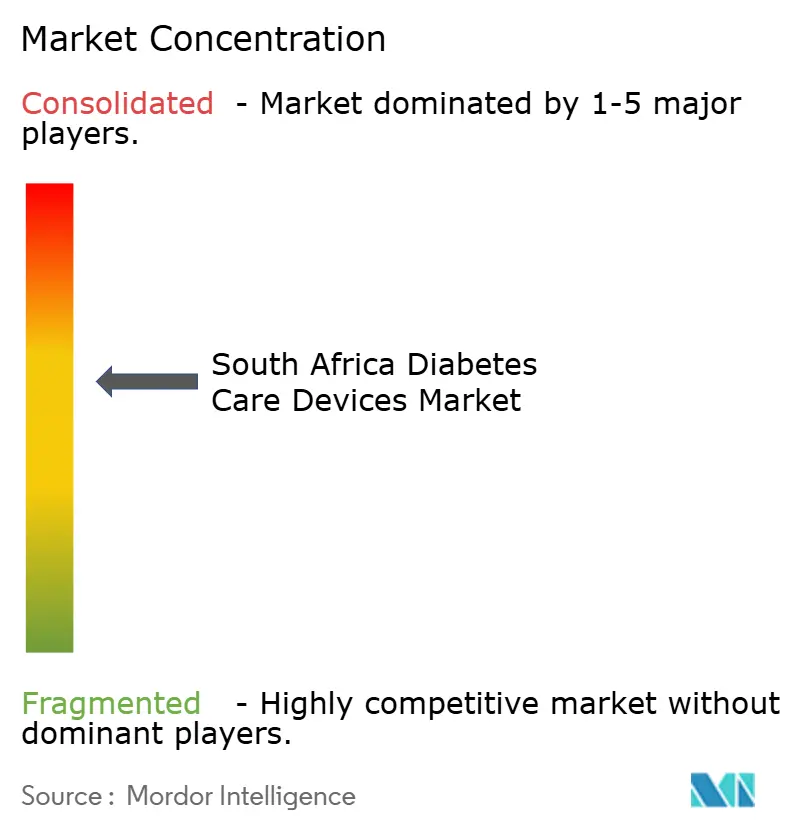
| Market Concentration | Medium |
Major Players *Disclaimer: Major Players sorted in no particular order Image © Mordor Intelligence. Reuse requires attribution under CC BY 4.0. | |
South Africa Diabetes Devices Market Analysis by Mordor Intelligence
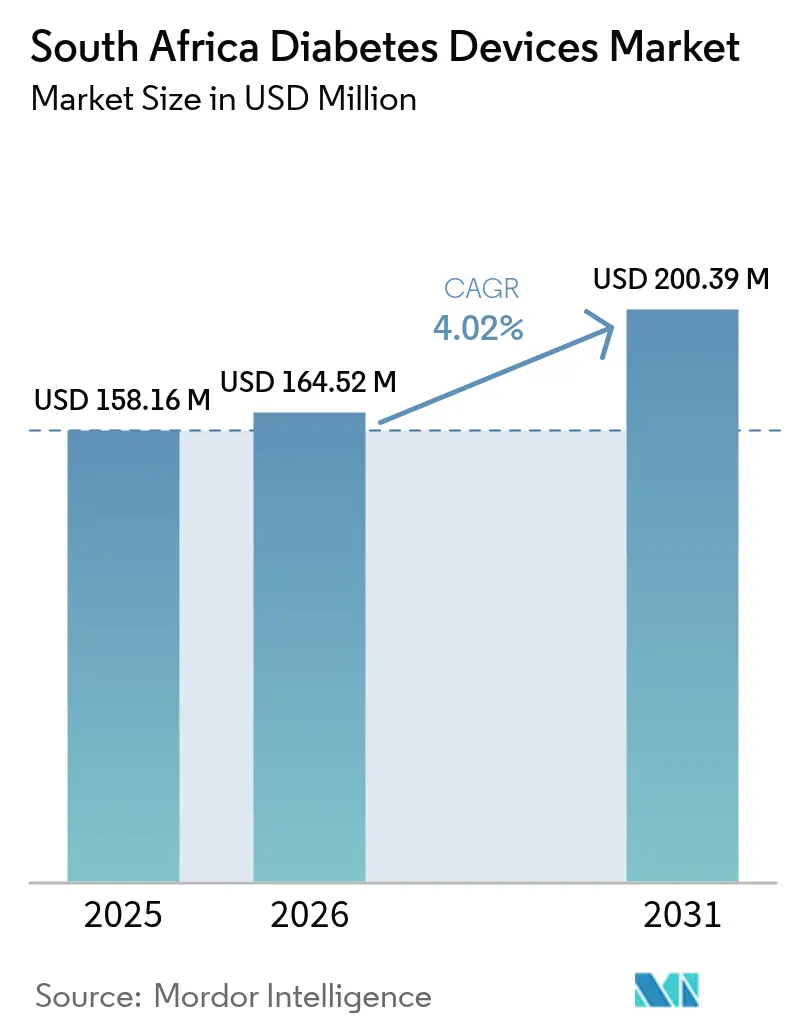
South Africa diabetes devices market size in 2026 is estimated at USD 164.52 million, growing from 2025 value of USD 158.16 million with 2031 projections showing USD 200.39 million, growing at 4.02% CAGR over 2026-2031. Growing urban diabetes prevalence, the roll-out of National Health Insurance coverage, and steady technology upgrades in monitoring and delivery devices underpin this expansion. Continuous glucose monitoring (CGM) is taking hold after new 2023 clinical guidance, while e-commerce is broadening access to supplies and widening consumer choice. Local production incentives are beginning to trim costs for test strips and create new jobs. The market also benefits from private medical schemes that now reimburse advanced pumps and sensors, lifting adoption among insured patients and easing long-term complication risks.
Key Report Takeaways
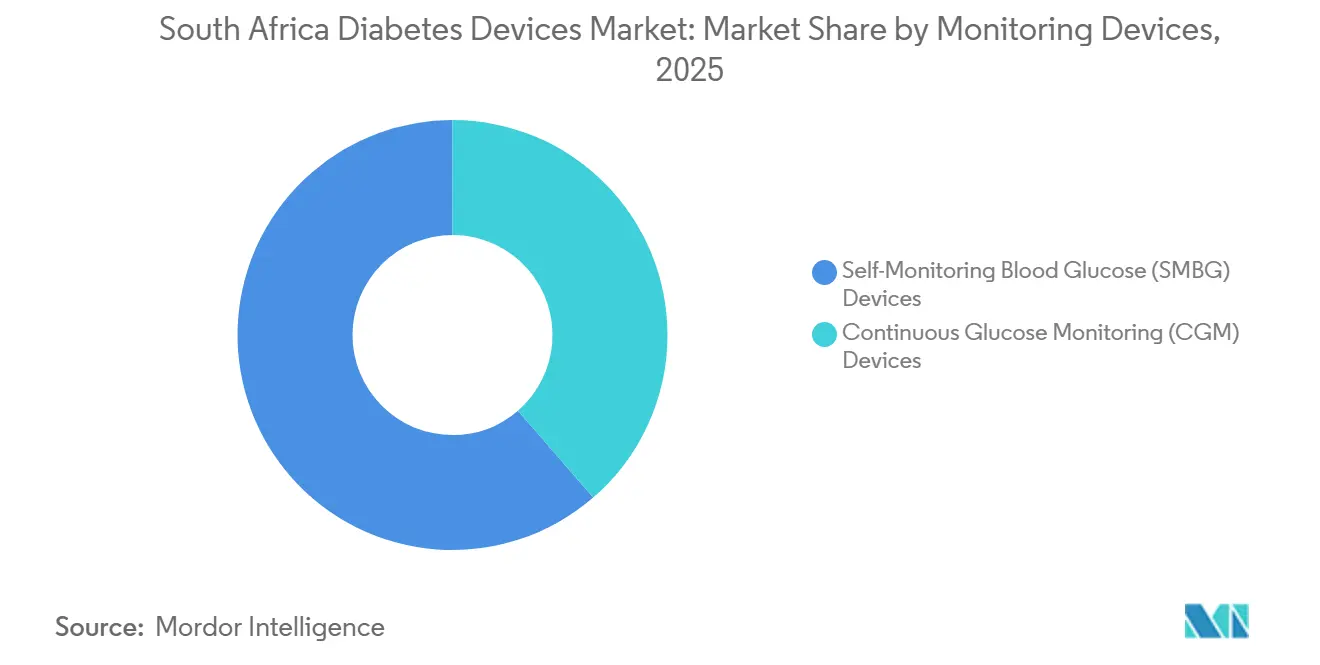
- By device category, Self-Monitoring Blood Glucose held 61.35% of South Africa diabetes devices market share in 2025; Continuous Glucose Monitoring is projected to expand at a 6.24% CAGR through 2031.
- By management device, insulin disposable pens accounted for 44.40% of the South Africa diabetes devices market size in 2025, while insulin pumps are forecast to grow at 4.75% CAGR to 2031.
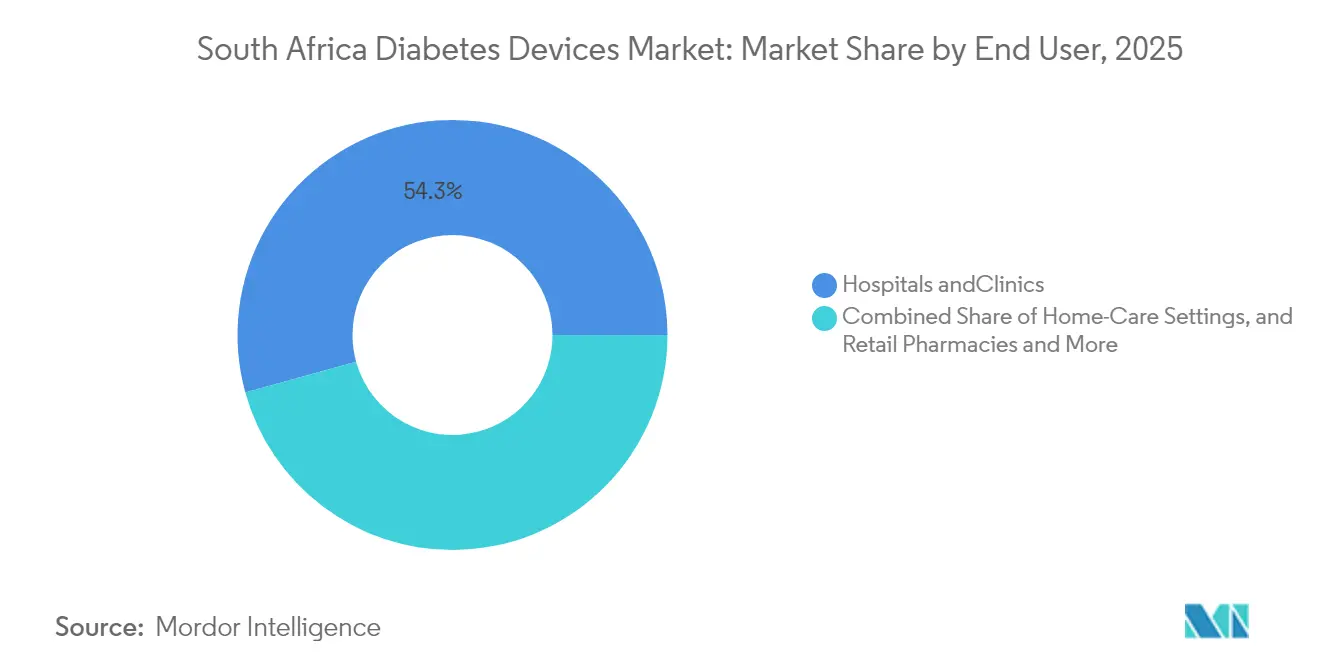
- By end user, hospitals and clinics led with 54.30% revenue share in 2025; home-care settings record the highest projected 4.58% CAGR between 2026-2031.
- By distribution channel, hospital pharmacies commanded 61.20% of 2025 sales, whereas e-commerce platforms are advancing at a 4.96% CAGR to 2031.
- Abbott, Roche, and Medtronic together supplied more than 59.75% of high-end CGM and pump revenues in 2025, reflecting their leadership in advanced technologies.
Note: Market size and forecast figures in this report are generated using Mordor Intelligence’s proprietary estimation framework, updated with the latest available data and insights as of 2026.
South Africa Diabetes Devices Market Trends and Insights
Drivers Impact Analysis*
| Driver | (~) % Impact on CAGR Forecast | Geographic Relevance | Impact Timeline |
|---|---|---|---|
| Rising prevalence of diabetes and obesity in urban South Africa | +1.0% | National urban centers | Long term (≥ 4 years) |
| Expansion of National Health Insurance reimbursement for glucose-testing supplies | +0.8% | Public healthcare facilities | Medium term (2-4 years) |
| Uptake of flash/continuous glucose monitoring after 2023 guidelines | +1.2% | Urban and private sector | Medium term (2-4 years) |
| Private medical schemes improving insulin-pump affordability | +0.6% | Private healthcare | Short term (≤ 2 years) |
| Local manufacture incentives lowering SMBG strip prices | +0.4% | National | Medium term (2-4 years) |
| Smartphone-connected ecosystem driving home-based self-care | +0.6% | High-penetration urban areas | Short term (≤ 2 years) |
| Source: Mordor Intelligence | |||
Rising Prevalence of Diabetes & Obesity in Urban South Africa
Urban lifestyles are pushing type 2 diabetes incidence to 10.9% of the population, doubling over six years [1]. Men and younger adults carry disproportionate risk, opening sizable addressable demand for affordable monitoring devices. Direct medical spending linked to diabetes is set to climb 35% by 2030, making prevention of acute complications through regular testing an economic priority. Device makers focusing on cost-effective meters and connected apps can tap this expanding urban base.
Expansion of National Health Insurance Reimbursement for Glucose-Testing Supplies
The National Health Insurance Bill emphasises chronic disease support, bringing test strips and basic meters onto reimbursement lists for the 84% of citizens served by public clinics [2]. As phased coverage rolls out, regular SMBG becomes financially viable for many first-time users. Volume growth is expected first in public facilities before cascading into community pharmacies and mobile clinics.
Rapid Uptake of Flash/Continuous Glucose Monitoring After 2023 DOH Guidelines
Department of Health guidance released in 2023 positions CGM as standard care for intensive insulin therapy. Sensors backed by private medical scheme funding show HbA1c falls of 1.3 percentage points and a 67% drop in diabetes-related hospitalisations [3]. These clinical gains underpin the segment’s 6.5% CAGR outlook and encourage clinicians to move eligible patients from finger-stick routines to sensor-based feedback.
Private Medical Schemes Boosting Insulin-Pump Affordability
Schemes such as Discovery Health spread pump payments across subscription periods, easing upfront expenses while tying coverage to proven clinical benefit. Uptake among the 16.2% privately insured population is steadily rising, narrowing the therapy gap with wealthier countries and stimulating demand for both conventional and hybrid closed-loop systems.
Local Manufacture Incentives Cutting SMBG Strip Prices
The Medical Devices Masterplan seeks to trim the country’s 90% import reliance by fostering domestic strip and meter output [4]. Emerging plants already supply public tenders at lower cost, lifting testing adherence and cushioning supply chains against global disruptions witnessed during 2024 insulin pen shortages.
Smartphone-Connected Ecosystem Driving Home-Based Self-Care
Smartphone penetration above 95% among people living with diabetes enables near-real-time sharing of glucose data and teleconsultation. Cloud-linked meters and sensors feed analytics that help clinicians adjust therapy without face-to-face visits, relieving pressure on overstretched clinics and making self-management more convenient.
Restraints Impact Analysis*
| Restraint | (~) % Impact on CAGR Forecast | Geographic Relevance | Impact Timeline |
|---|---|---|---|
| High out-of-pocket cost of pumps & CGM for uninsured populations | -0.8% | National low-income areas | Medium term (2-4 years) |
| Import duties and logistics bottlenecks on medical devices | -0.6% | National | Short term (≤ 2 years) |
| Shortage of endocrinologists limiting device prescriptions | -0.4% | Rural zones | Long term (≥ 4 years) |
| Grey-market test-strip counterfeiting undermining trust | -0.2% | Urban & border regions | Medium term (2-4 years) |
| Source: Mordor Intelligence | |||
High Out-of-Pocket Cost of Pumps & CGM for Uninsured Populations
Advanced devices can cost several months of median wages, restricting use to a small slice of the population. Public clinic audits show only 23% of patients reach target glucose levels, underlining the clinical gap. Broader insurance coverage and progressive price cuts remain essential for equitable access.
Shortage of Endocrinologists Limiting Device Prescriptions
South Africa trains few new endocrinologists each year, leaving rural districts without specialist oversight. Primary care clinicians cite limited time for device counselling, slowing pump and CGM penetration despite proven benefits. Tele-endocrinology and decision-support software present interim solutions
*Our forecasts treat driver/restraint impacts as directional, not additive. The impact forecasts reflect baseline growth, mix effects, and variable interactions.
Segment Analysis
By Device Category: Monitoring Devices – CGM Adoption Accelerates
SMBG systems retained a 61.35% value lead in 2025 thanks to their low unit cost and broad public familiarity. Yet CGM sales are growing fastest at a 6.24% CAGR, reflecting stronger clinical evidence and wider reimbursement. SMBG test strips continue to generate stable recurring revenue, and local strip production is expected to reduce patient spend by double-digit percentages. Research into non-invasive biosensors using carbon nanostructures signals future disruption.
Competitive focus in monitoring is shifting toward data platforms that overlay lifestyle advice onto glucose trends. Device makers offering seamless Bluetooth links to widely used smartphones position themselves to win loyalty as patients demand integrated tracking of diet, exercise, and medication timing.

By Device Category: Management Devices – Pumps Gain Momentum
Insulin disposable pens supplied 44.40% of segment revenue in 2025, underlining their practicality and familiarity. The South Africa diabetes devices market size tied to pen cartridges will expand further once local insulin production from the Novo Nordisk–Aspen partnership comes onstream in 2026. Insulin pump volumes, though smaller, are climbing at 4.75% CAGR as financing schemes improve affordability. Hybrid closed-loop systems integrating CGM feedback cut hypoglycaemic episodes and boost perceived quality of life, supporting steady uptake among type 1 users. Syringes and jet injectors remain critical for price-sensitive and rural segments where refrigeration and training resources are limited.
By End User: Home-Care Settings Expand Through Digital Integration
Hospitals and clinics contributed 54.30% of 2025 revenue, reflecting their role in initiating therapy and handling acute events. Home-care settings, however, show the strongest 4.58% CAGR as connected meters and sensors synchronise with teleconsult platforms. This transition lets overstretched facilities allocate specialist time to complex cases while maintaining oversight of patients remotely. Pharmacies now provide device training and refill reminders, creating a continuum of care outside hospital walls.
Community health workers equipped with mobile apps can guide patients in rural areas, further broadening adoption. Artificial-intelligence tools that predict glucose excursions ahead of time increase patient confidence and adherence, reinforcing growth in home-care demand.
By Distribution Channel: E-Commerce Disrupts Traditional Supply Lines
Hospital pharmacies delivered 61.20% of 2025 turnover by bundling device dispensation with clinic visits. Retail chains such as Clicks and Dis-Chem add reach in peri-urban zones, offering point-of-care HbA1c tests and counselling. E-commerce platforms, rising at a 4.96% CAGR, enable doorstep delivery of sensors and strips, particularly appeals to younger consumers. Transparent pricing and subscription models for consumables improve planning and cut lapsed testing episodes. Regulatory clarity on online pharmacy operations released in 2024 helped resolve concerns on cold-chain and patient verification, paving the way for new entrants.
Geography Analysis
Urban hubs—Johannesburg, Cape Town, and Durban—anchor demand for advanced CGM and pump technologies thanks to higher prevalence, stronger purchasing power, and specialist availability. Private hospitals in these cities serve as early adopters, generating demonstration effects that spur uptake in adjacent municipalities. The South Africa diabetes devices market size tied to Gauteng province alone exceeded USD 46.62 million in 2025.
Rural provinces experience lower device penetration due to lower incomes and sparse endocrinologist coverage. Spatial mapping shows Bojanala District recorded the most screening activity, whereas Dr Ruth Segomotsi Mompati saw the least . Mobile clinics using connected meters help bridge gaps by pushing data to urban specialists for feedback. National Health Insurance aims to level access by standardising device formularies across public facilities, which could lift basic SMBG usage in underserved provinces over the forecast period.
Border regions face heightened counterfeit risk. SAHPRA redoubled surveillance following a 2024 WHO alert on falsified diabetes medicines. Enforcement and patient education are central to rebuilding trust and safeguarding outcomes.
Regulatory Landscape
Diabetes devices sold in South Africa fall under the medical device framework regulated by the South African Health Products Regulatory Authority (SAHPRA) under the Medicines and Related Substances Act, 1965 (Act 101 of 1965) and associated regulations (Government Gazette No. 40480). SAHPRA uses a four-tier, risk-based classification system (Classes A to D) and requires medical device establishment licensing for manufacturers, importers, exporters, and distributors supplying Class B, C, and D devices, supported by quality system and conformity expectations such as ISO 13485 and the Essential Principles of Safety and Performance.
In the public sector, demand and pricing are heavily shaped by National Department of Health tender cycles governed by the Preferential Procurement Policy Framework Act, 2000, and multi-year contract awards. In May 2026, the National Department of Health initiated the tendering process for supply and delivery of small volume parenterals and insulin devices (HP06-2027SVP) covering 01 May 2027 to 30 April 2030, reinforcing the need for tender compliance, establishment licensing, and dossier readiness for suppliers serving public facilities. SAHPRA also issued updated regulatory guidance in June 2026 on Research Use Only (RUO) and Investigational Use Only (IUO) medical devices and IVDs (MD01-2026/27), tightening clarity on permissible supply pathways and labeling for non-clinical use categories.
Value Chain Analysis
The South Africa diabetes devices value chain is anchored in multinational manufacturing and a predominantly import-led supply base (about 90% of medical devices by value), with local activity concentrated in lower-complexity consumables and tender-driven assembly and packaging where feasible. Upstream inputs include biosensor components (CGM sensors and transmitters), meter electronics, and consumables (test strips, lancets), followed by OEM manufacturing, then in-country market authorization and establishment licensing through SAHPRA, which expects compliance with the Essential Principles and establishment quality systems, commonly evidenced via ISO 13485.
Midstream, in-country importers and specialist distributors manage product registration support, warehousing, training, and after-sales service for pumps and CGM, while also handling cold-chain and inventory planning for certain supplies. Channel execution runs through hospital pharmacies and clinics, which lead initiation and funded care, followed by retail pharmacy chains and a growing e-commerce layer that supports replenishment of consumables. Named ecosystem participants include VitalAire Diabetes (distribution for brands such as Dexcom and Tandem Diabetes Care), Altys Group (distribution), and Centre for Diabetes and Endocrinology (CDE Healthcare) providing diabetes programs, education, and product access. Key friction points remain customs and logistics delays, dependence on imported sensors and pump components, and counterfeit risk in grey channels, which increases the value of authorized distribution, traceability, and continuous patient support.
Competitive Landscape
Global majors Abbott, Roche, and Medtronic dominate high-tech segments through established sensor and pump franchises, long-standing clinician relationships, and post-sale support networks. Abbott’s FreeStyle Libre sensors paired with GLP-1 regimens showed encouraging real-world outcomes in South African cohorts, reinforcing the brand within endocrinology circles. Roche leverages its Accu-Chek franchise to cross-sell cloud dashboards that integrate both SMBG and CGM data. Medtronic’s MiniMed pumps appeal to tech-savvy type 1 users seeking automated insulin delivery.
Regional manufacturers concentrate on low-cost SMBG strips and meters to meet public tender specifications. Government incentives for domestic production and preferential procurement help these firms secure volume contracts, eroding import dependence. Digital health start-ups partner with device makers to add predictive analytics that extend specialist reach, a key differentiator in a market constrained by workforce shortages.
Competition is now less about single devices and more about ecosystem breadth. Companies that combine reliable hardware, cloud platforms, and local service centres are best placed to deepen market penetration and maintain user loyalty against low-price entrants.
South Africa Diabetes Devices Industry Leaders
-
Dexcom Inc.
-
Abbott Diabetes Care
-
Novo Nordisk A/S
-
Roche Diabetes Care
-
Medtronic PLC
- *Disclaimer: Major Players sorted in no particular order
Market Opportunities and Future Outlook
A key whitespace is scalable, lower-cost monitoring models for the public sector, where access constraints and staffing shortages limit consistent glucose control despite a large treated population. The National Department of Healths 2026/27 Annual Performance Plan (published May 2026) emphasizes expanded community-based screening for non-communicable diseases, supporting opportunities for portable SMBG kits, training-led deployment models through primary care and community health workers, and replenishment programs that improve continuity of testing supplies. At the same time, procurement realities highlighted in 2026 budget discussions (including commentary on limited dedicated NCD-prevention funding) raise the bar for suppliers to package devices with measurable outcomes, service support, and tender-compatible pricing, rather than hardware-only propositions.
For advanced technologies, opportunity concentrates on tiered adoption paths that bridge affordability gaps and build clinical familiarity, particularly for CGM in insulin-treated patients. Evidence from a willingness-to-pay assessment in public sector hospitals indicates that periodic, ad-hoc CGM use is perceived as a more feasible entry point than continuous use, with an identified price reference around ZAR 350, creating room for starter programs, short-duration sensor courses, and clinic-supervised use cases. Distributor-led launches, local service infrastructure, and interoperability with smartphone-driven self-care also create opportunities for devices combined with education and data-sharing workflows, especially in urban centers where specialist access and private reimbursement are stronger.
Recent Industry Developments
- June 2026: Novo Nordisk South Africa secured a Pretoria High Court interdict against iDexis to halt the manufacturing and marketing of illicitly compounded semaglutide products. The ruling strengthens enforcement against unregulated supply that can undermine confidence in diabetes therapies and tightens the operating environment for informal channels serving diabetes patients.
- November 2025: Roche Diagnostics launched the Accu-Chek SmartGuide continuous glucose monitoring solution in South Africa. The introduction expands CGM choice in a market where monitoring is increasingly shifting toward data-rich, connected care and raises competitive pressure on incumbent CGM ecosystems.
- March 2024: 3Sixty Global Solutions Group acquired the Centre for Diabetes and Endocrinology (CDE), a major South African diabetes and hypertension management solutions provider. The transaction links chronic disease program delivery with broader healthcare services capability, influencing how devices and supplies are bundled with education, monitoring, and adherence support.
Research Methodology Framework and Report Scope
Market Definition and Coverage
This market covers the sales value of diabetes devices used by patients in South Africa to monitor blood glucose and to deliver insulin, across hospital, retail pharmacy, and direct purchase channels.
Scope exclusions: We exclude diabetes drugs, software-only apps, laboratory analyzers, and small ancillary consumables such as alcohol swabs.
Segmentation Overview
- By Device Category
- Monitoring Devices
- Self-Monitoring Blood Glucose (SMBG) Devices
- Glucometers
- Test Strips
- Lancets
- Continuous Glucose Monitoring (CGM) Devices
- Sensors
- Durables (Receivers & Transmitters)
- Self-Monitoring Blood Glucose (SMBG) Devices
- Management Devices
- Insulin Delivery Devices
- Insulin Pump Devices
- Insulin Disposable Pens
- Insulin Cartridges in Re-usable Pens
- Insulin Syringes & Jet Injectors
- Insulin Delivery Devices
- Monitoring Devices
- By End User
- Hospitals & Clinics
- Home-Care Settings
- Retail Pharmacies & Diabetes Centers
- By Distribution Channel
- Hospital Pharmacies
- Retail Pharmacies
- E-commerce / Online Pharmacies
Data Sources, Market Sizing, and Validation
Desk Research
Desk research was used to set the factual base for the model, especially for disease burden, care access, and import reliance for key device categories in South Africa. We typically refer to public sources such as Statistics South Africa releases, the National Department of Health publications, SAHPRA notices, WHO and IDF diabetes statistics, and customs or trade statistics where relevant for device inflows.
To translate those signals into a workable market view, we also reviewed product catalogs and pricing snapshots visible in pharmacy listings and tender records, along with company annual reports, investor presentations, and credible healthcare press. A paid subscription focused on company financials and another focused on patent and innovation signals were used selectively to cross-check revenue direction and technology adoption patterns. These desk sources are not exhaustive, and many other public references were used to fill gaps and confirm assumptions during the work.
Primary Interviews and Surveys
Primary work was used to validate what desk sources cannot show clearly, such as channel mix, pricing behavior for strips and sensors, and how fast newer monitoring formats are being adopted in routine care in South Africa. We spoke with a mix of manufacturers and distributors, pharmacists and procurement stakeholders, and clinicians and diabetes educators across major provinces, and then aligned responses to a single set of definitions so like-for-like comparisons could be made.
Distribution of primary research fieldwork respondents
| Company type | Respondent position |
|---|---|
| Top tier: 36% | CXOs: 14% |
| Mid tier: 49% | Functional/Unit leaders: 36% |
| Smaller Players: 15% | Managers: 50% |
Market-Sizing & Forecasting
Sizing starts with a top-down demand pool build where the treated diabetes population, monitoring frequency, and insulin use patterns are translated into annual device and consumable needs, which are then converted into value using typical price bands by channel in South Africa. To keep the totals realistic, selective bottom-up checks are added using supplier and distributor revenue ranges, sampled price points for test strips and CGM sensors, and channel checks on availability and stocking.
A few market fingerprints that matter here include the share of insulin users who rely on pens versus syringes, refills per patient per year for strips and lancets, sensor change intervals for CGM, the public versus private care split that shapes purchasing routes, and the ZAR-USD conversion timing that can move reported values when devices are imported. For forecasting, we lean on scenario analysis with a simple multivariate structure, where diabetes prevalence growth, reimbursement and procurement intensity, and price movement assumptions are stress-tested with what interviewees expect over the next five years. Where bottom-up detail is incomplete, gaps are handled by using conservative penetration ranges and then rechecking the implied consumption against observed channel volumes.
Data Validation & Update Cycle
Before sign-off, results are triangulated against independent signals, including the implied per-patient usage for strips and sensors, the split between monitoring and delivery device spend, and channel feedback on stock turns and procurement cycles in South Africa. Outliers are reviewed in a stepwise manner, first by checking unit logic and price assumptions, and then by revisiting interview notes or re-contacting sources when a variance remains material.
Reports are refreshed annually, and interim updates are triggered when a major policy shift, pricing change, or supply disruption is observed. Right before delivery, one more pass is completed so the final numbers reflect the latest available public releases and any newly confirmed primary inputs.
Mordor Intelligence's South Africa Diabetes Devices Market Size Compared With Other Published Estimates
Published market sizes for South Africa diabetes devices often differ because each publisher draws the market box differently and relies on different demand indicators. Differences also show up when one estimate is built from device consumption logic and another leans more on broad category revenues.
The biggest gap drivers in this market are usually whether insulin delivery hardware is counted alongside monitoring, how test strip and sensor replenishment is modeled, and whether values are converted at a single average exchange rate or at year-specific timings. When the scope is limited to monitoring only, or when refill frequency is assumed at a lower level, the market value can look smaller even if unit demand is rising.
Benchmark comparison
| Source | Market Size | Gaps in Research Methodology |
|---|---|---|
| Mordor Intelligence | USD 158.16 M (2025) | |
| Global Consultancy A | USD 129.80 M (2024) | This figure focuses on blood glucose monitoring devices and related components, which can exclude insulin delivery hardware and understate the full diabetes devices spend when compared year to year. |
| Industry Publisher B | USD 87.40 M (2026) | The estimate appears to use a narrower spend base and different device grouping assumptions, and it can shift totals when pump-related categories and pricing progression are treated inconsistently across channels. |
The table shows that scope and consumption assumptions explain most of the spread, especially around whether delivery devices sit inside the total and how replenishment items are annualized. By keeping insulin pumps, pens, syringes, and monitoring replenishments inside one consistent demand model and then rechecking the implied usage against channel feedback, the total is kept traceable to practical inputs, a choice applied by Mordor Intelligence.
Key Questions Answered in the Report
How big is the South Africa Diabetes Devices Market?
The South Africa Diabetes Devices Market size is expected to reach USD 164.52 million in 2026 and grow at a CAGR of 4.02% to reach USD 200.39 million by 2031.
How does National Health Insurance influence device adoption?
NHI reimbursement lowers the cost of basic monitoring supplies for public-sector patients, encouraging regular glucose testing.
Who are the key players in South Africa Diabetes Devices Market?
Dexcom Inc., Abbott Diabetes Care, Novo Nordisk A/S, Roche Diabetes Care and Medtronic PLC are the major companies operating in the South Africa Diabetes Care Devices Market.
Are e-commerce channels significant for device distribution?
Yes, online platforms are the fastest-growing channel with a 4.96% CAGR, offering price transparency and convenient home delivery.