
Socks Market Size and Share
Market Overview
| Study Period | 2021 - 2031 |
|---|---|
| Market Size (2026) | USD 47.92 Billion |
| Market Size (2031) | USD 57.27 Billion |
| Growth Rate (2026 - 2031) | 3.63 % |
| Fastest Growing Market | Asia-Pacific |
| Largest Market | Asia Pacific |
| Market Concentration | Medium |
Major Players *Disclaimer: Major Players sorted in no particular order Image © Mordor Intelligence. Reuse requires attribution under CC BY 4.0. | |
Socks Market Analysis by Mordor Intelligence
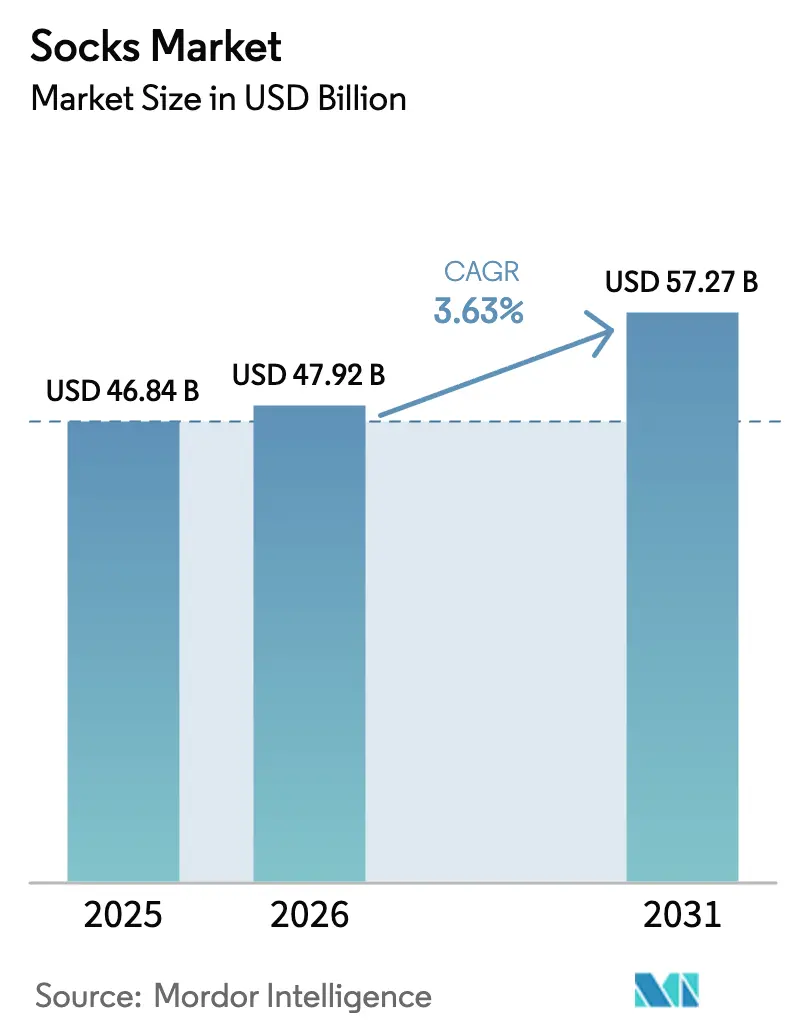
The socks market size is expected to grow from USD 46.84 billion in 2025 to USD 47.92 billion in 2026 and is forecast to reach USD 57.27 billion by 2031 at 3.63% CAGR over 2026-2031. Rising disposable incomes, the widespread adoption of athleisure, and growing interest in performance fabrics continue to drive demand, even as the market matures. Technical advancements, such as moisture-wicking yarns, antimicrobial treatments, and seamless knitting, enable brands to maintain price premiums and differentiate themselves from private-label offerings. At the same time, sustainability requirements are influencing sourcing strategies, with circular business models, recycled synthetic materials, and organic cotton gaining significant traction. The Asia-Pacific region leads growth trends, supported by increasing urbanization and the expansion of organized retail. Additionally, omnichannel investments by supermarkets and hypermarkets are enhancing market reach. Competitive intensity remains high due to low entry barriers, widespread counterfeit activity, and the absence of a dominant global player in terms of revenue.
Key Report Takeaways
- By product type, casual and fashion socks led with 63.99% revenue share in 2025; athletic socks are projected to grow at a 4.15% CAGR between 2026-2031.
- By end user, men's accounted for 58.02% of 2025 demand, while the kids and children segment is forecast to post the fastest 4.43% CAGR through 2031.
- By fabric material, cotton captured 53.99% of 2025 fabric share and is expected to advance at a 5.21% CAGR to 2031.
- By category, mass-market offerings held 68.88% of 2025 revenue; premiums are on course for a 5.19% CAGR over 2026-2031.
- By distribution channel, supermarkets and hypermarkets commanded 52.19% of 2025 distribution and are set to expand at a 5.44% CAGR during the forecast window.
- By geography, Asia-Pacific secured 33.32% of the 2025 socks market share and is projected to post the strongest 5.71% CAGR through 2031.
Note: Market size and forecast figures in this report are generated using Mordor Intelligence’s proprietary estimation framework, updated with the latest available data and insights as of 2026.
Market Trends and Insights
Drivers Impact Analysis of Socks Market*
| DRIVER | (~) % IMPACT ON CAGR FORECAST | GEOGRAPHIC RELEVANCE | IMPACT TIMELINE |
|---|---|---|---|
| Growing popularity of athleisure trends blending sportswear with casual fashion | +1.2% | Global, with strongest uptake in North America and Europe | Medium term (2-4 years) |
| Increasing health and fitness awareness boosting demand for performance socks | +0.9% | Global, with accelerated growth in Asia-Pacific urban centers | Short term (≤ 2 years) |
| Technological advancements in moisture-wicking fabrics | +0.7% | North America and Europe, spillover to Asia-Pacific | Medium term (2-4 years) |
| Growth in sustainable materials such as organic cotton and recycled fibers | +0.5% | Europe and North America, emerging in Asia-Pacific | Long term (≥ 4 years) |
| Demand for personalized and custom-designed socks | +0.3% | North America and Europe, early adoption in urban Asia | Medium term (2-4 years) |
| Shift toward eco-friendly production practices like bamboo fibers | +0.4% | Europe, North America, and select Asia-Pacific markets | Long term (≥ 4 years) |
| Source: Mordor Intelligence | |||
Growing popularity of athleisure trends blending sportswear with casual fashion
Athleisure has evolved from a fitness-focused category into a mainstream wardrobe choice for work-from-home professionals, urban commuters, and weekend social activities. This trend has increased demand for socks that combine technical performance with aesthetic versatility, allowing consumers to transition seamlessly from the gym to the office without changing footwear. In response, brands are introducing hybrid designs featuring arch support, cushioned soles, and moisture management, paired with patterns and colors suitable for casual office settings. This development blurs the line between athletic and fashion socks. The shift is particularly evident among millennials and Generation Z, who prioritize comfort and functionality over traditional formal dress codes. Additionally, this demographic demonstrates a greater willingness to pay premiums for brands that reflect their values, such as sustainability and social responsibility. This creates opportunities for direct-to-consumer brands that focus on transparent sourcing and charitable initiatives. The athleisure trend is projected to contribute to the forecasted compound annual growth rate, with its impact expected to be most significant in the medium term as product offerings adapt to these blended use cases.
Increasing health and fitness awareness boosting demand for performance socks
Health consciousness has led to a sustained increase in participation in activities such as running, cycling, yoga, and gym-based training. This shift has driven consistent demand for socks designed to manage moisture, reduce friction, and prevent blisters. The World Health Organization's (WHO) 2025 Global Physical Activity Report highlights that an increasing number of adults in high-income countries now meet recommended exercise guidelines, marking a notable rise compared to previous years. Similarly, middle-income nations in Asia are experiencing significant growth in fitness club memberships and organized sports leagues [1]Source: World Health Organization, “Global Physical Activity Factsheet 2025,” who.int. This behavioral shift is driving the adoption of activity-specific sock designs optimized for trail running, court sports, and endurance cycling, replacing generic hosiery options. Technical innovation in performance socks has advanced rapidly to meet this demand. Nike's 2025 annual report revealed that its hosiery division invested substantial resources in developing proprietary yarn blends incorporating phase-change materials to regulate foot temperature during high-intensity workouts. This feature has become a standard offering across its elite running sock range. These advancements are not limited to premium products, as mass-market brands are also adopting moisture-wicking technologies to offer entry-level performance socks at more affordable price points. This trend is expanding the market and encouraging active consumers to upgrade their sock collections, further driving growth in the athletic sock segment.
Technological advancements in moisture-wicking fabrics
Moisture management has shifted from a basic dry-versus-wet concept to a more intricate engineering challenge involving capillary action, evaporation rates, and thermal regulation. Leading brands are using hydrophobic polyester and nylon filaments to draw perspiration away from the skin, while hydrophilic outer layers enable faster evaporation. This creates a microclimate that keeps feet dry even during prolonged physical activity. Under Armour's 2025 investor presentation highlighted its HeatGear fabric platform, which integrates hollow-core fibers and antimicrobial silver ions to address both moisture and odor management. This dual functionality has driven notable growth in its sock category. Puma's collaboration with the Hohenstein Institute in Germany led to the creation of a moisture-wicking standard that evaluates drying speed and breathability, offering objective performance metrics to assist consumers in making informed purchasing decisions. The integration of smart textiles marks the next stage of moisture-wicking innovation. Several startups are incorporating conductive yarns and micro-sensors into sock fabrics to monitor sweat composition, foot temperature, and pressure distribution in real time. These sensors transmit data to smartphone applications, providing insights on hydration levels and injury risks. While these products remain niche, their introduction signals a move toward connected apparel that blends athletic performance with health monitoring.
Growth in sustainable materials such as organic cotton and recycled fibers
Sustainability has become a core expectation rather than a unique selling point, with consumers paying closer attention to fiber sourcing, dyeing processes, and disposal methods at the end of a product's life cycle. Organic cotton, grown without synthetic pesticides or fertilizers, has gained traction in premium sock lines as brands strive to align with European Union regulations on chemical residues and biodegradability. Recycled polyester, made from post-consumer plastic bottles, has reached cost parity with virgin resin in several markets, enabling mass-market brands to incorporate recycled content without increasing prices. Adidas, in its sustainability report, announced its commitment to sourcing 100% of its polyester from recycled feedstocks. This pledge, which includes its sock portfolio, has encouraged supply-chain partners to invest in bottle-collection infrastructure across Asia and Latin America. Bamboo fiber presents a more complex sustainability narrative. While bamboo grows quickly without requiring irrigation or pesticides, the viscose process used to convert bamboo stalks into textile-grade fiber involves caustic chemicals that can harm the environment and pose risks to worker safety unless managed through closed-loop systems. Brands such as Bombas and Stance have partnered with Lenzing, an Austrian producer of Tencel lyocell (a type of regenerated cellulose fiber), to source bamboo-derived fibers processed under European Union Ecolabel standards. This ensures that their sustainability claims comply with regulations and withstand scrutiny from activists.
Restraints Impact Analysis of Socks Market*
| RESTRAINT | (~) % IMPACT ON CAGR FORECAST | GEOGRAPHIC RELEVANCE | IMPACT TIMELINE |
|---|---|---|---|
| Fluctuations in raw material quality affecting consistency | -0.6% | Global, with acute pressure in South and Southeast Asia | Short term (≤ 2 years) |
| Proliferation of low-cost, unorganized, and counterfeit products | -0.8% | Asia-Pacific and Middle East and Africa, spillover to Latin America | Medium term (2-4 years) |
| Challenges in scaling eco-friendly materials due to sourcing limits | -0.4% | Global, most pronounced in Europe and North America | Long term (≥ 4 years) |
| Rapidly changing consumer preferences shortening product life cycle | -0.5% | Global, with fastest churn in North America and Europe | Short term (≤ 2 years) |
| Source: Mordor Intelligence | |||
Fluctuations in raw material quality affecting consistency
Cotton quality is influenced by factors such as growing region, harvest timing, and processing methods, leading to variations in fiber length, strength, and color. These inconsistencies complicate manufacturing processes and affect brand consistency. According to the United States Department of Agriculture's 2025 Cotton Quality Report, adverse weather conditions in key growing regions reduced the share of premium-grade cotton, forcing mills to blend lower-grade fibers or use synthetic substitutes to maintain production schedules [2]Source: United States Department of Agriculture, “Cotton Quality Report 2025,” usda.gov. Similarly, polyester quality is affected by feedstock purity and extrusion parameters, with recycled polyester showing greater variability than virgin resin due to contamination from mixed plastic waste streams. Brands without strong quality-control protocols face increased defect rates, higher customer returns, and warranty claims, which negatively impact profit margins and brand reputation. The challenges of maintaining quality consistency are further exacerbated by global supply chains. For instance, a single sock design may involve cotton from India, elastane from China, polyester from Indonesia, dyeing in Bangladesh, and final assembly in Vietnam, creating multiple points where quality may deteriorate. The International Textile Manufacturers Federation's 2025 survey revealed that many apparel brands experienced quality-related production delays in the previous year. This increase was attributed to fragmented sourcing and insufficient supplier audits.
Proliferation of low-cost, unorganized, and counterfeit products
Counterfeit socks featuring logos of brands such as Nike and Adidas are widely available on online marketplaces and informal retail channels, particularly in the Asia-Pacific and Middle East & Africa regions, where enforcement of intellectual property rights is inconsistent. According to the Organisation for Economic Co-operation and Development's 2024 report on illicit trade, counterfeit apparel and footwear generated significant global sales, with hosiery accounting for approximately 8% of this total due to its low production complexity and high brand recognition[3]Source: Organisation for Economic Co-operation and Development, “Illicit Trade Report 2024,” oecd.org. Counterfeit products negatively impact legitimate brands by reducing price premiums, weakening brand equity, and exposing consumers to substandard materials that may contain harmful dyes or fail to meet promised performance standards. To address counterfeiting, brands are employing strategies such as legal action, supply chain authentication, and consumer education. Nike's 2025 annual report revealed that the company filed numerous intellectual property infringement cases globally in the previous year, leading to the seizure of counterfeit items and the closure of online storefronts.
*Our forecasts treat driver/restraint impacts as directional, not additive. The impact forecasts reflect baseline growth, mix effects, and variable interactions.
Socks Market Segment Analysis
By Product Type:
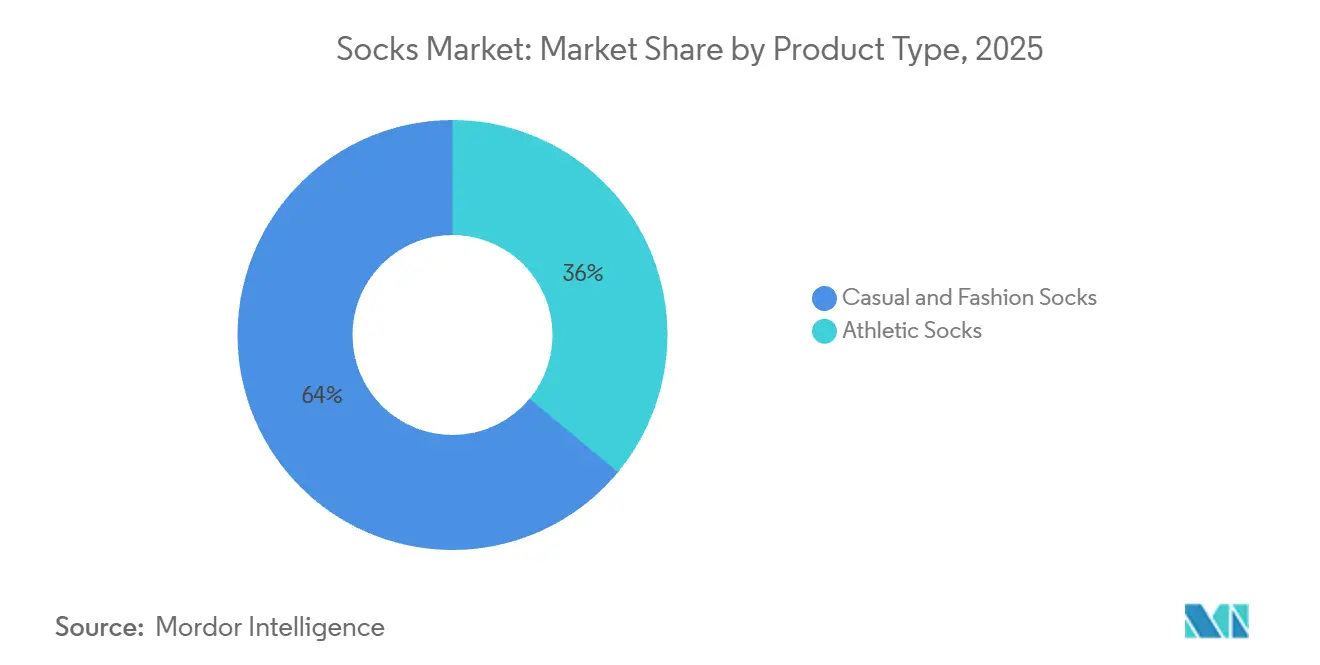
Athletic Socks Gain Share Through Technical InnovationCasual and fashion socks accounted for 63.99% of the 2025 volume, reflecting their adaptability across work, social, and leisure settings. However, athletic socks are projected to grow at an annual rate of 4.15% through 2031, marking the fastest growth within this segment. Athletic socks increasingly incorporate features such as compression zones, seamless toe closures, and targeted cushioning, which help reduce injury risks and enhance comfort during high-impact activities. These features support higher price points and contribute to margin growth for brands.
Casual and fashion socks benefit from trend-driven consumer behavior, with seasonal wardrobe updates influenced by color palettes, patterns, and collaborations with designers and influencers. For example, Nike's 2025 launch of the Elite Cushioned Crew sock, made with a proprietary yarn blend of merino wool and recycled nylon, highlights the innovation trajectory in athletic socks. Despite a higher retail price, the product achieved strong first-quarter sales. While casual socks are growing at a slower pace, they remain critical for brands targeting everyday replenishment purchases. Additionally, casual socks experience lower return rates due to simpler fit requirements. The International Organization for Standardization (ISO) 105 color-fastness standards impact both segments by ensuring that dyes resist fading after repeated washing. Consumers increasingly verify this quality through online reviews.



By End User:
Kids and Children Segment Accelerates on Youth Sports ParticipationMen accounted for 58.02% of 2025 consumption, driven by higher average purchase quantities and greater participation in organized sports and fitness activities. However, the kids and children segment is projected to grow at an annual rate of 4.43% through 2031, marking the fastest growth among end-user categories. Parental investment in youth athletic gear has increased as concerns over childhood obesity and sedentary lifestyles encourage enrollment in activities such as soccer leagues, basketball camps, and martial arts programs. This has created demand for socks designed to fit smaller feet while offering performance features comparable to adult products.
Women represent a significant and expanding segment, with brands focusing on designs that address anatomical differences in foot shape and arch height, as well as preferences for colors and patterns that differ from traditional athletic styles. In 2024, Adidas expanded its kids' sock line to include sizes for toddlers through teenagers, incorporating moisture-wicking polyester and reinforced heels to endure abrasion from playground and court surfaces. This expansion contributed to a 14% year-over-year growth in its youth hosiery category.
By Fabric Material:
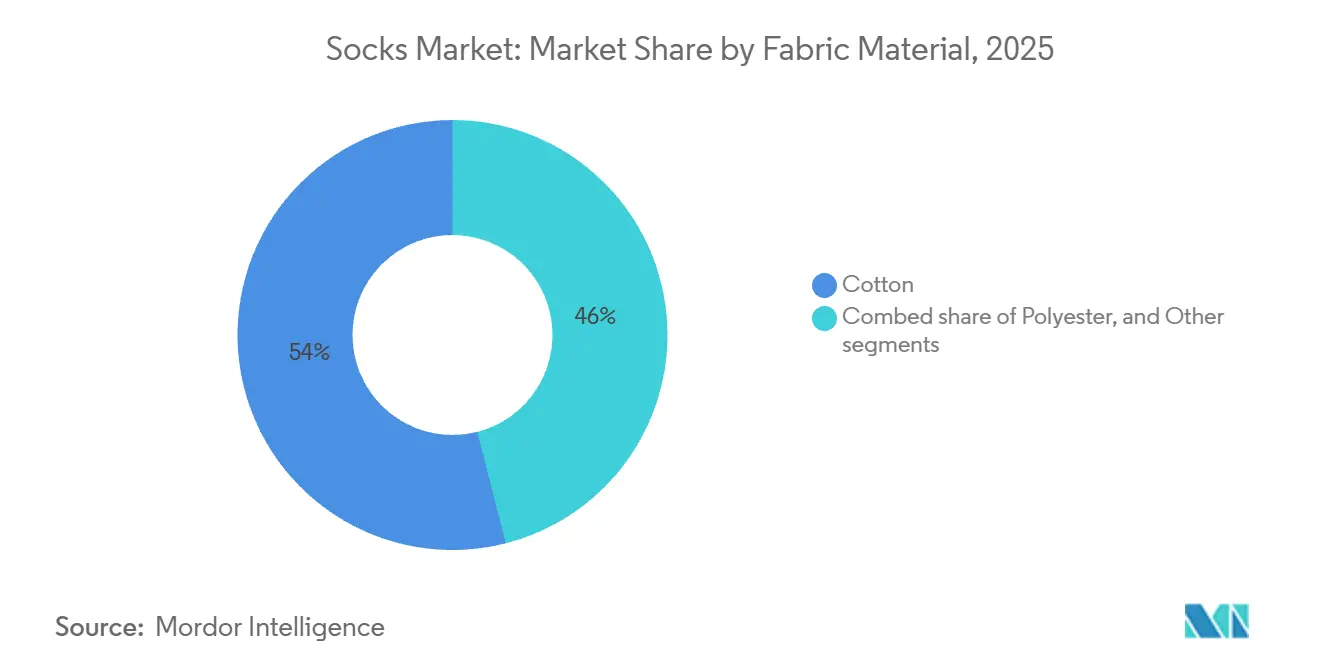
Cotton Dominates Yet Blends with Synthetics for PerformanceCotton made up 53.99% of the fabric share in 2025 and is expected to grow at an annual rate of 5.21% through 2031, representing the fastest growth among materials. This growth is attributed to brands combining natural fibers with recycled polyester and elastane to deliver breathability, stretch, and durability in a single construction. Pure cotton socks continue to be a preferred choice for casual wear due to their softness and hypoallergenic properties. However, challenges in moisture management and shape retention have led to the creation of hybrid yarns that maintain cotton's comfort while incorporating the performance benefits of synthetic materials.
Polyester, known for its strength, quick-drying capabilities, and colorfastness, plays a significant role in athletic socks. It is frequently blended with spandex for a secure fit and nylon for added abrasion resistance in high-wear areas. Other materials, such as merino wool, bamboo viscose, and modal, cater to niche markets, appealing to consumers who prioritize specific features like temperature regulation or antimicrobial properties. According to the United States Department of Agriculture (USDA), global cotton production reached 25.2 million metric tons in 2025. Organic cotton represented 1.4% of this total, a share that is steadily increasing as brands focus on sustainable sourcing and consumers show a willingness to pay a premium for certified fibers.
By Category:
Premium Tier Expands as Consumers Trade Up for Quality and GuaranteesMass-market socks accounted for 68.88% of 2025 sales, driven by their widespread availability in supermarkets, hypermarkets, and value retailers. However, the premium category is projected to grow at an annual rate of 5.19% through 2031, as consumers increasingly prioritize durability, technical features, and brand values over low-cost options. Premium brands, such as Darn Tough Vermont, stand out by offering lifetime guarantees that include free replacements for defects or wear. This approach appeals to environmentally conscious consumers aiming to reduce apparel waste, as well as performance athletes who require reliable products.
Mass-market offerings cater to price-sensitive shoppers and benefit from impulse purchases at checkout counters. However, they face challenges such as margin pressure from private-label competition and the impact of counterfeit products, which undermine brand loyalty. In contrast, the premium category includes technical socks made with materials like merino wool, seamless construction, and targeted compression. These features are designed for serious runners, hikers, and cyclists who prioritize performance enhancement and injury prevention.
By Distribution Channel:
Supermarkets and Hypermarkets Lead Through Omnichannel IntegrationSupermarkets and hypermarkets accounted for 52.19% of the distribution share in 2025 and are projected to grow at an annual rate of 5.44% through 2031, marking the fastest growth among distribution channels. This growth is driven by large-format retailers adopting omnichannel strategies that combine physical shelf space with online ordering, curbside pickup, and home delivery. Specialty stores, including athletic retailers and department stores, offer curated assortments and expert fitting services that attract performance-focused consumers. However, they face increasing competition from online retail stores, which provide a wider selection and greater price transparency.
Online retail experienced notable growth during and after the pandemic. Electronic commerce (e-commerce) penetration in the apparel segment is expected to rise in both North America and Europe, supported by factors such as convenience, personalized recommendations, and subscription models that streamline product replenishment. Walmart's planned expansion of its athleisure private-label line, featuring performance socks priced significantly lower than branded alternatives, leverages its extensive store network in the United States and same-day delivery capabilities to capture market share from specialty chains. Similarly, Target has integrated its online platform with in-store pickup, enabling customers to browse sock assortments online and collect their orders within hours. This hybrid model effectively combines the immediacy of physical retail with the convenience of electronic commerce.
Geography Analysis
APAC Socks Market
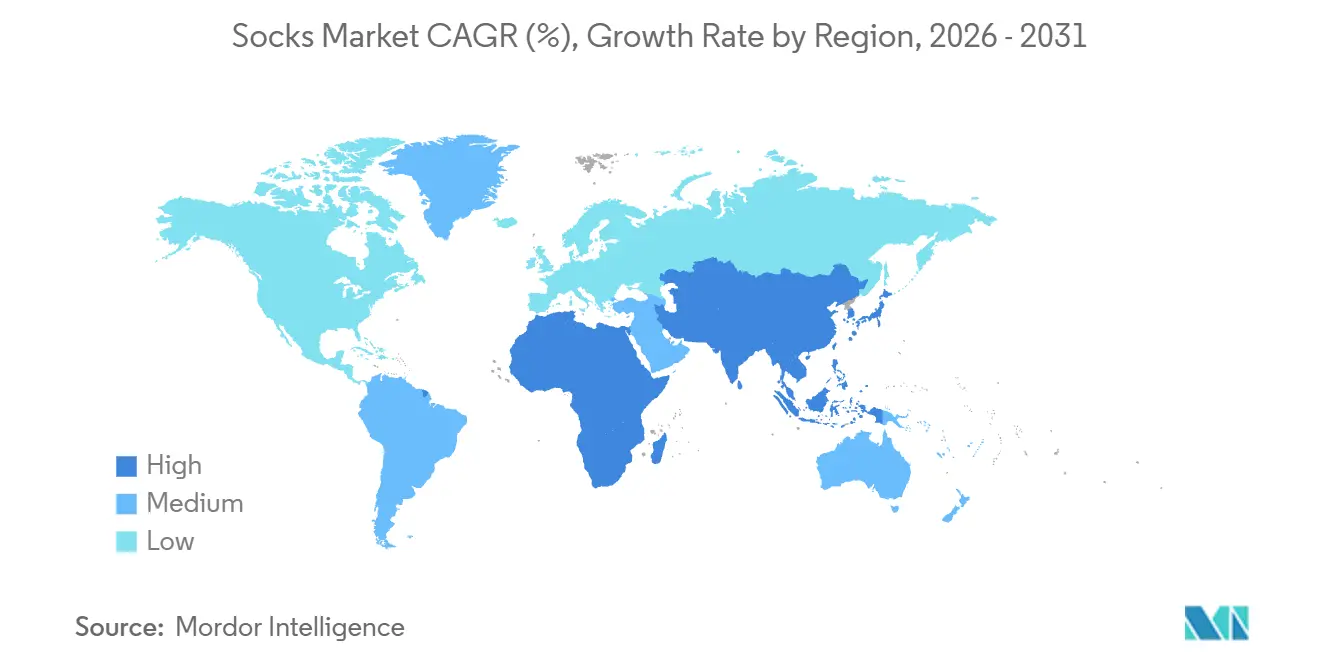
The Asia-Pacific region accounted for 33.32% of the projected 2025 revenue, making it the leading segment globally. This dominance is attributed to urbanization, rising disposable incomes, and the growing middle-class populations in countries such as China, India, Indonesia, and Vietnam. China's textile and apparel market, the largest in the world, benefits from both domestic consumption and export manufacturing. Local brands like Li Ning and Anta are increasing their market share through technical innovation and patriotic branding that resonates with younger consumers. In India, the socks market is expanding as organized retail grows and e-commerce platforms such as Flipkart and Amazon India provide branded hosiery at competitive prices, reaching tier-two and tier-three cities where traditional distribution remains underdeveloped. Japan and South Korea also contribute significantly, with high per-capita consumption of premium and technical socks driven by mature fitness cultures and a preference for quality over quantity.
North America and Europe Socks Market
North America and Europe, while growing at a slower pace, remain important markets due to high average selling prices, strong brand loyalty, and early adoption of sustainability and technical innovations. The United States market is highly competitive, with athletic giants, heritage hosiery brands, and direct-to-consumer entrants vying for market share. Distribution in the United States spans mass merchants, specialty chains, and online platforms. In Europe, consumers prioritize sustainability and regulatory compliance. The European Union's proposed Digital Product Passport requires brands to disclose fiber origins, manufacturing locations, and carbon footprints, benefiting established players with strong supply-chain traceability.
South America and MEA Socks Market
Other regions, including South America and the Middle East and Africa, are smaller but rapidly developing markets. Brazil, Argentina, Saudi Arabia, the United Arab Emirates, and South Africa lead consumption in their respective regions. Brazil's textile industry, traditionally focused on domestic production, is increasingly integrating into global supply chains and attracting foreign direct investment to expand manufacturing capacity. In contrast, Argentina's economic volatility results in cyclical demand patterns, favoring value-oriented brands.

Regulatory Landscape
Regulation affecting socks is increasingly driven by product-safety compliance, environmental-claim scrutiny, and end-to-end traceability requirements across major consumer markets. In the European Union, the General Product Safety Regulation (GPSR) has applied since 13 December 2024, which raises expectations for documented risk assessment and compliant labeling for consumer apparel accessories sold in the bloc. Sustainability communication is also tightening, with the Empowering Consumers for the Green Transition Directive (2024/825) scheduled to apply from 27 September 2026, increasing substantiation requirements for environmental claims used in marketing and on-pack messaging.
In the United States, compliance is moving toward more structured, data-first import and product documentation, with US Customs and Border Protection (CBP) implementing electronic submission of certificate-of-compliance data for consumer products starting 8 July 2026. State-level extended producer responsibility (EPR) for textiles is also emerging as an operational consideration: California's Responsible Textile Recovery Act (SB 707) requires textile producers to register with a producer responsibility organization (PRO), Landbell USA, by 1 July 2026, adding new registration and reporting steps for brands and private-label programs. Testing and restricted-substance compliance continues to affect materials choices, with OEKO-TEX Standard 100 updates effective 1 June 2026 and France instituting a PFAS ban for clothing textiles from January 2026, increasing pressure to reformulate finishes and verify chemical inputs across dyeing and treatment stages.
Competitive Landscape
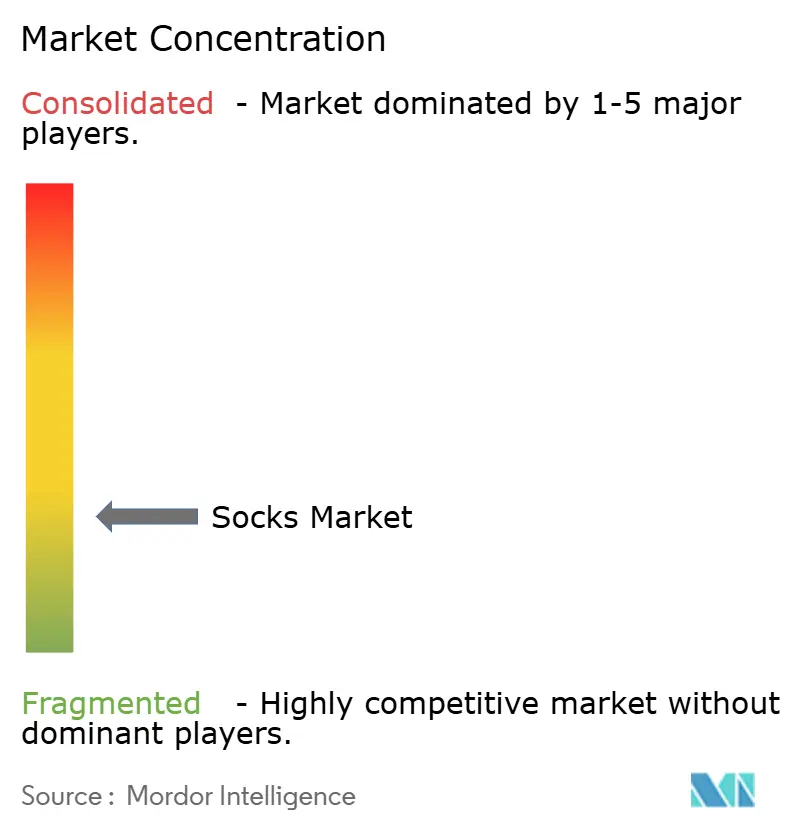
The socks market shows a fragmented structure, with no single player holding a dominant share. Competitive intensity remains high across various price tiers and distribution channels. Established athletic brands such as Nike, Adidas, and Puma leverage their global scale, technical innovation, and marketing capabilities to maintain premium positions. However, they face margin pressures from direct-to-consumer brands like Bombas, Stance, and Darn Tough, which bypass traditional wholesale models and build brand loyalty through social missions, lifetime guarantees, and limited-edition collaborations.
Heritage hosiery companies, including Hanesbrands, Jockey, and Gildan, focus on manufacturing efficiency, extensive distribution networks, and private-label partnerships with mass retailers. Meanwhile, niche players such as Injinji and Feetures cater to performance athletes with specialized designs addressing biomechanical needs. Key strategic initiatives in the market include commitments to sustainability, digital transformation, and geographic expansion. For example, Adidas has pledged to source 100% recycled polyester by 2027, and Nike is investing in circular business models, reflecting the growing influence of environmental considerations on purchasing decisions, particularly among younger consumers.
Under Armour's integration of connected apparel, embedding sensors into socks to track performance metrics, represents an effort to differentiate through technology and generate recurring revenue via subscription-based analytics services. Additionally, opportunities exist in underserved segments such as diabetic socks, which require seamless construction and non-binding tops to meet medical needs, as well as in emerging markets where organized retail penetration is low and brand awareness is still developing. The International Organization for Standardization (ISO)'s development of ISO 23537 for moisture-wicking test methods provides a framework for standardizing performance claims. This could accelerate the adoption of such claims and facilitate cross-border trade.
Socks Industry Leaders
Nike Inc.
Adidas AG
Hanesbrands Inc.
Puma SE
Gildan Activewear Inc.
- *Disclaimer: Major Players sorted in no particular order
Socks Market Companies Covered in this Report
- Nike Inc.
- Adidas AG
- Hanesbrands Inc.
- Puma SE
- Gildan Activewear Inc.
- VF Corporation
- Under Armour Inc.
- Skechers U.S.A. Inc.
- Falke KGaA
- Jockey International Inc.
- Renfro Brands LLC
- Stance Inc.
- Wigwam Mills Inc.
- Injinji Inc.
- Pantherella Int’l Group Ltd
- Happy Socks AB
- Bombas
- Darn Tough Vermont
- Balega (Implus)
- Feetures Inc.

Market Opportunities and Future Outlook
Traceability and compliance-led product differentiation is becoming a more visible lever as the category faces low entry barriers alongside rising documentation demands. EU requirements (GPSR in force since December 2024 and the Digital Product Passport direction for textiles) and the United States moving to electronic certificate-of-compliance submission in July 2026 raise the value of SKU-level material and factory data, which aligns with brands investing in transparent sourcing and supporting omnichannel retail. Adidas reporting a large manufacturing footprint, with 444 Tier 1 manufacturing facilities in 2025, also indicates that scaled players are already organizing supplier data and audits, creating room for upstream software, testing services, and manufacturers that can support verified fiber origin, performance claims, and restricted-substance conformance.
Capacity additions and sustainability targets are also opening up sourcing and private-label opportunities, particularly in Asia-Pacific where organized retail and e-commerce expansion lift branded penetration. In July 2026, Adidas expanded sourcing in India through a new Evervan Kothari plant in Karur with 40 million pairs of annual capacity, pointing to continued interest in localized, scalable supply for hosiery and adjacent knit categories. On materials, Gildan stated it reached its 100% sustainable cotton sourcing goal in 2025 and reported a 25% water intensity reduction, supporting broader adoption of certified fibers and lower-impact processing that brands can translate across both premium and mass-market assortments. These shifts reinforce opportunities for suppliers of certified cotton and recycled synthetics, and for manufacturers able to maintain consistent quality despite variability in cotton and recycled polyester feedstocks.
Recent Industry Developments in Socks Market
- June 2026: Adidas AG debuted ADIDAS PRO WORK safety footwear collection, marking entry into PPE to support varied industry worksites. The launch expands Adidas reach into PPE and industrial footwear, broadening addressable markets. The diversification strengthens the resilience of its product portfolio and could influence durability and pricing strategies across related categories.
- May 2026: Nike, Inc. launched NikeSKIMS Studio Stretch collection, incorporating material innovation for performance apparel. The initiative highlights ongoing material innovation in performance wear. The move reinforces Nike's leadership in high end performance categories and may push premium pricing in related accessories.
- May 2026: Gildan Activewear Inc. reported record Q1 2026 revenues and confirmed ongoing integration of HanesBrands operations within its vertically integrated manufacturing model. The development underscores an acquisition integration impact on basic apparel production. Consolidation of supply chain and capacity could affect pricing, margins, and competitiveness in basic apparel including socks.


Socks Market Report Scope and Research Methodology
Market Definition and Coverage
For this study, the market covers socks sold for everyday wear, sports use, and fashion use across consumer age groups, tracked as revenue at the point where products are sold through retail and online channels.
Scope exclusions: Medical compression hosiery and clinical-grade therapeutic stockings are excluded when they are marketed and sold primarily as medical devices.
Segments Covered in This Report
- By Product Type
- Athletic Socks
- Casual and Fashion Socks
- By End User
- Men
- Women
- Kids/Children
- By Fabric Material
- Cotton
- Polyester
- Others
- By Category
- Mass
- Premium
- By Distribution Channel
- Supermarkets/Hypermarkets
- Specialty Stores
- Online Retail Stores
- Other Distribution Channels
- By Geography
- North America
- United States
- Canada
- Mexico
- Rest of North America
- Europe
- Germany
- United Kingdom
- Italy
- France
- Spain
- Netherlands
- Poland
- Belgium
- Sweden
- Rest of Europe
- Asia-Pacific
- China
- India
- Japan
- Australia
- Indonesia
- South Korea
- Thailand
- Singapore
- Rest of Asia-Pacific
- South America
- Brazil
- Argentina
- Colombia
- Chile
- Peru
- Rest of South America
- Middle East and Africa
- South Africa
- Saudi Arabia
- United Arab Emirates
- Nigeria
- Egypt
- Morocco
- Turkey
- Rest of Middle East and Africa
- North America
Data Sources, Market Sizing, and Validation
Desk Research
Desk research is used to set the market boundaries and build the starting demand picture before assumptions are tested through calls. We rely on public trade and production signals, and then connect them with apparel spending indicators to understand how socks sit within household purchases.
Sources commonly referred to include official trade statistics and tariff-line guidance such as UN Comtrade, ITC Trade Map, and national customs portals, along with macro and consumer data from sources such as the World Bank and the OECD. For category context, we also review industry bodies and standards material (for example, textile and apparel associations), plus peer-reviewed textile and polymer journals to understand shifts in fiber use and how performance claims can move prices. Company annual reports, investor presentations, and reputed press are used to corroborate channel moves and pricing actions, and we also use paid subscriptions for company financials and intelligence, patent coverage, and import-export shipment-level checks when data gaps show up. This list is illustrative only, and other public and subscription sources were also used for data collection, validation, and clarification.
Primary Interviews and Surveys
Primary work focuses on checking what is really being sold, at what price points, and how demand differs by channel and region, since socks are a high-frequency purchase with wide quality spreads. We spoke with a mix of manufacturers, distributors, retailers, and material-side experts, then used follow-ups to test assumptions on average selling prices, product mix changes, and the share of online versus offline sales across major regions.
Distribution of primary research fieldwork respondents
| Company type | Respondent position | Region |
|---|---|---|
| Top tier: 28% | CXOs: 12% | APAC: 46% |
| Mid tier: 57% | Functional/Unit leaders: 29% | EMEA: 34% |
| Smaller Players: 15% | Managers: 59% | Americas: 20% |
Market-Sizing & Forecasting
Sizing starts with a top-down build that reconstructs demand from apparel and textile spend, trade flows for hosiery-related categories, and country-level consumption signals, then allocates the pool into socks using observed mix patterns. Once the first cut is built, we corroborate it with selective bottom-up approximations, such as supplier revenue sampling, channel checks on unit volumes, and sampled average selling price ranges multiplied by implied units, before the final totals are adjusted.
The model is informed by practical inputs that are easier to re-check, including population and urbanization trends, per-capita apparel spend, import and export values linked to hosiery, shifts in fiber mix (cotton versus synthetics and blends), and the share of sports and athleisure-led purchases that typically carry higher prices. Where country data is thin, gaps are handled through proxy markets with similar income bands and retail structure, then refined using interview feedback on product mix and pricing ladders.
For forecasting, we typically apply scenario analysis supported by time series smoothing on demand drivers, so growth remains consistent with how apparel budgets and retail expansion usually move over time. Assumptions on pricing progression and mix upgrades are validated through primary inputs, and the outlook is stress-tested for inflation, currency conversion timing, and retail markdown intensity.
Data Validation & Update Cycle
Outputs are validated through several steps so major jumps are questioned before numbers are finalized. We compare the modeled totals against independent signals such as trade value trends, apparel spending movement, and channel expansion indicators, then investigate variances that exceed expected ranges.
If a mismatch persists, assumptions are revisited and respondents are re-contacted to clarify drivers such as pricing, mix, or a one-time inventory swing. Before sign-off, the model is reviewed by another analyst for logic consistency, unit alignment, and currency treatment. Reports are refreshed annually, and interim updates are made when material events occur, after which a final pre-delivery check is completed so clients receive the latest updated view.
Mordor Intelligence's Socks Market Estimate Compared With Other Published Estimates
Published market values for socks can look far apart because each estimate is built on its own definition of what counts as socks, how pricing is averaged, and which year is treated as the base. Differences also come from how imports, domestic output, and retail sales are blended, especially in regions where production is export-oriented.
Some published figures fold in broader hosiery baskets and adjacent legwear, then apply a single growth path across categories even when mix shifts are uneven. In Mordor Intelligence, totals are limited to consumer socks revenue and are kept separate from medical compression products, and the 2026 base is checked against trade signals and channel-level pricing before the forecast is extended.
Benchmark comparison
| Source | Market Size | Gaps in Research Methodology |
|---|---|---|
| Mordor Intelligence | USD 47.92 B (2026) | |
| Trade Journal A | USD 33.10 B (2024) | Uses an earlier base year and a broader definition that appears to include specialized socks categories (including medical-use items) under one headline value, which can pull the total down or up depending on pricing assumptions. |
| Global Data Publisher B | USD 28.50 B (2024) | Reports a combined sock and hosiery view with a narrower revenue capture approach, and relies on generalized pricing and mix assumptions that may not be re-checked against trade movements and channel expansion in the base year. |
The spread in the table is mainly explained by scope and base-year treatment, followed by how average selling prices are moved forward across regions. By keeping the counted product set consistent and tying pricing and mix back to observable demand signals, the final number becomes easier to trace and repeat when the market is updated.


Key Questions Answered in the Report
How large will global demand for socks become by 2031?
Global revenue is forecast to climb to USD 57.27 billion by 2031, reflecting a 3.63% CAGR from 2026 onward.
Which product category is gaining share most quickly?
Athletic designs are projected to expand at a 4.15% CAGR, the fastest among product types due to rising fitness participation and athleisure adoption.
Why is Asia-Pacific the fastest-growing region?
Urbanization, higher disposable incomes, and broader organized retail access drive a 5.71% regional CAGR, outpacing North America and Europe.
What materials are manufacturers prioritizing for sustainability?
Brands increasingly blend organic cotton with recycled polyester and explore closed-loop bamboo viscose to cut emissions and meet regulatory standards.
How are supermarkets strengthening their position?
Large-format chains deploy omnichannel tools—click-and-collect, curbside pickup, and same-day delivery—to combine in-store discovery with online convenience, supporting a 5.44% CAGR in the channel.
Page last updated on:


 Your data is secure and never sold or shared.


