
Market Overview
| Study Period | 2021 - 2031 |
|---|---|
| Market Size (2026) | USD 292.01 Billion |
| Market Size (2031) | USD 358.58 Billion |
| Growth Rate (2026 - 2031) | 4.20 % |
| Fastest Growing Market | Middle East and Africa |
| Largest Market | Asia-Pacific |
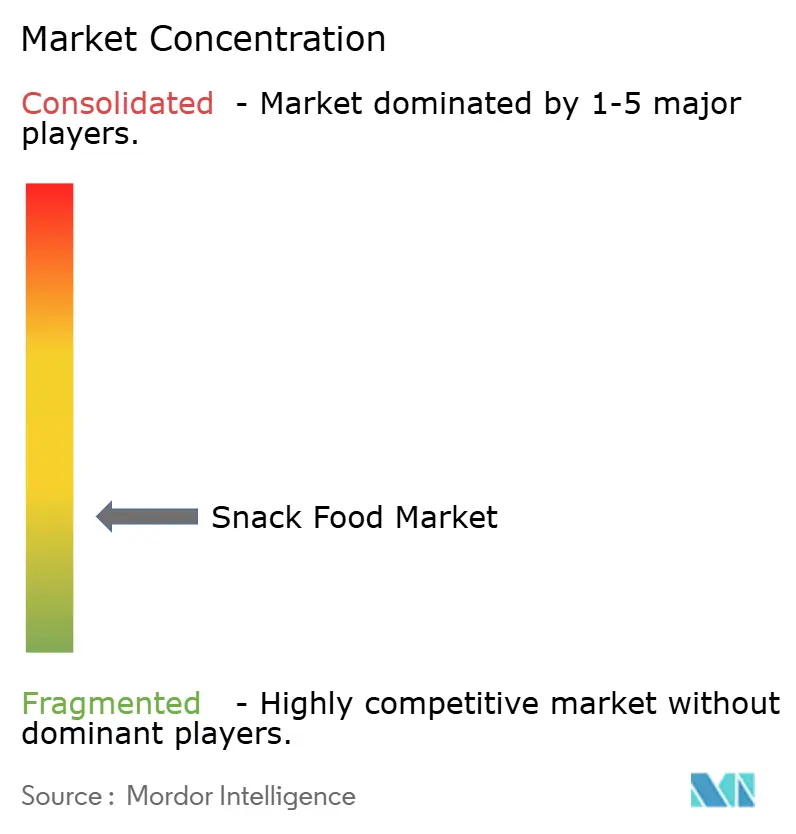
| Market Concentration | Low |
Major Players
*Disclaimer: Major Players sorted in no particular order Image © Mordor Intelligence. Reuse requires attribution under CC BY 4.0. |
|
Snack Food Market Analysis by Mordor Intelligence
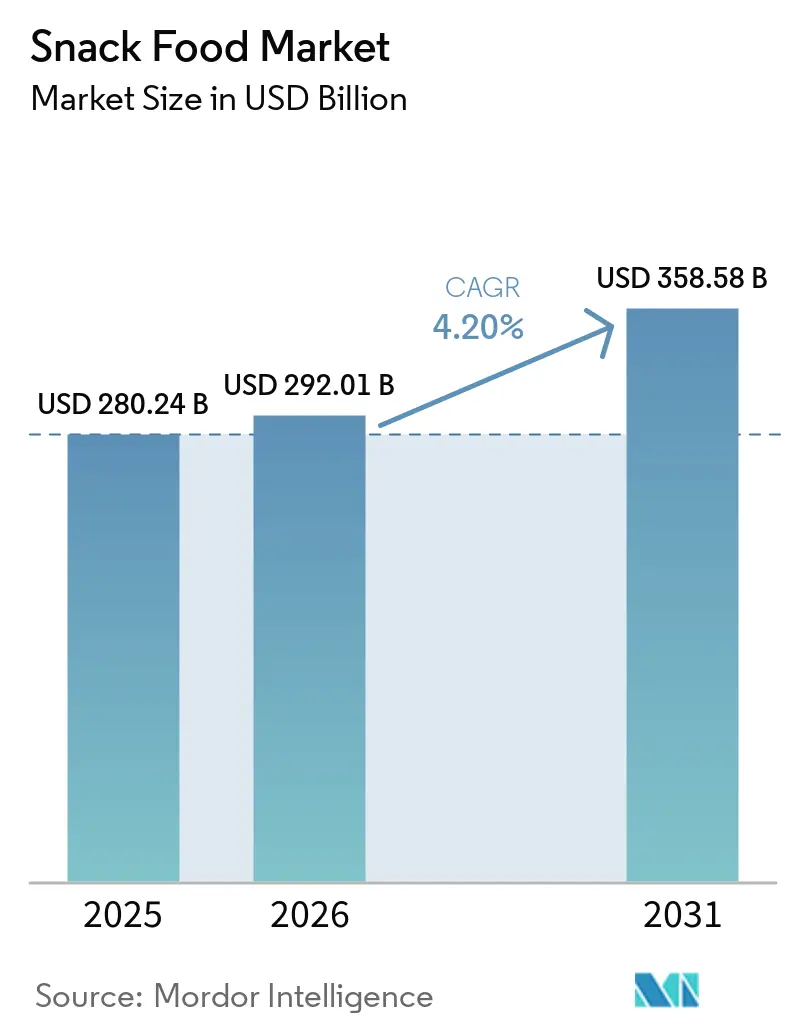
The snack foods market size in 2026 is estimated at USD 292.01 billion, growing from 2025 value of USD 280.24 billion with 2031 projections showing USD 358.58 billion, growing at 4.2% CAGR over 2026-2031. Convenience continues to be a significant driver of demand, with 92% of adults reporting at least one snacking occasion within a 24-hour period. This underscores the increasing consumer preference for accessible and ready-to-eat options that fit into their busy lifestyles. Digital commerce, combined with quick-commerce fulfillment models, is transforming route-to-market strategies by enabling faster delivery, expanding brand visibility, and leveraging data-driven personalization to meet diverse consumer needs effectively. At the same time, regulatory and sustainability agendas are gaining momentum. Key initiatives, such as HFSS advertising restrictions aimed at curbing the promotion of high-fat, salt, and sugar products, and extended-producer-responsibility mandates focusing on sustainable waste management, are driving investments toward the development of healthier product formulations and innovative, low-impact packaging solutions[1]Source: United Kingdom Government, "Restricting advertising of less healthy food or drink on TV and online: products in scope", gov.uk. These shifts reflect the growing alignment of industry practices with consumer expectations and regulatory requirements.
Key Report Takeaways
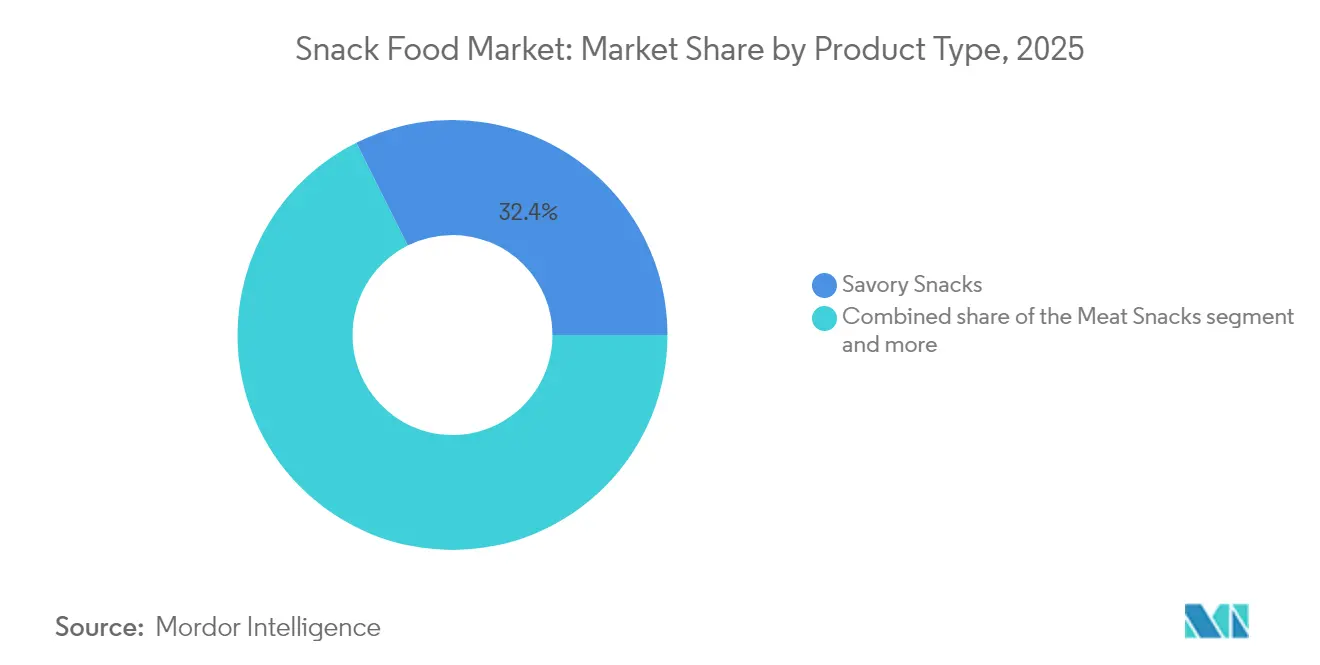
- By product type, savory snacks led with 32.39% market share in 2025, whereas meat snacks are poised to post a 6.08% CAGR through 2031.
- By ingredient type, conventional recipes held 63.02% share in 2025, while organic / clean-label lines are projected to record a 5.27% CAGR over 2026–2031.
- By distribution channel, supermarkets/hypermarkets captured 34.21% of the 2025 base, and online retail is projected to register a 5.55% CAGR through 2031.
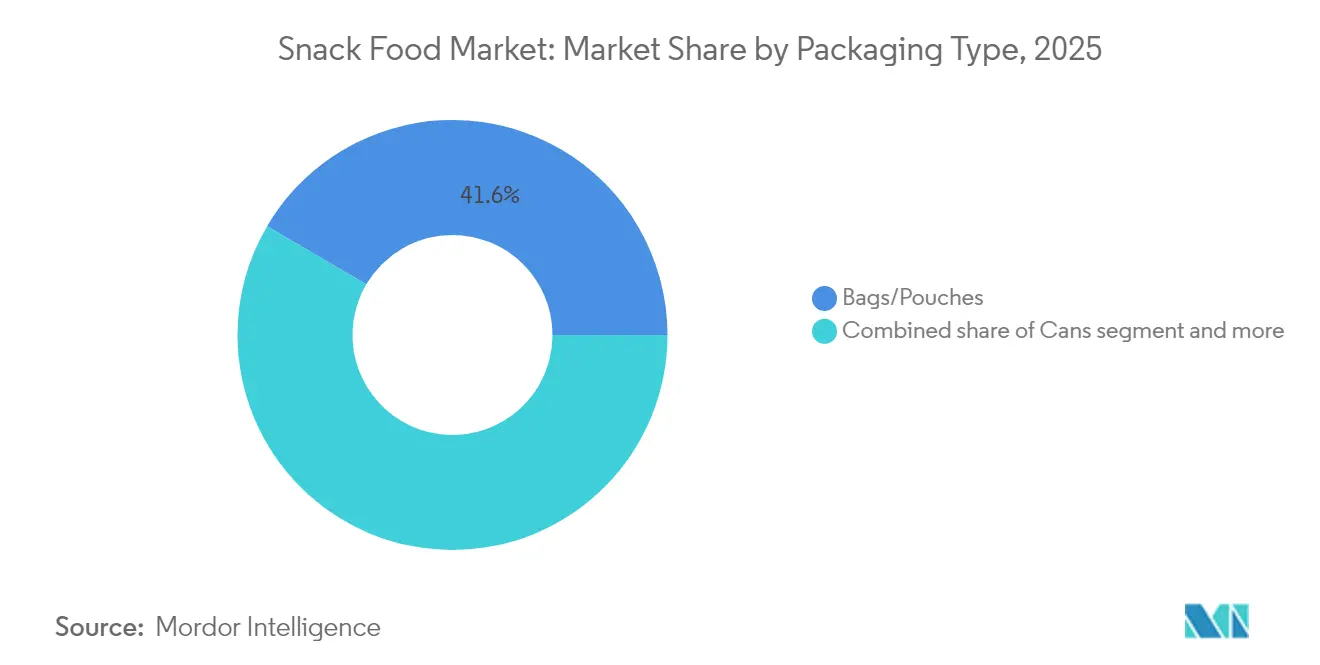
- By packaging type, bags/pouches commanded 41.55% share in 2025, and cans are forecast to log 4.58% CAGR as brands pursue circular-ready formats.
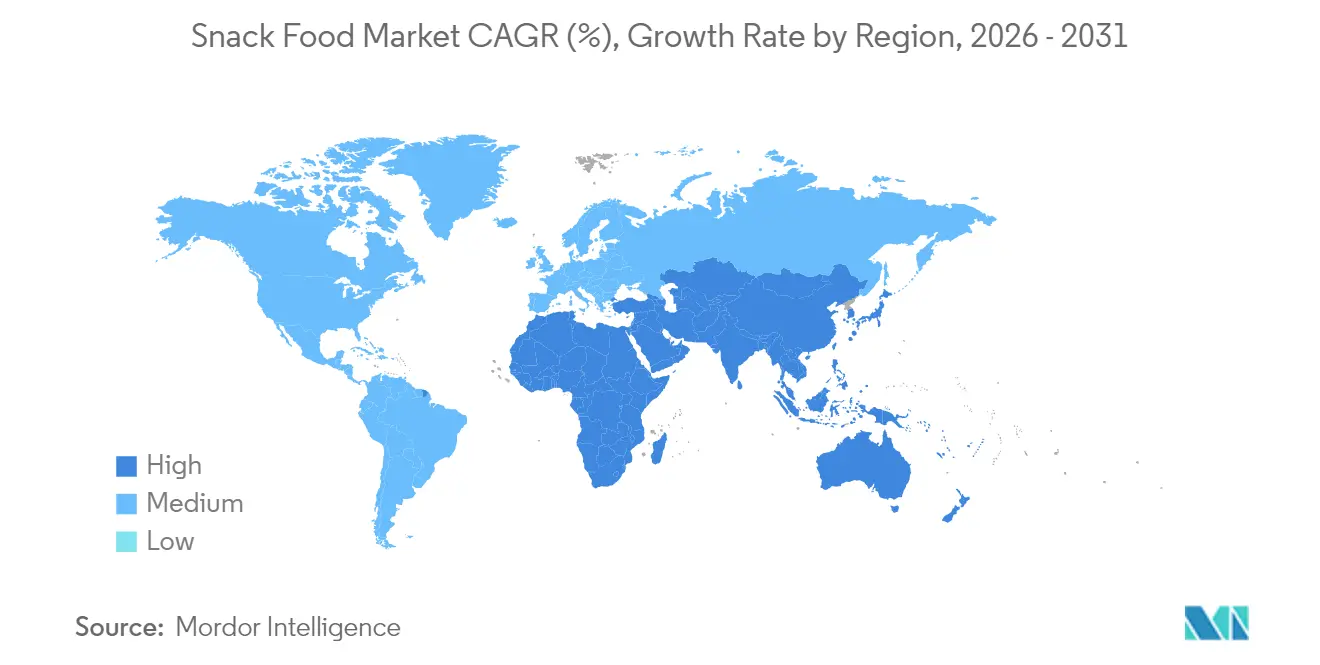
- By geography, Asia-Pacific contributed 31.42% of global sales in 2025 and Middle East and Africa is anticipated to be the fastest climber at 4.78% CAGR to 2031.
Note: Market size and forecast figures in this report are generated using Mordor Intelligence’s proprietary estimation framework, updated with the latest available data and insights as of 2026.
Market Trends and Insights
Drivers Impact Analysis of Snack Food Market*
| Driver | (~) % Impact on CAGR Forecast | Geographic Relevance | Impact Timeline |
|---|---|---|---|
| Rising demand for convenient foods | +1.2% | Global with peak effect in North America and Asia-Pacific | Medium term (2–4 years) |
| Growing demand for fortified and functional snacks | +0.9% | North America and Europe expanding into Asia-Pacific | Long term (≥ 4 years) |
| Expansion of snackification as meal replacements | +0.8% | Urban centers worldwide | Medium term (2–4 years) |
| Growing penetration of e-commerce and quick-commerce | +0.7% | Global with rapid momentum in Asia-Pacific and Middle East | Short term (≤ 2 years) |
| Upcycling food waste into value-added snacks | +0.4% | North America and Europe and emerging in Asia-Pacific | Long term (≥ 4 years) |
| Flavor forward localization | +0.3% | Global with regional flavor nuances | Medium term (2–4 years) |
| Source: Mordor Intelligence | |||
Rising demand for convenient foods
Urban lifestyles are shrinking meal times, driving up demand for portable, individually portioned packs. Brands are increasingly adopting resealable pouches and oxygen-barrier films, which not only extend shelf life but also cater to the needs of on-the-go consumers. These packaging innovations ensure convenience while maintaining product freshness, making them highly appealing to busy urban populations. This trend leans heavily towards protein-rich offerings, particularly in meat and plant-protein categories, as they provide meal-replacement satisfaction and meet the growing consumer preference for high-protein diets. The rise of quick-commerce further amplifies this trend, favoring companies that can efficiently deliver high-demand SKUs within a 15-minute window, a critical factor in maintaining competitiveness in this fast-paced market. Meanwhile, manufacturers face the challenge of adhering to stringent labeling standards, which require them to ensure that their formulations, packaging designs, and claims comply with FDA nutritional disclosure mandates, adding another layer of complexity to product development and marketing strategies.
Growing demand for fortified and functional snacks
Consumers are increasingly shifting from empty-calorie snacks to those rich in protein, fiber, probiotics, and essential micronutrients, driven by a growing awareness of health and wellness. Advanced processes, such as high-moisture extrusion, allow formulators to seamlessly incorporate these functional actives into products without compromising texture or sensory appeal. The rising demand for clean-label products further accelerates this trend, as shoppers actively avoid artificial colors, preservatives, and other synthetic additives. Additionally, the FDA's updated criteria for the "healthy" claim, set to take effect in February 2028, will enforce stricter nutritional standards, creating opportunities for companies that proactively reformulate their offerings to meet these guidelines[2]Source: Food and Drug Administration,"FDA Finalizes Updated “Healthy” Nutrient Content Claim", www.fda.gov . Companies that source bioactive ingredients directly from growers not only enhance their credibility among health-conscious consumers but also mitigate supply chain risks, particularly in this premium-priced and highly competitive segment.
Expansion of snackification as meal replacements
Gen Z and Millennials are shifting away from the traditional three-meal cadence, opting instead for multiple mini-eating moments. This shift reflects changing lifestyles and preferences for more flexible eating patterns. In response, brands are enhancing their offerings with bulkier portions, layered textures, and globally inspired seasonings, aiming to balance indulgence with nutrient density. These innovations cater to consumers seeking convenient yet satisfying options that can replace full meals. A prime example of this trend is the surge in meat snacks, which have outpaced baseline growth due to their protein content meeting satiety demands. Additionally, the inherent portability and long shelf life of meat snacks make them an attractive choice for on-the-go consumption. Furthermore, product developers are scrutinizing amino-acid profiles and glycemic impacts, ensuring these "snack meals" align with specific dietary plans like keto or high-protein regimens. This meticulous approach highlights the industry's commitment to addressing diverse consumer needs while maintaining nutritional integrity.
Growing penetration of e-commerce and quick-commerce
As online shopping surges, retailers are prioritizing thumbnail photography, product ratings, and enhancing last-mile delivery to meet evolving consumer expectations. This shift reflects the growing importance of digital merchandising strategies in capturing consumer attention and driving online sales. To combat temperature fluctuations during transit, companies are increasingly adopting sturdier secondary packaging and incorporating desiccant inserts to maintain the quality of snacks, particularly crisp ones. These measures ensure product integrity and customer satisfaction, even under challenging transportation conditions. Urban dark-store operators, which focus on providing rapid deliveries in densely populated areas, are playing a significant role in reshaping the supply chain. These operators enable faster delivery times but impose higher slotting fees, which are pushing brands to concentrate on promoting high-margin SKUs to offset costs and maintain profitability. Research further highlights that consumers are willing to pay a premium for ultrafast delivery services, particularly for indulgent treats and better-for-you products, reflecting a growing demand for convenience, premium experiences, and health-conscious options.
Restraints Impact Analysis of Snack Food Market*
| Restraint | (~) % Impact on CAGR Forecast | Geographic Relevance | Impact Timeline |
|---|---|---|---|
| Fragmented unorganized retail and distribution gaps | –0.6% | Asia-Pacific and Africa | Medium term (2–4 years) |
| Volatility in agricultural commodity prices | –0.5% | Global with higher pressure on cost-sensitive segments | Short term (≤ 2 years) |
| Rising scrutiny of HFSS advertising to children | –0.4% | Europe and North America | Long term (≥ 4 years) |
| Tightening single-use-plastic and EPR rules | –0.3% | Led by Europe with global ripple effects | Long term (≥ 4 years) |
| Source: Mordor Intelligence | |||
Fragmented unorganized retail and distribution gaps
In many emerging markets, informal mom-and-pop outlets hold sway, curbing the reach of chilled chains and dampening the potential for premiumization. These outlets dominate due to their accessibility, affordability, and deep-rooted presence in local communities, making it challenging for organized retail formats to penetrate. Additionally, deficits in rural roads and cold storage infrastructure further hinder the distribution and availability of higher-value perishable snacks, limiting their market growth and reducing opportunities for category expansion. While digital B2B ordering apps are making strides in Indonesia, India, and the Philippines, bridging small stores with organized distributors and mitigating stock-out risks, adoption rates vary significantly[3]Source: United States Department of Agriculture,"Snack Foods Market Brief", apps.fas.usda.gov. Factors such as digital literacy, internet connectivity, trust in technology, and the willingness of small retailers to shift from traditional procurement methods to digital platforms contribute to the uneven adoption of these solutions.
Volatility in agricultural commodity prices
Erratic movements in the markets for corn, wheat, and edible oils are being driven by extreme weather events and geopolitical uncertainties. These factors have disrupted supply chains, leading to unpredictable price fluctuations that challenge market stability. Manufacturers without advanced hedging programs or diversified supplier bases are feeling the pinch from these input price swings, as they struggle to absorb the rising costs. In contrast, leading brands are taking proactive measures by securing forward contracts to lock in prices and investing in regenerative sourcing practices to ensure long-term sustainability and reduced risk. These strategies not only help stabilize their operations but also enhance their resilience against future disruptions. However, smaller players, lacking the resources to implement such measures, are grappling with slimmer margins, tighter cash flows, and increased financial vulnerability in this volatile environment. This disparity highlights the growing divide between established market leaders and emerging entrants, as the latter face significant challenges in navigating the current market dynamics.
*Our forecasts treat driver/restraint impacts as directional, not additive. The impact forecasts reflect baseline growth, mix effects, and variable interactions.
Snack Food Market Segment Analysis
By Product Type:
Meat Snacks Drive Premium GrowthIn 2025, savory snacks continued to dominate the global snack foods market, commanding a 32.39% share. This stronghold underscores the persistent consumer affinity for salty, crispy treats like potato chips, corn snacks, and pretzels. While competition from healthier snack alternatives is on the rise, savory snacks remain a cherished indulgence across various age groups and regions. Innovations, such as extruded vegetable crisps and pulse-based puffs, are infusing plant-based nutrition into the savory realm. Yet, mainstream consumers still gravitate towards authentic flavors, enticing seasoning blends, and that coveted crunch. Even with the ascent of healthier options, the segment's wide sensory allure cements savory snacks as a go-to for both spontaneous and planned grocery buys.
Meat snacks are carving out a niche as the snack foods market's fastest-growing segment, with projections indicating a robust CAGR of 6.08%. Items like meat sticks and jerky are particularly favored by active, health-conscious consumers, thanks to their portability and high protein content, all without the need for refrigeration. In response to clean-label demands, brands are rolling out product extensions featuring grass-fed beef, turkey, and bison, emphasizing both taste and ethical sourcing. Such innovations resonate especially with premium snack buyers who value flavor and ingredient transparency. The segment is riding the wave of broader protein wellness trends and a pivot away from high-carb snacks. With its dynamic growth, diverse protein offerings, and alignment with modern lifestyles and clean eating, the meat snacks category is steadily increasing its footprint in the global snack foods arena.



By Ingredient Type:
Clean-Label Momentum AcceleratesIn 2025, conventional snack food formulas dominated the market, accounting for 63.02% of total revenue. Their stronghold is largely due to cost competitiveness, appealing to mass-market consumers, and the widespread availability of core raw materials. This ensures predictable manufacturing and distribution for producers, leading to steady supply chains and consistent pricing. Additionally, conventional snacks enjoy consumer familiarity, established brand loyalty, and economies of scale that keep costs low. Despite facing stiff competition from health-focused alternatives, their accessibility in both developed and emerging markets solidifies their substantial market share. The segment's pervasive retail presence poses challenges for newer formats, even as niche categories gain traction.
Organic and clean-label snack formulas are on track to achieve a 5.27% CAGR over the forecast period, positioning them as the market's fastest-growing segment. This surge is driven by consumers' readiness to pay a premium for transparency in farming and for formulations that are additive-free and non-GMO. Yet, scaling this segment introduces complexities: processors need to secure certified organic acreage, verify ingredient origins, and uphold stringent traceability. While a projected dip in organic soybean and corn prices may alleviate some cost pressures, brands must navigate procurement judiciously to ensure a steady supply. Companies that spotlight collaborations with farmers and emphasize regenerative agriculture practices stand a better chance of winning over eco-conscious consumers. With shoppers increasingly prioritizing sustainability and health in their choices, organic and clean-label specialty snacks are steadily expanding their footprint in the snack food market.
By Packaging Type:
Sustainability Drives InnovationIn 2025, bags and pouches captured 41.55% of the global snack packaging volume, highlighting their market dominance. Their lightweight, portable, and resealable nature caters to diverse consumption occasions. This format's versatile sizing, cost efficiency, and branding flexibility make it a top choice for manufacturers and consumers alike. Technological advancements in packaging are boosting their allure. Leading converters are rolling out mono-material polyolefin films, simplifying recycling without compromising on oxygen or moisture barriers. Major brands, like Mars, are fine-tuning logistics to support this format, evidenced by their adoption of right-size cases, which cut down corrugated-board tonnage, costs, and carbon emissions. Given the rising sustainability expectations and ongoing functional enhancements, bags and pouches are poised to retain their leading position in snack food packaging.
While cans have long been a staple in snack packaging, they're now on track to grow at a 4.58% CAGR, emerging as the category's fastest-growing segment. This revival is primarily due to their recyclability, aligning seamlessly with Extended Producer Responsibility (EPR) mandates and established waste-collection systems in many developed regions. Cans not only safeguard products but also extend shelf life, appealing to manufacturers and consumers who prioritize premium or durable snacks. Their alignment with circular economy principles makes them a top pick for brands emphasizing sustainability. Innovations like lightweight metal alloys and easy-open ends are boosting their market allure. As the global demand for eco-friendly packaging surges, cans are re-establishing their significance and steadily increasing their footprint in snack food packaging.
By Distribution Channel:
Digital Transformation AcceleratesIn 2025, supermarkets and hypermarkets captured 34.21% of the total snack food expenditure, solidifying their status as the dominant distribution channel. Their prowess stems from presenting a vast array of products, accommodating diverse consumer tastes in one visit. Promotional strategies, including bundle offers, in-store discounts, and loyalty incentives, drive higher-value purchases. These retailers enjoy robust brand collaborations and heightened in-store visibility, fueling impulse buys in the snack segment. The expansive retail format allows shoppers the ease of a one-stop shop, blending essential groceries with tempting snack choices. With a well-established framework, frequent promotional activities, and the ability to showcase both emerging and established brands, supermarkets and hypermarkets continue to be pivotal in global snack distribution.
Online retail is poised to expand at a CAGR of 5.55%, emerging as the quickest-growing channel for snack distribution. This surge is fueled by increasing smartphone adoption, making app-driven grocery shopping more reachable. Swift delivery services enable near-instant snack access, merging convenience with variety. Subscription snack boxes introduce a novel discovery facet, letting consumers sample global tastes and niche brands from their homes. Furthermore, this platform empowers brands with targeted promotions, tailored suggestions, and direct consumer interaction. With the digital landscape broadening and logistics fortifying, online retail's foothold in the snack market is set to intensify, posing a challenge to traditional brick-and-mortar establishments in the coming years.
Geography Analysis
APAC Snack Food Market
In 2025, the Asia-Pacific region claimed the largest share of global revenue at 31.42%, driven by urbanization, rising middle-class incomes, and a deep-rooted cultural preference for savory and spicy flavors. China, with its retail snack sales surpassing 1 trillion yuan, owes much of its success to domestic champions adept at fusing traditional ingredients with contemporary processing methods. Meanwhile, regional research and development centers are swiftly introducing localized products, like seaweed-infused chips in Japan and chili-mango gummies in Thailand.
MEA Snack Food Market
The Middle East and Africa is set to experience the fastest growth, projected at a 4.78% CAGR through 2031. This surge is fueled by youthful demographics, a rise in e-commerce, and a rebound in tourism. Both Saudi Arabia and the United Arab Emirates are channeling significant investments into food processing hubs and logistics networks, aiming to lessen import dependencies and harness re-export opportunities. Seasonal peaks in spending are driven by premium gifting assortments during Ramadan and Diwali, alongside a growing trend towards functional snacks, mirroring global wellness trends.
Europe and the Americas Snack Food Market
North America, Europe, and South America navigate a landscape of mature market penetration, each with its distinct regulatory and economic nuances. The U.S. market, while a stronghold for high-protein and artisanal products, grapples with commodity-price fluctuations that challenge price sensitivity. Europe takes the lead in stringent policies, especially concerning plastics and HFSS marketing, pushing brands towards constant reformulation and innovative packaging designs. In South America, Brazil and Mexico stand out as growth powerhouses, even as they contend with currency volatility and a fragmented retail landscape that complicates nationwide expansions. Across all continents, businesses are increasingly recognizing the necessity of integrated risk-management strategies, addressing sourcing challenges, climate resilience, and multi-modal freight solutions.

Regulatory Landscape
Snack food manufacturers operate under tightening food safety, labeling, and marketing requirements that increasingly shape formulation and pack claims. In the United States, the Food and Drug Administration (FDA) is a central authority for nutrition labeling and guidance, and its Food Safety Modernization Act (FSMA) framework includes the Rule 204 traceability recordkeeping requirements, with a compliance deadline in January 2026 that increases documentation needs across ingredient and co-manufacturing networks.
In Europe, food information rules are anchored by Regulation (EU) No 1169/2011 (Food Information to Consumers, FIC). The European Commission continues workstreams on labeling and nutrition (including consideration of revisions and approaches linked to nutrient profiling and front-of-pack systems). Alongside safety and labeling, public-health policy pressure remains material for the category, as reflected in the United Kingdom government's HFSS advertising restrictions that limit promotion of products high in fat, salt, and sugar and reinforce the shift toward reformulation and clearer nutrition communication.
Value Chain Analysis
The snack food value chain runs from agricultural inputs (corn, wheat, potatoes, edible oils, sugar, cocoa, nuts, and spices) through primary processing and flavor systems into high-throughput manufacturing (extrusion, baking, frying, confectionery, and meat-snack drying). Finished products then move through packaging conversion and into multi-channel distribution. Branded manufacturers and co-packers source ingredients and additives, manage quality systems and labeling compliance, convert products into shelf-stable formats, and rely heavily on flexible packaging (notably bags and pouches) plus cans and cartons, before routing through modern trade, convenience, and fast-growing online and quick-commerce models.
Recent operating actions and external shocks show how capacity, labor, and logistics drive both cost and service levels. PepsiCo announced the closure of its Liberty, New York, PopCorners facility in February 2025 and completed it on May 21, 2025, highlighting footprint consolidation as producers balance utilization and efficiency. Upstream, volatility in grains and oils, along with climate-driven freight disruptions, is pushing suppliers and manufacturers toward diversified sourcing, forward contracting, and more digital planning. Downstream, quick-commerce and dark-store fulfillment also raise expectations for high in-stock performance and for packaging that can protect crispness during last-mile delivery.
Competitive Landscape
The global snack foods market witnesses competition between established multinationals and agile disruptors, resulting in a moderately concentrated market. Giants like PepsiCo, Mondelez, Nestlé, and the recently merged Mars-Kellanova entity boast diverse portfolios, harnessing global reach for efficient procurement and advertising. A case in point: PepsiCo’s robotics-driven plants showcase the potential of manufacturing digitization to minimize downtime and cut indirect costs.
Merger and Acquisition strategies dominate as key players seek to bridge portfolio gaps. In February 2025, Mars bolstered its portfolio by integrating Kellanova’s savory assets, gaining ground in Pringles and Cheez-It, and fortifying its stance against salty-snack competitors. Meanwhile, Flowers Foods acquired Simple Mills to enhance its clean-label image, and UpSnack Brands brought Pipcorn and Spudsy into the fold, pushing the envelope on upcycled innovation. Emerging brands are leveraging direct-to-consumer strategies and social media narratives to clinch shelf space, particularly in the realms of functional protein bites and gut-health products.
Sustainability in packaging has emerged as a pivotal focus. Amcor, in collaboration with select brand partners, introduced recycle-ready laminates that align with retailer standards. Simultaneously, Kind Snacks tested curbside-recyclable paper wraps, achieving an impressive 93% shopper purchase intent. By outsourcing to specialized co-packers like Tandem Foods, brand owners can redirect funds from fixed plant assets to research and development and consumer engagement.
Snack Food Industry Leaders
-
General Mills Inc.
-
PepsiCo Inc.
-
Nestle SA
-
Mondelez International
-
The Kellogg Company
- *Disclaimer: Major Players sorted in no particular order
Snack Food Market Companies Covered in this Report
- PepsiCo Inc.
- The Kellogg Company
- Nestle S.A.
- General Mills Inc.
- Mondelez International, Inc
- Conagra Brands Inc.
- ITC Limited
- Unilever plc
- Hunter Foods LLC
- Simply Good Foods Co
- Balaji Wafers Private Limited
- The Kraft Heinz Company
- Campbell Soup Company
- Intersnack Group GmbH & Co. KG
- Calbee Inc.
- Grupo Bimbo SAB de CV
- The Hershey Company
- Mars Inc.
- Messaris Snack Foods
- Blue Diamond Growers

Market Opportunities and Future Outlook
Functional and higher-protein snacking is creating space for incumbents and challengers across savory, bakery, and other better-for-you formats, with several large players moving beyond niche positioning into scaled platforms. PepsiCo expanded protein-forward propositions across brands in 2026, including Doritos Protein, Quaker Protein Rice Crisps, and PopCorners Protein, indicating that added-protein architectures are being used both to defend share in core salty snacks and to capture snackification as meal demand grows.
Localized capacity additions and ingredient-side investments also support supply resilience and private-label growth, particularly in potato-based snacks and adjacent processed inputs. In June 2026, Shearer’s Foods opened a USD 110 million, 390,000-square-foot facility in Moraine, Ohio, designed to produce up to 60 million pounds of chips, treats, and snacks annually, strengthening North American supply for branded and contract manufacturing. Upstream, Agristo broke ground in July 2026 on a USD 1 billion potato processing plant in Grand Forks, North Dakota, while Bel Group initiated a USD 200 million expansion in Brookings, South Dakota in March 2026. Taken together, these moves increase throughput for potato-linked and snack-adjacent categories while reducing exposure to logistics volatility.
Recent Industry Developments in Snack Food Market
- May 2026: PepsiCo initiated the rollout of PopCorners Protein in select markets, adding a protein-forward extension to a brand positioned around a lighter texture. The rollout broadens PepsiCo's functional snacking footprint beyond traditional salty platforms and supports premium SKU mix in channels where shoppers look for better-for-you cues.
- March 2026: General Mills entered an agreement to sell its Brazil operations, including the Yoki and Kitano brands, to Grupo 3coracoes for R$800 million. The divestment changes General Mills' geographic exposure in snacks and reallocates focus toward priority categories and markets as competitive intensity rises.
- August 2025: Pop Secret launched a ready-to-eat popcorn line in 5-ounce packs across multiple flavors, expanding beyond preparation-at-home formats. This adds a convenience-led proposition that competes more directly with grab-and-go savory snacks in modern trade and impulse occasions.


Snack Food Market Report Scope and Research Methodology
Market Definition and Coverage
For this study, the snack food market covers packaged foods that are commonly eaten between meals and purchased through retail and foodservice channels, counted in value terms at the point of sale in each covered geography.
Scope exclusions: We exclude non-food items and services, and we also exclude any double counting between ingredients, intermediate processing, and finished snack products.
Segments Covered in This Report
-
By Product Type
- Frozen Snacks
- Savoury Snacks
- Fruit Snacks
- Confectionery Snacks
- Bakery Snacks
- Meat Snacks
- Others
-
By Ingredient Type
- Conventional
- Organic/Clean-Label
-
By Packaging Type
- Bags/Pouches
- Cans
- Others
-
By Distribution Channel
- Supermarkets/Hypermarkets
- Convenience Stores
- Online Retail Stores
- Other Distribution Channels
-
By Geography
-
North America
- United States
- Canada
- Mexico
- Rest of North America
-
Europe
- Germany
- United Kingdom
- France
- Italy
- Spain
- Russia
- Netherlands
- Belgium
- Sweden
- Rest of Europe
-
Asia-Pacific
- China
- India
- Japan
- South Korea
- Australia
- Indonesia
- Rest of Asia-Pacific
-
South America
- Brazil
- Argentina
- Colombia
- Rest of South America
-
Middle East and Africa
- Saudi Arabia
- United Arab Emirates
- Turkey
- South Africa
- Rest of Middle East and Africa
-
North America
Data Sources, Market Sizing, and Validation
Desk Research
Desk research was first used to build the demand map and the country coverage logic, before the numbers were modeled. We relied on public data series such as USDA and FAOSTAT for commodity context, UN Comtrade and national customs portals for packaged food trade signals, and statistical agencies such as the US Census Bureau and Eurostat for category level manufacturing and retail indicators.
Along with this, we reviewed company annual reports, investor presentations, and earnings transcripts to track price changes, mix shifts, and channel performance in snacks. For cross checks, we used paid subscriptions for company financials and intelligence, news and financials, and an import-export shipment-level database to validate trade directions when public cuts were too broad. These examples are not exhaustive, and other sources were referenced for data collection, validation, and research clarification.
Primary Interviews and Surveys
Primary interviews and surveys were used to pressure test the desk assumptions, especially around price realization, channel mix, and how consumers are trading between mainstream and premium snacks. We spoke with a spread of manufacturers, distributors, retailers, and category specialists across APAC, EMEA, and the Americas, so regional patterns in inflation, promotions, and pack sizes could be reflected in the final model.
Distribution of primary research fieldwork respondents
| Company type | Respondent position | Region |
|---|---|---|
| Top tier: 27% | CXOs: 15% | APAC: 42% |
| Mid tier: 57% | Functional/Unit leaders: 32% | EMEA: 34% |
| Smaller Players: 16% | Managers: 53% | Americas: 24% |
Market-Sizing & Forecasting
Sizing starts from a top-down build where packaged food and snack category value is reconstructed using a mix of consumption and retail signals by country, then rolled up to regions and the global total. The totals are then checked using selective bottom-up approximations, such as sampled brand and private label pricing, channel checks, and a few supplier roll ups where disclosure is available, which helps us correct obvious overstatement or missing pieces.
For the snack food market, a few inputs carry the most weight, and we review them carefully during modeling. These include category level price changes (inflation and promotion depth), pack size and premiumization mix, the share split between modern trade, convenience, and online, import dependence for certain snack types, and the pace of new product launches, which typically affects value growth more than volume in mature markets. For forecasting, scenario analysis was used so the model can handle different inflation paths and consumer trade down behavior, and then a single base case is selected after aligning with what experts expect over the next 12 to 24 months. Where bottom-up checks had gaps, ranges were used and narrowed using channel share logic and country level consistency checks, rather than forcing false precision.
Data Validation & Update Cycle
Validation is done through multiple checks so the final output stays consistent with independent signals. We compare the model against trade direction, retail and manufacturing indicators, and company level commentary that points to volume, pricing, and channel movements, and then anomalies are reviewed before sign off.
Reports are refreshed annually, and interim updates are made when material events occur, such as sharp commodity moves, major regulatory actions affecting HFSS marketing, or sudden currency swings. Before delivery, an analyst runs a fresh pass of the core inputs and recalculates the key outputs so clients receive the latest updated view.
Mordor Intelligence's Snack Food Market Size Compared With Other Published Estimates
Published snack food market numbers often differ due to the timing of currency conversion, how price per unit is carried forward, and how retail versus manufacturer value is treated across studies. In our work, these items are made explicit early so later growth math stays traceable and easier to re-check.
Key gaps usually come from how inflation is applied to pricing, whether pack size changes are treated as true price increases, and how quickly assumptions are refreshed after large shifts in commodities and exchange rates. The refresh cadence and the choice of average annual FX rates (instead of a single point-in-time rate) also change the USD total, and this is where the Mordor Intelligence estimate is kept aligned with repeatable checks such as regional channel mix and reported pricing commentary.
Benchmark comparison
| Source | Market Size | Gaps in Research Methodology |
|---|---|---|
| Mordor Intelligence | USD 292.01 B (2026) | |
| Global Consultancy A | USD 719.18 B (2024) | Uses a broader snacks framing that can capture adjacent categories and retail value totals, and the higher 2024 number also reflects different price base and USD conversion timing. |
| Industry Data Publisher B | USD 679.00 B (2024) | Reported as retail sales for global snacks, which can include wider category coverage and retailer margin effects compared with a tighter packaged snack food scope. |
The spread in values mainly comes from scope boundaries and how retail sales are counted versus a defined snack food basket, and then it gets amplified by pricing and FX choices in high inflation years. By keeping pricing logic tied to observable mix and channel shifts, and by re-checking assumptions when currencies move, we end up with a number that is easier to explain and replicate from clear steps.


Key Questions Answered in the Report
How large is the snack foods market in 2026?
The snack foods market size reached USD 292.01 billion in 2026.
What is the expected growth rate through 2031?
The sector is forecast to log a 4.20% CAGR over 2026–2031.
Which region generates the most snack sales?
Asia-Pacific held the largest share at 31.42% of 2025 global revenue.
Which product type is growing the fastest?
Meat snacks are projected to expand at a 6.08% CAGR to 2031.
How are sustainability regulations affecting packaging?
Extended-producer-responsibility rules are accelerating the shift toward recycle-ready films and higher recycled-content formats.
Page last updated on:




