
Smoothies Market Size and Share
Market Overview
| Study Period | 2021 - 2031 |
|---|---|
| Market Size (2026) | USD 16.65 Billion |
| Market Size (2031) | USD 25.21 Billion |
| Growth Rate (2026 - 2031) | 8.66 % |
| Fastest Growing Market | Asia Pacific |
| Largest Market | North America |
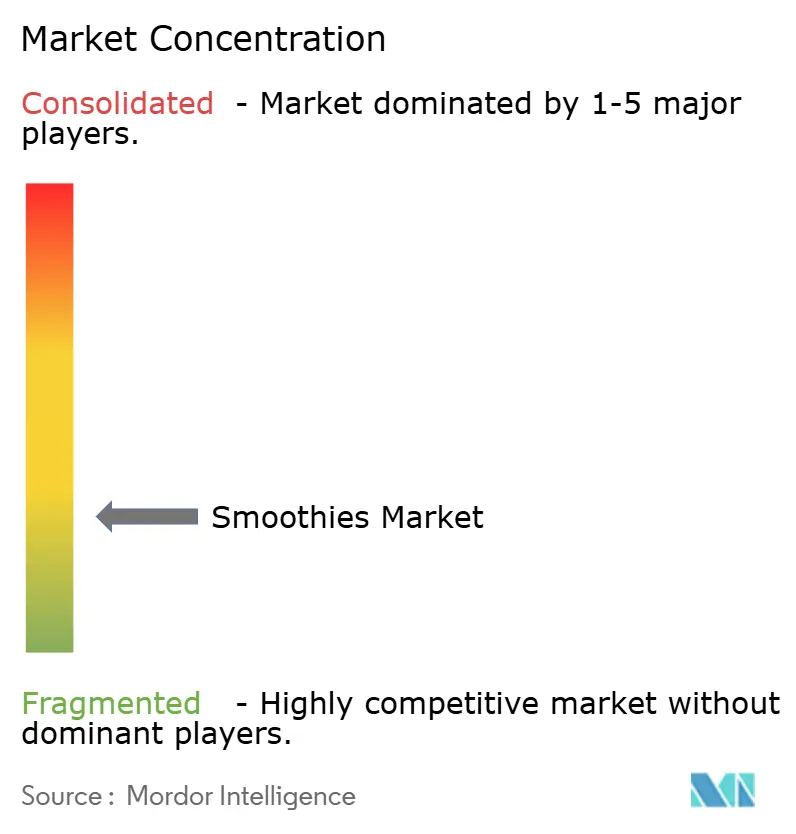
| Market Concentration | Low |
Major Players
*Disclaimer: Major Players sorted in no particular order Image © Mordor Intelligence. Reuse requires attribution under CC BY 4.0. |
|
Smoothies Market Analysis by Mordor Intelligence
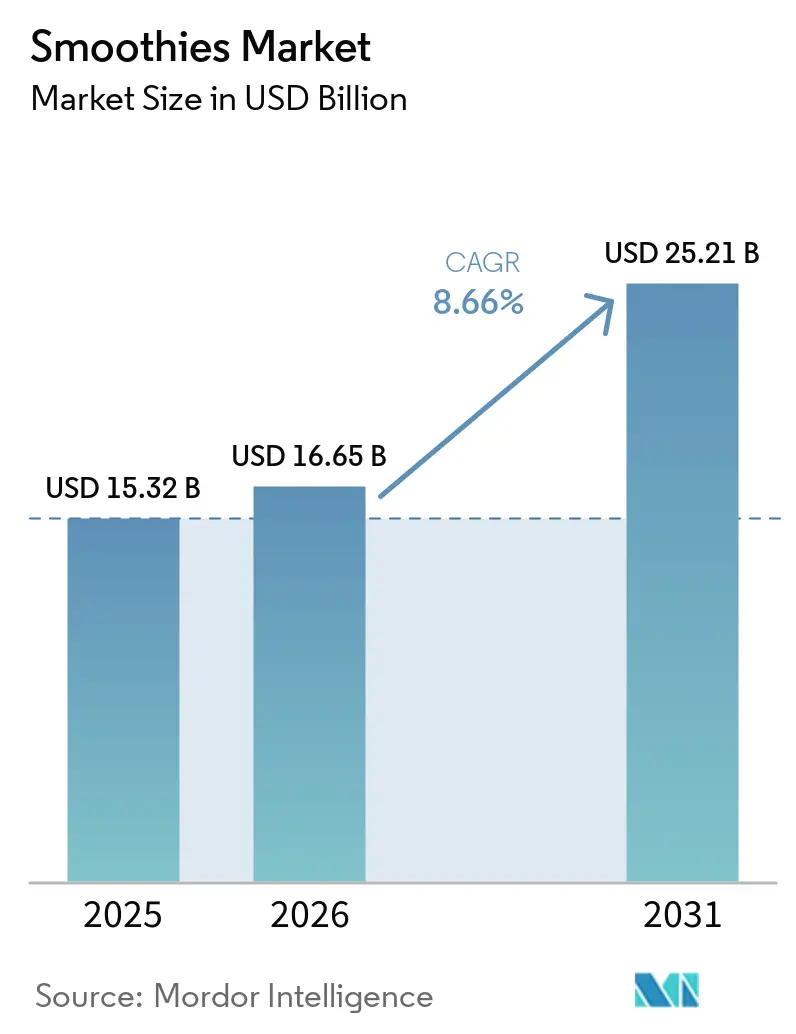
The smoothies market size in 2026 is estimated at USD 16.65 billion, growing from 2025 value of USD 15.32 billion with 2031 projections showing USD 25.21 billion, growing at 8.66% CAGR over 2026-2031. Growth rests on consumers choosing nutrient-dense beverages that fit busy lifestyles, ongoing functional ingredient innovation, and supply chains that keep perishables safe and fresh. Established brands are scaling vertically to lock in fruit supplies, while emerging players push direct-to-consumer strategies that shorten time to market. Regulatory clarity around high-pressure processing and GRAS ingredients lowers innovation risk and widens formulation possibilities, allowing players to increase their production. According to the Japan Soft Drink Association, the production volume of juices amounted to around 1.7 million kiloliters in 2024[1]Source: Japan Soft Drink Association, "Japan soft drink statistics 2025", j-sda.or.jp. Moreover, sustainability pressures are accelerating the shift toward paper-based cartons and recycled polymers, creating another lever for competitive positioning.
Key Report Takeaways
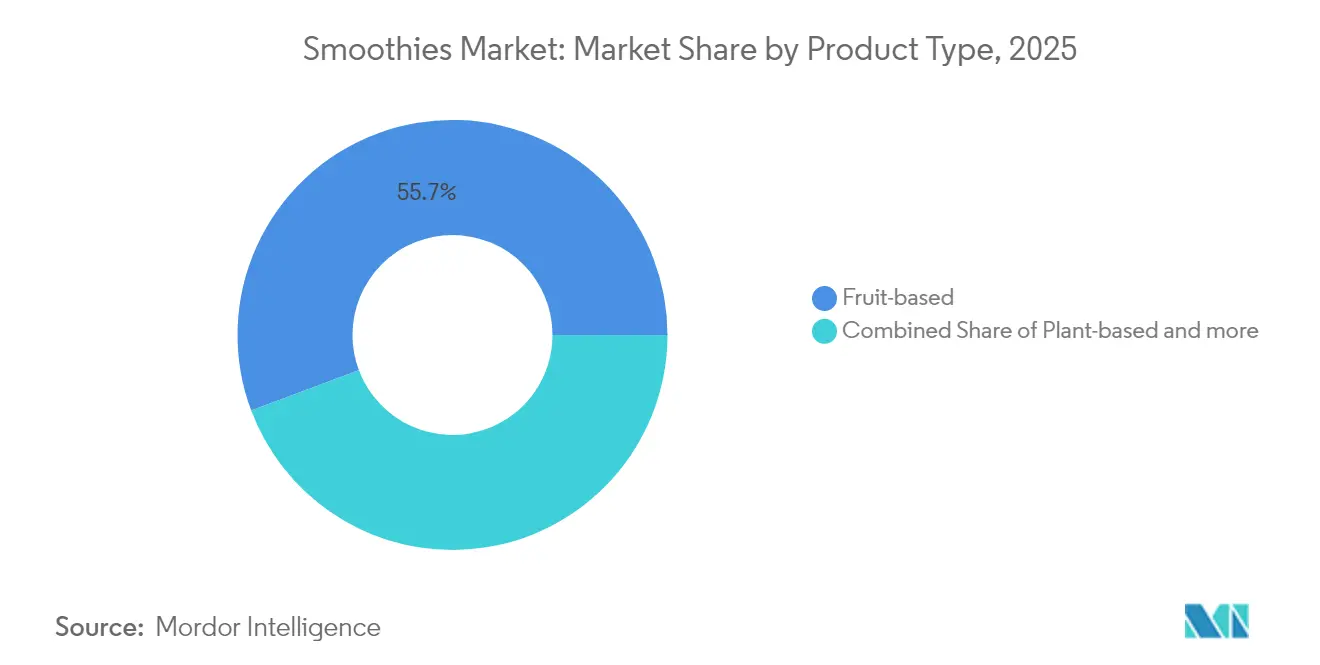
- By product type, fruit-based smoothies accounted for the largest revenue share of 55.72% in 2025, and plant-based variants are projected to expand at a 9.65% CAGR through 2031.
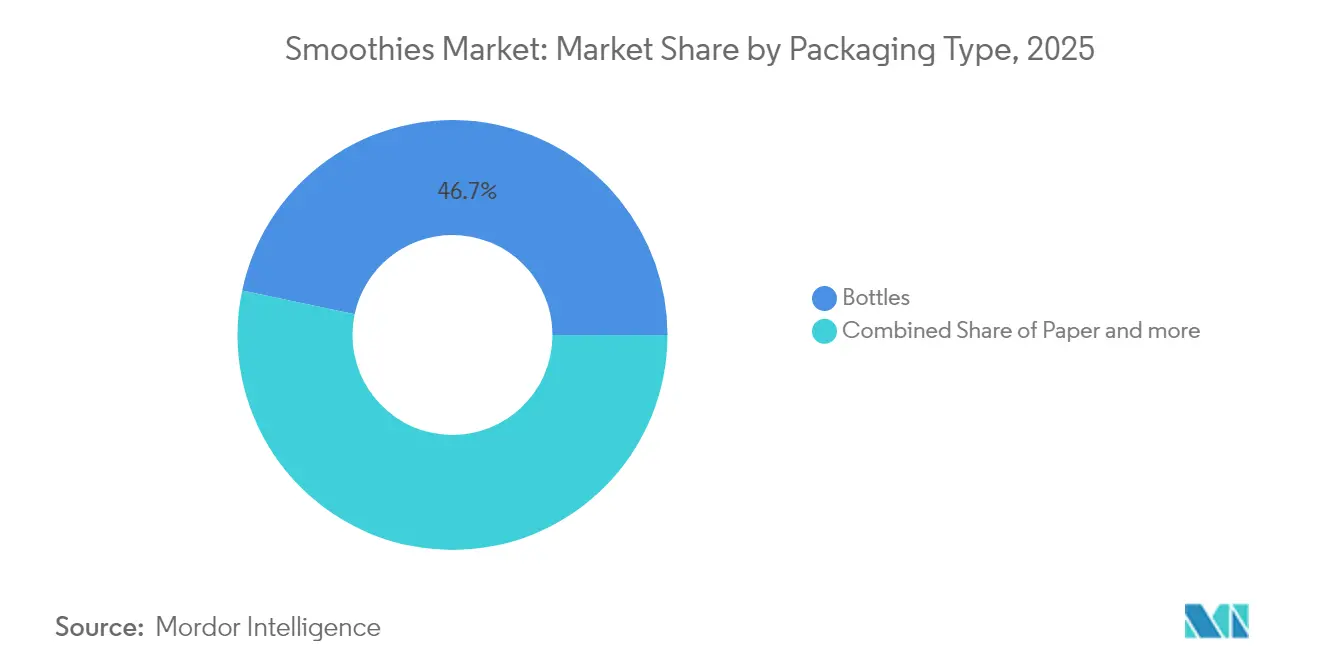
- By packaging type, bottles accounted for 46.68% of the smoothies market share in 2025; paper packaging is projected to advance at a 8.99% CAGR through 2031.
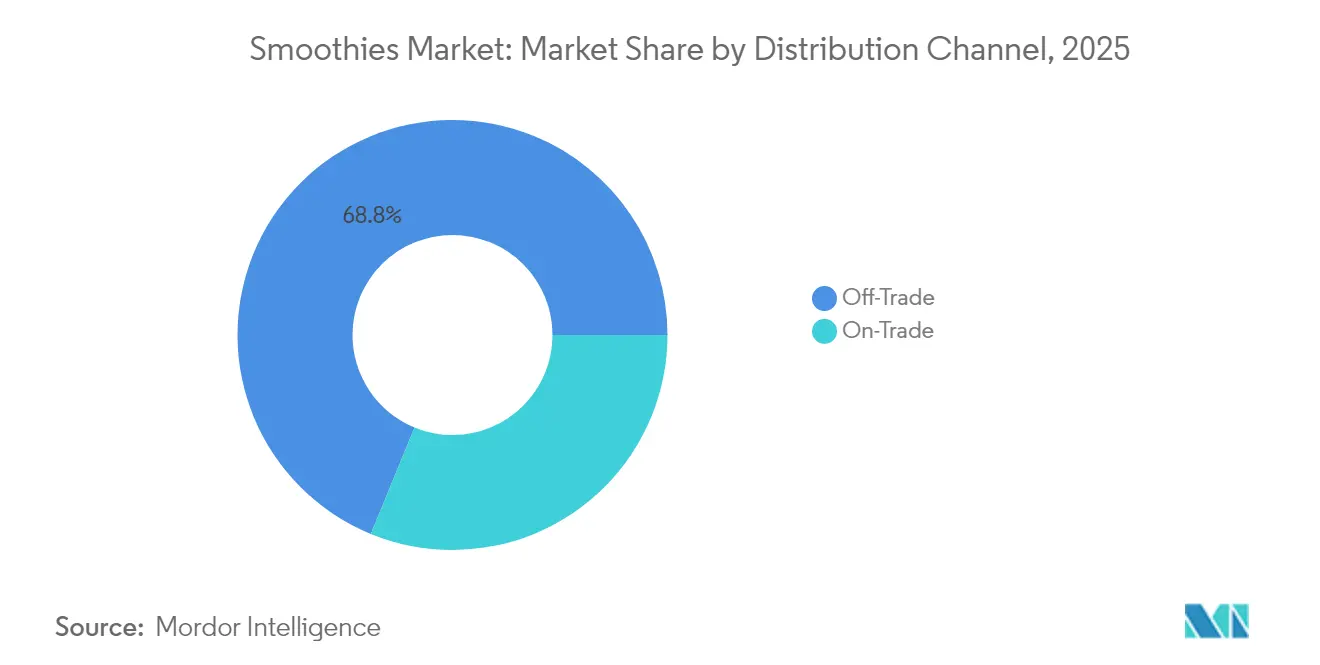
- By distribution channel, off-trade retail held a 68.80% share of the smoothies market size in 2025, while on-trade foodservice is projected to grow at a 9.72% CAGR through 2031.
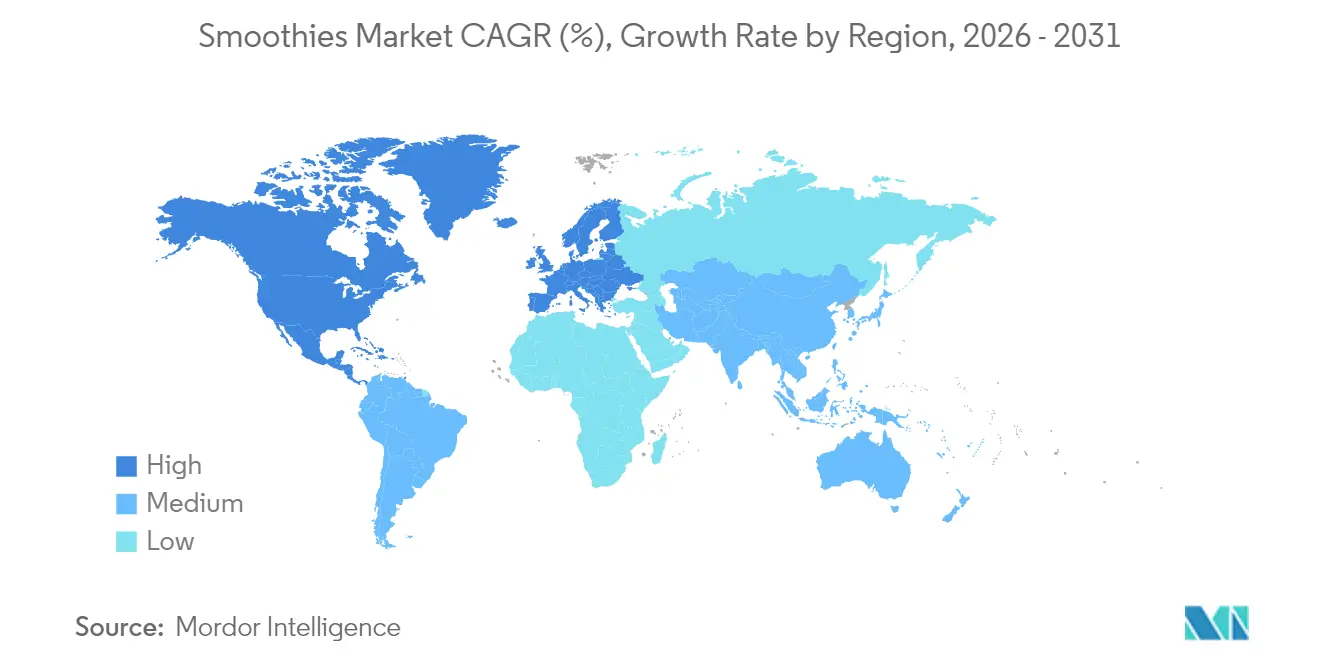
- By geography, North America accounted for 39.20% of global revenue in 2025; the Asia-Pacific is forecast to post the fastest regional CAGR of 9.45% from 2025 to 2031.
Note: Market size and forecast figures in this report are generated using Mordor Intelligence’s proprietary estimation framework, updated with the latest available data and insights as of 2026.
Market Trends and Insights
Drivers Impact Analysis of Smoothies Market*
| Driver | (~) % Impact on CAGR Forecast | Geographic Relevance | Impact Timeline |
|---|---|---|---|
| Sustainable and eco-friendly packaging innovations | +1.8% | Global, with early adoption in Europe and North America | Medium term (2-4 years) |
| Product and flavor innovations | +1.2% | Global, with premium segments in developed markets | Short term (≤ 2 years) |
| Incorporation of functional ingredients | +0.9% | North America and Asia-Pacific core markets | Medium term (2-4 years) |
| Clean label and natural products | +0.7% | Global, strongest in North America and Europe | Long term (≥ 4 years) |
| Plant-based and vegan growth | +1.1% | Global, with concentration in urban centers | Medium term (2-4 years) |
| Health and wellness trend | +0.8% | Global, with premium positioning in developed markets | Long term (≥ 4 years) |
| Source: Mordor Intelligence | |||


Sustainable and eco-friendly packaging innovations
Packaging sustainability initiatives are reshaping smoothie market dynamics through lifecycle assessment optimization and circular economy integration. Tetra Pak's development of carton packages made from certified recycled polymers demonstrates the industry's commitment to environmental stewardship, with life cycle assessments showing cartons achieve the lowest carbon footprint among beverage packaging systems. The transition toward paper-based packaging solutions is accelerating, driven by regulatory frameworks and consumer preferences for recyclable materials. This shift creates competitive advantages for manufacturers who can maintain product integrity while reducing environmental impact. Advanced barrier technologies enable paper packaging to preserve nutritional quality and extend shelf life, addressing traditional limitations of sustainable packaging options. The integration of sustainable packaging with premium positioning strategies allows brands to capture price premiums while meeting environmental compliance requirements.
Product and flavor innovations
Flavor diversification strategies are expanding beyond traditional fruit combinations to incorporate global taste profiles and functional ingredient systems. The emergence of hydration-focused smoothie categories, exemplified by Smoothie King's 2025 launch of three hydration variants featuring electrolytes and coconut water, demonstrates the evolution toward targeted health benefits. Protein fortification technologies are enabling manufacturers to achieve clean taste profiles while delivering substantial nutritional enhancement, with pea protein innovations like Puris Pea 2.0 addressing traditional texture and flavor challenges. Moreover, the incorporation of exotic ingredients and spice blends reflects consumer demand for experiential consumption and cultural exploration through food. Seasonal and limited-edition offerings create market excitement while enabling premium pricing strategies and inventory turnover optimization.
Incorporation of functional ingredients
Functional ingredient integration is transforming smoothies from simple fruit beverages into targeted health delivery systems with measurable physiological benefits. Research demonstrates that smoothies incorporating beetroot and bitter gourd achieve significant blood glucose reduction in diabetic populations while enhancing antioxidant enzyme activities, establishing clinical evidence for therapeutic applications. The FDA's GRAS approval of corn bran arabinoxylan as a dietary fiber source enables manufacturers to enhance fiber content up to 54.3% in various food categories, including smoothies, providing substantial nutritional enhancement opportunities[2]Source: Food and Drug Administration, "GRAS Notice (GRN) No. 1073 with amendments", fda.gov. Furthermore, adaptogenic ingredients and cognitive enhancement compounds are gaining traction among younger demographics seeking performance optimization through nutrition. The challenge lies in balancing functional efficacy with taste acceptability, requiring sophisticated formulation expertise and consumer education strategies.
Clean label and natural products
Clean label positioning has evolved from marketing differentiation to fundamental product development philosophy, driven by consumer demand for transparency and minimal processing. According to the International Food Information Council, in 2023, approximately 29% of respondents in the United States mentioned that they buy food and beverages on a regular basis because they are labeled as "clean ingredients"[3]Source: Source: International Food Information Council, "Food & Health Survey 2023", ific.org. The absence of formal regulatory definitions for terms like "natural" creates both opportunities and compliance challenges for manufacturers navigating consumer expectations and legal requirements. Major food companies are reformulating products to eliminate artificial additives, preservatives, and synthetic ingredients while maintaining taste and shelf stability. Moreover, the clean label movement intersects with supply chain transparency initiatives, requiring manufacturers to document ingredient sourcing and processing methods. Success in clean label positioning depends on authentic ingredient stories and verifiable production practices rather than merely removing synthetic components.
Restraints Impact Analysis of Smoothies Market*
| Restraint | (~) % Impact on CAGR Forecast | Geographic Relevance | Impact Timeline |
|---|---|---|---|
| Consumer awareness of additives/preservatives | -0.6% | Global, strongest in developed markets | Medium term (2-4 years) |
| Competition from alternative drinks | -0.8% | Global, with intensity in North America | Short term (≤ 2 years) |
| Sugar content and health perceptions | -0.5% | Global, regulatory focus in Europe and North America | Long term (≥ 4 years) |
| High raw material and ingredient costs | -0.7% | Global, with supply chain concentration risks | Short term (≤ 2 years) |
| Source: Mordor Intelligence | |||
Consumer awareness of additives/preservatives
Heightened consumer scrutiny of ingredient labels is creating formulation constraints and necessitating reformulation investments across the smoothie industry. The regulatory landscape lacks standardized definitions for key terms, highlighting the complexity of navigating consumer expectations and legal requirements. This awareness is driving demand for shorter ingredient lists and recognizable components, forcing manufacturers to balance preservation needs with clean label positioning. The challenge intensifies for shelf-stable products requiring extended storage capabilities without traditional preservative systems. Moreover, advanced processing technologies like high-pressure processing offer alternatives to chemical preservation but require significant capital investments and operational expertise.
Competition from alternative drinks
The functional beverage market presents intensifying competitive pressure on smoothies, with energy drinks commanding a significant share of the market value. Alternative beverage categories are incorporating smoothie-like attributes, including protein fortification and fruit flavoring, while maintaining superior shelf stability and distribution advantages. The rise of ready-to-drink protein beverages and functional waters creates direct competition for health-conscious consumers seeking convenient nutrition delivery. Moreover, energy drink innovations replacing caffeine with L-theanine and reducing sugar content demonstrate category convergence that challenges traditional smoothie positioning. Thus, market share defense requires continuous innovation in taste, convenience, and functional benefits while maintaining the authentic fruit-based identity that differentiates smoothies from synthetic alternatives.
*Our forecasts treat driver/restraint impacts as directional, not additive. The impact forecasts reflect baseline growth, mix effects, and variable interactions.
Smoothies Market Segment Analysis
By Product Type:
Plant-Based Variants Drive InnovationIn 2025, fruit-based smoothies hold a 55.72% market share, leveraging established supply chains and consumer familiarity. Plant-based smoothies are growing rapidly, with a 9.65% CAGR projected through 2031, driven by lactose intolerance accommodation, sustainability concerns, and innovations like pea protein technologies addressing texture issues. Dairy-based smoothies cater to traditional segments but face competition from alternative proteins and clean label demands. Protein-enriched variants gain traction through partnerships with ingredient suppliers offering formulation and nutritional expertise.
Vegetable-based smoothies present opportunities for differentiation with functional positioning and unique flavors. Research highlights health benefits of combinations like pumpkin-sea buckthorn blends, achieving stable pseudoplastic properties via enzymatic processing. The "Others" category includes adaptogenic ingredients, collagen supplementation, and hybrid products that blur category lines. FDA GRAS approvals for ingredients like corn bran arabinoxylan enable dietary fiber enhancement without compromising taste, supporting functional positioning across all segments.


By Packaging Type:
Sustainability Drives Paper GrowthTraditional bottle packaging commands 46.68% market share in 2025 through established consumer preferences and retail infrastructure compatibility, while paper packaging emerges as the fastest-growing segment with 8.99% CAGR through 2031, driven by lifecycle assessment advantages and circular economy initiatives. The transition toward paper-based solutions reflects sophisticated barrier technology developments that maintain product integrity while achieving environmental compliance objectives. Glass packaging serves premium market segments but faces challenges from weight considerations and supply chain complexity, while can formats offer durability advantages for specific distribution channels.
Regulatory compliance factors increasingly influence packaging decisions, with FDA food safety requirements mandating specific barrier properties and contamination prevention measures across all packaging types. Tetra Pak's development of carton packages made from certified recycled polymers demonstrates the industry's commitment to circular economy principles while maintaining product safety and shelf stability requirements. Moreover, the integration of sustainable packaging with premium positioning strategies enables manufacturers to capture price premiums while meeting environmental compliance requirements and consumer expectations for responsible production practices.
By Distribution Channel:
Foodservice Accelerates GrowthOff-trade retail channels dominate with 68.80% market share in 2025 through established consumer shopping patterns and inventory management efficiencies, while on-trade foodservice achieves the fastest growth at 9.72% CAGR through 2031, reflecting operational pivots toward convenience-driven consumption models. The foodservice expansion encompasses restaurants, hotels, and catering operations that leverage smoothies as high-margin menu items with customization capabilities that enhance customer experience and operational differentiation. Supermarkets and hypermarkets maintain strong positions through promotional strategies and private label development, while convenience stores benefit from impulse purchasing behavior and location advantages. Online retail channels are experiencing rapid growth through direct-to-consumer models and subscription services that enable inventory predictability and customer relationship management.
The global foodservice industry creates substantial expansion opportunities for smoothie manufacturers who can adapt products for foodservice applications. Drive-thru beverage concepts are gaining momentum through brands like 7 Brew and Dutch Bros, which capitalize on convenience trends and customization capabilities that align with smoothie consumption patterns. Moreover, the integration of technology platforms for ordering and inventory management enables foodservice operators to optimize smoothie offerings while maintaining quality consistency across multiple locations and service formats.
Geography Analysis
North America Smoothies Market
North America held 39.20% of turnover in 2025 and remains the innovation epicenter. Consumers accept price premiums for verified functional benefits, spurring constant recipe rotation. Retailers allocate larger chilled footprints to smoothies than to ambient juices, reflecting the category’s health halo. Moreover, FDA-defined processing controls, including HACCP and preventive controls, give manufacturers clear compliance roadmaps that lower recall risks.
APAC, EMEA and South America Smoothies Market
Asia-Pacific records the fastest CAGR at 9.45% through 2031 on the back of urbanization and rising middle-class spending power. Functional beverage spend already outpaces other regions, and smoothies plug gaps left by limited dairy consumption in parts of East and South-East Asia. Chinese fitness apps increasingly recommend plant-protein smoothies post-workout, fueling online DTC spikes. Indian metro cafés pair regional fruits like jackfruit with oats to suit local palates while meeting protein-fortification goals. Supply-chain investment in cold warehouses and blockchain traceability boosts trust. Europe remains value-driven yet strongly influenced by sustainability norms. Deposit-return schemes for beverage containers nudge consumers toward paper cartons with clear recycling instructions. Government nutrition-label debates spur reformulations that lower sugar densities and raise fiber content. South America’s smoothie demand grows off a smaller base, driven by fresh-fruit abundance and rising awareness of added-sugar risks. Middle East and Africa show promise where café culture intersects with health tourism; however, supply-chain limitations require shelf-stable HPP products instead of fresh-blended lines.

Competitive Landscape
The smoothies market is highly fragmented. While top multinationals leverage scale advantages in sourcing and cold-chain logistics, challenger brands adeptly use digital channels to cultivate loyal micro-segments. Chobani's acquisition of Daily Harvest in May 2025 not only diversifies its cold-chain operations but also bolsters its direct-to-consumer (DTC) capabilities. Nutrisco's majority stake in LiveMore Superfoods brings in plant-forward intellectual property and enhanced retailer access. Such maneuvers signal a consolidation trend, with larger firms prioritizing swift channel expansion over organic line extensions.
Technology plays a pivotal role. High-pressure processing extends shelf life to 30 days, facilitating national distribution without compromising flavor. Collaborations with ingredient giants like Puris or ADM expedite the launch of protein-rich SKUs. Marketing has evolved from generic "healthy" claims to targeted platforms emphasizing benefits like immunity and gut health. Additionally, while private-label offerings in supermarkets challenge branded pricing, they also make smoothies more accessible to budget-conscious consumers.
Quality management sophistication sets the entry barriers. The FDA's preventive-control mandates and Europe's novel-food regulations necessitate thorough documentation, benefiting those with robust regulatory teams. However, social media storytelling provides a platform for niche founders to showcase their farm-to-bottle authenticity and environmental achievements. The current strategic landscape centers on the ability to blend high functional benefits, proven sustainability, and efficient mass delivery.
Smoothies Industry Leaders
-
PepsiCo, Inc.
-
The Coca-Cola Company
-
Focus Brands LLC
-
Danone SA
-
Smoothie King Franchises Inc.
- *Disclaimer: Major Players sorted in no particular order
Smoothies Market Companies Covered in this Report
- PepsiCo Inc. (Naked Juice)
- The Coca-Cola Company (Innocent, Simply)
- Danone SA
- Smoothie King Franchises Inc.
- Focus Brands LLC (Jamba)
- Bolthouse Farms Inc.
- Barfresh Food Group Inc.
- The Hain Celestial Group Inc.
- The Kraft Heinz Company
- MTY Food Group (Tropical Smoothie Café)
- Nestlé S.A.
- Campbell Soup Co.
- Dole plc
- Suja Juice Co.
- Greenhouse Juice Co.
- Koia Inc.
- Daily Harvest Inc.
- Evolution Fresh Inc.
- Pressed Juicery LLC
- Lifeway Foods Inc.

Recent Industry Developments in Smoothies Market
- August 2025: Kraft Heinz and Smoothie King launched a novel ketchup-based smoothie. This innovative product was described as 'provocative' and aimed to generate buzz, though it is a niche, limited-availability item.
- March 2025: Odwalla launched a fresh new line of juices and smoothies, including three signature smoothies: Mango, Strawberry-Banana, and Berries. The line emphasized natural ingredients, free from added sugars, artificial flavors, and preservatives. Packaging included 13.9 fl-oz glass bottles and larger Tetra Prisma cartons. The launch was presented at Natural Products Expo West 2025 and focused on health-conscious consumers.
- January 2025: Daily Harvest introduced a new high-protein smoothie line with flavors Dark Chocolate, Vanilla Bean, and Mixed Berry. Each serving contains 20g of plant protein and USDA-certified organic ingredients. The smoothies avoid whey and nuts, targeting consumers with dietary sensitivities.
- February 2024: Smoothie King unveiled a new hydration category, which featured revitalizing smoothies and expanded watermelon-flavored offerings to keep consumers refreshed. This followed the brand's large-store expansion in 2024, which aimed to diversify product offerings and drive growth.


Global Smoothies Market Report Scope
A smoothie is a thick drink made by combining a variety of fruits, vegetables, and additional components such as milk, seeds, yogurt, ice cubes, sweeteners, and nutritional and herbal supplements.
The smoothies market is segmented based on product type, distribution channel, and geography. Based on product type, the market is segmented into fruit-based, dairy-based, and other product types. Based on distribution channels, the market is segmented into supermarkets/hypermarkets, smoothie bars, convenience stores, and other distribution channels. Moreover, the study analyzes the smoothies market in emerging and established markets worldwide, including North America, Europe, Asia-Pacific, South America, and Middle East and Africa.
The market sizing has been done in value terms (USD) for all the abovementioned segments.
| Fruit-based |
| Dairy-based |
| Plant-based |
| Protein-enriched |
| Vegetable-based |
| Others |
| Bottles |
| Cans |
| Glass |
| Paper |
| Others |
| Foodservice | Restaurants |
| Hotels | |
| Catering | |
| Retail | Supermarkets/Hypermarkets |
| Convenience Stores | |
| Online Retail Stores | |
| Other Retail Channels |
| North America | United States |
| Canada | |
| Mexico | |
| Rest of North America | |
| South America | Brazil |
| Argentina | |
| Colombia | |
| Chile | |
| Rest of South America | |
| Europe | United Kingdom |
| Germany | |
| France | |
| Italy | |
| Spain | |
| Russia | |
| Sweden | |
| Belgium | |
| Poland | |
| Netherlands | |
| Rest of Europe | |
| Asia-Pacific | China |
| Japan | |
| India | |
| Thailand | |
| Singapore | |
| Indonesia | |
| South Korea | |
| Australia | |
| New Zealand | |
| Rest of Asia-Pacific | |
| Middle East and Africa | United Arab Emirates |
| South Africa | |
| Saudi Arabia | |
| Nigeria | |
| Egypt | |
| Morocco | |
| Turkey | |
| Rest of Middle East and Africa |
| By Product Type | Fruit-based | |
| Dairy-based | ||
| Plant-based | ||
| Protein-enriched | ||
| Vegetable-based | ||
| Others | ||
| By Packaging Type | Bottles | |
| Cans | ||
| Glass | ||
| Paper | ||
| Others | ||
| By Distribution Channel | Foodservice | Restaurants |
| Hotels | ||
| Catering | ||
| Retail | Supermarkets/Hypermarkets | |
| Convenience Stores | ||
| Online Retail Stores | ||
| Other Retail Channels | ||
| By Geography | North America | United States |
| Canada | ||
| Mexico | ||
| Rest of North America | ||
| South America | Brazil | |
| Argentina | ||
| Colombia | ||
| Chile | ||
| Rest of South America | ||
| Europe | United Kingdom | |
| Germany | ||
| France | ||
| Italy | ||
| Spain | ||
| Russia | ||
| Sweden | ||
| Belgium | ||
| Poland | ||
| Netherlands | ||
| Rest of Europe | ||
| Asia-Pacific | China | |
| Japan | ||
| India | ||
| Thailand | ||
| Singapore | ||
| Indonesia | ||
| South Korea | ||
| Australia | ||
| New Zealand | ||
| Rest of Asia-Pacific | ||
| Middle East and Africa | United Arab Emirates | |
| South Africa | ||
| Saudi Arabia | ||
| Nigeria | ||
| Egypt | ||
| Morocco | ||
| Turkey | ||
| Rest of Middle East and Africa | ||


Key Questions Answered in the Report
How fast is the smoothies market expected to grow between 2026 and 2031?
It is projected to expand at an 8.66% CAGR, lifting value from USD 16.65 billion to USD 25.21 billion.
Which product category is gaining share fastest?
Plant-based smoothies show the highest momentum with a 9.65% CAGR through 2031, driven by vegan and flexitarian adoption.
What packaging format is most aligned with sustainability targets?
Paper cartons made from recycled polymers offer the lowest carbon footprint and are logging an 8.99% CAGR.
Which region offers the strongest future growth?
Asia Pacific leads in growth potential with an 9.45% projected CAGR, supported by rising urban incomes and health awareness.
How are companies extending smoothie shelf life without preservatives?
High-pressure processing keeps cold-chain products safe for up to 30 days while retaining fresh flavor and nutrients.
What is the main competitive challenge from other beverages?
Energy and protein drinks are adding real fruit and functional ingredients, tightening the gap and pressuring smoothie differentiation.
Page last updated on:


 Your data is secure and never sold or shared.


