
Shiitake Mushroom Market Size and Share
Market Overview
| Study Period | 2021 - 2031 |
|---|---|
| Market Size (2026) | USD 2.12 Billion |
| Market Size (2031) | USD 3.04 Billion |
| Growth Rate (2026 - 2031) | 7.12 % |
| Fastest Growing Market | Europe |
| Largest Market | Asia Pacific |
| Market Concentration | High |
Major Players *Disclaimer: Major Players sorted in no particular order Image © Mordor Intelligence. Reuse requires attribution under CC BY 4.0. | |
Shiitake Mushroom Market Analysis by Mordor Intelligence
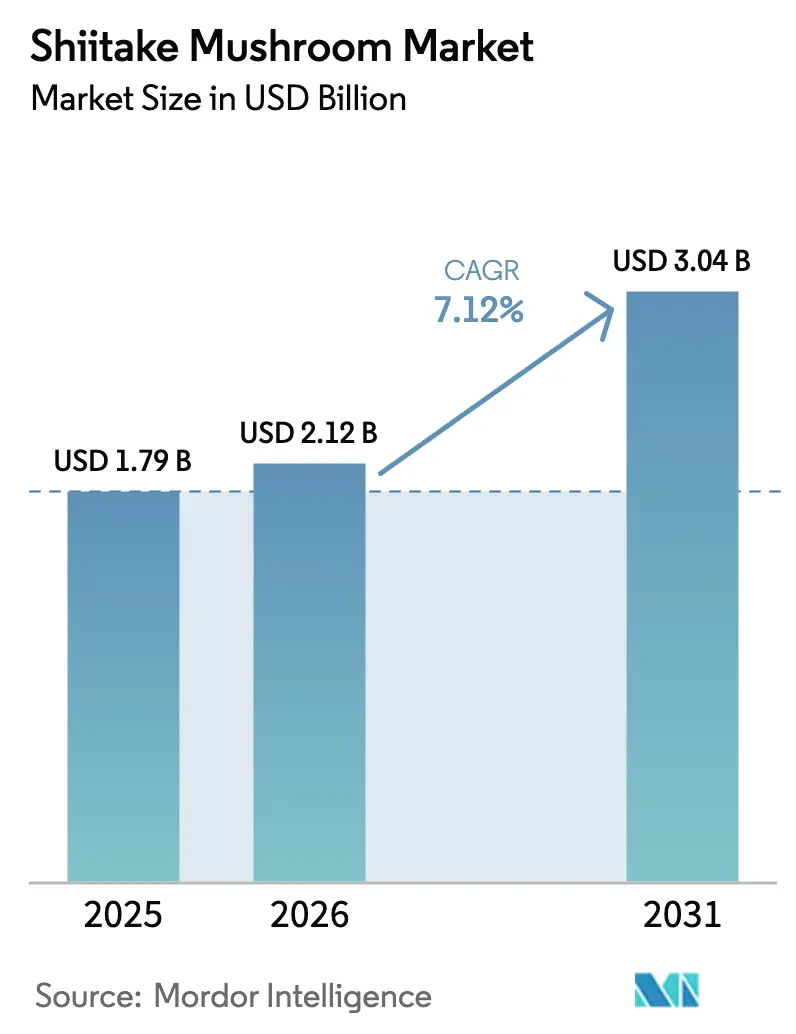
The shiitake mushroom market size is valued at USD 2.12 billion in 2026, growing from the 2025 value of USD 1.79 billion, and is forecast to climb to USD 3.04 billion by 2031, advancing at a 7.12% CAGR. Climate-resilient strains, widening regulatory acceptance, and a pivot toward clean-label protein are the central forces underpinning growth. Gene-edited varieties that fruit at temperatures 3-4 °C higher than legacy strains are improving biological efficiency and narrowing supply gaps during hotter months. Platform brands are moving beyond commodity sales into powdered and extract formats, capturing premiums of 15-25% over dried whole mushrooms. At the same time, tightened EU limits on cadmium and lead are compelling exporters to overhaul substrate sourcing and post-harvest washing, raising quality and price floors. Asia-Pacific holds the revenue lead, but Europe’s sustainability mandates and e-commerce penetration position it as the fastest-growing region through 2031.
Key Report Takeaways
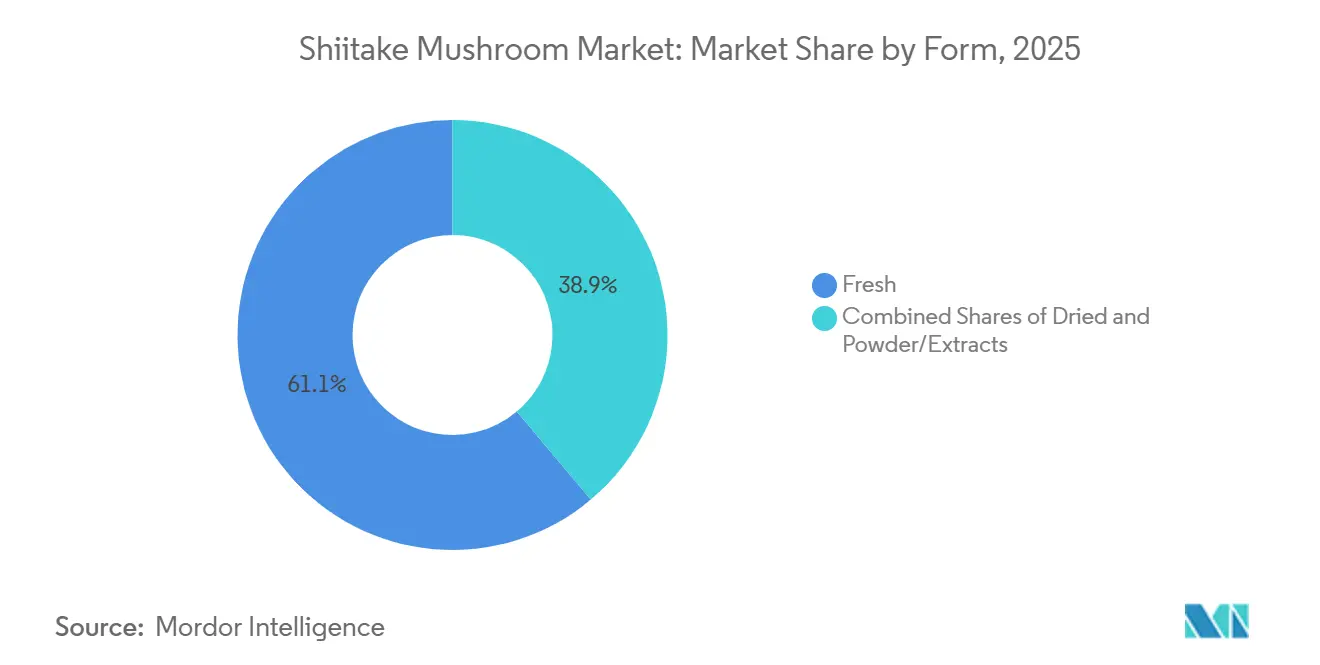
- By Form, Fresh shiitake commanded 61.12% of the shiitake mushroom market share in 2025. Powder and extract formats are projected to expand at an 8.79% CAGR through 2031.
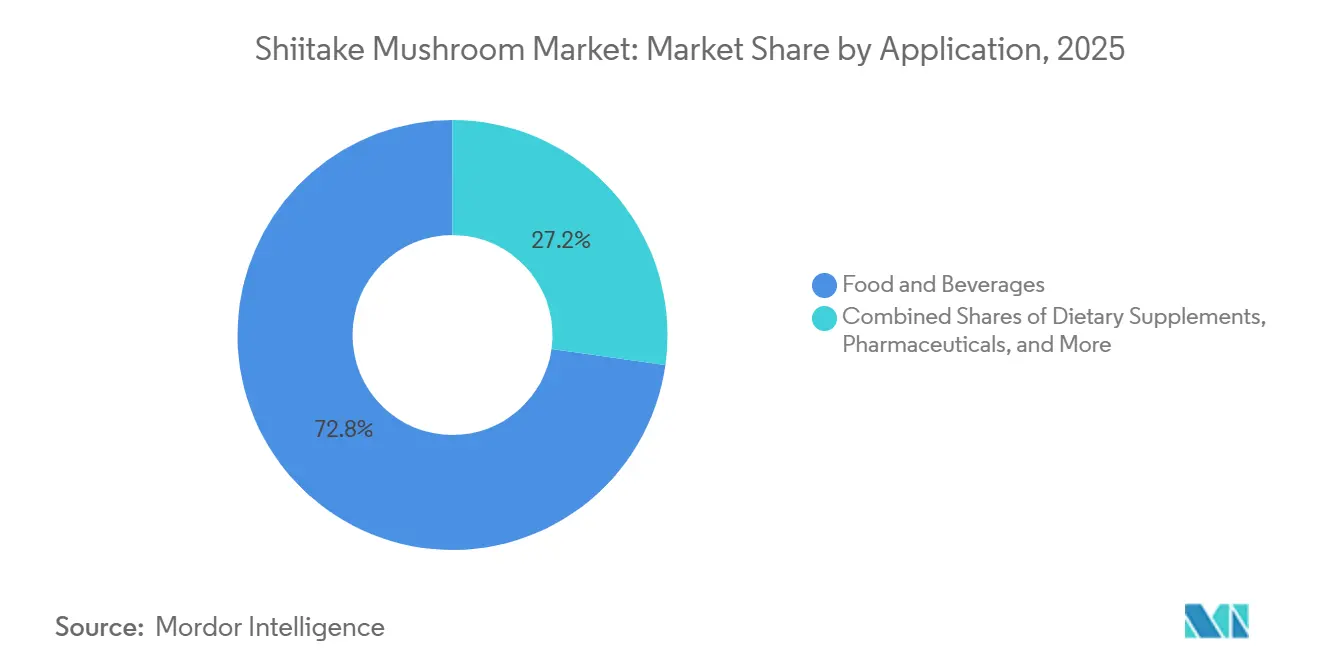
- By Application, Food and beverage captured 72.78% of value in 2025, dietary supplements led growth with a 9.25% CAGR forecast to 2031.
- By Geography, Asia-Pacific generated 35.31% of 2025 revenue, while Europe is set to post an 8.17% CAGR.
Note: Market size and forecast figures in this report are generated using Mordor Intelligence’s proprietary estimation framework, updated with the latest available data and insights as of January 2026.
Global Shiitake Mushroom Market Trends and Insights
Drivers Impact Analysis*
| Drivers | (~)% Impact on CAGR Forecasts | Geographic Relevance | Impact Timeline |
|---|---|---|---|
| Rising Consumer Preference for Umami-Rich Plant-Based Foods | +1.2% | Global, with early concentration in North America and Western Europe | Medium term (2-4 years) |
| Growing Recognition of Shiitake’s Clinically Backed Health Benefits | +1.5% | Global, led by Asia-Pacific and North America | Long term (≥ 4 years) |
| Expansion of China-Centric Low-Cost Export Supply Chains | +0.9% | Asia-Pacific core, spill-over to Middle East and Africa | Short term (≤ 2 years) |
| Rapid Uptake of Shelf-Stable Dried and Powdered Formats in Cross-Border E-Commerce | +1.1% | Global, strongest in Europe and North America | Medium term (2-4 years) |
| Carbon-Credit Revenue from Sawdust-Waste Up-Cycling | +0.4% | Europe and North America, pilot projects in Asia-Pacific | Long term (≥ 4 years) |
| Gene-Edited, Climate-Resilient High-Yield Strains Reach Pilot Scale | +0.6% | Asia-Pacific and North America, early trials in Europe | Long term (≥ 4 years) |
| Source: Mordor Intelligence | |||
Rising Consumer Preference for Umami-Rich Plant-Based Foods
Shiitake mushrooms, recognized for their naturally high glutamate content, are gaining traction as a clean-label umami source that meets the taste preferences of flexitarian consumers. In 2024, the FDA classified fermented shiitake mycelium protein as Generally Recognized As Safe (GRAS)[1]Source: U.S. Food and Drug Administration, “GRAS Notice for Fermented Shiitake Mycelium Protein,” FDA.gov. This approval facilitates its use in meat analogs, broths, and snack seasonings. Consequently, food manufacturers are increasingly reformulating their products to include these non-GMO and allergen-free flavor enhancers. This regulatory approval aligns with a broader industry movement toward whole-food ingredients, moving away from heavily processed texturizers. Shiitake powder is now featured in plant-based burger blends, instant ramen seasoning packets, and ready-to-drink bone-broth alternatives, achieving a margin premium of 15-25% over synthetic monosodium glutamate. According to the OECD-FAO Agricultural Outlook 2024-2033, rising urbanization in the Asia-Pacific region is expected to drive higher per-capita consumption of convenience foods, thereby increasing demand for shelf-stable umami ingredients. Additionally, exporters targeting premium retail channels in North America and Europe are now required to comply with ISO 22000 food safety management systems as a standard practice.
Growing Recognition of Shiitake's Clinically Backed Health Benefits
Shiitake fruiting bodies, which produce lentinan, a beta-1,3-glucan polysaccharide, have demonstrated potential in oncology. Peer-reviewed trials showcased its immunomodulatory properties, leading to its approval as an adjuvant therapy for gastric cancer in Japan and China. The lentinan market, valued at USD 1.2 billion in 2024, is expected to grow to USD 2.8 billion by 2033, with pharmaceuticals contributing over 42% of the volume. In 2024, clinical studies indicated that regular shiitake mushroom consumption could improve lipid profiles and reduce LDL cholesterol levels. This finding prompted dietary supplement brands to release capsules standardized to contain 10-30% polysaccharide content. Additionally, cosmetics manufacturers are utilizing shiitake extracts, known for their antioxidant and anti-inflammatory properties, in products such as anti-aging serums and UV-protection creams. This expansion into nutraceuticals and personal care not only diversifies their market presence but also reduces dependency on fluctuating fresh-produce prices. Regulatory bodies, including the EU under its Novel Food Regulation and the FDA with its dietary supplement cGMP standards, ensure extract quality and batch-to-batch consistency, meeting the stringent requirements of pharmaceutical buyers.
Expansion of China-Centric Low-Cost Export Supply Chains
China leads the global shiitake market, accounting for over 85% of the world's production. Hubei province plays a key role, contributing significantly to the exports of dried and semi-processed shiitake. State-backed investments in cold-storage hubs and phytosanitary inspection facilities have significantly reduced lead times for shipments to Europe and North America. This efficiency enables Chinese exporters to price their products 30-40% lower than domestic growers on a landed-cost basis. However, this cost advantage is shrinking. The European Union's Regulation 2023/915 enforces strict cadmium and lead limits for shiitake at 0.15 mg/kg and 0.30 mg/kg, respectively. As a result, suppliers must source cleaner substrates and implement stringent post-harvest washing protocols. In comparison, China's GB 2762-2017 standard permits higher cadmium and lead thresholds at 0.5 mg/kg and 1.0 mg/kg, respectively. This difference requires exporters to invest in substrate testing and ensure traceability documentation to comply with EU standards. Although the OECD-FAO Agricultural Outlook 2024-2033 identifies risks such as trade disruptions and freight-cost volatility, China's vertically integrated operations from spawn production to final packaging continue to support its dominance in shiitake exports[2]Source: OECD-FAO, “Agricultural Outlook 2024-2033,” oecd.org.
Rapid Uptake of Shelf-Stable Dried & Powdered Formats in Cross-Border E-Commerce
E-commerce platforms like Alibaba, Amazon, and specialized health-food marketplaces have expanded access to dried shiitake and powdered extracts, bypassing traditional import and distribution challenges. Shelf-stable formats have reduced logistics costs by 40-50% and enabled direct shipments from China to Europe and North America within 7-14 days, eliminating the need for cold-chain logistics. Spray-drying and freeze-drying technologies effectively preserve bioactive compounds such as eritadenine and ergothioneine while extending shelf life to 18-24 months, which is a significant advantage for inventory-light e-retailers. In 2024, the FDA's GRAS notice for fermented shiitake protein validated powdered formats for functional-food applications, encouraging ingredient suppliers to launch B2B e-commerce platforms targeting small-batch formulators.
Restraints Impact Analysis*
| Restraints | (~)% Impact on CAGR Forecasts | Geographic Relevance | Impact Timeline |
|---|---|---|---|
| High Perishability Driving Cold-Chain Cost Inflation | -0.8% | North America and Europe, moderate impact in Asia-Pacific | Short term (≤ 2 years) |
| Price Competition From Lower-Cost Oyster and Button Mushrooms | -0.6% | Global, most acute in North America and Europe | Medium term (2-4 years) |
| Tighter Pesticide-Residue and Heavy-Metal Import Tolerances | -0.5% | Europe and North America, ripple effects in Asia-Pacific export zones | Medium term (2-4 years) |
| Biomass-Energy Boom Tightening Hardwood Sawdust Supply | -0.4% | North America and Europe, emerging in Asia-Pacific | Long term (≥ 4 years) |
| Source: Mordor Intelligence | |||
High Perishability Driving Cold-Chain Cost Inflation
Fresh shiitake's 7-10 day shelf life under refrigeration necessitates unbroken cold-chain logistics, a cost burden that intensified as diesel prices and refrigerant regulations tightened in 2024-2025. U.S. shiitake production fell 30% during the 2023-24 season, while grower prices climbed to USD 4.90 per pound, reflecting the squeeze between rising input costs and retailer resistance to price increases. European cold-chain operators report 15-20% cost inflation since 2024, driven by EU F-gas regulations phasing out high-GWP refrigerants and mandating energy-efficient transport units. This dynamic favors vertically integrated players who control distribution, while small growers exit or pivot to dried formats. Modified-atmosphere packaging (MAP) extends shelf life by 3-5 days but adds USD 0.10-0.15 per unit, eroding margins in price-sensitive retail channels.
Price Competition from Lower-Cost Oyster & Button Mushrooms
Oyster and button mushrooms retail at 30-40% discounts to shiitake on a per-pound basis, limiting shiitake's penetration into price-conscious consumer segments. Button mushrooms dominate North American and European supermarkets due to established supply chains, year-round availability, and familiarity, while oyster mushrooms offer similar umami notes at lower production costs. Shiitake's premium positioning hinges on perceived health benefits and culinary prestige, yet these attributes resonate primarily with affluent, health-focused demographics. Wholesale price data from 2024-2025 show shiitake averaging USD 4.50-5.00 per pound versus USD 2.50-3.00 for oyster and USD 2.00-2.50 for button varieties, a gap that widens during supply gluts. Retailers allocate limited shelf space to specialty mushrooms, forcing shiitake to compete on rotation velocity rather than margin contribution. The rise of private-label organic button mushrooms further compresses shiitake's price premium, as cost-conscious consumers perceive organic certification as a sufficient quality signal.
*Our forecasts treat driver/restraint impacts as directional, not additive. The impact forecasts reflect baseline growth, mix effects, and variable interactions.
Segment Analysis
By Form: Shelf-Stable Formats Gain Share
Powder and extract variants are forecast to outperform the broader shiitake mushroom market at an 8.79% CAGR through 2031. Fresh shiitake retained 61.12% of 2025 revenue courtesy of culinary demand in Asia-Pacific, yet growth slows under cold-chain inflation. Shelf-stable SKUs travel without refrigeration, which trims logistics costs by up to half and broadens retail reach. Spray-drying conserves lentinan, eritadenine, and ergothioneine, positioning powdered shiitake as a functional ingredient in ready-to-mix broths and meat analogs.
Dried whole mushrooms anchor the international trade lane because a 1:8 rehydration ratio delivers value to foodservice kitchens. Meanwhile, extract suppliers post higher margins of USD 15-25 per kilogram versus USD 8-12 for dried. Small-batch brands procure through B2B portals that offer third-party certificates of analysis, reinforcing trust. The overall shiitake mushroom market size for dried formats is expected to approach USD 1.5 billion by 2031, while powders move toward USD 0.9 billion. Gene-edited strains that fruit in warmer climates will likely expand fresh capacity, yet shelf-stable products remain the volume driver for cross-border e-commerce.



By Application: Nutraceuticals Outpace Culinary Uses
In 2025, the food and beverage sector contributed 72.78% of the total revenue. However, the dietary supplements market is anticipated to grow at the fastest pace, with a projected CAGR of 9.25% through 2031. Companies specializing in functional products are emphasizing lentinan's immunomodulatory properties, offering capsules standardized to contain 20% polysaccharides to meet consumer demand. The pharmaceutical sector, which requires injectable lentinan, accounts for 42% of the global extract output. This high demand enables the pharmaceutical segment to maintain price premiums in the market.
Although the personal care segment remains a niche, shiitake extracts are increasingly being incorporated into anti-aging serums and UV-protective creams due to their antioxidant benefits. The shiitake mushroom market linked to dietary supplements is projected to reach USD 0.8 billion by 2031, while pharmaceutical applications, driven by rising oncology-related demand, are expected to achieve a market size of USD 1 billion. Regulatory frameworks in the United States and European Union have established cGMP standards, ensuring batch consistency and quality, which are critical for health-sector buyers. Beyond 2031, emerging opportunities in animal feed and mycelium-based materials are being explored, although these areas currently lack the scale necessary for significant market impact.
Geography Analysis
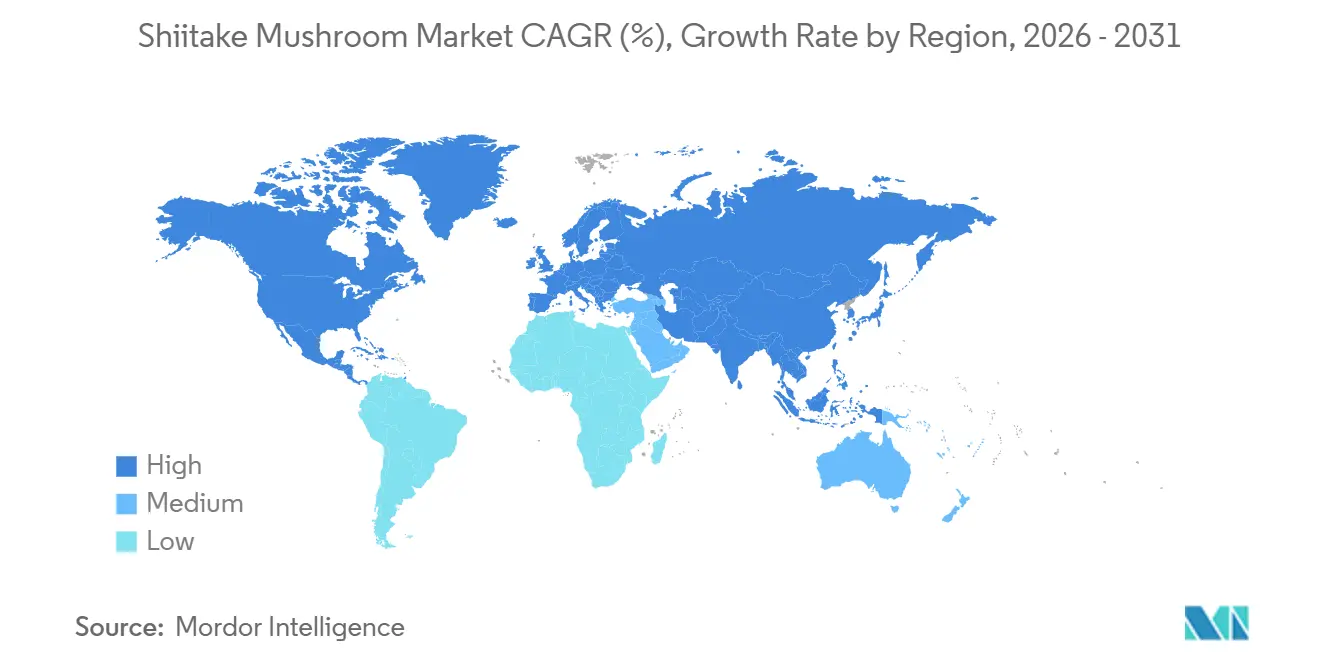
Asia-Pacific held 35.31% of global shiitake revenue in 2025, anchored by China's dominance in production and domestic consumption, yet Europe will register the fastest regional CAGR at 8.17% through 2031, propelled by sustainability mandates and premium positioning of organic, locally sourced mushrooms. China produces over 85% of global shiitake volume, with Hubei province serving as the epicenter of dried and semi-processed exports that supply North American and European markets at landed costs 30-40% below domestic growers. Japan's mature market exhibits stable per-capita consumption, while Vietnam and India represent emerging production hubs leveraging lower labor costs and favorable climates. The OECD-FAO Agricultural Outlook 2024-2033 projects that sustained urbanization in Asia-Pacific will drive per-capita consumption of convenience foods, amplifying demand for shelf-stable shiitake ingredients. However, tightening heavy-metal regulations - China's GB 2762-2017 permits cadmium up to 0.5 mg/kg versus the EU's 0.15 mg/kg limit under Regulation 2023/915 - force exporters to upgrade substrate sourcing and post-harvest handling.
North America's shiitake market contracted during 2023-24 as domestic production fell 30% and grower prices climbed to USD 4.90 per pound, reflecting cold-chain cost inflation and competition from Chinese imports. U.S. consumers increasingly favor organic certifications and local sourcing, creating a bifurcated market where premium fresh shiitake coexists with low-cost dried imports. Canada and Mexico contribute modest volumes, with Mexico emerging as a re-export hub for dried shiitake destined for U.S. foodservice channels. The FDA's GRAS determination for fermented shiitake mycelium protein in 2024 unlocked plant-based formulation opportunities, positioning North America as a lead market for powdered and extract formats.
Europe's 8.17% CAGR reflects a convergence of sustainability policies, premium retail positioning, and cross-border e-commerce growth. The EU's Regulation 2023/915 enforces stricter cadmium and lead limits than any other region, compelling importers to implement traceability systems and third-party testing that add 5-8% to landed costs[3]Source: U.S. Department of Agriculture Economic Research Service, “Mushroom Production and Prices 2023-24,” usda.gov. Germany, the United Kingdom, France, Italy, and Spain dominate consumption, with organic shiitake commanding 20-30% price premiums over conventional varieties. The MUBIC project demonstrated that biogas digestate can replace virgin sawdust in substrate formulations, generating carbon credits under voluntary offset schemes and improving unit economics for small-scale producers europa.eu. South America and Middle East & Africa remain nascent markets, with Brazil and South Africa exhibiting early adoption among health-conscious urban consumers, yet infrastructure gaps and limited cold-chain networks constrain growth.

Regulatory Landscape
Global shiitake trade and ingredient commercialization operate under a mix of food standards, border phytosanitary rules, and novel-food style approvals. For commodity formats, Codex Alimentarius sets baseline quality parameters for dried shiitake (CXS 39-1981), including a 13% maximum moisture limit and 1% maximum organic impurities, which informs processor targets for drying and grading. In the United States, shiitake for human consumption is inspected at the port of entry and must be free of soil, wood, pests, and diseases. Imports for consumption do not require an APHIS PPQ permit, and tariff classification for shiitake under HTS 0709.54.00.00 sets a duty structure that affects landed-cost strategies.
For higher-value shiitake-derived ingredients, approvals increasingly follow process-specific routes. The EU Novel Food framework (Regulation (EU) 2015/2283) requires EFSA-led safety assessment for shiitake-derived fermented proteins and similar ingredients, and Commission Implementing Regulation (EU) 2023/6 authorized specific pea and rice protein fermented by Lentinula edodes mycelia for sale in the EU. Alongside novel-food pathways, tightening contaminant compliance in key import markets, including the EU heavy-metal limits referenced in Regulation 2023/915, is pushing exporters toward improved substrate sourcing, traceability documentation, and third-party testing as baseline requirements for premium retail and ingredient channels.
Value Chain Analysis
The shiitake value chain starts with spawn and substrate inputs (hardwood logs or sawdust-based media), then moves through cultivation (log-based outdoor systems and controlled-environment farms), harvesting, and post-harvest cleaning. Value addition is concentrated in processing and quality assurance, including fresh packing (often with modified-atmosphere packaging), drying (for whole dried), and conversion into powders and extracts (spray-dried or freeze-dried). Grading, metal detection, and certificates of analysis support B2B buyers, while distribution splits between cold-chain dependent routes for fresh into retail and foodservice, and ambient shelf-stable lanes for dried and ingredient formats that increasingly use cross-border e-commerce and specialty ingredient distributors.
Bottlenecks cluster around perishability and compliance. Fresh shiitake typically requires an unbroken refrigerated chain to manage a short shelf life, so fuel, refrigeration, and packaging costs influence margins, while shelf-stable formats reduce logistics friction and expand export reach. On the supply side, concentration in major producing provinces, notably China, and constraints in hardwood log availability in legacy log-based regions raise input and sourcing risk. Importers serving Europe also face added testing and traceability workloads tied to strict heavy-metal tolerances. Cooperative and hub-based collection models help in log-based systems, and in Japan, the Oita Shiitake Agricultural Cooperative (OSK) collection function has been highlighted as operational infrastructure that lowers labor burden for small and elderly producers and supports supply continuity.
Competitive Landscape
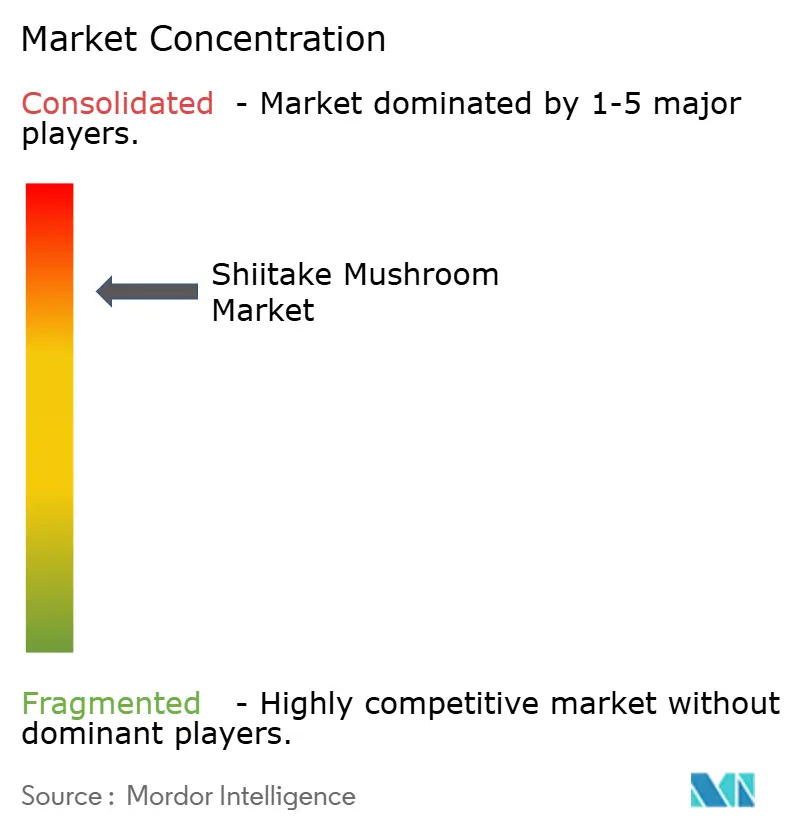
The shiitake mushroom market features fragmented cultivation alongside more concentrated spawn and processing activities, with the top manufacturers collectively accounting for a low single-digit share of global volume. Xuerong Biotechnology leads with roughly 1.5% market share, yet no single player exerts pricing power or dictates industry standards. This fragmentation stems from low barriers to entry in substrate-based cultivation, regional taste preferences that favor local suppliers, and the commodity nature of fresh shiitake in Asia-Pacific wholesale markets. Vertical integration from spawn production through processing and distribution defines the strategies of leading players such as Hokto Kinoko, Monterey Mushrooms, and Monaghan Mushrooms, who leverage scale economies in cold-chain logistics and retail relationships to defend margins against Chinese imports.
White-space opportunities center on high-margin extracts and powdered formats, where biological-efficiency gains from gene-edited strains and supercritical CO₂ extraction lines can command 15-25% premiums over commodity dried mushrooms. Emerging disruptors include mycelium-based ingredient suppliers such as Meati Foods, which raised USD 100 million in April 2024 to scale fermentation platforms that produce shiitake-flavored mycoprotein for plant-based meat analogs. Enifer secured EUR 33 million in August 2024 to build a PEKILO mycoprotein factory, signaling investor confidence in fungal fermentation as a scalable alternative to field agriculture.
KKR's exploration of new backers for Sylvan Inc., the world's largest mushroom spawn producer, in August 2024 underscores private equity's interest in consolidating upstream supply chains. Technology adoption - IoT-enabled climate control, automated harvesting systems, and CRISPR-edited heat-tolerant strains - separates incumbents from smallholders, yet regulatory fragmentation around gene-edited organisms delays commercial rollout in Europe. Compliance with ISO 22000 food safety management systems and EU Regulation 2023/915 for heavy metals has become a baseline expectation for exporters targeting premium retail channels.
Shiitake Mushroom Industry Leaders
Nammex
Hirano Mushroom LLC
Lianfeng (Suizhou) Food Co.,
Monterey Mushrooms, Inc.
M2 INGREDIENTS
- *Disclaimer: Major Players sorted in no particular order

Market Opportunities and Future Outlook
A key opportunity is the shift from commodity mushrooms toward standardized, high-value ingredients where safety approvals and specifications support premium pricing. Regulatory openings for fermented shiitake mycelium and related ingredients, including the FDA GRAS pathway used for fermented shiitake mycelium protein and the EU authorization under Commission Implementing Regulation (EU) 2023/6 for proteins fermented by Lentinula edodes mycelia, provide formulators with a clearer route to incorporate shiitake-derived inputs into functional foods. At the same time, shelf-stable dried, powder, and extract formats align with cross-border e-commerce economics by avoiding cold chain requirements and widening assortment for small-batch food and supplement brands.
Technology and process upgrades also create whitespace across both production resilience and compliance readiness. Fermentation-based extraction platforms demonstrated by Riddet Institute and Alpha Group in February 2026 shorten the cycle time to produce shiitake-derived bioactives compared with field cultivation, supporting supply continuity for lentinan- and beta-glucan-positioned products. Mechanization and controlled-environment production address labor and variability constraints, supported by government and institutional programs such as Taiwan Forestry and Nature Conservation Agency (FANCA) recognition for labor-saving log cultivation machinery, and by cooperative logistics models in Japan that reduce handling burden for dispersed producers. These changes align with stricter contaminant expectations in import markets and support expansion of premium, tested ingredients and traceable dried supply into Europe and North America.
Recent Industry Developments
- June 2026: Nammex introduced ErinaPrime, a freeze-dried lion’s mane mycelium powder standardized to 1% erinacine A, in partnership with distributor Novelara. The move indicates continued supplier emphasis on standardized actives and documentation that help downstream brands defend claims and meet quality specifications across the broader functional mushroom ingredient space.
- September 2025: Monterey Mushrooms rolled out a specialty mushroom line packaging change nationally, using 100% post-consumer rPET and an NIR-detectable colorant to improve recyclability. The packaging update supports retailer sustainability requirements while maintaining shelf presentation for premium mushrooms, where differentiation and waste reduction influence repeat purchasing.
- December 2024: Iwatec Corporation began operating a self-consumption energy system for a shiitake mushroom cultivation plant factory in Satsumasendai City, Kagoshima Prefecture, Japan. The project highlights producer focus on energy cost control and operational stability in indoor cultivation, where utilities directly affect margins and consistent output.


Research Methodology Framework and Report Scope
Market Definition and Coverage
For this methodology, the market covers the value of shiitake mushrooms sold as food ingredients or functional inputs, including fresh, dried, and powder or extract formats, across commercial channels in all major regions.
Scope exclusions: We exclude home-growing kits and equipment, as well as foodservice margin and retail markups that are not part of the product value itself.
Segmentation Overview
- Form
- Fresh
- Dried
- Powder/Extracts
- Applications
- Food and Beverages
- Dietary Supplements
- Personal Care and Cosmetics
- Pharmaceuticals
- Other Applications
- By Geography
- North America
- United States
- Canada
- Mexico
- Rest of North America
- Europe
- Germany
- United Kingdom
- France
- Italy
- Spain
- Rest of Europe
- Asia-Pacific
- India
- China
- Japan
- Australia
- Rest of Asia-Pacific
- South America
- Brazil
- Argentina
- Rest of South America
- Middle East and Africa
- South Africa
- Saudi Arabia
- Rest of Middle East and Africa
- North America
Data Sources, Market Sizing, and Validation
Desk Research
Desk research started with building a supply and demand picture for shiitake, so we could separate fresh versus dried behavior and keep pricing internally consistent across forms. Public sources such as USDA data products, FAOSTAT, UN Comtrade trade statistics, and customs or agriculture ministry releases in major producing countries were used to understand production volumes and cross-border movement.
We also reviewed materials from food safety regulators and standards bodies that can shape trade and acceptance, for example residue and heavy metal limits, because these can affect which batches are marketable and how that feeds back into available supply and pricing. Company annual reports, investor decks, and reputable press were read to track capacity additions, product mix moves into powders or extracts, and channel shifts. Where needed, paid subscriptions were used only for company financials, patent landscaping, and shipment-level trade checks, and the named desk sources are illustrative, not exhaustive, because additional references were used to confirm and clarify inputs.
Primary Interviews and Surveys
Primary work focused on growers, processors, importers, ingredient formulators, and large buyers across key producing and consuming regions, so assumptions from desk research could be stress-tested. We used these discussions to validate form splits, typical moisture loss and conversion from fresh to dried, and the price ladder from whole mushrooms to powders or extracts, including how quality grades change realized pricing.
Distribution of primary research fieldwork respondents
| Company type | Respondent position | Region |
|---|---|---|
| Top tier: 37% | CXOs: 12% | APAC: 41% |
| Mid tier: 43% | Functional/Unit leaders: 28% | EMEA: 34% |
| Smaller Players: 20% | Managers: 60% | Americas: 25% |
Market-Sizing & Forecasting
Sizing begins with a top-down demand pool build using production and trade data to reconstruct available consumption by region, which is then adjusted for processing conversion and channel leakage. After that, totals are checked using selective bottom-up approximations, such as sampled selling prices by form multiplied by observed volumes from processors and importers, and the model is corrected where the checks do not line up.
For shiitake, the key inputs include fresh-to-dried conversion ratios, form mix shifts into powder or extract, import dependence in non-producing markets, seasonality and yield swings tied to climate and substrate availability, and price spreads between commodity dried slices and higher grade formats. For forecasting, we rely on scenario analysis supported by trend lines in production, trade, and pricing. These scenarios are tuned using expert views on capacity additions, food ingredient demand, and acceptance of functional uses. When company-level volume is not visible, gaps are handled using regional processor utilization ranges and trade flows so implied supply remains consistent with consumption.
Data Validation & Update Cycle
Validation is done by triangulating the model output against independent signals, including trade balances, implied per-capita consumption ranges, and price movement consistency across forms. Outliers are reviewed in steps, first at the input level, then at the regional roll-up, and finally at the global total. If a variance cannot be explained by a clear driver, we re-contact experts to resolve it.
Reports are refreshed annually, and interim updates are made when there are material shifts like major crop disruptions, policy changes that affect imports, or sudden pricing jumps in dried product. Before delivery, a final pass is completed so the view reflects the latest available releases and interview feedback.
Mordor Intelligence's Shiitake Mushroom Market Size Versus Other Published Estimates
Published numbers for shiitake mushrooms often do not match because different authors include different product forms, use different price points, and sometimes apply broader mushroom indicators that do not isolate shiitake cleanly. The starting year can also drive divergence, since prices can move quickly when harvests or trade conditions shift.
The largest gap usually comes down to whether powders and extracts are treated as a separate ingredient value pool or counted only when they are clearly derived from shiitake. In Mordor Intelligence, totals are kept aligned to shiitake-only forms and cross-checked to production and trade consistency before the final pricing is applied.
Benchmark comparison
| Source | Market Size | Gaps in Research Methodology |
|---|---|---|
| Mordor Intelligence | USD 2.12 B (2026) | |
| Industry Association A | USD 2.45 B (2026) | Often uses broader cultivated mushroom pricing and may include other specialty mushrooms when reporting packaged specialty mixes, which inflates shiitake-only value. |
| Trade Journal B | USD 1.86 B (2026) | Typically relies on producer-side shipment values and can undercount imported dried product and downstream processing value added in powders and extracts. |
The spread across the figures is mainly explained by form coverage and the price logic used for each form, rather than a disagreement on overall growth direction. By tying totals to trade and production consistency checks and then confirming the form mix through interviews, the final estimate stays traceable to repeatable steps that can be revisited as the market changes.


Key Questions Answered in the Report
How large is the shiitake mushroom market in 2026?
The shiitake mushroom market size is USD 2.12 billion in 2026.
What is the forecast growth rate through 2031?
The market is projected to advance at a 7.12% CAGR to 2031.
Which form category is expanding the fastest?
Powders and extracts are expected to post an 8.79% CAGR through 2031.
Why is Europe the fastest growing region?
Sustainability mandates and premium positioning drive an 8.17% CAGR for Europe through 2031.
Page last updated on:


 Your data is secure and never sold or shared.


