
Salicylic Acid Market Size and Share
Market Overview
| Study Period | 2021 - 2031 |
|---|---|
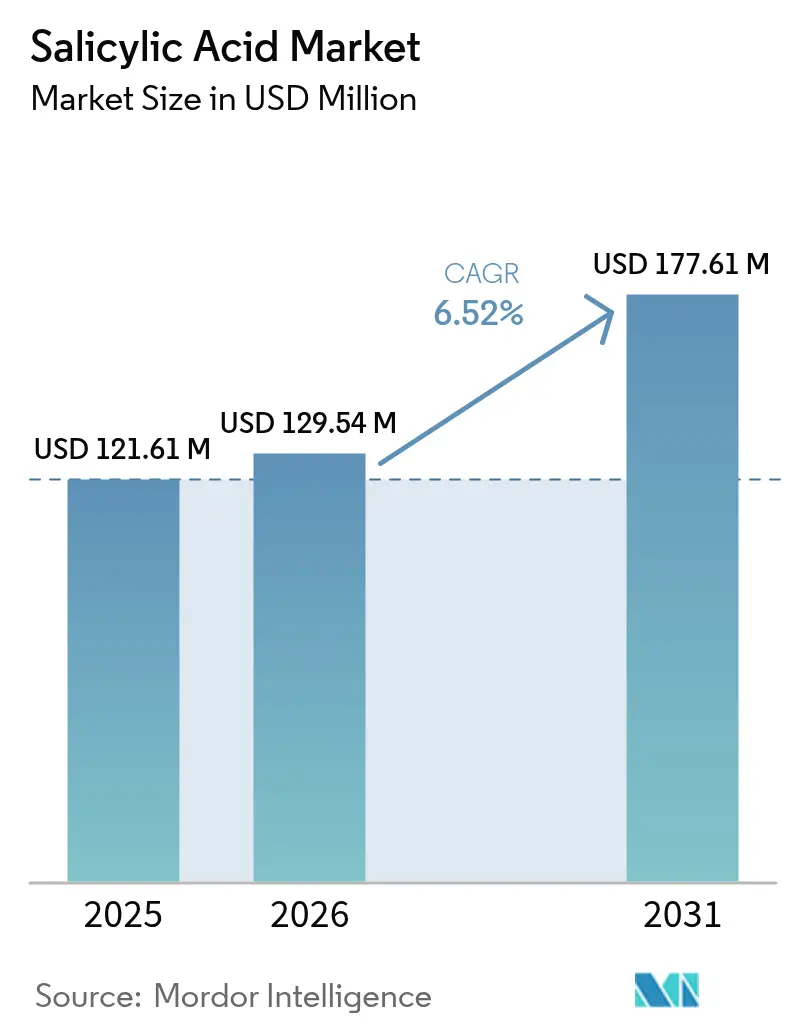
| Market Size (2026) | USD 129.54 Million |
| Market Size (2031) | USD 177.61 Million |
| Growth Rate (2026 - 2031) | 6.52 % |
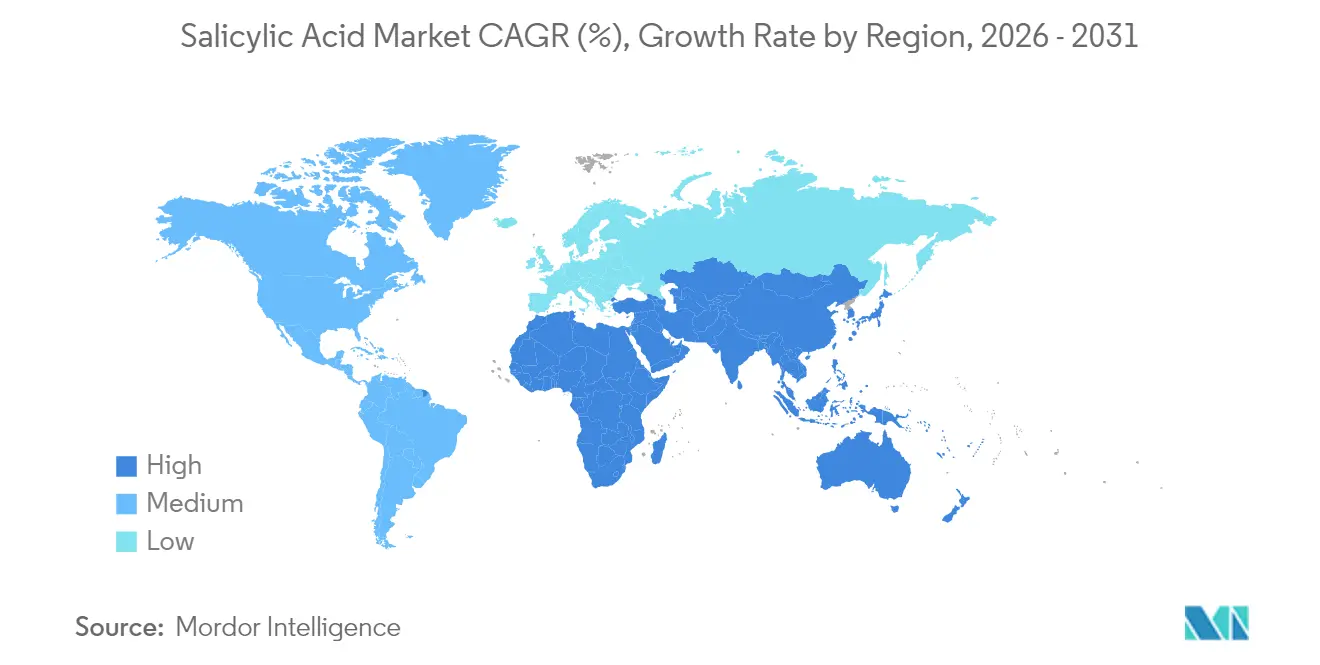
| Fastest Growing Market | Asia Pacific |
| Largest Market | Europe |
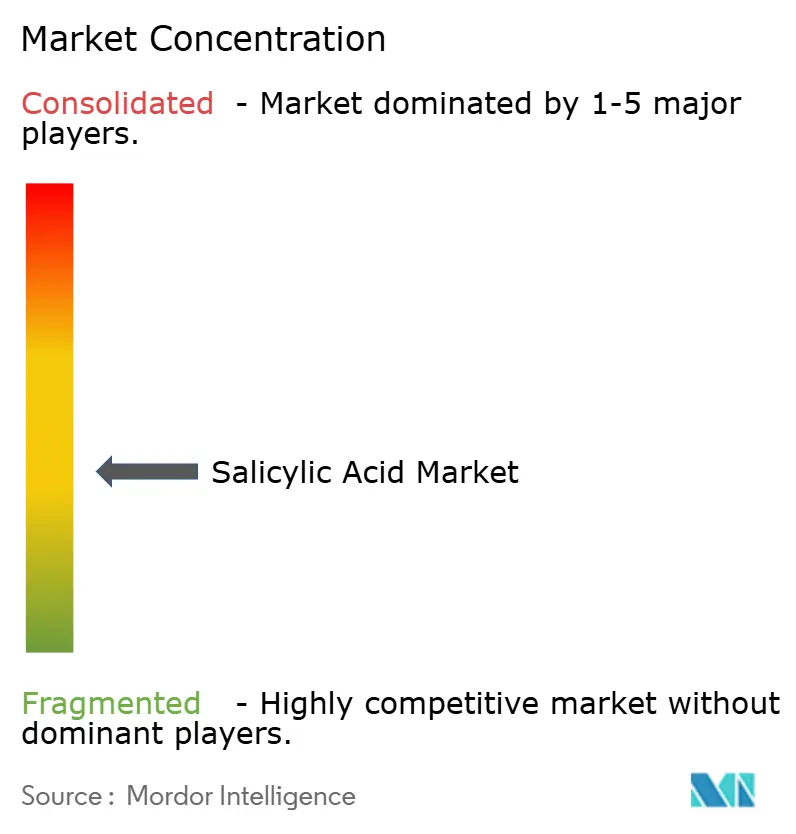
| Market Concentration | Medium |
Major Players *Disclaimer: Major Players sorted in no particular order Image © Mordor Intelligence. Reuse requires attribution under CC BY 4.0. | |
Salicylic Acid Market Analysis by Mordor Intelligence
The salicylic acid market size is expected to grow from USD 121.61 million in 2025 to USD 129.54 million in 2026 and is forecast to reach USD 177.61 million by 2031 at 6.52% CAGR over 2026-2031. This market growth stems from therapeutic approvals, clean-label preservative demand, and agricultural applications. The pharmaceutical industry requires salicylic acid for its keratolytic and anti-inflammatory properties, while personal care manufacturers use it in acne treatment and exfoliation products. Besides, the United States and European regulators have increased safety requirements for children's products but expanded allowances in food and beverage applications. CO₂-based synthesis, achieving 92.68% yield, has improved production efficiency and reduced emissions. Moreover, the powder/crystal form leads the market due to its stability and applications in pharmaceutical and personal care products. This crystalline form is essential in topical treatments, including acne creams, anti-dandruff shampoos, and medicated patches. The pharmaceutical segment maintains growth through salicylic acid's use in over-the-counter and prescription products, supported by established regulatory frameworks in developed markets.
Key Report Takeaways
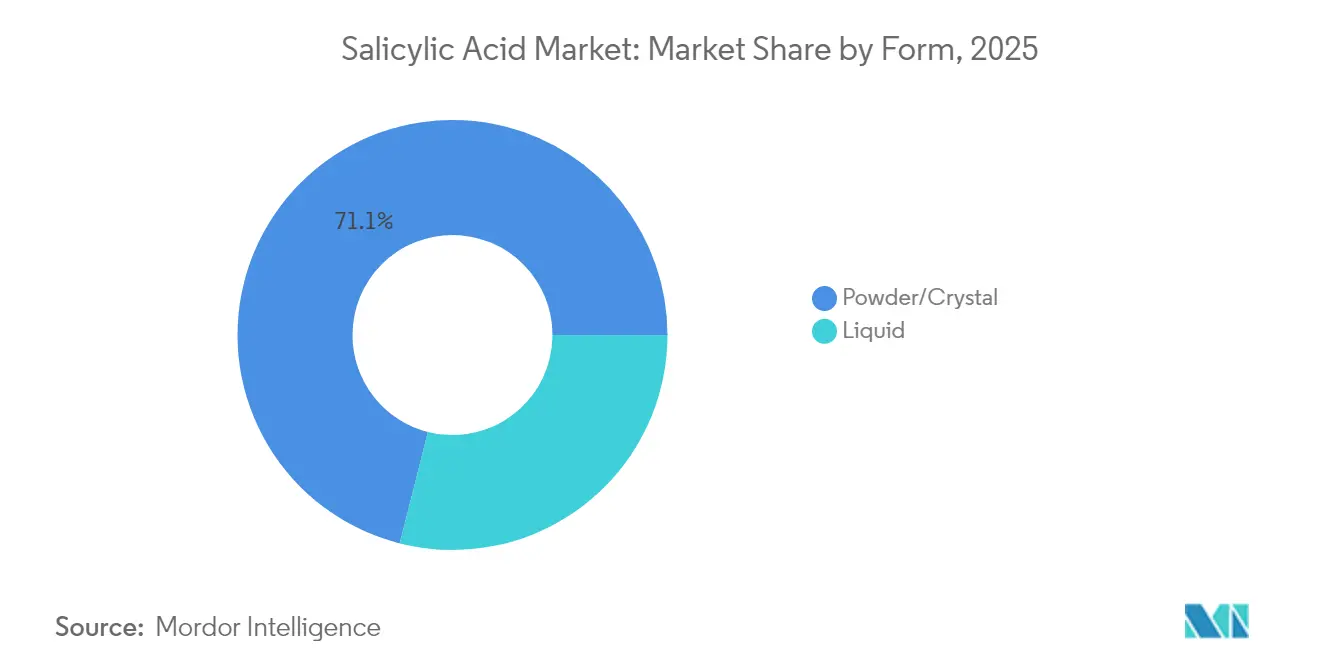
- By form, powder/crystal captured 71.05% of the salicylic acid market share in 2025, whereas liquid formulations are projected to expand at 7.12% CAGR through 2031.
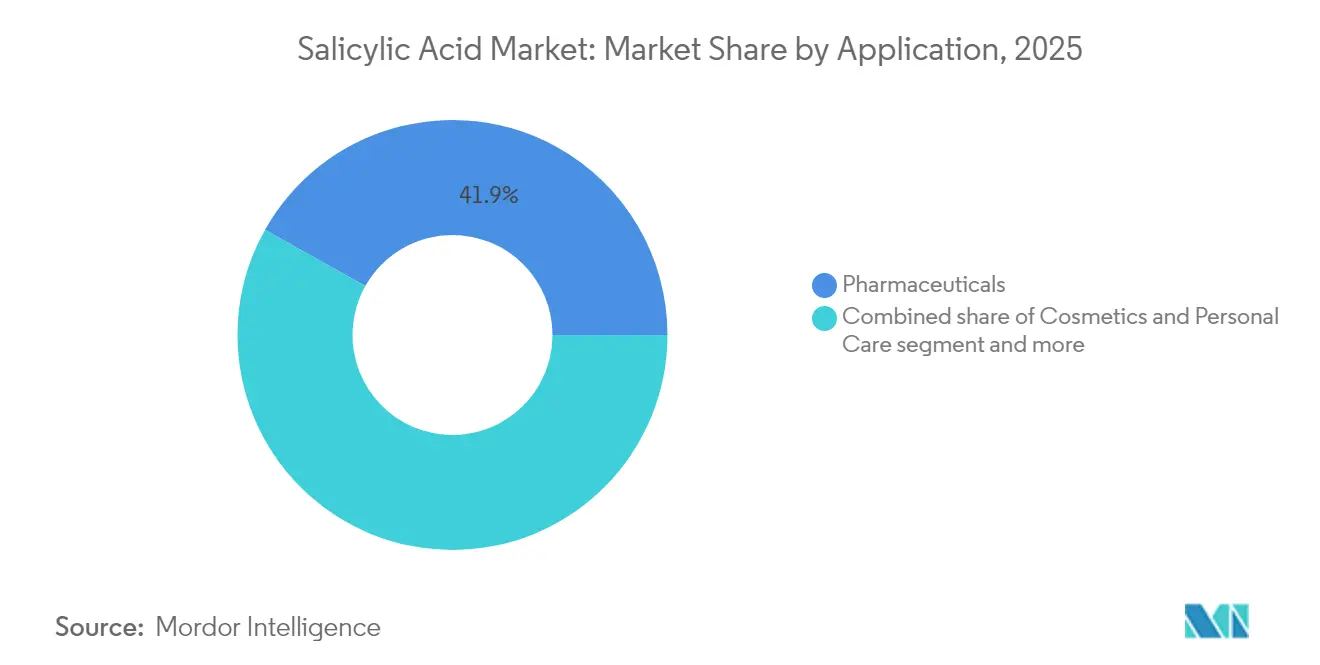
- By application, pharmaceuticals led with 41.86% of salicylic acid market share in 2025; cosmetics and personal care are forecast to grow at the fastest 7.89% CAGR over 2026-2031.
- By geography, Europe commanded 30.78% revenue share in 2025, while Asia-Pacific is set to post the quickest 9.44% CAGR to 2031.
Note: Market size and forecast figures in this report are generated using Mordor Intelligence’s proprietary estimation framework, updated with the latest available data and insights as of 2026.
Market Trends and Insights
Drivers Impact Analysis of Salicylic Acid Market*
| Driver | (~) % Impact on CAGR Forecast | Geographic Relevance | Impact Timeline |
|---|---|---|---|
| Increasing demand for salicylic acid in the pharmaceutical industry | +1.8% | Global, with concentration in North America and Europe | Medium term (2-4 years) |
| Rising demand in skincare and personal care products | +1.5% | Global, led by Asia-Pacific and North America | Short term (≤ 2 years) |
| Rise in clean-label beverage preservation approvals | +0.8% | North America and Europe, expanding to Asia-Pacific | Long term (≥ 4 years) |
| Increasing demand for salicylic acid in the packaged food sector as a food preservative | +0.9% | Global, with early adoption in developed markets | Medium term (2-4 years) |
| Growing need for plant growth regulators | +1.2% | Asia-Pacific core, spill-over to Americas | Medium term (2-4 years) |
| Increasing consumer preference for dermatologically tested and natural ingredients | +0.7% | Global, premium segments first | Long term (≥ 4 years) |
| Source: Mordor Intelligence | |||
Increasing Demand for Salicylic Acid in the Pharmaceutical Industry
Pharmaceutical applications drive market expansion through expanding therapeutic indications and enhanced formulation technologies. Advanced delivery systems, particularly supramolecular formulations, demonstrate superior collagen density improvement and reduced skin irritation compared to conventional preparations, addressing historical limitations that constrained broader therapeutic adoption. Patent activity in pharmaceutical applications remains robust, with recent filings focusing on combination therapies and novel delivery mechanisms that enhance bioavailability while minimizing gastrointestinal side effects. The pharmaceutical segment benefits from established regulatory pathways and growing recognition of salicylic acid's anti-inflammatory properties beyond traditional dermatological applications. Moreover, the compound's established safety profile and regulatory approvals encourage manufacturers to incorporate it into various formulations. Key suppliers such as Hebei Jingye Group, Shandong Xinhua Company, and others play a significant role in producing pharmaceutical-grade salicylic acid for global markets. Finally, the surge in over-the-counter pharmaceutical products containing salicylic acid, driven by consumer preference for self-care solutions, also contributes significantly to the market's growth.
Rising Demand in Skincare and Personal Care Products
Consumer preference for scientifically validated active ingredients continues to drive the adoption of salicylic acid in cosmetic formulations. However, increasing regulatory scrutiny around safety is shaping how the ingredient is used. For instance, the European Commission's Scientific Committee on Consumer Safety recently limited the concentration of salicylic acid in children's cosmetic products to 0.1% for dermal applications, reflecting growing safety concerns while still allowing higher concentrations in adult products [1]. In the United States, regulatory enforcement is also tightening, as evidenced by the United States Food and Drug Administration (FDA)'s warning letter to Skin Beauty Solutions regarding unapproved chemical peel products containing high concentrations of salicylic acid. This has prompted manufacturers to focus on developing compliant, safe formulations. Additionally, the Modernization of Cosmetics Regulation Act implements new registration requirements, increasing compliance standards and market entry protocols. Cosmetic and personal care manufacturers are integrating salicylic acid into formulations to address market demand for scientifically validated skincare products. Allergan Aesthetics, an AbbVie subsidiary, launched two SkinMedica products in April 2024 for acne treatment. The Acne Clarifying Treatment and Pore Purifying Gel Cleanser utilize 2% encapsulated salicylic acid for controlled release and reduced irritation.
Rise in Clean-Label Beverage Preservation Approvals
The growing consumer preference for clean-label and naturally preserved beverages is driving increased interest in salicylic acid as a potential natural preservative. This trend is supported by regulatory developments, including the United States Food and Drug Administration (FDA)'s Generally Recognized as Safe (GRAS) framework, which permits the use of salicylic acid in food and beverage applications under specific conditions. Such approvals create new opportunities for manufacturers seeking to align with demand for transparent, additive-free labeling. According to the International Bottled Water Association, carbonated beverages accounted for 20.31% of total beverage consumption in 2024, highlighting a significant market segment where clean-label preservation solutions can be applied [2]. However, widespread adoption of salicylic acid in beverage formulations remains gradual due to technical challenges such as pH sensitivity and potential interactions affecting flavor profiles. Adoption is more prominent in premium and niche beverage categories, where consumers are more willing to pay for natural preservation systems. While the regulatory landscape offers support through safety assessments, manufacturers must still navigate complex labeling requirements and invest in consumer education to effectively position salicylic acid as a safe and functional natural preservative.
Increasing Demand for Salicylic Acid in the Packaged Food Sector as a Food Preservative
Consumer demand for clean-label and naturally preserved packaged foods increases salicylic acid adoption as a food preservative. Food manufacturers are implementing natural alternatives to synthetic additives due to market requirements for ingredient transparency. Salicylic acid's antimicrobial properties and regulatory compliance make it viable for natural preservation systems. The FDA regulates salicylic acid under 21 CFR Part 182 as Generally Recognized as Safe (GRAS). This regulatory framework enables manufacturers to implement salicylic acid in premium packaged food segments despite higher costs. Moreover, manufacturers must address formulation challenges, including preservation effectiveness and taste impact across food products. The food industry expansion supports this transition, with the U.S. Department of Agriculture reporting food industries' USD 1.530 trillion contribution to U.S. GDP in 2023, at 5.6% of total GDP [3]. This market size facilitates preservative innovation. Food processing investments in natural ingredients enhance salicylic acid's market applications, particularly where it matches synthetic preservative performance. Market demand for clean-label products continues to drive salicylic acid adoption within regulatory parameters.
Restraints Impact Analysis of Salicylic Acid Market*
| Restraint | (~) % Impact on CAGR Forecast | Geographic Relevance | Impact Timeline |
|---|---|---|---|
| Availability of substitutes | -0.9% | Global, with higher impact in cost-sensitive markets | Short term (≤ 2 years) |
| Price volatility of raw materials | -0.7% | Global, particularly affecting Asia-Pacific manufacturers | Short term (≤ 2 years) |
| Stringent regulatory rpprovals and compliance requirements | -0.5% | Europe and North America, expanding globally | Medium term (2-4 years) |
| Potential health risks and skin sensitivities | -0.4% | Global, with heightened concern in developed markets | Long term (≥ 4 years) |
| Source: Mordor Intelligence | |||
Availability of Substitutes
Alternative active ingredients in pharmaceutical and cosmetic applications create competitive pressure, particularly in cost-sensitive market segments where efficacy differences may not justify premium pricing. Beta-hydroxy acids like betaine salicylate and alpha-hydroxy acids such as glycolic acid offer similar exfoliation benefits with potentially reduced irritation profiles, appealing to sensitive-skin consumers who experience adverse reactions to salicylic acid. In agricultural applications, synthetic plant growth regulators and alternative natural compounds compete for market share, though salicylic acid's dual role as both growth promoter and a disease resistance enhancer provides differentiation advantages. The availability of combination products that blend multiple active ingredients can reduce reliance on salicylic acid as a standalone component, particularly in cosmetic formulations where multi-functional ingredients command premium positioning. Patent expiration on key formulation technologies may accelerate generic competition and substitute adoption. Market dynamics favor products that demonstrate superior efficacy-to-irritation ratios, driving innovation in both salicylic acid formulations and competitive alternatives.
Price Volatility of Raw Materials
Phenol price fluctuations directly impact salicylic acid production costs through the Kolbe-Schmitt reaction pathway, creating margin pressure for manufacturers unable to pass through cost increases to customers. The concentration of supply chains in Asia-Pacific exposes the market to regional disruptions, particularly affecting manufacturers without diversified raw material sourcing networks. Energy costs for the Kolbe-Schmitt reaction, which requires high temperature and pressure conditions, contribute to production cost volatility, especially impacting smaller manufacturers utilizing less efficient production technologies. Large manufacturers implement forward contracting and vertical integration strategies to manage raw material price risks, potentially strengthening their market share during periods of high volatility. Manufacturing process improvements, including enhanced catalyst systems and reaction optimization techniques, provide opportunities to reduce raw material intensity and enhance cost competitiveness in the market.
*Our forecasts treat driver/restraint impacts as directional, not additive. The impact forecasts reflect baseline growth, mix effects, and variable interactions.
Salicylic Acid Market Segment Analysis
By Form:
Powder Dominance, Liquid InnovationPowder/crystal forms maintain market leadership with a 71.05% share in 2025, supported by established manufacturing processes and cost-effective production economics. Liquid formulations exhibit accelerated growth at 7.12% CAGR as manufacturers develop enhanced bioavailability and application convenience. Traditional powder forms benefit from stability advantages and established supply chain infrastructure, particularly in pharmaceutical applications where precise dosing and extended shelf life remain critical requirements.
The salicylic acid market demonstrates increased adoption of liquid formulations, attributed to their superior solubility, efficient skin absorption, and application convenience. These characteristics address market demand for ready-to-use cosmetic products, specifically in acne treatments, exfoliators, and clarifying toners. The efficacy of salicylic acid increases when formulated in stable liquid bases. Furthermore, emerging delivery systems, including transdermal patches and controlled-release gels, integrate the advantages of solid formulations' stability with liquid forms' rapid effectiveness. These advancements drive market demand for salicylic acid products that deliver optimal performance, minimize skin sensitivity, and provide efficient application methods.

By Application:
Pharmaceuticals Lead, Cosmetics AcceleratePharmaceutical applications hold a 41.86% market share in 2025, driven by established therapeutic effectiveness and regulatory approval processes. The cosmetics and personal care segments show the highest growth rate at 7.89% CAGR through 2031. The pharmaceutical segment continues to expand beyond traditional dermatological uses, as research confirms salicylic acid's effectiveness in systemic acquired resistance pathways and anti-inflammatory mechanisms. Food and beverage applications, despite their smaller market share, exhibit growth potential due to increasing demand for clean-label preservatives and evolving regulatory acceptance of natural alternatives.
In pharmaceuticals, development focuses on improved delivery systems that optimize therapeutic outcomes while reducing side effects. Notably, supramolecular salicylic acid shows better collagen density improvement and lower skin irritation compared to standard formulations. The cosmetics segment expansion is supported by consumer demand for scientifically-proven active ingredients, though manufacturers must address regulatory limitations on products for children. Additional applications, including agricultural uses for plant growth regulation, contribute to market expansion, with documented soybean yield increases of 8-46% and improved stress resistance across various crops.
Geography Analysis
Europe Salicylic Acid Market
Europe maintains market leadership with a 30.78% share in 2025, supported by established pharmaceutical manufacturing infrastructure and stringent regulatory frameworks that validate product quality and safety standards. The region benefits from comprehensive regulatory oversight through the European Medicines Agency and national authorities, creating consumer confidence in salicylic acid-containing products while establishing clear compliance pathways for manufacturers. European manufacturers leverage advanced production technologies and established distribution networks to serve both domestic and export markets, with particular strength in high-value pharmaceutical and cosmetic applications.
APAC and North America Salicylic Acid Market
The Asia-Pacific region emerges as the fastest-growing region, with a 9.44% CAGR through 2031, driven by expanding pharmaceutical manufacturing capacity, increasing agricultural applications, and rising consumer awareness of the benefits of active ingredients in personal care products. China leads regional growth through significant investments in manufacturing, including the establishment of new production facilities that incorporate environmental compliance measures and advanced process technologies. Moreover, North America represents a mature market with stable demand patterns across pharmaceutical, cosmetic, and emerging food preservation applications, supported by comprehensive regulatory frameworks and established consumer acceptance of active ingredient benefits. The United States Food and Drug Administration (FDA)'s clear guidance on salicylic acid use in various applications provides regulatory certainty that supports product development and market entry strategies.
South America and MEA Salicylic Acid Market
South America, and Middle East and Africa (MEA) markets present growth opportunities for salicylic acid, driven by urbanization, higher disposable incomes, and increased demand for pharmaceutical and personal care products. Brazil and Mexico are experiencing growth in their domestic pharmaceutical manufacturing and over-the-counter skincare segments, leading to increased adoption of salicylic acid formulations. The Middle East and Africa (MEA) region shows increased consumer awareness of personal hygiene and skin health, resulting in higher demand for salicylic acid in acne treatments and exfoliating products. However, market growth faces constraints from limited manufacturing capabilities, varying regulations across regions, and dependence on imports. Global manufacturers are focusing on strategic partnerships and local presence to expand their market reach and establish stronger supply chains in these regions.
Regulatory Landscape
Regulatory oversight for salicylic acid spans food-contact, food substance listings, cosmetics, and pharmaceutical uses, which leads to application-specific compliance obligations. In the United States, salicylic acid is listed in FDA's Substances Added to Food inventory, with technical effects referenced for flavoring agent or adjuvant use, while regulatory permissions are more clearly defined for indirect food additive and food-contact uses, including 21 CFR 175.105 (adhesives), 21 CFR 175.300 (resinous and polymeric coatings), and 21 CFR 177.2600 (rubber articles intended for repeated use). This requires formulators to separate flavoring or adjuvant references from broader preservative claims and align labeling and technical documentation with the applicable FDA framework.
Beyond food-related uses, regulators also tighten safety scrutiny where exposure risk is higher. In Europe, the European Commission and its Scientific Committee on Consumer Safety (SCCS) have focused on concentration and exposure considerations for cosmetics, including a January 2026 SCCS request for a scientific opinion on aggregate exposure to salicylic acid and salicylic esters in cosmetic products. In Canada, Environment and Climate Change Canada has addressed the salicylates group in a risk-management scope and notes salicylic acid is naturally present in plants and used in limited capacities such as incidental additives, intersecting with Food and Drugs Act provisions. For animal drug residue contexts in the United States, FDA references include restrictions such as a zero tolerance for residue in milk and specific limits for mastitis-related uses (21 CFR 556.590 and 21 CFR 526.820), reinforcing the need for end-use specific regulatory screening across sectors.
Competitive Landscape
The salicylic acid market exhibits moderate fragmentation, with major companies strengthening their market positions through vertical integration, research and development investments, and regional expansion. Major companies such as Seqens Group, Merck KGaA, Thermo Fisher Scientific, Cayman Chemical Company, and Siddharth Carbochem Products maintain their market share through manufacturing capabilities and strong customer relationships. Besides, smaller specialized companies focus on high-value applications and formulation technologies.
Additionally, competition centers on product quality, regulatory compliance, and technical support capabilities, particularly in pharmaceutical and cosmetic segments where strict specifications and documentation requirements create market entry barriers. Companies differentiate themselves through advanced manufacturing processes, product purity improvements, and specialized delivery systems that meet specific application needs.
As safety requirements evolve, regulatory compliance capabilities gain importance, prompting companies to invest in analytical capabilities and quality systems to fulfill documentation and testing requirements across global markets. Chemical manufacturers and end-use formulators form strategic partnerships to create integrated value chains, strengthening customer relationships while reducing competition from commodity suppliers.
Salicylic Acid Industry Leaders
-
Seqens Group
-
Merck KGaA
-
Thermo Fisher Scientific
-
Cayman Chemical Company
-
Siddharth Carbochem Products
- *Disclaimer: Major Players sorted in no particular order
Salicylic Acid Market Companies Covered in this Report
- Seqens Group
- Merck KGaA
- Thermo Fisher Scientific
- Cayman Chemical Company
- Siddharth Carbochem Products
- Lona Industries (Alta Laboratories)
- SimSon Pharma Limited
- Hebei Jingye Group
- Zhenjiang Gaopeng Pharmaceutical
- Spectrum Chemical Mfg
- Avantor Inc.
- Emco Group (Emco Dyestuff Pvt Ltd)
- Alpha Chemika
- Flychem Private Limited
- Central Drug House
- MedChemExpress
- The Andhra Sugars Limited.
- GFS Chemicals
- Plater Group
- Honeywell Research Chemical
Market Opportunities and Future Outlook
A key bottleneck sits in matching clean-label positioning with what is permitted under food additive rules. In the European Union and the United Kingdom, salicylic acid is not authorized as a food preservative under current food additive (E-number) regimes, while in the United States it is listed in FDA's EAFUS as a flavoring agent or adjuvant rather than a general preservative. This creates a practical opportunity for suppliers and beverage or packaged food formulators to develop compliant use-cases anchored in authorized technical functions (including food-contact and indirect additive pathways), while investing in evidence packages and labeling strategies that avoid preservative claims where approvals do not support them.
On the supply side, producers and adjacent fine-chemical players are upgrading capabilities that can lift availability of higher-specification material and specialized derivatives used in pharmaceuticals and personal care. Process innovation is moving beyond traditional batch Kolbe-Schmitt operations toward optimized continuous-flow and suspension-based carboxylation approaches that target higher yield, purity, and improved environmental performance, building on the broader context of synthesis efficiency gains. Investment signals in pharmaceutical manufacturing infrastructure also support higher traceability and quality expectations in downstream demand: Evonik announced a USD 93.5 million modernization and fermentation capacity expansion at Slovenská Lupca, Slovakia (April 2026), and a USD 100 million, five-year modernization plan for its Lafayette, Indiana, drug substance manufacturing site including reactor capacity upgrades (July 2026). These moves support pharmacopeia-aligned supply and application development, where documentation, quality systems, and formulation technologies are central purchase criteria for salicylic acid inputs.
Recent Industry Developments in Salicylic Acid Market
- January 2026: The European Commission requested the SCCS to issue a scientific opinion on aggregate exposure to salicylic acid and salicylic esters used in cosmetic products. The step indicates continued tightening of exposure-based safety evaluations that can reshape acceptable-use narratives and formulation strategies for salicylic acid in personal care.
- February 2025: SEQENS and APPLEXION announced a strategic partnership to distribute SEQENZYM FT, an enzymatic processing aid for the agro-food industry. The collaboration shows how specialty chemical suppliers tied to salicylic acid value chains are expanding food-sector offerings, supporting cross-selling and deeper relationships with agro-food customers.
- June 2024: Merck KGaA (MilliporeSigma) invested EUR 62 million in a new quality control facility at its Darmstadt headquarters, with the site planned to open by mid-2025. The expanded QC capacity strengthens compliance and release-testing infrastructure that supports high-specification life science and pharmaceutical inputs where salicylic acid is used in downstream formulations.
Salicylic Acid Market Report Scope and Research Methodology
Market Definition and Coverage
For this study, the salicylic acid market is defined as the global revenues generated from salicylic acid sold into end uses such as pharmaceuticals, cosmetics and personal care, and food and beverage uses, valued in USD for the stated years.
Scope exclusions: Revenues from downstream finished products that only use salicylic acid as an ingredient and internal transfer pricing within integrated groups are excluded where they do not reflect an external sale.
Segments Covered in This Report
- By Application
- Pharmaceuticals
- Cosmetics and Personal Care
- Food and Beverages
- Others
- By Form
- Powder/Crystal
- Liquid
- By Geography
- North America
- United States
- Canada
- Mexico
- Rest of North America
- Europe
- Germany
- France
- United Kingdom
- Spain
- Italy
- Russia
- Rest of Europe
- Asia-Pacific
- China
- India
- Japan
- Australia
- Rest of Asia-Pacific
- South America
- Brazil
- Argentina
- Rest of South America
- Middle East and Africa
- South Africa
- Saudi Arabia
- Rest of Middle East and Africa
- North America
Data Sources, Market Sizing, and Validation
Desk Research
Desk work started with mapping supply and demand signals that can be checked repeatedly across years. We relied on public sources such as U.S. FDA databases for drug and ingredient context, the European Chemicals Agency for substance level compliance signals, and the U.S. International Trade Commission for trade and tariff references relevant to chemical shipments.
To keep the market model grounded, we also used sources such as UN Comtrade for import and export trends, the World Bank for macro indicators and currency context, and peer reviewed journals for synthesis routes and typical grades used in end applications. We reviewed company annual reports, investor presentations, and reputed press to track capacity moves and application focus. Where needed, we used a paid subscription covering import and export shipment level data and company financials to cross check directionality. This list is illustrative, and other sources were also referenced to support data collection, validation, and clarification.
Primary Interviews and Surveys
Primary work focused on talking to producers, distributors, formulators, and large end users across key consuming regions so that assumptions from desk research could be corrected in practical terms. We used these discussions to validate application splits, check how pricing typically behaves by form, and assess whether demand shifts tied to pharma and personal care cycles showed up in near term purchasing. Final totals were locked only after these points were reconciled across the interviewed set.
Distribution of primary research fieldwork respondents
| Company type | Respondent position | Region |
|---|---|---|
| Top tier: 27% | CXOs: 12% | APAC: 46% |
| Mid tier: 51% | Functional/Unit leaders: 39% | EMEA: 34% |
| Smaller Players: 22% | Managers: 49% | Americas: 20% |
Market-Sizing & Forecasting
Sizing is built using a top-down structure where application demand pools are reconstructed from observable indicators and then priced into value, followed by a cross check using selective bottom-up approximations from supplier and channel feedback. In practice, we start with end use consumption signals for pharmaceuticals, cosmetics and personal care, and food uses, and then translate them into salicylic acid demand using penetration and formulation intensity assumptions that were validated through interviews.
A few inputs that matter in this market include changes in topical and dermatology product output, preservative substitution trends in food and beverage formulations, form preference (powder or crystal versus liquid), trade flows that indicate supply availability by region, and the typical price spread between higher purity and industrial grades. When country level numbers are not visible, we handle gaps through regional proxies and trade based scaling, and then stress test the assumptions with interview feedback.
For forecasting, scenario analysis is used to reflect how regulatory limits in sensitive personal care uses, pharma pipeline stability, and capacity additions can shift growth paths. The final forecast path is accepted only after the drivers are consistent with near term volume indicators and the price progression logic shared by market participants.
Data Validation & Update Cycle
Outputs are checked in more than one way so that one weak data point does not drive the final value. We compare implied volumes and prices against independent signals such as trade unit values, regional demand growth markers, and the typical spread between forms, and then investigate outliers before sign off.
A second analyst reviews key assumptions and year over year movements, and follow up calls are triggered when a variance cannot be explained by a clear event such as a capacity change or a demand slowdown. Reports are refreshed annually, with interim updates when material events occur, and a final pre delivery review is done so clients receive the most current view.
Mordor Intelligence's Salicylic Acid Market Estimate Compared With Other Published Estimates
Published market sizes for salicylic acid can look far apart because the underlying scope and pricing basis are not always consistent. Differences usually come from what is counted as part of the product set, how the market is valued (producer revenue versus broader distribution value), and how quickly assumptions are refreshed when trade and pricing move.
Some external estimates include salicylic acid salts and then build values using wholesale price constructs tied to trade unit values. For Mordor Intelligence, the count is limited to salicylic acid only and the totals are organized by application and form, which helps avoid mixing adjacent chemistries into the same revenue pool.
Benchmark comparison
| Source | Market Size | Gaps in Research Methodology |
|---|---|---|
| Mordor Intelligence | USD 0.13 B (2026) | |
| Global Consultancy A | USD 0.55 B (2024) | Uses an earlier base year and a broader valuation approach that can reflect a wider channel value, which tends to lift the total versus a producer revenue view focused strictly on salicylic acid. |
| Trade Journal B | USD 0.31 B (2024) | Covers salicylic acid together with its salts and uses nominal wholesale pricing conventions, so product coverage and price basis are not directly comparable to a salicylic acid only estimate. |
The table shows that the spread is mainly explained by product coverage and what part of the value chain is being valued, not only by growth expectations. By keeping inputs tied to application demand signals and form level pricing checks, the model stays traceable to repeatable variables that can be reviewed and updated year by year.
Key Questions Answered in the Report
What is the current size of the salicylic acid market?
The salicylic acid market size was USD 129.54 million in 2026 and is projected to reach USD 177.61 million by 2031 at a 6.52% CAGR.
Which application segment holds the largest share?
Pharmaceutical uses led with 41.86% of salicylic acid market share in 2025, supported by widespread dermatological approvals.
Which region is expected to grow the fastest?
Asia-Pacific is forecast to expand at a 9.44% CAGR between 2026 and 2031 owing to rising pharmaceutical capacity and agricultural uptake.
How are regulations shaping product development?
European Union (EU) rules now limit children’s cosmetics to 0.1% salicylic acid, while the Food and Drug Administration (FDA)’s Modernisation of Cosmetics Regulation Act clarifies facility registration, leading manufacturers to invest in compliant, low-irritation delivery systems.