
Russia Diabetes Care Drugs and Devices Market Size and Share
Market Overview
| Study Period | 2021 - 2032 |
|---|---|
| Forecast Data Period | 2027 - 2032 |
| Base Year Market Size (2026) | USD 2.54 Billion |
| Market Size (2027) | USD 2.64 Billion |
| Market Size (2032) | USD 3.20 Billion |
| Growth Rate (2027 - 2032) | 3.97 % |
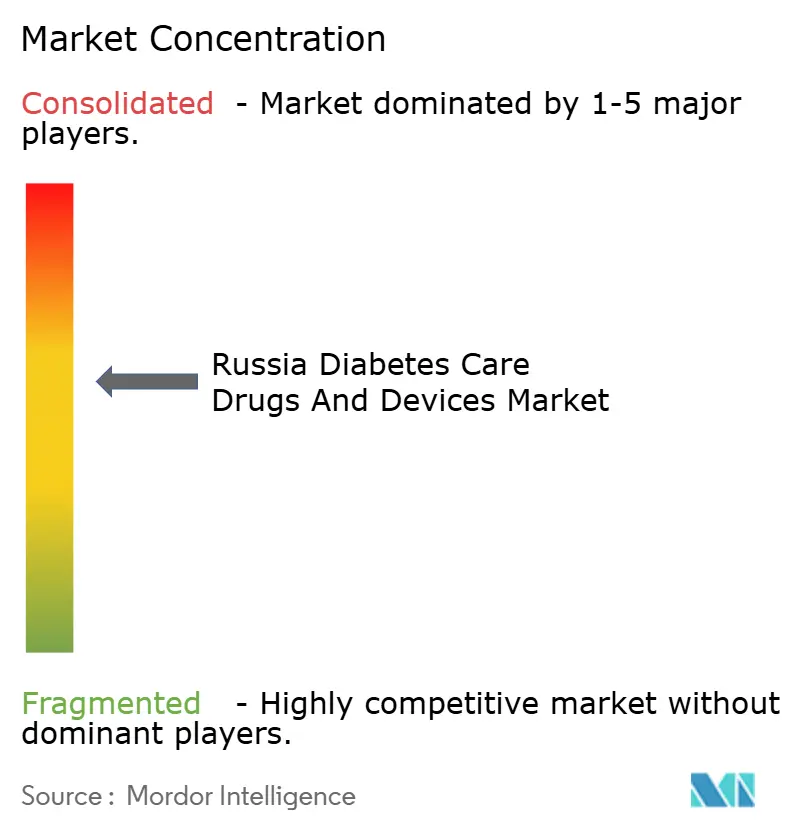
| Market Concentration | Medium |
Major Players *Disclaimer: Major Players sorted in no particular order Image © Mordor Intelligence. Reuse requires attribution under CC BY 4.0. | |
Russia Diabetes Care Drugs and Devices Market Analysis by Mordor Intelligence
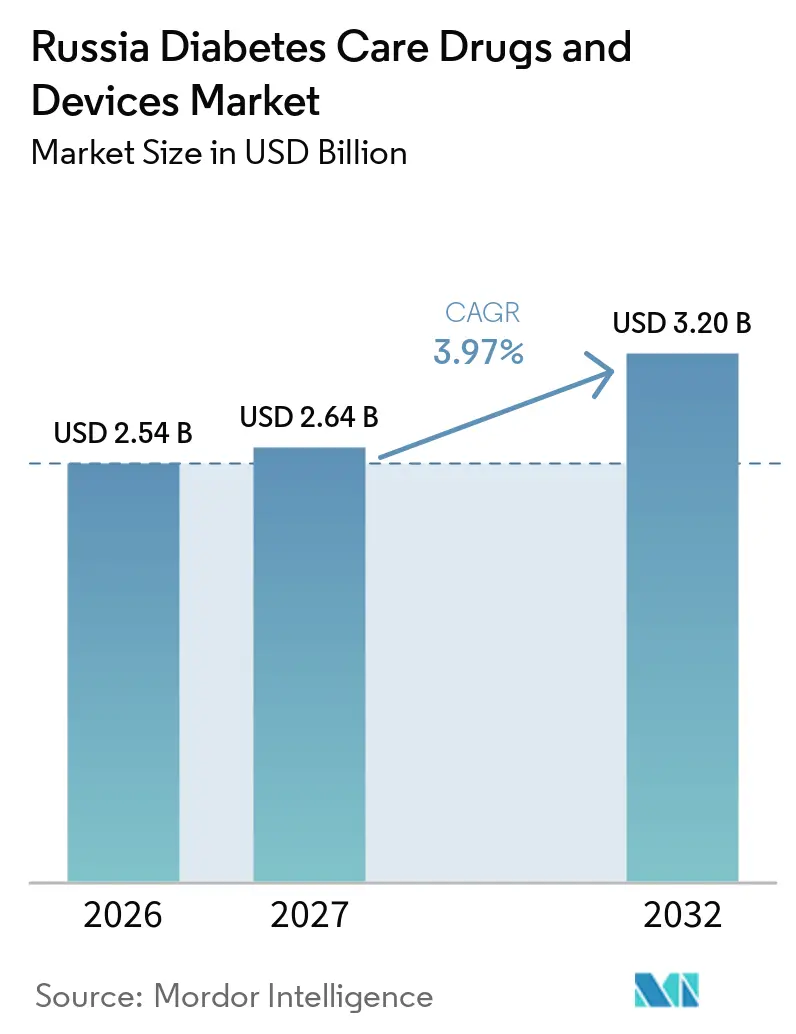
The Russia Diabetes Care Drugs And Devices Market size was valued at USD 2.54 billion in 2026 and is estimated to grow from USD 2.64 billion in 2027 to reach USD 3.20 billion by 2032, at a CAGR of 3.97% during the forecast period (2027-2032).
A year into the COVID-19 pandemic, it caused premature deaths, especially among the elderly. Russia has the ninth-highest number of coronavirus cases in the world. Most people who die from COVID-19 are affected by having two or more chronic conditions in the same person. Several studies have confirmed that chronic conditions such as diabetes are associated with undesirable outcomes in COVID-19 patients. Diabetes drugs are designed to stabilize and control blood sugar levels in people with diabetes. Antidiabetic drugs have become potential candidates for treating diabetic patients affected by SARS-CoV-2 infection during the novel coronavirus disease (COVID-19) pandemic. Rapid increases in the incidence and prevalence of diabetes and healthcare costs indicate increased use of diabetes care products. According to Roscongress, Russia ranks fifth in the world in terms of the number of people with diabetes between the ages of 20 and 79. In addition, the death rate among people with diabetes increased by 22% during the COVID-19 pandemic.
An increasing rate of new diagnoses of type 1 and type 2 diabetes has been observed, mainly due to obesity, unhealthy diet, and lack of exercise. Rapid increases in the incidence and prevalence of diabetes and healthcare costs indicate increased use of diabetes care products. In May 2021, the World Health Assembly agreed to a resolution to strengthen diabetes prevention and control. Action is recommended in the following areas: Improving access to insulin. Facilitate consolidating and harmonising regulatory requirements for insulin and other drugs and healthcare products used to treat diabetes. Evaluate the feasibility and potential value of establishing a web-based tool for sharing information related to transparency in the diabetes drug and healthcare products market.
Therefore, owing to the aforementioned factors, the studied market is anticipated to grow over the analysis period.
Note: Market numbers in this report are based on Mordor Intelligence's proprietary estimation framework, which combines nine months of actuals with Q4 projections for base year 2026.
Russia Diabetes Care Drugs and Devices Market Trends and Insights
The continuous Glucose Monitoring Segment is Expected to Witness the Highest Growth Rate Over the Forecast Period
A continuous blood glucose monitor is an automatic blood glucose monitoring system consisting of a small device worn on the body and attached with an adhesive patch. The sensor portion of the device includes a cannula inserted into the top layer of the skin and uses a sample of interstitial fluid to check blood sugar levels. The sensor is connected to a transmitter that can transmit data wirelessly to a particular mobile receiving device or smartphone. For diabetics, their caregivers, and the community, her use of CGM is beneficial in managing blood sugar and insulin levels to maintain good health. CGM makes blood sugar control much more accessible by reducing interruptions and allowing for better sleep. It also improves the mental health of patients and caregivers by reducing the overall mental burden associated with diabetes management.
Continuous blood glucose monitoring has become a popular alternative to commercially available portable finger glucose meters for people with diabetes. The sensor is the most important part of any continuous blood glucose monitoring device. Various promising glucose sensor technologies are being developed, ranging from traditional electrochemical glucose sensors to new optical and other electrical glucose sensors, positively impacting the market growth. Continuous blood glucose monitoring sensors have opened new scenarios for offline assessment of the efficacy of treatment regimens for individual patients, facilitating the development of innovative online applications. This includes a hypoglycemia\/hyperglycemia warning system and an artificial pancreas control algorithm. With new technologies, continuous blood glucose monitoring devices are becoming increasingly inexpensive.
Market opportunities for players in the Russian diabetes care drugs and devices market include numerous new product launches, increased international research collaboration for technological advances, and increased public awareness of diabetes.
Rising diabetes prevalence
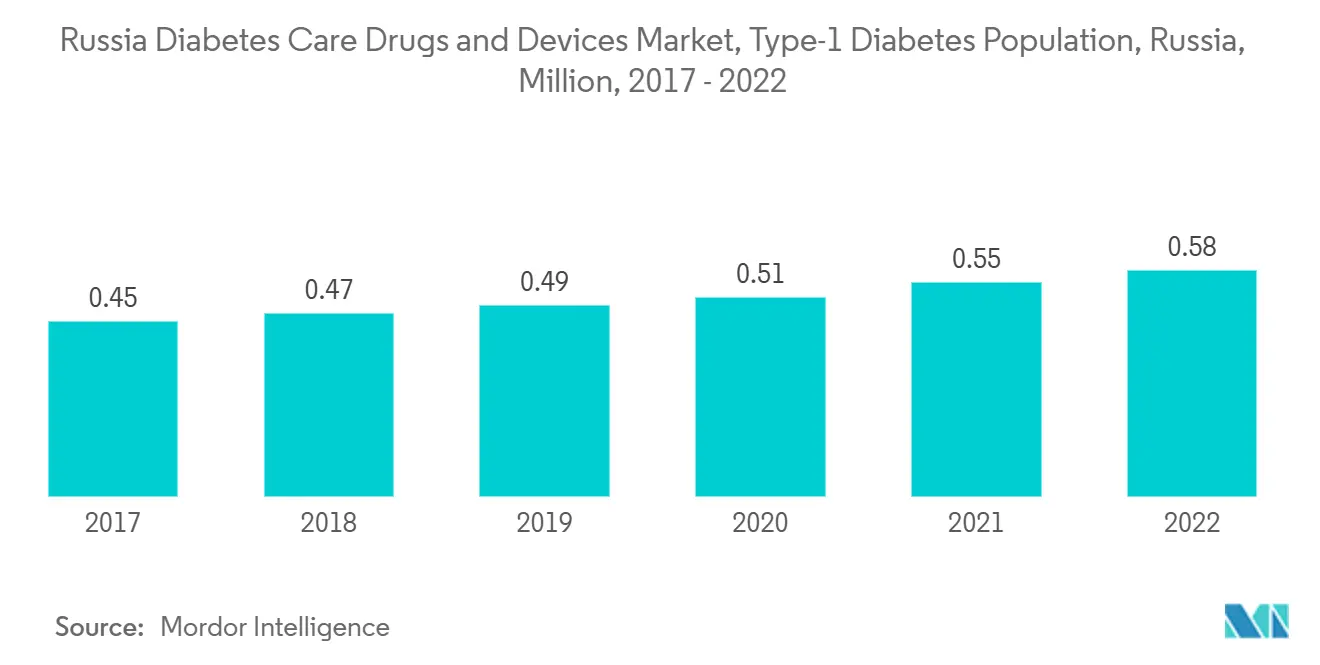
There has been an alarming increase in the prevalence of diabetes in Russia in recent years. A diabetic need several corrections throughout her day to maintain nominal blood sugar levels, including Oral antidiabetic drugs, or monitor blood sugar and take additional carbohydrates. It has been observed that the rate of new diagnoses of type 1 and type 2 diabetes is increasing, mainly due to obesity, unhealthy diet, and lack of exercise.
Various efforts have been started to fight diabetes in Russia. For example, at the 2021 Moscow City Forum, a memorandum of understanding was signed between the Youth Council of the Ministry of Health of Moscow, the Moscow City Forum, the Moscow Diabetes Association, the Medical Department of the Moscow Diabetes Association, KB Strelka, and Novo. Nordisk implements Urban Modified Diabetes Program in Moscow. The Moscow program aims to comprehensively assess the characteristics of diabetes challenges relevant to Moscow. The program has also developed an action plan to combat the disease in the most vulnerable populations.
According to the IDF, the Russian government needs to fully implement the National Diabetes Plan to stem the spread of diabetes in the country. This plan provides a state budget to ensure diabetes treatment for all Russian citizens. Russia is working to improve its reimbursement system for all aspects of diabetes care to limit out-of-pocket costs and prevent devastating household expenditures. In addition, a national screening program for improved early detection of carbohydrate metabolism disorders was introduced, and a specialized diabetes health service was established under the Ministry of Health of the Russian Federation.
The increasing diabetes prevalence and the above factors will likely drive the segment growth over the forecast period.
Competitive Landscape
The Russian diabetes care drugs and devices market is characterized by a mix of multinational companies and rapidly expanding domestic manufacturers. Competitive dynamics have increasingly focused on the localization of insulin production, digital diabetes management, and continuous glucose monitoring technologies. Domestic player GEROPHARM has strengthened its position through full-cycle insulin manufacturing and reports that its Pushkin facility is designed to cover up to 100% of Russia's insulin requirements at full capacity, while the company is currently one of the leading insulin suppliers in the country. Furthermore, multinational firms such as Abbott continue to compete through advanced glucose monitoring solutions, with the FreeStyle Libre ecosystem supporting integration with connected insulin pens and digital diabetes management platforms. As a result, manufacturers are increasingly differentiating themselves through local production capabilities, technology integration, and patient-centric diabetes management solutions, intensifying competition across both the drug and device segments.
Russia Diabetes Care Drugs and Devices Industry Leaders
-
Medtronics
-
Roche
-
NovoNordisk
-
Sanofi
-
Omnipod
- *Disclaimer: Major Players sorted in no particular order
Market Opportunities and Future Outlook
Ongoing import substitution and state interventions in diabetes therapeutics create whitespace for locally produced insulin analogs and modern non-insulin injectables. In early 2026, the Ministry of Industry and Trade indicated domestically produced diabetes drugs accounted for nearly 60% of sales volume, and compulsory-licensing mechanisms have been used to enable local manufacturers (including Biokhimik, Geropharm, Promomed, and PSK Pharma) to make semaglutide-based products for the domestic market, reshaping pricing and tender competitiveness versus originators.
On the devices side, demand signals for connected care align with government programs that formalize procurement and care pathways. The Federal Project "Fight Against Diabetes" under the national project "Active and Long Life" introduces centralized procurement of medical devices starting 1 July 2026, supporting scale-up opportunities for glucose monitoring and insulin delivery suppliers that can meet tender requirements and localization priorities. R&D and development activity also supports longer-cycle opportunities in advanced diabetes technology, including work reported in 2026 to develop a domestically produced artificial pancreas system (with a reusable CGM component), complementing existing market momentum toward CGM adoption and digital integration in diabetes management.
Recent Industry Developments
- June 2026: The Russian Government extended licensing rights until 2027 allowing domestic companies to produce analogues of Novo Nordisk drugs without consent from the original manufacturer citing health protection needs. The move expands local manufacturing capacity and could shift market dynamics by increasing generic and biosimilar production in diabetes care. It strengthens domestic supply resilience and may pressure pricing and access in Russia.
- April 2026: Geropharm - Russian pharmaceutical company Geropharm received Ministry of Health approval to conduct Phase I clinical trials of a combination insulin degludec and insulin aspart biosimilar (code GP40231), a competitor to Novo Nordisk's Ryzodeg. The approval enables early clinical validation of a potential basal-bolus option. The development diversifies the insulin biosimilar landscape and could influence pricing and competition in the Russian diabetes care market.
- March 2026: Sechenov University and KRET - Researchers launched the development of the first domestically produced artificial pancreas system for Type 1 diabetes, featuring a reusable continuous glucose monitor, with initial prototypes expected by August 2027. The project signals a push toward localizable diabetes management technology. It may alter how Type 1 patients manage insulin delivery in Russia and foster innovation ecosystems.
Research Methodology Framework and Report Scope
Market Definition and Coverage
For this methodology, the market captures the Russia revenue generated from diabetes care drugs and diabetes care devices used to manage and monitor blood glucose for people living with diabetes.
Scope exclusions: We exclude broader hospital diabetes services, general consumables not specific to diabetes, and non-therapeutic wellness products that do not directly support diabetes drug therapy or glucose monitoring.
Segmentation Overview
- Devices
- Monitoring Devices
- Self-monitoring Blood Glucose Devices
- Continuous Blood Glucose Monitoring
- Management Devices
- Insulin Pump
- Insulin Syringes
- Insulin Cartridges
- Disposable Pens
- Monitoring Devices
- Drugs
- Oral Anti-Diabetes Drugs
- Insulin Drugs
- Combination Drugs
- Non-Insulin Injectable Drugs
Data Sources, Market Sizing, and Validation
Desk Research
Desk research was used to set the factual base for disease burden, treatment pathways, and the flow of products through the healthcare system. We relied on public sources such as the International Diabetes Federation diabetes atlas, the World Health Organization, national health statistics and procurement disclosures where available, and customs and trade statistics that help explain shifts in import mix and local supply.
To keep assumptions realistic, we also reviewed sources such as peer reviewed clinical and health economics journals for therapy patterns, reimbursement and formulary updates from official channels, and company filings and investor presentations for product portfolio and Russia exposure context. Where useful, paid subscriptions for company financials and intelligence, patent databases, and shipment level import export data were used to cross check timelines and directional movement. The sources listed above are illustrative only, since many other public and paid references were used for data collection, validation, and clarification.
Primary Interviews and Surveys
Our Russia fieldwork covers medicine manufacturers, device suppliers, distributors, pharmacies, procurement specialists, endocrinologists, and diabetes-care managers. Interviews and surveys help test secondary data, clarify public and private channel splits, identify gaps in continuous glucose monitoring access, and check price and adoption assumptions before the estimate is finalized. Respondents also help distinguish procurement-driven demand from routine pharmacy sales within Russia.
Distribution of primary research fieldwork respondents
| Company type | Respondent position |
|---|---|
| Top tier: 25% | CXOs: 20% |
| Mid tier: 55% | Functional/Unit leaders: 30% |
| Smaller Players: 20% | Managers: 50% |
Market-Sizing & Forecasting
Sizing was built using a mixed approach, where a top-down demand pool was reconstructed from diabetes prevalence and treated population indicators, which were then translated into therapy and device consumption by applying realistic usage and refill patterns. Once the demand picture was formed, it was converted into value using average selling price ranges that reflect channel mix and product type, and then adjusted for import substitution and public procurement timing.
To keep the model grounded, we cross checked totals using selective bottom-up approximations such as sampled price points across channels, supplier and distributor level checks on volume direction, and segment roll ups for insulin, oral anti-diabetic drugs, non-insulin injectables, and combination drugs, along with monitoring and management devices. Inputs that mattered most included insulin and OAD therapy mix, CGM adoption and sensor wear duration, SMBG strip consumption per patient, device replacement cycles for meters and pumps, and ruble to USD conversion timing tied to the measurement year.
Forecasts were developed using scenario analysis supported by simple trend fits, where the main drivers were updated through expert feedback on reimbursement changes, access constraints, and switching behavior between product categories. Where a bottom-up view had gaps, ranges were used and then narrowed after additional follow ups, so the final numbers remain explainable and repeatable with available data.
Data Validation & Update Cycle
Validation was done through several checks so the final totals do not rely on one data stream. Model outputs were compared with independent signals such as treated patient counts, category level consumption logic, procurement visibility, and trade flows, and then large jumps were flagged for review before sign off.
A second analyst review was used to test the arithmetic, assumptions, and year over year movement, and re-contacts were triggered when a key input moved outside the expected range. The report is refreshed annually, and interim updates are made when material policy or supply events occur. Before delivery, a fresh pass is performed so clients receive the latest updated view.
Mordor Intelligence's Russia Diabetes Care Drugs and Devices Market Sizing Compared With Other Published Estimates
Published market sizes for diabetes care in Russia often do not match because different studies combine drugs and devices in different ways, and then apply their own pricing and currency conversion rules. Variations also come from whether the model treats public procurement and retail sales as the same price basis, and whether refill driven consumables are counted using realistic usage rates.
The main gap comes from whether high frequency monitoring consumables and CGM sensor replenishment are fully counted as recurring demand, and Mordor Intelligence treats SMBG and CGM value using patient level usage and replacement assumptions that are rechecked against access and reimbursement signals.
Benchmark comparison
| Source | Market Size | Gaps in Research Methodology |
|---|---|---|
| Mordor Intelligence | USD 2.44 B (2025) | |
| Industry Tracker A | USD 2.10 B (2025) | Often limits device value to durables and undercounts recurring strips and sensors, which reduces the modeled replenishment driven portion of the market. |
| Regional Consultancy B | USD 2.72 B (2025) | Commonly applies higher average prices and a faster CGM penetration curve without consistent checks against reimbursement pace and substitution into lower priced channels. |
The spread in the table is mainly explained by how recurring monitoring consumption is modeled and how price baselines are set across channels. By keeping the inputs tied to treated patient usage, replacement cycles, and practical price ranges, the final value stays transparent and can be re-created step by step when assumptions are updated.
Key Questions Answered in the Report
What is the current market size?
The market is projected to increase from USD 2.54 billion in 2026 to USD 2.64 billion in 2027, and USD 3.20 billion by 2032 with a CAGR of 3.97% during the forecast period (2027-2032)
Who are the key players in the market?
Medtronics, Roche, NovoNordisk, Sanofi and Omnipod are the major companies operating in the undefined.
What years does this market cover?
The report covers historical market size for years: 2021, 2022, 2023, 2024, 2025, and 2026. The report also forecasts the undefined size for years: 2027, 2028, 2029, 2030, 2031, and 2032.