
Psoriatic Arthritis Therapeutics Market Size and Share
Market Overview
| Study Period | 2020 - 2031 |
|---|---|
| Market Size (2026) | USD 11.16 Billion |
| Market Size (2031) | USD 14.74 Billion |
| Growth Rate (2026 - 2031) | 5.74 % |
| Fastest Growing Market | Asia Pacific |
| Largest Market | North America |
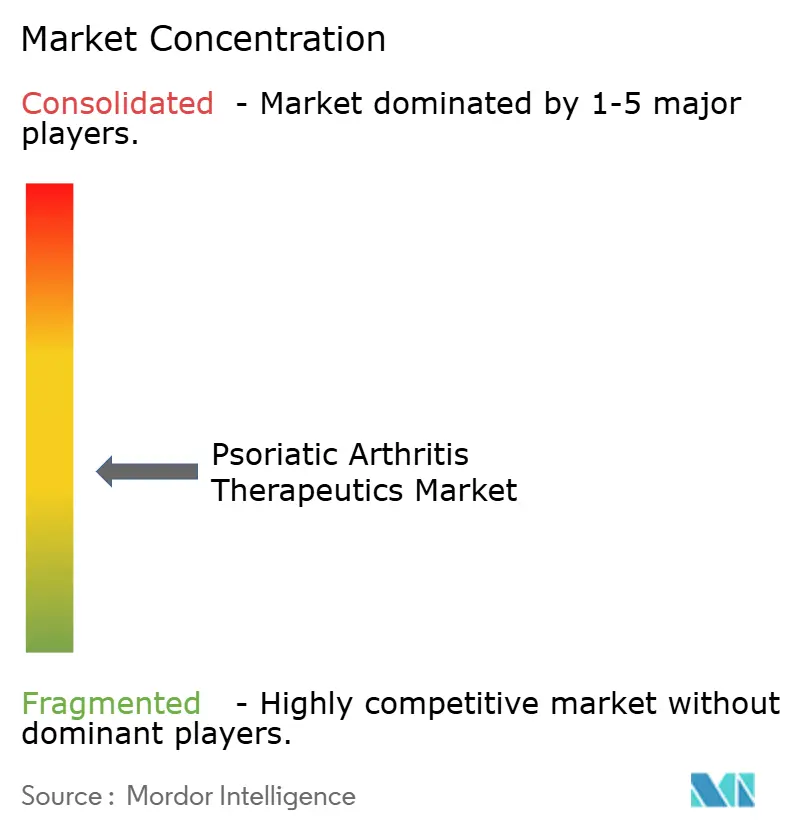
| Market Concentration | Medium |
Major Players *Disclaimer: Major Players sorted in no particular order Image © Mordor Intelligence. Reuse requires attribution under CC BY 4.0. | |
Psoriatic Arthritis Therapeutics Market Analysis by Mordor Intelligence
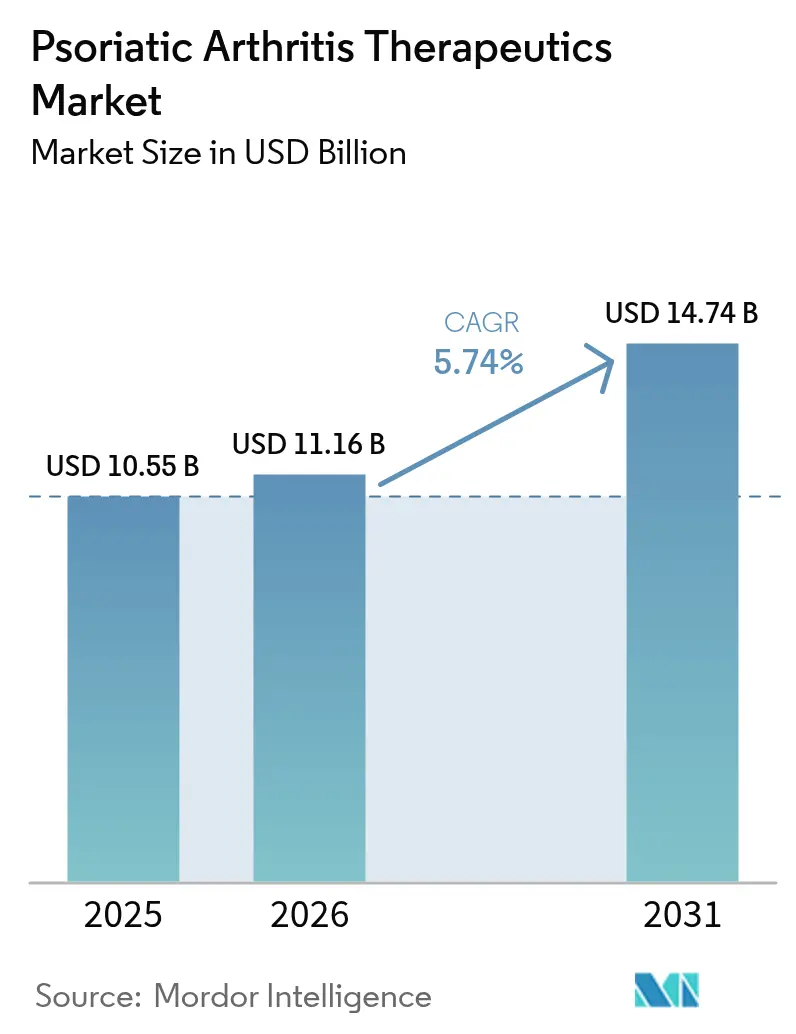
The psoriatic arthritis therapeutics market size is expected to grow from USD 10.55 billion in 2025 to USD 11.16 billion in 2026 and is forecast to reach USD 14.74 billion by 2031 at 5.74% CAGR over 2026-2031. Rising disease visibility, the obesity-metabolic syndrome link, and a robust biologic launch pipeline are widening both patient pools and therapeutic choice. The 2024 approval of bimekizumab, the first dual IL-17A/F inhibitor, affirms the industry’s shift toward multi-cytokine blockade, while three ustekinumab biosimilars that entered the United States in early 2025 have introduced immediate price competition. Diagnostic latency continues to decline as rheumatologists adopt high-resolution imaging and biomarker panels, expanding early-stage intervention cohorts. Digital adherence platforms, especially tele-rheumatology services, improve medication persistence and are proving critical in under-served regions.
Key Report Takeaways
- By drug class, biologic DMARDs led with 46.72% of psoriatic arthritis therapeutics market share in 2025; non-biologic DMARDs are projected to expand at a 6.68% CAGR through 2031.
- By route of administration, parenteral formulations held 71.83% of the psoriatic arthritis therapeutics market size in 2025, while oral therapies are forecast to grow at a 6.72% CAGR to 2031.
- By distribution channel, hospital pharmacies accounted for 57.05% revenue in 2025; online pharmacies exhibit the highest growth trajectory at 6.88% CAGR through 2031.
- By age group, adults accounted for 52.12% revenue in 2025; geriatric exhibit the highest growth trajectory at 6.83% CAGR through 2031.
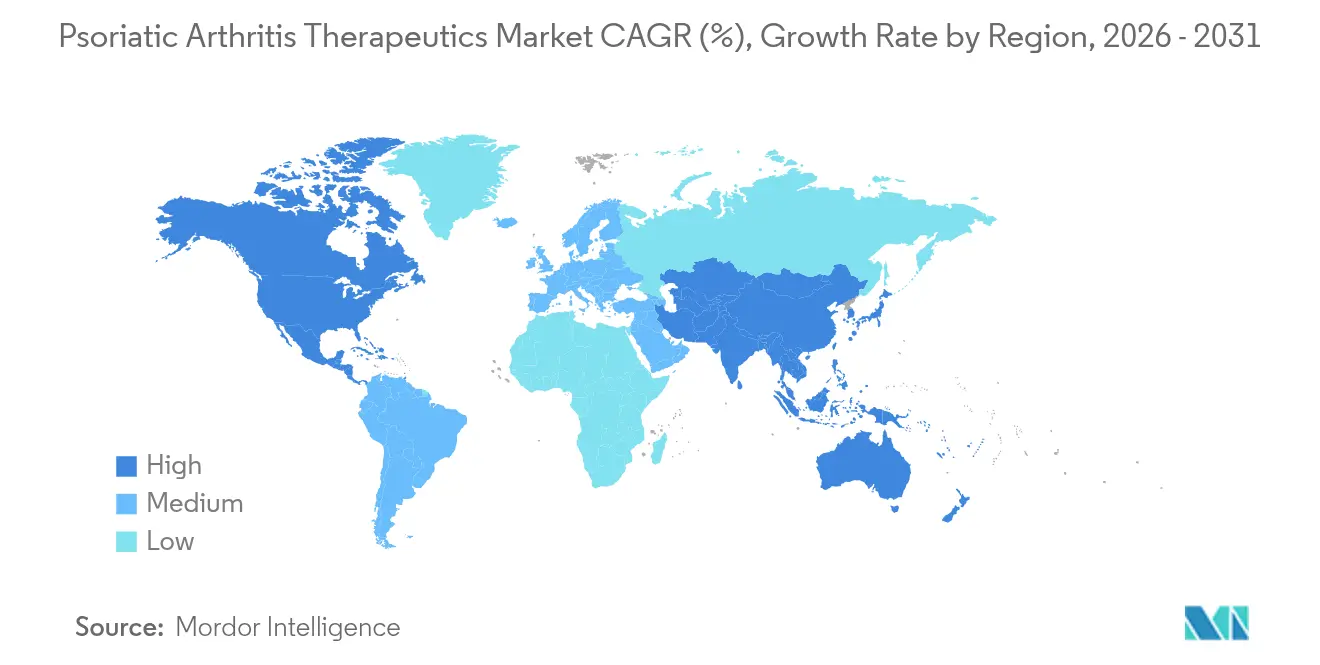
- By geography, North America commanded 41.45% share of the psoriatic arthritis therapeutics market in 2025, whereas Asia-Pacific is advancing at a 6.9% CAGR to 2031.
Note: Market size and forecast figures in this report are generated using Mordor Intelligence’s proprietary estimation framework, updated with the latest available data and insights as of 2026.
Market Trends and Insights
Drivers Impact Analysis of Psoriatic Arthritis Therapeutics Market*
| Driver | (~) % Impact on CAGR Forecast | Geographic Relevance | Impact Timeline |
|---|---|---|---|
| Growing Prevalence Linked to Obesity & Metabolic Syndrome | +1.8% | Global, with higher impact in North America & Europe | Medium term (2-4 years) |
| Expansion of Approved Biologic & tsDMARD Therapies | +2.1% | Global, led by US & EU regulatory approvals | Short term (≤ 2 years) |
| Earlier Diagnosis Via Imaging & Biomarker Panels | +1.2% | Developed markets initially, expanding to APAC | Medium term (2-4 years) |
| Payer Acceptance of Value-Based Contracts for Biologics | +0.7% | North America & Europe primarily | Long term (≥ 4 years) |
| Digital Adherence & Monitoring Solutions Adoption | +0.9% | Global, with faster adoption in tech-forward regions | Long term (≥ 4 years) |
| Uptake Of Biosimilar Biologics Lowering Entry Barriers | +1.5% | Global, with highest impact in Europe & emerging markets | Short term (≤ 2 years) |
| Source: Mordor Intelligence | |||
Growing prevalence linked to obesity & metabolic syndrome
Obesity heightens psoriatic arthritis risk by 40-60%, and more than one-quarter of adults in high-income countries now meet metabolic-syndrome criteria, fueling sustained demand for biologic DMARDs [1]. Adipose-derived cytokines amplify systemic inflammation, prompting earlier rheumatology referrals. Commercial payers increasingly acknowledge the comorbidity burden, widening coverage for advanced therapies that can reduce long-term disability costs.
Expansion of approved biologic & tsDMARD therapies
Bimekizumab’s 2024 approval delivered the first dual IL-17A/F approach and posted superior skin clearance versus ixekizumab, broadening cytokine-specific choices. Phase 3 success for deucravacitinib in March 2025 (54.2% ACR20 versus 39.4% placebo) signals a new oral option that may expand first-line use in moderate disease [2]. Rapid label additions reduce reliance on TNF inhibitors and enable sequence-based regimens tailored to biomarker profiles.
Earlier diagnosis via imaging & biomarker panels
High-resolution ultrasound detects enthesitis before irreversible erosion, while serum IL-17 and IL-23 assays help stratify treatment early. Dermatology-embedded digital questionnaires identify up to 30% of psoriasis patients at joint-disease risk within ten years. Earlier referral supports milder-stage biologic initiation, shifting volume toward community settings.
Payer acceptance of value-based contracts
North American and European insurers increasingly tie biologic reimbursement to real-world response, offsetting acquisition costs with outcome guarantees. Contracts covering IL-23 and IL-17 agents offer rebates when skin and joint scores fail to improve, easing formulary access restrictions and supporting broader uptake.
Restraints Impact Analysis of Psoriatic Arthritis Therapeutics Market*
| Restraint | (~) % Impact on CAGR Forecast | Geographic Relevance | Impact Timeline |
|---|---|---|---|
| High Total Cost of Care & Patient OOP Burden | -1.4% | Global, with highest impact in US market | Short term (≤ 2 years) |
| Long-Term Immunosuppression Safety Concerns | -0.8% | Global, with regulatory focus in developed markets | Medium term (2-4 years) |
| Limited Rheumatologist Capacity in Emerging Markets | -0.6% | Asia-Pacific, Latin America, Middle East & Africa | Medium term (2-4 years) |
| Reimbursement Delays for Novel Targeted Agents | -0.5% | Global, with highest impact in emerging markets | Short term (≤ 2 years) |
| Source: Mordor Intelligence | |||
High total cost of care & patient OOP burden
Annual therapy costs span USD 45,000-80,000, with Medicare beneficiaries facing USD 4,423-6,950 out-of-pocket payments that drive 15-20% discontinuation rates. Step-therapy mandates delay biologic start by 3-6 months, increasing irreversible joint damage risk [3].
Long-term immunosuppression safety concerns
Fifteen-year surveillance links TNF inhibitors to elevated hematologic malignancy rates, albeit at 2-3 events per 1,000 patient-years, prompting intensive monitoring. FDA boxed warnings on JAK cardiovascular risk issued in 2024 dampened prescriber enthusiasm despite clinical efficacy.
*Our forecasts treat driver/restraint impacts as directional, not additive. The impact forecasts reflect baseline growth, mix effects, and variable interactions.
Psoriatic Arthritis Therapeutics Market Segment Analysis
By Drug Class:
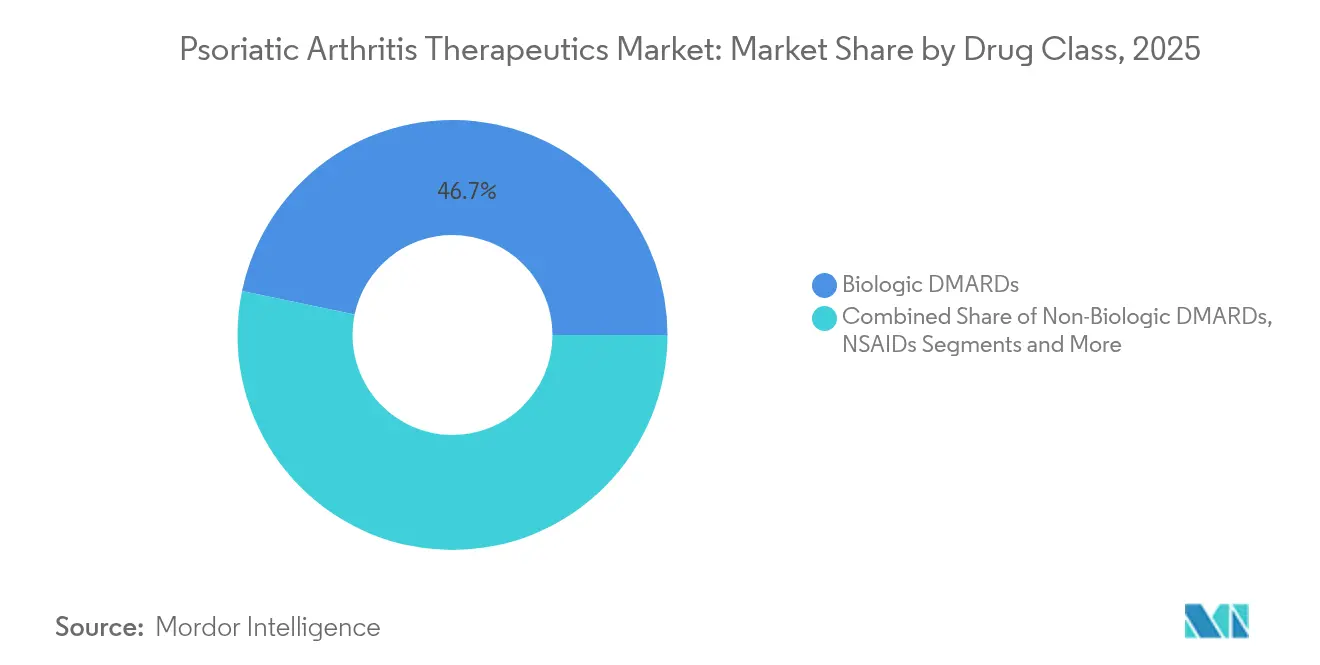
Biologic dominance faces biosimilar disruptionBiologic DMARDs contributed USD 4.93 billion in 2025 and represented 46.72% of psoriatic arthritis therapeutics market share. Ustekinumab biosimilar approvals in early 2025 have already trimmed originator sales and are expected to lower brand pricing across the class. Meanwhile, non-biologic DMARDs are set to outpace at a 6.68% CAGR to 2031 as oral small molecules such as deucravacitinib expand adoption.
Cost-sensitive prescribers are cycling more patients to methotrexate plus targeted synthetics before initiating injectable biologics, creating an opportunity for hybrid sequencing strategies. Adalimumab biosimilars captured 23% of United States anti-TNF volume by late 2024 and stimulated parallel adoption in Europe, where tender purchasing amplifies price erosion. This competitive dynamic has pushed originators to pivot toward next-generation assets, such as guselkumab and risankizumab, that offer distinct mechanisms or improved dosing convenience.

By Route of Administration:
Parenteral leadership challenged by oral innovationInjectables retained 71.83% revenue share thanks to high-dose bioavailability requirements for monoclonal antibodies. Subcutaneous self-dosing every eight to twelve weeks improves adherence compared with weekly regimens, supporting sustained parenteral demand. Nevertheless, oral products delivered the fastest growth at 6.72% CAGR and could elevate their psoriatic arthritis therapeutics market size to USD 3.39 billion by 2031.
JAK and TYK2 inhibitors, including tofacitinib and deucravacitinib, are central to this shift, allowing rheumatologists to initiate therapy without injection-training infrastructure. Head-to-head trials show similar efficacy to subcutaneous comparators, with survey data indicating 78% of patients would prefer oral dosing if safety and efficacy are equivalent.
By Distribution Channel:
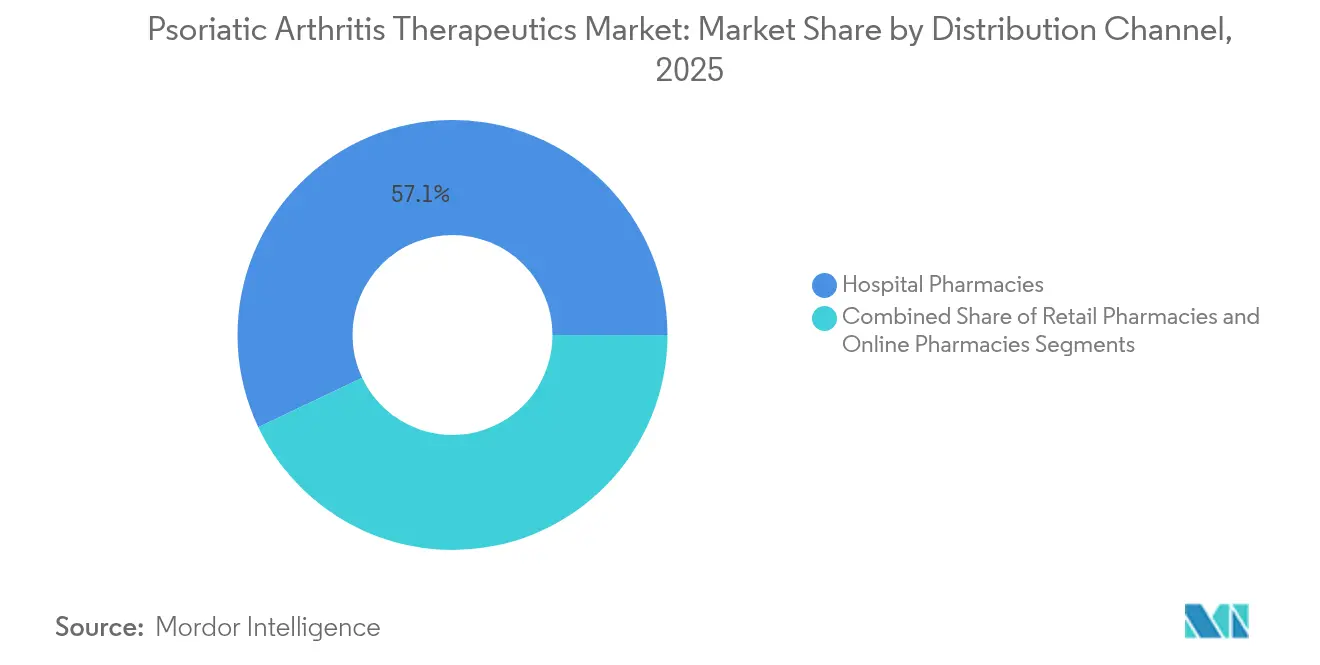
Hospital dominance erodes to digital channelsSpecialty hospital pharmacies managed 57.05% of 2025 sales, driven by complex cold-chain logistics and infusion center integration. Their embedded clinical services deliver injection education and adverse-event monitoring, which remain critical for high-risk immunosuppressants. Yet the online segment is scaling at 6.88% CAGR, aided by regulatory allowances for direct-to-patient biologic shipment and heightened telehealth adoption during the pandemic.
Digital pharmacies leverage synchronized refill reminders, doorstep delivery, and video counseling to close adherence gaps. Multi-state licensure platforms now cover 42 U.S. jurisdictions, improving specialty drug reach in rural counties where rheumatologist density is low. Pharmacy benefit managers are also channeling traffic to mail-order services that capture greater formulary rebates.
By Age Group:
Adult prevalence drives geriatric growth accelerationAdults aged 30-50 commanded 52.12% of 2025 revenue as symptom onset aligns with peak workforce participation. Biologic adherence in this group averages 65% at twelve months, materially higher than the geriatric cohort. However, the ≥65-year segment is forecast to grow 6.83% annually, reflecting global population aging and better recognition of late-onset presentations.
Geriatric care complicates dosing due to polypharmacy and immunosenescence: infection risk is two-fold greater than in younger adults, steering physicians toward IL-23 inhibitors with favorable safety signals. Pediatric disease remains uncommon but represents a strategic focus for companies pursuing life-cycle indications to extend product exclusivity.
Geography Analysis
North America Psoriatic Arthritis Therapeutics Market
North America retained leadership with USD 4.37 billion sales in 2025 and 41.45% psoriatic arthritis therapeutics market share. Early FDA approvals, high biologic penetration, and mature specialty pharmacy networks offset access friction from prior-authorization delays. Medicare patients still face USD 4,423-6,950 average annual out-of-pocket spending, driving discontinuation and prompting policy debates over Part D redesign. Step-therapy protocols, while intended to control spending, may postpone optimal therapy, leading to functional decline and heightened downstream costs.
APAC Psoriatic Arthritis Therapeutics Market
Asia-Pacific posted the fastest 6.9% CAGR and could overtake Europe by 2031. Japan already treats 55.3% of psoriatic arthritis cases with biologics following guideline revisions that prioritize early intensive therapy. China and India are scaling domestic biosimilar production, trimming unit costs and making advanced care more attainable for urban middle-class populations. South Korea’s single-payer model funds risankizumab and guselkumab after managed-entry agreements that cap budget impact.
Europe and LATAM Psoriatic Arthritis Therapeutics Market
Europe’s steady growth rests on health-technology assessments that weigh clinical benefit against price, accelerating biosimilar penetration for cost containment. Outcomes-based contracts in Germany and France tie reimbursement to real-world PASI and ACR responses, influencing global price-setting strategies. Latin American markets lag owing to specialist shortages and funding constraints, yet public-private partnerships in Brazil and Argentina are expanding rheumatology clinics and subsidizing targeted agents.
Regulatory Landscape
In the United States, the FDA expanded the oral targeted synthetic DMARD landscape with the May 2025 approval of deucravacitinib (Sotyktu) for adults with active psoriatic arthritis, alongside continued biosimilar approvals for ustekinumab, including YESINTEK (ustekinumab-kfce) in April 2025 for adults and pediatric patients aged 6 years and older.
In Europe, EMA marketing authorizations for ustekinumab biosimilars progressed across 2024 to 2025, including Pyzchiva in April 2024 and Otulfi in September 2024, followed by 2025 authorizations for Qoyvolma, Usrenty, and Usgena. This reinforcement of biosimilar regulatory pathways supports competitive entry, including tender-based procurement. Payer and access governance also remains influential, with New Zealand Pharmac implementing updated access criteria in March 2026 for biologics commonly used in inflammatory conditions (including etanercept, infliximab, and secukinumab), simplifying wording and setting a two-year renewal validity for psoriatic arthritis, which in turn can affect treatment continuity and switching behavior.
Competitive Landscape
The psoriatic arthritis therapeutics market remains moderately concentrated as the top five companies—AbbVie, Johnson & Johnson, Pfizer, Bristol Myers Squibb, and UCB—collectively controlled roughly 68% of 2024 revenue. AbbVie shifted promotional focus from Humira to Skyrizi and Rinvoq ahead of biosimilar erosion, allocating more than USD 3 billion to immunology R&D in 2025. Johnson & Johnson counters biosimilar pressure on Stelara by accelerating Tremfya lifecycle studies in axial disease, while Simponi retains niche value for intravenous dosing preferences.
Bristol Myers Squibb’s deucravacitinib success underpins its oral franchise strategy amid robust rheumatology trial pipelines. UCB commercialized bimekizumab across United States and Europe within six months of approval, aided by a streamlined manufacturing network and value-based contracts with major payers. Merck’s USD 10.8 billion acquisition of Prometheus Biosciences signals renewed big-pharma interest in autoimmune expansion, with an IL-23R inhibitor scheduled to enter Phase 2 trials by late 2025.
Biosimilar challengers such as Samsung Bioepis, Alvotech, and Biocon are eroding incumbent share via aggressive discounting and rapid launch roll-outs. Their combined ustekinumab biosimilar portfolio captured 12% of United States volume within three months of launch, pressuring originator net pricing. Digital health tie-ins differentiate portfolios: companion apps track patient-reported outcomes and interface with rheumatology EMRs, improving adherence and generating real-world evidence that supports value-based reimbursement.
Psoriatic Arthritis Therapeutics Industry Leaders
-
AbbVie Inc
-
Johnson & Johnson
-
Pfizer Inc.
-
Sanofi S.A.
-
Bristol-Myers Squibb
- *Disclaimer: Major Players sorted in no particular order
Psoriatic Arthritis Therapeutics Market Companies Covered in this Report
- Abbvie
- Pfizer
- Johnson & Johnson
- Bristol-Myers Squibb
- UCB
- Eli Lilly and Company
- Amgen
- Novartis
- Sanofi
- Eisai
- Otsuka Pharmaceutical Co.
- Sumitomo Pharma Co.
- Teva Pharmaceutical Industries
- Alvotech
- Coherus BioSciences
- Galapagos NV
- Sun Pharmaceuticals Industries
- Horizon Therapeutics
- Biogen
- Samsung Bioepis
Market Opportunities and Future Outlook
Oral selective immunomodulation is opening a whitespace versus injection-dependent care pathways, particularly for earlier treatment lines and for settings with limited infusion or injection-training infrastructure. TYK2 inhibition momentum is visible in 2026, with the US FDA approval of Sotyktu (deucravacitinib) for adults with active psoriatic arthritis in March 2026 and the European Commission approval in May 2026 for adults with inadequate response or intolerance to prior DMARD therapy, giving payers and clinicians more room to consider oral options alongside biologic DMARDs.
Clinical-label differentiation is also sharpening competition within biologics, with opportunities for products that can support higher-value positioning under outcomes-based reimbursement. In May 2026, Johnson & Johnson secured US FDA label expansion for TREMFYA (guselkumab) to include evidence for inhibition of progression of structural joint damage in adults with active psoriatic arthritis, which increases the role of radiographic endpoints in contracting and formulary discussions. At the same time, sustained biosimilar entry for ustekinumab across the United States and Europe, with US launches beginning in 2025 and EMA authorizations in 2024-2025, expands access and widens the competitive set for convenience, multi-domain efficacy, and real-world outcomes supported through specialty and digital pharmacy channels.
Recent Industry Developments in Psoriatic Arthritis Therapeutics Market
- June 2026: AbbVie announced that the US FDA approved SKYRIZI (risankizumab-rzaa) for children 6 years of age and older with active psoriatic arthritis. The pediatric label extension broadens AbbVie's lifecycle reach for an established IL-23 therapy and supports uptake in earlier, longer-duration treatment pathways.
- May 2026: Johnson & Johnson reported that the US FDA approved a supplemental BLA for TREMFYA (guselkumab) to include evidence for inhibition of progression of structural joint damage in adults with active psoriatic arthritis. Adding joint-damage language differentiates advanced biologics more clearly and supports value discussions with payers that increasingly tie coverage to measurable long-term outcomes.
- April 2025: The US FDA approved YESINTEK (ustekinumab-kfce), a biosimilar to Stelara, for active psoriatic arthritis in adults and pediatric patients aged 6 years and older, with licensing period beginning February 22, 2025. This enabled earlier biosimilar availability for ustekinumab-based treatment options.
Psoriatic Arthritis Therapeutics Market Report Scope and Research Methodology
Market Definition and Coverage
This market covers prescription therapies used to manage psoriatic arthritis, including products that reduce inflammation, control immune activity, and slow joint damage. It is measured as drug revenue at ex-manufacturer values across major regions.
Scope exclusions: We exclude diagnostics, non-drug procedures, and general psoriasis-only treatment spend that is not indicated for psoriatic arthritis.
Segments Covered in This Report
- By Drug Class
- NSAIDs
- Non-Biologic DMARDs
- Biologic DMARDs
- Immunosuppressants
- Other Drug Classes
- By Route of Administration
- Oral
- Parenteral
- Others
- By Distribution Channel
- Hospital Pharmacies
- Retail Pharmacies
- Online Pharmacies
- By Age Group
- Adults
- Geriatric
- Pediatric
- By Geography
- North America
- United States
- Canada
- Mexico
- Europe
- Germany
- United Kingdom
- France
- Italy
- Spain
- Rest of Europe
- Asia-Pacific
- China
- Japan
- India
- Australia
- South Korea
- Rest of Asia-Pacific
- Middle East and Africa
- GCC
- South Africa
- Rest of Middle East and Africa
- South America
- Brazil
- Argentina
- Rest of South America
- North America
Data Sources, Market Sizing, and Validation
Desk Research
Desk work starts by building the disease and treatment context so the assumptions stay realistic for psoriatic arthritis. We review public health and epidemiology references such as CDC materials, WHO datasets, and national health statistics portals for prevalence ranges, diagnosis rates, and treatment pathways. For therapy mapping and safety or indication clarity, we also refer to regulatory sources such as the US FDA and the European Medicines Agency.
Next, market structure inputs are assembled from company filings and investor presentations, prescribing and reimbursement commentary in reputable press, and association pages such as arthritis foundations and rheumatology groups. When needed, we add paid database pulls that support company financial intelligence and patent activity patterns to check launch timing and product life cycle signals. These examples are not exhaustive, and other public and internal reference points were used across data collection, validation, and clarification during the study.
Primary Interviews and Surveys
Primary work is used to test what we built from desk sources, especially the treated patient pool, regimen mix, and price and access movement by region. We spoke with a mix of clinicians, payer and access specialists, distributors, and commercial roles across APAC, EMEA, and the Americas, then used follow-up questions to close gaps on switching patterns, line-of-therapy behavior, and the practical split between biologics and oral therapies.
Distribution of primary research fieldwork respondents
| Company type | Respondent position | Region |
|---|---|---|
| Top tier: 36% | CXOs: 17% | APAC: 41% |
| Mid tier: 46% | Functional/Unit leaders: 24% | EMEA: 34% |
| Smaller Players: 18% | Managers: 59% | Americas: 25% |
Market-Sizing & Forecasting
Sizing begins with a top-down demand pool build that reconstructs treated patients from prevalence, diagnosis rates, therapy eligibility, and access limitations, then converts this into value using region-level regimen mix and typical annualized therapy cost. To keep the totals grounded, we corroborate the outputs with selective bottom-up checks, such as sampled price points by class, channel checks on uptake, and supplier revenue splits where disclosures allow a clean link to psoriatic arthritis.
A few inputs that matter in this market are the split of biologics versus oral small molecules, the share of patients on advanced therapy after conventional options, route-of-administration mix (oral versus parenteral), regional reimbursement tightening or expansion, and expected label and guideline changes that can shift uptake. When a bottom-up check cannot cover a country in a clean way, the gap is handled through peer-market analogs based on prevalence and access similarity, then adjusted through expert feedback. Forecasts are built using scenario analysis supported by trend lines for treated population growth and therapy mix change. Assumptions are revisited until the outputs align with the most consistent real-world signals shared by interviewees.
Data Validation & Update Cycle
Validation is done through multiple passes so unusual jumps get questioned before results are finalized. We compare the model outputs against independent signals like epidemiology ranges, therapy class growth patterns, and region-level access and pricing moves, then run variance checks across countries to spot outliers that do not fit the clinical pathway. When a number looks off, we trace the assumptions behind it and respondents may be re-contacted to confirm whether the change is real or a data artifact.
Before sign-off, a second analyst review is completed to challenge key inputs, and the final workbook is checked for consistency in currency conversion timing and year-on-year logic. Reports are refreshed annually, and interim updates are made when there are material events such as major approvals, safety actions, or sharp pricing policy changes. Right before delivery, a fresh pass is completed so clients receive the most current view available.
Mordor Intelligence's Psoriatic Arthritis Therapeutics Market Size Compared With Other Published Estimates
Published market values for psoriatic arthritis therapeutics can look far apart even when they appear to cover the same disease area, and it typically comes down to scope choices and how demand is translated into revenue. Differences also show up when one publisher updates its price and access assumptions more often than others, especially for biologics and newer oral options.
Some sources group psoriatic arthritis together with broader psoriasis treatment spend or include supportive care and non-drug items, which naturally lifts totals. In Mordor Intelligence modeling, revenue is counted only for therapies indicated for psoriatic arthritis across the defined regions, and adjacent psoriasis-only treatment value is kept out so the treated PsA pool and regimen mix stay consistent.
Benchmark comparison
| Source | Market Size | Gaps in Research Methodology |
|---|---|---|
| Mordor Intelligence | USD 10.55 B (2025) | |
| Global Consultancy A | USD 12.46 B (2025) | Uses a broader treatment framing that can blend psoriatic arthritis with wider psoriasis treatment spend, and applies faster growth expectations that raise the near-term run rate. |
| Industry Publisher B | USD 9.22 B (2024) | Uses a different base year and a class-first build that can understate value if regimen duration, access expansion, or price progression is not refreshed at the same pace across regions. |
The spread in the table is mainly explained by what gets counted around the PsA indication, plus how quickly pricing and access shifts are reflected in the model year. By keeping the treated patient pool logic explicit and pressure-testing it with practical checks on uptake and regimen mix, our estimate stays traceable to repeatable steps rather than relying on a single growth assumption.
Key Questions Answered in the Report
What is the current size of the psoriatic arthritis therapeutics market?
The psoriatic arthritis therapeutics market was valued at USD 11.16 billion in 2026 and is projected to reach USD 14.74 billion by 2031.
Which drug class leads the psoriatic arthritis therapeutics market?
Biologic DMARDs led with 46.72% psoriatic arthritis therapeutics market share in 2025, although biosimilar launches are beginning to erode that dominance.
Why is Asia-Pacific the fastest-growing regional market?
Regulatory harmonization, expanding health-insurance coverage, and domestic biosimilar manufacturing are driving a 6.9% CAGR for Asia-Pacific through 2031.
How are biosimilars affecting market dynamics?
Ustekinumab and adalimumab biosimilars have entered multiple markets, reducing average selling prices and compelling originators to focus on next-generation therapies.
What role does telemedicine play in psoriatic arthritis care?
Tele-rheumatology expands specialist access, boosts adherence via remote monitoring, and supports the shift toward online and mail-order pharmacy channels.
Which safety concerns influence prescribing decisions?
Long-term infection and malignancy risks associated with broad immunosuppression, along with cardiovascular warnings on JAK inhibitors, guide therapy selection and monitoring protocols.