
Psoriasis Drugs Market Size and Share
Market Overview
| Study Period | 2021 - 2031 |
|---|---|
| Market Size (2026) | USD 21.78 Billion |
| Market Size (2031) | USD 32.94 Billion |
| Growth Rate (2026 - 2031) | 8.63 % |
| Fastest Growing Market | Asia Pacific |
| Largest Market | North America |
| Market Concentration | Medium |
Major Players *Disclaimer: Major Players sorted in no particular order Image © Mordor Intelligence. Reuse requires attribution under CC BY 4.0. | |
Psoriasis Drugs Market Analysis by Mordor Intelligence
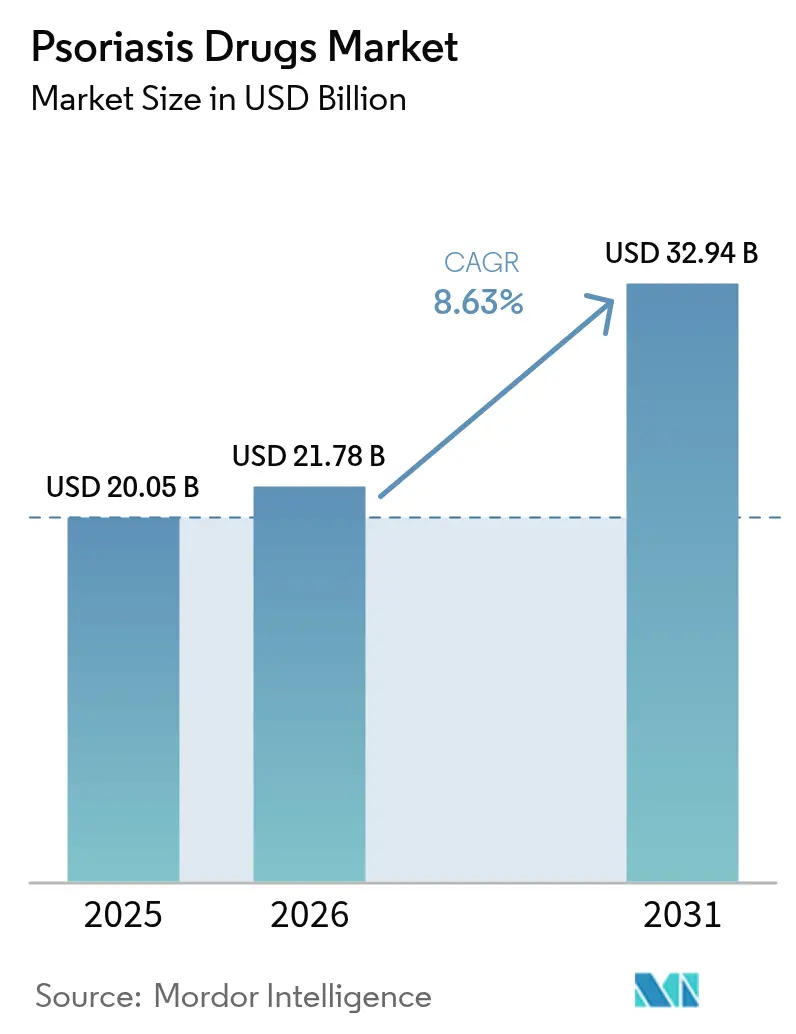
The Psoriasis Drugs Market size is expected to grow from USD 20.05 billion in 2025 to USD 21.78 billion in 2026 and is forecast to reach USD 32.94 billion by 2031 at 8.63% CAGR over 2026-2031.
The expansion is powered by breakthrough therapies such as first-in-class TYK2 inhibitors, dual IL-17A/IL-17F antibodies, and oral macrocyclic peptides that are redefining chronic inflammatory disease control. A growing pool of moderate-to-severe patients, partly tied to the global obesity upsurge, is widening the addressable base. Adoption is further stimulated by faster regulatory pathways, especially the FDA’s breakthrough and priority review programs, which shorten time-to-market for novel mechanisms. Pricing pressure from biosimilars is simultaneously expanding access while compelling innovators to differentiate through superior durability, convenience, or multi-indication positioning. Collectively, these dynamics keep the psoriasis drugs market on a steady upward trajectory through 2030.
Key Report Takeaways
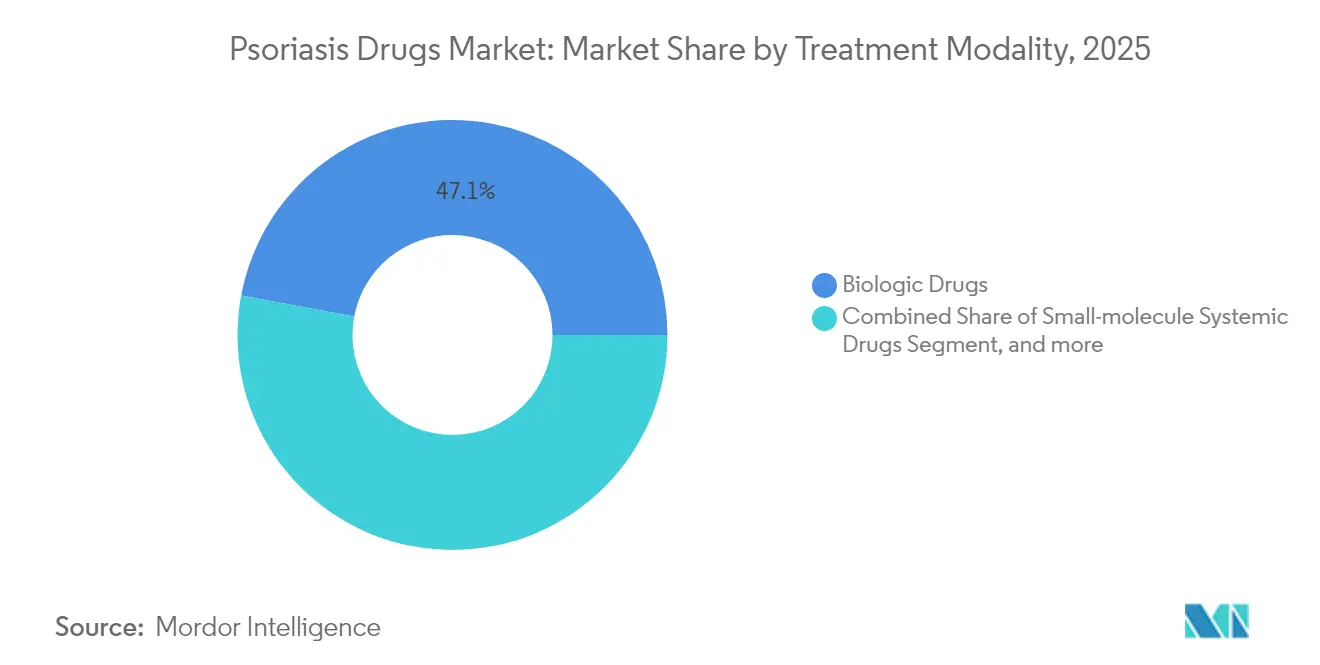
- By treatment modality, biologics held 47.05% of the psoriasis drugs market share in 2025, while small-molecule systemic drugs advanced at a 14.94% CAGR through 2031.
- By drug class, TNF-α inhibitors commanded 40.84% of 2025 revenue, whereas IL-17 agents are projected to accelerate at a 12.31% CAGR to 2031.
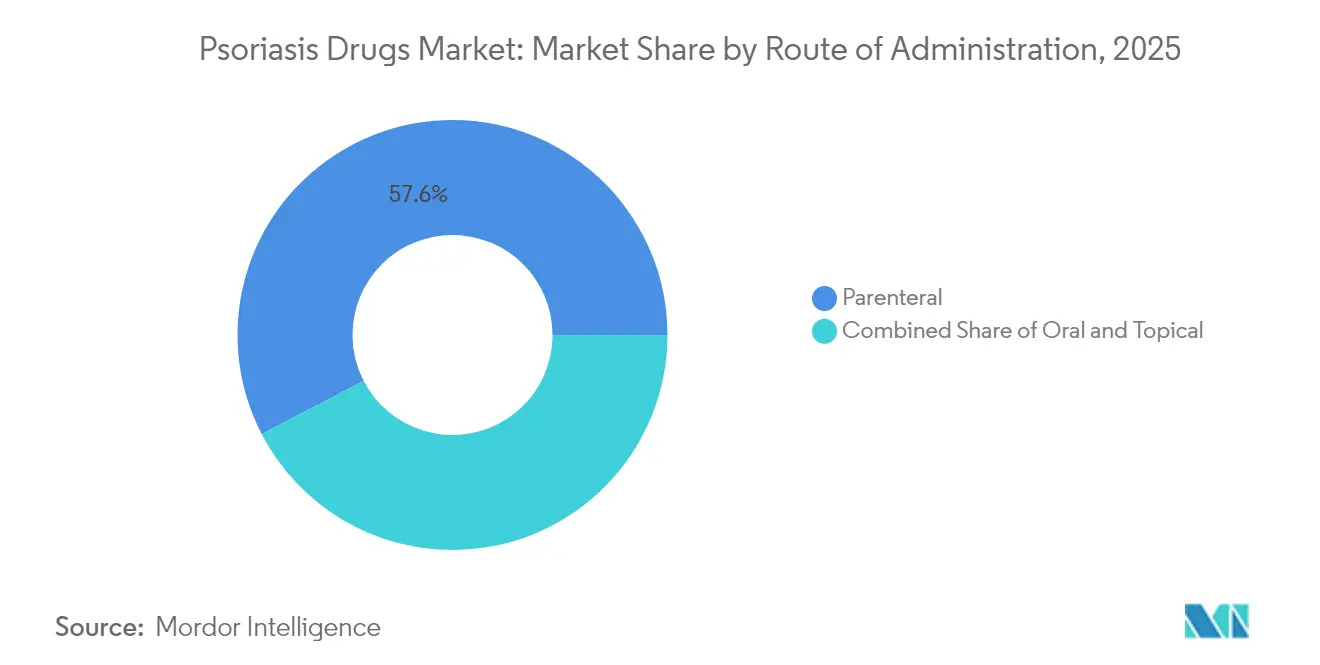
- By route of administration, parenteral formulations retained 57.62% market share in 2025; oral alternatives are growing the fastest at an 11.55% CAGR.
- By distribution channel, hospital pharmacies captured 41.02% of 2025 sales, whereas retail pharmacies are on track for an 11.22% CAGR amid rising oral therapy uptake.
- By geography, North America dominated revenue with a market share of 37.31% in 2025; Asia-Pacific represents the fastest-growing geography with 9.03% CAGR gains expected through 2031.
Note: Market size and forecast figures in this report are generated using Mordor Intelligence’s proprietary estimation framework, updated with the latest available data and insights as of 2026.
Global Psoriasis Drugs Market Trends and Insights
Drivers Impact Analysis*
| Driver | (~) % Impact on CAGR Forecast | Geographic Relevance | Impact Timeline |
|---|---|---|---|
| Increasing Disease Burden and Demand for Psoriasis Medicines in Emerging Economies | +2.1% | APAC core, spill-over to MEA | Medium term (2-4 years) |
| Increasing Use of Combination Therapies | +1.8% | Global, with early gains in North America & EU | Short term (≤ 2 years) |
| Increase in Psoriasis Research and Pipeline Drugs | +1.5% | Global | Long term (≥ 4 years) |
| Accelerated Approvals for First-in-Class TYK2 Inhibitors | +1.3% | North America & EU, expanding to APAC | Short term (≤ 2 years) |
| Obesity-Linked Growth in Moderate–Severe Psoriasis Pool | +1.2% | Global, concentrated in developed markets | Medium term (2-4 years) |
| Improved Diagnostic Capabilities and Patient Monitoring | +0.9% | Global, accelerated in urban centers | Medium term (2-4 years) |
| Source: Mordor Intelligence | |||
Increasing Disease Burden and Demand for Psoriasis Medicines in Emerging Economies
Improved infrastructure, payer reforms, and greater disease awareness are unlocking sizable therapy demand across China, India, Brazil, and the Gulf. China’s regulator shortened innovative-drug review from two years to six months, enabling 40 novel approvals in 2023, including multiple psoriasis biologics. Brazil’s biosimilar prescriptions expanded 43% in 2023, underscoring affordability benefits for adalimumab and etanercept.[1] India is moving in parallel; Biocon’s ustekinumab biosimilar matched Stelara efficacy at a fraction of the cost. Although stigma and underdiagnosis persist, AI-enabled dermatology platforms now achieve 89% diagnostic accuracy, helping clinicians close the treatment gap. Collectively, these factors add momentum to the psoriasis drugs market while addressing longstanding unmet needs.
Increasing Use of Combination Therapies
Clinicians are pairing injectable biologics with oral JAK1 or TYK2 inhibitors to heighten response durability in recalcitrant plaques and joint symptoms. A multi-center case series reported pronounced improvements when such dual mechanisms were employed, especially in difficult-to-treat phenotypes.[2] Mechanistically, simultaneous blockade of IL-23/Th17 and JAK-dependent cytokine cascades yields broader inflammatory control. Retrospective analysis of 5,932 courses showed superior drug-survival for combination regimens versus monotherapy. Network meta-analysis indicates that efficacy gains are highest when mechanisms are complementary rather than duplicative, informing future trial designs. The convergence of real-world and controlled evidence is accelerating guideline inclusion and fueling innovation in co-formulated products.
Increase in Psoriasis Research and Pipeline Drugs
Pipeline intensity is near record highs. Alumis/Kaken’s allosteric TYK2 candidate ESK-001 delivered a 64.1% PASI-75 at week 12 in Phase II, triggering a USD 40 million licensing deal. Janssen’s orally stable macrocyclic peptide icotrokinra (JNJ-2113) offers biologic-level potency in pill form, signalling a potential paradigm shift in administration preference Drug Hunter. China’s Xeligekimab reached 90.7% PASI-75 in local Phase III and secured NMPA approval in August 2024. Izokibep’s Affibody design achieves high affinity with reduced molecular size, creating prospects for lower dosing volumes PMC. Beyond plaque disease, spesolimab unlocked the first IL-36-targeted option for generalized pustular psoriasis in 2024.[3] Such diversity underpins a resilient innovation cycle for the psoriasis drugs market.
Accelerated Approvals for First-in-Class TYK2 Inhibitors
Deucravacitinib earned FDA approval and maintains durable PASI-90 rates over five years, demonstrating pseudokinase-domain selectivity that mitigates JAK safety concerns. Japanese trials confirmed consistent efficacy across ethnicities, broadening global uptake. Phase III POETYK PsA data showed 54.2% ACR20 in psoriatic arthritis, expanding the drug’s future indications. Despite strong science, sales were only USD 66 million versus Otezla’s USD 564 million in 2024, highlighting payer hurdles but leaving ample runway. Continued label expansions and improved formulary status are poised to lift the psoriasis drugs market penetration for TYK2 inhibitors.
Restraints Impact Analysis*
| Restraint | (~) % Impact on CAGR Forecast | Geographic Relevance | Impact Timeline |
|---|---|---|---|
| Adverse Side Effects of Existing Medications | -1.4% | Global | Medium term (2-4 years) |
| High Cost of Psoriasis Treatments | -2.3% | Global, concentrated in emerging markets | Long term (≥ 4 years) |
| Extensive Drug Development and Approval Process | -1.1% | Global, more pronounced in emerging markets | Long term (≥ 4 years) |
| Stigma and Underdiagnosis in Developing Nations | -0.8% | APAC, MEA, Latin America | Medium term (2-4 years) |
| Source: Mordor Intelligence | |||
Adverse Side Effects of Existing Medications
Biologic labels caution about serious infections such as tuberculosis, compelling robust pre-treatment screening and ongoing monitoring that inflate costs and deter some prescribers. JAK inhibitors faced FDA safety communications linking them to cardiovascular and malignancy risks; TYK2 selectivity may ease but not erase such concerns. Elderly patients and those with multiple comorbidities remain especially vulnerable, driving discontinuation rates of 20-30% within a year. Although topical agents offer favourable safety, limited depth of response in moderate-to-severe disease restricts their utility. Until pipelines deliver equally potent yet safer options, safety-related attrition will temper the psoriasis drugs market growth.
High Cost of Psoriasis Treatments
Annual biologic therapy can surpass USD 500,000 per patient in the United States, dwarfing average household income and straining public insurers. A JAMA Dermatology efficiency-frontier study showed US net prices exceeding international benchmarks by up to sevenfold even after discounts. South Korea’s reduced-copayment program illustrated the elasticity of demand; biologic uptake quadrupled once out-of-pocket costs fell. Biosimilars entering at 85-90% discounts, exemplified by Stelara copycats, are beginning to mitigate price barriers, yet formulary negotiations and physician inertia slow conversion. The chronic, lifelong nature of therapy ensures that affordability will remain a gating factor for the psoriasis drugs market across many economies.
*Our forecasts treat driver/restraint impacts as directional, not additive. The impact forecasts reflect baseline growth, mix effects, and variable interactions.
Segment Analysis
By Treatment Modality: Biologics Dominate Despite Oral Innovation
Biologic therapies captured 47.05% of 2025 revenue, confirming their centrality in achieving high PASI clearance for moderate-to-severe patients. Bimekizumab, the first dual IL-17A/IL-17F inhibitor, delivered 85-91% clear or almost clear skin at week 16, sustaining the biologic edge in efficacy. Meanwhile, small-molecule systemic agents form the fastest-growing modality at a 14.94% CAGR through 2031, decisive for the broader psoriasis drugs market. Precision-medicine diagnostics from Mindera Health that forecast biologic response may decrease trial-and-error cycles and bolster long-term adherence.
Combination regimens integrating oral TYK2 or JAK1 inhibitors with injectables are rewriting treatment sequences, particularly for refractory phenotypes. Real-world data show improved drug-survival and functional scores versus monotherapy. Oral innovation, epitomised by icotrokinra’s macrocyclic peptide backbone, points to a future where high-potency blockade can be delivered without needles. As formulary committees recognise these convenience gains, the psoriasis drugs market size attributed to small molecules should expand steadily.

By Drug Class: TNF-α Inhibitors Face Biosimilar Pressure
TNF-α blockers held 40.84% market share in 2025, but multiple adalimumab biosimilars now undercut originator prices and are eroding volume. IL-17 agents are rising at a 12.31% CAGR on speed-to-response, with ixekizumab and brodalumab shaving weeks off PASI milestones. IL-23 inhibitors like guselkumab and risankizumab continue gaining traction through sustained clearance rates and convenient quarterly dosing. Otherwise, niche mechanisms PDE4, TYK2, and IL-36 inject diversity that supports long-term resilience for the psoriasis drugs industry.
Biosimilar entry is slashing reference-product costs by up to 90%, aiding health systems but squeezing innovator margins. Competitive intensity centres on differentiation claims such as rapidity, durability, or extra-cutaneous benefits. Emerging TYK2 contenders like ESK-001 hope to surpass deucravacitinib in terms of the magnitude and duration of response, potentially shifting class hierarchies.
By Route of Administration: Oral Formulations Gain Momentum
Parenteral delivery retained 57.62% market share in 2025 as high-potency monoclonal antibodies dominate severe disease management. However, patient surveys consistently show a preference for pills when efficacy is equivalent, and oral options are expanding at an 11.55% CAGR. Deucravacitinib’s five-year extension data support long-term safety, emboldening prescribers to switch needle-averse patients. Oral macrocyclic peptides further blur the line between small molecules and biologics, heralding a more convenient standard of care.
Meanwhile, next-generation topical technologies, including microneedle patches loaded with zinc-doped silica nanoparticles, aim to raise local drug concentrations without systemic exposure. Such advances enrich clinician toolkits and may protect the psoriasis drugs market size from plateauing as patient demographics shift toward convenience-centric expectations.
By Distribution Channel: Retail Expansion Accelerates
Specialist hospital pharmacies controlled 41.02% of 2025 sales on the back of cold-chain and infusion requirements. Yet the transition to oral therapies is opening retail-level dispensing, now growing at an 11.22% CAGR. Integrated hub services and e-prescription technology enable community pharmacists to monitor adherence and counsel on adverse events, expanding the psoriasis drugs market reach.
Online platforms capture refill demand for maintenance therapy, even though first doses of biologics remain largely hospital-bound due to supervision needs. Specialty pharmacy overlays across all channels deliver adherence coaching and prior-authorisation support, helping navigate payer hurdles. The resultant omnichannel architecture positions the psoriasis drugs industry for broader geographic and socioeconomic penetration.
Geography Analysis
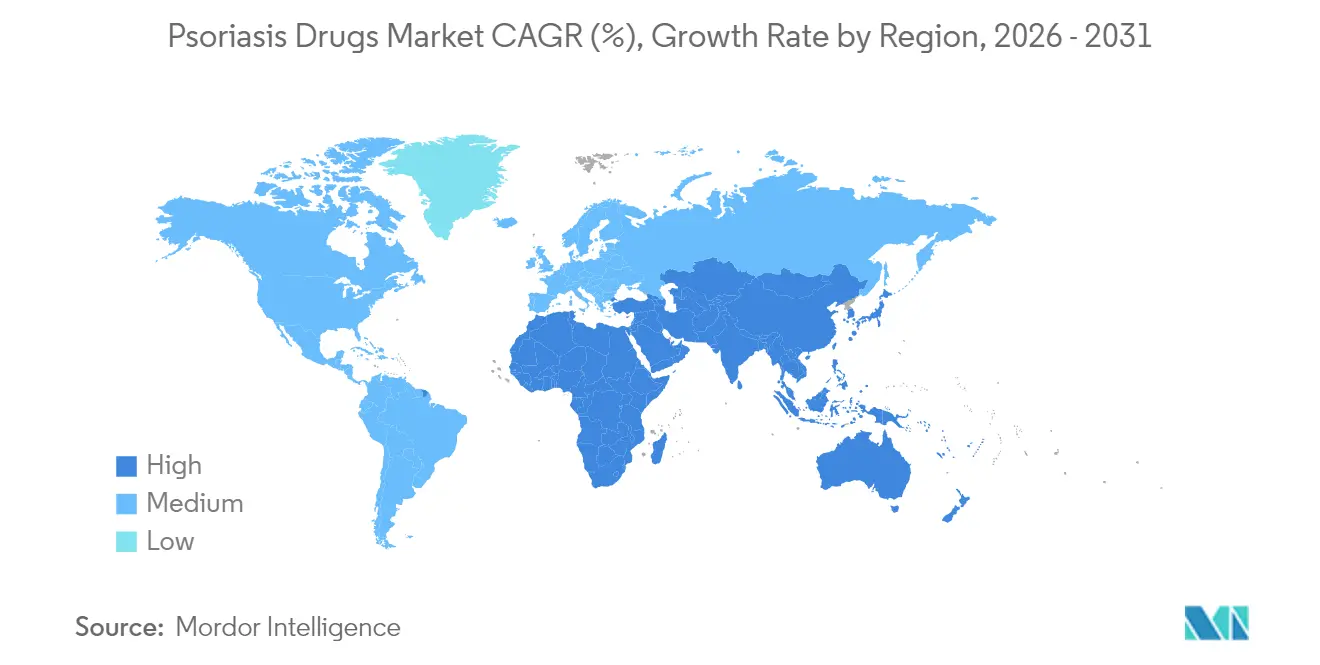
North America generated the highest revenue with market share of 37.31% in 2025, buoyed by advanced insurance coverage, proactive screening, and rapid FDA approvals, which accelerate uptake of first-in-class agents like TYK2 inhibitors. Psoriasis affected 7.9 million US adults in 2023, with heightened prevalence among individuals with BMI ≥30, reinforcing the obesity-linked demand surge. Biosimilar competition, notably multiple ustekinumab alternatives launching at deep discounts, is reshaping price dynamics while maintaining volume momentum.
Europe follows as the second-largest region, supported by the EMA’s centralised review, robust dermatologist networks, and growing biosimilar trust that lowers costs and can speed patient onboarding. Health technology assessments across Germany, France, and the UK increasingly prioritise real-world outcomes, compelling manufacturers to support value-based contracting. The post-Brexit regulatory split obliges companies to maintain dual frameworks yet has not materially slowed access, keeping the psoriasis drugs market competitive across major European economies.
Asia-Pacific remains the fastest-growing geography with 9.03% CAGR between 2026 and 2031. China leads regional expansion thanks to streamlined NMPA reviews, fast reimbursement listings, and domestic innovation exemplified by Xeligekimab. Japan consistently demonstrates high biologic utilisation and swift adoption of global breakthroughs, with deucravacitinib showing cross-ethnic efficacy. India’s biosimilar leadership and improving payer systems are broadening affordability. Australia and South Korea offer mature infrastructures where reduced patient copays have meaningfully lifted biologic penetration. Collectively, the heterogeneity of Asia-Pacific nations delivers a sizeable incremental lift to the psoriasis drugs market.
Regulatory Landscape
Regulatory oversight for psoriasis drugs is centered on FDA, EMA, and other national authorities, with development and manufacturing expectations aligned to ICH quality, safety, and bioequivalence standards. In March 2026, the FDA approved Johnson & Johnson's ICOTYDE (icotrokinra) for moderate-to-severe plaque psoriasis, including patients aged 12 years and older (>=40 kg), underscoring continued use of expedited pathways and a willingness to recognize differentiated mechanisms and formulations in systemic therapy. Across mature markets, policy activity is shaped by biologic competition and interchangeability, which affects payer access decisions and switching dynamics. The FDA approved an interchangeable ustekinumab biosimilar (Yesintek, ustekinumab-kfce) in April 2025, while the EMA issued multiple ustekinumab-biosimilar authorizations for moderate-to-severe plaque psoriasis, including Pyzchiva (April 2024), Fymskina (September 2024), Qoyvolma (June 2025), and Usrenty (September 2025). Health Canada added a topical plaque-psoriasis option in April 2025 via a Notice of Compliance for Nduvra, reflecting ongoing label expansions across routes of administration.
Competitive Landscape
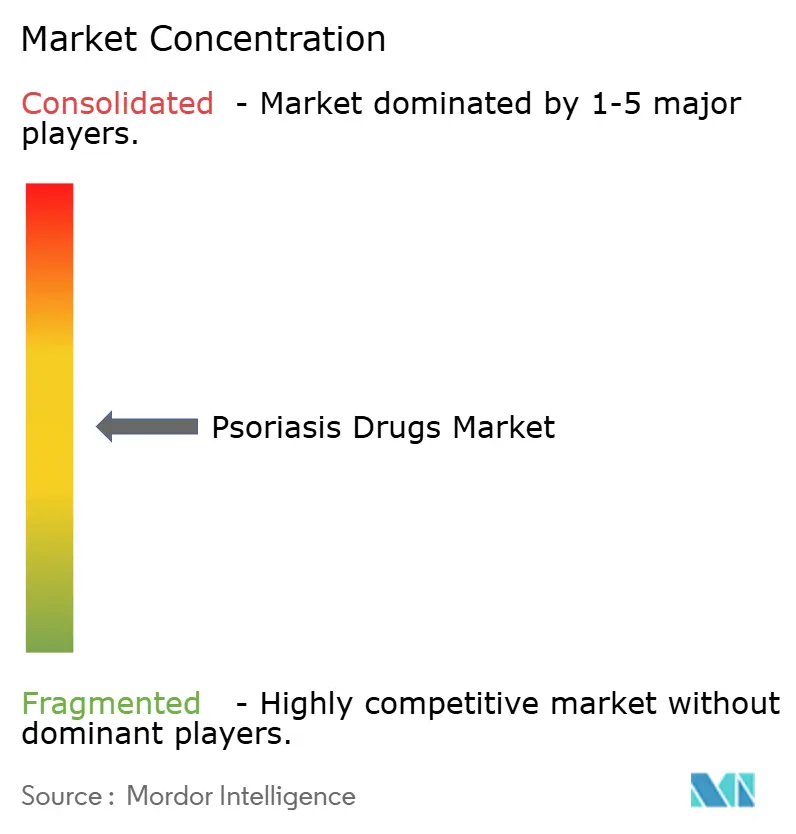
The market is moderately concentrated, with a diverse mix of multinational pharma and nimble biotech challengers. Johnson & Johnson faces seven FDA-cleared Stelara biosimilars launching in 2025 at discounts up to 90%, signalling unprecedented erosion in the IL-12/23 space.
Mechanism differentiation is the new battleground. UCB’s bimekizumab claims dual cytokine blockade superiority, while Bristol-Myers Squibb’s deucravacitinib builds a new TYK2 category with selective safety advantages. Macrocyclic peptide developers such as Protagonist Therapeutics and Janssen strive to unite biologic potency and oral convenience, reshaping adherence expectations. Precision-diagnostic firms like Mindera Health seek to integrate RNA-profiling into clinical workflows, promising higher responder rates and potential cost savings.
Strategic alliances, co-development deals, and multi-indication label expansions are common. Alumis’s USD 40 million licensing pact with Kaken for ESK-001 underscores regional commercialisation sharing, while Teva and Alvotech’s interchangeable ustekinumab approval reflects the biosimilar industry’s rapid maturation. Forward-looking players also invest in digital therapeutics, AI-driven adherence apps, and real-world-evidence platforms to sustain competitive edges as pricing pressures intensify.
Psoriasis Drugs Industry Leaders
-
Eli Lilly and Company
-
Pfizer Inc.
-
Novartis AG
-
Amgen Inc.
-
Johnson & Johnson Services, Inc.
- *Disclaimer: Major Players sorted in no particular order
Market Opportunities and Future Outlook
New oral and topical options are creating whitespace in segments where durability and convenience have historically required injectables or higher-burden regimens. The FDA approval of Johnson & Johnson's ICOTYDE (icotrokinra) in March 2026, positioned as a targeted oral peptide for moderate-to-severe plaque psoriasis, highlights a pathway for systemic therapies that seek biologic-like outcomes without parenteral administration. In parallel, the development cadence in small-molecule systemic agents remains active, supported by late-stage data disclosures such as Alumis reporting Phase 3 results for envudeucitinib in March 2026, alongside plans for regulatory submission in the second half of 2026. Pediatric labeling and earlier intervention windows are another concrete expansion area, reinforced by multiple 2026 FDA actions. AbbVie received FDA approval in June 2026 for SKYRIZI (risankizumab-rzaa) in pediatric patients aged 6 years and older with moderate-to-severe plaque psoriasis (including a new 55 mg dose), and Arcutis Biotherapeutics received FDA approval in June 2026 for ZORYVE (roflumilast) cream 0.3% for children as young as 2 years with plaque psoriasis. At the same time, ustekinumab biosimilars are broadening price-access corridors in both the United States and Europe (e.g., FDA approval of PYZCHIVA in July 2024 and EMA authorizations for Qoyvolma and Usrenty in 2025), creating commercial openings for manufacturers with strong contracting, interchangeability, and specialty-distribution execution as formulary structures evolve.
Recent Industry Developments
- June 2026: AbbVie announced FDA approval of SKYRIZI (risankizumab-rzaa) for pediatric patients aged 6 years and older with moderate-to-severe plaque psoriasis, including a new 55 mg dose. This expands the addressable treated population and intensifies competition among IL-23 agents as companies pursue broader label footprints across age groups and related inflammatory indications.
- September 2025: The European Medicines Agency granted marketing authorization for Usrenty, a biosimilar to ustekinumab, for moderate-to-severe plaque psoriasis. The approval adds to the growing ustekinumab-biosimilar set in Europe, strengthening payer leverage in tenders and accelerating price-based switching pressure on reference brands.
- April 2024: The European Medicines Agency granted marketing authorization for Apremilast Accord for moderate-to-severe plaque psoriasis and psoriatic arthritis. Additional branded-generic PDE4 competition supports broader access in systemic oral therapy, particularly in cost-sensitive settings where biologic initiation faces reimbursement or monitoring barriers.
Research Methodology Framework and Report Scope
Market Definition and Coverage
This market covers prescription and approved over the counter drug therapies used to treat psoriasis, measured as revenue generated from products dispensed through recognized pharmacy and hospital channels across major geographies.
Scope exclusions: Non-drug options like phototherapy, procedure-based care, and general skin care products are not counted in the market value.
Segmentation Overview
- By Treatment Modality
- Biologic Drugs
- Small-molecule Systemic Drugs
- Topical Agents
- Combination Regimens
- By Drug Class
- TNF-α Inhibitors
- IL-12/23 Inhibitors
- IL-17 Inhibitors
- IL-23 Inhibitors
- PDE4 Inhibitors
- TYK2 Inhibitors
- Other Classes
- By Route of Administration
- Parenteral
- Oral
- Topical
- By Distribution Channel
- Hospital Pharmacies
- Retail Pharmacies
- Online Pharmacies
- By Geography
- North America
- United States
- Canada
- Mexico
- Europe
- Germany
- United Kingdom
- France
- Italy
- Spain
- Rest of Europe
- Asia-Pacific
- China
- Japan
- India
- Australia
- South Korea
- Rest of Asia-Pacific
- Middle East & Africa
- GCC
- South Africa
- Rest of Middle East & Africa
- South America
- Brazil
- Argentina
- Rest of South America
- North America
Data Sources, Market Sizing, and Validation
Desk Research
Desk research was used to set the base structure of the model and to understand how patient flow translates into treated demand. We relied on public health and regulatory sources such as the World Health Organization, the US CDC, the US FDA drug approvals and safety updates, and the European Medicines Agency, to confirm indication definitions and gauge therapy adoption.
To ground volumes and pricing direction, we also reviewed sources such as OECD health statistics, peer reviewed dermatology and immunology journals, and relevant government health spending releases, then we cross-checked company filings, investor presentations, annual reports, and credible press coverage. Where it helped validate financial scale and follow launches and patents, we used paid subscriptions for company financials and intelligence, news and financials, and patent databases. The sources listed here are illustrative only, and we also used other public documents and datasets for cross-checks and clarification.
Primary Interviews and Surveys
Primary work was completed through expert interviews and structured surveys with dermatologists, hospital pharmacy teams, specialty channel stakeholders, payer linked voices, and distribution participants, so assumptions were pressure-tested against what is happening in real prescribing and access pathways. Because this is a global market, inputs were verified across Americas, EMEA, and APAC to capture differences in biologic uptake, reimbursement behavior, and switching patterns across drug classes.
Distribution of primary research fieldwork respondents
| Company type | Respondent position | Region |
|---|---|---|
| Top tier: 31% | CXOs: 14% | APAC: 47% |
| Mid tier: 52% | Functional/Unit leaders: 39% | EMEA: 31% |
| Smaller Players: 17% | Managers: 47% | Americas: 22% |
Market-Sizing & Forecasting
The core sizing starts with a top-down build where psoriasis prevalence and diagnosis rates are translated into a treated patient pool, and then mapped to therapy mix by route and class before value is calculated. To keep totals realistic, the output is then corroborated with selective bottom-up checks, such as sampled brand and class level revenue roll ups from public filings, channel checks on typical net price direction, and volume to value bridges using average therapy cost and expected duration.
Key inputs used in the model include psoriasis prevalence and severity splits, biologic and small-molecule penetration by country group, treatment switching and persistence patterns, launch timing for new agents, and net pricing pressure from biosimilars and reimbursement changes. Where data is patchy by country, gaps are handled by using proxy markets with similar access systems, followed by adjustment through interview feedback until the implied spend per treated patient looks reasonable.
For forecasting, scenario analysis was used because growth depends on a few changeable items like uptake speed of newer mechanisms, timing of biosimilar entry, and payer tightening or loosening. These scenarios were aligned to expert consensus and then blended into the final outlook so the forecast stays explainable and repeatable.
Data Validation & Update Cycle
Model outputs are checked against independent signals, including reported class growth commentary, regional prescription channel trends, and the implied treated patient counts produced by the model. When a country or class shows an unusual jump, we revisit the inputs, recheck pricing and penetration assumptions, and trigger follow up calls to confirm whether a real event explains the change.
Before sign-off, the work goes through multi-step analyst reviews where assumptions, calculations, and unit conversions are re-verified, and then the full story is reviewed for internal consistency. Reports are refreshed annually, with interim updates made when material events occur such as major approvals, safety changes, or sharp pricing resets. Right before delivery, a final pass is completed to ensure the latest public disclosures and market events are reflected.
Mordor Intelligence's Psoriasis Drugs Market Size Measured Against Other Published Estimates
Published market numbers for psoriasis drugs often diverge because each study chooses a different treatment scope, pricing basis, and market-year cut for what counts as the market. Differences also show up when one model relies more on list prices, or when coverage of hospital, retail, and online channels is not applied in the same way.
A large part of the spread comes from whether adjacent skin-condition therapeutics or broader dermatology baskets are blended into the total. In the Mordor Intelligence estimate, we count psoriasis-labeled drug demand and apply class-level net price progression informed by biosimilar and reimbursement feedback, rather than simple list price inflation.
Benchmark comparison
| Source | Market Size | Gaps in Research Methodology |
|---|---|---|
| Mordor Intelligence | USD 20.05 B (2025) | |
| Global Consultancy A | USD 21.12 B (2024) | Uses a different base year and typically reflects a faster growth ramp, which can occur when net pricing pressure from biosimilars is not modeled explicitly and when therapy mix shifts are simplified. |
| Industry Publisher B | USD 22.63 B (2025) | Often assumes stronger biologic expansion across regions in the near term and may apply list-to-net adjustments in a lighter way, which can lift the starting value for the same calendar year. |
The comparison shows that timing, net price logic, and what is included as psoriasis-only demand are the practical reasons the numbers do not line up. By keeping patient-to-therapy mapping explicit and rechecking price and uptake assumptions with on-the-ground feedback, the estimate remains traceable to clear steps that can be repeated as new approvals and access changes occur.
Key Questions Answered in the Report
What is the current value of the psoriasis drugs market?
The market is valued at USD 21.78 billion in 2026 and is projected to reach USD 32.94 billion by 2031.
Which treatment modality leads revenue?
Biologic therapies held 47.05% of 2025 revenue, retaining leadership through superior skin-clearance performance.
What CAGR is expected for oral formulations?
Oral routes are forecast to expand at an 11.55% CAGR through 2031 on the back of TYK2 inhibitors and oral macrocyclic peptides.
How significant are biosimilars to future pricing?
Biosimilars launch with discounts up to 90%, notably for ustekinumab, and are expected to broaden access while intensifying price competition.
Which region is growing the fastest?
Asia-Pacific is poised for the strongest gains, driven by China’s accelerated approvals, rising disposable income, and improving awareness.
What safety issues limit therapy uptake?
Infection risk warnings on biologics and cardiovascular concerns linked to JAK inhibitors cause discontinuations and slow adoption among older or comorbid patients.