
Prostate Health Market Size and Share
Market Overview
| Study Period | 2020 - 2031 |
|---|---|
| Market Size (2026) | USD 36.01 Billion |
| Market Size (2031) | USD 55.8 Billion |
| Growth Rate (2026 - 2031) | 9.18 % |
| Fastest Growing Market | Asia-Pacific |
| Largest Market | North America |
| Market Concentration | Medium |
Major Players
*Disclaimer: Major Players sorted in no particular order Image © Mordor Intelligence. Reuse requires attribution under CC BY 4.0. |
|
Prostate Health Market Analysis by Mordor Intelligence
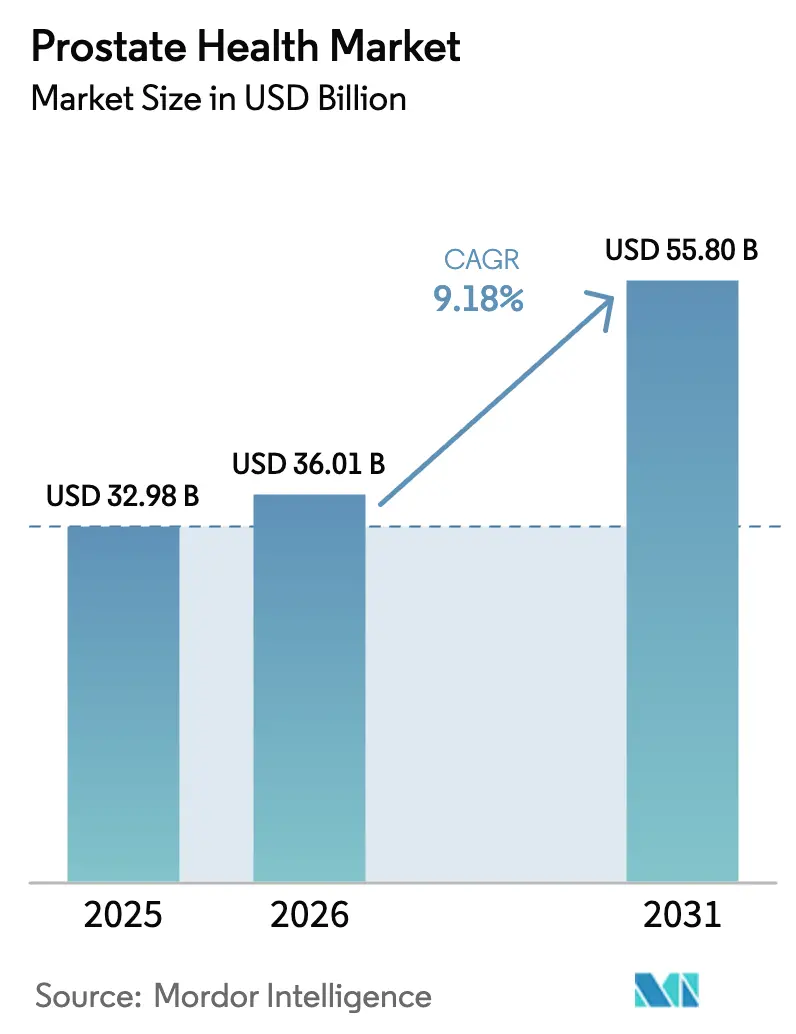
The Prostate Health Market size in 2026 is estimated at USD 36.01 billion, growing from 2025 value of USD 32.98 billion with 2031 projections showing USD 55.8 billion, growing at 9.18% CAGR over 2026-2031.
Growth derives from a swelling cohort of aging males, rapid diffusion of precision diagnostics, and digital-first delivery models that are reshaping patient engagement. Demand accelerates as benign prostatic hyperplasia (BPH) prevalence climbs with age, while falling multigene-test prices encourage earlier, risk-stratified interventions. Direct-to-consumer tele-urology platforms that combine online consultation, laboratory panels, and medicine fulfillment compress waiting times and extend outreach. Meanwhile, clearer U.S. reimbursement pathways for PSMA-PET imaging and radiopharmaceuticals drive pipeline investment, exemplified by Bristol Myers Squibb’s USD 1.3 billion buy-in to RayzeBio’s radioligand assets.
Key Report Takeaways
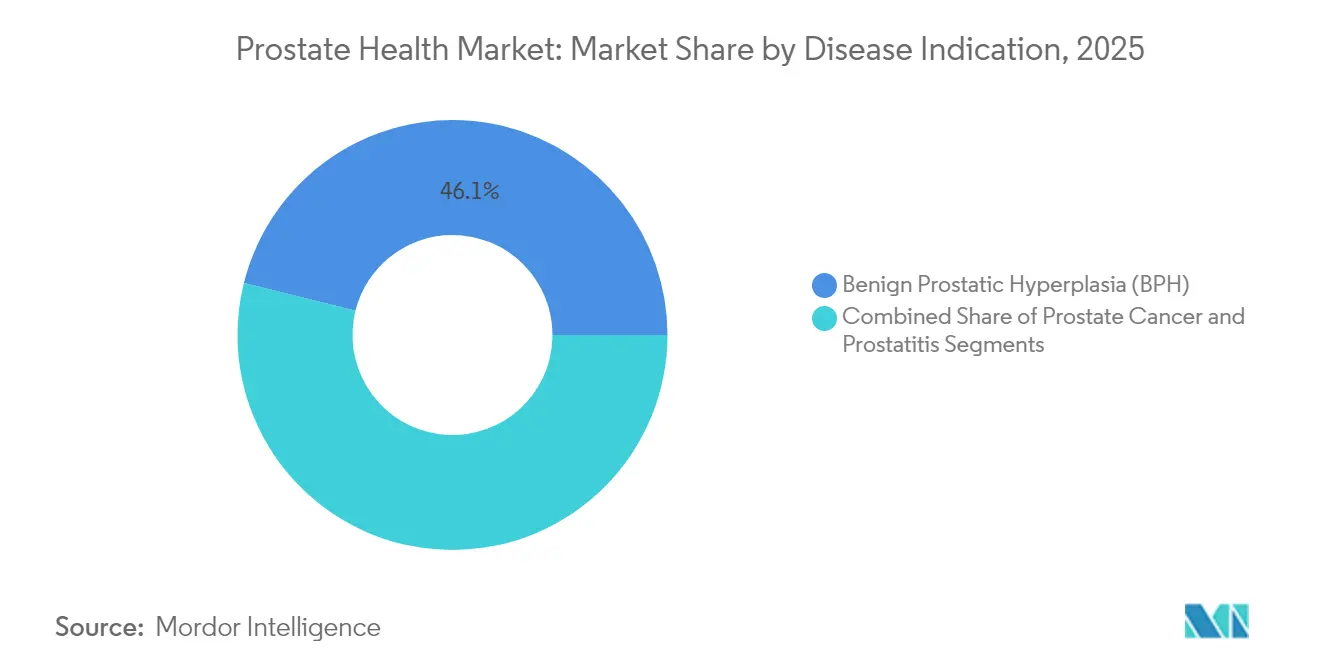
- • By disease indication, BPH commanded 46.12% of the prostate health market share in 2025; prostate cancer is projected to grow at a 9.98% CAGR through 2031.
- • By product type, prescription drugs accounted for 56.48% of the prostate health market size in 2025, while genomic diagnostics are forecast to expand at a 10.34% CAGR to 2031.
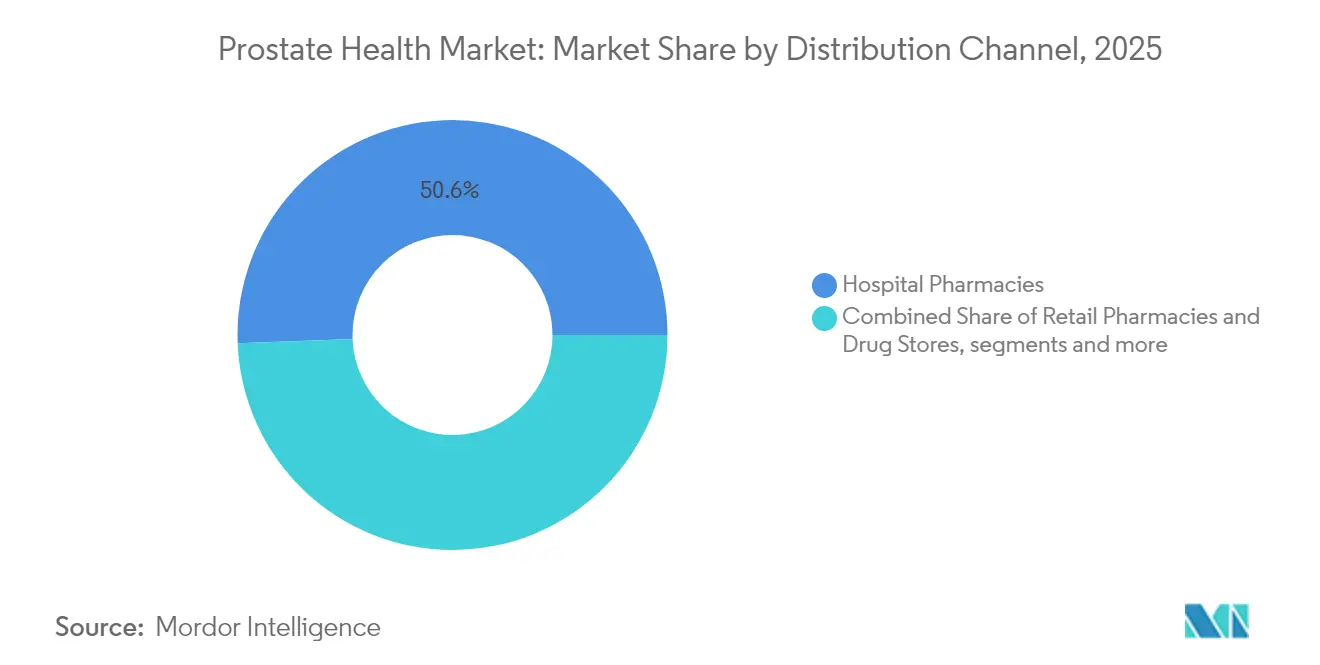
- • By distribution channel, hospital pharmacies held 50.62% of revenue in 2025; online and telemedicine platforms are advancing at an 10.86% CAGR through 2031.
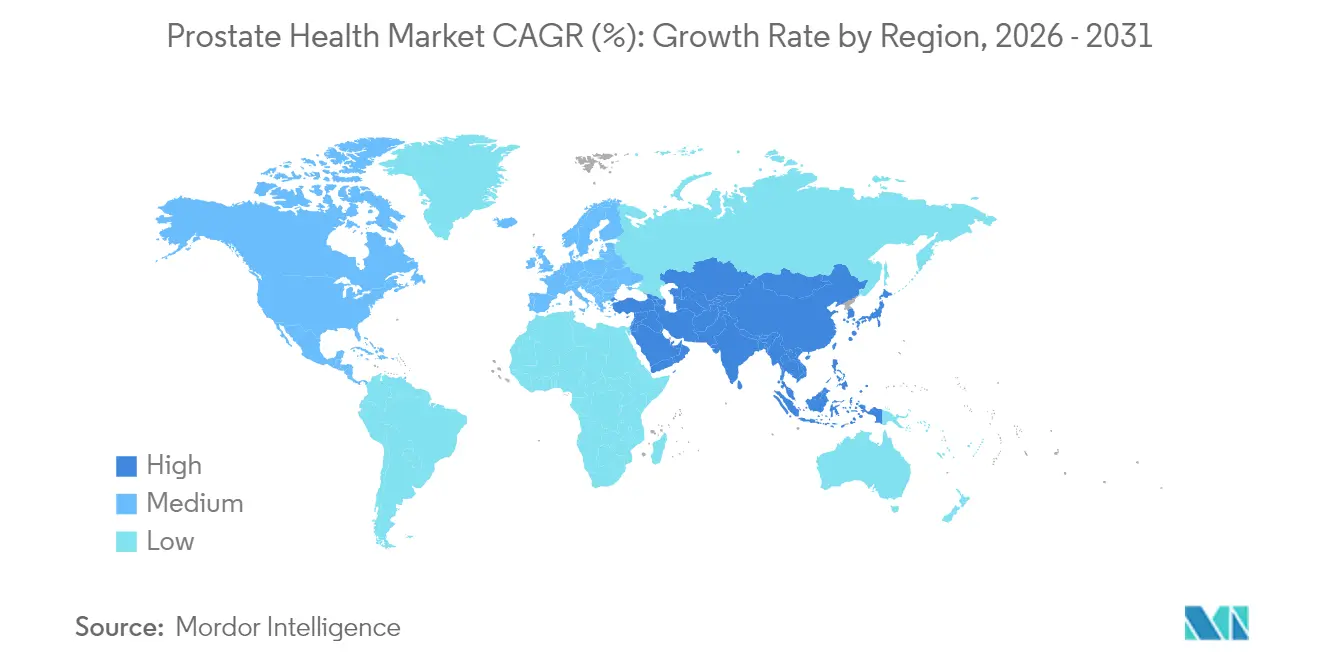
- • By geography, North America secured 38.05% of the prostate health market share in 2025, whereas Asia-Pacific is set for the fastest growth at an 11.18% CAGR between 2026 and 2031
Note: Market size and forecast figures in this report are generated using Mordor Intelligence’s proprietary estimation framework, updated with the latest available data and insights as of 2026.
Market Trends and Insights
Drivers Impact Analysis of Prostate Health Market*
| Driver | (~) % Impact on CAGR Forecast | Geographic Relevance | Impact Timeline |
|---|---|---|---|
| Aging-male Population Base Swells Addressable Market | +2.8% | Global, particularly North America & Europe | Long term (≥ 4 years) |
| Growing Use of PSA and mpMRI for Early Detection | +2.1% | North America & EU core, expanding to APAC | Medium term (2-4 years) |
| Shift Toward Once-daily Combo Drugs for BPH Symptom Relief | +1.4% | Global, led by developed markets | Short term (≤ 2 years) |
| Radically Lower Cost of Genomic Testing Enables Risk Stratification | +1.8% | North America & EU, selective APAC adoption | Medium term (2-4 years) |
| DTC Tele-urology Platforms Bundling Meds & Labs | +1.2% | North America lead, expanding globally | Short term (≤ 2 years) |
| Corporate Men's-health Benefits Boosting Screening Uptake | +0.9% | North America & select European markets | Medium term (2-4 years) |
| Source: Mordor Intelligence | |||
Aging-Male Population Base Swells Addressable Market
Men 65 years and older are the fastest-growing demographic worldwide and are projected to double in developed economies by 2050. BPH prevalence rises from 50% at age 60[1]Bryn M Launer, "The rising worldwide impact of benign prostatic hyperplasia," BJU International, pmc.ncbi.nlm.nih.gov to nearly 90% among men in their 90s, while prostate cancer peaks at 102.8 cases per 100,000 in the 65–74 cohort. This demographic wave heightens absolute patient numbers and per-capita utilization, ensuring structural momentum for the prostate health market.
Growing Use of PSA and mpMRI for Early Detection
MRI-first pathways enable 96% of men with negative scans to avoid biopsy without compromising detection of high-grade cancer[2]Charlie A. Hamm, "Oncological Safety of MRI-Informed Biopsy Decision-Making in Men With Suspected Prostate Cancer," JAMA Oncology, jamanetwork.com over 3 years. Combined PSA-mpMRI screening reduces unnecessary biopsies by up to 50% and is being rapidly integrated into European guideline practice. Such precision approaches strengthen patient confidence and free system resources, boosting adoption across the prostate health market.
Radically Lower Cost of Genomic Testing Enables Risk Stratification
Multigene panel costs have plunged to sub-USD 500, making population-level genetic screening feasible. MyProstateScore 2.0 eliminates 41% of unnecessary biopsies versus 11% under PSA-only criteria, underscoring the clinical and economic upside. Wider payer acceptance should accelerate penetration, adding depth to the prostate health industry’s diagnostics segment.
DTC Tele-Urology Platforms Bundling Meds & Labs
Over 90% of online sexual-health visits are deemed low-risk and safely resolved via teleconsultation. Subscription services combine hormone profiles, PSA kits, and e-prescribing, inducing sticky, recurring revenue and drawing new users into the prostate health market ecosystem.
Restraints Impact Analysis of Prostate Health Market*
| Restraint | (~) % Impact on CAGR Forecast | Geographic Relevance | Impact Timeline |
|---|---|---|---|
| Adverse-event Concerns Around Long-term 5-ARI Usage | -1.3% | Global, particularly developed markets | Long term (≥ 4 years) |
| Low Reimbursement for Precision Diagnostics Outside US/EU | -2.1% | APAC, MEA, Latin America | Medium term (2-4 years) |
| Shortage of Fellowship-trained Uro-radiologists Limits mpMRI Utility | -1.7% | Global, acute in emerging markets | Medium term (2-4 years) |
| Social Stigma in Key Asian Markets Dampens Early Care-seeking | -1.9% | Asia-Pacific, particularly East Asia | Long term (≥ 4 years) |
| Source: Mordor Intelligence | |||
Adverse-Event Concerns Around Long-Term 5-ARI Usage
Reports linking 5-ARI therapy to erectile dysfunction and mood disorders temper prescription growth. Physicians increasingly shift toward alpha-blocker combinations or device-based therapies such as UroLift, reallocating share within the prostate health market.
Low Reimbursement for Precision Diagnostics Outside US/EU
While Medicare reimburses PSMA-PET scans and gene panels, most emerging markets still rely on PSA alone, stalling adoption of advanced diagnostics. The gap limits global footprint for suppliers yet opens opportunity for lower-cost assays tailored to constrained settings.
*Our forecasts treat driver/restraint impacts as directional, not additive. The impact forecasts reflect baseline growth, mix effects, and variable interactions.
Prostate Health Market Segment Analysis
By Disease Indication:
BPH Dominates While Cancer Segment AcceleratesBPH captured 46.12% of the prostate health market size in 2025, propelled by lifelong symptom management and broad therapeutic choice. Pharmaceutical and device makers benefit from steady repeat sales and procedure fees. Conversely, prostate cancer posts the fastest trajectory at a 9.98% CAGR on rising genomic-screen uptake and PSMA-targeted radioligand approvals.
Prostatitis remains small but underserved. Emerging microbiota-modifying strategies and localized drug-delivery devices could expand treatment options for patients with chronic pelvic pain and create opportunities for innovators in the prostate health market.



By Product Type:
Prescription Drugs Lead as Genomics DisruptsPrescription therapies retained 56.48% of the prostate health market share in 2025, primarily due to continued reliance on alpha-blockers, next-generation androgen-receptor inhibitors, and radioligands such as Pluvicto. Darolutamide’s multiple label extensions underline the advantage of robust clinical pipelines. Label extensions for Nubeqa and Gemtesa showcase a steady flow of clinical innovation that underpins segment resilience.
Genomic diagnostics are expected to exhibit the highest growth at a 10.34% CAGR, as payers weigh the real-world savings from avoided biopsies. Minimally invasive devices, such as UroLift 2 and Rezūm, add high single-digit growth through increased procedure volume and geographic reach.
By Distribution Channel:
Hospital Dominance Challenged by Digital PlatformsHospital pharmacies generated 50.62% of revenue in 2025, as complex radiopharmaceuticals require specialist preparation. Tumor boards and same-site imaging also reinforce the channel’s centrality.
Online portals and telemedicine now form the fastest-growing route at an 10.86% CAGR, providing privacy-conscious consumers with convenient refills, home testing, and rapid escalation pathways. Retail chains maintain relevance through over-the-counter products but co-market with digital health apps to secure incremental prescriptions.
Geography Analysis
North America Prostate Health Market
North America held a 38.05% share of the prostate health market in 2025 and is expected to sustain mid-single-digit growth through 2031. Medicare coverage for PSMA-PET imaging, gene panels, and radioligands supports premium-priced interventions while corporate wellness plans foster routine screening. United States direct-to-consumer models normalize online care seeking, boosting adherence and early detection. Canada’s single-payer system emphasizes cost-effectiveness; its approval of oral relugolix demonstrates a willingness to fund drugs that lower hospitalization and injection visits.
APAC Prostate Health Market
The Asia-Pacific region is the fastest-growing region, with a 11.18% CAGR for 2026–2031. Japan and South Korea lead in the adoption of mpMRI and guideline-based care, whereas China and India are experiencing high-volume growth but face gaps in reimbursement and awareness of screening. Governments roll out public-private campaigns, pairing hospital-based “check-up days” with tele-follow-ups to bridge access issues, drawing in multinationals and local startups to the prostate health market.
Europe Prostate Health Market
Europe follows an evidence-centric path that tempers the speed of uptake but ensures durability. Health-technology-assessment agencies tie reimbursement to real-world cost-utility, favoring scans and therapies with demonstrated survival or quality-of-life benefit. Germany and France increasingly rely on multiparametric MRI for biopsy triage, while the United Kingdom’s National Health Service pilots risk-adapted screening.
MEA Prostate Health Market
The Middle East and Africa remain nascent yet promising. Rising life expectancy, private-sector hospital build-outs, and government screening drives create incremental demand. Constraints include low urologist density and fragmented payer systems, but PSMA-PET installations in Gulf Cooperation Council states illustrate gradual capability upgrades.

Regulatory Landscape
Regulatory oversight in the prostate health market is shaped by combination-product and companion diagnostic pathways that link medicines, devices, and IVD performance requirements. In the United States, the FDA Office of Combination Products assigns oversight based on the Primary Mode of Action (PMOA) under section 503(g) of the Federal Food, Drug, and Cosmetic Act, determining whether CDER, CDRH, or CBER leads review. This approach is complemented by cGMP expectations for combination products under 21 CFR Part 4, along with evolving FDA guidance and post-market safety reporting expectations (including updated guidance activity in June 2025).
In Europe, drug-device and diagnostic components are governed across medicinal product rules and the Medical Device Regulation (EU) 2017/745 (MDR) and In Vitro Diagnostic Regulation (EU) 2017/746 (IVDR). The EMA Combination Products Operational Group (COMBO) supports cross-sector coordination for integrated drug-device combinations. Companion diagnostics for targeted prostate cancer therapies are a key compliance pressure point, where IVDR requirements increase the evidentiary and conformity assessment burden. A July 2025 multistakeholder focus also highlighted the need for tighter alignment between medicine and device/IVD assessments for CDx under IVDR, reinforcing the practical value of early scientific advice and parallel planning across drug, device, and diagnostic workstreams for developers commercializing genomic assays, imaging-linked therapeutics, or fixed combinations in this market.
Competitive Landscape
The prostate health market marries established pharmaceutical incumbents, device innovators, and digital disruptors. Bayer, Pfizer, and Merck are harnessing the multi-indication development of androgen-receptor inhibitors; darolutamide’s third U.S. approval showcases this strategy. Bristol Myers Squibb’s acquisition of RayzeBio grants immediate entry into late-stage radiopharmaceuticals and underlines investor appetite for targeted modalities
Device firms such as Boston Scientific and Teleflex expand portfolios with minimally invasive BPH tools that prioritize sexual-function preservation. The UroLift 2 platform, now cleared for all prostate anatomies, and Rezūm steam therapy deliver rapid symptom relief and shorter recovery times, enabling outpatient procedural expansion.
Digital-first platforms tackle cultural reluctance toward clinic visits. Subscription models provide on-demand testing, teleconsultation, and doorstep dispensing, capturing users who might otherwise remain untreated. Incumbents integrate virtual touchpoints or partner with e-pharmacies to avoid leakage. Competition increasingly hinges on real-world outcome evidence and payer alignment, with market access teams weighing cost-per-QALY metrics.
Prostate Health Industry Leaders
-
Teleflex
-
Novartis AG
-
Elekta
-
Siemens Healthcare GmbH
-
Bayer AG
- *Disclaimer: Major Players sorted in no particular order

Prostate Health Market Companies Covered in this Report
- GlaxoSmithKline
- Pfizer
- Eli Lilly and Company
- Merck
- Abbvie
- Astellas Pharma
- Ipsen
- Ferring Pharmaceuticals
- Boston Scientific
- Teleflex
- Olympus
- NxThera (Medtronic)
- PROCEPT BioRobotics
- Avadel Pharmaceuticals plc
- Urotronic Inc.
- Endo International
- Sanofi
- Bayer
- Nymox Pharmaceutical
- Veracyte (Genomic Health)

Market Opportunities and Future Outlook
Targeted regimen expansion, alongside mandated patient-selection diagnostics, creates whitespace for integrated therapy-and-testing offerings across prostate cancer care. Recent regulatory actions point toward earlier-line and molecularly defined use, with the FDA approving capivasertib (Truqap) in combination with abiraterone and prednisone for PTEN-deficient metastatic disease in June 2026, and approving the VENTANA PTEN (SP218) RxDx Assay as a companion diagnostic. Johnson & Johnson also obtained European Commission approval for Akeega (niraparib plus abiraterone acetate) for BRCA1/2-mutated metastatic hormone-sensitive prostate cancer in March 2026, and received UK MHRA authorization in July 2026.
These approvals increase the practical importance of accessible biomarker testing (tissue and/or liquid biopsy workflows). They also support opportunities for diagnostic providers, lab networks, and digital pathways that bundle testing, interpretation, and medication fulfillment. Radioligand and advanced imaging workflows add additional commercialization headroom, anchored by reimbursement and label broadening already visible in major markets. For example, Pluvicto received a UK MHRA expanded authorization in February 2026, and the United States has clearer reimbursement pathways for PSMA-PET imaging and radiopharmaceuticals, consistent with North America market uptake dynamics described in the study. Platforms that reduce operational friction, including dose logistics, site readiness, and imaging-to-therapy coordination, and that consolidate mpMRI, PSMA-PET, and genomic risk stratification into fewer patient touchpoints, have an actionable route to scale, particularly in hospital systems where radiopharmaceutical handling and specialist pathways already concentrate demand.
Recent Industry Developments in Prostate Health Market
- February 2026: Pluvicto received UK MHRA expanded authorization for additional indications, broadening access to PSMA-targeted radioligand therapy in the United Kingdom. The approval reflects growing uptake of radiopharmaceutical therapies in prostate cancer care and extends treatment pathways within UK health systems.
- September 2025: Elekta reported clinical trial results showing MRI-guided adaptive radiotherapy with Elekta Unity improved patient-reported urinary symptoms in men with prostate cancer. The results support the clinical value proposition for MR-guided radiotherapy workflows that differentiate high-end oncology centers and support capital equipment utilization around prostate indications.
- December 2024: Siemens Healthineers and Profound Medical announced an agreement to offer a complete solution for MRI-guided prostate therapy. The collaboration links imaging and therapy platforms into an integrated workflow, supporting broader procedural standardization and accelerating adoption for MRI-guided prostate treatment programs.


Prostate Health Market Report Scope and Research Methodology
Market Definition and Coverage
For this study, the prostate health market is counted as revenue earned from products and services used to prevent, detect, and treat prostate conditions, mainly benign prostatic hyperplasia, prostatitis, and prostate cancer, across care and pharmacy settings.
Scope exclusions: We exclude general urology consumables that are not prostate specific, along with awareness campaigns or counseling programs that do not have a commercial product or billable service transaction.
Segments Covered in This Report
-
By Disease Indication (Value)
- Benign Prostatic Hyperplasia (BPH)
- Prostate Cancer
- Prostatitis
-
By Product Type (Value)
- Prescription Drugs
- Over-the-Counter Supplements
- Diagnostics (PSA kits, mpMRI, genomic assays)
- Minimally-Invasive Devices (laser, RF, prostatic urethral lift)
-
By Distribution Channel (Value)
- Hospital Pharmacies
- Retail Pharmacies & Drug Stores
- Online Platforms & Tele-urology
-
By Geography (Value)
-
North America
- United States
- Canada
- Mexico
-
Europe
- Germany
- United Kingdom
- France
- Italy
- Spain
- Rest of Europe
-
Asia-Pacific
- China
- Japan
- India
- Australia
- South Korea
- Rest of Asia-Pacific
-
South America
- Brazil
- Argentina
- Rest of South America
-
Middle East and Africa
- GCC
- South Africa
- Rest of Middle East and Africa
-
North America
Data Sources, Market Sizing, and Validation
Desk Research
Desk research is used to set the market boundaries first, then we translate diagnosed and treated demand signals into market inputs before revenue math. Public sources such as the US CDC, the NIH and NCI, the WHO, and the OECD help us anchor diagnosed and treated population trends, screening adoption, and care utilization patterns.
To translate those signals into market inputs, we also review sources like the FDA device and drug databases, clinical guidelines and publications (including AUA guideline updates and peer reviewed studies), along with payer and public health publications that indicate treatment pathways. Company annual reports, investor decks, and reputable press are then used to understand product positioning and pricing direction. In parallel, paid subscriptions for company financials and intelligence, news and financials, and patent databases are used selectively to fill gaps on product launches, pipeline timing, and selected revenue disclosures. These examples are not exhaustive, and many other public and paid sources were also reviewed to collect data, validate assumptions, and clarify open questions.
Primary Interviews and Surveys
Primary work is used to confirm what gets used in practice and what is reimbursed, since prostate care can vary by guideline, provider preference, and patient adherence. We spoke with a mix of clinicians, diagnostic stakeholders, distributors, and product focused executives across major regions, and the feedback was used to validate adoption rates, price bands, and the split between drug therapy, testing, and procedure driven device spending.
Distribution of primary research fieldwork respondents
| Company type | Respondent position | Region |
|---|---|---|
| Top tier: 29% | CXOs: 14% | APAC: 47% |
| Mid tier: 54% | Functional/Unit leaders: 27% | EMEA: 33% |
| Smaller Players: 17% | Managers: 59% | Americas: 20% |
Market-Sizing & Forecasting
The core model is built using a top-down approach once, where epidemiology and treated patient pools are converted into spending by applying care pathway splits and typical price ranges for key therapy and diagnostic steps. The totals are then corroborated with selective bottom-up approximations, such as sampled price times volume checks for common tests, procedure volumes for minimally invasive BPH interventions, and supplier revenue signals from public disclosures, and then adjusted when the checks do not reconcile.
A few practical inputs drive most of the sizing, including the aging male population trend, diagnosed prevalence and screening intensity (including PSA testing patterns), the mix shift between drug classes and procedure based management in BPH, uptake of advanced diagnostics and confirmatory testing, and typical annual therapy duration in cancer treatment lines. Where a country has limited public data, we use proxy indicators like physician density, reimbursement availability, and import and registration activity to bridge gaps, and we keep assumptions conservative until they are confirmed by interviews.
For forecasting, scenario analysis is used so growth can be expressed through a base case and a range that reflects changes in screening guidance, reimbursement, and therapy mix. The variables are moved forward with consensus from primary inputs, and we test sensitivity to pricing and utilization rather than assuming a single straight line trend.
Data Validation & Update Cycle
Validation happens in layers, where outputs are checked against independent signals such as procedure volumes, diagnostic testing intensity, and publicly observed pricing direction, before a final number is approved. When a variance looks unusual, the model is reopened to confirm country level assumptions, and follow-up calls are triggered with relevant experts to confirm what changed.
An internal review step is also used so the market totals, growth logic, and segment splits are inspected for consistency, and any outliers are documented and corrected. Reports are refreshed annually, and interim updates are made when material events occur, such as major approvals, reimbursement changes, or step shifts in pricing. Right before delivery, a final pass is completed so clients receive a current view aligned to the latest publicly available information.
Mordor Intelligence's Prostate Health Market Estimate Compared With Other Published Estimates
Published prostate health market values can look far apart because different studies do not always count the same revenues, and the year and currency rules behind the math are not always visible. In our work, we keep the boundary tied to paid products and billable services linked to prostate conditions, and then we test the result against real world care activity signals.
A common gap driver is refresh cadence, since pricing, therapy mix, and device procedure adoption can change meaningfully within a year, which then shifts the market total even if patient volumes are stable. Another driver is currency timing and inflation handling, because some estimates use a single annual exchange rate or blend nominal and real pricing, which can move a global number up or down. By rechecking ASP logic and conversion timing during updates and then revalidating with provider and channel feedback, Mordor Intelligence reduces the chance that one-time pricing noise gets baked into the market size.
Benchmark comparison
| Source | Market Size | Gaps in Research Methodology |
|---|---|---|
| Mordor Intelligence | USD 36.01 B (2026) | |
| Industry Report A | USD 38.60 B (2023) | Uses an earlier base year and typically applies a single year currency view, which can understate recent therapy mix shifts and pricing resets that show up after reimbursement and guideline updates. |
| Press Release B | USD 34.07 B (2024) | Often reflects a narrower transaction set and high level growth assumptions, with limited visibility on how diagnostics and device procedures are counted and how ASPs are trended across geographies. |
Overall, the spread is explained by what gets counted, the year chosen for the headline value, and how pricing and currency are treated. By keeping the calculation tied to repeatable inputs like treated pools, test and procedure intensity, and realistic price bands, we end up with a market number that can be traced back to clear steps and rechecked as conditions change.


Key Questions Answered in the Report
What is the current Global Prostate Health Market size?
The prostate health market size reached USD 36.01 billion in 2026 and is projected to climb to USD 55.8 billion by 2031.
Which condition generates the largest revenue within the market?
BPH leads, capturing 46.12% of the prostate health market share in 2025 due to its high prevalence among aging men.
Which region will witness the fastest growth?
Asia-Pacific is forecast to advance at an 11.18% CAGR between 2026 and 2031, driven by demographic aging, rising incomes, and expanding screening programs.
Why are genomic diagnostics gaining traction?
Multigene panel costs have fallen below USD 500, and tests such as MyProstateScore 2.0 eliminate 41% of unnecessary biopsies, improving care efficiency.
Page last updated on:


 Your data is secure and never sold or shared.


