
Market Overview
| Study Period | 2020 - 2031 |
|---|---|
| Market Size (2026) | USD 5.22 Billion |
| Market Size (2031) | USD 7.03 Billion |
| Growth Rate (2026 - 2031) | 6.12 % |
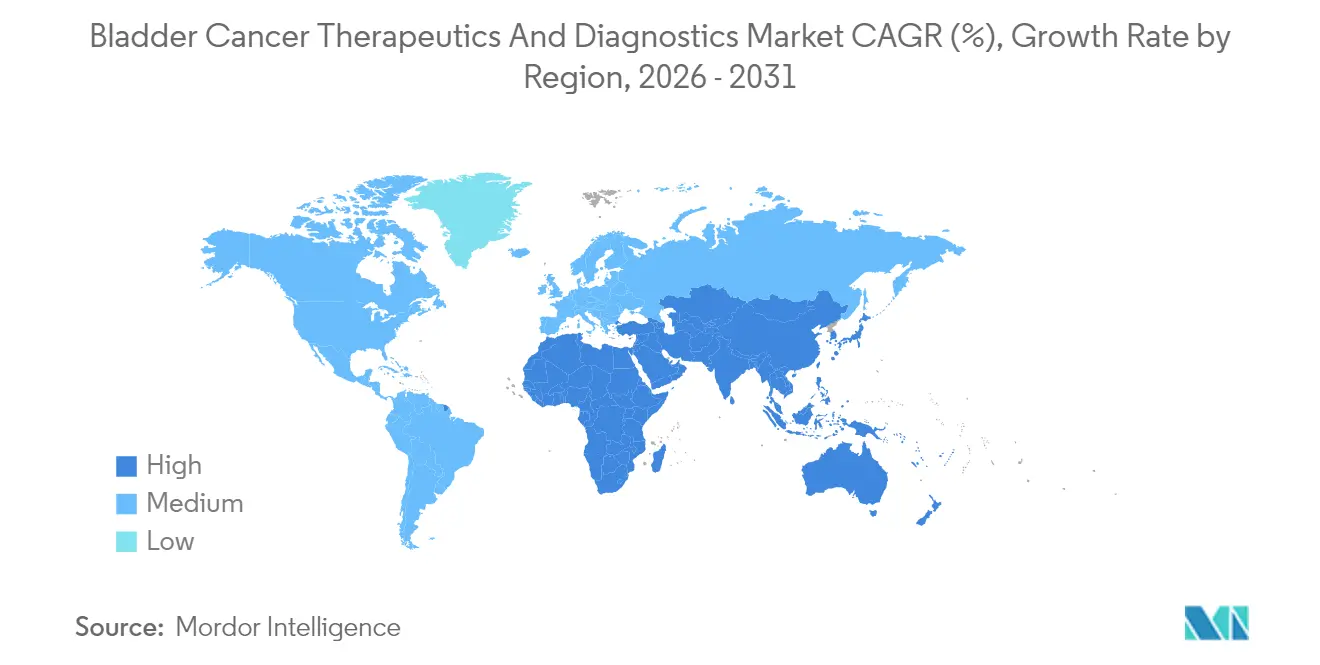
| Fastest Growing Market | Asia-Pacific |
| Largest Market | North America |
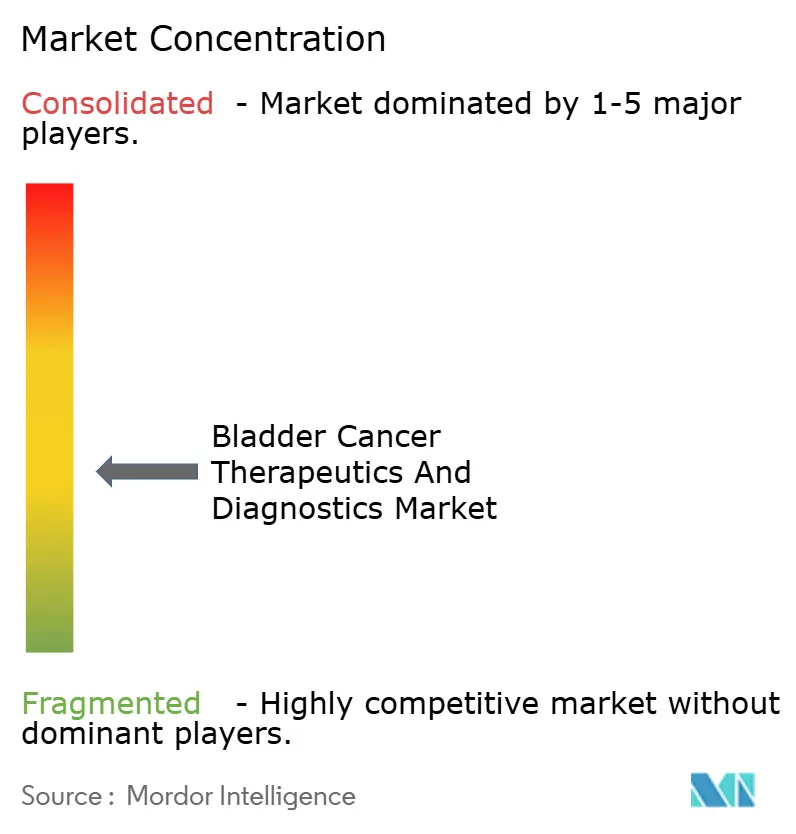
| Market Concentration | Medium |
Major Players *Disclaimer: Major Players sorted in no particular order Image © Mordor Intelligence. Reuse requires attribution under CC BY 4.0. | |
Bladder Cancer Therapeutics and Diagnostics Market Analysis by Mordor Intelligence
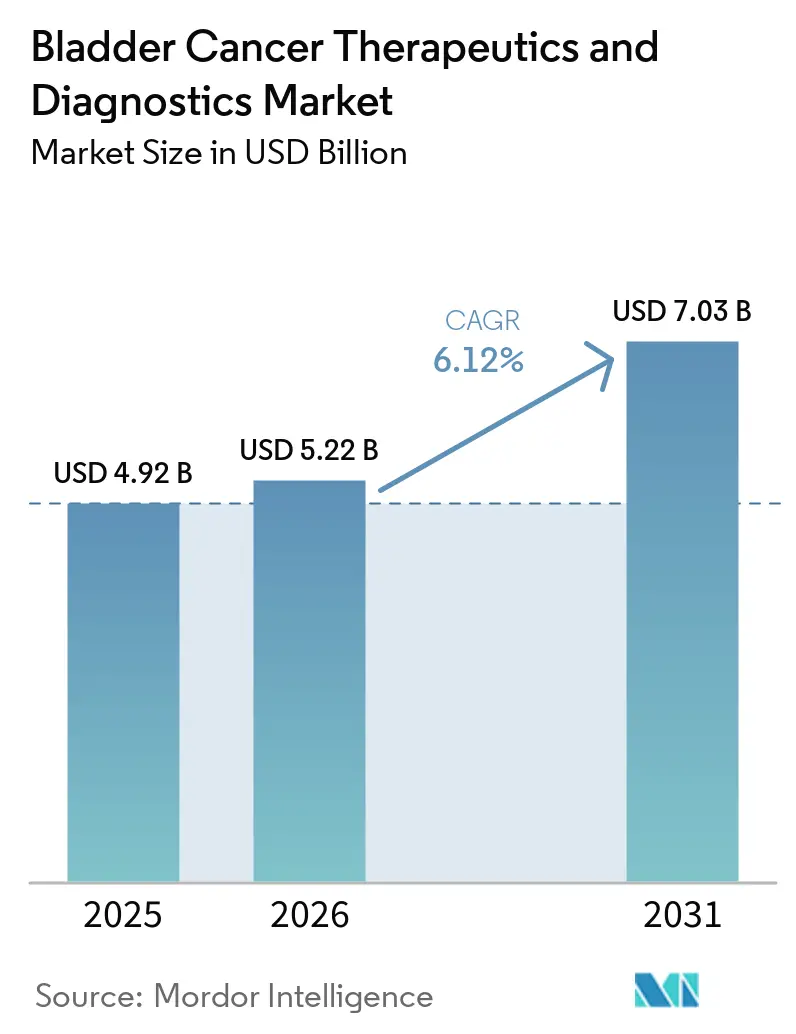
The Bladder Cancer Therapeutics And Diagnostics Market size in 2026 is estimated at USD 5.22 billion, growing from 2025 value of USD 4.92 billion with 2031 projections showing USD 7.03 billion, growing at 6.12% CAGR over 2026-2031.
The advance reflects a structural pivot from legacy chemotherapy toward precision immunotherapy, propelled by rapid FDA approvals for checkpoint inhibitors and antibody-drug conjugates that now form the backbone of combination protocols. Rising global incidence, earlier detection through blue-light cystoscopy, and reimbursement support for novel biologics further accelerate demand. New intravesical drug-delivery devices and AI-based urine-biomarker algorithms enhance clinical outcomes and streamline follow-up, magnifying procedural volumes in both inpatient and outpatient settings. Competitive intensity is increasing as pharmaceutical majors partner with focused biotechnology firms to align therapeutic and diagnostic innovations with value-based care metrics.
Key Report Takeaways
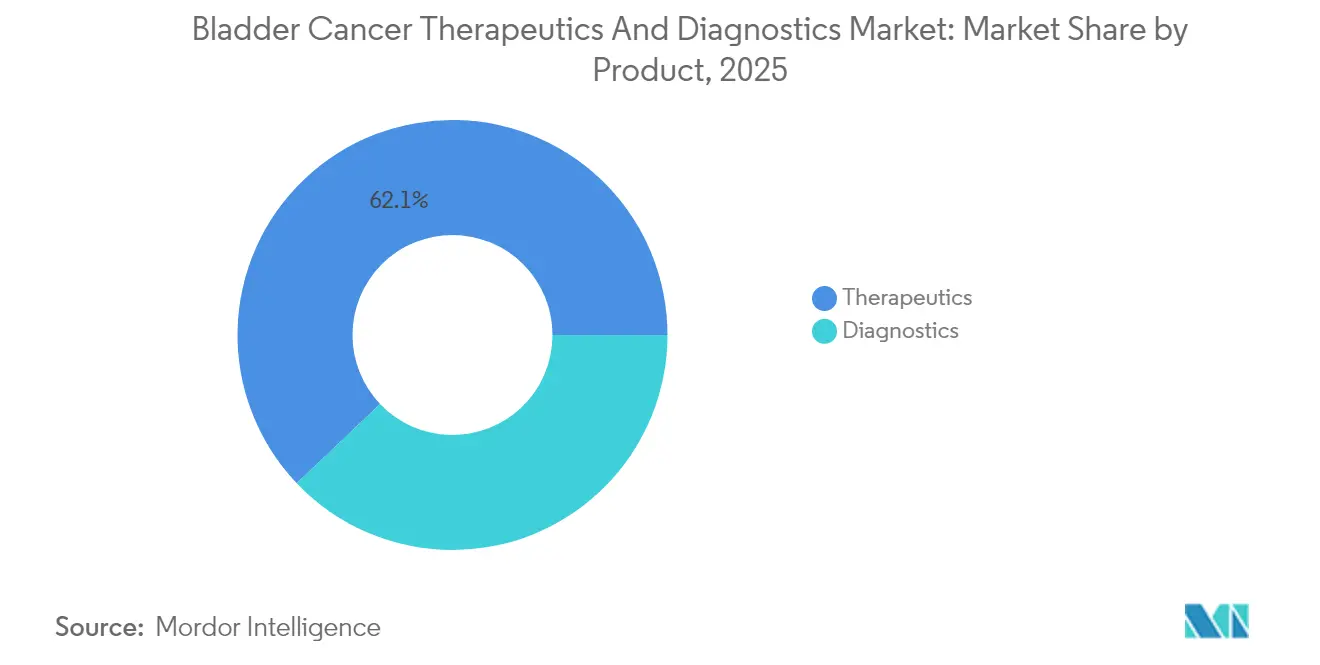
- By product category, therapeutics held a 62.10% share of the bladder cancer therapeutic and diagnostic market in 2025, while immunotherapy was projected to register the highest growth at an 8.25% CAGR through 2031.
- By cancer type, urothelial carcinoma accounted for 84.10% of the bladder cancer therapeutic and diagnostics market size in 2025 and is expected to expand at a 9.00% CAGR to 2031.
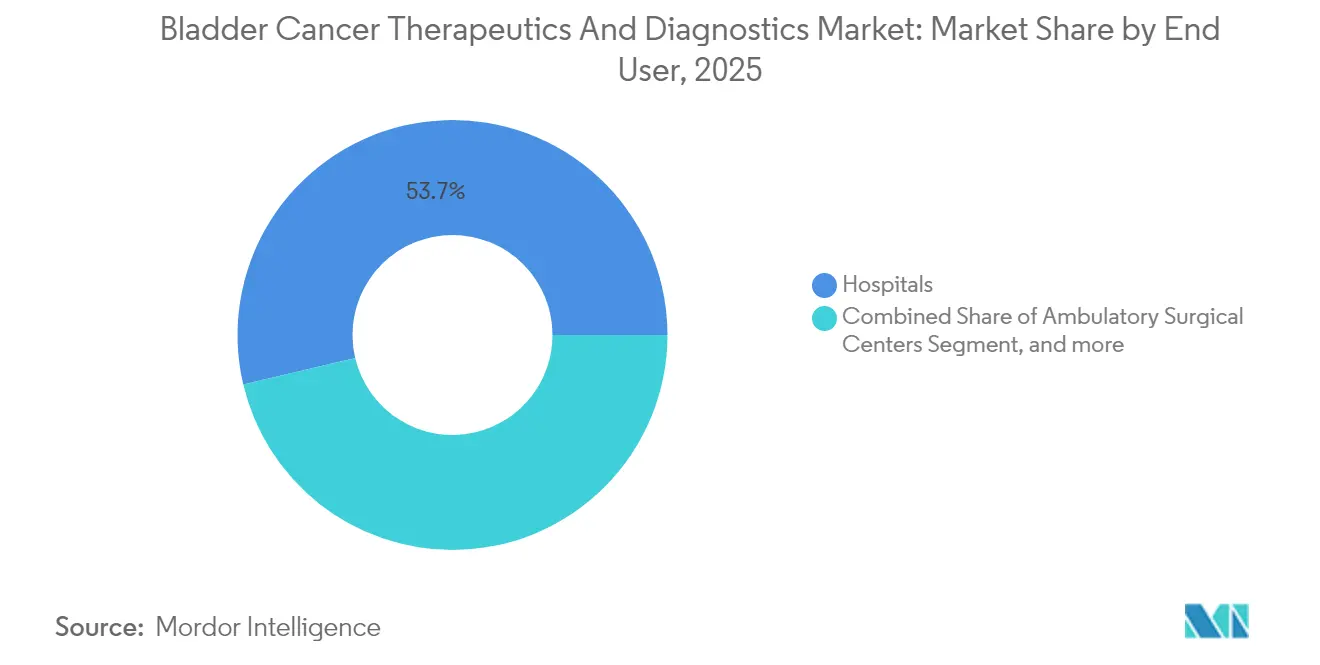
- By end user, hospitals retained 53.70% of 2025 revenue, whereas ambulatory surgical centers are forecast to advance at a 7.65% CAGR during the outlook period.
- By geography, North America led with 44.20% of 2025 revenue, and Asia Pacific is set to grow at a 10.40% CAGR to 2031.
Note: Market size and forecast figures in this report are generated using Mordor Intelligence’s proprietary estimation framework, updated with the latest available data and insights as of 2026.
Market Trends and Insights
Drivers Impact Analysis of Bladder Cancer Therapeutics and Diagnostics Market*
| Driver | (~) % Impact on CAGR Forecast | Geographic Relevance | Impact Timeline |
|---|---|---|---|
| Rising global bladder-cancer incidence | +1.5% | Global; highest in North America and Europe | Long term (≥ 4 years) |
| Rapid approvals of immune-checkpoint inhibitors and ADCs | +1.8% | North America and EU leading; APAC following | Medium term (2-4 years) |
| Wider adoption of blue-light and 4K cystoscopy | +1.2% | North America and Europe; expanding to APAC | Medium term (2-4 years) |
| AI-driven urine-biomarker algorithms | +0.9% | Global; early adoption in developed markets | Long term (≥ 4 years) |
| Growth of ASC-based cystoscopy volumes | +0.7% | North America; expanding to Europe | Short term (≤ 2 years) |
| Re-fillable intravesical drug-delivery devices | +0.6% | North America and Europe | Medium term (2-4 years) |
| Source: Mordor Intelligence | |||
Rising Global Bladder-Cancer Incidence
Incidence continues to climb as aging populations expand and occupational carcinogen exposure persists. Epidemiological data indicate a steady rise among individuals ≥65 years, heightening demand for diagnostic surveillance and multi-line therapies.[1] Earlier detection through imaging and urine-based assays swells the treatment-eligible cohort, particularly for non-muscle invasive disease. Health systems are scaling specialized urology centers and investing in trained personnel to cope with repeat interventions linked to high recurrence rates. These recurrent episodes sustain revenue generation for cystoscopy equipment, consumables, and adjuvant therapies. Economic models now incorporate indirect costs tied to lifetime monitoring, reinforcing the shift toward technologies that reduce recurrence risk.
Rapid Approvals of Immune-Checkpoint Inhibitors & ADCs
Accelerated regulatory pathways compress development cycles and hasten patient access to novel biologics. The FDA granted breakthrough status to agents such as enfortumab vedotin and durvalumab, enabling commercial launch within five years of pivotal trials.[2] Survival gains are persuasive; combining pembrolizumab with enfortumab vedotin delivers 33.8-month median overall survival versus 15.9 months for chemotherapy. Market entrants with robust pipelines secure first-mover advantages and command premium pricing. Traditional chemotherapy suppliers must now co-develop biologics or risk market erosion in the bladder cancer therapeutic and diagnostics market.
Wider Adoption of Blue-Light & 4K Cystoscopy
Enhanced visualization improves detection accuracy by revealing flat and multifocal lesions that are often missed by white-light scopes. Medicare reimbursement decisions in 2024 removed cost barriers, thereby catalyzing the adoption of outpatient services.[3] Integration with 4K imaging enhances clarity during resection, resulting in lower recurrence and reoperation rates. Ambulatory surgical centers leverage shorter turnaround times to absorb elective cystoscopy volume, expanding the bladder cancer therapeutic and diagnostic market beyond hospital walls. Equipment manufacturers respond with compact, portable stacks designed for use in limited surgical suites.
AI-Driven Urine-Biomarker Algorithms
Machine-learning platforms combine cytology, protein markers, and genomic signatures to flag malignant cells at sensitivity levels nearing 90% in validation studies. Cloud-based analytics standardize interpretation across laboratories, reducing operator variability. These tests could partially replace invasive cystoscopy in surveillance protocols, thereby boosting patient compliance and reducing procedure-related morbidity. Commercial rollouts focus on high-incidence regions where surveillance caseloads place a significant burden on health systems. Challenges persist around reimbursement coding and clinician adoption, but pilot programs report favorable cost-utility ratios.
Restraints Impact Analysis of Bladder Cancer Therapeutics and Diagnostics Market*
| Restraint | (~) % Impact on CAGR Forecast | Geographic Relevance | Impact Timeline |
|---|---|---|---|
| Patent expiries and generic erosion of key chemo drugs | -0.8% | Global; price-sensitive markets hit hardest | Short term (≤ 2 years) |
| High cost and reimbursement hurdles for novel biologics | -0.6% | Emerging markets; selective impact in developed regions | Medium term (2-4 years) |
| Global BCG shortages disrupting therapy patterns | -0.5% | Global; severe in Latin America and Asia | Short term (≤ 2 years) |
| Limited blue-light equipment availability in emerging settings | -0.4% | Emerging markets and rural areas in developed countries | Long term (≥ 4 years) |
| Source: Mordor Intelligence | |||
Patent Expiries & Generic Erosion of Key Chemo Drugs
The expiration of mitomycin C and cisplatin patents invites generic competition that compresses therapy margins. Price declines favour payers but constrain manufacturer revenues needed for R&D reinvestment. Although generics widen access, they split volumes across multiple suppliers, diluting scale efficiencies. Stakeholders explore hybrid regimens that pair low-cost cytotoxics with premium biologics, balancing affordability with efficacy. Yet negotiations over bundled pricing introduce complexity into procurement processes for hospital systems already under budget pressure.
High Cost / Reimbursement Hurdles for Novel Biologics
Checkpoint inhibitors and ADCs list above USD 100,000 per course in several markets, straining payer budgets that balance multiple oncology priorities. Access in middle-income economies remains uneven, with prior authorization and step-therapy requirements delaying initiation. Value-based contracts, pegging payment to sustained response, surface as compromise solutions but require data capture infrastructure not uniformly available. Manufacturers deploy tiered pricing or local production partnerships to mitigate affordability gaps, yet uptake in low-resource settings lags expected clinical benefit.
*Our forecasts treat driver/restraint impacts as directional, not additive. The impact forecasts reflect baseline growth, mix effects, and variable interactions.
Bladder Cancer Therapeutics and Diagnostics Market Segment Analysis
By Product:
Therapeutics Maintain Leadership While Diagnostics Scale QuicklyTherapeutics commanded 62.10% of 2025 revenue within the bladder cancer therapeutic and diagnostics market, reflecting the repeated dosing and high unit prices of systemic and intravesical agents. Immunotherapy alone is forecast to grow at an 8.25% CAGR, backed by expanding labels for pembrolizumab, durvalumab, and nivolumab. Antibody-drug conjugates such as enfortumab vedotin open new salvage pathways, especially for platinum-ineligible cohorts. The bladder cancer therapeutic and diagnostics market size for diagnostics is climbing, driven by blue-light scopes, 4K imaging towers, and AI-enabled urine assays that collectively enhance early detection.
Intravesical delivery platforms like TAR-200 and UGN-102 gain traction by releasing chemotherapy directly into the bladder wall, reducing systemic exposure while preserving efficacy. Diagnostic firms scale production of single-use scopes and fluorescent dyes as procedure volumes migrate to ambulatory settings. Molecular panels that combine DNA methylation and protein markers edge toward guideline endorsement, poised to redefine surveillance algorithms once reimbursement alignment occurs.

By Cancer Type:
Urothelial Carcinoma Dominates Development EffortsUrothelial carcinoma accounted for 84.10% of 2025 revenue and is projected to deliver a 9.00% CAGR, solidifying its position as the focal point for clinical innovation in the bladder cancer therapeutic and diagnostic market. Its molecular landscape accommodates PD-1 blockade, FGFR inhibition, and ADC therapy, providing multiple commercialization routes for pharmaceutical pipelines. In parallel, the bladder cancer therapeutic and diagnostics market share linked to urothelial carcinoma will expand as additional first-line combinations reach approval.
Squamous-cell carcinoma and adenocarcinoma remain underserved, together accounting for a modest fraction of the bladder cancer therapeutic and diagnostic market size. As molecular stratification becomes routine, the urothelial cancer drugs market size tied to biomarker-defined subgroups is expected to balloon, incentivizing test-treatment bundling strategies among diagnostics and pharma players. Limited clinical trial enrollment and heterogeneous molecular profiles slow drug discovery. Nevertheless, niche opportunities exist for developers who target rare-mutation pathways or exploit basket-trial frameworks to accelerate evidence generation.
By End User:
Hospitals Anchor Care While ASC Participation ScalesHospitals retained 53.70% of 2025 spending, acting as hubs for complex resections, systemic therapy initiation, and management of adverse events. They host multidisciplinary boards that align diagnostic findings with personalized treatment plans, reinforcing their central role in the bladder cancer therapeutic and diagnostics market. The market size attributable to ambulatory surgical centers is expected to grow rapidly as reimbursement equalizes and procedure times fall below two hours for many cystoscopy-based interventions.
ASCs optimize scheduling and reduce inpatient bed demand, benefitting both payers and patients through lower facility fees and shorter recovery times. Specialty centers emerge around academic institutions that secure NIH and EU grants for translational research, blending clinical care with protocol development. These sites often pilot AI-driven decision support tools, creating real-world evidence that shapes broader adoption trajectories.
Geography Analysis
North America Bladder Cancer Therapeutics and Diagnostics Market
North America contributed 44.20% of 2025 revenue, driven by strong FDA-accelerated programs, National Comprehensive Cancer Network guideline updates, and Medicare reimbursement that supports blue-light cystoscopy kits and urine-biomarker assays. Private payers are increasingly aligning with federal determinations, thereby smoothing nationwide access. Canada leverages pan-provincial buying groups to negotiate favorable biologic pricing, while Mexico expands public oncology coverage through reforms to Seguro Popular. Cross-border patient flows remain limited but could increase as novel therapies spread to tertiary centers along the US-Mexico border.
APAC Bladder Cancer Therapeutics and Diagnostics Market
The Asia Pacific is expected to deliver the fastest regional CAGR of 10.40% through 2031, as China, Japan, and India undertake upgrades to their oncology infrastructure. China’s local manufacturing partnerships reduce unit costs for checkpoint inhibitors, catalyzing uptake in provincial cancer centers. Japan maintains a high adoption rate of enfortumab vedotin and pembrolizumab, mainly due to robust national health insurance coverage. Indian private chains are gradually introducing blue-light cystoscopy, prioritizing metropolitan cities where disposable incomes support out-of-pocket payments until wider insurance penetration occurs. ASEAN countries such as Singapore and Malaysia pilot AI-enabled urine diagnostics within value-based care pilots.
Europe Bladder Cancer Therapeutics and Diagnostics Market
Europe exhibits balanced growth driven by the European Medicines Agency’s coordinated review process and national health technology assessments that emphasize cost–benefit clarity. Germany’s DRG system reimburses blue-light scopes within outpatient packages, encouraging migration away from admission-based cystoscopies. The United Kingdom’s Cancer Drugs Fund accelerates conditional access to novel ADCs while collecting registry data to inform full NHS funding decisions. Southern European markets harmonize procurement via joint tenders, using pooled volumes to negotiate biologic discounts while maintaining open access to guideline-backed innovations.
Regulatory Landscape
Regulation in bladder cancer therapeutics and diagnostics is increasingly shaped by accelerated oncology review pathways and tighter coordination for drug-device and drug-diagnostic combinations. In the United States, the FDA classifies combination products under 21 CFR 3.2(e), with review coordination via the Office of Combination Products, and maintains disease-specific development guidance for bladder-cancer adjuvant treatment endpoints and trial design. A 2026 proof point is the FDA approvals linking adjuvant treatment decisions to molecular testing, including Genentech (Roche) receiving FDA approval in May 2026 for Tecentriq (atezolizumab) in a ctDNA MRD-defined muscle-invasive bladder cancer population, alongside FDA approval of Natera's Signatera CDx as a companion diagnostic for that use.
In Europe, Regulation (EU) 2017/745 (MDR) sets the baseline for medical devices and IVD oversight. For integral drug-device combinations, a scientific opinion from the EMA or a national competent authority is required when the medicinal product provides the principal mode of action. EMA guideline activity on quality requirements for drug-device combinations and related Q&A documents reinforces expectations for lifecycle evidence, quality documentation, and aligned risk management across the medicinal and device elements. These frameworks are relevant for intravesical delivery systems, blue-light cystoscopy consumables, and companion diagnostics that are increasingly tied to labeled therapeutic indications.
Competitive Landscape
The bladder cancer therapeutic and diagnostic market is fragmented. Roche, Merck, Bristol Myers Squibb, and AstraZeneca dominate immune-oncology sales, yet each holds a subset of indications. Enfortumab vedotin’s success spurred Seagen and Pfizer to accelerate the development of next-generation ADCs, including those directed at nectin-2 and nectin-3. Strategic alliances proliferate; Merck’s 2024 pact with Kelun-Biotech added seven ADC candidates to its urothelial pipeline. Johnson & Johnson’s TAR-200 inserts sustain-release gemcitabine within a biodegradable ring, enabling a 21-day dwell time without catheter removal, an advantage for non-muscle-invasive disease.
Diagnostic innovation adds new entrants. Photocure’s Cysview dye maintains its first-mover status in blue-light imaging, whereas Karl Storz and Olympus compete with 4K technologies that are not compatible with fluorescent filters. AI start-ups license urine biomarker classifiers to regional laboratories, creating scalable, platform-agnostic offerings. Competitive narrative is increasing, emphasizing bundled solutions that link test results to therapeutic choices, thereby shortening decision cycles and differentiating vendors in procurement bids. Intellectual-property portfolios emphasize device–drug combinations and algorithmic decision support, reflecting the convergence of software, hardware, and biologics.
Investor sentiment favors firms that can navigate both therapeutic and diagnostic reimbursement structures. Private equity groups acquire ASC chains equipped with blue-light suites, betting on predictable revenue growth and consolidation synergies. Meanwhile, larger pharma players hedge pipeline risk by securing option-to-buy clauses with early-stage biotech partners, ensuring access to breakthrough science without upfront integration costs.
Bladder Cancer Therapeutics and Diagnostics Industry Leaders
-
Bristol-Myers Squibb Company
-
GlaxoSmithKline PLC
-
Merck & Co. Inc.
-
Johnson & Johnson (Janssen)
-
F. Hoffmann-La Roche Ltd
- *Disclaimer: Major Players sorted in no particular order
Bladder Cancer Therapeutics and Diagnostics Market Companies Covered in this Report
- Roche
- Merck
- Bristol-Myers Squibb
- Pfizer
- Johnson & Johnson
- Novartis
- AstraZeneca
- GlaxoSmithKline
- Astellas Pharma
- Abbott Laboratories
- Olympus
- Pacific Edge Ltd (Cxbladder)
- UroGen Pharma Ltd
- CG Oncology
- ImmunityBio Inc.
- Teleflex
- Boston Scientific
- Coloplast
- Endo International
- Ameritech Diagnostic Reagent (Jiaxing) Co.
Read Analysis of Bladder Cancer Therapeutics and Diagnostics Companies
Market Opportunities and Future Outlook
Biomarker-defined perioperative and adjuvant care is creating commercial whitespace where therapeutics and diagnostics are purchased as a linked pathway rather than as separate line items. In May 2026, the FDA approved Genentech's Tecentriq for adjuvant treatment in muscle-invasive bladder cancer patients defined by ctDNA molecular residual disease, alongside Natera's Signatera CDx companion diagnostic, making test adoption and longitudinal monitoring a practical gatekeeper for immunotherapy utilization. This supports opportunities for laboratories and diagnostic developers to bundle sample logistics, reporting workflows, and evidence generation with urology and oncology providers, while pharma partners expand label-support programs that operationalize ctDNA testing in post-cystectomy follow-up.
Earlier-stage combination regimens are also broadening addressable patient cohorts and shifting spend into neoadjuvant and adjuvant settings. In July 2026, the FDA approved PADCEV (enfortumab vedotin) plus KEYTRUDA (pembrolizumab), including a subcutaneous formulation option (KEYTRUDA QLEX), for perioperative treatment of muscle-invasive bladder cancer. The European Commission approved KEYTRUDA plus PADCEV in June 2026 for resectable cisplatin-ineligible muscle-invasive disease. On the diagnostics side, non-invasive approaches are moving from research into clinic-facing validation, including UK NHS haematuria-clinic real-world multicenter data reported in February 2026 for the GALEAS Bladder DNA-based assay, which showed 92.2% sensitivity and 92.0% specificity for new bladder cancer diagnosis. Device-led sensing concepts such as an MIT-reported catheter-based nanosensor (May 2026) also point to a route for integrating detection into routine urology workflows, supporting investment in integrated care models that combine surveillance testing, cystoscopy triage, and earlier systemic therapy decisions.
Recent Industry Developments in Bladder Cancer Therapeutics and Diagnostics Market
- July 2026: Merck announced that the US FDA approved KEYTRUDA (pembrolizumab) and KEYTRUDA QLEX (pembrolizumab and berahyaluronidase alfa-pmph), each in combination with PADCEV (enfortumab vedotin-ejfv), for perioperative treatment of muscle-invasive bladder cancer. The decision expands PD-1 plus ADC use into earlier-stage disease and adds a subcutaneous administration option that can reshape infusion-center throughput and care pathways.
- July 2025: AstraZeneca received European Commission approval for durvalumab (Imfinzi) in combination with gemcitabine and cisplatin as first-line treatment for locally advanced or metastatic urothelial carcinoma. The label strengthens the role of checkpoint inhibitors in front-line metastatic care and influences hospital formulary and treatment-protocol standardization across EU markets.
- December 2024: CG Oncology initiated its Phase 3 BOND-003 trial evaluating CG0070 for BCG-unresponsive non-muscle invasive bladder cancer. Advancing into a registrational-stage program increases competitive pressure in the BCG-unresponsive segment and supports continued investment in intravesical immunotherapy alternatives amid BCG supply constraints.
Bladder Cancer Therapeutics and Diagnostics Market Report Scope and Research Methodology
Market Definition and Coverage
This market covers revenues from diagnosing bladder cancer and treating it, using commonly used testing methods and therapy options, counted at the point of care delivery in each covered geography.
Scope exclusions: We exclude general oncology supportive care, broader urology procedures that are not tied to bladder cancer diagnosis, and non-medical wellness services.
Segments Covered in This Report
- By Product
- Therapeutics
- Chemotherapy
- Immunotherapy
- Antibody-Drug Conjugates
- Intravesical Drug-Delivery Devices
- Diagnostics
- Cystoscopy
- Bladder Ultrasound & Imaging
- Urinalysis & Dipstick Tests
- Urine & Liquid-biopsy Biomarker Panels
- Therapeutics
- By Cancer Type
- Urothelial Carcinoma
- Squamous-cell Carcinoma
- Adenocarcinoma & Other Rare Types
- By End User
- Hospitals
- Ambulatory Surgical Centers
- Speciality Centers
- Academic and Research Institutes
- By Geography
- North America
- United States
- Canada
- Mexico
- Europe
- Germany
- United Kingdom
- France
- Italy
- Spain
- Rest of Europe
- Asia-Pacific
- China
- Japan
- India
- Australia
- South Korea
- Rest of Asia-Pacific
- Middle East & Africa
- GCC
- South Africa
- Rest of Middle East & Africa
- South America
- Brazil
- Argentina
- Rest of South America
- North America
Data Sources, Market Sizing, and Validation
Desk Research
Desk work starts by setting the disease and care pathway context, so the model is grounded in how bladder cancer is found, confirmed, treated, and then monitored over time. For this, we rely on public clinical and epidemiology sources such as cancer registries and surveillance programs (for example, CDC and NCI), global health statistics (for example, WHO), peer-reviewed clinical guidelines and journals, and drug and test regulatory disclosures (for example, FDA and EMA materials).
After that, we map pricing and utilization signals using sources like hospital and payer publications, procedure coding references, conference posters that summarize testing uptake, and company public filings and investor decks. In a few places, paid subscriptions that support company financials and intelligence and patent databases are used to cross-check product positioning and approximate revenue footprints. The desk sources listed here are illustrative only, and many other public and paid sources were also used for collection, validation, and clarification.
Primary Interviews and Surveys
Primary interviews and surveys were used to confirm how testing and treatment choices shift by patient type, care setting, and region, then to adjust assumptions that looked off when compared with real-world practice. We spoke with a mix of clinicians, lab and imaging stakeholders, hospital procurement teams, and commercial leaders, which helped us validate adoption of cystoscopy, urine testing, and newer therapy approaches in key regions. Feedback was also used to sanity-check the split between diagnostics and therapeutics revenues and to pressure-test price change assumptions over the forecast period.
Distribution of primary research fieldwork respondents
| Company type | Respondent position | Region |
|---|---|---|
| Top tier: 37% | CXOs: 12% | APAC: 46% |
| Mid tier: 47% | Functional/Unit leaders: 41% | EMEA: 35% |
| Smaller Players: 16% | Managers: 47% | Americas: 19% |
Market-Sizing & Forecasting
Sizing begins with a top-down build where incidence and prevalence signals, diagnosis rates, and treated-patient funnel assumptions are converted into expected volumes of key diagnostic events and therapy use, which are then valued using typical price points by geography and setting. To keep the totals realistic, selective bottom-up approximations are also run, such as sampled revenue roll-ups from public company reporting, channel checks on test pricing, and volume times average selling price checks for high-use procedures.
Inputs that commonly move the model include bladder cancer case burden and age mix, cystoscopy and urine test utilization patterns, treatment mix shifts between chemotherapy, immunotherapy, and other modalities, care setting shares (hospital versus ambulatory and specialty centers), and regional reimbursement and access changes. Where bottom-up visibility is partial, gaps are handled using conservative penetration ranges that are anchored to interview feedback and then reconciled back to the top-down demand pool.
For forecasting, we mainly use scenario analysis supported by trend lines in key drivers, so growth is not based on a single curve fit. Assumptions for adoption and pricing are reviewed with experts, and scenarios are blended toward what is most consistent with guideline changes, therapy launches, and expected screening and follow-up behavior.
Data Validation & Update Cycle
Outputs are triangulated against independent signals, such as regional oncology spending direction, procedure volume indicators, and reported revenue trends from major public players, and then checked for year-to-year jumps that do not match clinical practice. When variances are detected, inputs are revisited and targeted re-contacts are triggered, especially for utilization rates and pricing progression.
Before sign-off, the model goes through multi-step analyst reviews where assumptions, formulas, and conversions are rechecked, followed by a final read for internal consistency across regions and care settings. Reports are refreshed annually, with interim updates if a material event occurs, and a last pre-delivery pass is completed so clients receive the latest updated view.
Mordor Intelligence's Bladder Cancer Therapeutics Diagnostics Market Size Compared With Other Published Estimates
Published market sizes for bladder cancer therapeutics and diagnostics can look far apart, even when the topic name is similar, because the studies may not be counting the same care steps or the same revenue points. Differences usually come from what is included under diagnostics, how therapy lines are counted, the base year chosen, and how price and utilization are projected.
The table shows a wide spread in current-year values. In Mordor Intelligence's model, the estimate is built around the combined therapeutics and diagnostics pathway and aligned to care setting usage signals (including follow-up and monitoring patterns), while some other estimates appear to narrow the scope to a smaller set of revenue streams or use a different base year and conversion timing.
Benchmark comparison
| Source | Market Size | Gaps in Research Methodology |
|---|---|---|
| Mordor Intelligence | USD 5.22 B (2026) | |
| Global Research Publisher A | USD 5.68 B (2025) | Uses a different base year and a longer forecast horizon, and it explicitly segments by cancer stage, which can change treated-patient weighting and pull forward higher value therapy mix assumptions. |
| Industry Data Aggregator B | USD 0.51 B (2024) | Likely reflects a narrower revenue capture that emphasizes a limited set of therapy categories and settings, which can undercount diagnostics and broader treatment lines, leading to a smaller total. |
Looking across the three figures, most of the gap can be explained by scope breadth and the demand funnel assumptions that sit behind it, and then reinforced by base-year timing and currency treatment. By keeping the steps traceable to patient flow, utilization, and realistic price points, the sizing can be repeated and stress-tested when new clinical or reimbursement signals appear.
Key Questions Answered in the Report
What is the current size of the bladder cancer therapeutic and diagnostics market?
The bladder cancer therapeutic and diagnostics market size is USD 5.22 billion in 2026.
Which treatment class is growing fastest?
Immunotherapy is advancing at an 8.25% CAGR through 2031 owing to rapid approvals of checkpoint inhibitors and antibody-drug conjugates.
Why are ambulatory surgical centers gaining importance?
Reimbursement alignment and blue-light cystoscopy efficiencies enable many diagnostic and surveillance procedures to shift from hospitals to ASC settings, driving a 7.65% CAGR.
Which region will grow most quickly through 2031?
Asia Pacific leads regional growth with a projected 10.40% CAGR, driven by infrastructure upgrades and demographic trends.
How are AI technologies influencing bladder cancer care?
AI-driven urine-biomarker algorithms offer high-sensitivity non-invasive surveillance, potentially reducing dependence on cystoscopy and improving patient adherence.
What key challenge limits access to novel biologics in emerging markets?
High acquisition costs and stringent reimbursement hurdles slow uptake, although tiered pricing and outcome-based contracts are beginning to address affordability barriers.