
Poultry Vaccines Market Size and Share
Market Overview
| Study Period | 2020 - 2031 |
|---|---|
| Market Size (2026) | USD 2.49 Billion |
| Market Size (2031) | USD 3.82 Billion |
| Growth Rate (2026 - 2031) | 8.92 % |
| Fastest Growing Market | Asia Pacific |
| Largest Market | North America |
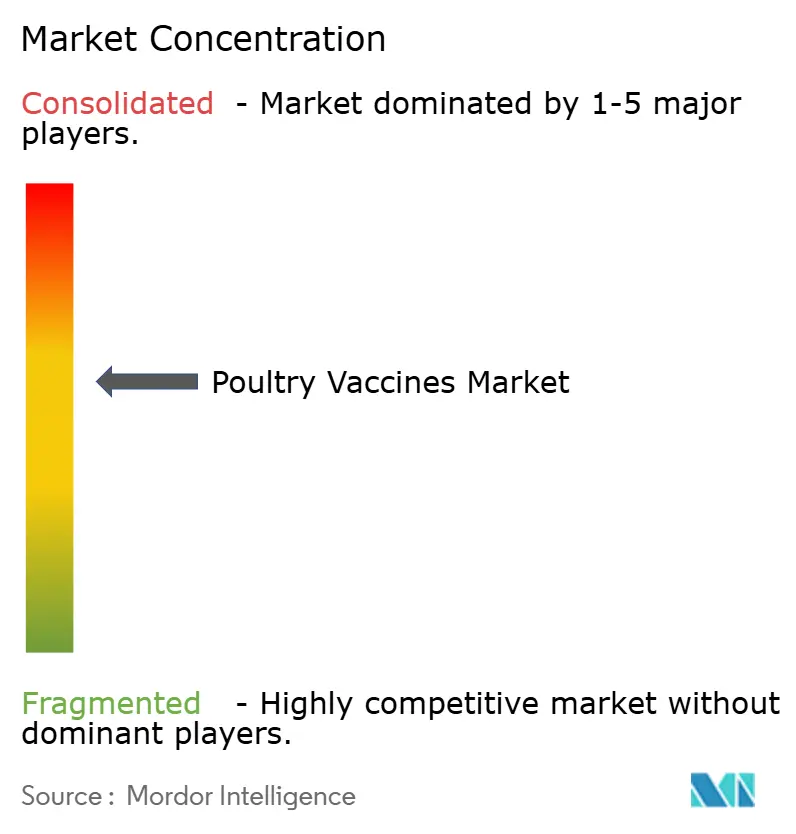
| Market Concentration | Medium |
Major Players *Disclaimer: Major Players sorted in no particular order Image © Mordor Intelligence. Reuse requires attribution under CC BY 4.0. | |
Poultry Vaccines Market Analysis by Mordor Intelligence
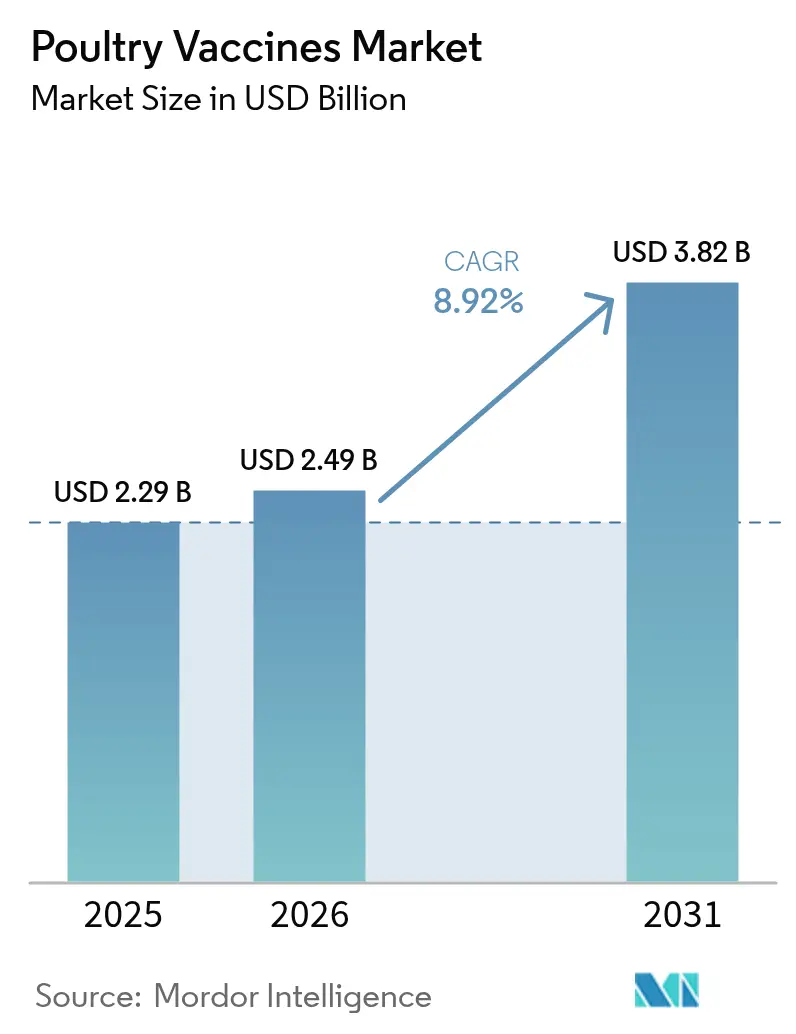
The Poultry Vaccines Market size is expected to grow from USD 2.29 billion in 2025 to USD 2.49 billion in 2026 and is forecast to reach USD 3.82 billion by 2031 at 8.92% CAGR over 2026-2031.
Growth rests on three pillars: tightening curbs on prophylactic antibiotics, rapid uptake of recombinant herpesvirus of turkey (HVT) constructs that bundle antigens into a single in-ovo shot, and the steady march of vertically integrated production models across Asia-Pacific. Producers are also shifting toward thermostable and lyophilized formulations that travel well in weak grid settings, while digitized ordering platforms shorten lead times and document cold-chain integrity. On the demand side, the persistent spread of H5N1 clade 2.3.4.4b and emerging infectious bronchitis variants keep vaccine pipelines full and margins resilient in a high-volume, price-sensitive business. As counterfeit doses surface in parts of Africa and Southeast Asia, regulators are rolling out serialization and QR-code verification, opening new service niches around traceability.
Key Report Takeaways
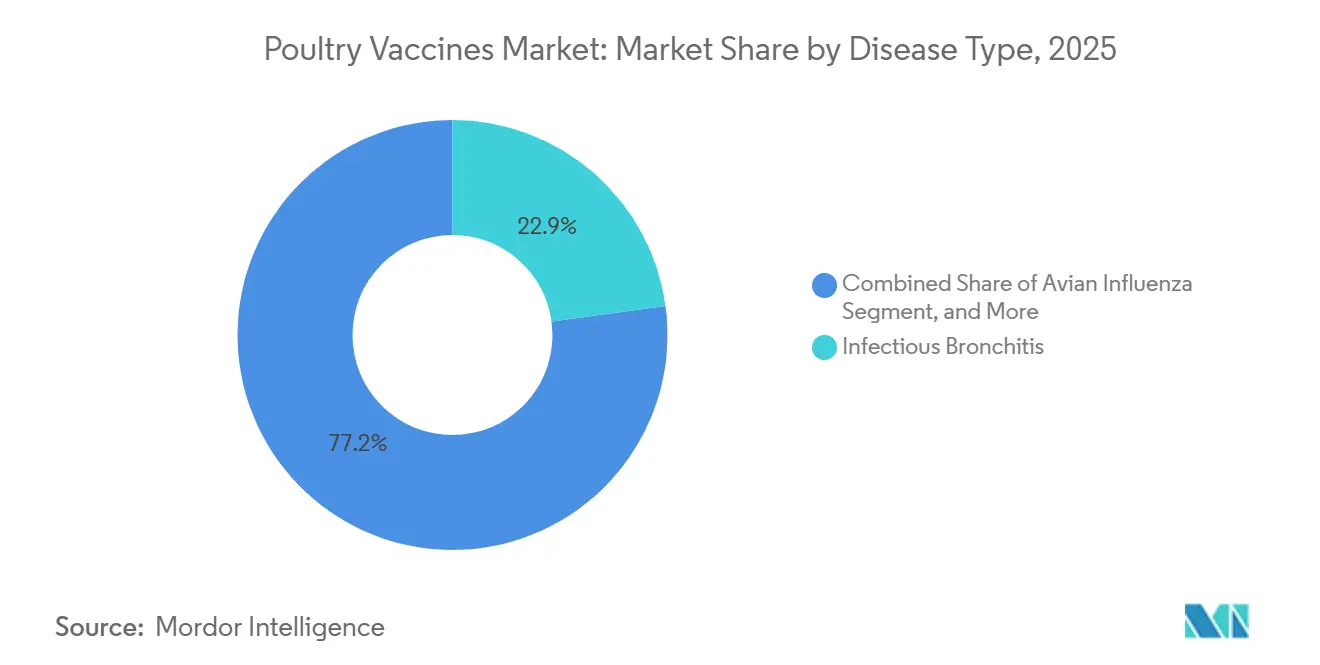
- By disease, infectious bronchitis led with 22.85% of poultry vaccine market share in 2025, while avian influenza vaccines are projected to grow at a 9.00% CAGR through 2031.
- By technology, live attenuated products held 38.40% share in 2025; recombinant and vector platforms are advancing at a 9.25% CAGR to 2031.
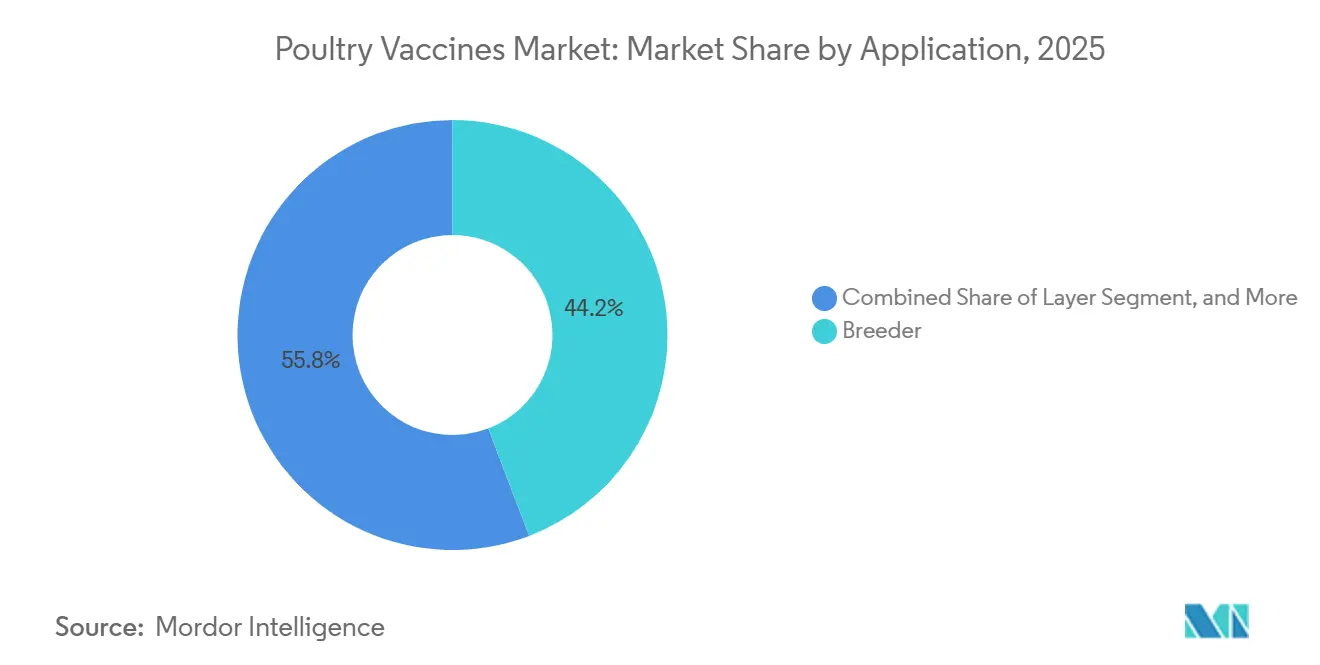
- By application, breeder-flock immunization accounted for 44.20% of 2025 revenue, whereas layer-flock programs are forecast to expand at an 8.99% CAGR over 2026-2031.
- By dosage form, liquid formulations commanded 55.46% share in 2025, yet powder and dust vaccines are expected to post a 10.78% CAGR to 2031.
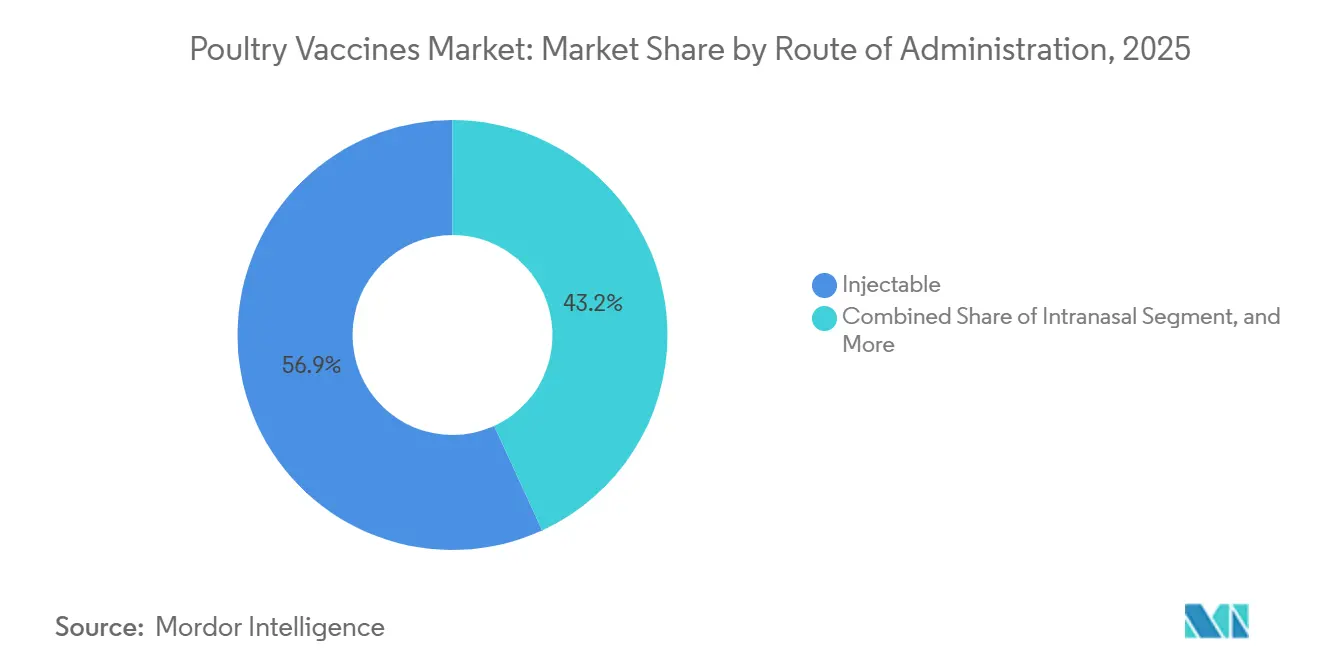
- By route of administration, injectable delivery captured 56.85% share in 2025, but intranasal administration via hatchery spray cabinets is set to climb at a 10.95% CAGR.
- By end user, poultry farms generated 67.60% of 2025 sales; veterinary clinics and hospitals are on track for a 10.22% CAGR as advisory services gain traction.
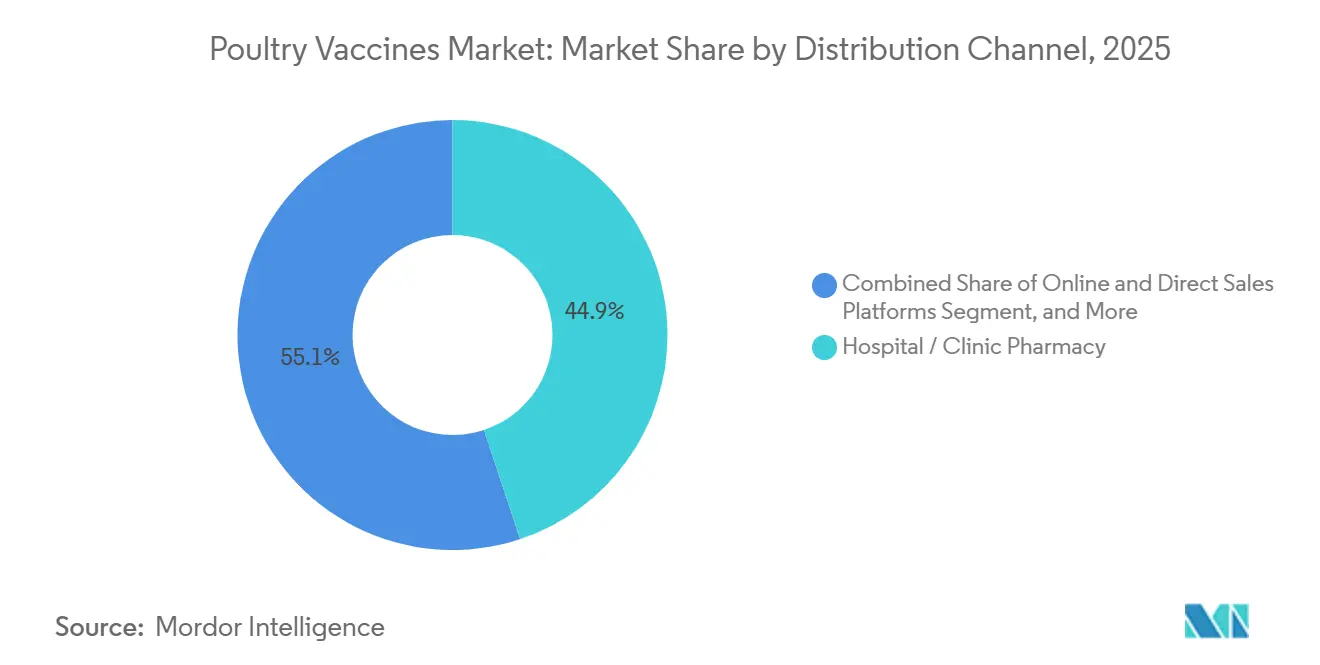
- By distribution channel, hospital pharmacies controlled 44.90% of 2025 turnover, while online and direct sales platforms are rising at an 11.90% CAGR on the back of e-procurement.
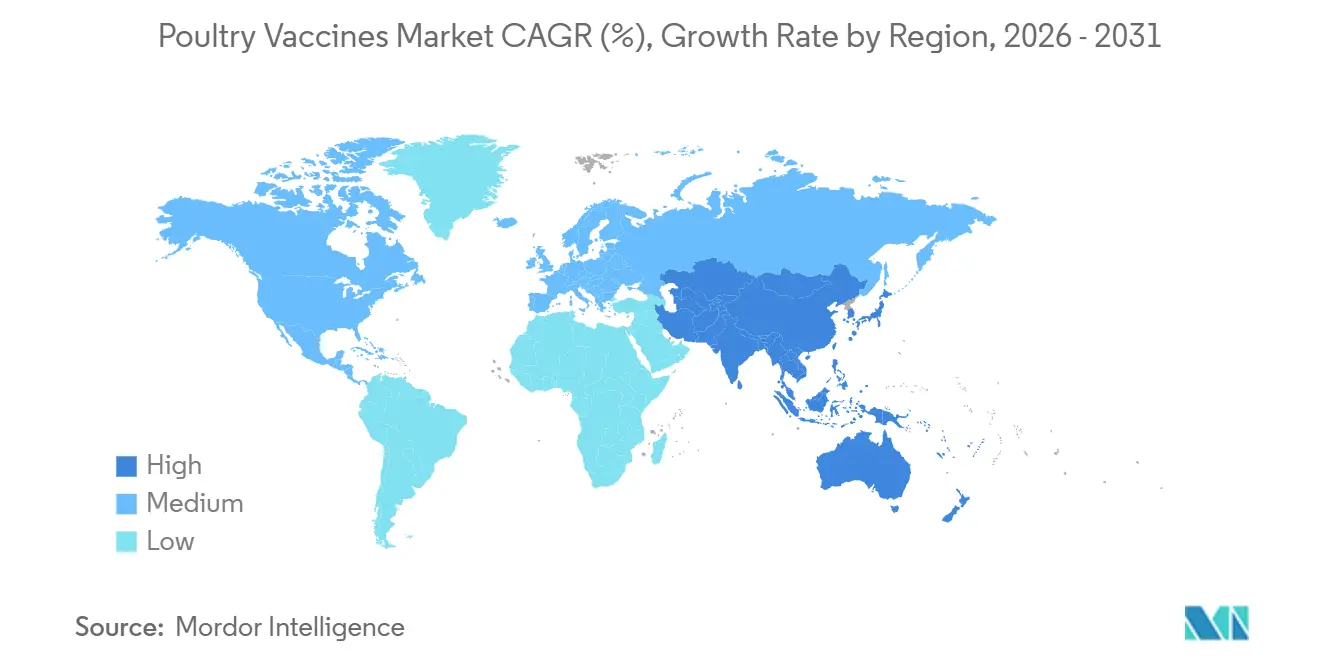
- North America held 33.50% Asia-Pacific is on an 9.48% CAGR trajectory through 2031, driven by intensifying broiler integration in ASEAN and China’s continuing shift toward preventive AI vaccination.
Note: Market size and forecast figures in this report are generated using Mordor Intelligence’s proprietary estimation framework, updated with the latest available data and insights as of 2026.
Global Poultry Vaccines Market Trends and Insights
Drivers Impact Analysis*
| DRIVER | (~) % IMPACT ON CAGR FORECAST | GEOGRAPHIC RELEVANCE | IMPACT TIMELINE |
|---|---|---|---|
| Increasing incidences of poultry & zoonotic diseases | +1.8% | Global, acute in Asia-Pacific & Sub-Saharan Africa | Short term (≤ 2 years) |
| Regulatory push to replace antibiotics with vaccination | +2.1% | North America, EU, spillover to Latin America | Medium term (2-4 years) |
| Rapid expansion of vertically integrated broiler operations in Asian | +1.5% | Thailand, Indonesia, Vietnam, Philippines | Medium term (2-4 years) |
| Improvements in vectored & combination vaccinations | +1.3% | North America & Western Europe R&D hubs | Long term (≥ 4 years) |
| Digital procurement platforms shrinking stock-outs | +0.9% | Asia-Pacific, Middle East, Latin America | Short term (≤ 2 years) |
| GCC food-security funds accelerating breeder-flock immunization | +0.7% | Saudi Arabia, UAE, Qatar, Kuwait | Medium term (2-4 years) |
| Source: Mordor Intelligence | |||


Increasing Incidences of Poultry & Zoonotic Diseases
In 2024-2025, H5N1 outbreaks led to record losses in 47 countries, prompting the United States to cull over 80 million birds and Mexico, along with parts of Europe, to initiate emergency vaccination drives.[1]U.S. Food and Drug Administration, “Center for Veterinary Medicine: Antimicrobial Resistance in Veterinary Settings,” FDA, www.fda.gov Endemic Newcastle disease is causing 30%-50% mortality in backyard flocks in Indonesia, Nigeria, and Bangladesh, driving up the demand for thermostable drinking-water vaccines that circumvent cold-chain issues. Following human H5N1 cases in Cambodia and Vietnam, the World Health Organization emphasized public health measures, advocating for ring vaccinations of flocks within a 10 km radius of confirmed cases. As Marek’s disease evolves with increased virulence, producers are increasingly turning to bivalent HVT-based products. Additionally, coccidiosis continues to result in approximately USD 3 billion annually in performance losses, solidifying the role of live oocyst vaccines as a primary control method in antibiotic-free programs.
Regulatory Push to Replace Antibiotics with Vaccination
Since January 2022, the European Union has enforced a full ban on prophylactic antibiotics. This move has led to an increase in vaccine courses for clostridial and necrotic enteritis, with projections extending through 2025. In the United States, FDA Guidance 263 has not only curtailed the use of feed-grade antimicrobials but has also catalyzed a broader adoption of multivalent enteric vaccines. Meanwhile, Brazil's policy to cut colistin has driven national integrators to invest in autogenous programs targeting Salmonella and E. coli. In China, the ongoing ban on colistin has led to a 40% surge in domestic orders for inactivated doses of avian-pathogenic E. coli by 2025. This uptick is further bolstered by producers ramping up their capacity. Additionally, adherence to Codex residue limits has become a crucial requirement for exporters. This has pushed countries like Thailand, Argentina, and South Africa to intensify their focus on preventive immunization.
Rapid Expansion of Vertically Integrated Broiler Operations in ASEAN
In 2025, Thailand increased its broiler output by 12%, driven by the deployment of new hatcheries equipped with automated in-ovo units. These units administer vaccines for Marek’s, infectious bursal disease, and Newcastle disease in a single pass. Meanwhile, Indonesia attracted USD 800 million in foreign direct investment (FDI) for 2024-2025. Japanese and Korean investors have mandated hatchery immunization specifically for export lines. In Vietnam, authorities approved the establishment of eight mega-complexes in 2025. Each complex is required to have inactivated avian influenza coverage for its parent stock. The Philippines is supporting smallholder upgrade loans that include mandatory vaccinations against Newcastle disease and infectious bursal disease. Additionally, Malaysia's halal regulations have expedited the adoption of plant-based media for vaccine production.
Improvements in Vectored & Combination Vaccinations
Recombinant HVT-based multivalent platforms provide durable immunity while bypassing maternal antibody interference, a property that has prompted several producers to redesign hatchery workflow around single-shot schedules. The unspoken benefit is inventory simplification; integrators report double-digit reductions in on-farm SKU counts, indirectly improving biosecurity by reducing handling errors. Peer-reviewed trials confirm that temperature-sensitive recombinant M41-R vaccines maintain tracheal ciliary activity post challenge.[2] United States Department of Agriculture, “Highly Pathogenic Avian Influenza 2025 Response Plan,” USDA, www.usda.gov Companies are leveraging various virus vectors, such as fowl poxvirus, fowl adenovirus, Marek's disease virus, and Newcastle disease virus, for vaccine development, each withdisease challenges and reduced labor by 25% by consolidating three live-virus rounds into a single round unique benefits for targeted applications. This technological evolution is bolstering the competitive edge of firms with robust R&D in recombinant technologies, while it risks unsettling the market standing of those adhering strictly to traditional vaccine methods. Boehringer Ingelheim's Vaxxitek HVT+IBD+ND demonstrated 95% field efficacy against virulent Newcastle challenges and reduced labor by 25% by consolidating three live-virus rounds into one.
Restraints Impact Analysis*
| RESTRAINT | (~) % IMPACT ON CAGR FORECAST | GEOGRAPHIC RELEVANCE | IMPACT TIMELINE |
|---|---|---|---|
| Counterfeit products eroding producer confidence | -0.8% | Sub-Saharan Africa, South & Southeast Asia | Short term (≤ 2 years) |
| Cold-chain expense & vaccine hesitancy among African smallholders | -0.6% | Sub-Saharan Africa, pockets in South Asia | Medium term (2-4 years) |
| Emergence of variant IBV serotypes shortening product life-cycles | -0.5% | China, Middle East, Latin America | Long term (≥ 4 years) |
| Heightened regulatory scrutiny of viral-vector vaccines in China | -0.4% | China, potential ripple in Asia-Pacific | Medium term (2-4 years) |
| Source: Mordor Intelligence | |||
Counterfeit Products Eroding Producer Confidence
In 2024, the National Agency for Food and Drug Administration and Control (NAFDAC) aggressively targeted and destroyed unauthorized veterinary products, including counterfeit anthrax vaccines made of just water or sugar. These products, often found in "price-driven grey markets," were seized in states such as Kaduna, Nasarawa, and Oyo. NAFDAC emphasized the unregistered, frequently smuggled nature of these products, noting the challenges posed by porous borders. In 2024, they also confiscated significant quantities of "substandard and falsified" medicines. Meanwhile, the Kenya Veterinary Medicines Directorate (VMD) enforces stringent regulations on veterinary vaccines, such as Avian Influenza and East Coast Fever (ECF). They mandate a registration process for importers to ensure safety standards are upheld. The 15% failure rate in 2025 aligns with ongoing efforts to balance regulatory oversight between imported and locally produced vaccines, including those from the Kenya Veterinary Vaccines Production Institute (KEVEVAPI). This registry initiative is a key component of their strategic plan spanning from 2023 to 2027.
Cold-Chain Expense & Vaccine Hesitancy Among African Smallholders
In Sub-Saharan Africa, where electricity costs exceed OECD norms, maintaining doses between 2°C and 8°C adds an expense of USD 0.15-0.25 per shot. Despite receiving a 50% subsidy, surveys conducted in Uganda, Tanzania, and Mozambique revealed that only 22% of flocks were vaccinated against Newcastle disease. Farmers, having previously encountered issues with ineffective or expired vaccines, now prioritize spending their limited funds on feed or housing. While solar-powered refrigerators offer a potential solution, their high cost is a barrier. On the other hand, products derived from the thermostable I-2 strain can withstand ambient heat for up to seven days. However, they are still pending clearance due to the need for local stability dossiers.
*Our forecasts treat driver/restraint impacts as directional, not additive. The impact forecasts reflect baseline growth, mix effects, and variable interactions.
Segment Analysis
By Disease Type: Infectious Bronchitis Leads, Avian Influenza Surges
In 2025, vaccines for infectious bronchitis captured 22.85% of the poultry vaccine market, underscoring their importance in broiler, layer, and breeder operations. These vaccines address respiratory issues and shell-quality concerns that can impact profit margins. Meanwhile, avian influenza vaccines are projected to grow at a 9.00% compound annual growth rate (CAGR) through 2031. This surge is driven by culling costs and export bans, prompting governments in Mexico, Egypt, and Vietnam to enforce flock coverage mandates.
Newcastle disease solutions remain essential in emerging markets. Thermostable I-2 formulations facilitate mass delivery through drinking water. For Marek’s disease, day-old or in-ovo herpesvirus of turkey (HVT)-SB1 blends are employed to counteract increasing virulence. Coccidiosis vaccines are gaining traction in drug-free programs that have eliminated ionophore feed additives.


By Technology: Live Attenuated Dominates, Recombinant Platforms Accelerate
In 2025, live attenuated products held a 38.40% share of the poultry vaccine market, valued for their ability to induce strong cellular immunity and their cost-effective spray-cabinet dosing method. Recombinant vectors, particularly HVT carriers that avoid maternal-antibody interference, are on a growth trajectory with a 9.25% CAGR.
Despite their higher labor and dosage costs, inactivated vaccines play a crucial role for breeder and layer boosters, ensuring maternal antibodies are passed to chicks. Meanwhile, DNA and subunit vaccines are advancing through late-stage trials, valued for their rapid two-month antigen-update cycles that keep pace with swiftly mutating strains like H5 or GI-23.
By Application: Breeder Flocks Command Share, Layers Drive Growth
In 2025, breeder programs accounted for 44.20% of the revenue, utilizing maternal-antibody transfer to protect chicks in their crucial first three weeks. Layer flocks are anticipated to experience an 8.99% CAGR through 2031. This growth is attributed to cage-free systems extending their productive lifespan beyond 100 weeks, necessitating additional boosters.
Broiler programs are increasingly reliant on automated in-ovo injections, capable of processing up to 80,000 eggs hourly. This efficiency not only reduces labor but also enhances cost competitiveness within the 35-day cycle.
By Dosage Form: Liquid Formulations Lead, Powder Gains Traction
In 2025, liquid vaccines accounted for 55.46% of the market. Their low viscosity makes them ideal for in-ovo needles and subcutaneous applications. Powder and dust formats are projected to grow at a 10.78% CAGR. Notably, lyophilized doses can remain effective for 48 hours at ambient temperatures, a significant advantage in areas with unreliable power supply.
On-farm reconstitution of freeze-dried bricks simplifies hatchery spray routines. Additionally, while backpack aerosol powders are designed for backyard birds, there's variability in field coverage.
By Route of Administration: Injectable Dominates, Intranasal Surges
Injectables commanded a 56.85% market share in 2025, playing a crucial role for breeders and layers that require precise dosing. Intranasal sprays administered at day-old are witnessing a 10.95% CAGR. These sprays not only prevent puncture injuries but also reduce labor by 40% in hatcheries.
Automated in-ovo systems are adept at inserting antigens on embryonic day 18, seamlessly integrating transfer, candling, and dosing processes. While drinking-water and spray-house methods effectively cover broilers, they come with the risk of uneven titer gaps due to inconsistent drinking or aerosol dispersion.
By End User: Poultry Farms Dominate, Veterinary Clinics Expand
Poultry farms, encompassing integrators, contract growers, and independents, accounted for 67.60% of the 2025 market. Meanwhile, veterinary clinics and hospitals are experiencing a robust growth rate of 10.22% CAGR. This surge is largely driven by smallholders in Africa and South Asia, who are increasingly seeking comprehensive advisory visits. These visits often bundle treatments for Newcastle, infectious bursal disease, and fowl pox. While research institutes may contribute modestly to revenue, their influence is significant, shaping regulatory approvals through efficacy trials and post-market surveillance.
By Distribution Channel: Hospital Pharmacies Lead, Online Platforms Surge
In 2025, hospital pharmacies accounted for 44.90% of the market turnover. Their value lies in batch tracking and oversight by pharmacists. Online platforms are witnessing a meteoric rise, boasting an 11.90% CAGR. This growth is fueled by integrators who consolidate orders, upload Internet of Things (IoT) temperature logs, and effectively reduce stock-outs by as much as 30%. While farm-supply stores remain relevant, especially in areas with limited internet access, they are gradually losing ground. E-commerce platforms are offering broader selections and transparent pricing, making them increasingly attractive to consumers.
Geography Analysis
North America retains a 33.50% market share in 2025. USDA indemnity payouts totaling USD 1.1 billion highlight the fiscal magnitude of HPAI. Insurers have begun to model policy premiums on whether a farm participates in USDA-approved vaccination programs, effectively turning vaccines into quasi-financial instruments that influence coverage costs.
Asia is the fastest-growing region, with a 9.48% CAGR outlook for 2026-2031. China’s historic 73% avian influenza vaccination coverage has prompted local labs to develop accelerated systems for monitoring viral evolution. Those surveillance assets double as competitive intelligence, allowing regional manufacturers to iterate on vaccines ahead of global peers.
Europe, Latin America, and the Middle East each display distinct triggers for vaccine uptake, from welfare regulations to export-market access requirements. Brazil’s export-oriented producers increasingly view vaccination status as a tool to mitigate tariffs. In contrast, GCC buyers fold vaccine clauses directly into long-term feed import contracts to ensure continuity of local protein supplies.

Regulatory Landscape
Global regulation of poultry vaccines is anchored in veterinary-biologics and veterinary-medicinal frameworks that govern product quality and use claims, and it increasingly intersects with trade rules for disease-controlled poultry. In the United States, veterinary biologics oversight under the Virus-Serum-Toxin Act is administered by the USDA (including the Center for Veterinary Biologics). In the European Union, veterinary medicinal products are regulated under Regulation (EU) 2019/6, with EMA guidance shaping dossier expectations for complex products such as multi-strain inactivated vaccines used in avian influenza programs.
At the international level, WOAH standards in the Terrestrial Animal Health Code and the Terrestrial Manual underpin vaccination and surveillance requirements referenced in SPS-aligned trade discussions. Recent standard-setting activity is also adding clarity for developers and regulators managing rapidly changing avian-disease risk. In February 2026, WOAH reported that an ad hoc group met to develop a harmonized Target Product Profile (TPP) template for veterinary vaccines, aligning expectations among regulators, researchers, and end-users for attributes beyond minimum safety and quality. In May 2025, WOAH adopted amendments to the Terrestrial Manual, including new chapters on transport of biological materials and standards for high-throughput sequencing, which reinforce the compliance stack supporting vaccine strain updates, batch movement, and monitoring of field-virus evolution.
Competitive Landscape
Major players like Zoetis, Boehringer Ingelheim, Ceva, Merck Animal Health, and Elanco dominate the poultry vaccine market, collectively accounting for about 55% of global revenues. Meanwhile, regional specialists such as Hester Biosciences, Indian Immunologicals, and Ringpu Biologicals carve out niches in price-sensitive markets, leveraging autogenous batches and on-ground field technicians. The competitive landscape is heated, particularly around patent-protected herpesvirus of turkey (HVT) vectors and the bundled in-ovo delivery hardware, both of which are crucial for hatchery operations. Notable strategic maneuvers include Zoetis securing a conditional United States license for its H5N2 killed-virus vaccine by 2025, Elanco teaming up with Medgene on a highly pathogenic avian influenza (HPAI) platform, and Ceva entering a supply agreement with breeder farms in the United Arab Emirates (UAE).
Untapped opportunities abound in developing thermostable vaccine lines for off-grid markets, creating rapid-turn deoxyribonucleic acid (DNA) vaccines tailored to emerging serotypes, and implementing blockchain serialization to combat counterfeiting. Additionally, producers are exploring plant-based media that adhere to halal standards, aiming to strengthen ties with Middle Eastern importers.
Poultry Vaccines Industry Leaders
Zoetis Inc.
Ceva Santé Animale
Boehringer Ingelheim International GmbH
Merck & Co., Inc. (Merck Animal Health / MSD)
Elanco Animal Health Inc.
- *Disclaimer: Major Players sorted in no particular order

Market Opportunities and Future Outlook
Programmatic shifts toward vaccination-based control and tighter regulatory pathways are creating whitespace for differentiated poultry vaccine portfolios, particularly in avian influenza (AI) and hatchery-delivered multivalent regimens. Governments and intergovernmental bodies are codifying rules that connect vaccination to surveillance and trade continuity, which is supporting demand for vaccines paired with monitoring and documentation capabilities. A visible example is India, where the Department of Animal Husbandry and Dairying established a structured regulatory pathway for the import and use of HPAI vaccines in June 2026, creating a defined entry route for manufacturers that can meet local data and field-strain requirements.
Product and capacity milestones in 2025-2026 also point to near-term commercialization and supply scaling opportunities around recombinant vectors and high-volume manufacturing. In July 2026, Zoetis received European Commission marketing authorization for Poulvac Procerta HVT-ND, a recombinant vector vaccine for Newcastle disease and Marek's disease, expanding the set of licensed options for integrated programs that prioritize fewer hatchery touches and simplified schedules. On the supply side, Huvepharma announced in April 2026 that its Maxton, North Carolina facility expansion increases potential poultry vaccine production capacity to six billion doses annually, supporting tenders and large integrator demand where assured volume, batch release throughput, and consistent cold-chain performance are procurement decision drivers.
Recent Industry Developments
- July 2026: Zoetis received European Commission marketing authorization for Poulvac Procerta HVT-ND, a recombinant vector vaccine for chickens targeting Newcastle disease and Marek's disease. The approval adds a new EU-licensed option aligned with hatchery-focused immunization strategies that favor fewer handling steps and durable protection under high-throughput production.
- February 2025: Zoetis received a conditional license from the USDA Center for Veterinary Biologics for an H5N2 subtype, killed-virus avian influenza vaccine for chickens. This action opened a regulated pathway for commercial HPAI immunization in the United States and supported broader procurement and preparedness planning tied to outbreak response.
- August 2024: Merck Animal Health received USDA approval for the manufacturing and sale of an experimental autogenous vaccine for avian metapneumovirus type B developed by Cambridge Technologies, with Merck Animal Health acting as exclusive sales agent. The approval expanded access to customized, strain-relevant tools that fit localized respiratory-disease control programs when standard products do not match circulating variants.


Research Methodology Framework and Report Scope
Market Definition and Coverage
This market covers vaccines used to prevent or control infectious diseases in commercial poultry, including products used across hatcheries and farms and sold as finished vaccine doses for birds.
Scope exclusions: we exclude non-vaccine therapeutics (such as antibiotics), feed coccidiostats, diagnostic test kits, and unregistered autogenous mixes.
Segmentation Overview
- By Disease Type
- Infectious Bronchitis
- Avian Influenza
- Newcastle Disease
- Marek's Disease
- Coccidiosis
- Egg Drop Syndrome
- Avian Encephalomyelitis
- Other Diseases
- By Technology
- Live Attenuated Vaccines
- Inactivated (Killed) Vaccines
- Recombinant / Vector Vaccines
- DNA & Sub-unit Vaccines
- Other Technologies
- By Application
- Broiler
- Layer
- Breeder
- By Dosage Form
- Liquid
- Freeze-Dried (Lyophilised)
- Powder & Dust
- By Route of Administration
- Injectable
- Intranasal
- In-Ovo
- Spray & Drinking-Water
- By End User
- Poultry Farms
- Veterinary Hospitals & Clinics
- Research Institutes
- By Distribution Channel
- Hospital / Clinic Pharmacy
- Farm Supply Stores & Cooperatives
- Online & Direct Sales Platforms
- By Geography
- North America
- United States
- Canada
- Mexico
- Europe
- Germany
- United Kingdom
- France
- Italy
- Spain
- Rest of Europe
- Asia-Pacific
- China
- India
- Japan
- Australia
- South Korea
- Rest of Asia-Pacific
- Middle East and Africa
- GCC
- South Africa
- Rest of Middle East and Africa
- South America
- Brazil
- Argentina
- Rest of South America
- North America
Data Sources, Market Sizing, and Validation
Desk Research
Desk work starts by building the poultry health demand context around disease pressure and then converting it into a vaccine spend view that can be checked. Public datasets and documents are used to map flock sizes, production cycles, and outbreak patterns before any forecasting assumptions are set.
Common inputs include sources such as FAOSTAT for poultry population and output, WOAH notifications for animal disease events, and USDA and EU statistical releases for production and trade signals. Peer reviewed veterinary journals are used to confirm vaccination schedules and disease prevalence. We also review regulator and ministry portals for vaccination policy changes, along with company annual reports, investor decks, and reputable press to track product launches and capacity changes. For hard-to-find financial and patent context, we rely on paid subscriptions for company financials and intelligence, news and financials, and patent databases. These sources are not exhaustive, and additional public documents were used during the work for data collection, validation, and clarification.
Primary Interviews and Surveys
Primary checks were done through expert interviews and structured questionnaires with vaccine manufacturers, distributors, poultry integrators, veterinarians, and hatchery level decision makers. For this global market, we covered major poultry producing regions so assumptions on vaccination intensity, product mix, and pricing movement could be confirmed and adjusted where desk inputs were thin.
Distribution of primary research fieldwork respondents
| Company type | Respondent position | Region |
|---|---|---|
| Top tier: 37% | CXOs: 12% | APAC: 45% |
| Mid tier: 46% | Functional/Unit leaders: 33% | EMEA: 37% |
| Smaller Players: 17% | Managers: 55% | Americas: 18% |
Market-Sizing & Forecasting
Our sizing model uses a top-down approach where poultry population and production data help reconstruct the addressable vaccination pool by bird type and typical immunization programs, and then it is translated into market value using dose intensity and average price bands. To keep totals realistic, the output is cross-checked with selective bottom-up approximations, including sampled dose volumes through key channels and a limited set of supplier roll-ups shared during interviews.
Key inputs used in the model include poultry inventory and slaughter volumes, hatchery output and placement cycles, reported disease incidence and outbreak frequency, vaccination route mix (in-ovo, spray, drinking water, injectable), and preference shifts across live, inactivated, and recombinant technologies. Price progression is handled through a mix of inflation, product mix shifts, and interview-led adjustment factors for multi-dose programs, since price does not move uniformly across diseases and formats. For forecasting, scenario analysis is used to reflect different outbreak and policy paths, with expert consensus applied to variables like vaccination coverage expansion, biosecurity investment, and regulatory actions. Where direct data is missing for smaller countries, the model fills gaps using proxy indicators like poultry density, production growth, and regional vaccination intensity benchmarks, and then it is re-checked during validation.
Data Validation & Update Cycle
Validation is done by triangulating model output against independent signals, and then reviewing any large variances before final sign-off. Checks include comparing implied vaccine spend per bird against expected program norms, testing year over year jumps against outbreak timelines, and confirming that regional totals align with production and trade direction.
If anomalies show up, the assumptions are reworked and respondents are re-contacted to clarify the driver, especially when a new vaccination policy, disease wave, or supply constraint is involved. A multi-step internal review is followed so calculations, units, and conversions are consistent across sections. Reports are refreshed annually, and interim updates are made when material events occur, followed by a final pre-delivery pass so clients receive the most current view.
Mordor Intelligence's Poultry Vaccines Market Estimate Compared With Other Published Estimates
Published market values for poultry vaccines often do not match because each study selects its own boundaries, time base, and pricing logic, then updates those inputs at different times. Differences also show up when one publisher counts adjacent categories that feel close to vaccines, or when the demand pool is built using broad animal health spending rather than bird and dose level signals.
Vaccination schedule norms, route of administration mix, and disease outbreak reporting are used to keep Mordor Intelligence's estimate tied to a definable dose demand pool instead of a wider poultry health bundle. Another common gap comes from how prices are moved forward, since some sources apply a single inflation factor even though live, inactivated, and recombinant products do not shift evenly. Currency timing and base year selection matter too, because a 2024 base can look lower than a 2026 base in a market that is expanding and also seeing product mix upgrades.
Benchmark comparison
| Source | Market Size | Gaps in Research Methodology |
|---|---|---|
| Mordor Intelligence | USD 2.49 B (2026) | |
| Global Consultancy A | USD 2.40 B (2024) | Uses an earlier base year and a shorter forecast window, and it does not clearly separate dose intensity changes by route of administration, which can understate the value impact of shifting program complexity. |
| Industry Publisher B | USD 2.41 B (2024) | Starts from a 2024 base and applies a broad growth rate through 2032, with limited transparency on how disease-specific vaccination coverage and product mix are updated across regions. |
The spread in the table is mainly explained by base-year timing and how tightly the demand pool is linked to poultry birds, vaccine dosing, and route mix. When the scope is kept focused on registered vaccine products and the inputs are checked against real vaccination practices, the resulting number is easier to trace, challenge, and reuse for planning.


Key Questions Answered in the Report
How big is the poultry vaccines market?
The poultry vaccines market size is expected to reach USD 2.49 billion in 2026 and grow at a CAGR of 8.92% to reach USD 3.82 billion by 2031.
What is a common vaccine for poultry?
One common poultry vaccine is the Newcastle Disease (ND) vaccine, which is extensively utilized to safeguard against one of the most serious and economically damaging viral diseases affecting birds.
What is f1 vaccine in poultry?
The F1 vaccine for poultry is generally linked to the Newcastle Disease Virus (NDV) vaccine. This live attenuated vaccine is derived from the F strain of the Newcastle Disease virus and is commonly utilized in poultry to safeguard against Newcastle Disease, a highly contagious viral infection that impacts birds' respiratory, digestive, and nervous systems.
What are the vector vaccines for poultry?
Vector vaccines for poultry involve a harmless virus or bacterium, known as the "vector," which is genetically modified to carry genes from a specific pathogen. This allows the immune system to develop a response to the targeted disease.
Do farmers vaccinate their livestock?
Yes, farmers routinely vaccinate their livestock to safeguard against infectious diseases that could affect their health, productivity, and economic viability.
Page last updated on:


 Your data is secure and never sold or shared.


