
Market Overview
| Study Period | 2021 - 2031 |
|---|---|
| Market Size (2026) | USD 59.67 Billion |
| Market Size (2031) | USD 80.25 Billion |
| Growth Rate (2026 - 2031) | 6.12 % |
| Fastest Growing Market | Asia-Pacific |
| Largest Market | North America |
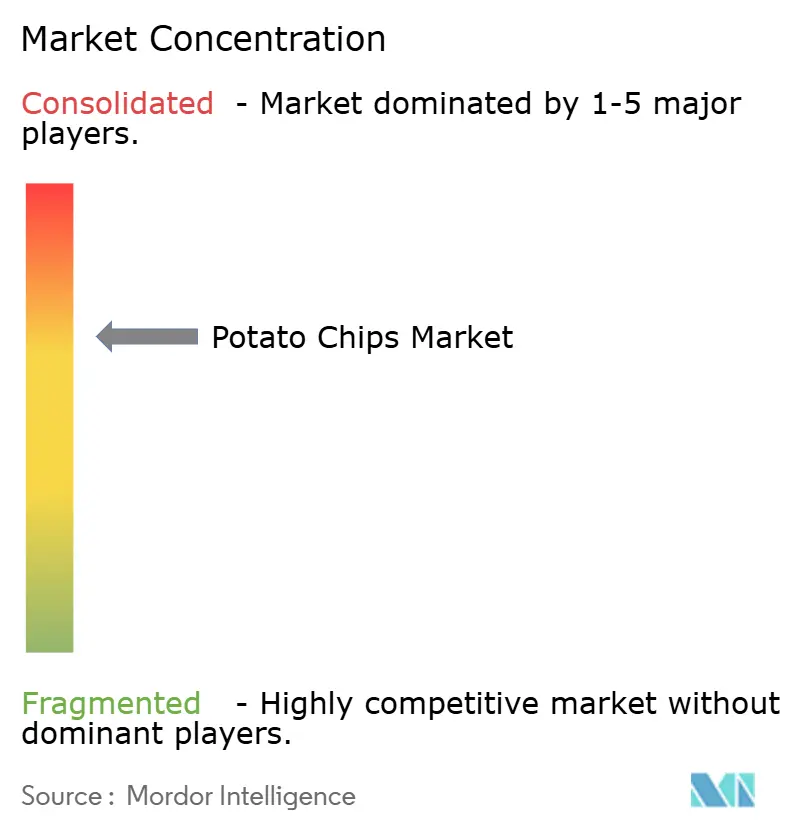
| Market Concentration | High |
Major Players *Disclaimer: Major Players sorted in no particular order Image © Mordor Intelligence. Reuse requires attribution under CC BY 4.0. | |
Potato Chips Market Analysis by Mordor Intelligence
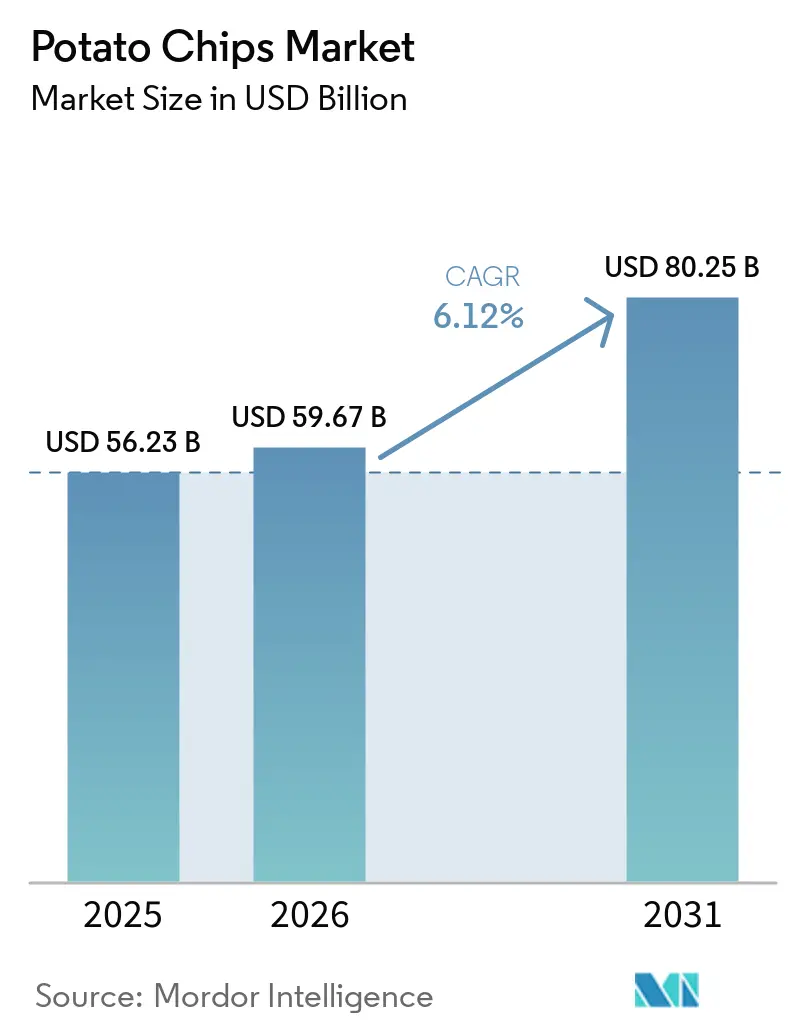
The potato chips market size is expected to grow from USD 56.23 billion in 2025 to USD 59.67 billion in 2026 and is forecast to reach USD 80.25 billion by 2031 at 6.12% CAGR over 2026-2031. The market demonstrates stability despite inflation and increasing consumer demand for premium and healthier snack alternatives. The growth is primarily driven by rising disposable incomes, urbanization, changing snacking habits, and the convenience of ready-to-eat foods. Additionally, manufacturers' focus on product innovation, including new flavors and healthier variants, along with expanding distribution networks, particularly in emerging markets, supports market expansion. The rapid growth of e-commerce platforms and modern retail formats further accelerates market penetration. Market growth is also influenced by increasing snacking frequency among millennials and Gen Z consumers, product premiumization, and the introduction of regional flavors to cater to local taste preferences.
Key Report Takeaways
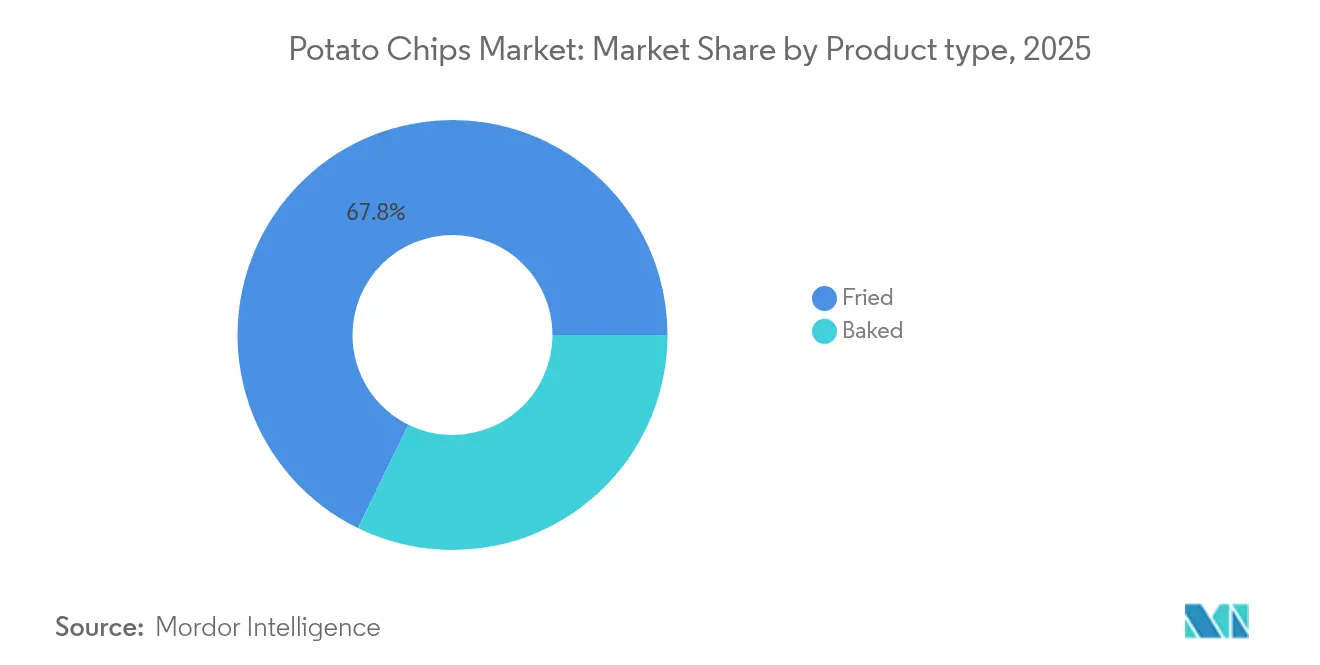
- By product type, fried chips led with 67.75% of the potato chips market share in 2025, while baked chips are projected to expand at a 6.98% CAGR through 2031.
- By flavor, the flavored segment captured 64.10% revenue share of the potato chips market size in 2025, and is growing at 6.58% CAGR through 2031.
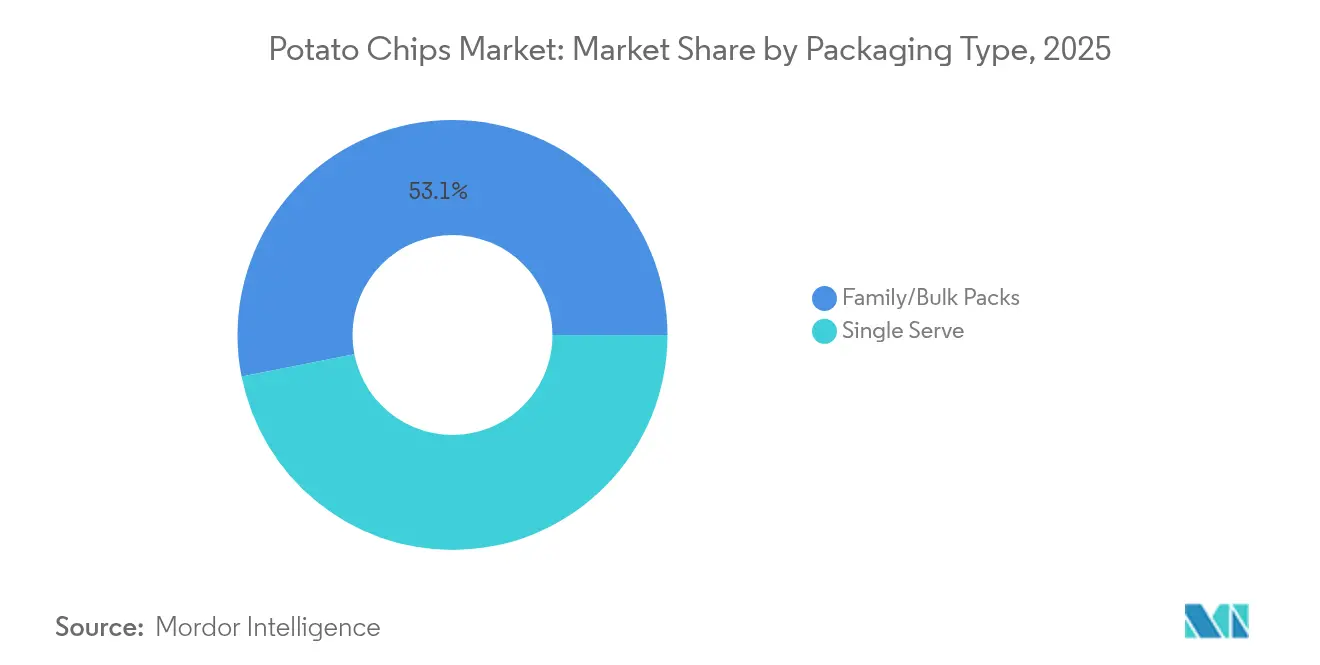
- By packaging type, family/bulk formats accounted for 53.10% of the potato chips market in 2025, and single-serve packs recorded the fastest 6.35% CAGR through 2031.
- By distribution channel, supermarkets/hypermarkets held 42.85% share of the potato chips market size in 2025, whereas online retail stores deliver a 7.05% CAGR through 2031.
- By geography, North America controlled 35.20% of the potato chips market share in 2025, and Asia-Pacific registers the highest 6.85% CAGR over the forecast period.
Note: Market size and forecast figures in this report are generated using Mordor Intelligence’s proprietary estimation framework, updated with the latest available data and insights as of 2026.
Market Trends and Insights
Drivers Impact Analysis of Potato Chips Market*
| Driver | (~) % Impact on CAGR Forecast | Geographic Relevance | Impact Timeline |
|---|---|---|---|
| Increasing consumer demand for convenient snacks | +1.8% | Global, with strongest impact in Asia-Pacific and North America | Medium term (2-4 years) |
| Innovation in flavors and packaging | +1.2% | Global, particularly North America and Europe | Short term (≤ 2 years) |
| Westernization of food consumption patterns | +1.0% | Asia-Pacific core, spill-over to Middle East and Africa | Long term (≥ 4 years) |
| Aggressive marketing and branding by key players | +0.8% | Global | Short term (≤ 2 years) |
| Introduction of healthier product variants | +0.7% | North America and Europe, expanding to Asia-Pacific | Medium term (2-4 years) |
| Cultural significance and popularity of potato chips | +0.5% | Global | Long term (≥ 4 years) |
| Source: Mordor Intelligence | |||
Increasing Consumer Demand for Convenient Snacks
The global potato chips market is experiencing growth primarily due to rising consumer demand for convenient and ready-to-eat snacks. The acceleration of urbanization and increasingly fast-paced lifestyles, especially among working professionals, students, and younger demographics, has transformed snacking habits. Potato chips meet these evolving consumer needs by being portable, shelf-stable, and available across various price points. The product requires no preparation while offering familiar tastes and diverse flavors. According to the International Food Information Council (IFIC) in 2024, 60% of United States respondents snack once or twice daily, while 14% snack three or more times per day [1]. These statistics demonstrate how snacking has evolved from an occasional activity to an integral part of daily dietary patterns. This trend extends globally, where consumers actively choose convenient snacks instead of traditional meals.
Innovation in Flavors and Packaging
Flavor innovation has become the key differentiator in the potato-based snacks market, with increased product development activities. The “swicy” flavor combination has gained significant popularity among younger consumers, prompting manufacturers to diversify their product portfolios. Lay's "Do Us A Flavor" contest, offering a USD 1 million prize, exemplifies how consumer participation generates innovative flavor concepts while enhancing brand loyalty. Companies are also focusing on packaging innovations to meet sustainability goals and comply with regulations, as demonstrated by Frito-Lay's commitment to achieve 100% recyclable or compostable packaging by 2025. This combined emphasis on flavor development and sustainable packaging helps companies maintain competitive advantages while meeting consumer demands for new taste experiences and environmental consciousness. The market shows strong demand from younger consumers, particularly millennials, who show a preference for salty snacks, especially potato chips. In Germany, according to IfD Allensbach, 16.49 million people purchased salty snacks in 2024 [2].
Westernization of Food Consumption Patterns
The transformation of potato chip consumption patterns in Asia-Pacific markets demonstrates a significant shift toward Western dietary habits beyond conventional snacking preferences. In China and India, consumers are increasingly incorporating Western-style potato chips into their regular meal patterns and social interactions. This systematic adoption of Western potato chip consumption behaviors presents opportunities for international manufacturers to establish regional production facilities, as evidenced by Calbee's strategic expansion into North American and Chinese markets. The transformation has catalyzed premiumization trends in the potato chip segment, with consumers demonstrating increased willingness to invest in imported or Western-style potato chip variants as indicators of social positioning.
Aggressive Marketing and Branding by Key Players
Major potato chip manufacturers are implementing strategic marketing initiatives to strengthen their market positions and increase consumer engagement. Utz Brands, a significant player in the potato chip segment, demonstrated this trend by increasing its marketing expenditure by 70%, which resulted in 1.3% organic net sales growth to over USD 1.4 billion in 2024. These manufacturers are executing comprehensive marketing approaches through multiple channels, incorporating experiential marketing campaigns, strategic product launches of limited-time potato chip variants, and targeted celebrity collaborations to maximize social media engagement. The expansion of e-commerce platforms has necessitated enhanced digital marketing capabilities, compelling potato chip manufacturers to optimize their online presence while ensuring consistent brand communication across all distribution channels. This integrated marketing approach enables manufacturers to maintain brand visibility, drive consumer awareness, and strengthen market penetration in an increasingly competitive potato chip market.
Restraints Impact Analysis of Potato Chips Market*
| Restraint | (~) % Impact on CAGR Forecast | Geographic Relevance | Impact Timeline |
|---|---|---|---|
| Stringent food safety and labeling regulations | -0.9% | Global, particularly North America and Europe | Short term (≤ 2 years) |
| Fluctuating raw material prices | -1.1% | Global | Medium term (2-4 years) |
| Rising health concerns among consumers | -0.7% | North America and Europe, expanding globally | Long term (≥ 4 years) |
| Environmental impact and packaging waste | -0.5% | Europe and North America primarily | Medium term (2-4 years) |
| Source: Mordor Intelligence | |||
Stringent Food Safety and Labeling Regulations
The regulatory landscape in major markets is becoming more stringent, particularly with the FDA's proposed front-of-package nutrition labeling requirements. These regulations necessitate substantial investments in product reformulation and packaging updates. The Food and Drug Administration (FDA) proposal requires clear labeling of saturated fat, sodium, and added sugars content, which may influence consumer purchasing patterns for traditional chip products. Additionally, the European Union's packaging waste regulations require manufacturers to transition to recyclable materials, despite their higher costs and technical limitations. These regulatory requirements place a heavier burden on smaller manufacturers who have limited resources for compliance measures, which may lead to increased market consolidation. The legal dispute involving Campbell Soup's Kettle Brand and its "air frying" claims demonstrates how regulatory compliance issues can result in legal challenges and increased business risks.
Fluctuating Raw Material Prices
Potato prices in the United States remain elevated according to Rabobank analysis PotatoPro, continuing to affect profit margins. The Federal Trade Commission's grocery supply chain report indicated that pandemic-related disruptions revealed weaknesses in concentrated supply chains, prompting companies to diversify their supplier networks despite higher costs. PepsiCo has established direct relationships with farmers across 2 million acres in North America to stabilize input costs through sustainable farming practices. Companies face additional cost pressures from oil price fluctuations, particularly as they incorporate premium oils such as avocado and coconut for product differentiation. Climate change impacts on agricultural yields further complicate raw material sourcing, necessitating supply chain adaptation strategies that increase operational complexity and costs.
*Our forecasts treat driver/restraint impacts as directional, not additive. The impact forecasts reflect baseline growth, mix effects, and variable interactions.
Potato Chips Market Segment Analysis
By Product Type:
Baked Segment Disrupts Traditional Fried DominanceFried potato chips command a substantial 67.75% share of the global market in 2025, reflecting their enduring popularity among consumers. The segment's success stems from manufacturers delivering the classic crunch and taste that consumers seek while continuously introducing innovative flavors and packaging designs. Kettle Studio has strengthened this trend by launching Air-Fried Chips in April 2025, offering consumers a product with 50% less oil content. Urban consumers particularly drive sales through frequent purchases at convenience stores and vending machines, making fried chips a consistently popular snack choice across different retail channels.
The baked potato chips segment demonstrates remarkable growth potential, advancing at a 6.98% CAGR through 2031. Health-conscious consumers actively choose baked chips as their preferred snacking option, appreciating the reduced fat content and nutritional benefits. Manufacturers respond to this demand by developing diverse product lines that cater to specific regional taste preferences. Pringles exemplifies this market adaptation with its April 2025 introduction of Baked Potato Chips in 7-Layer Dip flavor, combining cheese, onion, and sour cream flavors to create a unique taste profile. This innovation in the baked segment shows how manufacturers successfully balance health considerations with flavor expectations.

By Flavor:
Global Fusion Drives Flavored Segment InnovationFlavored chips maintain a 64.10% market share in 2025 with a consistent 6.58% CAGR, indicating sustained consumer demand for diversified taste offerings beyond conventional plain and salted varieties. The global flavor portfolio of Lay's, incorporating Tzatziki, Masala, and Honey Butter variants, demonstrates the market differentiation potential of international taste profiles. The convergence of sweet and spicy flavor combinations has established substantial market presence among younger consumer segments, contributing to increased revenue generation for PepsiCo's Flamin' Hot product range.
Plain and salted chips retain their market presence as cost-effective options and culinary ingredients, although their growth trajectory remains below that of flavored alternatives. Manufacturing entities are expanding their innovation focus beyond conventional taste development to incorporate functional attributes, implementing protein fortification and nutrient enhancement to establish premium price positioning. Time-limited product releases, exemplified by Utz's lemonade-flavored chips in collaboration with Alex's Lemonade Stand Foundation, illustrate the integration of flavor innovation with strategic marketing objectives and corporate social initiatives.
By Packaging Type:
Single Serve Gains Momentum Through Portion Control TrendsSingle-serve packaging is growing at 6.35% CAGR, while family/bulk packs hold 53.10% market share in 2025. The growth of single-serve options reflects consumer preferences for portion control and convenience. Consumers increasingly seek controlled indulgence options that balance health consciousness with snacking enjoyment. PepsiCo's focus on price-pack architecture and single-serve innovations exemplifies how packaging adapts to meet these consumer needs. The single-serve format also complements e-commerce growth, supporting online ordering and subscription models more effectively than traditional bulk packaging.
Family/bulk packs maintain their market leadership through value-based positioning and household consumption patterns, especially in emerging markets with high price sensitivity. Packaging developments include resealable features, sustainable materials, and smart technologies that preserve freshness and improve user experience. The market continues to see increased competition between packaging formats as manufacturers optimize their offerings across distribution channels and consumption occasions.
By Distribution Channel:
E-commerce Acceleration Reshapes Retail LandscapeOnline retail establishments demonstrate the highest growth trajectory at 7.05% CAGR through 2031, presenting significant competition to the traditional supermarket/hypermarket segment, which maintains 42.85% market share in 2025. The e-commerce distribution channel demonstrates particular effectiveness for single-serve packaging formats and premium products, as digital product discovery and convenience facilitate higher price positioning. PepsiCo's supply chain modernization initiative implements advanced automation and artificial intelligence capabilities to enhance online channel distribution and direct-to-consumer operations.
Supermarkets/hypermarkets retain their market dominance through strategic merchandise positioning and promotional mechanisms, despite intensifying margin pressures from e-commerce competition. Convenience stores and grocery establishments utilize their geographical advantages and immediate product accessibility, while alternative distribution channels, including vending operations and foodservice establishments, adapt to evolving consumer traffic patterns. This transformation in distribution channels facilitates brand optimization of product portfolios and pricing strategies across retail environments, with premium offerings demonstrating enhanced performance in e-commerce while value-oriented products remain essential for traditional retail performance.
Geography Analysis
North America Potato Chips Market
North America holds a dominant 35.20% market share in 2025, despite experiencing market maturation that constrains growth compared to developing regions. The implementation of Food and Drug Administration (FDA) front-of-package nutrition labeling requirements will impact market dynamics by emphasizing nutritional content differences between products . The region's advanced supply chain infrastructure enables product innovation and premium offerings, while companies increase investments in automation and AI to optimize operational costs. Growing health awareness drives demand for nutritious alternatives, creating market opportunities for organic and baked products that support premium pricing in a mature market.
APAC Potato Chips Market
The Asia-Pacific region exhibits a 6.85% CAGR through 2031, establishing its position as the fastest-growing market. This growth is attributed to the transformation of food consumption patterns toward Western preferences and the substantial increase in disposable incomes across China, India, and Southeast Asian economies. The transformation in consumer behavior regarding snack foods as meal alternatives and social consumption items continues to drive market expansion. This growth trajectory presents opportunities for global brands to implement localization strategies and enables regional enterprises to capitalize on their comprehensive understanding of cultural preferences and distribution networks.
EMEA and South America Potato Chips Market
Europe demonstrates consistent growth, underpinned by comprehensive regulatory frameworks that establish international standards for food safety and environmental compliance. South America and the Middle East and Africa represent significant growth opportunities through continued economic development and urbanization, although market progression faces impediments from political and economic instability. Regional market success necessitates a comprehensive understanding of distinct taste preferences, distribution infrastructure capabilities, and diverse regulatory requirements.
Regulatory Landscape
Food safety, labeling, and contaminant controls continue to shape compliance costs and product reformulation priorities for potato chips. In the European Union, Commission Regulation (EU) 2017/2158 requires acrylamide mitigation measures and benchmark monitoring for products such as potato crisps (with a 750 ug/kg benchmark level), reinforced by enforcement signals including a June 2025 RASFF notification on elevated acrylamide in plain potato chips.
Regulatory standardization is also expanding beyond traditional food law into product quality specifications. In Russia, an interstate standard for potato chips, GOST 35059-2024, takes effect from April 2026, defining requirements spanning sensory attributes and physico-chemical parameters (including fat and salt), which can tighten process control and specification management for manufacturers and private-label producers. In the United States, FDA oversight under FSMA remains central for snack producers, with the agency maintaining traceability and preventive controls expectations, while industry planning aligns with FDA timelines for traceability rule compliance extending to 2028 for covered foods.
Competitive Landscape
The potato chips market is highly consolidated. Industry leaders, including PepsiCo Inc., Calbee Inc., The Kraft Heinz Company, The Campbell's Company, and Utz Brands Inc., command substantial market presence through their established manufacturing facilities, extensive distribution networks, and diverse brand portfolios. These companies maintain their competitive advantage through economies of scale and significant market penetration across multiple regions.
Market participants employ comprehensive competitive strategies encompassing continuous product innovation, geographical expansion, and distribution network enhancement. Companies allocate substantial resources to research and development activities, focusing on new flavor development and healthier product variants. Additionally, they strengthen their supply chain infrastructure to optimize market coverage, ensure consistent product availability, and maintain operational efficiency.
The market landscape is experiencing a significant transformation through strategic acquisitions, as evidenced by Mars, Incorporated's agreement to acquire Kellanova for USD 35.9 billion in August 2024. This consolidation underscores the critical importance of operational scale advantages in procurement, distribution infrastructure, and research capabilities, particularly in response to raw material cost volatility and evolving regulatory requirements.
Potato Chips Industry Leaders
-
PepsiCo Inc.
-
Calbee Inc.
-
The Campbell's Company
-
Utz Brands Inc.
-
The Kraft Heinz Company
- *Disclaimer: Major Players sorted in no particular order
Potato Chips Market Companies Covered in this Report
- PepsiCo Inc.
- Calbee Inc.
- The Campbell's Company
- Utz Brands Inc.
- The Kraft Heinz Company
- Mars, Incorporated (Pringles)
- ITC Limited
- The Lorenz Bahlsen Snack-World GmbH & Co KG
- Herr Foods Inc.
- Burts Snacks Ltd.
- Great Lakes Potato Chip Co
- KP Snacks Limited
- Orkla ASA
- Shearer's Foods, LLC
- Grupo Bimbo, SAB de CV
- Haldiram's India Pvt Ltd
- Balaji Wafers Pvt. Ltd.
- Oriental Food Industries Sdn. Bhd.
- Zweifel Pomy-Chips AG
- Ira Middleswarth & Son, Inc.
Market Opportunities and Future Outlook
Manufacturing footprint expansion and modernization are creating room for brands and co-manufacturers to add regional capacity while addressing tighter efficiency and quality needs. This shift is reflected in Shearer’s Foods opening a USD 110 million, 390,000-square-foot potato chip and snack facility in Moraine, Ohio (June 2026), built around automated packaging, and PepsiCo inaugurating a USD 467 million Sabritas plant in Celaya, Guanajuato, Mexico (April 2026) with 66,500 metric tons of annual production capacity. Together, these moves point to opportunities from shortening supply chains in high-consumption corridors and building redundancy against raw material volatility.
Innovation in product and process is increasingly focused on value-added nutrition, portioning, and yield recovery from variable potatoes. PepsiCo’s actions include protein-forward snacking with Doritos Protein (February 2026) and affordable, stick-format potato snacks for mass distribution in India with Lay’s Mini Stix (May 2026), while technology suppliers highlight automated defect removal, optical sorting, and sanitization systems for potato processing (Interpack 2026 demonstrations). These efforts support opportunities in baked and better-for-you lines, single-serve and foodservice-exclusive formats, and automation-led cost takeout that can improve consistency, reduce waste, and keep pace with contaminant and labeling scrutiny.
Recent Industry Developments in Potato Chips Market
- June 2026: PepsiCo partnered with Subway Canada to launch limited-time Lay’s Italian Herbs & Cheese flavored potato chips exclusively in Subway restaurants. The co-branded release moves potato chips into a controlled foodservice channel and relies on exclusivity to drive incremental trial for a flavor that is already familiar to Subway consumers.
- May 2026: PepsiCo launched Lay’s Mini Stix in India, introducing a stick-format potato snack positioned at INR 5 and INR 10 price points. The launch targets high-frequency, small-ticket purchases in traditional trade and broadens the portfolio beyond classic chip shapes to defend share in value-led snack occasions.
- February 2024: Lay’s launched Shapez Heartiez, a caramel-flavored, potato-based sweet chip as the brand’s first move into sweet-leaning potato snacks. This expands the addressable flavor space beyond savory and supports experimentation-led merchandising in modern retail and e-commerce.
Potato Chips Market Report Scope and Research Methodology
Market Definition and Coverage
For this report, the potato chips market covers the retail and foodservice value of packaged potato chips sold as ready-to-eat snacks, tracked in current USD across major consuming regions.
Scope exclusions: We exclude tortilla/corn chips, extruded potato snacks, plantain chips, and fresh or frozen potato products that are not sold as potato chips.
Segments Covered in This Report
- By Product Type
- Baked
- Fried
- By Flavor
- Plain/Salted
- Flavored
- By Packaging Type
- Single Serve
- Family/Bulk Packs
- By Distribution Channel
- Supermarkets/Hypermarkets
- Convenience Stores
- Online Retail Stores
- Other Distribution Channels
- By Geography
- North America
- United States
- Canada
- Mexico
- Rest of North America
- Europe
- Germany
- United Kingdom
- Italy
- France
- Spain
- Netherlands
- Poland
- Belgium
- Sweden
- Rest of Europe
- Asia-Pacific
- China
- India
- Japan
- Australia
- Indonesia
- South Korea
- Thailand
- Singapore
- Rest of Asia-Pacific
- South America
- Brazil
- Argentina
- Colombia
- Chile
- Peru
- Rest of South America
- Middle East and Africa
- South Africa
- Saudi Arabia
- United Arab Emirates
- Nigeria
- Egypt
- Morocco
- Turkey
- Rest of Middle East and Africa
- North America
Data Sources, Market Sizing, and Validation
Desk Research
Desk work started with building a demand picture for salty snacks and potatoes, then narrowing it down to potato chips using public data and consistent category definitions. Sources we leaned on include official agriculture and trade statistics (such as USDA and FAOSTAT), customs and tariff line references from global trade bodies, and national statistics offices that publish food CPI and household spending splits.
To avoid guessing on pricing and channel mix, we also reviewed company annual reports, investor presentations, and product and nutrition labeling practices that signal pack sizes and positioning. When useful, our team referenced paid subscriptions for company financials and intelligence, news and financials, patent databases, and shipment-level import and export views to cross-check direction and fill gaps where public series are thin. The sources listed here are illustrative only, and additional public and paid references were used for data collection, validation, and research clarification.
Primary Interviews and Surveys
Primary work focused on validating how volumes move across channels, how price ladders shift between plain and flavored ranges, and how baked versus fried products are being positioned in different regions. We spoke with manufacturers, distributors, and retail-facing roles, then used follow-up checks to confirm assumptions on seasonality, promotions, and typical pack-size mix across APAC, EMEA, and the Americas.
Distribution of primary research fieldwork respondents
| Company type | Respondent position | Region |
|---|---|---|
| Top tier: 27% | CXOs: 15% | APAC: 39% |
| Mid tier: 57% | Functional/Unit leaders: 31% | EMEA: 36% |
| Smaller Players: 16% | Managers: 54% | Americas: 25% |
Market-Sizing & Forecasting
Sizing was built using top-down and bottom-up logic in one consistent model. First, regional snack foods demand and trade flows were reconstructed, then filtered using penetration and category-mix checks so only potato chips consumption remained. Next, the totals were corroborated using selective bottom-up approximations, such as sampled brand and private-label price points, typical pack-size ladders, and channel checks across modern trade, convenience, and online to keep the final value realistic.
Key inputs that shaped the model include potato and edible oil price movement as a cost signal, CPI for packaged foods, urbanization and working population trends that influence ready-to-eat snacking, share shift between baked and fried formats, and the intensity of promotions that can temporarily distort ASPs. For forecasting, we used scenario analysis, with the base case guided by expert views on inflation pass-through, premiumization pace, and channel expansion, then stress-tested against slower price growth or weaker volume growth cases. Where bottom-up observations were missing for a country, we bridged gaps using peer-market proxies with similar retail structure and income levels, and then rechecked the result with interview feedback.
Data Validation & Update Cycle
Outputs were validated by checking if implied per-capita consumption and spend levels made sense against independent food expenditure signals and retail price ranges, and then by reviewing any sharp jumps that did not match known events in pricing or promotions. When a variance appeared, assumptions were revisited, and targeted re-contacts were triggered to confirm whether the change came from pricing, mix, or channel shifts.
Before sign-off, the model and write-up go through multi-step analyst reviews so errors in currency timing, unit conversions, or double counting are caught early. The report is refreshed annually, and interim updates are added when material events occur, after which a final pre-delivery pass is done so clients receive the latest updated view.
Mordor Intelligence's Potato Chips Market Size Compared Against Other Published Estimates
It is normal to see different market sizes for potato chips because publishers do not always count the same products, channels, and years, and their price assumptions can move the totals quite a bit. Differences also come from how aggressively growth is projected and how often inputs like inflation and pack-size mix are refreshed.
Some published figures expand the scope into adjacent salty snacks, or they use broader retail value assumptions that are not rechecked against pack-size and promo realities. In Mordor Intelligence modeling, only packaged potato chips are counted (fried and baked), and the value is tied back to channel-level checks and region-specific ASP progression instead of a single blended price curve.
Benchmark comparison
| Source | Market Size | Gaps in Research Methodology |
|---|---|---|
| Mordor Intelligence | USD 59.67 B (2026) | |
| Industry Research Publisher A | USD 41.24 B (2025) | Uses a different base year and a slower growth profile, and the published view is presented with broader segment breakups that can shift what is counted as potato chips versus nearby snack categories. |
| Industry Research Publisher B | USD 36.10 B (2025) | Reported value appears more conservative due to lower implied pricing and growth, and the coverage highlights select country forecasts and category splits that may not fully align with a uniform global channel and pack-size mix build. |
Taken together, the spread mainly comes from scope tightness, year selection, and how pricing and mix are converted into value. By keeping inputs traceable to clear demand signals and by rechecking assumptions with practical channel feedback, our estimate stays balanced and repeatable for planning.
Key Questions Answered in the Report
What is the current size of the potato chips market?
The potato chips market is valued at USD 59.67 billion in 2026 and is projected to reach USD 80.25 billion by 2031.
Which region will grow fastest over the next five years?
Asia-Pacific is forecast to expand at a 6.85% CAGR, driven by rising urban incomes and growing acceptance of Western-style snacks.
How are health trends affecting product development?
Baked and organic chips are advancing at 6.98% CAGR as brands respond to nutrition-labeling pressures and consumer demand for better-for-you options.
What role does e-commerce play in potato chip sales?
Online retail stores record a 7.05% CAGR, benefiting from direct-to-consumer models, subscription snack boxes, and the convenience of doorstep delivery.