
Plasma Protease C1-inhibitor Market Size and Share
Market Overview
| Study Period | 2020 - 2031 |
|---|---|
| Market Size (2026) | USD 4.38 Billion |
| Market Size (2031) | USD 6.77 Billion |
| Growth Rate (2026 - 2031) | 9.12 % |
| Fastest Growing Market | Asia Pacific |
| Largest Market | North America |
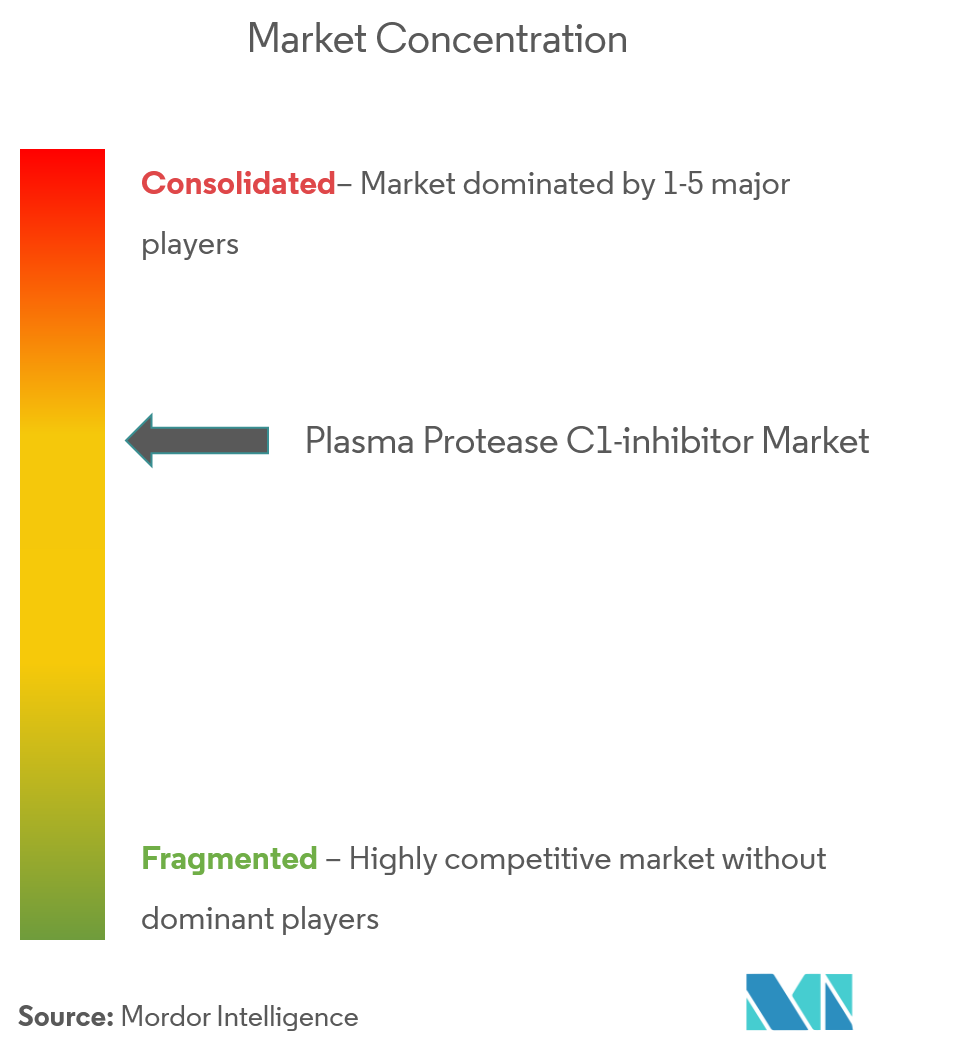
| Market Concentration | Medium |
Major Players *Disclaimer: Major Players sorted in no particular order Image © Mordor Intelligence. Reuse requires attribution under CC BY 4.0. | |
Plasma Protease C1-inhibitor Market Analysis by Mordor Intelligence
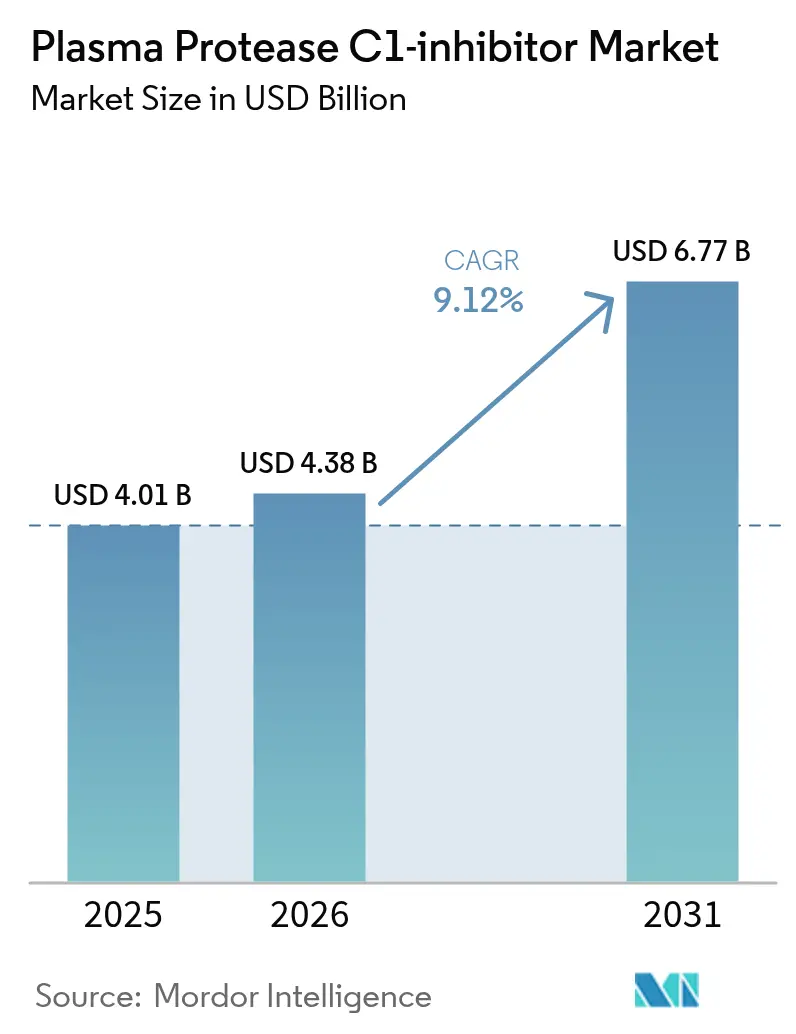
The plasma protease C1-inhibitor market size is expected to grow from USD 4.01 billion in 2025 to USD 4.38 billion in 2026 and is forecast to reach USD 6.77 billion by 2031 at 9.12% CAGR over 2026-2031. Strong demand comes from the rapid shift toward preventive care for hereditary angioedema (HAE), expanding clinical evidence that early prophylaxis curbs emergency costs, and the arrival of oral and subcutaneous products that simplify self-management. Robust orphan-drug incentives in North America and Europe, ongoing plasma fractionation investments in Asia, and improving diagnosis rates add momentum. At the same time, the plasma protease C1-inhibitor market contends with plasma-supply bottlenecks and reimbursement scrutiny, factors that are prompting manufacturers to diversify supply chains, explore recombinant routes, and deliver clearer health-economic dossiers. Moderate competitive intensity prevails because heavy regulatory compliance, donor-recruitment logistics, and biologics manufacturing expertise limit new entry, yet innovation cycles are accelerating as developers race to introduce patient-centric formulations and novel mechanisms of action.
Key Report Takeaways
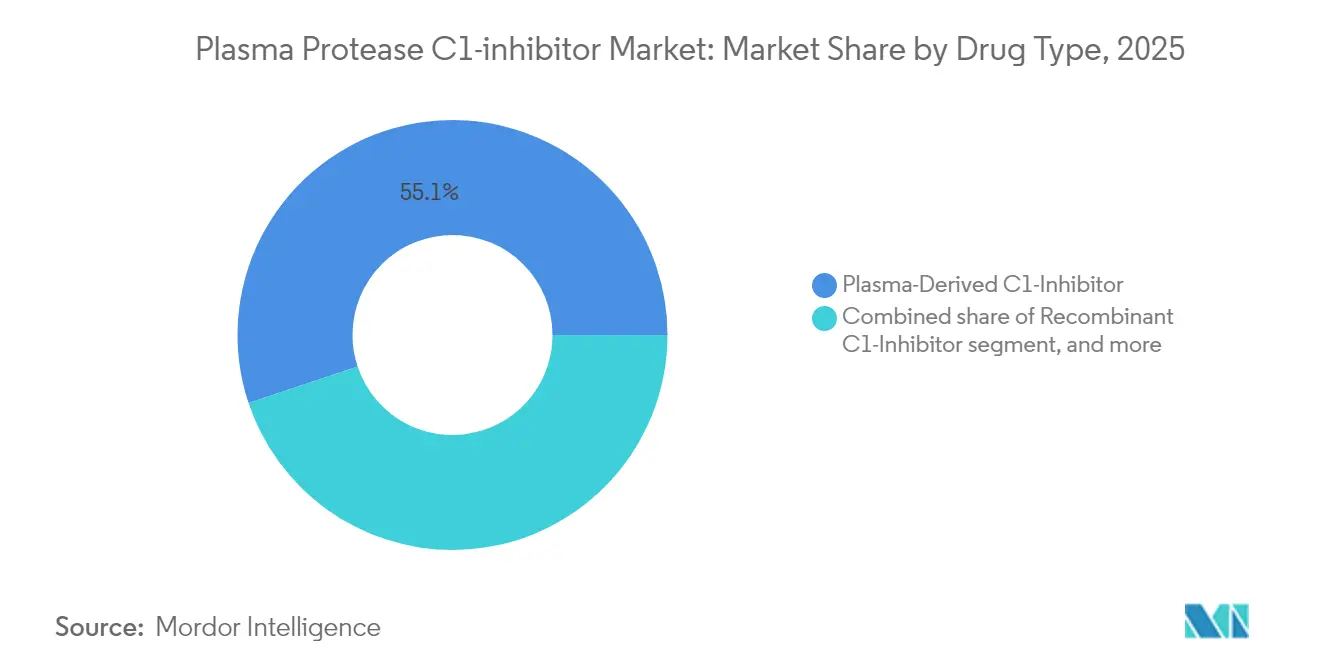
- By drug type, plasma-derived products led with 55.12% of the plasma protease C1-inhibitor market share in 2025, while oral plasma-kallikrein inhibitors are on track for the fastest 11.02% CAGR through 2031.
- By dosage form, lyophilized powder held 53.70% of the plasma protease C1-inhibitor market size in 2025; liquid injectables are set for the highest growth at 9.86% CAGR to 2031.
- By route of administration, intravenous therapy retained 56.92% share of the plasma protease C1-inhibitor market size in 2025, whereas oral administration is the quickest riser at 12.14% CAGR to 2031.
- By indication, acute on-demand treatment captured 50.88% revenue share in 2025; long-term prophylaxis is projected to expand at an 11.19% CAGR through 2031.
- By distribution channel, hospital pharmacies accounted for 46.05% of 2025 revenues; online pharmacies will post the strongest 11.98% CAGR to 2031.
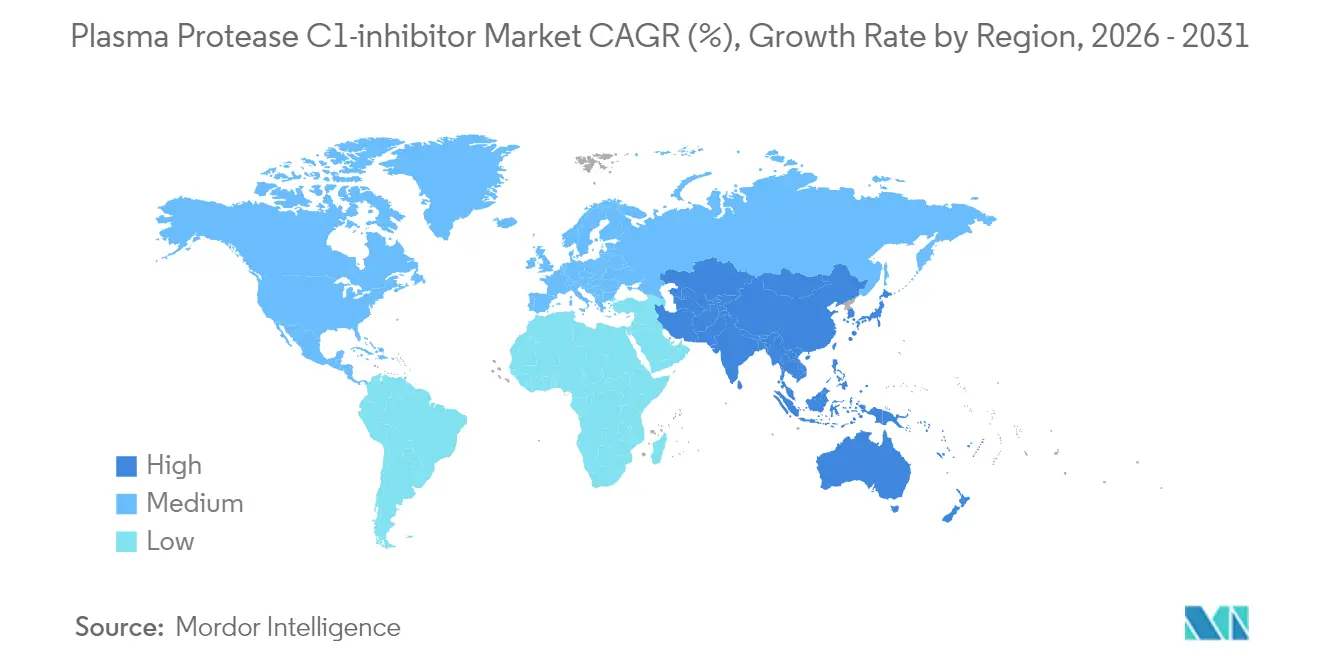
- By geography, North America commanded 44.21% share in 2025, while Asia-Pacific is the fastest-growing region at 10.11% CAGR through 2031.
Note: Market size and forecast figures in this report are generated using Mordor Intelligence’s proprietary estimation framework, updated with the latest available data and insights as of 2026.
Market Trends and Insights
Drivers Impact Analysis of Plasma Protease C1-inhibitor Market*
| Driver | % Impact on CAGR Forecast | Geographic Relevance | Impact Timeline |
|---|---|---|---|
| Growing Global Burden of Rare Genetic Disorders | +2.1% | Global, concentrated in North America & EU | Long term (≥ 4 years) |
| Increasing Orphan Drug Designations and Incentives | +1.8% | North America & EU primary, APAC emerging | Medium term (2-4 years) |
| Rising Healthcare Expenditure in Emerging Economies | +1.5% | APAC core, spill-over to MEA | Medium term (2-4 years) |
| Expansion of Plasma Fractionation Infrastructure in Asia | +1.2% | APAC focused, especially China & India | Long term (≥ 4 years) |
| Technological Advancements in Biologic Drug Delivery | +1.0% | Global, led by North America innovation hubs | Short term (≤ 2 years) |
| Strategic Collaborations and M&A Activities Among Biopharma Companies | +0.8% | Global, clustered in major pharma centers | Medium term (2-4 years) |
| Source: Mordor Intelligence | |||
Growing Global Burden of Rare Genetic Disorders
Better epidemiological surveillance indicates HAE prevalence of 2.67 per 100,000 in the United States, translating to 9,559 diagnosed cases by 2024 and narrowing historic under-diagnosis gaps[1]C. Bork et al., “Updated HAE Epidemiology,” Annals of Allergy, Asthma & Immunology, aacipjournals.org. Each patient faces combined direct and indirect annual costs nearing USD 42,000, a figure that health systems aim to cut through preventive therapies. System-wide acceptance that early prophylaxis lowers emergency interventions is propelling systematic adoption programs. Alongside medical cost containment, improved physician education and patient advocacy are raising screening uptake in family members, expanding the treatable population for the plasma protease C1-inhibitor market. Insurers consequently view prophylactics as budget-neutral over time, reinforcing demand for high-value products.
Increasing Orphan Drug Designations and Incentives
In 2024 the US FDA cleared multiple complement-mediated disorder biologics and launched a Rare Disease Innovation Hub that unifies real-world evidence with patient-reported outcomes, shortening review cycles[2]FDA, “Rare Disease Innovation Hub Announcement,” fda.gov. Europe’s positive scientific opinion for garadacimab reflects similar alignment on expedited access when an unmet need is addressed. Priority review vouchers, tax credits, and extended market exclusivity draw mid-cap developers and large pharma alike, sustaining a thick pipeline that will shape the plasma protease C1-inhibitor market through 2030. Payers, seeing clearer outcomes data, show greater tolerance for premium pricing that keeps emergency-department visits low, particularly when treatments can be self-administered.
Rising Healthcare Expenditure in Emerging Economies
China’s National Medical Products Administration enlarged its Rare Diseases List from 121 to 207 conditions and unveiled the CARE program to guide orphan-drug development, spurring multinational and domestic sponsors to file new dossiers. Southeast Asian spending on biologics is accelerating, illustrated by Indonesia’s first plasma fractionation site with 600,000-liter annual capacity. Public budgets, insurance expansion, and philanthropic support are converging, raising affordability for advanced HAE therapy. These dynamics amplify the addressable base for the plasma protease C1-inhibitor market in large populations previously served only sporadically.
Expansion of Plasma Fractionation Infrastructure in Asia
Kamada’s new Houston collection hub and CSL’s roll-out of RIKA devices that cut donation times by 15 minutes exemplify sector-wide moves to relieve supply tension. Asia is following suit, with governments encouraging local fractionation to hedge against import delays. Europe’s call for 2 million additional donors underlines the systemic urgency[3]Vox Sanguinis, “Plasma Supply in Europe,” vox-sang.org. Capacity upgrades stabilize input availability and reassure regulators that production can meet forecast demand for the plasma protease C1-inhibitor market.
Restraints Impact Analysis of Plasma Protease C1-inhibitor Market*
| Restraints Impact Analysis | (~) % Impact on CAGR Forecast | Geographic Relevance | Impact Timeline |
|---|---|---|---|
| High Treatment Costs and Reimbursement Challenges | −1.4% | Global, particularly acute in emerging markets | Medium term (2-4 years) |
| Limited Plasma Supply and Collection Bottlenecks | −1.1% | Global, Europe most affected | Long term (≥ 4 years) |
| Stringent Regulatory Requirements for Plasma-Derived Products | −0.9% | Global, with heightened scrutiny in EU & North America | Medium term (2-4 years) |
| Low Disease Awareness and Diagnostic Delays | −0.7% | Emerging markets and underserved rural areas worldwide | Long term (≥ 4 years) |
| Source: Mordor Intelligence | |||
High Treatment Costs and Reimbursement Challenges
Median fair pricing for chronic orphan drugs runs at USD 256,000 annually according to recent payer surveys. Prior authorization hurdles at insurers such as UnitedHealthcare often slow therapy initiation because physicians must document HAE frequency and prior therapy failure. In markets still building rare-disease frameworks, co-pays remain daunting, limiting uptake despite clinical guidelines. The US Inflation Reduction Act adds an extra layer of pricing negotiations that could dampen longer-term R&D appetite. These friction points collectively weigh on the growth trajectory of the plasma protease C1-inhibitor market.
Limited Plasma Supply and Collection Bottlenecks
The United States supplies around 70% of global plasma, leaving other geographies exposed to export restrictions or transport disruptions. Fragmented state regulations—for instance, Connecticut’s stringent rules leaving it with a single donation center—further thin collection capacity. As new indications emerge and patient volumes rise, collection growth is not keeping pace, risking shortages. Persistent imbalance may steer prices upward and encourage accelerated moves toward recombinant or transgenic platforms within the plasma protease C1-inhibitor market.
*Our forecasts treat driver/restraint impacts as directional, not additive. The impact forecasts reflect baseline growth, mix effects, and variable interactions.
Plasma Protease C1-inhibitor Market Segment Analysis
By Drug Type:
Plasma-Derived Dominance Faces Oral InnovationPlasma-derived C1-inhibitor therapies held 55.12% of 2025 revenues in the plasma protease C1-inhibitor market thanks to long clinical track records and familiar dosing algorithms. Brands such as Berinert and Cinryze remain the default choice for acute and prophylactic care in most hospital formularies. Their robust safety archives reassure prescribers when treating children or pregnant women, two cohorts under close watch. Despite this incumbency, pipeline visibility shows that oral kallikrein inhibitors will expand at an 11.02% CAGR through 2031 as they remove injection anxiety and fit telehealth models. BioCryst’s ORLADEYO posted USD 134.2 million in Q1 2025 sales, a rise of 51% year-over-year that validates consumer appetite for swallowable options. Should sebetralstat secure FDA clearance in mid-2025, a second oral product will further normalize non-invasive treatment, likely capturing adolescents who resist needles. As competition widens, plasma protease C1-inhibitor market size for oral drugs could exceed USD 1.33 billion in 2031, reshaping revenue splits without fully displacing plasma-derived incumbents that still cover special populations.
Pipeline diversification extends beyond kallikrein inhibition. Recombinant C1-inhibitors now reach scale sufficient for commercial pricing, offering virus-inactivation advantages and sidestepping donor reliance. Developers also test gene-silencing modalities that curb bradykinin release upstream, though commercial timing sits beyond 2030. Collectively, these approaches temper long-term plasma demand growth, but manufacturing cost structures will determine competitive margins. Between 2025 and 2030, product positioning will hinge on dosing frequency, device convenience, and payer contracts that favor predictable monthly outlays over per-attack spending.



By Dosage Form:
Lyophilized Powder Leadership Challenged by InnovationLyophilized powder secured 53.70% of 2025 revenues in the plasma protease C1-inhibitor market because freeze-drying extends shelf life and assures stability during shipping to remote clinics. Hospitals value the lower cold-chain burden and the option to stock strategic reserves for emergency departments. However, reconstitution steps lengthen administration time, especially during laryngeal attacks that demand speed. CSL’s liquid-stable HAEGARDA answered that gap by offering prefilled syringes for at-home subcutaneous use, trimming preparation to minutes. As autoinjectors and room-temperature vials proliferate, liquid forms are forecast to record a 9.86% CAGR, chipping at powder share.
Manufacturers of lyophilized presentations respond by integrating on-needle mixing devices and single-vial packaging to streamline workflows. Parallel advances in spray-drying and vacuum-induced nano-porous matrices may shorten reconstitution to under 15 seconds and restore competitive footing. Nonetheless, patient convenience remains the decisive adoption criterion in prophylaxis, nudging formulators to liquid solutions where possible. Over the forecast horizon the plasma protease C1-inhibitor market size gain from liquid products could add USD 580 million, while powders maintain relevance in humanitarian stockpiles and low-resource settings.
By Route of Administration:
IV Dominance Yields to Patient-Centric AlternativesIntravenous delivery retained 56.92% share in 2025 because acute intervention still relies on rapid systemic exposure that peripheral veins deliver reliably. Emergency physicians prefer IV Berinert when airway compromise looms, given its near-instant bioavailability. Yet patient surveys show growing frustration with venous access challenges, infusion site pain, and time lost traveling to infusion centers. Subcutaneous C1-inhibitor regimens answer convenience without sacrificing efficacy, boosting adherence in adults who face frequent attacks. Market research suggests that two-thirds of new prophylaxis prescriptions in North America now specify subcutaneous or oral formulations, underscoring a meaningful shift.
Oral administration, though only a single marketed product today, shows the steepest adoption curve. KalVista projects peak US sebetralstat sales of USD 750 million, reflecting strong physician interest in on-demand tablets that patients can carry anywhere. Should real-world experience reconfirm rapid symptom relief, guidelines will likely advise keeping an oral rescue option alongside prophylaxis, implying dual prescriptions per patient and enlarging the plasma protease C1-inhibitor market. Device-free dosing also unlocks e-pharmacy channels and subscription-based supply models, creating incremental convenience advantages.
By Indication:
Acute Treatment Leads as Prophylaxis Gains MomentumEmergency attacks remained responsible for 50.88% of 2025 revenues within the plasma protease C1-inhibitor market because laryngeal edema demands immediate pharmacologic blockade to avert asphyxiation. Hospitals stock IV vials under sepsis-code protocols to secure 24/7 access. Nonetheless, HAE management guidelines now recommend prophylaxis for patients experiencing more than one attack monthly or any laryngeal episode, expanding the eligible cohort dramatically. Real-world data show ORLADEYO cut average attack rates to 0.50 per month by day 90, sustaining gains over 18 months.
As insurers embrace the economic logic of prophylaxis preventing costly admissions, long-term therapy uptake accelerates. The prophylaxis CAGR of 11.19% suggests that by 2031 preventive regimens could outspend acute products for the first time, raising questions about inventory management in emergency departments. Still, acute formulations remain non-optional because breakthrough attacks occur even under prophylaxis and because some patients decline daily tablets or injections. Forward-looking manufacturers, therefore, design dual-indication portfolios to keep coverage across the full patient journey.
By Distribution Channel:
Hospital Pharmacies Lead Amid Digital TransformationHospital pharmacies held 46.05% of 2025 plasma protease C1-inhibitor market revenue because acute products move through inpatient formularies and require cold-chain stewardship. In addition, in-hospital dispensing ensures immediate reimbursement capture and supports supplier consignment strategies that mitigate stock-out risk. Specialty clinics function as secondary hubs, coordinating infusion suites and patient-training programs for subcutaneous products. Yet telehealth expansion and e-prescribing have paved the way for mail-order fulfillment. Online pharmacies are expected to reach a 11.98% CAGR as insurers partner with digital specialty platforms to lower distribution costs and monitor adherence electronically.
Manufacturers enhance these channels via integrated care programs. CSL’s HAEGARDA Connect pairs nurse educators, pharmacy dispatch, and co-pay support, improving refill continuity. As value-based contracts spread, payers will likely steer stable prophylaxis patients toward home delivery, freeing hospital capacity for critical care. Over time, direct-to-patient logistics may reshape demand forecasting, with real-time data informing production runs and reducing wastage.
Geography Analysis
North America Plasma Protease C1-inhibitor Market
North America led the plasma protease C1-inhibitor market with a 44.21% share in 2025. The United States drives volume due to orphan-drug exclusivity incentives, broad insurance coverage, and unmatched plasma collection capacity supplying 70% of the world’s source plasma. Medicare covers 89% of eligible patients for ORLADEYO, and private payers reimburse both prophylactic and rescue regimens when diagnostic criteria are met. Canada leverages pan-Canadian buying alliances to negotiate province-wide access, while Mexico’s Seguro Popular pilots reimbursement for high-cost biologics through state co-funding schemes.
Europe Plasma Protease C1-inhibitor Market
Europe remains the second-largest region but contends with plasma self-sufficiency shortfalls estimated at two million donors, pushing governments to incentivize domestic collection. EMA’s rolling review of garadacimab exemplifies the bloc’s openness to non-replacement modalities that could lighten plasma demand. Germany and the United Kingdom top per-capita usage thanks to specialized HAE reference centers and active patient networks. Reimbursement is increasingly tied to health-technology-assessment outcomes that weigh emergency-department avoidance and quality-of-life gains, favoring prophylactic strategies.
APAC Plasma Protease C1-inhibitor Market
Asia-Pacific is the fastest-growing territory at 10.11% CAGR, and its share of the plasma protease C1-inhibitor market is expected to reach double digits by 2030. China’s revised rare-disease framework, the CARE program, and expanding Essential Drugs List accelerate approvals, while local manufacturers invest in fractionation to secure supply fortrea.com. Japan maintains premium pricing through stringent clinical evidence requirements, yet fast-track schemes for pediatric orphanindications speed uptake. Australia’s Pharmaceutical Benefits Scheme widened its reimbursement criteria for prophylactic C1-inhibitors in 2025, lowering co-payments and lifting adherence. India, aided by its National Policy for Rare Diseases, is financing named-patient imports while state governments co-invest in fractionation plants aimed at reducing import dependency. Across Southeast Asia, advocacy groups cooperate with telemedicine platforms so rural patients can secure specialist consultations, expanding diagnosis pipelines that feed regional demand in the plasma protease C1-inhibitor market.
South America and MEA Plasma Protease C1-inhibitor Market
South America shows heterogeneous growth. Brazil’s Unified Health System funds acute therapies through judicial mandates, but prophylaxis remains limited to private insurance. Argentina’s ANMAT fast-tracked two subcutaneous products in late 2024, and Chile’s Ricarte Soto Law now reimburses up to 100% of treatment costs for catastrophic diseases, opening incremental volumes. The Middle East and Africa contribute small but rising revenues as Gulf Cooperation Council states integrate orphan drugs into centralized tender systems and South Africa revises its National Health Insurance bill to earmark funds for rare conditions.

Regulatory Landscape
Plasma protease C1-inhibitor therapies are regulated as biologics, with plasma-derived C1-esterase inhibitors subject to controls on donor eligibility, traceability, and validated viral reduction and inactivation steps across the manufacturing chain. In the United States, the FDA lists approved C1 esterase inhibitor products spanning prophylaxis and acute treatment, including Cinryze (prophylaxis), Berinert (acute), and HAEGARDA (routine prophylaxis), while Ruconest provides a recombinant option for acute hereditary angioedema (HAE) attacks.
In Europe, C1-inhibitor products operate under EMA oversight through centralized and national routes, alongside ongoing pharmacovigilance requirements such as periodic safety update reporting for human plasma protease C1 inhibitor products (PSUSA). Across major regions, labeling and release specifications typically anchor potency in International Units (IU) and emphasize pathogen safety and batch-to-batch consistency, which helps keep barriers to entry high for new manufacturers and maintains the importance of compliant plasma sourcing and controlled fractionation capacity.
Competitive Landscape
Established plasma specialists, integrated biologics firms, and nimble mid-caps coexist in a moderately concentrated environment. CSL Behring leverages more than 300 North American donation centers, vertical integration from collection to final fill-finish, and a broad rare-disease portfolio, anchoring leadership in plasma-derived C1-inhibitors. Takeda retains a formidable footprint through Cinryze and Takhzyro, posting 29.7% year-over-year growth in its plasma-derived therapies segment to JPY 271.4 billion in 2025. BioCryst’s ORLADEYO illustrates how a single oral agent can disrupt incumbency, generating USD 580-600 million expected 2025 revenues and projecting corporate profitability a year ahead of plan.
KalVista’s sebetralstat is the most advanced oral on-demand candidate under FDA review, and positive pediatric data could unlock lifetime-value advantages starting at age two. ADMA Biologics exemplifies growth via differentiated fractionation technology and long-term supply contracts, with USD 417-425 million 2024 sales forecast. Emerging players pursue recombinant or transgenic platforms to bypass plasma constraints, while device companies such as Ypsomed and West Pharma integrate autoinjectors into co-development deals to strengthen switching incentives. Strategic alliances proliferate: manufacturing tie-ups ensure fill-finish redundancy, and co-promotion deals accelerate global reach without duplicating salesforces.
Competitive strategy is shifting from efficacy claims to convenience, supply reliability, and service layers. Companies bundle nurse hotlines, remote monitoring apps, and financial-assistance portals to cement brand loyalty. Portfolio breadth also matters as payers seek contracting efficiencies; firms able to negotiate across immunology, hematology, and pulmonology can trade rebates for broader formulary placement. Late-stage M&A remains plausible, especially if oral market penetration erodes plasma volumes faster than collection capacity adjustments, driving incumbents to acquire pipeline assets for diversification within the plasma protease C1-inhibitor market.
Plasma Protease C1-inhibitor Industry Leaders
CSL Behring LLC
Takeda Pharmaceutical Company Limited (Shire Pharmaceutical Holdings)
Pharming Technologies B.V.
KalVista Pharmaceuticals, Inc.
BioCryst Pharmaceuticals
- *Disclaimer: Major Players sorted in no particular order
Plasma Protease C1-inhibitor Market Companies Covered in this Report
- Takeda Pharmaceuticals
- CSL Limited (CSL Behring)
- Pharming Group N.V.
- BioCryst Pharmaceuticals
- KalVista Pharmaceuticals
- Grifols
- Octapharma
- ADMA Biologics
- Kamada Ltd.
- Bio Products Laboratory (BPL)
- LFB S.A.
- Sanofi (Pharvaris Collaboration)
- Fresenius
- Ionis Pharmaceuticals
- Orladeyo Therapeutics
- CSL Seqirus (Plasma Operations)
- Sino Biological

Market Opportunities and Future Outlook
An opportunity area is expanding access to patient-centric prophylaxis and rescue options that reduce reliance on facility-based intravenous administration, particularly as payers and providers focus on avoiding emergency visits and improving adherence. This shift is supported by uptake of oral and self-administered regimens in HAE, along with regulatory and clinical momentum for non-replacement approaches such as factor XII pathway targeting, which broadens therapeutic choice beyond traditional C1-inhibitor replacement.
Supply reliability and manufacturing resilience remain a key focus for both plasma-derived and recombinant segments. Capacity actions, such as Pharming Group strengthening downstream processing for recombinant C1-inhibitor at its Oss, Netherlands site, show how production robustness is being used to protect continuity and support geographic expansion. Pipeline work also extends demand beyond classic HAE indications, including Octapharma's Phase 3 intravenous plasma-derived C1-inhibitor program (OCTA-C1-INH) and Pharvaris initiation of a Phase 3 study of oral deucrictibant in acquired angioedema due to C1-inhibitor deficiency (AAE-C1INH), aligning with the report scope.
Recent Industry Developments in Plasma Protease C1-inhibitor Market
- May 2026: Takeda reported positive topline results from the pivotal Phase 2/3 study of TAK-881 in primary immunodeficiency disease, showing pharmacokinetic comparability versus HYQVIA. While outside HAE, the update supports Takeda's continued investment in plasma-protein adjacencies and long-acting, administration-simplifying platforms that shape competitive positioning in rare-disease biologics.
- June 2025: CSL Behring secured FDA approval for garadacimab (Andembry), a once-monthly subcutaneous prophylactic targeting activated Factor XII for hereditary angioedema prevention in patients aged 12 years and older. The approval introduces a differentiated mechanism and dosing cadence that adds competitive pressure on legacy prophylaxis options and raises convenience as a contracting and formulary lever.
- February 2024: Takeda received EMA approval for an additional 2 mL pre-filled pen presentation for TAKHZYRO (lanadelumab) for subcutaneous administration in adolescents and adults with hereditary angioedema. The device expansion supports at-home administration and aligns with patient preference for simpler dosing workflows, reinforcing the market shift toward self-managed prophylaxis.


Plasma Protease C1-inhibitor Market Report Scope and Research Methodology
Market Definition and Coverage
This market is defined as the global revenues generated from therapies used to replace or inhibit C1 inhibitor activity for clinically diagnosed patient management, counted at manufacturer level and adjusted for standard channel markups where relevant.
Scope exclusions: We exclude investigational gene therapies, pharmacy-compounded preparations, and non-drug supportive care that does not represent a C1 inhibitor treatment sale.
Segments Covered in This Report
- By Drug Type
- Plasma-Derived C1-Inhibitor
- Recombinant C1-Inhibitor
- Kallikrein Inhibitors
- Bradykinin B2 Receptor Antagonists
- Emerging Oral Plasma-Kallikrein Inhibitors
- By Dosage Form
- Lyophilised Powder
- Liquid Injectable
- By Route Of Administration
- Intravenous
- Subcutaneous
- Oral
- By Indication
- Long-Term Prophylaxis
- On-Demand (Acute) Treatment
- By Distribution Channel
- Hospital Pharmacies
- Specialty Clinics
- Online Pharmacies
- Geography
- North America
- United States
- Canada
- Mexico
- Europe
- Germany
- United Kingdom
- France
- Italy
- Spain
- Rest of Europe
- Asia-Pacific
- China
- Japan
- India
- Australia
- South Korea
- Rest of Asia-Pacific
- Middle East & Africa
- GCC
- South Africa
- Rest of Middle East & Africa
- South America
- Brazil
- Argentina
- Rest of South America
- North America
Data Sources, Market Sizing, and Validation
Desk Research
Desk research was used to set the medical and commercial boundaries before we started any modeling. We relied on public healthcare sources such as the US FDA drug labels and safety updates, the NIH and NLM resources for disease background, and peer-reviewed journals indexed in PubMed to confirm how patients move from diagnosis to treatment.
For the size build, we also reviewed statistics and reference sources such as WHO health data, OECD health indicators (where available by country), and government health ministry publications for reimbursement and access signals. Company annual reports, investor presentations, and press releases were reviewed to understand therapy uptake, geographic exposure, and portfolio changes, and these were cross-checked with paid subscriptions we use for company financials, patent lookups, and shipment-level trade signals when they helped explain variances. These examples are not exhaustive, and many other public sources were also reviewed for data collection, validation, and clarification.
Primary Interviews and Surveys
Primary work focused on validating what the desk sources could not explain cleanly, especially real-world dosing patterns, channel dynamics, and switching between acute use and prophylaxis. We spoke with a mix of manufacturers, specialty distributors, clinicians involved in hereditary angioedema care, and pharmacy stakeholders across APAC, EMEA, and the Americas so assumptions could be confirmed and adjusted before the final numbers were locked.
Distribution of primary research fieldwork respondents
| Company type | Respondent position | Region |
|---|---|---|
| Top tier: 36% | CXOs: 14% | APAC: 42% |
| Mid tier: 46% | Functional/Unit leaders: 40% | EMEA: 35% |
| Smaller Players: 18% | Managers: 46% | Americas: 23% |
Market-Sizing & Forecasting
The core sizing starts with a top-down demand pool build, where diagnosed patient counts and treated share are translated into annual therapy volumes by indication, route, and typical dosing cadence, and then priced using validated average selling prices by geography. To keep the model practical, a few key inputs are tracked closely, including hereditary angioedema diagnosis rates, the split of acute on-demand use versus long-term prophylaxis, the share of intravenous versus oral use, pack size and vial utilization patterns, and country-level access or reimbursement timing.
After the top-down totals are formed, selective bottom-up checks are used to make sure the numbers are realistic, such as supplier revenue sanity checks, channel checks on stocking and tender activity, and sampled price points from public procurement or reference sources where available. When gaps show up for smaller countries or limited data areas, proxy assumptions are applied using nearby markets with similar access and treatment practice, and then the impact is reviewed with interview feedback.
Forecasting is run using scenario analysis supported by simple multivariate relationships, where variables like diagnosis growth, therapy penetration, and price evolution are stressed under base, conservative, and faster-adoption paths. The final forecast is the scenario that best aligns with what experts expect for adoption speed, access expansion, and product mix over the 2026 to 2031 window.
Data Validation & Update Cycle
Validation is done through multiple checks, starting with internal consistency tests on patient volumes, implied dosing, and resulting revenues so that the model does not drift away from clinical reality. Outputs are compared against independent signals such as treatment mix changes, reported regional performance trends, and trade or supply indicators when they are relevant to this therapy category.
If a large variance appears, we re-check the drivers, revisit the pricing or penetration assumptions, and re-contact sources when needed to understand what changed. Each report goes through multi-step analyst review before sign-off, then it is refreshed annually, with interim updates triggered by material events like major approvals, safety actions, or sharp pricing moves. Before delivery, a final pass is completed so clients receive the latest updated view.
Mordor Intelligence's Plasma Protease C1 Inhibitor Market Size Compared Against Other Published Estimates
It is normal to see different market values for this therapy area because publishers do not always count the same products, patient uses, and pricing layers in a consistent way. The spread is usually explained by differences in what is included in the treatment set, whether acute and prophylaxis uses are separated cleanly, and how currencies and price changes are handled across countries.
In this study, the biggest drivers were whether adjacent hereditary angioedema drug classes were grouped into the same bucket, and whether values were presented as manufacturer revenues versus a broader end-market spend. Differences also show up when a forecast leans aggressive on prophylaxis adoption without checking diagnosis and access limits, or when the refresh cadence does not capture recent mix shifts between intravenous and oral options.
Benchmark comparison
| Source | Market Size | Gaps in Research Methodology |
|---|---|---|
| Mordor Intelligence | USD 4.01 B (2025) | |
| Global Consultancy A | USD 0.91 B (2024) | Uses a narrower therapy definition that appears to mix in selected drug classes and channels differently, which can undercount prophylaxis value and limit the captured price levels across major markets. |
| Industry Publisher B | USD 1.80 B (2024) | Anchors the base year earlier and may apply a simplified penetration and price build, which can miss the effect of dose frequency differences and reimbursement timing across countries. |
The table shows that most of the gap comes from scope choices and from how price and volume are translated from treated patients into revenues, rather than from small math differences. When adjacent drug classes are kept out and acute versus prophylaxis volumes are priced with country-specific access timing, the resulting total stays traceable to the treated demand pool, which is the approach applied here internally by Mordor Intelligence.


Key Questions Answered in the Report
What is the current size of the plasma protease C1-inhibitor market?
The plasma protease C1-inhibitor market reached USD 4.38 billion in 2026 and is on course for USD 6.77 billion by 2031 on a 9.12% CAGR trajectory (2026-2031).
Which drug class is growing fastest within this market?
Oral plasma-kallikrein inhibitors, led by BioCryst’s ORLADEYO and pending entrants such as sebetralstat, are projected to grow at an 11.02% CAGR through 2031.
Why are plasma supply constraints a concern?
The United States collects roughly 70% of global plasma, and European health systems estimate a shortfall of two million donors, leaving many regions vulnerable to supply disruptions that could restrain therapy availability.
How is patient preference shaping product development?
Demand for needle-free, home-based treatment is steering R&D toward oral tablets and autoinjectors, evidenced by rapid sales growth for subcutaneous and oral formulations over traditional intravenous infusions.
Which region is expected to offer the highest growth opportunity?
Asia-Pacific leads with a 10.11% CAGR, powered by China’s expanded rare-disease policies, rising healthcare budgets, and new local plasma fractionation facilities that secure supply.
What impact will new FDA approvals have on the competitive landscape?
The 2025 approval of garadacimab introduces the first Factor XII inhibitor, while a positive decision on sebetralstat would establish the first oral on-demand therapy, intensifying competition and accelerating the shift to patient-centric regimens.
Page last updated on:


 Your data is secure and never sold or shared.


