
Pharmaceutical Cartridges Market Size and Share
Market Overview
| Study Period | 2020 - 2031 |
|---|---|
| Market Size (2026) | USD 2.01 Billion |
| Market Size (2031) | USD 2.92 Billion |
| Growth Rate (2026 - 2031) | 7.80 % |
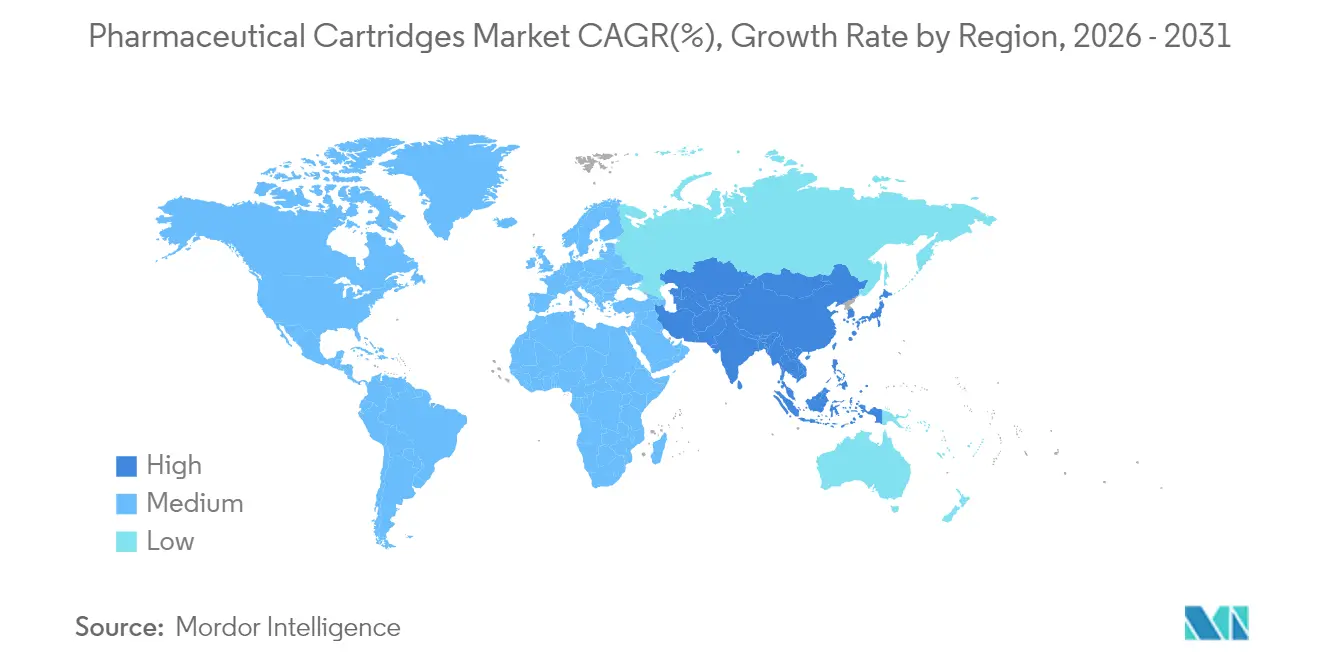
| Fastest Growing Market | Asia Pacific |
| Largest Market | North America |
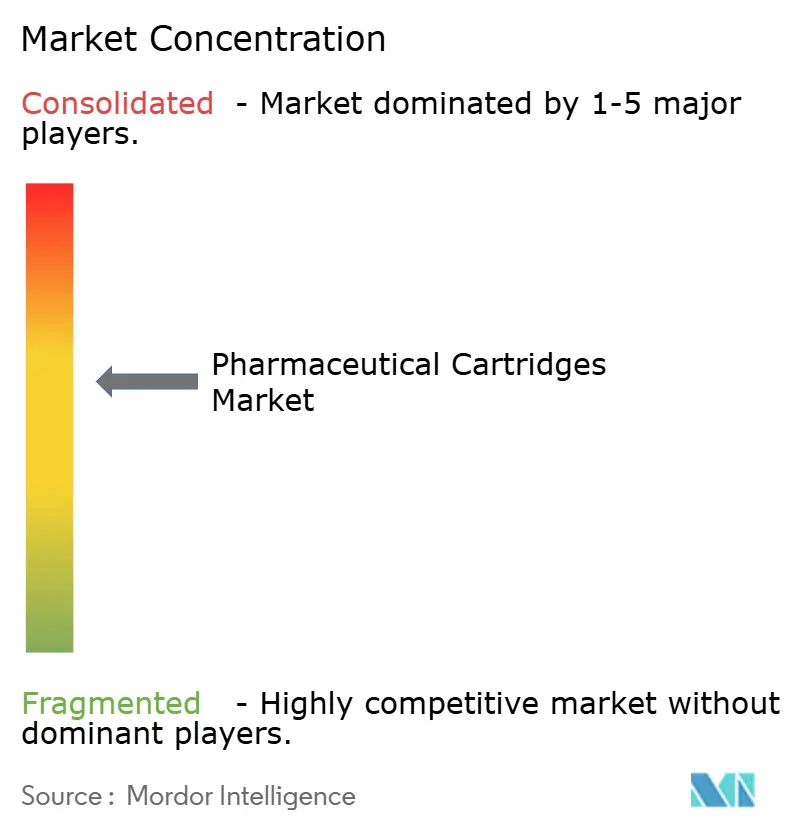
| Market Concentration | Medium |
Major Players
*Disclaimer: Major Players sorted in no particular order Image © Mordor Intelligence. Reuse requires attribution under CC BY 4.0. |
|
Pharmaceutical Cartridges Market Analysis by Mordor Intelligence
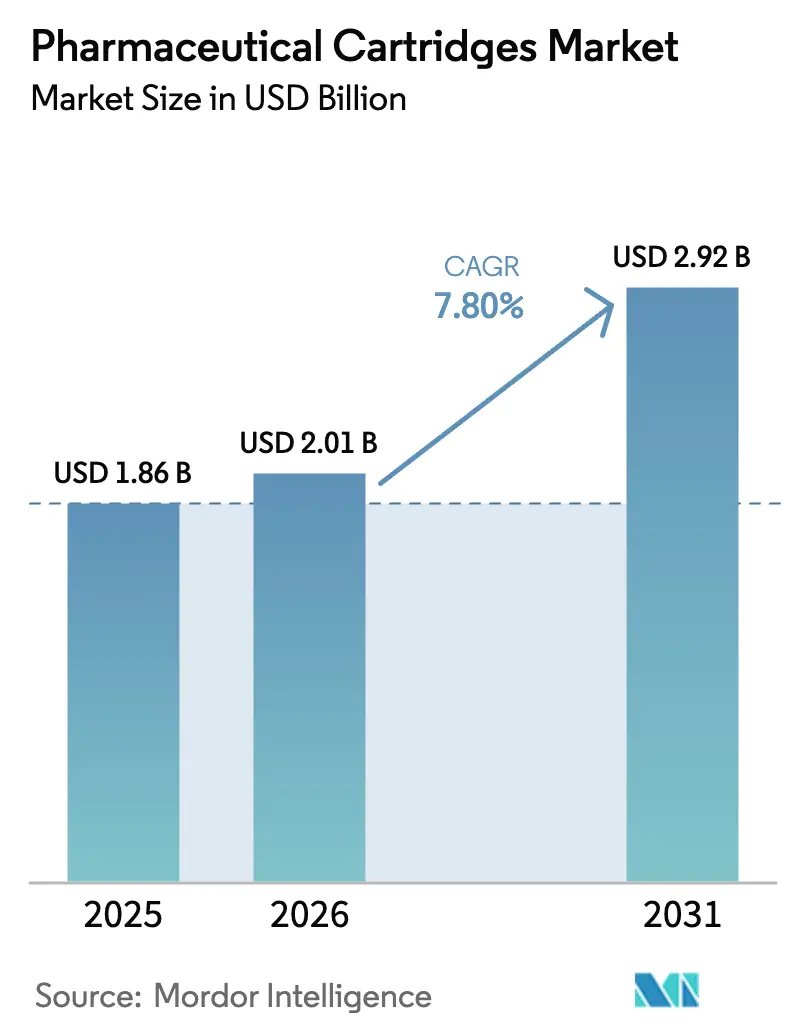
The pharmaceutical cartridge market size is expected to grow from USD 1.86 billion in 2025 to USD 2.01 billion in 2026 and is forecast to reach USD 2.92 billion by 2031 at 7.80% CAGR over 2026-2031. Growth rests on a decisive shift toward self-administered biologics, high-viscosity GLP-1 therapies, and the wider use of large-volume subcutaneous delivery devices that let patients treat chronic diseases at home. Regulatory convergence, especially the European Union’s revised Annex 1 sterility rules, is steering manufacturers toward ready-to-use (RTU) cartridges that remove costly washing and depyrogenation stages, while AI-driven fill-finish automation cuts glass breakage and halves false rejects. Glass remains the preferred material, yet engineering plastics such as COC and COP are advancing fastest thanks to break resistance and chemical compatibility. Demand is strongest in diabetes but oncology now posts the quickest rise as antibody-drug conjugates migrate to cartridge formats, and North America continues to hold the largest regional share, buoyed by multibillion-dollar capacity expansions.
Key Report Takeaways
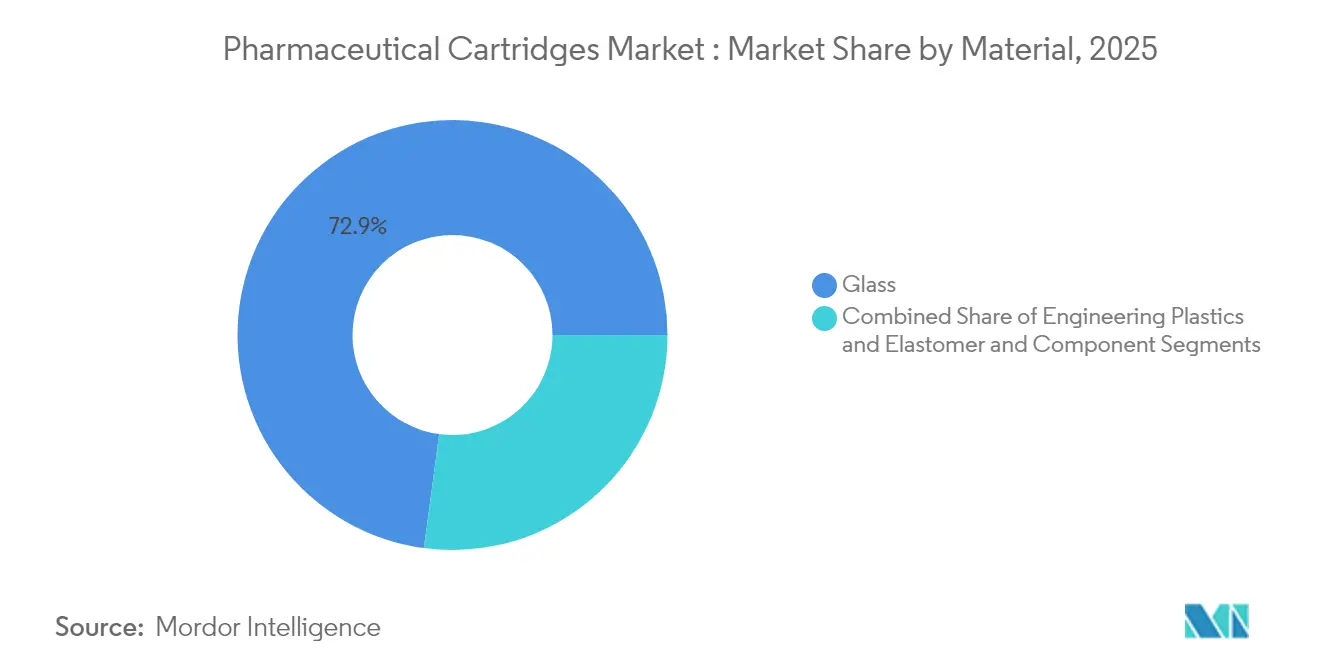
- By material, glass held 72.88% of pharmaceutical cartridge market share in 2025, while engineering plastics are forecast to record a 11.71% CAGR through 2031.
- By delivery-device compatibility, reusable pen injectors led with 43.55% revenue share in 2025; wearable on-body pumps are expected to scale at an 10.98% CAGR to 2031.
- By capacity, cartridges below 3 mL accounted for 40.92% of pharmaceutical cartridge market size in 2025, whereas devices above 10 mL are projected to grow at a 9.86% CAGR during 2026-2031.
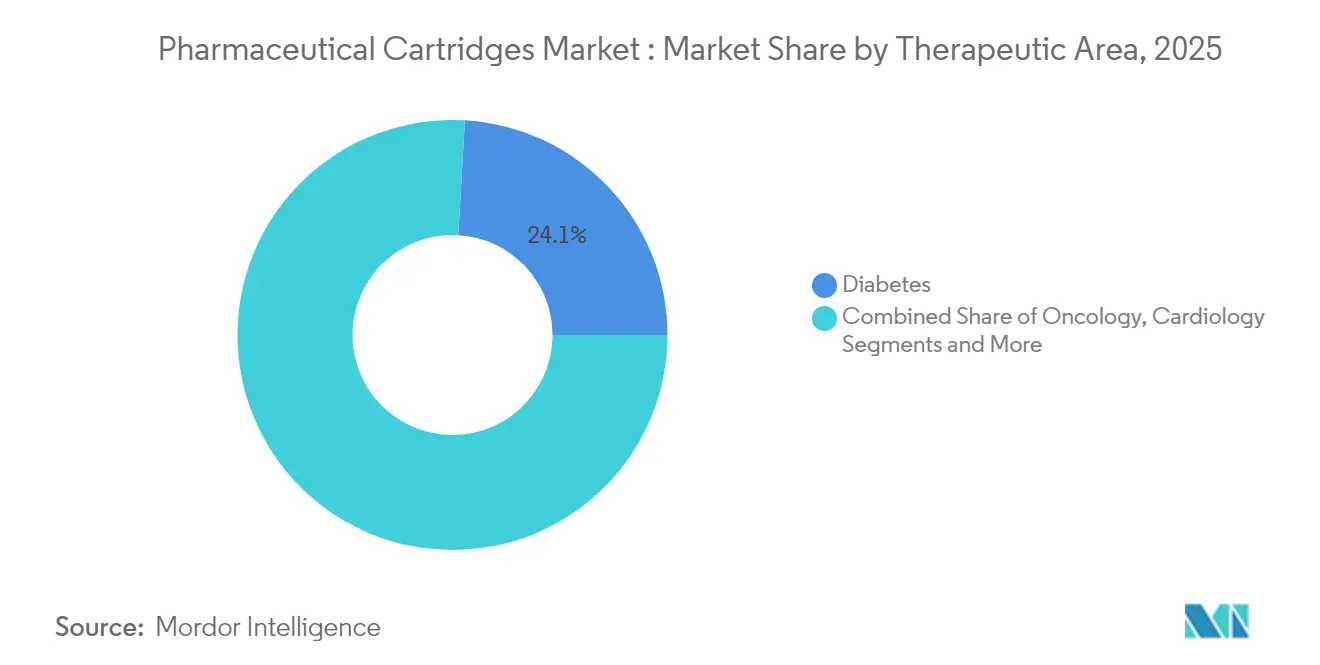
- By therapeutic area, diabetes dominated with 24.08% share of pharmaceutical cartridge market size in 2025; oncology is anticipated to expand at 14.12% CAGR through 2031.
- By end user, pharmaceutical companies represented 59.05% of demand in 2025, yet CMOs/CDMOs are forecast to post the highest 11.32% CAGR to 2031.
- By geography, North America captured 38.21% pharmaceutical cartridge market share in 2025, while Asia Pacific is set to increase the fastest at 9.84% CAGR to 2031.
Note: Market size and forecast figures in this report are generated using Mordor Intelligence’s proprietary estimation framework, updated with the latest available data and insights as of 2026.
Market Trends and Insights
Drivers Impact Analysis of Pharmaceutical Cartridges Market*
| Driver | (~) % Impact on CAGR Forecast | Geographic Relevance | Impact Timeline |
|---|---|---|---|
| Rising demand for self-injection pen and wearable injector formats | +1.8% | Global, most pronounced in North America and Europe | Medium term (2-4 years) |
| Shift of GLP-1 obesity and high-viscosity biologics to cartridge delivery | +2.1% | Global, led by North America, spreading to Asia Pacific | Short term (≤ 2 years) |
| Emergence of large-volume wearable on-body injector cartridges (≥ 10 mL) | +1.2% | North America and Europe, early uptake in Asia Pacific | Medium term (2-4 years) |
| EU MDR Annex 1 sterility rules spurring RTU cartridge adoption | +0.9% | Primarily Europe, with global regulatory spillover | Short term (≤ 2 years) |
| AI-driven fill-finish automation cutting glass breakage and scrap | +0.7% | Global, focused in advanced manufacturing hubs | Long term (≥ 4 years) |
| UDI-enabled smart laser-marked glass for traceability | +0.5% | Global, regulation-driven | Medium term (2-4 years) |
| Source: Mordor Intelligence | |||
Rising Demand for Self-Injection Pen and Wearable Injector Formats
Pen injectors and wearable pumps now anchor patient-centred treatment, letting individuals administer chronic therapies without clinic visits. Ypsomed sold over 12 million reusable pens and 1.7 billion prefilled pens in 2024, underscoring adoption scale. With roughly 500 million people living with type 2 diabetes and 1 billion affected by obesity, user-friendly devices that support frequent dosing have become essential. Clinical work shows subcutaneous injections up to 10 mL win 79% patient acceptance and pain returns to baseline within 30 minutes, so expanding cartridge volumes meets consumer comfort thresholds.[1]Connected pens now log dosing data for adherence monitoring, turning delivery hardware into real-world evidence tools that strengthen pharma value propositions. The trend adds steady volume to the pharmaceutical cartridge market as home therapy shifts from exception to norm.
Shift of GLP-1 Obesity and High-Viscosity Biologics to Cartridge Delivery
GLP-1 receptor agonists have become the fastest-growing pharmaceutical class and their migration from diabetes into obesity care drives new cartridge orders. West Pharmaceutical Services secured multiyear elastomer deals chiefly aimed at this vertical, with self-injection products already forming 73% of its proprietary segment sales. To handle formulations thicker than 15 cP, BD partnered with Ypsomed to pair Neopak XtraFlow glass syringes with autoinjectors, ensuring smooth subcutaneous delivery. Patent reviews show 57% of GLP-1 filings address delivery mechanisms rather than molecules, revealing competitive moats that could slow generic erosion while keeping cartridge demand high. Reloadable autoinjectors are surfacing as greener, lower-cost alternatives, but they still rely on rugged cartridges engineered for multiple actuations. These developments are injecting urgency into capacity build-outs across the pharmaceutical cartridge market.
Emergence of Large-Volume Wearable On-Body Injector Cartridges (≥ 10 mL)
Wearable injectors unlock subcutaneous delivery of biologics previously relegated to intravenous infusions. Stevanato Group’s Vertiva 10 mL platform exemplifies this direction, matching extended delivery windows for high-dose therapeutics. Trials show 5 mL wearables achieve 93.2% localization in target tissue with strong user acceptance. Ultra-thin cannulas that widen the lumen by 30% cut delivery times for thick solutions, addressing viscosity challenges.[2] Pipeline reviews list 182 large-volume subcutaneous biologics, with oncology doses often spanning 5-20 mL versus ≤ 5 mL for non-cancer use. Different dose bands demand specific cartridge geometries, reinforcing the need for versatile manufacturing lines within the pharmaceutical cartridge market.
EU MDR Annex 1 Sterility Rules Spurring RTU Cartridge Adoption
The 2023 Annex 1 revision broadened sterile-manufacturing guidance from 16 to 58 pages. Requirements for barrier technologies and Pre-Use Post-Sterilization Integrity Testing (PUPSIT) increase complexity for traditional wash-sterilize lines, prompting a shift to RTU cartridges that arrive sterile and ready for filling. RTU systems eliminate multiple processing stages, cut contamination risk, and boost line throughput.[3] A consortium between SCHOTT Pharma, Gerresheimer, and Stevanato Group aims to standardize RTU formats, reflecting collective recognition that regulatory pressure now favours pre-sterilized containers. As firms standardize global production on the most stringent rules, Annex 1 is indirectly lifting RTU adoption rates worldwide, adding premium value to the pharmaceutical cartridge market.
Restraints Impact Analysis of Pharmaceutical Cartridges Market*
| Restraint | (~) % Impact on CAGR Forecast | Geographic Relevance | Impact Timeline |
|---|---|---|---|
| Complex multi-step manufacturing and stringent cGMP validation | -1.4% | Global, accentuated in strict jurisdictions | Long term (≥ 4 years) |
| Substitution risk from pre-filled syringes in ≤ 3 mL range | -0.8% | Global, notably in well-established therapies | Medium term (2-4 years) |
| Global borosilicate tubing shortages tied to solar-glass demand | -0.6% | Worldwide supply chains, acute in Asia Pacific | Short term (≤ 2 years) |
| Rising investment in needle-free micro-array patches | -0.4% | North America and Europe R&D hubs, global diffusion | Long term (≥ 4 years) |
| Source: Mordor Intelligence | |||
Complex Multi-Step Manufacturing and Stringent cGMP Validation
Cartridge fabrication requires precision tolerances for break-loose force, glide force, and plunger travel. USP <382> now mandates container-closure system testing rather than individual component checks, adding fresh validation layers. Development cycles can lengthen 12-18 months as each variable undergoes statistical validation. AI tools add transparency demands because regulators want algorithm logic alongside performance metrics. High-grade cleanrooms, barrier isolators, and validated depyrogenation ovens raise capital thresholds, deterring new entrants and slowing capacity additions within the pharmaceutical cartridge market.
Substitution Risk from Pre-Filled Syringes in ≤ 3 mL Range
Small-volume drugs may stay with syringes that offer lower unit costs and turnkey filling solutions. Therapies such as anticoagulants and growth hormones already use 1-3 mL syringes, and switching to cartridges offers limited clinical upside. Drug sponsors often prefer to leverage existing syringe lines rather than invest in fresh cartridge tooling unless viscosity or patient-centric features demand change, tempering growth for that capacity band.
*Our forecasts treat driver/restraint impacts as directional, not additive. The impact forecasts reflect baseline growth, mix effects, and variable interactions.
Pharmaceutical Cartridges Market Segment Analysis
By Material:
Glass Dominance Faces Engineering Plastics ChallengeGlass held 72.88% of overall pharmaceutical cartridge market share in 2025, reflecting decades of regulatory confidence and its inert, transparent nature. The segment benefits from broad line compatibility and ample legacy tooling across fill-finish sites. Engineering plastics, notably COC and COP, are rising at a 11.71% CAGR because they resist breakage and tolerate high-pH biology, advantageous for novel oncology agents. Regulatory endorsement arrived when TOPAS Advanced Polymers secured the first USP 661.1 compliance for cyclic olefins.
Pharmaceutical cartridge industry players invest in polymer lines that match glass output speeds, but glass suppliers reply with strengthened borosilicate such as SCHOTT EVERIC to cut cosmetic rejects. Oncology pipelines that require cryogenic storage lean toward polymer because its seal integrity outperforms glass at low temperatures. Sustainability debates add tension; polymers allow energy-lite molding, while glass touts proven recyclability. Competition will intensify as both camps market advanced coatings and siliconization upgrades to capture share within the pharmaceutical cartridge market.

By Delivery-Device Compatibility:
Wearable Systems Disrupt Pen DominanceReusable pen injectors secured 43.55% of pharmaceutical cartridge market size in 2025, entrenched by decades of insulin therapy familiarity. Yet wearable on-body pumps are forecast to grow 10.98% CAGR through 2031 because they house 5–10 mL cartridges that deliver weekly GLP-1 or oncology biologics at home. BD Libertas wearable injectors proved subcutaneous delivery for agents up to 50 cP, confirming technical readiness.
Device makers now forge multi-supplier networks ensuring glass and elastomer fit across platforms, as Ypsomed coordinates more than 15 partners to secure global inventory. Gas-driven drivers and AI-monitored actuation force replace traditional springs to handle viscous drugs safely. Autoinjectors targeting 5.5 mL volumes arrive from Aktiv Medical Systems, pointing to higher-dose standards. These changes expand choice and lift the overall pharmaceutical cartridge market.
By Capacity:
Large-Volume Cartridges Drive InnovationCartridges under 3 mL held 40.92% pharmaceutical cartridge market share in 2025 owing to long-standing diabetes and hormone products. The pharmaceutical cartridge market size for containers above 10 mL is predicted to rise at 9.86% CAGR because high-dose biologics now shift to subcutaneous wearables. Stevanato Group’s portfolio spans 5–50 mL, proving scale flexibility.
Clinical data show 10 mL injections meet tolerance thresholds when delivered over several minutes, so device makers optimize flow via ultra-thin cannulas. Larger cartridges demand stronger glass and refined silicon layers to prevent breakage during shipping. Filling lines adjust stopper insertion force and venting parameters for bigger internal volumes. These technical revisions support broader therapy scope and deepen penetration of large-format segments across the pharmaceutical cartridge market.
By Therapeutic Area:
Oncology Growth Challenges Diabetes LeadershipDiabetes represented 24.08% of pharmaceutical cartridge market size in 2025, propelled by insulin and, increasingly, dual usage of GLP-1 agents for weight control. Oncology is poised for 14.12% CAGR, the fastest among all segments. Antibody-drug conjugates and checkpoint inhibitors now launch in high-concentration forms suitable for 5–10 mL cartridges, letting patients avoid infusion suites.
Immunology remains sizeable as adalimumab biosimilars reinforce self-administered models. Respiratory biologics targeting severe asthma, ophthalmic anti-VEGF treatments, and novel neurology injections further extend cartridge use. Polymer containers that tolerate cryogenic storage address gene and cell therapy vectors. As personalized medicine grows, precision-filled cartridges support micro-batch production, enhancing the pharmaceutical cartridge market outlook.
By End User:
CMO Outsourcing Reshapes ManufacturingPharmaceutical companies commanded 59.05% of demand in 2025 through direct oversight of proprietary products and capacity investments. CMOs/CDMOs, however, show the strongest 11.32% CAGR as drug developers outsource sterile assembly to specialized partners. PCI Pharma Services allocated USD 365 million across US and EU sites for drug-device packaging.
Resilience plans to fill up to 200 million cartridges yearly by 2025 after its USD 225 million Cincinnati upgrade. Asia Pacific CDMOs attract volume through cost advantages and PIC/S GMP alignment, with Terumo expanding its cartridge assembly services. This outsourcing trend boosts flexibility, lifts smaller biotech launches, and supports sustained growth of the pharmaceutical cartridge market.
Geography Analysis
North America Pharmaceutical Cartridges Market
North America held 38.21% pharmaceutical cartridge market share in 2025 backed by heavy capital projects such as Novo Nordisk’s USD 4.1 billion fill-finish campus and SCHOTT Pharma’s USD 371 million polymer syringe plant in North Carolina. FDA encouragement of advanced manufacturing accelerates AI and modular isolator uptake, positioning the region as a global benchmark for next-gen production.
Europe Pharmaceutical Cartridges Market
Europe follows closely owing to Annex 1 sterility reforms that push RTU adoption. Stevanato Group’s new Cisterna di Latina facility adds regional capacity for EZ-fill cartridges, aligning with the EU Critical Medicines Act that seeks supply-security via local output. Joint clinical-assessment rules and the forthcoming Health Technology Assessment Regulation unify demand, favouring suppliers with proven conformity across multiple markets.
APAC Pharmaceutical Cartridges Market
Asia Pacific is forecast to grow 9.84% CAGR through 2031, the fastest worldwide. India’s Kapoor Glass exports 90% of its cartridge output to Western clients, underpinning the region’s cost-efficient manufacturing base. Regulatory harmonization through the Asia Partnership Conference of Pharmaceutical Associations sparks smoother cross-border approvals. Countries like South Korea and Singapore nurture biotech hubs, while China’s expanding biologics sector heightens need for high-quality containment. Collectively these initiatives cement Asia Pacific as a pivotal growth engine for the pharmaceutical cartridge market.
Regulatory Landscape
Sterile primary containers and their filling operations for pharmaceutical cartridges are shaped by GMP expectations, pharmacopeial material standards, and device-connection requirements. In Europe, the EU GMP Annex 1 revision that took effect in August 2023 has become a practical benchmark for cartridge-related aseptic processing, encouraging manufacturers to document Contamination Control Strategies (CCS) and increase use of barrier technologies and integrity-testing approaches such as PUPSIT. That regulatory convergence has also supported wider adoption of ready-to-use (RTU) cartridges.
Globally, standards bodies and regulators continue to tighten design and verification norms across container and closure systems. ISO released ISO 11040-8:2026 in 2026, covering requirements and test methods for finished prefilled syringes, which influences expectations for interacting components (barrels, plungers, closures) that are commonly shared across cartridge ecosystems. FDA guidance for glass systems also highlights the need for compatibility and connectivity testing beyond baseline dimensional standards, so ISO 11040-4 recognition does not eliminate product-specific verification. Connector standardization is likewise extending into adjacent transfer components around fill-finish, as West Pharmaceutical Services aligned Vial Adapter products with ISO 80369-7 in May 2026 to support traceability and safer connection practices across injection supply chains.
Value Chain Analysis
The pharmaceutical cartridge value chain begins with raw materials such as borosilicate glass tubing and engineered polymers including COP and COC, along with elastomer and rubber components. It then moves through forming and finishing (conversion, annealing, surface treatment or siliconization, and inspection), followed by cleaning and sterilization, or RTU preparation. As RTU offerings expand, more of the complexity shifts upstream to container suppliers that deliver pre-washed, depyrogenated, and sterile nests or tubs, allowing drug manufacturers and CDMOs to concentrate on aseptic filling, stoppering, inspection, and device assembly for pens, autoinjectors, and wearable systems.
Across the chain, qualification burden and change control are key governance points, since any material, process, or supplier change typically requires re-qualification with the drug sponsor under cGMP expectations and quality agreements. In 2026, West Pharmaceutical Services highlighted this balancing act through collaboration and portfolio reallocation: it renewed its technology exchange and cross-licensing agreement with Daikyo Seiko, Ltd. on July 14, 2026 for joint development spanning vials, cartridges, and syringes, and it transferred manufacturing and supply rights for the SmartDose 3.5 mL on-body delivery system effective July 1, 2026. Taken together, these actions show how cartridge suppliers manage access to innovation through licensing and co-development, while reallocating resources across delivery platforms, with CDMOs and device partners adding capacity and assembly nodes closer to end markets.
Competitive Landscape
The pharmaceutical cartridge market remains moderately fragmented. Stevanato Group, SCHOTT AG, and West Pharmaceutical Services anchor the top tier through vertical integration that merges cartridge manufacture, filling, and device assembly. Their alliance on RTU standards unites expertise and accelerates regulatory acceptance. Glass suppliers pursue coating and laser-marking innovations, whereas plastics specialists extend cleanroom molding capacity to win oncology contracts.
Patents cluster around delivery mechanisms, especially GLP-1 autoinjectors, which safeguards incumbents and impedes new entrants. Disruptors include microneedle patch developers that promise needle-free biologic dosing, and engineering-plastics firms targeting break-proof oncology vials. BD’s integration of RFID chips into smart cartridges highlights differentiation via traceability. As pharma clients seek single-source partners, suppliers offering turnkey solutions enjoy a strategic edge, yet rising demand leaves room for niche specialists focusing on sustainability or smart packaging.
Pharmaceutical Cartridges Industry Leaders
-
Nipro Corporation
-
Gerresheimer AG
-
Stevanato Group
-
Schott AG
-
West Pharmaceutical Services
- *Disclaimer: Major Players sorted in no particular order
Pharmaceutical Cartridges Market Companies Covered in this Report
- Stevanato Group
- SCHOTT
- West Pharmaceutical Services
- Gerresheimer
- Nipro
- Datwyler Holding
- AptarGroup
- Merck KGaA (Sigma Aldrich cartridges)
- Transcoject GmbH
- Shandong Medicinal Glass
- Terumo
- Becton Dickinson & Co.
- Ypsomed
- Haselmeier GmbH (medmix)
- Vetter Pharma International
- Owen Mumford
- Cole Parmer (Glass Cartridges)
- Baxter
- CordenPharma Integra Plastics
- SGD Pharma
Market Opportunities and Future Outlook
Compliance-driven adoption of ready-to-use (RTU) cartridges remains a clear whitespace area, particularly as Annex 1-aligned aseptic expectations push manufacturers to reduce on-site preparation steps and human intervention. That shift changes purchasing decisions toward suppliers that can package RTU containers with validated sterility assurance, barrier-compatible formats, and change-control documentation, rather than competing primarily on unit pricing. Standardization work among major container suppliers, including industry efforts to harmonize RTU formats, also supports multi-site transfers for pharma and CDMOs and improves scalability across geographies.
A second opportunity cluster is multi-format sterile fill-finish capacity that supports cartridge manufacturing alongside syringes and vials. This fits how drug-device combination programs require flexible lines and validated component sets. In 2026, concrete investment and capacity signals include CDMO expansions aimed at cartridge-capable fill-finish, such as Grand River Aseptic Manufacturing’s USD 100 million expansion for filling syringes and cartridges, and Halo Pharma’s USD 30 million investment to add sterile vial, prefilled syringe, and cartridge manufacturing. On the supplier side, product development targeting complex biologics and device pairing continues to surface, including SCHOTT Pharma’s April 2026 introduction of a sterile glass cartridge solution for biologics in 3 mL and 5 mL formats.
Recent Industry Developments in Pharmaceutical Cartridges Market
- July 2026: Shantha Biologics entered an agreement with Novo Nordisk to provide cartridge fill-finish manufacturing at its US FDA-approved facility in Hyderabad, India. The collaboration expands capacity for biologics cartridges and supports the supply chain for injectables. The arrangement positions Shantha to serve growing GLP-1 and other biologic therapies, supporting nearterm demand.
- July 2026: West Pharmaceutical Services completed the sale and transfer of manufacturing and supply rights for the SmartDose 3.5mL on-body delivery system. The divestment reshapes its on-body delivery portfolio by reducing the capacity footprint. Resources are redirected to higher value segments and faster growth opportunities.
- June 2026: SCHOTT Pharma inaugurated an expanded vial production facility in Lebanon, PA, supported by BARDA. The expansion increases domestic manufacturing capacity for vials used in vaccines and biologics. The move strengthens US packaging supply resilience and readiness for large-scale biologics deployment.
Pharmaceutical Cartridges Market Report Scope and Research Methodology
Market Definition and Coverage
For this report, the pharmaceutical cartridges market covers sterile, drug-contact primary containers that hold injectable medicines for use in cartridge-based delivery systems, and the value reflects sales of the cartridge container itself across end users.
Scope exclusions: It excludes the delivery device (pen, injector, pump), needles, secondary packaging, and drug product value.
Segments Covered in This Report
-
By Material
-
Glass
- Type I (Borosilicate)
- Type II (Soda-lime treated)
- Type III (Soda-lime)
-
Engineering Plastics
- COP/COC (Cyclic Olefin)
- PETG/Other Polymers
- Elastomers & Rubber Components
-
Glass
-
By Delivery-Device Compatibility
- Reusable pen injectors
- Disposable pen injectors
- Wearable on-body pumps
- Dental local-anaesthesia syringes
- Autoinjectors
-
By Capacity (mL)
- < 3
- 3 – 5
- 5 – 10
- > 10 (large-volume)
-
By Therapeutic Area
- Ophthalmology
- Respiratory
- Neurology
- Oncology
- Immunology (incl. mAbs)
- Cardiology
- Diabetes (insulins, GLP-1)
- Dental Anaesthesia
- Other Therapies
-
By End User
- Pharmaceutical Companies
- Biotechnology Firms
- CMOs / CDMOs
- Other End-users (animal health, dental clinics)
-
By Geography
-
North America
- United States
- Canada
- Mexico
-
Europe
- Germany
- United Kingdom
- France
- Italy
- Spain
- Rest of Europe
-
Asia-Pacific
- China
- Japan
- India
- Australia
- South Korea
- Rest of Asia-Pacific
-
Middle East and Africa
- GCC
- South Africa
- Rest of Middle East and Africa
-
South America
- Brazil
- Argentina
- Rest of South America
-
North America
Data Sources, Market Sizing, and Validation
Desk Research
Desk research was used to set market boundaries and build an initial demand and supply picture before speaking with industry participants. We referred to public sources including U.S. FDA databases (drug approvals and combination product guidance), the European Medicines Agency website, UN Comtrade for trade flows of pharma packaging materials, and OECD health statistics for chronic disease treatment trends that influence injectable volumes.
On the supply side, we reviewed company annual reports, investor presentations, and official press releases to understand capacity expansions, quality certifications, and regional manufacturing footprints. Patent databases and peer reviewed journal articles were used to track material and closure trends that can affect adoption in sensitive biologics. We also used paid subscriptions for company financials and for patent and news screening to reduce gaps in private company visibility. The desk sources listed here are illustrative, and many other public references were also checked for data collection, validation, and clarification.
Primary Interviews and Surveys
Primary work focused on validating how cartridges are specified, procured, and qualified, since those choices shape realized demand more than headline injection growth. We spoke with a mix of cartridge manufacturers, pharma and biotech packaging teams, fill-finish and contract manufacturing stakeholders, and quality and regulatory experts across major regions, so assumptions on utilization, mix, and pricing could be confirmed and adjusted.
Distribution of primary research fieldwork respondents
| Company type | Respondent position | Region |
|---|---|---|
| Top tier: 34% | CXOs: 15% | APAC: 44% |
| Mid tier: 49% | Functional/Unit leaders: 38% | EMEA: 37% |
| Smaller Players: 17% | Managers: 47% | Americas: 19% |
Market-Sizing & Forecasting
Sizing started with a top-down reconstruction that links injectable therapy volumes and device-based administration trends to cartridge consumption, then filters by format eligibility and region-level fill-finish capacity. Inputs treated as key levers included the share of biologics delivered via cartridge-based systems, the installed base of compatible delivery platforms, the pace of self-administration adoption for chronic therapies, regional sterile manufacturing expansions, and average selling price bands by material and capacity.
The totals were then checked using selective bottom-up approximations, mainly through sampled supplier revenue splits, channel checks with packaging procurement teams, and volume times ASP cross-checks for high-usage therapy areas. Where company disclosures were limited, gaps were handled with peer benchmarks, capacity signals, and interview-backed utilization ranges, and then narrowed through follow-up validation.
For forecasting, scenario analysis was used so we could test how outcomes move under different adoption speeds for self-injection, different biologics growth rates, and different qualification lead times for primary packaging. Assumptions were kept consistent across regions, and then adjusted where experts indicated constraints, such as inspection capacity or tighter extractables and leachables expectations.
Data Validation & Update Cycle
Validation relied on triangulating modeled value against independent signals, including changes in fill-finish capacity announcements, device adoption indicators, and public regulatory activity that affects primary packaging qualification timelines. We also ran variance checks across regions and materials so outliers could be investigated, then reviewed the underlying logic and inputs in multiple steps before sign-off.
Reports are refreshed on an annual cycle, and interim updates are triggered when material events occur, such as major capacity additions, regulatory changes, or supply disruptions that can shift cartridge availability or pricing. Before delivery, an analyst performs a fresh data pass and reconfirms key assumptions so the view reflects the latest available information.
Mordor Intelligence's Pharmaceutical Cartridges Market Estimate Compared With Other Published Estimates
Published market values for pharmaceutical cartridges can differ substantially, even when the same product name is used, because scope boundaries and time frames are treated differently. We generally see gaps from what is counted as a cartridge sale, how prices are averaged across materials and capacities, and whether an estimate is built from demand signals, supply signals, or a blend of both.
Fill-finish capacity movements and cartridge qualification lead times are the evidence checks that link Mordor Intelligence's 2026 value to a realistic consumption pool, rather than assuming all injectable growth converts into cartridge demand. The spread also reflects whether device-related revenue is blended into the total, whether adjacent primary containers are included, and how currency timing and refresh cadence are handled when prices and volumes move during the year.
Benchmark comparison
| Source | Market Size | Gaps in Research Methodology |
|---|---|---|
| Mordor Intelligence | USD 2.01 B (2026) | |
| Global Market Publisher A | USD 1.07 B (2024) | Uses an earlier base year and a smaller counted pool in value terms, and the scope often leans toward manufacturer reported figures that can miss downstream qualification driven demand timing. |
| Research Publisher B | USD 0.54 B (2022) | Reports incremental growth over a period anchored to a 2022 base year, which can be misread as total market value, and may apply simplified pricing and mix assumptions across regions. |
Overall, the comparison shows that differences are mostly explained by base-year choice, whether the reported figure is total value or incremental growth, and how tightly the model is anchored to cartridge-eligible demand. By keeping inclusions specific and by rechecking key volume and pricing drivers through interviews and external signals, we end up with a figure that is easier to trace and replicate from clear steps.
Key Questions Answered in the Report
What is the current size of the pharmaceutical cartridge market?
The pharmaceutical cartridge market size stood at USD 2.01 billion in 2026 and is on track to reach USD 2.92 billion by 2031 (2026-2031).
Which therapeutic area is growing fastest for cartridge demand?
Oncology shows the highest growth, with a 14.12% CAGR forecast through 2031 (2026-2031) as high-concentration antibody therapies migrate to subcutaneous formats.
Why are engineering plastics gaining traction against glass?
COC and COP plastics resist breakage, tolerate high-pH biologics, and meet new USP 661.1 standards, which makes them attractive for next-generation drugs.
How do EU Annex 1 changes affect cartridge selection?
Stricter sterility rules favor ready-to-use cartridges that arrive pre-sterilized, reducing washing steps and contamination risk.
What role do CMOs/CDMOs play in cartridge supply?
CMOs/CDMOs are the fastest-growing end-user group with an 11.32% CAGR to 2031 (2026-2031), expanding sterile fill-finish capacity so pharma companies can focus on R&D.