
Market Overview
| Study Period | 2021 - 2031 |
|---|---|
| Forecast Data Period | 2026 - 2031 |
| Base Year Market Size (2025) | USD 1.34 Billion |
| Market Size (2026) | USD 1.41 Billion |
| Market Size (2031) | USD 1.84 Billion |
| Growth Rate (2026 - 2031) | 5.38 % |
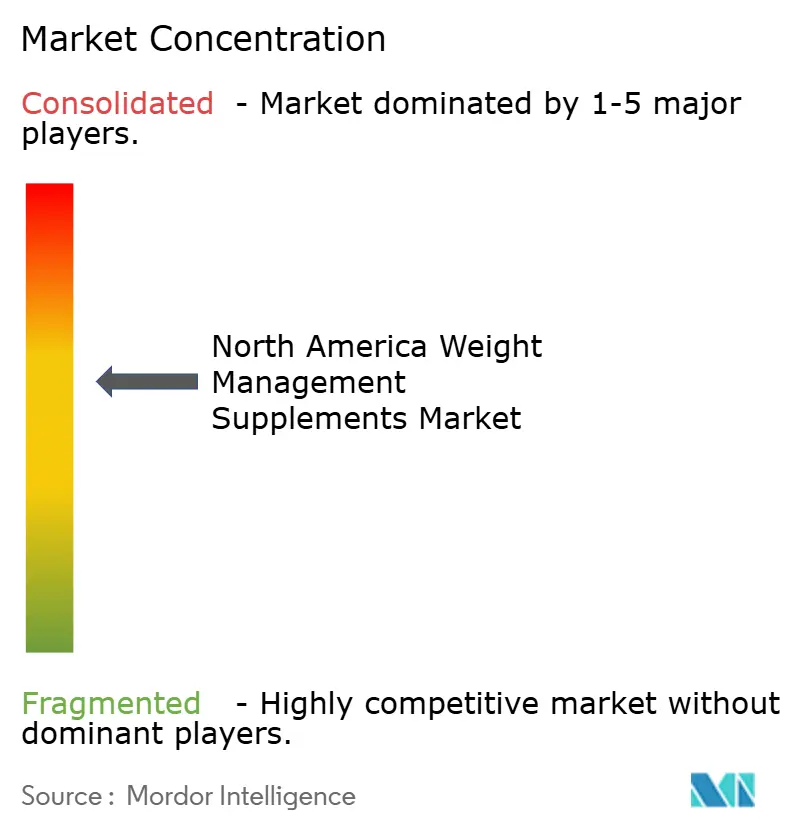
| Market Concentration | Medium |
Major Players *Disclaimer: Major Players sorted in no particular order Image © Mordor Intelligence. Reuse requires attribution under CC BY 4.0. | |
North America Weight Management Supplements Market Analysis by Mordor Intelligence
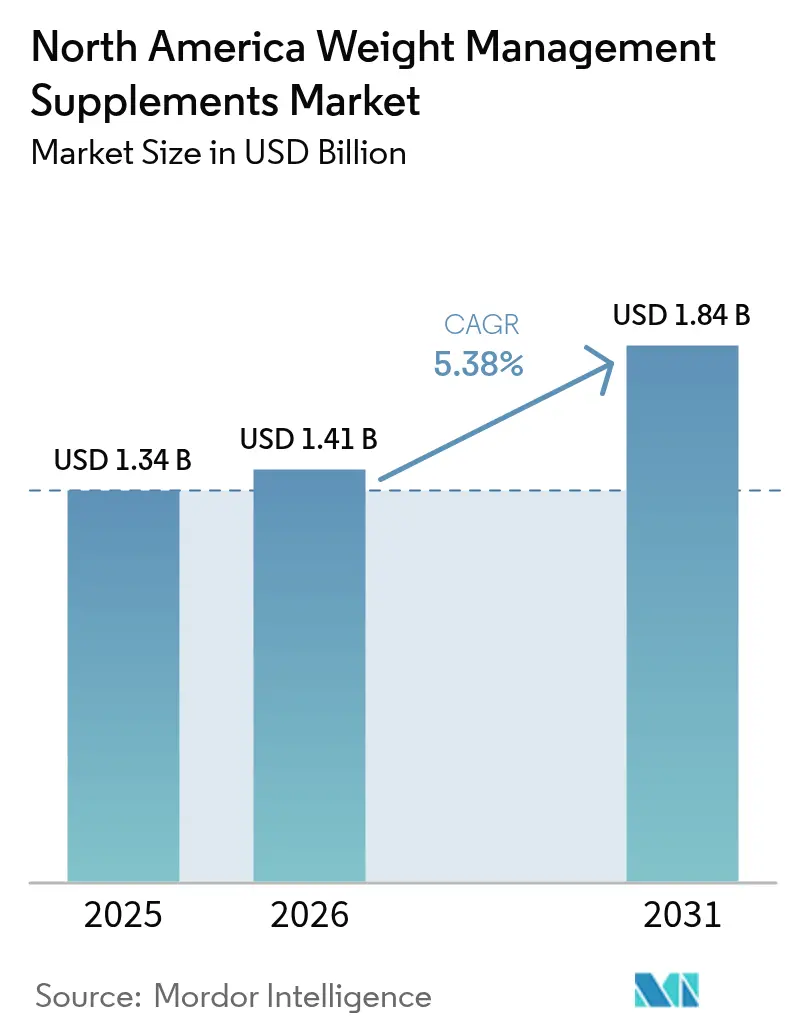
The North America weight management supplements market size in 2026 is estimated at USD 1.41 billion, growing from 2025 value of USD 1.34 billion with 2031 projections showing USD 1.84 billion, growing at 5.38% CAGR over 2026-2031. This trajectory reflects a recalibration rather than acceleration, as the weight management supplements market contends with the disruptive entry of GLP-1 receptor agonists. Semaglutide prescriptions alone reached 5.6 million Americans in 2023 and are projected to climb to 24 million by 2035, fundamentally reshaping demand for traditional thermogenic and appetite-suppression formulations [1]. Obesity prevalence above 40% in U.S. adults remains the structural demand driver, yet purchase decisions now favor clinically documented ingredients, partly because FDA enforcement has removed several products with unverifiable claims [2]. Capsules and tablets still dominate, but gummies are accelerating, supported by low-sugar technologies that improve compliance. Channel power is shifting as specialty health-store closures coincide with a surge in direct-to-consumer online sales, driven by Amazon’s third-party testing rules that reward certified suppliers. Thus, the North American weight management supplements market is growing due to persistent obesity rates above 40% in adults and increasing consumer preference for clinically proven ingredients, as FDA enforcement removes products with unverifiable claims. Additionally, the rise of GLP-1 receptor agonists, innovations like low-sugar gummies, and the shift toward online direct-to-consumer channels are reshaping demand and fueling market expansion.
Key Report Takeaways
- By product type, vitamins and minerals captured 30.62% of the weight management supplements market share in 2025, while amino acids are forecast to grow at a 7.04% CAGR through 2031.
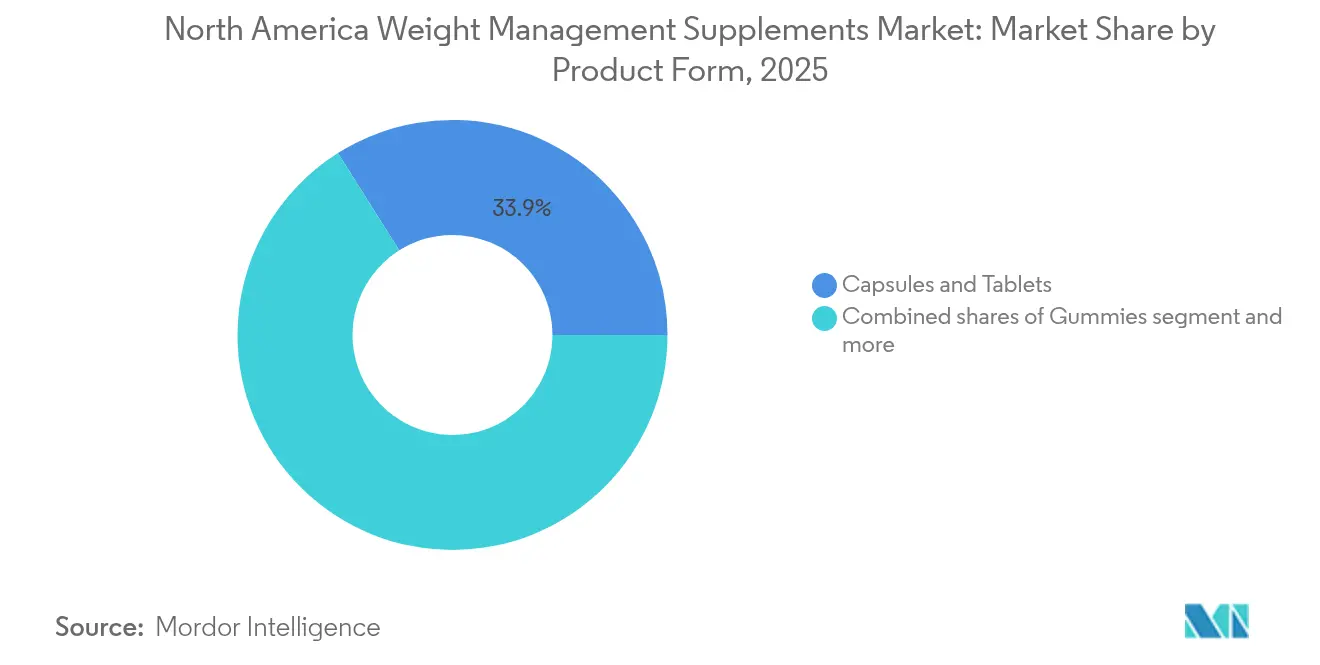
- By product form, capsules and tablets led with a 33.94% share of the weight management supplements market size in 2025, whereas gummies are advancing at a 6.55% CAGR to 2031.
- By distribution channel, health and wellness stores held 45.38% revenue share in 2025, yet online retail is expanding at a 5.62% CAGR through 2031.
- By geography, the United States commanded 77.58% of 2025 revenue, and Canada represents the fastest-growing territory at a 5.93% CAGR to 2031.
Note: Market size and forecast figures in this report are generated using Mordor Intelligence’s proprietary estimation framework, updated with the latest available data and insights as of 2026.
Market Trends and Insights
Drivers Impact Analysis of North America Weight Management Supplements Market*
| Driver | (~) % Impact on CAGR Forecast | Geographic Relevance | Impact Timeline |
|---|---|---|---|
| Rising obesity and chronic disease prevalence | +1.8% | United States, Canada | Long term (≥ 4 years) |
| Growing health and wellness consciousness | +1.3% | United States, Canada | Medium term (2-4 years) |
| Demand for natural, plant-based supplement formulations | +0.9% | United States, Canada, with stronger traction in urban coastal markets | Medium term (2-4 years) |
| Popularity of powders and convenient supplement formats | +0.7% | United States, Canada | Short term (≤ 2 years) |
| Ease of access via offline and online retail channels | +0.8% | United States, Canada | Short term (≤ 2 years) |
| Innovation and new formulation launches are boosting interest | +0.6% | United States, Canada | Medium term (2-4 years) |
| Source: Mordor Intelligence | |||
Rising Obesity and Chronic-Disease Prevalence
Obesity rates in North America have reached crisis proportions, with a significant number of US adults classified as obese in the 2021-2023 NHANES (National Health and Nutrition Examination Survey) survey, and Canada reporting 29.5% obesity prevalence according to the Centers for Disease Control and Prevention. The 40-59 age cohort exhibits the highest obesity rates, creating a demographic bulge that will sustain demand through 2030 as this population seeks metabolic interventions. Chronic conditions linked to obesity, type 2 diabetes, cardiovascular disease, and non-alcoholic fatty liver disease are driving the majority of US consumers to actively pursue weight-loss strategies, yet the strategic shift lies in their preference for evidence-based supplements over proprietary blends. The FDA's December 2024 finalization of the "healthy" nutrient-content claim rule, effective in 2028, will further legitimize supplements that meet specific micronutrient thresholds, creating a regulatory moat for compliant formulations[3]. Projections indicate that obesity prevalence will continue rising through 2050, ensuring a sustained addressable market, but the competitive advantage will accrue to brands that can substantiate metabolic benefits through clinical endpoints rather than anecdotal testimonials.
Growing Health and Wellness Consciousness
Consumer health consciousness has evolved from a preference for "clean" or "natural" labels to a demand for clinically substantiated efficacy, a shift catalyzed by the visibility of GLP-1 drugs and their dramatic weight-loss outcomes. Survey data reveal that 67% of supplement users want personalized formulations tailored to their metabolic profiles, and 67% of regular users consume supplements 24 or more days per month, indicating high adherence when products deliver perceived value according to the National Institutes of Health. This behavioral pattern favors subscription models and direct-to-consumer brands that can offer customization and transparency. The Vitamin Shoppe's June 2024 launch of Whole Health Rx, a telehealth platform prescribing GLP-1 drugs alongside complementary supplements, exemplifies how retailers are positioning themselves as holistic wellness advisors rather than transactional vendors. The strategic implication is that weight management supplements are increasingly bundled with broader wellness ecosystems, genetic testing, continuous glucose monitors, and digital coaching, making standalone product sales less defensible. Brands that cannot integrate into these ecosystems risk commoditization.
Demand for Natural, Plant-Based Supplement Formulations
Plant-based supplement formulations are capturing share as consumers associate botanical ingredients with lower side-effect profiles, though this perception is not always supported by clinical evidence. Green tea extract (EGCG) and caffeine-based botanicals dominate the thermogenic segment, while adaptogenic herbs like ashwagandha are being positioned for stress-related weight gain. However, the FDA issued multiple warning letters in 2024 targeting botanical weight-loss products with unsubstantiated claims or adulteration, creating a credibility gap that benefits vertically integrated brands with in-house testing. The plant-based trend is also evident in protein powders, where pea, soy, and rice proteins are growing faster than whey, driven by environmental and ethical considerations. The strategic opportunity lies in hybrid formulations that combine plant-based proteins with amino acids like L-carnitine or CLA, offering both the "clean" positioning consumers seek and the metabolic mechanisms they need. Brands that can navigate FDA scrutiny while maintaining botanical authenticity will capture the premium segment, which tolerates higher price points for perceived safety.
Innovation and New Formulation Launches Boosting Interest
Innovation in weight management supplements is concentrating around three vectors: GLP-1 complementary formulations, low-sugar gummy technologies, and ready-to-drink convenience formats. Berberine, a botanical compound with glucose-lowering properties, surged 89.8% in sales as consumers sought a "natural" alternative to metformin, while MCT oil grew 42.7% as a ketogenic adjunct. Gummy manufacturers are deploying Gelita's Soluform technology and allulose-based sweeteners to deliver metabolism-boosting actives in formats that adults prefer over pills, addressing the compliance gap that undermines efficacy. Ready-to-drink protein shakes grew in 2024, driven by on-the-go consumption and the perception that liquid formats offer faster absorption. The FDA's February 2024 launch of the New Dietary Ingredient (NDI) Directory and March 2024 final guidance on NDI notification procedures are raising the bar for novel ingredients, favoring companies with regulatory affairs teams capable of navigating premarket submissions. The competitive insight is that innovation is no longer about ingredient novelty, but about delivery-system optimization and regulatory compliance; brands that can combine both will command pricing power.
Restraints Impact Analysis of North America Weight Management Supplements Market*
| Restraint | (~) % Impact on CAGR Forecast | Geographic Relevance | Impact Timeline |
|---|---|---|---|
| Strict regulatory scrutiny and safety compliance requirements | -0.9% | United States, Canada | Short term (≤ 2 years) |
| Widespread adulteration and counterfeit supplement risk | -0.6% | United States, Canada, with a higher incidence in online channels | Short term (≤ 2 years) |
| Increasing preference for whole foods over supplements | -0.4% | United States, Canada, concentrated in health-conscious urban demographics | Medium term (2-4 years) |
| High cost of premium or specialty supplements | -0.5% | United States, Canada | Medium term (2-4 years) |
| Source: Mordor Intelligence | |||
Strict Regulatory Scrutiny and Safety Compliance Requirements
Regulatory intensity escalated sharply in 2024, with the FDA finalizing NDI notification guidance in March and launching the NDI Directory in February, creating a transparent but burdensome pathway for novel ingredients. Health Canada's updated Natural Health Products Regulations impose stricter labeling and substantiation requirements, raising compliance costs that disproportionately affect smaller brands lacking regulatory infrastructure. New York's Assembly Bill A5610, effective April 22, 2024, restricts minors' access to weight-loss and muscle-building supplements, mandating age verification and staff training that increase operational friction for both brick-and-mortar and online retailers. The Council for Responsible Nutrition (CRN) and Natural Products Association (NPA) filed lawsuits challenging the law, but the precedent signals potential federal action. The strategic implication is that regulatory compliance is becoming a competitive moat: brands that invest in quality systems and third-party verification will capture share from non-compliant competitors, but the cost burden will compress margins for mid-tier players.
Widespread Adulteration and Counterfeit Supplement Risk
Adulteration remains a persistent threat, with the FDA issuing warning letters in 2024 targeting weight-loss supplements spiked with undeclared pharmaceutical ingredients like sibutramine and phenolphthalein. Health Canada conducted seizures of unauthorized products, particularly those marketed online with exaggerated claims. The economic incentive for adulteration is high: adding pharmaceutical actives delivers rapid weight loss that consumers attribute to the supplement, generating repeat purchases before adverse events surface. This dynamic erodes trust in the entire category, particularly for botanical formulations where ingredient identity and potency are harder to verify than synthetic vitamins. Third-party certification by NSF International, USP, or Informed Choice is becoming a de facto requirement for premium positioning, but only some of brands carry such seals due to cost and testing burdens. The strategic opportunity lies in transparency: brands that publish certificates of analysis, conduct batch-level testing, and use blockchain for supply-chain traceability can command price premiums from risk-averse consumers. However, the counterfeit problem is worsening in online channels, where marketplace dynamics favor low-cost sellers over verified brands, creating a race-to-the-bottom that undermines category growth.
*Our forecasts treat driver/restraint impacts as directional, not additive. The impact forecasts reflect baseline growth, mix effects, and variable interactions.
North America Weight Management Supplements Market Segment Analysis
By Product Type:
Amino Acids Drive Fastest ExpansionAmino acids are the fastest-growing product segment at a 7.04% CAGR from 2026 to 2031, outpacing the overall market as consumers seek muscle-preserving formulations to counteract the lean-mass loss associated with GLP-1 drugs and caloric restriction. L-carnitine, which facilitates fatty acid transport into mitochondria, and conjugated linoleic acid (CLA), which modulates body composition, are the primary drivers, with clinical evidence supporting modest but measurable effects on fat oxidation. Branched-chain amino acids (BCAAs) are also gaining traction as consumers recognize that weight loss without muscle preservation leads to metabolic slowdown. Vitamins and minerals held the largest share at 30.62% in 2025, anchored by chromium picolinate for glucose metabolism, B-complex vitamins for energy production, and vitamin D for its inverse association with obesity, according to the Centers for Disease Control and Prevention. However, this segment faces commoditization pressure as these ingredients are widely available in multivitamins and fortified foods, limiting differentiation.
Botanicals occupy a middle position, with green tea extract (EGCG) and garcinia cambogia (hydroxycitric acid) delivering thermogenic and appetite-suppression mechanisms, but the segment is constrained by FDA enforcement targeting unsubstantiated claims and adulteration risks. The "Others" category, which includes fiber supplements, probiotics, and emerging compounds like berberine, is experiencing volatility: berberine surged 89.8% in 2024 as a "natural metformin" alternative, while traditional fiber products face competition from whole-food sources. The strategic insight is that product-type preferences are fragmenting along efficacy expectations, consumers willing to pay premium prices gravitate toward amino acids with clinical backing, while price-sensitive buyers remain in the vitamins-and-minerals segment. Brands that can straddle both tiers through tiered product lines will maximize the addressable market.


By Product Form:
Gummies Capture Compliance-Driven GrowthCapsules and tablets dominated with 33.94% of market share in 2025, reflecting their cost efficiency, stability, and ability to deliver high-potency actives in compact doses. This format remains the default for amino acids and botanical extracts where dosing precision matters. Yet gummies are the fastest-growing format at a 6.55% CAGR through 2031, driven by adult adoption and the recognition that compliance, not potency, is the primary determinant of real-world efficacy. Adults now represent the core gummy consumer base, a reversal from the pediatric origins of the format, and manufacturers are responding with low-sugar innovations using allulose, stevia, and Gelita's Soluform technology that enables higher active loads without compromising texture. Metabolism-boosting gummies containing green tea extract, caffeine, or apple cider vinegar are proliferating, though clinical evidence for these formulations is limited compared to capsule equivalents.
Powders, which include protein powders and meal replacements, are experiencing bifurcated demand: traditional weight-loss shakes are declining, but protein powders grew in 2024 as GLP-1 users sought to prevent muscle wasting. The "Others" category, encompassing liquids, soft gels, and effervescent tablets, remains niche but is growing in specific use cases like pre-workout thermogenics. The strategic takeaway is that format innovation is now a primary axis of competition: brands that can deliver clinically relevant doses in consumer-preferred formats will outperform those constrained by traditional delivery systems. However, gummy manufacturers must navigate the tension between palatability and efficacy, as high active loads often compromise taste and texture.
By Distribution Channel:
Online Retail Reshapes Channel EconomicsHealth and wellness stores commanded 45.38% of market share in 2025, but this dominance is eroding as the channel grapples with structural headwinds. GNC closed approximately 900 mall-based stores, and its Q2 2024 US and Canada revenue fell 8% to USD 476.1 million, reflecting traffic declines and competition from e-commerce. However, GNC's December 2024 partnership with Walmart to place products in 4,000+ stores and its April 2024 launch of GLP-1 support sections in all 2,300+ US stores illustrate a strategic pivot toward mass-market distribution and pharmaceutical adjacency. These moves suggest that specialty retailers are repositioning from product sellers to solution providers, leveraging their credibility to capture higher-margin services.
Online retail is the fastest-growing channel at a 5.62% CAGR from 2026 to 2031, propelled by direct-to-consumer brands, Amazon's dominance, and subscription models that lock in recurring revenue. iHerb generated USD 2.4 billion in net sales in 2024 and expanded into Albertsons and Amazon UK/Australia in January 2025, demonstrating the scalability of pure-play e-commerce models. Amazon's 2024 third-party testing requirements are consolidating the channel around verified brands, raising barriers to entry but enhancing consumer trust. Supermarkets and hypermarkets, while holding a smaller share, benefit from impulse purchases and the ability to cross-sell weight management supplements alongside functional foods. The strategic insight is that channel parity is emerging: by 2025-2026, natural/specialty, e-commerce, and mass market will hold roughly equal shares, forcing brands to adopt omnichannel strategies or risk losing visibility.
Geography Analysis
United States Weight Management Supplements Market
The United States dominates with 77.58% of market share in 2025, a concentration driven by high obesity prevalence, strong consumer spending on wellness, and a mature regulatory framework that, despite its complexity, provides clarity for compliant brands according to the Centers for Disease Control and Prevention. Regional variations within the US are notable: urban coastal markets exhibit stronger demand for plant-based and premium formulations, while heartland regions prioritize value and efficacy over ingredient sourcing. The strategic opportunity lies in geographic segmentation; brands that tailor formulations and messaging to regional preferences can capture share from one-size-fits-all competitors.
Canada Weight Management Supplements Market
Canada is the fastest-growing geography at a 5.93% CAGR from 2026 to 2031, despite holding a smaller absolute market size. This growth is fueled by a 29.5% obesity rate, rising health consciousness, and Health Canada's updated Natural Health Products Regulations in 2024 that, while raising compliance burdens, enhance consumer trust in certified products. Canadian consumers exhibit a stronger preference for natural and plant-based formulations compared to their US counterparts, creating opportunities for botanical and adaptogenic supplements. The regulatory environment is also more favorable to certain claims: Health Canada's pre-approval system for health claims allows compliant brands to differentiate on efficacy in ways that US brands cannot without triggering FDA enforcement. The strategic implication is that Canada rewards brands willing to invest in local regulatory compliance and tailored formulations, but the smaller market size limits the return on investment for all but the largest players.
Mexico and Central America Weight Management Supplements Market
The rest of North America, encompassing Mexico and Central American markets, remains a minor contributor but exhibits nascent growth as obesity rates rise and middle-class expansion increases discretionary spending on wellness. However, regulatory fragmentation, lower per-capita incomes, and weaker enforcement against counterfeit products create barriers to entry for premium brands. The strategic focus for most companies remains the US-Canada duopoly, where regulatory clarity, purchasing power, and distribution infrastructure justify investment. Brands seeking geographic diversification are more likely to look toward Western Europe or Asia-Pacific than to expand within North America beyond the US and Canada.
Regulatory Landscape
In the United States, weight management supplements are primarily governed under the Federal Food, Drug, and Cosmetic Act as dietary supplements, with the FDA focusing on post-market oversight, labeling compliance, and enforcement against products that cross into disease-claim territory. In March 2026, the FDA held a public meeting (FDA-2026-N-2047) exploring the scope of dietary supplement ingredients, including proteins and microbials, underscoring heightened scrutiny on ingredient classification and evidentiary standards for products positioned around metabolic health.
In Canada, Health Canada regulates weight management supplements sold as natural health products under the Natural Health Products Regulations (NHPR), which require pre-market product licensing and compliant labeling. Health Canada extended the compliance date for the 2022 natural health product labeling requirements to June 21, 2028, and its Forward Regulatory Plan (2026-2028) continues to signal modernization efforts, including risk-based approaches for oversight and planned work related to special dietary use frameworks, raising the importance of documentation, label accuracy, and quality-system readiness for cross-border brands.
Value Chain Analysis
The value chain starts with raw material sourcing (vitamins/minerals, amino acids, and botanicals), where many inputs are imported and subject to variability from harvest cycles, quality differences, and tariff-related cost swings. Ingredient processing and distribution then feed contract manufacturers that handle formulation, blending, and packaging across multiple dosage forms (capsules, tablets, powders, and gummies), followed by third-party testing and certification steps that have become more central due to adulteration and counterfeit risk, especially in online channels.
Downstream, brands route finished goods through omnichannel distribution, spanning health and wellness retail, mass retail placements, and fast-growing direct-to-consumer e-commerce where marketplace requirements can function as de facto gating criteria. Compliance and claims management cut across the chain, with FDA labeling expectations and FTC advertising guidance shaping allowable structure/function messaging and substantiation practices; this influences not only marketing copy but also upstream decisions on ingredient selection, clinical evidence packages, and quality documentation for retailer and platform acceptance.
Competitive Landscape
The North America weight management supplements market exhibits moderate concentration, as compliance costs and third-party certification requirements favor scaled players with regulatory infrastructure, while leaving room for specialized disruptors. Established brands like Abbott, Glanbia, and Herbalife leverage clinical credibility, distribution scale, and brand equity, yet face margin pressure from direct-to-consumer entrants that bypass intermediaries and capture customer data for personalized offerings.
Glanbia's Performance Nutrition segment is demonstrating that protein-powder incumbents are successfully pivoting toward GLP-1 complementary formulations. Conversely, Herbalife's North America sales fell 13.4% year-over-year to USD 265.1 million in Q3 2024, reflecting challenges in its multi-level marketing model as consumers shift toward transparent, science-backed brands. The strategic pattern is clear: brands that can substantiate efficacy through clinical endpoints and navigate regulatory complexity are gaining share, while those reliant on proprietary blends and testimonial-based marketing are losing ground. Opportunities are emerging at the intersection of pharmaceutical weight loss and nutritional supplementation.
Technology is becoming a competitive differentiator: Amazon's third-party testing mandates, implemented in 2024, are consolidating the e-commerce channel around brands that can afford NSF International or USP certification, effectively creating a quality moat. Emerging disruptors are leveraging subscription models, genetic testing, and continuous glucose monitors to offer personalized formulations that command premium pricing. The FDA's December 2024 finalization of the "healthy" nutrient-content claim rule, effective in 2028, will further advantage brands with formulations that meet specific micronutrient thresholds, creating a regulatory moat for compliant products. The competitive insight is that the market is bifurcating into a premium tier characterized by clinical validation, third-party certification, and integrated wellness ecosystems, and a value tier where price-sensitive consumers accept lower efficacy in exchange for affordability.
North America Weight Management Supplements Industry Leaders
-
Abbott.
-
NOW® Foods
-
Herbalife Nutrition Ltd.
-
Glanbia PLC
-
Amway
- *Disclaimer: Major Players sorted in no particular order
North America Weight Management Supplements Market Companies Covered in this Report
- Abbott Laboratories
- Amway Corp.
- Glanbia PLC
- Haleon PLC
- Bayer AG
- Herbalife Nutrition Ltd.
- NOW Foods
- Church & Dwight Co.
- Pharmavite LLC
- USANA Health Sciences, Inc.
- GNC Holdings, LLC
- Nature’s Way
- Nutraceutical International Corp.
- Jamieson Wellness Inc.
- SmartyPants Vitamins
- Plexus Worldwide
- Thorne Research
- Carlson Laboratories
- Standard Process Inc.
- The Bountiful Company
Market Opportunities and Future Outlook
GLP-1 adoption is reshaping where consumers look for supplementation support, creating whitespace in formulations that complement reduced intake and changed eating patterns, especially around protein, fiber, and broader micronutrient repletion rather than classic stimulant-driven fat burners. Retail and brand actions already reflect this pivot: The Vitamin Shoppe introduced GLP-1 Support through Whole Health Rx in March 2025, and GNC rolled out GLP-1 support sections across its US store base in April 2024, signaling a more integrated approach where supplements are positioned as adjuncts to medically influenced weight-management journeys.
Format and channel shifts also open practical opportunity areas for brands with strong quality systems: low-sugar gummy delivery, ready-to-drink protein positioning, and marketplace-compliant e-commerce assortments that can meet heightened testing and documentation requirements. On the operational side, supply-chain and fulfillment integration is becoming a differentiator, as shown by NutraVeri expanding in July 2026 to add integrated warehousing, fulfillment, and distribution for supplement brands, which can shorten time-to-market for new weight-management adjacent launches and improve service levels for subscription-driven direct-to-consumer models.
Recent Industry Developments in North America Weight Management Supplements Market
- May 2026: Amway commissioned a new solid dose tablet manufacturing and quality control lab at its Nutrilite Spaulding Plant in Ada, Michigan, following a USD 75 million capital investment. The added domestic capability strengthens throughput and in-house quality control for regulated supplement formats, supporting faster scaling and tighter batch-level compliance in North America.
- July 2025: Herbalife launched MultiBurn, a weight-loss supplement built around branded botanical extract complexes plus caffeine and chromium for metabolic health and energy support in the United States. The launch reinforces the shift toward science-backed positioning and branded-ingredient stacks as brands compete for credibility under tighter scrutiny of claims and adulteration risk.
- June 2024: The Vitamin Shoppe expanded Whole Health Rx telehealth program to a broader nationwide rollout, integrating GLP-1 prescribing with complementary supplement recommendations and strengthening its care pathway for weight management.
North America Weight Management Supplements Market Report Scope and Research Methodology
Market Definition and Coverage
For this study, the market covers retail sales of weight management supplements in North America, counted in value terms. It includes products that are bought to support weight loss, fat metabolism, appetite control, or calorie management and are sold in common supplement forms.
Scope exclusions: We exclude prescription weight loss drugs, medical procedures, and meal replacements or low calorie foods that are not sold and labeled as dietary supplements.
Segments Covered in This Report
- By Product Type
- Vitamins and Minerals
- Botanicals
- Amino Acids
- Others
- Product Form
- Powder
- Capsules and Tablets
- Gummies
- Others
- By Distribution Channel
- Supermarkets/Hypermarkets
- Health and Wellness Stores
- Online Retail Stores
- Other Distribution Channels
- By Geography
- United States
- Canada
- Rest of North America
Data Sources, Market Sizing, and Validation
Desk Research
Desk research starts by mapping the demand context and the rules that shape what can be counted as a supplement in the region. Public sources such as the US FDA and Health Canada websites (labeling and compliance) and obesity and health indicators from CDC and Statistics Canada are used to ground the market environment. For trade direction and ingredient flows, we also review UN Comtrade and related national customs portals.
We then review company annual reports, investor presentations, earnings call transcripts, and reputable press to understand product positioning, channel strategies, and pricing moves in the United States and Canada. When helpful, approved paid subscriptions are used for company financials and intelligence, patent databases, and shipment level import export data to cross check signals that are hard to verify from one source alone. The desk research sources listed here are illustrative only, and many other public and internal references were also used for collection, validation, and clarification.
Primary Interviews and Surveys
Primary work is used to confirm what is actually selling, how pricing is moving by form factor, and where demand is shifting across the United States and Canada. We spoke with ingredient suppliers, brand and channel executives, and retail experts so the model assumptions could be adjusted and then rechecked against real world selling patterns.
Distribution of primary research fieldwork respondents
| Company type | Respondent position |
|---|---|
| Top tier: 36% | CXOs: 17% |
| Mid tier: 43% | Functional/Unit leaders: 37% |
| Smaller Players: 21% | Managers: 46% |
Market-Sizing & Forecasting
Sizing is built using a mix of top down and bottom up checks so the results stay realistic even when company disclosures are uneven. The top down step reconstructs supplement demand using population and health indicators, category participation, and channel mix, then converts it into value using observed price bands by form (capsules and tablets, powders, gummies, and others). The totals are corroborated using selective bottom up approximations such as sampled brand revenue signals, retailer and distributor channel checks, and volume-to-price sanity checks from interviews.
A few practical inputs used in the model include obesity prevalence and weight management intent indicators, the shift toward online retail and direct to consumer replenishment, the mix change toward gummies and other convenient forms, promotional intensity and average selling price movement, and the pace of claim scrutiny that can remove products from shelves. For forecasting, scenario analysis is applied around the most sensitive drivers (including substitution pressure from GLP 1 adoption and changes in compliance actions), and then the final growth path is aligned to expert consensus gathered in primary discussions. Where country or channel splits are not directly observable, we fill gaps using proportional allocation based on channel footprint, trade and distribution cues, and repeated interview validation before locking the split.
Data Validation & Update Cycle
Outputs are validated through multiple checks before sign off. We compare the final market value against independent signals such as category growth seen in public retail commentary, ingredient and finished goods trade direction, and pricing patterns visible across major channels.
When a number looks off, the assumptions behind participation, price, or channel mix are revisited, and selected experts are re contacted to confirm what changed and why. A second analyst review is done to challenge inputs and confirm calculations, and the report is refreshed annually with interim updates when material events occur. Before delivery, a final pass is completed to ensure the latest public and primary signals are reflected in the published view.
Mordor Intelligence's North America Weight Management Supplement Market Sizing Compared With Other Published Estimates
Published numbers for this market can look far apart because authors do not always count the same products, geographies, and claim eligible items, and the year used for pricing also differs. Differences in how online sales are treated, and how quickly assumptions are updated when major demand shifts happen, also drive divergence.
Some external estimates group in a broader weight loss universe that can extend beyond supplements into adjacent weight management products. In Mordor Intelligence, the value is limited to weight management supplements sold in North America and it excludes prescription therapies and non supplement meal replacement foods, which keeps the total tied to a clearer retail supplement demand pool.
Benchmark comparison
| Source | Market Size | Gaps in Research Methodology |
|---|---|---|
| Mordor Intelligence | USD 1.34 B (2025) | |
| Global Consultancy A | USD 13.83 B (2024) | Uses a weight loss supplements lens with broader product capture and a different base year, and it can also reflect wider channel revenue inclusion that inflates the total versus a strict weight management supplement definition. |
| Industry Publisher B | USD 10.06 B (2024) | Reports a broader weight loss supplements market value and applies a longer horizon growth view, which can lift current year totals when adjacent products and aggressive price progression assumptions are included. |
The spread in the table is mainly explained by scope and year choices, not only math. By keeping inclusions tied to supplement labeled products and then pressure testing prices and channel mix through interviews, we end up with a number that is easier to trace back to repeatable inputs and simple checks.
Key Questions Answered in the Report
How large will North America spending on weight-control supplements be in 2031?
The weight management supplements market size is projected at USD 1.84 billion by 2031, reflecting a 5.38% CAGR from 2026.
Which product form is growing fastest among adult users?
Gummies lead with a 6.55% CAGR as low-sugar technologies increase palatability and daily-dose compliance.
How are GLP-1 drugs affecting supplement demand?
They shift buying toward protein powders and amino-acid blends that preserve muscle mass, while standalone fat burners decline.
What sales channel shows the highest forward growth?
Online retail expands at a 5.62% CAGR, aided by Amazon’s testing mandates and subscription models.