
Market Overview
| Study Period | 2021 - 2031 |
|---|---|
| Forecast Data Period | 2026 - 2031 |
| Base Year Market Size (2025) | USD 3.01 Billion |
| Market Size (2026) | USD 3.27 Billion |
| Market Size (2031) | USD 4.97 Billion |
| Growth Rate (2026 - 2031) | 8.71 % |
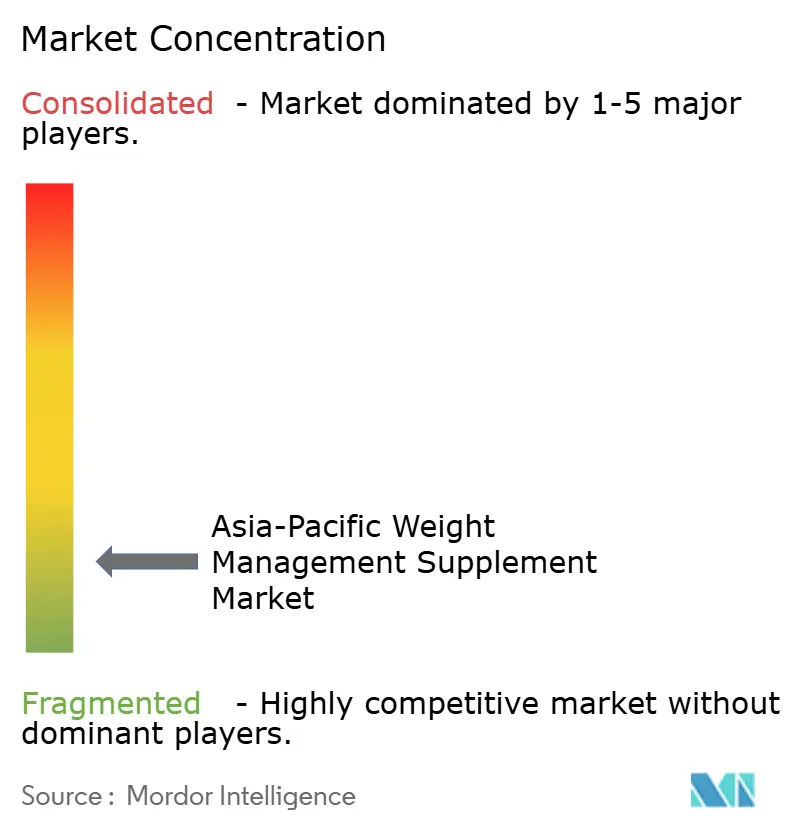
| Market Concentration | Low |
Major Players *Disclaimer: Major Players sorted in no particular order Image © Mordor Intelligence. Reuse requires attribution under CC BY 4.0. | |
Asia-Pacific Weight Management Supplement Market Analysis by Mordor Intelligence
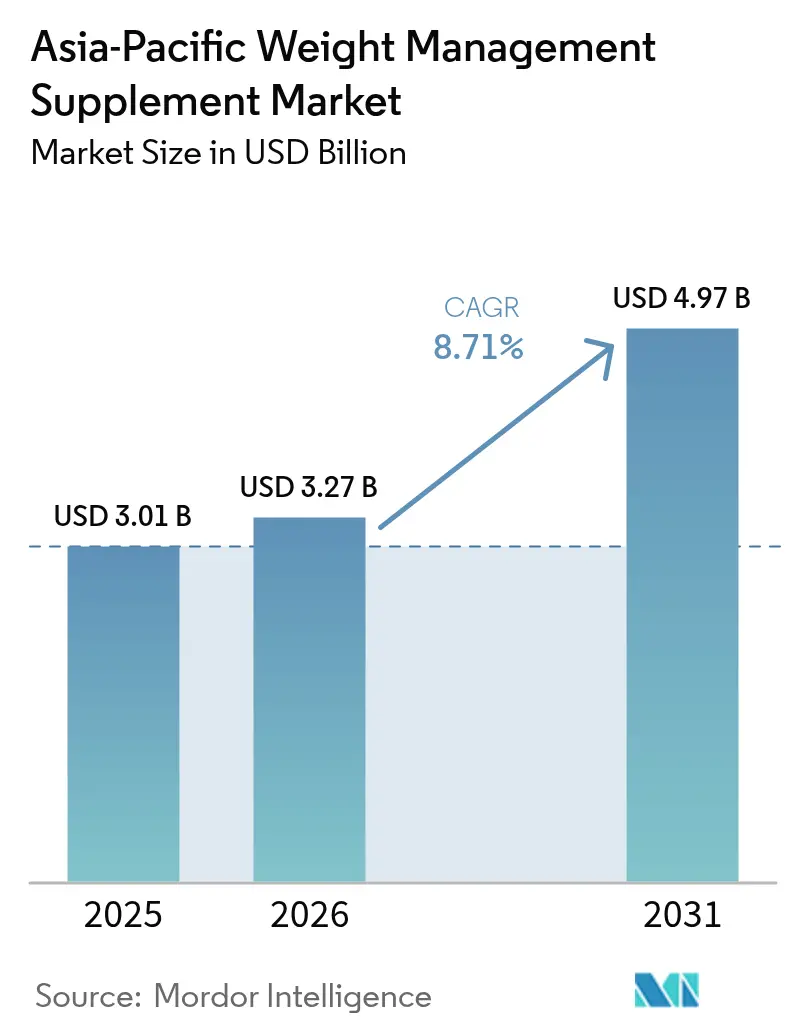
Asia-Pacific weight management supplement market size in 2026 is estimated at USD 3.27 billion, growing from 2025 value of USD 3.01 billion with 2031 projections showing USD 4.97 billion, growing at 8.71% CAGR over 2026-2031. This growth is driven by the increasing adoption of urban lifestyles, which often leave individuals with less time for proper meals. Regulatory authorities are working to standardize label claims, making it easier for consumers to trust and choose products. By product type, safer amino-acid-based formulas are gaining popularity and are expected to outperform traditional multivitamins due to their perceived health benefits and safety. In terms of form, gummies are becoming a preferred choice among adults, as they combine convenience with enjoyable flavors, improving compliance. Regarding distribution channels, e-commerce platforms are disrupting traditional store-based consultation models by offering consumers greater accessibility and convenience. The competitive landscape remains highly intense, as fragmented regulations across the region make it challenging for any single company to achieve large-scale, pan-regional operations.
Key Report Takeaways
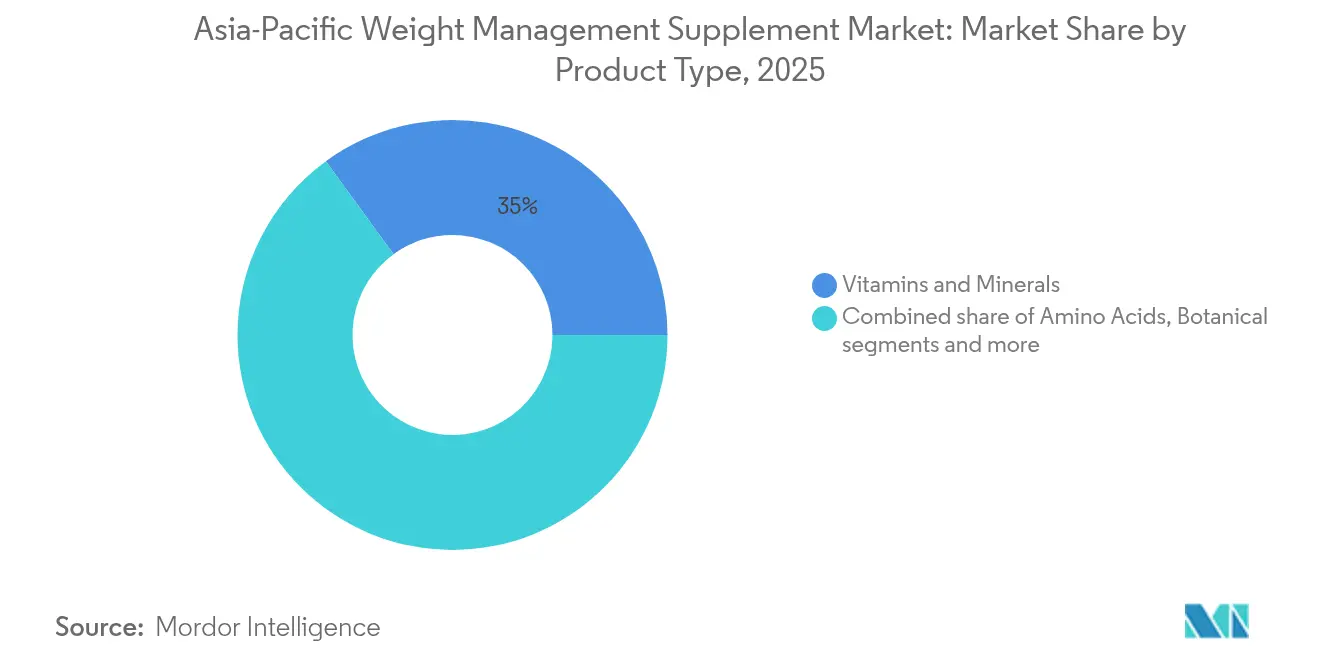
- By product type, vitamins and minerals led the Asia-Pacific weight management supplement market with a 35.02% share in 2025, while amino acids are forecast to grow at a 10.16% CAGR through 2031.
- By form, tablets/capsules captured 41.35% share of the Asia-Pacific weight management supplement market size in 2025, whereas gummies are poised to advance at a 11.62% CAGR through 2031.
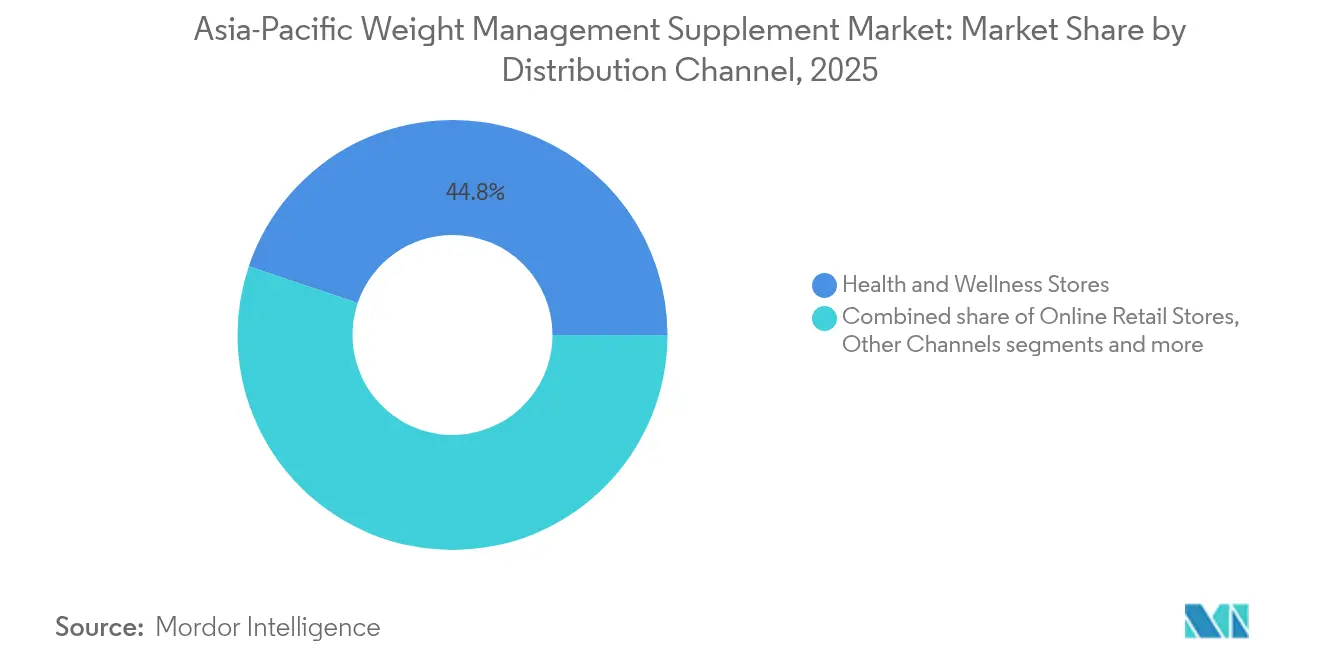
- By distribution channel, health and wellness stores accounted for 44.82% of the Asia-Pacific weight management supplement market in 2025; online retail stores are projected to log an 10.95% CAGR between 2026 and 2031.
- By country, China held 42.31% of the Asia-Pacific weight management supplement market share in 2025, and India is expected to register a 12.36% CAGR to 2031.
Note: Market size and forecast figures in this report are generated using Mordor Intelligence’s proprietary estimation framework, updated with the latest available data and insights as of 2026.
Asia-Pacific Weight Management Supplement Market Trends and Insights
Drivers Impact Analysis*
| Driver | (~) % Impact on CAGR Forecast | Geographic Relevance | Impact Timeline |
|---|---|---|---|
| Rising obesity rates and lifestyle-related health issues | +2.5% | Highest burden in China, India, Indonesia, and Australia | Long term (≥ 4 years) |
| Growing awareness of health, fitness, and body image | +1.8% | Particularly urban centers across all Asia-Pacific markets | Medium term (2-4 years) |
| Popularity of K-beauty and K-wellness trends | +1.2% | East Asia (South Korea, Japan, China), expanding to Southeast Asia | Medium term (2-4 years) |
| Higher prevalence of meal skipping and irregular eating habits | +1.0% | Urban areas in China, India, Japan, South Korea, Singapore | Short term (≤ 2 years) |
| Expanding influence of celebrity endorsements and fitness influencers | +0.8% | Strongest impact in India, Indonesia, Philippines, Thailand | Short term (≤ 2 years) |
| Rising demand for gluten-free, sugar-free, and low-calorie formulations | +1.0% | Developed Asia-Pacific markets (Japan, Australia, New Zealand, Singapore), spreading to emerging markets | Medium term (2-4 years) |
| Source: Mordor Intelligence | |||
Rising obesity rates and lifestyle-related health issues
The increasing prevalence of obesity and lifestyle-related health issues across the Asia-Pacific region is driving the growing demand for weight management supplements. These supplements are gaining popularity among both younger and older adults as more people face challenges in maintaining a healthy weight. In India, for instance, approximately 23% of men and 24% of women were classified as overweight or obese in 2023, with urban areas showing even higher rates, according to the Business Group on Health[1]. Consumers are increasingly seeking easy-to-use, non-stigmatizing solutions that can seamlessly integrate into their daily routines. Non-prescription weight management supplements are gaining popularity as they offer a practical and accessible option. Major companies, such as Abbott Laboratories, Herbalife Nutrition Ltd., and Nestlé Health Science, are leading the market by providing products designed for appetite control, metabolic support, and balanced nutrition.
Higher prevalence of meal skipping and irregular eating habits
Skipping meals and irregular eating habits are becoming more common across the Asia-Pacific region, leading to a growing dependence on weight management supplements. In India, a study published in January 2025 by the Journal of Medicinal and Pharmaceutical Chemistry Research revealed that 71.4% of employees regularly skip breakfast, with many doing so daily or every other day[2]. This trend highlights how busy work schedules and fast-paced urban lifestyles disrupt regular eating patterns. As a result, there is an increasing demand for weight management solutions, such as vitamin supplements that promote satiety, metabolism-boosting capsules, and appetite-control products. These supplements help prevent overeating later in the day and provide consistent energy levels throughout the day. Their portability and ease of use make them a practical choice for individuals with hectic routines, allowing them to gradually integrate them into their daily lives as a convenient and effective solution for managing weight.
Popularity of K-beauty and K-wellness trends
The rising popularity of K-beauty and K-wellness trends is driving increased interest in weight management supplements across the Asia-Pacific region. In India, a January 2025 survey by the Korea Centre revealed that Korean fashion and lifestyle trends influenced 35% of respondents[3]. This highlights how Korean pop culture is shaping consumer preferences in beauty and wellness. South Korea’s “beauty-from-within” philosophy, which combines aesthetic goals with health benefits like metabolic support, is particularly appealing to consumers. Innovative and convenient supplement formats such as stick packs, effervescent tablets, widely popularized in Korea, are gaining traction. These formats are not only easy to use but also enjoyable, making them a preferred choice over traditional pills. As these trends and products continue to spread, they are attracting a broader audience to the weight management segment by aligning with consumers’ aspirations for a healthier and more stylish lifestyle.
Growing awareness of health, fitness, and body image
Awareness of health, fitness, and body image is increasing, leading to a growing demand for weight management supplements across the Asia-Pacific region. More people are joining gyms, engaging in home workout programs, and following fitness transformation stories on social media, which keeps the focus on maintaining a healthy lifestyle. In India, the rapid growth of organized fitness centers has further boosted the use of supplements like fat burners and metabolism enhancers. Younger consumers, in particular, associate physical appearance with self-confidence and career success, prompting them to incorporate supplements into their daily routines for consistent, long-term results. This trend is expanding the market beyond individuals managing obesity to include a broader audience of health-conscious and image-focused consumers who view functional nutrition as a key part of their lifestyle.
Restraints Impact Analysis*
| Restraint | (~) % Impact on CAGR Forecast | Geographic Relevance | Impact Timeline |
|---|---|---|---|
| Competition from traditional herbal remedies and home treatments | -0.8% | India (Ayurveda), China (TCM), Indonesia (Jamu), Thailand, Vietnam | Long term (≥ 4 years) |
| Increasing awareness of side effects associated with thermogenic and stimulant-based supplements | -0.6% | Australia, Japan, Singapore with stringent regulatory oversight | Medium term (2-4 years) |
| Growing scrutiny from health authorities on unverified claims | -0.5% | Singapore, Australia, India, Thailand, with spillover to other markets | Short term (≤ 2 years) |
| Inconsistent labelling practices and lack of transparency on ingredient origins | -0.4% | Southeast Asia (Indonesia, Philippines, Vietnam), emerging markets with weaker enforcement | Medium term (2-4 years) |
| Source: Mordor Intelligence | |||
Competition from traditional herbal remedies and home treatments
Traditional herbal remedies and home treatments continue to pose significant competition to branded weight management supplements in the Asia-Pacific region. In India, the reliance on traditional options remains widespread. According to a June 2024 Press Information Bureau report, around 85% of rural households and 86% of urban households had at least one member familiar with medicinal plants, home remedies, or local health traditions[4]. This strong cultural connection drives the continued use of Ayurvedic products, such as Triphala in India, lotus-leaf-based blends in China, and Jamu turmeric tonics in Indonesia. These traditional remedies are often viewed as cost-effective, easily accessible, and reliable, making them a preferred choice for many consumers. Their deep-rooted presence in the region's culture and healthcare practices creates a significant challenge for the adoption of modern, branded supplements.
Increasing awareness of side effects linked to thermogenic stimulants
Growing concerns about the side effects of thermogenic stimulants are slowing the growth of certain weight management supplements in the Asia-Pacific market. Regulatory bodies, such as the United States Food and Drug Administration and Australia’s Therapeutic Goods Administration, have issued warnings about unsafe or undisclosed ingredients in some weight-loss products. These warnings have made consumers more cautious, leading many to avoid supplements containing high levels of stimulants. Media reports have highlighted potential health risks, such as rapid heart rate and liver damage, associated with these products. As a result, consumers are increasingly opting for safer alternatives, such as amino-acid blends, plant-based fibers, and non-stimulant metabolism boosters. This shift in consumer preference has forced brands that rely on strong stimulants, such as caffeine or synephrine, to reformulate their products and undergo stricter testing.
*Our forecasts treat driver/restraint impacts as directional, not additive. The impact forecasts reflect baseline growth, mix effects, and variable interactions.
Segment Analysis
By Product Type: Safer Amino-Acid Formulas Outpace Legacy Multivitamins
Vitamins and minerals accounted for 35.02% of the Asia-Pacific weight management supplement market in 2025, demonstrating their strong appeal as a trusted and straightforward option for consumers. Multivitamin products are widely used to fill nutrient gaps caused by missed meals, strict diets, or busy schedules. Their adaptability makes them suitable for all age groups, ensuring they remain a regular part of daily health practices. This steady demand has helped the segment maintain its dominant position in the regional market.
Amino-acid-based supplements are projected to grow at a notable 10.16% CAGR from 2026 to 2031, driven by the rising preference for safer, non-stimulant options. Ingredients such as carnitine and conjugated linoleic acid are particularly popular among consumers seeking metabolic support without the side effects associated with high-caffeine products. The growing interest in gym workouts and home fitness routines has increased demand for these supplements, as they support goals such as improving physical performance and enhancing fat metabolism. This trend positions the amino-acid segment to grow faster than traditional categories, reshaping the market landscape in the region.

By Form: Gummies Redefine Adult Compliance Through Flavor And Fun
Tablets/capsules were the leading formats in the Asia-Pacific weight management supplement market in 2025, accounting for 41.35% of the market share. These formats are widely preferred due to their accurate dosing, affordability, and availability across various distribution channels, including pharmacies and online platforms. Their long shelf life and ease of use make them a convenient option for consumers, especially those with busy lifestyles. Additionally, their familiarity and accessibility have solidified their position as a go-to choice for weight management supplements in the region.
Gummies are expected to witness significant growth, with the segment projected to grow at a 11.62% CAGR through 2031. This growth is driven by their appealing taste, ease of consumption, and innovative formulations, such as low-sugar and metabolism-boosting options. Gummies are particularly popular among adults who prefer alternatives to traditional pills, as they offer a more enjoyable and less intimidating experience. With increasing innovation in functional ingredients like fiber and metabolism enhancers, gummies are becoming a preferred choice for consumers seeking both convenience and effectiveness in weight management solutions.
By Distribution Channel: E-Commerce Upsets Store-Based Consultation Models
In 2025, health and wellness stores made up 44.82% of the Asia-Pacific weight management supplement market. These stores are popular because they offer expert advice, enabling customers to compare products, verify their authenticity, and make informed purchasing decisions. Many consumers trust these stores for their curated selection of high-quality and clinically tested products. Their widespread presence in major cities ensures they remain a key choice for regular supplement purchases, especially for those who prefer in-person guidance and a hands-on shopping experience.
Online retail is expected to grow at a CAGR of 10.95% between 2026 and 2031, driven by increasing smartphone usage and the availability of faster delivery options like same-day and next-day services. Younger consumers, who prioritize convenience, are turning to e-commerce platforms influenced by social media and wellness apps. These platforms offer benefits such as transparent customer reviews, easy price comparisons, and subscription services that promote consistent usage. As a result, online retail is becoming one of the fastest-growing and most dynamic distribution channels in the region.
Geography Analysis
China was the largest contributor to the Asia-Pacific weight management supplement market in 2025, accounting for 42.31% of the total revenue. This dominance is driven by a well-organized system for approving functional ingredients and a strong consumer preference for both traditional herbal remedies and modern supplement formats. The rapid growth of digital retail platforms, particularly live commerce, has further enhanced consumer engagement and accelerated purchasing decisions. These factors have solidified China’s position as the leading market in the region.
India is expected to experience the fastest growth in the region, with a projected CAGR of 12.36% from 2026 to 2031. The introduction of stricter regulatory measures has boosted consumer trust in safe and compliant products, while traditional, heritage-based formulations continue to gain popularity among urban households. Increased domestic production and rising investments from multinational companies are reducing reliance on imports and improving product availability. These advancements are positioning India as a key driver of growth in the Asia-Pacific market.
Japan maintains steady growth due to its mature regulatory framework, which emphasizes trust and stability in product formulations. Although the aging population may limit rapid growth in demand, the high credibility of products ensures consistent usage among loyal consumer groups. Meanwhile, markets such as Australia, New Zealand, and Southeast Asia are contributing to regional growth through premium product offerings, strong regulatory enforcement, and a growing health-conscious middle class. However, differences in regulatory standards across these markets influence the pace of adoption and market expansion.
Regulatory Landscape
Regulation across Asia-Pacific weight management supplements remains country-specific, with rising focus on substantiating weight-loss claims and tighter oversight of online promotion. In China, the State Administration for Market Regulation (SAMR) launched a six-month national special enforcement action in April 2026 targeting false advertising in online sales of food and health supplements, including the use of high-risk keywords such as weight loss. This is expected to raise compliance requirements for e-commerce listings and influencer-led marketing.
Australia continues to treat weight-loss products as a compliance priority, with the Therapeutic Goods Administration (TGA) publishing its Compliance Principles for 2026 and 2027 and identifying weight loss as a focus area for compliance activities. At the same time, China is also moving toward more detailed technical benchmarks through group standards such as T/CAPS 085-2026 (General Principles of Nutritional Products for Weight Management), which sets practical formulation and labeling expectations that brands follow alongside statutory requirements when building compliant, scalable portfolios.
Value Chain Analysis
The value chain covers (1) functional and botanical ingredient sourcing, (2) formulation and contract manufacturing, (3) packaging and labeling localization, and (4) multi-channel distribution through health and wellness stores and rapidly expanding online retail. Supply continuity and compliance readiness start upstream, with high-use inputs such as vitamins, minerals, and botanicals commonly procured through regional supplier networks. These inputs are then converted into tablets/capsules, powders, and gummies by in-house plants or contract manufacturers, with testing and documentation adjusted to each country’s rules on permitted ingredients and claims.
Midstream and downstream decisions are increasingly shaped by regulatory checkpoints that affect speed-to-market and SKU economics. For instance, Australia’s TGA introduced mandatory warning labels for complementary medicines containing Garcinia gummi-gutta (HCA) from March 2025, and Japan’s Consumer Affairs Agency (CAA) began requiring 120-day pre-sale notifications (from April 1, 2025) for Foods with Function Claims using novel raw materials, extending timelines for innovation-led products. With health and wellness stores remaining a major point-of-sale for advice-led purchases, e-commerce adds another compliance layer around listing rules, authenticity, and cross-border fulfillment, making quality systems, traceability, and country-specific labeling capabilities central to scaling across the region.
Competitive Landscape
The Asia-Pacific weight management supplement market is highly fragmented due to each country in the region having its own set of regulatory requirements. Companies must follow these specific rules, which makes it challenging to create a single strategy that works across the entire region. This has led to a market filled with a mix of local, regional, and global brands, with no single company able to dominate. As a result, the market remains highly competitive and constantly evolving.
Global brands maintain their presence by leveraging strong research capabilities, established distribution networks, and diverse product offerings. However, they face growing competition from regional players who are more agile and responsive to local consumer preferences. These smaller companies often experiment with innovative product formats, cater to specific taste preferences, and use digital marketing to engage younger audiences. Their ability to quickly adapt and operate direct-to-consumer (D2C) channels allows them to compete effectively with larger multinational firms.
Technology and regulatory compliance have become critical factors for success in this market. Companies that invest in advanced manufacturing processes, precise formulations, and transparent quality standards gain trust from both regulators and consumers. Markets like Singapore and Australia demand high-quality certifications, which often push non-compliant brands out of major online platforms. In this competitive environment, companies that prioritize agility, innovation, and strict adherence to safety and quality standards are more likely to succeed. This dynamic ensures that the market will remain fragmented throughout the forecast period.
Asia-Pacific Weight Management Supplement Industry Leaders
-
Abbott Laboratories
-
Herbalife Nutrition Ltd.
-
Nestlé SA
-
Amway Corp
-
Glanbia PLC
- *Disclaimer: Major Players sorted in no particular order
Market Opportunities and Future Outlook
Product and positioning whitespace is expanding around safer, non-stimulant weight-management support and adjacent nutrition needs linked to GLP-1 adoption, particularly for consumers managing appetite while aiming to preserve lean mass. A concrete signal is the May 2026 launch of Nestle Health Science’s Celevida GLP+ in India via its joint venture with Dr. Reddy’s Laboratories, explicitly targeting nutrition gaps for individuals on GLP-1 therapy. This is pulling weight-management supplement portfolios toward protein-forward, muscle-support, and satiety-oriented formulations rather than high-stimulant “fat burner” claims.
Go-to-market opportunity is also tied to compliance-forward innovation and localization, as regulators tighten labeling and claim substantiation across key markets. Companies that can execute multi-country labeling, ingredient vetting, and platform-ready claim language have room to expand online retail distribution while reducing delistings and enforcement risk, reinforced by China’s April 2026 SAMR enforcement action against false advertising for health supplements in online channels. In Southeast Asia, brands can also widen demand-side access by meeting market-entry requirements such as halal certification in Indonesia under the halal product assurance framework, which favors building certification, auditability, and locally compatible packaging into the commercialization plan rather than adding it late in the launch cycle.
Recent Industry Developments
- May 2026: Nestle Health Science launched Celevida GLP+ in India through its joint venture with Dr. Reddy’s Laboratories, positioning the product as nutritional support for individuals undergoing GLP-1 therapy. The launch connects weight-management supplementation with muscle and protein adequacy, reinforcing a shift toward clinically adjacent, protein-forward formulations in the region.
- December 2025: Amway announced a five-year investment plan of 2.1 billion yuan in China to upgrade its Guangzhou production base, R&D capabilities, and digital infrastructure. The capex supports faster product renovation cycles and supply reliability for health and wellness categories, strengthening its ability to compete in a fragmented, compliance-driven supplements market.
- August 2024: Nestle India and Dr. Reddy’s Laboratories finalized a joint venture, with Dr. Reddy’s holding 51% and Nestle India holding 49%, to develop and commercialize nutraceuticals and supplements in India. The structure combines local market execution with global nutrition know-how, expanding the platform for India-focused weight-management and wellness supplementation.
Research Methodology Framework and Report Scope
Market Definition and Coverage
This market covers the value of weight management supplements sold across Asia-Pacific, counted as finished supplement products intended to support weight control through ingredients such as vitamins and minerals, botanicals, and amino acids.
Scope exclusions: We exclude non-supplement weight management solutions such as diet programs, medical procedures, fitness services, and equipment.
Segmentation Overview
- By Product Type
- Vitamins and Minerals
- Botanicals
- Amino Acids
- Others
- By Form
- Powders
- Tablets/Capsules
- Gummies
- Others
- By Distribution Channel
- Supermarkets/Hypermarkets
- Health and Wellness Stores
- Online Retail Stores
- Other Channels
- By Country
- China
- India
- Japan
- South Korea
- Australia
- Indonesia
- Thailand
- Vietnam
- Philippines
- Malaysia
- Singapore
- New Zealand
- Rest of Asia-Pacific
Data Sources, Market Sizing, and Validation
Desk Research
Desk work starts with grounding the demand story and the regulatory context country by country. We used public sources such as national health and nutrition surveys, ministries of health food and supplement guidance, customs and trade statistics, and World Bank macro indicators to understand consumption capacity and cross-border flows.
To make the sizing inputs practical, company annual reports, investor presentations, and major retail and pharmacy channel disclosures were reviewed for category commentary and pricing moves. Patent databases and reputable journals were also checked to understand ingredient activity and formulation direction that can influence product mix and average selling price assumptions. For coverage completeness, company financials and an import/export shipment-level database were used selectively to validate participation and trade intensity. The examples are illustrative, and the desk sources referenced are not exhaustive because additional public materials were also used for data collection, cross-checks, and clarification.
Primary Interviews and Surveys
Primary work focused on validating what is counted as a weight management supplement in local markets, and on checking price bands, form preferences, and channel splits. We spoke with a mix of supplement brand teams, ingredient and contract manufacturing participants, distributors, and retail channel specialists across major Asia-Pacific countries. We then used these inputs to confirm assumptions that could not be reliably inferred from public data alone.
Distribution of primary research fieldwork respondents
| Company type | Respondent position |
|---|---|
| Top tier: 31% | CXOs: 22% |
| Mid tier: 47% | Functional/Unit leaders: 37% |
| Smaller Players: 22% | Managers: 41% |
Market-Sizing & Forecasting
Sizing is built using a top-down and bottom-up combination, where country-level supplement demand indicators are reconstructed first and then filtered to the weight management supplement share using product and channel signals. The totals are then corroborated with selective bottom-up approximations, such as sampled price points by form, channel checks for online versus store sales, and limited distributor and retailer sense checks to see if the totals land in a realistic range.
Inputs that materially shape the model include overweight and obesity prevalence signals, disposable income and urbanization trends, online retail penetration for supplements, form mix shifts (tablets and capsules, powders, gummies), and the share of botanicals, amino acids, and vitamins and minerals within weight management claims. Where gaps exist in country splits or form-level detail, assumptions are built from the closest comparable markets and then pressure-tested through interviews before being finalized.
For forecasting, scenario analysis is used to reflect different paths for regulatory tightening on label claims, e-commerce growth, and price inflation or downtrading. The final forecast path is selected only after the variable outlook is cross-checked with expert consensus from the primary research cycle.
Data Validation & Update Cycle
Validation happens in layers so that one source does not drive the outcome. Model outputs are checked against independent signals like trade direction, category growth cues from public company commentary, and channel momentum, and then variances are investigated until the drivers are clear.
Before sign-off, the work is reviewed by another analyst who challenges assumptions, recalculates key steps, and flags any outliers in country growth or price progression. The report is refreshed annually, and interim updates are triggered when material events occur, such as major regulatory actions, sharp currency shifts, or step-changes in consumer demand. Right before delivery, a final pass is completed so clients receive the latest updated view.
Mordor Intelligence's Asia Pacific Weight Management Supplement Market Sizing Compared With Other Published Estimates
Published market sizes for this space can look far apart, even when the titles sound similar, because the counted products and the year choices are not always aligned. Differences also come from how firms treat online-only brands, how they convert local currency pricing into USD, and how often they refresh fast-moving channel assumptions.
Some published figures appear to fold in broader wellness spending or wider weight management categories that go beyond supplements, and that can lift totals quickly. In Mordor Intelligence, the value is limited to finished weight management supplement products sold in Asia-Pacific, and items like diet programs, clinical services, and fitness equipment are excluded so the number stays tied to product demand and pricing by form and channel.
Benchmark comparison
| Source | Market Size | Gaps in Research Methodology |
|---|---|---|
| Mordor Intelligence | USD 3.01 B (2025) | |
| Regional Consultancy A | USD 11.00 B (2024) | Uses an earlier base year and appears to apply a broader supplement definition with higher implied per-capita spend, which can inflate totals when country price bands and channel mix are not normalized consistently. |
| Industry Research Desk B | USD 9.80 B (2025) | Positions the scope as weight loss supplements with aggressive growth and may blend adjacent claim-led products, which can overstate value if claim screening, form mix, and country coverage rules are not applied consistently. |
The spread mainly reflects scope discipline and how pricing and channel shifts are treated across countries, not just a different growth rate. By tying assumptions to observable demand indicators and then re-checking them through primary feedback, the final number stays transparent and easier to replicate year to year.
Key Questions Answered in the Report
What is the 2026 value of the Asia-Pacific weight management supplement market?
It stands at USD 3.27 billion and is projected to grow at an 8.71% CAGR to 2031.
Which country currently generates the largest revenue?
China holds 42.31% of 2025 sales thanks to Blue Hat-approved fat-reduction functions.
Which product form is growing fastest?
Gummies lead with a 11.62% CAGR forecast through 2031 due to adult adoption of low-sugar, flavor-forward formats.
Why are amino-acid supplements surging?
Regulatory crackdowns on stimulants push consumers toward non-thermogenic options like CLA and carnitine, yielding a 10.16% CAGR outlook.