
Market Overview
| Study Period | 2021 - 2031 |
|---|---|
| Forecast Data Period | 2026 - 2031 |
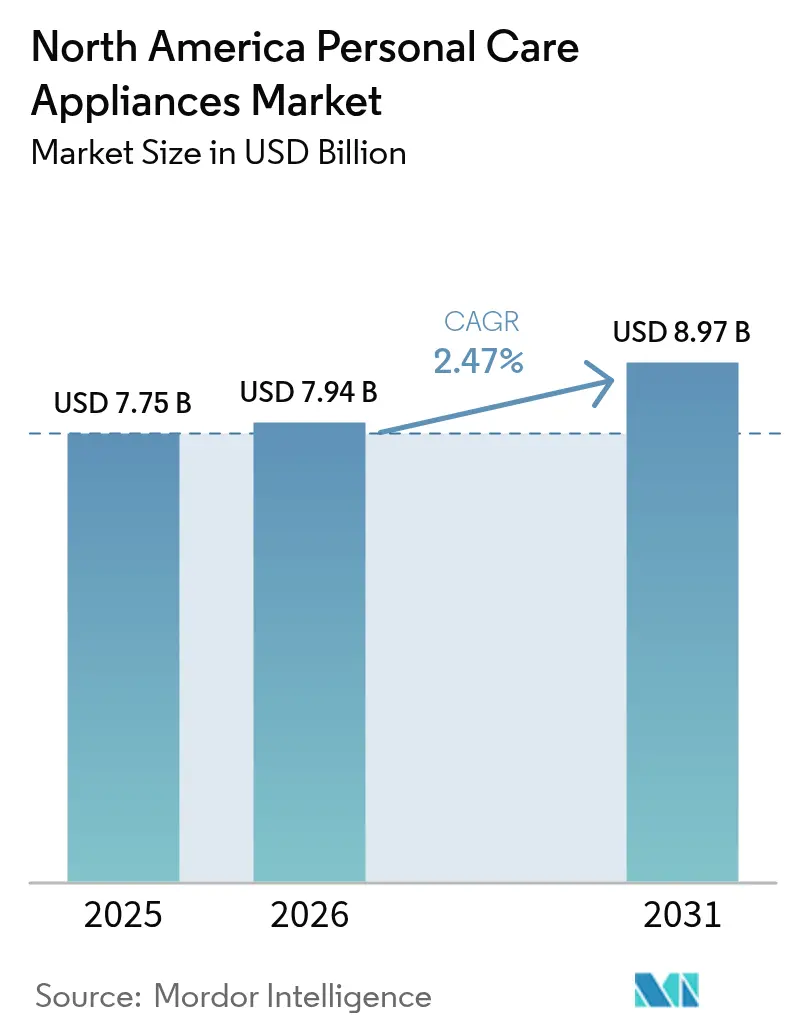
| Base Year Market Size (2025) | USD 7.75 Billion |
| Market Size (2026) | USD 7.94 Billion |
| Market Size (2031) | USD 8.97 Billion |
| Growth Rate (2026 - 2031) | 2.47 % |
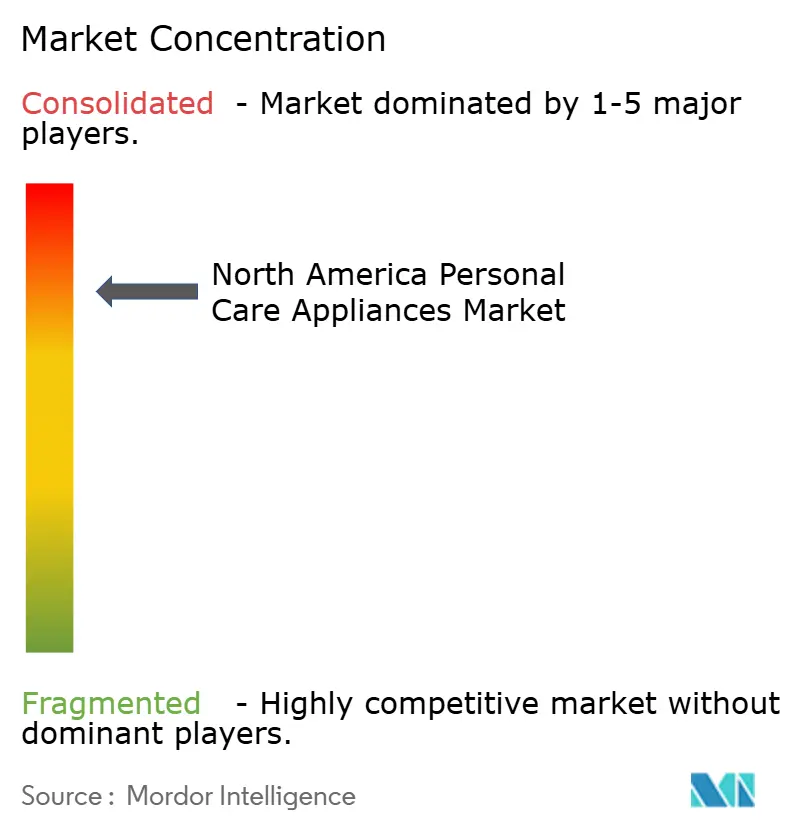
| Market Concentration | High |
Major Players
*Disclaimer: Major Players sorted in no particular order Image © Mordor Intelligence. Reuse requires attribution under CC BY 4.0. |
|
North America Personal Care Appliances Market Analysis by Mordor Intelligence
The North American personal care appliances market size in 2026 is estimated at USD 7.94 billion, growing from 2025 value of USD 7.75 billion with 2031 projections showing USD 8.97 billion, growing at 2.47% CAGR over 2026-2031. This growth trajectory suggests a maturing market where innovation cycles and consumer behavior shifts drive value creation more than volume expansion. The relatively modest growth rate indicates that market leaders must compete on technological differentiation and operational efficiency rather than riding demographic tailwinds. The personal care appliances market is maturing, so value creation now depends more on technology upgrades, premium positioning, and razor-thin operational efficiency than on basic unit expansion. Competitive intensity has therefore shifted toward cordless power performance, IoT-enabled functionality, and gender-neutral design that can justify premium price points in an environment where consumers already own core devices. E-commerce’s rise reshapes discovery and purchasing habits, forcing brands to build direct relationships while managing margin pressure from online price transparency. Manufacturers that master battery innovation, data-driven personalization, and omnichannel fulfillment are best positioned to capture the next wave of replacement-driven demand.
Key Report Takeaways
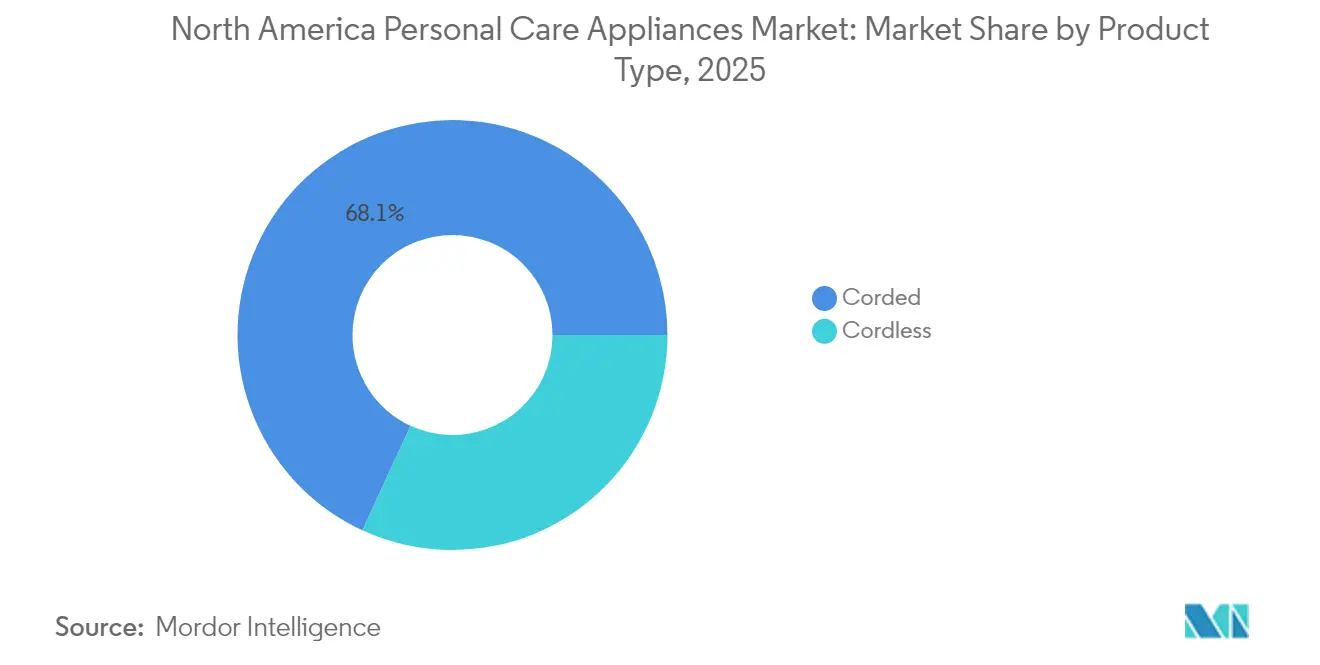
- By product type, corded devices retained 68.12% of the personal care appliances market in 2025, while cordless devices are forecast to expand at 2.78% CAGR through 2031.
- By product category, hair-styling appliances led with 32.86% of personal care appliances market share in 2025; oral care is projected to post the fastest 3.14% CAGR through 2031.
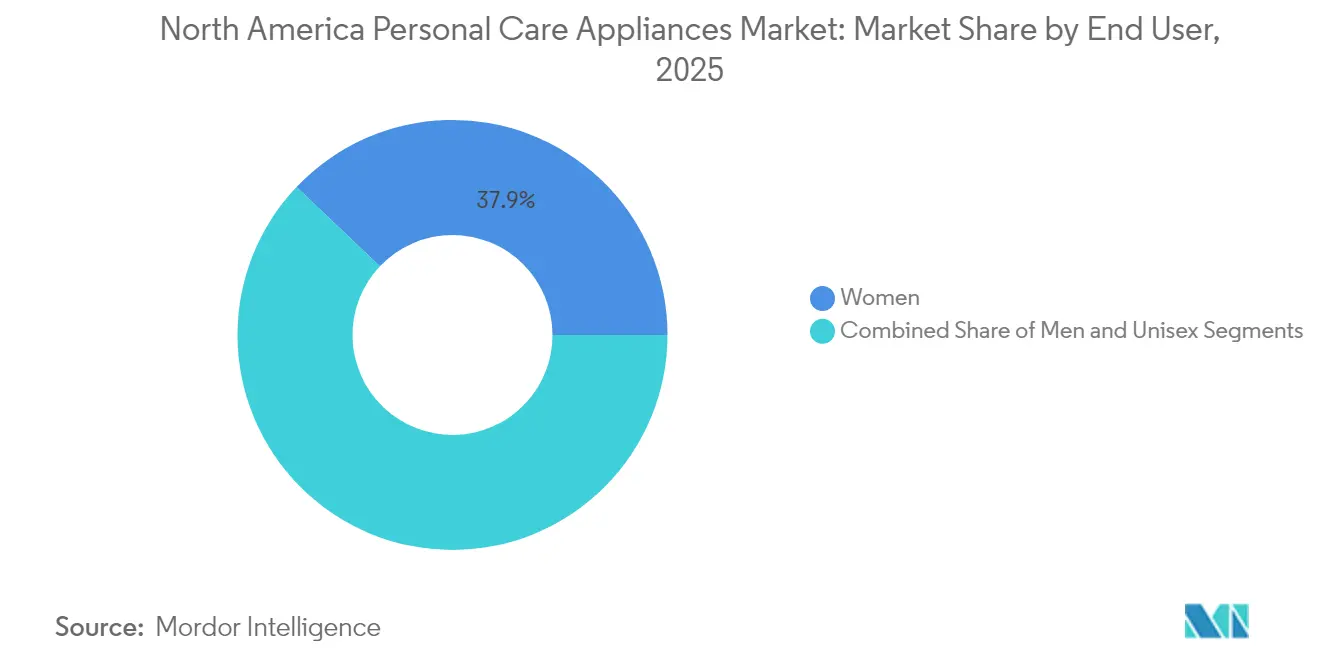
- By end user, women accounted for 37.92% revenue in 2025; men are expected to record the highest 3.47% CAGR to 2031.
- By distribution channel, online retail captured 47.65% of the personal care appliances market size in 2025 and is advancing at a 3.78% CAGR through 2031.
- By geography, the United States held 84.12% of regional revenue in 2025, whereas Mexico is poised to post the quickest 4.05% CAGR through 2031.
Note: Market size and forecast figures in this report are generated using Mordor Intelligence’s proprietary estimation framework, updated with the latest available data and insights as of 2026.
North America Personal Care Appliances Market Trends and Insights
Drivers Impact Analysis*
| Driver | (~) % Impact on CAGR Forecast | Geographic Relevance | Impact Timeline |
|---|---|---|---|
| Strong emphasis on self-grooming drives the market | +0.8% | Strongest in United States urban centers | Medium term (2-4 years) |
| Technological advancement supports the market | +0.6% | North America and other developed markets | Long term (≥ 4 years) |
| Influence of social media platform and celebrity endorsement | +0.4% | United States and Canada; spillover to Mexico | Short term (≤ 2 years) |
| Rising popularity of cordless rechargeable styling tools among travelers | +0.3% | Concentrated in business-travel hubs | Medium term (2-4 years) |
| Deterring oral health drives the market | +0.2% | North America; aging demographics | Long term (≥ 4 years) |
| Growth of smart personal care appliances | +0.2% | United States and Canada early adopters | Long term (≥ 4 years) |
| Source: Mordor Intelligence | |||
Strong emphasis on self-grooming drives the market
Post-pandemic workplace dynamics have transformed grooming investment trends. The adoption of hybrid work models has created dual grooming requirements for virtual meetings and in-person engagements. Professional appearance expectations now extend beyond traditional office settings to include home-based video conferencing, driving demand for efficient styling appliances that ensure consistent results throughout the day. Metropolitan regions, particularly Toronto, Ontario, which recorded 3,674.2 thousand employed individuals in February 2024, according to Statistics Canada, exhibit a heightened emphasis on grooming[1]Source: Statistics Canada, "Labour force characteristics, three-month moving average, seasonally adjusted, inactive", www.statcan.gc.ca. The shift toward "camera-ready" grooming has significantly boosted the demand for compact, high-performance devices capable of delivering salon-quality results in minimal time. Consumer spending patterns demonstrate a preference for premium appliances that optimize daily grooming routines while maintaining professional standards. This trend aligns with the broader wellness movement, where personal grooming is perceived as both a self-care practice and a professional investment, supporting higher price points for technologically advanced appliances.
Technological advancement supports the market
Smart connectivity integration represents the next competitive battleground, with manufacturers embedding IoT capabilities to create ecosystem lock-in effects and recurring revenue streams through app-based services. Advanced battery technologies, particularly lithium-ion improvements, have enabled cordless devices to match corded performance while offering superior portability and safety features. Heat management innovations, including ceramic and tourmaline coatings, address long-standing consumer concerns about hair damage while enabling faster styling times. The integration of artificial intelligence for personalized styling recommendations and usage optimization creates differentiation opportunities that extend beyond hardware specifications. Regulatory frameworks, including FDA device classification standards, continue to evolve to accommodate smart features while maintaining safety protocols according to U.S. Food and Drug Administration.
Influence of social media platform and celebrity endorsement
Social media platforms have redefined product discovery and purchasing behavior. Influencer-led demonstrations, supported by integrated e-commerce functionalities, are now driving immediate sales conversions. Additionally, celebrity endorsements have transitioned from traditional advertising to include product co-development collaborations, fostering authentic narratives that align with target audience preferences. The rise of micro-influencers has decentralized product promotion while enabling precise demographic targeting, particularly effective for niche segments like personal care appliances. Moreover, user-generated content and tutorial videos have emerged as key consumer research tools, prompting brands to shift marketing budgets toward content creation and influencer partnerships instead of conventional advertising. However, changes in platform algorithms can significantly affect brand visibility, presenting both opportunities and challenges for businesses heavily reliant on social media marketing strategies.
Rising popularity of cordless rechargeable styling tools among travelers
With the resurgence of business travel and the expansion of leisure travel, there is an increased focus on portable grooming solutions designed to perform reliably across varied electrical infrastructures. Enhanced battery technology has bridged the performance gap between corded and cordless devices, driving greater adoption of cordless options among professional users. Travel-oriented features, such as dual voltage compatibility and compact charging cases, have evolved into standard offerings, reflecting manufacturers' strategic prioritization of mobility. The number of inbound Canadian visitors to the United States was 20.24 million in 2024, according to the International Trade Administration[2]Source: International Trade Administration, “Survey of International Air Travelers Results 2024”, www.trade.gov. Interestingly, the rise of remote work has led to more frequent travel for in-person meetings, boosting demand for appliances that deliver consistent performance regardless of location. Additionally, the complexities of international travel, including differing electrical standards and voltage requirements, continue to drive advancements in universal compatibility features.
Restraints Impact Analysis*
| Restraint | (~) % Impact on CAGR Forecast | Geographic Relevance | Impact Timeline |
|---|---|---|---|
| High cost of advanced appliances | -0.3% | Mexico; especially price-sensitive segments | Short term (≤ 2 years) |
| Concerns over heat damage and safety | -0.2% | North America; reinforced by regulatory scrutiny | Medium term (2-4 years) |
| Increasing preference for long-term styling treatments | -0.2% | United States and Canada urban markets | Long term (≥ 4 years) |
| Proliferation of counterfeit products | -0.1% | Cross-border e-commerce channels | Short term (≤ 2 years) |
| Source: Mordor Intelligence | |||
High cost of advanced appliances
Premium pricing strategies for technologically advanced appliances create distinct market segmentation, restricting the addressable customer base, particularly during periods of economic uncertainty when discretionary spending is under pressure. The price disparity between basic and smart-enabled devices is often evident, resulting in a value perception gap that many consumers find difficult to justify based on functional advantages alone. Financing options and subscription models are emerging approaches to mitigate price sensitivity; however, their adoption remains limited compared to other consumer electronics categories. Economic challenges and inflationary pressures have shifted consumer preferences toward value-oriented purchases, potentially extending the adoption cycles for premium appliances. Manufacturers face margin pressures as they strive to balance the integration of advanced features with the need for competitive pricing in an increasingly price-sensitive market.
Concerns over heat damage and safety
Consumer awareness regarding heat-related hair damage has grown substantially, driven by social media campaigns and professional stylists promoting heat protection practices. Negative publicity stemming from safety incidents and product recalls continues to impact the perception of high-temperature styling devices. Regulatory oversight, particularly from the Consumer Product Safety Commission, has intensified, imposing stricter testing standards and increasing liability risks for manufacturers. Advancements in temperature control and heat distribution technologies present opportunities to address safety concerns but also introduce higher production costs. Despite the significant investment required, initiatives focused on consumer education and enhanced safety features are critical for sustaining market credibility and driving long-term growth. As consumers become more discerning, brands are compelled to prioritize transparency and safety in their offerings. This shift not only underscores the evolving landscape of the heat styling market but also highlights the delicate balance between innovation and consumer trust.
*Our forecasts treat driver/restraint impacts as directional, not additive. The impact forecasts reflect baseline growth, mix effects, and variable interactions.
Segment Analysis
By Product Type: Cordless Innovation Accelerates Despite Corded Dominance
Corded appliances maintain market leadership with 68.12% share in 2025, reflecting established consumer preferences for consistent power delivery and unlimited usage duration. However, cordless devices represent the future growth engine at 2.78% CAGR through 2031, driven by battery technology improvements and changing lifestyle patterns that prioritize mobility and convenience. The performance gap between corded and cordless devices has narrowed significantly, with lithium-ion battery advances enabling cordless tools to deliver comparable power output and styling effectiveness.
Professional users and frequent travelers increasingly prefer cordless options despite higher initial costs, recognizing the operational flexibility and safety benefits of eliminating cord entanglement risks. Charging infrastructure improvements, including fast-charging capabilities and wireless charging integration, address traditional cordless limitations while creating opportunities for ecosystem development. The transition toward cordless dominance appears inevitable, though the timeline depends on continued battery technology advancement and cost reduction initiatives that make cordless options accessible to price-sensitive consumer segments.



By Product Category : Oral Care Disrupts Hair-Styling Leadership
Hair-styling accounted for 32.86% revenue in 2025, underscoring its historical centrality to the personal care appliances market. The segment’s maturity, however, pushes incumbents to differentiate through smart sensors that adjust heat to hair moisture and texture. AI-driven apps now capture user profiles and recommend exact temperature curves, reinforcing brand loyalty and building data moats. As competition intensifies, brands are also exploring collaborations with beauty influencers to amplify their market reach. Moreover, sustainability is becoming a focal point, with brands investing in eco-friendly materials and energy-efficient technologies.
In contrast, oral-care devices, smart toothbrushes, irrigators, and UV sanitizers,are expanding at a 3.14% CAGR, the fastest within the personal care appliances market. Accelerants include aging demographics grappling with gum disease, insurer emphasis on preventive dentistry, and dentists endorsing connected brushing routines that track coverage zones. Subscription brush-head replacements stabilize the manufacturer's cash flow, enabling lower upfront prices. Education campaigns describe unobtrusive links between oral health and systemic conditions such as cardiovascular disease, further legitimizing regular device use. Furthermore, tech giants are eyeing the oral-care segment, hinting at potential collaborations or acquisitions. As a result, traditional players are ramping up R&D to fend off these tech-driven entrants.
By End User: Men’s Grooming Momentum Challenges Women’s Market Leadership
Women purchased 37.92% of devices in 2025, retaining the largest slice of the personal care appliances market demand thanks to established beauty regimens encompassing hair tools, epilators, and facial devices. Marketing historically emphasized feminine aesthetics, color palettes, and salon-grade results. However, men are recording the quickest 3.47% CAGR, fueled by workplace shifts that regard neat appearance as part of professional etiquette. Beard-care culture, shaped by social media, promotes regular trimming, edging, and fade maintenance with precision clippers. As grooming becomes a focal point for many, the demand for high-quality devices is surging. This shift indicates a broader societal acceptance of personal grooming across genders.
Manufacturers answer with charcoal-hued, angular-lined devices packaged with multipurpose guards. Feature sets mirror women’s lines, cordless torque, and waterproof construction, but emphasize rugged design. Simultaneously, the unisex space grows as neutral palettes simplify shelf SKUs and resonate with Gen Z’s rejection of binary branding. Cross-over marketing positions devices as household assets rather than gender-specific items, helping firms squeeze more volume from each core technology platform. As brands innovate, they're not just catering to traditional markets but are also tapping into emerging trends. This adaptability showcases the industry's keen awareness of shifting consumer dynamics.
By Distribution Channel: Online Retail Achieves Dual Leadership
In 2025, digital storefronts accounted for 47.65% of total sales, and with a projected CAGR of 3.78%, they're set to eclipse more revenue by 2031. E-commerce platforms boast advantages like a vast product assortment, peer reviews, price-matching algorithms, and swift one-day shipping. Moreover, they provide brands with invaluable first-party demand data, facilitating ongoing product enhancements. Features like livestream tutorials, augmented-reality try-ons, and chat-based consultations effectively mimic in-store demonstrations on a larger scale. For pricier devices, online platforms offer integrated financing options, broadening their appeal to budget-conscious shoppers. As internet penetration rises in various regions, e-commerce continues to flourish. In 2023, the International Telecommunication Union reported that 94% of Canadians were internet users.
In response, physical retail chains are enhancing the shopping experience: from live styling bars and dental-care kiosks to instant device engraving, they're personalizing purchases in ways online platforms haven't matched. Some manufacturers are employing hybrid strategies, offering exclusive colorways or accessory bundles to brick-and-mortar partners, ensuring they remain visible on shelves. Yet, the inherent advantages of online shopping—like 24/7 availability and seamless checkout—are steering more manufacturer investments towards digital channels.
Geography Analysis
The United States represented 84.12% of regional revenue in 2025, making it the anchor of the personal care appliances market. Saturation means growth chiefly comes from premium upgrades and smart add-ons rather than first-time purchases. Consumers prioritize performance and durability over price, allowing brands to deploy subscription consumables and extended warranty upsells. The FDA and CPSC regulate safety and connected-device claims, raising compliance costs but ensuring consumer trust.
Mexico delivers the highest 4.05% CAGR through 2031. Disposable income growth, urban migration, and influencer culture expose consumers to US grooming trends. Retail infrastructure modernizes via mall openings and cross-border shipping hubs; yet smartphone-driven online shopping accelerates fastest, given high social-media usage. Currency stability and free-trade frameworks keep import duties manageable, though retailers still face logistical hurdles to reach rural areas. Major brands often test value-engineered SKUs priced below premium US lines to seed adoption, then up-sell features as wages climb.
Canada is steady, with consumers valuing eco-labels and energy efficiency. Seasonal extremes spur demand for anti-static hair tools in winter and frizz-control irons in humid summers. Regulations mirror US standards, giving manufacturers scale leverage across both markets. Meanwhile, the Rest of North America, including Caribbean territories, presents niche potential via tourism-driven duty-free outlets and hospitality supply chains.
Regulatory Landscape
In North America, personal care appliances fall under different compliance pathways depending on intended use and the claims made. Consumer electrical grooming tools are primarily overseen for product safety by the US Consumer Product Safety Commission (CPSC), while products making therapeutic claims, such as certain skin treatment or hair regrowth positioning, can be classified as medical devices under the US Food and Drug Administration (FDA) framework under the FD&C Act. This split affects labeling, substantiation requirements, and the documentation burden for market access, especially as brands add sensors, apps, and health-adjacent features.
Electrical safety requirements and recognized standards remain central for hair care and grooming devices sold in the United States and Canada. UL 859 is widely used as a core safety reference for household electric personal grooming appliances, and related requirements are referenced in CPSC guidance for categories such as hand-supported hair dryers. In Canada, Health Canada oversight includes post-market compliance for cosmetics and related safety expectations, including the Cosmetic Ingredient Hotlist as a reference point for restricted or prohibited ingredients, and a Cosmetic Notification Form (CNF) filing requirement within 10 days of first sale for products regulated as cosmetics. This reinforces the need for regulatory screening and accurate product classification across the region.
Competitive Landscape
The North American personal care appliances market features a consolidated structure. The key players in the market include Procter & Gamble Company, Panasonic Corporation, Koninklijke Philips N.V., Spectrum Brands, Inc., among others. The leading players in the North American personal care appliances market enjoy a dominant presence across the region. These companies leverage their extensive distribution networks and brand recognition to capture a significant market share. As consumer preferences evolve, these key players are also adapting their product offerings to stay relevant.
Brand loyalty is a high-impact factor, with the features being a prime parameter. Companies need to have a strong focus on quality, and this attribute plays a pivotal role in brand positioning. Companies are increasing their investments in research and development facilities and marketing and expanding their distribution channels to maintain their position in the market and to offer innovative offerings across the region. With the rise of e-commerce, brands are also enhancing their online presence to reach a broader audience. Furthermore, collaborations with influencers and beauty experts are becoming a common strategy to boost brand visibility and trust.
Product launches now bundle cloud dashboards for habit tracking or AI-derived styling feedback. Subscription head-replacement plans mimic printer-ink models, yielding recurring revenue. Brands also explore circular-economy pilots, trade-in credits for old tools, and recycled-plastic housings to satisfy escalating ESG scrutiny. Standards bodies like GS1 refine barcode and packaging norms that support traceability across e-commerce supply chains. Overall, sustaining edge requires harmonizing multiple disciplines: hardware engineering, mobile software, brand storytelling, and agile logistics.
North America Personal Care Appliances Industry Leaders
-
Koninklijke Philips N.V.
-
Wahl Clipper Corporation
-
Panasonic Corporation
-
Spectrum Brands, Inc.
-
Procter & Gamble Company
- *Disclaimer: Major Players sorted in no particular order

Market Opportunities and Future Outlook
Premiumization is increasingly anchored in on-device intelligence and real-time guidance across core categories, creating room for brands that can convert sensor data into consumer-visible outcomes in oral care, shaving, and hair styling. In July 2026, Philips introduced an electric toothbrush in the Sonicare lineup with on-device AI and real-time spatially aware brushing guidance, illustrating how software-led differentiation is entering mass premium appliances. Hair styling is seeing a parallel shift as AI-driven heat management moves into commercial products, supporting higher ASPs through measurable performance and damage-mitigation narratives.
Repairability and circular-economy propositions are also becoming a commercial lever alongside compliance and ESG scrutiny. Programs such as Philips Refurb Edition and Fixables have been highlighted as part of 2026 personal care product direction, creating pathways for refurbished SKUs, trade-in models, and longer lifecycle accessory ecosystems. With online retail already a major channel in the region (47.65% of revenue in 2025), brands can use direct-to-consumer education (tutorials, guided routines, connected-app onboarding) to support replenishment and accessory subscriptions, including brush heads, blades, and other consumables, which helps stabilize repeat revenue in a mature replacement-driven market.
Recent Industry Developments
- July 2026: Philips announced the Sonicare next-generation DiamondClean 9900 Prestige, positioned as its first electric toothbrush powered by on-device AI and designed to provide real-time, spatially aware brushing guidance. The launch raises the performance bar in connected oral care and pushes competitive differentiation toward embedded intelligence and feedback loops rather than hardware-only upgrades.
- May 2026: Panasonic expanded its men’s grooming lineup with the ARC5 PRO 5-blade electric razor. The release reinforces the ongoing premiumization cycle in shaving and highlights how incumbents keep shelf presence and pricing power by iterating on flagship platforms.
- October 2024: Andis Company introduced its Explorer Series Trimmers for body and groin grooming, designed for safer and more comfortable trimming in hard-to-reach areas. The product signals continued segmentation within grooming appliances, where purpose-built designs and safety-forward features are used to capture incremental household spend.


Research Methodology Framework and Report Scope
Market Definition and Coverage
For this methodology, the market covers revenue from electric and battery-powered appliances used for personal grooming and daily care across North America, counted at the point of sale into the market (manufacturer-level revenue, converted to USD).
Scope exclusions: We exclude non-electrical manual tools and replacement consumables such as razor blades, brush heads, and creams unless they are bundled with an appliance.
Segmentation Overview
-
By Product Type
- Corded
- Cordless
-
By Product Category
-
Shaving and Grooming
- Shavers
- Trimmers
- Epilator
-
Hair Styling
- Hair Straightener
- Hair Dryer
- Hair Curler
- Others
- Beauty Appliances
- Oral Care
-
Shaving and Grooming
-
By End User
- Men
- Women
- Unisex
-
By Distribution Channel
- Specialist Stores
- Supermarkets/Hypermarkets
- Online Retail Stores
- Other Distribution Channels
-
By Geography
- United States
- Canada
- Mexico
- Rest of North America
Data Sources, Market Sizing, and Validation
Desk Research
Desk research was used to set the boundaries of what qualifies as a personal care appliance, and then to anchor the model using repeatable public data points. We reviewed official statistical series and trade signals that help explain how demand moves across the US, Canada, Mexico, and the rest of the region.
Common source types included publications and data tables from agencies such as the US Census Bureau, the US Bureau of Labor Statistics (especially CPI for small appliances), Statistics Canada, and UN Comtrade for trade direction checks. We also used sources such as patent databases for product feature intensity, company annual reports and investor presentations for category commentary, and reputable press and retailer disclosures to understand channel mix shifts. Where needed, paid subscriptions were used only for company financials, news screening, and shipment-level import and export checks. These examples are not exhaustive, and we reviewed additional public sources to collect, validate, and clarify the inputs used in the model.
Primary Interviews and Surveys
Primary work was used to stress-test the desk model assumptions that are hard to observe directly, especially price ladders, promotion intensity, and how quickly premium devices are replacing basic models. We spoke with a spread of industry participants, including brand-side category leaders, distributors, retail channel specialists, and service ecosystem participants, to confirm what is selling, where it is selling, and which features are changing average selling prices. Since this is a North America study, interviews were balanced across the US, Canada, and Mexico to avoid overfitting the model to a single country trend.
Distribution of primary research fieldwork respondents
| Company type | Respondent position |
|---|---|
| Top tier: 28% | CXOs: 14% |
| Mid tier: 55% | Functional/Unit leaders: 39% |
| Smaller Players: 17% | Managers: 47% |
Market-Sizing & Forecasting
The core sizing follows a top-down and bottom-up blend, where a demand pool is built from category-level sales signals and then checked using supplier and channel reality checks. For the top-down build, we mapped the addressable appliance categories and used observed pricing and penetration patterns to reconstruct spend across the region, and then split totals by country using macro indicators and retail data.
To keep the model grounded, a few practical variables were tracked each year, including small appliance inflation, premium versus mass mix shifts, online share movement, product replacement cycles for grooming and oral care devices, and import intensity for finished appliances. Bottom-up approximations were used selectively, such as rolling up sampled brand revenues where disclosure exists and using ASP multiplied by shipment proxies for specific categories, with gaps handled through peer benchmarks and interview-led ranges.
For forecasting, scenario analysis was used to reflect different outcomes for discretionary spending, promotion intensity, and premium adoption, and then the final path was selected based on the most consistent view across expert inputs. We kept assumptions simple enough to be re-run annually, which supports clear explanations of the drivers on client calls.
Data Validation & Update Cycle
Validation is done in several steps so the final number is not dependent on a single dataset. Our analysts compare the market totals against independent signals such as trade direction, price movement consistency, and country-level retail and appliance indicators, and then anomalies are reviewed and corrected before sign-off.
If a mismatch remains large, respondents are re-contacted to understand whether the issue comes from scope, channel accounting, or a one-time event such as stocking and destocking. Reports are refreshed annually, and interim updates are made when major events materially change assumptions such as inflation, currency movement, or channel disruptions. Before delivery, a final analyst pass is completed so the client receives the latest updated view.
Mordor Intelligence's North America Personal Care Appliances Market Size Compared Against Other Published Estimates
Published market sizes for North America personal care appliances can differ even when they sound similar, because the scope lines are drawn differently and the pricing logic is not always the same. The biggest swings usually come from which countries are counted in North America, which product groups are treated as appliances versus adjacent consumables, and how the base year is chosen.
Import and export direction checks, CPI-based price movement, and channel mix validation from interviews are used as evidence to keep Mordor Intelligence aligned to a repeatable demand pool that matches the included appliance categories and country coverage. Differences also show up when one estimate uses an older base year, applies a faster premiumization curve to ASPs, or includes a narrower or wider set of devices such as massagers and heating pads.
Benchmark comparison
| Source | Market Size | Gaps in Research Methodology |
|---|---|---|
| Mordor Intelligence | USD 7.75 B (2025) | |
| Regional Consultancy A | USD 6.70 B (2024) | Uses a different base year and appears to frame North America mainly around the US and Canada, which can reduce the total versus a full regional roll-up. The forecast horizon is longer, and the implied growth path can lift later-year values even if the starting point is smaller. |
| Trade Journal B | USD 3.97 B (2024) | Covers household beauty appliances rather than the full personal care appliance set, which typically excludes parts of grooming and oral care. This narrower product boundary and different category mix can materially lower the stated market value. |
The spread across the table mostly comes from scope boundaries and base-year alignment, not from simple math errors. When the included countries and appliance categories are kept consistent, and the price and channel checks are applied in a repeatable way, the resulting market size is easier to trace back to clear demand drivers and update each year with fewer surprises.


Key Questions Answered in the Report
What is the current value of the North American personal care appliances market?
The personal care appliances market stands at USD 7.94 billion in 2026 and is projected to hit USD 8.97 billion by 2031.
Which product category dominates sales?
Hair-styling appliances hold the largest 32.86% share of regional revenue, though oral-care devices are expanding fastest.
How important is e-commerce to future growth?
Online retail already accounts for 47.65% of revenue and is growing at 3.78% CAGR, making it the most influential distribution channel.
Which country offers the quickest growth opportunity?
Mexico leads with a 4.05% CAGR through 2031, driven by rising middle-class incomes, social-media influence, and improving retail infrastructure.
Page last updated on:





