
Microbial Culture Market Size and Share
Market Overview
| Study Period | 2021 - 2031 |
|---|---|
| Market Size (2026) | USD 2.32 Billion |
| Market Size (2031) | USD 2.86 Billion |
| Growth Rate (2026 - 2031) | 4.33 % |
| Fastest Growing Market | Asia Pacific |
| Largest Market | Europe |
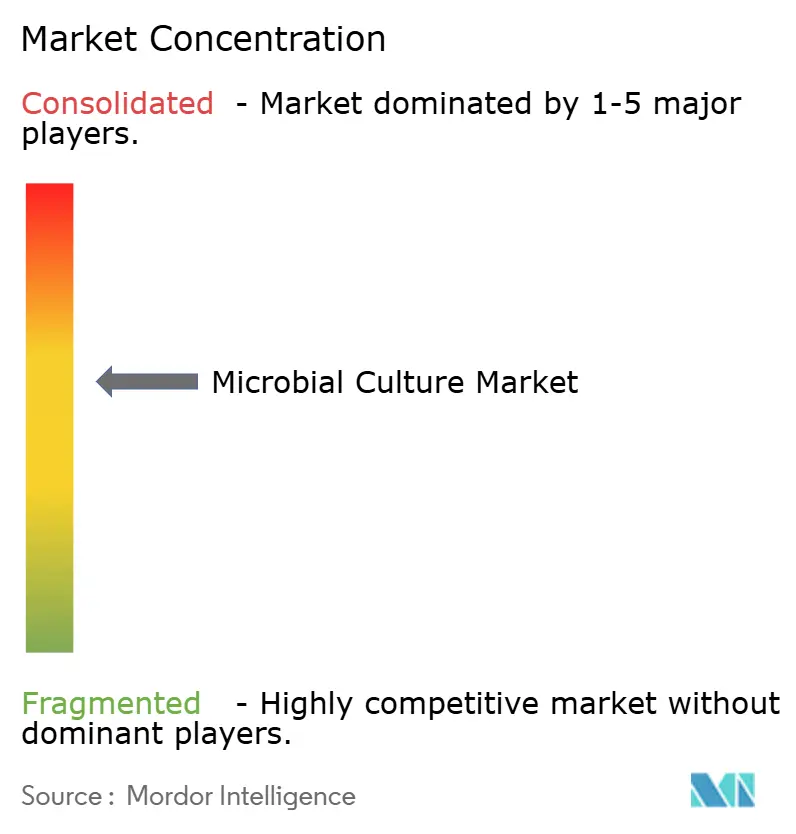
| Market Concentration | Medium |
Major Players *Disclaimer: Major Players sorted in no particular order Image © Mordor Intelligence. Reuse requires attribution under CC BY 4.0. | |
Microbial Culture Market Analysis by Mordor Intelligence
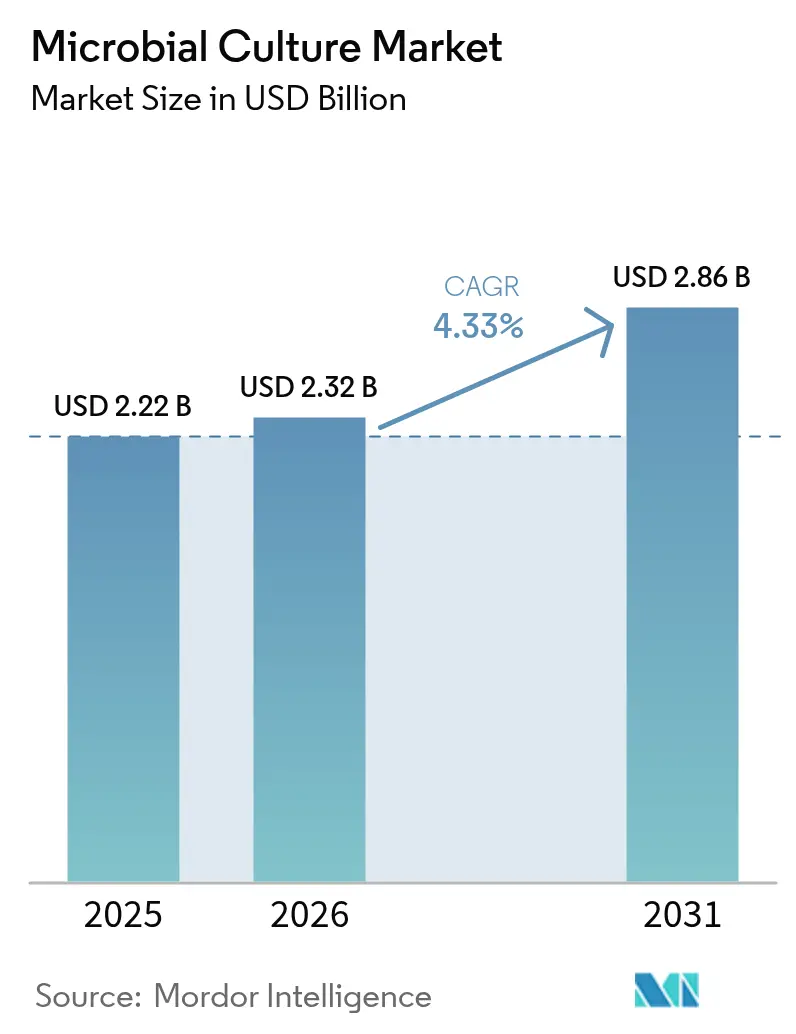
The microbial culture market size was valued at USD 2.22 billion in 2025 and estimated to grow from USD 2.32 billion in 2026 to reach USD 2.86 billion by 2031, at a CAGR of 4.33% during the forecast period (2026-2031). Investments are increasingly directed toward precision-fermentation platforms, which offer higher profit margins compared to traditional dairy production methods. Additionally, the rising demand for pharmaceutical-grade cultures is influencing price dynamics for specific bacterial and yeast strains. The market is also being shaped by consolidation among major ingredient suppliers, challenges in cold-chain logistics, and varying regulatory frameworks, which are driving changes in supplier strategies and risk assessments. While Europe remains the largest revenue contributor, the Asia-Pacific region is experiencing the highest incremental growth, driven by China's expanding fermented beverage market and India's growing focus on probiotic dairy products. Competitive advantages in the market are now determined by the depth of strain libraries, bioprotective functionalities, and the ability to achieve dual compliance with food and pharmaceutical standards without delaying market entry.
Key Report Takeaways
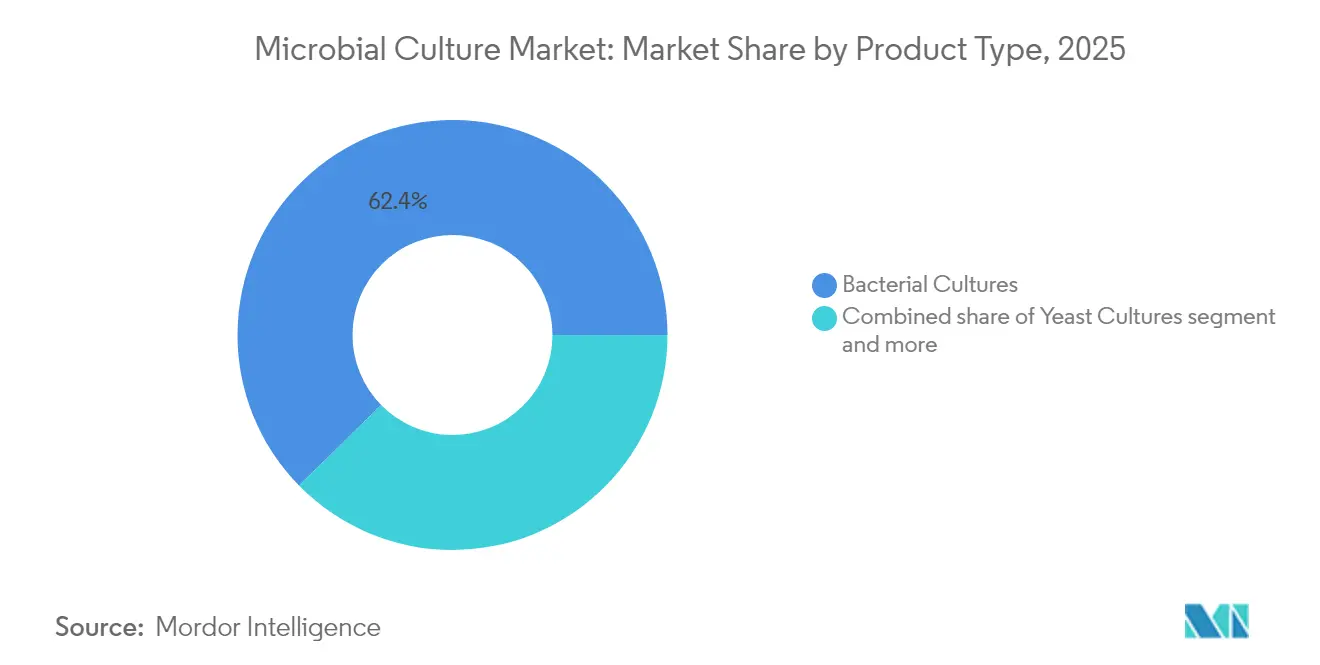
- By product type, bacterial cultures led with 62.35% of the microbial culture market share in 2025, while yeast cultures are projected to register the fastest 6.74% CAGR from 2026 to 2031.
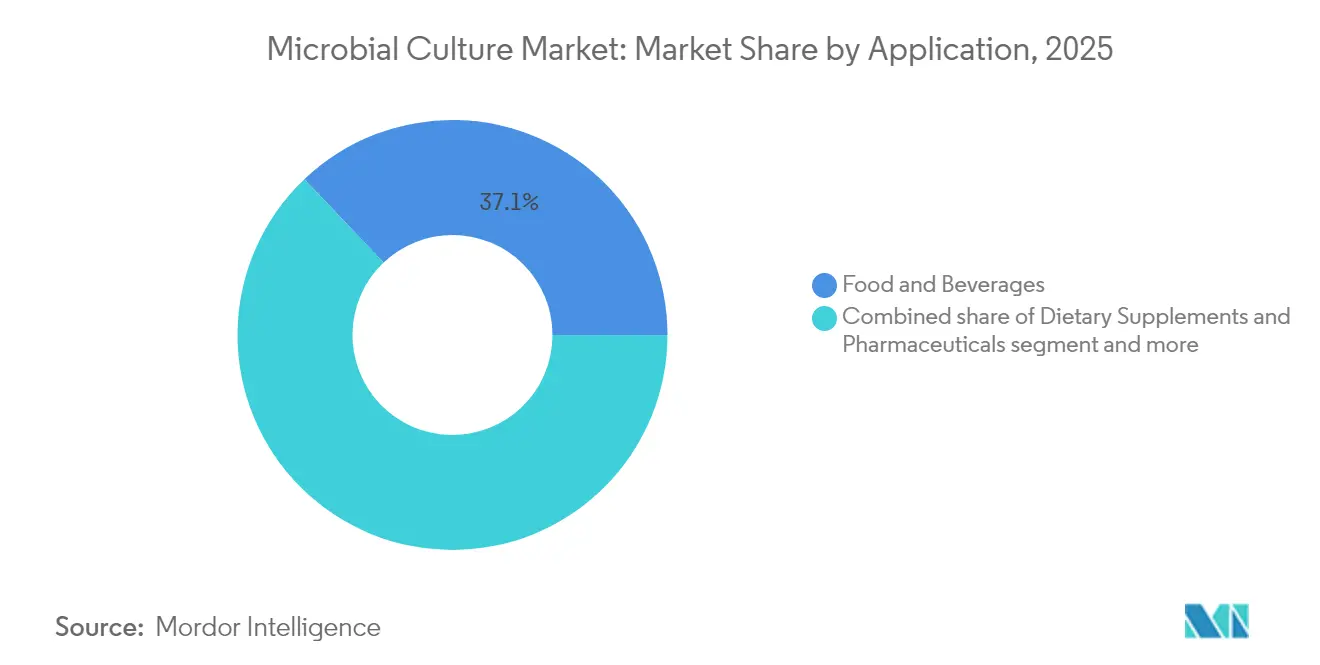
- By application, food and beverages held 37.10% of 2025 revenue, whereas dietary supplements and pharmaceuticals are forecast to expand at a 7.29% CAGR through 2031 in the microbial culture market.
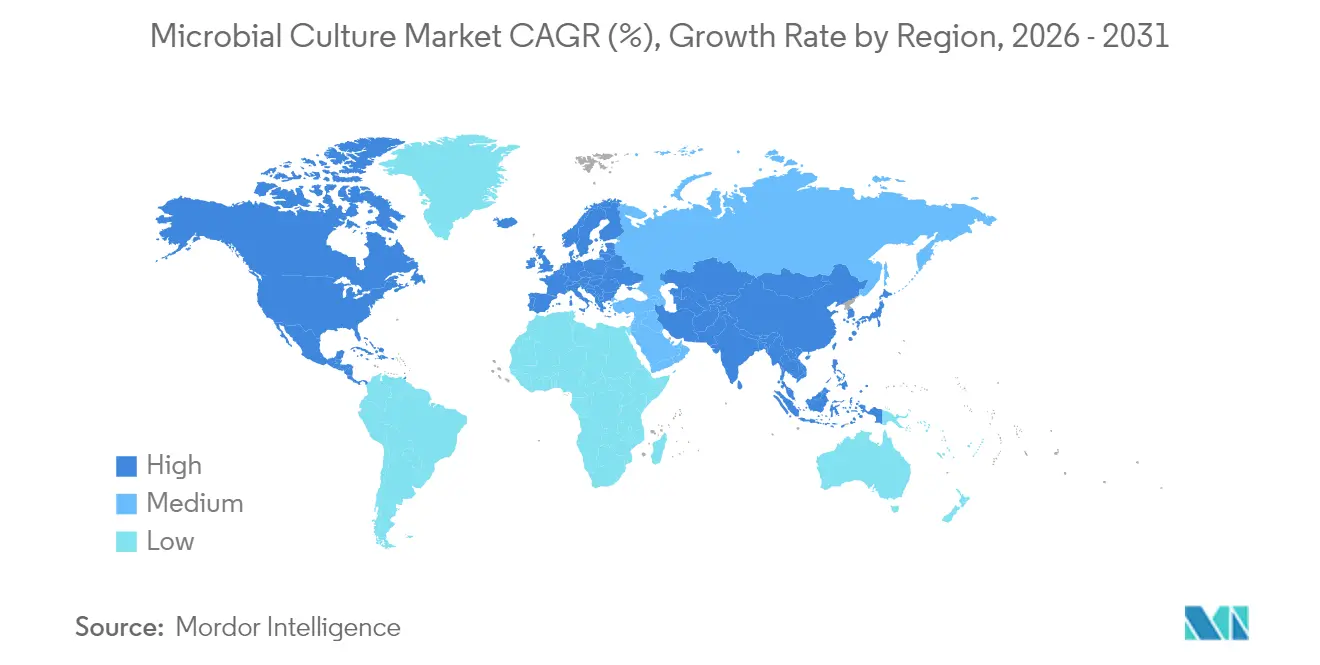
- By geography, Europe captured 31.65% of 2025 sales, but Asia-Pacific will grow the microbial culture market at a leading 5.74% CAGR in the 2026-2031 horizon.
Note: Market size and forecast figures in this report are generated using Mordor Intelligence’s proprietary estimation framework, updated with the latest available data and insights as of 2026.
Market Trends and Insights
Drivers Impact Analysis of Microbial Culture Market*
| Driver | (~) % Impact on CAGR Forecast | Geographic Relevance | Impact Timeline |
|---|---|---|---|
| Rising demand for probiotic-rich functional foods | +1.2% | Global, with Asia-Pacific and North America leading | Medium term (2-4 years) |
| Expansion of industrial biopharmaceutical fermentation capacity | +0.9% | North America and Europe, spill-over to Asia-Pacific | Long term (≥ 4 years) |
| Shift toward clean-label natural preservatives in food and beverage industry | +0.8% | Europe core, North America following | Short term (≤ 2 years) |
| Rapid adoption of precision fermentation for alternative proteins | +0.7% | North America and Europe, pilot projects in Asia-Pacific | Medium term (2-4 years) |
| Carbon-negative bioprocessing incentives in climate policies | +0.5% | Europe (Green Deal), California (LCFS), emerging in China | Long term (≥ 4 years) |
| Rising adoption in agriculture and animal feed | +0.4% | Asia-Pacific core, Latin America, spill-over to Middle East and Africa | Medium term (2-4 years) |
| Source: Mordor Intelligence | |||
Rising demand for probiotic-rich functional foods
Consumer demand for gut-health-focused products is driving significant changes in dairy and beverage portfolios. Probiotic yogurt and kefir now represent over 40% of chilled-dairy shelf space in Western European retailers, reflecting a growing preference for functional foods. Strain-specific claims, such as Lactobacillus rhamnosus GG for immune support and Bifidobacterium lactis HN019 for digestive health, are increasingly transitioning from dietary supplements to mainstream food products. This shift necessitates the development of cultures that can withstand pasteurization, low pH levels, and extended shelf life while maintaining their efficacy. Furthermore, culture suppliers are actively entering co-development agreements with plant-based brands, focusing on creating stable and cost-effective strains capable of fermenting substrates such as oats, soy, or peas without producing off-flavors. These collaborations are critical as plant-based products continue to gain traction among health-conscious consumers. Regulatory developments, such as EFSA's 2024 update to its QPS list, which added three new Lactiplantibacillus species, are expected to streamline the approval process and reduce time-to-market for new product launches in Europe, further supporting innovation in this space [1].
Expansion of industrial biopharmaceutical fermentation capacity
The global biopharmaceutical fermentation capacity is expanding rapidly, driving significant growth in the microbial cultures market. With biologics, vaccines, antibody therapies, and recombinant proteins dominating pharmaceutical pipelines, large-scale microbial and mammalian fermentation has become a critical component of industrial bioprocessing. In 2024, contract development and manufacturing organizations (CDMOs) increased single-use bioreactor capacity at an unprecedented rate, adding over 500,000 liters of new stirred-tank bioreactor volume globally. A significant portion of this capacity is allocated to upstream production workflows. This expansion has directly increased the demand for microbial-derived inputs, including bacterial hydrolysates, yeast extracts, and peptones, which are essential nitrogen sources in cell-culture media. As biopharmaceutical manufacturers scale production from pilot to commercial levels, their need for consistent, high-purity microbial culture ingredients grows, driving market growth for culture media components and specialized fermentation-grade substrates.
Shift toward clean-label natural preservatives in food and beverage industry
Regulatory changes and shifting consumer preferences are driving the increased use of microbial culture as natural preservatives in the food and beverage industry. The European Commission’s 2024 revision of Regulation (EC) No. 1333/2008, which imposed stricter limits on sodium benzoate in ready-to-eat salads and restricted the use of nitrites and synthetic sorbates in meats and baked goods, has encouraged manufacturers to explore clean-label alternatives [2]. According to IFIC 2024, 11% of consumers now favor clean-label ingredients, which is boosting demand for bioprotective cultures that generate bacteriocins, organic acids, and antifungal metabolites directly within the product [3]. The performance and effectiveness of these cultures are driving their adoption across Europe. For instance, Lactobacillus sakei and Pediococcus acidilactici are now commonly used in sliced deli meats in Scandinavia and Germany to control the growth of Listeria. Although bioprotective cultures add USD 0.02–0.05 per kg, a 15–25% premium compared to synthetic preservatives, their ability to align with regulatory requirements, retailer standards, and consumer preferences positions them as a significant growth factor for microbial culture in clean-label products globally.
Rapid adoption of precision fermentation for alternative proteins
The rapid expansion of precision fermentation for alternative proteins is a significant driver of growth in the global microbial culture market. Precision fermentation utilizes microbial hosts such as yeast, bacteria, and filamentous fungi to produce high-value protein ingredients, enzymes, and bioactive compounds with consistent quality and scalability. As plant-based and cell-cultured protein products gain popularity among consumers seeking sustainable, ethical, and functional alternatives to animal proteins, the demand for specialized microbial cultures, such as bacterial hydrolysates, yeast extracts, and growth-optimized strains, has increased. This trend has also driven innovation in microbial culture formulations, which are specifically designed for alternative protein applications. Companies now require cultures that enhance yield, improve functional properties, and support high-density fermentation, driving demand for performance-validated ingredients. Additionally, as precision fermentation achieves commercial scalability, microbial culture suppliers benefit from consistent demand for upstream media components and fermentation-grade nutrients. This positions precision fermentation as a long-term growth driver for the microbial culture market across the food, beverage, and nutraceutical industries.
Restraints Impact Analysis of Microbial Culture Market*
| Restraint | (~) % Impact on CAGR Forecast | Geographic Relevance | Impact Timeline |
|---|---|---|---|
| Stringent regulatory approvals | -0.6% | Global, most acute in Europe and North America | Long term (≥ 4 years) |
| Volatility in raw material supply for culture media | -0.4% | Global, with acute pressure in Asia-Pacific and South America | Short term (≤ 2 years) |
| High risk of batch contamination and product recalls | -0.5% | Global, elevated in regions with fragmented cold chains | Medium term (2-4 years) |
| High cold-chain dependence drives up logistics complexity and costs | -0.3% | Asia-Pacific, Middle East and Africa, and Latin America most affected | Medium term (2-4 years) |
| Source: Mordor Intelligence | |||
Stringent regulatory approvals
The divergence between food-safety and pharmaceutical-grade approval pathways creates a dual compliance challenge, particularly for smaller culture suppliers. While EFSA's QPS framework simplifies the process for established genera, it still requires whole-genome sequencing and antimicrobial-resistance profiling for novel strains. This process has recently taken 18 to 24 months and incurred costs ranging from EUR 300,000 to EUR 500,000 for submissions of Leuconostoc and Weissella. As a result, suppliers are strategically focusing on extending approved strains rather than developing entirely new species, which restricts the industry's capacity to address emerging applications such as fermented plant-based seafood or probiotic pet foods. Additionally, Japan's Ministry of Health, Labour and Welfare introduced new traceability requirements in 2024 for imported cultures. These regulations require country-of-origin documentation for every raw material in the growth medium, which extends lead times for non-Japanese suppliers by 8 to 12 weeks.
High cold-chain dependence drives up logistics complexity and costs
The viability of microbial culture declines rapidly above 8°C, yet temperature fluctuations during last-mile delivery remain prevalent in regions with unreliable refrigeration infrastructure. A 2024 study published in the Journal of Food Protection reported that 18% of probiotic yogurt samples in Southeast Asian markets had sub-therapeutic colony counts, attributed to cold-chain disruptions during retail distribution. This vulnerability increases logistics costs, as air-freight shipments with active temperature monitoring incur an additional USD 2 to USD 4 per kilogram compared to ambient cargo, representing a 40% to 60% premium that reduces margins for export-focused suppliers. As a result, there is a strategic shift toward lyophilized (freeze-dried) formats, which can withstand ambient storage but require rehydration protocols that food manufacturers are reluctant to adopt due to added process complexity. However, lyophilization increases production costs by USD 8 to USD 12 per kilogram, restricting its use to high-margin applications such as dietary supplements and pharmaceutical probiotics.
*Our forecasts treat driver/restraint impacts as directional, not additive. The impact forecasts reflect baseline growth, mix effects, and variable interactions.
Microbial Culture Market Segment Analysis
By Product Type:
Bacterial Dominance Faces Yeast AccelerationBacterial cultures accounted for 62.35% of the microbial culture market in 2025, playing a key role in traditional dairy, vegetable, and meat fermentations. Lactic acid bacteria from the Lactobacillus, Lactococcus, and Streptococcus genera remain essential for cheese and yogurt production, with Novozymes’ FreshQ strains achieving significant market penetration in European dairies. Propionibacterium freudenreichii contributes to extended shelf life and vitamin B12 enrichment, while Leuconostoc and Pediococcus are utilized in localized applications such as sauerkraut and salami production. Yeast cultures, projected to grow at a 6.74% CAGR, are gaining traction due to clean-label trends in bakery products, flavor innovation in craft brewing, and their role in second-generation bioethanol co-products.
The market size for bacterial cultures is expected to grow steadily, however, yeast cultures are anticipated to capture a portion of the market share as non-dairy and bioethanol applications expand. Composite cultures, which integrate bacteria, yeast, and mold in a single inoculation, are gaining prominence in plant-based dairy alternatives. These multi-strain blends are instrumental in achieving traditional mouthfeel in such products. This trend is driving investments in strain libraries toward adaptable pipelines capable of serving both dairy and legume-based substrates while maintaining flavor consistency.

By Application:
Pharmaceutical Surge Outpaces Food MaturityFood and beverages accounted for 37.10% of the 2025 revenue and continue to dominate the microbial culture market. Within the food segment, dairy remains the leading category, although per-capita yogurt consumption is stabilizing in mature Western economies. Despite this dominance, dietary supplements and pharmaceuticals are projected to grow at a faster rate, with a CAGR of 7.29% through 2031. Growth in dietary supplements is primarily driven by the increasing demand for shelf-stable probiotic formats with guaranteed CFU counts, which cater to consumer preferences for convenience and efficacy.
Pharmaceutical live biotherapeutic products have become viable under the FDA’s 2024 guidance, marking a significant milestone for the industry. This regulatory development opens the door for insurance reimbursement, which could enhance profit margins while imposing stricter compliance requirements. Meanwhile, the "Others" category, encompassing animal feed and agriculture, is gaining momentum. The EU’s ban on prophylactic antibiotics has incentivized the adoption of Bacillus-based alternatives, which not only improve feed-conversion ratios but also align with the growing focus on sustainable and antibiotic-free farming practices.
Geography Analysis
Europe Microbial Culture Market
Europe accounted for 31.65% of the microbial culture market in 2025, supported by stringent Protected Designation of Origin (PDO) rules that mandate the use of traditional cultures for heritage cheeses such as Parmigiano-Reggiano and Roquefort. Germany, France, and Italy collectively account for over 60% of European demand, driven by high cheese consumption and the increasing demand for clean-label requirements in processed meat products. Investments are also focused on probiotic feed additives, aligning with the EU Green Deal's goal of reducing antimicrobial use by 50% by 2030. Although Europe's mature market limits volume growth, incremental advancements are being observed in bioprotective meat cultures, plant-based dairy alternatives, and precision fermentation inputs.
APAC Microbial Culture Market
The Asia-Pacific region is projected to grow at a compound annual growth rate (CAGR) of 5.74% through 2031, driven by factors such as China's expanding fermented-beverage market, India's cooperative upgrade program for yogurt quality, and Japan's nationwide promotion of fermented foods. In 2024, China approved 12 new domestic strains, thereby reducing its reliance on Western imports and localizing its supply chains. Meanwhile, India has launched a USD 50 million initiative to equip dairy cooperatives with culture-dosing equipment, addressing spoilage losses that currently exceed 15% of production.
The Americas and Middle East Microbial Culture Market
North America remains a high-value market with a focus on innovation, supported by the FDA's live-biotherapeutic guidance, which paves the way for prescription probiotics. In Brazil, the poultry sector is scaling up the use of yeast-based probiotics to support antibiotic-free exports. In the Middle East, Saudi Arabia's Vision 2030 dairy investments are driving demand for microbial culture. Growth in these regions depends on suppliers capable of providing GMP-grade cultures and ambient-stable formats to address cold-chain limitations.
Regulatory Landscape
Regulation of microbial cultures continues to split between food-ingredient pathways for traditional starter and protective cultures, and higher-burden dossiers for novel strains and biotechnology-derived ingredients. In Europe, EFSA remains a central gatekeeper through its Qualified Presumption of Safety (QPS) framework. QPS updates covering notifications through September 2025 (published in early 2026) and 2026 EFSA scientific guidance tighten expectations for microorganism characterization, including for genetically modified strains (genome-based identity, antimicrobial-resistance profiling, and related safety endpoints). Separately, the European Commission used Implementing Regulation (EU) 2026/1146 (May 2026) to authorize specific microbial preparations for feed additive use, reinforcing the importance of species-level identity and safety documentation for culture suppliers that serve both food and feed markets.
Outside the EU, regulators are formalizing oversight of precision fermentation and microbiological criteria that affect culture selection and quality programs. The UK Food Standards Agency published safety guidance on precision fermentation products (February 2026), clarifying the evidence package expected for biotech-derived ingredients and raising documentation needs for strain lineage, manufacturing controls, and specifications. In Canada, Health Canada issued a proposal (June 2026) to modify microbiological criteria for foods and reference methods, which raises compliance attention for manufacturers that use cultures for fermentation, bioprotection, or functional claims. EFFCA guidance (updated May 2026) continues to support how food cultures are positioned in EU food law, typically as food ingredients rather than additives, shaping labeling approaches and customer acceptance for clean-label formulations.
Value Chain Analysis
The value chain starts with strain sourcing and development, including isolation, screening, genome sequencing, and strain banking. This is followed by inoculum build-up and industrial fermentation supported by formulated growth media, using carbon and nitrogen sources such as yeast extracts and peptones. After fermentation, biomass is harvested and stabilized into formats such as frozen concentrates or freeze-dried powders. Performance is then validated in target matrices, including dairy, meat, beverages, supplements, and pharmaceutical-adjacent applications.
Quality systems span food-grade controls to GMP-aligned practices for higher-purity and pharmaceutical-grade cultures, with documentation demands increasing further where suppliers pursue dual compliance. Downstream, distribution and application support are also differentiators because viability is temperature sensitive and cold-chain excursions can reduce colony counts. Suppliers therefore use refrigerated warehousing, insulated packaging, and active monitoring for frozen cultures, while investing in lyophilized and microencapsulated formats to widen addressable geography and reduce last-mile risk. Customers, including dairies, fermented beverage producers, meat processors, supplement formulators, and precision-fermentation operators, increasingly purchase cultures bundled with technical services such as phage management, starter rotation plans, and process validation. Bottlenecks concentrate around scale-up reproducibility, contamination control, and the capital intensity of compliant manufacturing, which results in a market structure where larger platforms coexist with niche players differentiated by strain libraries and application-specific functionality.
Competitive Landscape
The microbial culture market exhibits moderate concentration, with global leaders benefiting from scale advantages while leaving opportunities for niche players to innovate. Novonesis, formed through the 2024 merger of Chr. Hansen and Novozymes now operate across enzymes, cultures, and carbon-negative ethanol pathways, offering bundled solutions that reduce customers' reliance on vendors and expedite reformulation processes. Technology remains a critical differentiator. Lyophilized and microencapsulated formats enable suppliers like Lallemand and Kerry to access export markets previously hindered by weak cold chain infrastructure, despite production costs increasing by 60%–80% compared to frozen concentrates.
Patent filings highlight varying research and development priorities, for instance, Novonesis focuses on bacteriocin-producing strains for bioprotection, while IFF invests in multi-strain consortia tailored for plant-based dairy applications. Smaller competitors, such as Biena BioTech and Mediterranea Biotechnologie, gain market share by offering non-GMO, allergen-free cultures that meet EU organic standards. Advancements such as digital strain-screening tools, AI-driven fermentation, and GMP upgrades for pharmaceutical clients are expanding the capability gap between global leaders and regional players.
However, market opportunities persist in areas like precision-fermentation co-cultures for methanol or syngas feedstocks and live-biotherapeutic culture supply for prescription probiotics. Precision fermentation, in particular, holds potential for addressing sustainability goals by utilizing alternative feedstocks, while live-biotherapeutic cultures are gaining traction due to increasing demand for personalized medicine. Suppliers that address these niches with validated strain libraries, robust compliance infrastructure, and scalable production capabilities are well-positioned to achieve accelerated market share growth over the next five years.
Microbial Culture Industry Leaders
-
Novonesis A/S
-
International Flavors & Fragrances Inc.
-
dsm-firmenich
-
Lallemand Inc.
-
Kerry Group plc
- *Disclaimer: Major Players sorted in no particular order
Microbial Culture Market Companies Covered in this Report
- Novonesis A/S
- dsm-firmenich
- International Flavors & Fragrances Inc.
- Lallemand Inc.
- Kerry Group plc
- Bioprox
- HiMedia Laboratories
- Biena BioTech GmbH
- CSK Food Enrichment BV
- Mediterranea Biotechnologie s.r.l.
- Angel Yeast Co., Ltd.
- AB Mauri
- Lesaffre
- Sacco System
- Novozymes A/S
- Tate & Lyle PLC
- BioGaia AB
- Probi AB
- Ganeden
- JiangSu Wecare BioTech
Market Opportunities and Future Outlook
A key opportunity is the shift from commodity starters toward performance cultures that address compliance and shelf-life issues created by clean-label reformulation and tighter microbiological scrutiny. The European Commission's 2024 revision of Regulation (EC) No. 1333/2008, which tightened usage conditions for select preservatives in categories including ready-to-eat foods and processed meats, has supported uptake of bioprotective cultures that inhibit pathogens in situ through organic acids, bacteriocins, and antifungal metabolites, while supporting simpler labels. This creates room for suppliers with validated anti-Listeria and anti-mold solutions and documentation packages aligned with EFSA QPS and current characterization expectations.
Capacity and capability build-outs in fermentation and probiotic production are also expanding the addressable market for culture suppliers across food, supplements, and adjacent biomanufacturing. In April 2026, Vidya opened a 28,750-square-foot probiotic manufacturing facility in Florida with separated lines for spore-forming and non-spore-forming strains, signaling investment in strain stability and compliance-driven manufacturing layouts that can support broader customer qualification. In March 2026, Lifeway Foods advanced the third phase of a USD 45 million Waukesha expansion to double kefir and fermented probiotic production capacity, reinforcing demand pull for consistent starter supply and application support. In Europe, FERM FOODs acquisition of Orklas former Skovlund site (April 2026) to scale fermented ingredient production up to 20,000 tonnes per year highlights ongoing industrial-scale fermentation investment that can lift demand for upstream culture inputs, process-adapted strains, and more reliable media supply chains.
Recent Industry Developments in Microbial Culture Market
- July 2026: Novonesis entered an agreement with TurtleTree to support scaling, manufacturing, and commercialization of precision-fermented lactoferrin (LF+), alongside a minor equity investment. The agreement improves access to specialized microbial fermentation know-how and industrialization support for high-value proteins, reinforcing the role of culture and strain capabilities in precision-fermentation ingredient pipelines.
- September 2025: dsm-firmenich launched a next-generation version of its Dairy Safe all-in-one culture solutions for semi-hard, hard, and continental cheeses. The update combined acidification control with bioprotection against spoilage and phage issues, helping dairies meet clean-label targets while stabilizing yields and reducing batch-loss risk.
- February 2024: Lallemand Specialty Cultures introduced new dairy cultures including Flav-Antage BLB1 for washed- and smeared-rind cheeses and Flav-Antage LN2 for blue cheeses. These launches expanded performance-focused options for artisan and specialty cheese makers seeking more consistent rind development, aroma, and mold growth without adding artificial preservatives.
Microbial Culture Market Report Scope and Research Methodology
Market Definition and Coverage
For this study, the microbial culture market is defined as revenues earned from supplying live microbial cultures used to ferment, protect, or enrich products across food and beverage, dietary supplements, pharmaceuticals, and other industrial uses, counted at the point of sale to end users or channels.
Scope exclusions: We exclude lab culture media, lab equipment, and diagnostic test kits unless the revenue is explicitly tied to the microbial culture itself.
Segments Covered in This Report
- By Product Type
- Bacterial Cultures
- Lactic Acid Bacteria
- Propionic Bacteria
- Other Bacteria
- Yeast Cultures
- Mold/Fungal Cultures
- Mixed/Composite Cultures
- Bacterial Cultures
- By Application
- Food and Beverages
- Dairy and Dairy Products
- Meat, Poultry, and Seafood
- Beverages
- Others
- Dietary Supplements and Pharmaceuticals
- Others (Animal Feed and Pet Nutrition, Agriculture)
- Food and Beverages
- By Geography
- North America
- United States
- Canada
- Mexico
- Rest of North America
- Europe
- Germany
- United Kingdom
- France
- Italy
- Spain
- Rest of Europe
- Asia-Pacific
- China
- Japan
- India
- South Korea
- Australia
- Rest of Asia-Pacific
- South America
- Brazil
- Argentina
- Rest of South America
- Middle East and Africa
- Saudi Arabia
- United Arab Emirates
- South Africa
- Rest of Middle East and Africa
- North America
Data Sources, Market Sizing, and Validation
Desk Research
Desk work starts by mapping demand signals that can be checked publicly, then aligning those signals with how microbial cultures are actually purchased and used in practice. We referenced sources such as the Food and Agriculture Organization (FAO) for dairy and fermented food production context, the US FDA and EFSA websites for guidance that affects probiotic and culture usage claims, and the USDA plus Eurostat for agriculture and food processing indicators.
To keep assumptions realistic, we also reviewed company annual reports and investor presentations for product-line cues, trade association publications on fermented foods and ingredients, and peer reviewed papers that discuss strain performance and applications. In a few places, we supplemented public information with paid subscriptions for company financials, shipment or trade level signals, and patent activity trends that relate to strain development. These desk sources are not exhaustive, and other public and proprietary references were also used to collect, validate, and clarify inputs.
Primary Interviews and Surveys
Primary discussions were used to confirm what is counted as a microbial culture sale in each application, and to sanity check price and volume logic that is not visible in public statistics. We spoke with a mix of culture suppliers, ingredient distributors, and downstream users in fermented foods, supplements, and pharma related manufacturing across APAC, EMEA, and the Americas, then rechecked key assumptions when answers differed across regions.
Distribution of primary research fieldwork respondents
| Company type | Respondent position | Region |
|---|---|---|
| Top tier: 36% | CXOs: 12% | APAC: 40% |
| Mid tier: 47% | Functional/Unit leaders: 38% | EMEA: 37% |
| Smaller Players: 17% | Managers: 50% | Americas: 23% |
Market-Sizing & Forecasting
Sizing was built using a top-down approach, translating fermentation heavy output (such as cultured dairy, fermented beverages, and related processed foods) and supplement and pharma production indicators into a demand pool for microbial cultures, then adjusting for estimated culture penetration and typical inclusion rates. The totals were corroborated with selective bottom-up checks, mainly supplier revenue splits by application, channel feedback on mix changes, and sampled price per kg or dose multiplied by estimated volumes, which are then used to correct obvious over or under counts.
Inputs that mattered most in the model included production volumes for key fermented categories, the mix shift between starter, adjunct, and probiotic cultures, typical dosage or inoculation rates by application, average selling price ranges by culture form (frozen, dry, liquid), and regional regulatory friction that affects commercialization timelines. For forecasting, we used scenario analysis supported by expert views, since adoption and pricing are influenced by functional claims, cold chain constraints, and product reformulation cycles. Where bottom-up checks had gaps, we created ranges and narrowed them using import export signals and buyer interviews before finalizing the year values.
Data Validation & Update Cycle
Outputs were checked through triangulation across independent signals, and any large variance was traced back to a specific assumption such as penetration, dosage, or pricing. Before sign-off, the model goes through stepwise analyst reviews, and respondents are re-contacted when implied prices or growth rates do not match what channels report in real purchasing.
The report is refreshed annually, and interim updates are triggered when material events change supply availability or demand, for example new regulatory guidance, large capacity additions, or abrupt raw material constraints. Before delivery, a final review pass is completed so the published tables reflect the latest confirmed inputs and conversions.
Mordor Intelligence's Microbial Culture Market Size Versus Other Published Estimates
Published numbers for microbial culture often do not match because authors mix different product baskets and end uses, then apply different price and adoption assumptions across regions. Differences also show up when one study anchors to food fermentation output and another anchors to broader biotechnology usage without the same cross checks.
Some external estimates expand the scope to include adjacent microbiology spending categories or broader biotech applications that are not always purchased as a culture product. In Mordor Intelligence modeling, a value is counted only when revenue is directly attributable to microbial cultures used in food and beverages, dietary supplements and pharmaceuticals, and other defined uses, with lab media and equipment kept out of the total.
Benchmark comparison
| Source | Market Size | Gaps in Research Methodology |
|---|---|---|
| Mordor Intelligence | USD 2.32 B (2026) | |
| Global Research Publisher A | USD 5.17 B (2024) | Uses a wider definition that groups multiple application buckets and broader end uses, and may blend culture revenues with adjacent microbiology related spending, which increases the starting value. |
| Industry Analytics Firm B | USD 3.50 B (2024) | Places strong weight on probiotics and fast growth assumptions, and appears to apply higher average pricing and adoption progression without the same cross checks against fermentation output and channel purchasing behavior. |
The spread in the table is mainly explained by scope breadth and how price and adoption are applied over time. By keeping the count tied to culture specific revenues and then checking it against practical demand indicators, the final figure stays traceable to clear steps that can be repeated and updated as conditions change.
Key Questions Answered in the Report
What is the current global value of the microbial culture market?
It stands at USD 2.32 billion in 2026, with a forecast to reach USD 2.86 billion by 2031.
Which application category is projected to grow fastest through 2031?
Dietary supplements and pharmaceuticals segment will expand at a 7.29% CAGR.
How large is Europe’s share in the starter cultures market?
Europe accounted for 31.65% of global revenue in 2025.
Which culture type is gaining the most momentum?
Yeast cultures will post the highest 6.74% CAGR driven by bakery and bioethanol demand.