
Market Overview
| Study Period | 2020 - 2031 |
|---|---|
| Forecast Data Period | 2026 - 2031 |
| Base Year Market Size (2025) | USD 217.79 Million |
| Market Size (2026) | USD 225.22 Million |
| Market Size (2031) | USD 266.43 Million |
| Growth Rate (2026 - 2031) | 3.41 % |
| Market Concentration | Medium |
Major Players *Disclaimer: Major Players sorted in no particular order Image © Mordor Intelligence. Reuse requires attribution under CC BY 4.0. | |
Mexico Ultrasound Devices Market Analysis by Mordor Intelligence
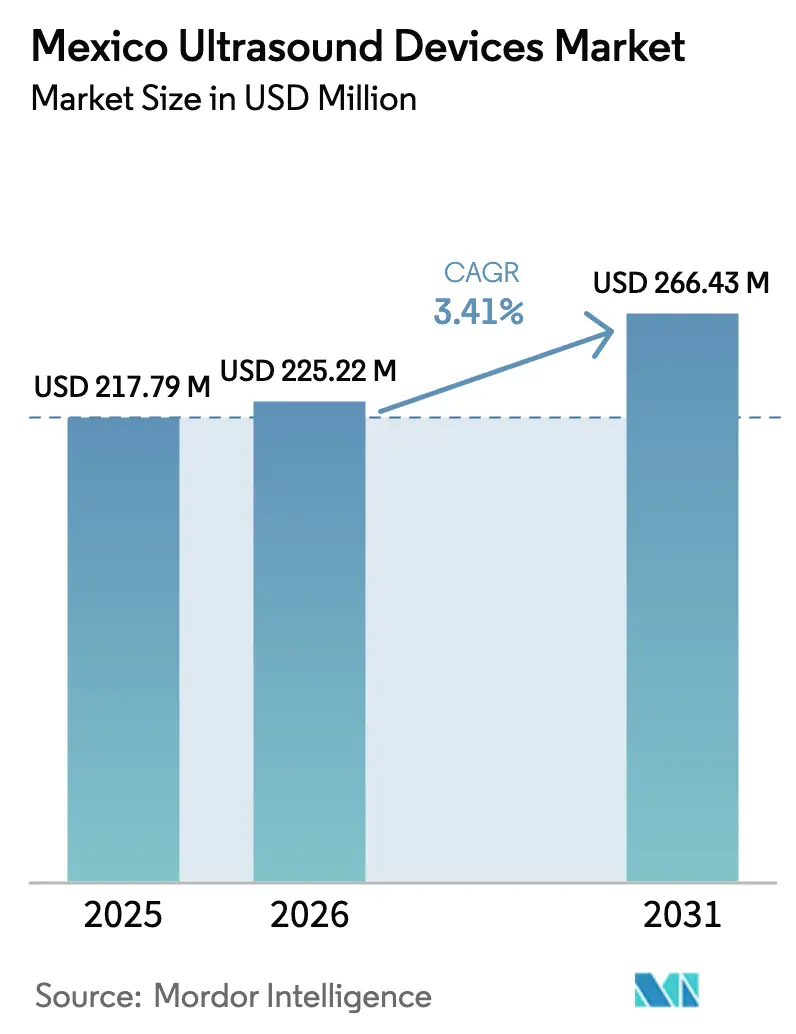
The Mexico Ultrasound Devices Market size is expected to grow from USD 217.79 million in 2025 to USD 225.22 million in 2026 and is forecast to reach USD 266.43 million by 2031 at 3.41% CAGR over 2026-2031.
This measured trajectory stems from synchronized growth in private and public hospital construction, accelerating replacement of obsolete imaging fleets, and steady uptake of AI-enabled point-of-care systems. Expansion plans announced by the Instituto Mexicano del Seguro Social (IMSS) to open nine hospitals and six Family Medicine Units in 2025 underscore how new capacity will anchor demand for mid-range cart-based and premium 3D/4D consoles. Meanwhile, peso volatility, fresh 4-8% import tariffs, and uneven distribution of certified sonographers temper nationwide deployment, keeping the Mexico ultrasound devices market on a moderate but resilient growth path through the decade. Mexico’s standing as Latin America’s second-largest medical-device hub and seventh-largest exporter continues to attract multinational manufacturing investments that help shorten replacement cycles and localize service support.
Key Report Takeaways
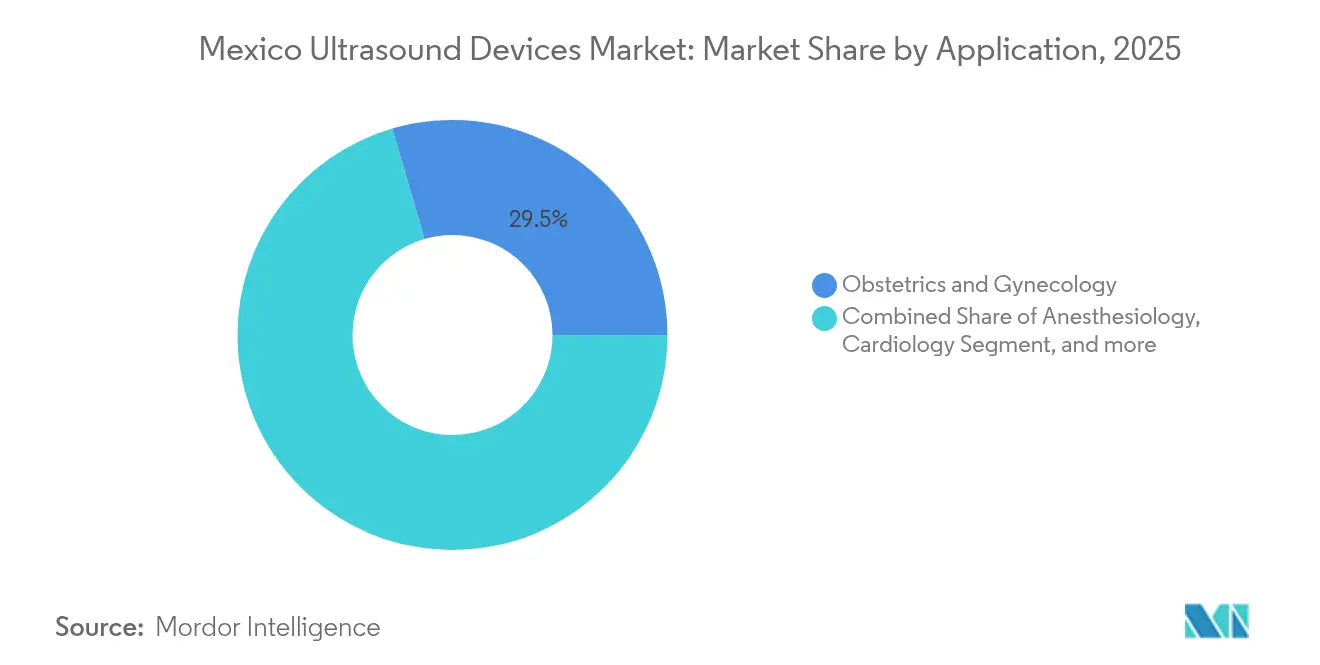
- By application, obstetrics & gynecology led with 29.52% of the Mexico ultrasound devices market share in 2025; anesthesiology is projected to record the fastest 5.86% CAGR through 2031.
- By technology, 3D & 4D systems dominated with a 45.62% revenue share in 2025, while high-intensity focused ultrasound is poised for the highest 5.36% CAGR to 2031.
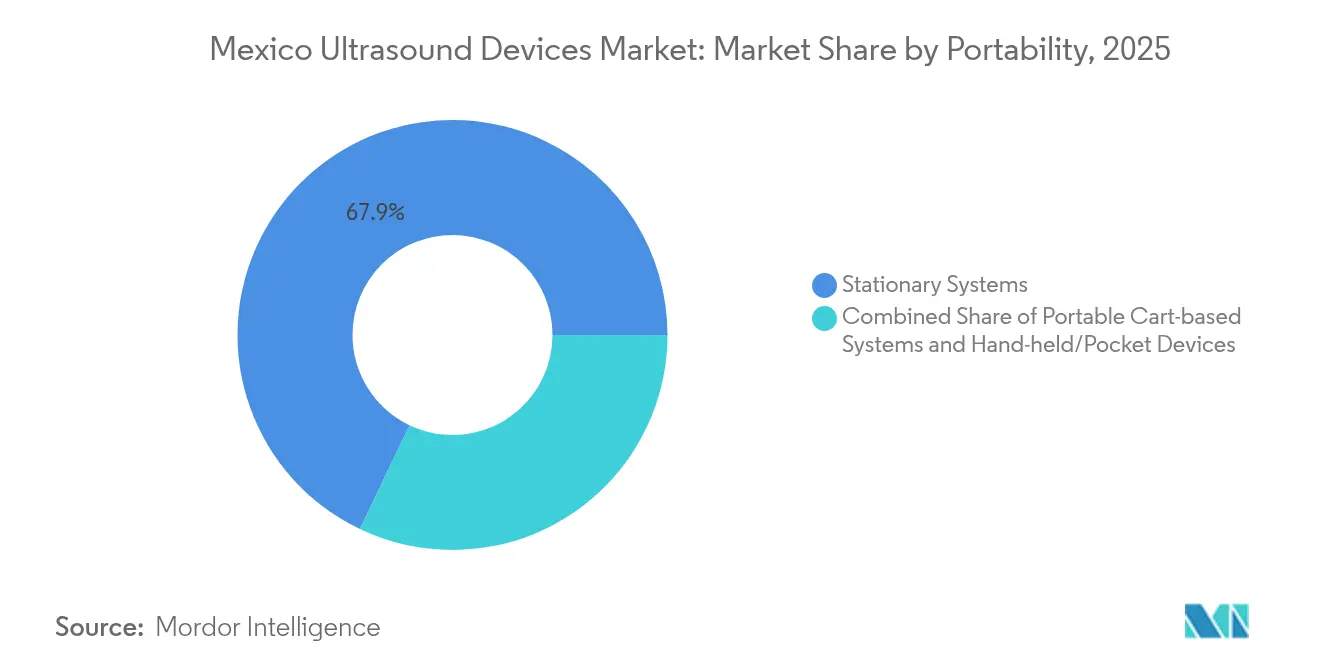
- By portability, stationary systems held 67.92% of the Mexico ultrasound devices market size in 2025, and hand-held/pocket devices are set to expand at a 7.22% CAGR between 2026-2031.
- By end user, hospitals commanded 59.03% revenue share in 2025, whereas diagnostic imaging centers will outpace all peers at a 6.71% CAGR through 2031.
Note: Market size and forecast figures in this report are generated using Mordor Intelligence’s proprietary estimation framework, updated with the latest available data and insights as of 2026.
Mexico Ultrasound Devices Market Trends and Insights
Drivers Impact Analysis*
| Driver | (~) % Impact on CAGR Forecast | Geographic Relevance | Impact Timeline |
|---|---|---|---|
| Rising prevalence of chronic & metabolic conditions | +0.8% | Urban hubs nationwide | Medium term (2-4 years) |
| Demographic shifts: aging population & high-risk pregnancies | +0.6% | Northern corridor | Long term (≥4 years) |
| Surge in private healthcare investment & hospital expansion | +0.9% | Mexico City, Guadalajara, Monterrey | Short term (≤2 years) |
| Government-led tele-ultrasound pilots in underserved regions | +0.4% | Chiapas, Guerrero, Oaxaca | Medium term (2-4 years) |
| Cross-border medical tourism driving imaging demand | +0.3% | Baja California, Sonora, Chihuahua | Short term (≤2 years) |
| Technological advancements in portable & AI-enabled ultrasound | +0.5% | Tier-1 cities nationwide | Medium term (2-4 years) |
| Source: Mordor Intelligence | |||
Rising Prevalence of Chronic & Metabolic Conditions
Diabetes prevalence reached 10.3% in 2024, translating into 2.6 million Mexicans who require continuous monitoring, yet only 37.1% access public health services, leaving effective coverage at 9.3%.[1] Ultrasound-guided nephrology protocols, promoted by the Mexican College of Nephrologists, support early detection of diabetic kidney disease by enabling albuminuria evaluation and vascular flow assessment. Concentration of endocrinology clinics in Mexico City, Monterrey, and Guadalajara magnifies regional demand clustering. Portable point-of-care units allow family physicians to perform renal, hepatic, and vascular scans during routine visits, easing referral backlogs. Replacement of legacy grayscale consoles older than 10 years 27% of the national ultrasound stock remains a parallel volume driver.
Demographic Shifts: Aging Population & High-Risk Pregnancies
Mexico’s population reached 130.9 million in 2025, with fertility dropping and life expectancy climbing, resulting in dual pressure on maternal-fetal and geriatric imaging services. The maternal mortality ratio of 59.1 per 100,000 live births contrasts sharply with OECD averages, and only 61.8% of pregnant women receive full antenatal protocols.[2] Advanced 3D/4D scanners improve fetal anomaly detection, allowing obstetricians to act earlier on high-risk pregnancies exacerbated by obesity and hypertension. In geriatrics, households spend USD 308.9 per hospitalization episode, nudging insurers and hospital groups toward preventive abdominal and vascular screening programs that rely on color Doppler and elastography functions. Northern states, where multispecialty geriatric clinics integrate tele-consults with U.S. vascular surgeons, become early adopters of AI-aided echocardiography.
Surge in Private Healthcare Investment & Hospital Expansion
Private operators favor premium ultrasound suites because reliable power and chilled water supply enable the high duty cycles needed for 18–24-hour imaging rosters. IMSS’s 2025 rollout of new hospitals in Ensenada and Tuxtla Gutiérrez injects fresh procurement rounds for mid-tier consoles and bedside POCUS systems. President Claudia Sheinbaum’s healthcare reform package, unveiled in January 2025, allocates funds to expand digitalization, electronic health records, and integrated radiology information systems, accelerating replacement of standalone ultrasound workstations. Private maternity centers record 92.5% C-section rates compared with 51.3% in IMSS facilities, driving proportionally higher scan volumes per delivery.
Government-Led Tele-Ultrasound Pilots in Underserved Regions
The Universidad Nacional Autónoma de México’s AI-enabled remote fetal-brain Doppler platform allows general practitioners in Oaxaca to stream images to perinatologists in Mexico City over WiMAX links, reducing unnecessary transfers.[3] Chiapas’ longitudinal POCUS curriculum trained rural doctors to perform 584 studies in 12 months using battery-operated handhelds, changing diagnosis in 58% of obstetric cases. Limited bandwidth and sonographer shortages slow nationwide scale-up; nevertheless, suppliers of pocket probes and cloud-based PACS benefit from steady pilot funding.
Restraints Impact Analysis*
| Restraint | (~) % Impact on CAGR Forecast | Geographic Relevance | Impact Timeline |
|---|---|---|---|
| Shortage of certified sonographers & biomedical engineers | -0.7% | Nationwide, acute in rural zones | Long term (≥4 years) |
| Peso volatility impacting import costs of high-end equipment | -0.5% | All import-dependent facilities | Short term (≤2 years) |
| Delayed reimbursement for point-of-care ultrasound (POCUS) | -0.3% | Public hospitals | Medium term (2-4 years) |
| Infrastructure gaps & uneven access to imaging services | -0.4% | Chiapas, Guerrero, Oaxaca | Long term (≥4 years) |
| Source: Mordor Intelligence | |||
Shortage of Certified Sonographers & Biomedical Engineers
Average retirement age among Mexican sonographers has fallen to 60.8 years due to pandemic burnout and workload stress, worsening the existing 60,000-person healthcare workforce gap in low-density states. Only five radiology master’s programs operate outside the Mexico City-Monterrey-Guadalajara triangle, so equipment donations often sit idle in rural hospitals. Manufacturers now bundle remote training portals and AI-guided scanning to offset head-count shortages, but accreditation bottlenecks remain a structural brake.
Peso Volatility Impacting Import Costs of High-End Equipment
The 2025 tariff package adds 4–8% duties on most ultrasound categories, and a 10% pesodollar swing can alter console quotes by USD 8,000–10,000 per unit. Hospitals negotiating in pesos face budget overruns, prompting deferrals or substitution toward domestically assembled sub-components. COFEPRIS registration fees of USD 5,000–10,000 and review cycles lasting up to 18 months further raise the entry barrier for niche innovators.
*Our forecasts treat driver/restraint impacts as directional, not additive. The impact forecasts reflect baseline growth, mix effects, and variable interactions.
Segment Analysis
By Application: Maternal Care Dominance Amid Anesthesiology Surge
Obstetrics & gynecology generated the largest slice of the Mexico ultrasound devices market equaling 29.52% share thanks to mandated trimester scans under social-insurance guidelines. Anesthesiology is accelerating at a 5.86% CAGR because regional blocks and vascular access guided by ultrasound cut perioperative complications, pushing trauma centers and ambulatory surgery sites to add compact systems at each operating theater. In intensive-care units, cardiologists rely on quantitative hemodynamic protocols that use advanced Doppler to stratify shock, raising utilization rates for cardiac probes. Musculoskeletal and vascular sub-segments benefit from sports-medicine growth and diabetic foot surveillance, respectively, albeit from smaller revenue bases.
The Mexico ultrasound devices market continues to experience quality-of-care scrutiny in prenatal imaging as 52% of mothers rate first antenatal visits as fair or poor, prompting regulatory pressure for high-resolution abdominal transducers and AI-aided anomaly detection. Guanajuato’s universal prenatal screening initiative, executed through trained general practitioners, illustrates scalable demand for compact high-frequency probes in semi-urban municipalities. Cardiology advocates are piloting AI-driven speckle-tracking modules to reduce inter-operator variability, signaling an upgrade cycle that will permeate secondary hospitals over the next five years.

By Technology: 3D/4D Leadership Faces HIFU Innovation
3D & 4D consoles captured 45.62% revenue in 2025, due largely to obstetricians’ preference for volumetric fetal imaging that enhances anomaly detection and parental engagement. High-Intensity Focused Ultrasound is projected to rise at 5.36% CAGR owing to expanding indications for uterine fibroid ablation and palliative oncology care in private centers catering to medical tourists.
Traditional 2D systems continue to dominate public hospital tenders because unit prices sit 25–40% below premium platforms. Yet the Mexico ultrasound devices market is seeing rapid cross-grade sales as suppliers embed AI beam-forming in mid-range 2D carts, narrowing the performance gap. Doppler imaging units gain momentum via diabetic nephropathy follow-up and peripheral vascular disease screening. Early adopters in Guadalajara are piloting contrast-enhanced liver protocols, indicating that elastography and AI post-processing will further diversify product mixes.
By Portability: Stationary Dominance Challenged by Handheld Innovation
Stationary room-based consoles held 67.92% of the Mexico ultrasound devices market share in 2025 as tertiary hospitals still favor fully featured systems linked to PACS networks. Handheld probes typified by sector-wide evaluations reporting 92.9% sensitivity for abdominal pathology and grows with 7.22% by 2031. Manufacturers bundle cloud-reporting dashboards so obstetricians in Oaxaca can upload images for remote review, aligning with IMSS telehealth priorities.
Cart-based portables straddle both utility and mobility, especially in ED resuscitation bays where trauma surgeons need immediate pericardial and FAST assessments. Service contracts increasingly include back-up batteries and rugged transport cases to offset internal logistics hurdles such as elevator downtime and corridor congestion in aging public facilities. Hand-held adoption, however, depends on reimbursement codes catching up with clinical practice; until then, procurement committees often opt for mid-range carts to satisfy multiple departments under a single capital outlay.
By End User: Hospital Centralization Amid Diagnostic Center Growth
Hospitals accounted for 59.03% of the Mexico ultrasound devices market size owing to integrated care models where one console supports obstetrics, cardiology, and emergency diagnostics. The ISSSTE network’s radiology information system, covering 40 hospitals and 2 million annual studies, exemplifies centralized image governance that boosts utilization rates. Diagnostic imaging centers are gaining ground, expanding at 6.71% CAGR, because outpatient pathways reduce patient wait times by 30-40% compared to public hospitals.
Other end-users urgent-care clinics, ambulatory surgery centers, and sports-medicine practices collectively form a niche but vibrant space, especially in Mexico City’s private healthcare ecosystem. Vendors address this cluster by offering subscription-based device leases to manage capital constraints amid peso fluctuations. As reimbursement evolves, the Mexico ultrasound devices industry is likely to see bundled service models where device, software, and tele-interpretation come under a single monthly fee.
Geography Analysis
Mexico’s heterogeneous healthcare geography shapes device demand along three distinct corridors. The northern manufacturing belt Baja California, Sonora, and Chihuahua benefits from clusters of Philips, Siemens, and Medtronic plants that confer 25% lower production costs versus the United States, shortening lead times for replacement parts and consoles. Hospitals in these states maintain higher ultrasound-to-population ratios and are early adopters of High-Intensity Focused Ultrasound for oncology tourism programs. Monterrey’s private health complexes further elevate regional scan volumes through package procedures aimed at expatriates and U.S. retirees.
Central Mexico, anchored by the Mexico City metropolitan area, houses academic teaching hospitals and national institutes that drive research and training. The region exhibits the country’s highest console density and earliest adoption of AI beam-forming and contrast-enhanced protocols. IMSS’s 2025 infrastructure plan will bolster secondary cities such as Querétaro and Puebla, redistributing a portion of patient flow and spreading demand for mid-range carts. Yet public-sector institutions continue to grapple with maintenance backlogs and funding cycles tied to federal budgets, often delaying high-end replacements.
Southern states Chiapas, Guerrero, and Oaxaca account less market share in the ultrasound installations yet hold the highest unmet need. Tele-ultrasound pilots have proven capable of closing diagnostic gaps by connecting rural clinics with Mexico City specialists using IEEE 802.22 networks. Pilot data reveal reduced patient transfers by 40% and quicker obstetric referrals, but sustainability hinges on expanding broadband coverage and onsite sonographer training. As handheld devices circumvent power and cooling constraints, suppliers that offer bundled solar chargers and waterproof probes are poised to carve out share in these underserved zones.
Regulatory Landscape
Ultrasound devices in Mexico are regulated as medical devices by COFEPRIS (Comision Federal para la Proteccion contra Riesgos Sanitarios). Diagnostic ultrasound is commonly treated as Class II (moderate risk) under Mexico's national risk-based framework. Market access typically requires a COFEPRIS sanitary registration supported by an in-country representative, a technical dossier, and compliance with applicable labeling rules, with NOM-137-SSA1-2008 commonly referenced for labeling and information requirements. Entry timelines depend on documentation completeness and the regulator's review capacity.
Clinical use and facility readiness for diagnostic ultrasonography are anchored by NOM-208-SSA1-2002, which sets requirements for the practice of diagnostic ultrasound and related infrastructure. Suppliers that hold prior approvals from recognized international reference authorities can also use equivalency-style pathways, which can reduce administrative friction versus first-time applicants and tends to favor established multinational brands that already manage COFEPRIS submissions at scale.
Competitive Landscape
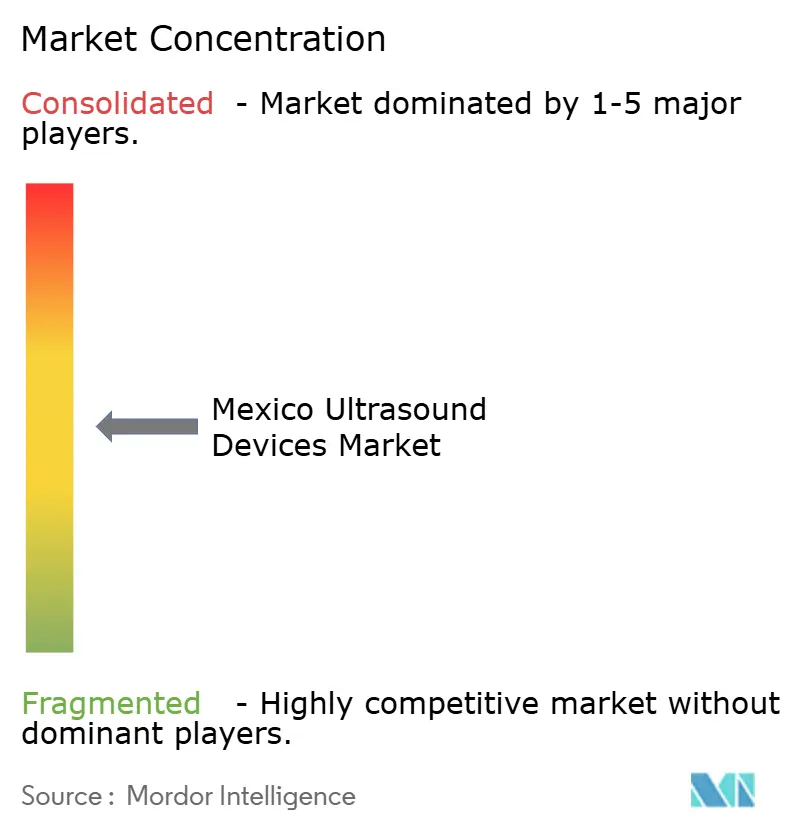
Mexico’s ultrasound arena reflects moderate concentration. Firms leverage proximity to U.S. supply chains, COFEPRIS regulatory familiarity, and embedded manufacturing footprints to maintain pricing leverage. Philips and Siemens capitalize on maquiladora tax incentives to assemble consoles in Baja California, ensuring rapid parts replacement and bilingual field support. GE Healthcare, post-acquisition of Intelligent Ultrasound’s AI suite, integrated ScanNav Anatomy into its Voluson SWIFT line, offering automated labeling that cuts scanning time by 20% for obstetricians.
Handheld disruptors Butterfly Network, Clarius, and Shenzhen-based Mindray—pursue subscription models that bundle cloud storage and AI organ-recognition, appealing to private emergency rooms that pay in pesos and thus fear exchange-rate spikes. Comparative studies in Mexico City EMS units showed 79.5% agreement between prehospital handheld scans and in-hospital cart-based findings, lending clinical credibility that supports tender approvals.
Regulatory timelines remain a competitive moat. Established brands exploit COFEPRIS equivalency pathways, cutting clearance to 6-12 months, versus 18 months for newcomers. Yet tariff hikes have nudged even incumbents to increase local content: transducer cabling and plastic housings are now sourced from Mexican SMEs under supplier-development programs backed by state governments in Nuevo León and Jalisco. Vendors that align with federal tele-medicine initiatives offering APIs for secure image push to national PACS score higher in public tenders, signaling that software interoperability is now as critical as hardware specifications.
Mexico Ultrasound Devices Industry Leaders
-
GE Healthcare
-
Siemens AG
-
Fujifilm Holdings Corporation
-
Koninklijke Philips N.V.
-
Canon Medical Systems
- *Disclaimer: Major Players sorted in no particular order
Market Opportunities and Future Outlook
The clearest white space is expanding access and utilization beyond the Mexico City-Monterrey-Guadalajara triangle. Tele-ultrasound pilots in underserved states such as Oaxaca and Chiapas support demand for handheld probes, rugged peripherals, and cloud workflows that can operate under variable power and bandwidth conditions. Training-linked deployments also create room for vendors that bundle AI-guided scanning, remote mentoring, and structured reporting, addressing the documented shortage of certified sonographers and biomedical engineers that leaves equipment underutilized in rural facilities.
On the supply side, Mexico's position as a North American medical-device manufacturing hub creates opportunities to localize service, parts availability, and selected subassemblies to offset the 2025 import duty increases (4-8% on most ultrasound categories) and peso-linked budget volatility. Broader sector programs referenced in the market, including Plan Mexico investment discussions (up to USD 400 million through 2030 across medical devices) and nearshoring momentum in clusters such as Baja California, Guadalajara, and Nuevo Leon, provide an execution path for ultrasound OEMs and component suppliers to deepen local value-add. Public-private contracting models involving IMSS, ISSSTE, Sedena, and Semar also support longer-term service, uptime, and fleet-refresh agreements rather than one-time capital sales.
Recent Industry Developments
- June 2026: Philips highlighted Compact 5500 and Affiniti CVx ultrasound systems during the CITIC 2026 medical conference in Mexico City. The presentation focuses on high performance cart-based and cardio imaging platforms for the Mexican market. The exposure supports ongoing tender momentum and improves Philips' visibility with local buyers.
- February 2026: GE HealthCare entered a collaboration with Diagnoly to integrate Fetoly technology into Voluson women’s health ultrasound systems. The collaboration expands AI-enabled prenatal imaging capabilities in Mexico and strengthens private-hospital adoption of the Voluson line. It also reinforces GE HealthCare's emphasis on software-enabled upgrades within its installed base.
- September 2025: Siemens Healthineers Hospitales Puerta de Hierro updated diagnostic imaging at HPH Andares and HPH Sur, incorporating ACUSON Sequoia ultrasound systems as part of a 10-year Value Partnership with Siemens Healthineers. The upgrade supports Siemens Healthineers' installed base and service footprint in Mexico. It indicates continued renewal activity for high-end ultrasound consoles across the Puerta de Hierro network.
Research Methodology Framework and Report Scope
Market Definition and Coverage
For this methodology, the market covers revenue earned from selling ultrasound imaging devices in Mexico, across hospital, clinic, and point-of-care settings, based on equipment shipments and replacement demand patterns.
Scope exclusions: Service contracts, installation, training, consumables (such as gels), and most repair parts are excluded from the market value.
Segmentation Overview
- By Application
- Anesthesiology
- Cardiology
- Obstetrics & Gynecology
- Musculoskeletal
- Radiology
- Critical Care
- Urology
- Vascular
- Other Applications
- By Technology
- 2D Ultrasound Imaging
- 3D & 4D Ultrasound Imaging
- Doppler Imaging
- High-Intensity Focused Ultrasound
- Other Technologies
- By Portability
- Stationary Systems
- Portable Cart-based Systems
- Hand-held / Pocket Devices
- By End User
- Hospitals
- Diagnostic Imaging Centers
- Other End Users
Data Sources, Market Sizing, and Validation
Desk Research
Desk research was used to set the fact base and keep assumptions realistic before the sizing model was built. We reviewed public health and procurement context from sources such as Mexico Ministry of Health publications, IMSS and ISSSTE releases, INEGI health statistics, and OECD health indicators, which helped interpret procedure loads and facility expansion.
For external reality checks, we also relied on trade and classification references such as UN Comtrade aligned series and Mexico trade dashboards for ultrasound scanning equipment, along with standards and clinical use notes from sources such as WHO guidance and peer reviewed radiology journals. Company filings, investor decks, and reputable press were then used to map product launch timing, installed base refresh cycles, and typical price movement by system class. In some cases, paid subscriptions were used only for company financials, shipment level trade checks, and patent activity trends. This list is not exhaustive, and additional sources were used for data collection, validation, and clarification during the research.
Primary Interviews and Surveys
Primary work focused on cross-checking demand drivers and pricing logic that are not fully visible in public data. We spoke with a mix of manufacturers and channel partners, along with hospital imaging heads, radiology and OB-GYN users, and biomedical engineering managers, which helped confirm replacement timing, typical configuration choices, and budget cycles across Mexico.
These conversations were also used to validate how portable systems are being adopted for point-of-care workflows, and to sense-check how procurement is split between public tenders and private purchases, before final assumptions were locked.
Distribution of primary research fieldwork respondents
| Company type | Respondent position |
|---|---|
| Top tier: 36% | CXOs: 12% |
| Mid tier: 43% | Functional/Unit leaders: 43% |
| Smaller Players: 21% | Managers: 45% |
Market-Sizing & Forecasting
Sizing starts from a Mexico demand pool build-up where imaging capacity and usage indicators are translated into equipment need over time, and then filtered through typical replacement cycles. The top-down approach is anchored on the number of care sites by level, ultrasound utilization intensity by specialty, and public versus private procurement behavior, which together indicate annual system demand.
Key inputs used in the model include installed base aging (replacement window), share of portable versus cart based systems in use, average selling price ranges by system class, probe mix assumptions that influence configuration value, and import intensity signals from public trade series as a reasonableness check. Because not every buyer discloses unit purchases, selective bottom-up approximations were used to corroborate totals, such as channel checks on annual unit movement, sampled ASP x unit math by major device classes, and cross-checks against tender visibility in periods with higher public spending.
Forecasting uses scenario analysis supported by short ARIMA runs on historical demand signals, and then it is adjusted using primary inputs on budgeting, replacement deferrals, and expected portability adoption. Where bottom-up inputs had gaps, conservative interpolation was applied by facility type and then re-tested against the trade and price ranges to avoid overstating market value.
Data Validation & Update Cycle
Validation is done in steps so that individual assumptions do not drift away from real market signals. We compare the modeled value against independent checks such as trade movement for ultrasound scanning equipment, public procurement announcements, and the implied unit volumes that would be needed at the assumed price ranges.
Outliers are flagged early, and then the drivers are rechecked, including currency timing, ASP progression, and replacement cycle assumptions, before sign-off. A separate analyst review is conducted to ensure calculations are consistent across years and that growth trends align with the demand narrative. Reports are refreshed annually, and interim updates are triggered when material events occur, such as sharp FX moves, large tenders, or regulatory shifts. Before delivery, the latest public signals are rechecked so clients receive an updated view.
Mordor Intelligence's Mexico Ultrasound Devices Market Size Measured Against Other Published Estimates
Published market values can differ even when they cover the same country, because each publisher makes different calls on what counts as equipment revenue, how prices are averaged, and which year is treated as the base. Differences can also come from how public tenders are treated, how portable systems are counted, and how currency conversion timing is handled.
Some external estimates are presented as a broader ultrasound market that can mix clinical imaging with wider use cases and looser product definitions, then apply a single growth curve across all device types. In Mordor Intelligence, the count is limited to ultrasound device sales in Mexico, and the totals are kept consistent with replacement cycles, price bands by system class, and cross-checks against trade based signals.
Benchmark comparison
| Source | Market Size | Gaps in Research Methodology |
|---|---|---|
| Mordor Intelligence | USD 217.79 M (2025) | |
| Trade Journal A | USD 202.00 M (2024) | Uses trade exchange value as a proxy for market size, which can miss domestically assembled value-add, distributor margins, and timing effects between import and final sale. |
| Industry Publisher B | USD 77.70 M (2023) | Tends to narrow the scope to selected portable and point-of-care categories and applies a higher growth profile, which reduces the base year versus a full device shipment view. |
The spread is mainly explained by scope and the proxy used for value. When trade is used as the main yardstick or when only a subset of portable systems is emphasized, the total can shift materially. Using transparent variables like installed base refresh, facility demand, and price bands makes the market value easier to trace and repeat year over year.
Key Questions Answered in the Report
What is the projected value of the Mexico ultrasound devices market by 2031?
The market is expected to reach USD 266.43 million by 2031 based on a 3.41% CAGR forecast.
Which application currently holds the largest revenue share?
Obstetrics & Gynecology leads with 29.52% share, reflecting sustained maternal-care priorities.
Which technology segment is growing fastest?
High-Intensity Focused Ultrasound is slated to advance at a 5.36% CAGR through 2031.
How will new tariffs influence equipment purchasing?
The 4-8% duties introduced in 2025 raise import costs, encouraging providers to favor domestically assembled components and portable devices to control budgets.
Why are handheld ultrasound devices gaining momentum?
Handheld units offer comparable diagnostic accuracy, require lower capital, and integrate easily with tele-medicine platforms, suiting underserved and emergency settings
Where are infrastructure investments most concentrated?
IMSS projects for 2025 focus on Ensenada, Tuxtla Gutiérrez, and other secondary cities to decentralize diagnostic capacity.