
Mexico Diabetes Care Drugs And Devices Market Size and Share
Market Overview
| Study Period | 2020 - 2031 |
|---|---|
| Forecast Data Period | 2026 - 2031 |
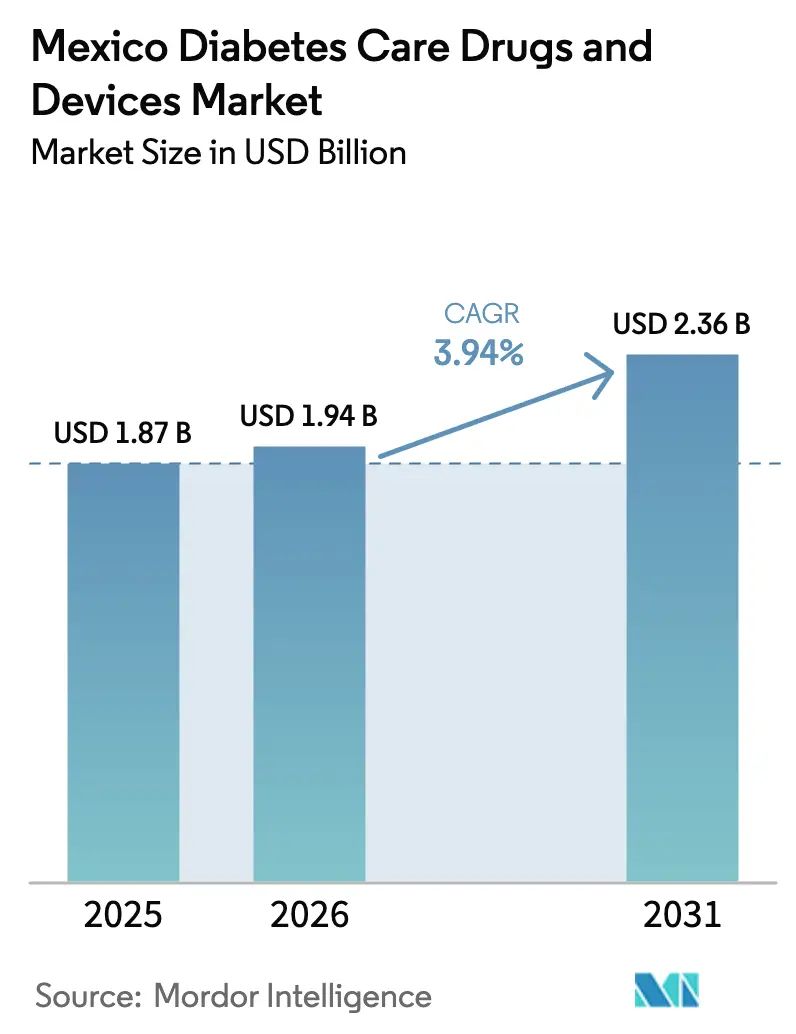
| Base Year Market Size (2025) | USD 1.87 Billion |
| Market Size (2026) | USD 1.94 Billion |
| Market Size (2031) | USD 2.36 Billion |
| Growth Rate (2026 - 2031) | 3.94 % |
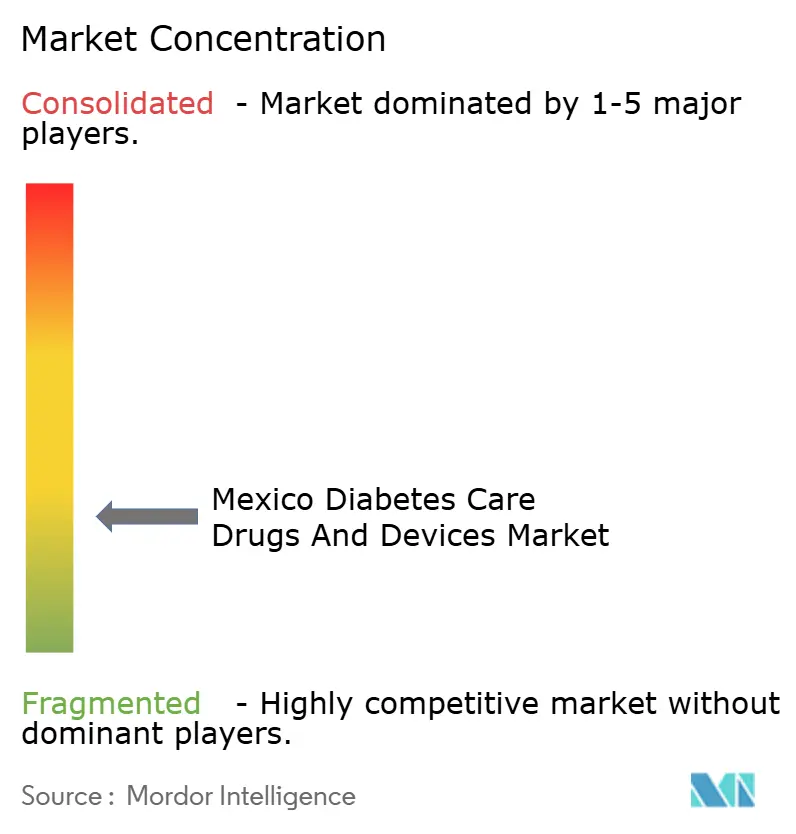
| Market Concentration | Low |
Major Players
*Disclaimer: Major Players sorted in no particular order Image © Mordor Intelligence. Reuse requires attribution under CC BY 4.0. |
|
Mexico Diabetes Care Drugs And Devices Market Analysis by Mordor Intelligence
The Mexico diabetes care drugs and devices market size was valued at USD 1.87 billion in 2025 and estimated to grow from USD 1.94 billion in 2026 to reach USD 2.36 billion by 2031, at a CAGR of 3.94% during the forecast period (2026-2031). Increasing life expectancy, rapid urbanization, and an obesity prevalence exceeding 75% among adults are expanding the patient pool, while President Claudia Sheinbaum’s bulk-procurement “Pharmacies for Well-being” program is lowering acquisition costs and reshaping competitive bidding. Once-weekly GLP-1 analogs, mobile-first continuous glucose monitoring (CGM) systems, and tele-endocrinology pilots are driving technology adoption across both private and public payers. Simpler patent clarification rules approved in February 2025 are expected to shorten regulatory review cycles for originator and generic products alike, which may widen treatment access once COFEPRIS clears its current backlog. In parallel, counterfeit GLP-1 injectables and uneven reimbursement for high-end insulin pumps continue to hinder uniform quality of care, especially outside major metropolitan areas.
Key Report Takeaways
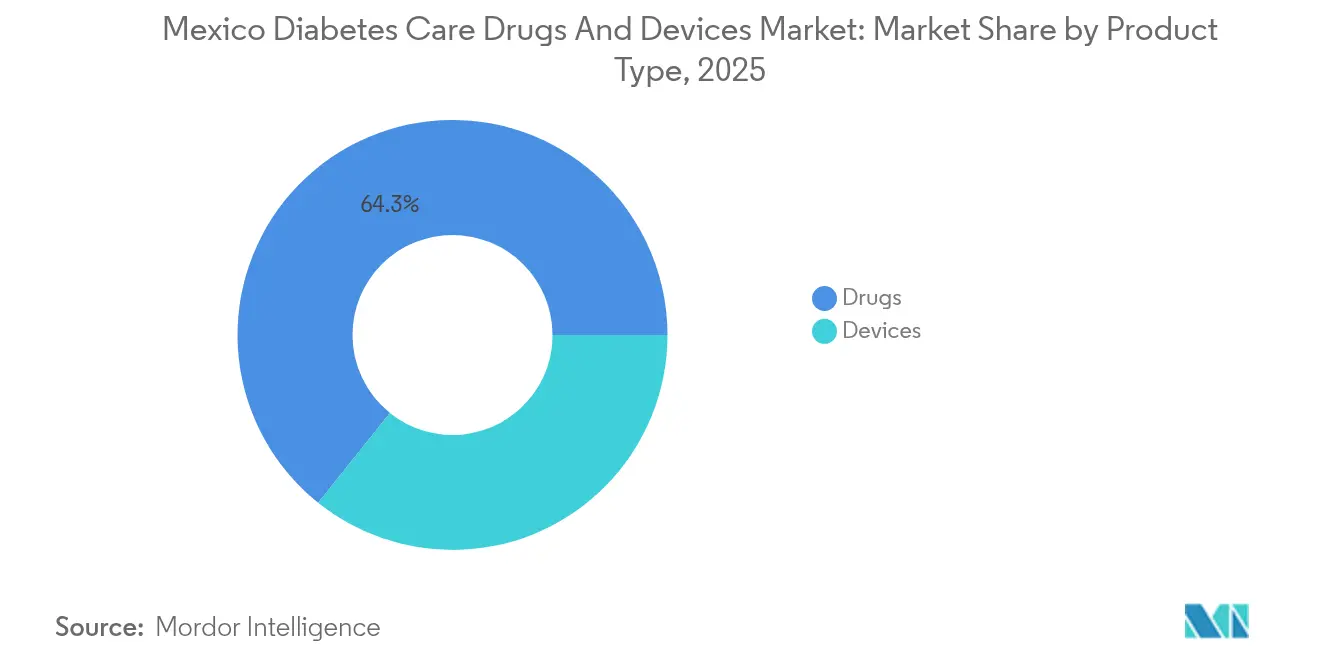
- By product type, drugs dominated with 64.25% of Mexico diabetes care drugs and devices market share in 2025, while devices are projected to register the fastest 4.76% CAGR through 2031.
- By diabetes type, type 2 diabetes accounted for 90.78% of Mexico diabetes care drugs and devices market size in 2025; type 1 diabetes is anticipated to expand at a 4.82% CAGR between 2026-2031.
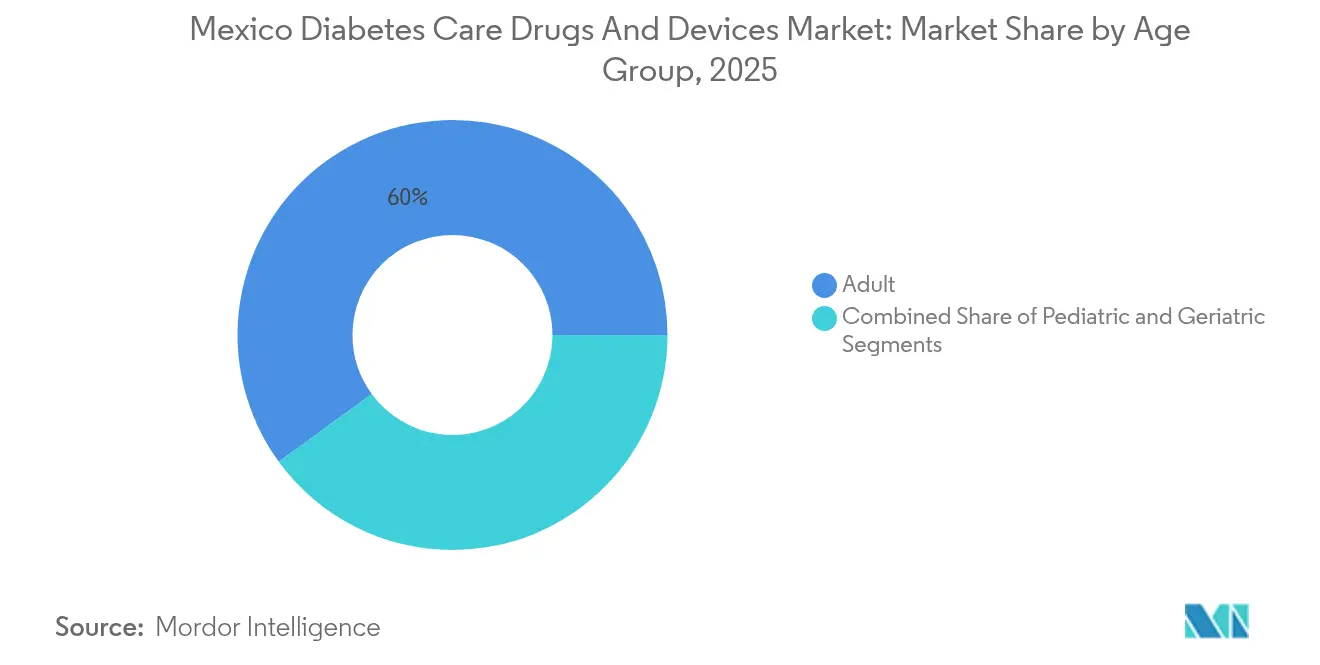
- By age group, adults held 60.03% revenue share of the Mexico diabetes care drugs and devices market in 2025, whereas the geriatric segment is positioned to grow at a 4.67% CAGR over the same period.
- By distribution channel, offline outlets retained 72.65% share of the Mexico diabetes care drugs and devices market size in 2025, but online sales are forecast to rise at a 4.7% CAGR to 2031.
Note: Market size and forecast figures in this report are generated using Mordor Intelligence’s proprietary estimation framework, updated with the latest available data and insights as of 2026.
Mexico Diabetes Care Drugs And Devices Market Trends and Insights
Drivers Impact Analysis*
| Driver | (~) % Impact on CAGR Forecast | Geographic Relevance | Impact Timeline |
|---|---|---|---|
| Rapid shift toward once-weekly GLP-1 therapies | +1.2% | National, with early adoption in Mexico City, Guadalajara, Monterrey | Medium term (2-4 years) |
| Mobile-first CGM adoption through public insurance apps | +0.8% | National, with rural state prioritization | Short term (≤ 2 years) |
| Government "Pharmacies for Well-being" bulk procurement | +0.7% | National coverage across 26 health institutions | Short term (≤ 2 years) |
| Rising prevalence of pre-diabetes in adolescents | +0.6% | National, with higher impact in urban centers | Long term (≥ 4 years) |
| Tele-endocrinology expansion in rural states | +0.5% | Rural Mexico, particularly southern states | Medium term (2-4 years) |
| Employer coverage race for anti-obesity injectables | +0.4% | Urban centers, multinational corporation hubs | Medium term (2-4 years) |
| Source: Mordor Intelligence | |||
Rapid Shift Toward Once-Weekly GLP-1 Therapies
Novo Nordisk’s launch of semaglutide 2.4 mg in April 2025 creates a dual-indication opportunity that addresses glycemic control and weight reduction in the same dosing schedule. Evidence from Spanish outpatient settings shows 77.1% of users achieving HbA1c targets below 7%, along with mean weight loss of 9.72 kg, standards now referenced by Mexican specialists. The simplified once-weekly regimen improves adherence compared with daily injections and aligns with employers’ interest in productivity gains, prompting large insurers to pilot formulary coverage in urban centers. COFEPRIS public advisories against unregulated semaglutide sales underscore official intent to secure supply integrity as demand accelerates.
Mobile-First CGM Adoption Through Public Insurance Apps
IMSS’s expansion of smartphone-based follow-up combined with Abbott’s Libre Rio and Lingo over-the-counter CGMs creates a direct-to-patient channel that sidesteps endocrinologist shortages in rural municipalities. The Dulce Wireless Tijuana study recorded HbA1c reductions of 3.0% after 6 months of text-messaging support and real-time glucose alerts. Roll-out across public insurance portals is expected to expand the Mexico diabetes care drugs and devices market by onboarding newly diagnosed patients into continuous monitoring without clinic visits.
Government “Pharmacies for Well-being” Bulk Procurement
The centralized tender covering 4,429 products across 26 institutions delivered MXN 30 billion (USD 1.5 billion) in savings and has locked in supply contracts through 2026. Price transparency pressures manufacturers to rebalance portfolios toward cost-effective formulations while guaranteeing baseline volumes. Free provision of essential diabetes drugs in low-income districts is projected to lift therapy initiation rates and deepen the Mexico diabetes care drugs and devices market.
Rising Prevalence of Pre-Diabetes in Adolescents
A national survey detected an 8.6% pre-diabetes rate among children aged 4-19, foreshadowing a surge in demand for pediatric diabetes management solutions. Community-based prevention programs have proven to boost insulin sensitivity and quality of life for Latino youth at 12-month follow-up, suggesting future market entrants could include child-friendly CGMs and family-centered coaching platforms.
Restraints Impact Analysis*
| Restraint | (~) % Impact on CAGR Forecast | Geographic Relevance | Impact Timeline |
|---|---|---|---|
| COFEPRIS backlog delaying novel drug approvals | -0.9% | National regulatory bottleneck | Short term (≤ 2 years) |
| Counterfeit GLP-1 products in informal channels | -0.6% | Border regions and urban informal markets | Medium term (2-4 years) |
| Uneven reimbursement for advanced insulin pumps | -0.4% | Regional disparities across states | Long term (≥ 4 years) |
| Low endocrinologist density outside Mexico City | -0.3% | Rural and semi-urban areas | Long term (≥ 4 years) |
| Source: Mordor Intelligence | |||
COFEPRIS Backlog Delaying Novel Drug Approvals
Average review times for complex biologics extend up to 18 months versus the statutory 30-day target, stalling patient access to next-generation insulins and GLP-1 combinations [1]RAPS, "Latin America Roundup: Mexico’s patent office, COFEPRIS sign agreement on drug patents," raps.org. A February 2025 memorandum between the patent office and COFEPRIS is meant to streamline dossier verification, yet near-term approvals remain vulnerable to resource constraints within the agency.
Counterfeit GLP-1 Products in Informal Channels
Pan-American monitoring detected 596 substandard or falsified medicine incidents during 2017-2018, many involving diabetes therapies. COFEPRIS shutdowns of seven unauthorized online pharmacies in 2024 illustrate the scope of digital risk. Persistent infiltration tends to erode clinician confidence in newer agents and can trigger abrupt product recalls that disrupt legal supply chains.
*Our forecasts treat driver/restraint impacts as directional, not additive. The impact forecasts reflect baseline growth, mix effects, and variable interactions.
Segment Analysis
By Product Type: Devices Drive Innovation Despite Drug Dominance
Devices generated a 4.76% CAGR outlook through 2031, even as drugs preserved 64.25% of Mexico diabetes care drugs and devices market share in 2025. Over-the-counter CGMs such as Abbott’s Libre Rio now retail in high-street pharmacies without prescriptions, expanding penetration beyond endocrinology clinics . Tandem Diabetes Care and Abbott signed a June 2025 agreement to co-develop sensors with ketone detection, responding to diabetic ketoacidosis prevention gaps . At the same time, once-weekly GLP-1 drugs continue to anchor revenue for the pharmaceutical segment, protected by semaglutide patents valid until at least 2031. The interplay of simplified monitoring and extended-release injectables is expected to lift adherence, reduce emergency admissions, and broaden total addressable demand in the Mexico diabetes care drugs and devices market.
Government bulk purchasing influences both categories. Essential insulin analogs are bundled with glucometers at negotiated caps, whereas advanced pumps remain outside standard formularies, relying on private out-of-pocket spend. Nevertheless, pilot reimbursement for continuous subcutaneous insulin infusion in IMSS clinics, evaluated at MXN 478,020 per QALY for HbA1c > 9% patients, shows incremental acceptance for high-cost hardware among severe cases. Consequently, the total Mexico diabetes care drugs and devices market size for devices could narrow the gap with drugs over the forecast window.



By Diabetes Type: Type 1 Growth Accelerates Through Technology Adoption
Type 2 conditions comprise 90.78% of Mexico diabetes care drugs and devices market size because of sheer prevalence, yet type 1 is projected to post a 4.82% CAGR through 2031. Telemedicine programs for type 1 patients in rural communities delivered cost savings of USD 72.94 per visit and maintained satisfaction similar to in-person endocrinology follow-up. Automated insulin delivery platforms integrated with FreeStyle Libre sensors minimize hypoglycemic episodes and reduce emergency department use, outcomes that are key for public insurers. Persistent gender gaps, however, show women recording higher diagnosis rates than men due to proactive antenatal screening and primary care attendance.
Type 2 management is transitioning from oral monotherapy to combination regimens that include GLP-1 or SGLT2 agents when HbA1c remains uncontrolled. Community-based education among Mayan populations achieved 60% metabolic control versus 35.4% prior baselines. These culturally tailored models are now being replicated in other indigenous regions, signalling that effective localized care can sustain market expansion for both drugs and devices in the Mexico diabetes care drugs and devices market.
By Age Group: Geriatric Acceleration Reflects Demographic Transition
Adults retained 60.03% of 2025 demand, but the cohort aged ≥ 65 is forecast to surge at 4.67% CAGR, raising new requirements for polypharmacy management and cognitive-friendly devices. Diabetes prevalence among individuals ≥ 50 years is projected to hit 34.0% by 2050. IMSS clinical protocols for frail seniors emphasize individual HbA1c targets to balance hypoglycemia risk with cardiovascular protection, providing guidelines for differentiated product labeling and training. Manufacturers are responding with larger-print CGM readers, simplified app dashboards, and pen injectors with audible dose clicks.
Pediatric pre-diabetes growth to 8.6% adds a second demographic tailwind. Family-centered CGM subscriptions bundle caregiver alerts and nutrition coaching, fostering early brand loyalty. As these cohorts age into chronic disease management, they will enlarge lifetime value potential for the Mexico diabetes care drugs and devices market.
By Distribution Channel: Digital Transformation Accelerates Online Growth
Offline networks still held 72.65% share of the Mexico diabetes care drugs and devices market in 2025 due to established pharmacy penetration and physician-directed dispensing. Yet online platforms are forecast for a 4.7% CAGR through 2031 as COFEPRIS certifies compliant e-pharmacies and links them with public insurance portals. Smartphone penetration above 90% in many rural municipalities means app-based refills can outpace bricks-and-mortar visits, particularly when combined with teleconsultation vouchers. Pilot projects under the MIDO screening program now route newly diagnosed patients to digital onboarding, where algorithmic reminders nudge medication adherence and enable one-click CGM reorders.
Large retail chains are adopting omnichannel models. Customers can initiate orders online and pick up temperature-sensitive GLP-1 injectables at accredited cold-chain counters inside physical stores. This hybrid strategy mitigates last-mile logistics challenges and addresses counterfeit worries by ensuring visible chain-of-custody. As a result, distribution innovation is likely to lift total Mexico diabetes care drugs and devices market share for online channels without cannibalizing essential in-clinic counseling roles.
Geography Analysis
Mexico City, Guadalajara, and Monterrey anchor specialist care hubs, concentrating endocrinologists, private hospitals, and trial sites for advanced therapeutics. Patients in these metros benefit from same-day CGM sensor replacement and bundled weight-loss programs, accelerating uptake in the Mexico diabetes care drugs and devices market. Border cities such as Tijuana add medical-tourism inflows and host crossover studies like Dulce Wireless, which validate mobile care models before national roll-out.
Southern states, many with significant indigenous populations, historically lag in effective coverage, yet IMSS-Bienestar now directs incremental budget lines to 19 states serving 10.8 million uninsured citizens. Culturally adapted peer-education lowered HbA1c by 1.3 percentage points in pilot Mayan communities, demonstrating the role of language-appropriate curricula. Adoption of cloud-based data platforms lets those clinics transmit glucose stats to urban specialists for asynchronous consultation, mitigating physician shortages.
Rural regions face logistics hurdles, from road connectivity to cold-chain integrity, which makes once-weekly injectables and low-maintenance CGMs particularly suitable. Drone-assisted last-mile pilots are under feasibility review to reduce stock-out days for insulin vials. Together, differential regional strategies contribute to balanced volume growth and strengthen the Mexico diabetes care drugs and devices market across diverse geographies.
Regulatory Landscape
In Mexico, the Federal Commission for Protection against Sanitary Risk (COFEPRIS) is the primary authority overseeing marketing authorization and post-market controls for both diabetes drugs and devices. For drug-device combination products, COFEPRIS assigns the regulatory pathway based on the principal mode of action, determining whether the file proceeds under the pharmaceutical or medical-device framework. This choice affects dossier structure, evidence requirements, and change-control expectations for integrated delivery systems.
Regulatory momentum during 2025-2026 has focused on process simplification and clinical-standard updates relevant to diabetes care pathways. COFEPRIS published simplification actions and updated medical-device lists in the Diario Oficial de la Federacion (DOF) in July 2025 to streamline elements of sanitary registration, while NOM-015-SSA2-2010 remains the mandatory Mexican Official Standard for prevention, treatment, and control of diabetes mellitus. In February 2026, a federal court ruling (Amparo 1408/2025) ordered authorities to finalize an update to NOM-015-SSA2-2010 within three months to better differentiate diabetes types. That increases the need to align labels, indications, and monitoring and insulin-delivery use protocols with clearer national clinical criteria.
Competitive Landscape
Market concentration is fragmented, with global multinationals leading but domestic generics firms capturing volume contracts under government tenders. Abbott and Medtronic’s alliance to integrate FreeStyle Libre with automated insulin delivery sets a benchmark for platform ecosystems. Novo Nordisk defends its GLP-1 franchise with patent cover until 2031 while concurrently pursuing price-volume negotiations to lock in formulary positions.
Local players leverage fast-track COFEPRIS listings for metformin, gliclazide, and basal insulin biosimilars, supplying “Pharmacies for Well-being” at scale. Bayer’s Lerma expansion injects MXN 1.1 billion into finished-dose capacity, positioning Mexico as a regional export base. Takeda’s new Innovation Capability Center focuses on digital patient-support services, reflecting the pivot toward data-driven adherence.
Competitive intensity also stems from start-ups delivering AI-powered diet apps and connected glucometers aimed at underserved semi-urban customers. If post-2025 patent reforms accelerate biosimilar GLP-1 entries, branded manufacturers may respond with value-added service bundles rather than price concessions. Overall, technology convergence and procurement centralization will push firms to differentiate on integration, affordability, and population-health partnerships within the Mexico diabetes care drugs and devices market.
Mexico Diabetes Care Drugs And Devices Industry Leaders
-
Medtronics
-
Roche
-
Sanofi
-
NovoNordisk
-
Abbott Laboratories
- *Disclaimer: Major Players sorted in no particular order

Market Opportunities and Future Outlook
A key whitespace is translating national clinical standards into product-aligned care pathways across both public and private channels, particularly as Mexico moves to update the mandatory diabetes standard NOM-015-SSA2-2010. The February 2026 federal court ruling tied to Amparo 1408/2025 requires authorities to conclude an update that differentiates type 1, type 2, and gestational diabetes. That creates a practical opening for manufacturers and care platforms to support standardized diagnostic workflows, titration protocols, and monitoring intensity by diabetes type.
Procurement centralization and regulatory simplification also create space for portfolio redesign that fits tender economics while preserving differentiation. The government bulk-procurement program referenced in the report context delivered MXN 30 billion (USD 1.5 billion) in savings and locked in supply contracts through 2026, favoring suppliers that can sustain volumes, integrity, and documentation for both essential drugs and bundled monitoring. Separately, COFEPRIS simplification actions and updated device lists published in the DOF in July 2025 support faster administrative pathways for certain device filings, which matters for scaling mobile-first monitoring models that address endocrinologist shortages and for advancing integrated pump-CGM ecosystems where the registration route depends on the principal mode of action.
Recent Industry Developments
- March 2026: Roche committed to invest approximately 1.2 billion MXN in Mexico for 16 new clinical studies in 2026, including research on diabetes type 1 and type 2. The investment expands clinical research activity in the country and strengthens Roche's presence in the regional diabetes portfolio. It reinforces Mexico as a key R and D hub for Roche in the Latin American market.
- March 2026: Roche committed to an investment of approximately 1.2 billion Mexican pesos in Mexico for the 2026 calendar year to conduct 16 new clinical studies, which include research on diabetes type 1 and type 2. The investment broadens Roche's experimental scope in Mexico and supports expansion of its subcutaneous therapies and precision diagnostics. This move elevates Mexico as a strategic site for Roche's 2026 clinical program.
- January 2026: Roche initiated 2025-2026 strategic investment plan to invest nearly 1.2 billion MXN in Mexico for clinical research. The plan expands Roche's R and D footprint in diabetes and diagnostics within the Mexican market. It enhances Mexico’s role in Roche’s regional research portfolio.


Research Methodology Framework and Report Scope
Market Definition and Coverage
For this report, the market includes the value of diabetes care drugs and diabetes care devices sold in Mexico for diabetes management and monitoring, across retail, hospital, and other dispensing channels, and reported in USD.
Scope exclusions: We exclude general obesity medicines used without a diabetes indication, broad lab diagnostic services, and general-purpose wellness wearables not designed for glucose monitoring.
Segmentation Overview
-
By Product Type
-
Devices
-
Monitoring Devices
- Self-Monitoring Blood Glucose Meters
- Continuous Glucose Monitoring Systems
- Management Devices
-
Monitoring Devices
-
Drugs
- Oral Anti-Diabetic Drugs
- Insulin Drugs
- Non-Insulin Injectables
- Combination Drugs
-
Devices
-
By Diabetes Type
- Type 1 Diabetes
- Type 2 Diabetes
-
By Age Group
- Adult
- Geriatric
- Pediatric
-
By Distribution Channel
- Offline
- Online
Data Sources, Market Sizing, and Validation
Desk Research
We start with desk research to build the demand base and to set guardrails for pricing and channel mix in Mexico. Public and official sources used as inputs include, for example, Mexico Ministry of Health (SSA) publications, INEGI demographic tables, OECD health statistics, World Health Organization diabetes and risk-factor indicators, and International Diabetes Federation country profiles.
To cross-check supply and spending patterns, we also review sources such as COFEPRIS regulatory and safety communications, public procurement notices where available, and company annual reports and investor presentations that describe portfolio focus and regional exposure. In a few cases, paid subscriptions that track company financials, patents, and shipment or trade signals were used to confirm directionality rather than to replace public data. The desk sources listed here are illustrative, and many other references were used for data collection, validation, and clarification.
Primary Interviews and Surveys
Primary work was used to validate what desk sources cannot show clearly, especially the split between devices and drugs, and the real-world ASP movement after tenders, rebates, and product-mix changes. We spoke with Mexico-focused stakeholders across manufacturers, distributors, clinicians, pharmacy networks, and payers, and then reconciled differences by revisiting assumptions until the model outputs matched what was seen in the field.
Distribution of primary research fieldwork respondents
| Company type | Respondent position |
|---|---|
| Top tier: 31% | CXOs: 15% |
| Mid tier: 54% | Functional/Unit leaders: 33% |
| Smaller Players: 15% | Managers: 52% |
Market-Sizing & Forecasting
Sizing is built using a top-down, patient and treatment based demand pool for Mexico, where diagnosed prevalence is translated into treated patients and then mapped to drug classes and device usage rates. Those totals are then checked using selective bottom-up approximations, such as sampled ASP times volume by channel, import and distributor sense checks for key device categories, and supplier roll-ups where reporting allows it.
Inputs that materially move the model include treated population by diabetes type, insulin and non-insulin injectable adoption, oral therapy mix and switching, monitoring frequency (test strip consumption patterns), and the share shift toward CGM versus self-monitoring devices. Pricing is modeled with practical ASP ladders that reflect tender timing, pharmacy discounting, and mix upgrades, and then converted into USD using consistent yearly average currency assumptions.
For the forecast, scenario analysis is used to separate stable volume drivers (patient pool and therapy continuation) from variables that can swing faster, such as reimbursement decisions, tender outcomes, and the pace of CGM penetration. When bottom-up data is missing for smaller channels, the gap is handled using share-of-channel allocations that are validated in interviews and then stress-tested so no single assumption over-explains growth.
Data Validation & Update Cycle
We validate outputs by comparing them against independent signals, including public health indicators, procurement direction, and category-level volume proxies that should move in a consistent way year to year. If a segment shows an unusual jump, it is reviewed again with price, mix, and channel logic, and then rechecked with primary inputs before sign-off.
Before publication, the full model goes through a multi-step analyst review so the same assumptions are applied consistently across years and across product types. Reports are refreshed annually, and interim updates are triggered when material events occur, such as large pricing policy changes, reimbursement shifts, or major regulatory actions. Right before delivery, the latest information is scanned and the model is updated so clients receive the most current view.
Mordor Intelligence's Mexico Diabetes Care Drugs and Devices Market Sizing Compared With Other Published Estimates
Published market values for Mexico diabetes care can look far apart because authors do not always draw the same line around what counts as diabetes care, and they often use different currency timing and pricing logic. Differences also come from how frequently assumptions are refreshed, and how strongly device consumption and drug utilization are tied back to treated patients.
In this study, the refresh cadence and the currency conversion timing are kept consistent year by year, and ASP changes are only pushed when they are supported by channel checks, tender outcomes, and follow-up calls, which keeps the final number grounded, a modeling choice applied by Mordor Intelligence.
Benchmark comparison
| Source | Market Size | Gaps in Research Methodology |
|---|---|---|
| Mordor Intelligence | USD 1.87 B (2025) | |
| Industry Publisher A | USD 5.80 B (2026) | This estimate likely uses a wider therapy boundary by counting broader diabetes therapeutics and adjacent monitoring spend, and it may apply aggressive ASP and penetration uplift over a longer horizon, which can inflate the near-term starting value. |
| Industry Publisher B | USD 2.15 B (2022) | This figure appears to focus on therapeutics value and earlier-year pricing, and it may not fully account for device revenues or the recent mix shift toward higher-value injectables and CGM, which changes the total even if patient volumes are similar. |
The table shows that the spread mostly comes from scope boundaries and the year and pricing basis used in the math. When the market is tied to treated patients, realistic device consumption, and channel-validated pricing, the output becomes easier to reproduce and to explain, even when some inputs must be estimated.


Key Questions Answered in the Report
What is the Mexico diabetes care drugs and devices market size in 2026?
The market is valued at USD 1.94 billion in 2026.
What compound annual growth rate (CAGR) is projected for 2026-2031?
The overall market is forecast to grow at a 3.94% CAGR through 2031.
Which product segment is expected to expand the fastest?
Devices are projected to post the highest 4.76% CAGR, driven by wider continuous glucose-monitoring adoption.
How will the “Pharmacies for Well-being” program affect the market?
By centralizing procurement and saving MXN 30 billion (USD 1.5 billion), the program improves medicine availability and pressures suppliers to offer competitive pricing, boosting overall treatment uptake.
Why are once-weekly GLP-1 therapies gaining traction in Mexico?
They improve adherence, deliver proven HbA1c and weight-loss outcomes, and address the country’s overlapping diabetes-obesity burden.
What key challenge does counterfeit medicine pose?
Substandard and falsified GLP-1 products circulating in informal and online channels threaten patient safety and can disrupt legitimate supply chains.
Page last updated on:


 Your data is secure and never sold or shared.


