
Meat Snacks Market Size and Share
Market Overview
| Study Period | 2021 - 2031 |
|---|---|
| Market Size (2026) | USD 22.02 Billion |
| Market Size (2031) | USD 30.29 Billion |
| Growth Rate (2026 - 2031) | 6.59 % |
| Fastest Growing Market | Asia Pacific |
| Largest Market | North America |
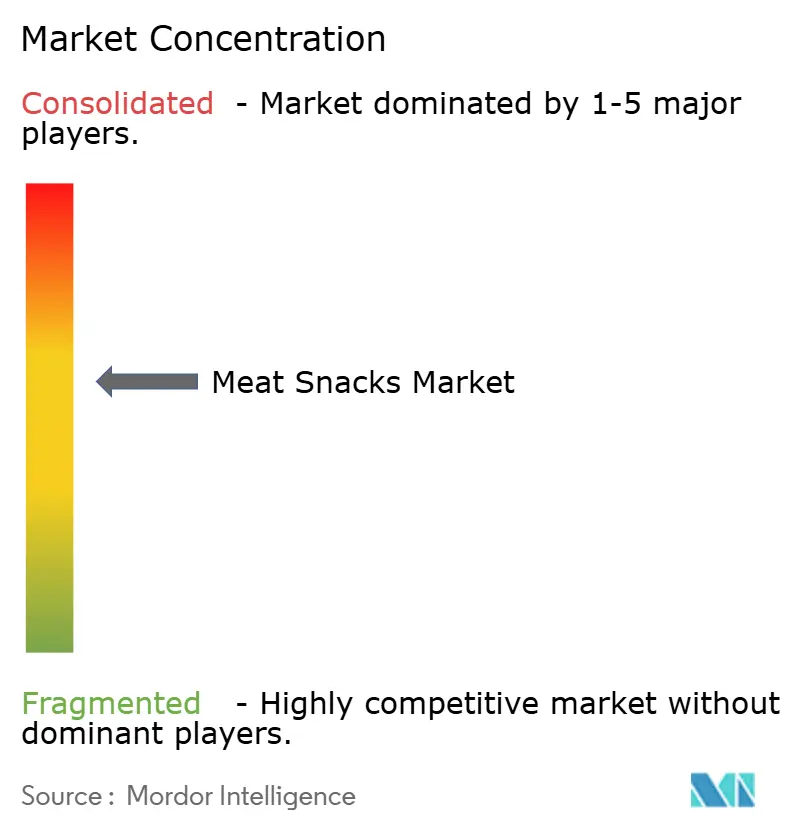
| Market Concentration | Medium |
Major Players
*Disclaimer: Major Players sorted in no particular order Image © Mordor Intelligence. Reuse requires attribution under CC BY 4.0. |
|
Meat Snacks Market Analysis by Mordor Intelligence
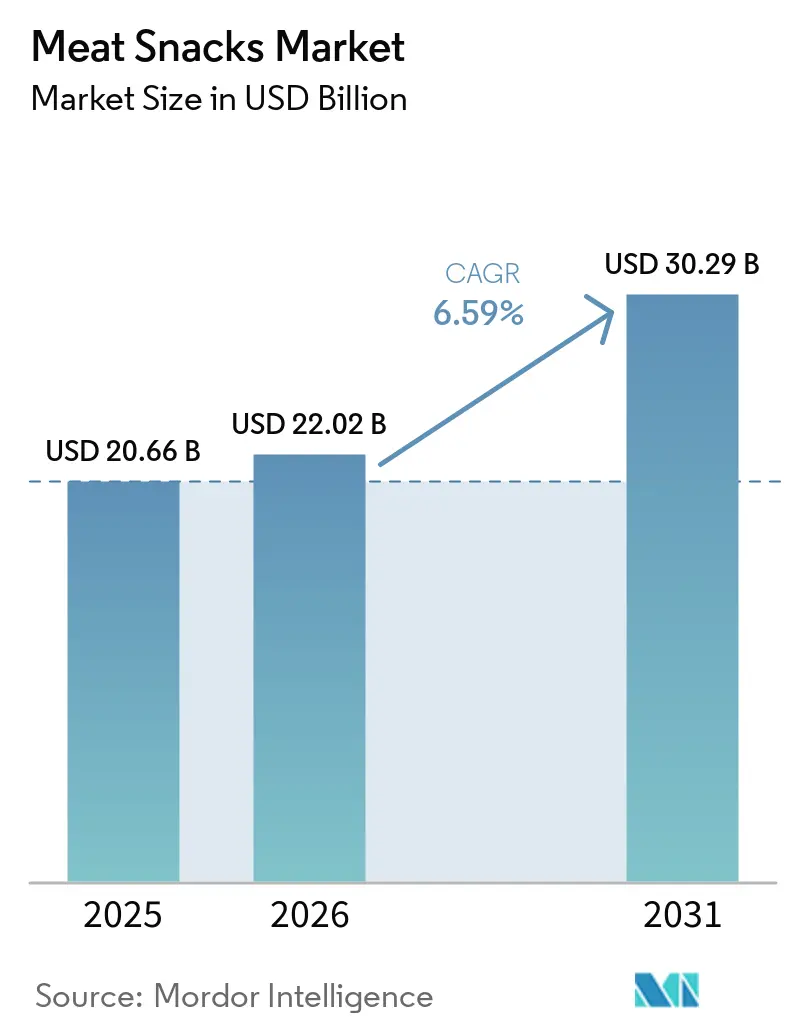
The meat snacks market size is expected to grow from USD 20.66 billion in 2025 to USD 22.02 billion in 2026 and is forecast to reach USD 30.29 billion by 2031 at 6.59% CAGR over 2026-2031. This growth is primarily driven by the rising popularity of protein-rich diets and the increasing demand for convenient food options. Products like beef jerky remain popular as they provide an affordable and complete source of protein. Even with rising food prices, consumers are opting for bulk purchases and value packs to save costs. The availability of meat snacks in convenience stores and online platforms has further expanded their accessibility. Premium and clean-label products are gaining traction, offering higher profit margins and paving the way for artisanal brands to enter the market. While regulatory concerns about processed meat have led to reformulation efforts and the introduction of plant-based alternatives, these factors have not significantly slowed the market's growth. The market is moderately consolidating, with key players such as Conagra Brands, Tyson Foods, and Hormel Foods Corporation maintaining a strong presence.
Key Report Takeaways
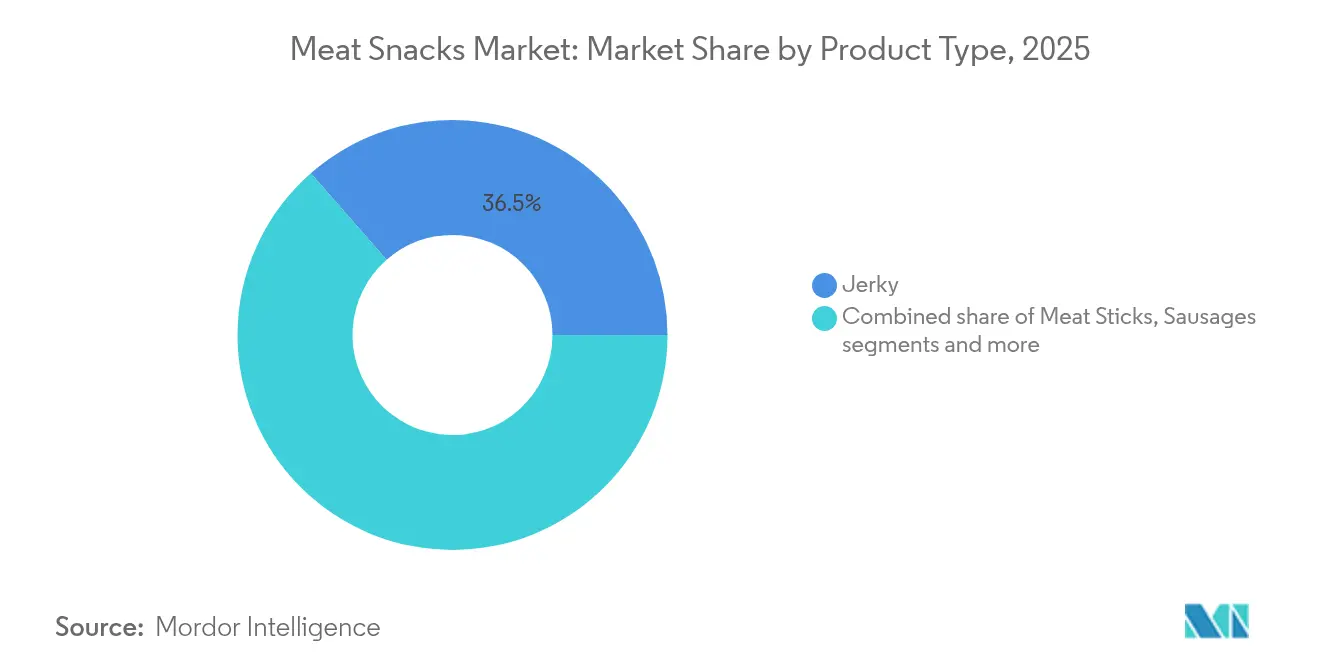
- By product type, jerky led with 36.45% of the meat snacks market share in 2025; meat sticks are advancing at a 7.09% CAGR through 2031.
- By source, beef captured 48.10% share of the meat snacks market size in 2025, while pork is set to expand at a 6.68% CAGR between 2026 and 2031.
- By category, conventional offerings dominated with 87.40% revenue share in 2025; organic lines are growing at an 8.32% CAGR over the same horizon.
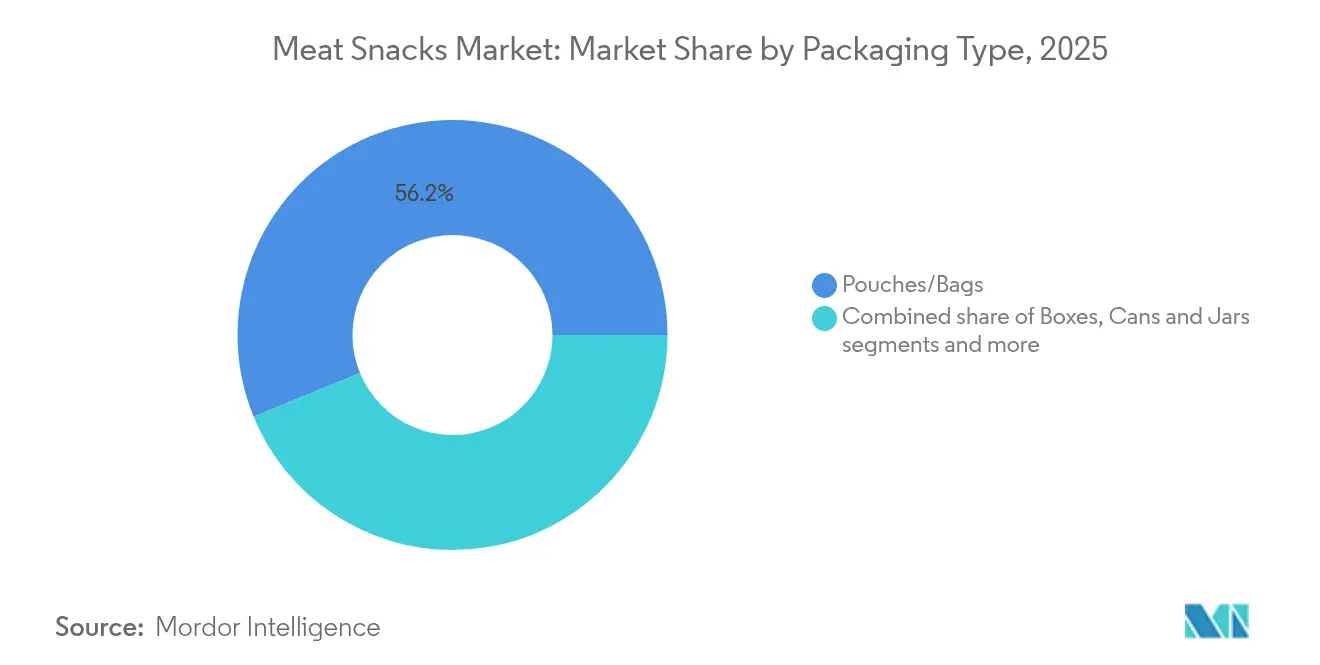
- By packaging, pouches/bags commanded 56.20% of the meat snacks market size in 2025, whereas boxes will grow at a 7.34% CAGR to 2031.
- By distribution channel, supermarkets/hypermarkets held 44.70% of the meat snacks market share in 2025, yet online retail stores are accelerating at a 9.32% CAGR through 2031.
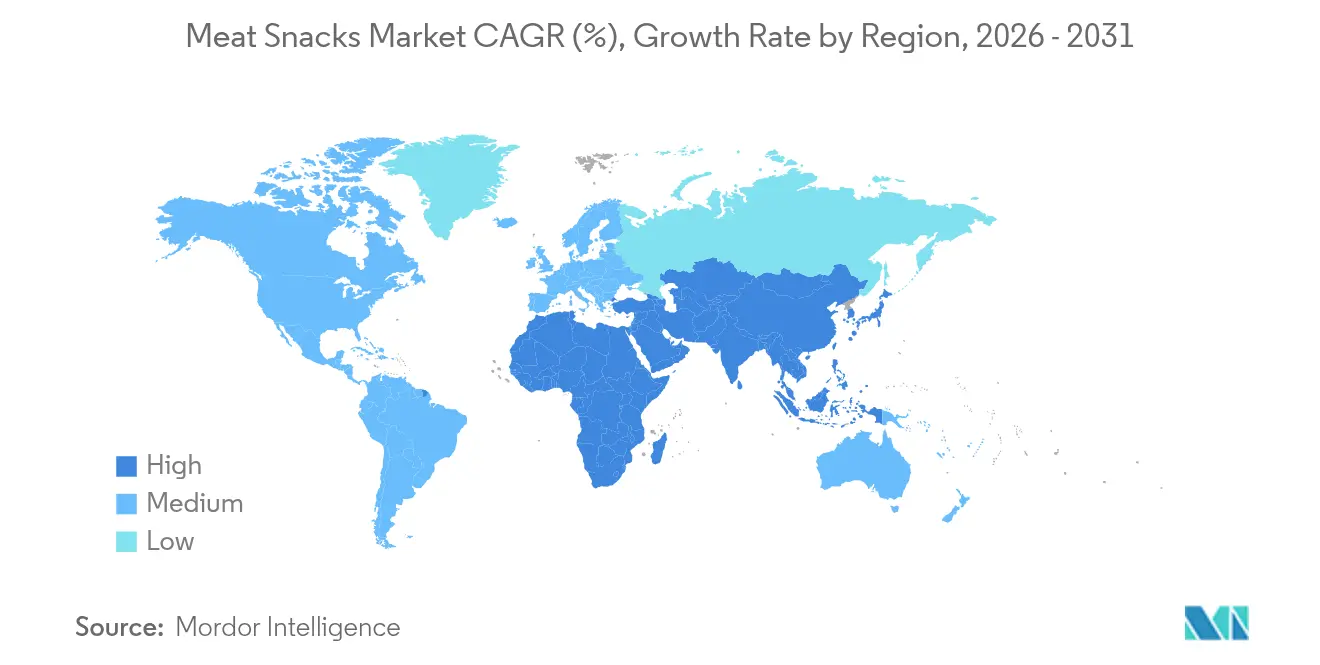
- By geography, North America commanded 44.90% of the global meat snacks market size in 2025, whereas Asia-Pacific will grow at a 8.92% CAGR to 2031.
Note: Market size and forecast figures in this report are generated using Mordor Intelligence’s proprietary estimation framework, updated with the latest available data and insights as of 2026.
Market Trends and Insights
Drivers Impact Table of Meat Snacks Market*
| DRIVER | (~) % IMPACT ON CAGR FORECAST | GEOGRAPHIC RELEVANCE | IMPACT TIMELINE |
|---|---|---|---|
| Rising demand for high-protein snacks | +1.2% | Global, with strongest impact in North America and Europe | Medium term (2-4 years) |
| Increasing convenience and on-the-go consumption | +0.8% | Global, particularly urban centers in Asia-Pacific | Short term (≤ 2 years) |
| Increasing popularity of premium and gourmet products | + 1.1% | North America and Europe, expanding to Asia-Pacific affluent segments | Medium term (2-4 years) |
| Product innovation and flavor expansion | +0.9% | Global, with regional flavor preferences | Medium term (2-4 years) |
| Focus on clean ingredient lists | + 0.7% | North America and Europe, regulatory-driven adoption | Long term (≥ 4 years) |
| Expansion of plant-based meat snacks | +1.0% | Global, led by North America and Europe | Long term (≥ 4 years) |
| Source: Mordor Intelligence | |||
Rising demand for high-protein snacks
The demand for high-protein, low-carb, and convenient snack options is driving the growth of the meat snacks market. According to the International Food Information Council (IFIC), as of 2024, 71% of American consumers are actively looking to include more protein in their diets, highlighting a shift toward healthier and functional snacking[1]Source: International Food Information Council Org, "2024 IFIC Food and Health Survey", ific.org. To meet this demand, brands are introducing clean-label meat snacks that focus on high protein, convenience, clear protein benefits, and high-quality ingredients. For instance, in May 2025, Wenzel’s Farm launched its PRO snack stick line, which includes single-serve beef and pork sticks in four bold flavors. Each stick provides 16 grams of protein with minimal sugar, catering to health-conscious and busy consumers. This growing preference for health, convenience, and clean nutrition is expected to drive the global meat snacks market's growth in the coming years.
Increasing convenience and on-the-go consumption
The growing need for convenience and on-the-go eating is driving the meat snacks market. As people lead busier lives, they are replacing full meals with easy-to-carry, protein-packed snacks that are both filling and convenient. According to Mondelez International Inc.'s 2024 state of snacking report, 91% of global consumers snack at least once a day, and 61% snack twice or more, showing a clear shift toward flexible eating habits[2]Source: Mondelez International Inc., "2024: State of Snacking", mondelezinternational.com. Meat snacks like jerky and sticks fit this trend well because they are easy to store, come in portioned sizes, and require no preparation. Features like resealable packaging, vacuum-sealed options, and single-serve packs are especially appealing to busy workers, travelers, and fitness enthusiasts. These qualities not only make meat snacks easy to carry and keep fresh but also allow brands to capture a wide consumer base, making these snacks a practical choice for today’s snacking needs.
Increasing popularity of premium and gourmet products
Consumers are increasingly opting for premium and gourmet meat snacks due to rising incomes, changing preferences, and a growing focus on healthier ingredients and clean-label products. According to the International Monetary Fund (IMF), as of 2024, purchasing power parity stands at USD 206.88 thousand, reflecting a greater ability and willingness among consumers to spend on high-quality, indulgent food options[3]Source: International Monetary Fund, "GDP, Current Prices, Purchasing power parity; Billions of International Dollars", imf.org. In October 2023, Country Archer Provisions launched rosemary turkey mini sticks and original beef jerky snack packs. These products are clean-label and rich in protein, catering to health-conscious individuals who value premium and nutritious snacks. This shift highlights how higher incomes, combined with a desire for healthier, flavorful, and authentic snack options, are driving changes in the global meat snacks market, encouraging brands to innovate and meet evolving consumer expectations.
Product innovation and flavor expansion
Product innovation and new flavors are key drivers of growth in the global meat snacks market, as brands work to meet the changing preferences of consumers. This trend is largely driven by the growing demand for snacks that offer variety, global flavors, and a balance of indulgence and nutrition. For example, in 2025, Jack Link’s collaborated with PepsiCo’s Doritos to launch cool ranch chicken sticks, which combine the popular chip flavor with a protein-rich snack in a creative and convenient format. Similarly, in June 2025, Michelin-trained chefs behind the Carnal brand introduced umami cut beef jerky and black truffle and garlic beef sticks. These products bring a premium touch to meat snacks by incorporating high-end culinary techniques and unique flavors. Such innovations are transforming meat snacks into more exciting and indulgent options, appealing to a broader audience that seeks both taste and quality in their snacks.
Restraints Impact Analysis of Meat Snacks Market*
| RESTRAINT | (~) % IMPACT ON CAGR FORECAST | GEOGRAPHIC RELEVANCE | IMPACT TIMELINE |
|---|---|---|---|
| Health concerns related to processed meat | -0.9% | Global, strongest in Europe and North America | Long term (≥ 4 years) |
| Consumer perception of price premium | -0.6% | Global, particularly price-sensitive emerging markets | Short term (≤ 2 years) |
| Sustainability and environmental concerns | -0.4% | Europe and North America, expanding globally | Long term (≥ 4 years) |
| Stringent regulatory and labeling requirements | -0.5% | Global, varying compliance complexity by region | Medium term (2-4 years) |
| Source: Mordor Intelligence | |||
Health concerns related to processed meat
Health concerns about processed meat are becoming a major challenge for the meat snacks market. Studies, including those by the World Health Organization, have linked regular consumption of processed meats to higher risks of chronic diseases like colorectal cancer and type 2 diabetes. For example, a 2024 study by Eating Better Org found that eating just 50 grams of processed meat daily could increase the risk of type 2 diabetes by 30% and colorectal cancer by 26%[4]Source: Eating Better Org, "Processed meat and public health: Time for a change,", eating-better.org. These findings have led to stricter dietary guidelines, more public awareness, and a growing preference for cleaner, less processed options. To address these concerns, manufacturers are creating products with natural preservatives, lower sodium levels, and clearer labeling. In March 2025, Lorissa’s Kitchen launched a line of no-sugar-added, non-GMO meat snacks made from grass-fed beef, free from the top nine allergens, to meet the demand for healthier, safer protein snacks.
Consumer perception of price premium
High prices are a major challenge for the growth of the meat snacks market. While these snacks are promoted as high-protein, convenient, and nutritious, many consumers see them as too expensive compared to other snacks like chips or baked goods. This is especially true in markets where people are more price-sensitive or during tough economic times when shoppers focus on getting more for their money. The cost of using quality meat, clean-label ingredients, and premium packaging adds to the higher prices, making single-serve meat snacks less affordable for regular use. As a result, even though there is growing interest in healthier snacks, high prices can discourage people from trying or buying these products repeatedly, especially among lower- and middle-income groups.
*Our forecasts treat driver/restraint impacts as directional, not additive. The impact forecasts reflect baseline growth, mix effects, and variable interactions.
Meat Snacks Market Segment Analysis
By Product Type:
Jerky Maintains Lead while Sticks Outpace GrowthIn 2025, jerky dominated the meat snacks market with a 36.45% share, driven by its long-standing popularity and widespread availability in supermarkets, convenience stores. Its growth is further supported by innovations like grass-fed sourcing and resealable packaging that enhance convenience and impulse purchases. Companies have also introduced family-size bundles to offer better value, helping to maintain sales even as inflation impacts consumer spending. Brands keep consumers engaged by offering diverse flavors such as chili-lime, maple bourbon. Certifications like keto and paleo further attract health-conscious buyers, ensuring jerky remains a top choice in the market.
Meat sticks are expected to grow at the fastest rate among meat snack formats, with a projected CAGR of 7.09% from 2026 to 2031. Their growth is fueled by their portability, portion control, and flexible placement in locations like offices. The expansion of production facilities, such as Chomps’ new Missouri plant set to open in 2025, highlights the category's momentum and increasing demand. Other formats, including bars, sausages, and nuggets, are also gaining traction due to their high-protein appeal, though their growth will likely be slower than meat sticks. These formats contribute to a diverse product range that keeps consumers interested and reduces the risk of losing market share to non-protein snack alternatives.



By Source:
Beef Dominates, Pork AcceleratesBeef remained the most preferred choice in the meat snacks market in 2025, contributing 48.10% of the total revenue. Its popularity stems from strong consumer demand, dependable supply chains, and its connection to grilling trends and high-protein diets. The rich flavor and familiarity of beef snacks make them a preferred choice among consumers across different regions. These snacks are versatile, fitting into various eating occasions, whether as a quick snack or a meal replacement. The established availability of beef products ensures a consistent supply, further strengthening its position in the market. This combination of taste, convenience, and accessibility has helped beef maintain its dominance in the meat snacks segment.
Pork is projected to grow the fastest among all meat sources, with an expected CAGR of 6.68% from 2026 to 2031. This growth is largely driven by its affordability and the rising demand for bold, regional flavors, particularly in the Asia-Pacific region. Pork snacks are increasingly popular as they cater to diverse taste preferences while offering a cost-effective protein option. Their ability to adapt to local flavor trends makes them appealing to a wide range of consumers. Meanwhile, poultry snacks continue to see steady growth due to their lean and healthy profile, which resonates with health-conscious buyers. Exotic meats are also gaining traction in niche markets, attracting premium consumers seeking unique and high-quality protein alternatives.
By Category:
Conventional Still Rules, Organic Gains TractionIn 2025, conventional meat snacks dominated the market, contributing 87.40% of the total revenue. Their success is largely due to established livestock supply chains, which ensure consistent production and lower costs. These products are widely available in discount stores and mass-market retailers, making them accessible to a broad audience. The use of protein claims on packaging and the availability of private-label options have made them particularly attractive to cost-conscious consumers. This combination of affordability, accessibility, and effective marketing has solidified their leading position in the market.
Organic meat snacks are expected to grow rapidly, with a projected CAGR of 8.32% from 2026 to 2031, making them the fastest-growing category. This growth is driven by younger consumers who prioritize ethical sourcing, clean ingredients, and transparency in production. Although organic snacks currently hold a smaller share of the market, they offer higher profit margins and are gaining more shelf space in both mainstream and specialty stores. These factors enable brands to focus on innovation and sustainability, which appeal to health-conscious and environmentally aware buyers. As a result, organic meat snacks are steadily gaining popularity and carving out a niche in the market.
By Packaging Type:
Pouches/Bags Lead, Boxes RiseIn 2025, pouches/bags were the leading packaging type in the global meat snacks market, accounting for 56.20% of total sales. These pouches are popular because they are lightweight, affordable, and easy to display on shelves using hang-tabs. They also come with features like resealable zippers and oxygen-barrier layers, which help keep the snacks fresh for longer without needing artificial preservatives. This makes them a great fit for the growing demand for clean-label products. Their transparent windows and modern designs allow consumers to see the product inside, making them more appealing and helping brands attract new customers.
Boxes are expected to grow the fastest, with a projected CAGR of 7.34% through 2031. This growth is driven by the increasing preference for bulk purchases among households and the popularity of club stores, where sturdy packaging is essential for long-distance shipping. Recent innovations, such as recyclable mono-material boxes, are also making these multipacks more attractive to eco-conscious consumers. These advancements not only enhance the packaging's sustainability but also improve its visual appeal, meeting the rising demand for environmentally friendly and preservative-free options in the market.
By Distribution Channel:
Supermarkets/Hypermarkets Anchor, Online Retail Stores SurgeIn 2025, supermarkets/hypermarkets made up 44.70% of the meat snacks sales, due to their ability to showcase products prominently and offer attractive multipack deals. These stores provide a wide variety of options, making them a convenient choice for many shoppers. Convenience stores also contributed significantly by driving impulse purchases, while specialty stores cater to customers who are willing to spend more for unique and high-quality products, adding diversity to the market.
Online retail stores are projected to grow at a strong 9.32% CAGR through 2031, making them the fastest-growing sales channel. The rise of digital shopping allows brands to reach customers in remote or underserved areas where physical stores are less accessible. Subscription-based models that offer directly to consumers are becoming popular, as they provide personalized flavor options and exclusive products, building customer loyalty. Advancements in cold-chain logistics and insulated shipping ensure that products remain fresh during delivery, especially in warmer regions, encouraging more consumers to shop online with confidence.
Geography Analysis
North America Meat Snacks Market
In 2025, North America dominated the global meat snacks market with a 44.90% share, driven by the region's strong preference for protein-rich diets and a well-established retail network. Strict United States Department of Agriculture (USDA) Food Safety and Inspection Service (FSIS) regulations ensure product safety, boosting consumer confidence. Trade agreements like the United States-Mexico-Canada Agreement (USMCA) have further reduced sourcing costs, making products more competitive. The rising consumption of beef, which is expected to reach 122 kg per capita by 2027, continues to support the market's growth. The region's diverse retail formats, including supermarkets, convenience stores, and online platforms, also contribute to its leading position.
APAC Meat Snacks Market
The Asia-Pacific region is the fastest-growing market, with a projected CAGR of 8.92%, supported by urbanization, increasing disposable incomes, and the growing influence of Western snacking habits. Countries like China and India are emerging as high-growth markets due to their expanding middle-class populations and changing food preferences. Meanwhile, Japan and Australia maintain high-quality standards through strict food safety regulations, ensuring consumer trust. Efforts like ASEAN labeling harmonization are simplifying regional distribution, enabling companies to expand their presence across multiple countries. This combination of factors is driving significant growth in the region.
Europe Meat Snacks Market
Europe offers both opportunities and challenges for the meat snacks market. The region faces regulatory hurdles, such as EU Regulation 1169/2011, which mandates detailed allergen and nutrition labeling, increasing compliance costs for manufacturers. However, the demand for premium and sustainable products remains strong, particularly in countries like Germany and the United Kingdom. Consumers in these markets are drawn to gourmet options and grass-fed sourcing, which align with their preferences for high-quality and environmentally friendly products. Despite the regulatory complexities, these factors are helping drive steady growth in the European market.

Regulatory Landscape
Meat snacks are regulated as processed meat and poultry products, with requirements covering pathogen controls, labeling, and traceability. In the United States, USDA Food Safety and Inspection Service (FSIS) oversight is central for meat and poultry snack processors, and ready-to-eat, shelf-stable items such as jerky are commonly produced under validated lethality and stabilization steps aligned with FSIS guidance (including expectations around Salmonella/STEC and Listeria reductions as part of multi-hurdle HACCP programs). FSIS also tightened voluntary origin-claim governance via the Product of USA framework effective January 1, 2026, which increases the importance of documentation and label-approval discipline for brands using domestic origin cues.
Across Europe, hygiene rules for food of animal origin and Salmonella control requirements under EU Regulation (EC) No 853/2004 shape raw material handling, processing hygiene, and verification programs for bovine and porcine inputs used in meat snacks. In parallel, supply chain data and recordkeeping requirements are intensifying globally, including US FSMA traceability expectations for certain foods, adding operational burden for manufacturers and co-packers that must maintain lot-level visibility and align packaging, labeling, and distribution records across modern retail and e-commerce.
Value Chain Analysis
The meat snacks value chain begins with livestock production and slaughter/primary processing, then moves to ingredient supply (spices, curing agents, and functional systems), secondary processing (marination, cooking/smoking, drying/air-drying, and fermentation where relevant), packaging (high-barrier pouches/bags, multipack boxes, and refrigerated trays for chilled formats), and distribution through retailers and foodservice-adjacent outlets. Shelf-stable jerky and sticks depend on process validation, smokehouse and drying capacity, and packaging that controls oxygen and moisture, while premium and clean-label positioning raises expectations for verified sourcing, allergen management, and tighter specifications.
Downstream, distribution has broadened beyond supermarkets/hypermarkets and convenience stores to include online retail, direct-to-consumer, vending, and fitness channels, increasing the need for agile fulfillment and consistent service levels. Recent moves show where value is being built: Stryve Foods partnered with Dot Foods (October 2024) to streamline redistribution and improve lead times, while Chomps announced expanded manufacturing capability via a 160,000-square-foot facility in Beatrice, Nebraska, in partnership with Landmark Snacks (October 2025). These steps aim to relieve processing bottlenecks and secure reliable throughput, particularly as tight beef supply and competition for lean cuts affect jerky-heavy portfolios.
Competitive Landscape
The meat snacks market is moderately concentrated, indicating the dominance of established players like Conagra Brands, Hormel Foods Corporation, Tyson Foods Inc., among others. Companies are primarily expanding through strategic acquisitions to improve distribution and premium product offerings. For instance, in 2024, Conagra Brands acquired Sweetwood Smoke & Co. to enhance its portfolio of healthier meat snacks. These strategies aim to secure raw materials, improve automation, and gain shelf space, especially as markets like Asia-Pacific and online channels continue to grow.
Newer players are also making progress by using direct-to-consumer platforms, offering transparent ingredient lists, and targeting younger audiences with relatable messaging. Chomps, for example, has shown significant growth, supported by a new large-scale production facility that helps lower costs and speed up delivery. Plant-based meat snack startups, backed by venture capital, are entering the market with a focus on sustainability and innovative textures. Automation technologies, such as rotary vacuum packers, are helping companies reduce labor costs and improve food safety, giving advanced processors a competitive edge over traditional ones.
Changing regulations are increasing competition by enforcing stricter rules on labeling and food safety. Larger companies benefit from faster product rollouts using tools like generic-label approvals, while smaller firms often depend on specialized co-packers to meet compliance requirements. As consumers prioritize claims like grass-fed, nitrate-free, or carbon-neutral sourcing, supply-chain transparency has become essential for staying competitive. The market now features a mix of established processors, digital-first brands, and retail platforms, all competing to lead the protein-snack category through cleaner labels, faster innovation, and efficient operations.
Meat Snacks Industry Leaders
-
ConAgra Brands Inc.
-
Hormel Foods Corporation
-
Link Snacks, Inc.
-
Tyson Foods, Inc.
-
General Mills
- *Disclaimer: Major Players sorted in no particular order
Meat Snacks Market Companies Covered in this Report
- Conagra Brands, Inc.
- Hormel Foods Corporation
- Link Snacks, Inc.
- Tyson Foods, Inc.
- Old Trapper Smoked Products Inc.
- Bridgford Foods Corporation
- Amylu Foods
- Premium Brands Holdings Corp.
- ITC Limited
- DS Enterprises (Carnivore India)
- Chomps
- Supreme Beef Jerky
- Swaggerty's Farms
- The Hershey's Company
- General Mills
- Kiolbassa Smoked Meats
- Cremonini S.p.A.
- Stryve Foods, Inc.
- Premium Brands Holdings Corporation
- Think Jerky, LLC

Market Opportunities and Future Outlook
Whitespace is emerging where manufacturers can pair clean-label positioning with faster, more controllable processing, especially in sticks and air-dried formats that travel well across mainstream retail and e-commerce. Product and process simplification is already being packaged for commercialization by large brands, for example Jack Link's announced a 3-ingredient line spanning beef sticks, steaks, and air-dried slices (May 2026). The approach points to room for broader shelf presence in better-for-you sets, while retailers can expand protein-snack assortments that are easier to communicate at shelf and online. Ingredient and process technologies that shorten cycle times and improve formulation consistency, such as encapsulated acidulation systems used to replace longer fermentation steps, also support scale-up of premium taste profiles while keeping safety and quality outcomes repeatable.
Capacity and supply-chain investments are addressing manufacturing constraints and enabling expansion into more doors and more geographies. Archer Meat Snacks secured a USD 100 million credit line from JPMorgan Chase (February 2026) to expand manufacturing capacity, and Western Smokehouse Partners expanded its footprint through the acquisition of Junior's Smokehouse (February 2026), supporting co-manufacturing and national coverage for brands that need dependable throughput. With beef inputs structurally tight in key producing markets, opportunity also sits in protein diversification (pork and poultry) and value-pack formats aligned to bulk purchasing behavior, while standardized origin-claim frameworks, including USDA's Product of USA effective January 1, 2026, create additional room for differentiated, documentation-backed sourcing claims.
Recent Industry Developments in Meat Snacks Market
- July 2026: Hormel Foods Corporation launched HORMEL Pepperoni Snack Bites, a refrigerated protein snack in resealable trays with Original, Parmesan, and Dill Pickle flavors. The launch extends meat snacks beyond shelf-stable jerky and sticks into chilled, short-shelf-life sets where brands can compete on freshness cues and frequent replenishment. It also broadens the usage occasions for meat snacks into lunchbox and at-home grazing moments where refrigerated placement can lift visibility.
- May 2026: Jack Link's announced a 3-ingredient line covering beef sticks, steaks, and air-dried slices, including 2-ounce bags of air-dried beef slices for nationwide rollout. The simplified ingredient message supports clean-label positioning and clearer online and in-store claims, while the air-dried format diversifies the portfolio beyond traditional jerky textures. This platform also helps brands manage assortment across multiple price tiers without relying on complex formulations.
- August 2024: Conagra Brands acquired Sweetwood Smoke & Co., maker of FATTY Smoked Meat Sticks, to expand its high-protein snack portfolio. The acquisition strengthened Conagra's presence in fast-growing stick formats and added manufacturing and brand assets geared toward protein snacking. It also illustrates how scaled food companies use M&A to accelerate participation in premium and differentiated meat-snack subsegments.


Meat Snacks Market Report Scope and Research Methodology
Market Definition and Coverage
The meat snacks market is defined as packaged, ready-to-eat meat-based snack products sold through retail and online channels, where consumption is typically on-the-go and portioned for snacking. Our sizing is built in value terms and tracked across the main consuming regions.
Scope exclusions: Fresh meat, frozen meat, and full meal replacements are excluded when they are not marketed and sold as snack-format meat products.
Segments Covered in This Report
-
By Product Type
- Jerky
- Meat Sticks
- Sausages
- Meat Bars
- Nuggets
- Other Product Types
-
By Source
- Beef
- Pork
- Chicken/Poultry
- Others
-
By Category
- Organic
- Conventional
-
By Packaging Type
- Boxes
- Cans and Jars
- Pouches/Bags
- Others
-
By Distribution Channel
- Supermarkets/Hypermarkets
- Convenience and Grocery Stores
- Online Retail Stores
- Specialty Stores
- Other Channels
-
By Geography
-
North America
- United States
- Canada
- Mexico
- Rest of North America
-
South America
- Brazil
- Colombia
- Chile
- Peru
- Argentina
- Rest of South America
-
Europe
- United Kingdom
- Germany
- France
- Italy
- Spain
- Russia
- Poland
- Belgium
- Sweden
- Rest of Europe
-
Asia-Pacific
- China
- Japan
- India
- Australia
- Indonesia
- South Korea
- Thailand
- Singapore
- Rest of Asia-Pacific
-
Middle East and Africa
- South Africa
- Saudi Arabia
- United Arab Emirates
- Nigeria
- Egypt
- Morocco
- Turkey
- Rest of Middle East and Africa
-
North America
Data Sources, Market Sizing, and Validation
Desk Research
Desk research starts with building the demand and supply context behind meat snacks and then converting it into a usable set of inputs for the model. We referred to public sources such as USDA, the US Census Bureau, UN Comtrade, FAO, and Eurostat to understand processed meat volumes, trade flows, and regional food spending patterns that tend to move snack demand.
To make sure the market is not sized in isolation, company annual reports, investor presentations, association websites, and reputable press coverage were reviewed for category mix signals, pricing actions, and channel expansion commentary. Where needed, a paid subscription covering company financials and a separate paid patent database were used to confirm product innovation activity and to sanity check the direction of pricing and mix changes. The desk sources mentioned above are illustrative rather than exhaustive, and many other references were also used for data collection, validation, and clarification.
Primary Interviews and Surveys
Primary work focused on validating what is counted as a meat snack in real selling conditions and then pressure-testing the pricing and channel split assumptions. We spoke with a mix of manufacturers, ingredient and packaging participants, and retail and distribution-side experts across Americas, EMEA, and APAC so desk inputs could be confirmed, gaps could be closed, and the final totals could be triangulated.
Distribution of primary research fieldwork respondents
| Company type | Respondent position | Region |
|---|---|---|
| Top tier: 32% | CXOs: 15% | APAC: 41% |
| Mid tier: 52% | Functional/Unit leaders: 31% | EMEA: 37% |
| Smaller Players: 16% | Managers: 54% | Americas: 22% |
Market-Sizing & Forecasting
Sizing was built using a top-down and bottom-up approach, where the top-down structure starts from packaged meat and processed food consumption signals and then reconstructs the addressable snack-format portion by region and channel. Those totals were then corroborated with selective bottom-up checks using sampled brand and channel price points, observed pack-size norms, and manufacturer and retailer feedback on volume movement, before final numbers were locked.
A few practical market fingerprints were used as inputs, including category split by product format (such as jerky, sticks, and sausage-style snacks), mix by meat source (beef, pork, poultry, and others), distribution channel weighting (convenience, supermarkets and hypermarkets, specialty, and online), and average selling price progression tied to protein costs and promotional intensity. When bottom-up pieces were missing for smaller countries or niche formats, assumptions were bridged using proxy indicators like similar-market per-capita snack spending and trade intensity, and then adjusted after expert feedback.
For forecasting, scenario analysis was used to reflect different paths for protein input costs, private label penetration, and online retail expansion, and then refined using interview-led consensus on how quickly pricing can be passed through. The final forecast was reviewed against observed growth patterns in convenience-led snacking and premiumization so the trajectory stays realistic rather than purely trendline-driven.
Data Validation & Update Cycle
Outputs are triangulated across multiple checks, so the market total aligns with independent signals like packaged food growth, processed meat movements, and channel expansion pacing. If a region shows an unusual jump, the drivers are re-tested, and follow-up calls are triggered to confirm whether it is a real shift from pricing, mix, or distribution, or simply a modeling artifact.
Before sign-off, the model is reviewed in steps, starting with internal peer checks on assumptions, followed by variance checks across regions and product formats, and then a final analyst review for logic and arithmetic consistency. Reports are refreshed annually, and material events (for example, major pricing resets or rapid channel changes) are incorporated through interim updates. Right before delivery, a fresh pass is completed so clients receive the latest updated view.
Mordor Intelligence's Meat Snacks Market Sizing Compared With Other Published Estimates
Published market sizes for meat snacks often vary because each study draws the line differently on what counts as a snack, which channels are counted, and how pricing is normalized across countries. Differences also show up when the base year is not the same, or when currency conversion and inflation handling are done at different points in the modeling flow.
The main gap comes from whether sausage-style snack products and multipack items are consistently counted as snack-format sales across retail and online, and then priced using a stable pack-size and promotional adjustment. Under Mordor Intelligence, meat snacks are counted across formats such as jerky, meat sticks, and sausage, and the value build uses channel-weighted ASP logic that is rechecked through primary feedback so temporary promo spikes do not overstate the annual market.
Benchmark comparison
| Source | Market Size | Gaps in Research Methodology |
|---|---|---|
| Mordor Intelligence | USD 20.66 B (2025) | |
| Global Consultancy A | USD 22.25 B (2025) | Uses a broader inclusion of snack-adjacent processed meat items and applies a higher base-year value built from wider channel coverage assumptions, which can lift totals when promotional pricing is not fully normalized. |
| Industry Publisher B | USD 11.82 B (2025) | Leans on a narrower definition that appears closer to limited retail tracking, which can undercount sticks and sausage-style snacks and can also compress value when average prices are not channel-weighted. |
The spread across published numbers is mostly explained by inclusion rules for snack-format processed meats and by how prices are translated into annual value across channels and countries. By keeping scope tied to packaged snack occasions and by using repeatable price and mix checks, the estimate stays transparent and easier to reconcile with real-world category behavior.


Key Questions Answered in the Report
What is the current value of the global meat snacks market?
The market stands at USD 22.02 billion in 2026 and is projected to reach USD 30.29 billion by 2031.
Which product format is growing fastest in meat snacks?
Meat sticks are forecast to post a 7.09% CAGR between 2026 and 2031, outpacing other formats.
Which region shows the highest growth momentum?
Asia-Pacific leads with a projected 8.92% CAGR through 2031, driven by urbanization and rising incomes.
How big is beef’s share in global meat snacks?
Beef products represented 48.10% of 2025 revenue and continue to dominate despite pork’s faster growth.
Page last updated on:


 Your data is secure and never sold or shared.


