
Leigh Syndrome Market Size and Share
Market Overview
| Study Period | 2020 - 2031 |
|---|---|
| Market Size (2026) | USD 8.28 Billion |
| Market Size (2031) | USD 11.68 Billion |
| Growth Rate (2026 - 2031) | 7.12 % |
| Fastest Growing Market | Asia-Pacific |
| Largest Market | North America |
| Market Concentration | Medium |
Major Players
*Disclaimer: Major Players sorted in no particular order Image © Mordor Intelligence. Reuse requires attribution under CC BY 4.0. |
|
Leigh Syndrome Market Analysis by Mordor Intelligence
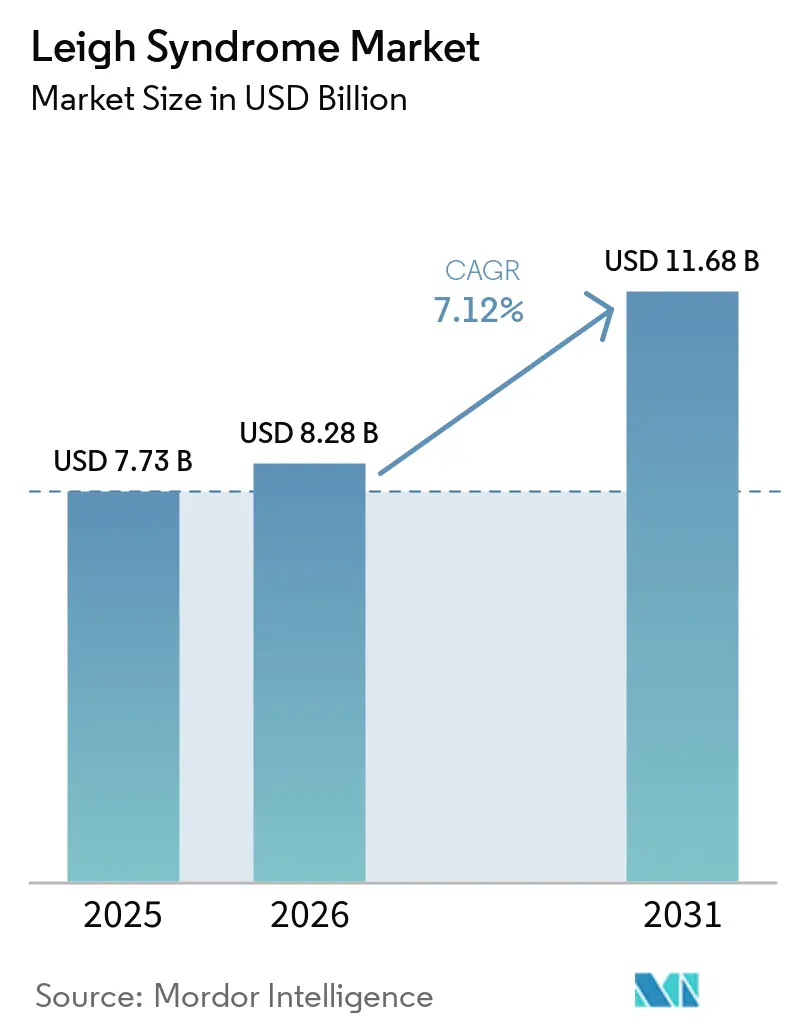
The Leigh Syndrome Market size is projected to be USD 7.73 billion in 2025, USD 8.28 billion in 2026, and reach USD 11.68 billion by 2031, growing at a CAGR of 7.12% from 2026 to 2031.
The present treatment base remains centered on supportive care, off-label medicines, and cofactor regimens because no FDA-approved disease-modifying therapy for Leigh syndrome is available. Expanded whole-exome and whole-genome sequencing is bringing genetically confirmed patients into care earlier and is making trial recruitment more practical. Developers are using regulatory designations, specialist treatment centers, and patient registries to reduce uncertainty in small and diverse patient populations. The Leigh syndrome market also presents room for platform approaches that address shared mitochondrial dysfunction across several genetic subtypes, rather than a single mutation alone. This combination makes access to genetic diagnosis and specialized care important to the pace at which the Leigh syndrome market can develop.
Key Report Takeaways
- By genetic etiology, Nuclear DNA-Associated Leigh Syndrome held 58.24% of the Leigh syndrome market share in 2025, while Coenzyme Q10 Deficiency is forecast to grow at an 11.42% CAGR through 2031.
- By treatment type, Supportive & Symptomatic Therapy accounted for 46.37% of the Leigh syndrome market size in 2025, while Gene & RNA-Based Therapies are projected to grow at a 24.86% CAGR through 2031.
- By route of administration, Oral administration held 67.85% in 2025, while intracerebroventricular administration is forecast to expand at a 22.15% CAGR through 2031.
- By care setting, Tertiary Hospitals accounted for 42.91% of the Leigh syndrome market share in 2025, while Mitochondrial Disease Centers of Excellence are projected to grow at an 18.74% CAGR through 2031.
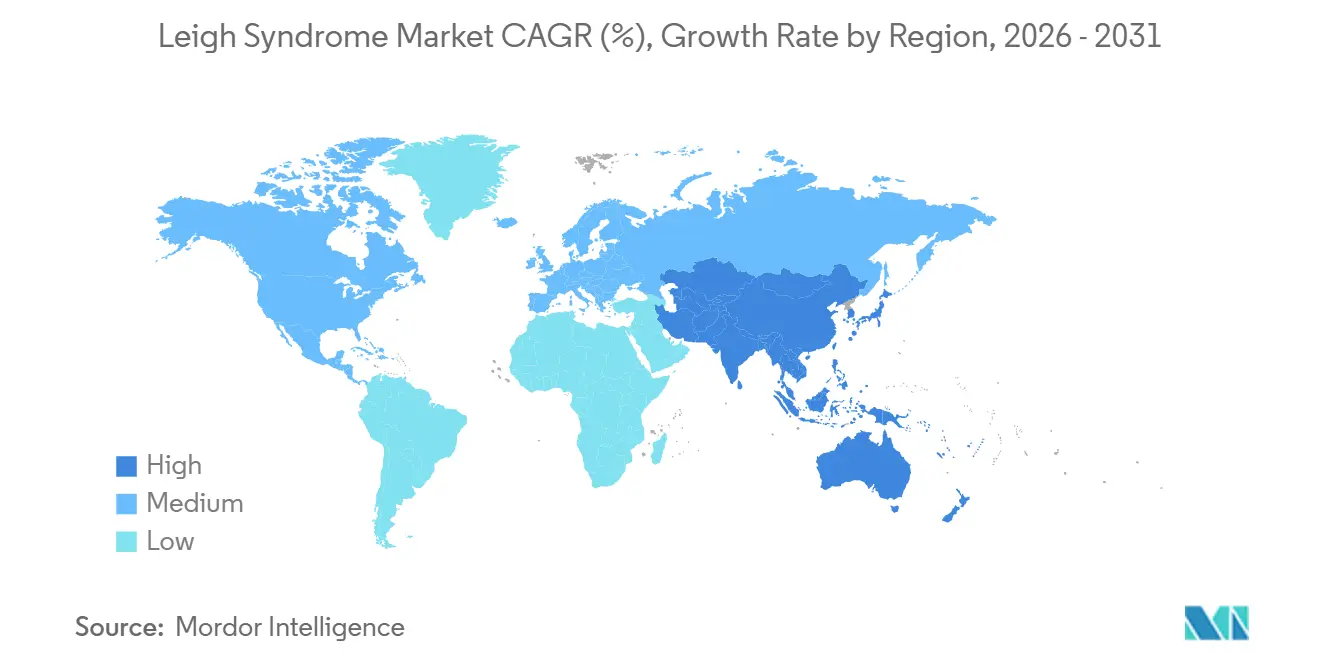
- By geography, North America held 41.28% in 2025, while Asia-Pacific is forecast to expand at a 15.38% CAGR through 2031.
Note: Market size and forecast figures in this report are generated using Mordor Intelligence’s proprietary estimation framework, updated with the latest available data and insights as of January 2026.
Global Leigh Syndrome Market Trends and Insights
Drivers Impact Analysis*
| Driver | (~) % Impact on CAGR Forecast | Geographic Relevance | Impact Timeline |
|---|---|---|---|
| Increasing Genetic Testing and Earlier Diagnosis | +1.20% | Global, with early gains in North America and Western Europe | Short term (≤ 2 years) |
| Expansion of Rare Mitochondrial Disease Research Funding | +0.90% | North America and EU | Medium term (2-4 years) |
| Progress in Mitochondrial Targeted and Gene Therapies | +1.50% | North America, EU, and Japan | Long term (≥ 4 years) |
| Growth of Patient Registries and Trial Ready Cohorts | +0.70% | Global, concentrated in North America and Europe | Medium term (2-4 years) |
| Increasing Clinical Recognition of Leigh Syndrome | +0.60% | Global, pronounced in Asia-Pacific and Middle East and Africa | Short term (≤ 2 years) |
| Mutation Specific Drug Repurposing and Precision Screening | +0.80% | North America and EU | Medium term (2-4 years) |
| Source: Mordor Intelligence | |||
Increasing Genetic Testing and Earlier Diagnosis
Earlier genetic testing is a central near-term factor for the Leigh syndrome market because it changes the point at which patients can enter specialist care. The NCBI Genetic Test Registry listed 271 sequencing-based tests for Leigh syndrome spectrum from 32 laboratories worldwide in July 2025. The Global Patient Registry reported that it included more than 400 participants across 48 countries, showing the breadth of the patient identification effort. Earlier confirmation allows sponsors to identify people with defined mutations before trial enrollment begins. Thiogenesis structured its Phase 2a enrollment around confirmed genetic subtypes, which shows the practical value of these patient pools. The NAMDC, which is supported through the NIH Rare Diseases Clinical Research Network, provides a national structure that links diagnosis, specialist care, and research participation. More confirmed cases can also make the clinical needs of the Leigh syndrome market clearer to treatment centers and program sponsors.
Progress in Mitochondrial Targeted and Gene Therapies
Mitochondrial-targeted and gene therapies are changing the development outlook for the Leigh syndrome market. A 2026 Nature Biotechnology study corrected disease-associated mitochondrial variants in rat zygotes with engineered base editors and reported a 53.00% average restoration of wild-type alleles [1]Chen, L. et al. "A mitochondrial disease model is generated and corrected using engineered base editors in rat zygotes." Nature Biotechnology 44, 382–386, 2026. https://doi.org/10.1038/s41587-025-02684-y. A 2025 Brain study found that focused-ultrasound-assisted AAV9 delivery crossed the blood-brain barrier and improved survival, cardiac function, and brain function in Ndufs4 knockout mice. These findings address a major delivery barrier for therapies intended to reach the central nervous system. Taysha’s TSHA-104 program illustrates the mutation-specific approach for SURF1-associated Leigh syndrome and has received Rare Pediatric Disease and Orphan Drug designations. A refined AAV9 vector design reported in 2025 maintained efficacy in rat models while reducing cytotoxicity, which may strengthen safety planning before a future resubmission.
Growth of Patient Registries and Trial Ready Cohorts
Patient registries connect genetic diagnosis with trial planning in the Leigh syndrome market. The MSeqDR PMD Virtual Registry surpassed 9,000 de-identified primary mitochondrial disease cases in November 2024, including 2,000 Leigh syndrome cases identified through literature mining and expert curation. The Leigh Syndrome International Consortium is actively tracking at least 150 genetically confirmed patients through its natural history study. These records give sponsors a clearer view of patient history, genotype, and potential eligibility before a study opens. The Cure Mito Foundation mapped registry data fields to CDASH clinical data standards in 2024, improving compatibility with regulatory submission requirements. Standardized registry datasets may also support external control groups for single-arm rare disease studies, reducing the number of participants needed for a pivotal study.
Expansion of Rare Mitochondrial Disease Research Funding
Research funding supports the discovery and clinical infrastructure needed for the Leigh syndrome market. The University of Arkansas received USD 3.10 million from the NIH in 2024 for a 5-year study of pediatric mitochondrial disorder syndromes across neuronal, cardiac, and renal tissue models. Khondrion secured up to EUR 5.00 million (USD 5.48 million) in Dutch government Innovation Credit funding in 2025 to support the KHENERFIN Phase 3 program. The funding mix combines public support at earlier stages with private capital after proof-of-concept evidence has emerged. The NIH Rare Diseases Clinical Research Network had USD 26.00 million in fiscal year 2025 grants, including support for the NAMDC. Sustained research capacity can give smaller developers access to clinical sites and patient networks that would otherwise be difficult to build independently.
Restraints Impact Analysis*
| Restraint | (~) % Impact on CAGR Forecast | Geographic Relevance | Impact Timeline |
|---|---|---|---|
| Genetic and Phenotypic Heterogeneity | -1.20% | Global | Long term (≥ 4 years) |
| High Cost of Rare Disease Drug Development | -0.90% | Global, with greater burden in emerging markets | Long term (≥ 4 years) |
| Delayed Diagnosis and Limited Specialist Access | -0.60% | Asia-Pacific, Middle East and Africa, and South America | Medium term (2-4 years) |
| Weak Commercial Incentives for Ultra Rare Subgroups | -0.80% | Global | Medium term (2-4 years) |
| Source: Mordor Intelligence | |||
Genetic and Phenotypic Heterogeneity
Genetic and phenotypic heterogeneity limit the scale available to any single program in the Leigh syndrome market. Leigh syndrome can arise from more than 100 genes across mitochondrial and nuclear genomes. The same MT-ATP6 m.9176T>C variant can produce severe Leigh syndrome or the milder NARP phenotype, depending on heteroplasmy load. A program focused on SURF1-related disease may reach only 10.00% to 15.00% of patients, while MT-ATP6 programs serve a separate group. The SIMPATHIC trial is restricted to MT-ATP6-related disease and shows how genetic selection narrows each study population. This division complicates trial recruitment and reduces the revenue pool attached to a mutation-specific approval.
High Cost of Rare Disease Drug Development
Rare-disease development costs place a material constraint on the Leigh syndrome market. A Phase 2 study can enroll only 15 to 28 people but still requires good manufacturing practice production, safety monitoring, and regulatory reporting. The Sirolimus pilot enrolled 15 pediatric patients, while the OMEICOS PMD-OPTION study enrolled 28 patients with primary mitochondrial disease. OMEICOS reported positive Phase 2 results for OMT-28 in January 2026 and is preparing a pivotal study across European and U.S. sites. It also reported a positive FDA End-of-Phase 2 meeting and the need to move OMT-28 toward Phase 3. These conditions favor developers with specialist rare-disease capabilities, government support, or partners able to fund pivotal development.
*Our forecasts treat driver/restraint impacts as directional, not additive. The impact forecasts reflect baseline growth, mix effects, and variable interactions.
Segment Analysis
By Genetic Etiology: Nuclear Variants Anchor Market Volume, CoQ10 Subtype Leads Growth
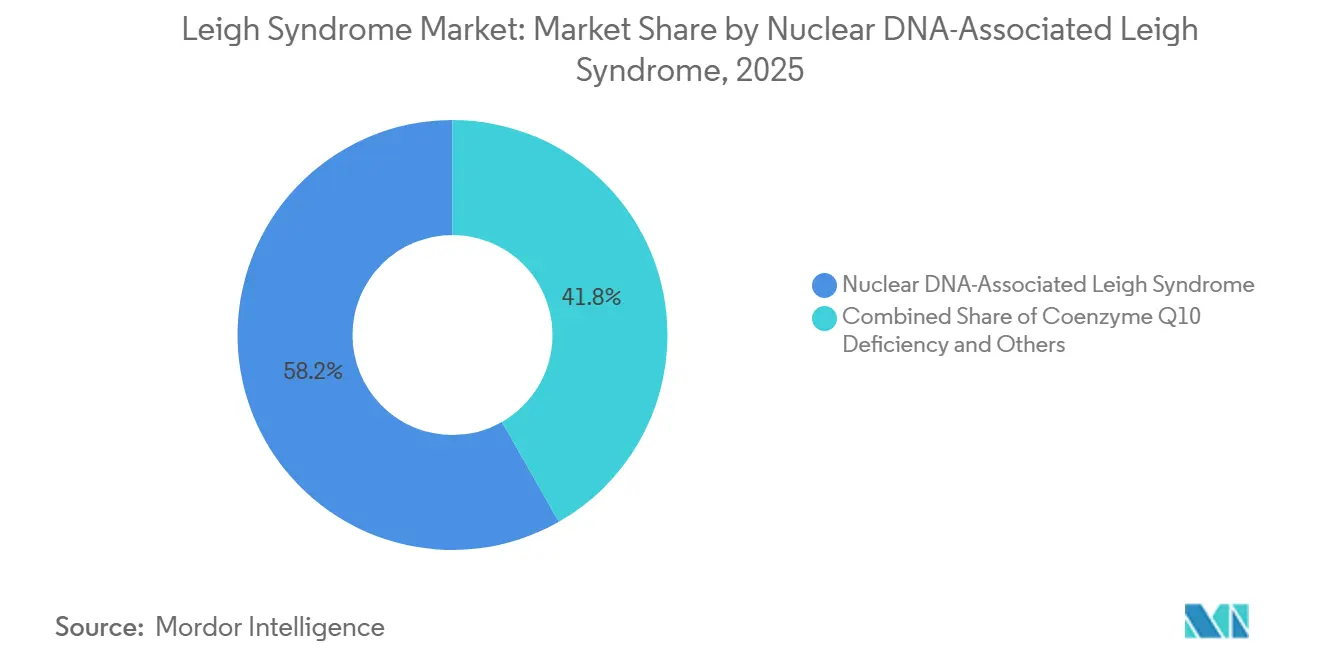
Nuclear DNA-Associated Leigh Syndrome accounted for 58.24% of the Leigh syndrome market size by genetic etiology in 2025. Nuclear variants, including SURF1, NDUFAF6, and PDHA1, are prevalent in confirmed cases and have clearer molecular targets. The Global Patient Registry found that 64.00% of enrolled participants had nuclear DNA mutations. SURF1 represented 72.00% of the nuclear DNA mutation cohort in that registry. Mitochondrial DNA-Associated Leigh Syndrome is the second-largest category and is associated largely with MT-ATP6 and MT-ND subunit variants.
Coenzyme Q10 Deficiency is forecast to grow at an 11.42% CAGR through 2031. Improved sequencing can identify biosynthesis pathway mutations with greater precision. CoQ10 supplementation and next-generation analogs provide a clinically tractable route for this subtype. A registered drug-repurposing study is using iPSC-derived neuronal models to screen FDA- and EMA-approved compounds across nuclear and mitochondrial DNA-associated subtypes. PDH Deficiency remains a defined but underserved group that requires metabolic management, ketogenic diets, and thiamine supplementation.



By Treatment Type: Supportive Regimens Anchor Spending, Gene and RNA Therapies Reshape the Forecast
Supportive & Symptomatic Therapy accounted for 46.37% of the Leigh syndrome market in 2025. This category reflects the continuing use of intensive care, mechanical ventilation, seizure management, and nutritional support. These services remain essential because approved disease-modifying therapies are not available. Vitamin and cofactor supplementation and antioxidant therapy form the second-largest current spending block. Riboflavin, CoQ10, thiamine, and alpha-lipoic acid have long been used in clinical management.
Gene & RNA-Based Therapies are forecast to grow at a 24.86% CAGR through 2031. AAV9 delivery programs, mitochondrial base editing, and mitoTALEN correction tools support this forecast. Improved vector design is intended to preserve efficacy while lowering cytotoxicity in preclinical models. Mitochondrial Replacement & Advanced Therapies remain early in commercial development. Their clinical progress will depend on adequate safety evidence and on the ability to administer treatment within specialist pediatric services.
By Route of Administration: Oral Dominance Persists, CNS Directed Routes Scale at Highest Velocity
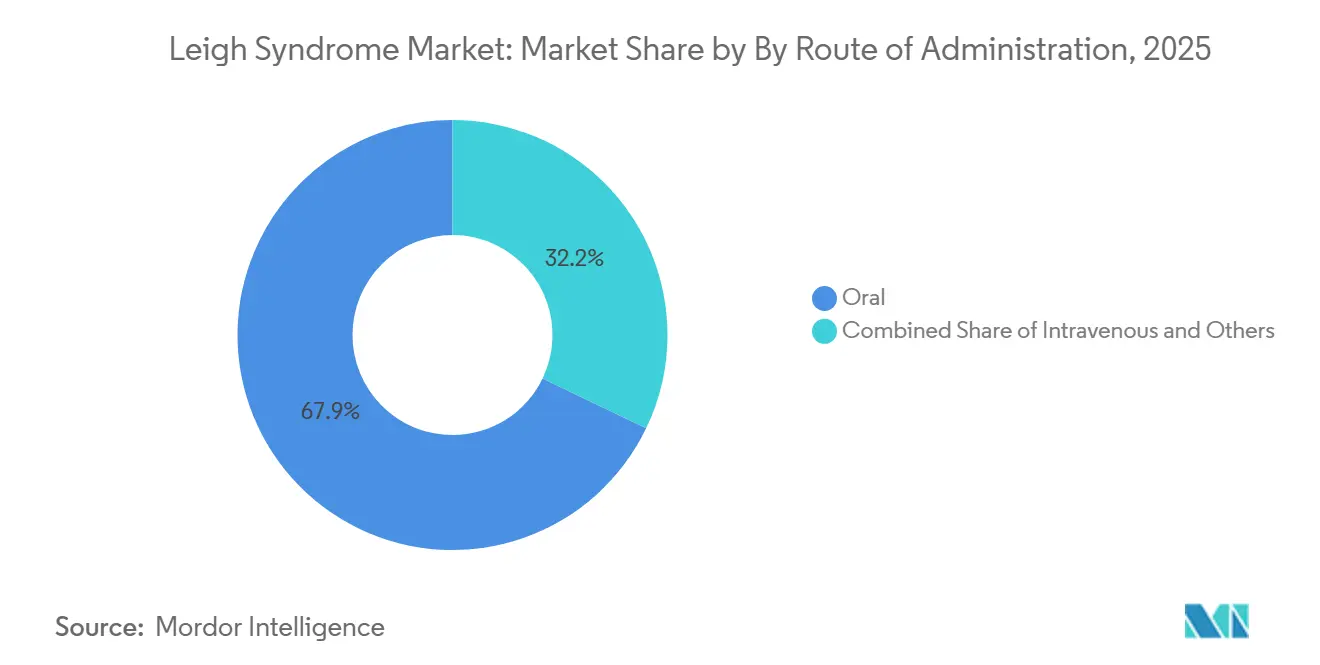
Oral administration held 67.85% in 2025. Cofactor supplementation and chronic small-molecule therapies support the leading position of oral products. Thiogenesis developed TTI-0102 as an oral prodrug for sustained cysteamine exposure. OMEICOS uses a 24.00 mg once-daily oral dose for OMT-28. Enteral sirolimus administered twice daily through a gastrostomy tube reflects the practical needs of hospitalized pediatric patients. This route also fits the continuing need for regular care outside inpatient crisis management.[2]OMEICOS Therapeutics, “OMEICOS Therapeutics Announces Positive Phase 2 Study Outcome Demonstrating OMT-28’s Potential in Primary Mitochondrial Diseases,” OMEICOS Therapeutics, omeicos.com
Intracerebroventricular administration is forecast to grow at a 22.15% CAGR through 2031. This route is linked to the gene therapy pipeline and the need to deliver treatment to the central nervous system. TSHA-104 uses intrathecal delivery, while focused ultrasound could provide a noninvasive method to assist AAV9 delivery across the blood-brain barrier. Hospital-administered, single-dose procedures will require surgical capabilities and intensive monitoring. Intravenous administration continues to support acute metabolic crisis management in tertiary hospitals, while subcutaneous administration may grow if antibody and enzyme replacement candidates progress.
By Care Setting: Tertiary Hospitals Hold the Spending Majority, Disease Centers Scale Fastest
Tertiary Hospitals accounted for 42.91% of the Leigh syndrome market in 2025. Recurrent metabolic crises can require intensive care, mechanical ventilation, and coordination among multiple specialists. Pediatric Neurology Centers are the second-largest setting because patients require MRI monitoring and neurodevelopmental assessment. Specialty Clinics and Rehabilitation Centers support patients after acute episodes. They provide physiotherapy, nutrition management, and palliative care for ongoing needs.
Mitochondrial Disease Centers of Excellence are forecast to expand at an 18.74% CAGR through 2031. These centers bring metabolic specialists, genetic counselors, neuroimaging, and active trial programs into a single care setting. NAMDC member centers serve as both referral sites and trial sites, concentrating genetically characterized patients. The KHENERFIN Phase 3 study uses specialist centers across European countries for enrollment. Home Healthcare remains a smaller setting that may serve families of longer-surviving patients, including adult-onset presentations reported in Chinese cohorts.
Geography Analysis
North America held 41.28% of the Leigh syndrome market in 2025. The region benefits from rare-disease pathways, specialist centers, and structured research networks. The NAMDC supports connections between diagnosed patients, clinical research sites, and specialist services through the NIH Rare Diseases Clinical Research Network. Canada supports development activity through Thiogenesis, while Mexico has earlier-stage specialist neurological care access. These features give the North American Leigh syndrome market a more established clinical infrastructure than many other regions.
Europe is the second-largest regional presence in the Leigh syndrome market. Khondrion dosed the first patient in the pivotal KHENERFIN Phase 3 study in April 2026. The EMA granted orphan designation to sonlicromanol for inherited mitochondrial oxidative phosphorylation defects in July 2025. The United Kingdom, France, Italy, and Spain add coordinated referral capability through specialist mitochondrial and rare metabolic centers.
Asia-Pacific is forecast to grow at a 15.38% CAGR through 2031. Japan completed a Phase 3 trial of SPP-004, which showed stabilization or improvement in central nervous system symptoms in 50.00% of enrolled patients.[3]PLOS ONE, "A phase III double-blind, placebo-controlled, randomized withdrawal trial of 5-aminolevulinic acid hydrochloride with sodium ferrous citrate for efficacy and safety in patients diagnosed as Leigh syndrome." 2025. https://journals.plos.org/plosone/article?id=10.1371%2Fjournal.pone.0332283 China offers a substantial diagnostic opportunity, as Leigh syndrome represented 28.00% of genetically confirmed pediatric mitochondrial cases in a 2025 multicenter cohort. The same study reported a median onset of 1.15 years for nuclear DNA subtypes and 5.42 years for mitochondrial DNA subtypes. India, South Korea, and Australia are building rare-disease research capacity and genomics laboratory networks.

Competitive Landscape
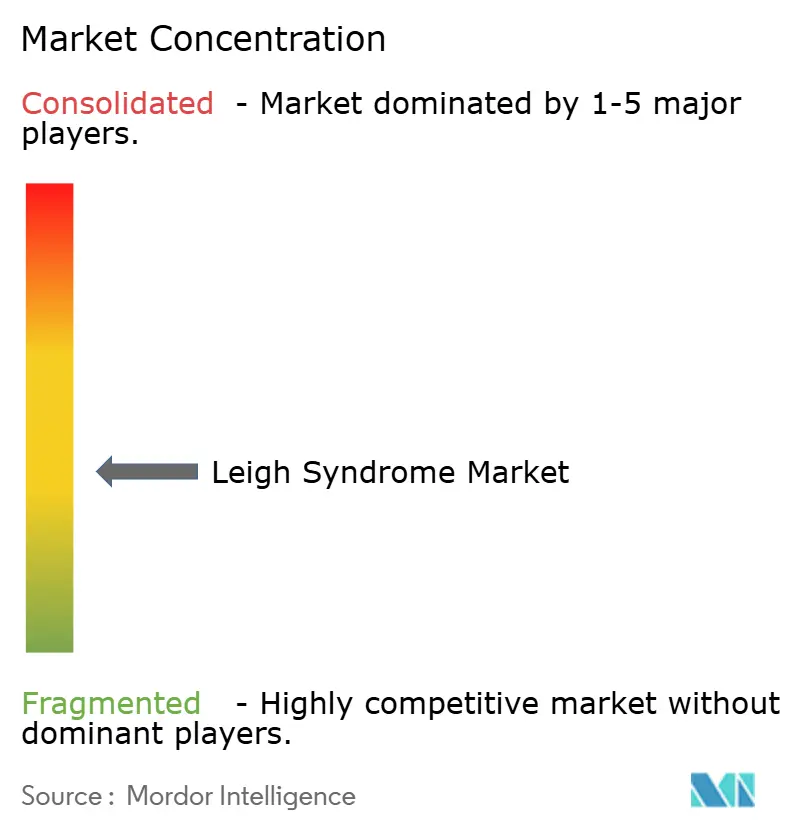
The Leigh syndrome market remains highly fragmented, with no approved disease-modifying therapy specific to the condition in 2026. Competition is therefore based on pipeline position, regulatory designation, and access to trial-ready patients rather than revenue leadership. Khondrion, Thiogenesis Therapeutics, OMEICOS Therapeutics, Abliva, and Minovia Therapeutics are among the more advanced developers in primary mitochondrial disease. Khondrion is conducting the Phase 3 KHENERFIN study of sonlicromanol KHONDRION. Thiogenesis is advancing TTI-0102 through a Phase 2a study in adults and children with Leigh Syndrome Spectrum.
Companies differentiate through the breadth of their mechanism, the delivery route, and their regulatory assets. OMEICOS announced positive Phase 2 outcomes for OMT-28 in January 2026 and began preparing for a pivotal Phase 2b/3 study in Europe and the United States. Abliva published 2026 preclinical evidence that NV354 prevented brainstem lesions and reduced neuronal loss in Ndufs4 knockout mice. These actions show different approaches to clinical advancement, regulatory progress, and mechanism development.
Coenzyme Q10 Deficiency and PDH Deficiency remain open areas because no company holds an IND specific to these Leigh syndrome subpopulations. Drug repurposing based on iPSC-derived neuronal platforms offers a lower-cost entry route for companies working with approved compounds. Preclinical base-editing and mitoTALEN programs may also create future intellectual-property licensing opportunities. The Leigh syndrome industry has fewer than 5 companies with advanced clinical-stage assets in mutation-specific programs. Pipeline activity is increasing as small-molecule OXPHOS modulators, gene therapy, and repurposed products target overlapping disease mechanisms.
Leigh Syndrome Industry Leaders
-
Thiogenesis Therapeutics, Inc.
-
PTC Therapeutics, Inc.
-
Abliva AB
-
Stealth BioTherapeutics Corp.
-
Taysha Gene Therapies, Inc.
- *Disclaimer: Major Players sorted in no particular order

Recent Industry Developments
- July 2026: A Phase 2a partially randomized, placebo-controlled, sequential dose-ranging study of TTI-0102 in adults and children with Leigh Syndrome Spectrum was registered by Thiogenesis Therapeutics, enrolling 18 participants across 3 weight-stratified cohorts with a study start date of October 2026.
- April 2026: Khondrion dosed the first patient in the pivotal Phase 3 KHENERFIN study of sonlicromanol in mitochondrial DNA m.3243A G primary mitochondrial disease, marking the most advanced ongoing therapeutic trial for an OXPHOS-targeting compound bearing Leigh syndrome orphan designation


Global Leigh Syndrome Market Report Scope
As per the scope of the report, Leigh syndrome is a rare, progressive, genetically heterogeneous mitochondrial disorder characterized by defects in cellular energy production that lead to neurodegeneration, developmental delay, respiratory dysfunction, movement disorders, and multi-organ impairment. The disease typically manifests during infancy or early childhood, although juvenile and adult-onset cases have also been reported. Leigh syndrome is primarily caused by mutations in either nuclear DNA (nDNA) or mitochondrial DNA (mtDNA), resulting in dysfunction of mitochondrial oxidative phosphorylation pathways.
The Leigh syndrome market is segmented by genetic etiology into nuclear DNA (nDNA)-associated Leigh syndrome, mitochondrial DNA (mtDNA)-associated Leigh syndrome, pyruvate dehydrogenase complex (PDH) deficiency, coenzyme Q10 deficiency, and other genetic subtypes; by treatment type, the market is segmented into supportive and symptomatic therapy, vitamin and cofactor supplementation, antioxidant therapy, gene and RNA-based therapies, mitochondrial replacement and advanced therapies, and others; by route of administration, the market is segmented into oral, intravenous, subcutaneous, intracerebroventricular, and enteral administration; by care setting, the market is segmented into tertiary hospitals, pediatric neurology centers, mitochondrial disease centers of excellence, specialty clinics, rehabilitation centers, and home healthcare; and by geography into North America, Europe, Asia-Pacific, Middle East and Africa, and South America. The market report also covers the estimated market sizes and trends for 17 countries across major regions globally. For each segment, the market size and forecast are provided in terms of value (USD).
| Nuclear DNA (nDNA)-Associated Leigh Syndrome |
| Mitochondrial DNA (mtDNA)-Associated Leigh Syndrome |
| Pyruvate Dehydrogenase Complex (PDH) Deficiency |
| Coenzyme Q10 Deficiency |
| Other Genetic Subtypes |
| Supportive & Symptomatic Therapy |
| Vitamin & Cofactor Supplementation |
| Antioxidant Therapy |
| Gene & RNA-Based Therapies |
| Mitochondrial Replacement & Advanced Therapies |
| Others |
| Oral |
| Intravenous |
| Subcutaneous |
| Intracerebroventricular |
| Enteral Administration |
| Tertiary Hospitals |
| Pediatric Neurology Centers |
| Mitochondrial Disease Centers of Excellence |
| Specialty Clinics |
| Rehabilitation Centers |
| Home Healthcare |
| North America | United States |
| Canada | |
| Mexico | |
| Europe | Germany |
| United Kingdom | |
| France | |
| Italy | |
| Spain | |
| Rest of Europe | |
| Asia-Pacific | China |
| Japan | |
| India | |
| Australia | |
| South Korea | |
| Rest of Asia-Pacific | |
| Middle East and Africa | GCC |
| South Africa | |
| Rest of Middle East and Africa | |
| South America | Brazil |
| Argentina | |
| Rest of South America |
| By Genetic Etiology | Nuclear DNA (nDNA)-Associated Leigh Syndrome | |
| Mitochondrial DNA (mtDNA)-Associated Leigh Syndrome | ||
| Pyruvate Dehydrogenase Complex (PDH) Deficiency | ||
| Coenzyme Q10 Deficiency | ||
| Other Genetic Subtypes | ||
| By Treatment Type | Supportive & Symptomatic Therapy | |
| Vitamin & Cofactor Supplementation | ||
| Antioxidant Therapy | ||
| Gene & RNA-Based Therapies | ||
| Mitochondrial Replacement & Advanced Therapies | ||
| Others | ||
| By Route of Administration | Oral | |
| Intravenous | ||
| Subcutaneous | ||
| Intracerebroventricular | ||
| Enteral Administration | ||
| By Care Setting | Tertiary Hospitals | |
| Pediatric Neurology Centers | ||
| Mitochondrial Disease Centers of Excellence | ||
| Specialty Clinics | ||
| Rehabilitation Centers | ||
| Home Healthcare | ||
| By Geography | North America | United States |
| Canada | ||
| Mexico | ||
| Europe | Germany | |
| United Kingdom | ||
| France | ||
| Italy | ||
| Spain | ||
| Rest of Europe | ||
| Asia-Pacific | China | |
| Japan | ||
| India | ||
| Australia | ||
| South Korea | ||
| Rest of Asia-Pacific | ||
| Middle East and Africa | GCC | |
| South Africa | ||
| Rest of Middle East and Africa | ||
| South America | Brazil | |
| Argentina | ||
| Rest of South America | ||


Key Questions Answered in the Report
What is the projected value of the Leigh syndrome market in 2031?
The Leigh syndrome market is forecast to reach USD 11.68 billion by 2031, growing at a 7.12% CAGR from 2026.
Which treatment category is growing fastest for Leigh syndrome?
Gene & RNA-Based Therapies are forecast to grow at a 24.86% CAGR through 2031.
Why are genetic tests important for Leigh syndrome care?
Genetic confirmation identifies disease subtypes earlier and helps match eligible patients with specialist care and clinical trials. This diagnostic pathway makes the Leigh syndrome market more accessible to programs that need genetically defined and clinically documented participants for study enrollment.
Which administration route is most widely used for Leigh syndrome treatment?
Oral administration held 67.85% in 2025 because cofactor supplementation and small-molecule therapies are commonly used.
Which region is expected to grow fastest through 2031?
Asia-Pacific is forecast to expand at a 15.38% CAGR through 2031, supported by increasing clinical research and genetic testing capacity.
What is the main challenge for drug developers in Leigh syndrome?
More than 100 causative genes divide the patient population, making mutation-specific trial recruitment and commercial planning difficult. Small cohorts must still support manufacturing, safety monitoring, regulatory reporting, and meaningful clinical evidence for each separate development program.
Page last updated on:





