
Market Overview
| Study Period | 2021 - 2031 |
|---|---|
| Forecast Data Period | 2026 - 2031 |
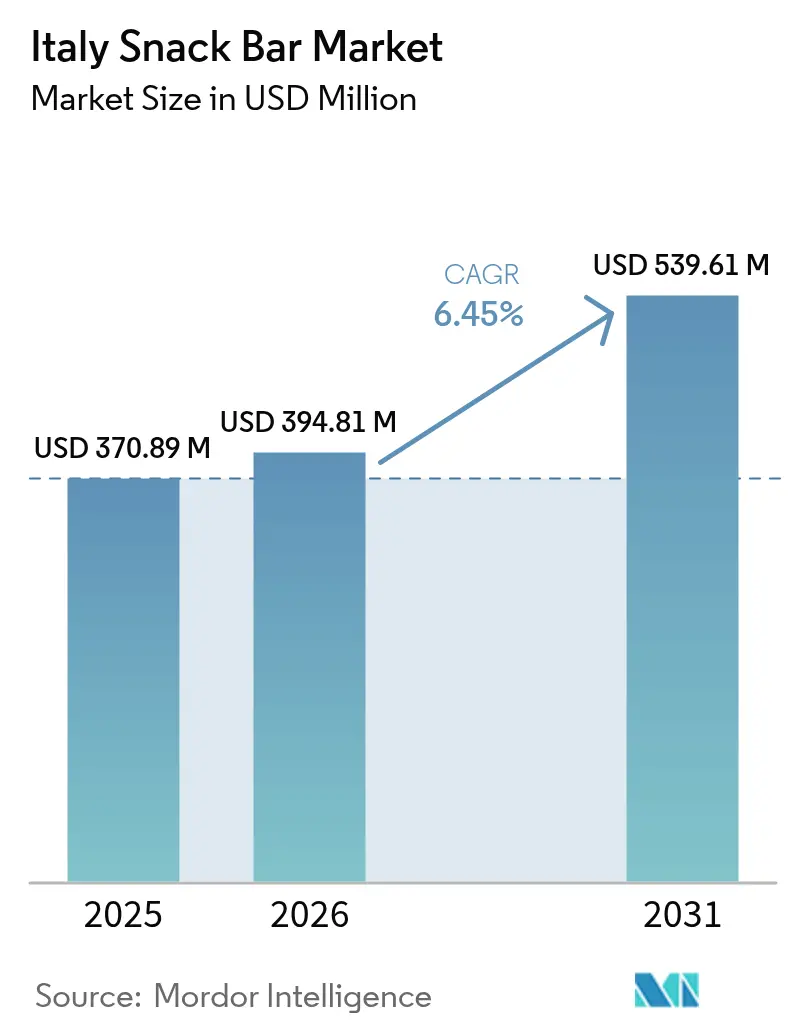
| Base Year Market Size (2025) | USD 370.89 Million |
| Market Size (2026) | USD 394.81 Million |
| Market Size (2031) | USD 539.61 Million |
| Growth Rate (2026 - 2031) | 6.45 % |
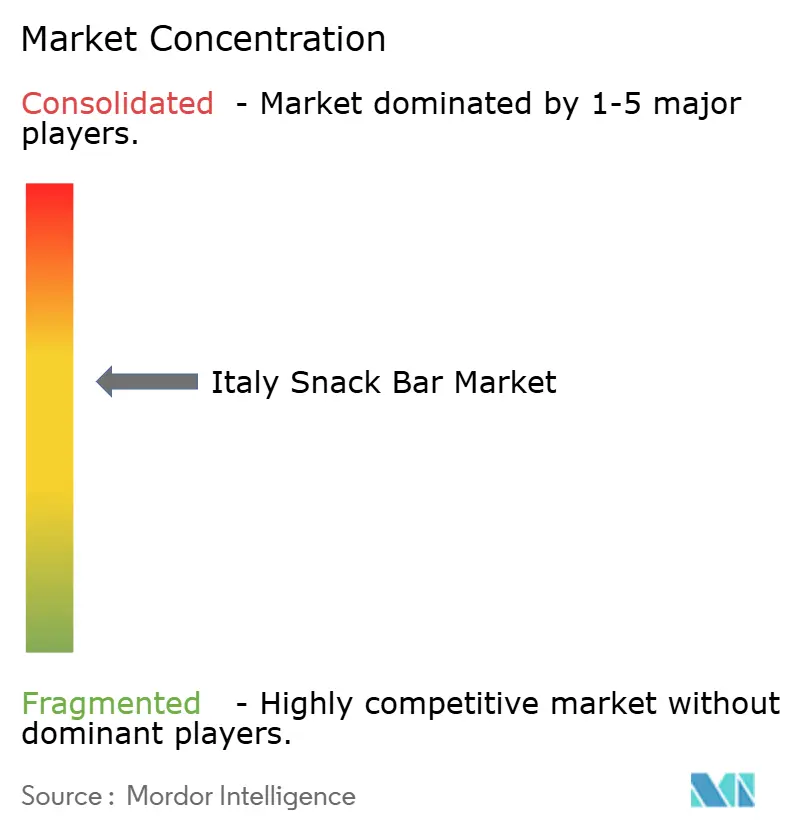
| Market Concentration | Medium |
Major Players
*Disclaimer: Major Players sorted in no particular order Image © Mordor Intelligence. Reuse requires attribution under CC BY 4.0. |
|
Italy Snack Bar Market Analysis by Mordor Intelligence
The Italy snack bar market size was valued at USD 370.89 million in 2025 and estimated to grow from USD 394.81 million in 2026 to reach USD 539.61 million by 2031, at a CAGR of 6.45% during the forecast period (2026-2031). Strong category gains in Italy reflect rising demand for quick, nutritious options, the broader retail reach of premium bars, and the proliferation of products fortified with proteins, fibers, and botanicals. While cereal bars still dominate, protein, fruit, and date-based variants are rapidly narrowing the gap as gym culture expands and on-the-go eating becomes routine in urban areas. Mainstream grocers are protecting margins by allocating more shelf space to higher-priced bars, while online health-and-wellness retailers are expanding assortments faster than physical stores can match. Despite sluggish overall grocery volumes across Southern Europe, snack bars continue to outpace the market, driven by the fact that nearly half of Gen Z shoppers now prioritize nutrition when making purchase decisions.
Key Report Takeaways
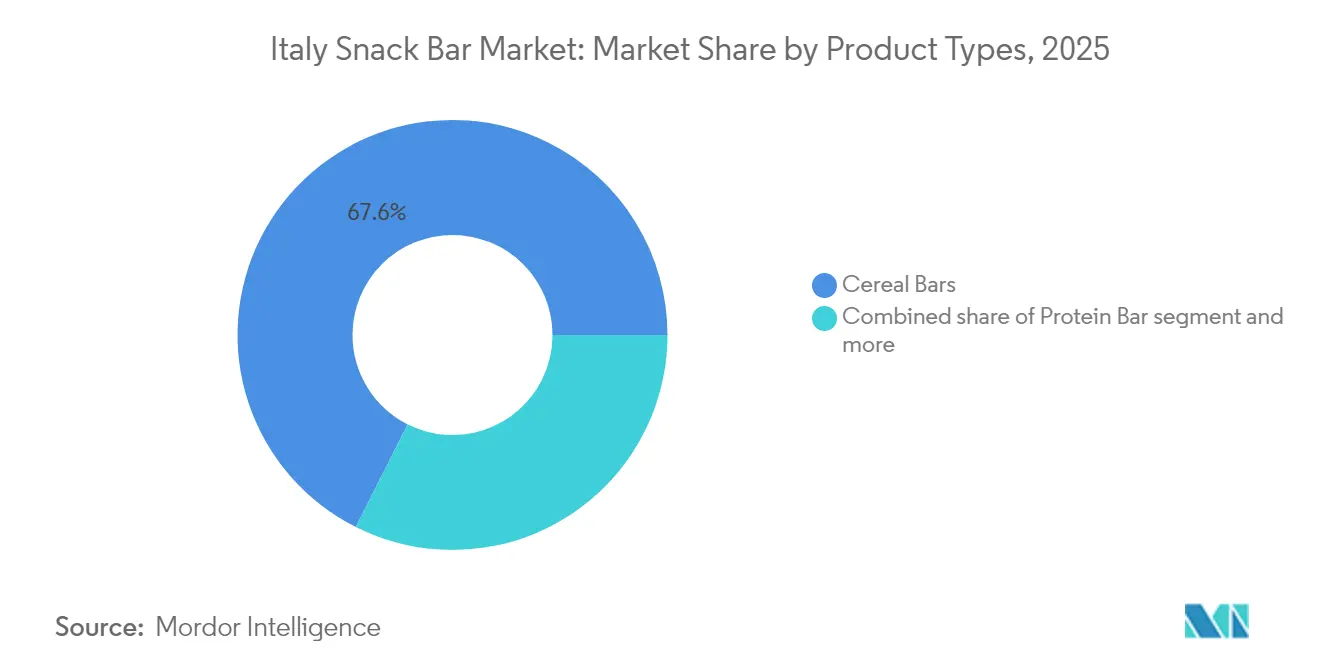
- By product type, cereal bars led with 67.58% revenue share in 2025, while protein bars are forecast to register an 8.31% CAGR through 2031.
- By ingredient base, granola and oat-based formulations captured 38.12% of the Italy snack bar market share in 2025; date-based alternatives are projected to expand at a 8.89% CAGR to 2031.
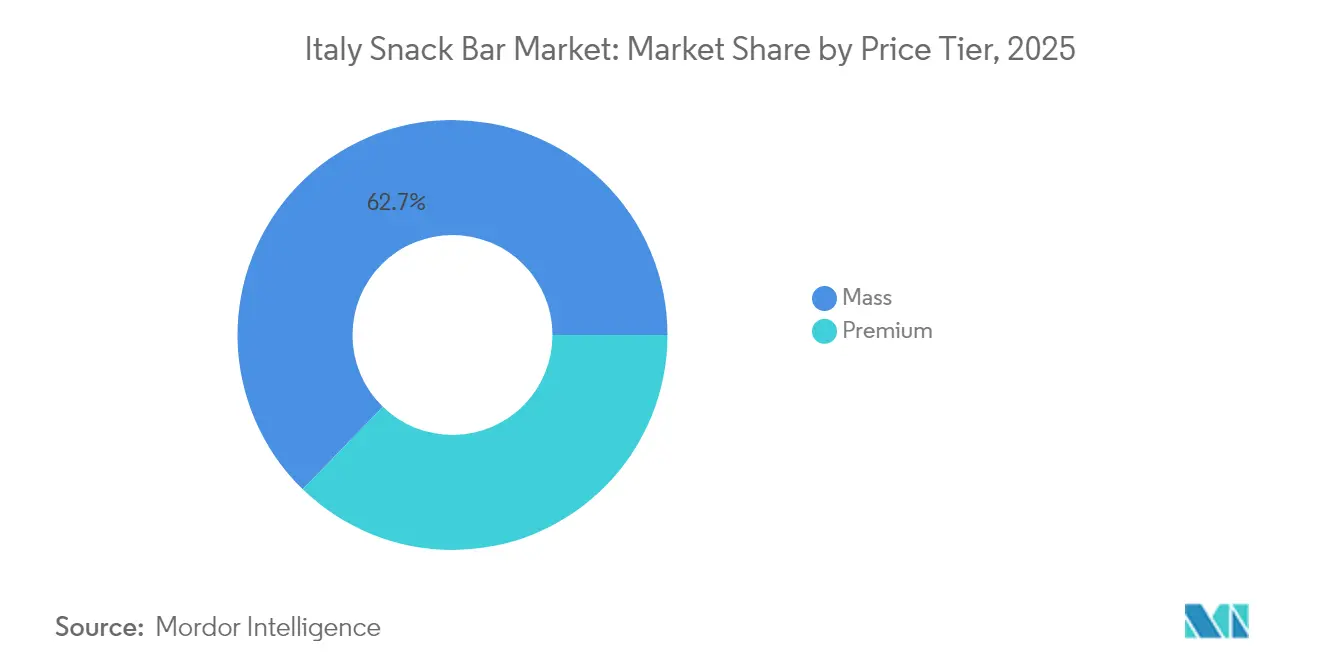
- By price tier, the mass segment accounted for 62.74% of the Italian snack bar market size in 2025, and premium offerings are expected to advance at an 8.55% CAGR through 2031.
- By distribution, supermarkets and hypermarkets accounted for 43.01% of the 2025 value; however, online sales are projected to rise at a 9.28% CAGR through 2031.
Note: Market size and forecast figures in this report are generated using Mordor Intelligence’s proprietary estimation framework, updated with the latest available data and insights as of 2026.
Italy Snack Bar Market Trends and Insights
Drivers Impact Analysis*
| Driver | (~) % Impact on CAGR Forecast | Geographic Relevance | Impact Timeline |
|---|---|---|---|
| Rising health-conscious snacking culture | +1.2% | Milan, Rome, Turin, Bologna | Medium term (2-4 years) |
| Growing demand for on-the-go convenience | +1.4% | Milan, Rome, Naples; commuter corridors | Short term (≤ 2 years) |
| Retail channel premium-space expansion | +0.9% | National; led by Northern banners Conad, Coop, Esselunga | Medium term (2-4 years) |
| Product innovation in functional ingredients | +1.1% | National; early uptake in pharmacy channels | Medium term (2-4 years) |
| Expansion of functional and fortified foods | +0.8% | National; spill-over from sports nutrition | Long term (≥ 4 years) |
| Popularity of functional and nutritional bars | +1.0% | Urban, fitness-oriented demographics | Medium term (2-4 years) |
| Source: Mordor Intelligence | |||
Rising Health-Conscious Snacking Culture
Italian consumers are shifting toward nutrient-dense snacking, driven by a growing awareness of the importance of protein intake and the benefits of micronutrient fortification. The country’s protein product market reached EUR 2 billion, with demand increasing 8.4% in 2023 and supply expanding by 11%, signaling intense competition among manufacturers to capture this shift (GS1 Italy)[1]Source: “Italian Grocery Market Report 2024,” GS1 Italy, gs1it.org. For snack bar makers, this means that formulations must clearly communicate functional benefits, from protein per serving to vitamin fortification, to convert health-motivated intent into actual purchases. Ingredient innovation is accelerating: Ingredion’s VITESSENCE Pea 100 HD, an 84% protein pea isolate that keeps cold-pressed bars soft without refrigeration, exemplifies how brands must balance clean-label expectations with texture performance. While 48% of Italian households purchased snack bars in 2024, the purchase frequency remains at just 5 occasions per year, indicating that habitual consumption is still emerging (GS1 Italy).
Growing Demand for On-the-Go Convenience
Urbanization and commuter lifestyles are reshaping Italian meal occasions, with monthly ready-to-eat purchases now commonplace compared to negligible levels a decade ago. This shift is most evident in proximity retail, where Conad’s TuDay convenience stores experienced a 5.8% growth in 2024, reflecting the rising demand for grab-and-go solutions near transit hubs and office districts. Snack bars are well-positioned to serve breakfast-skipping professionals and mid-afternoon energy needs, especially as only 39% of adults meet daily fruit and vegetable intake guidelines, creating a nutritional gap that fortified bars can help fill, according to the Italian Ministry of Health[2]Source: “IV SCAI Dietary Survey Results,” Italian Ministry of Health, salute.gov.it. The main barrier is Italy’s enduring preference for sit-down espresso and cornetto breaks, particularly in northern cities. Ferrero’s May 2025 launch of Eat Natural, priced at EUR 3.59–3.79 for a 3-pack, directly targets this occasion by emphasizing fruit-and-nut content aligned with traditional Italian snacking habits while offering portability for modern routines.
Retail Channel Premium-Space Expansion
Modern retailers are dedicating expanded shelf space to premium snack bars, recognizing that these products deliver higher per-unit margins than traditional biscuits and wafers. Conad, Italy's largest retail cooperative with EUR 21.1 billion in 2024 turnover, increased private-label penetration to 33.7% and is investing in specialist channels that generated EUR 1.2 billion in revenue[3]Source: “Conad Annual Report 2024,” Conad, conad.it. Despar's Free From line grew 20.2% in value during 2024, while its Enjoy food-to-go range expanded 24.9%, demonstrating that retailers are curating assortments around functional and convenience attributes. This premiumization is also evident in the pharmacy and parapharmacy channel, where Talea Group's Farmaè platform lists 143 snack bar SKUs, including 46 from Enervit and 35 from Namedsport, with prices ranging from EUR 1.60 to EUR 6.55 per bar Farmaè. Talea Group reported EUR 83.4 million in first-half 2024 revenues and acquired VitaminCenter and Best Body in 2023-2024 to consolidate its leadership in health and wellness e-commerce. The strategic implication is that snack bar brands must secure premium shelf placement and pharmacy distribution to access health-motivated consumers willing to pay between EUR 17.93 and EUR 37.80 per kilogram, well above mass-market pricing, according to Farmaè.
Product Innovation in Functional Ingredients
Manufacturers are embedding functional ingredients, such as plant-based proteins, prebiotic fibers, and adaptogenic botanicals, to differentiate products and justify premium pricing. Cereal Docks developed Heliapro, a sunflower protein flour with approximately 50% protein content, offering a non-allergenic alternative to soy and pea proteins for bar formulations. EFSA approved partially hydrolyzed barley and rice protein as a novel food ingredient for cereal bars at concentrations up to 30 grams per 100 grams in July 2024, expanding formulation options for high-protein bars targeting sports nutrition consumers[4]Source: “Novel Food Approvals and Health Claims Assessments,” European Food Safety Authority, efsa.europa.eu. Vitavigor launched its VitaPro protein snack line in 2024, leveraging Italian consumer preference for locally produced functional foods. The challenge lies in navigating EFSA's health claims framework, which imposes a 5-month assessment timeline and has recently rejected claims for spinach extract (February 2025) and isomaltulose energy benefits (July 2024), underscoring the regulatory friction that slows time-to-market for novel formulations. Brands that invest in substantiating claims through clinical trials and aligning with approved nutrient profiles will gain a durable advantage, particularly as the European Parliament's January 2024 resolution calls for mandatory front-of-pack labeling and stricter nutrient profiles to restrict health claims on high-fat, high-sugar, or high-salt products.
Restraints Impact Analysis*
| Restraint | (~) % Impact on CAGR Forecast | Geographic Relevance | Impact Timeline |
|---|---|---|---|
| Strong preference for traditional Italian snacks | -0.8% | National, most pronounced in Southern Italy and rural areas | Long term (≥ 4 years) |
| Premium pricing limits mass adoption | -0.6% | National, acute in Southern Italy and lower-income households | Short term (≤ 2 years) |
| Regulatory compliance for functional claims | -0.3% | EU-wide, affects all manufacturers seeking health claims | Medium term (2-4 years) |
| Low penetration outside major cities | -0.5% | Rural Italy, towns with <50,000 population | Long term (≥ 4 years) |
| Source: Mordor Intelligence | |||
Strong Preference for Traditional Italian Snacks
Italian consumers exhibit deep-rooted loyalty to biscotti, cornetti, and other baked goods that anchor breakfast and mid-morning rituals, limiting the addressable market for snack bars. The IV SCAI dietary survey found that 79% of Italians consume pasta daily (averaging 49 grams per day) and bread consumption averages 70 grams per day, reflecting a carbohydrate-centric food culture that prioritizes familiar textures and flavors according to the Italian Ministry of Health. This preference is most entrenched in Southern Italy and rural areas, where modern retail penetration is limited and traditional bakeries maintain strong community ties. Ferrero's strategy of launching Eat Natural bars with fruit and nut profiles in May 2025 acknowledges this cultural barrier by mimicking the ingredient composition of traditional Italian snacks while delivering portability. The Italian fruit and dried-fruit bar segment's 34% growth since 2022 suggests that formulations emphasizing whole-food ingredients can bridge the gap between tradition and convenience, as per Ferrero. However, the fact that only 48% of Italian households purchased snack bars in 2024, with an average frequency of 5 occasions per year, underscores that habitual consumption remains elusive according to GS1 Italy. Brands must invest in consumer education and occasion-based marketing to reposition snack bars as complements to, rather than replacements for, traditional snacks.
Premium Pricing Limits Mass Adoption
Snack bars command price points between EUR 1.89 and EUR 6.55 per unit, translating to EUR 17.93 to EUR 37.80 per kilogram, which is 2 to 4 times the cost of traditional biscuits and wafers as per Farmaè. This pricing gap is particularly acute in a market where 75% of consumers prioritize affordability, and discount channels expanded to 23% market share in the first half of 2024, according to GS1 Italy. Food inflation widened price disparities across Italian provinces in 2024, compressing discretionary spending on premium snacks. Private-label snack bars, which account for 38.2% of the market share by volume, offer a lower-cost entry point but often lack the functional ingredient differentiation that justifies premium pricing, according to GS1 Italy. Ferrero's Eat Natural pricing of EUR 3.59 to EUR 3.79 for a 3-pack positions the brand in the mid-premium tier, striking a balance between accessibility and quality perception. Manufacturers targeting mass adoption must either reduce per-unit costs through economies of scale or develop smaller portion sizes (e.g., 20-gram mini-bars) that lower absolute price points while maintaining per-kilogram margins. The mass tier's 63.48% share in 2024 indicates that affordability remains the dominant purchase driver, even as the premium segment grows at 8.97% CAGR through 2030.
*Our forecasts treat driver/restraint impacts as directional, not additive. The impact forecasts reflect baseline growth, mix effects, and variable interactions.
Segment Analysis
By Product Type: Cereal Bars Anchor Market, Protein Bars Drive Growth
Cereal bars held 67.58% of Italy’s snack bar market in 2025, reflecting their strong alignment with Italian breakfast habits and established placement in supermarkets and hypermarkets. Granola and muesli bars dominate this segment through whole-grain positioning and clean-label appeal, while breakfast cereal bars attract consumers seeking portable alternatives to traditional cornetti. Meanwhile, protein bars are projected to expand at an 8.31% CAGR through 2031, driven by fitness-oriented shoppers and the broader growth of the Italian protein product market. Mondelēz introduced Grenade in October 2024 and partnered with AC Milan to enhance its credibility in the sports nutrition sector.
Fruit and nut bars are also gaining traction, with consumers gravitating toward whole-food formats and natural sweetness. The Italian fruit and dried-fruit bar category is projected to reach EUR 74 million in 2024, marking 34% growth since 2022. Ferrero’s May 2025 launch of Eat Natural, priced at EUR 3.59–3.79 for a 3-pack, exemplifies this positioning through its emphasis on fruit and nut ingredients that resonate with traditional Italian snacking preferences. Beyond these segments, energy bars and meal-replacement bars continue to serve niche needs such as endurance sports and weight management, with the Italian energy bar market reaching EUR 79 million in 2024. Ingredient innovation is accelerating as well: Ingredion’s VITESSENCE Pea 100 HD (an 84% protein pea isolate suited for cold-pressed bars) supports clean-label, high-protein formulations, while EFSA’s July 2024 approval of partially hydrolyzed barley and rice protein, permitting use up to 30 g per 100 g in cereal bars, broadens formulation possibilities for next-generation protein products.



By Ingredient Base: Oat Dominance Meets Date-Based Innovation
Granola and oat-based bars captured 38.12% of the Italian snack bar market in 2025, supported by strong consumer familiarity with oats as a wholesome breakfast staple and their versatility in binding fruits, nuts, and natural sweeteners. Oats also provide beta-glucan soluble fiber, enabling digestive-health claims under EFSA guidelines and giving manufacturers a regulatory edge in functional positioning. Meanwhile, date-based bars are expanding at a 8.89% CAGR through 2031, propelled by clean-label demand and the preference for whole-food sweeteners over refined sugars. Dates deliver natural sweetness, fiber, and micronutrients such as potassium and magnesium, while their sticky texture eliminates the need for binders like glucose syrup or maltodextrin. Nut-based bars, featuring almonds, cashews, and hazelnuts, cater to premium shoppers seeking protein, healthy fats, and indulgent flavor profiles, often retailing above EUR 5.00 per unit in specialty and pharmacy channels.
Dairy- and protein-based bars, which utilize whey, casein, or plant-based proteins, continue to target fitness and sports nutrition consumers. Ingredient innovation is accelerating, exemplified by Cereal Docks’ Heliapro sunflower protein flour (≈50% protein), which offers a non-allergenic alternative to soy and pea proteins and helps manufacturers navigate allergen-labeling sensitivities. Hybrid formulations that combine oats, nuts, dates, and protein isolates are also gaining traction as brands seek to balance taste, texture, nutrition, and cost. Vitavigor’s VitaPro protein snack line, launched in 2024, embodies this blended approach using Italian-sourced ingredients alongside functional protein fortification. Additionally, bases such as rice crisps, quinoa, and ancient grains support niche segments, including gluten-free and allergen-conscious consumers, evidenced by Despar’s Free From line, which grew 20.2% in value in 2024.
By Price Tier: Mass Dominance Coexists with Premium Acceleration
The mass tier captured 62.74% of market share in 2025, reflecting Italian consumers' price sensitivity and the dominance of private-label offerings. Discount channels expanded to 23% of the total grocery market share in the first half of 2024, up from 19% in 2019, as food inflation compressed discretionary spending, according to GS1 Italy. Mass-tier snack bars, priced between EUR 1.60 and EUR 2.50 per unit, compete primarily on affordability and are distributed through supermarkets, hypermarkets, and discount chains such as Lidl, Aldi, and Eurospin. Conad, with EUR 21.1 billion in 2024 turnover and 33.7% private-label penetration, exemplifies the mass-tier strategy by offering own-brand cereal and granola bars at price points 20% to 30% below branded equivalents. Premium bars are projected to grow at an 8.55% CAGR through 2031, driven by functional ingredient differentiation, protein fortification, and specialty distribution in pharmacies, parapharmacies, and online channels.
Ferrero's Fulfil and Eat Natural launches in 2024 and May 2025, priced at EUR 3.59 to EUR 3.79 per 3-pack, position the brands in the mid-premium tier, balancing accessibility with quality perception. Pharmacy and parapharmacy channels, where Talea Group's Farmaè platform lists 143 snack bar SKUs with prices ranging from EUR 1.60 to EUR 6.55 per bar, serve as a critical distribution avenue for premium products targeting health-motivated consumers. Talea Group reported EUR 83.4 million in first-half 2024 revenues and acquired VitaminCenter and Best Body in 2023-2024 to consolidate its health and wellness e-commerce leadership. Premium bars command per-kilogram pricing between EUR 17.93 and EUR 37.80, which is 2 to 4 times the cost of mass-tier alternatives, limiting penetration to affluent urban households and fitness-oriented demographics. The strategic implication is that brands must segment portfolios across price tiers, using mass-tier offerings to build household penetration while reserving premium SKUs for high-margin specialty channels.
By Distribution Channel: Supermarkets Lead, Online Accelerates
Supermarkets and hypermarkets accounted for 43.01% of market share in 2025, anchored by their broad geographic footprint, extensive shelf space, and ability to stock both mass and premium SKUs. Italy's 25,122 grocery shops include 34% supermarkets and 23% discount stores, with density concentrated in Lombardia, Campania, Lazio, and Sicily. Conad, Italy's largest retail cooperative with EUR 21.1 billion in 2024 turnover, exemplifies the supermarket channel's dominance, leveraging private-label penetration of 33.7% and specialist channels generating EUR 1.2 billion in revenue. Online stores are expanding at a 9.28% CAGR through 2031, driven by digital grocery penetration that reached EUR 4.6 billion in 2024, representing 6% of total grocery sales according to GS1 Italy. Talea Group's Farmaè platform, with 1.09 million active customers in 2023 and EUR 83.4 million in first-half 2024 revenues, demonstrates the online channel's potential for distributing premium snack bars.
Convenience stores, which represent 42% of Italy's 25,122 grocery shops, are crucial for on-the-go purchases. According to Savills and Conad, Conad's TuDay proximity format grew by 5.8% in 2024. Specialty stores, including health food retailers, organic shops, and sports nutrition outlets, serve as curated distribution points for premium and functional bars, with Despar's Free From line. Other distribution channels encompass pharmacy and parapharmacy, where Enervit lists 46 SKUs and Namedsport offers 35 SKUs, with prices ranging from EUR 1.60 to EUR 6.55 per bar. Pharmacy distribution is particularly strategic for protein and functional bars, as consumers perceive these outlets as credible sources for health-oriented products. PepsiCo's distribution strategy in Italy combines direct-store-delivery, customer warehouses, third-party distributors, and e-commerce to maximize reach across urban and rural geographies.
Geography Analysis
Italy’s snack bar market exhibits strong geographic polarization, with consumption concentrated in northern urban hubs such as Milan, Turin, Bologna, and Verona. Higher disposable incomes, dense modern retail, and fitness-oriented lifestyles in these areas elevate demand for functional and premium products. Although Lombardia, Campania, Lazio, and Sicilia contain the highest density of Italy’s 25,122 grocery shops, Northern regions still lead in per-capita consumption due to faster adoption of on-the-go eating patterns (Savills). This regional divergence highlights how snack bars are gaining market share from traditional baked goods and impulse confectionery, particularly in commuter corridors and proximity formats, such as Conad’s TuDay stores, which expanded by 5.8% in 2024.
Southern Italy and rural areas exhibit lower penetration, constrained by entrenched preference for traditional snacks, lower disposable incomes, and limited modern retail infrastructure. The IV SCAI dietary survey found that only 39% of Italian adults meet the daily fruit and vegetable intake recommendations. Pasta consumption averages 49 grams per day among 79% of the population, and bread consumption averages 70 grams per day, reflecting a carbohydrate-centric food culture that prioritizes familiar textures and flavors, as noted by the Italian Ministry of Health. Approximately 48% of Italian households purchased snack bars in 2024, with an average frequency of only 5 occasions per year, indicating that habitual consumption has not yet taken root outside major urban centers according to GS1 Italy. Ferrero's dual launch of Fulfil protein bars in 2024 and Eat Natural fruit bars in May 2025 targets this geographic divide by offering protein-focused SKUs for Northern fitness consumers and fruit-based formulations that resonate with Southern traditional snacking preferences.
Rome and Naples, as major Southern metropolitan areas, represent intermediate markets where modern retail is expanding but traditional bakeries retain strong community ties. Private-label snack bars offer a lower-cost entry point that is critical for penetrating Southern households. Online grocery represents 6% of total grocery sales, provides a geographic equalizer by enabling rural and Southern consumers to access premium and specialty snack bars without relying on local retail availability aas per the GS1 Italy. Talea Group's Farmaè platform, with 1.09 million active customers in 2023 and EUR 83.4 million in first-half 2024 revenues, demonstrates the online channel's potential to bridge geographic distribution gaps.
Regulatory Landscape
Snack bars sold in Italy are governed by EU-wide rules on labeling, ingredients, and claims. EU Regulation (EC) No 1169/2011 sets the baseline for mandatory food information, including allergen disclosure and nutrition declarations. For functional and fortified bars, manufacturers also need to navigate EFSA-backed assessment processes and the EU Novel Foods framework (EU 2015/2283), which is particularly relevant for botanicals, new protein ingredients, and emerging sweeteners used to differentiate premium bars.
Italy-specific enforcement and guidance have tightened around labeling and composition checks. MIMIT issued circular guidance in September 2024 clarifying labeling elements such as ingredient quantity declarations. In February 2025, the Ministry of Health designated a National Reference Laboratory to support official controls of food additives and flavorings. In June 2026, Law 75/2026 introduced an updated administrative penalty regime for food labeling violations, raising compliance stakes for manufacturers and importers, especially for products positioned around nutrition and functional benefits.
Competitive Landscape
The Italian snack bar market exhibits moderate concentration, with multinational incumbents, such as Kellogg (Kellanova), Ferrero, Nestlé, General Mills, and PepsiCo, operating alongside nimble local specialists, including Enervit, Probios, Valsoia, and Pedon. Ferrero’s aggressive expansion, exemplified by the 2024 launch of Fulfil protein bars and the May 2025 introduction of Eat Natural fruit bars, illustrates how scale players leverage distribution networks and brand equity to simultaneously capture functional and premium segments. Mondelēz’s October 2024 Grenade protein bar launch, supported by AC Milan sponsorship, underscores intensifying competition as global confectionery and snack conglomerates target Italy as a strategic hub for functional snacking in Southern Europe. Market consolidation is poised to deepen further with Mars’ pending USD 35.9 billion acquisition of Kellanova, expected in H1 2025, pending EU antitrust approval, which is likely to trigger portfolio rationalization and distribution synergies.
White-space opportunities persist in date-based bars, which are growing at 9.26% CAGR through 2030, yet remain underrepresented in mainstream supermarket assortments, and in pharmacy and parapharmacy channels, where Talea Group's Farmaè platform lists 143 snack bar SKUs but only 2 major brands (Enervit with 46 SKUs and Namedsport with 35 SKUs) dominate. Emerging disruptors include Italian specialists such as Vitavigor, which launched its VitaPro protein snack line in 2024, and ingredient innovators such as Cereal Docks, which developed Heliapro sunflower protein flour with approximately 50% protein content to offer a non-allergenic alternative to soy and pea proteins.
Technology adoption is accelerating shifts in competitive dynamics as retailers deepen omnichannel integration and digital capabilities. Conad’s investment in its HeyConad app exemplifies this push, while AI-driven assortment optimization tools and mobile-commerce solutions showcased at Forum Retail 2024 signal an industry-wide move toward data-enabled retail execution. Private-label penetration reached 38.2% of total volume in 2024, with Conad attaining 33.7% private-label share, Despar surpassing EUR 1 billion in private-label sales (23.9% share and aiming for 25%), and Crai offering 2,700 private-label SKUs with a target of roughly 40% share by 2027 (GS1 Italy; Conad; Despar). This rapid private-label expansion continues to compress branded players’ pricing power and compels them to differentiate via functional ingredients, clinically substantiated claims, and innovation that can support premium price points despite intensifying competition.
Italy Snack Bar Industry Leaders
-
Kellogg Company
-
Ferrero Group
-
Nestlé S.A.
-
General Mills Inc.
-
PepsiCo Inc.
- *Disclaimer: Major Players sorted in no particular order

Market Opportunities and Future Outlook
Premium shelf-space allocation in modern retail, along with faster health-led adoption in digital channels, creates room to broaden the consumer base beyond core cereal bars. Retailers in Italy are expanding premium and specialty assortments, while health and wellness e-commerce is increasing product availability. Talea Group's Farmae platform listing 143 snack bar SKUs across mainstream and specialist brands illustrates the channel's reach. This creates opportunities for targeted portfolios that fit channel expectations, including clinically substantiated protein, fiber, and digestive-health positioning for pharmacy and parapharmacy, alongside value-led multipacks for supermarkets, hypermarkets, and discount formats.
A second opportunity is improving execution and cost-to-serve through digital transformation as Italian food companies invest in operational upgrades and software. Food Industry Monitor 2026 points to a sector focus on competitiveness through AI, IoT, and advanced analytics, and company programs such as Mutti's EUR 42.5 million 2026 initiative (including AI software deployment) show capability upgrades moving from pilots to plant-level activity. For snack bars, these changes translate into whitespace for faster innovation cycles (including novel proteins and clean-label sweetening), tighter quality control for functional formulations, and improved omnichannel availability without relying only on incremental shelf space.
Recent Industry Developments
- June 2026: Froneri, the ice cream joint venture backed by Nestle, announced a EUR 100 million investment plan over three years to upgrade industrial capacity at Italian plants, including the Ferentino facility, and to support product development. While centered on frozen, the scale of investment signals sustained multinational commitment to Italy as a food manufacturing base, which supports shared capabilities in production modernization and supply chain efficiency that also benefit packaged snack categories.
- December 2025: Ferrero reported EUR 108 million of investment in tangible assets across its Italian industrial plants (including Alba, Pozzuolo Martesana, Sant'Angelo dei Lombardi, and Balvano) during the 2024/2025 financial year. The continued capital spend strengthens its ability to support category adjacency moves, including higher-value snack formats, through more resilient domestic operations and manufacturing capacity.
- October 2024: Mondelez International launched Grenade protein bars in Italy and supported the entry with an AC Milan partnership to build credibility with sports nutrition consumers. The launch increased competitive pressure in protein-led snack bars and has pushed incumbents and local specialists to defend shelf presence through faster product renovation, differentiated ingredients, and clearer functional positioning.


Research Methodology Framework and Report Scope
Market Definition and Coverage
For this study, the Italy snack bar market is the value of packaged snack bars sold for at-home and on-the-go consumption through retail and online channels across Italy, counted at the category level in current US dollars.
Scope exclusions: We do not count unpackaged bakery items sold loose, full meal replacement powders, or sports supplements that are not sold as ready-to-eat bars.
Segmentation Overview
-
By Product Type
-
Cereal Bars
- Granola / Muesli Bars
- Breakfast / Other Cereal Bars
- Protein Bars
- Fruit & Nut Bars
- Other Snack Bars
-
Cereal Bars
-
Ingredient Base
- Nut-based bars
- Granola/Oat-based
- Date-based
- Dairy/Protein-based
- Hybrid blends
- Other
-
By Price Tier
- Mass
- Premium
-
By Distribution Channel
- Supermarkets / Hypermarkets
- Convenience Stores
- Specialty Stores
- Online Stores
- Other Distribution Channels
Data Sources, Market Sizing, and Validation
Desk Research
Desk research started with building a clean view of category boundaries, retail coverage, and price movement in Italy, and then layering it with demand-side indicators that can be checked year by year. Public sources such as ISTAT consumer and retail statistics, EU trade and customs data (Eurostat), and Italian Ministry of Health guidance and EU food labeling rules were reviewed to keep product definitions consistent. We also used illustrative references like UN Comtrade for cross-checking trade directions, and peer reviewed nutrition and food science journals to understand reformulation and protein and fiber claims that influence mix.
To convert these signals into a usable market model, we leaned on company annual reports, investor presentations, and credible press coverage for channel expansion and brand strategy context, which are useful when the category is moving toward premium and functional claims. Select paid databases were used only for items such as company financials, news and financials, and occasional shipment-level import and export checks where public series were too aggregated. This desk source list is not exhaustive, and many other public and internal references were used for data collection, validation, and clarification during the work.
Primary Interviews and Surveys
Primary work focused on validating how snack bars are actually priced, promoted, and replenished in Italy, and how quickly shoppers are shifting between mass and premium options. We spoke with a mix of manufacturers, ingredient and contract partners, distributors, and retail side stakeholders across Italy so that assumptions on channel mix, innovation cycles, and private label pressure could be corrected where desk signals were unclear.
Distribution of primary research fieldwork respondents
| Company type | Respondent position |
|---|---|
| Top tier: 37% | CXOs: 15% |
| Mid tier: 44% | Functional/Unit leaders: 32% |
| Smaller Players: 19% | Managers: 53% |
Market-Sizing & Forecasting
Sizing was built using a top-down approach where the Italy packaged snacks and snack bar demand pool is reconstructed using retail sales direction, category consumption cues, and channel expansion signals, and then refined into snack bars using share splits that were repeatedly checked. To make sure the totals stayed realistic, we also ran selective bottom-up approximations using sampled shelf prices and pack sizes, typical promotion intensity, and volume proxies by channel, and then adjusted the final outputs when mismatches showed up.
Inputs that mattered most included supermarket and hypermarket share trends versus convenience and specialty, online penetration for packaged snacks, price tier mix changes between mass and premium, and the pace of product innovation tied to protein, fiber, and clean label claims. Where public datasets did not separate snack bars cleanly, we handled the gap by anchoring the split to interview-confirmed ranges and then stress-testing it against observed pricing and assortment changes. For forecasting, we used scenario analysis supported by simple regression checks, where drivers like real income direction, retail promotions, and health-driven snacking behavior were varied and then reviewed with experts so the forward curve did not assume a straight line.
Data Validation & Update Cycle
Validation was done through step-by-step triangulation, where model results were compared against independent signals such as channel growth rates, pricing movement, and category level food retail trends in Italy. When a number moved outside expected ranges, the drivers were re-checked, and follow-up conversations were triggered to confirm whether the change was real or a data artifact.
Before sign-off, the build goes through more than one analyst review so assumptions, calculations, and unit conversions are consistent from the base year to the forecast end. Reports are refreshed annually, and interim updates are made when material events occur, such as sharp commodity-driven price inflation or major channel shifts. Right before delivery, we do a fresh pass on the latest public releases so clients receive the most up-to-date view available at that point.
Mordor Intelligence's Italy Snack Bar Market Estimate Compared With Other Published Estimates
Published market sizes for snack bars in Italy can look far apart, even when the country and category name sound identical. The gap usually comes from what each publisher counts as a snack bar, which price points are assumed for value conversion, and how frequently the model inputs are refreshed.
The table shows a wide spread that is mainly explained by scope and conversion choices, where some estimates pull in adjacent packaged snack categories or use broader bar definitions that inflate the value pool. Another common driver is how premiumization is handled, because applying faster price growth to all bars, instead of to the premium mix only, can lift the total quickly, and currency timing can add another layer of variance.
Benchmark comparison
| Source | Market Size | Gaps in Research Methodology |
|---|---|---|
| Mordor Intelligence | USD 370.89 M (2025) | |
| Regional Consultancy A | USD 345.20 M (2024) | Uses an earlier base year and a longer forecast window, and it can understate the near-term value if premium mix and channel shifts after 2024 are not re-checked with updated shelf pricing and promotions. |
| Global Consultancy B | USD 1.20 B (2024) | Likely applies a broader definition that can bundle snack bars with wider packaged snack or bar-like products, which lifts the value pool beyond ready-to-eat snack bars sold through the defined retail channels. |
The table points to a scope-driven difference, and in Mordor Intelligence's model the value is counted only for packaged snack bars sold through identified channels in Italy, with price tier mix treated as a separate input rather than a blanket uplift. Once those boundaries are kept consistent and checked against channel and pricing signals, the market size becomes easier to replicate and explain from year to year.


Key Questions Answered in the Report
How large is Italy’s snack bar market in 2026?
The Italy snack bar market size reached USD 394.81 million in 2026 and is set to climb toward USD 539.61 million by 2031.
Which product type sells the most?
Cereal bars command 67.58% of 2025 value, reflecting Italian breakfast preferences.
What is driving protein bar growth?
Fitness culture and sports sponsorships are pushing protein bars toward an 8.31% CAGR through 2031.
Where are premium bars mainly sold?
Premium SKUs gain visibility in pharmacies, parapharmacies, and online platforms such as Farmaè.
Page last updated on:





