Italy Chocolate Market Size and Share
Market Overview
| Study Period | 2021 - 2031 |
|---|---|
| Forecast Data Period | 2026 - 2031 |
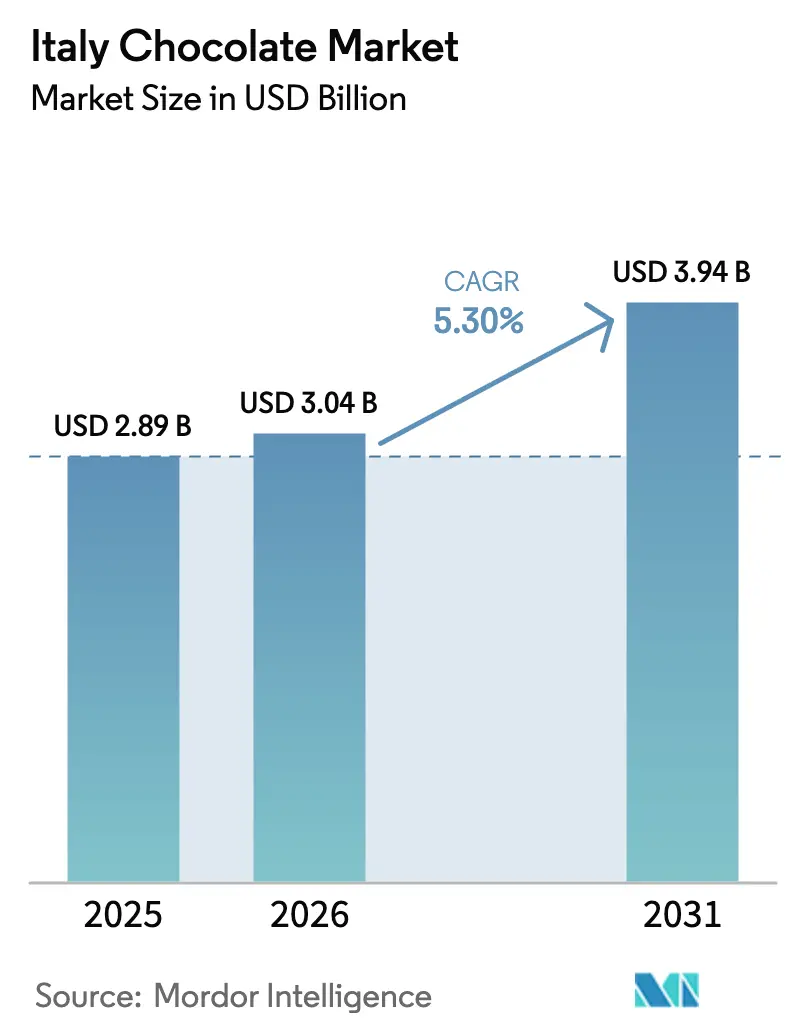
| Base Year Market Size (2025) | USD 2.89 Billion |
| Market Size (2026) | USD 3.04 Billion |
| Market Size (2031) | USD 3.94 Billion |
| Growth Rate (2026 - 2031) | 5.30 % |
| Market Concentration | Medium |
Major Players
*Disclaimer: Major Players sorted in no particular order Image © Mordor Intelligence. Reuse requires attribution under CC BY 4.0. |
|
Italy Chocolate Market Analysis by Mordor Intelligence
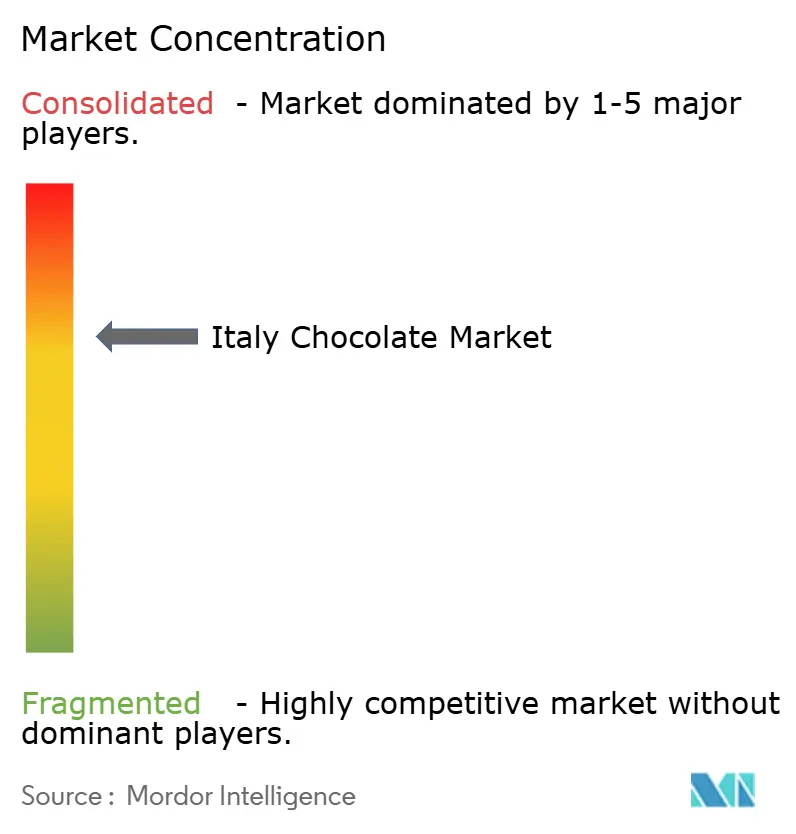
Italy chocolate market size in 2026 is estimated at USD 3.04 billion, growing from 2025 value of USD 2.89 billion with 2031 projections showing USD 3.94 billion, growing at 5.3% CAGR over 2026-2031. This steady growth indicates a strong and consistent demand for chocolate, even as cocoa prices reach unprecedented levels. The market's ability to withstand inflation is supported by a growing consumer preference for chocolates with traceable origins (value-added provenance), an increasing trend toward premium gifting options, and a rising acceptance of plant-based chocolate alternatives. To maintain profitability, major manufacturers have implemented strategies such as shrinkflation, where product sizes are reduced while prices remain unchanged. Among product types, dark chocolate is gaining popularity due to its association with health benefits. Pralines are seeing significant growth as they offer a unique and indulgent experience for consumers. The market is moderately consolidated, with a mix of large-scale manufacturers and smaller craft producers shaping its competitive landscape.
Key Report Takeaways
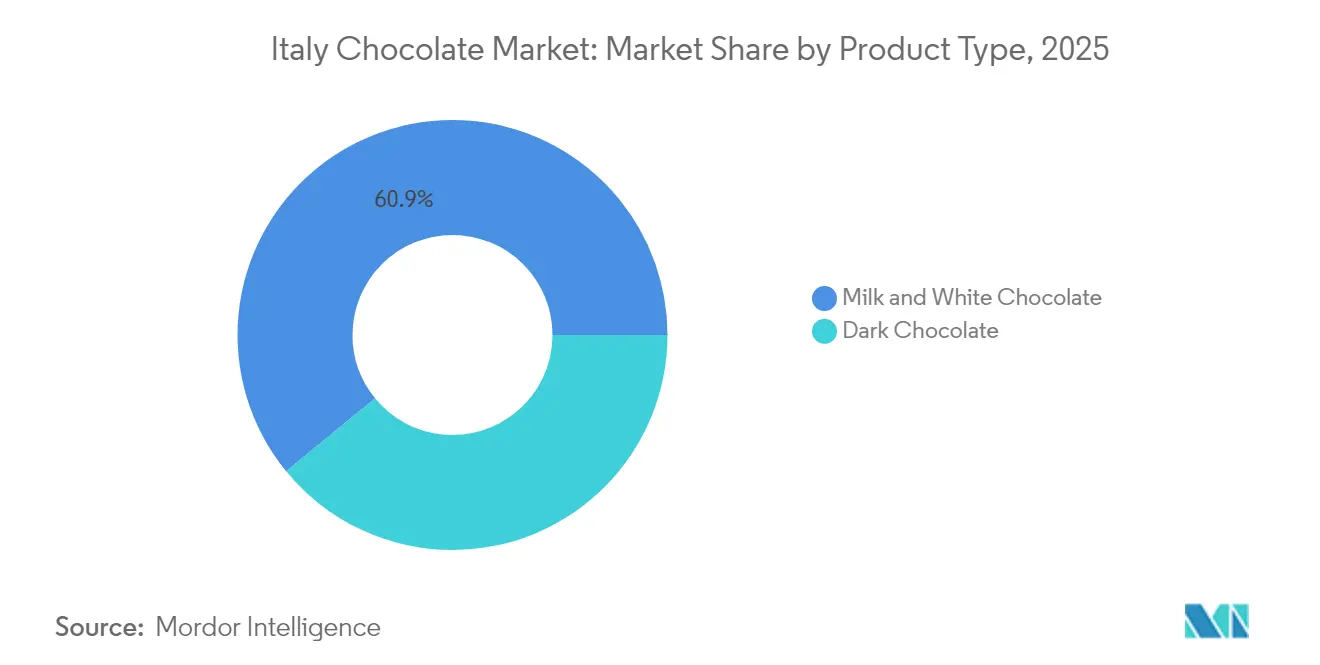
- By product type, milk and white chocolate led the Italian chocolate market with a 60.92% share in 2025; dark chocolate is expected to advance at a 6.07% CAGR through 2031.
- By form, tablets and bars accounted for 67.63% of the Italy chocolate market size in 2025, while pralines and truffles recorded the highest projected CAGR at 6.55%.
- By price range, mass products captured 70.05% of the value in 2025; the premium tier is projected to grow at a 6.42% CAGR to 2031.
- By ingredient type, dairy-based recipes dominated with 62.94% of sales in 2025; plant-based formats are expanding at a 6.82% CAGR.
- By distribution channel, supermarkets/hypermarkets held 65.12% of spend in 2025, whereas online retail stores are set to rise at a 6.95% CAGR.
Note: Market size and forecast figures in this report are generated using Mordor Intelligence’s proprietary estimation framework, updated with the latest available data and insights as of 2026.
Italy Chocolate Market Trends and Insights
Drivers Impact Analysis*
| Driver | (~) % Impact on CAGR Forecast | Geographic Relevance | Impact Timeline |
|---|---|---|---|
| Increasing demand for seasonal and limited-edition products | +0.9% | National, with concentration in northern cities (Milan, Turin) and tourist destinations (Rome, Florence) | Short term (≤ 2 years) |
| Innovation with regional flavors and Italian ingredients | +1.1% | National, with strongest uptake in Piedmont (hazelnuts), Sicily (citrus, pistachios), Tuscany (single-origin cacao) | Medium term (2-4 years) |
| Expanding chocolate tourism and gastronomy-driven travel | +0.7% | Regional hubs (Perugia, Turin, Modica) with spillover to secondary cities hosting chocolate festivals | Medium term (2-4 years) |
| Use of chocolate in premium gifting and corporate hampers | +0.8% | National, with urban concentration in Milan, Rome, Bologna; export-oriented for corporate clients | Short term (≤ 2 years) |
| Strengthening demand for sustainable packaging | +0.6% | National, driven by European Union regulatory alignment and consumer awareness in northern/central regions | Long term (≥ 4 years) |
| Increasing popularity of vegan and lactose-free chocolates | +1.4% | National, with early adoption in metropolitan areas and health-conscious demographics | Medium term (2-4 years) |
| Source: Mordor Intelligence | |||


Expanding chocolate tourism and gastronomy-driven travel
Italy is increasingly turning chocolate into a key attraction for tourism. According to Cacao of Excellence, Eurochocolate 2024 is expected to draw over 500,000 visitors from both within Italy and abroad[1]Source: Cacao of Excellence, "Cacao of Excellence to Showcase Award-Winning Cacao and Producers at Eurochocolate 2024", cacaoofexcellence.org. This highlights the festival’s significant role in driving regional economic activity and enhancing brand recognition. Attractions like Perugina’s Casa del Cioccolato combine elements of history, chocolate tasting, and retail experiences, creating opportunities to engage visitors and boost sales of premium chocolate products. Regionally protected specialties such as Cioccolato di Modica PGI play a crucial role in this trend. By emphasizing their artisanal craftsmanship, these products appeal to both local and international consumers. These efforts collectively demonstrate how tourism, combined with origin-based branding, is driving growth and increasing the value of Italy’s chocolate market.
Increasing popularity of vegan and lactose-free chocolates
Italy is experiencing a growing shift toward plant-based and allergen-free diets, which is significantly increasing the demand for vegan and lactose-free chocolates. According to the World Population Review, 1.6% of Italians identified as vegan in 2025, reflecting a steady rise in plant-based eating habits[2]Source: World Population Review, "Veganism by Country 2025", worldpopulationreview.com. Health concerns are a major driver of this trend, as the Ilomata International Journal reported in January 2024 that 56% of Italians are lactose intolerant[3]Source: Ilomata International Journal, "A Qualitative Content Analysis on MilkLife Instagram", ilomata.org . To meet these changing consumer preferences, companies are introducing new products tailored to these needs. For instance, Ferrero International SA launched Nutella plant-based in September 2024, offering a dairy-free alternative to its iconic spread. This launch demonstrates how brands are actively expanding their product lines to cater to the growing demand for allergen-free and plant-based options, ensuring they remain relevant in a rapidly evolving market.
Increasing demand for seasonal and limited-edition products
Italy’s chocolate makers are increasingly focusing on seasonal and limited-edition products, not just as festive promotions but as a way to drive higher profit margins. For example, Venchi has embraced this strategy by launching unique offerings. In July 2025, it collaborated with Laudemio Frescobaldi to introduce an olive oil-infused chocolate spread and gelato range. Shortly after, in August 2025, it unveiled innovative gelato flavors in London, including extra virgin olive oil, parmigiano reggiano, and caramel with rosemary. These exclusive, limited-time products create a sense of scarcity, attracting attention from both local and international markets. Limited-edition releases not only help brands manage risks, such as fluctuating cocoa prices, but also encourage customers to shop directly through brand-owned e-commerce platforms.
Use of chocolate in premium gifting and corporate hampers
Premium gifting and corporate hampers are becoming increasingly important in driving demand within Italy’s chocolate market. Many corporate buyers are now opting for chocolate assortments instead of wine because chocolates have a wider appeal and are easier to manage in terms of logistics. For example, brands like Venchi offer sophisticated gift boxes and corporate hampers through specialized gifting services, while Amedei creates personalized gift kits with custom packaging and thoughtfully curated assortments designed specifically for business clients and stakeholders. This growing preference for chocolate as a gift option is helping artisanal and luxury chocolatiers expand their reach, even as mainstream grocery channels face challenges such as reduced consumer spending.
Restraints Impact Analysis*
| Restraint | (~) % Impact on CAGR Forecast | Geographic Relevance | Impact Timeline |
|---|---|---|---|
| Growing consumer preference for low-sugar and low-calorie diets | -0.7% | National, with strongest impact in urban centers and among health-conscious demographics aged 25-45 | Medium term (2-4 years) |
| Allergies and rising dietary restrictions | -0.4% | National, with regulatory pressure from European Union allergen labeling requirements (Regulation 1169/2011) | Long term (≥ 4 years) |
| Competition from healthier snack alternatives | -0.5% | National, with protein bars and functional snacks gaining share in convenience and online channels | Short term (≤ 2 years) |
| Regulatory pressure on labeling, additives and sustainability | -0.3% | European Union-wide, with Italy subject to dual-authority oversight (MIMIT, Ministry of Health) and four police forces | Long term (≥ 4 years) |
| Source: Mordor Intelligence | |||
Growing consumer preference for low-sugar and low-calorie diets
Consumer preferences in Italy are shifting toward low-sugar and low-calorie diets, which is putting pressure on traditional chocolate sales. Many consumers are now opting for healthier alternatives, such as protein bars and functional snacks, which are gaining popularity. This trend is leading companies like Ferrero to expand their product offerings. For example, Ferrero introduced the Fulfil energy bar range, which offers higher protein content and lower sugar levels compared to regular chocolate snacks. Smaller Italian manufacturers are also responding to this demand by creating chocolate alternatives sweetened with maltitol, a sugar substitute. Overall, the growing focus on healthier snacking is pushing chocolate manufacturers to reformulate their products and develop options that better align with modern dietary preferences.
Competition from healthier snacks
Competition from healthier snacks is reducing the demand for traditional chocolate in Italy, as consumers increasingly prefer options perceived as more nutritious or beneficial. Products such as high-protein bars, seed and nut mixes, whole-grain biscuits, and yogurt-based snacks are gaining popularity among shoppers who are reducing their consumption of sugary treats. Retailers are responding to this trend by allocating more shelf space to these healthier alternatives, often placing them in prominent areas that were previously dominated by chocolate and other confectionery items. This shift in consumer preferences is making it harder for chocolate brands to attract impulse buyers. Confectionery companies are focusing on strategies such as creating healthier versions of their products, offering smaller portion sizes, and innovating by combining chocolate with other snack categories.
*Our forecasts treat driver/restraint impacts as directional, not additive. The impact forecasts reflect baseline growth, mix effects, and variable interactions.
Segment Analysis
By Product Type: Dark Chocolate Captures Health Halo
Milk and white chocolate continue to dominate the Italian chocolate market, contributing to 60.92% of total sales in 2025. Their popularity is driven by iconic brands like Kinder and Nutella, which are widely consumed as snacks for children and are a favorite choice for seasonal gifting. These chocolates have a strong presence in households due to their familiar taste and emotional connection with consumers. Companies also keep their products appealing by introducing new flavors, innovative packaging, and creative formats, ensuring they remain a top choice for customers.
Dark chocolate, however, is gaining momentum and is expected to grow at a faster rate in the years to come. It is projected to achieve a 6.07% CAGR from 2026 to 2031, as more Italian consumers recognize its health benefits. Dark chocolate is increasingly associated with wellness due to its high antioxidant content, lower sugar levels, and perceived premium quality. Brands are expanding their offerings with higher cocoa content and single-origin varieties. The trend toward mindful eating and a preference for clean-label ingredients is encouraging more households to incorporate dark chocolate into their regular diets.


By Form: Pralines Surge on Experiential Value
Tablets and bars remained the most preferred chocolate format in Italy’s market in 2025, accounting for 67.63% of total sales. Their popularity stems from their easy availability in supermarkets, convenience stores, and online platforms, making them accessible to a wide audience. These formats are often chosen as affordable and convenient treats for everyday enjoyment. To maintain consumer interest, manufacturers are innovating with new flavors, varying cocoa content, and offering portion-controlled options, ensuring they cater to diverse tastes and preferences.
Pralines and truffles are expected to witness the fastest growth, with a projected CAGR of 6.55% through 2031. This growth is largely driven by their appeal as premium gifting options and their visually appealing, handcrafted designs. Italian chocolatiers are focusing on creating unique assortments, including seasonal and limited-edition products made with high-quality ingredients, to attract a wider customer base. The growing interest from tourists in purchasing luxury chocolate souvenirs is further boosting the demand for these premium formats, positioning them as a significant growth segment in the market.
By Price Range: Premium Outpaces Mass Despite Economic Caution
Mass-market chocolate remained the largest segment in 2025, contributing 70.05% of the total retail value. This segment benefits from its strong presence in supermarkets, making it easily accessible to consumers and driving frequent purchases. To address rising production costs, manufacturers have implemented a strategy known as "shrinkflation," which involves reducing product sizes while maintaining stable prices. The affordability and widespread brand recognition of mass-market chocolate ensure its popularity for everyday consumption, maintaining steady demand across households.
The premium chocolate segment is anticipated to grow at a faster rate through 2031, with a projected CAGR of 6.42%. Consumers are increasingly opting for premium chocolates due to their higher cocoa content, artisanal quality, and use of natural ingredients. Brands are capitalizing on this trend by offering limited-edition products, elegant packaging, and premium gift options to attract buyers. Despite inflation, the segment continues to gain traction as consumers prioritize quality and unique experiences, driving its growth in the market.
By Ingredient Type: Plant-Based Lines Accelerate
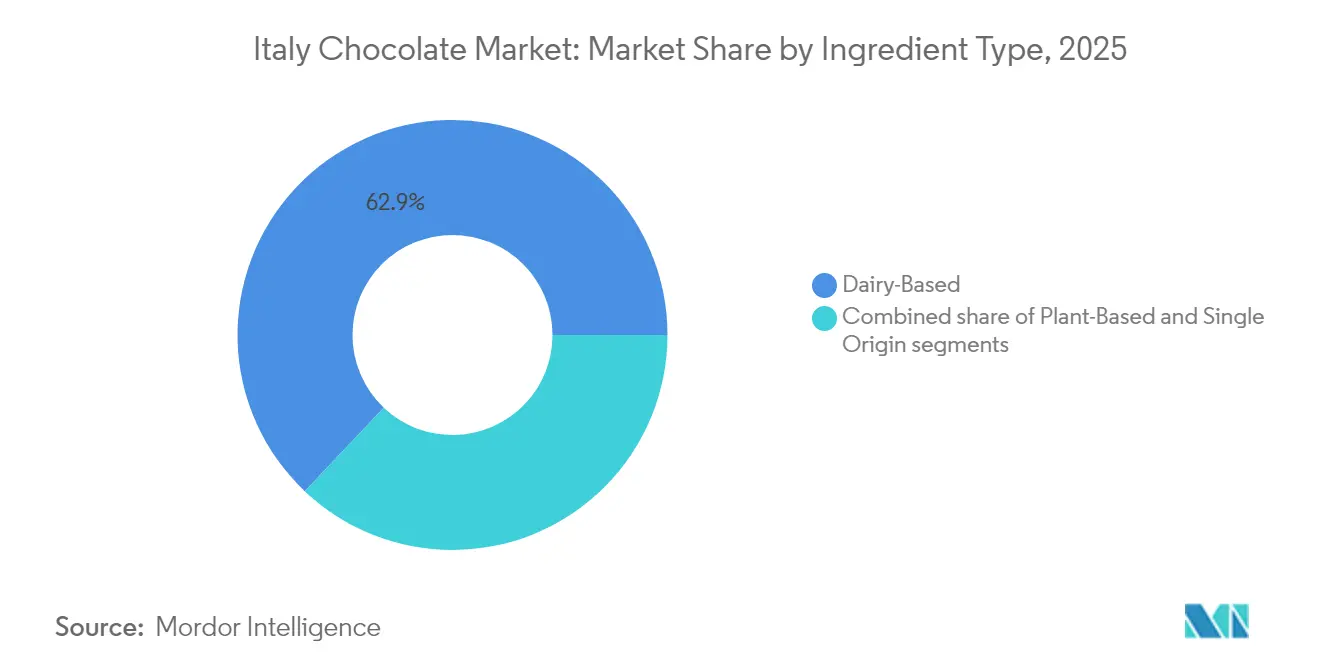
Dairy-based chocolate recipes continued to lead the Italian market in 2025, holding a significant 62.94% of the market share. This dominance is rooted in Italy's long-standing love for milk chocolate and the strong presence of brands that rely on well-established dairy supply chains. These chocolates are a popular choice for everyday snacking and are widely preferred for gifting during festive seasons. Their consistent quality, rich flavor, and easy availability in stores make them a reliable and favored option for consumers, ensuring their top position in the market.
In contrast, plant-based chocolate is rapidly emerging as the fastest-growing segment, with an expected CAGR of 6.82% through 2031. This growth is driven by increasing consumer interest in vegan, lactose-free, and healthier alternatives. Advances in plant-based ingredients, such as those derived from chickpeas, oats, and almonds, are enhancing the texture and creaminess of these chocolates, making them more appealing to a wider audience. As more consumers focus on sustainability and health-conscious choices, plant-based chocolate is poised to capture a larger share of the market in the coming years.
By Distribution Channel: Online Gains but Stores Remain Crucial
Supermarkets/hypermarkets continued to dominate Italy’s chocolate market in 2025, contributing to 65.12% of total sales. These stores are widely accessible nationwide, making them a convenient option for consumers. Leading brands like Ferrero and Lindt benefit from strong partnerships with these retailers, ensuring their products are prominently displayed on shelves. The ease of access and frequent promotions in these outlets encourage regular purchases, making them a key driver of chocolate sales in Italy.
Online retail is emerging as the fastest-growing distribution channel, with a projected CAGR of 6.95% through 2031. The growth is driven by the increasing popularity of platforms like Amazon.it and the rising investment in direct-to-consumer websites by Italian chocolate makers. Features such as subscription services, personalized product options, and exclusive online offerings are attracting more consumers to shop digitally. As convenience and home delivery become more important, online channels are expected to play a larger role in the chocolate market’s distribution network.
Geography Analysis
The unique characteristics of its regions have a profound influence on Italy’s chocolate market, with each offering distinct flavors and traditions. Piedmont is well-known for its hazelnut and gianduja chocolates, where producers prioritize high-quality ingredients and maintain strong supply chains to ensure consistency. Sicily adds its own charm with pistachios and the traditional Modica chocolate, which has gained popularity among tourists for its unique texture and artisanal heritage. Tuscany, on the other hand, is renowned for its bean-to-bar chocolate makers, who specialize in crafting single-origin bars that showcase Italy’s craftsmanship and appeal to both domestic and international consumers.
Consumer preferences and spending patterns vary significantly across Italy’s regions. In the northern cities like Milan and Turin, there is a strong demand for premium chocolate products, driven by a vibrant café culture and well-established chocolate tourism. Events and traditional chocolate-based drinks further enhance the region’s reputation as a hub for high-value chocolate experiences. In contrast, southern regions present opportunities for growth as modern retail infrastructure expands, and rising incomes make branded chocolate products more accessible to a broader audience, creating new markets for producers to explore.
Italy’s chocolate exports play a vital role in the market’s overall growth. International demand for Italian chocolate continues to increase, supported by favorable trade policies and the country’s strong reputation for quality and craftsmanship. However, regulatory enforcement varies across regions, with some local authorities imposing stricter rules on additives and labeling. This variation requires producers operating in multiple regions to adapt their compliance and quality assurance processes to meet local standards while maintaining consistent product quality for both domestic and international markets, ensuring Italy’s chocolate remains competitive globally.
Competitive Landscape
The Italian chocolate market is moderately consolidated, with a few large multinational companies dominating the industry while smaller artisanal producers compete by focusing on quality and local heritage. Major players, such as Ferrero, Lindt, and Mondelez, hold a significant market share due to their strong brand recognition and extensive distribution networks. Ferrero Commerciale Italia leads the market, driven by the popularity of products like Kinder and Nutella. At the same time, Lindt and other global companies are investing in production capacity and supply chain improvements to secure essential ingredients. Artisanal brands such as Venchi and Domori are also experiencing rapid growth by opening branded stores, positioning themselves as premium options, and gaining traction in the hospitality and pastry sectors. These artisanal producers are carving out a niche by offering unique, high-quality products that appeal to both local and international consumers.
Different players in the market employ various strategies to remain competitive. Large companies focus on maintaining sales volumes through methods like reducing product sizes (shrinkflation), broad marketing campaigns, and introducing functional products like protein-enriched snack bars. On the other hand, premium artisanal producers emphasize storytelling about the origins of their products, geographic indications, and transparent sourcing practices to justify higher prices and build loyalty among affluent customers. Mid-tier brands face challenges from both private-label products offering lower prices and premium brands with strong narratives. As a result, many mid-tier companies are exploring mergers, acquisitions, or partnerships with private equity firms to either scale up or exit the market strategically. These strategies highlight the diverse approaches companies take to adapt to changing consumer preferences and market pressures.
Competition in the Italian chocolate market is expected to grow as companies explore new opportunities. Functional chocolate, such as products enriched with protein or adaptogens, is still underdeveloped in Italy compared to northern European countries, presenting a potential growth area. Additionally, digital commerce offers significant opportunities for expansion, although challenges like last-mile delivery, climate-sensitive packaging, and seasonal heat issues slow progress. These factors indicate a competitive landscape where established leaders continue to innovate while new players can find opportunities in high-value niches. As consumer demand evolves, companies that can balance innovation with quality and sustainability are likely to succeed in this dynamic market.
Italy Chocolate Industry Leaders
-
Ferrero International SA
-
Lindt & Sprüngli AG
-
Venchi SpA
-
Nestlé SA
-
Mondelēz International Inc.
- *Disclaimer: Major Players sorted in no particular order

Recent Industry Developments
- October 2025: Ferrero introduced new products during its first-ever Ferrero Innovation Day Italy, held in Milan. Among the new offerings were Ferrero Rocher variants, including 70% Dark Chocolate, Salted Caramel and Hazelnut, and Hazelnut and Macadamia Nuts.
- February 2024: The Italian luxury chocolate brand Venchi introduced its 2024 Easter collection. The collection emphasized the use of natural ingredients, including the renowned Piedmont hazelnuts. The newly launched Easter egg range featured a variety of options, such as milk, dark, and salted white chocolate, each paired with unique fillings.
- September 2023: Nestlé announced significant investments in its white chocolate production facilities in Italy. This move aimed to enhance its manufacturing capabilities and meet the growing consumer demand for premium white chocolate products.
- January 2023: Nuii introduced Italian Roasted Hazelnut and Milk Chocolate, inspired by the rich culinary heritage of Italy. This launch was accompanied by a marketing campaign that took consumers on a virtual adventure through the iconic city of Rome.


Italy Chocolate Market Report Scope
Dark Chocolate, Milk and White Chocolate are covered as segments by Product Type. Tablets and Bars, Molded Blocks, Pralines and Truffles, and Other Forms are covered as segments by Form. Mass and Premium are covered as segments by Price Range. Dairy-Based, Plant-Based, and Single Origin are covered as segments by Ingredient Type. Convenience Stores, Online Retail Stores, Supermarkets/Hypermarkets, and Other Channels are covered as segments by Distribution Channel.
| Dark Chocolate |
| Milk and White Chocolate |
| Tablets and Bars |
| Molded Blocks |
| Pralines and Truffles |
| Other Forms |
| Mass |
| Premium |
| Dairy-Based |
| Plant-Based |
| Single Origin |
| Supermarkets/Hypermarkets |
| Online Retail Stores |
| Convenience Stores |
| Other Channels |
| By Product Type | Dark Chocolate |
| Milk and White Chocolate | |
| By Form | Tablets and Bars |
| Molded Blocks | |
| Pralines and Truffles | |
| Other Forms | |
| By Price Range | Mass |
| Premium | |
| By Ingredient Type | Dairy-Based |
| Plant-Based | |
| Single Origin | |
| By Distribution Channel | Supermarkets/Hypermarkets |
| Online Retail Stores | |
| Convenience Stores | |
| Other Channels |


Market Definition
- Milk and White Chocolate - Milk chocolates is a solid chocolate made with milk (in the form of either milk powder, liquid milk, or condensed milk) and cocoa solids. White chocolate is made from cocoa butter and milk and contains no cocoa solids whatsoever. The scope includes regular chocolates, low-sugar, and sugar-free variants
- Toffees & Nougats - Toffees include hard, chewy, and small or one-bite candies marketed with labels as toffee or toffee-like confectionery. Nougat is a chewy confection with almond, sugar, and egg white as a basic ingredient; and it originated in Europe and Middle East countries.
- Cereals Bars - A snack composed of breakfast cereal that has been compressed into a bar shape and is held together with a form of edible adhesive. The scope includes snack bars made with cereals such as rice, oats, corn, etc. mixed with a binding syrup. These also include products labeled as cereal bars, cereal treat bars, or grain bars.
- Chewing Gum - This is a preparation for chewing, usually made of flavored and sweetened chicle or such substitutes as polyvinyl acetate. The types of chewing gums included in the scope are sugar-chewing gums and sugar-free chewing gums
| Keyword | Definition |
|---|---|
| Dark Chocolate | Dark chocolate is a form of chocolate containing cocoa solids and cocoa butter without the milk. |
| White Chocolate | White chocolate is the type of chocolate containing the highest percentage of milk solids, typically around or over 30 percent. |
| Milk Chocolate | Milk chocolate is made from dark chocolate that has a low cocoa solid content and higher sugar content, plus a milk product. |
| Hard Candy | A candy made of sugar and corn syrup boiled without crystallizing. |
| Toffees | A hard, chewy, often brown sweet that is made from sugar boiled with butter. |
| Nougats | A chewy or brittle candy containing almonds or other nuts and sometimes fruit. |
| Cereal bar | A cereal bar is a bar-shaped food product, made by pressing cereals and usually dried fruit or berries, which are in most cases held together by glucose syrup. |
| Protein bar | Protein bars are nutrition bars that contain a high proportion of protein to carbohydrates/fats. |
| Fruit & Nut bar | These are often based on dates with other dried fruit and nut additions and, in some cases, flavorings. |
| NCA | The National Confectioners Association is an American trade organization that promotes chocolate, candy, gum and mints, and the companies that make these treats. |
| CGMP | Current good manufacturing practices are those conforming to the guidelines recommended by relevant agencies. |
| Unstandardized foods | Unstandardized foods are those that do not have a standard of identity or that deviate from a prescribed standard in any manner. |
| GI | The glycemic index (GI) is a way of ranking carbohydrate-containing foods based on how slowly or quickly they are digested and increase blood glucose levels over a period of time |
| Skimmed milk powder | Skimmed milk powder is obtained by removing water from pasteurized skim milk by spray-drying. |
| Flavanols | Flavanols are a group of compounds found in cocoa, tea, apples, and many other plant-based foods and beverages. |
| WPC | Whey protein concentrate- the substance obtained by the removal of sufficient nonprotein constituents from pasteurized whey so that the finished dry product contains greater than 25% protein. |
| LDL | Low density Lipoprotein- the bad cholesterol |
| HDL | High density Lipoprotein- the good cholesterol |
| BHT | butylated Hydroxytoluene is a lab-made chemical that is added to foods as a preservative. |
| Carrageenan | Carrageenan is an additive used to thicken, emulsify, and preserve foods and drinks. |
| Free form | Not containing certain ingredients, such as gluten, dairy, or sugar. |
| Cocoa butter | It is a fatty substance obtained from cocoa beans, used in the manufacture of confectionery. |
| Pastellies | A type of of Brazilian candy made from sugar, eggs, and milk. |
| Draggees | Small, round candies that are coated with a hard sugar shell |
| CHOPRABISCO | Royal Belgian Association of the chocolate, pralines, biscuit, and confectionery industry- A trade association that represents the Belgian chocolate industry. |
| European Directive 2000/13 | A European Union directive that regulates the labeling of food products |
| Kakao-Verordnung | The German chocolate ordinance, a set of regulations that define what can be labeled as "chocolate" in Germany. |
| FASFC | Federal Agency for the Safety of the Food Chain |
| Pectin | A natural substance that is derived from fruits and vegetables. It is used in confectionery to create a gel-like texture. |
| Invert sugars | A type of sugar that is made up of glucose and fructose. |
| Emulsifier | A substance that helps to mix to liquids that does not mix together. |
| Anthocyanins | A type of flavonoid that is responsible for the red, purple, and blue colors of confectionery. |
| Functional Foods | Foods that have been modified to provide additional health benefits beyond basic nutrition. |
| Kosher certificate | This certification verifies that the ingredients, production process including all machinery, and/or food-service process complies with the standards of Jewish dietary law |
| Chicory root extract | A natural extract from the chicory root that is a good source of fiber, calcium, phosphorous, and folate |
| RDD | Recommended daily dose |
| Gummies | A chewy gelatin-based candy that is often flavored with fruit. |
| Nutraceuticals | Food or dietary supplements that are claimed to have health benefits. |
| Energy bars | Snack bars that are high in carbohydrates and calories are designed to provide energy on the go. |
| BFSO | Belgian Food Safety Organization for the food chain. |

Research Methodology
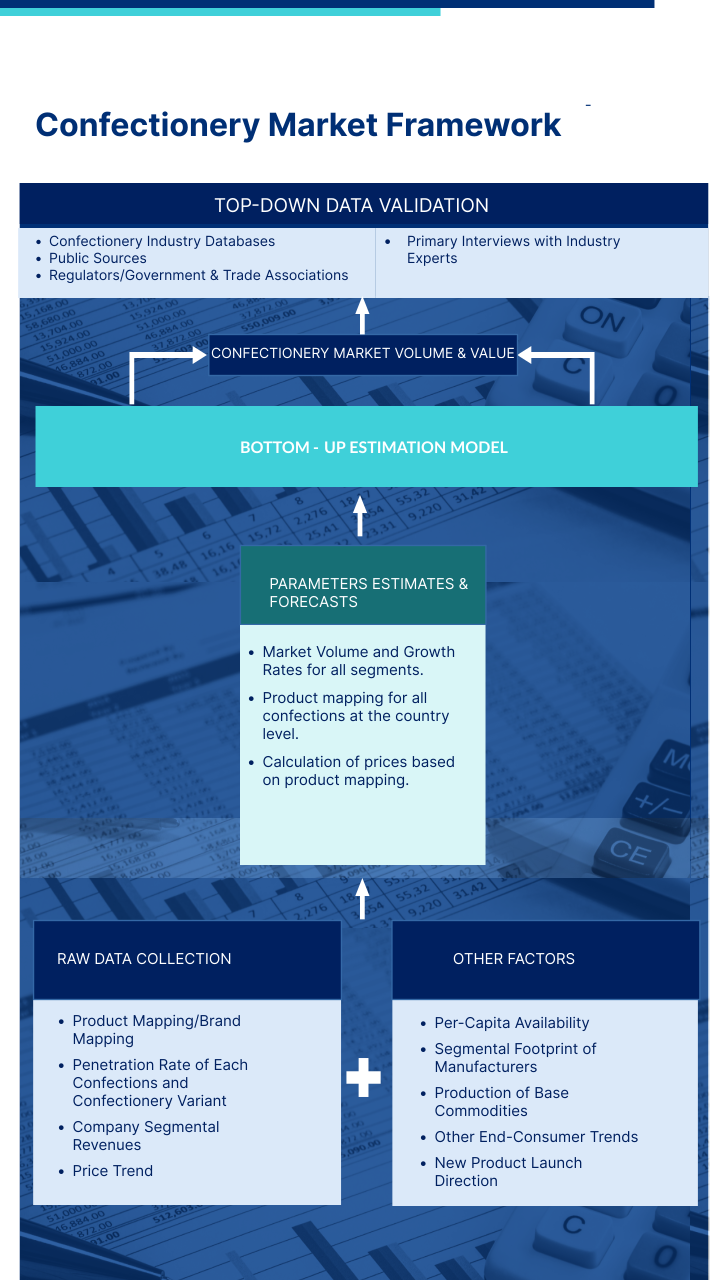
Mordor Intelligence follows a four-step methodology in all our reports.
- Step-1: Identify Key Variables: In order to build a robust forecasting methodology, the variables and factors identified in Step 1 are tested against available historical market numbers. Through an iterative process, the variables required for market forecast are set, and the model is built on the basis of these variables.
- Step-2: Build a Market Model: Market-size estimations for the forecast years are in nominal terms. Inflation is not a part of the pricing, and the average selling price (ASP) is kept constant throughout the forecast period for each country.
- Step-3: Validate and Finalize: In this important step, all market numbers, variables, and analyst calls are validated through an extensive network of primary research experts from the market studied. The respondents are selected across levels and functions to generate a holistic picture of the market studied.
- Step-4: Research Outputs: Syndicated Reports, Custom Consulting Assignments, Databases & Subscription Platforms