
Market Overview
| Study Period | 2021 - 2031 |
|---|---|
| Forecast Data Period | 2026 - 2031 |
| Base Year Market Size (2025) | USD 370 Billion |
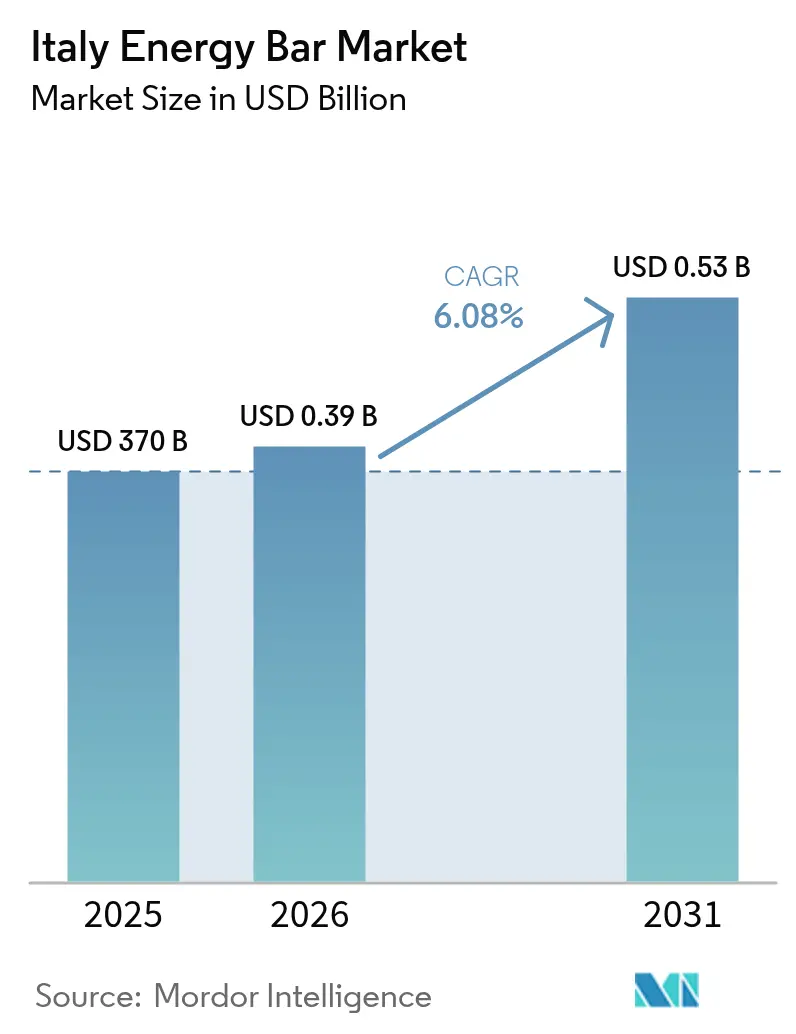
| Market Size (2026) | USD 0.39 Billion |
| Market Size (2031) | USD 0.53 Billion |
| Growth Rate (2026 - 2031) | 6.08 % |
| Market Concentration | Medium |
Major Players *Disclaimer: Major Players sorted in no particular order Image © Mordor Intelligence. Reuse requires attribution under CC BY 4.0. | |
Italy Energy Bar Market Analysis by Mordor Intelligence
Italy Energy Bar market size in 2026 is estimated at USD 392.5 million, growing from 2025 value of USD 370 million with 2031 projections showing USD 527.23 million, growing at 6.08% CAGR over 2026-2031. Demand growth rests on consumers seeking portable protein, the spread of fitness culture, and the migration of bars from specialist outlets into mainstream grocery stores. Retailers have expanded shelf space for functional snacks, while manufacturers introduce clean-label recipes that align with Italy’s high standards of taste. Online grocery adoption, now 6% of national food spend, funnels incremental sales to brands with direct-to-consumer capability. Regionally, Northwest Italy commands the highest revenue because of superior income levels and dense fitness infrastructure. However, the premium pricing compared to traditional snacks and persistent concerns regarding sugar content hinder broader market adoption. Furthermore, limited awareness in non-urban regions and strong competition from other healthy snack alternatives create additional challenges.
Key Report Takeaways
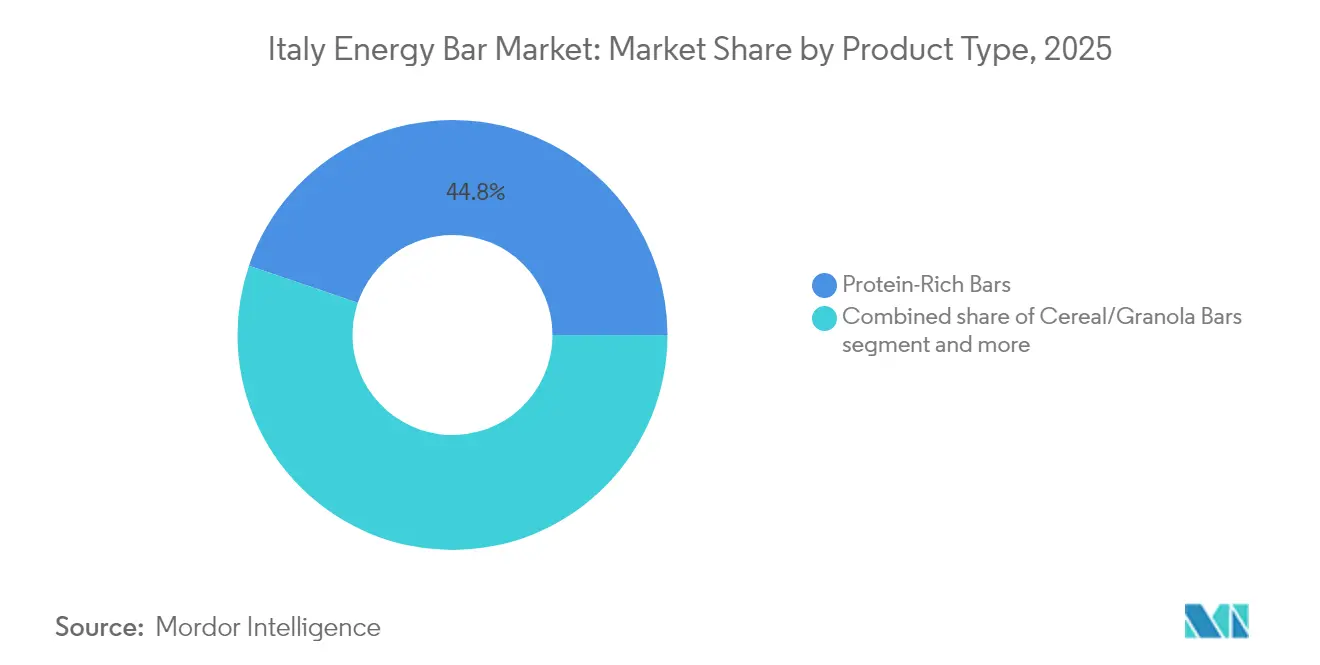
- By product type, protein-rich bars led with 44.78% revenue share in 2025, while fruit and nut bars are forecast to expand at a 7.34% CAGR through 2031.
- By consumer demographic, adults accounted for 59.83% of 2025 sales, whereas sports and fitness enthusiasts are set to grow at an 7.88% CAGR to 2031.
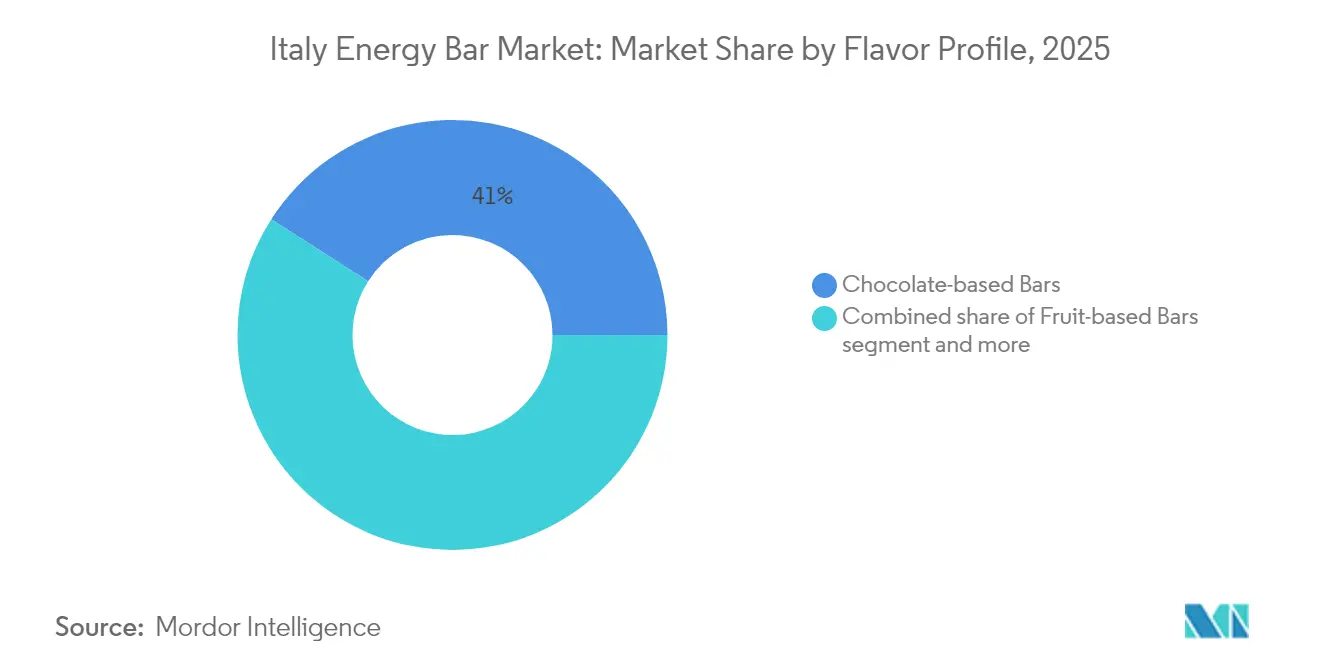
- By flavor profile, chocolate-based bars held 40.96% of 2025 revenue, while nut and seed-based bars are forecast to advance at a 7.18% CAGR through 2031.
- By distribution, supermarkets and hypermarkets held 46.22% of 2025 revenue, while online channels are primed for a 7.55% CAGR to 2031.
- By region, Northwest Italy contributed 38.12% the 2025 value; Central Italy is expected to advance at a 6.94% CAGR over the same horizon.
Note: Market size and forecast figures in this report are generated using Mordor Intelligence’s proprietary estimation framework, updated with the latest available data and insights as of 2026.
Italy Energy Bar Market Trends and Insights
Drivers Impact Analysis*
| Driver | (~) % Impact on CAGR Forecast | Geographic Relevance | Impact Timeline |
|---|---|---|---|
| Expanding health-conscious consumer segment and growing preference for convenient, on-the-go nutrition | +1.2% | National, strongest in Northwest Italy (Milan, Turin) | Medium term (2-4 years) |
| Increasing number of fitness centers and gyms | +0.9% | National, concentrated in urban centers | Medium term (2-4 years) |
| Rising participation in sports and recreational activities | +0.8% | National, with early gains in Central Italy (Rome, Florence) | Long term (≥4 years) |
| Continuous innovation in flavors, formats, and nutrient profiles | +1.1% | National, adopted rapidly in Northwest and Central Italy | Short term (≤2 years) |
| Growing demand for plant-based and clean-label products | +1.0% | National, urban millennials and Gen Z | Medium term (2-4 years) |
| Strong influence of fitness experts and social media endorsements | +0.7% | National, digital-native demographics | Short term (≤2 years) |
| Source: Mordor Intelligence | |||
Expanding health-conscious consumer segment and growing preference for convenient, on-the-go nutrition
The increasing focus on health-conscious lifestyles, combined with a preference for convenient, on-the-go nutrition, is significantly influencing the energy bar market in Italy. This trend reflects a clear alignment between evolving consumer habits and product offerings. As more individuals adopt wellness-oriented routines, including fitness activities, balanced diets, and managing busy schedules, there is a growing demand for snacks that are both nutritious and portable. This shift has driven interest in bars offering protein, fiber, natural ingredients, or plant-based formulations, replacing traditional indulgent snacks. Companies are responding by diversifying their product portfolios. For example, in 2024, Grenade, recently introduced in Italy by Mondelez International, caters to fitness-focused consumers with high-protein, low-sugar protein bars. Retailers and brands are also innovating with cleaner-label, plant-based, and functional ingredient bars, such as those with reduced sugar, increased protein or fiber, and natural components, aligning with heightened health and wellness awareness. The expansion of gyms, wellness centers, and active lifestyle culture in urban areas further supports this demand, as individuals engaged in sports or fitness seek quick, nutrient-dense snacks to complement their routines. Besides, distribution channels have also adapted, with supermarkets, hypermarkets, and online retailers dedicating more shelf space to premium healthy bars, making them accessible to a wider audience. This convergence of health awareness, urban lifestyles, convenience, functional nutrition, and expanded retail availability creates a self-reinforcing cycle, driving innovation and market growth.
Increasing number of fitness centers and gyms
The growth of fitness centers and gyms across Italy, combined with increasing sports participation, is driving the energy bar market by establishing direct distribution channels and integrating energy and protein bars into active lifestyles. ISTAT data indicate that in 2024, over 21.5 million Italians (approximately 37.5% of the population aged 3 and older) participated in at least one sport or physical activity, fueling demand for convenient, nutrient-dense snacks suitable for pre-workout, post-workout, or on-the-go consumption [1]. The expansion of modern gym and wellness center infrastructure, including new entrants like Go Fit, which reportedly launched its first Italian flagship in Turin in 2025, highlights investor confidence in the country’s underpenetrated fitness market, creating new sales points and brand-building opportunities. Domestic players such as Fulfil (by Ferrero Group) have strategically targeted gyms, sports clubs, and fitness-oriented distribution channels, alongside pharmacies and retail outlets, recognizing that placements at "point-of-sweat" locations convert active consumers into habitual buyers. Additionally, fitness equipment and wellness service providers like Technogym are reportedly promoting corporate wellness programs that incorporate nutrition and recovery snacks, indirectly boosting demand for protein bars as part of healthy living routines. This interconnected network of gym infrastructure, rising active-lifestyle adoption, and strategic distribution by manufacturers creates a positive feedback loop, embedding energy bars into fitness and lifestyle routines and driving market penetration.
Rising participation in sports and recreational activities
The growing participation in sports and recreational activities is broadening the consumer base for energy bars in Italy, extending beyond competitive athletes to include a wider audience of active individuals. Municipal investments in cycling paths, outdoor gyms, and multi-use trails have normalized activities such as running, cycling, trekking, and fitness as routine leisure pursuits. The 2024 edition of “Rapporto Sport 2024” by Sport e Salute and Istituto per il Credito Sportivo reports that 28.3% of Italians were regular sports practitioners in 2023, with an additional 8.6% participating occasionally, highlighting a significant market opportunity for on-the-go energy and recovery snacks like cereal/granola bars, protein bars, and fruit and nut bars [2]. The rise in cycle tourism and adventure travel, with notable growth in cycling holidays and active weekends, has created demand for portable, easy-to-digest bars over traditional meals, appealing to both local and visiting athletes. Brands such as Veloforte leverage heritage recipes to offer real-food formulations with precise performance nutrition, while companies like Enervit and Equilibra target gym-goers and wellness-focused consumers with tailored bar formats. Social media communities amplify this trend by promoting energy bars as essential components of active lifestyles. The convergence of increasing sports participation, infrastructure development, and the promotion of sport as a driver of health and inclusion provides a supportive environment for manufacturers to cater to diverse consumer needs with innovative, functional, and regionally inspired products.
Growing demand for plant-based and clean-label products
Consumer demand for plant-based and clean-label products is reshaping the energy bar market in Italy, driven by heightened health awareness and environmental concerns. Eurispes reports that 2.3% of Italians identified as vegan in 2024, reflecting a growing preference for plant-based nutrition [3]. This shift has prompted manufacturers to develop energy bars featuring plant proteins, organic ingredients, and allergen-friendly formulations. Concurrently, the clean-label trend, which prioritizes minimal, recognizable ingredients free from artificial additives or preservatives, has led brands to reformulate products to meet these expectations while maintaining taste and nutritional value. Companies are also diversifying flavors and textures, with premium and artisanal offerings gaining traction among millennials and urban professionals seeking indulgence paired with health benefits. The clean-label movement is further bolstered by the expansion of e-commerce and the influence of social media, which enhance transparency and promote ingredient-focused storytelling, fostering consumer trust and loyalty. Brands such as Enervit Protein Deal, Barretta Proteica Vegan exemplify this trend by offering plant protein-rich bars free from synthetic chemicals. Regulatory emphasis on ingredient transparency, sustainability, and ethical sourcing is also driving the adoption of eco-friendly packaging and responsible supply chains. These factors collectively create a favorable environment for sustained growth in the energy bar market, addressing consumer demands for health, authenticity, and environmental responsibility.
Restraints Impact Analysis*
| Restraint | (~) % Impact on CAGR Forecast | Geographic Relevance | Impact Timeline |
|---|---|---|---|
| Higher price compared to conventional snack options | -0.8% | National, most acute in Southern Italy and rural areas | Medium term (2-4 years) |
| Concerns about high sugar content among health-focused consumers | -0.6% | National, educated urban consumers | Short term (≤2 years) |
| Limited consumer understanding of functional differences | -0.5% | National, strongest in Rest of Italy (Southern regions) | Medium term (2-4 years) |
| Competition from other healthy snacks | -0.7% | National, particularly in Northwest and Central Italy | Short term (≤2 years) |
| Source: Mordor Intelligence | |||
Higher price compared to conventional snack options
The higher pricing of energy bars compared to conventional snack options represents a significant challenge, limiting broader consumer adoption despite the growing emphasis on health and convenience. Energy bars, formulated with premium proteins, natural ingredients, and functional nutrients, often command a price premium that discourages frequent purchases by price-sensitive consumers accustomed to lower-cost alternatives such as biscuits, chocolates, or bakery snacks. This price gap intensifies competition from more affordable traditional snacks, occasionally driving health-conscious but budget-restricted consumers toward homemade or less expensive options. While demand for nutrient-rich and convenient snacking continues to rise among millennials and urban professionals, the willingness to pay a premium price remains inconsistent, particularly in less affluent regions. Market insights for 2024-2025 indicate ongoing innovation aimed at balancing cost and ingredient quality; however, premium formulations, such as those offered by Equilibra or Barilla, maintain above-average pricing justified by clean-label, plant-based, or organic claims. Additionally, rising raw material costs, especially for plant proteins and superfoods, contribute to upward price pressures that are passed on to consumers, reinforcing affordability concerns. Retailers and manufacturers are responding by promoting smaller portion sizes and value packs to mitigate the impact, yet price sensitivity remains a critical barrier to mass-market penetration. This dynamic underscores the need for effective communication of energy bars’ functional benefits and alignment with consumer lifestyles to justify the premium, as price continues to influence purchase frequency and brand loyalty in a competitive snack market.
Concerns about high sugar content among health-focused consumers
Health-conscious consumers' concerns about high sugar content are creating significant challenges for the energy bar market in Italy. Increasing scrutiny of nutrition labels has led shoppers to favor genuinely low-sugar or naturally sweetened alternatives, driven by broader wellness trends. This issue has been exacerbated by European Union regulations and Italy's NutrInform Battery front-of-pack labeling, which, during 2024-2025, prominently highlighted sugar levels in many energy bars. While some brands have reformulated their products to address these concerns, skepticism persists toward those that continue to rely on added sugars for taste and texture. Buyers, including fitness enthusiasts and vegans, often reject products marketed as "healthy" if their sugar content is comparable to confectionery, instead opting for fruit and nut-based options or alternatives like yogurt and fresh snacks. Market analyses from 2024 indicate a growing demand for low-sugar innovations, with brands such as Enervit Protein Snack Bar Pistachio Low Sugar responding by offering products with reduced sugar content. However, the stigma surrounding hidden sugars continues to limit consumer trials, particularly among label-conscious shoppers. This challenge is closely linked to the demand for clean-label products, requiring manufacturers to balance taste and authenticity while competing in a market where transparency, driven by apps and social media, exposes inconsistencies. High sugar concerns are eroding trust, slowing market growth, and favoring competitors innovating toward benchmarks of less than 5 grams of sugar per bar.
*Our forecasts treat driver/restraint impacts as directional, not additive. The impact forecasts reflect baseline growth, mix effects, and variable interactions.
Segment Analysis
By Product Type: Protein-Rich Bars Lead as Functional Nutrition Anchors Market Growth
Protein-rich bars hold a significant share of 44.78% in the energy bar market in 2025, driven by their appeal as post-workout recovery aids and convenient meal replacements for professionals with demanding schedules. These bars deliver a targeted nutritional profile, incorporating high-quality proteins such as whey, plant-based, or casein protein, along with essential amino acids. This aligns with the preferences of consumers focused on muscle maintenance, satiety, and overall wellness. The segment benefits from increasing health awareness and the growing fitness culture in Italy, where efficient nutrition solutions are in demand. Recent product innovations by companies like Enervit and Sixtus emphasize flavor and functional benefits, catering to a broad audience ranging from elite athletes to casual gym-goers. Supermarkets and online platforms play a pivotal role in promoting these products, further solidifying their market position. Strategic differentiation through organic, plant-based, and low-sugar options is expected to sustain growth in this competitive category.
Fruit and nut bars are anticipated to grow at a CAGR of 7.34% through 2031, appealing to consumers seeking clean-label, minimally processed products with natural ingredients such as nuts, seeds, and dried fruits. This segment resonates with the demand for wholesome snacks that deliver energy without artificial additives, reflecting Italy's preference for traditional, simple ingredients. Brands like Noberasco leverage Italy’s nut and fruit heritage, combining taste with nutritional value. The segment is further supported by consumer interest in plant-based, organic, and ethically sourced products, with niche and premium offerings gaining traction in e-commerce and specialty retail. Awareness of sustainable packaging and ethical production practices also drives demand, positioning fruit and nut bars as a complementary growth area alongside protein bars in the energy bar market.

By Consumer Demographic: Adults Dominate While Sports Enthusiasts Drive Fastest Growth
Adults account for 59.83% of energy bar consumption in 2025, driven by changing "snackification" trends where these products are increasingly integrated into workplace breaks, commuting routines, and busy lifestyles. This demographic values convenience and balanced nutrition, making cereal, protein, and energy bars a preferred choice for maintaining energy and satiety between meals. Brands such as Ferrero’s Fulfil and Enervit have effectively targeted this group by offering products that combine taste, health benefits, and portability, positioning energy bars as an essential everyday snack. The expansion of office vending options and increased retail availability in urban centers further support this trend. Additionally, the growing focus on clean-label and functional ingredients aligns with adult consumers' sophisticated nutritional preferences.
Sports and fitness enthusiasts represent the fastest-growing consumer group, with a projected CAGR of 7.88% through 2031. This growth is fueled by rebounding gym memberships and the increasing popularity of recreational sports, as highlighted by Technogym. As more Italians engage in activities such as casual running, cycling, and fitness classes, the demand for bars tailored to pre-, during, and post-exercise nutrition is rising. Protein-focused and plant-based formulations are particularly appealing to this group. Brands like Veloforte and NamedSport address the specific needs of this segment with products designed for enhanced energy and recovery. Social media communities and influencer endorsements further amplify awareness and adoption, while the children's segment remains smaller due to parental concerns over sugar content and processing.
By Flavor Profile: Chocolate-Based Bars Command Share While Nut and Seed Variants Gain Momentum
Chocolate-based bars represented 40.96% of the energy bar market share in 2025, driven by their ability to combine indulgent flavors with functional ingredients such as proteins and fibers. These products cater to consumer preferences for familiar and comforting profiles that align with modern health objectives while maintaining traditional confectionery appeal. Ferrero's Fulfil launch, featuring four chocolate variants: chocolate and hazelnut, crunchy chocolate with milk, chocolate and salted caramel, and chocolate and peanut cream, demonstrates how established confectioners leverage their expertise in flavor development to penetrate the energy bar market. Retail expansions in 2024-2025 further underscore chocolate's resilience, as supermarkets prioritize these products for impulse purchases amid the growing trend of snackification. The segment's popularity among adult demographics highlights its versatility, sustaining volume while enabling premium pricing through innovative textures and fillings.
Nut and seed-based bars are anticipated to grow at a compound annual growth rate (CAGR) of 7.18% through 2031, appealing to consumers seeking clean-label formulations with minimal processing and recognizable ingredients like almonds, hazelnuts, and chia seeds. This growth reflects the demand for wholesome, artisanal profiles that align with Italy's nut-centric culinary traditions, positioning these bars as superior alternatives to synthetic-heavy competitors. Quaranta's February 2024 Nuts Protein Bar launch and Noberasco's focus on Italian-sourced nuts and dried fruits highlight this trend, offering premium options that emphasize provenance and natural textures. Additionally, fruit-based bars target younger consumers seeking natural sweetness, while unique savory or spiced variants cater to niche preferences. The rise of e-commerce by 2025 further supports growth, linking demand to sports enthusiasts and wellness-focused consumers prioritizing authenticity.
By Distribution Channel: Supermarkets Dominate While Online Retail Accelerates
Supermarkets and hypermarkets held a 46.22% share of energy bar distribution in 2025, leveraging Italy's extensive retail infrastructure that supports consumer preferences for one-stop shopping. These outlets enhance product visibility, enabling protein-rich and chocolate-based bars to benefit from impulse purchases alongside routine items. Promotional strategies, such as end-cap displays and loyalty programs, further drive habitual purchases among adults and families. The channel's strength is particularly evident in urban areas of the Northwest and Central regions, where hypermarkets stock a diverse range of flavors from global brands like Ferrero's Fulfil and local producers. Recent expansions by chains such as Esselunga and Coop in 2024-2025 have increased shelf space for energy bars, reinforcing the role of physical retail in sustaining market penetration amid growing snackification trends.
Online retail is projected to grow at a 7.55% CAGR through 2031, driven by the rising adoption of e-commerce in Italy's grocery sector. This channel allows niche brands to reach consumers in underserved areas, particularly in Southern Italy, where online grocery sales have outpaced those in the North. Pharmacies and drugstores enhance credibility through professional endorsements for protein and recovery bars, while convenience stores cater to on-the-go purchases despite limited shelf space. High-margin opportunities also exist in vending machines, gyms, and direct-to-consumer subscriptions. For instance, Enervit's gym partnerships and subscription models foster loyalty among sports enthusiasts. Platforms like Amazon and Esselunga Online reported significant growth in energy bar sales in 2025, highlighting the importance of e-commerce in addressing regional disparities and demographic shifts.
Geography Analysis
Northwest Italy captured 38.12% of the energy bar market share in 2025, supported by higher per-capita income, a dense network of fitness facilities, and advanced retail infrastructure in cities such as Milan, Turin, and Genoa. Supermarkets and hypermarkets dominate grocery sales in these urban centers, as highlighted by ISTAT data, which also points to elevated sports participation rates and widespread access to large-scale retail. These factors have driven demand for premium protein-rich and chocolate-based bars, appealing to affluent adults and sports enthusiasts who frequent gyms and retail hubs for convenient nutrition. Go Fit's 2024 launch of a flagship fitness center in Turin underscores investor confidence in the region's underdeveloped gym market compared to Northern European benchmarks, further boosting on-site and nearby retail sales of recovery-focused bars. The synergy of income levels, fitness facilities, and retail density positions Northwest Italy as the market leader, sustaining its share through targeted promotions and a broad product assortment. Reports from 2024-2025 on Milan's wellness boom further reinforce the region's dominance, linking economic prosperity to sustained energy bar market leadership.
Central Italy is forecast to grow at a 6.94% CAGR through 2031, exceeding the national average. This growth is driven by rising tourism and urban wellness trends in cities like Rome, Florence, and Bologna, which fuel demand for portable, nutrient-dense snacks catering to travelers and office workers. ISTAT research highlights Central Italy's high environmental impacts and food consumption per capita, indicating robust demand for premium-priced nutrition bars amid the growing "snackification" trend. Tourism surges further contribute to this demand, as visitors increasingly seek clean-label fruit and nut bars for on-the-go energy during cultural activities. While online grocery penetration in Central Italy lags behind the South, it is growing faster than in the North, reflecting urban consumers' shift toward digital channels for specialty health products. Brands like Equilibra leverage this trend by stocking energy bars in hotel vending machines and e-commerce platforms, addressing both local and visitor needs. The expansion of Florence's wellness festivals in 2025 further highlights the connection between tourism growth and the region's accelerating energy bar market momentum.
The Rest of Italy, encompassing Northeast Italy, Southern Italy, and the Islands, faces structural challenges such as lower disposable incomes, weaker retail infrastructure, and socioeconomic disparities. These factors limit physical retail dominance and favor value-oriented cereal and granola bars over premium options. ISTAT data indicate Southern Italy's lowest environmental impacts and food consumption per capita, along with subdued sports participation and limited access to large-scale retail, which constrain market penetration. However, digital adaptation offers growth opportunities. Southern Italy's online grocery growth outpaces that of Northern regions, enabling digital channels to bypass physical retail limitations and expand access to protein and plant-based bars for underserved consumers. Brands like Nutravant capitalize on this trend through e-commerce subscriptions, delivering products directly to remote areas and islands. Reports from 2024-2025 highlight significant e-grocery growth in Sicily, demonstrating how online expansion mitigates infrastructure gaps and fosters gradual market development despite persistent challenges.
Regulatory Landscape
Energy bars sold in Italy fall under the broader EU and national food-safety and labeling framework, enforced through the Ministero della Salute and regional health authorities, with DGISAN (Direzione Generale per l'Igiene e la Sicurezza degli Alimenti e la Nutrizione) playing a central role in food hygiene and safety oversight. Core on-pack requirements for ingredients, allergens, and nutrition information are governed by Regulation (EU) No 1169/2011, which is particularly relevant for bar claims and formulations where sugar, protein, and allergen declarations are scrutinized by label-reading consumers.
Label execution is also shaped by Italian guidance where EU harmonization leaves room for interpretation. In September 2024, the Ministero delle Imprese e del Made in Italy (MIMIT) issued updated guidelines addressing labeling topics such as ingredient quantity declarations (QUID) and nutrition declarations, reinforcing the need for transparent, compliant pack copy across mainstream grocery, pharmacy, and online listings. For imported bars, official controls apply at EU level alongside any applicable Italian requirements in non-harmonized areas, making pre-market compliance checks and documentation discipline important for brand owners expanding distribution in Italy.
Competitive Landscape
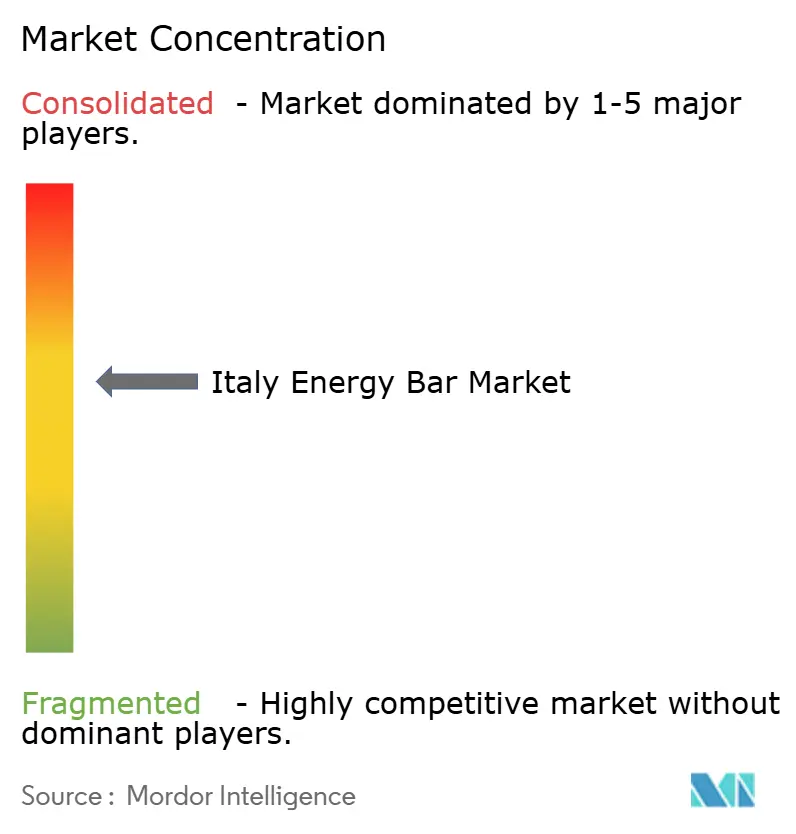
The market for energy bars in Italy is moderately consolidated, with global confectionery companies, specialized sports-nutrition brands, and artisanal startups competing across channels such as supermarkets, pharmacies, and online platforms. This competitive environment balances scale and innovation. Ferrero's 2024 launch of Fulfil protein bars, distributed through out-of-home venues, pharmacies, and sports clubs, demonstrates how established brands leverage their brand equity and extensive distribution networks to penetrate the functional nutrition segment. This approach has enabled Ferrero to quickly gain market share among adults and fitness enthusiasts seeking indulgent yet protein-rich options. Fulfil's presence across diverse channels enhances visibility and consumer trials, compelling specialized sports-nutrition brands to expand beyond niche retail outlets.
In 2025, Ferrero introduced internal Nutrition Criteria, setting strict thresholds for energy, sugar, and saturated fat content while requiring minimum levels of fiber and protein. This reformulation initiative aims to elevate industry standards, prompting competitors to optimize their product portfolios to remain competitive in health-conscious segments. Reports from 2024-2025 indicate that Fulfil has gained traction through gym partnerships, combining Ferrero's distribution capabilities with nutritional innovation to sustain its competitive edge in the market.
Enervit has solidified its position by offering a diverse range of formulations, including balanced 40-30-30 macronutrient snacks, low-sugar protein bars, and fruit-and-cereal energy bars. These products cater to various consumer needs, from workout nutrition to everyday snacking. Strong relationships with pharmacies and specialty retail outlets provide Enervit with premium shelf space and endorsements, creating significant barriers for new entrants. Growth opportunities are evident in plant-based, clean-label, and regionally sourced products, which attract wellness-focused consumers willing to pay a premium for authenticity. Artisanal brands like Nutrivant have addressed this demand by incorporating local nuts and fruits into vegan energy bars, filling gaps left by global players focused on chocolate-heavy products. In 2025, Enervit expanded its pharmacy presence, reinforcing its strategy, while the rise of startups in e-commerce highlights untapped niches, shaping the evolving competitive landscape.
Italy Energy Bar Industry Leaders
-
Enervit S.p.A.
-
Ferrero International SpA
-
Mondelēz International, Inc.
-
Post Holdings, Inc.
-
Abbott Laboratories
- *Disclaimer: Major Players sorted in no particular order
Market Opportunities and Future Outlook
Reformulation and label-led differentiation are becoming more visible as sugar scrutiny tightens and front-of-pack communication acts as a purchase filter. That dynamic is pushing brands toward low-sugar, high-protein, and plant-based recipes while keeping alignment with Italian taste expectations. Protein-rich bars already anchor the category (44.78% revenue share in 2025), and the clearest opportunity is to extend performance positioning into everyday occasions through formats that bridge breakfast, commuting, and work breaks, supported by the ongoing expansion of gyms and participation in sport and physical activity (ISTAT reported more than 21.5 million Italians participated in at least one sport or physical activity in 2024).
Route-to-market opportunities remain closely tied to the category's shift from specialist outlets into mass retail and digital. Supermarkets and hypermarkets continue to drive primary volume (46.22% share in 2025), but online grocery adoption and direct-to-consumer capability can help brands reach underserved areas and support subscription bundles and variety packs that lower trial friction for premium-priced bars. Recent company actions also suggest sustained investment in functional snacking platforms: Enervit introduced an oat-based bar in 2026, and Ferrero signed an agreement in March 2026 to acquire Bold Snacks (a protein bar producer), reinforcing how large players are scaling better-for-you snack capabilities across markets and channels.
Recent Industry Developments
- April 2026: Enervit launched Enervit OAT BAR, a gluten-free oat-based bar positioned for sports and breakfast use cases. The introduction broadens Enervit's core performance-nutrition lineup into a more everyday, ingredient-forward format, supporting incremental occasions beyond pre- and post-workout consumption.
- January 2026: Mondelēz Italia started a pilot with GS1 Italy to apply standard GS1 QR codes on Oro Saiwa packs as part of the Sunrise 2027 initiative. The move advances digital product information and traceability capabilities that can also raise the bar for how functional snack brands communicate ingredients, allergens, and nutrition in-store and online.
- October 2024: Foreverland opened its first production facility in Puglia to scale cocoa-free chocolate alternative output (reported annual capacity of 500 tonnes) and collaborated with Small Giants to launch a protein bar using its Choruba ingredient and nutritional yeast protein. This added Italian manufacturing capacity for alternative chocolate ingredients and introduced a differentiated protein bar concept aligned with clean-label and sustainability narratives in the bar aisle.
Research Methodology Framework and Report Scope
Market Definition and Coverage
For this study, the market covers retail sales value of energy bars sold in Italy, counted as packaged bars positioned for energy and functional snacking, across mainstream and specialist retail and online channels.
Scope exclusions: We exclude non-bar functional snacks (for example gels, powders, ready-to-drink shakes, and bakery items not sold as bars) and sales meant only for institutional or foodservice use when they are not tracked as packaged bar revenue.
Segmentation Overview
- By Product Type
- Cereal/Granola Bars
- Protein-Rich Bars
- Fruit and Nut Bars
- By Consumer Demographic
- Children/Kids
- Adults
- Sports and Fitness Enthusiasts
- By Flavor Profile
- Chocolate-based Bars
- Fruit-based Bars
- Nut and Seed-based Bars
- Other Unique Flavors
- By Distribution Channel
- Supermarkets/Hypermarkets
- Pharmacies/Drug Stores
- Convenience/Grocery Stores
- Online Retail Stores
- Other Distribution Channels
- By Region
- Northwest Italy
- Central Italy
- Rest of Italy (Northeast Italy, Southern Italy, and Islands)
Data Sources, Market Sizing, and Validation
Desk Research
Desk work starts by grounding the model in public, Italy-relevant reference points, then mapping them into a market value structure. Sources include national statistics releases, Italian Ministry of Health materials, and EU food regulation updates (including EFSA opinions), customs and trade datasets for key inputs, and European Commission agriculture and consumer price series where relevant.
We also review company filings, investor presentations, product labels, retailer category pages, and press coverage to understand pricing ladders, pack sizes, and how bars are placed across store formats. For consistency checks, we use paid database subscriptions for company financials and intelligence, import and export shipment-level signals, and patent databases to gauge how quickly formulations are changing. These desk sources are not exhaustive, and many other public and paid references were used to collect data, validate assumptions, and clarify open questions.
Primary Interviews and Surveys
Primary work is used to pressure-test what we saw in desk research, especially on channel mix, price movement, and how shoppers in Italy define an energy bar versus adjacent snack formats. We speak with a mix of brand and private label participants, ingredient and contract manufacturing contacts, distributors, and retail category managers across Italy to confirm assumptions and clean up gaps before finalizing the model.
Distribution of primary research fieldwork respondents
| Company type | Respondent position |
|---|---|
| Top tier: 29% | CXOs: 12% |
| Mid tier: 56% | Functional/Unit leaders: 33% |
| Smaller Players: 15% | Managers: 55% |
Market-Sizing & Forecasting
Sizing is built using a top-down approach that reconstructs Italy energy bar value by combining observed demand signals with channel structure, then translating volume patterns into revenue using realistic price bands. To keep the model practical, a few inputs are treated as key levers: average retail price per bar and per multipack, share of sales moving through supermarkets versus specialist stores and online, frequency of sports and fitness-driven consumption, and the pace of premium and clean label launches.
After the first pass, totals are checked with selective bottom-up approximations such as sampled shelf price tracking multiplied by estimated unit throughput per store format, plus supplier and distributor sense checks on category growth. Where smaller channels have patchy visibility, we apply conservative ranges and narrow them after follow-up calls, so the total does not get pushed up by thin data.
For forecasting, we use scenario analysis supported by short time series smoothing, since pricing and channel mix can swing year to year. Assumptions are adjusted using what respondents expect on promotion intensity, input cost pressure, and how quickly online grocery and fitness retail will expand within Italy.
Data Validation & Update Cycle
Outputs are validated through triangulation across independent signals, including price ladders, channel share logic, and whether implied per-capita consumption looks reasonable for Italy. When a number appears off, we trace it back to its driver, re-check the source, and re-contact respondents if the variance stays material.
Before sign-off, the full model goes through multi-step analyst reviews, where calculations, units, and currency timing are checked again. Reports are refreshed annually, and interim updates are made when large events shift pricing, regulations, or distribution, followed by a final freshness check right before delivery so clients receive the latest view.
Mordor Intelligence's Italy Energy Bar Market Size Compared With Other Published Estimates
It is normal to see different market sizes for the same country and product, even when everyone is discussing energy bars. The differences usually come from how each study defines the product set, which years are used as the base, and how pricing and channel mix are handled.
A common gap driver in Italy is whether cereal and broader nutrition bars are folded into the number, along with whether value is built from retail price points or from manufacturer revenue. Timing also matters because currency conversion, promotion depth, and pack size shifts can change the reported value when studies refresh their inputs at different points in the year.
Benchmark comparison
| Source | Market Size | Gaps in Research Methodology |
|---|---|---|
| Mordor Intelligence | USD 0.37 B (2025) | |
| Industry Publisher A | USD 0.16 B (2024) | Uses an earlier base year and a broader type stack that groups several bar formats together, which can also be closer to a category view than a strict energy bar definition. |
| Industry Publisher B | USD 0.32 B (2033) | Reports a longer-dated forecast year and can reflect faster growth assumptions on channel expansion and premium pricing, without clearly aligning the base year pricing ladder to Italy retail conditions. |
The spread mainly reflects scope and timing choices, plus how price and channel structure are translated into value. When energy bars are counted only when they are sold and positioned as energy and functional bars in tracked retail and online channels, and when the base-year price ladder is rechecked with Italy channel inputs, the resulting 2025 value lands at USD 0.37 B, a modeling choice applied by Mordor Intelligence.
Key Questions Answered in the Report
What is the current size of the Italy Energy Bar Market?
The Italy Energy Bar Market Size stands at USD 392.5 million in 2026 and is expected to reach USD 527.23 million by 2031.
Which product type leads sales in Italy?
Protein-rich bars led with 44.78% of 2025 revenue, reflecting strong demand for convenient high-protein snacks.
Which Italian region buys the most energy bars?
Northwest Italy generated 38.12% of 2025 value thanks to higher income and dense retail and fitness infrastructure.
How fast is online sales of energy bars growing in Italy?
Online channels for energy bars are forecast to expand at a 7.55% CAGR through 2031 as e-commerce penetration deepens.