
Market Overview
| Study Period | 2020 - 2031 |
|---|---|
| Forecast Data Period | 2026 - 2031 |
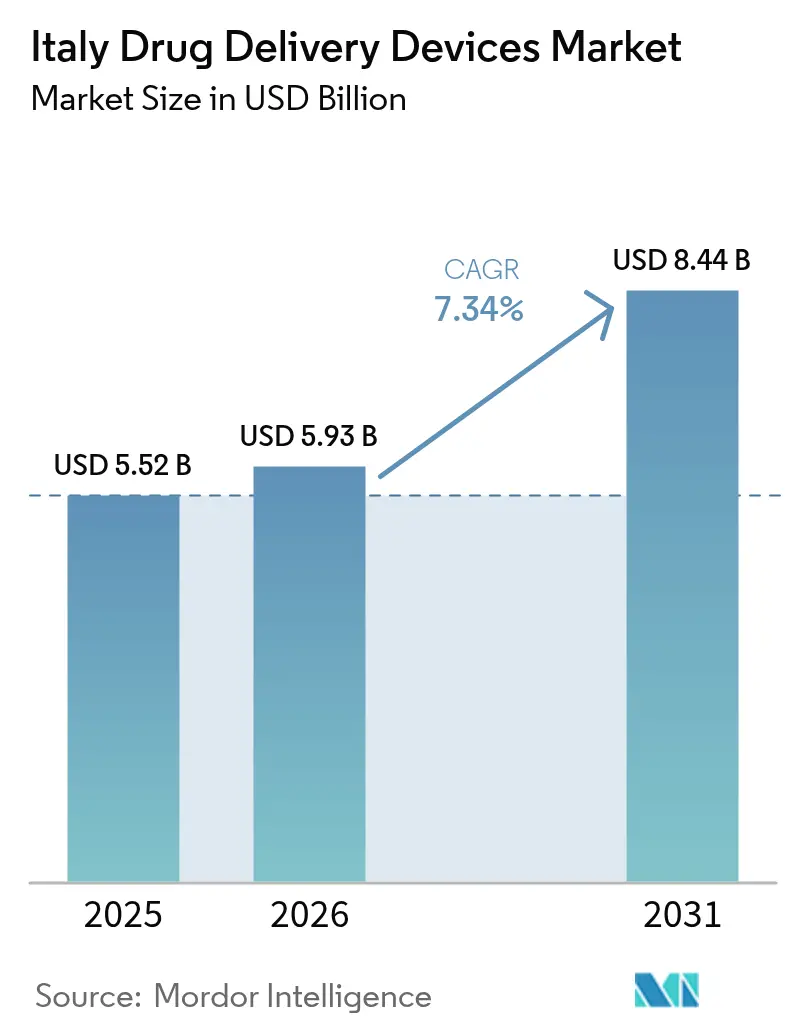
| Base Year Market Size (2025) | USD 5.52 Billion |
| Market Size (2026) | USD 5.93 Billion |
| Market Size (2031) | USD 8.44 Billion |
| Growth Rate (2026 - 2031) | 7.34 % |
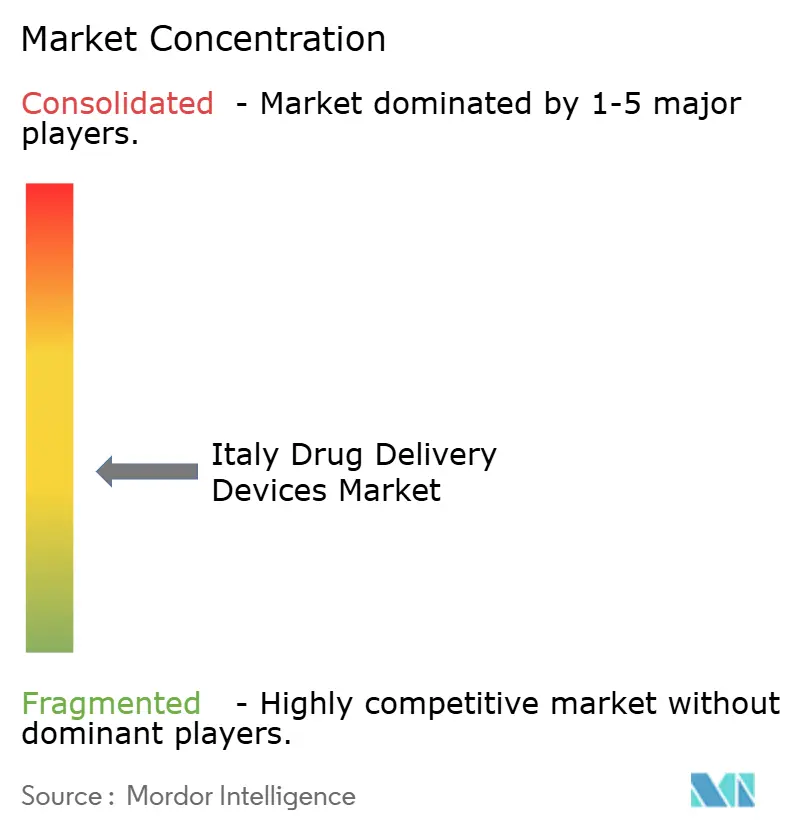
| Market Concentration | Medium |
Major Players *Disclaimer: Major Players sorted in no particular order Image © Mordor Intelligence. Reuse requires attribution under CC BY 4.0. | |
Italy Drug Delivery Devices Market Analysis by Mordor Intelligence
The Italy drug delivery devices market size was valued at USD 5.52 billion in 2025 and estimated to grow from USD 5.93 billion in 2026 to reach USD 8.44 billion by 2031, at a CAGR of 7.34% during the forecast period (2026-2031). Growth is anchored in the country’s rapidly aging population, the high and rising prevalence of chronic diseases such as diabetes and COPD, and a policy shift that favors self-administration over hospital-based care. Regulatory streamlining by the Italian Medicines Agency (AIFA) since January 2024 has shortened approval cycles for innovative products, while investment in connected technologies is improving adherence and real-time monitoring. At the same time, specialty pharmacies and community-based distribution models are extending access beyond large hospitals, accelerating uptake across the Italy drug delivery devices market.
Key Report Takeaways
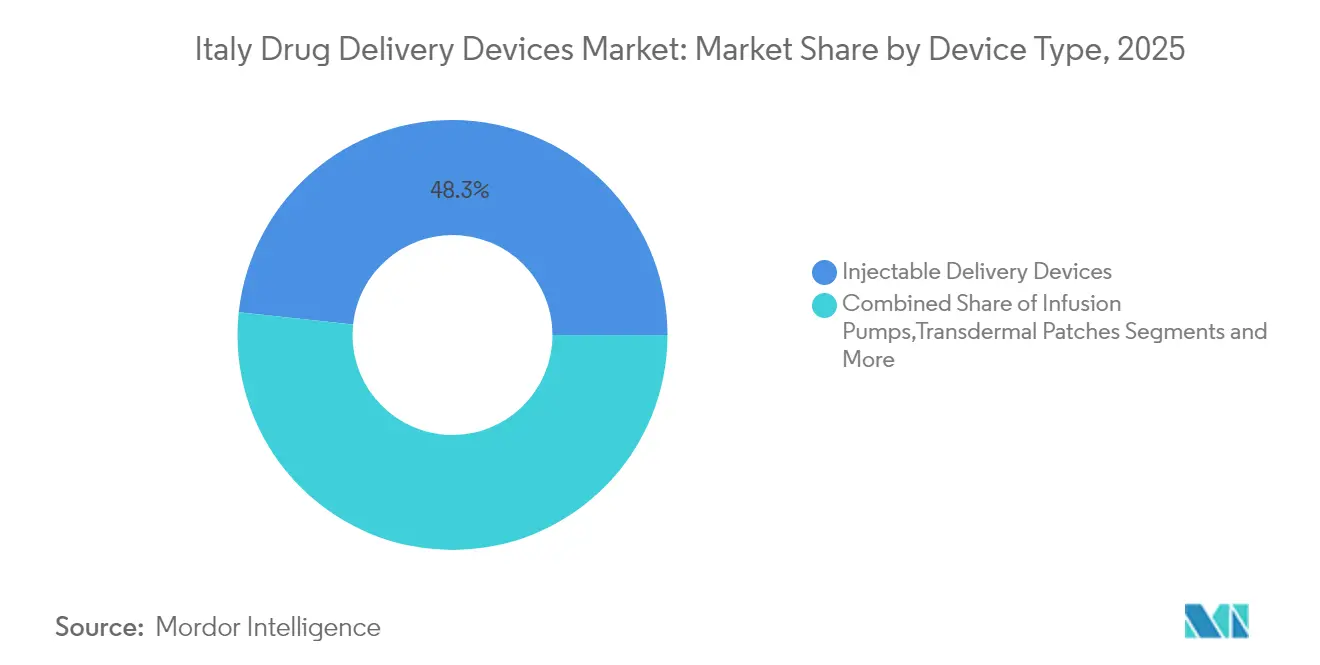
- By device type, injectable devices held 48.31% of Italy drug delivery devices market share in 2025, while implantable systems are projected to expand at a 8.79% CAGR to 2031.
- By route of administration, injectables accounted for 60.78% share of the Italy drug delivery devices market size in 2025, whereas inhalation routes are advancing at a 8.21% CAGR through 2031.
- By application, diabetes management led with 30.12% share of the Italy drug delivery devices market in 2025; oncology applications are forecast to grow at a 8.66% CAGR toward 2031.
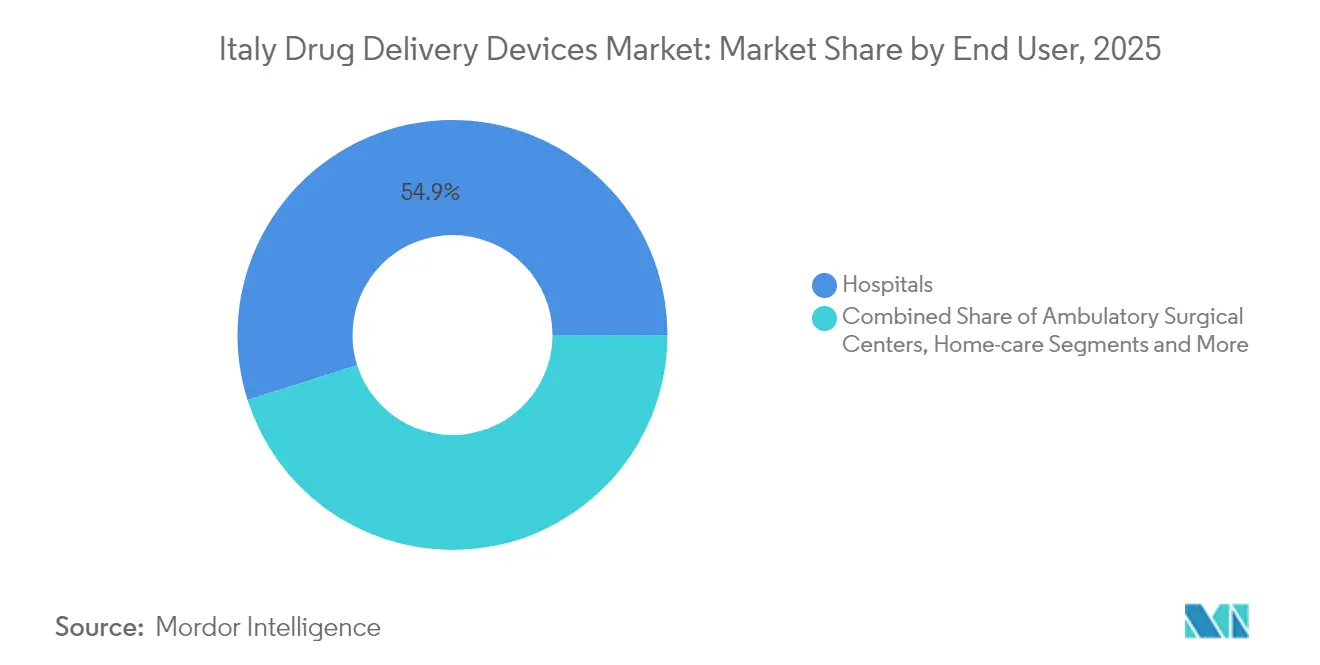
- By end user, hospitals captured 54.88% of Italy drug delivery devices market share in 2025, while homecare settings are projected to expand at a 9.84% CAGR between 2026-2031.
Note: Market size and forecast figures in this report are generated using Mordor Intelligence’s proprietary estimation framework, updated with the latest available data and insights as of 2026.
Italy Drug Delivery Devices Market Trends and Insights
Drivers Impact Analysis*
| Driver | (~) % Impact on CAGR Forecast | Geographic Relevance | Impact Timeline |
|---|---|---|---|
| Growing adoption of pre-filled injectable pens | +1.8% | National, higher adoption in Lombardy, Veneto, Emilia-Romagna | Medium term (2–4 years) |
| Expansion of specialty pharmacies boosting biologic self-administration | +1.5% | Urban centers (Milan, Rome, Bologna, Florence) | Medium term (2–4 years) |
| Technological advancement and adoption of smart, connected devices | +1.2% | National, early uptake in metropolitan biotech hubs | Long term (≥ 4 years) |
| High burden of chronic diseases and aging population | +1.0% | National, sharper impact in Marche, Liguria, Umbria | Long term (≥ 4 years) |
| Expansion of home-care and self-administration | +0.8% | Northern and Central regions grow fastest | Medium term (2–4 years) |
| Reimbursement support for biosimilar pens and prefilled formats | +0.7% | National, subject to regional variation | Long term (≥ 4 years) |
| Source: Mordor Intelligence | |||
Growing Adoption of Pre-Filled Injectable Pens
Demand for shorter 4 mm needles and 32 G gauges is rising because they lessen tissue trauma and improve adherence, a priority underscored by national guidelines from the Italian Society of Metabolism and Obesity (SIMDO).[1]MDPI, “Injectable Pen Needle Guidelines,” mdpi.com Next-generation connected pens automatically log dose data and sync to smartphone apps, closing information gaps in diabetes care. However, uptake remains uneven due to limited provider training, leaving space for targeted education and value-demonstration programs.
Expansion of Specialty Pharmacies Boosting Biologic Self-Administration
Italy’s decentralized distribution approach—direct hospital supply (DD), distribution on behalf of hospitals (DPC), and affiliated channels—has widened patient access to complex biologics outside tertiary centers. Analytics models piloted during the pandemic show potential to redirect a larger drug volume through community outlets, cutting travel time and hospital bottlenecks while maintaining cost control.
Technological Advancement and Increasing Adoption of Smart and Connected Drug Delivery Devices
Digital health is backed by EUR 1.6 billion in National Recovery and Resilience Plan funds, accelerating the roll-out of automated insulin delivery systems that couple pumps with continuous glucose monitoring. Clinical evidence shows higher time-in-range and lower hypoglycemia rates, validating their role in the Italy drug delivery devices market.
High Burden of Chronic Diseases and Aging Population
More than one quarter of residents in several regions are already over 65. Administrative-database analyses confirm escalating neurodegenerative and metabolic disease prevalence, driving pharmaceutical spending up 6.0% in 2024 and intensifying demand for reliable long-term delivery modalities.
Restraints Impact Analysis*
| Restraint | ( ~ ) % Impact on CAGR Forecast | Geographic Relevance | Impact Timeline |
|---|---|---|---|
| Single-use-plastic compliance costs and wider ESG mandates | −1.2% | Highest impact on manufacturing hubs in Northern Italy | Medium term (2–4 years) |
| Safety concerns and needlestick injuries | −0.8% | National, especially in clinical and home-care settings | Short term (≤ 2 years) |
| High development and manufacturing cost | −0.7% | Across all market participants | Long term (≥ 4 years) |
| Cultural reluctance toward self-injection impacting adherence | −0.6% | More pronounced in Southern regions and rural areas | Medium term (2–4 years) |
| Source: Mordor Intelligence | |||
Slow Reimbursement Approval
Average reimbursement time for orphan products remains 413 days, far exceeding the 100-day statutory target and slowing roll-out of advanced drug delivery devices.[2]European Federation of Pharmaceutical Industries and Associations, “Root Causes of Unavailability and Delay,” efpia.eu Regional follow-through can add between 1 day and 773 days before products reach patients, creating pronounced territorial inequity.
High Development and Manufacturing Cost
MDR and AI-focused regulations require more rigorous technical dossiers, raising pre-market spending and timelines. Dossier compilation under the Common Technical Document format plus dual national–EU scientific assessment add further complexity.[3]Italian Medicines Agency, “Authorization of Medicines,” aifa.gov.it
*Our forecasts treat driver/restraint impacts as directional, not additive. The impact forecasts reflect baseline growth, mix effects, and variable interactions.
Segment Analysis
By Device Type: Injectable Devices Lead While Implantables Surge Ahead
Injectable formats generated 48.31% of Italy drug delivery devices market share in 2025 due to their established role in diabetes and autoimmune therapy regimens. Continuous refinement—such as 4 mm, 32 G insulin pen needles—improves tolerability and maintains the segment’s broad user base. High-viscosity biologics are also benefiting from glass syringes engineered for superior break-resistance. In parallel, implantables are projected to post a 8.79% CAGR to 2031, marking the fastest trajectory within the Italy drug delivery devices market. Advances like 3-D printed polyvinyl alcohol matrices loaded with Rose Bengal enable sustained anticancer drug release for up to 90 days. Inhalation devices are pivoting to low-GWP propellants, while transdermal, ocular, and nasal platforms gain from novel polymers that extend residence time. Collectively, these innovations reinforce the long-term expansion of the Italy drug delivery devices market size at the modality level.



By Route of Administration: Injectable Dominance Meets Inhalation Innovation
Injectables accounted for 60.78% of the Italy drug delivery devices market size in 2025, upheld by entrenched clinical protocols and the acceleration of automated insulin delivery systems that link pumps with continuous glucose monitors.Smart algorithms raise time-in-range and ease the burden of frequent dose decisions. Inhalation routes, expanding at a 8.21% CAGR, are propelled by triple combination pMDIs using the new HFA-152a propellant, which matches legacy efficacy while cutting global-warming potential by 90%. Transdermal, buccal, ocular, and nasal approaches are benefiting from micro-needle arrays and muco-adhesive gels that boost bioavailability yet face sterility and stability challenges.
By Application: Diabetes Management Leads While Oncology Accelerates
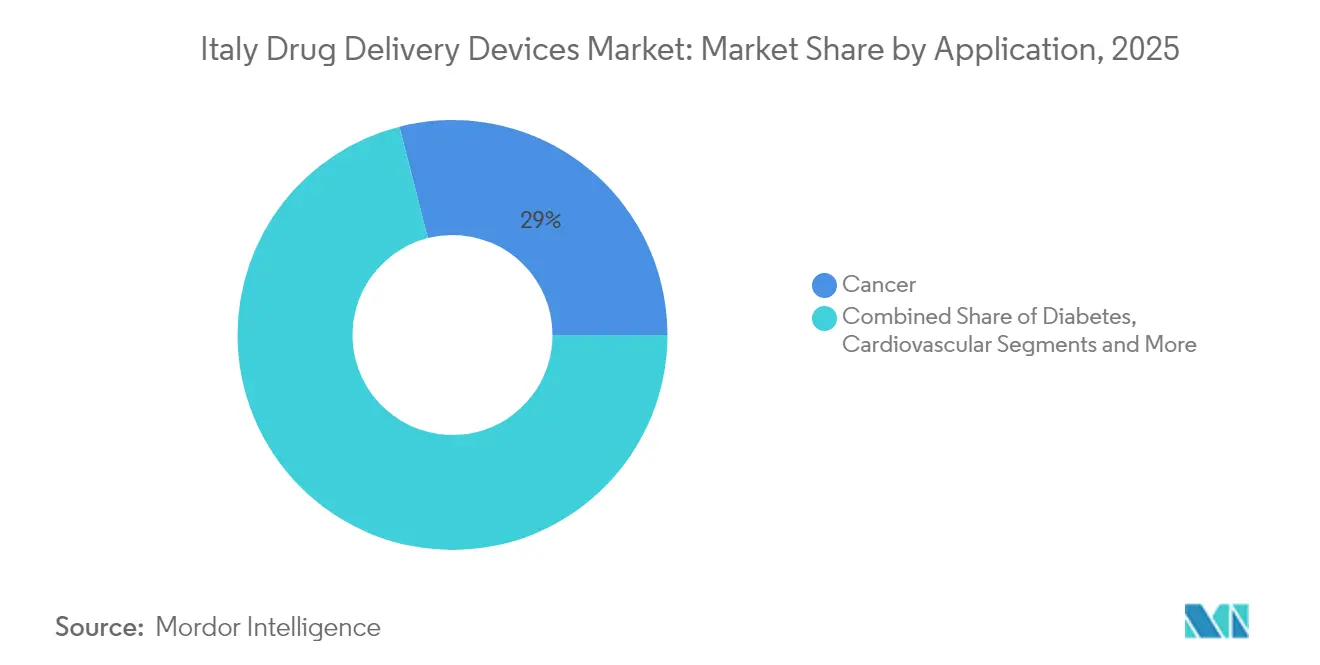
Diabetes applications projected to rise by 7.62% CAGR in Italy drug delivery devices market, reflecting high disease prevalence and the migration to Bluetooth-enabled pens that log every administration event. Oncology, registered 28.97 % market in Italy drug delivery devices market, by leveraging nanocarriers capable of traversing the blood–brain barrier to deliver chemotherapeutics directly to tumor sites. Cardiovascular uses draw on newer drug-eluting stents, while infectious-disease therapy is embracing long-acting injectables that hold therapeutic levels for months. Respiratory and neurological indications round out the portfolio, each gaining from formulation tweaks that extend dose intervals.
By End User: Hospitals Maintain Leadership as Home-Care Settings Accelerate
Hospitals retained 54.88% of Italy drug delivery devices market share in 2025 owing to their centralized capacity to deliver complex biologics and manage acute events. Yet the share is gradually eroding as reforms champion decentralized supply chains. Direct Distribution through hospitals coexists with Distribution Through Community Pharmacies on Behalf of Hospitals, a hybrid model validated during the pandemic for maintaining continuity of care. Home-care settings are poised for a 9.84% CAGR, powered by payer endorsements for outpatient infusion pumps and remote monitoring. Medication-error studies in domiciliary care frame the need for integrated digital platforms that reconcile prescriptions and support nursing teams. Ambulatory surgery centers and specialty clinics are also increasing uptake of single-use wearable injectors, citing improved throughput and patient satisfaction.
Geography Analysis
Northern Italy—Lombardy, Veneto, and Emilia-Romagna—collectively commands roughly 44.60% of total 2025 sales within the Italy drug delivery devices market. High per-capita income and dense hospital networks underpin early adoption, while local industry, exemplified by Chiesi’s EUR 400 million Biotech Center of Excellence in Parma, accelerates technology transfer and supply chain speed. Lombardy alone contributes close to 20% of nationwide revenue, supported by regional reimbursement that favors home-use injectors and connected inhalers.
Central regions, principally Lazio and Tuscany, account for about 30.20% of spending. They host leading academic centers and clinical-trial infrastructure, amplifying innovation diffusion. Florence-based Menarini Diagnostics, in partnership with Innovation Zed, distributes connectivity-ready pen-caps across Europe, highlighting the zone’s export orientation. Time-to-patient metrics remain uneven: some local health authorities approve new devices within weeks, while others extend timelines beyond one year, adding complexity to market roll-out.
Southern Italy and the islands comprise the remaining 25.20% share, constrained by lower healthcare capacity and slower reimbursement clearance. The 2022 recall of an inaccurate continuous glucose monitor in Campania illustrates quality-assurance gaps that can undermine confidence. To bridge disparities, pilot programs are integrating tele-consultations with community pharmacies, enabling remote titration for insulin and COPD inhalers.
Regulatory Landscape
Italy regulates drug delivery devices primarily under the EU Medical Device Regulation (EU) 2017/745 (MDR), with national oversight led by the Ministero della Salute as the Competent Authority per D.Lgs. 137/2022. For drug-device combinations where a device incorporates an ancillary medicinal substance, the Notified Body consultation process requires a scientific opinion from AIFA on the substance, which adds a defined medicines-interface step to Class III technical dossiers.
Beyond CE marking, market entry also requires national listing in the Repertorio dei Dispositivi Medici (BD/RDM) managed by the Ministry of Health, linking traceability and vigilance reporting to the national database. A notable update is the adoption of the Classificazione italiana dei dispositivi medici (CID) published in February 2026 and effective from January 1, 2026, covering medical devices, IVDs, and Annex XVI products under MDR, with implications for coding, classification alignment, and administrative workflows for manufacturers and distributors.
Value Chain Analysis
The value chain runs from component and material supply (glass, elastomers, polymers, needles, and electronics for connectivity) to device engineering and assembly (pens, autoinjectors, inhalers, infusion systems). For prefilled formats, it then moves through sterile fill-finish and packaging, followed by national compliance steps including CE marking under MDR, AIFA consultation when an ancillary medicinal substance is involved, and BD/RDM registration before commercial distribution. Italy supports this manufacturing layer with a large device-industry base (4,618 companies and 133,627 employees, with SMEs representing about 94%) alongside strong pharma manufacturing and CDMO capability, enabling cartridges, prefilled syringes, and other ready-to-use systems.
Commercial distribution relies on hospitals and regionally managed pathways such as direct distribution (DD) and distribution on behalf of hospitals through community pharmacies (DPC), which influence availability of self-administration devices outside tertiary centers. The main bottlenecks remain MDR documentation burden and Notified Body capacity, while local packaging and secondary operations are reinforced by site investments such as Adare Pharma Solutions expansion at Pessano (Milan) announced in March 2024, supporting higher-throughput blistering and warehousing for device-associated drug products.
Competitive Landscape
Market concentration is moderate. BD anchors the field with its BD iDFill prefillable syringe and Neopak XtraFlow glass platform, both introduced at CPhI Milan 2024 as high-viscosity solutions that streamline fill-finish operations. Berry Global’s 30% capacity expansion at its Osnago and Sirone plants has reinforced blister and bottle supply for inhalation therapies, bolstering resilience against demand spikes.
Novo Nordisk’s acquisition of the Anagni fill-finish facility improves vertical integration, enabling rapid scale-up for GLP-1 analog injectors. Ypsomed’s YpsoDose large-volume patch injector and BD’s Libertas wearable remain focal points for self-administration innovation. Patient-preference trials show higher acceptance of wearable formats when injection frequency drops below weekly, pushing manufacturers toward ultra-concentrated formulations.
Strategic alliances are multiplying: Menarini-Innovation Zed collaboration extends a Bluetooth smart cap for standard insulin pens to 44 European markets, while Chiesi has signed supply agreements for low-GWP propellants that safeguard its respiratory franchise. Collectively, these moves emphasize the sector’s pivot toward connected, eco-responsible devices without compromising therapeutic performance.
Italy Drug Delivery Devices Industry Leaders
Gerresheimer AG
BD (Becton, Dickinson and Company)
Ypsomed AG
Nemera
Terumo Corporation
- *Disclaimer: Major Players sorted in no particular order

Market Opportunities and Future Outlook
Manufacturing investments in Italy are creating demand for ready-to-use containment and delivery components aligned with the shift toward biologics and high-volume self-administration formats. Stevanato Group opened a Cisterna di Latina plant for pre-sterilized EZ-fill syringes and cartridges (May 2024) and followed with EUR 200 million financing in July 2025 to fund ongoing capex in Italy, supporting local supply for prefilled systems used across diabetes, GLP-1, and other chronic therapies.
A second opportunity area is greener and digitally enabled delivery across respiratory and injectable care pathways, where device performance and adherence tooling are increasingly bundled. Chiesi announced a EUR 430 million investment plan (2025-2030) to redevelop its Nerviano site for carbon minimal inhalers, dry powder inhalers, and sterile biological products, while national digital health funding under the National Recovery and Resilience Plan (EUR 1.6 billion cited in the report context) supports connected-device rollouts. At the same time, the MDR pathway for devices with ancillary medicinal substances, including mandatory AIFA scientific opinion and BD/RDM registration, favors companies that can industrialize compliant documentation, traceability, and post-market data capture at launch scale.
Recent Industry Developments
- June 2026: Stevanato Group introduced Deora, a multi-use fixed-dose pen injector platform aimed at incretin-based therapies in diabetes and weight management. The launch broadens the pen-injector platform landscape beyond single-therapy designs and supports pharma partners seeking scalable, patient-friendly devices for high-volume chronic indications.
- July 2025: Stevanato Group secured EUR 200 million in financing from BNL BNP Paribas, Cassa Depositi e Prestiti, and Banco BPM to fund ongoing capex in Italy and the United States. The funding supports expanded capacity for drug containment and delivery solutions, strengthening supply availability for prefilled formats and associated delivery device programs.
- October 2024: Nemera launched a reusable auto-injector platform at CPhI Milan. Positioning a reusable system in a market facing single-use-plastic compliance pressures increases optionality for pharma-device programs that need sustainability levers without giving up autoinjector convenience.


Research Methodology Framework and Report Scope
Market Definition and Coverage
For this study, the market covers drug delivery devices used in Italy to administer a therapeutic drug to patients through common delivery routes, and it is measured as revenue generated from device sales in USD.
Scope exclusions: We exclude diagnostic-only catheters, compounding accessories, and trial-only prototypes that are not commercially placed in Italy.
Segmentation Overview
- By Device Type
- Injectable Delivery Devices
- Inhalation Delivery Devices
- Infusion Pumps
- Transdermal Patches
- Implantable Drug Delivery Systems
- Ocular Inserts & Delivery Implants
- Nasal & Buccal Delivery Devices
- By Route of Administration
- Injectable
- Inhalation
- Transdermal
- Oral Mucosal (Buccal & Sublingual)
- Ocular
- Nasal
- By Application
- Cancer
- Cardiovascular
- Diabetes
- Infectious Diseases
- Other Applications
- By End User
- Hospitals
- Ambulatory Surgical Centers
- Home-care Settings
- Other End Users
Data Sources, Market Sizing, and Validation
Desk Research
Desk research was used to map the demand context in Italy and anchor the model to observable healthcare and population signals. Public sources such as the Italian Ministry of Health publications, ISTAT demographic and health indicators, AIFA updates on reimbursed medicines, OECD Health Statistics, and selected peer reviewed clinical journals were used to understand treatment volumes, delivery-route preferences, and adoption constraints.
We also reviewed company filings, investor presentations, product labels and instructions for use, and reputable medical press to cross-check which device formats are actively marketed and how usage is shifting in hospitals and home care. Where needed, a paid subscription for company financials and intelligence, plus patent databases, supported revenue normalization and product pipeline sanity checks. These examples are not exhaustive, and we referenced many other public and paid sources to support collection, validation, and clarification.
Primary Interviews and Surveys
Primary work focused on interviews and structured surveys with device distributors, hospital procurement staff, pharmacists, home-care stakeholders, and clinicians who regularly prescribe or train patients on device use. We used this respondent input to confirm which delivery routes drive value, stress test price and mix assumptions, and close gaps that desk research could not explain cleanly.
Coverage was kept Italy-specific, and the sample was balanced across larger suppliers and smaller specialists so the model does not overreact to one channel or one care setting.
Distribution of primary research fieldwork respondents
| Company type | Respondent position |
|---|---|
| Top tier: 38% | CXOs: 13% |
| Mid tier: 41% | Functional/Unit leaders: 42% |
| Smaller Players: 21% | Managers: 45% |
Market-Sizing & Forecasting
Sizing starts with a top-down build that reconstructs Italy demand by delivery-route usage and treated populations, then converts that demand into device value using typical replacement cycles and average selling prices. To keep the totals realistic, outputs are corroborated with selective bottom-up approximations, including sampled supplier revenue splits, distributor channel checks, and an ASP times volume sanity check for key device formats.
The model is shaped by inputs such as chronic disease burden linked to injectable and inhalation therapies, the shift toward self-administration at home, refill and replacement frequency for pumps and pens, utilization levels in hospital infusion and ambulatory settings, and the mix change toward prefilled systems and patches. When a bottom-up revenue point is missing for a niche device, we use proxied adoption rates from similar routes and then adjust after expert feedback.
Forecasts use scenario analysis supported by short trend models, where assumptions like care-setting shift, reimbursement confidence, and product mix upgrades are stress-tested using interview feedback. The final forecast is then aligned to practical constraints in training capacity and patient adherence, which tend to cap near-term adoption in Italy.
Data Validation & Update Cycle
Model outputs are checked against independent signals such as therapy volumes, device replacement logic, and observed price bands gathered during channel discussions. If a segment grows faster than its demand driver, we investigate the variance, revisit assumptions, and re-contact the relevant respondents to confirm whether a one-time event or a structural change is driving the pattern.
Before sign-off, the model is reviewed in steps by another analyst who checks formulas, units, and year-over-year movements, followed by a final reasonableness pass across routes and care settings. Reports are refreshed annually, and interim updates are made when material events occur, such as reimbursement changes, major product launches, or supply constraints. Right before delivery, a fresh data pass is completed so clients receive an up-to-date view.
Mordor Intelligence's Italy Drug Delivery Devices Market Size Compared Against Other Published Estimates
Different publications can show different Italy market numbers even when they use similar labels, because the included device set, timing, and conversion logic are not always the same. Differences usually come from how routes are grouped, whether certain adjacent hospital supplies are counted, and how prices are handled across years.
Some estimates fold in broader hospital access devices and related consumables that sit next to infusion and injectable delivery. In Mordor Intelligence, value is counted only for regulated drug-delivery devices placed on the Italian market across routes like injectable, inhalation, transdermal, transmucosal, ocular, implantable, and infusion, and diagnostic catheters, compounding accessories, and trial-only prototypes are left out.
Benchmark comparison
| Source | Market Size | Gaps in Research Methodology |
|---|---|---|
| Mordor Intelligence | USD 5.52 B (2025) | |
| Global Advisory Firm A | USD 2.95 B (2023) | Uses an earlier base year and a narrower counted basket in practice, which can understate newer prefilled systems and wearable delivery formats that expanded after 2023. |
| Market Platform B | USD 8.09 B (2030) | Publishes a later forecast-year value and applies a faster mix upgrade and adoption curve, which tends to lift the total versus a route-linked demand build checked to replacement cycles. |
The spread across sources is mainly explained by year selection and what gets counted as a drug delivery device versus an adjacent hospital supply. By keeping the scope tied to commercialized delivery formats and by checking growth against route demand signals, the estimate remains traceable to clear assumptions that can be reviewed and updated.


Key Questions Answered in the Report
What is the current size of the Italy drug delivery devices market?
What is the current size of the Italy drug delivery devices market?
Which device category leads the market?
Injectable devices lead with 48.31% market share in 2025, owing to their widespread use in diabetes and autoimmune therapy
Why are implantable drug delivery systems gaining attention?
Implantables are forecast to grow at 8.79% CAGR through 2031 because they offer sustained, localized release that reduces dosing frequency and improves adherence.
How does regional reimbursement affect market access?
Reimbursement timelines vary from 1 day to 773 days after national approval, creating significant regional differences in device availability.
What role do connected devices play in market growth?
Smart pens, pumps, and wearable injectors enable real-time data capture, boosting adherence and supporting remote care models that are expanding at double-digit rates across Italy.
Page last updated on:





