
Irish Whiskey Market Size and Share
Market Overview
| Study Period | 2021 - 2031 |
|---|---|
| Market Size (2026) | USD 20.27 Billion |
| Market Size (2031) | USD 25.41 Billion |
| Growth Rate (2026 - 2031) | 4.62 % |
| Fastest Growing Market | Asia Pacific |
| Largest Market | North America |
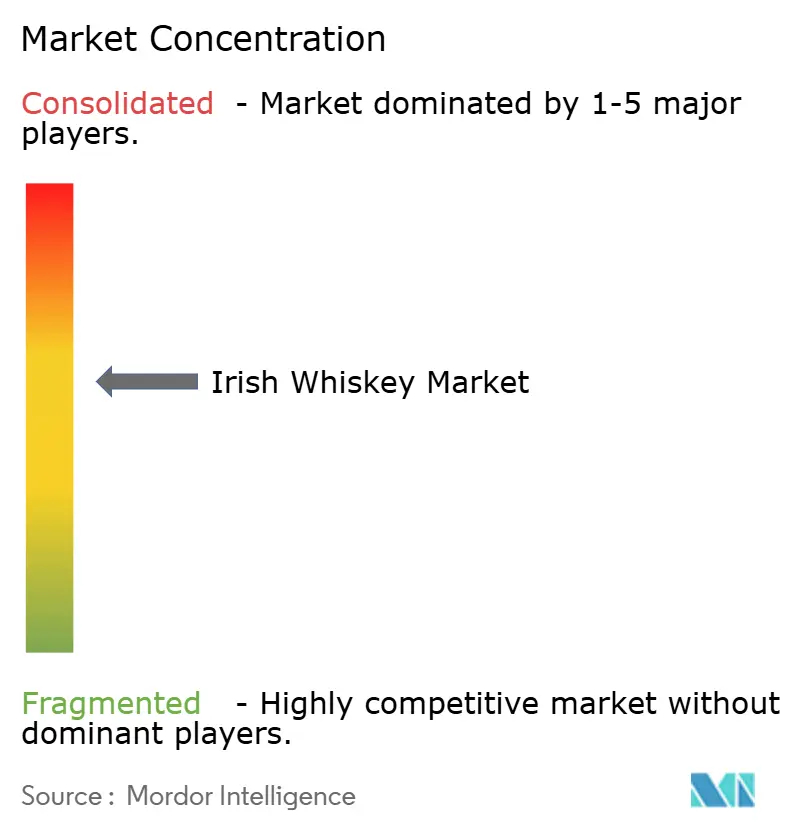
| Market Concentration | Medium |
Major Players
*Disclaimer: Major Players sorted in no particular order Image © Mordor Intelligence. Reuse requires attribution under CC BY 4.0. |
|
Irish Whiskey Market Analysis by Mordor Intelligence
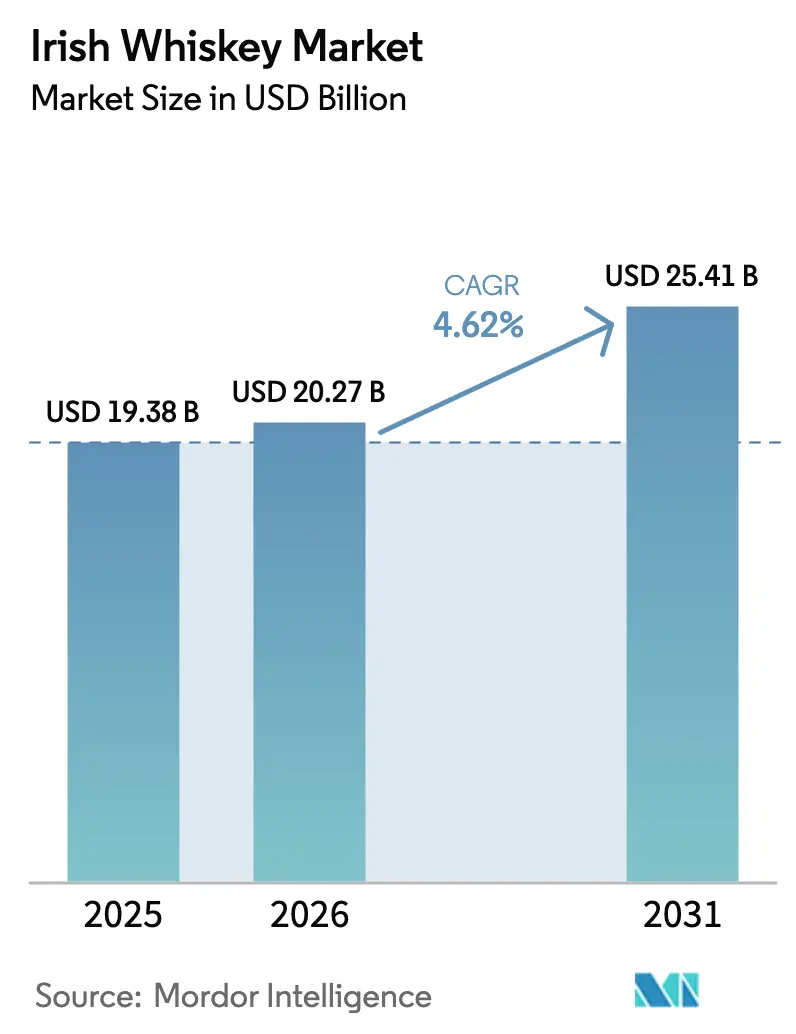
The Irish whiskey market size is expected to grow from USD 19.38 billion in 2025 to USD 20.27 billion in 2026 and is forecast to reach USD 25.41 billion by 2031 at 4.62% CAGR over 2026-2031. This growth is driven by factors such as the increasing demand for premium products, the popularity of Irish whiskey's smooth, triple-distilled profiles, and a significant rise in the number of licensed distilleries. Consumers in established spirits markets are increasingly opting for high-quality, authentic whiskey options, while new consumers are being introduced to Irish whiskey through its presence in cocktail culture and digital marketing campaigns. Producers are leveraging their rich heritage, experimenting with cask finishes, and committing to sustainability initiatives to maintain their premium pricing and attract a broader audience. However, certain challenges, such as geopolitical tariffs, a shift toward health-conscious drinking habits, and rising production costs, are expected to slightly impact the market's growth. Despite these obstacles, the Irish whiskey market continues to show a strong upward trend.
Key Report Takeaways
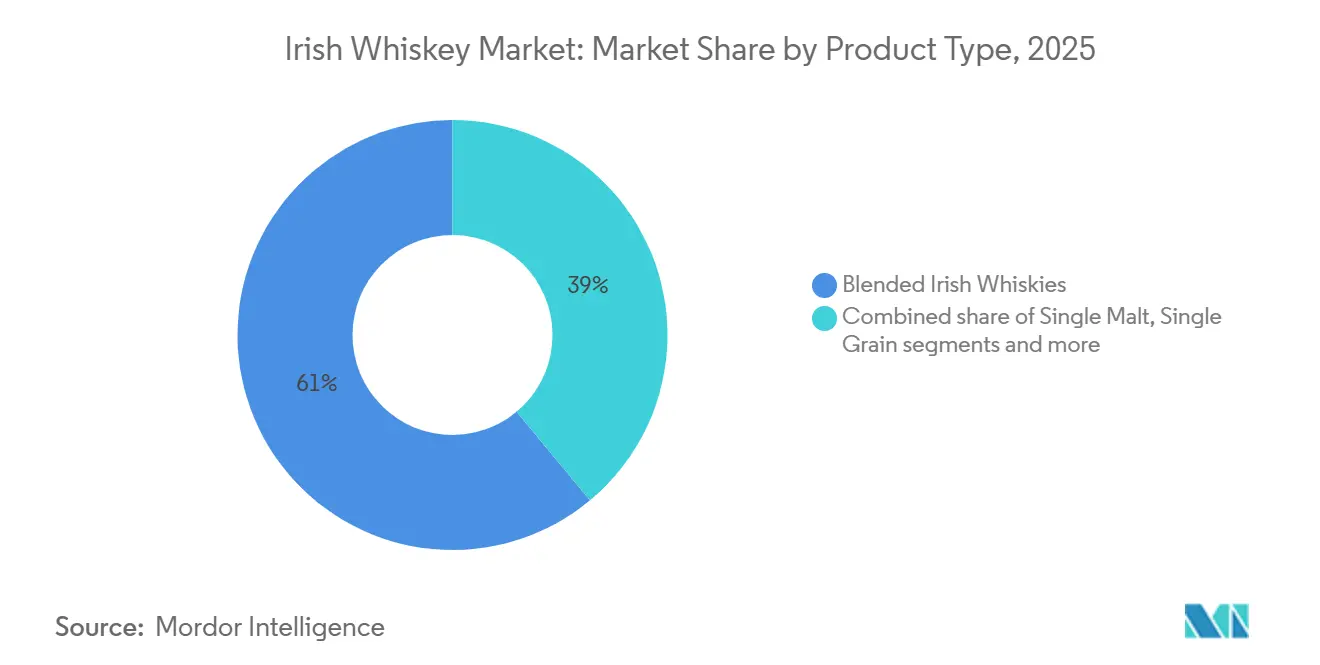
- By product type, blended Irish whiskies led with 61.05% revenue share in 2025, whereas single pot still lines are projected to expand at 4.93% CAGR through 2031.
- By end user, men accounted for 69.20% of Irish whiskey market share in 2025, while the women’s segment is forecast to grow at 5.21% CAGR to 2031.
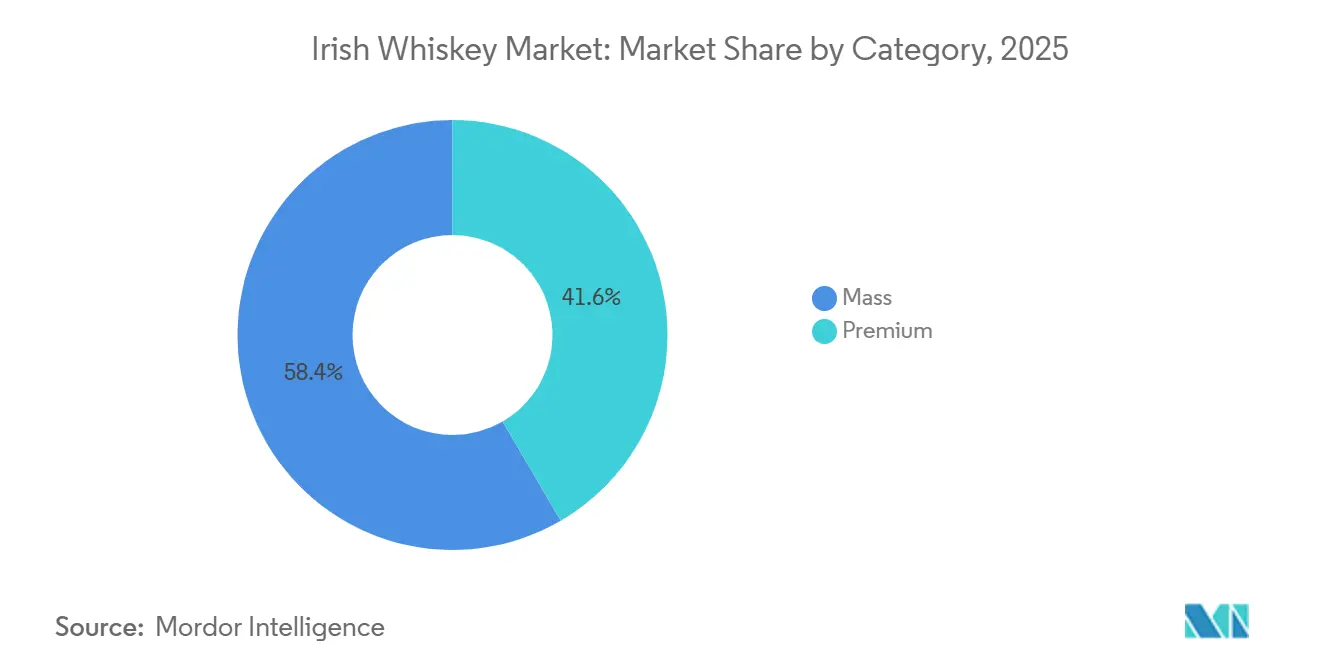
- By category, mass-market offerings retained 58.40% share of the Irish whiskey market size in 2025; premium variants are expected to post a 5.45% CAGR through 2031.
- By distribution channel, the on-trade segment held 52.10% share in 2025; off-trade sales are anticipated to climb at a 4.78% CAGR by 2031.
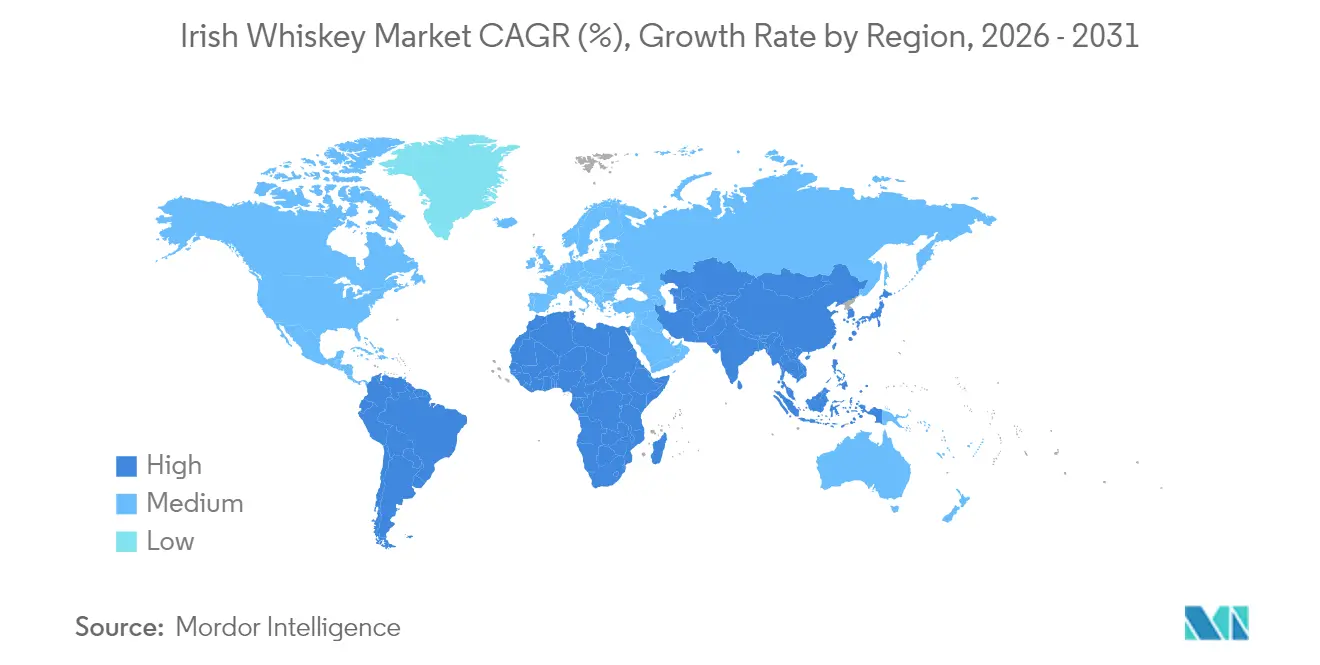
- By geography, North America captured 43.10% of 2025 revenue, whereas Asia-Pacific is set to register a 5.68% CAGR during the forecast horizon.
Note: Market size and forecast figures in this report are generated using Mordor Intelligence’s proprietary estimation framework, updated with the latest available data and insights as of 2026.
Market Trends and Insights
Drivers Impact Analysis of Irish Whiskey Market*
| DRIVER | (~) % IMPACT ON CAGR FORECAST | GEOGRAPHIC RELEVANCE | IMPACT TIMELINE |
|---|---|---|---|
| Growing popularity of premium, aged, and craft irish whiskeys | +1.2% | Global, with concentration in North America and Europe | Medium term (2-4 years) |
| Expansion of hospitality and on-trade collaborations | +0.8% | North America and Europe core, expanding to Asia-Pacific | Short term (≤ 2 years) |
| Rising popularity of whiskey-based cocktails and mixology | +0.9% | Global urban centers, led by North America | Short term (≤ 2 years) |
| Sustainability and premium packaging trends | +0.6% | Europe and North America, emerging in Asia-Pacific | Long term (≥ 4 years) |
| Tourism and whiskey trail experiences | +0.4% | Ireland domestic, spillover to global brand recognition | Medium term (2-4 years) |
| Celebrity and pop culture endorsements | +0.3% | Global, with emphasis on North America and Europe | Short term (≤ 2 years) |
| Source: Mordor Intelligence | |||
Growing popularity of premium, aged, and craft Irish whiskeys
The global Irish whiskey market is experiencing strong growth, driven by increasing demand for premium, aged, and craft whiskey varieties. Consumers are showing a growing preference for single pot still and single malt options due to their rich heritage and unique flavors created through innovative cask finishes. For example, the premium segment's growth is supported by record-breaking auction sales, such as a 30-year-old single malt selling for EUR 2.55 million in 2024, showcasing the strong brand value in the luxury category. As global alcohol consumption recovers after the pandemic, particularly in premium segments, Irish whiskey is benefiting from a shift in consumer preferences toward quality over quantity. According to the World Population Review, as of 2025, Russia leads in alcohol consumption at 16.8 liters per year, followed by Greece at 14.4 liters per year [1]Source: World Population Review, "Alcohol Consumption by Country 2025," worldpopulationreview.com. With more than 40 active distilleries across Ireland, producers are focusing on using locally sourced ingredients and emphasizing regional stories to justify higher prices.
Expansion of hospitality and on-trade collaborations
The growth of the hospitality industry and partnerships with bars and restaurants are playing a major role in increasing the global popularity of Irish whiskey. Bars and restaurants are important places where people get introduced to premium spirits, and Irish whiskey brands are making efforts to strengthen their presence in these spaces. They are focusing on training bartenders, creating special drink menus, and sponsoring popular events, such as the Jameson–Major League Soccer partnership, to boost brand visibility and connect with customers. Collaborations with famous chefs and mixologists, like Teeling Whiskey’s co-branded menu with Dublin’s Bang Restaurant, are helping to position Irish whiskey as a premium choice by incorporating it into fine dining and cocktail culture. Many distilleries are also enhancing their visitor centers. For example, the Jameson Distillery Bow St. in Dublin, which welcomed nearly 350,000 visitors in 2024, according to the Irish Tourism Industry Confederation, provides immersive tasting sessions, cocktail-making classes, and distillery-exclusive bottlings [2]Source: Irish Tourism Industry Federation, "Jameson Distillery Visitor Centres," itic.ie.
Rising popularity of whiskey-based cocktails and mixology
The growing popularity of whiskey-based cocktails and the rise of creative mixology are key factors driving the growth of the Irish whiskey market, particularly among younger consumers like Gen Z and millennials. These younger generations are moving away from traditional drinks like beer or wine and are increasingly choosing cocktails. Irish whiskey’s smooth and versatile flavor makes it a perfect choice for both classic cocktails, such as the Whiskey Sour, and new, innovative creations. For example, seasonal cocktails featuring Irish whiskey are becoming a hit, as they cater to the demand for unique and trendy drinking experiences. Leading brands are actively encouraging this trend by organizing global mixology events, such as the Jameson Bartenders’ Ball. These events not only build strong relationships with bartenders but also help increase the visibility of Irish whiskey in popular bars and restaurants.
Tourism and whiskey trail experiences
Tourism and whiskey-trail experiences are becoming major contributors to the growth of the Irish whiskey market by combining brand storytelling with direct consumer engagement. Currently, over 1 million tourists visit Ireland’s distillery visitor centers each year, and this number is expected to grow to 1.9 million by 2025, even with rising global travel costs. These experiences go beyond simple whiskey tastings; they allow distilleries to sell exclusive products at higher margins and create lasting emotional connections with visitors, which can lead to long-term brand loyalty. Government-backed initiatives, such as the Dublin Whiskey Story and the Irish Whiskey Trail, help direct tourists to both well-known heritage brands and smaller, independent distilleries, boosting visibility and supporting local economies. Distilleries like Teeling, Jameson Bow St., and Pearse Lyons have become popular tourist destinations, offering unique experiences such as interactive tours and exclusive whiskey bottlings that encourage repeat visits and customer loyalty.
Restraints Impact Analysis of Irish Whiskey Market*
| RESTRAINT | (~) % IMPACT ON CAGR FORECAST | GEOGRAPHIC RELEVANCE | IMPACT TIMELINE |
|---|---|---|---|
| Stringent government regulations and tariff challenges | -1.1% | Global, acute impact on United States-Ireland trade | Short term (≤ 2 years) |
| Consumers' inclination towards healthy beverages | -0.7% | Global, led by North America and Europe | Medium term (2-4 years) |
| High production and maturation costs | -0.5% | Global production centers | Long term (≥ 4 years) |
| Sustainability and environmental pressures | -0.3% | Europe and North America regulatory focus | Medium term (2-4 years) |
| Source: Mordor Intelligence | |||
Stringent government regulations and tariff challenges
Strict government regulations and trade tariffs are creating significant challenges for the Irish whiskey industry, particularly for smaller producers. This additional cost makes Irish whiskey less competitive in the United States, which is a crucial market, accounting for nearly majority of Irish whiskey exports. Meanwhile, producers in Northern Ireland benefit from a lower tariff rate due to post-Brexit trade agreements, giving them an advantage over Irish producers. Ireland plans to implement mandatory health warning labels on whiskey bottles by 2026, as reported by World Cancer Research Fund International [3]Source: World Cancer Research Fund International, "How Ireland beat the odds to introduce cancer warning labels on alcohol," wcrf.org. This regulation will require producers to redesign their packaging, which can be especially expensive for smaller distilleries with limited production runs. These challenges not only increase compliance costs but also reduce profit margins, making it harder for producers to compete in international markets.
Consumers' inclination towards healthy beverages
Consumers are increasingly shifting toward health-conscious drinking habits, which is changing how alcohol is consumed and creating challenges for the Irish whiskey market. Many people, especially younger generations like Gen Z and millennials, are choosing to drink less alcohol as they focus more on wellness and healthier lifestyles. This trend, often referred to as “zebra striping” by Diageo, involves alternating between alcoholic beverages and low-alcohol or non-alcoholic options. As a result, the overall consumption of whiskey has decreased, particularly in social settings or during longer drinking sessions. To adapt, Irish whiskey brands are repositioning their products as premium choices meant for special occasions rather than everyday consumption. They are focusing on promoting the craftsmanship, heritage, and quality of their whiskey, encouraging consumers to enjoy it in smaller quantities. Brands are running educational campaigns to promote mindful drinking and responsible enjoyment, aiming to keep consumers engaged despite the shift in drinking habits.
*Our forecasts treat driver/restraint impacts as directional, not additive. The impact forecasts reflect baseline growth, mix effects, and variable interactions.
Irish Whiskey Market Segment Analysis
By Product Type:
Single Pot Still Drives Premium EvolutionBlended Irish whiskey continues to dominate the market, accounting for 61.05% of revenue in 2025. Its consistent flavor profile and versatility make it a popular choice for cocktails and mainstream retail consumers. However, single pot still whiskey is expected to grow at a faster rate of 4.93% CAGR as consumers increasingly seek unique, craft-oriented options. Limited-edition releases, such as Gold Spot Generations, are driving interest in this category, with their exclusivity and heritage appeal commanding higher prices. The growing demand for single pot still whiskey highlights a shift toward premiumization and authenticity in the Irish whiskey market.
The premium segment is further bolstered by record-breaking auction prices, showcasing the value collectors and enthusiasts place on rare bottles. Single malt and single grain whiskies are also carving out their niches, appealing to Scotch whiskey drinkers and those who prefer lighter flavor profiles. While blended whiskey remains the backbone of the market in terms of volume, premium extensions within this category are helping to cater to a broader range of consumers. These offerings span from entry-level to ultra-luxury price points, ensuring a balanced value mix and supporting long-term growth in the Irish whiskey market.



By End User:
Women Segment Accelerates ConsumptionIn 2025, men accounted for 69.20% of Irish whiskey consumption, reflecting a traditional gender preference. However, women are emerging as the fastest-growing consumer group, with a projected growth rate of 5.21% CAGR. This shift is driven by factors such as the rising popularity of cocktail culture, experiential tourism, and premium gifting, which appeal to women who often prioritize quality over quantity. These trends are gradually reshaping the demographic landscape of the Irish whiskey market, creating opportunities for brands to engage a more diverse audience.
To attract female consumers, brands are focusing on inclusive marketing strategies that emphasize lifestyle interests rather than outdated gender stereotypes. Tasting programs, digital campaigns, and storytelling around heritage and craftsmanship are designed to resonate with this growing segment. Distillery tours are seeing increased participation from women, which helps generate positive word-of-mouth and strengthens brand loyalty. By fostering inclusivity, the Irish whiskey market not only expands its consumer base but also benefits from higher average price points and increased premium product sales.
By Category:
Premium Segment Commands Future GrowthMass-market bottles, which are priced to appeal to a wide range of consumers, accounted for 58.40% of the market share in 2025. These products are designed for broad retail availability and help producers achieve economies of scale. However, the premium segment is expected to grow at a 5.45% CAGR as more consumers associate premium features like age statements and single-cask offerings with higher quality and status. This shift toward premiumization reflects changing consumer preferences, where buyers are willing to pay more for unique and high-quality products.
Premium products not only offer higher profit margins but also help producers mitigate challenges like rising production costs and trade tariffs. At the same time, mass-market products serve as an accessible entry point for new consumers, encouraging them to explore and eventually move toward higher-value offerings. This dual strategy of catering to both mass-market and premium segments ensures a steady volume of sales while also boosting overall profitability. By balancing affordability with exclusivity, producers can maintain a strong foothold in the Irish whiskey market and adapt to evolving consumer demands.
By Distribution Channel:
Off-Trade Gains Digital MomentumOn-trade venues accounted for 52.10% of the market share in 2025, highlighting Irish whiskey's popularity in premium cocktail experiences. Bars and restaurants play a significant role in showcasing the versatility of Irish whiskey, especially in crafted cocktails and tasting events. The off-trade segment, which includes retail stores and online platforms, is expected to grow at a 4.78% CAGR through 2031. This growth is driven by the increasing accessibility of Irish whiskey through e-commerce and specialized retail outlets. The pandemic accelerated the shift to digital platforms, with many distilleries now offering direct-to-consumer online stores. These platforms not only help bypass distributor mark-ups but also provide valuable customer insights, enhancing marketing strategies.
Specialized liquor stores are also contributing to the growth of the off-trade segment by offering curated selections of premium Irish whiskey. These stores often replicate the experience of on-trade venues by hosting tasting events and providing expert advice to customers. Brand pop-ups and subscription clubs are keeping consumers engaged, offering unique experiences and fostering brand loyalty. By combining on-trade and off-trade strategies, Irish whiskey producers are ensuring widespread availability and maintaining strong market momentum. This omnichannel approach is crucial for meeting consumer demand and driving growth in the Irish whiskey market.
Geography Analysis
North America Irish Whiskey Market
North America accounted for 43.10% of the revenue share in 2025. The region's strong cocktail culture, well-established distribution networks, and the popularity of iconic brands like Jameson continue to drive demand. Additionally, smaller craft whiskey producers are gaining attention by emphasizing unique production methods and local ingredients. However, rising costs may push price-sensitive consumers toward more affordable domestic options, such as bourbon, which could impact the market's growth in this region.
APAC Irish Whiskey Market
Asia-Pacific is the fastest-growing region, with a projected CAGR of 5.68% through 2031, driven by increasing interest in whiskey, particularly in China. Major investments, such as Pernod Ricard's USD 140 million Emeishan malt facility and Diageo's USD 120 million YunTuo project, are fueling growth in the region. In India, the establishment of a new INR 1,785 crore facility is helping to meet the demands of a growing middle class that is adopting Western lifestyle trends. These developments are expected to significantly expand the Irish whiskey market in Asia-Pacific, gradually narrowing the gap with more established markets like North America and Europe.
Europe Irish Whiskey Market
Europe continues to show steady growth, supported by heritage tourism and strong geographical-indication protections for Irish whiskey. In 2024, visitor centers attracted over a million guests, turning tourism experiences into direct sales and creating brand ambassadors for exports. Brexit has also provided Northern Ireland distillers with a tariff advantage when exporting to the United States, intensifying competition within the island. Despite these challenges, the overall Irish whiskey market in Europe remains vibrant, with a focus on leveraging its rich history and cultural appeal to sustain growth.

Competitive Landscape
The Irish whiskey market is moderately consolidated. Major players like Bacardi, which owns a significant stake in Teeling, are working to expand their reach and strengthen their distribution channels. Similarly, Pernod Ricard is investing in increasing its production capacity to meet rising demand. Diageo has introduced a Luxury Group to focus on premium whiskey brands priced above USD 100, reflecting the growing consumer preference for high-quality, luxury whiskey options. This trend highlights the increasing importance of premium products in driving profitability within the market.
Competition in the Irish whiskey market is driven by factors such as sustainable production methods, unique cask aging techniques, and tourism experiences. For instance, Irish Distillers has invested EUR 50 million in mechanical vapor recompression technology, positioning itself as a leader in sustainability while also aiming for long-term cost efficiency. Smaller distilleries are finding their place in the market by using locally sourced grains, adopting eco-friendly packaging, and leveraging digital platforms to share their brand stories. These efforts not only differentiate them but also attract environmentally conscious consumers.
The market remains highly competitive as large corporations actively acquire smaller distilleries to enter emerging segments and expand into new markets. This trend ensures that the competitive landscape continues to evolve. The focus on innovation, such as carbon-neutral production and unique product offerings, keeps the Irish whiskey industry dynamic and appealing to a broad range of consumers. As a result, the market is expected to maintain its growth momentum in the coming years.
Irish Whiskey Industry Leaders
-
Diageo Plc.
-
Pernod Ricard SA
-
Brown-Forman Corp.
-
Suntory Global Spirits Inc
-
Bacardi Limited
- *Disclaimer: Major Players sorted in no particular order
Irish Whiskey Market Companies Covered in this Report
- Pernod Ricard SA
- Diageo PLC
- William Grant & Sons Ltd
- Brown-Forman Corp.
- Suntory Global Spirits Inc
- The Shed Distillery of PJ Rigney
- West Cork Distillers Ltd
- Bacardi Limited
- The Old Bushmills Distillery Co.
- Terroirs Distillers
- The Craft Irish Distilling Co.
- Dingle Whiskey Distillery
- Amber Beverage Group (ABG)
- Mark Anthony Brands International
- Renegade Spirits Ireland Limited
- Powerscourt Distillery
- Clonakilty Distillery
- W.D. O'Connell Whiskey Merchants
- Ballykeefe Distillery
- Cooley Distillery

Recent Industry Developments in Irish Whiskey Market
- April 2025: Pernod Ricard India has started building Asia’s largest malt distillery in Nagpur. The company is investing INR 1,785 crore in this ambitious project. Once completed, the distillery is expected to produce 13 million liters of malt annually.
- April 2024: Irish Distillers released the oldest whiskey, which is produced by the old Midleton Distillery, as part of its Silent Distillery Collection. The whiskey is priced at EUR 55,000 a bottle.
- April 2024: Sazerac introduced a new Irish whiskey distillery brand named Hawk’s Rock. This launch is a strategic move by the company as it gears up to release new products under this brand.


Global Irish Whiskey Market Report Scope
Irish whiskey is often triple distilled from unmalted barley that is typically blended with grain whiskey, though there are single malts made entirely in Ireland.
The Irish whiskey market is segmented by product type, distribution channel, and geography. Based on product type, the market studied is segmented into blended, single-malt, single pot still, and single grain. By distribution channel, the market is segmented into on-trade and off-trade. Based on geography, the market studied is segmented into North America, Europe, Asia-Pacific, South America, and Middle East and Africa. The market sizing has been done in value (USD) for all the abovementioned segments.
Segmentation Overview
| Single Malt |
| Single Pot Still |
| Single Grain |
| Blended Irish Whiskies |
| Men |
| Women |
| Mass |
| Premium |
| On-Trade | |
| Off-Trade | Specialty/Liquor Stores |
| Others Off Trade Channels |
| North America | United States |
| Canada | |
| Mexico | |
| Rest of North America | |
| Europe | Germany |
| France | |
| United Kingdom | |
| Spain | |
| Netherlands | |
| Italy | |
| Sweden | |
| Norway | |
| Rest of Europe | |
| Asia-Pacific | China |
| India | |
| Japan | |
| Australia | |
| South Korea | |
| Vietnam | |
| Indonesia | |
| Rest of Asia-Pacific | |
| South America | Brazil |
| Argentina | |
| Chile | |
| Rest of South America | |
| Middle East and Africa | South Africa |
| Nigeria | |
| Rest of Middle East and Africa |
| By Product Type | Single Malt | |
| Single Pot Still | ||
| Single Grain | ||
| Blended Irish Whiskies | ||
| By End User | Men | |
| Women | ||
| By Category | Mass | |
| Premium | ||
| By Distribution Channel | On-Trade | |
| Off-Trade | Specialty/Liquor Stores | |
| Others Off Trade Channels | ||
| By Geography | North America | United States |
| Canada | ||
| Mexico | ||
| Rest of North America | ||
| Europe | Germany | |
| France | ||
| United Kingdom | ||
| Spain | ||
| Netherlands | ||
| Italy | ||
| Sweden | ||
| Norway | ||
| Rest of Europe | ||
| Asia-Pacific | China | |
| India | ||
| Japan | ||
| Australia | ||
| South Korea | ||
| Vietnam | ||
| Indonesia | ||
| Rest of Asia-Pacific | ||
| South America | Brazil | |
| Argentina | ||
| Chile | ||
| Rest of South America | ||
| Middle East and Africa | South Africa | |
| Nigeria | ||
| Rest of Middle East and Africa | ||


Key Questions Answered in the Report
What is the current size of the Irish whiskey market?
The Irish whiskey market size is USD 20.27 billion in 2026 and is projected to reach USD 25.41 billion by 2031.
Which region leads Irish whiskey sales?
North America leads with 43.10% revenue share, supported by a mature cocktail culture and strong distribution.
What segment is growing fastest within the category?
Single pot still whiskies are forecast to grow at 4.93% CAGR, outpacing blended, single malt, and single grain variants.
What is the outlook for premium Irish whiskey?
Premium expressions are expected to grow 5.45% CAGR as consumers trade up for authenticity, craftsmanship, and limited releases.
Page last updated on:


 Your data is secure and never sold or shared.


