

Market Overview
| Study Period | 2021 - 2031 |
|---|---|
| Market Size (2026) | USD 125.42 Billion |
| Market Size (2030) | USD 152.96 Billion |
| Growth Rate (2026 - 2031) | 4.05% CAGR |
| Fastest Growing Market | Asia Pacific |
| Largest Market | North America |
| Market Concentration | Medium |
Major Players
*Disclaimer: Major Players sorted in no particular order Image © Mordor Intelligence. Reuse requires attribution under CC BY 4.0. |
|
Ice Cream Market Analysis by Mordor Intelligence
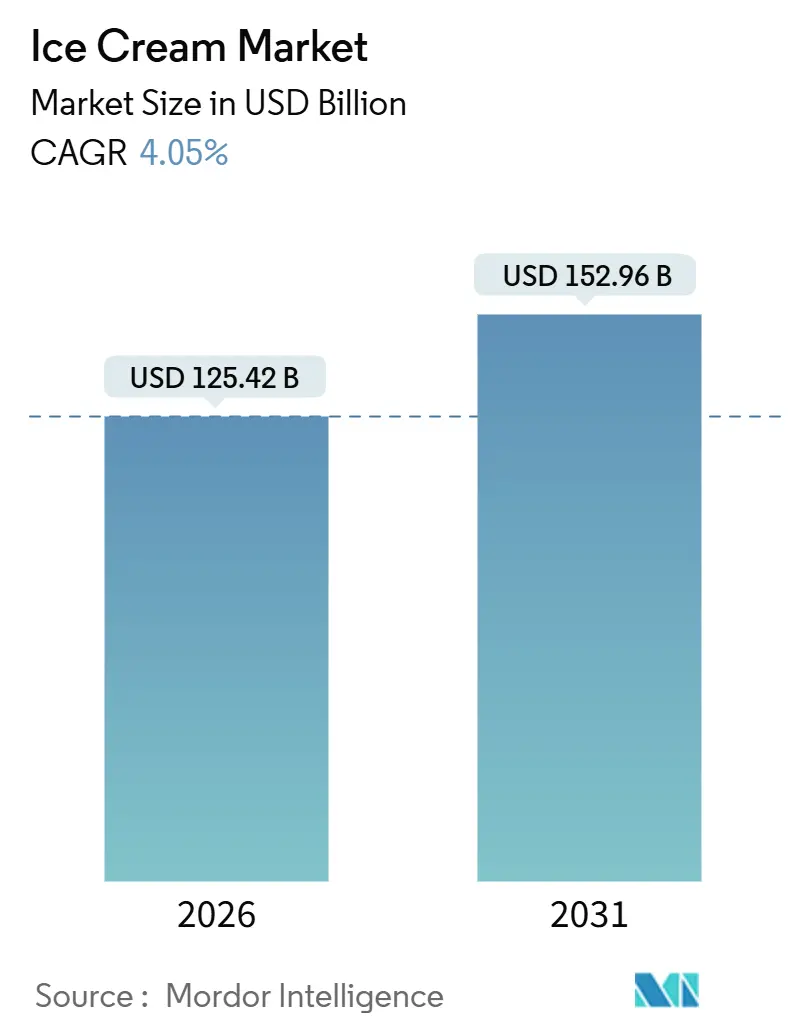
The global ice cream market was valued at USD 125.42 billion in 2026 and is projected to grow to USD 152.96 billion by 2031, registering a compound annual growth rate (CAGR) of 4.05% during the forecast period of 2026-2031. This growth is driven by increasing consumer demand for indulgent yet health-conscious products that combine traditional appeal with modern wellness trends. The rising preference for low-calorie, functional, and allergen-free options is encouraging manufacturers to innovate beyond conventional dairy bases. These innovations include the use of superfood ingredients, natural stabilizers, and texture enhancers to maintain creaminess while addressing dietary restrictions and health concerns. Additionally, the market is benefiting from premiumization trends, with high-end artisanal products incorporating rare botanicals, savory-sweet combinations, and cultural influences to attract consumer loyalty. Sustainability efforts, such as recyclable packaging and regenerative sourcing, further appeal to environmentally conscious consumers.
Key Report Takeaways
- By type, standard formats accounted for 41.23% of 2025 volume, whereas specialty and artisanal products are set to post a 4.55% CAGR through 2031.
- By category, the non-dairy segment held 18.77% of 2025 revenue and is projected to expand at a 5.43% CAGR to 2031.
- By packaging, tubs and cups commanded 72.13% of the 2025 volume, while pints are projected to expand at a 4.98% CAGR through 2031.
- By distribution channel, the off-trade maintained a 78.71% share in 2025; 5however, on-trade venues are expected to grow at a 5.66% CAGR over the same horizon.
- By geography, North America is projected to hold the largest revenue share, at 30.87%, in 2025. The Asia-Pacific region is expected to record the fastest CAGR of 6.15% through 2031.
Note: Market size and forecast figures in this report are generated using Mordor Intelligence’s proprietary estimation framework, updated with the latest available data and insights as of January 2026.
Global Ice Cream Market Trends and Insights
Drivers Impact Analysis
| Driver | (~) % Impact on CAGR Forecast | Geographic Relevance | Impact Timeline |
|---|---|---|---|
| Rising demand for health-oriented ice creams | +0.8% | Global, with early adoption in North America and Western Europe | Medium term (2-4 years) |
| Clean-label and natural ingredient preference | +0.6% | Global, particularly North America, Europe, and urban Asia-Pacific | Medium term (2-4 years) |
| Product innovation and flavor experimentation | +0.5% | Global, with social-media amplification in North America and Asia-Pacific | Short term (≤ 2 years) |
| Rising demand for premium, high-end, and artisan ice cream products | +0.7% | North America, Western Europe, and affluent urban centers in Asia-Pacific | Long term (≥ 4 years) |
| Customization and experiential consumption trends | +0.4% | North America, Europe, and select Asia-Pacific metros | Medium term (2-4 years) |
| Sustainability and ethical sourcing initiatives | +0.5% | Europe (regulatory-driven), North America (consumer-driven), emerging in Asia-Pacific | Long term (≥ 4 years) |
| Source: Mordor Intelligence | |||
Rising demand for health-oriented ice creams
The increasing demand for health-oriented ice creams is a key driver of the global ice cream market, reflecting changing consumer preferences for indulgent treats that align with wellness objectives without sacrificing taste or satisfaction. Health-conscious consumers are increasingly opting for products with low sugar, low calories, high protein, and functional ingredients such as probiotics, superfoods, or fiber. These innovations transform traditional desserts into permissible snacks that support fitness goals, weight management, and metabolic health. This trend addresses concerns about sugar and calorie content while leveraging the popularity of clean-label ingredients and natural sweeteners. It has spurred innovation across both dairy and non-dairy segments, with manufacturers reformulating classic products and introducing new options such as keto-friendly, gluten-free, or antioxidant-enriched varieties. For example, in April 2025, Two Spoons Creamery introduced a high-protein ice cream line, claiming to be the first of its kind with zero added sugar and ingredients compatible with GLP-1 medications, targeting users of weight-loss drugs seeking suitable indulgence options.
Clean-label and natural ingredient preference
Consumer preference for clean-label and natural ingredients is a key driver in the global ice cream market. Increasingly, consumers are prioritizing transparency, simplicity, and wholesome ingredients in their choices, avoiding artificial additives, preservatives, colors, and synthetic flavors. Instead, they favor recognizable and minimally processed components. This trend has led to innovations in formulations, incorporating natural sweeteners such as monk fruit and stevia, real fruit purees, nuts, and plant-based stabilizers. These developments cater to health-conscious consumers seeking indulgent yet guilt-free options, while maintaining creamy textures and bold flavors across standard, novelty, and artisanal ice cream segments. According to the International Food Information Council (IFIC) in 2024, 36% of Americans preferred products labeled as natural, organic, or healthy [1]Source: International Food Information Council (IFIC), "2024 IFIC Food & Health SURVEY", ific.org. This reflects a broader global trend where such claims enhance perceived quality and trust. As a result, manufacturers are revising recipes and obtaining certifications like USDA Organic or Non-GMO Project Verified to capture premium pricing and build consumer loyalty.
Product innovation and flavor experimentation
Product innovation and flavor experimentation are driving the growth of the global ice cream market, attracting consumers with unique combinations that transform traditional indulgence into distinctive experiences. Manufacturers are expanding offerings by incorporating exotic fruits, savory elements, herbs, spices, and cultural influences into traditional bases. These efforts encourage product trials, repeat purchases, and engagement through limited-edition releases and innovative formats. Such developments refresh product portfolios across dairy, non-dairy, and artisanal segments, catering to a wide range of consumer preferences. For example, in April 2025, Tillamook launched new ice cream flavors, including Salty Caramel Pretzel, which features a salted vanilla ice cream base combined with chocolate-covered pretzel pieces and salted caramel. This highlights how sweet-salty pairings and crunchy textures appeal to premium-focused consumers. These launches emphasize the importance of creativity in building customer loyalty, expanding into specialty markets, and driving category growth by maintaining consumer interest through continuous innovation.
Rising demand for premium, high-end, and artisan ice cream products
The increasing demand for premium, high-end, and artisanal ice cream products is driving notable growth in the global ice cream market. Consumers are shifting from mass-produced options to products that offer superior craftsmanship, unique ingredients, and refined flavor profiles, reflecting luxury and exclusivity. This trend of premiumization is evident across both dairy and non-dairy segments, with artisanal producers focusing on small-batch production, hand-churned textures, and single-origin ingredients. Brands are leveraging this trend by introducing limited-edition offerings, collaborating with chefs, and incorporating experiential elements such as customizable scoops and flavor-pairing events. These strategies help build customer loyalty, justify higher price points, and address health concerns through cleaner, gourmet formulations. For example, in October 2025, Hangyo Ice Creams Private Limited introduced four new premium flavors, such as Aam Ras, Musk Melon, Dulce de Leche, and Tiramisu, targeting the Diwali festive season. These flavors combine traditional Indian mango essence with global dessert inspirations, aiming to capture the celebratory spirit and cultural significance in high-growth markets. Such targeted product launches not only enhance festive sales but also position premium ice cream as a status symbol.
Restraints Impact Analysis
| Restraint | (~) % Impact on CAGR Forecast | Geographic Relevance | Impact Timeline |
|---|---|---|---|
| Cold chain dependency and storage constraints | -0.9% | Global, acute in sub-Saharan Africa, South Asia, and rural Latin America | Long term (≥ 4 years) |
| Regulatory scrutiny on additives and labeling | -0.3% | North America and Europe (stringent enforcement), emerging in the Asia-Pacific | Long term (≥ 4 years) |
| High sensitivity to temperature fluctuations | -0.5% | Global, with elevated risk in regions lacking stable electricity and refrigeration infrastructure | Medium term (2-4 years) |
| Short shelf life compared to ambient desserts | -0.4% | Global, particularly impacting e-commerce penetration and rural distribution | Medium term (2-4 years) |
| Source: Mordor Intelligence | |||
Cold chain dependency and storage constraints
Cold chain dependency and storage constraints significantly impact the global ice cream market, requiring a continuous refrigeration infrastructure across production, transportation, and point-of-sale stages. Any disruption in this system can lead to spoilage and quality degradation across dairy, non-dairy, and novelty segments. Maintaining this infrastructure necessitates specialized refrigerated vehicles, warehouses, and display units, which are costly and logistically challenging, particularly in emerging regions with unreliable power grids or humid climates that accelerate melting. These stringent requirements limit product shelf life often to just a few weeks for artisanal and soft-serve varieties and increase susceptibility to equipment failures, natural disasters, or urban delivery delays. This results in high waste rates, increased operational costs, and limited scalability for innovative products requiring stricter temperature control. Additionally, the need for advanced cold chain solutions further emphasizes the importance of technological advancements and strategic investments to address these challenges effectively.
Regulatory scrutiny on additives and labeling
Regulatory scrutiny on additives and labeling impacts the global ice cream market by enforcing strict compliance with evolving food safety standards, allergen disclosures, and nutritional claims. These regulations limit formulation flexibility across dairy, non-dairy, and novelty segments. Authorities such as the United States Food and Drug Administration (FDA), European Food Safety Authority (EFSA), and Food Safety and Standards Authority of India (FSSAI) impose bans or restrictions on artificial colors, preservatives, high-fructose corn syrup, and hydrogenated fats. This compels reformulations that may alter taste or increase costs. Additionally, mandatory front-of-pack warnings on sugar and calorie content discourage impulse purchases, particularly amid anti-obesity campaigns. These regulatory pressures increase recall risks due to mislabeling, especially in cases of cross-contamination in shared facilities. They also necessitate costly third-party certifications for clean-label claims, extending innovation timelines and creating challenges for smaller artisanal producers struggling to manage complex international regulatory differences.
Segment Analysis
By Type: Artisanal Formats Capture Premiumization Wave
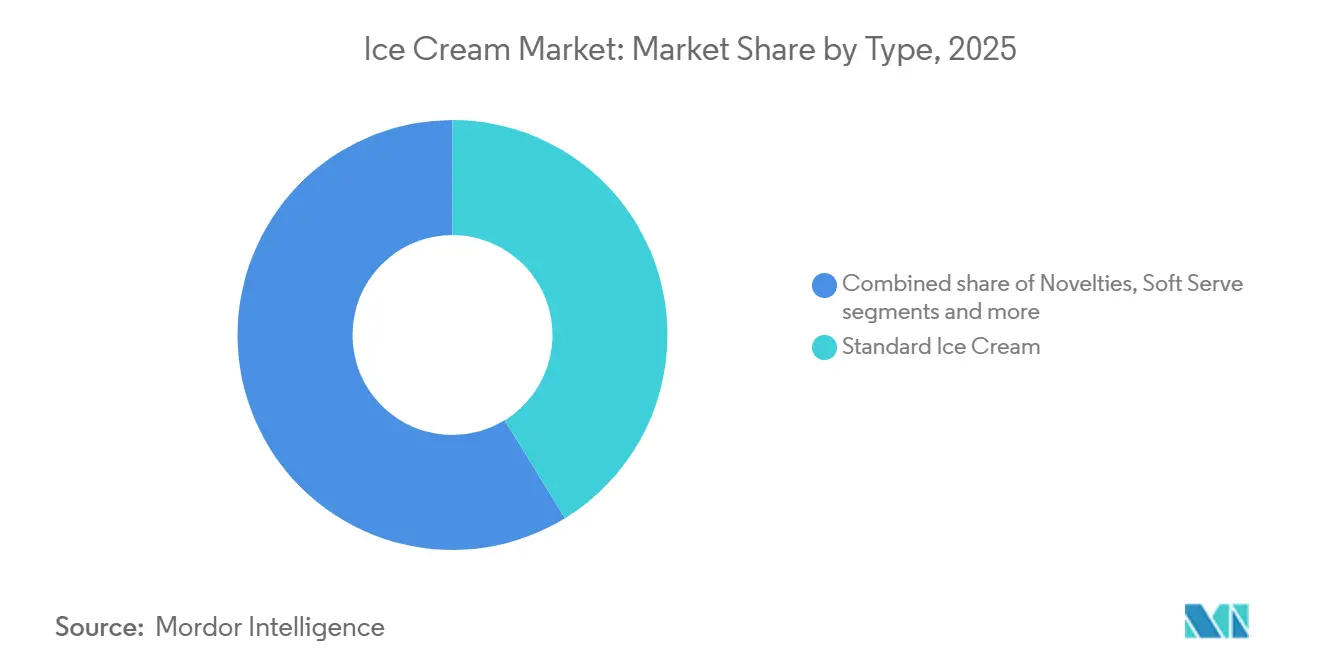
Standard ice cream accounted for a dominant 41.23% share of the global ice cream market in 2025, reflecting its entrenched position as the most widely consumed and commercially resilient format. The dominance of standard ice cream is primarily driven by its broad consumer acceptance across age groups, supported by familiar flavor profiles such as vanilla, chocolate, strawberry, and traditional regional variants that continue to deliver consistent volumes. Standard ice cream benefits from mass scalability and formulation stability, enabling manufacturers to produce at high volumes while maintaining uniform taste, texture, and shelf performance across diverse markets. Its strong presence across both on-trade and off-trade channels ensures high visibility and accessibility, reinforcing repeat purchases and habitual consumption.
Specialty and artisanal ice cream formats are forecast to grow at a CAGR of 4.55% through 2031, reflecting a steady shift in consumer preferences toward premium, experiential, and differentiated offerings. This growth is underpinned by increasing demand for craft-style production, small-batch formulations, and unique flavor compositions, including ethnic desserts, gourmet inclusions, and seasonal or limited-edition variants. Consumers are increasingly valuing authenticity, ingredient transparency, and sensory appeal, positioning artisanal ice creams as an indulgent treat rather than a mass-consumed dessert. The segment is further supported by the expansion of boutique parlors, specialty dessert outlets, and premium retail shelves, which allow brands to command higher margins while strengthening brand storytelling and differentiation.
Note: Segment shares of all individual segments available upon report purchase
Get Detailed Market Forecasts at the Most Granular Levels
Download PDF
By Category: Plant-Based Gains Share Despite Taste Gaps
Dairy-based ice cream formats accounted for a commanding 81.23% share of the global ice cream market in 2025, highlighting their continued dominance and structural importance within the category. These ice creams remain deeply entrenched in consumer preferences due to their rich mouthfeel, superior creaminess, and well-established sensory familiarity. While plant-based alternatives aim to replicate these qualities, they have yet to consistently achieve the same level of acceptance on a large scale. The extensive availability of dairy-based products across standard, novelty, soft-serve, and premium segments further solidifies their leadership, enabling manufacturers to cater to a wide range of consumption occasions, from everyday family desserts to impulse indulgences.
Non-dairy ice cream alternatives are forecast to grow at a CAGR of 5.43% through 2031, reflecting a sustained shift toward plant-based and dairy-free consumption patterns within the frozen dessert category. This growth is primarily driven by increasing consumer awareness of lactose intolerance, milk allergies, and digestive sensitivities, alongside rising interest in vegan and flexitarian diets. Advances in plant-based formulation technologies, utilizing bases such as almond, oat, coconut, soy, and pea, have significantly improved taste, texture, and creaminess. These developments have narrowed the sensory gap with traditional dairy ice cream, enhancing the mainstream appeal of non-dairy options to a broader audience.
By Packaging Type: Pints Gain as Households Shrink
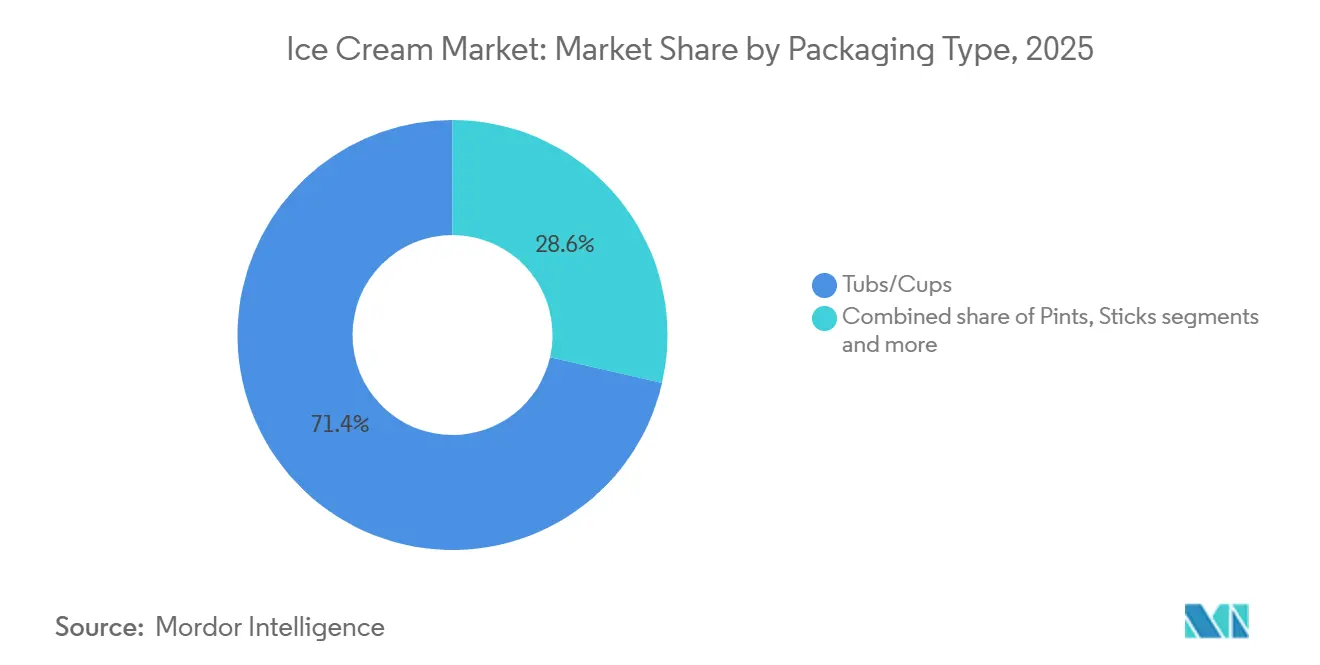
Tubs and cups collectively accounted for a significant 72.13% share of the global ice cream market in 2025, underscoring their position as the primary and most versatile packaging formats across retail and foodservice channels. This dominance is attributed to their suitability for take-home, family consumption, and portion-controlled single-serve usage, catering to a wide range of consumer needs. Tubs are particularly preferred for multi-serve and value-oriented purchases, while cups effectively address individual indulgence, on-the-go consumption, and controlled serving sizes, thereby maintaining their volume leadership. Their adaptability across various consumer occasions further solidifies their importance in the market.
Pint packaging formats are projected to grow at a CAGR of 4.98% through 2031, reflecting their increasing relevance as a premium, portion-controlled, and indulgence-focused packaging option in the global ice cream market. This growth is closely linked to premiumization trends, with brands leveraging this format to highlight high-quality ingredients, dense textures, and innovative flavor profiles. Pints are especially popular for single-serve or shared indulgence occasions, appealing to consumers seeking convenience and a treat-oriented experience without committing to larger family-sized packs. Furthermore, the format's ability to cater to evolving consumer preferences for premium, artisanal, and innovative ice cream offerings enhances its growth potential, making it a key driver in the market's premium segment.
Note: Segment shares of all individual segments available upon report purchase
Get Detailed Market Forecasts at the Most Granular Levels
Download PDF
By Distribution Channel: On-Trade Margins Lure Investment
Off-trade channels accounted for a dominant 78.71% of global ice cream sales in 2025, underscoring their critical role as the primary route to market for ice cream consumption worldwide. This dominance is largely driven by the strong penetration of supermarkets, hypermarkets, convenience stores, and increasingly online retail platforms, which offer consumers greater accessibility, variety, and purchase flexibility compared to on-trade formats. Off-trade channels are particularly well suited to take-home and multi-serve consumption, aligning closely with the popularity of tubs, cups, and pint formats that support family and repeat usage occasions. Additionally, the adaptability of off-trade channels to evolving consumer demands, their ability to provide competitive pricing, and the convenience of bulk purchasing further reinforce their position as the leading choice for ice cream distribution globally.
On-trade venues are projected to grow at a CAGR of 5.66% through 2031, reflecting a steady recovery and structural growth in out-of-home ice cream consumption across foodservice formats. This growth is driven by the increasing popularity of ice cream parlors, cafés, quick-service restaurants (QSRs), casual dining chains, and dessert-focused outlets. In these settings, ice cream is positioned as an experiential and premium product rather than a commodity. On-trade channels allow brands to offer freshly served, customizable, and visually appealing formats such as soft serve, scoops, sundaes, and specialty desserts, enhancing consumer engagement and supporting higher price points. For example, according to the United States Department of Agriculture (USDA), food sales at foodservice outlets in the United States reached USD 1.52 trillion in 2024, underscoring the significant consumption base and traffic potential available to ice cream manufacturers through on-trade partnerships [2]Source: United States Department of Agriculture (USDA), "Food Service Industry", ers.usda.gov. As foodservice operators continue to expand dessert menus with seasonal flavors, premium toppings, and limited-time ice cream offerings, ice cream is increasingly recognized as a high-margin add-on item.
Geography Analysis
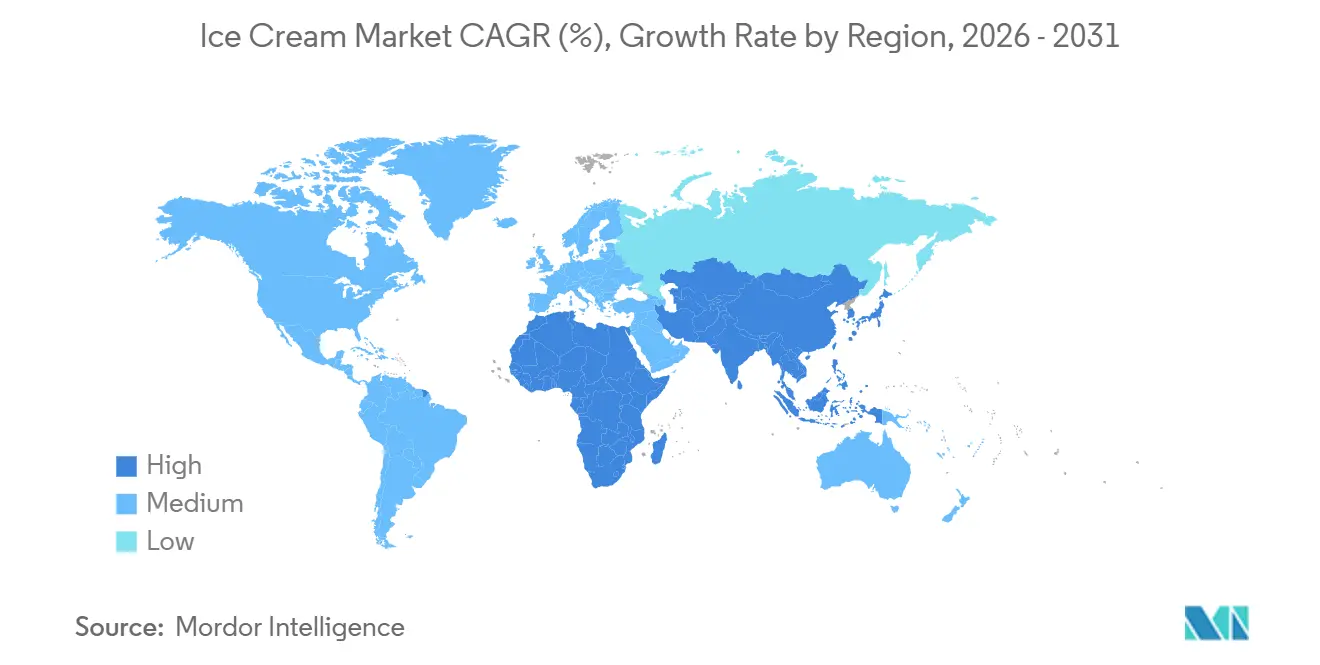
North America is expected to maintain a dominant position in the global ice cream market, accounting for 30.87% of revenue in 2025. This dominance is driven by deeply ingrained consumer habits and well-established distribution networks. According to the International Dairy Foods Association (IDFA), 73% of consumers consumed ice cream at least once per week in 2024, with two out of three preferring to indulge in the evening [3]Source: International Dairy Foods Association (IDFA), "Ice Cream Sales & Trends", idfa.org. This highlights ice cream's role as a staple comfort food across various demographics. Frequent consumption, coupled with innovations in premium flavors, plant-based alternatives, and novelty formats, sustains strong demand. In the United States, parlor culture and seasonal promotions further reinforce the region's market leadership.
The Asia-Pacific region is projected to grow at a compound annual growth rate (CAGR) of 6.15% through 2031, making it the fastest-growing market. This growth is driven by rapid urbanization, changing lifestyles, and increasing per-capita consumption in emerging markets such as China and India. Urban consumers in densely populated cities are seeking convenient and indulgent treats to fit their busy schedules, boosting demand for novelties and soft-serve ice creams. The expansion of foodservice outlets and e-commerce platforms further supports this growth. Localization of flavors, incorporating tropical fruits and fusion elements, caters to diverse consumer preferences. Additionally, investments in cold-chain logistics are addressing infrastructure challenges, positioning the region for accelerated development.
Europe continues to experience steady growth in the ice cream market, operating within a stringent regulatory framework that emphasizes food safety, clean labeling, and sustainability standards. While these regulations present challenges, they also drive refinement in product offerings. Countries such as Germany, Italy, and the Netherlands focus on artisanal and dairy-based ice creams, supported by premiumization and seasonal tourism. South America and the Middle East and Africa face challenges due to underdeveloped cold-chain infrastructure, which increases spoilage risks and limits off-trade penetration. Despite these obstacles, rising health trends and growing imports in urban centers such as Brazil and the United Arab Emirates present opportunities for market growth. These regions show potential for development as infrastructure improves and consumer preferences evolve.
Get Analysis on Important Geographic Markets
Download PDF
Competitive Landscape
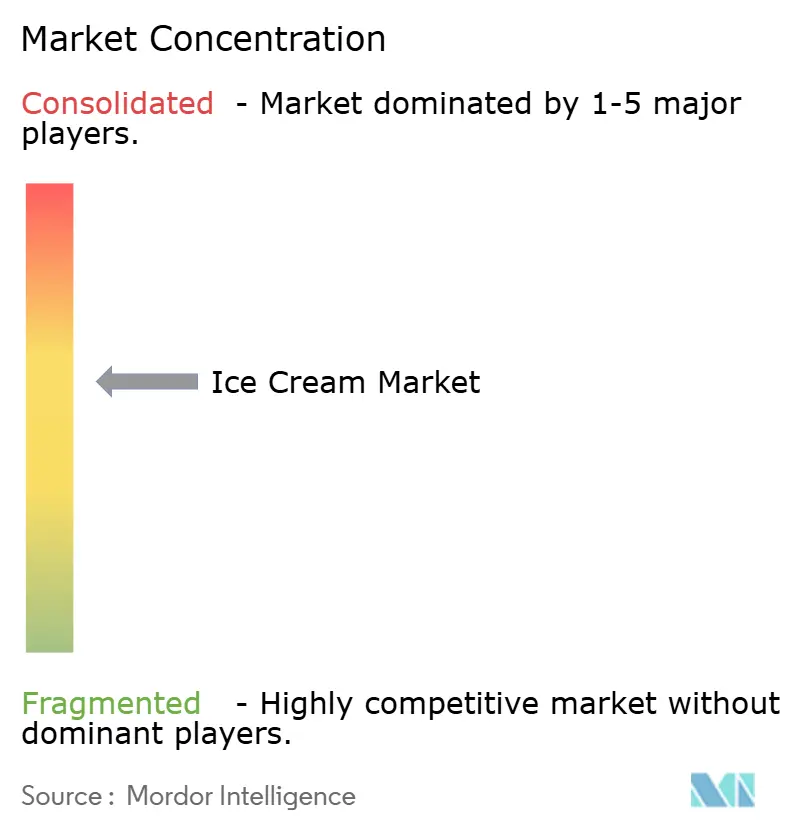
The global ice cream industry demonstrates moderate concentration, with a few multinational corporations dominating the market. Companies such as Nestlé S.A., General Mills, Inc., Blue Bell Creameries LP, Wells Enterprises Inc., and Mars, Incorporated leverage extensive distribution networks, strong brand equity, and economies of scale to secure significant market shares. These major players maintain their leadership through diversified product portfolios, encompassing standard, novelty, and premium segments. Competition is driven by strategies such as aggressive marketing, seasonal campaigns, and acquisitions of regional brands. Meanwhile, smaller artisanal producers focus on niche specialty offerings to differentiate themselves in the market.
Significant growth opportunities exist in the plant-based and non-dairy ice cream segments, where established players face competition from agile startups and vegan-focused innovators. These challengers are disrupting the traditional dairy market. Companies like Nestlé and General Mills have introduced products such as plant-based pints and low-sugar novelties to address this trend. However, gaps remain in scalable and affordable options, particularly in vegan soft-serve and artisanal blends designed for lactose-intolerant consumers in high-growth regions like Asia-Pacific. The rapid expansion of this segment provides entry points for new players, emphasizing clean-label and allergen-free innovations. This shift in consumer preferences toward sustainable and health-conscious indulgence is pressuring major companies to increase their Research and Development investments.
Technological advancements are intensifying competition within the ice cream industry. Leading companies are adopting AI-driven flavor development, automated cold-chain monitoring, and precision manufacturing to improve efficiency and product quality. For instance, Wells Enterprises and Mars are utilizing blockchain technology to enhance traceability in ethical sourcing. Additionally, digital tools are enabling personalized e-commerce experiences and advanced data analytics for demand forecasting, providing these companies with a competitive edge over fragmented local players. Emerging technologies, such as 3D-printed custom ice creams and lab-grown dairy alternatives, are shaping the future of the industry. These innovations are prompting established players to collaborate with or acquire startups to maintain their market positions and meet evolving consumer demands for transparency and novelty.
Ice Cream Industry Leaders
-
Nestlé S.A.
-
General Mills, Inc.
-
Blue Bell Creameries LP
-
Wells Enterprises Inc.
-
Mars, Incorporated
- *Disclaimer: Major Players sorted in no particular order
Need More Details on Market Players and Competitors?
Download PDF
Recent Industry Developments
- April 2025: Oppo Brothers has expanded its range of low-calorie ice creams with the introduction of Oppo Refreshed, a vegan ice cream sorbet line. This range features Sicilian Lemon & Strawberry, Alphonso Mango & Passionfruit, and Raspberry Coulis Swirl flavors.
- April 2025: Kwality Wall’s has introduced a new brand, The Dairy Factory, offering a range of slow-churned ice creams. The product line includes four popular variants: Vanilla, Butterscotch, Mango, and Chocolate, available in party packs and tubs.
- March 2025: Havmor Ice Cream has partnered with Swiggy Instamart to introduce a limited-edition Thandai Ice Cream family pack, available exclusively on Swiggy Instamart.
- July 2024: Snoop Dogg introduced two new flavors to his Dr. Bombay Ice Cream line: Baked Blueberry Muffin and Peanut Butter Jelly Time. These flavors join the existing Strawberry Cream Dream option.
Global Ice Cream Market Report Scope
Ice cream is a sweetened frozen food typically eaten as a snack or dessert. The global ice cream market is segmented by product type, category, packaging type, distribution channel, and geography. By product type, the market is segmented into standard ice cream, novelties, soft serve, and specialty/artisanal ice cream. By category, the market is segmented into dairy and non-dairy. By packaging type, the market is segmented by pints, tubs/cups, sticks, and others. By distribution channel, the market is segmented into on-trade and off-trade. Off-trade is further sub-segmented into convenience stores, specialist retailers, supermarkets/hypermarkets, online retail stores, and other distribution channels. By geography, the market is segmented into North America, Europe, Asia-Pacific, South America, and the Middle East and Africa. For each segment, the market sizing and forecasts have been done on the basis of value (in USD million).
The report provides market size and forecasts in both value (USD) and volume (tons) for all the mentioned segments.
By Type
| Standard Ice Cream |
| Novelties |
| Soft Serve |
| Specialty/Artisanal Ice Cream |
By Category
| Dairy |
| Non-Dairy |
By Packaging Type
| Pints |
| Tubs/Cups |
| Sticks |
| Others |
By Distribution Channel
| On-trade | |
| Off-trade | Convenience Stores |
| Specialist Retailers | |
| Supermarkets and Hypermarkets | |
| On-line Retail | |
| Others (Warehouse clubs, gas stations, etc.) |
By Geography
| North America | United States |
| Canada | |
| Mexico | |
| Rest of North America | |
| Europe | Germany |
| United Kingdom | |
| Italy | |
| France | |
| Spain | |
| Netherlands | |
| Poland | |
| Belgium | |
| Sweden | |
| Rest of Europe | |
| Asia-Pacific | China |
| India | |
| Japan | |
| Australia | |
| Indonesia | |
| South Korea | |
| Thailand | |
| Singapore | |
| Rest of Asia-Pacific | |
| South America | Brazil |
| Argentina | |
| Colombia | |
| Chile | |
| Peru | |
| Rest of South America | |
| Middle East and Africa | South Africa |
| Saudi Arabia | |
| United Arab Emirates | |
| Nigeria | |
| Egypt | |
| Morocco | |
| Turkey | |
| Rest of Middle East and Africa |
| By Type | Standard Ice Cream | |
| Novelties | ||
| Soft Serve | ||
| Specialty/Artisanal Ice Cream | ||
| By Category | Dairy | |
| Non-Dairy | ||
| By Packaging Type | Pints | |
| Tubs/Cups | ||
| Sticks | ||
| Others | ||
| By Distribution Channel | On-trade | |
| Off-trade | Convenience Stores | |
| Specialist Retailers | ||
| Supermarkets and Hypermarkets | ||
| On-line Retail | ||
| Others (Warehouse clubs, gas stations, etc.) | ||
| By Geography | North America | United States |
| Canada | ||
| Mexico | ||
| Rest of North America | ||
| Europe | Germany | |
| United Kingdom | ||
| Italy | ||
| France | ||
| Spain | ||
| Netherlands | ||
| Poland | ||
| Belgium | ||
| Sweden | ||
| Rest of Europe | ||
| Asia-Pacific | China | |
| India | ||
| Japan | ||
| Australia | ||
| Indonesia | ||
| South Korea | ||
| Thailand | ||
| Singapore | ||
| Rest of Asia-Pacific | ||
| South America | Brazil | |
| Argentina | ||
| Colombia | ||
| Chile | ||
| Peru | ||
| Rest of South America | ||
| Middle East and Africa | South Africa | |
| Saudi Arabia | ||
| United Arab Emirates | ||
| Nigeria | ||
| Egypt | ||
| Morocco | ||
| Turkey | ||
| Rest of Middle East and Africa | ||
Need A Different Region or Segment?
Customize Now
Market Definition
- Butter - Butter is a yellow-to-white solid emulsion of fat globules, water, and inorganic salts produced by churning the cream from cows’ milk
- Dairy - Dairy product include milk and any of the foods made from milk, including butter, cheese, ice cream, yogurt, and condensed and dried milk.
- Frozen Desserts - Frozen dairy dessert means and includes products containing milk or cream and other ingredients which are frozen or semi-frozen prior to consumption, such as ice milk or sherbet, including frozen dairy desserts for special dietary purposes, and sorbet
- Sour Milk Drinks - Sour milk is thick, curdled milk, with a sour taste, obtained from the fermentation of milk. Sour milk drinks such as kefir, laban, buttermilk have been considered in the study
| Keyword | Definition |
|---|---|
| Cultured Butter | Cultured butter is prepared by having the raw butter go through chemical processing and has been added with certain emulsifiers and foreign ingredients. |
| Uncultured Butter | This type of butter is one which has not been processed in any way |
| Natural Cheese | The type of cheese in its most natural form. It is made from natural and simple products and ingredients, including fresh and natural salts, natural colors, enzymes, and high-quality milk. |
| Processed Cheese | Processed cheese undergoes the same processes as natural cheese; however, it requires more steps and many different forms of ingredients. Making processed cheese involves melting natural cheese, emulsifying it, and adding preservatives and other artificial ingredients or colorings. |
| Single Cream | Single cream contains around 18% fat. It’s a single layer of cream that appears over boiled milk. |
| Double Cream | Double cream contains 48% fat, more than double the amount of fat of single cream. It’s heavier and thicker than single cream |
| Whipping Cream | This has a much higher fat percentage than single cream (36%). Used to top cakes, pies, and puddings and as a thickener for sauces, soups, and fillings. |
| Frozen Desserts | Desserts that are meant to be eaten in frozen condition. E.g., sherbets, sorbets, frozen yogurts |
| UHT Milk (Ultra-high temperature milk) | Milk heated at a very high temperature. Ultra-high-temperature processing (UHT) of milk involves heating for 1–8 sec at 135–154°C. which kills the spore-forming pathogenic microorganism, resulting in a product with a shelf-life of several months. |
| Non-dairy butter/Plant-based butter | Butter made from plant-derived oil such as coconut, palm, etc. |
| Non-dairy Yogurt | Yogurt made from typically made from nuts, like almonds, cashews, coconuts, and even other foods like soybeans, plantains, oats, and peas |
| On-trade | It refers to restaurants, QSRs, and bars. |
| Off-trade | It refers to supermarkets, hypermarkets, on-line channels, etc. |
| Neufchatel cheese | One of the oldest kinds of cheese in France. It is a soft, slightly crumbly, mold-ripened, bloomy-rind cheese made in the Neufchâtel-en-Bray region of Normandy. |
| Flexitarian | It refers to a consumer preferring a semi-vegetarian diet, that is centered on plant foods with limited or occasional inclusion of meat. |
| Lactose Intolerance | Lactose intolerance is a reaction in digestive system to lactose, the sugar in milk. It causes uncomfortable symptoms in response to the consumption of dairy products. |
| Cream Cheese | Cream cheese is a soft and creamy fresh cheese with a tangy taste made from milk and cream. |
| Sorbets | Sorbet is a frozen dessert made using ice combined with fruit juice, fruit purée, or other ingredients, such as wine, liqueur, or honey. |
| Sherbet | Sherbet is a sweetened frozen dessert made with fruit and some sort of dairy product such as milk or cream. |
| Shelf stable | Foods that can be safely stored at room temperature, or "on the shelf," for at least one year and do not have to be cooked or refrigerated to eat safely. |
| DSD | Direct Store Delivery is the process in supply chain management wherein the product is delivered from manufacturing plant directly to the retailer. |
| OU Kosher | Orthodox Union Kosher is a kosher certification agency based in New York City. |
| Gelato | Gelato is a frozen creamy dessert made with milk, heavy cream and sugar. |
| Grass-fed Cows | Grass-fed cows are allowed to graze in pastures, where they eat a variety of grasses and clover. |
Need More Details on Market Definition?
Ask a Question
Research Methodology
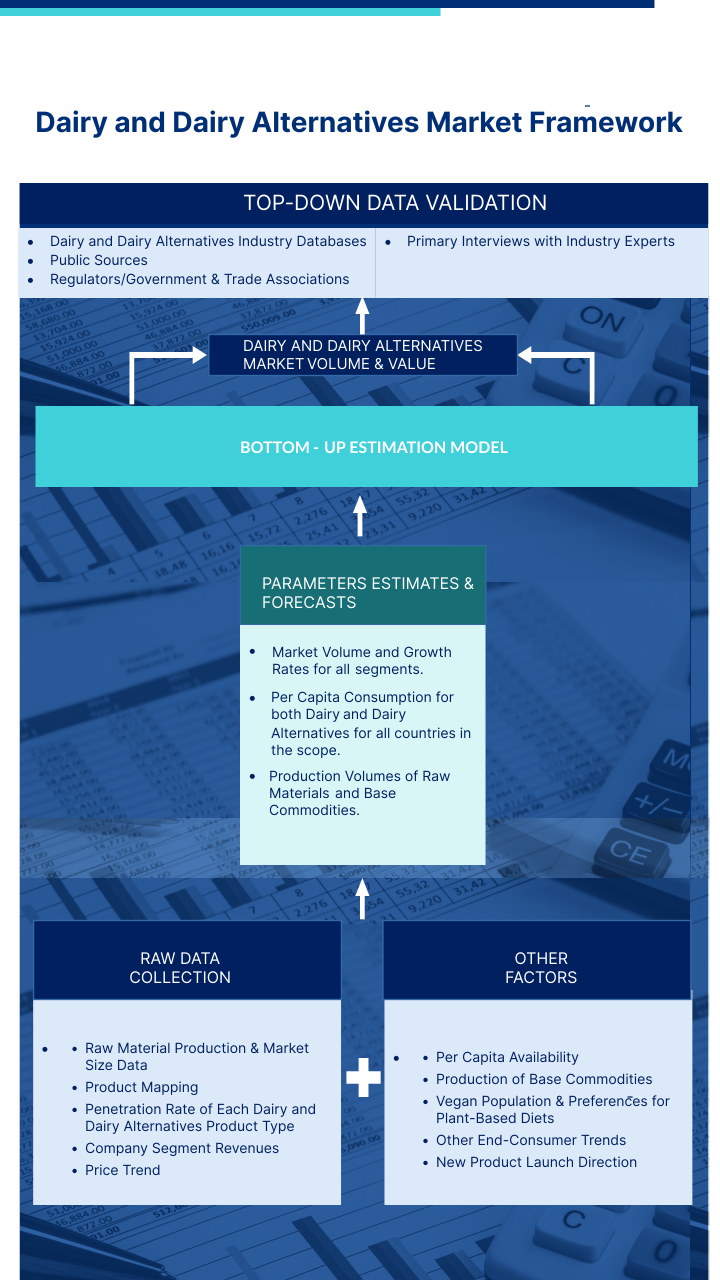
Mordor Intelligence follows a four-step methodology in all our reports.
- Step-1: Identify Key Variables: In order to build a robust forecasting methodology, the variables and factors identified in Step 1 are tested against available historical market numbers. Through an iterative process, the variables required for market forecast are set, and the model is built on the basis of these variables.
- Step-2: Build a Market Model: Market-size estimations for the forecast years are in nominal terms. Inflation is not a part of the pricing, and the average selling price (ASP) is kept constant throughout the forecast period for each country.
- Step-3: Validate and Finalize: In this important step, all market numbers, variables, and analyst calls are validated through an extensive network of primary research experts from the market studied. The respondents are selected across levels and functions to generate a holistic picture of the market studied.
- Step-4: Research Outputs: Syndicated Reports, Custom Consulting Assignments, Databases & Subscription Platforms
Get More Details On Research Methodology
Download PDF




