
Hyaluronic Acid Raw Material Market Size and Share
Market Overview
| Study Period | 2020 - 2031 |
|---|---|
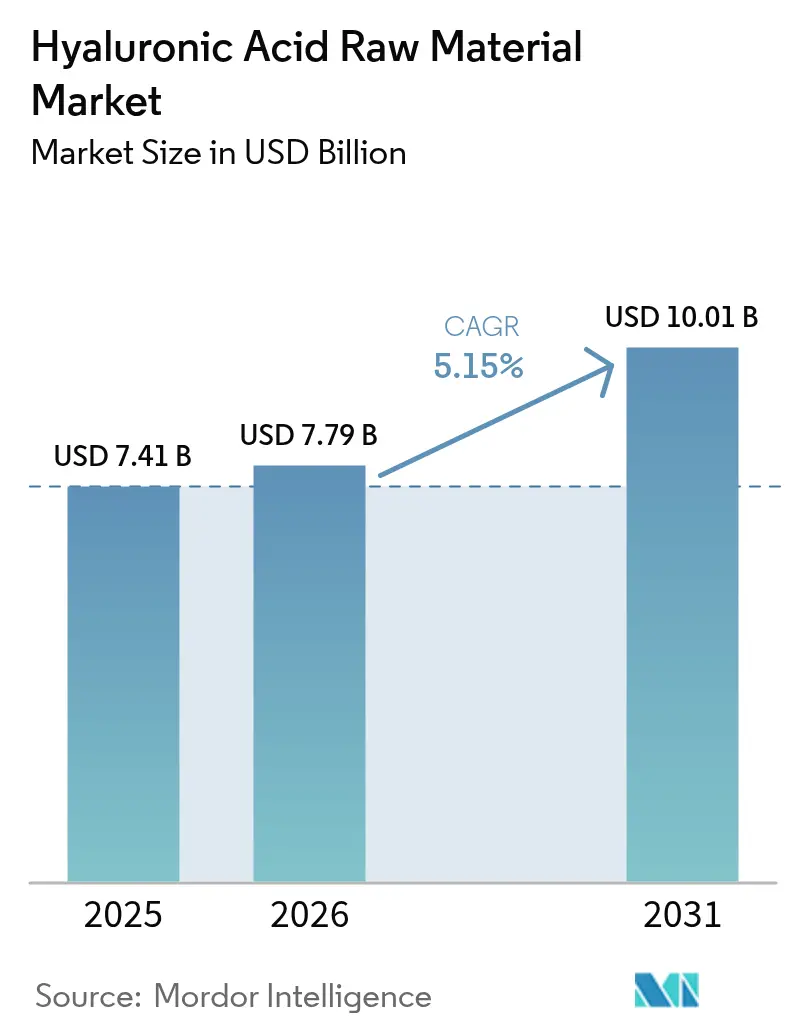
| Market Size (2026) | USD 7.79 Billion |
| Market Size (2031) | USD 10.01 Billion |
| Growth Rate (2026 - 2031) | 5.15 % |
| Fastest Growing Market | Asia Pacific |
| Largest Market | North America |
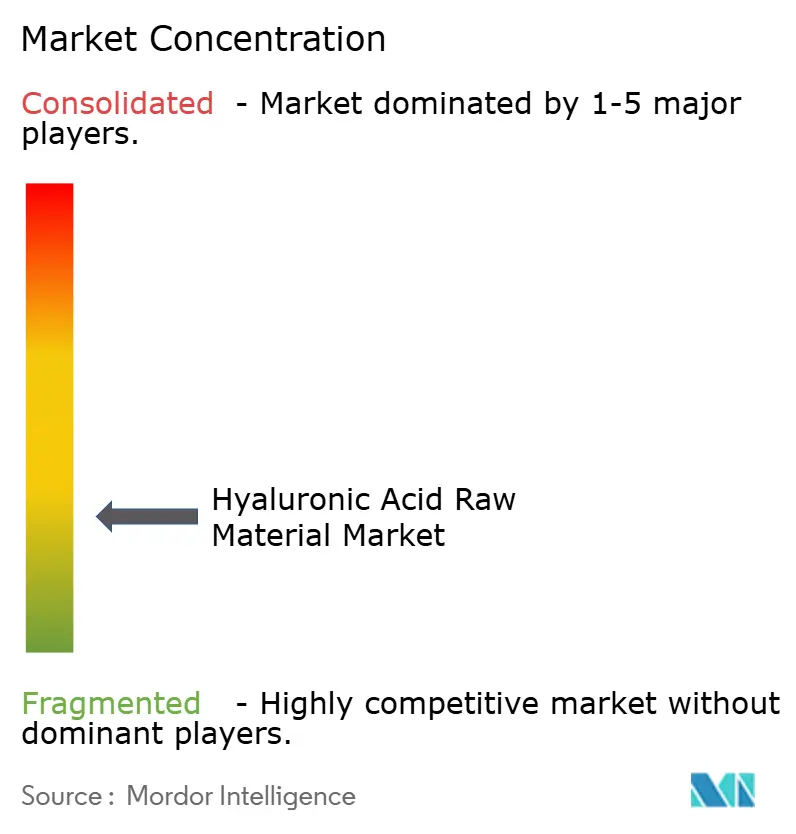
| Market Concentration | Low |
Major Players *Disclaimer: Major Players sorted in no particular order Image © Mordor Intelligence. Reuse requires attribution under CC BY 4.0. | |
Hyaluronic Acid Raw Material Market Analysis by Mordor Intelligence
The hyaluronic acid raw material market size was valued at USD 7.41 billion in 2025 and estimated to grow from USD 7.79 billion in 2026 to reach USD 10.01 billion by 2031, at a CAGR of 5.15% during the forecast period (2026-2031). This consistent expansion is underpinned by maturing demand that now spans medical-grade viscosupplementation, ophthalmic devices, and advanced drug-delivery platforms alongside traditional dermal fillers. Regulatory validation of single-injection knee viscosupplementation, broadened anatomic indications for facial fillers, and insurance coverage expansions have collectively cushioned the market against the cyclicality typical of purely cosmetic products. Supply security initiatives adopted by vertically integrated manufacturers have reduced exposure to fermentation bottlenecks, while ongoing sustainability mandates spur investment in vegan-certified fermentation technologies. Strong clinical evidence supporting hyaluronic acid as a scaffold for tissue engineering further widens the addressable therapeutic base, positioning the hyaluronic acid raw material market for steady mid-single-digit growth through the decade.
Key Report Takeaways
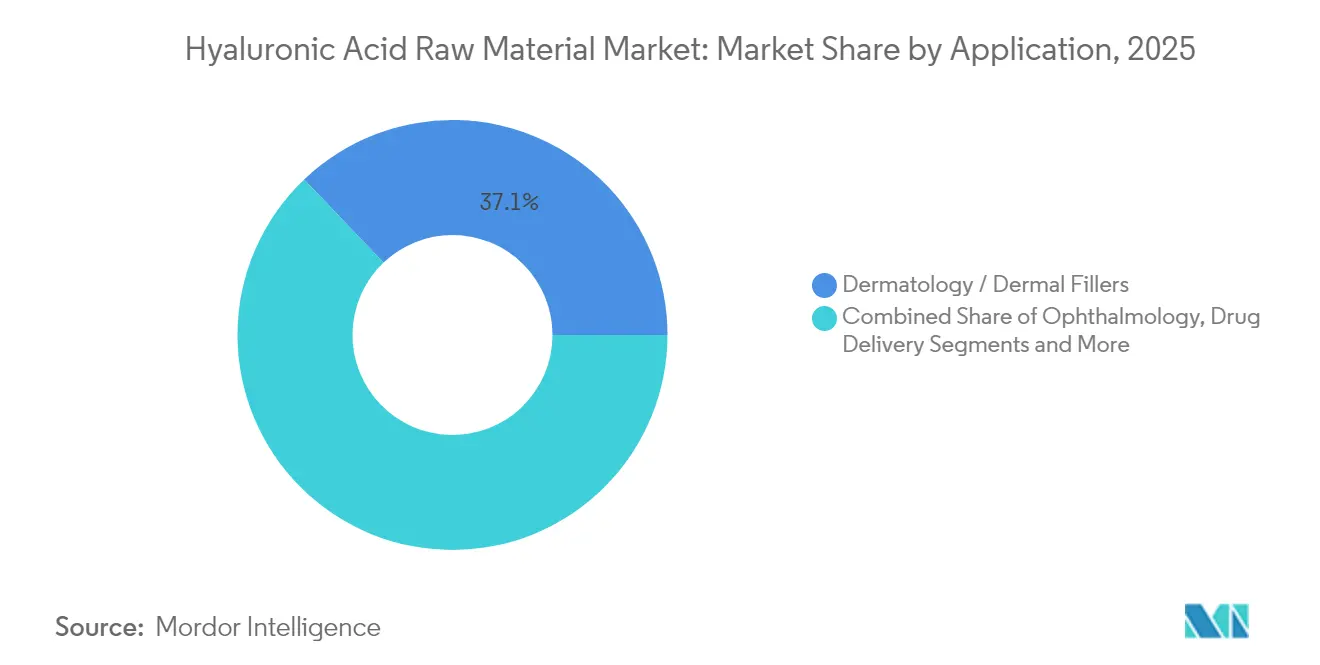
- By application, dermatology and dermal fillers accounted for 37.12% of hyaluronic acid raw material market share in 2025, while drug delivery is advancing at a 5.72% CAGR through 2031.
- By end user, hospitals held 42.38% share of the hyaluronic acid raw material market size in 2025, whereas cosmetic clinics are forecast to expand at a 6.08% CAGR over the same period.
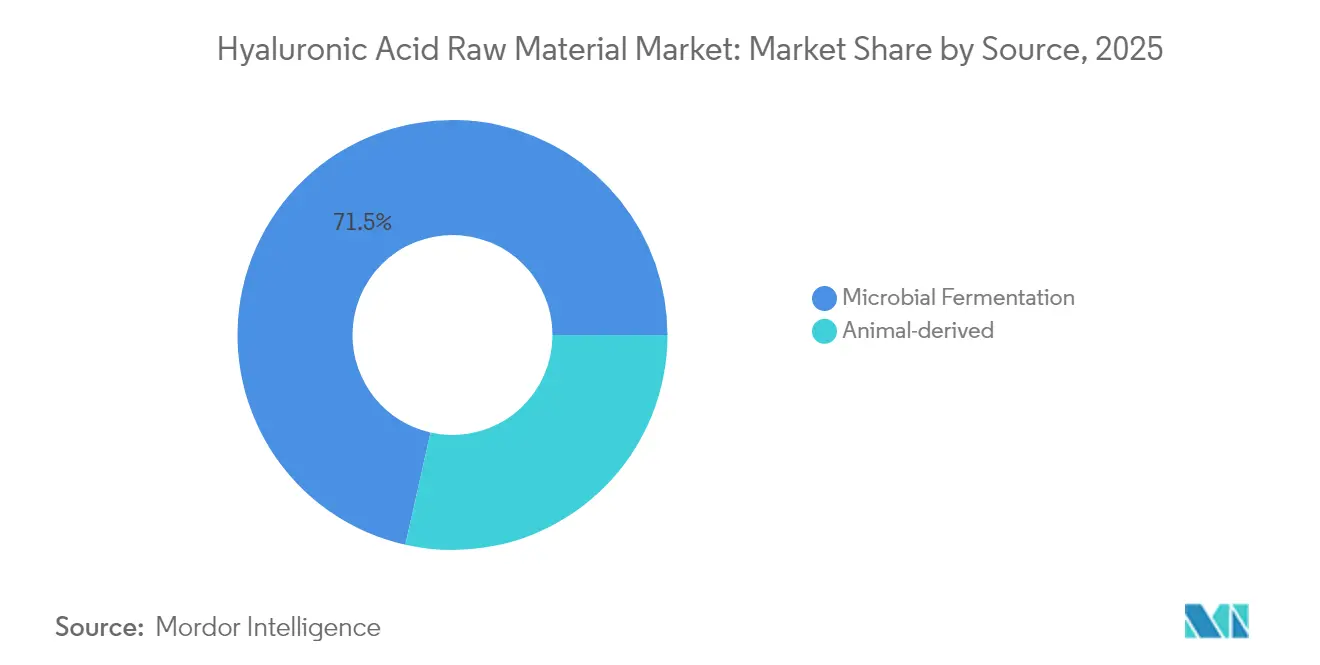
- By source, microbial fermentation commanded 71.48% of hyaluronic acid raw material market share in 2025, yet animal-derived material is registering a faster 5.85% CAGR to 2031.
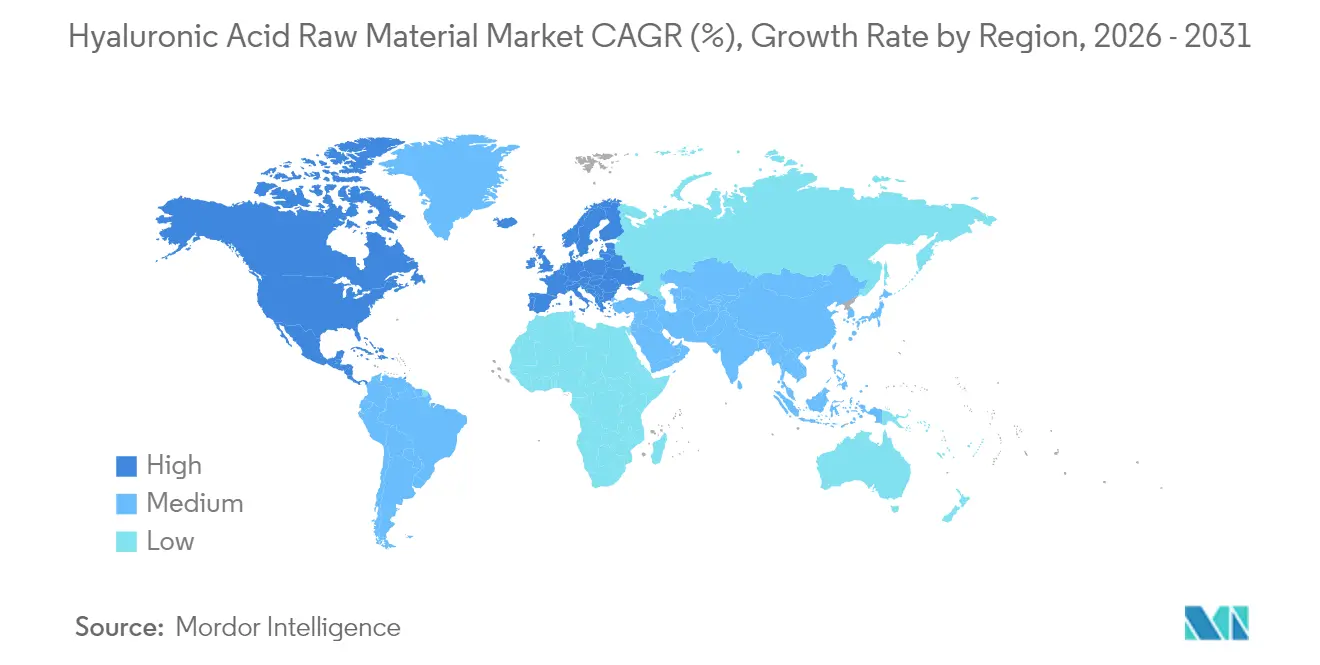
- By geography, North America led with 43.10% revenue share in 2025; Asia-Pacific is set to grow at 6.28% CAGR, the fastest among all regions.
Note: Market size and forecast figures in this report are generated using Mordor Intelligence’s proprietary estimation framework, updated with the latest available data and insights as of 2026.
Market Trends and Insights
Drivers Impact Analysis of Hyaluronic Acid Raw Material Market*
| Driver | (≈) % Impact on CAGR Forecast | Geographic Relevance | Impact Timeline |
|---|---|---|---|
| Rising demand for anti-ageing & minimally invasive aesthetic solutions | +1.2% | Global, concentrated in North America & Europe | Medium term (2-4 years) |
| Rapid growth of viscosupplementation in knee-osteoarthritis therapy | +0.9% | Global, strongest in Asia-Pacific | Long term (≥ 4 years) |
| Expanding ophthalmic applications | +0.7% | North America & EU leading; Asia-Pacific emerging | Medium term (2-4 years) |
| Shift toward fermentation-based, vegan-certified production | +0.5% | Global, driven by EU sustainability regulations | Long term (≥ 4 years) |
| Emergence of cross-linked dry-powder HA for improved shelf-life | +0.4% | Global manufacturing hubs, especially China & Europe | Short term (≤ 2 years) |
| Use of HA as bio-scaffold in 3-D bioprinting & tissue engineering | +0.3% | Research centers in North America, Europe, Japan | Long term (≥ 4 years) |
| Source: Mordor Intelligence | |||
Rising Demand for Anti-Ageing and Minimally-Invasive Aesthetic Solutions
Preventative aesthetics have reshaped consumption patterns, with patients aged 25-35 accounting for one-third of new filler procedures in 2024, nearly double the 2019 level [1]. Broader anatomical approvals such as temple augmentation with JUVÉDERM VOLUMA XC increase treatment zones and elevate annual filler volumes per patient [2]. Advanced cross-linking prolongs product residence time, permitting premium pricing that offsets reduced visit frequency. Social-media normalization of subtle refinements reduces stigma and drives procedural uptake among professionals in finance, technology, and healthcare. The net effect is a younger, recurring client base that lessens seasonal revenue swings, reinforcing a predictable growth foundation for the hyaluronic acid raw material market.
Rapid Growth of Viscosupplementation in Knee-Osteoarthritis Therapy
Viscosupplementation now serves as a cost-saving bridge delaying total knee arthroplasty by roughly 12 months, thereby lowering healthcare expenditures. Single high-molecular-weight injections have demonstrated non-inferiority to multiple low-dose regimens, cutting visit burden and boosting adherence. Expanded insurance coverage makes therapy accessible to seniors on fixed incomes, particularly in Asia-Pacific where aging demographics lift osteoarthritis prevalence. Novel formulations that combine hyaluronic acid with polynucleotides or niacinamide deliver superior pain relief, signaling a premium shift from commodity viscosupplements. Widespread adoption of ultrasound-guided protocols enhances placement precision and safety, enabling general orthopedists and rheumatologists to offer injections without referral to specialized centers.
Expanding Ophthalmic Applications
FDA clearance of Lacrifill Canalicular Gel in 2024 repositioned hyaluronic acid from symptomatic eyedrop ingredient to semi-permanent device that occludes tear drainage for up to six months. Cross-linked ocular gels demonstrate superior corneal healing post-surgery compared with unmodified tears. Riboflavin-conjugated drops mitigate UV-induced oxidative stress, broadening prophylactic applications. Combination products containing 0.001% hydrocortisone sodium phosphate target para-inflammation, addressing causal pathways rather than masking dryness. As reimbursement frameworks evolve, ophthalmologists increasingly view hyaluronic acid as a device-grade solution, supporting premium pricing strategies that enhance revenue per procedure.
Shift Toward Fermentation-Based, Vegan-Certified Production
Global cruelty-free mandates have accelerated the pivot from animal-derived inputs to microbial fermentation, with vegan badges becoming procurement prerequisites for European retailers. Engineered Streptococcus zooepidemicus strains now yield customizable molecular weights at higher volumetric productivity, lowering cost per kilogram despite stringent purity targets. ECOCERT and COSMOS certifications provide access to premium personal-care tiers, while marine by-product fermentation media underscores a circular-economy narrative attractive to investors. Photosynthetic production using engineered cyanobacteria offers a carbon-negative roadmap, but commercialization remains a mid-decade prospect.
Emergence of Cross-Linked Dry-Powder HA for Improved Shelf-Life
Dry-powder hyaluronic acid technology extends shelf stability from 18 to 36 months at ambient temperature, trimming cold-chain costs that can add 10-15% to landed product prices. Chinese and European manufacturing hubs have moved first, leveraging high-shear spray-drying to preserve molecular integrity. Clinics in emerging markets welcome room-temperature storage, which minimizes wastage associated with power outages. Powders reconstitute on-site into viscosupplements or filler gels, supporting decentralized compounding models that can customize concentration. Early-stage data suggest equivalent viscoelastic properties to pre-filled syringes, positioning dry-powder formats as a strategic hedge against logistic disruptions.
Restraints Impact Analysis of Hyaluronic Acid Raw Material Market*
| Restraint | (≈) % Impact on CAGR Forecast | Geographic Relevance | Impact Timeline |
|---|---|---|---|
| High product cost & price volatility of pharmaceutical-grade HA | -1.4% | Global, especially emerging markets | Medium term (2-4 years) |
| Adverse reactions and regulatory scrutiny on injectable fillers | -0.8% | North America & EU with strict oversight | Short term (≤ 2 years) |
| Supply-chain risk from limited fermentation capacity in China | -0.6% | Global, Asia-Pacific most vulnerable | Short term (≤ 2 years) |
| Environmental concerns over solvent-intensive cross-linking | -0.3% | EU & North America | Long term (≥ 4 years) |
| Source: Mordor Intelligence | |||
High Product Cost and Price Volatility of Pharmaceutical-Grade HA
Medical-grade hyaluronic acid commands raw-material prices ranging from USD 2,000 to USD 60,000 per kg, depending on molecular weight and endotoxin limits. Limited fermentation capacity for ultra-high-molecular-weight streams leads to supply–demand imbalances and spot price spikes exceeding 25% within a quarter. Quality-assurance testing—including endotoxin, protein, and nucleic-acid assays—adds 15-20% to production expenses relative to cosmetic grades. Dual sourcing from animal tissues remains necessary for certain therapies, but premium pricing elevates input cost for manufacturers that must maintain redundant supply chains. Small-to-mid-size firms often lack the purchasing power to secure long-term contracts, amplifying exposure to price swings that compress margins and inhibit R&D investment.
Adverse Reactions and Regulatory Scrutiny on Injectable Fillers
Post-market surveillance recorded nodules in 71.8% of delayed adverse filler reactions, prompting regulators to tighten labeling and training standards. The EU Medical Devices Regulation lengthened approval timelines, elevating compliance costs that disproportionately hit small innovators. Consensus guidelines now recommend extended patient monitoring, raising clinic overhead and malpractice premiums. Media amplification of rare granulomatous events undermines consumer confidence, particularly in first-time patients. Although hyaluronidase reversibility reassures practitioners, the requirement to stock reversal agents increases inventory burdens.
*Our forecasts treat driver/restraint impacts as directional, not additive. The impact forecasts reflect baseline growth, mix effects, and variable interactions.
Hyaluronic Acid Raw Material Market Segment Analysis
By Application:
Medical Therapeutics Drive Premium GrowthDrug-delivery systems generated the fastest 5.72% CAGR through 2031 as formulators exploit CD44 receptor targeting to enhance chemotherapeutic payload concentration. This momentum steers the hyaluronic acid raw material market toward specialized therapeutics with longer product-development cycles and higher regulatory barriers. Dermatology and dermal fillers retained 37.12% of 2025 revenue, demonstrating the segment’s resilience amid broadening anatomic indications and safety upgrades.
Dermatology remains central to consumer awareness; however, sustained investments in oncologic, orthopedic, and ophthalmic indications diversify the revenue mix. Orthopedic viscosupplementation shifts toward single-injection formats, illustrating demand for convenience and reduced clinic visits. Ophthalmic pipelines add structural treatments that command premium reimbursement. Cross-therapeutic synergies—from drug-eluting gels to regenerative scaffolds—support pricing power and lengthen product life cycles, enabling manufacturers to amortize R&D costs across multiple indications.

By End User:
Cosmetic Clinics Accelerate Market DemocratizationHospitals maintained 42.38% share of the hyaluronic acid raw material market size in 2025 due to their dominance in surgical and high-acuity interventions. Yet cosmetic clinics will expand at 6.08% CAGR to 2031, underscoring a democratized aesthetic ecosystem where nurse injectors, physician assistants, and qualified dentists offer advanced procedures. Portable ultrasound devices facilitate precise filler placement in non-hospital settings, improving outcomes and bolstering patient confidence.
Multi-modality treatment suites that combine radiofrequency microneedling with hyaluronic acid boosters attract clients seeking comprehensive rejuvenation. Medical spas deploy point-of-care diagnostics—such as skin hydration mapping—to personalize regimens, reinforcing client loyalty. Hospitals increasingly collaborate with outpatient partners, referring lower-acuity cases to clinics while focusing on complex surgeries, thus optimizing resource utilization across the care continuum.
By Source:
Sustainability Drives Production InnovationMicrobial fermentation claimed 71.48% hyaluronic acid raw material market share in 2025, underlining its scalability and compliance with vegan labeling requirements. Engineered fermentation achieves precise molecular-weight tailoring, granting formulators flexibility without animal-origin concerns.
Animal-derived hyaluronic acid is growing at 5.85% CAGR, largely because niche orthopedic and ophthalmic applications value its reproducible bioactivity. High-purity rooster-comb extracts offer molecular-weight uniformity prized for single-injection viscosupplements. Firms hedge against ethical objections by maintaining dual supply lines, ensuring availability should fermentation capacity tighten. Emerging marine by-product substrates promise cost efficiency and circular-economy appeal, signalling that innovation will target both ecological credentials and functional performance.
Geography Analysis
North America Hyaluronic Acid Raw Material Market
North America led with 43.10% revenue in 2025, supported by entrenched reimbursement frameworks for viscosupplementation and high adoption of premium fillers. Favorable FDA pathways encourage quick scaling of novel ophthalmic and orthopedic devices.
APAC Hyaluronic Acid Raw Material Market
Asia-Pacific will post the fastest 6.28% CAGR through 2031 as regulators harmonize standards and middle-class consumers embrace minimally invasive aesthetics. China’s NMPA approval of the Algeness VL filler in 2024 illustrates regulatory openness to differentiated formulations . Japan’s universal healthcare coverage of viscosupplementation further enlarges the therapeutic base.
EMEA and South America Hyaluronic Acid Raw Material Market
Europe remains a sustainability vanguard, rewarding vegan-certified and solvent-free manufacturing. Strict MDR regimes favor incumbents with mature quality systems, reinforcing competitive moats. South America shows upticks linked to economic stabilization, while Middle Eastern markets leverage medical tourism. Africa’s nascent demand gains momentum as urban clinics adopt cost-effective dry-powder fillers that circumvent cold-chain gaps.
Regulatory Landscape
Regulation for hyaluronic acid raw material varies by end use, with the most stringent controls applied when the material feeds Class III injectable fillers and other implantable or medical device uses. In the European Union, injectable HA fillers fall under the EU Medical Devices Regulation (MDR 2017/745), which increases clinical expectations, technical documentation requirements, and post-market obligations across the supply chain, including expectations for pharmacopoeia-aligned quality. In the United States, HA used in regulated medical or device applications typically proceeds through FDA device pathways (PMA or 510(k)), while cosmetic-grade HA does not require premarket approval but must comply with FD&C Act safety and labeling requirements.
China tightened technical expectations for aesthetic sodium hyaluronate injectables with the CMDE (NMPA) 2026 revision guideline (February 2026), which calls for more robust physicochemical and biocompatibility evidence across suppliers, including those with prior registration history. Standards activity also continued in 2026 with SAMR publishing GB/T 47528-2026 on auxiliary materials for biotechnology production (effective November 2026), and industry quality systems increasingly reference pharmacopoeial specifications (USP-NF, Ph. Eur., ChP) alongside GMP concepts such as ICH Q7 for API-style controls in highly purified HA streams.
Value Chain Analysis
The value chain starts with feedstocks for fermentation media and/or animal tissues for niche grades, followed by upstream bioprocessing dominated by microbial fermentation (commonly Streptococcus zooepidemicus) and a growing shift toward non-pathogenic engineered hosts (for example, Corynebacterium glutamicum and Bacillus subtilis 3NA) to reduce biosafety burden. Downstream operations are cost and compliance drivers, including purification (removal of proteins, nucleic acids, and process impurities), depyrogenation, molecular-weight fractionation or control, and sterile filtration and fill where required. Pharmaceutical and device-grade lots are released against critical quality attributes, including molecular weight distribution, intrinsic viscosity, endotoxin limits, heavy metals, and residual protein. Batch documentation and change control often matter as much as assay results.
Market access is anchored by regulatory dossiers such as FDA Drug Master Files (DMF) for U.S.-linked supply chains and EDQM Certificates of Suitability (CEP) in Europe, which tie acceptable material to specific facilities and validated processes. Distribution splits into (1) B2B supply of sodium hyaluronate or HA intermediates to device, pharma, and aesthetics manufacturers, and (2) specialized CDMOs handling sterile processing and packaging for injectables and ophthalmic products. Capacity scale and integration remain differentiators, illustrated by Shandong Focusfreda Biotech disclosing 420 tons of annual capacity and operation of a bio-fermentation R&D center (June 2026), while formulators increasingly demand multicompendial support to align certificates of analysis to USP-NF, Ph. Eur., and ChP requirements.
Competitive Landscape
The hyaluronic acid raw material market features moderate fragmentation, with top-tier producers leveraging multi-decade GMP expertise, broad regulatory dossiers, and global distribution. Bloomage Biotechnology capitalizes on scale, offering molecular-weight-specific portfolios and raw-material-to-finished-product integration. AbbVie’s Allergan Aesthetics division fortifies its franchise by expanding anatomical approvals, thus deepening clinical penetration.
Mid-size biotechnology firms pursue niche leadership through patents on cross-linking chemistries and hybrid high-/low-molecular-weight complexes. IBSA and Altergon’s ultrapure injectable formulation showcases university–industry collaboration that accelerates innovation cycles. Strategic partnerships allow pharma companies to tap fermentation specialists while sharing regulatory risk.
As key patents near expiration in 2026-2028, price competition will intensify in commodity dermal fillers, but differentiation via combination therapies and device-drug hybrids will protect margins. The looming transition toward carbon-negative fermentation may redraw cost curves, rewarding early movers who internalize sustainability as a core competency.
Hyaluronic Acid Raw Material Industry Leaders
-
Zimmer Biomet
-
Lifecore Biomedical, LLC
-
Anika Therapeutics, Inc
-
Sanofi
-
AbbVie, Inc. (Allergan)
- *Disclaimer: Major Players sorted in no particular order
Hyaluronic Acid Raw Material Market Companies Covered in this Report
- Bloomage Biotechnology Corp. Ltd.
- Kewpie Corporation
- FocusChem Biotech Co. Ltd.
- Contipro a.s.
- Seikagaku
- Abbvie
- Anika Therapeutics
- Sanofi
- Roche
- Bausch Health
- Zimmer Biomet
- Smiths Group
- Galderma
- Lifecore Biomedical
- LG Life Sciences
- Fidia Farmaceutici
- Huaxi Biotech
- Alcon
Market Opportunities and Future Outlook
The most visible opportunity is upgrading raw-material offerings from commodity HA to application-tuned specifications that align with multicompendial and device-grade requirements, particularly for ophthalmology, viscosupplementation, regenerative scaffolds, and drug delivery. In these segments, molecular-weight distribution and bioburden control are closely tied to performance and regulatory acceptance. Supplier differentiation also extends into documentation readiness (DMF/CEP, validated change control) and sterile-processing capability, which can shorten qualification cycles for medical-device and injectable customers compared with cosmetic-only supply chains.
Capacity additions and new manufacturing formats also create whitespace for buyers focused on supply security and local sourcing. HTL Biotechnology inaugurated a new EUR 12 million sterile hyaluronic acid production line in France in June 2026 as part of a broader 2022-2026 investment plan, reinforcing demand for sterile, high-purity outputs in regulated end markets. In parallel, new entrants and regional buildouts are being reported, including GLOREKA-PHARMA describing a 2,600 square-meter facility in the Dmitrov district that was 70% complete as of July 2026 with hyaluronic acid-based aesthetic medicines targeted for production by end-2026, while technology roadmaps such as pilot-scale cell-free HA synthesis (Enzymit and Cosun, November 2025) point to process alternatives that could change cost and impurity profiles for certain grades over time.
Recent Industry Developments in Hyaluronic Acid Raw Material Market
- June 2026: HTL Biotechnology inaugurated a new EUR 12 million sterile hyaluronic acid production line in France as part of its 2022-2026 investment plan. The added sterile capacity strengthens European sourcing for regulated applications where aseptic processing and documentation are critical. It also raises competitive pressure on suppliers that rely on non-sterile intermediates and external fill-finish partners.
- November 2025: Anika Therapeutics submitted the third and final module of its Premarket Approval (PMA) application for the Hyalofast cartilage repair scaffold to the U.S. FDA. Advancing the PMA package increases the importance of consistent, well-documented hyaluronic acid inputs for regenerative indications. The filing supports broader adoption of HA beyond aesthetics by pushing deeper into orthopedic repair workflows.
- January 2024: Lifecore Biomedical finalized commercial arrangements with Alcon to extend their contract manufacturing relationship by eight years and included an option to purchase additional hyaluronic acid manufacturing equipment. The extension underscores long-duration demand for qualified HA manufacturing in ophthalmic and other sterile formats. It also signals continued consolidation of high-compliance HA supply within established CDMO-style relationships.
Hyaluronic Acid Raw Material Market Report Scope and Research Methodology
Market Definition and Coverage
This market covers the value of hyaluronic acid raw materials sold for downstream use in medical, pharmaceutical, and personal care formulations, where demand is shaped by application volumes and the grade and purity required for each end use.
Scope exclusions: Finished hyaluronic acid consumer products and finished medical devices are excluded when they are priced and sold as final packaged items rather than as raw material inputs.
Segments Covered in This Report
- By Application
- Orthopedics (Viscosupplements)
- Ophthalmology
- Drug Delivery
- Dermatology / Dermal Fillers
- Other Applications
- By End User
- Hospitals
- Cosmetic Clinics
- Other End Users
- By Source
- Animal-derived
- Microbial Fermentation
- By Geography
- North America
- United States
- Canada
- Mexico
- Europe
- Germany
- United Kingdom
- France
- Italy
- Spain
- Rest of Europe
- Asia-Pacific
- China
- Japan
- India
- Australia
- South Korea
- Rest of Asia-Pacific
- Middle East & Africa
- GCC
- South Africa
- Rest of Middle East & Africa
- South America
- Brazil
- Argentina
- Rest of South America
- North America
Data Sources, Market Sizing, and Validation
Desk Research
Desk work starts by mapping the demand pool and supply context using public sources that can be checked again later. We typically reference sources such as the US FDA databases and guidance pages, the European Medicines Agency public assessment information, UN Comtrade trade statistics for relevant chemical and biochemical categories, World Bank macro indicators, and peer reviewed journals that discuss fermentation yields and purification approaches.
Company annual reports, investor presentations, and earnings transcripts are used to understand capacity additions, grade mix, and revenue exposure to hyaluronic acid inputs. For shipments and pricing direction where traceability is limited, we also use selective paid subscriptions for company financials and intelligence, patent databases, and import and export shipment level views. These inputs help confirm whether the direction of change in the model matches what is visible in trade and reported supply.
These desk research sources are illustrative and not exhaustive, and additional public references were used for data collection, validation, and clarification.
Primary Interviews and Surveys
Primary work is used to pressure test assumptions that desk sources cannot fully explain, especially around grade splits, typical contract pricing behavior, and how much demand is tied to aesthetics versus medical use. We speak with a mix of raw material producers, formulators, distributors, and downstream buyers across APAC, EMEA, and the Americas so regional differences in regulation and adoption are captured and then reflected in the final sizing.
Distribution of primary research fieldwork respondents
| Company type | Respondent position | Region |
|---|---|---|
| Top tier: 25% | CXOs: 14% | APAC: 47% |
| Mid tier: 56% | Functional/Unit leaders: 26% | EMEA: 29% |
| Smaller Players: 19% | Managers: 60% | Americas: 24% |
Market-Sizing & Forecasting
Sizing is built with a top-down demand pool, where procedure volumes and treatment adoption are translated into raw material consumption using typical dosage ranges and grade requirements. The resulting consumption is then priced using blended average selling prices by grade. Once regional totals are formed, we cross check them through selective bottom-up approximations, such as sampled supplier revenue exposure, channel feedback on volume direction, and spot checks of volume times ASP for a few high visibility applications.
Inputs used in the model include dermal filler and viscosupplementation procedure trends, ophthalmic use volumes, the mix shift toward non-animal fermentation sourced material, purity and molecular weight requirements by end use, and observed pricing movement tied to fermentation yield and purification costs. For forecasting, scenario analysis is applied around adoption speed in aesthetics and orthopedics and around the pace of capacity additions, and those scenarios are narrowed using expert consensus from interviews. Where bottom-up signals are incomplete for smaller markets, gaps are handled using per capita usage proxies, then validated against import dependence and local manufacturing signals.
Data Validation & Update Cycle
Estimates are validated by cross checking outputs against independent signals such as trade flows, announced capacity ramps, and shifts in end use procedure activity. This helps flag outliers early and reduces reliance on any single dataset.
We also run variance checks across regions so pricing and volume assumptions do not drift away from what suppliers and buyers describe as realistic. Before sign-off, numbers go through a multi step analyst review where assumptions, formulas, and year over year movements are rechecked and adjusted if a driver does not reconcile. When a material event happens, for example a sudden capacity disruption or a regulatory change that alters use, respondents may be recontacted and the model revisited. Reports are refreshed annually, and a final pre-delivery review is completed so clients receive an updated view.
Mordor Intelligence's Hyaluronic Acid Raw Material Market Sizing Compared With Other Published Estimates
Published market numbers for hyaluronic acid raw material do not always line up because teams can count different value points, and they may use different timing for prices and currency conversion. Differences also show up when one estimate relies more on broad end product sales proxies, while another rebuilds demand from procedure and formulation usage. That approach changes the implied volumes.
The main gap comes from whether adjacent finished aesthetics and personal care product revenues are folded into the total. Mordor Intelligence counts only raw material sales values tied to application level consumption and grade specific pricing, rather than downstream branded product pricing.
Benchmark comparison
| Source | Market Size | Gaps in Research Methodology |
|---|---|---|
| Mordor Intelligence | USD 7.79 B (2026) | |
| Industry Intelligence Bulletin A | USD 7.05 B (2024) | Uses an earlier base year and often relies on broader application grouping with less clarity on grade level price blending, which can understate the value impact of higher purity material used in medical and injectable uses. |
| Global Consultancy B | USD 12.80 B (2024) | Appears to apply a wider value scope and higher blended pricing assumptions, which may pull in downstream finished product value or double count value added steps instead of isolating raw material sales only. |
The spread in the table is mostly explained by what is included in the value chain and how the blended price is built across grades and end uses. By tying the total back to observable demand indicators and then checking the result with supplier and channel feedback, the final number stays traceable to clear volume and pricing steps that can be repeated and updated when market conditions change.
Key Questions Answered in the Report
What is the current Hyaluronic Acid Raw Material Market size?
The hyaluronic acid raw material market size reached USD 7.79 billion in 2026 and is forecast to climb to USD 10.01 billion by 2031 at a 5.15% CAGR.
Which application is growing fastest?
Drug-delivery systems lead growth, expanding at a 5.72% CAGR as pharmaceutical firms harness hyaluronic acid’s receptor-targeting capability for precision therapeutics.
What drives Asia-Pacific demand?
Harmonized regulations, rising disposable income, and broader acceptance of minimally invasive aesthetics underpin a 6.28% CAGR in Asia-Pacific through 2031.
Why are cosmetic clinics gaining share?
Enhanced safety protocols and portable imaging technologies enable qualified non-physician injectors to offer advanced treatments, pushing clinic revenue up at 6.08% CAGR.