
Horseradish Peroxidase Market Size and Share
Market Overview
| Study Period | 2021 - 2032 |
|---|---|
| Market Size (2027) | USD 84.48 Million |
| Market Size (2032) | USD 127.32 Million |
| Growth Rate (2027 - 2032) | 8.55 % |
| Fastest Growing Market | Asia Pacific |
| Largest Market | North America |
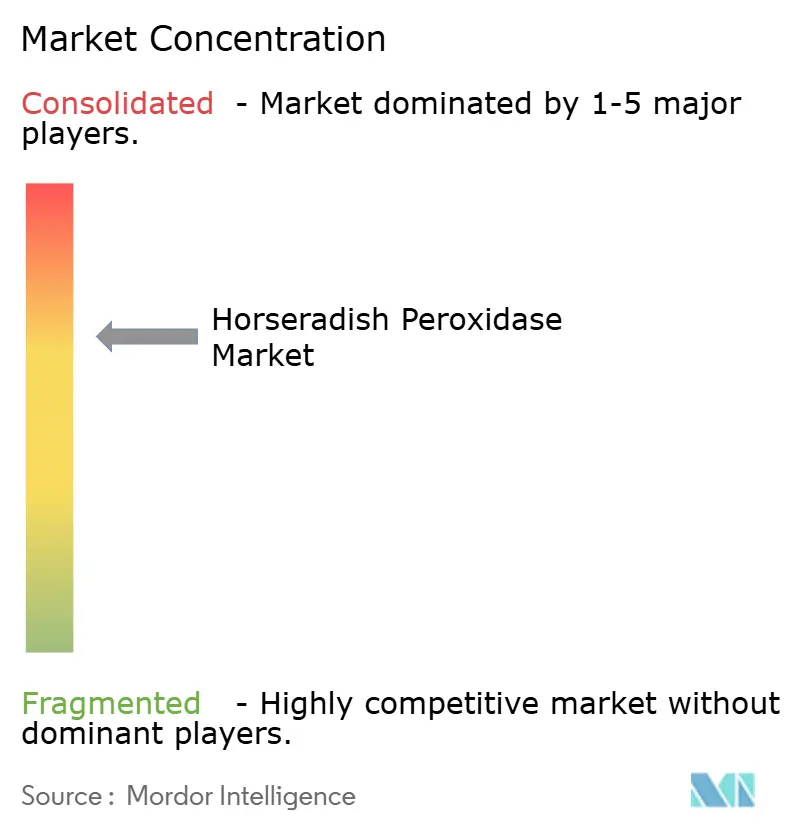
| Market Concentration | Medium |
Major Players *Disclaimer: Major Players sorted in no particular order Image © Mordor Intelligence. Reuse requires attribution under CC BY 4.0. | |
Horseradish Peroxidase Market Analysis by Mordor Intelligence
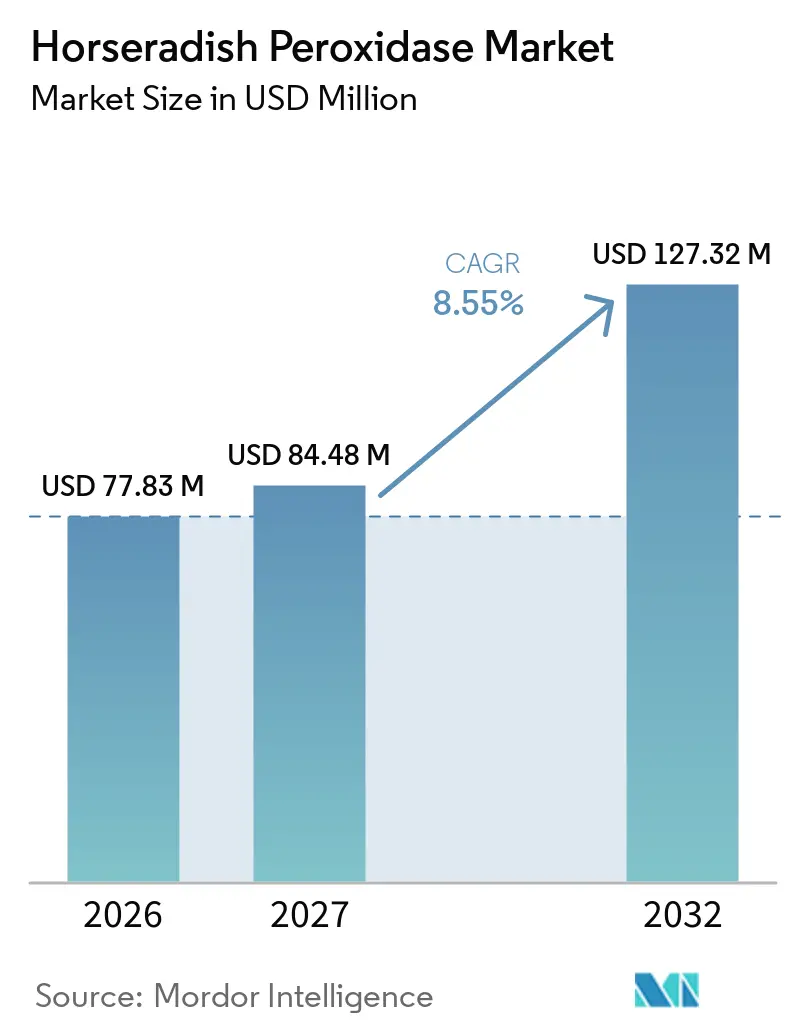
The Horseradish Peroxidase Market size was valued at USD 77.83 million in 2026 and is estimated to grow from USD 84.48 million in 2027 to reach USD 127.32 million by 2032, at a CAGR of 8.55% during the forecast period (2027-2032).
Sustained demand for high-sensitivity immunodiagnostics, environmentally focused wastewater remediation solutions, and glyco-engineered therapeutic platforms is keeping the horseradish peroxidase market on a strong upward path. Clinical laboratories continue to automate immunoassay workflows, thereby raising bulk enzyme consumption. In parallel, regulators across Europe and North America are supporting enzyme-based industrial effluent treatment, accelerating commercial adoption in bioreactors. Biotechnology firms are also scaling recombinant production that stabilizes supply and trims unit costs, which improves price–performance metrics for downstream users. Competitive intensity is increasing as global suppliers pursue acquisitions and partnerships that expand distribution reach and application engineering support.
Key Report Takeaways
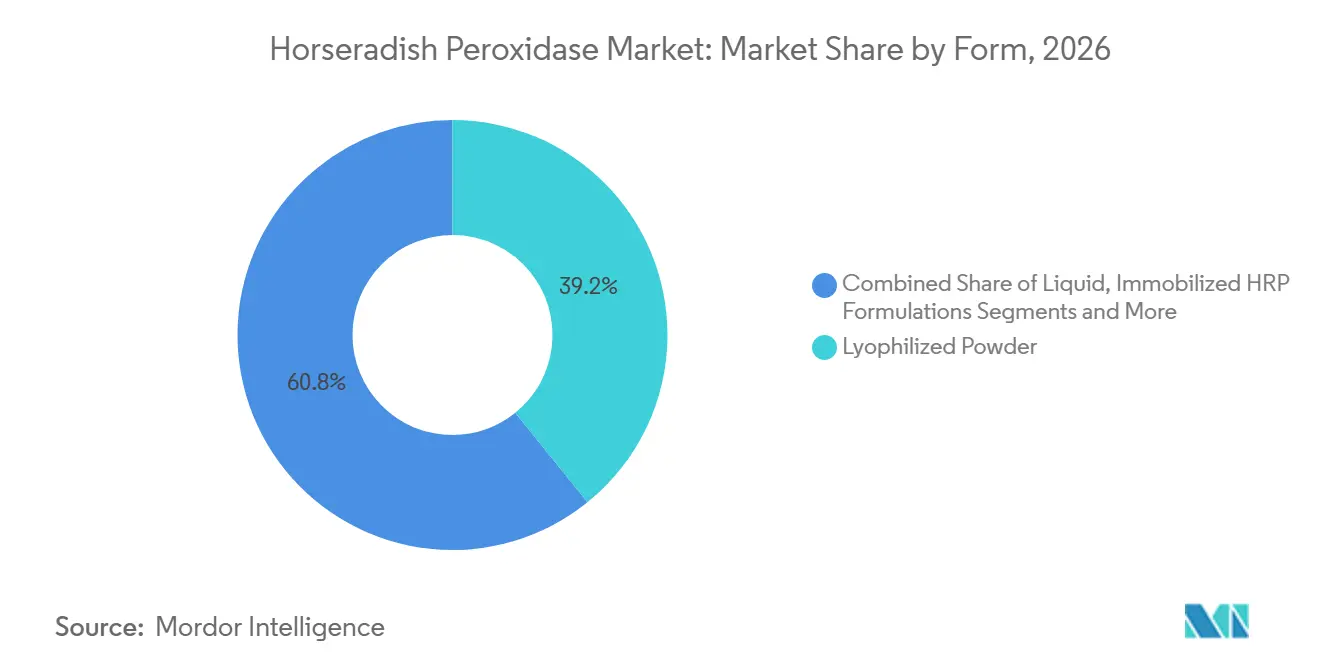
- By form, lyophilized powder held 39.2% of the horseradish peroxidase market share in 2026, while stabilized conjugates are projected to record an 11.8% CAGR through 2032.
- By grade, diagnostic products controlled 39.5% of sales in 2026; therapeutic grade is set to expand at a 13.5% CAGR to 2032.
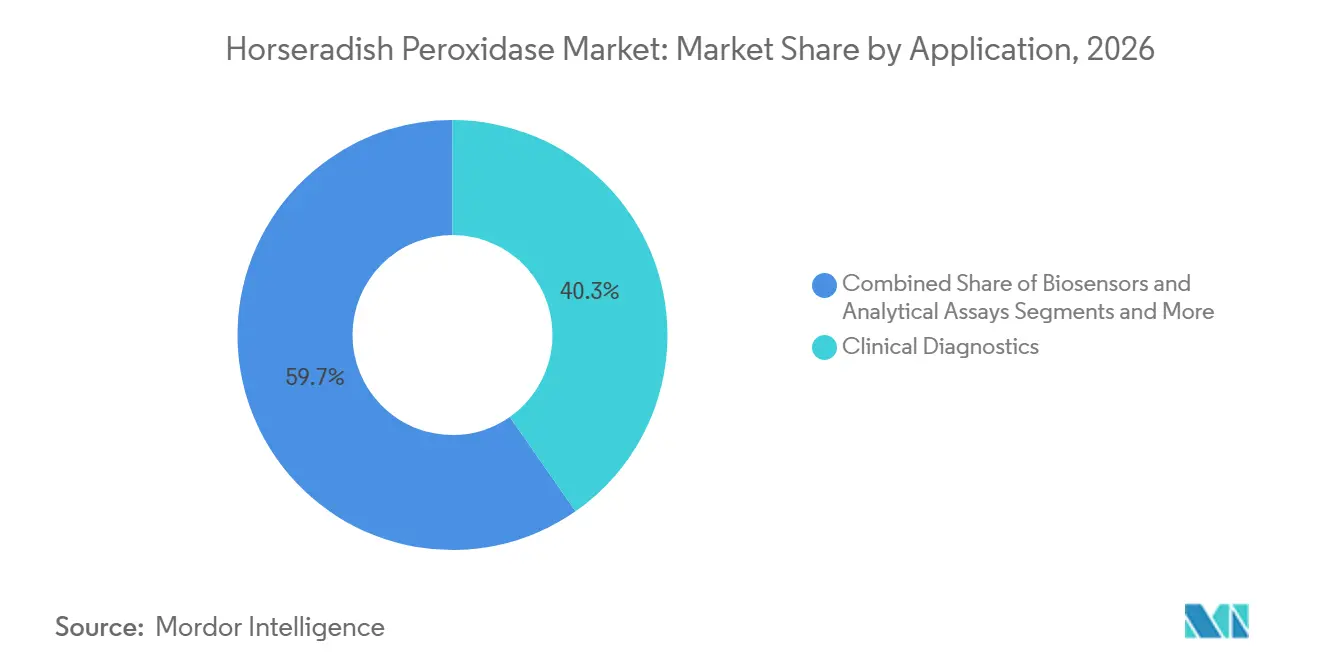
- By application, clinical diagnostics commanded 40.3% of the horseradish peroxidase market size in 2026, whereas pharmaceutical and therapeutics are advancing at 14.2% CAGR.
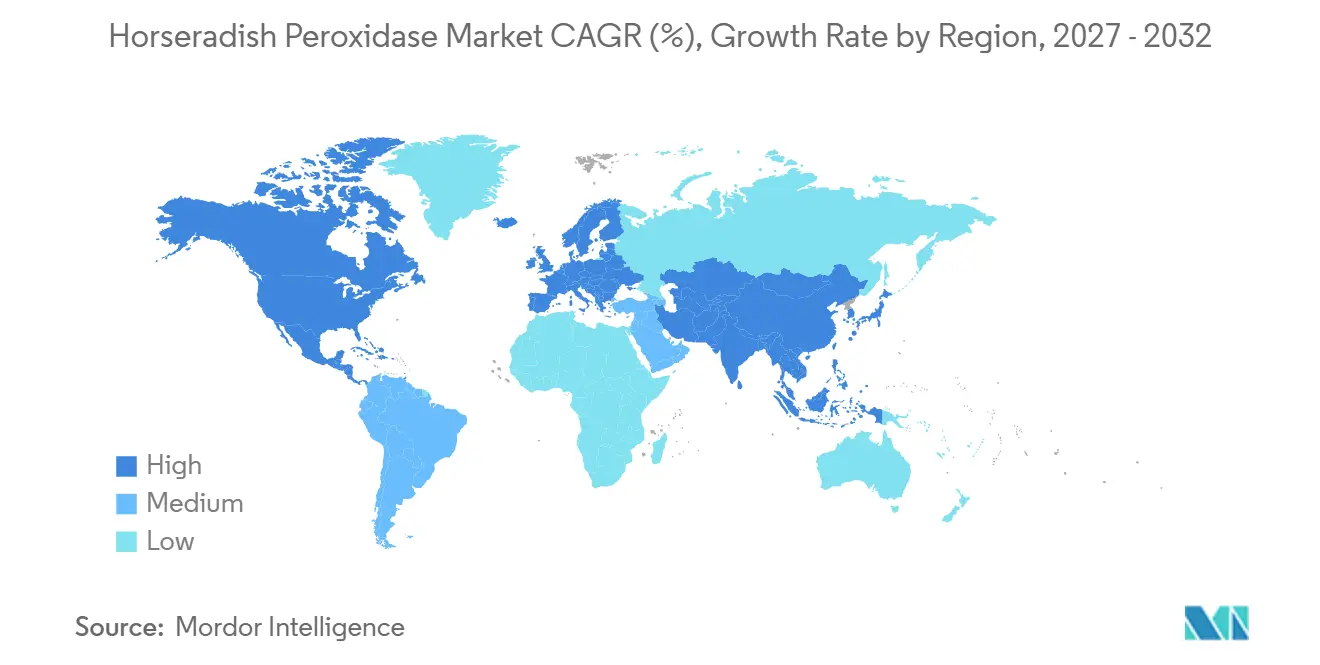
- By geography, North America accounted for 38.4% revenue in 2026, and Asia Pacific is forecast to rise at 9.5% CAGR through 2032.
Note: Market numbers in this report are based on Mordor Intelligence's proprietary estimation framework, which combines nine months of actuals with Q4 projections for base year 2026.
Market Trends and Insights
Drivers Impact Analysis of Horseradish Peroxidase Market*
| Driver | (~) % Impact on CAGR Forecast | Geographic Relevance | Impact Timeline |
|---|---|---|---|
| Expansion Of HRP-Based Chemiluminescent Immunodiagnostics | +2.10% | Global, with concentration in North America & EU | Medium term (2-4 years) |
| Transition To Cost-Efficient Recombinant HRP Production | +1.80% | APAC core, spill-over to North America | Long term (≥ 4 years) |
| Environmental Remediation Demand For Phenolic-Wastewater Treatment | +1.40% | Global, early adoption in EU & North America | Short term (≤ 2 years) |
| Proliferation Of HRP-Labeled Lateral-Flow POC Assays | +1.60% | Global, with rapid expansion in APAC | Short term (≤ 2 years) |
| Emerging Glyco-Engineered HRP For Pro-Drug Cancer Therapy | +0.90% | North America & EU, clinical trial focus | Long term (≥ 4 years) |
| VC-Backed Electrochemical Biosensors Using HRP Nano-Conjugates | +0.70% | Global, with startup concentration in North America | Medium term (2-4 years) |
| Source: Mordor Intelligence | |||
Expansion Of HRP-Based Chemiluminescent Immunodiagnostics
Global laboratories are moving from colorimetric to chemiluminescent formats in order to detect biomarkers at picogram concentrations, a shift that relies on horseradish peroxidase as the catalytic amplifier. Automated analyzers now operate continuously for day-long cycles, and improved HRP stability cuts calibration frequency, which lowers per-test cost. Oncology and infectious disease screening are the principal beneficiaries because earlier detection improves treatment outcomes. Artificial-intelligence-guided assay optimization further aligns enzyme kinetics with individual patient profiles. Vendors that supply pre-validated HRP reagents tailored to mainline immunoassay platforms are capturing sizeable repeat-purchase contracts, reinforcing volume growth in the horseradish peroxidase market.
Transition To Cost-Efficient Recombinant HRP Production
Microbial expression in Pichia pastoris and Komagataella phaffii routinely yields more than 7.27 g/L enzyme, enabling manufacturers to pivot away from volatile agricultural sourcing.[1]Recombinant output offers uniform glycosylation and simplifies downstream purification, a critical advantage for therapeutic developers who require batch consistency. Fermentation consumes 75% less water and emits 60% fewer greenhouse gases than root extraction, aligning with corporate sustainability pledges. Regulators have shortened review cycles for well-characterized recombinant enzymes, trimming time to market by roughly six months in the United States. These efficiencies widen price competitiveness, prompting further substitution of legacy botanical supplies and supporting steady expansion of the horseradish peroxidase market.
Environmental Remediation Demand For Phenolic Wastewater Treatment
Tighter discharge limits on phenolic compounds are accelerating the adoption of HRP-based enzymatic processes able to achieve up to 95% removal at acidic pH values. Magnetic-nanoparticle immobilization keeps the enzyme recoverable for multiple cycles, cutting operating expenses for petrochemical and pharmaceutical plants. Pilot trials targeting per- and polyfluoroalkyl substances show 68% transformation of perfluorooctanoic acid when HRP operates in tandem with hydrogen peroxide and mediator agents.[2] As extended producer responsibility laws proliferate, plant operators prioritize scalable, enzyme-centered treatment trains. This regulatory push reinforces near-term demand momentum across the horseradish peroxidase market.
Proliferation Of HRP-Labeled Lateral-Flow POC Assays
The point-of-care diagnostics sector is turning to HRP conjugates that withstand ambient storage in field settings. Gold-nanoparticle and silver-precipitation enhancements push detection limits into low picogram territory, making HRP-based strips suitable for early infection screening. Smartphone cameras quantify color intensity, bringing on-site analytics to rural clinics. Pandemic-era emergency authorizations created a blueprint for rapid regulatory clearance, encouraging innovators to roll out new HRP-lateral-flow tests in cardiology, metabolic health, and veterinary diagnostics. Wider POC acceptance stimulates incremental growth in the horseradish peroxidase market as test volumes escalate.
Restraints Impact Analysis of Horseradish Peroxidase Market*
| Restraint | (~) % Impact on CAGR Forecast | Geographic Relevance | Impact Timeline |
|---|---|---|---|
| Agricultural Supply Volatility Of Horseradish Roots | -1.20% | Global, with concentration in North America production | Short term (≤ 2 years) |
| Enzyme Inactivation Under High-Peroxide Industrial Conditions | -0.80% | Global, affecting industrial applications | Medium term (2-4 years) |
| Regulatory Ambiguity For Recombinant HRP As Therapeutic API | -0.60% | North America & EU regulatory jurisdictions | Long term (≥ 4 years) |
| Substitution Threat From Cheaper Plant Peroxidases | -0.40% | Global, with focus on cost-sensitive applications | Medium term (2-4 years) |
| Source: Mordor Intelligence | |||
Agricultural Supply Volatility of Horseradish Roots
Climate variability has left roughly one-third of the 2025 horseradish crop unharvested, which tightens raw material availability and inflates pricing. Production clusters in Illinois, Hungary, and Germany confront erratic rainfall and temperature extremes that hamper yield stability. Manufacturers build higher safety stocks, but larger inventories raise working capital demands. Hydroponic cultivation pilots and acreage expansion in China present alternatives, yet these strategies need several seasons before commercial scale is achieved. Supply uncertainty constrains near-term capacity planning for horseradish peroxidase market participants.
Substitution Threat from Cheaper Plant Peroxidases
Soybean peroxidase delivers 40-60% cost savings in bulk wastewater treatment and has demonstrated 95% removal of pharmaceuticals such as diclofenac.[3] Protein-engineering work on bacterial peroxidases is closing gaps in redox potential, especially for industrial oxidation. Diagnostic and therapeutic users still prefer HRP for its well-documented stability and regulatory familiarity, yet commodity buyers weigh price heavily. If lower-cost enzymes attain equivalent performance and validation, they could siphon share from cost-sensitive corners of the horseradish peroxidase market.
*Our forecasts treat driver/restraint impacts as directional, not additive. The impact forecasts reflect baseline growth, mix effects, and variable interactions.
Horseradish Peroxidase Market Segment Analysis
By Form:
Lyophilized Dominance Drives StabilityLyophilized powder generated 39.2% of 2026 revenue, confirming user reliance on ambient-stable formats that simplify logistics across global supply chains. The horseradish peroxidase market benefits when laboratories avoid cold-chain interruptions that degrade liquid enzymes during long-haul shipping. Stabilized conjugates are advancing with an 11.8% CAGR because ready-to-use vials eliminate manual reconstitution steps and reduce contamination risk. Continuous-flow bioreactor operators still source liquid formulations for immediate processing runs, while immobilized formats penetrate niche reactors where enzyme reuse cuts per-batch cost.
Thermal-stability research has produced amino-functionalized bacterial cellulose carriers that retain 70% activity after ten reaction cycles, extending operational life. Enzyme meso-HOF composites reach 22.8 wt% loading without activity loss. Such innovations underpin a gradual shift as users trade legacy powdered stocks for advanced supports that integrate seamlessly into automated platforms. These upgrades reinforce long-term volume growth within the horseradish peroxidase market.

By Grade:
Diagnostic Applications Lead MarketDiagnostic grade accounted for 39.5% of 2026 demand because hospitals and reference labs require consistency that meets stringent IVDR and FDA quality metrics. RZ values above 3.0 and specific activity exceeding 250 U/mg are now standard benchmarks. Therapeutic grade, although smaller, is rising at a 13.5% CAGR as oncology pipelines evaluate enzyme-prodrug regimens. Batch-to-batch glycosylation uniformity is pivotal for regulatory advancement, compelling suppliers to refine recombinant lines.
Research grade serves academic labs exploring biosensor and food-processing applications, while industrial grade targets large-volume effluent treatment. Food-processing grade is gaining visibility as manufacturers apply HRP-mediated protein crosslinking to improve texture and shelf stability. Diverse grade specifications allow vendors to segment price tiers, which stabilizes margin structures across the horseradish peroxidase market.
By Application:
Clinical Diagnostics DominanceClinical diagnostics generated 40.3% of 2026 revenue, reflecting hospital preference for HRP-based chemiluminescent immunoassays that quantify cardiac markers and tumor antigens at ultra-low concentrations. Automation pushes daily throughput past 100,000 tests in high-volume labs, thereby locking in recurring reagent revenues. Pharmaceutical and therapeutic use is expanding at 14.2% CAGR as enzyme-activated prodrugs progress through phase I oncology trials.
Biosensor developers couple HRP with nanoparticles to detect toxins at the femtomolar level, opening prospects in environmental monitoring and food safety. Industrial wastewater treatment plants adopt immobilized enzyme cartridges that degrade phenols and azo dyes. Food manufacturers exploit HRP to enhance protein functionality, broadening the application base. The aggregate effect sustains resilient growth throughout the horseradish peroxidase market.
Geography Analysis
North America Horseradish Peroxidase Market
North America held 38.4% of 2026 revenue due to a well-established diagnostic infrastructure and streamlined FDA clearance for enzyme-based assays. Regional suppliers benefit from proximity to large immunoassay system manufacturers, ensuring short lead times and robust technical collaboration. Consolidation activities such as Thermo Fisher’s USD 4.1 billion Solventum deal illustrate ongoing investment in bioprocess capacity that underpins domestic supply resilience.
APAC Horseradish Peroxidase Market
Asia Pacific is the fastest-growing territory, advancing at a 9.5% CAGR. China’s drug-development reforms lifted investigational new drug filings from 688 to 2,298 between 2019 and 2023, catalyzing reagent demand across clinical trial workflows. Government-sponsored innovation hubs in Singapore and South Korea subsidize enzyme biomanufacturing, while Japan channels grants into mRNA and regenerative medicine programs that use ancillary HRP reagents. Cost-competitive production capacity and expanding domestic consumption form a virtuous cycle for regional suppliers.
Europe Horseradish Peroxidase Market
Europe demonstrates steady progress supported by strict wastewater treatment directives that favor enzymatic technologies. Germany and the United Kingdom anchor pharmaceutical demand, whereas Eastern European plants seek cost-effective industrial grades. The EU’s IVDR compliance phase raises documentation requirements, giving quality-certified vendors a competitive edge. Sustainability frameworks across the bloc dovetail with fermentation-based HRP sourcing, and collaborative research networks speed technology diffusion. Collectively, geographic diversification balances global revenue streams within the horseradish peroxidase market.
Competitive Landscape
The horseradish peroxidase market is moderately fragmented. Merck KGaA, Thermo Fisher Scientific, and Bio-Rad Laboratories run broad catalogues complemented by strong application-engineering teams. Specialized firms such as Creative Enzymes and Worthington Biochemical focus on custom formulations and small-batch services, targeting niche diagnostic or research users. Product differentiation revolves around purity, stability, and immobilization performance rather than price alone.
Acquisition activity is reshaping competitive positions. The 2024 Novozymes–Chr. Hansen merger formed Novonesis, unlocking scale efficiencies worth EUR 200 million a year across 30 industries. Illumina’s planned USD 350 million purchase of SomaLogic advances its multiomics strategy, potentially heightening downstream enzyme demand. Patent filings reveal momentum in DNA-directed immobilization and magnetic-nanoparticle conjugation. Suppliers increasingly bundle enzymes with method-development services, providing turnkey solutions that deepen customer stickiness and lift switching costs across the horseradish peroxidase market.
Horseradish Peroxidase Industry Leaders
-
Merck KGaA
-
Thermo Fisher Scientific
-
BBI Solutions
-
Creative Enzymes
-
Promega Corporation
- *Disclaimer: Major Players sorted in no particular order
Horseradish Peroxidase Market Companies Covered in this Report
- Merck
- Thermo Fisher Scientific
- BBI Solutions
- Creative Enzymes
- Promega
- Bio-Rad Laboratories
- Abcam
- Worthington Biochemical Corp.
- Fapon Biotech
- Takara Bio
- Enzo Life Sciences
- GenScript Biotech
- TOYOBO Co., Ltd.
- Novonesis
- Sisco Research Laboratories
- ProSpec-Tany TechnoGene
- Agilent Technologies
- Cana Biotechnology
- Roche
- Rockland Immunochemicals
Recent Industry Developments in Horseradish Peroxidase Market
- June 2025: Illumina announced the acquisition of SomaLogic for USD 350 million to accelerate its proteomics strategy, closing H1 2026 pending clearance.
- June 2025: Advanced Instruments completed a merger with Nova Biomedical, forming a USD 621 million life-science tools platform.
- July 2024: Lallemand invested in Turkish enzyme firm Livzym to extend geographic reach.
Global Horseradish Peroxidase Market Report Scope
Segmentation Overview
| Liquid HRP |
| Lyophilized Powder HRP |
| Immobilized HRP Formulations |
| Stabilized HRP Conjugates |
| HRP Kits & Reagents |
| Diagnostic Grade |
| Research Grade |
| Industrial Grade |
| Therapeutic Grade |
| Food-Processing Grade |
| Clinical Diagnostics |
| Pharmaceutical & Therapeutics |
| Biosensors & Analytical Assays |
| Environmental & Bioremediation |
| Food & Beverage Processing |
| North America | United States |
| Canada | |
| Mexico | |
| Europe | Germany |
| United Kingdom | |
| France | |
| Italy | |
| Spain | |
| Rest of Europe | |
| Asia Pacific | China |
| Japan | |
| India | |
| South Korea | |
| Australia | |
| Rest of Asia Pacific | |
| Middle East & Africa | GCC |
| South Africa | |
| Rest of Middle East & Africa | |
| South America | Brazil |
| Argentina | |
| Rest of South America |
| By Form | Liquid HRP | |
| Lyophilized Powder HRP | ||
| Immobilized HRP Formulations | ||
| Stabilized HRP Conjugates | ||
| HRP Kits & Reagents | ||
| By Grade | Diagnostic Grade | |
| Research Grade | ||
| Industrial Grade | ||
| Therapeutic Grade | ||
| Food-Processing Grade | ||
| By Application | Clinical Diagnostics | |
| Pharmaceutical & Therapeutics | ||
| Biosensors & Analytical Assays | ||
| Environmental & Bioremediation | ||
| Food & Beverage Processing | ||
| By Geography | North America | United States |
| Canada | ||
| Mexico | ||
| Europe | Germany | |
| United Kingdom | ||
| France | ||
| Italy | ||
| Spain | ||
| Rest of Europe | ||
| Asia Pacific | China | |
| Japan | ||
| India | ||
| South Korea | ||
| Australia | ||
| Rest of Asia Pacific | ||
| Middle East & Africa | GCC | |
| South Africa | ||
| Rest of Middle East & Africa | ||
| South America | Brazil | |
| Argentina | ||
| Rest of South America | ||
Key Questions Answered in the Report
What is the forecast value for the horseradish peroxidase market in 2032?
It is projected to reach USD 127.32 million by 2032.
Which region is expanding fastest in horseradish peroxidase demand?
Asia Pacific is growing at a 9.5% CAGR on the back of regulatory reforms and manufacturing investment.
Which form commands the largest share of horseradish peroxidase sales?
Lyophilized powder holds 39.2% of 2026 revenue because it is stable without refrigeration.
Which application segment records the highest CAGR?
Pharmaceutical and therapeutics use is expanding at 14.2% CAGR through 2032.
What is the main driver behind recombinant HRP adoption?
Microbial fermentation offers predictable supply, lower cost, and uniform glycosylation that meet stringent quality demands.
What recent merger reshaped the competitive landscape?
The 2024 merger of Novozymes and Chr. Hansen created Novonesis, a global biosolutions supplier.