
Heat Therapy Market Size and Share
Market Overview
| Study Period | 2019 - 2030 |
|---|---|
| Market Size (2025) | USD 1.65 Billion |
| Market Size (2030) | USD 0 Billion |
| Growth Rate (2025 - 2030) | 6.80 % |
| Fastest Growing Market | Asia Pacific |
| Largest Market | North America |
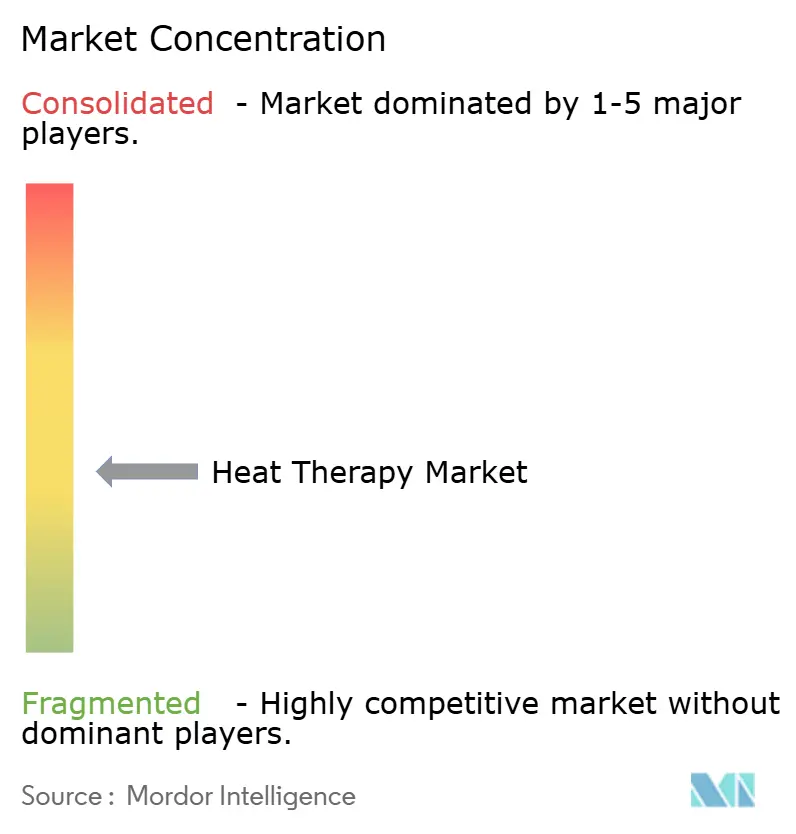
| Market Concentration | Medium |
Major Players *Disclaimer: Major Players sorted in no particular order Image © Mordor Intelligence. Reuse requires attribution under CC BY 4.0. | |
Heat Therapy Market Analysis by Mordor Intelligence
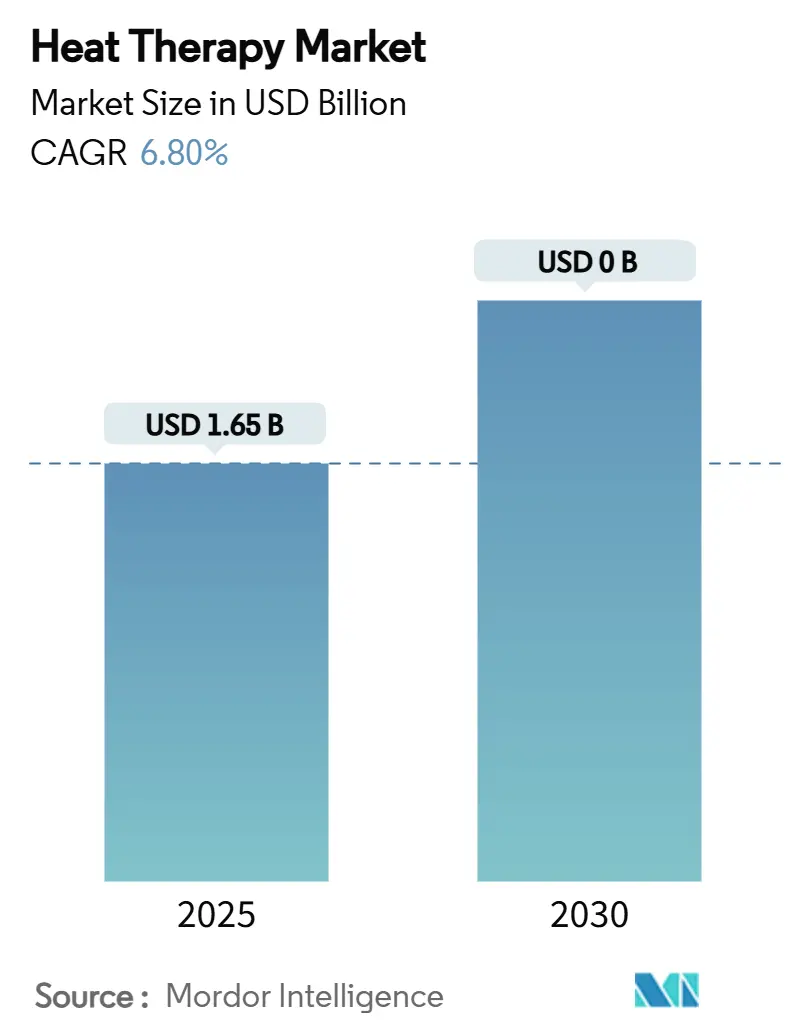
The heat therapy market size reached USD 1.65 billion in 2025 and is forecast to climb to USD 2.29 billion by 2030, reflecting a 6.8% CAGR over the period. The growth trajectory aligns with demographic ageing, rising chronic-pain prevalence, and rapid product innovation that collectively position heat therapy as a core element in non-pharmacological pain management. Continued adoption of smart, wearable products, widening over-the-counter (OTC) coverage, and patient preference for at-home care amplify commercial momentum. Competitive intensity remains moderate because established appliance makers, traditional medical-device firms, and new digital-health entrants are all vying for relevance. North America sustains a solid revenue base, yet the heat therapy market is expanding fastest in Asia Pacific, where ageing populations, higher discretionary incomes, and growing musculoskeletal disease burden converge.
Key Report Takeaways
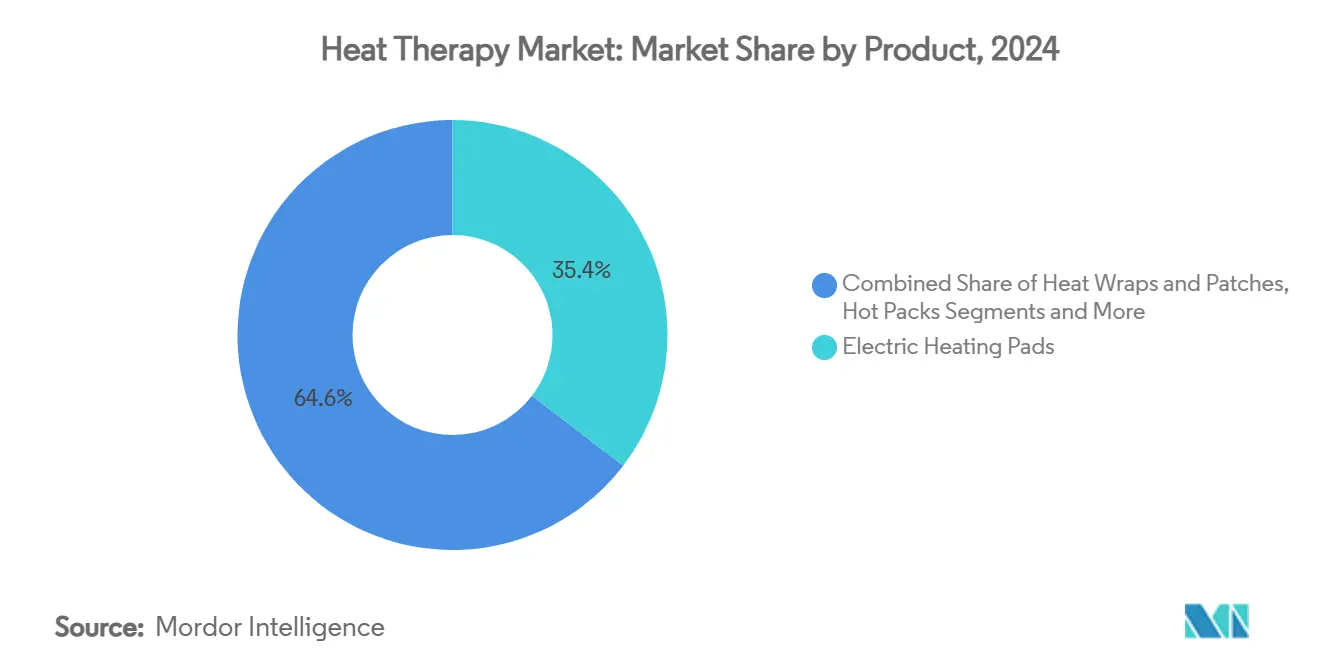
- By product type, heating pads led with 35.4% of the heat therapy market share in 2024, while infrared heat mats posted the quickest 6.9% CAGR.
- By modality, dry heat retained 38.1% revenue share in 2024; infrared and deep-heat systems are advancing at a 7.6% CAGR to 2030.
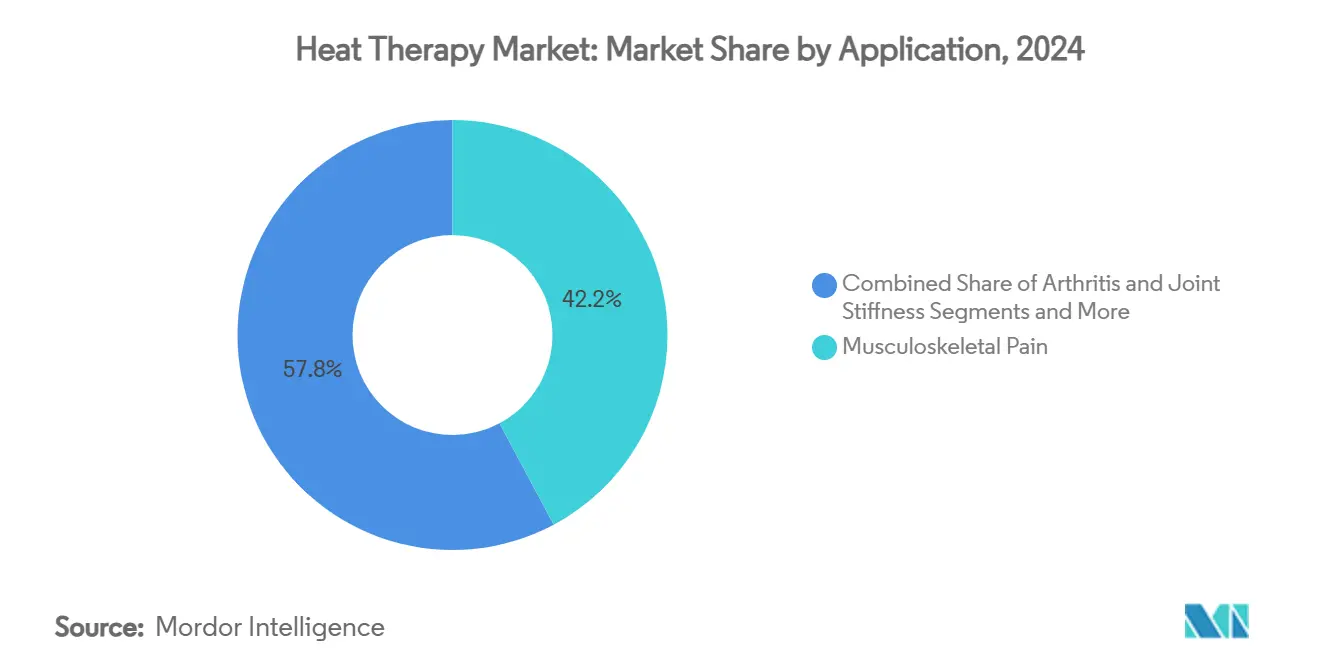
- By application, musculoskeletal pain accounted for 42.2% of the heat therapy market size in 2024, whereas menstrual and abdominal cramps present the fastest-growing 6.8% CAGR niche.
- By end user, home-care and self-treatment captured 47.3% of 2024 demand and is expanding at a 5.7% CAGR.
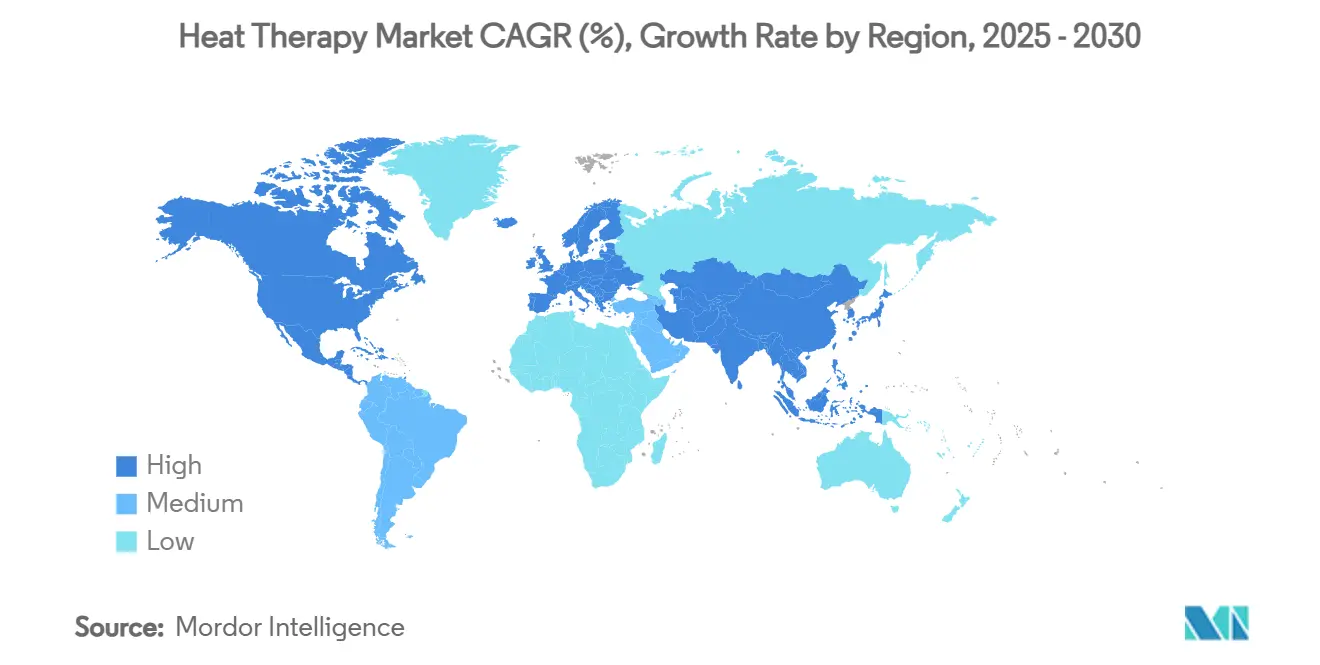
- By region, North America dominated with 43.6% 2024 revenue; Asia-Pacific is projected to record the highest 7.8% CAGR through 2030.
Note: Market size and forecast figures in this report are generated using Mordor Intelligence’s proprietary estimation framework, updated with the latest available data and insights as of January 2026.
Market Trends and Insights
Drivers Impact Analysis of Heat Therapy Market*
| Driver | (~) % Impact on CAGR Forecast | Geographic Relevance | Impact Timeline |
|---|---|---|---|
| Chronic pain prevalence in ageing populations | +1.80% | Global, with concentration in North America, Europe, Japan | Long term (≥ 4 years) |
| Rising adoption of at-home heat-therapy devices | +1.50% | Global, led by North America and Asia Pacific urban centers | Medium term (2-4 years) |
| Sports-injury rehabilitation demand | +1.20% | North America, Europe, Australia, urban Asia Pacific | Medium term (2-4 years) |
| Technology shift to far-infrared & smart wearables | +1.00% | Global, early adoption in developed markets | Long term (≥ 4 years) |
| Rx-grade digital/IoT heat-therapy platforms | +0.80% | North America, Europe, with gradual APAC adoption | Long term (≥ 4 years) |
| OTC-benefit coverage expansion | +0.70% | North America, Europe, select APAC markets | Medium term (2-4 years) |
| Source: Mordor Intelligence | |||
Chronic Pain Prevalence in Ageing Populations
Global longevity rises in parallel with chronic disease incidence. U.S. survey work shows chronic pain afflicts 24.3% of adults, jumping to 36.0% among people aged ≥ 65, with women experiencing higher rates than men.[1]Lucas JW, Sohi I, “Chronic pain and high-impact chronic pain in U.S. adults, 2023,” NCHS Data Brief, cdc.gov Budgetary pressure on health systems encourages broader uptake of low-cost non-opioid modalities such as thermal therapy, reinforcing multi-year demand. Rural communities show higher pain rates than large metropolitan areas, underscoring geographic head-room for vendors. The annual economic drag of chronic pain, estimated at USD 560 billion in the United States alone, strengthens the business case for widely accessible devices. Collectively, these epidemiological and fiscal factors provide a structural tailwind to the heat therapy market.
Rising Adoption of At-Home Heat-Therapy Devices
Homecare gained momentum during the pandemic, and it persists because patients value convenience and continuous symptom management. Portable pads and wraps with intuitive digital interfaces let users self-administer therapy while sharing compliance data with clinicians via tele-health portals. The Calopad system unveiled at CES 2025 blends deep heat up to 42 °C with AI-guided exercise plans, illustrating how connected devices elevate therapeutic engagement. Payers increasingly reimburse OTC-class devices, lowering out-of-pocket costs and broadening uptake among seniors and working professionals. Together, these developments pull the heat therapy market toward living rooms rather than clinics.
Sports-Injury Rehabilitation Demand
Athletes and fitness enthusiasts rely on thermal therapy for injury prevention, faster recovery, and performance optimization. Professional franchises partner with manufacturers to co-develop wraps that maintain precise temperatures across joints, accelerating micro-circulation and tissue repair. Rehabilitation centres integrate smart heat pads into physiotherapy protocols, capturing real-time muscle feedback and adjusting heat intensity accordingly. Emerging wearables equipped with cramp-prediction algorithms showcase how data analytics and targeted warmth mitigate strain-related downtime.[2]IEEE, “Wearable Device for Early Detection of Muscle Cramp with Heating Pad,” ieee.org As sports participation rises worldwide, particularly among ageing yet active populations, the niche contributes incremental but durable revenue to the broader heat therapy market.
Technology Shift to Far-Infrared & Smart Wearables
Far-infrared (FIR) rays penetrate deeper than conventional surface heaters, delivering improved analgesia and muscle relaxation with diminished skin irritation. Graphene-infused FIR fabrics have demonstrated adipose-tissue thermogenesis and reduced inflammation in laboratory settings. Integration of flexible circuits into textiles creates discreet garments that apply steady therapeutic warmth during daily routines. Smart algorithms learn usage patterns, calibrate temperature profiles, and prevent overheating, thereby boosting efficacy and safety. Vendors weaving these capabilities into mainstream designs position themselves to capture the highest growth pockets of the heat therapy market.
Restraints Impact Analysis of Heat Therapy Market*
| Restraint | % Impact on CAGR Forecast | Geographic Relevance | Impact Timeline |
|---|---|---|---|
| Burn-injury recalls & liability risk | -0.80% | Global, with heightened scrutiny in North America and Europe | Short term (≤ 2 years) |
| Substitution by cold therapy & analgesics | -0.50% | Global, varies by healthcare practice patterns | Medium term (2-4 years) |
| Regulatory grey-zone for consumer infrared devices | -0.40% | Global, most pronounced in North America and Europe | Medium term (2-4 years) |
| Energy-consumption sustainability concerns | -0.30% | Europe, North America, environmentally conscious markets | Long term (≥ 4 years) |
| Source: Mordor Intelligence | |||
Burn-Injury Recalls & Liability Risk
Safety incidents tarnish brand equity and invite regulatory intervention. In 2025, the FDA expanded a Class 2 recall covering 225,617 ThermaCare wraps owing to overheating hazards.[3]U.S. Food and Drug Administration, “Class 2 Device Recall ThermaCare HEATWRAPS,” fda.gov A separate Class 1 action withdrew 4,034 Mighty Bliss electric pads after burn reports. These events trigger higher insurance premiums, redesign costs, clinician hesitancy, and stalling near-term sales. Vendors now incorporate redundant temperature sensors, auto-shut-off circuits, and flame-retardant fabrics to restore confidence, but compliance testing adds lead time and expense.
Substitution by Cold Therapy & Analgesics
Cryotherapy excels in mitigating acute inflammation, steering physicians to recommend ice over heat during the first 48 hours post-injury. OTC analgesics deliver immediate relief, tempting patients with a quick fix rather than investing in durable devices. Nonetheless, rising concern over drug-related side effects and opioid dependency gradually tilts preference toward non-pharmacological options. Multifunction systems that alternate heating and cooling modes help vendors counter substitution risk by offering a single platform that fits multiple phases of injury care.
*Our forecasts treat driver/restraint impacts as directional, not additive. The impact forecasts reflect baseline growth, mix effects, and variable interactions.
Heat Therapy Market Segment Analysis
By Product:
Heating Pads Retain Scale, Infrared Mats AccelerateHeating pads have anchored therapeutic protocols for decades and therefore held 35.4% of 2024 revenue. Their broad clinical acceptance, modest price points, and retail availability ensure a stable core within the heat therapy market. Infrared heat mats, while smaller in absolute terms, expand at 6.9% CAGR by delivering deeper tissue penetration and lower skin-surface temperatures, attributes attractive to chronic-pain sufferers and sports professionals alike. Wraps and patches gain share in mobile use-cases because disposable adhesive formats address office, travel, and shift-work settings. Paraffin baths remain niche but indispensable in rheumatology clinics, while hot packs continue to serve emergency medicine due to minimal infrastructure requirements.
Continuous innovation revitalises legacy designs. Manufacturers integrate smart thermostats that cut power once the therapeutic temperature is achieved, a response to recent safety recalls. Beurer GmbH introduced advanced overheating-protection circuits as far back as 2001, illustrating how incremental engineering upgrades compound over time to preserve brand trust. Research on FIR pads using graphene composites offers paths to lighter, flexible mats that conform better to the body, broadening applicability and sustaining value growth within the heat therapy market.



By Modality:
Dry Heat Dominates; Infrared and Deep Heat SurgeDry heat comprised 38.1% of global revenue in 2024, reflecting its ubiquity across consumer and professional settings. Moist heat persists in physiotherapy due to enhanced heat transfer via humidity, yet maintenance requirements limit household use. Infrared and deep-heat technology is racing ahead with a 7.6% CAGR as evidence mounts of superior pain relief and reduced session times. Digital pads now embed sensors that map skin temperature and relay readings to smartphone dashboards, which in turn adjust wattage for optimal therapeutic zones. Fluid-circulating mattresses and garments serve post-operative wards where narrow temperature tolerances matter for wound healing.
Convergence of heat and cold into dual-mode devices helps facilities save procurement budgets and storage space. Regulatory pathways differentiate between powered heating units (Class II) and passive hot-water bottles (Class I), prompting manufacturers to select modality roadmaps that match their compliance resources while sustaining competitiveness across the heat therapy market.
By Application:
Musculoskeletal Pain Anchors Volume, Women’s Health RisesMusculoskeletal disorders captured 42.2% of 2024 consumption because low-back pain, arthritis, and tension injuries plague ageing workforces worldwide. The heat therapy market size for menstrual and abdominal cramps is smaller today yet expands at 6.8% CAGR as women seek drug-free symptom control compatible with professional lifestyles. Clinical trials show that electromagnetic field therapy delivered 70% pain reduction in severe dysmenorrhea after six weeks, evidencing demand for specialized devices. Photobiomodulation using LED arrays has also achieved ≥ 50% pain reduction in 55% of trial participants.
Sports-injury rehabilitation remains a headline niche as product managers target athletic clubs with wearable wraps that integrate strain sensors and dynamic heat adjustment. Post-operative recovery is another high-value avenue, since hospitals require FDA-cleared equipment with robust documentation—a barrier that protects incumbents while sustaining margins inside the heat therapy market.
By End User:
Home Care Takes the Lead, Clinical Settings SpecializeHome care and self-treatment accounted for 47.3% of total sales in 2024 and should advance 5.7% annually through 2030. Retail pharmacies, e-commerce storefronts, and big-box retailers have broadened their assortment, simplifying consumer access. Embedded Bluetooth modules push utilization data to cloud dashboards, empowering caregivers to monitor adherence for elderly relatives. Hospitals and clinics still command a sizeable share because surgical wards and specialist departments require high-specification fluid-regulating units to prevent tissue damage in immobilised patients. Hamilton Beach Brands’ acquisition of HealthBeacon demonstrates home-appliance players inserting themselves into the connected-care value chain, a move likely to intensify channel diversification.
Rehabilitation centres favour higher-capacity consoles that integrate with electronic health records (EHRs) systems for outcome tracking. Sports-medicine facilities purchase premium wraps with rapid warm-up cycles and modular battery packs to handle on-field requirements. Long-term care institutions, grappling with chronic comorbidities among residents, turn to safe low-voltage blankets and seat cushions, product forms gaining design attention from mid-tier suppliers.
Geography Analysis
North America and Europe Heat Therapy Market
North America generated 43.6% of 2024’s turnover, buoyed by advanced reimbursement structures and high chronic-pain incidence. Regulatory vigilance is rigorous, but transparent pathways encourage continued innovation provided safety thresholds are met. Europe’s mature healthcare environment nurtures steady incremental demand, especially as preventive care policies highlight non-drug interventions. The region also imposes energy-efficiency directives that spur eco-design initiatives among manufacturers.
APAC Heat Therapy Market
Asia-Pacific grows fastest at 7.8% CAGR through 2030. Japan, China, and India exhibit converging trends: population ageing, expanding insurance coverage, and rising musculoskeletal disease loads. Japan alone estimates 21.4 million citizens enduring low-back pain, a figure expected to swell as demographic ageing intensifies. Urban consumers across Southeast Asia are increasingly fitness-oriented, fuelling demand for portable wraps and wearable mats.
MEA and South America Heat Therapy Market
Middle East & Africa and South America register lower baselines but possess sizable latent potential once disposable income and distribution infrastructures deepen.

Competitive Landscape
Competition is moderate and primarily spread across three archetypes: legacy small-appliance brands (Sunbeam Products), dedicated medical-device manufacturers (Enovis Corporation), and digital-health newcomers with wearable portfolios. Enovis booked USD 525.2 million in 2024 net sales, a 22.6% uplift, helped by the LimaCorporate integration that diversified its orthopaedic and rehabilitation lines. Beurer GmbH leverages a century-old heritage in personal-care appliances to sustain European leadership while pivoting to smart connectivity for younger demographics.
Strategic thrusts include vertical integration of heating elements, software analytics, and companion mobile applications to secure ecosystem lock-in. Partnerships with sports franchises and tele-health platforms amplify brand reach and data insights. Regulatory compliance, especially around thermal efficacy and electrical safety, serves as both a barrier and a moat; companies with seasoned quality-management systems face lower recall risk and smoother market expansions. Emerging entrants typically differentiate via modular batteries, graphene conductors, or AI-driven temperature algorithms, though scaling production while meeting Class II regulatory obligations remains capital intensive. Overall, the heat therapy market supports coexistence of mass-market and specialty suppliers, with ample scope for mergers that consolidate intellectual property and global distribution.
Heat Therapy Industry Leaders
Sunbeam Products
Enovis
Beurer GmbH
Conair Corporation
Thermacare
- *Disclaimer: Major Players sorted in no particular order
Heat Therapy Market Companies Covered in this Report
- Sunbeam Products (Newell Brands)
- Beurer
- Conair Corporation
- DJO/Enovis (Chattanooga)
- Thermacare (Angelini Pharma)
- UTK Technology
- Battle Creek Equipment
- Dynatronics
- Breg
- OMRON
- Medline Industries
- Thermotex
- Bruder Healthcare
- Carex
- Pure Enrichment
- Aqua Relief (PMT)
- BodyMed
- HeatMax (HotHands)
- Relief Pak (Fabrication Enterprises)
- Sunbeam Canada

Recent Industry Developments in Heat Therapy Market
- January 2025: Calopad introduced a deep-heat wearable capable of reaching 42 °C while integrating AI-guided exercise coaching and over 200 rehabilitation protocols.
- September 2024: Beurer GmbH released its 2024/25 profile detailing ongoing R&D centred on smart overheating protection and cloud-linked user analytics.
- March 2024: Chiba University researchers reported positive findings for the Angel Touch alternating-magnetic-field device in endometriosis pain.


Global Heat Therapy Market Report Scope
| Electric Heating Pads |
| Heat Wraps & Patches |
| Hot Packs |
| Paraffin Bath Devices |
| Infrared Heat Lamps & Mats |
| Dry Heat Therapy |
| Moist Heat Therapy |
| Infrared / Deep Heat |
| Fluid-Circulating Heat Systems |
| Combined Hot-&-Cold Devices |
| Musculoskeletal Pain |
| Arthritis & Joint Stiffness |
| Sports Injuries & Recovery |
| Post-operative Pain |
| Menstrual & Abdominal Cramps |
| Home Care & Self-treatment |
| Hospitals & Clinics |
| Rehabilitation Centers |
| Sports Medicine Facilities |
| Long-term Care Facilities |
| North America | United States |
| Canada | |
| Mexico | |
| Europe | Germany |
| United Kingdom | |
| France | |
| Italy | |
| Spain | |
| Rest of Europe | |
| Asia Pacific | China |
| Japan | |
| India | |
| South Korea | |
| Australia | |
| Rest of Asia Pacific | |
| Middle East & Africa | GCC |
| South Africa | |
| Rest of Middle East & Africa | |
| South America | Brazil |
| Argentina | |
| Rest of South America |
| By Product | Electric Heating Pads | |
| Heat Wraps & Patches | ||
| Hot Packs | ||
| Paraffin Bath Devices | ||
| Infrared Heat Lamps & Mats | ||
| By Modality | Dry Heat Therapy | |
| Moist Heat Therapy | ||
| Infrared / Deep Heat | ||
| Fluid-Circulating Heat Systems | ||
| Combined Hot-&-Cold Devices | ||
| By Application | Musculoskeletal Pain | |
| Arthritis & Joint Stiffness | ||
| Sports Injuries & Recovery | ||
| Post-operative Pain | ||
| Menstrual & Abdominal Cramps | ||
| By End User | Home Care & Self-treatment | |
| Hospitals & Clinics | ||
| Rehabilitation Centers | ||
| Sports Medicine Facilities | ||
| Long-term Care Facilities | ||
| By Geography | North America | United States |
| Canada | ||
| Mexico | ||
| Europe | Germany | |
| United Kingdom | ||
| France | ||
| Italy | ||
| Spain | ||
| Rest of Europe | ||
| Asia Pacific | China | |
| Japan | ||
| India | ||
| South Korea | ||
| Australia | ||
| Rest of Asia Pacific | ||
| Middle East & Africa | GCC | |
| South Africa | ||
| Rest of Middle East & Africa | ||
| South America | Brazil | |
| Argentina | ||
| Rest of South America | ||


Key Questions Answered in the Report
How large is the heat therapy market today?
The heat therapy market size stood at USD 1.65 billion in 2025 and is on track to reach USD 2.29 billion by 2030.
What is the expected CAGR for heat-based pain-relief products through 2030?
Aggregate revenue is projected to rise at a 6.8% CAGR from 2025 to 2030.
Which product category generates the highest revenue?
Conventional heating pads maintained leadership with 35.4% global revenue share in 2024.
Which region is expanding fastest in sales value?
Asia-Pacific is forecast to register a 7.8% CAGR on the back of demographic ageing and improving healthcare access.
What safety challenges confront manufacturers?
Recalls linked to overheating and burn incidents drive stricter FDA scrutiny, prompting integration of redundant sensors and auto-shut-off functions.
Why is smart-wearable technology important for future growth?
Far-infrared fabrics and IoT-enabled controllers enhance therapeutic depth, user engagement, and data-driven treatment optimisation, differentiating next-generation devices from legacy pads.
Page last updated on:


 Your data is secure and never sold or shared.


