
Market Overview
| Study Period | 2021 - 2031 |
|---|---|
| Market Size (2026) | USD 3.08 Billion |
| Market Size (2031) | USD 3.85 Billion |
| Growth Rate (2026 - 2031) | 4.55 % |
| Fastest Growing Market | Asia Pacific |
| Largest Market | Europe |
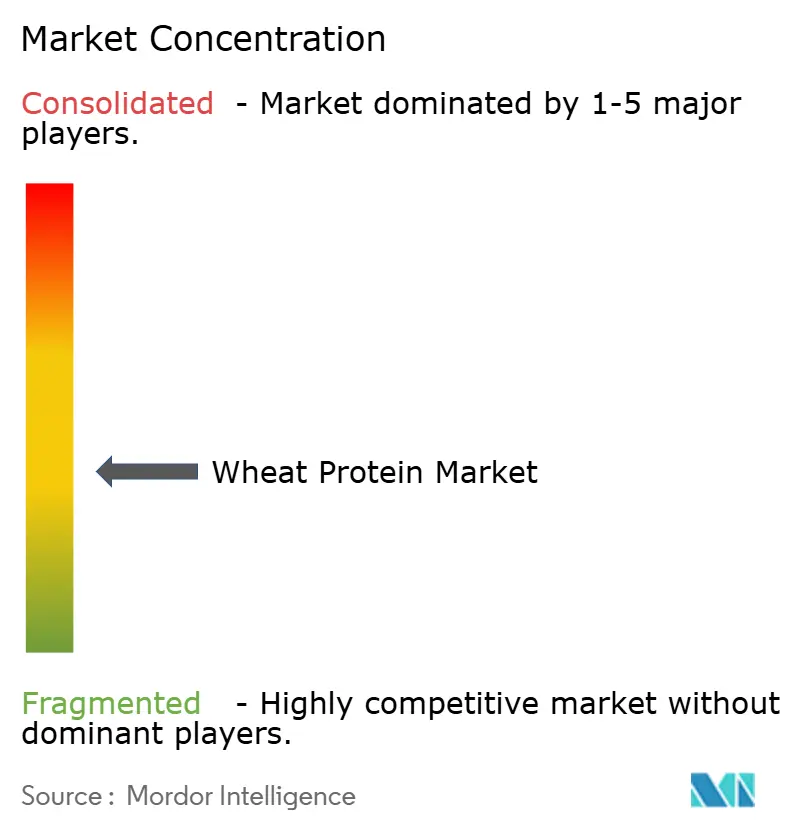
| Market Concentration | Medium |
Major Players
*Disclaimer: Major Players sorted in no particular order Image © Mordor Intelligence. Reuse requires attribution under CC BY 4.0. |
|
Wheat Protein Market Analysis by Mordor Intelligence
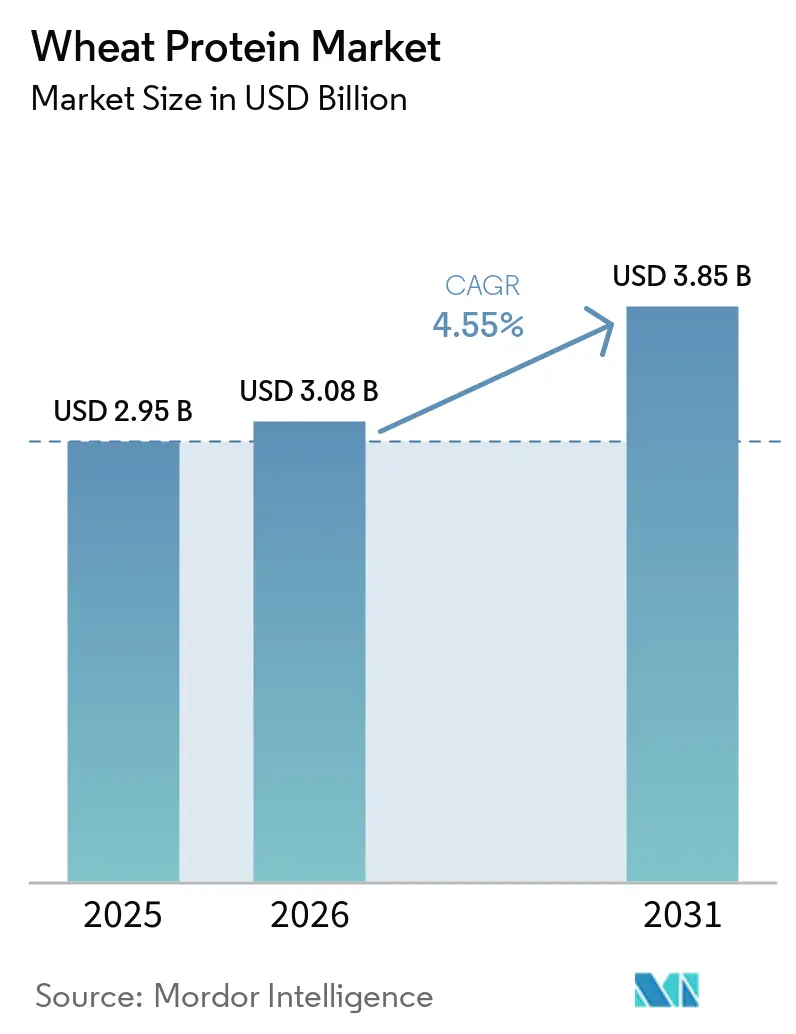
The wheat protein market size is expected to grow from USD 2.95 billion in 2025 to USD 3.08 billion in 2026 and is forecast to reach USD 3.85 billion by 2031 at 4.55% CAGR over 2026-2031. Adoption is pivoting toward higher-margin applications—organic, non-GMO and functional isolates—while supply chain volatility and persistently tight gluten-free regulations temper headline growth. Consumer interest in protein fortification, clean label claims and plant-based foods keeps volume demand resilient even as processors confront wheat price cycles and logistics risk. Premium segments—such as organic isolates—show faster uptake despite modest volumes, illustrating how value creation is shifting from commodity sales to differentiated solutions. Europe retains scale leadership through entrenched bakery traditions and rigorous quality norms, whereas Asia-Pacific advances the fastest as alternative protein policies gain traction and urban diets diversify.
Key Report Takeaways
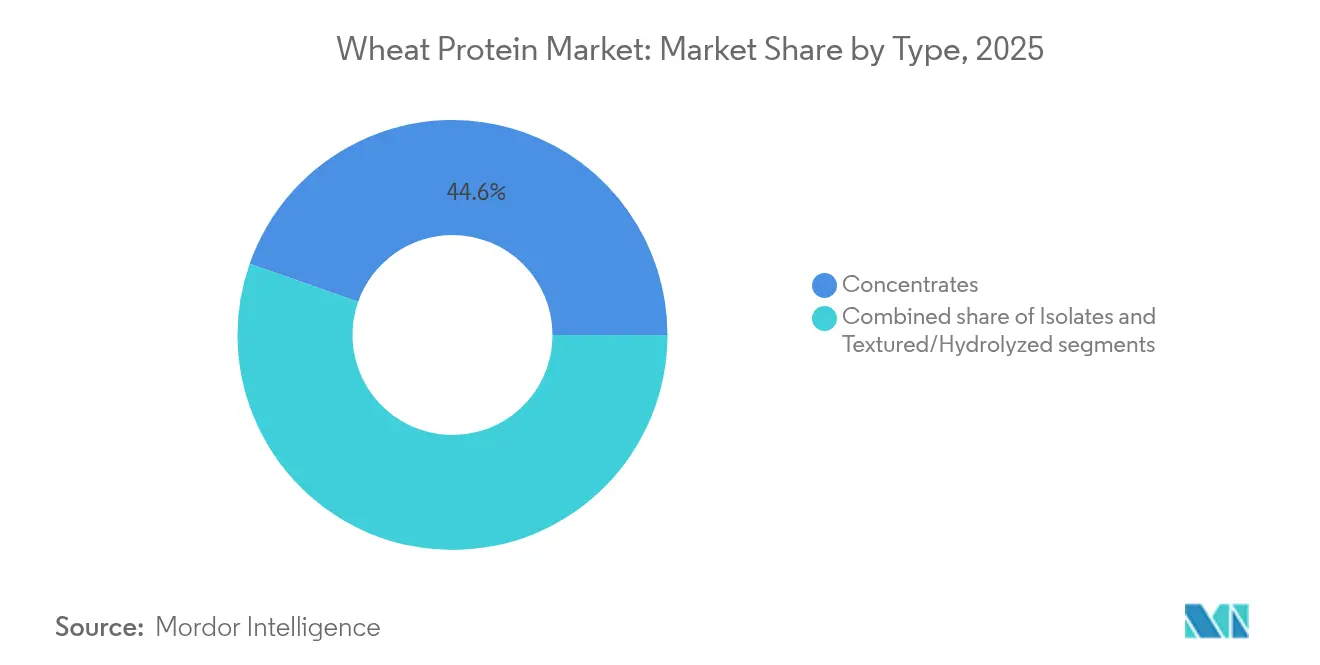
- By type, concentrates led with 44.62% of the wheat protein market share in 2025, while isolates posted the highest 6.42% CAGR over the same period.
- By nature, conventional products captured 89.12% share in 2025; organic wheat protein expands at 8.47% CAGR to 2031.
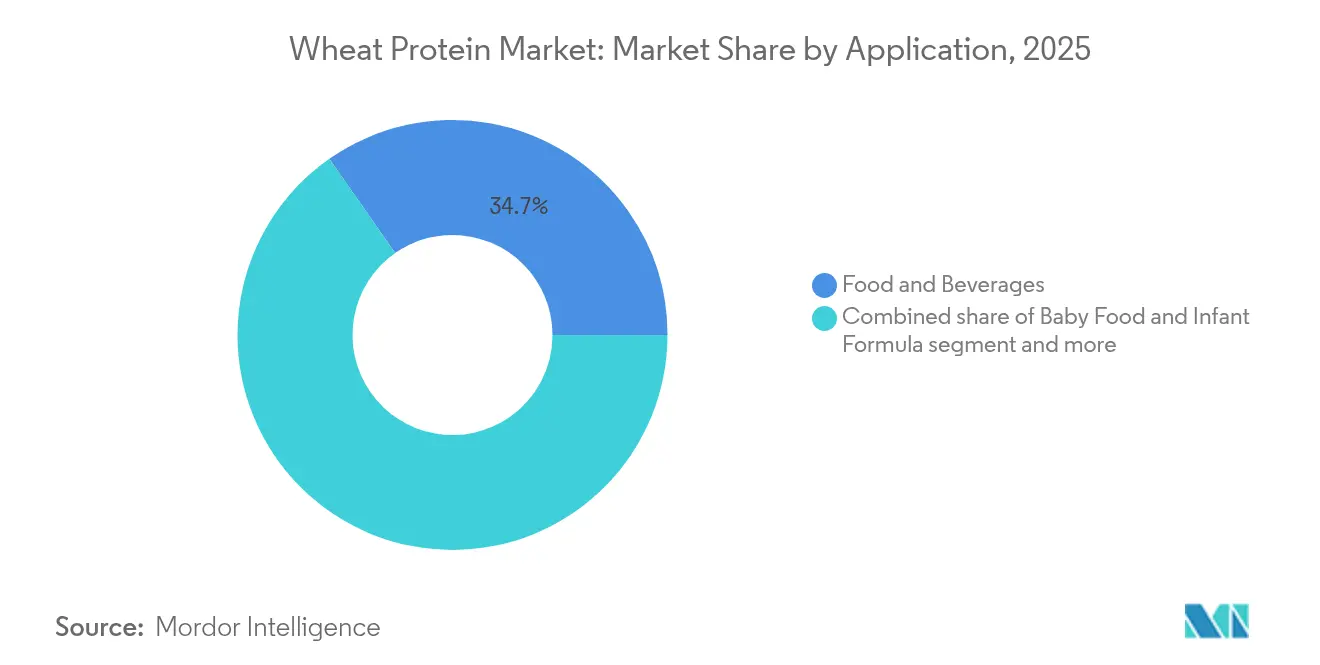
- By application, food and beverages held a 34.71% share of the wheat protein market size in 2025, whereas sports and functional nutrition are projected to rise at 7.88% CAGR through 2031.
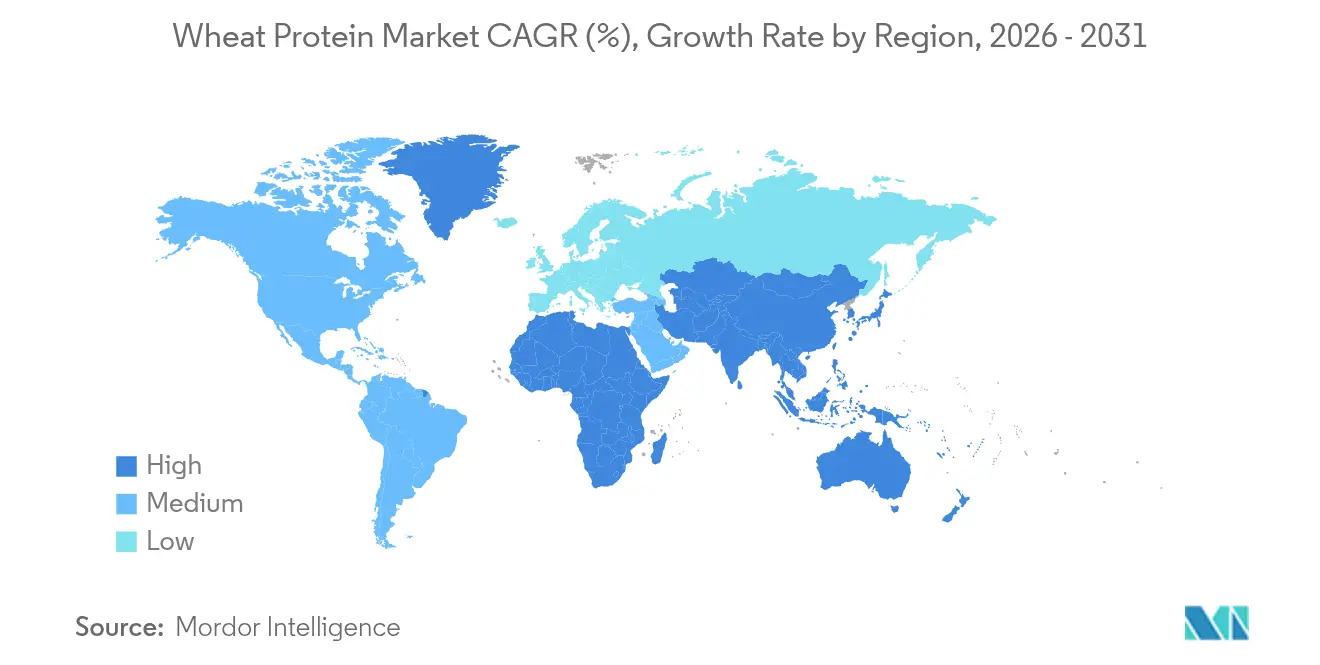
- By geography, Europe commanded 33.68% of the wheat protein market in 2025; Asia-Pacific is poised for a 7.12% CAGR by 2031
Note: Market size and forecast figures in this report are generated using Mordor Intelligence’s proprietary estimation framework, updated with the latest available data and insights as of 2026.
Market Trends and Insights
Drivers Impact Analysis of Wheat Protein Market*
| Drivers | (~) % Impact on CAGR Forecast | Geographic Relevance | Impact Timeline |
|---|---|---|---|
| Rising demand for high-protein bakery products | +1.2% | North America, Europe | Medium term (2-4 years) |
| Surge in demand for clean label and natural ingredients | +1.0% | North America, Europe | Long term (≥ 4 years) |
| Rising demand for plant-based proteins in meat alternatives | +0.8% | Asia-Pacific, Global | Medium term (2-4 years) |
| Growing application in sports and nutritional supplements | +0.7% | North America, Europe, Asia-Pacific | Short term (≤ 2 years) |
| Growing preference for Non-GMO ingredient declarations | +0.5% | North America, Europe | Long term (≥ 4 years) |
| Growing adoption of wheat protein in animal feed and pet food | +0.4% | Global, led by North America & Europe | Medium term (2-4 years) |
| Source: Mordor Intelligence | |||
Rising Demand for High-Protein Bakery Products
Wheat protein enhances dough structure and increases protein content, enabling manufacturers to remove synthetic conditioners while maintaining product volume and texture. The protein's molecular structure forms a strong gluten network that traps gas bubbles during fermentation, resulting in improved bread volume and crumb structure. Oklahoma State University has developed high-strength wheat varieties—Paradox, Breadbox, and Firebox—demonstrating agricultural innovations that favor natural texturizing agents over chemical additives. These varieties contain higher protein levels and superior gluten quality compared to conventional wheat. Ingredient manufacturers offer wheat protein concentrates and isolates that maintain dough elasticity, providing both functional and nutritional benefits. The proteins can be customized for specific applications, from bread and pastries to pasta and snacks. This dual functionality supports higher pricing in artisanal bread products and healthier snack options, as consumers increasingly seek clean-label alternatives with enhanced nutritional profiles.
Surge in Demand for Clean Label and Natural Ingredients
The clean label movement has evolved from marketing preference to regulatory necessity, with 11% of people in the United States following clean eating habits, according to the International Food Information Council data from 2024 [1]Source: International Food Information Council, "Type of Eating Pattern or Diet Followed", hific.org. This consumer sentiment translates into procurement mandates for food manufacturers seeking to eliminate synthetic additives and preservatives from formulations. Wheat protein's inherent functionality in water binding, emulsification, and gel formation positions it as a natural replacement for chemical processing aids, particularly in applications where protein content and clean label status create competitive differentiation. The FDA's gluten-free labeling regulations, requiring products to contain less than 20 ppm of gluten, paradoxically drive demand for wheat protein in non-gluten-free applications where its functional properties can be fully utilized, according to the Food and Drug Administration.
Rising Demand for Plant-Based Proteins in Plant-Based Meat Alternatives
Alternative protein development in Asia-Pacific has gained momentum comparable to the clean energy transition, with wheat protein serving as a foundational ingredient in meat analog formulations. Wheat gluten's unique viscoelastic properties enable the creation of fibrous textures that closely mimic animal muscle structure, making it indispensable in products like seitan and hybrid meat alternatives. The challenge lies in wheat protein's functional limitations compared to animal proteins, particularly in terms of amino acid completeness and digestibility, which drives innovation in protein blending and processing technologies. Cargill's partnership expansion with ENOUGH to scale mycoprotein production to over 1 million tons by 2033 illustrates how established players are diversifying protein portfolios while maintaining wheat protein as a core component. The plant-based meat segment's growth creates sustained demand for wheat protein isolates and textured variants, though success depends on continued innovation in processing techniques that enhance nutritional profiles and sensory attributes.
Growing Application in Sports and Nutritional Supplements
Sports and nutritional supplement consumption are rising due to increased sports participation and active lifestyles worldwide. This growth is particularly evident in developed regions where health consciousness and fitness activities have become integral parts of daily routines. According to Sports England data from 2024, 6,695.5 thousand people in England attended fitness classes twice a month, demonstrating the significant market potential [2]Source: Sports England, "Sports Participation in England", sportsengland.com. Owing to this, the use of wheat protein in sports nutrition supplements is increasing. Wheat protein benefits from an established supply chain and favorable cost structure, making it suitable for mass-market sports nutrition products that cannot sustain premium pricing. The efficient production processes and widespread availability of wheat as a raw material contribute to its competitive advantage in the market. The segment's growth depends on processing innovation that enhances wheat protein's solubility and digestibility while preserving its clean label characteristics. These improvements are essential for meeting consumer demands for high-quality, natural protein supplements that deliver optimal nutritional benefits.
Restraints Impact Analysis of Wheat Protein Market*
| Restraint | (~) % Impact on CAGR Forecasts | Geographic Relevance | Impact Timeline |
|---|---|---|---|
| Prevalence of Celiac Disease and Gluten Sensitivity | -0.8% | Global, with higher impact in North America & Europe | Long term (≥ 4 years) |
| Availability and Preference for Other Plant-Based Proteins | -0.6% | Global, with Asia-Pacific showing diverse protein adoption | Medium term (2-4 years) |
| Fluctuating Raw Material Prices | -0.5% | Global, with particular impact on price-sensitive markets | Short term (≤ 2 years) |
| Functional Limitations Compared to Animal Protein | -0.4% | Global, affecting premium applications | Medium term (2-4 years) |
| Source: Mordor Intelligence | |||
Prevalence of Celiac Disease and Gluten Sensitivity
According to the Australian Broadcasting Corporation data from 2024, 1 in 70 people in Australia had celiac disease [3]Source: Australia Broadcasting Corporation, "Prevalence of Celiac Disease in Australia", abc.net.au. The FDA's gluten-free labeling requirements limit gluten content to less than 20 ppm, preventing wheat protein use in products for gluten-sensitive consumers. This regulation creates a permanent demand constraint that processing innovations cannot address. The restriction affects product development, formulation strategies, and manufacturing processes across the food industry. While the growing global market for gluten-free products reduces wheat protein applications, it also consolidates wheat protein demand in traditional segments where its functional properties remain essential. These segments include bakery products, pasta, and processed meat applications, where gluten's unique viscoelastic properties are crucial for product quality. Wheat protein manufacturers operate within these regulatory boundaries by focusing on applications where gluten functionality delivers unique value, particularly in conventional food products that rely on wheat protein's binding, texturizing, and structure-building capabilities.
Fluctuating Raw Material Prices
Wheat price volatility creates margin compression for protein processors, with the World Bank projecting wheat prices at USD 265 per metric ton in 2025-2026, representing a USD 55.65 decline from 2024 levels, according to the World Bank data. This price decline, while potentially stimulating downstream demand, creates procurement planning challenges for wheat protein manufacturers who must balance inventory costs against price risk exposure. Geopolitical factors, including the ongoing Ukraine conflict and trade policy uncertainties, introduce additional volatility that complicates long-term supply agreements and pricing strategies. The USDA's projection of wheat stocks-to-use ratios at 47% for 2025/26, above the 16-year average of 41%, suggests continued price pressure that could benefit wheat protein demand while challenging processor profitability. Successful wheat protein companies are implementing hedging strategies and diversifying supply sources to mitigate price volatility impacts while maintaining competitive positioning in price-sensitive market segments.
*Our forecasts treat driver/restraint impacts as directional, not additive. The impact forecasts reflect baseline growth, mix effects, and variable interactions.
Wheat Protein Market Segment Analysis
By Type:
Concentrates Dominate Through Cost EfficiencyWheat protein concentrates command a 44.62% market share in 2025, leveraging their cost-effectiveness in high-volume food applications where moderate protein content meets functional requirements without premium pricing constraints. The segment's dominance reflects the food industry's pragmatic approach to protein fortification, where concentrates provide sufficient functionality for bakery applications, processed foods, and animal feed formulations at price points that maintain mass-market accessibility. Isolates represent the fastest-growing segment at 6.42% CAGR through 2031, driven by specialized applications in sports nutrition, infant formula, and premium food products where higher protein purity justifies cost premiums.
The segment dynamics reflect broader industry trends toward functional differentiation, with companies like MGP Ingredients strategically migrating sales toward higher-margin specialty wheat products, including their Arise® and Proterra® lines. Processing technology advances enable isolated production with protein content exceeding 83%, as demonstrated by Roquette's VITEN® product line, creating opportunities for premium positioning in applications where protein density drives value creation



By Nature:
Organic Acceleration Despite Conventional DominanceConventional wheat protein maintains an 89.12% market share in 2025, reflecting its dominance due to established supply chains, cost competitiveness, and proven functionality across diverse applications where organic certification does not command sufficient premiums to justify higher input costs. The segment's sustainability depends on continued consumer demand for organic products and successful farmer transition programs that expand organic wheat production capacity.
Organic wheat protein accelerates at a 8.47% CAGR through 2031 despite conventional products dominating the market, reflecting the premium segment's rapid expansion as U.S. organic wheat production rebounded 22% to 24.41 million bushels in the 2023–24 marketing year, according to the United States Department of Agriculture. The USDA's announcement of USD 10 million in funding to support organic producer transitions indicates government recognition of organic agriculture's strategic importance, potentially expanding organic wheat protein supply in future periods.
By Application:
Sports Nutrition Leads Growth While Bakery Maintains Market DominanceThe food and beverages segment maintains its market leadership position with a 34.71% share in 2025, supported by well-established supply chain networks and documented functional benefits in various baked goods applications. Sports and functional nutrition applications are experiencing significant growth at 7.88% CAGR through 2031, driven by increasing consumer demand for protein-enriched performance products. Baby food and infant formula segments require specific processing methods and quality controls to ensure proper digestibility, nutrient absorption, and safety standards. The elderly nutrition and medical nutrition segments focus on specialized protein formulations that meet distinct metabolic needs and address age-related nutritional requirements.
Wheat protein demonstrates exceptional adaptability across various applications, serving both basic binding functions in processed foods and fulfilling complex nutritional requirements in specialized products. The protein's functional properties enable it to act as an effective emulsifier, stabilizer, and texture modifier in different food systems. The animal feed segment provides consistent volume through regular demand cycles but shows limited growth prospects due to competition from alternative protein sources. Personal care and cosmetics emerge as promising opportunities, utilizing wheat protein's film-forming capabilities and moisture-retention properties for non-nutritional applications in skincare and haircare products.
Geography Analysis
Europe Wheat Protein Market
In 2025, Europe holds the largest market share at 33.68%, supported by advanced food processing infrastructure, strict EFSA regulations, and a focus on quality and safety. These regulations drive innovation in areas like fortified bakery, premium meat alternatives, and clinical nutrition. Rising demand for plant-based products with functional benefits is pushing wheat protein into high-value segments. Companies are differentiating through proprietary technologies and partnerships with health and wellness brands to enhance market penetration.
APAC Wheat Protein Market
The Asia-Pacific region is the fastest-growing market, with a projected 7.12% CAGR through 2031. Growth is driven by food security concerns, a growing middle class, and government initiatives promoting alternative proteins for nutrition and sustainability. Countries like China, India, and Southeast Asia are adopting wheat protein in processed foods due to its affordability and versatility. Governments are investing in food-tech R&D, expanding plant protein infrastructure, and encouraging private-sector collaborations to reduce reliance on animal protein and meet climate goals. Domestic food processors are also driving demand for cost-effective, localized protein sources.
MEA and APAC Wheat Protein Market
The Middle East and Africa represent emerging opportunities where population growth and dietary diversification drive protein demand, though infrastructure limitations constrain market development in some areas. Regional wheat protein trade patterns are evolving in response to geopolitical tensions, with the Ukraine conflict demonstrating supply chain resilience as global wheat shipments withstood initial disruptions through supplier diversification and strategic stockpile utilization. The geographic distribution of wheat protein demand increasingly reflects local food culture integration, with Asian fermentation traditions creating unique applications for wheat protein in traditional and modern food products.

Regulatory Landscape
Regulation for wheat protein and wheat gluten is anchored by identity and compositional standards, along with allergen and trade controls that shape where and how wheat-derived ingredients can be used. Codex Stan 163-1987 (Rev. 1-2001) specifies vital wheat gluten content at 80% or more on a dry weight basis, which supports harmonized specifications across supply chains. At the same time, gluten-related labeling requirements in key markets constrain product positioning for gluten-sensitive consumers.
In 2026, regulatory actions increased compliance and sourcing considerations for wheat protein exporters and downstream users. Canada managed access to wheat products via its Wheat Products Tariff Rate Quota (TRQ), with a February 2026 notice stating that the 2025-2026 TRQ was filled and General Import Permit No. 20 was suspended until July 31, 2026. Separately, the Canada Border Services Agency initiated a June 19, 2026 investigation into alleged dumping of wheat gluten from Italy, Poland, and the United Kingdom. On labeling, the United States saw the introduction of H.R. 8385 (April 20, 2026) and H.R. 9048 (May 29, 2026), proposing to treat gluten-containing grains (including wheat) as major food allergens, which points to a potential shift in future ingredient disclosure practices. Indonesia also expanded trade controls through Ministry of Trade Regulation No. 11 of 2026 (issued April 21, 2026), introducing import licensing for wheat for feed effective May 8, 2026, reinforcing national self-sufficiency measures for raw material availability.
Competitive Landscape
The wheat protein market exhibits moderate fragmentation, characterized by a balance of established global ingredients companies and specialized protein manufacturers competing across multiple application segments. Major players in the market include Archer Daniels Midland Company, Cargill, Incorporated, Roquette Frères, MGP Ingredients, Inc., and Kerry Group plc. Strategic differentiation centers on processing technology advancement, with leaders like Cargill investing in proprietary processes that enhance the functional properties of wheat proteins for specific applications.
Vertical integration is emerging as a competitive advantage, with companies controlling the value chain from wheat sourcing to protein fractionation, achieving superior cost positions and quality control. White space opportunities exist primarily in specialized application development, particularly in the personal care sector, where hydrolyzed wheat proteins are gaining traction for their moisturizing and conditioning properties.
Technology deployment is increasingly central to competitive strategy, with artificial intelligence applications accelerating ingredient discovery and formulation optimization, potentially disrupting traditional R&D timelines and enabling smaller players to compete through innovation agility rather than scale advantages.
Wheat Protein Industry Leaders
-
Archer Daniels Midland Company
-
Cargill, Incorporated
-
Roquette Frères
-
MGP Ingredients, Inc.
-
Kerry Group plc
- *Disclaimer: Major Players sorted in no particular order
Wheat Protein Market Companies Covered in this Report
- Archer Daniels Midland Company
- Cargill, Incorporated
- Roquette Freres
- MGP Ingredients, Inc.
- Kerry Group plc
- Sudzucker AG
- Kroner-Starke GmbH
- Tereos S.A.
- Manildra Group
- Crespel & Deiters GmbH & Co. KG
- Tate & Lyle PLC
- CropEnergies AG
- A. Costantino & C. S.p.A.
- Glanbia plc
- Croda International Plc
- Glico Nutrition Co., Ltd.
- The Scoular Company
- Sedamyl
- Kelisema
- Meelunie B.V.

Market Opportunities and Future Outlook
Market opportunities are tied to ongoing capacity additions and processing technologies that support textured wheat protein and protein isolates for meat analogs, bakery, and nutrition applications. In March 2026, J.Macêdo inaugurated a new industrial wheat processing complex in Londrina, Brazil (R$ 300 million, 660 tons/day), pointing to local availability growth for downstream wheat protein streams. In May 2026, Kazakhstan signed an investment agreement for a grain deep-processing plant in Akmola targeting 1 million tons of wheat annually, which can support wheat protein production alongside flour and starch fractions. Roquette texture line expansion in 2025 also signals continued commercialization of textured wheat formats designed for clean-label demand.
Geographic whitespace appears where these investments improve local availability of protein ingredients for food manufacturers seeking cost-effective plant proteins and shorter supply chains. The same build-out also aligns with higher-margin applications such as functional isolates and textured variants, while partially mitigating gluten-related positioning constraints through clearer labeling and diversified portfolios across food, nutrition, and non-food uses such as personal care ingredients.
Recent Industry Developments in Wheat Protein Market
- July 2026: Crespel & Deiters commenced commercial-scale production of textured plant protein using dry extrusion technology at its Helmond, Netherlands facility in partnership with Happy Plant Protein. The move adds scalable European capacity for clean-label TVP applications in meat alternatives and prepared foods. It also reflects wheat processors extending beyond vital gluten into higher value, application-driven formats.
- June 2025: Roquette Freres launched NUTRALYS T WHEAT textured wheat protein for chicken-style meat alternatives. The launch expands Roquette's plant protein toolbox to support formulation options where wheat protein's viscoelasticity and texture-building properties help achieve fibrous bite in meat analogs.
- August 2024: Crespel & Deiters invested USD 20.7 million to build a new silo facility at its main site in Ibbenburen, Germany. The added storage and handling capacity strengthened upstream logistics and raw material management for wheat processing operations.


Wheat Protein Market Report Scope and Research Methodology
Market Definition and Coverage
We define the wheat protein market as the sales value of wheat derived proteins used in food, nutrition, feed, and select non-food uses, counted at the point of commercial sale across major regions.
Scope exclusions: We exclude on-farm wheat production value and finished consumer foods where wheat protein is only a minor ingredient and not separately priced.
Segments Covered in This Report
-
By Type
- Concentrates
- Isolates
- Textured/Hydrolyzed
-
By Nature
- Conventional
- Organic
-
By Application
-
Food and Beverages
- Bakery and Snacks
- Breakfast Cereals
- Meat/Poultry/Seafood and Meat Alternative Products
- RTE/RTC Food Products
- Condiments/Sauces
- Sport/Performance Nutrition
- Baby Food and Infant Formula
- Elderly Nutrition and Medical Nutrition
- Animal Feed
- Personal Care and Cosmetics
-
Food and Beverages
-
By Geography
-
North America
- United States
- Canada
- Mexico
- Rest of North America
-
Europe
- Germany
- United Kingdom
- France
- Italy
- Spain
- Russia
- Rest of Europe
-
Asia-Pacific
- China
- India
- Japan
- South Korea
- Australia
- Rest of Asia-Pacific
-
South America
- Brazil
- Argentina
- Rest of South America
-
Middle East and Africa
- United Arab Emirates
- Saudi Arabia
- South Africa
- Rest of Middle East and Africa
-
North America
Data Sources, Market Sizing, and Validation
Desk Research
Desk work started with building a simple view of supply, demand, and pricing for wheat proteins. We referenced public data series such as FAOSTAT for wheat production context, USDA supply and use updates, UN Comtrade trade flows for wheat gluten and related concentrates, and Eurostat food industry indicators to understand demand direction in Europe.
To ground application demand, we also reviewed sources such as Codex Alimentarius and national food-labeling guidance where relevant, along with peer reviewed articles on wheat protein functionality in bakery and meat analogs. Company annual reports, investor slides, and credible business press were used to confirm capacity additions, product mix shifts (isolates versus concentrates), and general pricing commentary. Paid subscriptions that aggregate company financials, patents, and shipment-level trade records were used selectively to fill gaps, but the sources listed here are not exhaustive, and we checked other public references for cross-verification and clarification.
Primary Interviews and Surveys
Primary work focused on validating what drives real consumption, pricing, and channel behavior for wheat proteins. We spoke with a mix of ingredient suppliers, distributors, and downstream buyers in food and nutrition, then used follow-ups to confirm regional differences in demand pull and typical contract terms across major geographies.
Distribution of primary research fieldwork respondents
| Company type | Respondent position | Region |
|---|---|---|
| Top tier: 25% | CXOs: 18% | APAC: 42% |
| Mid tier: 55% | Functional/Unit leaders: 23% | EMEA: 36% |
| Smaller Players: 20% | Managers: 59% | Americas: 22% |
Market-Sizing & Forecasting
Our sizing starts with a top-down build where wheat processing output, trade direction, and application penetration signals are used to reconstruct the addressable demand pool by region. We then corroborate the result using selective bottom-up approximations, such as sampled supplier revenue splits, distributor channel checks, and an ASP x volume sense-check for major product forms, which helps adjust totals when one input series looks noisy.
Key inputs used in the model include wheat price cycles that influence protein ingredient pricing, the share shift between concentrates, isolates, and textured or hydrolyzed formats, import-export movements for commonly traded wheat protein forms, and demand indicators tied to bakery and snacks and plant-based formulations. We also track the mix between B2B supply and B2C retail packs, since pricing and margins differ by channel, and this can affect value outcomes even when volumes move more slowly.
For forecasting, scenario analysis is used around wheat cost pass-through, adoption pace in high-protein foods, and regional growth patterns. The ranges are narrowed using what interviewees expect for contracting, reformulation timelines, and price renegotiation cycles. Where bottom-up inputs are incomplete for smaller markets, gaps are handled through proxy ratios from comparable countries, followed by re-checks against trade intensity and local food processing scale.
Data Validation & Update Cycle
Model outputs are checked against independent signals such as trade trends, reported capacity moves, and application demand markers, so the final numbers do not rely on one dataset. When large variances appear by region or year, we revisit assumptions, re-check unit conversions, and re-contact select respondents to confirm whether the change is real or timing-related.
Before sign-off, the work goes through multi-step internal reviews that focus on consistency across regions, pricing logic, and the reasonableness of growth drivers. Reports are refreshed annually, with interim updates when material events occur, and a final pre-delivery pass is completed so clients receive the most current view available.
Mordor Intelligence's Global Wheat Protein Market Size Versus Other Published Estimates
Published market sizes for wheat protein often look different because each publisher sets its own timing, pricing logic, and scope boundaries, and those choices add up quickly in value-based markets. We see the biggest spreads when estimates mix years, apply different exchange-rate timing, or use a single average price across product types that actually sell at very different price points.
Another common driver is what gets counted as wheat protein in the first place, since some views lean heavily toward food-grade only, while others also fold in adjacent ingredients or broader processed food value. The refresh cadence matters too, because wheat and energy costs can move fast, and older assumptions can keep prices and regional splits out of line with current contracting behavior and trade signals. This is why the currency timing and ASP update checks used in Mordor Intelligence tend to keep the number closer to what buyers and suppliers describe in recent quarters.
Benchmark comparison
| Source | Market Size | Gaps in Research Methodology |
|---|---|---|
| Mordor Intelligence | USD 3.08 B (2026) | |
| Trade Journal A | USD 3.70 B (2025) | Uses a different base year and faster growth step-up, and the pricing build appears to average across product types without clearly separating concentrates versus isolates and textured formats in the ASP progression. |
| Industry Blog B | USD 3.01 B (2024) | Treats the market mainly through a food-grade versus feed-grade lens and shows possible unit or labeling inconsistencies in segment value reporting, which can compress the total versus a type and application-based roll-up. |
The spread across these figures mainly comes from year alignment, how exchange rates and price updates are timed, and whether the model separates higher-priced isolates from lower-priced concentrates before aggregating. By keeping scope tied to clearly priced wheat protein forms and then validating the totals against trade movement and buyer-seller feedback, we end up with a number that can be traced back to practical, repeatable inputs.


Key Questions Answered in the Report
What is the current size of the wheat protein market?
The wheat protein market is worth USD 3.08 billion in 2026 and is projected to reach USD 3.85 billion by 2031.
Which product type leads the market?
Concentrates lead with 44.62% share in 2025 owing to their cost-efficiency in high-volume bakery and snack applications.
Which application is growing the fastest?
Sports and functional nutrition is expanding at an 7.88% CAGR through 2031 as consumers switch to plant-based performance products.
Why is Asia-Pacific the fastest-growing region?
Policy support for alternative proteins and rising urban incomes drive a 7.12% CAGR for the region’s wheat protein demand.
Page last updated on:


 Your data is secure and never sold or shared.


