
Protein Expression Market Size and Share
Market Overview
| Study Period | 2020 - 2031 |
|---|---|
| Market Size (2026) | USD 3.37 Billion |
| Market Size (2031) | USD 4.98 Billion |
| Growth Rate (2026 - 2031) | 8.12 % |
| Fastest Growing Market | Asia Pacific |
| Largest Market | North America |
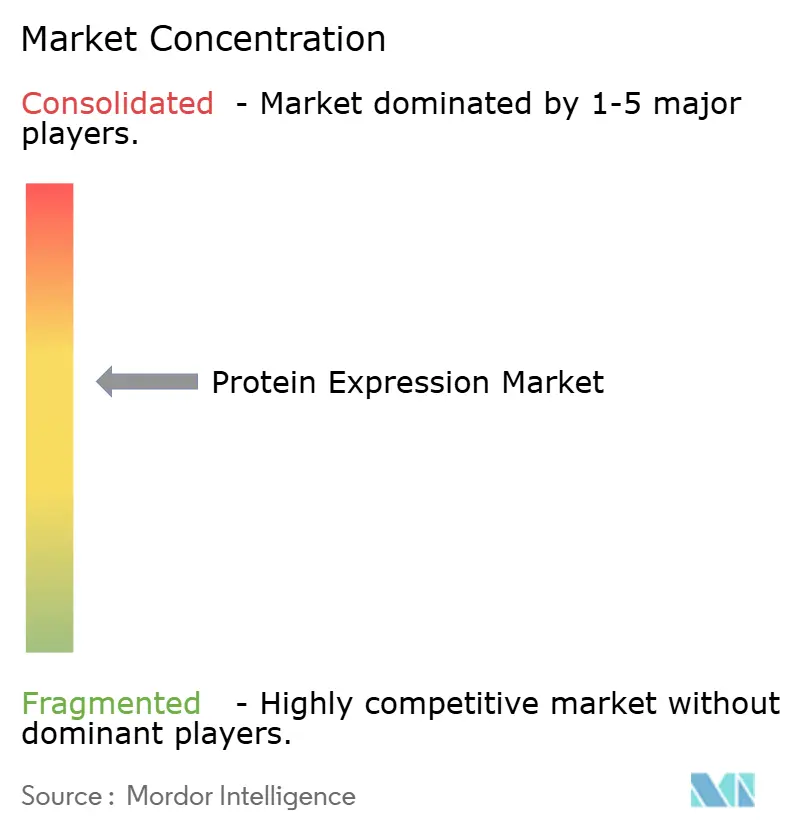
| Market Concentration | Medium |
Major Players *Disclaimer: Major Players sorted in no particular order Image © Mordor Intelligence. Reuse requires attribution under CC BY 4.0. | |
Protein Expression Market Analysis by Mordor Intelligence
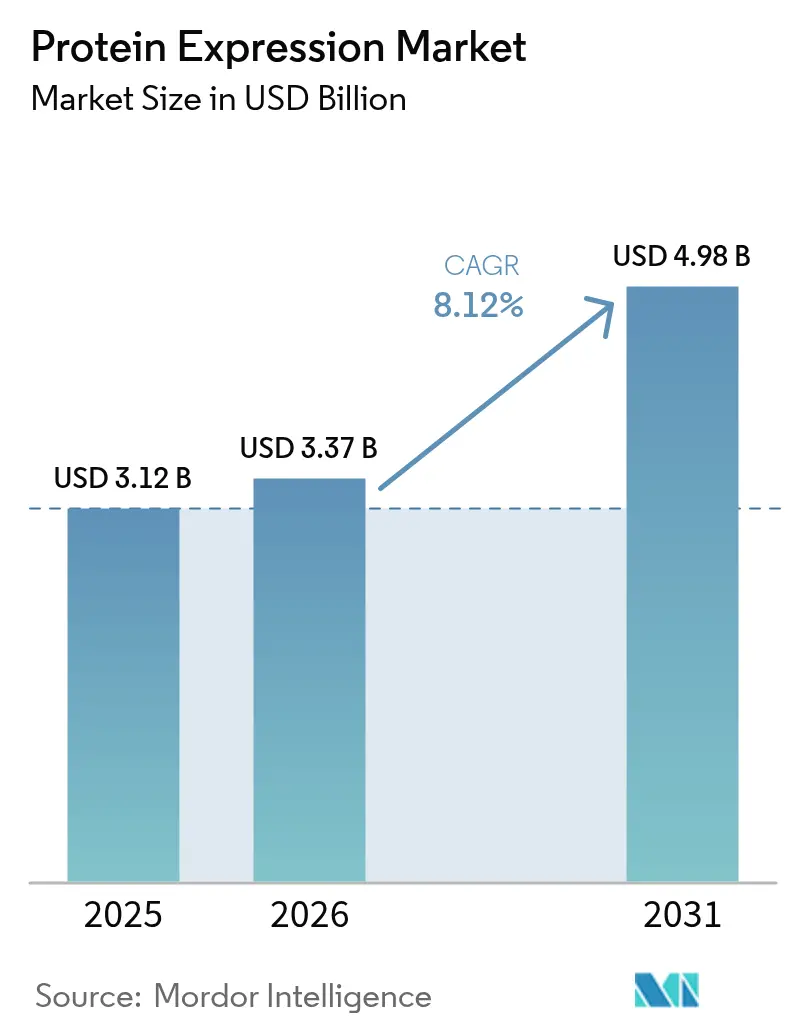
The protein expression market size is expected to grow from USD 3.12 billion in 2025 to USD 3.37 billion in 2026 and is forecast to reach USD 4.98 billion by 2031 at 8.12% CAGR over 2026-2031. Growth traces back to the rapid shift from conventional recombinant methods toward AI-enabled platforms that fine-tune codon usage, lift yields, and shorten development cycles. Strong R&D budgets by large-cap pharmaceutical firms, such as Thermo Fisher Scientific’s USD 2 billion U.S. manufacturing program, are adding modern capacity while de-risking supply chains. Government-funded multi-omics agendas, together with the commercial rollout of continuous-flow micro-bioreactors, dismantle historic scale and cost barriers. Meanwhile, a pipeline of 698 biologics projects at WuXi Biologics illustrates how clinical complexity translates into unrelenting demand for advanced expression technologies.
Key Report Takeaways
- By product and services category, Reagents & Kits led with 46.80% revenue share of the protein expression market in 2025; Services are projected to expand at a 12.07% CAGR through 2031.
- By application, therapeutic uses held 58.10% of the protein expression market share in 2025, whereas agricultural biotechnology is forecast to grow at a 12.64% CAGR to 2031.
- By end-user, biotechnology & pharmaceutical companies accounted for 53.10% of demand in 2025, while CROs/CDMOs register the highest projected CAGR at 12.31% through 2031.
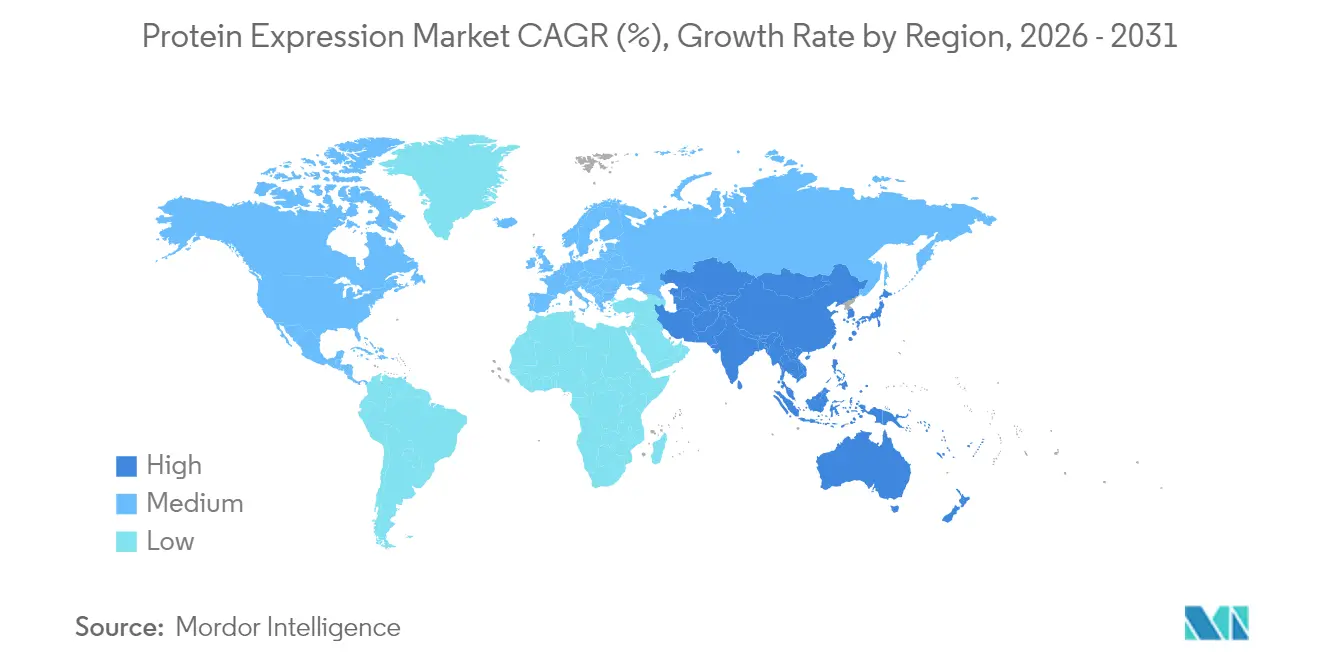
- By geography, North America commanded 39.55% of the protein expression market size in 2025 and Asia-Pacific is advancing at an 11.45% CAGR to 2031.
Note: Market size and forecast figures in this report are generated using Mordor Intelligence’s proprietary estimation framework, updated with the latest available data and insights as of 2026.
Market Trends and Insights
Drivers Impact Analysis of Protein Expression Market*
| Driver | (~) % Impact on CAGR Forecast | Geographic Relevance | Impact Timeline |
|---|---|---|---|
| Rising R&D investments by large-cap pharma | +2.1% | Global, strongest in North America & EU | Medium term (2-4 years) |
| Expansion of therapeutic biologics pipeline | +1.8% | Global, with momentum shifting toward Asia-Pacific | Long term (≥ 4 years) |
| Government-funded multi-omics initiatives | +1.3% | North America and EU, early gains in China and Japan | Medium term (2-4 years) |
| AI-optimised codon usage accelerating yield | +1.7% | Early adoption in the United States, Germany, Singapore | Short term (≤ 2 years) |
| Continuous-flow micro-bioreactors adoption | +0.9% | Core uptake in Asia-Pacific, spill-over to North America | Medium term (2-4 years) |
| Source: Mordor Intelligence | |||
Rising R&D Investments by Large-Cap Pharma
Industry majors are investing heavily in expression infrastructure; Thermo Fisher Scientific alone allocated USD 2 billion for U.S. expansion that targets both capacity and next-generation process innovation. Such capital flows align with the fact that biologics now account for nearly 70% of biopharmaceutical sales, making dependable protein output a strategic imperative. M&A activity, illustrated by Roche’s USD 1 billion agreement to acquire Poseida Therapeutics, concentrates valuable expression know-how within top tier firms. Start-ups also benefit; ExpressionEdits raised USD 13 million to engineer higher-fidelity proteins, signalling broad confidence in the space. As this funding surge translates into new pilot and commercial facilities, the protein expression market experiences stronger order books and faster technology refresh cycles.
Expansion of Therapeutic Biologics Pipeline
WuXi Biologics’ 698 active programs, including 51 late-phase projects, highlight the unprecedented scale of clinical development that hinges on sophisticated expression systems. Growing FDA approvals of monoclonal antibodies and the advent of gene-edited cell therapies, such as CASGEVY under Lonza’s supply agreement, intensify demand for platforms that can handle complex post-translational requirements. Antibody-drug conjugates and bispecific formats require high-yield mammalian systems, while microbial platforms are being re-engineered to deliver plasmid DNA at commercial scale. This broad modality mix stretches existing capacity and drives multiyear outsourcing contracts, fuelling consistent revenue streams across equipment, reagents, and services. Geographic diversification of clinical trials reinforces the need for local manufacturing footprints in Asia-Pacific and Europe, further widening the protein expression market.
Government-Funded Multi-Omics Initiatives
Major public agencies treat protein expression as critical research infrastructure. The NIH Multi-Omics for Health and Disease Consortium merges proteomics with genomics to decode disease progression in diverse populations. Complementing this, the National Science Foundation launched a USD 40 million program that accelerates AI-enhanced protein design to bolster the bioeconomy[1]. ARPA-H’s APECx project establishes toolkits for broadly protective vaccine antigens, further tightening the link between public health preparedness and expression technology. The UK Biobank Proteomics Project, powered by Thermo Fisher’s Olink platform, is cataloguing more than 5,400 proteins across 600,000 samples, creating the world’s largest human proteome reference. These publicly funded datasets raise analytical standards and stimulate commercial opportunities in biomarker validation and therapeutic discovery.
AI-Optimised Codon Usage Accelerating Yield
CodonTransformer, trained on genomic data from 164 species, generates DNA sequences that enhance expression while avoiding deleterious motifs, resulting in multi-fold yield gains. Complementary frameworks like the Codon Health Index rank codons based on host fitness, cutting resource competition and further elevating production efficiency. Experimental results confirm that optimized coding sequences can lift green fluorescent protein titres more than fivefold in Bacillus subtilis models, demonstrating the practical upside of AI decision-making. These algorithmic improvements shorten build-test-learn cycles from months to weeks, providing faster path-to-clinic for novel biologics and reinforcing the competitiveness of the protein expression market.
Restraints Impact Analysis of Protein Expression Market*
| Restraint | (~) % Impact on CAGR Forecast | Geographic Relevance | Impact Timeline |
|---|---|---|---|
| Capital-intensive high-throughput systems | -1.2% | Global, largest drag in emerging markets | Long term (≥ 4 years) |
| Limited post-translational modification fidelity | -0.8% | Global, acute in complex biologics | Medium term (2-4 years) |
| IP clustering around AI-generated protein libraries | -0.6% | Primarily North America & EU | Short term (≤ 2 years) |
| Source: Mordor Intelligence | |||
Capital-Intensive High-Throughput Systems
Scaling from 10 to 288 recombinant proteins per week necessitates liquid-handling robots, parallel bioreactors, and integrated purification skids that carry heavy upfront costs. Platforms such as the Protein Expression and Purification Platform rely on fully automated HEK and CHO lines, requiring specialised facilities, ongoing maintenance, and skilled operators. Downstream processing outlays can consume up to 60% of total development budgets, stretching the finances of smaller firms and slowing adoption in lower-income regions. While low-cost DIY reactors offer limited relief, they sacrifice throughput and compliance readiness. This financial barrier narrows supplier diversity and tempers the near-term growth of the protein expression market in capital-constrained geographies.
Limited Post-Translational Modification Fidelity
Mistranslation rates as high as 8 × 10⁻³ compromise protein function and may trigger immunogenic responses in therapeutic products. Glycosylation inconsistency impedes biosimilar development, forcing repeated analytical cycles and delaying regulatory filings. Mammalian hosts remain the gold standard for complex proteins, but even they require media optimisation and chaperone engineering to reach desired fidelity levels. Advances in targeted codon optimisation and strain engineering show promise yet demand sustained R&D budgets to become mainstream. These quality uncertainties lengthen time-to-market and push some sponsors toward specialised CDMOs, constraining the protein expression market’s full potential.
*Our forecasts treat driver/restraint impacts as directional, not additive. The impact forecasts reflect baseline growth, mix effects, and variable interactions.
Protein Expression Market Segment Analysis
By Product & Services:
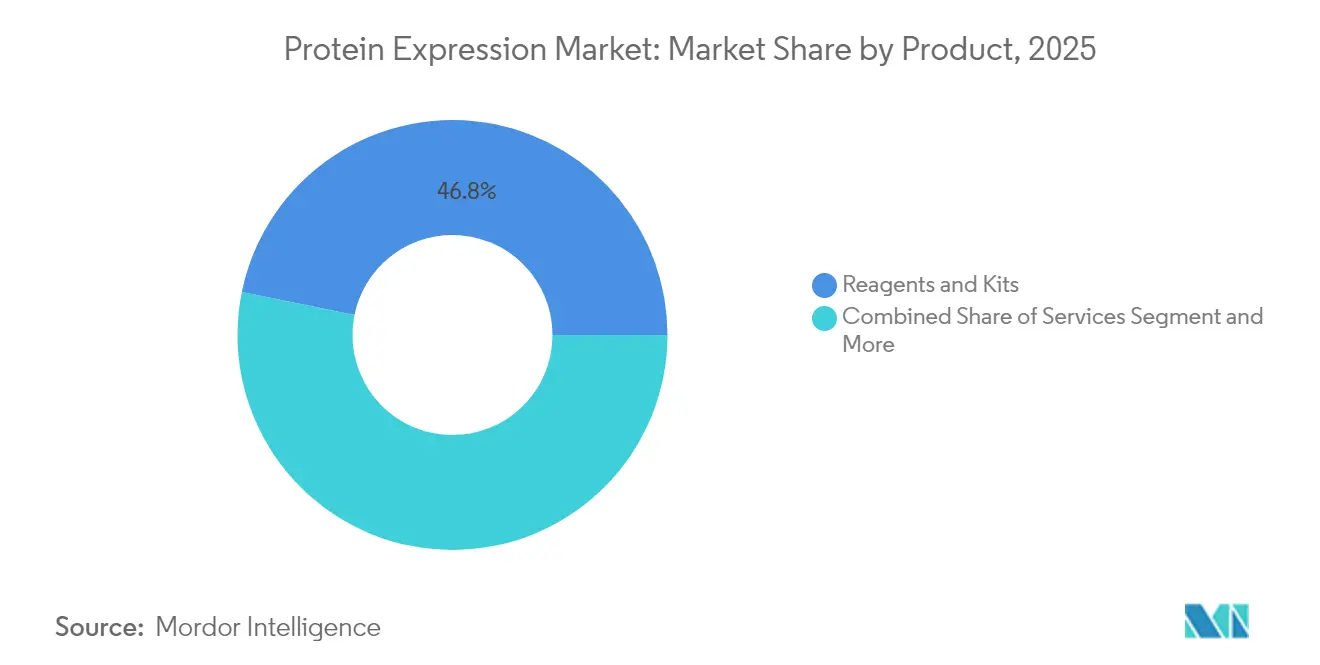
Services Accelerate Despite Reagents DominanceReagents & Kits captured 46.80% protein expression market share in 2025, underlining their status as indispensable inputs across every workflow, from vector construction to final purification. Service providers are gaining momentum; the segment is forecast to post a 12.07% CAGR through 2031 as developers outsource complex or high-volume programs to partners with proprietary cell lines and GMP suites. KBI Biopharma secured USD 250 million worth of long-term mammalian production contracts that illustrate sustained demand for external expertise.
Innovation within reagents remains brisk: Bioneer’s ExiProgen system and newer cell-free formulations cut expression timelines while preserving yields. Meanwhile, multi-modality CDMO deals, reported by BioProcess International, broaden service menus to include cell-free and microbial options, signalling that service revenues will outpace reagent growth as biologic complexity rises. Collectively, these forces deepen the protein expression market, creating parallel revenue streams from consumables and turnkey outsourcing.

By Application:
Agricultural Biotechnology Disrupts Therapeutic LeadershipTherapeutic use cases dominate value, accounting for 58.10% of the protein expression market size in 2025 thanks to sustained antibody, vaccine, and gene therapy pipelines. Yet agricultural biotechnology posts the fastest growth at 12.64% CAGR, driven by CRISPR-edited crops, enzyme-linked pest resistance, and precision fermentation proteins that redefine food security. Fusarium-resistant wheat lines co-expressing chitinase and β-1,3-glucanase underscore the efficacy of plant-based expression systems in crop protection.
Industrial enzymes and research tools maintain mid-single-digit growth, buoyed by AI-guided enzyme evolution for food processing and green chemistry. Plant bioreactors that assemble animal proteins—reviewed in Frontiers in Plant Science—expand addressable markets while circumventing many cold-chain requirements. These diverse applications broaden the protein expression market, mitigating reliance on any single therapeutic modality and underscoring the technology’s cross-sector utility.
By End-user:
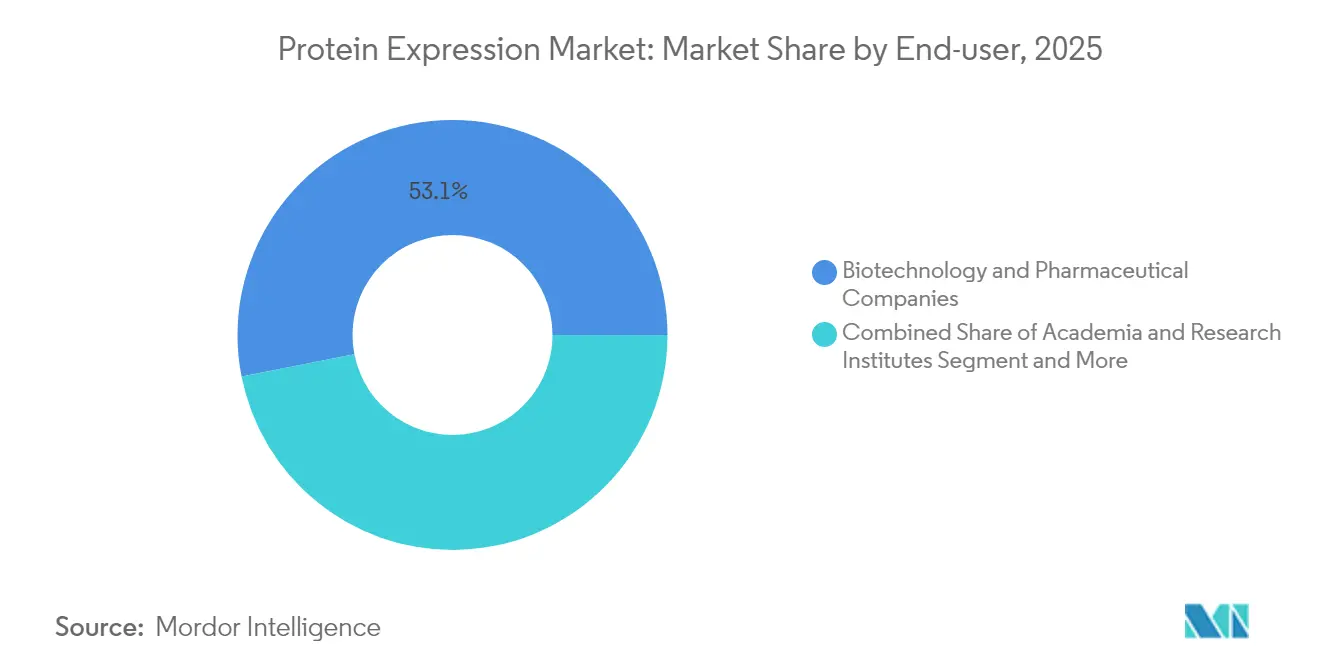
CROs/CDMOs Capitalize on Outsourcing MomentumBiotechnology & pharmaceutical companies controlled 53.10% of spending in 2025, reflecting their need for direct oversight of critical path programs. Those firms also underwrite major greenfield builds such as Thermo Fisher Scientific’s U.S. expansion that fortifies internal supply assurance.
CROs/CDMOs, however, will outpace all other end-users with a 12.31% CAGR to 2031, benefitting from risk-sharing models and regulatory familiarity. WuXi Biologics illustrates this ascent; late-phase and commercial revenue grew 101.7%, validating the premium developers place on proven large-scale capabilities.
Academic and research institutes contribute steady baseline demand through NIH and NSF grants that fund exploratory proteomics and AI-driven design studies. New collaborations, such as Nuclera and Cytiva’s integration of discovery and characterization platforms, blur historical boundaries between academic and industrial users. Together, these dynamics encourage flexible capacity sharing that widens entry points into the protein expression market.
Geography Analysis
North America Protein Expression Market
North America held 39.55% protein expression market share in 2025 on the strength of deep pharmaceutical pipelines, venture capital networks, and an enabling policy environment. The NSF’s USD 40 million protein design program and ARPA-H’s vaccine-centric initiatives provide long-term demand visibility. Company-level moves—including Thermo Fisher’s USD 3.1 billion acquisition of Olink—bolster analytical throughput and are positioning the region as a global proteomics hub. Canada and Mexico contribute scale-up and fill-finish services that complement U.S. capacity, while streamlined regulatory pathways encourage cross-border trials.
APAC Protein Expression Market
Asia-Pacific is forecast to deliver the highest regional CAGR at 11.45% through 2031, propelled by harmonised regulations, cost-competitive capacity, and government incentives for biologics self-sufficiency. China leads investments, evidenced by WuXi Biologics’ 37.7% non-COVID revenue growth and new microbial platforms designed for recombinant protein and plasmid DNA. Japan and South Korea supply cutting-edge automation, while India and Australia offer cost-effective, GMP-ready infrastructures. Regional governments back precision fermentation firms to address food security, expanding end-markets beyond therapeutics.
Europe Protein Expression Market
Europe shows steady mid-single-digit growth anchored by established manufacturing hubs and a rigorous yet predictable regulatory framework. Lonza’s Netherlands facility, key to the CASGEVY gene-edited cell therapy, confirms Europe’s ability to handle novel modalities at commercial scale. Germany, the United Kingdom, and France remain R&D powerhouses, and Eastern European nations add capacity with competitive labor costs. Ongoing emphasis on sustainability feeds demand for plant-based and precision-fermented proteins, aligning policy goals with commercial adoption.
Competitive Landscape
Competition is moderately concentrated: global leaders Thermo Fisher Scientific, Merck KGaA, and Agilent Technologies integrate acquisitions and proprietary platforms to deliver end-to-end solutions. Thermo Fisher’s Olink acquisition knit proximity extension assays into a portfolio that now spans discovery to quality control, widening switching costs for customers. Lonza’s GS Xceed gene expression system and microbial XS Technologies create modular toolkits that accelerate cell line development and support multi-scale manufacturing.
Mid-sized CDMOs are raising differentiation through platform breadth. KBI Biopharma offers integrated analytics alongside GMP production, attracting long-tenure contracts that lock in revenue visibility. Agilent, meanwhile, couples chromatography instrumentation with recombinant cell-line services, giving it leverage across capital equipment and consumables.
Emerging disruptors focus on cost compression and automation. AI-first players employ self-driving labs to explore protein fitness landscapes with minimal human input. Insect-cell mini-bioreactors promise double-digit cost savings and reduced greenhouse emissions relative to conventional mammalian systems. As IP clusters form around AI-generated libraries, licensing strategies become important weapons in securing recurring revenues.
Protein Expression Industry Leaders
-
Agilent Technologies Inc
-
Thermo Fisher Scientific Inc
-
Merck KGaA
-
Takara Bio Inc
-
New England Biolabs
- *Disclaimer: Major Players sorted in no particular order
Protein Expression Market Companies Covered in this Report
- Thermo Fisher Scientific
- Merck
- Agilent Technologies
- Takara Bio
- QIAGEN
- Bio-Rad Laboratories
- New England Biolabs
- Promega
- GenScript Biotech
- Lonza Group
- Abcam
- Danaher
- Bio-Techne
- Sino Biological
- Bioneer Corp
- Oxford Expression Technologies
- Synthetic Genomics
- Charles River
- Evitria AG
Market Opportunities and Future Outlook
Opportunities are expanding around cost compression and faster design-build-test cycles for recombinant proteins, supported by sequence optimization and lower-cost expression chemistries. In February 2026, MIT researchers reported a large language model approach to optimize genetic sequences in Komagataella phaffii (Pichia) yeast for proteins such as monoclonal antibodies and human growth hormone, pointing to a pathway for higher productivity in widely used microbial hosts. In March 2026, Nature Communications described a low-cost, multi-component cell-free reagent formulation that reduced production costs by 95% while enabling synthesis of aglycosylated monoclonal antibodies, reinforcing demand for rapid, small-batch, screening-oriented protein production where speed and unit economics matter more than traditional scale.
A second opportunity area is emerging where expression capabilities and analytical readiness for complex modalities converge. Agilent introduced a Multi-Attribute Method (MAM) solution in May 2026 for biopharma QC using LC/HRMS, reflecting a shift toward consolidated, data-rich release and comparability testing for antibodies, fusion proteins, and other complex biologics that rely on tight control of product quality attributes. Coupled with ongoing outsourcing momentum, including CROs/CDMOs as the fastest-growing end-user segment in the report scope, these changes support integrated offerings that combine expression system choice, process intensification, and fit-for-purpose analytics across microbial, mammalian, and cell-free workflows.
Recent Industry Developments in Protein Expression Market
- June 2026: Merck KGaA (Darmstadt, Germany) announced a definitive agreement to acquire Bio-Techne Corporation for about USD 11.3 billion in cash, expanding its life science portfolio across recombinant proteins and related analytical technologies. The transaction strengthens Merck KGaA's ability to deliver more end-to-end workflows that connect protein production needs with characterization and quality control tools, increasing competitive pressure on integrated suppliers.
- May 2026: Agilent Technologies released a Multi-Attribute Method (MAM) workflow for biopharma quality control laboratories using LC/HRMS, targeting complex modalities such as antibodies and fusion proteins. The release supports higher-content QC approaches that can replace multiple assays with a single platform workflow, linking expression development more closely with downstream release testing.
- December 2025: Thermo Fisher Scientific expanded its Gibco Bacto portfolio with next-generation chemically defined media products (Bacto CD Supreme FPM Plus and CD Supreme Feed (2X)) for E. coli biomanufacturing. The media introduction targets productivity and consistency needs in microbial expression and scale-up, supporting programs that prioritize robust yields and controlled inputs for recombinant protein production.
Protein Expression Market Report Scope and Research Methodology
Market Definition and Coverage
This market covers the revenue generated from tools and services used to produce proteins in a lab or manufacturing setting, including expression systems, vectors, reagents, kits, and related workflow services supporting research, industrial use, and biopharma production.
Scope exclusions: Diagnostic proteomics service revenues and equipment such as mass spectrometers are excluded from this sizing.
Segments Covered in This Report
- By Product & Services
- Reagents & Kits
- Cell-free Expression
- Bacterial Expression
- Yeast Expression
- Algal Expression
- Insect Expression
- Mammalian Expression
- Plant-based Expression
- Services
- Other Products
- Reagents & Kits
- By Application
- Therapeutic
- Industrial Enzymes
- Research & Discovery
- Agricultural Biotechnology
- By End-user
- Academia & Research Institutes
- Biotechnology & Pharmaceutical Companies
- CROs / CDMOs
- Geography
- North America
- United States
- Canada
- Mexico
- Europe
- Germany
- United Kingdom
- France
- Italy
- Spain
- Rest of Europe
- Asia-Pacific
- China
- Japan
- India
- South Korea
- Australia
- Rest of Asia-Pacific
- Middle East and Africa
- GCC
- South Africa
- Rest of Middle East and Africa
- South America
- Brazil
- Argentina
- Rest of South America
- North America
Data Sources, Market Sizing, and Validation
Desk Research
Desk research was used to set the fact base and define practical assumptions that can be defended in front of clients. We referenced public sources such as NIH and NCBI databases, US FDA and EMA portals for biologics activity signals, OECD and World Bank macro series for R&D intensity context, and peer-reviewed literature indexed in PubMed for technology adoption and typical workflow usage.
On top of that, we reviewed company filings and investor presentations to understand product mix cues, pricing direction, and shifts in channel structure, followed by reputable press and association websites for product launches and policy updates. Where needed, paid subscriptions for company financials and intelligence, news and financials, patent databases, and an import and export shipment-level database were used to cross-check select inputs like supplier footprints and trade movement. The sources listed here are illustrative only, and many other public materials were also reviewed for data collection, validation, and clarification.
Primary Interviews and Surveys
Primary work focused on interviews and structured surveys with suppliers, distributors, lab procurement stakeholders, and end users in biopharma, contract labs, and academic research. Respondent input was used to reconcile differences in procurement behavior, workflow mix (what buyers actually run in practice), and pricing bands, and then align those notes back to what we saw in desk research.
Coverage was balanced across APAC, EMEA, and the Americas so assumptions like pricing bands, workflow mix, and adoption pace could be checked and then aligned back to what we saw in desk research.
Distribution of primary research fieldwork respondents
| Company type | Respondent position | Region |
|---|---|---|
| Top tier: 31% | CXOs: 20% | APAC: 49% |
| Mid tier: 49% | Functional/Unit leaders: 36% | EMEA: 29% |
| Smaller Players: 20% | Managers: 44% | Americas: 22% |
Market-Sizing & Forecasting
Sizing started from a top-down build where the demand pool was reconstructed using lab and biomanufacturing activity signals that translate into protein expression workflow consumption. To keep the totals realistic, the outputs were then corroborated using selective bottom-up checks, such as sampled average selling prices times estimated volumes for commonly purchased kits and reagents, along with channel checks on service revenues.
Key inputs used in the model included the pace of biologics and recombinant protein research activity, changes in R&D spending levels, shifts in the preferred expression system mix (for example, bacterial versus mammalian), typical yield and success rate patterns that influence repeat runs, and pricing direction by workflow stage (reagents, vectors, and expression services). When a bottom-up view was thin in certain countries, we used proxy indicators like research intensity and import patterns to fill gaps, and then validated those assumptions through primary feedback.
For forecasting, scenario analysis was used to convert expected changes in R&D and biologics development into market demand, and then a light multivariate regression was applied as a cross check on the direction and range. Final year by year numbers were adjusted only after expert feedback converged on realistic adoption timing and pricing progression.
Data Validation & Update Cycle
Outputs were checked through triangulation across independent signals, including whether regional shares align with research spending and biologics development activity, and whether implied pricing stays within what buyers and sellers report. Variance checks were run to flag sharp jumps, followed by a second analyst review to confirm that the drivers explain the movement and that no double counting exists across product and service lines.
Reports are refreshed annually, and interim updates are triggered when material events occur, such as major regulatory shifts, supply constraints, or notable technology changes that affect adoption. Before delivery, we do a fresh pass of the inputs and assumptions so clients receive an up to date view based on the latest available public data and recent primary feedback.
Mordor Intelligence's Global Protein Expressions Market Market Size Compared Against Other Published Estimates
Different published numbers for protein expression are common because the market can be counted from several angles, and each angle uses its own scope and pricing logic. Gaps usually show up in what gets included in revenue, which year is treated as the base, and how fast pricing and adoption are assumed to move over time.
Diagnostic proteomics service revenues sit outside Mordor Intelligence's scope, and that single exclusion can move totals when other publications group those services together with expression workflows. Additional spread comes from whether values are modeled at ex-factory pricing versus channel-marked up prices, how expression services are defined versus product sales, and whether currency conversion timing is kept consistent across regions in the base year.
Benchmark comparison
| Source | Market Size | Gaps in Research Methodology |
|---|---|---|
| Mordor Intelligence | USD 3.37 B (2026) | |
| Digital Publisher A | USD 4.68 B (2024) | Uses a different base year and does not clearly separate protein expression workflows from adjacent proteomics and downstream activities, which can inflate the counted revenue pool. |
| Industry Portal B | USD 3.80 B (2024) | Relies on a broader, less explicit pricing basis and limited disclosure on how products versus services are normalized, which can shift market value when channel margins are blended in. |
The table indicates that year selection, inclusion rules around adjacent services, and the price level used in the math are the main reasons the figures do not match. By tying the estimate back to observable workflow demand signals and then checking pricing and adoption assumptions with real respondents, the final total becomes easier to trace and repeat in future updates.
Key Questions Answered in the Report
What is the current value of the protein expression market?
The protein expression market size stood at USD 3.37 billion in 2026.
Which region leads the protein expression market?
North America leads with 39.55% share, backed by strong R&D funding and established manufacturing capacity.
Which segment is expanding the fastest?
Services are growing quickest at a 12.07% CAGR as outsourcing demand accelerates.
Why are AI-optimised codon tools important?
They raise expression yields several-fold and compress development timelines, improving project economics.
How significant is agricultural biotechnology for future growth?
It is the fastest-growing application at a 12.64% CAGR, widening the market beyond traditional therapeutics.
What are the main barriers to wider adoption?
Capital-intensive high-throughput systems and challenges with post-translational modification fidelity continue to limit accessibility, especially in emerging markets.