
Market Overview
| Study Period | 2020 - 2031 |
|---|---|
| Forecast Data Period | 2026 - 2031 |
| Base Year Market Size (2025) | USD 3.75 Billion |
| Market Size (2026) | USD 3.95 Billion |
| Market Size (2031) | USD 5.09 Billion |
| Growth Rate (2026 - 2031) | 5.22 % |
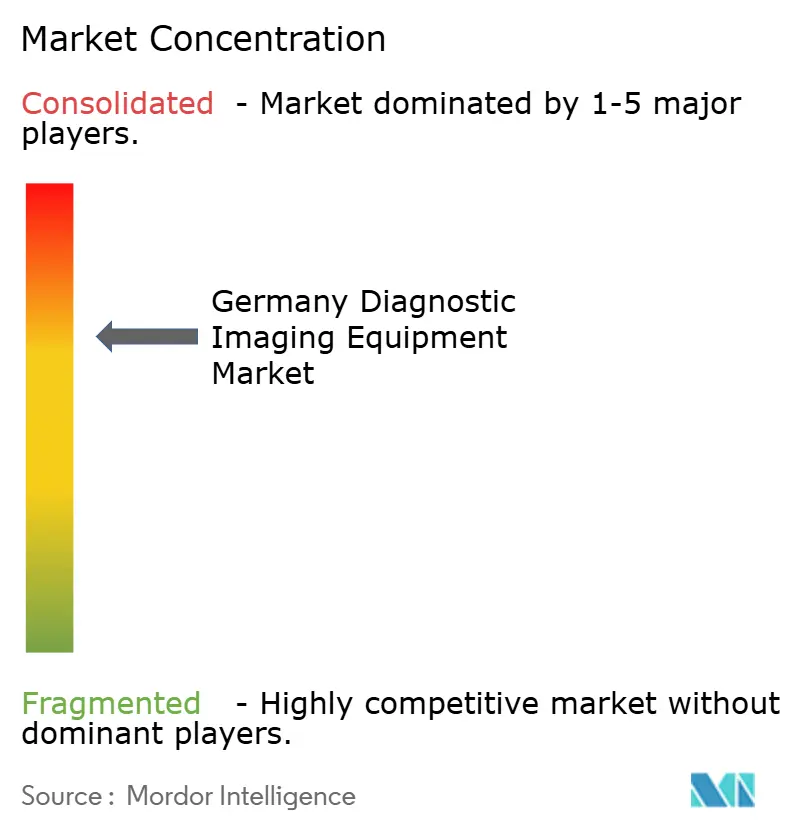
| Market Concentration | Medium |
Major Players *Disclaimer: Major Players sorted in no particular order Image © Mordor Intelligence. Reuse requires attribution under CC BY 4.0. | |
Germany Diagnostic Imaging Equipment Market Analysis by Mordor Intelligence
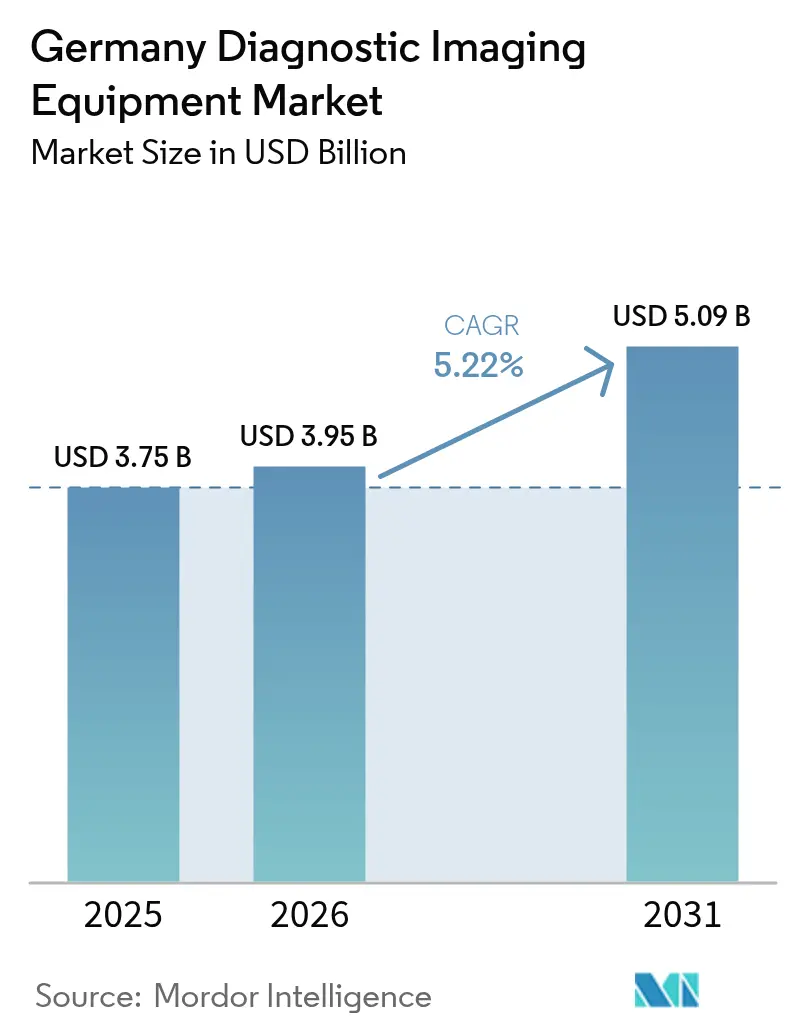
The Germany diagnostic imaging equipment market size was valued at USD 3.75 billion in 2025 and estimated to grow from USD 3.95 billion in 2026 to reach USD 5.09 billion by 2031, at a CAGR of 5.22% during the forecast period (2026-2031). Growth builds on Germany’s position as Europe’s largest healthcare economy. Technology adoption accelerates because 1,874 hospitals now connect radiology equipment to new data backbones, while artificial-intelligence (AI) software offsets persistent radiologist shortages. Demographic pressure magnifies demand: Germany’s population aged 65 and older continues to rise, pushing oncology and cardiology screening volumes higher and supporting steady equipment replacement cycles. Consolidation among private imaging chains and hospital capacity reductions intensify competition, yet regulatory barriers created by the Medical Device Regulation (MDR) reward vendors that maintain robust quality processes.
Key Report Takeaways
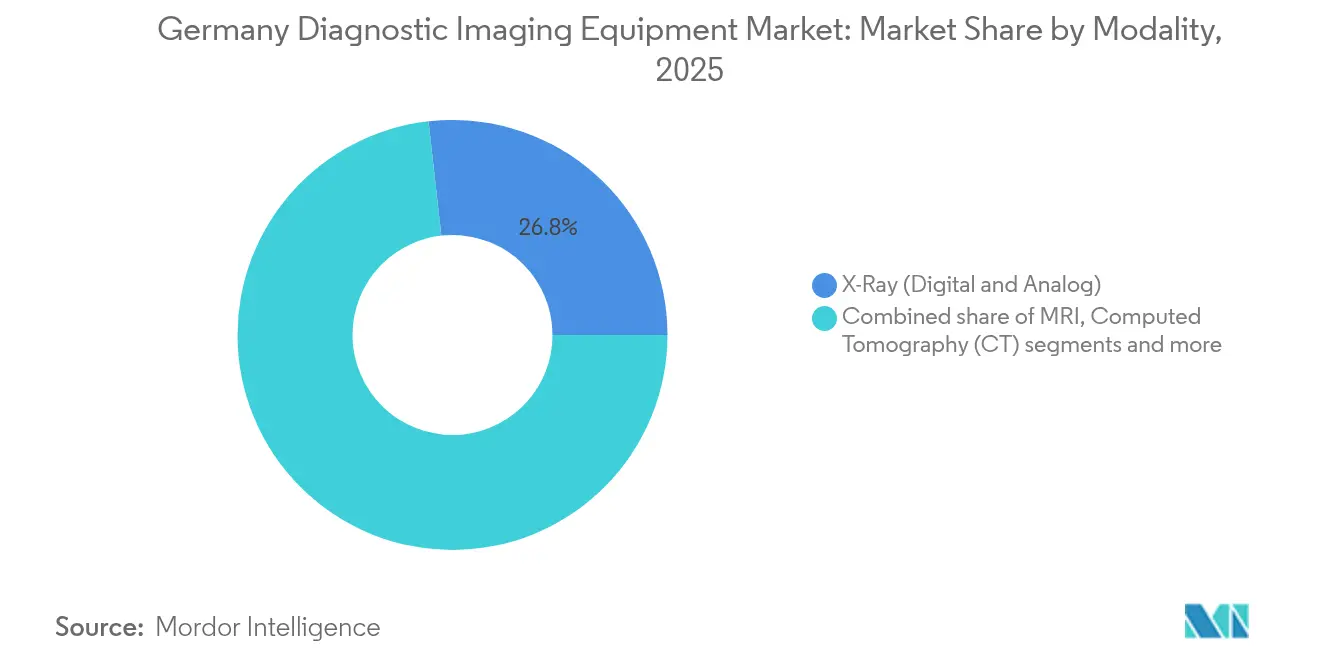
- By modality, X-Ray systems led with 26.78% of Germany's diagnostic imaging equipment market share in 2025, while MRI is projected to grow at a 6.18% CAGR to 2031.
- By 2025, fixed systems accounted for 79.65% of the German diagnostic imaging equipment market size, whereas mobile and handheld platforms are expected to advance at a 6.55% CAGR through 2031.
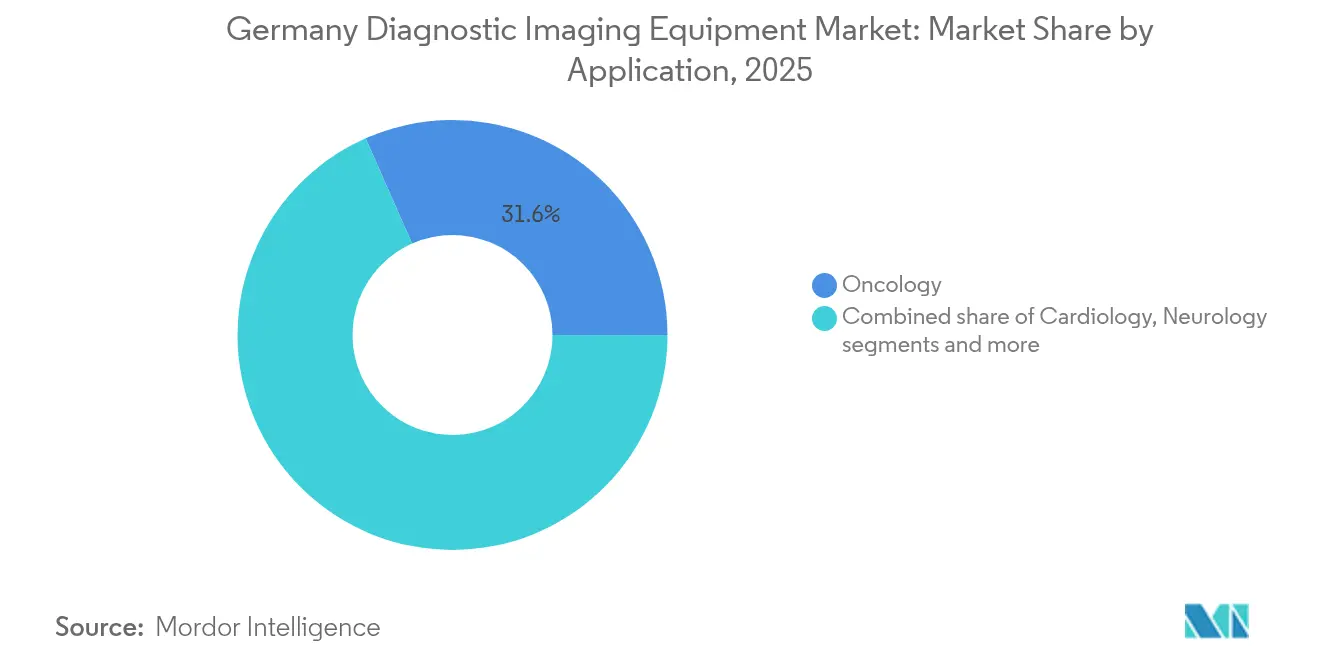
- By application, oncology captured 31.62% of the revenue in 2025; cardiology is poised for the fastest growth, with a 6.78% CAGR between 2026 and 2031.
- By end user, hospitals maintained a 65.08% share of the German diagnostic imaging equipment market in 2025, but diagnostic imaging centers are expected to expand at a 6.24% CAGR through 2031.
Note: Market size and forecast figures in this report are generated using Mordor Intelligence’s proprietary estimation framework, updated with the latest available data and insights as of 2026.
Germany Diagnostic Imaging Equipment Market Trends and Insights
Drivers Impact Analysis*
| Driver | (~) % Impact on CAGR Forecast | Geographic Relevance | Impact Timeline |
|---|---|---|---|
| Growing burden of chronic diseases | +1.2% | National, concentrated in urban centers | Long term (≥ 4 years) |
| Increased adoption of advanced technologies | +1.8% | National, led by university hospitals | Medium term (2-4 years) |
| Rapidly ageing population demanding early diagnosis | +1.1% | National, acute in rural areas | Long term (≥ 4 years) |
| Government grants for rural teleradiology roll-out | +0.7% | Rural regions, eastern states priority | Short term (≤ 2 years) |
| Private-equity consolidation of imaging centres | +0.4% | Metropolitan areas, outpatient facilities | Medium term (2-4 years) |
| Expansion of national cancer-screening programs | +0.6% | National, focus on mammography networks | Medium term (2-4 years) |
| Source: Mordor Intelligence | |||
Growing burden of chronic diseases
Rising prevalence of cancer, diabetes, and cardiovascular disease secures long-run imaging demand across the market. Cervical cancer illustrates the dynamic: 4,666 new diagnoses appear annually, and HPV-16/18 infections account for 76.5% of invasive tumors, making precise screening indispensable. National mammography sensitivity between 69.9% and 71.7% underscores the need for AI-enabled enhancement that improves lesion detection and reduces false-negatives. Chronic-disease care pathways now rely on longitudinal imaging, securing recurring equipment upgrades. Hospitals and outpatient centers therefore consider imaging hardware as revenue-protective infrastructure rather than discretionary capital, reinforcing steady orders even during broader economic volatility
Increased adoption of advanced technologies
The EUR 4 billion Hospital Future Fund accelerates digital infrastructure purchases that integrate AI, interoperability, and cloud architectures. DigitalRadar benchmarking of 1,624 hospitals revealed a mean digitization score of 33.3/100, exposing significant upgrade headroom. Philips’ HealthSuite cloud imaging platform and NEXUS/CHILI’s distribution pact with deepc confirm that scalable AI pipelines now influence procurement. Institutions adopt advanced modalities not merely for image quality but for seamless data exchange with electronic patient records mandated by the 2024 Digital-Gesetz.[1]
Rapidly ageing population demanding early diagnosis
Germany’s nursing-workforce requirement is projected to rise 33% by 2049, signaling broader strain on diagnostic throughput. Physicians exhibit 79.2% positive attitudes toward teleradiology, yet 80.4% record limited usage, evidencing implementation hurdles rather than acceptance gaps. Preventive screening drives imaging volumes before symptom onset, demanding high-resolution modalities that reveal subtle lesions. Such demographic resilience shields equipment sales from cyclical hospital budget constraints and continues to underpin the Germany Diagnostic Imaging Equipment market.
Government grants for rural teleradiology roll-out
Federal policy removes teleradiology quantity caps and provides flat-rate reimbursement for digital services, boosting installation rates in underserved eastern states. Nearly 59.5% of referring physicians identify teleradiology as the pivotal lever for rural access, incentivizing vendors to offer portable CT and hand-held ultrasound solutions that travel between sites. Early projects demonstrate network effects: once initial gateways are in place, additional centers prefer equipment compatible with the established data backbone.
Restraints Impact Analysis*
| Restraint | (~) % Impact on CAGR Forecast | Geographic Relevance | Impact Timeline |
|---|---|---|---|
| Radiation-dose concerns & stricter regulation | -0.8% | National, enforced by BfS | Short term (≤ 2 years) |
| High equipment cost & reimbursement gaps | -1.1% | National, acute in smaller facilities | Medium term (2-4 years) |
| Radiologist shortage causing under-utilisation | -0.7% | National, severe in rural areas | Long term (≥ 4 years) |
| Data-privacy hurdles hindering large-scale AI training & image sharing | -0.5% | EU-wide, GDPR compliance focus | Medium term (2-4 years) |
| Source: Mordor Intelligence | |||
Radiation-dose concerns & stricter regulation
Germany’s Strahlenschutzverordnung enforces annual dose limits that require justification and optimization for every examination, pushing providers toward premium scanners with automated dose-tracking. Siemens Healthineers’ photon-counting CT illustrates how vendors differentiate through low-dose performance while preserving diagnostic fidelity. Compliance adds cost and operational complexity, especially for facilities without integrated informatics, and may reduce examination frequency for low-value indications.
High equipment cost & reimbursement gaps
Germany’s shift from per-case funding toward guaranteed income models by 2029 clouds return-on-investment calculations for capital purchases. The Hilfsmittelverzeichnis forces manufacturers to demonstrate both quality and price competitiveness before a scanner receives insurance coverage, favoring incumbents with established dossiers. Smaller clinics therefore postpone upgrades, dampening adoption curves despite clear clinical need.
*Our forecasts treat driver/restraint impacts as directional, not additive. The impact forecasts reflect baseline growth, mix effects, and variable interactions.
Segment Analysis
By Modality: MRI momentum challenges X-Ray dominance
X-Ray retained 26.78% of Germany Diagnostic Imaging Equipment market share in 2025 because every hospital relies on radiography for trauma and routine chest studies. MRI, however, is boosting volumes in cardiac and neuro applications, and its 6.18% CAGR positions it as the primary growth engine through 2031. Siemens Healthineers expands its Magnetom Flow platform in the popular 1.5 Tesla segment, adding AI-enabled workflow automation that cuts exam times and broadens referral indications. PET/SPECT resurrection through theranostics further diversifies modality mix as GE Healthcare builds a dedicated center in Germany.
The Germany Diagnostic Imaging Equipment market now values modalities not only for image clarity but for how they integrate with electronic patient records and AI decision support. Ultrasound adoption benefits from hand-held devices that bring imaging to emergency rooms and rural clinics, while mammography modernizes through digital detectors and computer-aided detection that lift program sensitivity. Overall, modality portfolios continue to split between high-throughput X-Ray rooms that secure baseline service levels and premium MRI suites that capture incremental reimbursement, sustaining balanced capital investment profiles across provider types.

By Portability: mobile systems mitigate staffing gaps
Fixed systems commanded 79.65% of the Germany Diagnostic Imaging Equipment market size in 2025 because large institutions still favor room-based CTs and MRIs for throughput efficiency. Nonetheless, mobile and hand-held systems post a 6.55% CAGR as workforce shortages make point-of-care diagnostics attractive. Siemens Healthineers’ SOMATOM On.site CT allows intensive-care imaging without patient transport and provides remote control options that save technologist time.
Hand-held ultrasound units embedded with AI now generate automated measurements and share results directly to cloud archives, aligning with Germany’s digital-health reimbursement framework for telematics infrastructure. Portable scanners complement rather than cannibalize fixed installations, revealing a dual-track procurement trend where hospitals purchase both categories to match case-mix variability.
By Application: Cardiology overtakes Oncology in growth speed
Oncology captured 31.62% of revenue in 2025 underpinned by national screening programs for breast, colorectal, and prostate cancer. Cardiology is set to outpace with a 6.78% CAGR as guidelines recommend earlier coronary assessment for patients with metabolic syndrome and as AI-enhanced cardiac MRI protocols slash scan times. Germany Diagnostic Imaging Equipment market size in cardiology is therefore projected to expand predictably, attracting vendor R&D toward myocardial tissue characterization and post-processing automation.
Neurology expands through stroke triage networks supported by the EUR 26.9 million UMBRELLA project, which installs AI algorithms for real-time decision support. Orthopedics and obstetrics present steady volumes, while gastro-urology gains from hybrid imaging that combines diagnosis and minimally invasive treatment. Application diversification secures utilisation across hospital departments, spreading revenue risk.
By End User: Outpatient centers accelerate
Hospitals held 65.08% of the Germany Diagnostic Imaging Equipment market size in 2025 because they remain the gatekeeper for high-complexity procedures. Diagnostic imaging centers, however, record a 6.24% CAGR as outpatient reimbursement models reward same-day service and as private equity finances chain consolidation. Evidia exemplifies this expansion: formed via merger of MRH and Blikk, it manages over 100 locations and 1,800 staff.
Ambulatory surgery centers adopt in-house imaging to streamline patient journeys, while specialty clinics such as orthopedics invest in 3-D scanners that feed surgical-planning software. The Germany Diagnostic Imaging Equipment market therefore splits along care-setting lines. Hospitals concentrate on high-acuity cases that demand advanced CT and MRI, whereas outpatient hubs seek versatile, lower-footprint units that maximize patient flow at lower cost.
Geography Analysis
Germany hosts 1,874 hospitals with 476,924 beds and a 71.2% occupancy rate, ensuring a broad installed base for vendors. Nordrhein-Westfalen leads with 328 hospitals and 112,610 beds, making it the single largest regional buyer of replacement scanners. Bavaria and Baden-Württemberg follow, supported by proximity to med-tech clusters that include Siemens Healthineers’ manufacturing hubs in Erlangen and Kemnath.
Federal policy channels KHZG funds toward rural eastern states to correct historic under-investment, catalyzing teleradiology installation grants that open new addressable demand for the Germany Diagnostic Imaging Equipment market. Rural sites often select mobile CT or compact MRI systems because space and staffing are constrained, while urban teaching hospitals deploy high-field MRI and photon-counting CT for research and tertiary care.
Cross-border care further shapes geography. Clinics in Bavaria treat Austrian patients for advanced imaging, and North Sea coastal regions serve Danish referrals, which smooths utilization peaks and influences procurement volumes. Government insistence on universal access means state health ministries co-finance mobile breast-screening buses that circulate through sparsely populated districts, reinforcing equitable distribution of imaging resources nationwide.
Regulatory Landscape
Diagnostic imaging equipment placed on the German market must comply with the EU Medical Device Regulation (MDR) (EU) 2017/745 and Germany’s national implementing law, the Medizinprodukterecht-Durchfuehrungsgesetz (MPDG). Conformity assessment and CE marking for most imaging modalities require involvement of an MDR Notified Body (per risk classification in MDR Annex VIII), with the ZLG (Central Authority of the Laender for Health Protection) responsible for designation and oversight of Notified Bodies.
Post-market oversight and safety governance are handled at the federal level by the Federal Institute for Drugs and Medical Devices (BfArM), including vigilance, risk assessment, and clinical investigation approvals. National ordinances such as MPBetreibV (operator obligations for installation, maintenance, and safe use) and MPAMIV (user reporting and information duties) set operational expectations. MDR data and registration requirements increasingly anchor compliance processes around EUDAMED, tightening documentation and traceability expectations for manufacturers and economic operators serving German hospitals and outpatient imaging networks.
Competitive Landscape
The Germany Diagnostic Imaging Equipment market exhibits moderate concentration. Siemens Healthineers anchors domestic supply with EUR 60 million production expansion in Kemnath and a EUR 350 million high-energy photonics center in Forchheim, granting speed-to-market advantage for photon-counting CT and next-generation MRI.[2]Philips secures EU MDR certificates across its imaging portfolio and scales cloud-based enterprise imaging to Europe, positioning itself to capitalize on hospitals’ digitization budgets.[3]
GE Healthcare pursues theranostics differentiation and collaborates with German university centers to broaden PET tracer research, while Canon Medical focuses on AI-driven workflow tools that minimize technologist workload. Domestic mid-size firms such as Drägerwerk and Carl Zeiss Meditec supply specialized imaging peripherals and integrated operating-room solutions that complement large-vendor scanners.
Private-equity deal flow remains brisk. Duke Street acquired Agito Medical from Philips to target refurbished-equipment demand, and imaging-center platforms merge to scale procurement power. Vendors therefore tailor offerings for both premium university hospitals and cost-sensitive outpatient chains, sustaining balanced sales channels.
Germany Diagnostic Imaging Equipment Industry Leaders
-
Koninklijke Philips NV
-
Siemens Healthineers AG
-
FUJIFILM Holdings Corporation
-
Hologic Inc.
-
GE HealthCare
- *Disclaimer: Major Players sorted in no particular order
Market Opportunities and Future Outlook
Hospital digitization and interoperability programs create whitespace for imaging systems delivered as connected hardware platforms, not standalone scanners. With the Hospital Future Fund supporting digital backbones and 1,874 hospitals connecting radiology equipment into newer data infrastructures, procurement favors modalities that integrate with enterprise imaging and standardized data exchange (DICOMweb, HL7 FHIR) linked to the electronic patient record mandate introduced via the 2024 Digital-Gesetz. The Federal Ministry of Health’s May 2026 draft bill for the Law for Data and Digital Innovation in Healthcare (GeDIG) reinforces the direction toward broader health data usability, which supports the value of scanners that simplify secure image sharing, structured reporting, and AI-enabled workflows.
Supply chain localization and high-end modality differentiation also open upgrade pathways in Germany’s installed base. Siemens Healthineers’ commissioning of a semiconductor crystal fabrication capability in Forchheim (supporting photon-counting CT supply) and ongoing Kemnath expansion reflect renewed investment into domestic manufacturing capacity for advanced CT components. Provider-side initiatives in remote operations and workflow automation address radiologist and technologist constraints. At the same time, reimbursement mechanics are shifting toward outpatient settings, and the expanded Hybrid-DRG approach (alongside additions in the 2026 DRG catalog for diagnostic imaging) supports business cases for outpatient imaging centers and hospital ambulatory units adding capacity with space-efficient CT, high-throughput X-ray, and mobile or hand-held ultrasound platforms that fit hub-and-spoke teleradiology models.
Recent Industry Developments
- May 2026: Siemens Healthineers completed installation of imaging systems for the new Herz- und Gefaesszentrum at Universitaetsklinikum Hamburg-Eppendorf (UKE), including 13 angiography systems, a photon-counting CT, and a 3-Tesla MRI. The deployment points to continued investment by German university hospitals in premium modalities that combine dose-efficient performance with high throughput. It also strengthens Siemens Healthineers reference base for advanced CT and interventional imaging in Germany.
- November 2025: GE HealthCare and the physician-led radiology network Starvision announced a collaboration to scale remote scanning in Germany using Imaging 360 Remote powered by nCommand Lite. The collaboration targets operational bottlenecks by enabling remote support for scan execution and standardization across sites. It aligns with workforce-driven demand for connected scanners and remote-operation capabilities across hospital and outpatient networks.
- June 2024: Fraunhofer IBMT unveiled a 256-channel ultrasound system designed for precise deep-brain stimulation applications in neurological disorders. The announcement signals active German R&D around high-channel-count ultrasound architectures and advanced clinical use cases beyond conventional diagnostics. Over time, such capabilities can influence procurement interest in higher-performance ultrasound platforms within university hospitals and specialized centers.
Research Methodology Framework and Report Scope
Market Definition and Coverage
This market covers sales of diagnostic imaging equipment used for human clinical diagnosis within Germany. It includes new imaging systems and core hardware that hospitals and imaging centers purchase for MRI, CT, ultrasound, X-ray, nuclear imaging, mammography, and fluoroscopy.
Scope exclusions: Refurbished systems, veterinary imaging, accessories-only items, software-only systems (such as PACS or RIS), imaging services, and maintenance contracts are excluded.
Segmentation Overview
- By Modality
- MRI
- Computed Tomography (CT)
- Ultrasound
- X-Ray (Digital & Analog)
- Nuclear Imaging (PET / SPECT)
- Mammography
- Fluoroscopy & C-arms
- By Portability
- Fixed Systems
- Mobile and Hand-held Systems
- By Application
- Cardiology
- Oncology
- Neurology
- Orthopaedics
- Obstetrics & Gynaecology
- Gastro-Urology
- Other Applications
- By End-User
- Hospitals
- Diagnostic Imaging Centres
- Ambulatory Surgery Centres
- Speciality Clinics & Others
Data Sources, Market Sizing, and Validation
Desk Research
Desk work starts by pinning down the installed base and replacement cycle signals, since imaging purchases in Germany are often driven by refresh needs as much as new capacity. We refer to public sources such as federal health and statistical publications, European health and medical device datasets, radiology and hospital associations, and peer reviewed clinical utilization studies that show exam mix and modality usage.
To turn those signals into a usable model, we also review manufacturer filings and investor presentations for modality level direction, alongside trusted press coverage on hospital capex and procurement timing in Germany. Where extra structure is needed, we selectively use paid subscriptions for company financials, patents, and import-export shipment level signals to sanity check direction of equipment flows and pricing movement. These desk research sources are illustrative, and we also use other public and paid references to support data collection, validation, and clarification.
Primary Interviews and Surveys
Primary inputs come from interviews and surveys with a mix of imaging system suppliers, distributors, service partners, and hospital and diagnostic center buyers who influence equipment purchasing. We use these discussions to test assumptions on replacement timing, modality mix shifts (for example, CT versus MRI), average selling price movement, and the practical effect of regulatory and budget cycles across Germany.
Distribution of primary research fieldwork respondents
| Company type | Respondent position |
|---|---|
| Top tier: 36% | CXOs: 19% |
| Mid tier: 42% | Functional/Unit leaders: 31% |
| Smaller Players: 22% | Managers: 50% |
Market-Sizing & Forecasting
Sizing is built using a top down approach where the demand pool is reconstructed from modality wise procedure volumes, typical equipment productivity, and replacement cycles, and then translated into annual unit demand and value. The model is checked with selective bottom-up approximations, including sampled pricing by modality and channel checks on system placements, which are used to adjust totals when gaps show up.
Inputs that matter in this market include the installed base by modality, average equipment life and refurbishment pressure, hospital and imaging center capex cycles, modality utilization growth (especially for CT and MRI), and average selling price changes driven by technology upgrades and tender behavior. When a variable is missing in a clean public series, we fill the gap using a short run proxy (for example, trend smoothing on placements) and then validate it through expert feedback before it is used. Forecasts are produced using scenario analysis, where base, slower replacement, and faster modernization cases are stress tested against the same demand indicators, and where the final curve is aligned to what practitioners say is realistic for Germany.
Data Validation & Update Cycle
Before numbers are finalized, outputs are triangulated across multiple independent signals, and unusual jumps are flagged for a second pass review. Checks include year over year unit value consistency by modality, implied ASP drift versus procurement feedback, and whether growth aligns with capacity and utilization direction.
The work is reviewed in steps, with re-contacts triggered when a key assumption changes or when a new policy or procurement pattern emerges. Reports refresh annually, and interim updates are added when material events affect pricing, purchasing cycles, or equipment availability. Right before delivery, a final review pass is completed so clients receive the latest updated view.
Mordor Intelligence's Germany Diagnostic Imaging Equipment Market Market Size Versus Other Published Estimates
Published market sizes for diagnostic imaging in Germany can vary quite a bit, even when the same year is discussed, because the scope lines are drawn differently and the pricing logic is not always handled the same way. Differences also come from whether the estimate is anchored to equipment replacement demand, or whether it leans more on broader healthcare spending narratives.
The key gap drivers in this space usually come from what is counted as market value, such as including maintenance, refurbished systems, or software, and from whether adjacent areas like imaging services are blended into the same number. Another common driver is how modality mix is treated, since high value systems like MRI and CT can swing the total when ASP progression is assumed aggressively, and then currency timing and update cadence can widen the spread.
Benchmark comparison
| Source | Market Size | Gaps in Research Methodology |
|---|---|---|
| Mordor Intelligence | USD 3.75 B (2025) | |
| Industry Publisher A | USD 2.45 B (2026) | Uses a later year point and appears to mix equipment discussion with broader deployment themes, which can undercount replacement driven purchases when modality productivity and refresh timing are not modeled explicitly. |
| Regional Research Group B | USD 12.80 B (2024) | Likely uses a wider definition of medical imaging that can blend device value with related services, settings, or adjacent technologies, which pushes the total above an equipment-only number. |
The table shows a wide spread that mostly traces back to what is included in the value total, and then to how replacement demand is converted into annual sales. In Mordor Intelligence's model, only new factory-built imaging equipment hardware sold into Germany is counted, and refurbished units, software-only systems, and imaging services are kept out, which makes the result easier to tie back to units, ASPs, and modality level demand signals.
Key Questions Answered in the Report
How is Germany’s shift toward value-based care influencing the feature set that hospitals demand in new imaging systems?
Providers increasingly look for scanners that embed real-time analytics and structured reporting tools because these capabilities link diagnostic performance to outcome-based reimbursement metrics.
What makes interoperability a critical purchasing criterion for German radiology departments today?
With electronic patient records now mandatory, facilities favor equipment that uses open standards such as DICOMweb and HL7 FHIR to ensure hassle-free data exchange across multi-vendor networks.
In what way are workforce shortages accelerating adoption of remote-operation technologies in imaging suites?
Platforms that enable off-site technologists to set protocols or monitor exams are gaining traction, helping hospitals keep scanners running during night shifts and in underserved regions.
Why are theranostics capabilities becoming a talking point in Germany’s nuclear-medicine segment?
Interest in personalized oncology treatments is driving demand for hybrid PET/SPECT systems that support both diagnostic imaging and targeted radionuclide therapy planning.
How do Germany’s cancer-screening program updates affect modality replacement cycles?
Expanded guidelines for breast and lung screening push facilities to upgrade to digital detectors and AI-assisted triage tools, shortening acceptable equipment lifespans.
What role does the new telematics infrastructure flat-rate reimbursement play in teleradiology investments?
Guaranteed digital-service payments give rural hospitals budget certainty, encouraging them to procure cloud-ready CT and MRI scanners that integrate smoothly with hub-and-spoke reading models.